EP4128625B1 - Präemption von symbolen in einem slot-format-index - Google Patents
Präemption von symbolen in einem slot-format-index Download PDFInfo
- Publication number
- EP4128625B1 EP4128625B1 EP21715078.8A EP21715078A EP4128625B1 EP 4128625 B1 EP4128625 B1 EP 4128625B1 EP 21715078 A EP21715078 A EP 21715078A EP 4128625 B1 EP4128625 B1 EP 4128625B1
- Authority
- EP
- European Patent Office
- Prior art keywords
- sfis
- avoid
- component carrier
- beam pairs
- request
- Prior art date
- Legal status (The legal status is an assumption and is not a legal conclusion. Google has not performed a legal analysis and makes no representation as to the accuracy of the status listed.)
- Active
Links
Images

Classifications
-
- H—ELECTRICITY
- H04—ELECTRIC COMMUNICATION TECHNIQUE
- H04L—TRANSMISSION OF DIGITAL INFORMATION, e.g. TELEGRAPHIC COMMUNICATION
- H04L5/00—Arrangements affording multiple use of the transmission path
- H04L5/003—Arrangements for allocating sub-channels of the transmission path
- H04L5/0044—Allocation of payload; Allocation of data channels, e.g. PDSCH or PUSCH
-
- H—ELECTRICITY
- H04—ELECTRIC COMMUNICATION TECHNIQUE
- H04W—WIRELESS COMMUNICATION NETWORKS
- H04W72/00—Local resource management
- H04W72/04—Wireless resource allocation
- H04W72/044—Wireless resource allocation based on the type of the allocated resource
- H04W72/0446—Resources in time domain, e.g. slots or frames
-
- H—ELECTRICITY
- H04—ELECTRIC COMMUNICATION TECHNIQUE
- H04L—TRANSMISSION OF DIGITAL INFORMATION, e.g. TELEGRAPHIC COMMUNICATION
- H04L5/00—Arrangements affording multiple use of the transmission path
- H04L5/0091—Signalling for the administration of the divided path, e.g. signalling of configuration information
- H04L5/0094—Indication of how sub-channels of the path are allocated
-
- H—ELECTRICITY
- H04—ELECTRIC COMMUNICATION TECHNIQUE
- H04W—WIRELESS COMMUNICATION NETWORKS
- H04W72/00—Local resource management
- H04W72/20—Control channels or signalling for resource management
- H04W72/23—Control channels or signalling for resource management in the downlink direction of a wireless link, i.e. towards a terminal
-
- H—ELECTRICITY
- H04—ELECTRIC COMMUNICATION TECHNIQUE
- H04W—WIRELESS COMMUNICATION NETWORKS
- H04W72/00—Local resource management
- H04W72/50—Allocation or scheduling criteria for wireless resources
- H04W72/54—Allocation or scheduling criteria for wireless resources based on quality criteria
- H04W72/541—Allocation or scheduling criteria for wireless resources based on quality criteria using the level of interference
-
- H—ELECTRICITY
- H04—ELECTRIC COMMUNICATION TECHNIQUE
- H04L—TRANSMISSION OF DIGITAL INFORMATION, e.g. TELEGRAPHIC COMMUNICATION
- H04L5/00—Arrangements affording multiple use of the transmission path
- H04L5/0001—Arrangements for dividing the transmission path
- H04L5/0003—Two-dimensional division
- H04L5/0005—Time-frequency
- H04L5/0007—Time-frequency the frequencies being orthogonal, e.g. OFDM(A) or DMT
Definitions
- aspects of the present disclosure generally relate to wireless communication and to techniques and apparatuses for preemption of symbols in a slot format index.
- Wireless network 100 may be a heterogeneous network that includes BSs of different types, such as macro BSs, pico BSs, femto BSs, relay BSs, or the like. These different types of BSs may have different transmit power levels, different coverage areas, and different impacts on interference in wireless network 100. For example, macro BSs may have a high transmit power level (e.g., 5 to 40 watts) whereas pico BSs, femto BSs, and relay BSs may have lower transmit power levels (e.g., 0.1 to 2 watts).
- macro BSs may have a high transmit power level (e.g., 5 to 40 watts)
- pico BSs, femto BSs, and relay BSs may have lower transmit power levels (e.g., 0.1 to 2 watts).
- Devices of wireless network 100 may communicate using the electromagnetic spectrum, which may be subdivided based on frequency or wavelength into various classes, bands, channels, or the like.
- devices of wireless network 100 may communicate using an operating band having a first frequency range (FR1), which may span from 410 MHz to 7.125 GHz, and/or may communicate using an operating band having a second frequency range (FR2), which may span from 24.25 GHz to 52.6 GHz.
- FR1 and FR2 are sometimes referred to as mid-band frequencies.
- FR1 is often referred to as a "sub-6 GHz" band.
- FR2 is often referred to as a "millimeter wave” band despite being different from the extremely high frequency (EHF) band (30 GHz - 300 GHz) which is identified by the International Telecommunications Union (ITU) as a “millimeter wave” band.
- EHF extremely high frequency
- ITU International Telecommunications Union
- sub-6 GHz or the like, if used herein, may broadly represent frequencies less than 6 GHz, frequencies within FR1, and/or mid-band frequencies (e.g., greater than 7.125 GHz).
- millimeter wave may broadly represent frequencies within the EHF band, frequencies within FR2, and/or mid-band frequencies (e.g., less than 24.25 GHz). It is contemplated that the frequencies included in FR1 and FR2 may be modified, and techniques described herein are applicable to those modified frequency ranges.
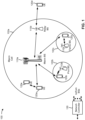
- Fig. 1 is provided as an example. Other examples may differ from what is described with regard to Fig. 1 .
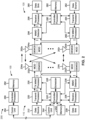
- Fig. 2 is a diagram illustrating an example 200 of a base station 110 in communication with a UE 120 in a wireless network 100, in accordance with the present disclosure.
- Base station 110 may be equipped with T antennas 234a through 234t
- UE 120 may be equipped with R antennas 252a through 252r, where in general T ⁇ 1 and R ⁇ 1.
- a transmit processor 220 may receive data from a data source 212 for one or more UEs, select one or more modulation and coding schemes (MCS) for each UE based at least in part on channel quality indicators (CQIs) received from the UE, process (e.g., encode and modulate) the data for each UE based at least in part on the MCS(s) selected for the UE, and provide data symbols for all UEs. Transmit processor 220 may also process system information (e.g., for semi-static resource partitioning information (SRPI)) and control information (e.g., CQI requests, grants, and/or upper layer signaling) and provide overhead symbols and control symbols.
- MCS modulation and coding schemes
- Transmit processor 220 may also generate reference symbols for reference signals (e.g., a cell-specific reference signal (CRS) or a demodulation reference signal (DMRS)) and synchronization signals (e.g., a primary synchronization signal (PSS) or a secondary synchronization signal (SSS)).
- a transmit (TX) multiple-input multiple-output (MIMO) processor 230 may perform spatial processing (e.g., precoding) on the data symbols, the control symbols, the overhead symbols, and/or the reference symbols, if applicable, and may provide T output symbol streams to T modulators (MODs) 232a through 232t. Each modulator 232 may process a respective output symbol stream (e.g., for OFDM) to obtain an output sample stream.
- TX transmit
- MIMO multiple-input multiple-output
- Each modulator 232 may process a respective output symbol stream (e.g., for OFDM) to obtain an output sample stream.
- Each modulator 232 may further process (e.g., convert to analog, amplify, filter, and upconvert) the output sample stream to obtain a downlink signal.
- T downlink signals from modulators 232a through 232t may be transmitted via T antennas 234a through 234t, respectively.
- antennas 252a through 252r may receive the downlink signals from base station 110 and/or other base stations and may provide received signals to demodulators (DEMODs) 254a through 254r, respectively.
- Each demodulator 254 may condition (e.g., filter, amplify, downconvert, and digitize) a received signal to obtain input samples.
- Each demodulator 254 may further process the input samples (e.g., for OFDM) to obtain received symbols.
- a MIMO detector 256 may obtain received symbols from all R demodulators 254a through 254r, perform MIMO detection on the received symbols if applicable, and provide detected symbols.
- a receive processor 258 may process (e.g., demodulate and decode) the detected symbols, provide decoded data for UE 120 to a data sink 260, and provide decoded control information and system information to a controller/processor 280.
- controller/processor may refer to one or more controllers, one or more processors, or a combination thereof.
- a channel processor may determine a reference signal received power (RSRP) parameter, a received signal strength indicator (RSSI) parameter, a reference signal received quality (RSRQ) parameter, and/or a channel quality indicator (CQI) parameter, among other examples.
- RSRP reference signal received power
- RSSI received signal strength indicator
- RSSQ reference signal received quality
- CQI channel quality indicator
- one or more components of UE 120 may be included in a housing.
- Network controller 130 may include communication unit 294, controller/processor 290, and memory 292.
- Network controller 130 may include, for example, one or more devices in a core network.
- Network controller 130 may communicate with base station 110 via communication unit 294.
- Antennas may include, or may be included within, one or more antenna panels, antenna groups, sets of antenna elements, and/or antenna arrays, among other examples.
- An antenna panel, an antenna group, a set of antenna elements, and/or an antenna array may include one or more antenna elements.
- An antenna panel, an antenna group, a set of antenna elements, and/or an antenna array may include a set of coplanar antenna elements and/or a set of non-coplanar antenna elements.
- An antenna panel, an antenna group, a set of antenna elements, and/or an antenna array may include antenna elements within a single housing and/or antenna elements within multiple housings.
- An antenna panel, an antenna group, a set of antenna elements, and/or an antenna array may include one or more antenna elements coupled to one or more transmission and/or reception components, such as one or more components of Fig. 2 .
- a transmit processor 264 may receive and process data from a data source 262 and control information (e.g., for reports that include RSRP, RSSI, RSRQ, and/or CQI) from controller/processor 280. Transmit processor 264 may also generate reference symbols for one or more reference signals. The symbols from transmit processor 264 may be precoded by a TX MIMO processor 266 if applicable, further processed by modulators 254a through 254r (e.g., for DFT-s-OFDM or CP-OFDM), and transmitted to base station 110.
- control information e.g., for reports that include RSRP, RSSI, RSRQ, and/or CQI
- Transmit processor 264 may also generate reference symbols for one or more reference signals.
- the symbols from transmit processor 264 may be precoded by a TX MIMO processor 266 if applicable, further processed by modulators 254a through 254r (e.g., for DFT-s-OFDM or CP-OFDM
- a modulator and a demodulator (e.g., MOD/DEMOD 254) of the UE 120 may be included in a modem of the UE 120.
- the UE 120 includes a transceiver.
- the transceiver may include any combination of antenna(s) 252, modulators and/or demodulators 254, MIMO detector 256, receive processor 258, transmit processor 264, and/or TX MIMO processor 266.
- the transceiver may be used by a processor (e.g., controller/processor 280) and memory 282 to perform aspects of any of the methods described herein (for example, as described with reference to Figs. 5 and 6 ).
- the uplink signals from UE 120 and other UEs may be received by antennas 234, processed by demodulators 232, detected by a MIMO detector 236 if applicable, and further processed by a receive processor 238 to obtain decoded data and control information sent by UE 120.
- Receive processor 238 may provide the decoded data to a data sink 239 and the decoded control information to controller/processor 240.
- Base station 110 may include communication unit 244 and communicate to network controller 130 via communication unit 244.
- Base station 110 may include a scheduler 246 to schedule UEs 120 for downlink and/or uplink communications.
- a modulator and a demodulator (e.g., MOD/DEMOD 232) of the base station 110 may be included in a modem of the base station 110.
- the base station 110 includes a transceiver.
- the transceiver may include any combination of antenna(s) 234, modulators and/or demodulators 232, MIMO detector 236, receive processor 238, transmit processor 220, and/or TX MIMO processor 230.
- the transceiver may be used by a processor (e.g., controller/processor 240) and memory 242 to perform aspects of any of the methods described herein (for example, as described with reference to Figs. 5 and 6 ).
- Controller/processor 240 of base station 110, controller/processor 280 of UE 120, and/or any other component(s) of Fig. 2 may perform one or more techniques associated with preemption of symbols in a slot format index (SFI), as described in more detail elsewhere herein.
- controller/processor 240 of base station 110, controller/processor 280 of UE 120, and/or any other component(s) of Fig. 2 may perform or direct operations of, for example, process 600 of Fig. 6 and/or other processes as described herein.
- Memories 242 and 282 may store data and program codes for base station 110 and UE 120, respectively.
- memory 242 and/or memory 282 may include a non-transitory computer-readable medium storing one or more instructions (e.g., code and/or program code) for wireless communication.
- the one or more instructions when executed (e.g., directly, or after compiling, converting, and/or interpreting) by one or more processors of the base station 110 and/or the UE 120, may cause the one or more processors, the UE 120, and/or the base station 110 to perform or direct operations of, for example, process 600 of Fig. 6 and/or other processes as described herein.
- executing instructions may include running the instructions, converting the instructions, compiling the instructions, and/or interpreting the instructions, among other examples.
- the UE includes means for determining, for communications via a component carrier, to avoid one or more SFIs associated with a set of configurations for a set of symbols; and/or means for transmitting a request to avoid the one or more SFIs.
- the means for the UE to perform operations described herein may include, for example, one or more of antenna 252, demodulator 254, MIMO detector 256, receive processor 258, transmit processor 264, TX MIMO processor 266, modulator 254, controller/processor 280, or memory 282.
- the UE includes means for determining that use of the one or more SFIs has a likeliness, that satisfies a threshold likeliness, to be associated with a cross-link interference that satisfies a threshold amount of cross-link interference.
- the UE includes means for determining that use of the one or more SFIs has a likeliness, that satisfies a threshold likeliness, to cause an uplink-downlink symbol mismatch for the set of beam pairs associated with the component carrier and an additional set of beam pairs associated with an additional component carrier.
- the UE includes means for receiving, for communications via the component carrier, a resource grant having an SFI, wherein determining to avoid the one or more SFIs is based at least in part on receiving the resource grant having the SFI.
- the UE includes means for transmitting the request to avoid the one or more SFIs before one or more base stations indicate availability of carrier aggregation of the component carrier and an additional component carrier.
- the UE includes means for transmitting the request to avoid the one or more SFIs after carrier aggregation of the component carrier and an additional component carrier is established.
- the UE includes means for transmitting a request for coordination between the first base station and the second base station to avoid uplink-downlink symbol mismatches.
- the UE includes means for requesting a first set of reference signals for a first set of beam pairs associated with the component carrier; means for requesting a second set of reference signals for a second set of beam pairs associated with an additional component carrier; and/or means for determining, based at least in part on the first set of reference signals and the second set of reference signals, cross-link interference between one or more beams of the first set of beam pairs and one or more beams of the second set of beam pairs.
- the UE includes means for reporting the cross-link interference between the one or more beams of the first set of beam pairs and the one or more beams of the second set of beam pairs.
- While blocks in Fig. 2 are illustrated as distinct components, the functions described above with respect to the blocks may be implemented in a single hardware, software, or combination component or in various combinations of components.
- the functions described with respect to the transmit processor 264, the receive processor 258, and/or the TX MIMO processor 266 may be performed by or under the control of controller/processor 280.
- Fig. 2 is provided as an example. Other examples may differ from what is described with regard to Fig. 2 .
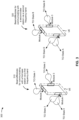
- Fig. 3 is a diagram illustrating an example 300 of beam training with a set of base stations using a set of frequency bands, in accordance with the present disclosure.
- a UE may perform beam training to identify beams and/or modules (e.g., antenna modules) for communicating with a first base station via a first frequency band. For example, the UE may identify first transmission configuration indicator (TCI) states 0, 1, 2, and 3 for communicating with the first base station using the first frequency band. As shown, TCI states 0 and 3 may use module 1 of the UE, TCI state 1 may use module 2 of the UE, and TCI state 2 may use module 3 of the UE.
- TCI states 0 and 3 may use module 1 of the UE
- TCI state 1 may use module 2 of the UE
- TCI state 2 may use module 3 of the UE.
- TCI state 0 and TCI state A may be similar (e.g., using a same module, using a similar communication path, pointing towards similar steering angles, and/or the like), TCI state 1 and TCI state B may be similar, TCI state 2 and TCI state C may be similar, TCI state 3 and TCI state D may be similar, and/or the like. Additionally, or alternatively, a strongest TCI state of the first TCI states may be correlated with a strongest TCI state of the second TCI states.
- the UE may be configured to simultaneously receive downlink transmissions via the first band and via the second band via the TCI state 0 and the TCI state A and/or to transmit uplink transmissions via the first band and via the second band via the TCI state 0 and the TCI state A.
- an uplink-downlink mismatch may cause cross-link interference (e.g., self-interference from the uplink transmissions for the downlink transmissions).
- Fig. 3 is provided as an example. Other examples may differ from what is described with respect to Fig. 3 .
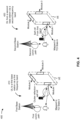
- Fig. 4 is a diagram illustrating an example 400 of communications with a set of base stations using a set of frequency bands, in accordance with the present disclosure.
- a UE may transmit an uplink transmission to a first base station using the first frequency band.
- the UE may use TCI state 0 to transmit via the first frequency band based at least in part on the TCI state 0 being determined as a strongest TCI state for communicating via the first frequency band.
- a transmission using the TCI state 0 may travel to the first base station via a first communication path. Clutter in a local channel environment may lead to the transmission using the TCI state 0 to reflect back toward the UE. Reflected energy from the clutter may cause self-interference. However, because the UE is transmitting when the reflected energy arrives at the UE, the self-interference may not substantially adversely affect communication via the first frequency band.
- a UE determines, as claimed, for communications via a component carrier (e.g., for communications with a first base station via a first frequency band) to avoid one or more SFIs associated with a set of configurations for a set of symbols.
- the UE determines, as claimed, to avoid the one or more SFIs based at least in part on a likeliness (a likeliness that satisfies a threshold likeliness) to be associated with a cross-link interference ( a cross-link interference that satisfies a threshold amount of cross-link interference).
- the UE may determine that the likeliness to be associated with the cross-link interference is based at least in part on the one or more SFIs having an uplink-downlink symbol mismatch with one or more SFIs of an additional component carrier used by the UE for communication with a second base station (e.g., when using carrier aggregation).
- the UE transmits, as claimed, a request to avoid the one or more SFIs.
- the UE may transmit the request to the first base station and/or the second base station to indicate the one or more SFIs to avoid, an indication of set of preferred SFIs, and/or the like.
- the base station may avoid using the one or more SFIs, decrease a likelihood of failed downlink transmissions, and/or the like.
- the UE and/or the base station may conserve computing, communication, and/or network resources that may otherwise be used to recover from failed downlink transmissions, to determine that the failure is based at least in part on an uplink-downlink mismatch, to replace an existing SFI for the UE, and/or the like.
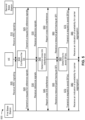
- Fig. 5 is a diagram illustrating an example 500 of preemption of symbols in an SFI, in accordance with the present disclosure.
- a UE e.g., UE 120
- communicates with a first base station e.g., base station 110
- a second base station using one or more of downlink transmissions and uplink transmissions.
- the UE, the first base station, and/or the second base station may be part of one or more wireless networks (e.g., the wireless network 100).
- the first base station and the second base station may be co-located.
- the UE may be configured with multiple antenna modules through which the UE may communicate with the base station.
- the UE may configure the UE.
- the UE may configure the UE based at least in part on the RRC signaling and/or other signaling.
- the UE may configure the UE to determine cross-link interference based at least in part on reference signals from multiple base stations, to determine one or more SFIs to avoid, to transmit a request to avoid the one or more SFIs, and/or the like.
- the UE may transmit a first request for reference signals from the first base station.
- the UE may request a first set of reference signals (e.g., channel state information reference signals (CSI-RSs) for a first set of beam pairs associated with a first component carrier that is associated with the first base station.
- the first set of reference signals may be located within a frequency band of the first component carrier.
- the first set of reference signals may be associated with one or more bandwidth parts of the first component carrier and may be frequency-specific (e.g., using a specific combination of resources across the first resource band).
- the UE may request a resource grant for the UE to transmit reference signals (e.g., sounding reference signals (SRSs)) toward the first base station using one or more beams and/or one or more antenna modules.
- reference signals e.g., sounding reference signals (SRSs)
- the UE may transmit a second request for reference signals from the second base station.
- the UE may request a second set of reference signals (e.g., CSI-RSs) for a second set of beam pairs associated with a second component carrier that is associated with the second base station.
- the second set of reference signals may be located within a frequency band of the second component carrier.
- the second set of reference signals may be associated with one or more bandwidth parts of the second component carrier and may be frequency-specific (e.g., using a specific combination of resources across the second resource band).
- the UE may request a resource grant for the UE to transmit reference signals (e.g., sounding reference signals (SRSs)) toward the second base station using one or more beams and/or one or more antenna modules.
- reference signals e.g., sounding reference signals (SRSs)
- the UE may receive reference signals from the first base station.
- the UE may receive the reference signals within a frequency band of the first component carrier.
- the UE may transmit reference signals toward the first base station using one or more beams.
- the UE may receive reference signals from the second base station.
- the UE may receive the reference signals within a frequency band of the first component carrier.
- the UE may transmit reference signals toward the second base station using one or more beams.
- the UE may determine cross-link interference.
- the UE may determine cross-link interference between one or more beams of the first set of beam pairs and one or more beams of the second set of beam pairs.
- the cross-link interference may be based at least in part on an uplink-downlink symbol mismatch between the one or more beams of the first set of beam pairs and one or more beams of the second set of beam pairs.
- the UE may determine the cross-link interference between the one or more beams of the first set of beam pairs and the one or more beams of the second set of beam pairs at particular frequencies based at least in part on the first set of reference signals and the second set of reference signals.
- the UE may report the cross-link interference to the first base station and/or the second base station.
- the UE may report the cross-link interference using a physical uplink control channel (PUCCH) communication, a medium access control control element (MAC-CE), and/or the like.
- the UE may report the cross-link interference with an indication of the one or more beams of the first set of beam pairs and the one or more beams of the second set of beam pairs for which the UE determined the cross-link interference.
- PUCCH physical uplink control channel
- MAC-CE medium access control control element
- the UE may indicate to the first base station and/or the second base station that certain beams of the first set of beam pairs may cause cross-link interference for certain beams of the second set of beam pairs, and/or certain beams of the second set of beam pairs can cause cross-link interference for certain beams of the first set of beam pairs, when SFIs for the first carrier and the second carrier have an uplink-downlink symbol mismatch.
- the UE may receive (e.g., from the first base station and/or the second base station) one or more resource grants having associated SFIs.
- the one or more resource grants may include a semi-persistent scheduling resource grant, a dynamic resource grant, and/or the like.
- the UE may determine to avoid one or more SFIs that are associated with a set of configurations for a set of symbols. In some aspects, the UE may determine to avoid a first set of the one or more SFIs when communicating via the first component carrier using a first beam, a second set of the one or more SFIs when communicating using a second beam, and/or the like. In some aspects, the UE may determine to avoid a third set of the one or more SFIs when communicating via the second component carrier using a third beam, a fourth set of the one or more SFIs when communicating using a fourth beam, and/or the like.
- the cross-link interference may be based at least in part on an uplink-downlink symbol mismatch for the first set of beam pairs associated with the first component carrier and the second set of beam pairs associated with the second component carrier to be used for communication using carrier aggregation.
- the UE may determine to avoid the one or more SFIs based at least in part on determining that use of the one or more SFIs has a likeliness, that satisfies a threshold likeliness, to be associated with a cross-link interference that satisfies a threshold amount of cross-link interference. For example, the UE may determine the likeliness to be associated with the cross link interference based at least in part on prior information (e.g., measurements of received and/or transmitted reference signals).
- the UE may determine to avoid the one or more SFIs based at least in part on determining that use of the one or more SFIs has a likeliness, that satisfies a threshold likeliness (e.g., satisfies a likeliness threshold), to cause an uplink-downlink symbol mismatch for the first set of beam pairs associated with the first component carrier and a second set of beam pairs associated with the second component carrier.
- a threshold likeliness e.g., satisfies a likeliness threshold
- the UE may transmit one or more requests (e.g., to the first base station and/or the second base station) to avoid the one or more SFIs.
- the UE may transmit the one or more requests via PUCCH communications, MAC CEs, and/or the like.
- the UE may transmit the one or more request to avoid the one or more SFIs based at least in part on determining that an SFI of a resource grant is one of the one or more SFIs to avoid.
- the UE may transmit the one or more requests to avoid the one or more SFIs after carrier aggregation of the first component carrier and the second component carrier is established.
- the UE may transmit the one or more requests to avoid the one or more SFIs before receiving a resource grant from the first base station and/or the second base station and/or before carrier aggregation is established.
- the one or more requests to avoid the one or more SFIs may indicate a set of beam pairs to use for the one or more SFIs that are requested to be avoided. In some aspects, the one or more requests to avoid the one or more SFIs may indicate a set of beam pairs to not use for the one or more SFIs that are requested to be avoided.
- the one or more requests to avoid the one or more SFIs may include an indication of a set of preferred SFIs for the first component carrier and/or the second component carrier, a request to configure an SFI of the set of preferred SFIs for the first component carrier and/or the second component carrier, an indication of the one or more SFIs to avoid for the first component carrier and/or the second component carrier, or a request to avoid configuration of the one or more SFIs for the first component carrier and/or the second component carrier.
- the one or more requests to avoid the one or more SFIs may include a request for coordination between the first base station and the second base station to avoid uplink-downlink symbol mismatches.
- the request for coordination may indicate certain beams associated with the first component carrier and certain beams of the second component carrier for which the first base station and the second base station is to coordinate to avoid uplink-downlink symbol mismatches.
- the UE may receive one or more indications (e.g., from the first base station and/or the second base station) of availability for carrier aggregation.
- the UE may receive the one or more indications after transmitting the one or more requests to avoid the one or more SFIs.
- the UE may establish carrier aggregation of the first component carrier and the second component carrier.
- the carrier aggregation may include contiguous or non-contiguous carrier aggregation and/or may include intra-band or inter-band carrier aggregation.
- the UE may receive one or more indications of SFIs for communicating with the first base station and/or the second base station.
- the one or more indications of the SFIs may be based at least in part on the request to avoid the one or more SFIs.
- the UE may receive an indication of a first SFI for communication with the first base station and a second SFI for communication with the second base station, with the first SFI and the second SFI expected to not cause interference (e.g., interference above a threshold for reception by the UE) based at least in part on indications and/or information within the request to avoid SFIs.
- the first base station and/or the second base station may avoid using the one or more SFIs, decrease a likelihood of failed downlink transmissions, and/or the like.
- the UE, the first base station, and/or the second base station may conserve computing, communication, and/or network resources that may otherwise be used to recover from failed downlink transmissions, to determine that the failure is based at least in part on an uplink-downlink mismatch, to replace an existing SFI for the UE, and/or the like.
- Fig. 5 is provided as an example. Other examples may differ from what is described with respect to Fig. 5 .
- Fig. 6 is a diagram illustrating an example process 600 performed, for example, by a UE, in accordance with the present disclosure.
- Example process 600 is an example where the UE (e.g., UE 120 and/or the like) performs operations associated with preemption of symbols in an SFI.
- the UE e.g., UE 120 and/or the like
- process 600 includes determining, for communications via a component carrier, to avoid one or more SFIs associated with a set of configurations for a set of symbols (block 610).
- the UE e.g., using receive processor 258, transmit processor 264, controller/processor 280, memory 282, and/or the like
- process 600 includes transmitting a request to avoid the one or more SFIs (block 620).
- the UE e.g., using transmit processor 264, controller/processor 280, memory 282, and/or the like
- Process 600 may include additional aspects, such as any single aspect or any combination of aspects described below and/or in connection with one or more other processes described elsewhere herein.
- determining to avoid the one or more SFIs includes determining that use of the one or more SFIs has a likeliness, that satisfies a threshold likeliness, to be associated with a cross-link interference that satisfies a threshold amount of cross-link interference.
- the cross-link interference is based at least in part on an uplink-downlink symbol mismatch for a set of beam pairs associated with the component carrier and an additional set of beam pairs associated with an additional component carrier to be used for communication using carrier aggregation.
- determining to avoid the one or more SFIs includes determining that use of the one or more SFIs has a likeliness, that satisfies a threshold likeliness, to cause an uplink-downlink symbol mismatch for the set of beam pairs associated with the component carrier and an additional set of beam pairs associated with an additional component carrier.
- process 600 includes receiving, for communications via the component carrier, a resource grant having an SFI, wherein determining to avoid the one or more SFIs is based at least in part on receiving the resource grant having the SFI.
- the component carrier and an additional component carrier are to be used for communication using contiguous or non-contiguous intra-band or inter-band carrier aggregation, a first base station is associated with the component carrier and a second base station is associated with the additional component carrier, and determining to avoid the one or more SFIs is based at least in part on a likelihood of cross-link interference between communication via the component carrier and communication via the additional component carrier.
- process 600 includes requesting a first set of reference signals for a first set of beam pairs associated with the component carrier, requesting a second set of reference signals for a second set of beam pairs associated with an additional component carrier; and determining, based at least in part on the first set of reference signals and the second set of reference signals, cross-link interference between one or more beams of the first set of beam pairs and one or more beams of the second set of beam pairs.
- the first set of reference signals are located within a frequency band of the component carrier and the second set of reference signals are located within a frequency band of the additional component carrier, and determining the cross-link interference between the one or more beams of the first set of beam pairs and the one or more beams of the second set of beam pairs includes determining the cross-link interference between the one or more beams of the first set of beam pairs and the one or more beams of the second set of beam pairs at particular frequencies based at least in part on the first set of reference signals and the second set of reference signals.
- process 600 may include additional blocks, fewer blocks, different blocks, or differently arranged blocks than those depicted in Fig. 6 . Additionally, or alternatively, two or more of the blocks of process 600 may be performed in parallel.
- the term "component” is intended to be broadly construed as hardware and/or a combination of hardware and software.
- Software shall be construed broadly to mean instructions, instruction sets, code, code segments, program code, programs, subprograms, software modules, applications, software applications, software packages, routines, subroutines, objects, executables, threads of execution, procedures, and/or functions, among other examples, whether referred to as software, firmware, middleware, microcode, hardware description language, or otherwise.
- a processor is implemented in hardware and/or a combination of hardware and software. It will be apparent that systems and/or methods described herein may be implemented in different forms of hardware and/or a combination of hardware and software.
- satisfying a threshold may, depending on the context, refer to a value being greater than the threshold, greater than or equal to the threshold, less than the threshold, less than or equal to the threshold, equal to the threshold, not equal to the threshold, or the like.
- "at least one of: a, b, or c” is intended to cover a, b, c, a-b, a-c, b-c, and a-b-c, as well as any combination with multiples of the same element (e.g., a-a, a-a-a, a-a-b, a-a-c, a-b-b, a-c-c, b-b, b-b-b, b-b-c, c-c, and c-c-c or any other ordering of a, b, and c).
- the terms “has,” “have,” “having,” or the like are intended to be open-ended terms. Further, the phrase “based on” is intended to mean “based, at least in part, on” unless explicitly stated otherwise. Also, as used herein, the term “or” is intended to be inclusive when used in a series and may be used interchangeably with “and/or,” unless explicitly stated otherwise (e.g., if used in combination with “either” or “only one of”).
Landscapes
- Engineering & Computer Science (AREA)
- Signal Processing (AREA)
- Computer Networks & Wireless Communication (AREA)
- Quality & Reliability (AREA)
- Mobile Radio Communication Systems (AREA)
Claims (15)
- Ein Verfahren zur drahtlosen Kommunikation, durchgeführt von einem Benutzergerät, UE (120), aufweisend:Bestimmen (610), für Kommunikationen über einen Komponententräger, einen oder mehrere Schlitzformatindizes, SFIs, zu vermeiden, die assoziiert sind mit einem Satz von Konfigurationen für einen Satz von Symbolen, wobei Bestimmen (610), den einen oder die mehreren SFIs zu vermeiden, aufweist:
Bestimmen, dass Verwendung des einen oder der mehreren SFIs eine Wahrscheinlichkeit hat, die eine Schwellenwahrscheinlichkeit erfüllt, assoziiert zu sein mit einer Querverbindungsinterferenz, die eine Schwellenmenge von Querverbindungsinterferenz erfüllt; undÜbertragen (620) einer Anfrage (570, 575), den einen oder die mehreren SFIs zu vermeiden. - Das Verfahren nach Anspruch 1, wobei die Querverbindungsinterferenz zumindest teilweise basiert auf einer Aufwärtsverbindungs-Abwärtsverbindungs-Symbolfehlanpassung für einen Satz von Strahlpaaren, assoziiert mit dem Komponententräger und einem zusätzlichen Satz von Strahlpaaren, assoziiert mit einem zusätzlichen Komponententräger, der zu verwenden ist für Kommunikation unter Verwendung von Trägeraggregation.
- Das Verfahren nach Anspruch 1, wobei die Anfrage (570, 575), den einen oder die mehreren SFIs zu vermeiden, einen Satz von Strahlpaaren anzeigt, die zu verwenden sind oder nicht zu verwenden sind für den einen oder die mehreren SFIs, die zu vermeiden angefordert sind.
- Das Verfahren nach Anspruch 3, wobei Bestimmen (610), den einen oder die mehreren SFIs zu vermeiden, aufweist:
Bestimmen, dass Verwendung des einen oder der mehreren SFIs eine Wahrscheinlichkeit hat, die eine Schwellenwahrscheinlichkeit erfüllt, eine Aufwärtsverbindungs-Abwärtsverbindungs-Symbolfehlanpassung zu verursachen für den Satz von Strahlpaaren, assoziiert mit dem Komponententräger und einem zusätzlichen Satz von Strahlpaaren, assoziiert mit einem zusätzlichen Komponententräger. - Das Verfahren nach Anspruch 1, wobei die Anfrage (570, 575), den einen oder die mehreren SFIs zu vermeiden, eines oder mehrere aufweist von:einer Anzeige eines Satzes von bevorzugten SFIs für den Komponententräger,einer Anfrage, eine SFI des Satzes von bevorzugten SFIs für den Komponententräger zu konfigurieren,einer Anzeige des einen oder der mehreren SFIs, die für den Komponententräger zu vermeiden sind, odereiner Anfrage, zu vermeiden eine Konfiguration des einen oder der mehreren SFIs für den Komponententräger.
- Das Verfahren nach Anspruch 1, weiter aufweisend:Empfangen, für Kommunikationen über den Komponententräger, einer Ressourcenzuteilung mit einem SFI,wobei Bestimmen (610), den einen oder die mehreren SFIs zu vermeiden, zumindest teilweise basiert auf Empfangen der Ressourcenzuteilung mit dem SFI.
- Das Verfahren nach Anspruch 6, wobei Übertragen (620) der Anfrage (570, 575), den einen oder die mehreren SFIs zu vermeiden, zumindest teilweise basiert auf Bestimmen, dass der SFI der Ressourcenzuteilung einer von dem einen oder den mehreren zu vermeidenden SFIs ist.
- Das Verfahren nach Anspruch 1, wobei Übertragen (620) der Anfrage (570, 575), den einen oder die mehreren SFIs zu vermeiden, aufweist:
Übertragen der Anfrage (570, 575), den einen oder die mehreren SFIs zu vermeiden, bevor eine oder mehrere Basisstationen, BS (110), Verfügbarkeit von Trägeraggregation des Komponententrägers und eines zusätzlichen Komponententrägers anzeigen. - Das Verfahren nach Anspruch 1, wobei eine erste Basisstation, BS (110), assoziiert ist mit dem Komponententräger und eine zweite Basisstation, BS (110), assoziiert ist mit einem zusätzlichen Komponententräger, der zu verwenden ist für Kommunikation unter Verwendung von Trägeraggregation, und
wobei Übertragen (620) der Anfrage (570, 575), den einen oder die mehreren SFIs zu vermeiden, aufweist:
Übertragen einer Anfrage zur Koordination zwischen der ersten Basisstation, BS (110), und der zweiten Basisstation, BS (110), um Aufwärtsverbindungs-Abwärtsverbindungs-Symbolfehlanpassungen zu vermeiden. - Das Verfahren nach Anspruch 1, weiter aufweisend:Anfragen eines ersten Satzes von Referenzsignalen für einen ersten Satz von Strahlpaaren, assoziiert mit dem Komponententräger;Anfragen eines zweiten Satzes von Referenzsignalen für einen zweiten Satz von Strahlpaaren, assoziiert mit einem zusätzlichen Komponententräger;
undBestimmen, basierend zumindest teilweise auf dem ersten Satz von Referenzsignalen und dem zweiten Satz von Referenzsignalen, von Querverbindungsinterferenz zwischen einem oder mehreren Strahlen des ersten Satzes von Strahlpaaren und einem oder mehreren Strahlen des zweiten Satzes von Strahlpaaren. - Das Verfahren nach Anspruch 10, wobei der erste Satz von Referenzsignalen lokalisiert ist innerhalb eines Frequenzbandes des Komponententrägers und der zweite Satz von Referenzsignalen lokalisiert ist innerhalb eines Frequenzbandes des zusätzlichen Komponententrägers; und
wobei Bestimmen der Querverbindungsinterferenz zwischen dem einen oder den mehreren Strahlen des ersten Satzes von Strahlpaaren und dem einen oder den mehreren Strahlen des zweiten Satzes von Strahlpaaren aufweist:
Bestimmen der Querverbindungsinterferenz zwischen dem einen oder den mehreren Strahlen des ersten Satzes von Strahlpaaren und dem einen oder den mehreren Strahlen des zweiten Satzes von Strahlpaaren bei bestimmten Frequenzen basierend zumindest teilweise auf dem ersten Satz von Referenzsignalen und dem zweiten Satz von Referenzsignalen. - Das Verfahren nach Anspruch 10, weiter aufweisend:
Berichten der Querverbindungsinterferenz zwischen dem einen oder den mehreren Strahlen des ersten Satzes von Strahlpaaren und dem einen oder den mehreren Strahlen des zweiten Satzes von Strahlpaaren. - Ein computerlesbares Medium, das einen Satz von Instruktionen speichert für drahtlose Kommunikation, wobei der Satz von Instruktionen eine oder mehrere Instruktionen aufweist, die, wenn ausgeführt von einem oder mehreren Prozessoren eines Benutzergeräts, UE (120), das UE (120) veranlassen, ein Verfahren nach einem der Ansprüche 1 bis 12 durchzuführen.
- Eine Vorrichtung zur drahtlosen Kommunikation an einem Benutzergerät, UE (120), aufweisend:Mittel zum Bestimmen, für Kommunikationen über einen Komponententräger, einen oder mehrere Schlitzformatindizes, SFIs, zu vermeiden, die assoziiert sind mit einem Satz von Konfigurationen für einen Satz von Symbolen, wobei Bestimmen, den einen oder die mehreren SFIs zu vermeiden, aufweist:
Bestimmen, dass Verwendung des einen oder der mehreren SFIs eine Wahrscheinlichkeit hat, die eine Schwellenwahrscheinlichkeit erfüllt, assoziiert zu sein mit einer Querverbindungsinterferenz, die eine Schwellenmenge von Querverbindungsinterferenz erfüllt; undMittel zum Übertragen einer Anfrage (570, 575), den einen oder die mehreren SFIs zu vermeiden. - Die Vorrichtung nach Anspruch 14, wobei die Anfrage (570, 575), den einen oder die mehreren SFIs zu vermeiden, einen Satz von Strahlpaaren anzeigt, die zu verwenden sind oder nicht zu verwenden sind für den einen oder die mehreren SFIs, die zu vermeiden angefordert sind.
Applications Claiming Priority (3)
| Application Number | Priority Date | Filing Date | Title |
|---|---|---|---|
| US202063000888P | 2020-03-27 | 2020-03-27 | |
| US17/193,972 US11622348B2 (en) | 2020-03-27 | 2021-03-05 | Preemption of symbols in a slot format index |
| PCT/US2021/021351 WO2021194731A1 (en) | 2020-03-27 | 2021-03-08 | Preemption of symbols in a slot format index |
Publications (2)
| Publication Number | Publication Date |
|---|---|
| EP4128625A1 EP4128625A1 (de) | 2023-02-08 |
| EP4128625B1 true EP4128625B1 (de) | 2025-06-25 |
Family
ID=77856979
Family Applications (1)
| Application Number | Title | Priority Date | Filing Date |
|---|---|---|---|
| EP21715078.8A Active EP4128625B1 (de) | 2020-03-27 | 2021-03-08 | Präemption von symbolen in einem slot-format-index |
Country Status (4)
| Country | Link |
|---|---|
| US (1) | US11622348B2 (de) |
| EP (1) | EP4128625B1 (de) |
| CN (1) | CN115336218B (de) |
| WO (1) | WO2021194731A1 (de) |
Family Cites Families (7)
| Publication number | Priority date | Publication date | Assignee | Title |
|---|---|---|---|---|
| EP2037608A1 (de) * | 2006-06-05 | 2009-03-18 | Sharp Kabushiki Kaisha | Kommunikationseinrichtung und funkkommunikationssystem |
| PL3605885T3 (pl) * | 2017-03-24 | 2023-01-30 | Wilus Institute Of Standards And Technology Inc. | Sposób, urządzenie oraz system do transmitowania oraz odbierania kanału sterowania systemu komunikacji bezprzewodowej |
| CN109587787B (zh) * | 2017-09-28 | 2022-08-23 | 北京紫光展锐通信技术有限公司 | 动态时隙格式信息的指示方法、装置、基站及用户设备 |
| US11290241B2 (en) * | 2018-03-23 | 2022-03-29 | Qualcomm Incorporated | Master cell group and secondary cell group coexistence |
| CN119255388A (zh) * | 2018-09-27 | 2025-01-03 | 交互数字专利控股公司 | 用于nr v2x的基于uu的侧向链路控制 |
| CN118337582A (zh) * | 2019-02-13 | 2024-07-12 | 苹果公司 | 在未许可频谱上操作的新无线电(nr)系统中的信道占用时间(cot)结构 |
| US12213129B2 (en) * | 2019-02-13 | 2025-01-28 | Interdigital Patent Holdings, Inc. | Physical uplink shared channel transmissions |
-
2021
- 2021-03-05 US US17/193,972 patent/US11622348B2/en active Active
- 2021-03-08 CN CN202180022928.8A patent/CN115336218B/zh active Active
- 2021-03-08 WO PCT/US2021/021351 patent/WO2021194731A1/en not_active Ceased
- 2021-03-08 EP EP21715078.8A patent/EP4128625B1/de active Active
Also Published As
| Publication number | Publication date |
|---|---|
| CN115336218B (zh) | 2025-02-25 |
| US11622348B2 (en) | 2023-04-04 |
| US20210307007A1 (en) | 2021-09-30 |
| EP4128625A1 (de) | 2023-02-08 |
| CN115336218A (zh) | 2022-11-11 |
| WO2021194731A1 (en) | 2021-09-30 |
Similar Documents
| Publication | Publication Date | Title |
|---|---|---|
| EP4169196B1 (de) | Downlink-steuerungsinformationen zur anzeige des frequenzdomänen-schlitzformats | |
| WO2022056664A1 (en) | Determining size for downlink control information | |
| WO2022166377A1 (en) | Transmission configuration indicator indication for non-serving cell information | |
| KR20220140728A (ko) | 업링크 송신 중단 | |
| WO2022160225A1 (en) | Pathloss reference signal and transmission configuration indicator state activation with secondary cell activation | |
| WO2022000446A1 (en) | Techniques for mitigating redundant beam failure recovery medium access signaling | |
| US20240195558A1 (en) | Beam refinement procedure | |
| EP4272360B1 (de) | Konfiguration der gewährung eines gemeinsam genutzten multiphysikalischen downlink-kanals | |
| US11546032B2 (en) | Beam direction selection for transmission and reception in full duplex operation | |
| US11706660B2 (en) | Sidelink and UU link buffer status report | |
| US11805500B2 (en) | Beam and panel specific slot format indication configurations to reduce cross-link interference | |
| US11375459B2 (en) | Dynamic power sharing with or without look-ahead | |
| US11871422B2 (en) | Frequency allocation for channel state information reference signals | |
| WO2022141144A1 (en) | Time-based application of path loss estimation | |
| EP4158814A1 (de) | Übertragung eines physikalischen uplink-steuerkanals für kommunikationseinsätze mit niedriger latenz | |
| US12022506B2 (en) | Multiplexing or prioritization of conflicting transmissions | |
| EP4128625B1 (de) | Präemption von symbolen in einem slot-format-index | |
| WO2022000235A1 (en) | Precoding for joint sensing and communication services | |
| WO2022061579A1 (en) | Performance of secondary cell group adding procedures or handover or redirection procedures | |
| EP4115675A1 (de) | Benutzergeräteanforderungen für eine anzahl von übertragungskonfigurationsanzeigezuständen | |
| EP4128630B1 (de) | Teilbandstörsignalanzeige unter verwendung physikalischer uplinksteuerungskanalkommunikation | |
| WO2022160150A1 (en) | Uplink control information cooperation | |
| WO2022232972A1 (en) | Resetting a beam based at least in part on a subcarrier spacing | |
| WO2022205087A1 (en) | Beam switching gap based on user equipment capability | |
| EP4316098A1 (de) | Lücken zwischen downlink-steuerinformationen und zugehörige downlink- und uplink-kommunikationen |
Legal Events
| Date | Code | Title | Description |
|---|---|---|---|
| STAA | Information on the status of an ep patent application or granted ep patent |
Free format text: STATUS: UNKNOWN |
|
| STAA | Information on the status of an ep patent application or granted ep patent |
Free format text: STATUS: THE INTERNATIONAL PUBLICATION HAS BEEN MADE |
|
| PUAI | Public reference made under article 153(3) epc to a published international application that has entered the european phase |
Free format text: ORIGINAL CODE: 0009012 |
|
| STAA | Information on the status of an ep patent application or granted ep patent |
Free format text: STATUS: REQUEST FOR EXAMINATION WAS MADE |
|
| 17P | Request for examination filed |
Effective date: 20220727 |
|
| AK | Designated contracting states |
Kind code of ref document: A1 Designated state(s): AL AT BE BG CH CY CZ DE DK EE ES FI FR GB GR HR HU IE IS IT LI LT LU LV MC MK MT NL NO PL PT RO RS SE SI SK SM TR |
|
| DAV | Request for validation of the european patent (deleted) | ||
| DAX | Request for extension of the european patent (deleted) | ||
| GRAP | Despatch of communication of intention to grant a patent |
Free format text: ORIGINAL CODE: EPIDOSNIGR1 |
|
| STAA | Information on the status of an ep patent application or granted ep patent |
Free format text: STATUS: GRANT OF PATENT IS INTENDED |
|
| INTG | Intention to grant announced |
Effective date: 20250214 |
|
| GRAS | Grant fee paid |
Free format text: ORIGINAL CODE: EPIDOSNIGR3 |
|
| GRAA | (expected) grant |
Free format text: ORIGINAL CODE: 0009210 |
|
| STAA | Information on the status of an ep patent application or granted ep patent |
Free format text: STATUS: THE PATENT HAS BEEN GRANTED |
|
| AK | Designated contracting states |
Kind code of ref document: B1 Designated state(s): AL AT BE BG CH CY CZ DE DK EE ES FI FR GB GR HR HU IE IS IT LI LT LU LV MC MK MT NL NO PL PT RO RS SE SI SK SM TR |
|
| REG | Reference to a national code |
Ref country code: GB Ref legal event code: FG4D |
|
| REG | Reference to a national code |
Ref country code: CH Ref legal event code: EP |
|
| REG | Reference to a national code |
Ref country code: CH Ref legal event code: EP |
|
| REG | Reference to a national code |
Ref country code: IE Ref legal event code: FG4D |
|
| REG | Reference to a national code |
Ref country code: DE Ref legal event code: R096 Ref document number: 602021032819 Country of ref document: DE |
|
| PG25 | Lapsed in a contracting state [announced via postgrant information from national office to epo] |
Ref country code: FI Free format text: LAPSE BECAUSE OF FAILURE TO SUBMIT A TRANSLATION OF THE DESCRIPTION OR TO PAY THE FEE WITHIN THE PRESCRIBED TIME-LIMIT Effective date: 20250625 |
|
| REG | Reference to a national code |
Ref country code: LT Ref legal event code: MG9D |
|
| PG25 | Lapsed in a contracting state [announced via postgrant information from national office to epo] |
Ref country code: NO Free format text: LAPSE BECAUSE OF FAILURE TO SUBMIT A TRANSLATION OF THE DESCRIPTION OR TO PAY THE FEE WITHIN THE PRESCRIBED TIME-LIMIT Effective date: 20250925 Ref country code: GR Free format text: LAPSE BECAUSE OF FAILURE TO SUBMIT A TRANSLATION OF THE DESCRIPTION OR TO PAY THE FEE WITHIN THE PRESCRIBED TIME-LIMIT Effective date: 20250926 |
|
| PG25 | Lapsed in a contracting state [announced via postgrant information from national office to epo] |
Ref country code: BG Free format text: LAPSE BECAUSE OF FAILURE TO SUBMIT A TRANSLATION OF THE DESCRIPTION OR TO PAY THE FEE WITHIN THE PRESCRIBED TIME-LIMIT Effective date: 20250625 |
|
| PG25 | Lapsed in a contracting state [announced via postgrant information from national office to epo] |
Ref country code: HR Free format text: LAPSE BECAUSE OF FAILURE TO SUBMIT A TRANSLATION OF THE DESCRIPTION OR TO PAY THE FEE WITHIN THE PRESCRIBED TIME-LIMIT Effective date: 20250625 |
|
| PG25 | Lapsed in a contracting state [announced via postgrant information from national office to epo] |
Ref country code: RS Free format text: LAPSE BECAUSE OF FAILURE TO SUBMIT A TRANSLATION OF THE DESCRIPTION OR TO PAY THE FEE WITHIN THE PRESCRIBED TIME-LIMIT Effective date: 20250925 |
|
| PG25 | Lapsed in a contracting state [announced via postgrant information from national office to epo] |
Ref country code: LV Free format text: LAPSE BECAUSE OF FAILURE TO SUBMIT A TRANSLATION OF THE DESCRIPTION OR TO PAY THE FEE WITHIN THE PRESCRIBED TIME-LIMIT Effective date: 20250625 |
|
| REG | Reference to a national code |
Ref country code: NL Ref legal event code: MP Effective date: 20250625 |
|
| PG25 | Lapsed in a contracting state [announced via postgrant information from national office to epo] |
Ref country code: NL Free format text: LAPSE BECAUSE OF FAILURE TO SUBMIT A TRANSLATION OF THE DESCRIPTION OR TO PAY THE FEE WITHIN THE PRESCRIBED TIME-LIMIT Effective date: 20250625 |
|
| PG25 | Lapsed in a contracting state [announced via postgrant information from national office to epo] |
Ref country code: PT Free format text: LAPSE BECAUSE OF FAILURE TO SUBMIT A TRANSLATION OF THE DESCRIPTION OR TO PAY THE FEE WITHIN THE PRESCRIBED TIME-LIMIT Effective date: 20251027 |
|
| REG | Reference to a national code |
Ref country code: AT Ref legal event code: MK05 Ref document number: 1807727 Country of ref document: AT Kind code of ref document: T Effective date: 20250625 |
|
| PG25 | Lapsed in a contracting state [announced via postgrant information from national office to epo] |
Ref country code: IS Free format text: LAPSE BECAUSE OF FAILURE TO SUBMIT A TRANSLATION OF THE DESCRIPTION OR TO PAY THE FEE WITHIN THE PRESCRIBED TIME-LIMIT Effective date: 20251025 |
|
| PG25 | Lapsed in a contracting state [announced via postgrant information from national office to epo] |
Ref country code: AT Free format text: LAPSE BECAUSE OF FAILURE TO SUBMIT A TRANSLATION OF THE DESCRIPTION OR TO PAY THE FEE WITHIN THE PRESCRIBED TIME-LIMIT Effective date: 20250625 Ref country code: SM Free format text: LAPSE BECAUSE OF FAILURE TO SUBMIT A TRANSLATION OF THE DESCRIPTION OR TO PAY THE FEE WITHIN THE PRESCRIBED TIME-LIMIT Effective date: 20250625 |
|
| PG25 | Lapsed in a contracting state [announced via postgrant information from national office to epo] |
Ref country code: CZ Free format text: LAPSE BECAUSE OF FAILURE TO SUBMIT A TRANSLATION OF THE DESCRIPTION OR TO PAY THE FEE WITHIN THE PRESCRIBED TIME-LIMIT Effective date: 20250625 |
|
| PG25 | Lapsed in a contracting state [announced via postgrant information from national office to epo] |
Ref country code: PL Free format text: LAPSE BECAUSE OF FAILURE TO SUBMIT A TRANSLATION OF THE DESCRIPTION OR TO PAY THE FEE WITHIN THE PRESCRIBED TIME-LIMIT Effective date: 20250625 |
|
| PG25 | Lapsed in a contracting state [announced via postgrant information from national office to epo] |
Ref country code: EE Free format text: LAPSE BECAUSE OF FAILURE TO SUBMIT A TRANSLATION OF THE DESCRIPTION OR TO PAY THE FEE WITHIN THE PRESCRIBED TIME-LIMIT Effective date: 20250625 |
|
| PG25 | Lapsed in a contracting state [announced via postgrant information from national office to epo] |
Ref country code: SK Free format text: LAPSE BECAUSE OF FAILURE TO SUBMIT A TRANSLATION OF THE DESCRIPTION OR TO PAY THE FEE WITHIN THE PRESCRIBED TIME-LIMIT Effective date: 20250625 |
|
| PG25 | Lapsed in a contracting state [announced via postgrant information from national office to epo] |
Ref country code: ES Free format text: LAPSE BECAUSE OF FAILURE TO SUBMIT A TRANSLATION OF THE DESCRIPTION OR TO PAY THE FEE WITHIN THE PRESCRIBED TIME-LIMIT Effective date: 20250625 |