EP4128212B1 - Sichere mikrosegment-sprachtranskription - Google Patents
Sichere mikrosegment-sprachtranskription Download PDFInfo
- Publication number
- EP4128212B1 EP4128212B1 EP21726023.1A EP21726023A EP4128212B1 EP 4128212 B1 EP4128212 B1 EP 4128212B1 EP 21726023 A EP21726023 A EP 21726023A EP 4128212 B1 EP4128212 B1 EP 4128212B1
- Authority
- EP
- European Patent Office
- Prior art keywords
- microsegments
- computing system
- electronic content
- data
- microsegment
- Prior art date
- Legal status (The legal status is an assumption and is not a legal conclusion. Google has not performed a legal analysis and makes no representation as to the accuracy of the status listed.)
- Active
Links
Images



Classifications
-
- G—PHYSICS
- G06—COMPUTING OR CALCULATING; COUNTING
- G06F—ELECTRIC DIGITAL DATA PROCESSING
- G06F21/00—Security arrangements for protecting computers, components thereof, programs or data against unauthorised activity
- G06F21/60—Protecting data
- G06F21/62—Protecting access to data via a platform, e.g. using keys or access control rules
- G06F21/6218—Protecting access to data via a platform, e.g. using keys or access control rules to a system of files or objects, e.g. local or distributed file system or database
-
- G—PHYSICS
- G10—MUSICAL INSTRUMENTS; ACOUSTICS
- G10L—SPEECH ANALYSIS TECHNIQUES OR SPEECH SYNTHESIS; SPEECH RECOGNITION; SPEECH OR VOICE PROCESSING TECHNIQUES; SPEECH OR AUDIO CODING OR DECODING
- G10L15/00—Speech recognition
- G10L15/06—Creation of reference templates; Training of speech recognition systems, e.g. adaptation to the characteristics of the speaker's voice
-
- G—PHYSICS
- G06—COMPUTING OR CALCULATING; COUNTING
- G06F—ELECTRIC DIGITAL DATA PROCESSING
- G06F21/00—Security arrangements for protecting computers, components thereof, programs or data against unauthorised activity
- G06F21/60—Protecting data
- G06F21/62—Protecting access to data via a platform, e.g. using keys or access control rules
- G06F21/6218—Protecting access to data via a platform, e.g. using keys or access control rules to a system of files or objects, e.g. local or distributed file system or database
- G06F21/6245—Protecting personal data, e.g. for financial or medical purposes
Definitions
- Speech recognition technology which includes the use of natural language processing (NLP), relies on a large amount of high-quality labeled data to train deep learning models and other machine-learned models that are utilized for NLP processes.
- NLP natural language processing
- customer usage data This data often matches specific user scenarios for which the NLP models can be very usefully applied.
- the labels used as the ground truth for the data must be extremely accurate.
- One of the more relied upon methods to obtain these labels or transcriptions for the training data is to use human transcription.
- human transcription poses data security and/or data privacy risks because human transcription inherently requires a human to listen to the customer usage data including customer speech data and provide an accurate transcription label.
- any private information or data included in the customer usage data will be exposed to a human transcriber.
- the customer from whom the usage data is retrieved may not want to have their private data exposed to an unknown, or even a known, human transcriber.
- some training data is obtained from consumer speech recognition (SR) devices and systems where a user (i.e., consumer, customer) may use the SR device to input confidential data such as passwords, bank information, and/or credit card information. This data is then sent to a transcription service to label the training data for training and/or fine-tuning the models that are used to perform the NLP processes.
- SR consumer speech recognition
- data potentially containing private consumer data is retrieved from non-speech data sources, such as text, image, and/or video data, for additional applications (e.g., optical character recognition (OCR) applications.
- OCR optical character recognition
- US 2011/087491 A1 describes a method and system for improving the efficiency of speech transcription by automating the management of a varying pool of human and machine transcribers having diverse qualifications, skills, and reliability for a fluctuating load of speech transcription tasks of diverse requirements such as accuracy, promptness, privacy, and security, from sources of diverse characteristics such as language, dialect, accent, speech style, voice type, vocabulary, audio quality, and duration.
- Embodiments disclosed herein relate to systems, methods, and devices that are configured to facilitate varying levels of data security, and even more particularly, for systems, methods, and devices that can be utilized for securing data access to machine learning training data at a plurality of distributed computing devices.
- electronic content is retrieved from a source corresponding to a preferred level of data security.
- the electronic content is divided into a plurality of microsegments where the division process is based on the preferred data security level.
- the plurality of microsegments is distributed to a plurality of computing devices.
- the microsegment distribution of the electronic content can facilitate data security of the underlying data, for example, by selectively restricting access to the underlying data.
- Disclosed embodiments include computer-implemented methods for securing data access to machine learning training data at a plurality of distributed computing devices. Some disclosed methods include a computing system receiving electronic content which contains original data pertaining to one or more speakers from which the original data was obtained. Once the electronic content is compiled, the computing system determines a security level associated with the electronic content. The computing system then selectively divides the electronic content into a plurality of microsegments. Each microsegment is of a duration that is selected according to the determined security level. After the electronic content is divided, the computing system identifies a plurality of destination computing devices configured to apply a plurality of labels corresponding to the plurality of microsegments.
- microsegments are then selectively distributed to destination computing devices, while restricting the distribution to any particular computing device such that only a pre-determined quantity of microsegments from a particular data set of the original data will to be distributed to any one of the destination computing devices.
- the computing system identifies one or more attributes of a particular microsegment. In the case that the attribute corresponds to an increased level of data security, the computing system further divides the microsegment into fragments.
- the computing system causes the plurality of computing devices to apply a plurality of labels to the plurality of distributed microsegments, or microsegment fragments. Once the microsegments are labeled, the computing system reconstructs the now labeled microsegments into reconstructed electronic content including training data for a machine learning model. Subsequently, the computing system trains the machine learning model using the training data from the reconstructed electronic content without exposing the entirety of the electronic content to a single computing device.
- Disclosed embodiments also are directed to systems, methods, and devices configured to facilitate an improvement in data security, for example for a speech transcription process and/or training of a machine learning model.
- FIG. 1 illustrates an example computing architecture 100 for implementing the disclosed embodiments and which includes a computing system 130 including various components that will now be described, each of which is stored within the hardware storage devices(s) 131 of the computing system 130 and/or within one or more remote system(s).
- the computing system 130 includes hardware storage device(s) 131 and one or more processor(s) 135.
- the hardware storage device(s) 131 stores one or more computer-executable instructions 131A, 131B, 131... (i.e., code) which is executable by the one or more processor(s) 135 to instantiate other computing system components (e.g., the segment divider 134, the segment receiver 146, the reconstructed content retriever 138, the Eyes Off computation 170, etc.).
- the processor(s) 135 also execute the computer-executable instructions 131A, 131B to implement the disclosed methods, such as the methods referenced in Figures 2-10 .
- the hardware storage device(s) 131 is presently illustrated containing the computer executable instructions 131A, 131B, 131... (the ellipses indicating any number of computer executable instructions), it will be appreciated that this visual segregation from other components included in the computer architecture 100 and/or computing system 130 is done merely to facilitate the discussion herein and should not be construed as representing any actual physical separation of storage components or the distribution of the illustrated components to different physical storage containers. It is also noted that the hardware storage devices(s) 131 is configurable to be segmented (e.g., partitioned) into different storage containers. In some instances, the hardware storage device(s) 131 comprise(s) one or more hard drives. Additionally, or alternatively, the hardware storage devices(s) 131 comprise(s) flash storage and/or other durable storage and/or a combination of a hard drive and other durable storage.
- the hardware storage device(s) 131 is/are presently shown as being maintained entirely within a single computing system 130.
- the hardware storage device(s) is/are distributed between different computers and/or computing systems, such as remote system(s) (not illustrated), which are connected through one or more wired and/or wireless network connection(s).
- the computing system 130 is viewed as a distributed computing system that includes one or more computing systems and/or one or more destination computing device(s) 160 that each comprise their own storage and corresponding computing components to enable the disclosed functionality (such as those described in reference to computing system 130).
- the computing system 130 includes a data store 132 which stores raw data 133, such as speech data utterances, audio files and other raw data (e.g., image data, text data, audio-visual data such as video recordings, or other electronic content).
- Raw data 133 such as speech data utterances, audio files and other raw data (e.g., image data, text data, audio-visual data such as video recordings, or other electronic content).
- Speech-based data is typically used during speech recognition applications, wherein the speech data is transcribed (i.e., human labeled).
- OCR optical character recognition
- data labeling i.e., human labeling and/or annotation
- OCR optical character recognition
- the data store 132 also stores corresponding metadata 136 that defines attributes of the raw data 133.
- the metadata 136 includes metadata detected from the speech services 120, including detected phrase timings, recognition text, recognition confidence, and/or sentence end confidences, among other types of metadata (e.g., data type, source, date, formatting, privacy settings, authorship or ownership, etc.).
- the data store 132 also includes, in some instances, labeled data 168, which will be described in more detail below. Additionally, although not shown, the data store 132 also comprises or includes, in some instances, the hardware storage device(s) 131 that store the computer-executable instructions for implementing the disclosed functionality described herein.
- the data stored in data store 132 is encrypted, such as the raw data 133 being encrypted and such that no human or computing entity has unrestricted and/or eyes-on access to the raw data directly.
- data store 132 is presently shown as being distributed, it will be appreciated that the data store 132 may also comprise a single database and may not be distributed on different physical storage devices.
- the data store 132 stores electronic content from any combination of one or more different data sources 110.
- the electronic content of the raw data 133 may include speech or audio data for and/or from one or more different speech recognition systems and/or speech services 120.
- the electronic content received from the data sources 110 can be discrete files of content and/or streaming content.
- the segment divider 134 divides (i.e., shreds, segments, parses, truncates, breaks, etc.) the full utterances into microsegments (i.e., pieces, shreds, segments, etc.) based on policies 140.
- the segment divider 134 also oversees handling for the content for the overlaps of microsegments and monitors any errors in speech segmentation introduced by any one of the processes implemented by any one of the components of the computer architecture 100.
- the segment divider 134 receives electronic content from the data store 132 wherein the electronic content includes sentences (i.e., utterances and/or candidates for segmentation) that are prioritized for human review based on recognition confidence and sentence confidence scores associated with the electronic content.
- these recognition confidence and sentence confidence scores including other attributes, are included in the metadata corresponding to the electronic content in the data store 132 storing raw data 133 and/or stored in the data store 132 storing metadata 136.
- the segment divider 134 is configured to implement any one of the methods for segmentation, for example as illustrated in Figures 2-7 .
- the segment divider 134 segments electronic data into microsegments on-demand (e.g., in response to request for segmentation and/or a request to transcribe electronic content). Additionally, or alternatively, the segment divider 134 segments/divides the electronic content before the request is made, for example, when electronic content (with or without associated metadata) is identified as being stored in the data store 132 and when such data is available for segmentation.
- the segment divider 134 is configured to include a plurality of modes (e.g., a na ⁇ ve mode and/or a smart mode). In some instances, when the segment divider 134 operates in a na ⁇ ve mode, the segmentation process implemented by the segment divider 134 is associated with a static segmentation process. In some embodiments of static segmentation, each utterance is divided into microsegments of equivalent durations and/or each utterance is divided into microsegments based on global policies 140, which are, in some instances static and/or at least unchanging during the segmentation.
- the segment divider 134 when the segment divider 134 operates in a smart mode, the segment divider 134 dynamically segments electronic content into microsegments using sentence end confidence scores or other metadata that can be used to identify natural speech breaks and/or associated levels of data security.
- the segment divider 134 may be implemented as a machine learning model, deep learning algorithm and/or any machine-learned model that is trained and/or fine-tuned to learn best modes and corresponding best policies for segmentation processes based on attributes of the electronic content.
- the segment divider 134 performs dynamic segmentation when operating in the smart mode, which includes the segment divider 134 dividing utterances into microsegments of varying durations based on unique characteristics or attributes of the utterances that are identified during the segmentation. In this manner, different policies, such as policy 140 from a plurality of available policies will be selected and applied uniquely to each utterance and/or microsegment during the segmentation process based on the detected attributes of the utterances being segmented.
- the segment divider 134 is configured to perform segmentation, according to the plurality of methods disclosed herein, for non-speech data, wherein text in an OCR image is divided into microsegments (i.e., the original image is subdivided into a plurality of smaller images).
- the smaller images i.e., image segments, fragments, frames, pieces, etc.
- the smaller image includes only a portion of the original image, or in other words, the smaller image includes a few words of the plurality of words included in the full, original image.
- the policy 140 or policies are configured as rules or guides for determining the segmentation process as implemented by the segment divider 134.
- the policies 140 include determining media time (i.e., duration). For example, for consumer data (the consumer data corresponding to a level of data security) the policy 140 specifies a pre-determined window of time or duration (e.g., 8 seconds) that can be mapped to a plurality of words (e.g., 7-10 words).
- a shorter window e.g., a window of less than, for example 2-3 seconds
- the policy 140 to protect the content of the data retrieved from the data store 132 (e.g., raw data 133).
- the policy 140 includes a pre-determined quantity of words (e.g., N-word limit).
- word boundaries of electronic content e.g., raw data 133
- the metadata 136 corresponding to the electronic content includes word count and word boundary information which is then used to determine the N-word limit segmentation.
- the policy/policies 140 is/are based on recognition text.
- the segment divider 134 may be configured to break after N-consecutive digits or characters. This is beneficially done for electronic data or subsequent microsegments of electronic data including numerically-based keywords (i.e., numerically-based attributes), for example, credit card numbers, identification numbers (e.g., social security, driver's license, and/or passport numbers), transaction confirmation numbers, bank account information, routing numbers, passwords, and/or based on other attributes identified by the computing system 130, wherein the attributes correspond to a preferred level of data security associated with the electronic content.
- numerically-based keywords i.e., numerically-based attributes
- identification numbers e.g., social security, driver's license, and/or passport numbers
- transaction confirmation numbers bank account information
- routing numbers e.g., passwords, and/or based on other attributes identified by the computing system 130, wherein the attributes correspond to a preferred level of data security associated with the electronic content.
- the attributes and/or identified keywords are split between microsegments or split between microsegment fragments (i.e., microsegments that are further divided into fragments). In some instances, the attributes and/or keywords are omitted from the microsegments.
- the policy 140 also includes segmentation rules based on a prediction of speech versus silence and/or based on a probability of a microsegment containing speech. In some embodiments, the policy 140 directs the segment divider 134 to segment electronic content based on natural speech breaks identified in the electronic content. In instances where natural speech breaks are used, the subsequent microsegments have a beneficially decreased probability of including partial or truncated words.
- the policies 140 are directed toward static determination of segmentation processes and methods, wherein a pre-determined length and/or duration of each microsegment is used to segment the electronic content.
- the pre-determined length corresponds to a known data source from the plurality of data sources 110 and/or identified attributes of a data source from which the electronic content is obtained.
- the policies 140 cause dynamic segmentation (i.e., segmentation implemented using differently applied policies based on attributes of the electronic content being segmented).
- the attributes of the electronic content e.g., raw data 133
- subsequently identified attributes of the microsegments are stored in the data store 132 housing metadata 136.
- This metadata 136, along with the microsegments generated by the segment divider 134 are retrieved and/or sent (i.e., a push-data and/or pull data system) to the segment receiver 166 of computing device 166, after an authorization process.
- the segment receiver 166 ensures that the same client (i.e., computing device) does not get more than X-number of microsegments and/or that Y% of a given utterance (i.e., set or subset of electronic content) is not retrieved for labeling at a given time.
- the segmentation process also referred to herein as a microsegmentation process associated with forming the microsegments, is similar to shredding a credit card into multiple bins and ensuring that contents from those bins are not available to any single client to enhance security of the data associated with the credit card.
- the requests to label microsegments are protected and authenticated for user access.
- For each raw data 133 item that is not completely human labeled there is a maintained list of hashes that map against the hash of a user percentage segment list length and which is correlated with destination devices that request/receive the different data.
- there are multiple transcriptions for a single raw data 133 item i.e., electronic content).
- the disclosed systems maintain the trackers/tracking information that maps the hashes to recipient/requesting systems until the transcription for the entire utterance or target portion of the raw data 133 is complete.
- segmentation is performed via partial encryption and key chain applications.
- This configuration beneficially facilitates the ability of the computing system to track each request from each computing device so that the computing system will ensure that the policies 140 associated with the microsegments are being met. Furthermore, there is a stored database of which microsegments are transcribed by which computing devices, even after the microsegments are reconstructed.
- the identity of the computing device must be confirmed and authorized as a computing device having permissions to access the microsegments.
- the computing device corresponds to an identifier of a plurality of identifiers which indicate previously authorized computing devices.
- the authorization is based on a predetermined threshold corresponding to a level of data security associated with the electronic content, wherein some recipient computing devices are permitted access to and/or sent segments of a defined set of data content up to a certain absolute magnitude and/or percentage of the total data set that is segmented, based on the level of data security associated with the content and/or based on security clearances associated with different recipient systems.
- this authorization process will be pre-determined and/or pre-configured.
- each time a computing device requests access to one or more microsegments and/or a device is identified as a potential target to receive a microsegment that device is screened for authorization and is authorized via an API authorization platform prior to the microsegment(s) being sent to that device.
- the identifiers corresponding to the computing devices and/or the microsegments and/or the microsegment metadata are encrypted via an encryption system 164.
- the computing device is able to apply one or more labels to the one or more microsegments via eyes-on human labeling of data microsegments 180.
- the data labels 168 are sent to the data store 132 storing labeled data 150, which includes already distributed microsegments, associated metadata, and corresponding transcription labels.
- the labeled data 150 is reconstructed electronic content, wherein the microsegments have been reconstructed based on an original sequencing of the microsegment content before being divided from the original electronic content. It should be appreciated that data labels 168 may be referenced as transcription labels and/or transcriptions and/or simply labels described herein and/or referenced throughout the figures.
- a reconstructed content retriever 138 retrieves the reconstructed set(s) of microsegments of labeled data 150, metadata 132, and/or other raw data 133, wherein the computing system will perform eyes-off computation on full-session data 170. This computation includes training of models, algorithms, and/or other data post processing.
- the computing system and overall transcription process facilitates increased security for the underlying data and a reduction in privacy risk (i.e., increase in data security) in end-to-end systems.
- the same principles can be applied during evaluation tests and/or debugging of the machine learning models.
- the model training is governed within a compliance boundary wherein some data metrics, such as word error recognition, are able to be retrieved from the compliance boundary.
- the evaluation and/or debugging entities are only able to access microsegments including a large amount of errors.
- eyes-on labeling is restricted to having access to only certain portions of the electronic content from which the microsegments were parsed, while no human entity or computing device corresponding to a human entity has access to the entirety of the electronic content, thus preserving a level of data security of the raw data 133 which may include sensitive consumer data.
- data access is governed by user permission and follow compliance rules such as any user activity associated with JIT (Just in Time) applications and audit logged activity.
- the computing device Through the data access service, the computing device (and/or corresponding user) is able to access an encrypted microsegment of the raw data 133.
- the encryption is AES-128 keys or even more secure. It is anticipated that the speech data will be MP4 encoded in MPEG-DASH format and will not be available for download.
- the encryption keys and playback asset link generated for the microsegment for the computing device (and/or transcriber), or a subset of microsegments, will expire in a policy-based limit, for example five minutes.
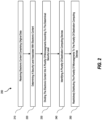
- Figure 2 illustrates a flow diagram 200 that includes various acts associated with exemplary methods that can be implemented by computing systems, such as computing system 130 described above in reference to Figure 1 and/orthat are associated with securing data access to machine learning training data during labeling processes of the corresponding data.
- the flow diagram 200 and corresponding methods include an act of a computing system receiving electronic content comprising original data (act 210).
- the computing system determines a security level associated with the electronic content (act 220).
- the computing system selectively divides the electronic content into a plurality of microsegments by duration, the duration of the microsegments being selected, at least in part, according to the determined security level (act 230).
- the computing system identifies a plurality of destination computing devices configured to apply a plurality of labels corresponding to the plurality of microsegments (act 240).
- the computing system selectively and restrictively distributes the plurality of microsegments to the plurality of destination computing devices (act 250).
- the act of distributing the microsegments also includes, in some instances, limiting or otherwise restricting distribution of the microsegments so that only a pre-determined quantity of microsegments from the original data (or a predefined data set of the original data) is distributed to any one of the destination computing devices.
- the electronic content includes the raw data 133 stored in data store 132 and/or that is obtained directly from one or more remote data source(s) 110 and/or speech service(s) 120 .
- the original data (or a predefined data set from the original data) comprises consumer usage data that includes private, sensitive, and/or confidential data from one or more consumer.
- the determined security level that is determined for the electronic content (act 220) will be based on attributes of the data source 110, such as if it is a private or public data source and/or if speakers associated with the data source have pre-authorized sharing of their data collected by speech services.
- the attributes are identified by the data sources/speech services.
- the attributes are independently and automatically identified by the computing system 130 during processing of the electronic content when it is received.
- the attributes are specified, in some instances, with metadata associated with the electronic content at the time the electronic content is received and/or after it is processed.
- segment divider 134 The act of dividing the electronic content into microsegments will be implemented by the segment divider 134, as illustrated in Figure 1 .
- the process of dividing the electronic content which may also be referred to as segmenting, shredding or splitting the electronic content into microsegments will be described in more detail below.
- the destination computing devices may be one or more computing devices represented by computing device(s) 160 of Figure 1 , for example. This act may be accomplished by the computing system identifying the destination computing devices based on explicit user input that specify the plurality of destination computing devices and/or may be based on various other factors and rules, such as by determining that attributes of electronic content matches particular attributes of selected destination computing devices from a larger plurality of systems/devices, based on routing protocols, based on load balancing rules, and so forth).
- the plurality of destination computing devices are distributed and/or separate computing devices, wherein one destination computing device is not in communication with another computing device and/or does not have access to or knowledge of microsegments (and/or corresponding labels) received by another computing device.
- the destination computing devices correspond to transcription entities, wherein the entity is a human transcriber.
- the act (act 250) for restrictively distributing the plurality of microsegments will be implemented by one or more of the various components of the computer architecture 100 of Figure 1 , for example, computing device 160, API authorization and authentication 162, encryption 164, segment receiver 166, Eyes-On human labeling 180, and/or data store 132 storing metadata 136.
- the rules for selectively distributing the electronic content to the destination computing devices will be described in more detail below.
- the term “eyes-off,” as used herein, is used to describe access to data being restricted to internal computing systems (i.e., non-human entity).
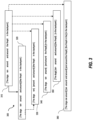
- Figures 3-4 illustrate exemplary methods and examples associated with dividing (e.g., separating, fragmenting splitting, shredding, or otherwise segmenting) electronic content into microsegments for labeling the electronic content.
- electronic content including an original utterance 310 [The dogs ran around and around the firepit in the backyard], which is available for segmentation.
- a security level corresponding to the original utterance 310 is determined. Once the security level is determined, a particular policy (for example, policy 140 of Figure 1 ) from a plurality of policies is chosen, wherein the particular policy dictates that microsegments are to include a maximum number of words, for example no more than six words.
- the original utterance 310 is then divided into a plurality of microsegments, specifically two microsegments 320, (i.e., [The dogs ran around and around] & [the firepit in the backyard]) wherein each microsegment includes up to six words.
- the two microsegments included in the first divided utterance 320 are distributed to a plurality of destination computing devices. Additionally, or alternatively, to facilitate a multiplicity of distributions of a particular microsegment, the segmentation can be performed to create overlap between the segments, which can facilitate labeling different segments with different contexts to facilitate more accurate labeling and/or verification of accuracy in labeling.
- the original utterance 310 is further divided into a second divided utterance 330 (or a second set of microsegments), including a set of three microsegments comprising (1) [The dogs ran], (2) [around and around] and (3) [the firepit in the backyard].
- the original utterance 310 is divided based on natural speech segmentation, for example wherein a slight pause is detected between "ran” and “around” and “around” and “the”.
- the initial segmentation is an example of dynamic segmentation resulting from the identification of the pause attribute during segmentation.
- a second set of microsegments (divided utterance 330) reflects overlap between natural breaks in portions or words of the microsegments of the divided utterance 320, which can be used to provide context in the microsegments for facilitating statistically more accurate transcription labeling.
- generating multiple labels for an utterance, or portion of an utterance is facilitated by performing a microsegmentation process of dividing an utterance into two or more sets of microsegments (e.g., divided utterance 320 and divided utterance 330, or divided utterance 320 and divided utterance 340, etc.).
- multiple labels are generated for portions of an utterance (e.g., utterance 310) by dividing the utterance into a plurality of microsegments, wherein each subsequent microsegment includes a portion of the preceding microsegment (e.g., divided utterance 360).
- the original utterance 310 may also be divided into a third and/or fourth sets of microsegments (see divided utterance 340, 350) based on varying policies (e.g., policy 140 of Figure 1 ). It is noted that the original utterance 310 is able to be divided into any number of sets of microsegments and/or with any number or configuration of overlapping microsegment portions based on words, time duration, or other feature(s). Each set of microsegments may be divided based on varying attributes identified in the original utterance.
- divided utterance 320 is indicative of a first security level corresponding to the original utterance 310.
- the divided utterance 350 is indicative of a second security level corresponding to the original utterance 310 wherein the microsegments of divided utterance 350 include between 2 and 4 words indicating that the second security level is heightened compared to the first security level.
- the second security level corresponds to the divided utterance 320, it is determined that attributes in the microsegments of divided utterance 320 are to be further divided into fragments.
- the parsed phrases of divided utterance 350 are microsegments of the original utterance 310 and/or microsegments fragments of the microsegments of divided utterance 320. These embodiments are particularly useful when attempting to add security to the underlying data, such as password data, financial transaction data, personal identification data, and so forth.
- the original utterance 310 may be divided into divided utterance 320, divided utterance 330, divided utterance 340, divided utterance 350, divided utterance 360, and/or any combination of these and other divided utterances to send to recipient labeling devices/systems. See the description for an exemplary method illustrated in Figure 5 herein.
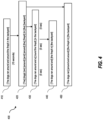
- Figure 4 a flow diagram of examples of divided utterances from an original utterance.
- the segmentation process may produce partial or truncated words that are difficult to provide an accurate transcription label.
- the partial word(s) is/are removed from the microsegments before the microsegments are distributed to computing devices for labeling.
- an original utterance 410 is shown as [The dogs ran around and around the firepit in the backyard]. Word boundaries are identified using a variety of methods including based on word timings and predicted start and endings of words.
- word boundaries are identified and defined (see utterance 420), the original utterance 410 is divided into a plurality of microsegments, for example see divided utterance 430.
- word boundaries are identified by buffering on both ends to ensure that a critical beginning and/or ending of the words are not missed.
- the original utterance 410 is divided into microsegments having a fixed five second time duration (i.e., a static segmentation policy).
- the first and second microsegments include partials words (for example, "around” is split into “a” and "round”).
- the partial words are identified by a computing system (for example, computing system 130 of Figure 1 ) by comparing the word boundaries 420 of the original utterance 410 against word boundaries identified in the divided utterance 430.
- "a" and “round” are identified as partial words and are removed from the divided utterance (see modified divided utterance 440).
- the identification and/or removal of partial words triggers the computing system (for example, computing system 130 of Figure 1 ), to generate another set of microsegments (see divided utterance 450) that does not include any partial words and still satisfies the initial requirement of less than or equal to a five second duration.
- the microsegments are further modified before being distributed to the plurality of computing devices.
- the microsegments are further modified after distribution and labeling, but before reconstruction into reconstructed electronic content.
- the reconstructed, labeled microsegments are further modified before being used as training data for machine learning models.
- the modifications may include truncating the microsegments at natural speech breaks that are identified by the computing system, removing partial words identified by the computing system in the microsegments, changing the pitch of spoken audio included in the microsegments, slowing down or speeding up the frequency of spoken audio included in the microsegments, adding room in response noise perturbation, adding white noise or other background noise and/or making other sound or audio modifications.
- changing the pitch of the spoken audio facilitates in improvement in data security because changing the pitch will render the spoken audio unrecognizable by the computing device and/or human transcriber in the case the transcription entity recognizes or remembers a particular voice signature.
- the first distribution of the microsegment to the computing device includes the original speech audio, and subsequent distributions of the microsegment to the same computing device include modified speech audio (e.g., by changing the pitch).
- the computing system chooses a different policy (for example, a policy shown as policy 140 of Figure 1 ) to generate the alternate and/or additional set of microsegments.
- a different policy for example, a policy shown as policy 140 of Figure 1
- microsegments were generated to be equal to a pre-determined time duration (e.g., five seconds).
- divided utterance 450 includes microsegments generated to be equal to or less than three seconds.
- divided utterance 450 includes microsegments generated to include equal to or less than N-words (e.g., no more than three words).
- the additional and/or alternate divided utterance 450 is provided to the computing device for labeling to ensure that all of the words of the original utterance 410 receive at least one corresponding transcription label.
- Figure 5 illustrates a flow diagram 500 that includes various acts associated with exemplary methods that can be implemented by computing systems, such as computing system 130 described above in reference to Figure 1 and/orthat are associated with securing data access to machine learning training data during labeling processes of the corresponding data.
- the flow diagram 500 and corresponding methods include an act of a computing system receiving electronic content comprising original data (act 510).
- the computing system determines a security level associated with the electronic content (act 520).
- the computing system selectively divides the electronic content into a plurality of microsegments by duration, the duration of the microsegments being selected according to the determined security level (act 530).
- the computing system identifies one or more key words associated with a second level of security (act 540).
- the second level of security is an increased security level compared to the initially determined security level associated with the electronic content.
- the computing system divides the microsegment(s) into one or more microsegment fragments (act 550).
- the one or more keywords include one or more of the following: personal identification numbers (driver's license numbers, passport numbers, social security numbers, etc.), transaction data (credit card and/or debit card numbers, security codes, pins, transaction confirmations, money transfers, monetary amounts, bank accounts, routing numbers, check numbers, etc.), password data, recovery emails, phone numbers, keyword phrases or words, other series of characters and special characters (ASCII and/or non-ASCII characters), sequences of numbers, one or more names, one or more characters that are identified as not being normal to speech, and/or terms indicative of data associated with a user or account credential.
- credential data authentication data
- verification data verification data
- keywords are identified by proceeding trigger words. For example, if credit card appears in the beginning of an utterance and/or in a first utterance, then a series of numbers appearing at the end of the utterance and/or in a second utterance is flagged as the keyword corresponding to an increased level of security. In such instances, the first utterance is divided into a plurality of microsegments, and the second utterance is divided into a plurality of microsegments and further divided into microsegment fragments causing the series of numbers to be parsed between microsegment fragments. In some embodiments, only the keyword is divided into fragments.
- microsegments including one or keywords is divided into microsegment fragments.
- one or more keywords is identified in at least one microsegment fragment
- every microsegment of a set or subset of electronic content is subdivided into microsegment fragments.
- the microsegment fragments are formed by fragmenting or otherwise dividing keywords into fragments or partial keywords. Additionally, or alternatively, the microsegments fragments are generated by removing one or more keywords from the microsegments and/or the one or more keywords are removed from the electronic content which is then divided into microsegments.
- the determined security level is a first security level associated with the electronic content, wherein the computing system acts upon the electronic content to divide it into a plurality of microsegments.
- the identification of keywords corresponding to an increased level of security causes the computing system to act upon the microsegments to further divide them into microsegment fragments.
- the computing system identifies one or more keywords corresponding to an increased level of security in the electronic content and automatically divides the electronic content into microsegment fragments.
- this security level may be based on attributes of the audio that are discovered by the computing system, and/or based on metadata received with or associated with the audio when it is received from a third party (e.g., an audio file with metadata descriptors) and/or that may be obtained from looking up the attributes in a database or table that stores attributes for different electronic content, including the audio that is being processed.
- a third party e.g., an audio file with metadata descriptors
- the keywords are identified by a segment divider, for example the segment divider 134 of Figure 1 .
- the keywords are identified by a speech service, for example one or more of the speech services 120 of Figure 1 , wherein information about the keywords is included with metadata about the electronic content stored in a data store, for example the data store 132 storing raw data 133 and/or data store 132 storing metadata 136 of Figure 1 .
- Segmentation of speech data is highly beneficial for several reasons.
- most conventional speech transcription services and/or NLP machine learning models are not able to handle large amounts of data (i.e., in terms of storage quantity vs. available processing memory and/or word length and/or time duration length and/or number of speakers contributing to the data).
- the transcription process is approached by human review for sessions within an allowed length. However, any session above that limit would never be reviewed.
- the transcription process includes segmenting the sessions into portions of an allowed length. The microsegments based on time may cut off audio in the middle of words and sometimes may not provide adequate context for accurate human review.
- the disclosed segmentation process beneficially includes sentence end prediction, along with allow length time limits, to perform the segmentation.
- segmentation of data into microsegments and restricted distribution of those microsegments beneficially facilitates an improvement in data security of the data because no one computing device and/or transcriber will have enough context to decipher the meaning of the data from which the microsegments are divided.
- Figure 6 illustrates a flow diagram 600 that includes various acts associated with exemplary methods that can be implemented by computing systems, such as computing system 130 described above in reference to Figure 1 and/orthat are associated with securing data access to machine learning training data during labeling processes of the corresponding data, specifically in restrictively distributing electronic data to a plurality of distributed computing devices where the content in the microsegments is labeled by a human and/or an automated system based on observable features/attributes of the microsegments.
- computing systems such as computing system 130 described above in reference to Figure 1 and/orthat are associated with securing data access to machine learning training data during labeling processes of the corresponding data, specifically in restrictively distributing electronic data to a plurality of distributed computing devices where the content in the microsegments is labeled by a human and/or an automated system based on observable features/attributes of the microsegments.
- the flow diagram 600 and corresponding methods include an act of a computing system determining a quantity of microsegments from an electronic content already distributed to a first destination computing device (act 610).
- the first destination computing device is one of a plurality of distributed computing devices.
- the computing system identifies a microsegment to be distributed to any one of the plurality of destination computing devices (act 620). After identifying a particular microsegment, the computing system determines that distributing that microsegment to the first destination computing device causes the total number of microsegments distributed to the first destination computing device to exceed a predetermined threshold (act 630).
- the computing system determines a quantity of microsegments from the electronic content already distributed to a second destination computing device (act 640).
- the second destination computing device is one of a plurality of distributed computing devices, for example such as computing device 160 of Figure 1 .
- the computing system prior to distributing the identified microsegment to the second destination computing device, determines that the distribution of the identified microsegment will not cause the total number of microsegments distributed to the second computing device to exceed a pre-determined threshold (act 650). When the determination is made that the threshold distribution will not be exceeded, the computing system subsequently distributes the microsegment to the second computing device (act 660) and updates the records to reflect total distributions of the microsegment(s) made to the second computing device.
- the pre-determined threshold is determined based on a security level associated with the electronic content. In some embodiments, the threshold is an upper limit of a total maximum of microsegments. In some embodiments, the threshold is an upper limit of a total maximum of microsegments from a specific set or subset of electronic content from a shared source.
- the microsegments from the quantity of microsegments (act 610) and/or the identified microsegment (act 620) are divided based on a determined level of security (see act 510 of Figure 5 ).
- the microsegments referenced in flow diagram 600 are divided randomly or based from a plurality of different characteristics (other than and/or including the determined security level).
- the restrictive distribution of the microsegments is not dependent on the microsegments having been divided based on a determined security level associated with the electronic content from which the microsegments were obtained.
- performing the act(s) for restrictive distribution of the microsegments is based on a determined security level of the microsegment(s) (and/or electronic content from which the microsegment(s) are obtained). For example, wherein a specific microsegment, or set of microsegments, is determined to a have a low security level (below a pre-determined threshold), the microsegment(s) are distributed to one or more computing devices freely and/or randomly (i.e., not restrictively).
- the determination of a particular security level corresponding to one or more microsegments and/or the electronic content from which the microsegments were divided triggers (i.e., activates) the computing system to perform restrictive distribution of those microsegments.
- one or more thresholds are tuned and/or adjusted based on the determined security level of the microsegments (and/or corresponding electronic content).
- one or more acts corresponding to methods associated with flow diagram 400 (and/or flow diagram 500) and one or more acts corresponding to methods associated with flow diagram 600 are performed independently of each other. Whereas, in some instances, the performance of one or more acts associated with flow diagram 600 are dependent on the performance of one or more acts associated with flow diagram 400 (and/or flow diagram 500).
- the disclosed methods also include an act of a computing system accessing a look-up table comprising identifiers, wherein each identifier corresponds to a destination computing device of the plurality of destination computing devices.
- the computing system determines a quantity of microsegments already distributed to each of the destination computing devices. Thereafter, the computing system links the identifiers to the quantity of microsegments already distributed to each of the destination computing devices, wherein the quantity of microsegments corresponds to a percentage of total microsegments divided from the electronic content that are distributed to each of the destination computing devices.
- the disclosed methods also include the computing system determining whether a particular microsegment to be distributed to a second or recipient computing system is consecutive (from a predetermined set of data that has been segmented) to a previous microsegment that was already distributed to that recipient computing system from the particular defined data set. Then, the system restricts that particular microsegment from being sent to the recipient computing system if it is determined one is consecutive to the other from the set of microsegments created same underlying data set.
- the computing system also determines (prior to making a particular distribution of a particular microsegment) that distributing the particular segment to a second destination computing device does not cause a total number of microsegments distributed to the second destination computing device to exceed a pre-determined threshold, while still facilitating a multiplicity of transcription labels being obtained for a particular microsegment.
- the microsegments will be distributed according to a variety of methods, wherein the selectivity or restrictive nature of the distribution is based on various criteria.
- the microsegment threshold for each computing device is a maximum value or number of microsegments.
- the microsegment distribution is restricted based on a threshold for how many consecutive microsegments a computing device receives. In such instances, there may be no upper limit to the total number of microsegments, so long as the computing system does not receive X-number of consecutive microsegments.
- the threshold value is fixed.
- the threshold value is based on a determined security level of the electronic content and/or based on keywords identified by the computing system that are associated with an increased level of data security.
- Figure 7 illustrates a flow diagram 700 that includes various acts associated with exemplary methods that can be implemented by computing systems, such as computing system 130 described above in reference to Figure 1 and/orthat are associated with securing data access to machine learning training data during labeling processes of the corresponding data, including techniques for resolving conflicts between non-equivalent labels for particular microsegments.
- the microsegments are distributed to a plurality of computing devices configured to apply transcription labels to the microsegments (for example, see data labels 168 of Figure 1 ).
- the same microsegment will be distributed to more than one computing device, wherein a duplicate or multiple transcription labels will be generated by different computing devices for the same microsegment.
- the two or more transcriptions for a particular microsegment may not agree or have different labels for the same words or portions of the microsegments.
- electronic content is divided into two or more sets of microsegments, wherein between the two sets, one or more microsegments (or one or more portions of microsegments) of a first set overlap with one or more microsegments (or one or more portions of microsegments).
- the applied labels returned from the computing devices for the overlapping portions sometimes are not identical.
- Figures 3 and 4 There are a plurality of ways described herein to perform conflict resolution to determine which of the plurality of transcription labels are to be included in the generation of training data for a machine learning model being configured for speech recognition or NLP applications.
- the flow diagram 700 and corresponding methods include an act of a computing system reconstructing a plurality of microsegments into reconstructed electronic content (act 710).
- the computing system receives a plurality of labels corresponding to the plurality of microsegments divided from the electronic content (act 720).
- the computing system determines that at least one overlapped portion of the microsegments includes a set of non-equivalent corresponding labels (act 730).
- the computing system includes a particular label of the set of non-equivalent corresponding labels in the reconstructed electronic content for the overlapped portion of the microsegments (act 740).
- the microsegments are beneficially reconstructed, or reordered, to mirror the chronological and/or consecutive sequencing of the initially divided utterance (the divided utterance including the plurality of microsegments divided from electronic content, for example see divided utterances 320, 330, 340, 350 of Figure 3 ) before the microsegments were distributed for transcription labeling to maintain data integrity of the electronic content for generating the training data.
- the microsegments and corresponding labels may be reconstructed based on matching security levels, similar keywords, matching and/or similar data sources, similar speaker attributes, or based on other attributes identified in the microsegments.
- only one transcription label is chosen for inclusion in the reconstructed electronic content used for training data.
- one or more transcriptions labels are chosen for inclusion in the reconstructed electronic content used for training data.
- the multiple transcription labels include a weighting for each transcription label in evaluating efficacy and/or accuracy of the machine learning model undergoing training via the training data. It should be appreciated that the reconstructed electronic content may be used for training and/or evaluation of the machine learning model.
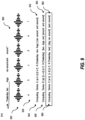
- Figure 8 illustrates an example that includes various configurations associated with exemplary methods that can be implemented by computing systems, such as computing system 130 described above in reference to Figure 1 and/or that are associated with securing data access to machine learning training data during labeling processes of the corresponding data. More specifically, the methods are associated with resolving conflicts between non-equivalent labels for particular microsegments.
- Figure 8 shows an utterance 810 including audio content for the spoken "Yesterday two dogs ran around and around" spoken by a particular speaker.
- the audio frequencies 820 recorded from and associated with the utterance 810 is shown below the utterance 810.
- the audio recording 820 is shown divided into a plurality of microsegments 830 and distributed (with restricted distribution) to different destination systems for labeling, as shown in lines 840, 850, 860. Portions of the audio recording utterance 820 are illustrated as alphabetic labels a, b, c, d, e, and f, wherein each microsegment comprises one or more audio recording portions. (It should be appreciated that the microsegments may be generated and distributed via any one of a plurality of segmentation and distribution methods described herein.)
- the set of microsegments are distributed to a plurality of recipient computing devices (A, B, C), each of which is configured as computing device 160 of Figure 1 , for instance.
- different microsegments are created and distributed to computing device A (i.e., microsegments [a,b,c] and [d,e,f]), to computing device B (i.e., microsegments [a], [b,c,d] and [e,f]), and to computing device C (i.e., microsegments [a,b], [c,d] and [e,f]), such that they each get the full set of the electronic content for utterance 810 (a, b, c, d, e and f).
- This example is provided to show how conflict resolution may occur, while appreciating that in some instances the microsegments for a full utterance, or consecutive microsegments of an utterance will not be sent to any particular computing system, in some instances and as described previously, based on security policies (when applicable).
- This example also shows how different microsegments for the same utterance can be distributed to different devices for labeling, wherein the different microsegments will overlap different portions of the underlying electronic content in some instances (e.g., as shown in box 870, wherein one microsegment of content (b, c, d) sent to device B will overlap with microsegments of content (a, b) and (c, d, e) that are sent to device C).
- the reconstructed microsegments include reconstructed or labeled electronic content 842, 852, 862, corresponding to the labels provided by computing devices A, B, and C, respectively.
- the computing devices generated equivalent labels for audio recording portions represented by a, b, d, e, and f.
- audio recording portion c only computing devices B and C generated equivalent labels (see “dogs"), while computing device A generated a non-equivalent label (see "frogs").
- voting by a majority may be applied to determine which label is included. For example, since two computing devices generated “dogs" for audio portion c and only one computing device generated “frogs,” the majority winner is “dogs.” In some embodiments, wherein a weighting is applied between labels, an equal weighting is applied to "dogs" for computing device B and "dogs" for computing device C, while a lesser weighting is applied to "frogs" for computing device A.
- the voting may be done automatically by the computing system when non-equivalent labels are identified. Additionally, or alternatively, the voting may be performed by a third-party human labeler.
- all or a plurality of conflicting labels are included in the training data with different probability of accuracy weights being associated with the different labels to be consumed and processed by the training models.
- Figure 9 illustrates an additional or alternative means for conflict resolution of non-equivalent transcription labels.
- an utterance 910 is shown with its corresponding graphical representation of the audio recording 920.
- Portions 930 of the audio recording are represented by alphabetic labels a, b, c, d, e, and f.
- the utterance is divided into one or more sets of microsegments, for example utterance 910 is divided into three sets of microsegments, wherein each set of microsegments is distributed to a plurality of computing devices, for example computing device A 940, computing device B 950, and computing device C 960.
- All of the illustrated computing devices generated equivalent labels (see labels 942, 952, 953) for audio recording portions a, b, d, e, and f. However, each computing device generated a non-equivalent label for audio recording portion 'c' (see “frogs” vs "dogs” vs "dog”).
- context weighting may be applied to determine the best label (i.e., the label most likely to be accurate for the corresponding audio portion and/or word of the utterance).
- the computing system (and/or computing device and/or human entity) will determine that labeling provided by device B for labeling portion 'c' has more context, or a greater contextual weighting for labeling portion 'c,' resulting in the system choosing device B's label of "dogs" for portion 'c.'
- the computing device B had the greatest access to context for labeling portion 'c', with context before and after portion 'c' in the microsegment [b,c,d] that was received for labeling.
- neither of the other devices had as much context for labeling portion c from a single received microsegment, each having only context before or after portion 'c' in the separate microsegments they received with portion 'c' (e.g., device A received segment [a,b,c] and device C received segment [c,d].
- portion 'c' e.g., device A received segment [a,b,c]
- device C received segment [c,d].
- This point is even more relevant when devices do not receive the full set of microsegments (or consecutive microsegments) for an utterance, but only limited microsegments of the entire utterance being labeled, which further restricts access to corresponding context for any particular term/portion of the utterance to be labeled.
- Deduction logic confirms the assumption that greater context is associated with a higher likelihood of producing an accurate label. For example, in the case of computing device a, “frogs” may be accurate because of the context of the preceding word "two” indicating a plurality. However, in the case of computing device c, “dog” may be more accurate than “frogs” because “dog” is generally more associated with the verb "ran” than “frogs.” Furthermore, as shown, the transcription label generated by computing device B is beneficially selected (and/or weighted more heavily than the other transcription labels for audio portion c) because context from preceding word "two” is generally associated with a plurality (suggesting a plural form of a noun) and “ran” is generally more associated with “dogs” than “frogs.” Thus, the inclusion of the transcription label(s) generated by computing device B facilitate the generation of effective training data because the labels match most closely the original utterance 910.
- each transcription label may receive a different weighting score due to the identified context.
- transcription label 942 receives a first weighting score
- transcription label 952 receives a third weighting score, wherein the weighting score for transcription label 952 is higher than the others because of greater level of context (i.e., a preceding word and succeeding word) for the non-equivalent label for audio portion c.
- weighting scores for transcription labels 942 and 962 are equal (i.e., only one of a preceding or succeeding word).
- the transcription labels 942 and 962 are not equal, wherein it is determined that either a preceding context (e.g., word, phrase, etc.) or a succeeding context provides a greater or lesser context to the non-equivalent label.
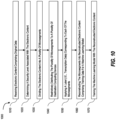
- Figure 10 illustrates a flow diagram 1000 that includes various acts associated with exemplary methods that can be implemented by computing systems, such as computing system 130 described above in reference to Figure 1 and/or that are associated with securing data access to machine learning training data during labeling processes of the corresponding data.
- the flow diagram 1000 and corresponding methods include an act of a computing system receiving electronic content comprising original data (act 1010).
- the computing system determines a security level associated with the electronic content (act 1020).
- the computing system selectively divides the electronic content into a plurality of microsegments by duration, the duration of the microsegments being selected according to the determined security level (act 1030).
- the computing system selectively and restrictively distributes the plurality of microsegments to the plurality of destination computing devices (act 1040).
- the act of distributing the microsegments also includes, in some instances, limiting or otherwise restricting distribution of the microsegments so that only a pre-determined quantity of microsegments from the original data (or a predefined data set of the original data) is distributed to any one of the destination computing devices.
- the computing system After distribution, the computing system causes each computing device of the plurality of destination computing devices to apply a label (i.e., a transcription label) corresponding to each of the microsegments (act 1060). The computing system then reconstructs the microsegments (and corresponding labels) into reconstructed electronic content comprising training data for a machine learning model. Finally, the computing system trains the machine learning model with the reconstructed electronic content (act 1070). This training may include applying the context and/or probability of accuracy weights that are included with or associated with the different labels of the reconstructed microsegments, particularly when multiple labels are provided for the same portions of the electronic content being used in the training data.
- a label i.e., a transcription label
- the reconstructed training data is also used, in some instances, for fine-tuning an already trained machine learning model.
- the machine learning model is trained for speech recognition, optical character recognition, and/or natural language processing.
- the reconstructed electronic content including microsegments and corresponding labels, will also be further processed and/or modified before inclusion or generation of machine learning training data in some instances.
- the methods may be practiced by a computer system including one or more processors and computer-readable media such as computer memory.
- the computer memory may store computer-executable instructions that when executed by one or more processors cause various functions to be performed, such as the acts recited in the embodiments.
- Embodiments of the present invention may comprise or utilize a special purpose or general-purpose computer including computer hardware, as discussed in greater detail below.
- Embodiments within the scope of the present invention also include physical and other computer-readable media for carrying or storing computer-executable instructions and/or data structures.
- Such computer-readable media can be any available media that can be accessed by a general purpose or special purpose computer system.
- Computer-readable media that store computer-executable instructions are physical storage media.
- Computer-readable media that carry computer-executable instructions are transmission media.
- embodiments of the invention can comprise at least two distinctly different kinds of computer-readable media: physical computer-readable storage media and transmission computer-readable media.
- Physical computer-readable storage media includes RAM, ROM, EEPROM, CD-ROM or other optical disk storage (such as CDs, DVDs, etc.), magnetic disk storage or other magnetic storage devices, or any other medium which can be used to store desired program code means in the form of computer-executable instructions or data structures and which can be accessed by a general purpose or special purpose computer.
- a "network” is defined as one or more data links that enable the transport of electronic data between computer systems and/or modules and/or other electronic devices.
- a network or another communications connection can include a network and/or data links which can be used to carry or transmit desired program code means in the form of computer-executable instructions or data structures and which can be accessed by a general purpose or special purpose computer. Combinations of the above are also included within the scope of computer-readable media.
- program code means in the form of computer-executable instructions or data structures can be transferred automatically from transmission computer-readable media to physical computer-readable storage media (or vice versa).
- program code means in the form of computer-executable instructions or data structures received over a network or data link can be buffered in RAM within a network interface module (e.g., a "NIC"), and then eventually transferred to computer system RAM and/or to less volatile computer-readable physical storage media at a computer system.
- NIC network interface module
- computer-readable physical storage media can be included in computer system components that also (or even primarily) utilize transmission media.
- Computer-executable instructions comprise, for example, instructions and data which cause a general-purpose computer, special purpose computer, or special purpose processing device to perform a certain function or group of functions.
- the computer-executable instructions may be, for example, binaries, intermediate format instructions such as assembly language, or even source code.
- the invention may be practiced in network computing environments with many types of computer system configurations, including, personal computers, desktop computers, laptop computers, message processors, hand-held devices, multi-processor systems, microprocessor-based or programmable consumer electronics, network PCs, minicomputers, mainframe computers, mobile telephones, PDAs, pagers, routers, switches, and the like.
- the invention may also be practiced in distributed system environments where local and remote computer systems, which are linked (either by hardwired data links, wireless data links, or by a combination of hardwired and wireless data links) through a network, both perform tasks.
- program modules may be located in both local and remote memory storage devices.
- the functionality described herein can be performed, at least in part, by one or more hardware logic components.
- illustrative types of hardware logic components include Field-programmable Gate Arrays (FPGAs), Program-specific Integrated Circuits (ASICs), Program-specific Standard Products (ASSPs), System-on-a-chip systems (SOCs), Complex Programmable Logic Devices (CPLDs), etc.
Landscapes
- Engineering & Computer Science (AREA)
- Theoretical Computer Science (AREA)
- Health & Medical Sciences (AREA)
- Physics & Mathematics (AREA)
- General Health & Medical Sciences (AREA)
- Bioethics (AREA)
- General Engineering & Computer Science (AREA)
- General Physics & Mathematics (AREA)
- Software Systems (AREA)
- Databases & Information Systems (AREA)
- Computer Security & Cryptography (AREA)
- Computer Hardware Design (AREA)
- Audiology, Speech & Language Pathology (AREA)
- Human Computer Interaction (AREA)
- Multimedia (AREA)
- Computational Linguistics (AREA)
- Acoustics & Sound (AREA)
- Artificial Intelligence (AREA)
- Medical Informatics (AREA)
- Storage Device Security (AREA)
- Management, Administration, Business Operations System, And Electronic Commerce (AREA)
Claims (15)
- Von einem Rechensystem implementiertes Verfahren zum Sichern eines Datenzugriffs auf Trainingsdaten für Maschinenlernen auf einer Vielzahl von verteilten Rechenvorrichtungen, wobei das Verfahren umfasst:Empfangen von elektronischen Inhalten, welche Originaldaten umfassen, durch das Rechensystem (210);Bestimmen einer Sicherheitsstufe, welche den elektronischen Inhalten zugeordnet ist, durch das Rechensystem (220);selektives Aufteilen der elektronischen Inhalte nach Dauer in eine Vielzahl von Mikrosegmenten durch das Rechensystem, wobei die Dauer der Mikrosegmente gemäß der bestimmten Sicherheitsstufe ausgewählt wird (230);Identifizieren einer Vielzahl von Zielrechenvorrichtungen, welche dazu konfiguriert sind, eine Vielzahl von Etiketten anzubringen, welche der Vielzahl von Mikrosegmenten entsprechen, durch das Rechensystem (240); undrestriktives Verteilen der Vielzahl von Mikrosegmenten an die Vielzahl von Zielrechenvorrichtungen durch das Rechensystem (250), wobei die restriktive Verteilung das Beschränken einer Menge von Mikrosegmenten, welche an eine der Zielrechenvorrichtungen verteilt werden sollen, auf weniger als eine vorbestimmte Schwelle umfasst, wobei die vorbestimmte Schwelle auf der Grundlage der bestimmten Sicherheitsstufe bestimmt wird.
- Verfahren nach Anspruch 1, wobei das Aufteilen der elektronischen Inhalte in eine Vielzahl von Mikrosegmenten durch das Rechensystem weiter das Aufteilen der elektronischen Inhalte in die Vielzahl von Mikrosegmenten umfasst, wobei ein erstes Mikrosegment Inhalte aufweist, welche sich mit mindestens einem Abschnitt eines zweiten Mikrosegments überlappen.
- Verfahren nach Anspruch 2, wobei das erste Mikrosegment Inhalte aufweist, welche das zweite Segment um eine vorbestimmte Menge von Wörtern überlappen, wobei die Menge von Wörtern von dem Rechensystem während des Aufteilens der elektronischen Inhalte in mindestens das erste und zweite Mikrosegment identifiziert wird.
- Verfahren nach einem der Ansprüche 1 bis 3, weiter umfassend:
Bestimmen, dass ein Mikrosegment weiter in zwei oder mehr Mikrosegmentfragmente unterteilt werden soll, durch das Rechensystem, basierend auf dem Erkennen eines Attributs des Mikrosegments, welches einer erhöhten Datensicherheitsstufe im Vergleich zu der ursprünglich bestimmten Sicherheitsstufe entspricht. - Verfahren nach Anspruch 4, wobei der erkannte Satz von einem oder mehreren Attributen des Mikrosegments eines oder mehrere der folgenden umfasst: eine Folge von Zahlen, einen oder mehrere Namen, ein oder mehrere Zeichen oder Symbole, welche als nicht normale Sprache identifiziert werden, oder spezifische Begriffe einschließlich Kontonummer, Bank, Kreditkarte oder andere Wörter oder Ausdrücke, welche als Hinweis auf Daten gelten, welche mit einem Benutzer- oder Kontoberechtigungsnachweis verknüpft sind.
- Verfahren nach einem der Ansprüche 1-5, weiter umfassend: Modifizieren der Mikrosegmente durch eines oder mehrere der folgenden:Abschneiden der Mikrosegmente an natürlichen Sprachpausen, welche von dem Rechensystem identifiziert werden;Entfernen von Teilwörtern, welche von dem Rechensystem in den Mikrosegmenten identifiziert werden; oderÄndern der Tonhöhe des in den Mikrosegmenten enthaltenen gesprochenen Audios.
- Verfahren nach einem der Ansprüche 1-6, wobei das restriktive Verteilen der Vielzahl von Mikrosegmenten an die Vielzahl von Zielrechenvorrichtungen durch das Rechensystem weiter umfasst:Zugreifen auf eine Nachschlagetabelle, welche Kennungen umfasst, durch das Rechensystem, wobei jede Kennung einer Zielrechenvorrichtung der Vielzahl von Zielrechenvorrichtungen entspricht;Bestimmen einer Menge von Mikrosegmenten, welche bereits an jede der Zielrechenvorrichtungen verteilt sind, durch das Rechensystem;Verknüpfen der Kennungen mit der Menge von Mikrosegmenten, welche bereits an jede der Zielrechenvorrichtungen verteilt sind, durch das Rechensystem, wobei die Menge von Mikrosegmenten einem Prozentsatz der gesamten Mikrosegmente entspricht, die aus den elektronischen Inhalten dividiert werden, die an jede der Zielrechenvorrichtungen verteilt werden.
- Verfahren nach einem der Ansprüche 1-7, wobei das restriktive Verteilen der Vielzahl von Mikrosegmenten an die Vielzahl von Zielrechenvorrichtungen durch dir Rechenvorrichtung weiter umfasst:
Bestimmen einer Menge von Mikrosegmenten, welche bereits an eine erste Zielrechenvorrichtung verteilt sind, durch das Rechensystem;Identifizieren eines bestimmten Mikrosegments, welches an beliebige Zielrechenvorrichtungen verteilt werden soll, durch das Rechensystem;Bestimmen, dass das Verteilen des Mikrosegments an die erste Zielrechenvorrichtung veranlasst, dass die Gesamtzahl der an die erste Zielrechenvorrichtung verteilten Mikrosegmente die vorbestimmte Schwelle überschreitet, durch das Rechensystem;Bestimmen einer Menge von Mikrosegmenten, welche bereits an eine zweite Zielrechenvorrichtung verteilt sind, durch das Rechensystem;Bestimmen, dass das Verteilen des speziellen Mikrosegments an die zweite Zielrechenvorrichtung nicht veranlasst, dass die Gesamtzahl der an die zweite Zielrechenvorrichtung verteilten Mikrosegmente die vorbestimmte Schwelle überschreitet, durch das Rechensystem; undVerteilen des speziellen Mikrosegments an die zweite Zielrechenvorrichtung durch das Rechensystem. - Verfahren nach einem der Ansprüche 1-7, wobei das restriktive Verteilen der Vielzahl von Mikrosegmenten an die Vielzahl von Zielrechenvorrichtungen durch die Rechenvorrichtung weiter umfasst:
Bestimmen einer Menge von Mikrosegmenten, welche bereits an eine erste Zielrechenvorrichtung verteilt sind, durch das Rechensystem;Identifizieren eines bestimmten Mikrosegments, welches an eine der Zielrechenvorrichtungen der Vielzahl von Zielrechenvorrichtungen verteilt werden soll, durch das Rechensystem;Bestimmen, dass das spezielle Mikrosegment auf eine vorbestimmte Anzahl von Mikrosegmenten der Menge von Mikrosegmenten folgt, welche bereits an eine erste Zielrechenvorrichtung verteilt sind, durch das Rechensystem;Bestimmen einer Menge von Mikrosegmenten, welche bereits an eine zweite Zielrechenvorrichtung verteilt sind, durch das Rechensystem;Bestimmen, dass das spezielle Mikrosegment nicht auf eine vorbestimmten Anzahl von Mikrosegmenten der Menge von Mikrosegmenten folgt, welche bereits an eine zweite Zielrechenvorrichtung verteilt sind, durch das Rechensystem; undVerteilen des speziellen Mikrosegments an die zweite Zielrechenvorrichtung durch das Rechensystem. - Verfahren nach einem der Ansprüche 1-7, wobei das restriktive Verteilen der Vielzahl von Mikrosegmenten an die Vielzahl von Zielrechenvorrichtungen durch dir Rechenvorrichtung weiter umfasst:Identifizieren eines bestimmten Mikrosegments, welches an eine der Zielrechenvorrichtungen der Vielzahl Zielrechenvorrichtungen verteilt werden soll, durch das Rechensystem;Bestimmen, dass das Verteilen des speziellen Mikrosegments an eine erste Zielrechenvorrichtung nicht veranlasst, dass eine Gesamtzahl der an die erste Zielrechenvorrichtung verteilten Mikrosegmente die vorbestimmte Schwelle überschreitet, durch das Rechensystem;Verteilen des speziellen Segments an die erste Zielrechenvorrichtung durch das Rechensystem;Bestimmen, dass das Verteilen des speziellen Segments an eine zweite Zielrechenvorrichtung nicht veranlasst, dass eine Gesamtzahl der an die zweite Zielrechenvorrichtung verteilten Mikrosegmente die vorbestimmte Schwelle überschreitet, durch das Rechensystem; undVerteilen des speziellen Segments an die zweite Zielrechenvorrichtung durch das Rechensystem.
- Verfahren nach einem der Ansprüche 1-10, weiter umfassend:
Empfangen einer Vielzahl von Etiketten, welche einer Vielzahl von Mikrosegmenten entsprechen, welche aus den elektronischen Inhalten dividiert werden, durch das Rechensystem, wobei die Vielzahl von Etiketten von mindestens zwei der Vielzahl von Zielrechenvorrichtungen bereitgestellt wird. - Verfahren nach Anspruch 11, weiter umfassend:Rekonstruieren der Vielzahl von Mikrosegmenten in rekonstruierte elektronische Inhalte, welche die Vielzahl von Etiketten umfassen, welche der Vielzahl von Mikrosegmenten entsprechen, durch das Rechensystem, wobei die rekonstruierten elektronischen Inhalte Trainingsdaten für ein Maschinenlernmodell umfassen; undTrainieren des Maschinenlernmodells mit den rekonstruierten elektronischen Inhalten, welche Trainingsdaten für das Maschinenlernmodell umfassen, durch das Rechensystem.
- Verfahren nach Anspruch 12, wobei das Rekonstruieren der Vielzahl von Mikrosegmenten in rekonstruierte elektronische Inhalte weiter Mikrosegmente umfasst, welche so dividiert werden, dass sie Abschnitte von Mikrosegmenten beinhalten, welche einander überlappen, wobei das Verfahren weiter umfasst:Bestimmen, dass mindestens ein überlappender Teil von Mikrosegmenten einen Satz nicht äquivalenter entsprechender Etiketten beinhaltet, durch das Rechensystem; undEinschließen eines speziellen Etiketts des Satzes nicht äquivalenter entsprechender Etiketten in die rekonstruierten elektronischen Inhalte für den überlappenden Teil der Mikrosegmente durch das Rechensystem.
- Verfahren nach Anspruch 13, wobei das spezielle Etikett des Satzes nicht äquivalenter entsprechender Etiketten auf der Grundlage einer Bestimmung, dass das spezielle Etikett des mindestens einen überlappenden Abschnitts für ein erstes Mikrosegment bereitgestellt wird, welches einen erhöhten Kontextgrad relativ zu einem zweiten Mikrosegment aufweist, welches eine andere Bezeichnung für den mindestens einen überlappenden Teil hat, zur Aufnahme in die rekonstruierten elektronischen Inhalte ausgewählt wird.
- Rechensystem, welches dazu konfiguriert ist, einen Datenzugriff auf Trainingsdaten für Maschinenlernen auf einer Vielzahl von verteilten Rechenvorrichtungen zu sichern, wobei das Rechensystem umfasst:einen oder mehrere Prozessoren; undeine oder mehrere computerlesbare Hardwarespeichervorrichtungen, die computerausführbare Anweisungen speichern, die von dem einen oder den mehreren Prozessoren ausführbar sind, um das Rechensystem mindestens zu veranlassen zum:Empfangen elektronischer Inhalte, welche Originaldaten umfassen, welche einer bestimmten Sicherheitsstufe entsprechen (210, 220);selektives Dividieren der elektronischen Inhalte nach Dauer in eine Vielzahl von Mikrosegmenten, wobei die Dauer der Mikrosegmente entsprechend der mit den elektronischen Inhalten verknüpften bestimmten Sicherheitsstufe ausgewählt wird (230);Identifizieren einer Vielzahl von Zielrechenvorrichtungen, welche zum Anbringen einer Vielzahl von Etiketten konfiguriert sind, welche der Vielzahl von Mikrosegmenten entsprechen (240);restriktives Verteilen der Vielzahl von Mikrosegmenten an die Vielzahl von Zielrechenvorrichtungen, wobei die eingeschränkte Verteilung das Einschränken einer Menge von Mikrosegmenten, welche an eine der Zielrechenvorrichtungen verteilt werden sollen, auf weniger als eine vorbestimmte Schwelle umfasst (250), wobei die vorbestimmte Schwelle auf der Grundlage der bestimmten Sicherheitsstufe bestimmt wird;Empfangen einer Vielzahl von Etiketten, welche einer Vielzahl von Mikrosegmenten entsprechen, welche aus den elektronischen Inhalten dividiert sind, wobei die Vielzahl von Etiketten von mindestens zwei der Vielzahl von Zielrechenvorrichtungen bereitgestellt wird; undRekonstruieren der Vielzahl von Mikrosegmenten in rekonstruierte elektronische Inhalte, welche die Vielzahl von Etiketten umfassen, welche der Vielzahl von Mikrosegmenten entsprechen, wobei die rekonstruierten elektronischen Inhalte Trainingsdaten für ein Maschinenlernmodell umfassen.
Applications Claiming Priority (2)
| Application Number | Priority Date | Filing Date | Title |
|---|---|---|---|
| LU101763A LU101763B1 (en) | 2020-05-04 | 2020-05-04 | Microsegment secure speech transcription |
| PCT/US2021/030208 WO2021225894A1 (en) | 2020-05-04 | 2021-04-30 | Microsegment secure speech transcription |
Publications (2)
| Publication Number | Publication Date |
|---|---|
| EP4128212A1 EP4128212A1 (de) | 2023-02-08 |
| EP4128212B1 true EP4128212B1 (de) | 2023-11-22 |
Family
ID=70614497
Family Applications (1)
| Application Number | Title | Priority Date | Filing Date |
|---|---|---|---|
| EP21726023.1A Active EP4128212B1 (de) | 2020-05-04 | 2021-04-30 | Sichere mikrosegment-sprachtranskription |
Country Status (5)
| Country | Link |
|---|---|
| US (1) | US11947699B2 (de) |
| EP (1) | EP4128212B1 (de) |
| CN (1) | CN115605947B (de) |
| LU (1) | LU101763B1 (de) |
| WO (1) | WO2021225894A1 (de) |
Families Citing this family (6)
| Publication number | Priority date | Publication date | Assignee | Title |
|---|---|---|---|---|
| LU101763B1 (en) | 2020-05-04 | 2021-11-05 | Microsoft Technology Licensing Llc | Microsegment secure speech transcription |
| JP7767767B2 (ja) * | 2021-08-19 | 2025-11-12 | 富士フイルムビジネスイノベーション株式会社 | 情報処理装置、情報処理システム、およびプログラム |
| KR20240053639A (ko) * | 2021-09-23 | 2024-04-24 | 구글 엘엘씨 | 제한된 스펙트럼 클러스터링을 사용한 화자-턴 기반 온라인 화자 구분 |
| WO2023238722A1 (ja) * | 2022-06-08 | 2023-12-14 | 富士フイルム株式会社 | 情報作成方法、情報作成装置、及び動画ファイル |
| US11704507B1 (en) * | 2022-10-31 | 2023-07-18 | Kudo, Inc. | Systems and methods for automatic speech translation |
| US20250298829A1 (en) * | 2024-03-22 | 2025-09-25 | Capital One Services, Llc | Transcript segmentation and summarization |
Family Cites Families (50)
| Publication number | Priority date | Publication date | Assignee | Title |
|---|---|---|---|---|
| DE19754957A1 (de) * | 1997-12-11 | 1999-06-17 | Daimler Chrysler Ag | Verfahren zur Spracherkennung |
| US6963425B1 (en) * | 2000-08-14 | 2005-11-08 | National Instruments Corporation | System and method for locating color and pattern match regions in a target image |
| JP2003069639A (ja) * | 2001-08-27 | 2003-03-07 | Nec Corp | xDSL収容装置、マルチキャスト配信システム及びデータ配信方法 |
| JP4601969B2 (ja) * | 2004-01-27 | 2010-12-22 | 株式会社日立製作所 | ファイル入出力制御装置 |
| US20070081428A1 (en) | 2005-09-29 | 2007-04-12 | Spryance, Inc. | Transcribing dictation containing private information |
| WO2007086042A2 (en) | 2006-01-25 | 2007-08-02 | Nice Systems Ltd. | Method and apparatus for segmentation of audio interactions |
| US20090234635A1 (en) * | 2007-06-29 | 2009-09-17 | Vipul Bhatt | Voice Entry Controller operative with one or more Translation Resources |
| US11461785B2 (en) * | 2008-07-10 | 2022-10-04 | Ron M. Redlich | System and method to identify, classify and monetize information as an intangible asset and a production model based thereon |
| US8713329B2 (en) * | 2009-02-26 | 2014-04-29 | Red Hat, Inc. | Authenticated secret sharing |
| US8707381B2 (en) * | 2009-09-22 | 2014-04-22 | Caption Colorado L.L.C. | Caption and/or metadata synchronization for replay of previously or simultaneously recorded live programs |
| US8583721B2 (en) * | 2009-10-13 | 2013-11-12 | Xerox Corporation | Systems and methods for distributing work among a plurality of workers |
| US8335689B2 (en) * | 2009-10-14 | 2012-12-18 | Cogi, Inc. | Method and system for efficient management of speech transcribers |
| JP5564968B2 (ja) * | 2010-02-05 | 2014-08-06 | 富士ゼロックス株式会社 | 情報処理装置及び情報処理プログラム |
| US8930896B1 (en) * | 2010-07-23 | 2015-01-06 | Amazon Technologies, Inc. | Data anonymity and separation for user computation |
| US8839368B2 (en) * | 2011-11-01 | 2014-09-16 | Cleversafe, Inc. | Acquiring a trusted set of encoded data slices |
| US8543398B1 (en) | 2012-02-29 | 2013-09-24 | Google Inc. | Training an automatic speech recognition system using compressed word frequencies |
| US8935167B2 (en) | 2012-09-25 | 2015-01-13 | Apple Inc. | Exemplar-based latent perceptual modeling for automatic speech recognition |
| EP2918038B1 (de) * | 2012-11-12 | 2017-10-25 | Secured2 Corporation | Systeme und verfahren zur übertragung von daten |
| EP3036741A4 (de) * | 2013-08-20 | 2017-05-03 | Intel Corporation | Kollaborative audiokonversationsbestätigung |
| US10251576B2 (en) * | 2013-09-25 | 2019-04-09 | Bardy Diagnostics, Inc. | System and method for ECG data classification for use in facilitating diagnosis of cardiac rhythm disorders with the aid of a digital computer |
| AU2013409624B2 (en) * | 2013-12-31 | 2016-11-17 | Huawei Technologies Co., Ltd. | Data processing method and device in distributed file storage system |
| JP6197659B2 (ja) * | 2014-01-20 | 2017-09-20 | 富士ゼロックス株式会社 | 検出制御装置、プログラム及び検出システム |
| CN109690554B (zh) * | 2016-07-21 | 2023-12-05 | 西门子保健有限责任公司 | 用于基于人工智能的医学图像分割的方法和系统 |
| US11205120B2 (en) * | 2016-12-22 | 2021-12-21 | Samsung Electronics Co., Ltd | System and method for training deep learning classification networks |
| US10708313B2 (en) * | 2016-12-30 | 2020-07-07 | Google Llc | Multimodal transmission of packetized data |
| US11183181B2 (en) * | 2017-03-27 | 2021-11-23 | Sonos, Inc. | Systems and methods of multiple voice services |
| CN107369442A (zh) * | 2017-06-22 | 2017-11-21 | 北京奇艺世纪科技有限公司 | 一种语音消息展示方法、装置及电子设备 |
| US10586104B2 (en) * | 2017-07-21 | 2020-03-10 | Tata Consultancy Services Limited | System and method for theme extraction |
| US10943149B2 (en) * | 2017-08-31 | 2021-03-09 | Omniearth, Inc. | Systems and methods for automatic estimation of object characteristics from digital images |
| US10606982B2 (en) * | 2017-09-06 | 2020-03-31 | International Business Machines Corporation | Iterative semi-automatic annotation for workload reduction in medical image labeling |
| SG11202003337VA (en) * | 2017-10-13 | 2020-05-28 | Ai Tech Inc | Deep learning-based diagnosis and referral of ophthalmic diseases and disorders |
| US10453455B2 (en) * | 2017-11-22 | 2019-10-22 | Adobe Inc. | Multiple turn conversational task assistance |
| US11082205B2 (en) * | 2018-01-08 | 2021-08-03 | Paperclip Inc. | Methods for securing data |
| US10936684B2 (en) * | 2018-01-31 | 2021-03-02 | Adobe Inc. | Automatically generating instructions from tutorials for search and user navigation |
| US20190318731A1 (en) * | 2018-04-12 | 2019-10-17 | Nuance Communications, Inc. | Collaborative Transcription With Bidirectional Automatic Speech Recognition |
| US10902302B2 (en) * | 2018-04-23 | 2021-01-26 | International Business Machines Corporation | Stacked neural network framework in the internet of things |
| US10963590B1 (en) * | 2018-04-27 | 2021-03-30 | Cisco Technology, Inc. | Automated data anonymization |
| US10679610B2 (en) | 2018-07-16 | 2020-06-09 | Microsoft Technology Licensing, Llc | Eyes-off training for automatic speech recognition |
| WO2020041335A1 (en) * | 2018-08-21 | 2020-02-27 | Wal-Mart Stores, Inc. | Item line assignment systems and methods |
| US10700984B2 (en) * | 2018-11-19 | 2020-06-30 | Cisco Technology, Inc. | Differentiating devices with similar network footprints using active techniques |
| US10887091B2 (en) * | 2018-11-27 | 2021-01-05 | Bae Systems Information And Electronic Systems Integration Inc. | Multi-hop security amplification |
| US10573312B1 (en) * | 2018-12-04 | 2020-02-25 | Sorenson Ip Holdings, Llc | Transcription generation from multiple speech recognition systems |
| CN109473123B (zh) * | 2018-12-05 | 2022-05-31 | 百度在线网络技术(北京)有限公司 | 语音活动检测方法及装置 |
| JP2022528693A (ja) * | 2019-04-05 | 2022-06-15 | エッセンリックス コーポレーション | アッセイ精度及び信頼性の向上 |
| US11574366B1 (en) * | 2019-04-17 | 2023-02-07 | State Farm Mutual Automobile Insurance Company | Method and system for early identification and settlement of total loss claims |
| US11126855B2 (en) * | 2019-08-08 | 2021-09-21 | Robert Bosch Gmbh | Artificial-intelligence powered ground truth generation for object detection and tracking on image sequences |
| US10614810B1 (en) * | 2019-09-06 | 2020-04-07 | Verbit Software Ltd. | Early selection of operating parameters for automatic speech recognition based on manually validated transcriptions |
| US11151385B2 (en) * | 2019-12-20 | 2021-10-19 | RTScaleAI Inc | System and method for detecting deception in an audio-video response of a user |
| US11587210B1 (en) * | 2020-03-11 | 2023-02-21 | Meta Platforms Technologies, Llc | Transfer learning for visual semantic information tasks on curvilinear images |
| LU101763B1 (en) | 2020-05-04 | 2021-11-05 | Microsoft Technology Licensing Llc | Microsegment secure speech transcription |
-
2020
- 2020-05-04 LU LU101763A patent/LU101763B1/en active IP Right Grant
-
2021
- 2021-04-30 CN CN202180032695.XA patent/CN115605947B/zh active Active
- 2021-04-30 EP EP21726023.1A patent/EP4128212B1/de active Active
- 2021-04-30 US US17/919,941 patent/US11947699B2/en active Active
- 2021-04-30 WO PCT/US2021/030208 patent/WO2021225894A1/en not_active Ceased
Also Published As
| Publication number | Publication date |
|---|---|
| US20230153451A1 (en) | 2023-05-18 |
| CN115605947B (zh) | 2026-03-17 |
| EP4128212A1 (de) | 2023-02-08 |
| CN115605947A (zh) | 2023-01-13 |
| LU101763B1 (en) | 2021-11-05 |
| WO2021225894A1 (en) | 2021-11-11 |
| US11947699B2 (en) | 2024-04-02 |
Similar Documents
| Publication | Publication Date | Title |
|---|---|---|
| US11947699B2 (en) | Microsegment secure speech transcription | |
| US11238226B2 (en) | System and method for accelerating user agent chats | |
| CN117556010A (zh) | 基于知识库与大模型的文档生成系统、方法、设备及介质 | |
| US11720697B2 (en) | Methods for providing network access to technical data files | |
| US11947872B1 (en) | Natural language processing platform for automated event analysis, translation, and transcription verification | |
| US8990091B2 (en) | Parsimonious protection of sensitive data in enterprise dialog systems | |
| US11138970B1 (en) | System, method, and computer program for creating a complete transcription of an audio recording from separately transcribed redacted and unredacted words | |
| US20230359765A1 (en) | Protecting sensitive personal information in spoken commands | |
| US11664998B2 (en) | Intelligent hashing of sensitive information | |
| US12265507B2 (en) | Contextually irrelevant file segmentation | |
| US20250317297A1 (en) | Systems and methods for securing large language models using secret tokens | |
| US20250077696A1 (en) | Systems and methods of managing an interaction with a large language model | |
| KR20220003380A (ko) | 데이터 익명화 장치 및 방법 | |
| WO2024205875A1 (en) | System and method for protecting information | |
| Sim et al. | Detecting Voice Phishing with Precision: Fine-Tuning Small Language Models | |
| Benazir et al. | Safeguarding Privacy in Edge Speech Understanding with Tiny Foundation Models | |
| US12190887B2 (en) | Adversarial speech-text protection against automated analysis | |
| US10803853B2 (en) | Audio transcription sentence tokenization system and method | |
| CN120561349A (zh) | 多模态数据搜索方法、装置、存储介质及计算机设备 | |
| US12287762B2 (en) | Optimized file classification with supervised learning | |
| Portêlo et al. | Privacy-preserving query-by-example speech search | |
| JP7843984B1 (ja) | 情報検証システム、情報検証方法、及び情報検証プログラム | |
| CN121031796B (zh) | 基于人工智能的信息咨询方法及系统 | |
| US12067343B1 (en) | Computing technologies for web forms | |
| US12248583B2 (en) | Systems and methods for encrypting dialogue based data in a data storage system |
Legal Events
| Date | Code | Title | Description |
|---|---|---|---|
| STAA | Information on the status of an ep patent application or granted ep patent |
Free format text: STATUS: UNKNOWN |
|
| STAA | Information on the status of an ep patent application or granted ep patent |
Free format text: STATUS: THE INTERNATIONAL PUBLICATION HAS BEEN MADE |
|
| PUAI | Public reference made under article 153(3) epc to a published international application that has entered the european phase |
Free format text: ORIGINAL CODE: 0009012 |
|
| STAA | Information on the status of an ep patent application or granted ep patent |
Free format text: STATUS: REQUEST FOR EXAMINATION WAS MADE |
|
| 17P | Request for examination filed |
Effective date: 20221028 |
|
| AK | Designated contracting states |
Kind code of ref document: A1 Designated state(s): AL AT BE BG CH CY CZ DE DK EE ES FI FR GB GR HR HU IE IS IT LI LT LU LV MC MK MT NL NO PL PT RO RS SE SI SK SM TR |
|
| GRAP | Despatch of communication of intention to grant a patent |
Free format text: ORIGINAL CODE: EPIDOSNIGR1 |
|
| STAA | Information on the status of an ep patent application or granted ep patent |
Free format text: STATUS: GRANT OF PATENT IS INTENDED |
|
| DAV | Request for validation of the european patent (deleted) | ||
| DAX | Request for extension of the european patent (deleted) | ||
| INTG | Intention to grant announced |
Effective date: 20230711 |
|
| P01 | Opt-out of the competence of the unified patent court (upc) registered |
Effective date: 20230823 |
|
| GRAS | Grant fee paid |
Free format text: ORIGINAL CODE: EPIDOSNIGR3 |
|
| GRAA | (expected) grant |
Free format text: ORIGINAL CODE: 0009210 |
|
| STAA | Information on the status of an ep patent application or granted ep patent |
Free format text: STATUS: THE PATENT HAS BEEN GRANTED |
|
| AK | Designated contracting states |
Kind code of ref document: B1 Designated state(s): AL AT BE BG CH CY CZ DE DK EE ES FI FR GB GR HR HU IE IS IT LI LT LU LV MC MK MT NL NO PL PT RO RS SE SI SK SM TR |
|
| REG | Reference to a national code |
Ref country code: GB Ref legal event code: FG4D |
|
| REG | Reference to a national code |
Ref country code: CH Ref legal event code: EP Ref country code: DE Ref legal event code: R096 Ref document number: 602021007103 Country of ref document: DE |
|
| REG | Reference to a national code |
Ref country code: IE Ref legal event code: FG4D |
|
| REG | Reference to a national code |
Ref country code: LT Ref legal event code: MG9D |
|
| REG | Reference to a national code |
Ref country code: NL Ref legal event code: MP Effective date: 20231122 |
|
| PG25 | Lapsed in a contracting state [announced via postgrant information from national office to epo] |
Ref country code: GR Free format text: LAPSE BECAUSE OF FAILURE TO SUBMIT A TRANSLATION OF THE DESCRIPTION OR TO PAY THE FEE WITHIN THE PRESCRIBED TIME-LIMIT Effective date: 20240223 |
|
| PG25 | Lapsed in a contracting state [announced via postgrant information from national office to epo] |
Ref country code: IS Free format text: LAPSE BECAUSE OF FAILURE TO SUBMIT A TRANSLATION OF THE DESCRIPTION OR TO PAY THE FEE WITHIN THE PRESCRIBED TIME-LIMIT Effective date: 20240322 |
|
| PG25 | Lapsed in a contracting state [announced via postgrant information from national office to epo] |
Ref country code: LT Free format text: LAPSE BECAUSE OF FAILURE TO SUBMIT A TRANSLATION OF THE DESCRIPTION OR TO PAY THE FEE WITHIN THE PRESCRIBED TIME-LIMIT Effective date: 20231122 |
|
| REG | Reference to a national code |
Ref country code: AT Ref legal event code: MK05 Ref document number: 1634596 Country of ref document: AT Kind code of ref document: T Effective date: 20231122 |
|
| PG25 | Lapsed in a contracting state [announced via postgrant information from national office to epo] |
Ref country code: NL Free format text: LAPSE BECAUSE OF FAILURE TO SUBMIT A TRANSLATION OF THE DESCRIPTION OR TO PAY THE FEE WITHIN THE PRESCRIBED TIME-LIMIT Effective date: 20231122 |
|
| PG25 | Lapsed in a contracting state [announced via postgrant information from national office to epo] |
Ref country code: AT Free format text: LAPSE BECAUSE OF FAILURE TO SUBMIT A TRANSLATION OF THE DESCRIPTION OR TO PAY THE FEE WITHIN THE PRESCRIBED TIME-LIMIT Effective date: 20231122 |
|
| PG25 | Lapsed in a contracting state [announced via postgrant information from national office to epo] |
Ref country code: ES Free format text: LAPSE BECAUSE OF FAILURE TO SUBMIT A TRANSLATION OF THE DESCRIPTION OR TO PAY THE FEE WITHIN THE PRESCRIBED TIME-LIMIT Effective date: 20231122 |
|
| PG25 | Lapsed in a contracting state [announced via postgrant information from national office to epo] |
Ref country code: NL Free format text: LAPSE BECAUSE OF FAILURE TO SUBMIT A TRANSLATION OF THE DESCRIPTION OR TO PAY THE FEE WITHIN THE PRESCRIBED TIME-LIMIT Effective date: 20231122 Ref country code: LT Free format text: LAPSE BECAUSE OF FAILURE TO SUBMIT A TRANSLATION OF THE DESCRIPTION OR TO PAY THE FEE WITHIN THE PRESCRIBED TIME-LIMIT Effective date: 20231122 Ref country code: IS Free format text: LAPSE BECAUSE OF FAILURE TO SUBMIT A TRANSLATION OF THE DESCRIPTION OR TO PAY THE FEE WITHIN THE PRESCRIBED TIME-LIMIT Effective date: 20240322 Ref country code: GR Free format text: LAPSE BECAUSE OF FAILURE TO SUBMIT A TRANSLATION OF THE DESCRIPTION OR TO PAY THE FEE WITHIN THE PRESCRIBED TIME-LIMIT Effective date: 20240223 Ref country code: ES Free format text: LAPSE BECAUSE OF FAILURE TO SUBMIT A TRANSLATION OF THE DESCRIPTION OR TO PAY THE FEE WITHIN THE PRESCRIBED TIME-LIMIT Effective date: 20231122 Ref country code: BG Free format text: LAPSE BECAUSE OF FAILURE TO SUBMIT A TRANSLATION OF THE DESCRIPTION OR TO PAY THE FEE WITHIN THE PRESCRIBED TIME-LIMIT Effective date: 20240222 Ref country code: AT Free format text: LAPSE BECAUSE OF FAILURE TO SUBMIT A TRANSLATION OF THE DESCRIPTION OR TO PAY THE FEE WITHIN THE PRESCRIBED TIME-LIMIT Effective date: 20231122 Ref country code: PT Free format text: LAPSE BECAUSE OF FAILURE TO SUBMIT A TRANSLATION OF THE DESCRIPTION OR TO PAY THE FEE WITHIN THE PRESCRIBED TIME-LIMIT Effective date: 20240322 |
|
| PG25 | Lapsed in a contracting state [announced via postgrant information from national office to epo] |
Ref country code: SE Free format text: LAPSE BECAUSE OF FAILURE TO SUBMIT A TRANSLATION OF THE DESCRIPTION OR TO PAY THE FEE WITHIN THE PRESCRIBED TIME-LIMIT Effective date: 20231122 Ref country code: RS Free format text: LAPSE BECAUSE OF FAILURE TO SUBMIT A TRANSLATION OF THE DESCRIPTION OR TO PAY THE FEE WITHIN THE PRESCRIBED TIME-LIMIT Effective date: 20231122 Ref country code: PL Free format text: LAPSE BECAUSE OF FAILURE TO SUBMIT A TRANSLATION OF THE DESCRIPTION OR TO PAY THE FEE WITHIN THE PRESCRIBED TIME-LIMIT Effective date: 20231122 Ref country code: NO Free format text: LAPSE BECAUSE OF FAILURE TO SUBMIT A TRANSLATION OF THE DESCRIPTION OR TO PAY THE FEE WITHIN THE PRESCRIBED TIME-LIMIT Effective date: 20240222 Ref country code: LV Free format text: LAPSE BECAUSE OF FAILURE TO SUBMIT A TRANSLATION OF THE DESCRIPTION OR TO PAY THE FEE WITHIN THE PRESCRIBED TIME-LIMIT Effective date: 20231122 Ref country code: HR Free format text: LAPSE BECAUSE OF FAILURE TO SUBMIT A TRANSLATION OF THE DESCRIPTION OR TO PAY THE FEE WITHIN THE PRESCRIBED TIME-LIMIT Effective date: 20231122 |
|
| PGFP | Annual fee paid to national office [announced via postgrant information from national office to epo] |
Ref country code: FR Payment date: 20240320 Year of fee payment: 4 |
|
| PG25 | Lapsed in a contracting state [announced via postgrant information from national office to epo] |
Ref country code: DK Free format text: LAPSE BECAUSE OF FAILURE TO SUBMIT A TRANSLATION OF THE DESCRIPTION OR TO PAY THE FEE WITHIN THE PRESCRIBED TIME-LIMIT Effective date: 20231122 |
|
| PG25 | Lapsed in a contracting state [announced via postgrant information from national office to epo] |
Ref country code: CZ Free format text: LAPSE BECAUSE OF FAILURE TO SUBMIT A TRANSLATION OF THE DESCRIPTION OR TO PAY THE FEE WITHIN THE PRESCRIBED TIME-LIMIT Effective date: 20231122 |
|
| PG25 | Lapsed in a contracting state [announced via postgrant information from national office to epo] |
Ref country code: SK Free format text: LAPSE BECAUSE OF FAILURE TO SUBMIT A TRANSLATION OF THE DESCRIPTION OR TO PAY THE FEE WITHIN THE PRESCRIBED TIME-LIMIT Effective date: 20231122 |
|
| PG25 | Lapsed in a contracting state [announced via postgrant information from national office to epo] |
Ref country code: SM Free format text: LAPSE BECAUSE OF FAILURE TO SUBMIT A TRANSLATION OF THE DESCRIPTION OR TO PAY THE FEE WITHIN THE PRESCRIBED TIME-LIMIT Effective date: 20231122 Ref country code: SK Free format text: LAPSE BECAUSE OF FAILURE TO SUBMIT A TRANSLATION OF THE DESCRIPTION OR TO PAY THE FEE WITHIN THE PRESCRIBED TIME-LIMIT Effective date: 20231122 Ref country code: RO Free format text: LAPSE BECAUSE OF FAILURE TO SUBMIT A TRANSLATION OF THE DESCRIPTION OR TO PAY THE FEE WITHIN THE PRESCRIBED TIME-LIMIT Effective date: 20231122 Ref country code: IT Free format text: LAPSE BECAUSE OF FAILURE TO SUBMIT A TRANSLATION OF THE DESCRIPTION OR TO PAY THE FEE WITHIN THE PRESCRIBED TIME-LIMIT Effective date: 20231122 Ref country code: EE Free format text: LAPSE BECAUSE OF FAILURE TO SUBMIT A TRANSLATION OF THE DESCRIPTION OR TO PAY THE FEE WITHIN THE PRESCRIBED TIME-LIMIT Effective date: 20231122 Ref country code: DK Free format text: LAPSE BECAUSE OF FAILURE TO SUBMIT A TRANSLATION OF THE DESCRIPTION OR TO PAY THE FEE WITHIN THE PRESCRIBED TIME-LIMIT Effective date: 20231122 Ref country code: CZ Free format text: LAPSE BECAUSE OF FAILURE TO SUBMIT A TRANSLATION OF THE DESCRIPTION OR TO PAY THE FEE WITHIN THE PRESCRIBED TIME-LIMIT Effective date: 20231122 |
|
| REG | Reference to a national code |
Ref country code: DE Ref legal event code: R097 Ref document number: 602021007103 Country of ref document: DE |
|
| PLBE | No opposition filed within time limit |
Free format text: ORIGINAL CODE: 0009261 |
|
| STAA | Information on the status of an ep patent application or granted ep patent |
Free format text: STATUS: NO OPPOSITION FILED WITHIN TIME LIMIT |
|
| PG25 | Lapsed in a contracting state [announced via postgrant information from national office to epo] |
Ref country code: SI Free format text: LAPSE BECAUSE OF FAILURE TO SUBMIT A TRANSLATION OF THE DESCRIPTION OR TO PAY THE FEE WITHIN THE PRESCRIBED TIME-LIMIT Effective date: 20231122 |
|
| 26N | No opposition filed |
Effective date: 20240823 |
|
| PG25 | Lapsed in a contracting state [announced via postgrant information from national office to epo] |
Ref country code: SI Free format text: LAPSE BECAUSE OF FAILURE TO SUBMIT A TRANSLATION OF THE DESCRIPTION OR TO PAY THE FEE WITHIN THE PRESCRIBED TIME-LIMIT Effective date: 20231122 |
|
| PG25 | Lapsed in a contracting state [announced via postgrant information from national office to epo] |
Ref country code: MC Free format text: LAPSE BECAUSE OF FAILURE TO SUBMIT A TRANSLATION OF THE DESCRIPTION OR TO PAY THE FEE WITHIN THE PRESCRIBED TIME-LIMIT Effective date: 20231122 |
|
| PG25 | Lapsed in a contracting state [announced via postgrant information from national office to epo] |
Ref country code: MC Free format text: LAPSE BECAUSE OF FAILURE TO SUBMIT A TRANSLATION OF THE DESCRIPTION OR TO PAY THE FEE WITHIN THE PRESCRIBED TIME-LIMIT Effective date: 20231122 |
|
| REG | Reference to a national code |
Ref country code: CH Ref legal event code: PL |
|
| PG25 | Lapsed in a contracting state [announced via postgrant information from national office to epo] |
Ref country code: LU Free format text: LAPSE BECAUSE OF NON-PAYMENT OF DUE FEES Effective date: 20240430 |
|
| REG | Reference to a national code |
Ref country code: BE Ref legal event code: MM Effective date: 20240430 |
|
| PG25 | Lapsed in a contracting state [announced via postgrant information from national office to epo] |
Ref country code: LU Free format text: LAPSE BECAUSE OF NON-PAYMENT OF DUE FEES Effective date: 20240430 |
|
| PG25 | Lapsed in a contracting state [announced via postgrant information from national office to epo] |
Ref country code: BE Free format text: LAPSE BECAUSE OF NON-PAYMENT OF DUE FEES Effective date: 20240430 |
|
| PG25 | Lapsed in a contracting state [announced via postgrant information from national office to epo] |
Ref country code: BE Free format text: LAPSE BECAUSE OF NON-PAYMENT OF DUE FEES Effective date: 20240430 Ref country code: CH Free format text: LAPSE BECAUSE OF NON-PAYMENT OF DUE FEES Effective date: 20240430 |
|
| PG25 | Lapsed in a contracting state [announced via postgrant information from national office to epo] |
Ref country code: IE Free format text: LAPSE BECAUSE OF NON-PAYMENT OF DUE FEES Effective date: 20240430 |
|
| PGFP | Annual fee paid to national office [announced via postgrant information from national office to epo] |
Ref country code: DE Payment date: 20250319 Year of fee payment: 5 |
|
| PG25 | Lapsed in a contracting state [announced via postgrant information from national office to epo] |
Ref country code: CY Free format text: LAPSE BECAUSE OF FAILURE TO SUBMIT A TRANSLATION OF THE DESCRIPTION OR TO PAY THE FEE WITHIN THE PRESCRIBED TIME-LIMIT; INVALID AB INITIO Effective date: 20210430 |
|
| PG25 | Lapsed in a contracting state [announced via postgrant information from national office to epo] |
Ref country code: HU Free format text: LAPSE BECAUSE OF FAILURE TO SUBMIT A TRANSLATION OF THE DESCRIPTION OR TO PAY THE FEE WITHIN THE PRESCRIBED TIME-LIMIT; INVALID AB INITIO Effective date: 20210430 |
|
| PG25 | Lapsed in a contracting state [announced via postgrant information from national office to epo] |
Ref country code: FI Free format text: LAPSE BECAUSE OF FAILURE TO SUBMIT A TRANSLATION OF THE DESCRIPTION OR TO PAY THE FEE WITHIN THE PRESCRIBED TIME-LIMIT Effective date: 20231122 |
|
| PG25 | Lapsed in a contracting state [announced via postgrant information from national office to epo] |
Ref country code: FR Free format text: LAPSE BECAUSE OF NON-PAYMENT OF DUE FEES Effective date: 20250430 |
|
| PGFP | Annual fee paid to national office [announced via postgrant information from national office to epo] |
Ref country code: GB Payment date: 20260319 Year of fee payment: 6 |