EP4127995B1 - Modell zur identifizierung der wichtigsten person(en) für ein ereignis im zusammenhang mit einer ressource - Google Patents
Modell zur identifizierung der wichtigsten person(en) für ein ereignis im zusammenhang mit einer ressource Download PDFInfo
- Publication number
- EP4127995B1 EP4127995B1 EP21709226.1A EP21709226A EP4127995B1 EP 4127995 B1 EP4127995 B1 EP 4127995B1 EP 21709226 A EP21709226 A EP 21709226A EP 4127995 B1 EP4127995 B1 EP 4127995B1
- Authority
- EP
- European Patent Office
- Prior art keywords
- event
- shared resource
- user
- previous
- notification
- Prior art date
- Legal status (The legal status is an assumption and is not a legal conclusion. Google has not performed a legal analysis and makes no representation as to the accuracy of the status listed.)
- Active
Links
Images



Classifications
-
- G—PHYSICS
- G06—COMPUTING OR CALCULATING; COUNTING
- G06F—ELECTRIC DIGITAL DATA PROCESSING
- G06F21/00—Security arrangements for protecting computers, components thereof, programs or data against unauthorised activity
- G06F21/50—Monitoring users, programs or devices to maintain the integrity of platforms, e.g. of processors, firmware or operating systems
- G06F21/55—Detecting local intrusion or implementing counter-measures
- G06F21/554—Detecting local intrusion or implementing counter-measures involving event detection and direct action
-
- G—PHYSICS
- G06—COMPUTING OR CALCULATING; COUNTING
- G06F—ELECTRIC DIGITAL DATA PROCESSING
- G06F21/00—Security arrangements for protecting computers, components thereof, programs or data against unauthorised activity
- G06F21/50—Monitoring users, programs or devices to maintain the integrity of platforms, e.g. of processors, firmware or operating systems
- G06F21/55—Detecting local intrusion or implementing counter-measures
- G06F21/552—Detecting local intrusion or implementing counter-measures involving long-term monitoring or reporting
-
- G—PHYSICS
- G06—COMPUTING OR CALCULATING; COUNTING
- G06F—ELECTRIC DIGITAL DATA PROCESSING
- G06F16/00—Information retrieval; Database structures therefor; File system structures therefor
- G06F16/20—Information retrieval; Database structures therefor; File system structures therefor of structured data, e.g. relational data
- G06F16/24—Querying
- G06F16/245—Query processing
- G06F16/2457—Query processing with adaptation to user needs
- G06F16/24578—Query processing with adaptation to user needs using ranking
-
- G—PHYSICS
- G06—COMPUTING OR CALCULATING; COUNTING
- G06N—COMPUTING ARRANGEMENTS BASED ON SPECIFIC COMPUTATIONAL MODELS
- G06N20/00—Machine learning
-
- H—ELECTRICITY
- H04—ELECTRIC COMMUNICATION TECHNIQUE
- H04L—TRANSMISSION OF DIGITAL INFORMATION, e.g. TELEGRAPHIC COMMUNICATION
- H04L41/00—Arrangements for maintenance, administration or management of data switching networks, e.g. of packet switching networks
- H04L41/50—Network service management, e.g. ensuring proper service fulfilment according to agreements
- H04L41/5061—Network service management, e.g. ensuring proper service fulfilment according to agreements characterised by the interaction between service providers and their network customers, e.g. customer relationship management
-
- H—ELECTRICITY
- H04—ELECTRIC COMMUNICATION TECHNIQUE
- H04L—TRANSMISSION OF DIGITAL INFORMATION, e.g. TELEGRAPHIC COMMUNICATION
- H04L63/00—Network architectures or network communication protocols for network security
- H04L63/14—Network architectures or network communication protocols for network security for detecting or protecting against malicious traffic
- H04L63/1408—Network architectures or network communication protocols for network security for detecting or protecting against malicious traffic by monitoring network traffic
- H04L63/1425—Traffic logging, e.g. anomaly detection
-
- H—ELECTRICITY
- H04—ELECTRIC COMMUNICATION TECHNIQUE
- H04L—TRANSMISSION OF DIGITAL INFORMATION, e.g. TELEGRAPHIC COMMUNICATION
- H04L63/00—Network architectures or network communication protocols for network security
- H04L63/20—Network architectures or network communication protocols for network security for managing network security; network security policies in general
-
- G—PHYSICS
- G06—COMPUTING OR CALCULATING; COUNTING
- G06F—ELECTRIC DIGITAL DATA PROCESSING
- G06F2221/00—Indexing scheme relating to security arrangements for protecting computers, components thereof, programs or data against unauthorised activity
- G06F2221/03—Indexing scheme relating to G06F21/50, monitoring users, programs or devices to maintain the integrity of platforms
- G06F2221/034—Test or assess a computer or a system
-
- H—ELECTRICITY
- H04—ELECTRIC COMMUNICATION TECHNIQUE
- H04L—TRANSMISSION OF DIGITAL INFORMATION, e.g. TELEGRAPHIC COMMUNICATION
- H04L41/00—Arrangements for maintenance, administration or management of data switching networks, e.g. of packet switching networks
- H04L41/14—Network analysis or design
- H04L41/142—Network analysis or design using statistical or mathematical methods
Definitions
- Security is an important aspect for platforms that offer network services. As cloud computing gains popularity, more and more sensitive data and/or services are stored and provided online. Consequently, computer security has become more crucial than ever before. Network providers are especially interested in keeping resources safe to help protect their clients' assets and to avoid legal liability.
- an entity that operates a cloud-based platform uses a security center to review potential security issues, or threats, associated with resources.
- these security centers are configured to implement threat detection systems for resources used by clients.
- a resource may be one that the entity controls (e.g., a cloud-based server, datacenter network components, etc.) and/or one that the entity has the responsibility to monitor (e.g., an on-premises server, a registered user device, etc.).
- the security center is configured to notify, via the use of an alert, security officers of threats that may need to be investigated in order to identify mitigation actions.
- identifying an administrator of a resource for the purposes of forwarding an alert can be a cumbersome and time-consuming task. This is because multiple different users often share the use of a resource in larger client organizations (e.g., over fifty people). Stated alternatively, multiple different administrators often qualify as "owners" of a shared resource in accordance with a defined policy that provides privileges and authorization for the different administrators to configure the shared resource. To put this into perspective based on actual feedback received from clients of cloud-based platforms, up to eighty percent of the total amount of time used to investigate and mitigate an alert is often spent attempting to identify and contact the person in a client organization who is best positioned to investigate and mitigate the alert. The other twenty percent of the total amount of time used is actually directed to the more important steps involved in investigating and mitigating the alert itself.
- US 2019/147076 A1 discloses a system that generates a score for a predictive model based on receiving a streaming data flow of events associated with a predictive model for a tenant.
- US 2017/171158 A1 relates to a method, an apparatus and a computer program product that manage a plurality of VPN tunnels between a first cloud and a second cloud in a hybrid cloud environment.
- the techniques disclosed herein enable a system to automatically identify a most relevant person for handling a notification of a triggered event using an activity log associated with a resource.
- the notification is an alert and the event is triggered by the detection of a threat on the resource.
- the event is triggered by a maintenance action such as an update (e.g., hardware, software, and/or firmware) that is to be installed on, or pushed to, the resource.
- the event is triggered due to the expiration of credentials (e.g., a user password, a certificate, etc.) associated with the resource.
- the event is triggered due to the inactivity of a user account associated with the resource.
- the techniques described herein can be used in association with other types of triggered events where identifying and contacting a most relevant person for a resource is important or can be helpful.
- the most relevant person, and corresponding contact information for the most relevant person is displayed in a notification so that a person (e.g., a security officer) tasked with forwarding or delivering the notification is effectively informed of the person that is best positioned to deal with the event.
- a person e.g., a security officer
- the most relevant person is likely best positioned to investigate and mitigate a detected threat that causes an alert.
- prompt and adequate action by someone that has a good understanding of the processes being implemented on the resource is important for successful and efficient mitigation of the threat.
- the techniques described herein shorten the total mitigation time and effort for the alert, thereby enhancing the security and the protection of the resource and providing a security officer with more time to review and forward other alerts.
- a shared resource can include a physical resource such as a server, a storage device, a user device (e.g., a personal computer, a tablet computer, a smartphone, etc.), a networking device, a physical network, and so forth.
- the shared resource can additionally or alternatively comprise a virtual resource such as a virtual machine, a container, a virtual network, and so forth.
- the shared resource may be one that is under control of an entity operating a monitoring center configured to determine when an event is triggered. Or, the shared resource may be one that is configured to be monitored by the monitoring center. Consequently, the most relevant person may be part of a client organization that has contracted with a network provider to use a shared resource that the network provider is monitoring.
- a security officer may be employed by the entity operating the monitoring center or by the client organization.
- the system described herein implements a model for automatic discovery and identification of a person who is most relevant to a specific notification generated for a shared resource.
- the model uses a type of the event (e.g., a server has been accessed from a previously unseen Internet Protocol (IP) address, update XYZ is to be installed on the server, etc.), accesses an activity log of operations performed on the shared resource that are relevant to the type of the event, calculates an operation relevance score for each relevant operation, and calculates a user relevance score for each of a plurality of different users that performed the relevant operations.
- IP Internet Protocol
- the person with the highest user relevance score is assigned the most relevant person status, and this person's identity and contact information (e.g., email, phone number, etc.) is added to the notification.
- the "top-k" persons e.g., k equals two, three, four, etc.
- the identities and contact information for each of these persons is added to the notification.
- the person(s) with user relevance scores that exceed a threshold user relevance score are assigned the most relevant person status, and the identities and contact information for each of these person(s) is added to the notification.
- examples of threats a security monitoring center can detect can be related to an unauthorized or new access (e.g., a new IP address), a distributed denial of service (DDoS) attack, the installation of malware on a shared resource, a brute force attack, a phishing campaign, etc.
- a security monitoring center can detect different types of threats can be determined based on a manner in which a resource is compromised and/or a description of a threat.
- Threats may be detected manually or automatically by different systems and/or by different people. For example, a threat may be detected automatically by threat detection systems (e.g., anti-malware software) implemented on the resource and/or via a cloud-based platform.
- threat detection systems e.g., anti-malware software
- threats may be detected via client reports submitted through a portal configured within the cloud-based platform.
- data associated with the threat may be sent from the shared resource to the security monitoring center.
- the data may include an identification of the shared resource, a type of the threat, and a timestamp associated with when the threat was detected or when the suspicious operation is performed.
- the system Upon detection of a triggered event, such as a threat, on a shared resource, the system accesses an activity log that includes previous operations that are determined to be relevant to the triggered event and that are performed on the shared resource by a plurality of different users.
- a previous operation is determined to be relevant to the triggered event if the previous operation was performed in a recent time window (e.g., the last hour, last twenty-four hours, the last week, the last month, etc.) established based on when the event is triggered.
- the recent time window can be a predefined amount of time before the event is triggered.
- a previous operation is determined to be relevant to the triggered event if the previous operation is performed by a person that is authorized to "configure" the shared resource in accordance with a policy established for a client organization.
- this authorized person may be referred to as an administrator or owner of the shared resource.
- the activity log can include operations sorted into different planes.
- a shared resource may include different activity logs that correspond to the different planes.
- a first plane includes a data plane in which common operations (e.g., data read, data write, resource access, etc.) are performed by a first set of users of the shared resource (e.g., all the users in a client organization that use the shared resource).
- a suspicious operation for which a threat is detected and for which an alert is generated may occur in the data plane.
- a second plane includes a control plane in which "configuration" operations are performed by a second set of users of the shared resource.
- the second set of users is most likely a smaller set compared to the first set of users because the second set includes a limited number of people (e.g., developers) authorized to change a configuration state of the shared resource.
- the configuration state manages or governs the use of the shared resource by persons in the first set of users.
- the system uses a model to calculate an operation relevance score for each previous operation, thereby producing multiple operation relevance scores.
- An operation relevance score is calculated using a significance rating and an age rating.
- the significance rating is determined based on an association between a type of the previous configuration operation and information associated with the triggered event (e.g., a type of the threat detected based on a suspicious operation).
- the age rating represents an amount of time between a time when the previous operation is performed and a time when the event is triggered (e.g., a suspicious operation is performed).
- the amount of time may be based on a broad or granular time unit (e.g., a number of days, a number of hours, a number of minutes, a number of seconds).
- the model then calculates a user relevance score for each user, thereby producing multiple user relevance scores.
- a user relevance score is calculated using a subset of the operation relevance scores that correspond to a subset of the previous configuration operations performed by, or attributed to, a specific user. For example, the model may sum the subset of operation relevance scores to arrive at a user relevance score.
- Other ways of calculating a user relevance score are also contemplated (e.g., averaging the subset of operation relevance scores, using a median of the subset of operation relevance scores, etc.).
- the model uses the user relevance scores calculated for the different users to identify at least one most relevant person to receive the notification associated with the triggered event. For instance, the most relevant person may be best positioned to investigate an alert and mitigate a threat. In one example, the most relevant person is identified as the person with the highest user relevance score. In another example, multiple most relevant persons can be identified.
- the system can then cause a notification that indicates the at least one most relevant person to deal with the triggered event to be displayed via a graphical user interface.
- the model accesses an activity log of operations performed on the shared resource to identify operations that are relevant to a type of the event.
- the operations are performed by different users (e.g., administrators or designated owners of the shared resource).
- the model then calculates an operation relevance score for each of the identified operations, as well as a user relevance score for each of the different users.
- the user relevance scores are used to identify a most relevant person.
- Contact information for the most relevant person e.g., name, email address, phone number
- a security officer can easily view a person that is best positioned to investigate an alert and mitigate a threat that has been detected on a shared resource.
- FIGS. 1-7 Various examples, scenarios, and aspects of the disclosed techniques are described below with reference to FIGS. 1-7 .
- FIG. 1 is a diagram illustrating an example environment 100 in which a monitoring system 102 is configured to identify a most relevant person to receive a notification 104.
- FIG. 1 illustrates a shared resource 106 that is configured for use by a client organization 108.
- the shared resource 106 can include a physical resource such as a server, a storage device, a user device (e.g., a personal computer, a tablet computer, a smartphone, etc.), a networking device, a physical network, and so forth.
- the shared resource 106 can additionally or alternatively comprise a virtual resource such as a virtual machine, a container, a virtual network, and so forth.
- the shared resource 106 may be one that is under control of an entity operating the monitoring system 102 (e.g., a network provider of a cloud-based platform). Or, the shared resource 106 may be one that is under control of the client organization 108 yet is configured to be monitored by the monitoring system 102.
- an entity operating the monitoring system 102 e.g., a network provider of a cloud-based platform.
- the shared resource 106 may be one that is under control of the client organization 108 yet is configured to be monitored by the monitoring system 102.
- use of the shared resource 106 can be split into different planes such as a data plane 110 and a control plane 112.
- an operation performed via the shared resource 106 may occur in one of the data plane 110 or the control plane 112.
- common "data” operations e.g., data read, data write, resource access, etc.
- configuration typically occur in the control plane 112 of the shared resource 106 and are performed by a second set of users 116.
- the second set of users 116 is most likely a smaller set compared to the first set of users 114 because the second set of users 116 includes a limited number of people (e.g., developers) authorized to change a configuration state of the shared resource 106. Users in the second set 116 may be referred to as administrators or owners of the shared resource 106.
- one or more activity logs can be maintained and updated over time to reflect the operations performed on the shared resource 106.
- a first activity log 118 is maintained and updated to reflect the operations that occur in the data plane 110 of the shared resource 106
- a second activity log 120 is maintained and updated to reflect the operations that occur in the control plane 112 of the shared resource 106.
- the shared resource 106 may include a single activity log in which different operations can be labeled as data operations that occur in the data plane 110 or configuration operations that occur in the control plane 112. The labels can be used to sort and/or identify the operations that occur in the different planes.
- the example environment 100 illustrates that the activity logs can be maintained at the shared resource 106 or at the monitoring system 102.
- FIG. 1 further illustrates that an event 122 associated with the shared resource.
- the event 122 is triggered in the data plane 110 of the shared resource 106.
- the event 122 may be a threat detected based on a suspicious operation performed by one of the users 114, or some external user or device that is implementing a malicious cyberattack on the shared resource 106.
- Threat detection mechanisms e.g., monitoring software
- the threat represents a situation where the shared resource 106 may be susceptible or exposed to a potential security issue, and therefore, further investigation is warranted and mitigation actions may be needed.
- the threat can be associated with an unauthorized or previously unseen data access for the shared resource 106 (e.g., a previously unseen Internet Protocol (IP) address has accessed a server).
- IP Internet Protocol
- the threat can be associated with a cyberattack that attempts to gain access to the shared resource 106 by "cracking" user passwords (e.g., a brute force attack to guess passwords).
- the threat can be associated with a cyberattack that installs malware or other types of malicious software on the shared resource 106.
- the event 122 can be triggered in the control plane 112 of the shared resource or by another resource (e.g., an update server).
- the event 122 can correspond to a maintenance action such as an update (e.g., hardware, software, and/or firmware) that is to be installed on, or pushed to, the shared resource 106.
- the shared resource 106 may need to be shut down or taken offline, and thus, it may be beneficial to contact a relevant resource owner to ensure that a shut down or network disconnection is acceptable for a particular time period.
- the event 122 can correspond to the expiration of credentials (e.g., a user password, a certificate, etc.) associated with the shared resource 106.
- credentials e.g., a user password, a certificate, etc.
- the event 122 can correspond to the inactivity of a user account associated with the shared resource 106.
- the techniques described herein can be used in association with other types of triggered events where identifying and contacting a most relevant person for a resource is important or can be helpful.
- event data 124 can be sent from the shared resource 106 to the monitoring system 102.
- the event data 124 can include an identification 126 of the shared resource 106, a type 128 of the event (e.g., a description, a title, a name, etc.), and a timestamp 130 which corresponds to when the event 122 is triggered (e.g., when a threat is detected or when a suspicious operation is performed).
- the monitoring system 102 is configured to receive the event data 124 and/or generate its own event data 124.
- the monitoring system 102 can comprise device(s) and/or other components that communicate with one another and/or with the shared resource 106 via network(s).
- the monitoring system 102 can include a scoring module 132 and an output module 134.
- the number of illustrated modules is just an example, and the number can vary higher or lower. That is, functionality described herein in association with the illustrated modules can be performed by a fewer number of modules or a larger number of modules on one device or spread across multiple devices.
- the scoring module 132 is configured to calculate scores so that a most relevant person for handling a notification 104 generated based on the event 122 can be identified. To do this, the scoring module 132 uses the resource identification 126 to access the corresponding activity log 120 that includes previous operations performed on the shared resource 106. The scoring module 132 determines operations in the activity log 120 that are relevant to the event 122. In one example, a previous operation is determined to be relevant to the event 122 if the previous operation was performed in a recent time window (e.g., the last hour, last twenty-four hours, the last week, the last month) established based on the timestamp 130. The recent time window can be a predefined amount of time before the timestamp 130.
- a recent time window e.g., the last hour, last twenty-four hours, the last week, the last month
- a previous operation is determined to be relevant to the event 122 if the previous operation is performed by users 116 that are authorized to configure the shared resource 106 in accordance with a policy established for the client organization 108, and thus, the relevant previous operations may be limited to those that occur in the control plane 112 of the shared resource 106.
- FIG. 1 illustrates that the activity log 120 includes a sequence of line items that identify a user identification that performed an operation at a time marked by a timestamp. The timestamp is used to ensure that a corresponding operation is performed within the recent time window.
- the scoring module 132 uses a model 136 to calculate an operation relevance score for each previous operation determined to be relevant to the event 122, thereby producing multiple operation relevance scores 138. As further described herein with respect to FIG. 2 , an operation relevance score is calculated using a significance rating and an age rating.
- the model 136 further calculates a user relevance score for each user of the different users that perform the operations determined to be relevant to the event 122, thereby producing multiple user relevance scores 140.
- a user relevance score is calculated using a subset of the operation relevance scores 138 that correspond to a subset of the relevant previous operations performed by, or attributed to, a specific user.
- the model 136 uses the user relevance scores 140 calculated for the different users to identify one or more most relevant person(s) 142, from the group of users 116, to deal with the event 122. For example, when the event 122 is a threat and the notification 104 is an alert, the most relevant person(s) are likely best positioned to investigate the alert and mitigate the threat. In one example, the most relevant person 142 is identified as the person with the highest user relevance score. In another example, multiple most relevant persons can be identified.
- the output module 134 is configured to generate the notification 104 and display the notification 104 for a person 144 tasked with forwarding or delivering the notification to the most relevant person.
- the person 144 may be a security officer of a security center.
- the notification 104 indicates who the most relevant person 142 is, and also includes contact information (e.g., email address, phone number, etc.) for the most relevant person 142.
- the person 144 may be employed by an entity operating the monitoring system 102 (e.g., a network provider) or by the client organization 108.
- the information displayed to the person 144 via a graphical user interface provides added value with respect to understanding the context of the event 122 and the notification 104. This helps the person 144 to quickly forward or deliver the notification 104 to the person who is likely best positioned to deal with the event 122.
- device(s) of the monitoring system 102 can include one or more computing devices that operate in a cluster or other grouped configuration to share resources, balance load, increase performance, provide fail-over support or redundancy, or for other purposes.
- device(s) of the monitoring system 102 can belong to a variety of classes of devices such as server-type devices, desktop computer-type devices, mobile-type devices, special purpose-type devices, embedded-type devices, and/or wearable-type devices.
- a client device used by the person 144 can include, but is not limited to, a desktop computer, a game console and/or a gaming device, a tablet computer, a personal data assistant (PDA), a mobile phone/tablet hybrid, a laptop computer, a telecommunication device, a wearable device, a work station, or any other sort of computing device.
- PDA personal data assistant
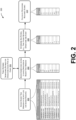
- FIG. 2 is a block diagram 200 illustrating different stages applied to determine a most relevant person for a specific notification.
- the scoring module 132 is configured to employ a model 136 to identify the most relevant person 142 given the event data 124 and information included in an activity log 120 of the shared resource 106.
- the model 136 accesses previous operations that occur within a recent time window.
- the recent time window may be a predefined amount of time.
- the previous operations are performed between December 23, 2019 and December 30, 2019, so assuming the event is triggered on December 30, 2019, the predefined amount of time is eight days (e.g., the most recent eight days).
- the activity log lists different user identifications for administrators of the shared resource (e.g., joe@ABCinc.com, sally@ABCinc.com, beth@ABCinc.com, tim@ABCinc.com, and sue@ABCinc.com).
- the activity log also lists the type of configuration operations (e.g., a name, a description, etc.) performed, such as a "firewallRules/write” operation, a "virtualNetworkRules/write” operation, a "policies/audit/action” operation, an "auditifNotExists/action” operation, and a “databases/write” operation.
- the activity log lists time of occurrence for a corresponding operation based on some defined time unit (e.g., a specific day, a specific hour, a specific minute, etc.).
- the model 136 assigns a significance rating to each operation in the recent time window.
- the significance rating is determined based on an association between a type of the previous operation in the activity log and a type 128 of the event 122.
- the model 136 may be configured to map the previous operation in the activity log to a corresponding predetermined significance rating stored in a significance rating table 206 that lists operation-specific significance ratings for the type 128 of the event 122.
- the "firewallRules/write” operation is assigned a significance rating of 100
- the "virtualNetworkRules/write” operation is assigned a significance rating of 100
- the "policies/audit/action” operation is assigned a significance rating of 50
- the "auditifNotExists/action” operation is assigned a significance rating of 50
- the "databases/write” is assigned a significance rating of 30.
- the significance ratings may be determined by the monitoring system 102 and/or the client organization 108.
- the model 136 determines an age rating for each of the previous operations.
- the age rating represents an amount of time between a time when the previous operation is performed and a time when the event 122 is triggered (e.g., when a threat is detected).
- the amount of time may be based on a broad or granular time unit (e.g., a number of days, a number of hours, a number of minutes, a number of seconds).
- the "firewallRules/write” operation performed by Joe has an age rating of seven days
- the "virtualNetworkRules/write” operation performed by Joe has an age rating of seven days
- the "policies/audit/action” operation performed by Sally has an age rating of three days
- the "auditifNotExists/action” operation performed by Sally has an age rating of three days
- the "databases/write” performed by Sally has an age rating of three days
- the "firewallRules/write” operation performed by Beth has an age rating of three days
- the "virtualNetworkRules/write” operation performed by Beth has an age rating of three days
- the "firewallRules/write” operation performed by Tim has an age rating of less than a day
- the "firewallRules/write” operation performed by Sue has an age rating of less than a day
- the "virtualNetworkRules/write” operation performed by Sue has an age rating of less than a day.
- the model 136 calculates an operation relevance score for each operation.
- the operation relevance score is the significance rating weighted by a decay coefficient based on the age rating so that the relevance score for an operation is directly proportional to both significance and recency.
- the model 136 is configured to go through all the operations performed by users on the shared resource r in a pre-defined time window (e.g., one day, one week, one month, etc.) before time t. As described above, these operations may be limited to configuration operations that occur in the control plane 112 of the shared resource r .
- the model 136 assigns each relevant operation a significance rating based on operation o relevance to the specific notification n (e.g., describing a type of the event 122), which can be represented as follows: s o,n - significance rating of operation o in relation to notification n
- model 136 determines an age rating for each operation, which represents the time passed, e.g., in number of hours or days, as follows: h o,t - age of operation o in relation to alert time t
- the operation relevance score for the "firewallRules/write” operation performed by Joe is 0.1
- the operation relevance score for the "virtualNetworkRules/write” operation performed by Joe is 0.1
- the operation relevance score for the "policies/audit/action” operation performed by Sally is 2.4
- the operation relevance score for the "auditifNotExists/action” operation performed by Sally is 2.4
- the operation relevance score for the "databases/write” performed by Sally is 1.5
- the operation relevance score for the "firewallRules/write” operation performed by Beth is 5.3
- the operation relevance score for the "virtualNetworkRules/write” operation performed by Beth is 5.3
- the operation relevance score for the "firewallRules/write” operation performed by Tim is 96.7
- the operation relevance score for the "firewallRules/write” operation performed by Sue is 118.5
- the operation relevance score for the "virtualNetworkRules/write” operation performed by Sue is 118.5.
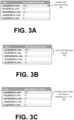
- FIG. 3A illustrates user relevance scores that are calculated using the operation relevance scores, and how the most relevant person can be identified using the user relevance scores according to a first embodiment.
- the model 136 sorts the relevant operations in the activity log according to user identifications, thereby producing subsets of operations performed by the different users.
- other ways of calculating a user relevance score are also contemplated (e.g., averaging the subset of operation relevance scores, using a median of the subset of operation relevance scores, etc.).
- FIG. 3A shows user relevance scores that have been calculated by the model 136 and rounded to whole numbers. More specifically, the user relevance score calculated for Sue is 237 (i.e., 118.5+118.5), the user relevance score calculated for Tim is 97 (i.e., Tim only performed one operation with an operation relevance score of 97), the user relevance score calculated for Beth is 11 (i.e., 5.3+5.3), the user relevance score calculated for Sally is 6 (i.e., 2.4+2.4+1.5), and the user relevance score calculated for Joe is 0 (i.e., 0.1 + 0.1).
- the user relevance score calculated for Sue is 237 (i.e., 118.5+118.5)
- the user relevance score calculated for Tim is 97 (i.e., Tim only performed one operation with an operation relevance score of 97)
- the user relevance score calculated for Beth is 11 (i.e., 5.3+5.3)
- the user relevance score calculated for Sally is 6 (i.e., 2.4+2.4+1.5)
- FIG. 3B illustrates user relevance scores that are calculated using the operation relevance scores, and how the most relevant person(s) can be identified using the user relevance scores according to a second embodiment.
- the user relevance scores are calculated in a similar manner as that discussed above with respect to FIG. 3A .
- the scoring module 132 may be configured to select the top-k users (e.g., k equals two in the illustrated example). It may be beneficial to identify and contact more than one most relevant person because one of them may be currently unavailable. Or, because recent activity is used to identify the most relevant persons, a malicious user using stolen credentials may be identified as a most relevant person. Thus, if the alert is only sent to this malicious user, the threat will not be mitigated. However, if the alert is sent to multiple most relevant persons, then the activity being performed by the malicious user can be stopped.
- FIG. 3C illustrates user relevance scores that are calculated using the operation relevance scores, and how the most relevant person(s) can be identified using the user relevance scores according to a third embodiment.
- the user relevance scores are calculated in a similar manner as that discussed above with respect to FIG. 3A .
- multiple most relevant persons can be identified.
- a threshold user relevance score e.g., 75
- users that have a user relevance score that exceeds the threshold user relevance score 306 can be identified as most relevant persons (e.g., Sue and Tim in the example of FIG. 3B ).
- FIG. 4 is a block diagram 400 illustrating how an identified connection can be established between a data plane operation for which a threat is detected 402 and a previous control plane operation 404.
- FIG. 4 illustrates a causality module 406 that stores predefined and/or learned connections 408. These connections represent relationships between previous control plane operations and data plane operations that cause alerts.
- the previous control plane operation 404 may alter the configuration of a firewall to allow access to a new IP address and the data plane operation for which the threat is detected 402 may be a data access by the new IP address.
- the causality module 406 can use different causality parameters 410, such as an acceptable time period, to identify a connection between a suspicious operation and a previous operation, and to lessen the severity of an alert. For example, an acceptable time period can be used to determine that a new IP address access may not be suspicious because the configuration of the firewall was altered shortly before (e.g., within five minutes, within an hour, etc.) the new IP address access occurred. In other words, an owner of the resource intentionally altered the configuration state of the resource to allow for the data access via the new IP address.
- a description of this identified connection can then be added to the alert 412 so the security officer and/or the most relevant person(s) can be immediately informed that the alert is being sent out of an abundance of caution and that the suspicious activity can be explained.
- the identified connection can be used to suppress the alert.
- connections between two operations and the causality parameters can be predefined by a user (e.g., an owner of the resource).
- supervised learning can be used to learn the connections and the causality parameters based on human feedback (e.g., labeled training data). For example, owners or resources may commonly dismiss specific types of alerts that are triggered right after a specific type of configuration operation is performed. This feedback can be used to learn the connection between operations 402 and 404 based on a causality parameter 410.
- Various machine learning techniques may be utilized, such as classification analysis, regression analysis, clustering, Naive Bayes, k-nearest neighbor algorithm, majority classifier, support vector machines, random forests, boosted trees, Classification and Regression Trees (CART), neural networks, and so on.
- FIG. 5A is an example graphical user interface 500 illustrating an example notification (e.g., an alert) indicating a most relevant person.
- the graphical user interface 500 indicates a type of an alert (e.g., a data access by a new IP address), a resource from which the alert is triggered (e.g., Resource_34), the most relevant person (MRP - Sue), and a time when the alert is triggered (e.g., December 31 @ 4:30pm).
- the graphical user interface 500 can include selectable elements that enable a security officer to quickly forward the alert and/or contact the most relevant person. These selectable elements can include an option 502 to email the alert to Sue, an option 504 to call Sue, and/or an option 506 to instant message and chat with Sue.
- the alert can also include the operations performed by Sue that caused her to be the most relevant person.
- the alert can indicate that Sue recently performed a "firewallRules/write” operation and a "virtualNetworkRules/write” operation on the shared resource, in order to provide Sue with context and enable her to gain a more efficient understanding once the alert is forwarded to her and she views the alert.
- FIG. 5B is an example graphical user interface 508 illustrating notification (e.g., an alert) indicating a most relevant person and an identified connection.
- the graphical user interface 508 is the same as FIG. 5A , except that a note describing an identified connection is included for additional context.
- the note states that "Sue recently altered the configuration of the firewall to allow for this new IP address". This note and additional context may remove an element of stress for the security officer and/or an owner of the resource when they first view the alert.
- FIG. 6 represents an example process in accordance with various examples from the description of FIGS. 1-5B .
- the example operations shown in FIG. 6 can be implemented on or otherwise embodied in one or more device(s) of the monitoring system 102.
- the operations in FIG. 6 can be implemented in hardware, software, and/or a combination thereof.
- the operations represent computer-executable instructions that, when executed by one or more processing units, cause one or more processing units to perform the recited operations.
- modules and other components described herein can be stored in a computer-readable media and executed by at least one processing unit to perform the described operations.
- FIG. 6 is a flow diagram of an example method 600 for identifying a most relevant person to be included in an alert.
- an activity log that includes a plurality of previous operations performed on the shared resource is accessed.
- the plurality of previous operations may be performed by a plurality of different users in a control plane of the shared resource.
- an operation relevance score is calculated for each previous operation of the plurality of previous operations using a significance rating and an age rating.
- a user relevance score is calculated for each user using the subset of operation relevance scores corresponding to the subset of the plurality of previous operations performed by each user.
- At operation 612 at least one most relevant person to deal with the event is identified using the user relevance scores.
- a notification that indicates the at least one most relevant person to deal with the event is caused to be displayed.
- FIG. 7 shows additional details of an example computer architecture 700 for a device, such as a computer or a server configured as part of the security system 102, capable of executing computer instructions (e.g., a module or a program component described herein).
- the computer architecture 700 illustrated in FIG. 7 includes processing unit(s) 702, a system memory 704, including a random access memory 706 ("RAM”) and a read-only memory (“ROM”) 708, and a system bus 710 that couples the memory 704 to the processing unit(s) 702.
- RAM random access memory
- ROM read-only memory
- Processing unit(s) 702 can represent, for example, a CPU-type processing unit, a GPU-type processing unit, a field-programmable gate array (FPGA), another class of digital signal processor (DSP), or other hardware logic components that may, in some instances, be driven by a CPU.
- FPGA field-programmable gate array
- DSP digital signal processor
- illustrative types of hardware logic components that can be used include Application-Specific Integrated Circuits (ASICs), Application-Specific Standard Products (ASSPs), System-on-a-Chip Systems (SOCs), Complex Programmable Logic Devices (CPLDs), etc.
- ASICs Application-Specific Integrated Circuits
- ASSPs Application-Specific Standard Products
- SOCs System-on-a-Chip Systems
- CPLDs Complex Programmable Logic Devices
- the computer architecture 700 further includes a mass storage device 712 for storing an operating system 714, application(s) 716, modules 718 (e.g., the scoring module 132, the output module 134, the causality module 406), and other data described herein.
- the mass storage device 712 is connected to processing unit(s) 702 through a mass storage controller connected to the bus 710.
- the mass storage device 712 and its associated computer-readable media provide non-volatile storage for the computer architecture 700.
- computer-readable media can be any available computer-readable storage media or communication media that can be accessed by the computer architecture 700.
- Computer-readable media can include computer storage media and/or communication media.
- Computer storage media can include one or more of volatile memory, nonvolatile memory, and/or other persistent and/or auxiliary computer storage media, removable and non-removable computer storage media implemented in any method or technology for storage of information such as computer-readable instructions, data structures, program modules, or other data.
- computer storage media includes tangible and/or physical forms of media included in a device and/or hardware component that is part of a device or external to a device, including but not limited to random access memory (RAM), static random-access memory (SRAM), dynamic random-access memory (DRAM), phase change memory (PCM), read-only memory (ROM), erasable programmable read-only memory (EPROM), electrically erasable programmable read-only memory (EEPROM), flash memory, compact disc read-only memory (CD-ROM), digital versatile disks (DVDs), optical cards or other optical storage media, magnetic cassettes, magnetic tape, magnetic disk storage, magnetic cards or other magnetic storage devices or media, solid-state memory devices, storage arrays, network attached storage, storage area networks, hosted computer storage or any other storage memory, storage device, and/or storage medium that can be used to store and maintain information for access by a computing device.
- RAM random access memory
- SRAM static random-access memory
- DRAM dynamic random-access memory
- PCM phase change memory
- ROM read-only memory
- communication media can embody computer-readable instructions, data structures, program modules, or other data in a modulated data signal, such as a carrier wave, or other transmission mechanism.
- a modulated data signal such as a carrier wave, or other transmission mechanism.
- computer storage media does not include communication media. That is, computer storage media does not include communications media consisting solely of a modulated data signal, a carrier wave, or a propagated signal, per se.
- the computer architecture 700 may operate in a networked environment using logical connections to remote computers through the network 720.
- the computer architecture 700 may connect to the network(s) 720 through a network interface unit 722 connected to the bus 710.
- the computer architecture 700 also may include an input/output controller 724 for receiving and processing input from a number of other devices, including a keyboard, mouse, touch, or electronic stylus or pen. Similarly, the input/output controller 724 may provide output to a display screen, a printer, or other type of output device.
- Network(s) 720 can include, for example, public networks such as the Internet, private networks such as an institutional and/or personal intranet, or some combination of private and public networks.
- Network(s) 720 can also include any type of wired and/or wireless network, including but not limited to local area networks (LANs), wide area networks (WANs), satellite networks, cable networks, Wi-Fi networks, WiMax networks, mobile communications networks (e.g., 3G, 4G, and so forth) or any combination thereof.
- Network(s) 720 can utilize communications protocols, including packet-based and/or datagram-based protocols such as internet protocol (IP), transmission control protocol (TCP), user datagram protocol (UDP), or other types of protocols.
- IP internet protocol
- TCP transmission control protocol
- UDP user datagram protocol
- network(s) 720 can also include a number of devices that facilitate network communications and/or form a hardware basis for the networks, such as switches, routers, gateways, access points, firewalls, base stations, repeaters, backbone devices, and the
- the processing unit(s) 702 may be constructed from any number of transistors or other discrete circuit elements, which may individually or collectively assume any number of states. More specifically, the processing unit(s) 702 may operate as a finite-state machine, in response to executable instructions contained within the software modules disclosed herein. These computer-executable instructions may transform the processing unit(s) 702 by specifying how the processing unit(s) 702 transition between states, thereby transforming the transistors or other discrete hardware elements constituting the processing unit(s) 702.
- Encoding the software modules presented herein also may transform the physical structure of the computer-readable media presented herein.
- the specific transformation of physical structure may depend on various factors, in different implementations of this description. Examples of such factors may include, but are not limited to, the technology used to implement the computer-readable media, whether the computer-readable media is characterized as primary or secondary storage, and the like.
- the computer-readable media is implemented as semiconductor-based memory
- the software disclosed herein may be encoded on the computer-readable media by transforming the physical state of the semiconductor memory.
- the software may transform the state of transistors, capacitors, or other discrete circuit elements constituting the semiconductor memory.
- the software also may transform the physical state of such components in order to store data thereupon.
- any reference to “first,” “second,” etc. users or other elements within the Summary and/or Detailed Description is not intended to and should not be construed to necessarily correspond to any reference of “first,” “second,” etc. elements of the claims. Rather, any use of “first” and “second” within the Summary, Detailed Description, and/or claims may be used to distinguish between two different instances of the same element (e.g., two different resources, two different users, two different operations, etc.).
Landscapes
- Engineering & Computer Science (AREA)
- Theoretical Computer Science (AREA)
- Computer Security & Cryptography (AREA)
- Software Systems (AREA)
- General Engineering & Computer Science (AREA)
- General Physics & Mathematics (AREA)
- Physics & Mathematics (AREA)
- Computer Hardware Design (AREA)
- Computing Systems (AREA)
- Signal Processing (AREA)
- Computer Networks & Wireless Communication (AREA)
- Data Mining & Analysis (AREA)
- Artificial Intelligence (AREA)
- Computational Linguistics (AREA)
- Databases & Information Systems (AREA)
- Computer Vision & Pattern Recognition (AREA)
- Evolutionary Computation (AREA)
- Medical Informatics (AREA)
- Mathematical Physics (AREA)
- Business, Economics & Management (AREA)
- General Business, Economics & Management (AREA)
- Management, Administration, Business Operations System, And Electronic Commerce (AREA)
- Debugging And Monitoring (AREA)
- Computer And Data Communications (AREA)
Claims (15)
- System (100, 700), umfassend:eine oder mehrere Verarbeitungseinheiten (702); undein computerlesbares Speichermedium (704), auf dem computerausführbare Anweisungen gespeichert sind, die, wenn sie von der einen oder den mehreren Verarbeitungseinheiten (702) ausgeführt werden, bewirken, dass die eine oder die mehreren Verarbeitungseinheiten (702):Daten (124) empfangen (602), die mit einem Ereignis (122) bezüglich einer gemeinsam genutzten Ressource (106) in Zusammenhang stehen;auf ein Aktivitätsprotokoll (120) zugreifen (604), das eine Vielzahl vorheriger Operationen beinhaltet, die von einer Vielzahl unterschiedlicher Benutzer (114, 116) an der gemeinsam genutzten Ressource (106) durchgeführt wurden;für jede vorherige Operation der Vielzahl vorheriger Operationen eine Operationsrelevanzbewertung (138) unter Verwendung einer Signifikanzeinstufung und einer Alterseinstufung berechnen (606, 210), wobei:die Signifikanzeinstufung basierend auf einem Zusammenhang zwischen einem Typ der vorherigen Operation und einem Typ des Ereignisses (122) bestimmt wird (206); unddie Alterseinstufung (208) eine Zeitspanne zwischen einem Zeitpunkt, zu dem die vorherige Operation durchgeführt wird, und einem Zeitpunkt, zu dem das Ereignis (122) ausgelöst wird, darstellt;eine Teilmenge der Vielzahl vorheriger Operationen, die von jedem Benutzer der Vielzahl unterschiedlicher Benutzer (114, 116) durchgeführt wurden, erkennen (608);eine Benutzerrelevanzbewertung (140) für jeden Benutzer der Vielzahl unterschiedlicher Benutzer (114, 116) basierend auf einer Teilmenge von Operationsrelevanzbewertungen (138), die einer Teilmenge der Vielzahl vorheriger Operationen entspricht, welche von jedem Benutzer der Vielzahl unterschiedlicher Benutzer (114, 116) durchgeführt wurden, berechnen (610);mindestens eine Person (142), die für den Empfang einer Benachrichtigung (104) über das Ereignis (122) am relevantesten ist, unter Verwendung der Benutzerrelevanzbewertungen (138), die für die Vielzahl unterschiedlicher Benutzer (114, 116) berechnet wurden, erkennen (612); undbewirken (614), dass die Benachrichtigung (104) über das Ereignis (122) angezeigt wird, wobei die Benachrichtigung (104) über das Ereignis (122) die mindestens eine relevanteste Person (142) angibt.
- System (100, 700) nach Anspruch 1, wobei das Ereignis (122) mit einer Bedrohung in Zusammenhang steht, die basierend auf einer ersten Operation (402), die in einer Datenebene (110) der gemeinsam genutzten Ressource (106) erfolgt, erfasst wird, und wobei die Vielzahl vorheriger Operationen (404) in einer Steuerebene (112) der gemeinsam genutzten Ressource (106) erfolgen, wobei die Vielzahl vorheriger Operationen von einer Vielzahl unterschiedlicher Benutzer (114, 116) durchgeführt werden, die berechtigt sind, die gemeinsam genutzte Ressource (106) über die Steuerebene (112) zu konfigurieren.
- System (100, 700) nach Anspruch 2, wobei die Bedrohung durch Auswählen eines oder mehrerer Benutzer (142) mit einer oder mehreren höchsten Benutzerrelevanzbewertungen (138) gemindert wird und wobei eine Warnung (412) bezüglich der Bedrohung angezeigt wird, wobei die Warnung (412) die relevanteste Person (142) angibt.
- System (100, 700) nach Anspruch 3, wobei die Warnung (412) Kontaktinformationen für die eine oder die mehreren relevantesten Personen (142) beinhaltet.
- System (100, 700) nach einem der Ansprüche 1 bis 4, wobei jeder Benutzer der Vielzahl unterschiedlicher Benutzer (114, 116) gemäß einer Richtlinie, die für eine Kundenorganisation (108) festgelegt wurde, als Eigentümer oder Administrator der gemeinsam genutzten Ressource (106) definiert ist.
- System (100, 700) nach einem der Ansprüche 1 bis 5, wobei jede der Vielzahl vorheriger Operationen in einem vordefinierten Zeitfenster erfolgt, das basierend auf dem Zeitpunkt, zu dem die erste Operation erfolgt, festgelegt wird.
- System (100, 700) nach einem der Ansprüche 2 bis 6, wobei die computerausführbaren Anweisungen weiter bewirken, dass die eine oder die mehreren Verarbeitungseinheiten (702) die vorherige Operation, die in der Steuerebene (112) der gemeinsam genutzten Ressource (106) erfolgt, einer entsprechenden Signifikanzeinstufung zuordnen, die in einer Signifikanzeinstufungstabelle (206), die für den Typ der Bedrohung festgelegt wurde, gespeichert ist.
- System (100, 700) nach einem der Ansprüche 3 bis 7, wobei die computerausführbaren Anweisungen weiter bewirken, dass die eine oder die mehreren Verarbeitungseinheiten (702):eine Verbindung zwischen der ersten Operation, die in der Datenebene (110) der gemeinsam genutzten Ressource (106) erfolgt, und einer zugehörigen vorherigen Operation, die in der Steuerebene (112) der gemeinsam genutzten Ressource (106) erfolgt, erkennen; undeine Beschreibung der Verbindung zu der Warnung (412) hinzufügen.
- Verfahren, umfassend:Empfangen (602) von Daten (124), die mit einem Ereignis (122) bezüglich einer gemeinsam genutzten Ressource (106) in Zusammenhang stehen;Zugreifen (604), durch eine oder mehrere Verarbeitungseinheiten (702), auf ein Aktivitätsprotokoll (120), das eine Vielzahl vorheriger Operationen beinhaltet, die von einer Vielzahl unterschiedlicher Benutzer (114, 116) an der gemeinsam genutzten Ressource (106) durchgeführt wurden;Berechnen (606, 210), für jede vorherige Operation der Vielzahl vorheriger Operationen, einer Operationsrelevanzbewertung (138) unter Verwendung einer Signifikanzeinstufung und einer Alterseinstufung, wobei:die Signifikanzeinstufung basierend auf einem Zusammenhang zwischen einem Typ der vorherigen Operation und einem Typ des Ereignisses (122) bestimmt wird (206); unddie Alterseinstufung (208) eine Zeitspanne zwischen einem Zeitpunkt, zu dem die vorherige Operation durchgeführt wird, und einem Zeitpunkt, zu dem das Ereignis (122) ausgelöst wird, darstellt;Berechnen (610) einer Benutzerrelevanzbewertung (140) für jeden Benutzer der Vielzahl unterschiedlicher Benutzer (114, 116) basierend auf einer Teilmenge von Operationsrelevanzbewertungen (138), die einer Teilmenge der Vielzahl vorheriger Operationen entspricht, welche von jedem Benutzer der Vielzahl unterschiedlicher Benutzer (114, 116) durchgeführt wurden;Erkennen (612) mindestens einer Person (142), die für den Empfang einer Benachrichtigung (104) über das Ereignis (122) am relevantesten ist, unter Verwendung der Benutzerrelevanzbewertungen (138), die für die Vielzahl unterschiedlicher Benutzer (114, 116) berechnet wurden; undBewirken (614), dass die Benachrichtigung (104) über das Ereignis (122) angezeigt wird, wobei die Benachrichtigung (104) über das Ereignis (122) die mindestens eine relevanteste Person (142) angibt.
- Verfahren nach Anspruch 9, wobei jeder Benutzer der Vielzahl unterschiedlicher Benutzer (114, 116) gemäß einer Richtlinie, die für eine Kundenorganisation (108) festgelegt wurde, berechtigt ist, die gemeinsam genutzte Ressource (106) zu konfigurieren.
- Verfahren nach Anspruch 9 oder Anspruch 10, wobei die mindestens eine relevanteste Person (142) einen oder mehrere Benutzer mit einer oder mehreren höchsten Benutzerrelevanzbewertungen (140) umfasst.
- Verfahren nach Anspruch 9 oder Anspruch 10, wobei die mindestens eine relevanteste Person (142) Benutzer umfasst, die Benutzerrelevanzbewertungen (140) aufweisen, die eine Schwellen-Benutzerrelevanzbewertung (306) überschreiten.
- Verfahren nach einem der Ansprüche 9 bis 12, wobei die Benachrichtigung (104) über das Ereignis (122) Kontaktinformationen für die mindestens eine relevanteste Person (142) beinhaltet.
- Verfahren nach einem der Ansprüche 9 bis 13, wobei jede der Vielzahl vorheriger Operationen in einem vordefinierten Zeitfenster durchgeführt wird, das basierend auf dem Zeitpunkt, zu dem das Ereignis ausgelöst wird, festgelegt wird.
- Verfahren nach einem der Ansprüche 9 bis 14, das weiter das Zuordnen der vorherigen Operation auf eine entsprechende Signifikanzeinstufung umfasst, die in einer Signifikanzeinstufungstabelle (206), die für den Typ des Ereignisses (122) festgelegt wurde, gespeichert ist.
Applications Claiming Priority (2)
| Application Number | Priority Date | Filing Date | Title |
|---|---|---|---|
| US16/835,001 US11526603B2 (en) | 2020-03-30 | 2020-03-30 | Model for identifying the most relevant person(s) for an event associated with a resource |
| PCT/US2021/016690 WO2021201976A1 (en) | 2020-03-30 | 2021-02-05 | Model for identifying the most relevant person(s) for an event associated with a resource |
Publications (2)
| Publication Number | Publication Date |
|---|---|
| EP4127995A1 EP4127995A1 (de) | 2023-02-08 |
| EP4127995B1 true EP4127995B1 (de) | 2024-01-10 |
Family
ID=74845049
Family Applications (1)
| Application Number | Title | Priority Date | Filing Date |
|---|---|---|---|
| EP21709226.1A Active EP4127995B1 (de) | 2020-03-30 | 2021-02-05 | Modell zur identifizierung der wichtigsten person(en) für ein ereignis im zusammenhang mit einer ressource |
Country Status (3)
| Country | Link |
|---|---|
| US (2) | US11526603B2 (de) |
| EP (1) | EP4127995B1 (de) |
| WO (1) | WO2021201976A1 (de) |
Families Citing this family (4)
| Publication number | Priority date | Publication date | Assignee | Title |
|---|---|---|---|---|
| US11488037B2 (en) * | 2019-12-25 | 2022-11-01 | Citrix Systems, Inc. | Notification prioritization based on user responses |
| JP7533058B2 (ja) * | 2020-09-17 | 2024-08-14 | 富士フイルムビジネスイノベーション株式会社 | 情報処理装置及び情報処理プログラム |
| LU102215B1 (en) * | 2020-11-24 | 2022-05-25 | Microsoft Technology Licensing Llc | Scenario-based access control |
| US20240036749A1 (en) | 2022-08-01 | 2024-02-01 | Resourcely Inc. | Machine learning approach to blueprint selection for resource generation with guardrail enforcement |
Family Cites Families (12)
| Publication number | Priority date | Publication date | Assignee | Title |
|---|---|---|---|---|
| AU2016232974A1 (en) * | 2015-03-13 | 2017-11-02 | Thepowertool Pty Ltd | System of standardized API interpretation for inter application communication |
| WO2016177437A1 (en) * | 2015-05-05 | 2016-11-10 | Balabit S.A. | Computer-implemented method for determining computer system security threats, security operations center system and computer program product |
| US20180248902A1 (en) * | 2015-08-28 | 2018-08-30 | Mircea DÃNILÃ-DUMITRESCU | Malicious activity detection on a computer network and network metadata normalisation |
| US9699205B2 (en) * | 2015-08-31 | 2017-07-04 | Splunk Inc. | Network security system |
| US10887330B2 (en) * | 2015-12-15 | 2021-01-05 | Flying Cloud Technologies, Inc. | Data surveillance for privileged assets based on threat streams |
| US10142293B2 (en) | 2015-12-15 | 2018-11-27 | International Business Machines Corporation | Dynamically defined virtual private network tunnels in hybrid cloud environments |
| US10721262B2 (en) * | 2016-12-28 | 2020-07-21 | Palantir Technologies Inc. | Resource-centric network cyber attack warning system |
| US20180189697A1 (en) * | 2016-12-30 | 2018-07-05 | Lookingglass Cyber Solutions, Inc. | Methods and apparatus for processing threat metrics to determine a risk of loss due to the compromise of an organization asset |
| US10339309B1 (en) * | 2017-06-09 | 2019-07-02 | Bank Of America Corporation | System for identifying anomalies in an information system |
| US10824608B2 (en) * | 2017-11-10 | 2020-11-03 | Salesforce.Com, Inc. | Feature generation and storage in a multi-tenant environment |
| US11106789B2 (en) * | 2019-03-05 | 2021-08-31 | Microsoft Technology Licensing, Llc | Dynamic cybersecurity detection of sequence anomalies |
| US11146583B2 (en) * | 2019-05-01 | 2021-10-12 | Qatar Foundation For Education, Science And Community Development | Threat-specific security risk evaluation for networked systems |
-
2020
- 2020-03-30 US US16/835,001 patent/US11526603B2/en active Active
-
2021
- 2021-02-05 EP EP21709226.1A patent/EP4127995B1/de active Active
- 2021-02-05 WO PCT/US2021/016690 patent/WO2021201976A1/en not_active Ceased
-
2022
- 2022-11-08 US US18/053,638 patent/US20230101686A1/en not_active Abandoned
Also Published As
| Publication number | Publication date |
|---|---|
| US20230101686A1 (en) | 2023-03-30 |
| US20210303684A1 (en) | 2021-09-30 |
| EP4127995A1 (de) | 2023-02-08 |
| US11526603B2 (en) | 2022-12-13 |
| WO2021201976A1 (en) | 2021-10-07 |
Similar Documents
| Publication | Publication Date | Title |
|---|---|---|
| US20230101686A1 (en) | Model for identifying the most relevant person(s) for an event associated with a resource | |
| US11856016B2 (en) | Systems and methods for controlling declutter of a security events graph | |
| US12058168B1 (en) | Enterprise security measures | |
| CN113225349B (zh) | 恶意ip地址威胁情报库建立、防止恶意攻击方法及装置 | |
| US10547642B2 (en) | Security via adaptive threat modeling | |
| US11418543B2 (en) | Automated identification of security issues | |
| US12273350B2 (en) | Dynamic grouping of users in an enterprise and watch list generation based on user risk scoring | |
| EP3343867B1 (de) | Verfahren und vorrichtung zur verarbeitung von bedrohungmetriken um ein verlustrisiko aufgrung der kompromittierung einer organisationeinheit zu bestimmen | |
| EP3959852B1 (de) | Vorhersage einer nächsten warnung in einem warnungsmuster zur identifizierung eines sicherheitseintreffens | |
| US10339309B1 (en) | System for identifying anomalies in an information system | |
| US20170099306A1 (en) | Detection of advanced persistent threat attack on a private computer network | |
| US10686825B2 (en) | Multiple presentation fidelity-level based quantitative cyber risk decision support system | |
| US11647035B2 (en) | Fidelity of anomaly alerts using control plane and data plane information | |
| US20220217177A1 (en) | Intrusion Management with Threat Type Clustering | |
| EP4147147A1 (de) | Erkennung von langsamen brute-force-angriffen auf basis von zeitreihenanalyse auf benutzerebene | |
| EP4348932B1 (de) | Bedrohungserkennung mit cloud-ressourcenverwaltungsprotokollen | |
| US12393701B2 (en) | Method and system for facilitating identification of electronic data exfiltration | |
| GB2618653A (en) | Assessing behaviour patterns and reputation scores related to email messages | |
| US12341788B2 (en) | Network security systems for identifying attempts to subvert security walls | |
| US12483574B1 (en) | System and method of identifying malicious activity in a network | |
| US8738764B1 (en) | Methods and systems for controlling communications | |
| US11916858B1 (en) | Method and system for outbound spam mitigation | |
| US20260019438A1 (en) | Cyber security protection of electronic communications including detecting topic shifts | |
| US12574417B2 (en) | Automatic tuning of management system for incident alert control | |
| US20230239314A1 (en) | Risk management security system |
Legal Events
| Date | Code | Title | Description |
|---|---|---|---|
| STAA | Information on the status of an ep patent application or granted ep patent |
Free format text: STATUS: UNKNOWN |
|
| STAA | Information on the status of an ep patent application or granted ep patent |
Free format text: STATUS: THE INTERNATIONAL PUBLICATION HAS BEEN MADE |
|
| PUAI | Public reference made under article 153(3) epc to a published international application that has entered the european phase |
Free format text: ORIGINAL CODE: 0009012 |
|
| STAA | Information on the status of an ep patent application or granted ep patent |
Free format text: STATUS: REQUEST FOR EXAMINATION WAS MADE |
|
| 17P | Request for examination filed |
Effective date: 20220907 |
|
| AK | Designated contracting states |
Kind code of ref document: A1 Designated state(s): AL AT BE BG CH CY CZ DE DK EE ES FI FR GB GR HR HU IE IS IT LI LT LU LV MC MK MT NL NO PL PT RO RS SE SI SK SM TR |
|
| DAV | Request for validation of the european patent (deleted) | ||
| DAX | Request for extension of the european patent (deleted) | ||
| GRAP | Despatch of communication of intention to grant a patent |
Free format text: ORIGINAL CODE: EPIDOSNIGR1 |
|
| STAA | Information on the status of an ep patent application or granted ep patent |
Free format text: STATUS: GRANT OF PATENT IS INTENDED |
|
| RIC1 | Information provided on ipc code assigned before grant |
Ipc: H04L 41/5061 20220101ALI20230714BHEP Ipc: H04L 41/142 20220101ALI20230714BHEP Ipc: H04L 9/40 20220101ALI20230714BHEP Ipc: G06F 21/55 20130101AFI20230714BHEP |
|
| INTG | Intention to grant announced |
Effective date: 20230731 |
|
| GRAS | Grant fee paid |
Free format text: ORIGINAL CODE: EPIDOSNIGR3 |
|
| GRAA | (expected) grant |
Free format text: ORIGINAL CODE: 0009210 |
|
| STAA | Information on the status of an ep patent application or granted ep patent |
Free format text: STATUS: THE PATENT HAS BEEN GRANTED |
|
| AK | Designated contracting states |
Kind code of ref document: B1 Designated state(s): AL AT BE BG CH CY CZ DE DK EE ES FI FR GB GR HR HU IE IS IT LI LT LU LV MC MK MT NL NO PL PT RO RS SE SI SK SM TR |
|
| P01 | Opt-out of the competence of the unified patent court (upc) registered |
Effective date: 20231130 |
|
| REG | Reference to a national code |
Ref country code: GB Ref legal event code: FG4D |
|
| REG | Reference to a national code |
Ref country code: CH Ref legal event code: EP |
|
| REG | Reference to a national code |
Ref country code: DE Ref legal event code: R096 Ref document number: 602021008537 Country of ref document: DE |
|
| REG | Reference to a national code |
Ref country code: IE Ref legal event code: FG4D |
|
| PGFP | Annual fee paid to national office [announced via postgrant information from national office to epo] |
Ref country code: NL Payment date: 20240220 Year of fee payment: 4 |
|
| PGFP | Annual fee paid to national office [announced via postgrant information from national office to epo] |
Ref country code: DE Payment date: 20240131 Year of fee payment: 4 |
|
| REG | Reference to a national code |
Ref country code: LT Ref legal event code: MG9D |
|
| REG | Reference to a national code |
Ref country code: NL Ref legal event code: MP Effective date: 20240110 |
|
| PGFP | Annual fee paid to national office [announced via postgrant information from national office to epo] |
Ref country code: FR Payment date: 20240220 Year of fee payment: 4 |
|
| REG | Reference to a national code |
Ref country code: AT Ref legal event code: MK05 Ref document number: 1649466 Country of ref document: AT Kind code of ref document: T Effective date: 20240110 |
|
| PG25 | Lapsed in a contracting state [announced via postgrant information from national office to epo] |
Ref country code: NL Free format text: LAPSE BECAUSE OF FAILURE TO SUBMIT A TRANSLATION OF THE DESCRIPTION OR TO PAY THE FEE WITHIN THE PRESCRIBED TIME-LIMIT Effective date: 20240110 |
|
| PG25 | Lapsed in a contracting state [announced via postgrant information from national office to epo] |
Ref country code: NL Free format text: LAPSE BECAUSE OF FAILURE TO SUBMIT A TRANSLATION OF THE DESCRIPTION OR TO PAY THE FEE WITHIN THE PRESCRIBED TIME-LIMIT Effective date: 20240110 |
|
| PG25 | Lapsed in a contracting state [announced via postgrant information from national office to epo] |
Ref country code: IS Free format text: LAPSE BECAUSE OF FAILURE TO SUBMIT A TRANSLATION OF THE DESCRIPTION OR TO PAY THE FEE WITHIN THE PRESCRIBED TIME-LIMIT Effective date: 20240510 |
|
| PG25 | Lapsed in a contracting state [announced via postgrant information from national office to epo] |
Ref country code: LT Free format text: LAPSE BECAUSE OF FAILURE TO SUBMIT A TRANSLATION OF THE DESCRIPTION OR TO PAY THE FEE WITHIN THE PRESCRIBED TIME-LIMIT Effective date: 20240110 |
|
| PG25 | Lapsed in a contracting state [announced via postgrant information from national office to epo] |
Ref country code: GR Free format text: LAPSE BECAUSE OF FAILURE TO SUBMIT A TRANSLATION OF THE DESCRIPTION OR TO PAY THE FEE WITHIN THE PRESCRIBED TIME-LIMIT Effective date: 20240411 |
|
| PG25 | Lapsed in a contracting state [announced via postgrant information from national office to epo] |
Ref country code: RS Free format text: LAPSE BECAUSE OF FAILURE TO SUBMIT A TRANSLATION OF THE DESCRIPTION OR TO PAY THE FEE WITHIN THE PRESCRIBED TIME-LIMIT Effective date: 20240410 Ref country code: HR Free format text: LAPSE BECAUSE OF FAILURE TO SUBMIT A TRANSLATION OF THE DESCRIPTION OR TO PAY THE FEE WITHIN THE PRESCRIBED TIME-LIMIT Effective date: 20240110 |
|
| PG25 | Lapsed in a contracting state [announced via postgrant information from national office to epo] |
Ref country code: ES Free format text: LAPSE BECAUSE OF FAILURE TO SUBMIT A TRANSLATION OF THE DESCRIPTION OR TO PAY THE FEE WITHIN THE PRESCRIBED TIME-LIMIT Effective date: 20240110 |
|
| PG25 | Lapsed in a contracting state [announced via postgrant information from national office to epo] |
Ref country code: AT Free format text: LAPSE BECAUSE OF FAILURE TO SUBMIT A TRANSLATION OF THE DESCRIPTION OR TO PAY THE FEE WITHIN THE PRESCRIBED TIME-LIMIT Effective date: 20240110 |
|
| PG25 | Lapsed in a contracting state [announced via postgrant information from national office to epo] |
Ref country code: RS Free format text: LAPSE BECAUSE OF FAILURE TO SUBMIT A TRANSLATION OF THE DESCRIPTION OR TO PAY THE FEE WITHIN THE PRESCRIBED TIME-LIMIT Effective date: 20240410 Ref country code: NO Free format text: LAPSE BECAUSE OF FAILURE TO SUBMIT A TRANSLATION OF THE DESCRIPTION OR TO PAY THE FEE WITHIN THE PRESCRIBED TIME-LIMIT Effective date: 20240410 Ref country code: LT Free format text: LAPSE BECAUSE OF FAILURE TO SUBMIT A TRANSLATION OF THE DESCRIPTION OR TO PAY THE FEE WITHIN THE PRESCRIBED TIME-LIMIT Effective date: 20240110 Ref country code: IS Free format text: LAPSE BECAUSE OF FAILURE TO SUBMIT A TRANSLATION OF THE DESCRIPTION OR TO PAY THE FEE WITHIN THE PRESCRIBED TIME-LIMIT Effective date: 20240510 Ref country code: HR Free format text: LAPSE BECAUSE OF FAILURE TO SUBMIT A TRANSLATION OF THE DESCRIPTION OR TO PAY THE FEE WITHIN THE PRESCRIBED TIME-LIMIT Effective date: 20240110 Ref country code: GR Free format text: LAPSE BECAUSE OF FAILURE TO SUBMIT A TRANSLATION OF THE DESCRIPTION OR TO PAY THE FEE WITHIN THE PRESCRIBED TIME-LIMIT Effective date: 20240411 Ref country code: ES Free format text: LAPSE BECAUSE OF FAILURE TO SUBMIT A TRANSLATION OF THE DESCRIPTION OR TO PAY THE FEE WITHIN THE PRESCRIBED TIME-LIMIT Effective date: 20240110 Ref country code: BG Free format text: LAPSE BECAUSE OF FAILURE TO SUBMIT A TRANSLATION OF THE DESCRIPTION OR TO PAY THE FEE WITHIN THE PRESCRIBED TIME-LIMIT Effective date: 20240110 Ref country code: AT Free format text: LAPSE BECAUSE OF FAILURE TO SUBMIT A TRANSLATION OF THE DESCRIPTION OR TO PAY THE FEE WITHIN THE PRESCRIBED TIME-LIMIT Effective date: 20240110 |
|
| PG25 | Lapsed in a contracting state [announced via postgrant information from national office to epo] |
Ref country code: PT Free format text: LAPSE BECAUSE OF FAILURE TO SUBMIT A TRANSLATION OF THE DESCRIPTION OR TO PAY THE FEE WITHIN THE PRESCRIBED TIME-LIMIT Effective date: 20240510 Ref country code: PL Free format text: LAPSE BECAUSE OF FAILURE TO SUBMIT A TRANSLATION OF THE DESCRIPTION OR TO PAY THE FEE WITHIN THE PRESCRIBED TIME-LIMIT Effective date: 20240110 |
|
| PG25 | Lapsed in a contracting state [announced via postgrant information from national office to epo] |
Ref country code: SE Free format text: LAPSE BECAUSE OF FAILURE TO SUBMIT A TRANSLATION OF THE DESCRIPTION OR TO PAY THE FEE WITHIN THE PRESCRIBED TIME-LIMIT Effective date: 20240110 Ref country code: PT Free format text: LAPSE BECAUSE OF FAILURE TO SUBMIT A TRANSLATION OF THE DESCRIPTION OR TO PAY THE FEE WITHIN THE PRESCRIBED TIME-LIMIT Effective date: 20240510 Ref country code: PL Free format text: LAPSE BECAUSE OF FAILURE TO SUBMIT A TRANSLATION OF THE DESCRIPTION OR TO PAY THE FEE WITHIN THE PRESCRIBED TIME-LIMIT Effective date: 20240110 Ref country code: LV Free format text: LAPSE BECAUSE OF FAILURE TO SUBMIT A TRANSLATION OF THE DESCRIPTION OR TO PAY THE FEE WITHIN THE PRESCRIBED TIME-LIMIT Effective date: 20240110 |
|
| REG | Reference to a national code |
Ref country code: CH Ref legal event code: PL |
|
| PG25 | Lapsed in a contracting state [announced via postgrant information from national office to epo] |
Ref country code: DK Free format text: LAPSE BECAUSE OF FAILURE TO SUBMIT A TRANSLATION OF THE DESCRIPTION OR TO PAY THE FEE WITHIN THE PRESCRIBED TIME-LIMIT Effective date: 20240110 |
|
| REG | Reference to a national code |
Ref country code: DE Ref legal event code: R097 Ref document number: 602021008537 Country of ref document: DE |
|
| PG25 | Lapsed in a contracting state [announced via postgrant information from national office to epo] |
Ref country code: SM Free format text: LAPSE BECAUSE OF FAILURE TO SUBMIT A TRANSLATION OF THE DESCRIPTION OR TO PAY THE FEE WITHIN THE PRESCRIBED TIME-LIMIT Effective date: 20240110 |
|
| PG25 | Lapsed in a contracting state [announced via postgrant information from national office to epo] |
Ref country code: LU Free format text: LAPSE BECAUSE OF NON-PAYMENT OF DUE FEES Effective date: 20240205 |
|
| PG25 | Lapsed in a contracting state [announced via postgrant information from national office to epo] |
Ref country code: CH Free format text: LAPSE BECAUSE OF NON-PAYMENT OF DUE FEES Effective date: 20240229 |
|
| PG25 | Lapsed in a contracting state [announced via postgrant information from national office to epo] |
Ref country code: CZ Free format text: LAPSE BECAUSE OF FAILURE TO SUBMIT A TRANSLATION OF THE DESCRIPTION OR TO PAY THE FEE WITHIN THE PRESCRIBED TIME-LIMIT Effective date: 20240110 Ref country code: EE Free format text: LAPSE BECAUSE OF FAILURE TO SUBMIT A TRANSLATION OF THE DESCRIPTION OR TO PAY THE FEE WITHIN THE PRESCRIBED TIME-LIMIT Effective date: 20240110 |
|
| PG25 | Lapsed in a contracting state [announced via postgrant information from national office to epo] |
Ref country code: SK Free format text: LAPSE BECAUSE OF FAILURE TO SUBMIT A TRANSLATION OF THE DESCRIPTION OR TO PAY THE FEE WITHIN THE PRESCRIBED TIME-LIMIT Effective date: 20240110 |
|
| PG25 | Lapsed in a contracting state [announced via postgrant information from national office to epo] |
Ref country code: SM Free format text: LAPSE BECAUSE OF FAILURE TO SUBMIT A TRANSLATION OF THE DESCRIPTION OR TO PAY THE FEE WITHIN THE PRESCRIBED TIME-LIMIT Effective date: 20240110 Ref country code: SK Free format text: LAPSE BECAUSE OF FAILURE TO SUBMIT A TRANSLATION OF THE DESCRIPTION OR TO PAY THE FEE WITHIN THE PRESCRIBED TIME-LIMIT Effective date: 20240110 Ref country code: RO Free format text: LAPSE BECAUSE OF FAILURE TO SUBMIT A TRANSLATION OF THE DESCRIPTION OR TO PAY THE FEE WITHIN THE PRESCRIBED TIME-LIMIT Effective date: 20240110 Ref country code: LU Free format text: LAPSE BECAUSE OF NON-PAYMENT OF DUE FEES Effective date: 20240205 Ref country code: EE Free format text: LAPSE BECAUSE OF FAILURE TO SUBMIT A TRANSLATION OF THE DESCRIPTION OR TO PAY THE FEE WITHIN THE PRESCRIBED TIME-LIMIT Effective date: 20240110 Ref country code: DK Free format text: LAPSE BECAUSE OF FAILURE TO SUBMIT A TRANSLATION OF THE DESCRIPTION OR TO PAY THE FEE WITHIN THE PRESCRIBED TIME-LIMIT Effective date: 20240110 Ref country code: CZ Free format text: LAPSE BECAUSE OF FAILURE TO SUBMIT A TRANSLATION OF THE DESCRIPTION OR TO PAY THE FEE WITHIN THE PRESCRIBED TIME-LIMIT Effective date: 20240110 Ref country code: CH Free format text: LAPSE BECAUSE OF NON-PAYMENT OF DUE FEES Effective date: 20240229 |
|
| PG25 | Lapsed in a contracting state [announced via postgrant information from national office to epo] |
Ref country code: MC Free format text: LAPSE BECAUSE OF FAILURE TO SUBMIT A TRANSLATION OF THE DESCRIPTION OR TO PAY THE FEE WITHIN THE PRESCRIBED TIME-LIMIT Effective date: 20240110 |
|
| PLBE | No opposition filed within time limit |
Free format text: ORIGINAL CODE: 0009261 |
|
| STAA | Information on the status of an ep patent application or granted ep patent |
Free format text: STATUS: NO OPPOSITION FILED WITHIN TIME LIMIT |
|
| PG25 | Lapsed in a contracting state [announced via postgrant information from national office to epo] |
Ref country code: MC Free format text: LAPSE BECAUSE OF FAILURE TO SUBMIT A TRANSLATION OF THE DESCRIPTION OR TO PAY THE FEE WITHIN THE PRESCRIBED TIME-LIMIT Effective date: 20240110 |
|
| PG25 | Lapsed in a contracting state [announced via postgrant information from national office to epo] |
Ref country code: IT Free format text: LAPSE BECAUSE OF FAILURE TO SUBMIT A TRANSLATION OF THE DESCRIPTION OR TO PAY THE FEE WITHIN THE PRESCRIBED TIME-LIMIT Effective date: 20240110 |
|
| REG | Reference to a national code |
Ref country code: BE Ref legal event code: MM Effective date: 20240229 |
|
| 26N | No opposition filed |
Effective date: 20241011 |
|
| PG25 | Lapsed in a contracting state [announced via postgrant information from national office to epo] |
Ref country code: IT Free format text: LAPSE BECAUSE OF FAILURE TO SUBMIT A TRANSLATION OF THE DESCRIPTION OR TO PAY THE FEE WITHIN THE PRESCRIBED TIME-LIMIT Effective date: 20240110 |
|
| PG25 | Lapsed in a contracting state [announced via postgrant information from national office to epo] |
Ref country code: BE Free format text: LAPSE BECAUSE OF NON-PAYMENT OF DUE FEES Effective date: 20240229 |
|
| PG25 | Lapsed in a contracting state [announced via postgrant information from national office to epo] |
Ref country code: IE Free format text: LAPSE BECAUSE OF NON-PAYMENT OF DUE FEES Effective date: 20240205 |
|
| PG25 | Lapsed in a contracting state [announced via postgrant information from national office to epo] |
Ref country code: IE Free format text: LAPSE BECAUSE OF NON-PAYMENT OF DUE FEES Effective date: 20240205 Ref country code: BE Free format text: LAPSE BECAUSE OF NON-PAYMENT OF DUE FEES Effective date: 20240229 |
|
| PG25 | Lapsed in a contracting state [announced via postgrant information from national office to epo] |
Ref country code: SI Free format text: LAPSE BECAUSE OF FAILURE TO SUBMIT A TRANSLATION OF THE DESCRIPTION OR TO PAY THE FEE WITHIN THE PRESCRIBED TIME-LIMIT Effective date: 20240110 |
|
| PG25 | Lapsed in a contracting state [announced via postgrant information from national office to epo] |
Ref country code: CY Free format text: LAPSE BECAUSE OF FAILURE TO SUBMIT A TRANSLATION OF THE DESCRIPTION OR TO PAY THE FEE WITHIN THE PRESCRIBED TIME-LIMIT; INVALID AB INITIO Effective date: 20210205 |
|
| REG | Reference to a national code |
Ref country code: DE Ref legal event code: R119 Ref document number: 602021008537 Country of ref document: DE |
|
| PG25 | Lapsed in a contracting state [announced via postgrant information from national office to epo] |
Ref country code: HU Free format text: LAPSE BECAUSE OF FAILURE TO SUBMIT A TRANSLATION OF THE DESCRIPTION OR TO PAY THE FEE WITHIN THE PRESCRIBED TIME-LIMIT; INVALID AB INITIO Effective date: 20210205 |
|
| PG25 | Lapsed in a contracting state [announced via postgrant information from national office to epo] |
Ref country code: FI Free format text: LAPSE BECAUSE OF FAILURE TO SUBMIT A TRANSLATION OF THE DESCRIPTION OR TO PAY THE FEE WITHIN THE PRESCRIBED TIME-LIMIT Effective date: 20240110 |
|
| GBPC | Gb: european patent ceased through non-payment of renewal fee |
Effective date: 20250205 |
|
| PG25 | Lapsed in a contracting state [announced via postgrant information from national office to epo] |
Ref country code: TR Free format text: LAPSE BECAUSE OF FAILURE TO SUBMIT A TRANSLATION OF THE DESCRIPTION OR TO PAY THE FEE WITHIN THE PRESCRIBED TIME-LIMIT Effective date: 20240110 |
|
| PG25 | Lapsed in a contracting state [announced via postgrant information from national office to epo] |
Ref country code: DE Free format text: LAPSE BECAUSE OF NON-PAYMENT OF DUE FEES Effective date: 20250902 |
|
| PG25 | Lapsed in a contracting state [announced via postgrant information from national office to epo] |
Ref country code: GB Free format text: LAPSE BECAUSE OF NON-PAYMENT OF DUE FEES Effective date: 20250205 |
|
| PG25 | Lapsed in a contracting state [announced via postgrant information from national office to epo] |
Ref country code: FR Free format text: LAPSE BECAUSE OF NON-PAYMENT OF DUE FEES Effective date: 20250228 |