EP4127900B1 - Vorschlagen einer alternativen schnittstelle, wenn eine umgebungsinterferenz erwartet wird, bestimmte automatisierte assistentinteraktionen zu hemmen - Google Patents
Vorschlagen einer alternativen schnittstelle, wenn eine umgebungsinterferenz erwartet wird, bestimmte automatisierte assistentinteraktionen zu hemmen Download PDFInfo
- Publication number
- EP4127900B1 EP4127900B1 EP21811556.6A EP21811556A EP4127900B1 EP 4127900 B1 EP4127900 B1 EP 4127900B1 EP 21811556 A EP21811556 A EP 21811556A EP 4127900 B1 EP4127900 B1 EP 4127900B1
- Authority
- EP
- European Patent Office
- Prior art keywords
- automated assistant
- user
- interaction
- computing device
- interface
- Prior art date
- Legal status (The legal status is an assumption and is not a legal conclusion. Google has not performed a legal analysis and makes no representation as to the accuracy of the status listed.)
- Active
Links
Images



Classifications
-
- G—PHYSICS
- G06—COMPUTING OR CALCULATING; COUNTING
- G06F—ELECTRIC DIGITAL DATA PROCESSING
- G06F3/00—Input arrangements for transferring data to be processed into a form capable of being handled by the computer; Output arrangements for transferring data from processing unit to output unit, e.g. interface arrangements
- G06F3/01—Input arrangements or combined input and output arrangements for interaction between user and computer
- G06F3/048—Interaction techniques based on graphical user interfaces [GUI]
- G06F3/0487—Interaction techniques based on graphical user interfaces [GUI] using specific features provided by the input device, e.g. functions controlled by the rotation of a mouse with dual sensing arrangements, or of the nature of the input device, e.g. tap gestures based on pressure sensed by a digitiser
- G06F3/0488—Interaction techniques based on graphical user interfaces [GUI] using specific features provided by the input device, e.g. functions controlled by the rotation of a mouse with dual sensing arrangements, or of the nature of the input device, e.g. tap gestures based on pressure sensed by a digitiser using a touch-screen or digitiser, e.g. input of commands through traced gestures
- G06F3/04886—Interaction techniques based on graphical user interfaces [GUI] using specific features provided by the input device, e.g. functions controlled by the rotation of a mouse with dual sensing arrangements, or of the nature of the input device, e.g. tap gestures based on pressure sensed by a digitiser using a touch-screen or digitiser, e.g. input of commands through traced gestures by partitioning the display area of the touch-screen or the surface of the digitising tablet into independently controllable areas, e.g. virtual keyboards or menus
-
- G—PHYSICS
- G06—COMPUTING OR CALCULATING; COUNTING
- G06F—ELECTRIC DIGITAL DATA PROCESSING
- G06F3/00—Input arrangements for transferring data to be processed into a form capable of being handled by the computer; Output arrangements for transferring data from processing unit to output unit, e.g. interface arrangements
- G06F3/16—Sound input; Sound output
- G06F3/167—Audio in a user interface, e.g. using voice commands for navigating, audio feedback
-
- G—PHYSICS
- G10—MUSICAL INSTRUMENTS; ACOUSTICS
- G10L—SPEECH ANALYSIS TECHNIQUES OR SPEECH SYNTHESIS; SPEECH RECOGNITION; SPEECH OR VOICE PROCESSING TECHNIQUES; SPEECH OR AUDIO CODING OR DECODING
- G10L15/00—Speech recognition
- G10L15/22—Procedures used during a speech recognition process, e.g. man-machine dialogue
-
- G—PHYSICS
- G10—MUSICAL INSTRUMENTS; ACOUSTICS
- G10L—SPEECH ANALYSIS TECHNIQUES OR SPEECH SYNTHESIS; SPEECH RECOGNITION; SPEECH OR VOICE PROCESSING TECHNIQUES; SPEECH OR AUDIO CODING OR DECODING
- G10L25/00—Speech or voice analysis techniques not restricted to a single one of groups G10L15/00 - G10L21/00
- G10L25/48—Speech or voice analysis techniques not restricted to a single one of groups G10L15/00 - G10L21/00 specially adapted for particular use
-
- G—PHYSICS
- G10—MUSICAL INSTRUMENTS; ACOUSTICS
- G10L—SPEECH ANALYSIS TECHNIQUES OR SPEECH SYNTHESIS; SPEECH RECOGNITION; SPEECH OR VOICE PROCESSING TECHNIQUES; SPEECH OR AUDIO CODING OR DECODING
- G10L25/00—Speech or voice analysis techniques not restricted to a single one of groups G10L15/00 - G10L21/00
- G10L25/78—Detection of presence or absence of voice signals
-
- G—PHYSICS
- G10—MUSICAL INSTRUMENTS; ACOUSTICS
- G10L—SPEECH ANALYSIS TECHNIQUES OR SPEECH SYNTHESIS; SPEECH RECOGNITION; SPEECH OR VOICE PROCESSING TECHNIQUES; SPEECH OR AUDIO CODING OR DECODING
- G10L15/00—Speech recognition
- G10L15/22—Procedures used during a speech recognition process, e.g. man-machine dialogue
- G10L2015/223—Execution procedure of a spoken command
-
- G—PHYSICS
- G10—MUSICAL INSTRUMENTS; ACOUSTICS
- G10L—SPEECH ANALYSIS TECHNIQUES OR SPEECH SYNTHESIS; SPEECH RECOGNITION; SPEECH OR VOICE PROCESSING TECHNIQUES; SPEECH OR AUDIO CODING OR DECODING
- G10L15/00—Speech recognition
- G10L15/22—Procedures used during a speech recognition process, e.g. man-machine dialogue
- G10L2015/226—Procedures used during a speech recognition process, e.g. man-machine dialogue using non-speech characteristics
- G10L2015/228—Procedures used during a speech recognition process, e.g. man-machine dialogue using non-speech characteristics of application context
Definitions
- Humans may engage in human-to-computer dialogs with interactive software applications referred to herein as “automated assistants” (also referred to as “digital agents,” “chatbots,” “interactive personal assistants,” “intelligent personal assistants,” “conversational agents,” etc.).
- automated assistants also referred to as “digital agents,” “chatbots,” “interactive personal assistants,” “intelligent personal assistants,” “conversational agents,” etc.
- humans which when they interact with automated assistants may be referred to as “users”
- spoken natural language input i.e., utterances
- textual e.g., typed
- Users that interact with automated assistants may inevitably invoke their respective automated assistant under circumstances in which a modality for receiving user input experiences interference. Such circumstances can include crowded public venues and/or other areas where background noise is apparent. An input modality that is affected by the interference may therefore not be a reliable interface for the automated assistant at that time. As a result, a user that provides an input to an interface that is temporarily unreliable may have to repeat their input. In some instances, when the user is intending to control an automated assistant with their input, the automated assistant may request that the user repeat the input and/or initialize performance of an incorrect action.
- US 2004/054819 A1 relates to a data input method and a data input device, which include text data input means and voice data input means, of selecting optimal input means from the two input means and controlling a data input operation, thereby inputting data.
- US 2018/218732 A1 describes a method for providing an alternate modality of input for filling a form field in response to a failure of voice recognition, including prompting the user for information corresponding to a field of a form, generating speech data by capturing a spoken response of the user to the prompt using at least one input device, attempting to convert the speech data to text, determining that the attempted conversion has failed, evaluating the failure using at least one speech rule, selecting, based on the evaluation, an alternate input modality to be used for receiving the information corresponding to the field of the form, receiving the information corresponding to the field of the form from the alternate input modality, and injecting the received information into the field of the form.
- Implementations set forth herein relate to an automated assistant that can determine whether an ongoing or anticipated interaction between a user and an automated assistant, via a particular interface, is expected to be affected by interference.
- the automated assistant determines that the interaction at the particular interface is determined to be affected by the interference, the automated assistant can provide an indication that the user should interact with the automated assistant via a separate interface.
- the automated assistant can preserve computational resources by reducing a quantity of times that a user would have to repeat an input that may have been affected by some amount of environmental interference. Furthermore, this can reduce a quantity of instances in which the automated assistant initializes an incorrect action, as a result of an interaction being affected by certain interferences.
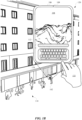
- FIG. 1A and FIG. 1B illustrate a view 100 and a view 120, respectively, of a user 102 receiving a suggestion to type an input to an automated assistant instead of speaking an input in an environment 110 that may interfere with spoken inputs.
- the user 102 can be in an environment 110, such as outside their apartment building, and have a query that they would like to ask their automated assistant.
- the user 102 can have a computing device 106 that allows the user 102 to interact with the automated assistant via one or more interfaces.
- the computing device 106 can include a display interface 104, which can be touch-enabled display panel, and an audio interface 108, which can include a speaker and/or a microphone.
- the computing device 106 can also include a camera for providing another interface with which to interact with the automated assistant.
- the automated assistant can determine whether one or more features of the environment 110 will affect an interaction between the user 102 and the automated assistant. For example, the automated assistant can determine that the user 102 is on a crowded sidewalk based on audio data and/or image data that is available to the computing device 106. In some implementations, data from one or more sources can be processed in order to determine whether an input to a particular interface of the computing device 106 would experience interference from the environment 110 and/or other sources. Based on this processing, the automated assistant can elect to provide an indication to the user 102 that an input to a particular interface will experience interference while in the environment 110.
- the display interface 104 can be void of any indication that a particular interface will be affected by interference, such as background noise (e.g., multiple people talking, as indicated in FIG. 1A and FIG. 1B ) and/or other interference.
- interference such as background noise (e.g., multiple people talking, as indicated in FIG. 1A and FIG. 1B ) and/or other interference.
- the automated assistant and/or other application can cause a keyboard 124 to be rendered at the display interface 104.
- one or more characteristics of the keyboard 124 can be at least partially based on a degree to which interference is expected to affect an input to a particular interface (e.g., a microphone) of the computing device 106. For example, a size of the keyboard 124 can be adjusted according to a degree to which the interference is expected to affect an input to the particular interface.
- the automated assistant when interference is not expected to affect a spoken input to the automated assistant, the automated assistant can optionally cause an input field 112 to be rendered at the display interface 104. However, when interference is expected to affect an input to the automated assistant, the automated assistant can cause the keyboard 124 to be rendered at the display interface 104, while either keeping or removing the input field 112 from the display interface 104. This can allow the user 102 to use their hand 122 to type inputs to the automated assistant, without risking having a spoken input being affected by audible interference.
- FIG. 2 illustrates a system 200 for suggesting an alternate interface modality when an automated assistant and/or a user is expected to not understand a particular interaction between the user and the automated assistant.
- the automated assistant 204 can operate as part of an assistant application that is provided at one or more computing devices, such as a computing device 202 and/or a server device.
- a user can interact with the automated assistant 204 via assistant interface(s) 220, which can be a microphone, a camera, a touch screen display, a user interface, and/or any other apparatus capable of providing an interface between a user and an application.
- assistant interface(s) 220 can be a microphone, a camera, a touch screen display, a user interface, and/or any other apparatus capable of providing an interface between a user and an application.
- a user can initialize the automated assistant 204 by providing a verbal, textual, and/or a graphical input to an assistant interface 220 to cause the automated assistant 204 to initialize one or more actions (e.g., provide data, control a peripheral device, access an agent, generate an input and/or an output, etc.).
- the automated assistant 204 can be initialized based on processing of contextual data 236 using one or more trained machine learning models.
- the contextual data 236 can characterize one or more features of an environment in which the automated assistant 204 is accessible, and/or one or more features of a user that is predicted to be intending to interact with the automated assistant 204.
- the computing device 202 can include a display device, which can be a display panel that includes a touch interface for receiving touch inputs and/or gestures for allowing a user to control applications 234 of the computing device 202 via the touch interface.
- the computing device 202 can lack a display device, thereby providing an audible user interface output, without providing a graphical user interface output.
- the computing device 202 can provide a user interface, such as a microphone, for receiving spoken natural language inputs from a user.
- the computing device 202 can include a touch interface and can be void of a camera, but can optionally include one or more other sensors.
- the computing device 202 and/or other third party client devices can be in communication with a server device over a network, such as the internet. Additionally, the computing device 202 and any other computing devices can be in communication with each other over a local area network (LAN), such as a Wi-Fi network.
- the computing device 202 can offload computational tasks to the server device in order to conserve computational resources at the computing device 202.
- the server device can host the automated assistant 204, and/or computing device 202 can transmit inputs received at one or more assistant interfaces 220 to the server device.
- the automated assistant 204 can be hosted at the computing device 202, and various processes that can be associated with automated assistant operations can be performed at the computing device 202.
- all or less than all aspects of the automated assistant 204 can be implemented on the computing device 202.
- aspects of the automated assistant 204 are implemented via the computing device 202 and can interface with a server device, which can implement other aspects of the automated assistant 204.
- the server device can optionally serve a plurality of users and their associated assistant applications via multiple threads.
- the automated assistant 204 can be an application that is separate from an operating system of the computing device 202 (e.g., installed "on top" of the operating system) - or can alternatively be implemented directly by the operating system of the computing device 202 ( e.g., considered an application of, but integral with, the operating system).
- the automated assistant 204 can include an input processing engine 206, which can employ multiple different modules for processing inputs and/or outputs for the computing device 202 and/or a server device.
- the input processing engine 206 can include a speech processing engine 208, which can process audio data received at an assistant interface 220 to identify the text embodied in the audio data.
- the audio data can be transmitted from, for example, the computing device 202 to the server device in order to preserve computational resources at the computing device 202. Additionally, or alternatively, the audio data can be exclusively processed at the computing device 202.
- the process for converting the audio data to text can include a speech recognition algorithm, which can employ neural networks, and/or statistical models for identifying groups of audio data corresponding to words or phrases.
- the text converted from the audio data can be parsed by a data parsing engine 210 and made available to the automated assistant 204 as textual data that can be used to generate and/or identify command phrase(s), intent(s), action(s), slot value(s), and/or any other content specified by the user.
- output data provided by the data parsing engine 210 can be provided to a parameter engine 212 to determine whether the user provided an input that corresponds to a particular intent, action, and/or routine capable of being performed by the automated assistant 204 and/or an application or agent that is capable of being accessed via the automated assistant 204.
- assistant data 238 can be stored at the server device and/or the computing device 202, and can include data that defines one or more actions capable of being performed by the automated assistant 204, as well as parameters necessary to perform the actions.
- the parameter engine 212 can generate one or more parameters for an intent, action, and/or slot value, and provide the one or more parameters to an output generating engine 214.
- the output generating engine 214 can use the one or more parameters to communicate with an assistant interface 220 for providing an output to a user, and/or communicate with one or more applications 234 for providing an output to one or more applications 234.
- the automated assistant 204 can be an application that can be installed "on-top of" an operating system of the computing device 202 and/or can itself form part of (or the entirety of) the operating system of the computing device 202.
- the automated assistant application includes, and/or has access to, on-device speech recognition, on-device natural language understanding, and on-device fulfillment.
- on-device speech recognition can be performed using an on-device speech recognition module that processes audio data (detected by the microphone(s)) using an end-to-end speech recognition machine learning model stored locally at the computing device 202.
- the on-device speech recognition generates recognized text for a spoken utterance (if any) present in the audio data.
- on-device natural language understanding (NLU) can be performed using an on-device NLU module that processes recognized text, generated using the on-device speech recognition, and optionally contextual data, to generate NLU data.
- NLU on-device natural language understanding
- NLU data can include intent(s) that correspond to the spoken utterance and optionally parameter(s) (e.g., slot values) for the intent(s).
- On-device fulfillment can be performed using an on-device fulfillment module that utilizes the NLU data (from the on-device NLU), and optionally other local data, to determine action(s) to take to resolve the intent(s) of the spoken utterance (and optionally the parameter(s) for the intent).
- This can include determining local and/or remote responses (e.g., answers) to the spoken utterance, interaction(s) with locally installed application(s) to perform based on the spoken utterance, command(s) to transmit to internet-of-things (IoT) device(s) (directly or via corresponding remote system(s)) based on the spoken utterance, and/or other resolution action(s) to perform based on the spoken utterance.
- IoT internet-of-things
- the on-device fulfillment can then initiate local and/or remote performance/execution of the determined action(s) to resolve the spoken utterance.
- remote speech processing, remote NLU, and/or remote fulfillment can at least selectively be utilized.
- recognized text can at least selectively be transmitted to remote automated assistant component(s) for remote NLU and/or remote fulfillment.
- the recognized text can optionally be transmitted for remote performance in parallel with on-device performance, or responsive to failure of on-device NLU and/or on-device fulfillment.
- on-device speech processing, on-device NLU, on-device fulfillment, and/or on-device execution can be prioritized at least due to the latency reductions they provide when resolving a spoken utterance (due to no client-server roundtrip(s) being needed to resolve the spoken utterance).
- on-device functionality can be the only functionality that is available in situations with no or limited network connectivity.
- the computing device 202 can include one or more applications 234 which can be provided by a third-party entity that is different from an entity that provided the computing device 202 and/or the automated assistant 204.
- An application state engine of the automated assistant 204 and/or the computing device 202 can access application data 230 to determine one or more actions capable of being performed by one or more applications 234, as well as a state of each application of the one or more applications 234 and/or a state of a respective device that is associated with the computing device 202.
- a device state engine of the automated assistant 204 and/or the computing device 202 can access device data 232 to determine one or more actions capable of being performed by the computing device 202 and/or one or more devices that are associated with the computing device 202.
- the application data 230 and/or any other data can be accessed by the automated assistant 204 to generate contextual data 236, which can characterize a context in which a particular application 234 and/or device is executing, and/or a context in which a particular user is accessing the computing device 202, accessing an application 234, and/or any other device or module.
- contextual data 236 can characterize a context in which a particular application 234 and/or device is executing, and/or a context in which a particular user is accessing the computing device 202, accessing an application 234, and/or any other device or module.
- the device data 232 can characterize a current operating state of each application 234 executing at the computing device 202.
- the application data 230 can characterize one or more features of an executing application 234, such as content of one or more graphical user interfaces being rendered at the direction of one or more applications 234.
- the application data 230 can characterize an action schema, which can be updated by a respective application and/or by the automated assistant 204, based on a current operating status of the respective application.
- one or more action schemas for one or more applications 234 can remain static, but can be accessed by the application state engine in order to determine a suitable action to initialize via the automated assistant 204.
- the computing device 202 can further include an assistant invocation engine 222 that can use one or more trained machine learning models to process application data 230, device data 232, contextual data 236, and/or any other data that is accessible to the computing device 202.
- the assistant invocation engine 222 can process this data in order to determine whether or not to wait for a user to explicitly speak an invocation phrase to invoke the automated assistant 204, or consider the data to be indicative of an intent by the user to invoke the automated assistant-in lieu of requiring the user to explicitly speak the invocation phrase.
- the one or more trained machine learning models can be trained using instances of training data that are based on scenarios in which the user is in an environment where multiple devices and/or applications are exhibiting various operating states.
- the instances of training data can be generated in order to capture training data that characterizes contexts in which the user invokes the automated assistant and other contexts in which the user does not invoke the automated assistant.
- the assistant invocation engine 222 can cause the automated assistant 204 to detect, or limit detecting, spoken invocation phrases from a user based on features of a context and/or an environment. Additionally, or alternatively, the assistant invocation engine 222 can cause the automated assistant 204 to detect, or limit detecting for one or more assistant commands from a user based on features of a context and/or an environment. In some implementations, the assistant invocation engine 222 can be disabled or limited based on the computing device 202 detecting an assistant suppressing output from another computing device. In this way, when the computing device 202 is detecting an assistant suppressing output, the automated assistant 204 will not be invoked based on contextual data 236-which would otherwise cause the automated assistant 204 to be invoked if the assistant suppressing output was not being detected.
- the automated assistant 204 can include an environmental feature engine 218, which can detect one or more features of an environment in which the computing device 202 and/or another computing device are operating.
- the environmental feature engine 218 can process data characterizing the one or more features in order to determine whether an interaction between the user and the automated assistant 204 will be affected by the environment. This determination can be based on one or more heuristic processes and/or one or more trained machine learning models, which can be trained based on prior instances in which one or more users interacted with an automated assistant in a similar environment. For example, data characterizing prior instances in which users interacted with an automated assistant in a crowded environment can be used to identify a threshold for an interference score. The interference score can be generated for a particular environment using one or more trained machine learning models. When the interference score threshold is satisfied by a particular interference score, the environmental feature engine 218 can communicate with an interference indication engine 226 of the automated assistant 204.
- the interference indication engine 226 can be employed by the automated assistant 204 to provide an indication to a user that an interaction between the user and the automated assistant 204 may be affected by one or more features of the environment they are in.
- the type of indication that is provided to a user can be based on one or more scores generated by the environmental feature engine 218. For instance, when a score is generated for indicating that audio interference will affect an audio interface, the interference indication engine 226 can cause a visual indication to be rendered for the user.
- characteristics of an indication can also be selected by the interference indication engine 226. For example, the interference indication engine 226 can cause a size, shape, brightness, content, and/or other characteristic of an indication to be adjusted according to a degree of interference expected to affect an interaction between a user and an automated assistant 204.
- the automated assistant 204 can include an interface selection engine 228, which can select an interface to promote to a user when interference is expected to affect a different interface. For example, when the computing device 202 is determined to be experiencing an amount of glare that would make typing at a touch interface to be difficult, the interface selection engine 228 can score the touch interface below other available interfaces. In some instances, the interface selection engine 228 can designate the touch interface as a less optimal interface in certain environments than, for example, an audio interface. In some implementations, the interference indication engine 226 can be notified of the rankings from the interface selection engine 228 and generate an indication that identifies a most optimal interface for a particular environment. For instance, an indication provided by the interference indication engine 226 can include a rendering of a keyboard that the user can provide touch inputs to in order to type an input directly to the automated assistant.
- FIG. 3 illustrates a method 300 for providing an indication of whether a particular input to an automated assistant will be affected by interference in an environment, and providing a separate interface for providing input to the automated assistant.
- the method 300 can be performed by one or more computing devices, applications, and/or any other apparatus or module that can be associated with an automated assistant.
- the method 300 can include an operation 302 of determining whether a user is available for providing input to the automated assistant.
- a determination of whether the user is available can be based on data from one or more sensors and/or any other interfaces of one or more computing devices.
- the automated assistant can determine that one or more users are within a threshold distance of an automated assistant interface based on audio data and/or image data.
- the method 300 can proceed to an operation 304. Otherwise, the automated assistant can continue to determine whether a user is available to provide input to the automated assistant.
- the operation 304 can include determining whether one or more features of the environment are expected to affect an input from the user.
- the one or more features of the environment can include audio characteristics of the environment.
- the audio characteristics can include a quantity of persons that are speaking, a source of a particular sound, a volume and/or frequency of a particular sound, ambient sound, overall volume level, a distance of a source of the sound to the particular interface, and/or any other audio characteristic that can interfere with an input to a computing device.
- the one or more features of the environment can include objects, persons, location, available power, weather, motion, lighting, distance between certain objects, layout of an area, temperature, and/or any other feature of an environment that can affect an interaction between a user and an automated assistant.
- the one or more features of the environment can be determined and used to generate a score.
- the automated assistant can determine whether the score satisfies one or more different thresholds. Alternatively, or additionally, one or more different scores can be generated for each respective interface of a computing device that is in the environment. When a score for a particular interface does not satisfy a threshold for the particular interface, the automated assistant can provide an indication that the particular interface may experience interference during an interaction between the user and the automated assistant. For example, a score for an audio interface can fail to satisfy a threshold for the audio interface and, as a result, the automated assistant can cause a keyboard interface to be rendered at the computing device.
- the method 300 can proceed from operation 304 to an operation 306. Otherwise, the automated assistant can continue to determine whether a user has provided an input to the particular interface, or another interface, in furtherance of interacting with the automated assistant.
- the operation 306 can include causing the automated assistant to provide an indication that an input that is provided, or is being provided, via a particular interface may be affected by the environment.
- the indication can be provided via an audio interface, graphical interface, haptic interface, wireless interface, and/or any other interface that can be used to provide an indication to a user.
- the indication can be rendered at a keyboard interface at the touch display panel.
- the user when the user is about to provide a spoken utterance that is determined to be affected by interference within an environment, the user can see the keyboard interface and elect to provide a touch input to the touch display panel instead of the spoken utterance.
- the method 300 can proceed from operation 306 to an optional operation 308, which can include receiving, by the automated assistant, a separate input from the user via another interface (i.e., another interface that is separate from the particular interface that is determined to be affected by interference within the environment). For example, instead of the user providing a spoken utterance such as, "Assistant, good morning,” in order to initialize performance of a "good morning” routine, the user can type a shorter input such as "good morning” into the keyboard interface as an input to the automated assistant.
- the method 300 can proceed from operation 308 to an optional operation 310, which can include causing the automated assistant to initialize performance one or more actions based on the separate input.
- the separate input can include natural language content that is typed by the user using the keyboard interface that was rendered at the operation 306.
- the natural language content can be, "good morning,” which can cause the automated assistant to perform one or more actions in furtherance of completing a "good morning” routine (e.g., reading calendar entries for the day, turning on lights in the house, playing relaxing music).
- the automated assistant can reduce a quantity of misinterpreted inputs from a user. This can preserve computational resources that might otherwise be consumed performing incorrect actions and/or processing duplicate inputs.
- FIG. 4 is a block diagram 400 of an example computer system 410.
- Computer system 410 typically includes at least one processor 414 which communicates with a number of peripheral devices via bus subsystem 412. These peripheral devices may include a storage subsystem 424, including, for example, a memory 425 and a file storage subsystem 426, user interface output devices 420, user interface input devices 422, and a network interface subsystem 416. The input and output devices allow user interaction with computer system 410.
- Network interface subsystem 416 provides an interface to outside networks and is coupled to corresponding interface devices in other computer systems.
- User interface input devices 422 may include a keyboard, pointing devices such as a mouse, trackball, touchpad, or graphics tablet, a scanner, a touchscreen incorporated into the display, audio input devices such as voice recognition systems, microphones, and/or other types of input devices.
- pointing devices such as a mouse, trackball, touchpad, or graphics tablet
- audio input devices such as voice recognition systems, microphones, and/or other types of input devices.
- use of the term "input device” is intended to include all possible types of devices and ways to input information into computer system 410 or onto a communication network.
- User interface output devices 420 may include a display subsystem, a printer, a fax machine, or non-visual displays such as audio output devices.
- the display subsystem may include a cathode ray tube (CRT), a flat-panel device such as a liquid crystal display (LCD), a projection device, or some other mechanism for creating a visible image.
- the display subsystem may also provide non-visual display such as via audio output devices.
- output device is intended to include all possible types of devices and ways to output information from computer system 410 to the user or to another machine or computer system.
- Storage subsystem 424 stores programming and data constructs that provide the functionality of some or all of the modules described herein.
- the storage subsystem 424 may include the logic to perform selected aspects of method 300, and/or to implement one or more of system 200, computing device 106, and/or any other application, device, apparatus, and/or module discussed herein.
- Memory 425 used in the storage subsystem 424 can include a number of memories including a main random access memory (RAM) 430 for storage of instructions and data during program execution and a read only memory (ROM) 432 in which fixed instructions are stored.
- a file storage subsystem 426 can provide persistent storage for program and data files, and may include a hard disk drive, a floppy disk drive along with associated removable media, a CD-ROM drive, an optical drive, or removable media cartridges.
- the modules implementing the functionality of certain implementations may be stored by file storage subsystem 426 in the storage subsystem 424, or in other machines accessible by the processor(s) 414.
- Bus subsystem 412 provides a mechanism for letting the various components and subsystems of computer system 410 communicate with each other as intended. Although bus subsystem 412 is shown schematically as a single bus, alternative implementations of the bus subsystem may use multiple busses.
- Computer system 410 can be of varying types including a workstation, server, computing cluster, blade server, server farm, or any other data processing system or computing device. Due to the ever-changing nature of computers and networks, the description of computer system 410 depicted in FIG. 4 is intended only as a specific example for purposes of illustrating some implementations. Many other configurations of computer system 410 are possible having more or fewer components than the computer system depicted in FIG. 4 .
- the systems described herein collect personal information about users (or as often referred to herein, "participants"), or may make use of personal information
- the users may be provided with an opportunity to control whether programs or features collect user information (e.g., information about a user's social network, social actions or activities, profession, a user's preferences, or a user's current geographic location), or to control whether and/or how to receive content from the content server that may be more relevant to the user.
- user information e.g., information about a user's social network, social actions or activities, profession, a user's preferences, or a user's current geographic location
- certain data may be treated in one or more ways before it is stored or used, so that personal identifiable information is removed.
- a user's identity may be treated so that no personal identifiable information can be determined for the user, or a user's geographic location may be generalized where geographic location information is obtained (such as to a city, ZIP code, or state level), so that a particular geographic location of a user cannot be determined.
- geographic location information such as to a city, ZIP code, or state level
- the user may have control over how information is collected about the user and/or used.
- a method implemented by one or more processors is set forth as including operations such as processing first data that characterizes audio characteristics of an environment in which a computing device is present, wherein the computing device provides access to an automated assistant via one or more interfaces of the computing device.
- the method can further include an operation of determining, based on the first data, whether the audio characteristics correspond to an interference that is expected to affect an interaction between a user and an automated assistant, wherein the interaction occurs via an audio interface of the one or more interfaces.
- the method can further include an operation of processing second data that indicates that the user is providing, or is expected to provide, a spoken utterance to the automated assistant in furtherance of the interaction.
- the method can further include an operation of, when the interference is determined to affect the interaction: causing, based on the first data and the second data, the computing device or another computing device to render a keyboard interface, receiving, at the keyboard interface, a user input in furtherance of the interaction between the user and the automated assistant, and causing, in response to receiving the user input at the keyboard interface, the automated assistant to initialize performance of one or more actions.
- the method can further include an operation of, when the interference is determined to not affect the interaction: receiving, via the audio interface, a separate user input in furtherance of the interaction between the user and the automated assistant.
- determining whether the audio characteristics correspond to the interference that is expected to affect the interaction between the user and the automated assistant includes: determining a quantity of persons that are located within a threshold distance of the one or more interfaces.
- determining whether the audio characteristics correspond to the interference that is expected to affect the interaction between the user and the automated assistant includes: determining a score that indicates whether the automated assistant is expected to correctly interpret the spoken utterance that the user is providing, or expected to provide, in furtherance of the interaction, wherein the interference is expected to affect the interaction when the score satisfies a threshold.
- determining whether the audio characteristics correspond to the interference that is expected to affect the interaction between the user and the automated assistant includes: determining an additional score that characterizes a convenience of accessing the keyboard interface in the environment in which the computing device is present, wherein the rendering of the keyboard interface is further based on the additional score.
- causing the computing device to render the keyboard interface is performed simultaneously to the user providing the spoken utterance to the automated assistant in furtherance of the interaction.
- causing the computing device to render the keyboard interface is performed before the user provides the spoken utterance to the automated assistant in furtherance of the interaction.
- a method implemented by one or more processors is set forth as including operations such as processing first data that characterizes one or more features of an environment in which a computing device is present, wherein the computing device provides access to an automated assistant via one or more interfaces of the computing device.
- the method can further include an operation of determining, based on the first data, whether the one or more features correspond to an interference that is expected to affect an interaction between a user and an automated assistant, wherein the interaction occurs via the one or more interfaces of the computing device.
- the method can further include an operation of processing second data that indicates that the user is providing, or is expected to provide, an input to the automated assistant in furtherance of the interaction.
- the method can further include an operation of, when the interference is determined to affect the interaction: causing, based on the first data and the second data, the computing device or another computing device to render an indication that the interaction between the user and the automated assistant will be affected by the interference, receiving, at one or more other interfaces of the computing device or the other computing device, a user input in furtherance of the interaction between the user and the automated assistant, and causing, in response to receiving the user input at the one or more other interfaces, the automated assistant to initialize performance of one or more actions.
- the method can further include an operation of, when the interference is determined to not affect the interaction: receiving, at the one or more interfaces of the computing device, a separate user input in furtherance of the interaction between the user and the automated assistant.
- the one or more interfaces include an audio interface, and the indication is rendered at a graphical user interface of the computing device or the other computing device.
- determining whether the one or more features correspond to the interference that is expected to affect the interaction between the user and the automated assistant includes: determining a quantity of persons that are located within a threshold distance of the one or more interfaces.
- determining whether the one or more features correspond to the interference that is expected to affect the interaction between the user and the automated assistant includes: determining a quantity of persons that are speaking within a threshold distance of the one or more interfaces.
- determining whether the one or more features correspond to the interference that is expected to affect the interaction between the user and the automated assistant includes: determining a score that indicates whether the automated assistant is expected to correctly interpret the input that the user is providing, or expected to provide, in furtherance of the interaction, wherein the interference is expected to affect the interaction when the score satisfies a threshold. In some implementations, determining whether the one or more features correspond to the interference that is expected to affect the interaction between the user and the automated assistant includes: determining an additional score that characterizes a convenience of accessing the one or more other interfaces in the environment in which the computing device is present, wherein the indication is further based on the additional score.
- causing the computing device to render the indication is performed simultaneously to the user providing the input to the automated assistant in furtherance of the interaction. In some implementations, causing the computing device to render the indication is performed before the user provides the input to the automated assistant in furtherance of the interaction.
- the one or more interfaces includes a keyboard interface, and the indication includes the keyboard interface that is rendered at a graphical user interface of the computing device. In some implementations, the indication further includes a text field that includes suggested content that is based on content that is embodied in the input and affected by the interference.
- a method implemented by one or more processors is set forth as including operations such as processing contextual data that characterizes audio characteristics of an environment in which a computing device is present, wherein the computing device provides access to an automated assistant via an audio interface of the computing device.
- the method can further include an operation of determining, based on processing the contextual data, whether the audio characteristics correspond to an interference that is expected to affect an interaction between a user and an automated assistant, wherein the interaction occurs via the audio interface of the one or more interfaces.
- the method can further include an operation of, when the interference is determined to affect the interaction: causing, based on the contextual data, the computing device or another computing device to render a keyboard interface for receiving a user input in furtherance of the interaction between the user and the automated assistant.
- processing the contextual data that characterizes audio characteristics of the environment in which the computing device is present includes: processing historical interaction data that characterizes one or more prior instances in which the user provided a spoken input to the automated assistant and the automated assistant did not fulfill one or more requests embodied in the spoken input.
Landscapes
- Engineering & Computer Science (AREA)
- Theoretical Computer Science (AREA)
- Physics & Mathematics (AREA)
- Human Computer Interaction (AREA)
- General Engineering & Computer Science (AREA)
- Audiology, Speech & Language Pathology (AREA)
- Health & Medical Sciences (AREA)
- Multimedia (AREA)
- General Physics & Mathematics (AREA)
- Computational Linguistics (AREA)
- Acoustics & Sound (AREA)
- Signal Processing (AREA)
- General Health & Medical Sciences (AREA)
- User Interface Of Digital Computer (AREA)
Claims (6)
- Verfahren, das durch einen oder mehrere Prozessoren implementiert wird, wobei das Verfahren Folgendes umfasst:Verarbeiten von ersten Daten, die die Audioeigenschaften einer Umgebung kennzeichnen, in der sich eine Rechenvorrichtung befindet,wobei die Rechenvorrichtung Zugriff auf einen automatisierten Assistenten über eine oder mehrere Schnittstellen der Rechenvorrichtung bereitstellt;Bestimmen basierend auf den ersten Daten, ob die Audioeigenschaften einer Interferenz entsprechen, die voraussichtlich eine Interaktion zwischen einem Benutzer und dem automatisierten Assistenten beeinflusst,wobei die Interaktion über eine Audioschnittstelle der einen oder der mehreren Schnittstellen erfolgt und wobei das Bestimmen, ob die Audioeigenschaften der Interferenz entsprichen, die voraussichtlich die Interaktion zwischen dem Benutzer und dem automatisierten Assistenten beeinflusst, das Bestimmen einer Bewertung beinhaltet, die angibt, ob der automatisierte Assistent voraussichtlich die gesprochene Äußerung, die der Benutzer bereitstellt oder voraussichtlich bereitstellen wird, zur Förderung der Interaktion richtig interpretiert,wobei die Interferenz voraussichtlich die Interaktion beeinflusst, wenn die Bewertung einen Schwellenwert erfüllt, und wobei die Bewertung basierend mindestens auf einer Bestimmung einer Anzahl von Personen, die innerhalb einer Schwellenentfernung von einer oder mehreren Schnittstellen sprechen, erfolgt;Verarbeiten von zweiten Daten, die angeben, dass der Benutzer eine gesprochene Äußerung bereitstellt oder voraussichtlich bereitstellen wird, und zwar an den automatisierten Assistenten zur Förderung der Interaktion;wenn die Interferenz bestimmt wird, die Interaktion zu beeinflussen:Veranlassen basierend auf den ersten Daten und den zweiten Daten, der Rechenvorrichtung oder einer anderen Rechenvorrichtung, eine Tastaturschnittstelle wiederzugeben,Empfangen einer Eingabe des Benutzers an der Tastaturschnittstelle, um ferner die Interaktion zwischen dem Benutzer und dem automatisierten Assistenten zu fördern, undVeranlassen als Reaktion auf die Eingabe des Benutzers an der Tastaturschnittstelle, dass der automatisierte Assistent die Durchführung einer oder mehrerer Aktionen initialisiert, undwenn die Interferenz bestimmt wird, die Interaktion nicht zu beeinflussen:
Empfangen einer separaten Eingabe des Benutzers über die Audioschnittstelle, um ferner die Interaktion zwischen dem Benutzer und dem automatisierten Assistenten zu fördern. - Verfahren nach Anspruch 1, wobei das Bestimmen, ob die Eigenschaften des Audiosignals der Interferenz entsprechen, die voraussichtlich die Interaktion zwischen dem Benutzer und dem automatisierten Assistenten beeinträchtigt, Folgendes beinhaltet:
Bestimmen einer zusätzlichen Bewertung, die die Verfügbarkeit der Tastaturschnittstelle in der Umgebung kennzeichnet, in der sich die Rechenvorrichtung befindet, wobei Wiedergeben der Tastaturschnittstelle ferner auf der zusätzlichen Bewertung basiert. - Verfahren nach einem der vorhergehenden Ansprüche, wobei das Veranlassen der Rechenvorrichtung, die Tastaturschnittstelle wiederzugeben, gleichzeitig mit dem Bereitstellen der gesprochenen Äußerung des Benutzers an den automatisierten Assistenten zur Förderung der Interaktion durchgeführt wird.
- Verfahren nach einem der Ansprüche 1 oder 2, wobei das Veranlassen der Rechenvorrichtung, die Tastaturschnittstelle wiederzugeben, vor dem Bereitstellen der gesprochenen Äußerung des Benutzers an den automatisierten Assistenten zur Förderung der Interaktion durchgeführt wird.
- System, umfassend:mindestens einen Prozessor; undSpeicher, der Anweisungen speichert, die bei Ausführung den mindestens einen Prozessor zum Durchführen von Vorgängen nach einem der Ansprüche 1 bis 4 veranlassen.
- Nichttransitorisches computerlesbares Speichermedium, das Anweisungen speichert, die bei Ausführung den mindestens einen Prozessor zum Durchführen von Operationen entsprechend einem der Ansprüche 1 bis 4 veranlassen.
Applications Claiming Priority (3)
| Application Number | Priority Date | Filing Date | Title |
|---|---|---|---|
| US202063092943P | 2020-10-16 | 2020-10-16 | |
| US17/100,013 US11657817B2 (en) | 2020-10-16 | 2020-11-20 | Suggesting an alternative interface when environmental interference is expected to inhibit certain automated assistant interactions |
| PCT/US2021/054582 WO2022081574A1 (en) | 2020-10-16 | 2021-10-12 | Suggesting an alternative interface when environmental interference is expected to inhibit certain automated assistant interactions |
Publications (2)
| Publication Number | Publication Date |
|---|---|
| EP4127900A1 EP4127900A1 (de) | 2023-02-08 |
| EP4127900B1 true EP4127900B1 (de) | 2025-03-19 |
Family
ID=81185124
Family Applications (1)
| Application Number | Title | Priority Date | Filing Date |
|---|---|---|---|
| EP21811556.6A Active EP4127900B1 (de) | 2020-10-16 | 2021-10-12 | Vorschlagen einer alternativen schnittstelle, wenn eine umgebungsinterferenz erwartet wird, bestimmte automatisierte assistentinteraktionen zu hemmen |
Country Status (6)
| Country | Link |
|---|---|
| US (2) | US11657817B2 (de) |
| EP (1) | EP4127900B1 (de) |
| JP (2) | JP7541118B2 (de) |
| KR (1) | KR20220167393A (de) |
| CN (1) | CN115605842A (de) |
| WO (1) | WO2022081574A1 (de) |
Families Citing this family (4)
| Publication number | Priority date | Publication date | Assignee | Title |
|---|---|---|---|---|
| JP7274592B2 (ja) * | 2020-04-27 | 2023-05-16 | グーグル エルエルシー | クライアントデバイス上での冗長デジタルコンポーネントの提供および表示の制限 |
| US11657817B2 (en) | 2020-10-16 | 2023-05-23 | Google Llc | Suggesting an alternative interface when environmental interference is expected to inhibit certain automated assistant interactions |
| US11481686B1 (en) * | 2021-05-13 | 2022-10-25 | Google Llc | Selectively rendering a keyboard interface in response to an assistant invocation in certain circumstances |
| US12430152B2 (en) | 2023-06-15 | 2025-09-30 | Google Llc | Selectively invoking an automated assistant according to a result of shape detection at a capacitive array |
Family Cites Families (21)
| Publication number | Priority date | Publication date | Assignee | Title |
|---|---|---|---|---|
| JP3979209B2 (ja) | 2002-07-23 | 2007-09-19 | オムロン株式会社 | データ入力方法およびデータ入力装置 |
| JP4425718B2 (ja) | 2004-06-14 | 2010-03-03 | 本田技研工業株式会社 | 車両用音声認識装置 |
| US9081590B2 (en) * | 2008-06-24 | 2015-07-14 | Microsoft Technology Licensing, Llc | Multimodal input using scratchpad graphical user interface to edit speech text input with keyboard input |
| US9922640B2 (en) * | 2008-10-17 | 2018-03-20 | Ashwin P Rao | System and method for multimodal utterance detection |
| JP2010153956A (ja) | 2008-12-24 | 2010-07-08 | Brother Ind Ltd | 来訪者受付装置、来訪者受付方法、及び来訪者受付プログラム |
| JP2012063921A (ja) | 2010-09-15 | 2012-03-29 | Ntt Docomo Inc | 文字入力装置、文字入力方法および文字入力プログラム |
| HK1200621A1 (en) * | 2011-09-30 | 2015-08-07 | Apple Inc. | Automatically adapting user interfaces for hands-free interaction |
| US20140035823A1 (en) * | 2012-08-01 | 2014-02-06 | Apple Inc. | Dynamic Context-Based Language Determination |
| US20140122057A1 (en) * | 2012-10-26 | 2014-05-01 | Google Inc. | Techniques for input method editor language models using spatial input models |
| US10504509B2 (en) | 2015-05-27 | 2019-12-10 | Google Llc | Providing suggested voice-based action queries |
| JP6595324B2 (ja) | 2015-12-04 | 2019-10-23 | クラリオン株式会社 | 車載装置、音声認識システム |
| WO2017217046A1 (ja) * | 2016-06-15 | 2017-12-21 | ソニー株式会社 | 情報処理装置及び情報処理方法 |
| JP2018067100A (ja) | 2016-10-18 | 2018-04-26 | 株式会社日立製作所 | ロボット対話システム |
| US10229682B2 (en) * | 2017-02-01 | 2019-03-12 | International Business Machines Corporation | Cognitive intervention for voice recognition failure |
| JP6966979B2 (ja) | 2018-06-26 | 2021-11-17 | 株式会社日立製作所 | 対話システムの制御方法、対話システム及びプログラム |
| WO2020117290A1 (en) * | 2018-12-07 | 2020-06-11 | Google Llc | System and method for selecting and providing available actions from one or more computer applications to a user |
| KR102925217B1 (ko) * | 2019-03-25 | 2026-02-09 | 삼성전자주식회사 | 화자 식별 뉴럴 네트워크를 구현하는 방법 및 장치 |
| JP6735392B1 (ja) * | 2019-05-23 | 2020-08-05 | 西日本電信電話株式会社 | 音声テキスト化装置、音声テキスト化方法及び音声テキスト化プログラム |
| WO2021051121A1 (en) * | 2019-09-09 | 2021-03-18 | Apple Inc. | Research study user interfaces |
| RU2740574C1 (ru) * | 2019-09-30 | 2021-01-15 | Акционерное общество "Лаборатория Касперского" | Система и способ фильтрации запрошенной пользователем информации |
| US11657817B2 (en) | 2020-10-16 | 2023-05-23 | Google Llc | Suggesting an alternative interface when environmental interference is expected to inhibit certain automated assistant interactions |
-
2020
- 2020-11-20 US US17/100,013 patent/US11657817B2/en active Active
-
2021
- 2021-10-12 JP JP2022569163A patent/JP7541118B2/ja active Active
- 2021-10-12 KR KR1020227040278A patent/KR20220167393A/ko not_active Ceased
- 2021-10-12 CN CN202180035301.6A patent/CN115605842A/zh active Pending
- 2021-10-12 EP EP21811556.6A patent/EP4127900B1/de active Active
- 2021-10-12 WO PCT/US2021/054582 patent/WO2022081574A1/en not_active Ceased
-
2023
- 2023-05-22 US US18/200,518 patent/US12046239B2/en active Active
-
2024
- 2024-08-13 JP JP2024134997A patent/JP2024167237A/ja active Pending
Also Published As
| Publication number | Publication date |
|---|---|
| US12046239B2 (en) | 2024-07-23 |
| EP4127900A1 (de) | 2023-02-08 |
| US20220122599A1 (en) | 2022-04-21 |
| WO2022081574A1 (en) | 2022-04-21 |
| KR20220167393A (ko) | 2022-12-20 |
| CN115605842A (zh) | 2023-01-13 |
| JP2023532395A (ja) | 2023-07-28 |
| US20230298583A1 (en) | 2023-09-21 |
| JP2024167237A (ja) | 2024-12-03 |
| US11657817B2 (en) | 2023-05-23 |
| JP7541118B2 (ja) | 2024-08-27 |
Similar Documents
| Publication | Publication Date | Title |
|---|---|---|
| EP4254402B1 (de) | Automatische bestimmung der sprache zur spracherkennung einer gesprochenen äusserung, die über eine automatisierte assistenzschnittstelle empfangen wird | |
| EP4127900B1 (de) | Vorschlagen einer alternativen schnittstelle, wenn eine umgebungsinterferenz erwartet wird, bestimmte automatisierte assistentinteraktionen zu hemmen | |
| JP7625619B2 (ja) | 現在のユーザ入力を完了するための特定のオートコンプリート提案をユーザが選択する前に、実行可能な要求を履行すること | |
| US12406147B2 (en) | Dialog management for large language model- based (LLM-based) dialogs | |
| KR20230153450A (ko) | 자동 스피치 인식의 로컬 실행을 위한 디바이스 중재 | |
| US20250217445A1 (en) | Generating a selectable suggestion using a provisional machine learning model when use of a default suggestion model is inconsequential | |
| US20250117708A1 (en) | Selectively rendering a keyboard interface in response to an assistant invocation in certain circumstances | |
| US20240203410A1 (en) | Adapting virtual features of a virtual environment for streamlining assistant interactions in the virtual environment | |
| US12537001B2 (en) | Joint processing of corrective and misinterpreted utterances for accurate assistant responses | |
| US12451142B2 (en) | Non-wake word invocation of an automated assistant from certain utterances related to display content | |
| US12211507B2 (en) | Selectively implementing role change requests for auxiliary devices that facilitate assistant interactions | |
| CN119563159A (zh) | 用于自动化助理的条件相关的可扩展实用程序 |
Legal Events
| Date | Code | Title | Description |
|---|---|---|---|
| STAA | Information on the status of an ep patent application or granted ep patent |
Free format text: STATUS: UNKNOWN |
|
| STAA | Information on the status of an ep patent application or granted ep patent |
Free format text: STATUS: THE INTERNATIONAL PUBLICATION HAS BEEN MADE |
|
| PUAI | Public reference made under article 153(3) epc to a published international application that has entered the european phase |
Free format text: ORIGINAL CODE: 0009012 |
|
| STAA | Information on the status of an ep patent application or granted ep patent |
Free format text: STATUS: REQUEST FOR EXAMINATION WAS MADE |
|
| 17P | Request for examination filed |
Effective date: 20221103 |
|
| AK | Designated contracting states |
Kind code of ref document: A1 Designated state(s): AL AT BE BG CH CY CZ DE DK EE ES FI FR GB GR HR HU IE IS IT LI LT LU LV MC MK MT NL NO PL PT RO RS SE SI SK SM TR |
|
| STAA | Information on the status of an ep patent application or granted ep patent |
Free format text: STATUS: EXAMINATION IS IN PROGRESS |
|
| 17Q | First examination report despatched |
Effective date: 20231201 |
|
| DAV | Request for validation of the european patent (deleted) | ||
| DAX | Request for extension of the european patent (deleted) | ||
| REG | Reference to a national code |
Ref legal event code: R079 Ipc: G06F0003048860 Ref country code: DE Ref document number: 602021027886 Country of ref document: DE Free format text: PREVIOUS MAIN CLASS: G06F0003160000 |
|
| GRAP | Despatch of communication of intention to grant a patent |
Free format text: ORIGINAL CODE: EPIDOSNIGR1 |
|
| STAA | Information on the status of an ep patent application or granted ep patent |
Free format text: STATUS: GRANT OF PATENT IS INTENDED |
|
| RIC1 | Information provided on ipc code assigned before grant |
Ipc: G10L 25/48 20130101ALI20241002BHEP Ipc: G06F 3/16 20060101ALI20241002BHEP Ipc: G06F 3/04886 20220101AFI20241002BHEP |
|
| INTG | Intention to grant announced |
Effective date: 20241014 |
|
| GRAS | Grant fee paid |
Free format text: ORIGINAL CODE: EPIDOSNIGR3 |
|
| GRAA | (expected) grant |
Free format text: ORIGINAL CODE: 0009210 |
|
| STAA | Information on the status of an ep patent application or granted ep patent |
Free format text: STATUS: THE PATENT HAS BEEN GRANTED |
|
| AK | Designated contracting states |
Kind code of ref document: B1 Designated state(s): AL AT BE BG CH CY CZ DE DK EE ES FI FR GB GR HR HU IE IS IT LI LT LU LV MC MK MT NL NO PL PT RO RS SE SI SK SM TR |
|
| P01 | Opt-out of the competence of the unified patent court (upc) registered |
Free format text: CASE NUMBER: APP_7091/2025 Effective date: 20250211 |
|
| REG | Reference to a national code |
Ref country code: GB Ref legal event code: FG4D |
|
| REG | Reference to a national code |
Ref country code: CH Ref legal event code: EP |
|
| REG | Reference to a national code |
Ref country code: IE Ref legal event code: FG4D |
|
| REG | Reference to a national code |
Ref country code: DE Ref legal event code: R096 Ref document number: 602021027886 Country of ref document: DE |
|
| PG25 | Lapsed in a contracting state [announced via postgrant information from national office to epo] |
Ref country code: RS Free format text: LAPSE BECAUSE OF FAILURE TO SUBMIT A TRANSLATION OF THE DESCRIPTION OR TO PAY THE FEE WITHIN THE PRESCRIBED TIME-LIMIT Effective date: 20250619 |
|
| PG25 | Lapsed in a contracting state [announced via postgrant information from national office to epo] |
Ref country code: FI Free format text: LAPSE BECAUSE OF FAILURE TO SUBMIT A TRANSLATION OF THE DESCRIPTION OR TO PAY THE FEE WITHIN THE PRESCRIBED TIME-LIMIT Effective date: 20250319 |
|
| REG | Reference to a national code |
Ref country code: LT Ref legal event code: MG9D |
|
| PG25 | Lapsed in a contracting state [announced via postgrant information from national office to epo] |
Ref country code: NO Free format text: LAPSE BECAUSE OF FAILURE TO SUBMIT A TRANSLATION OF THE DESCRIPTION OR TO PAY THE FEE WITHIN THE PRESCRIBED TIME-LIMIT Effective date: 20250619 |
|
| PG25 | Lapsed in a contracting state [announced via postgrant information from national office to epo] |
Ref country code: HR Free format text: LAPSE BECAUSE OF FAILURE TO SUBMIT A TRANSLATION OF THE DESCRIPTION OR TO PAY THE FEE WITHIN THE PRESCRIBED TIME-LIMIT Effective date: 20250319 |
|
| PG25 | Lapsed in a contracting state [announced via postgrant information from national office to epo] |
Ref country code: LV Free format text: LAPSE BECAUSE OF FAILURE TO SUBMIT A TRANSLATION OF THE DESCRIPTION OR TO PAY THE FEE WITHIN THE PRESCRIBED TIME-LIMIT Effective date: 20250319 |
|
| PG25 | Lapsed in a contracting state [announced via postgrant information from national office to epo] |
Ref country code: GR Free format text: LAPSE BECAUSE OF FAILURE TO SUBMIT A TRANSLATION OF THE DESCRIPTION OR TO PAY THE FEE WITHIN THE PRESCRIBED TIME-LIMIT Effective date: 20250620 Ref country code: BG Free format text: LAPSE BECAUSE OF FAILURE TO SUBMIT A TRANSLATION OF THE DESCRIPTION OR TO PAY THE FEE WITHIN THE PRESCRIBED TIME-LIMIT Effective date: 20250319 |
|
| REG | Reference to a national code |
Ref country code: NL Ref legal event code: MP Effective date: 20250319 |
|
| REG | Reference to a national code |
Ref country code: AT Ref legal event code: MK05 Ref document number: 1777483 Country of ref document: AT Kind code of ref document: T Effective date: 20250319 |
|
| PG25 | Lapsed in a contracting state [announced via postgrant information from national office to epo] |
Ref country code: NL Free format text: LAPSE BECAUSE OF FAILURE TO SUBMIT A TRANSLATION OF THE DESCRIPTION OR TO PAY THE FEE WITHIN THE PRESCRIBED TIME-LIMIT Effective date: 20250319 |
|
| PG25 | Lapsed in a contracting state [announced via postgrant information from national office to epo] |
Ref country code: SE Free format text: LAPSE BECAUSE OF FAILURE TO SUBMIT A TRANSLATION OF THE DESCRIPTION OR TO PAY THE FEE WITHIN THE PRESCRIBED TIME-LIMIT Effective date: 20250319 |
|
| PG25 | Lapsed in a contracting state [announced via postgrant information from national office to epo] |
Ref country code: SM Free format text: LAPSE BECAUSE OF FAILURE TO SUBMIT A TRANSLATION OF THE DESCRIPTION OR TO PAY THE FEE WITHIN THE PRESCRIBED TIME-LIMIT Effective date: 20250319 |
|
| PG25 | Lapsed in a contracting state [announced via postgrant information from national office to epo] |
Ref country code: ES Free format text: LAPSE BECAUSE OF FAILURE TO SUBMIT A TRANSLATION OF THE DESCRIPTION OR TO PAY THE FEE WITHIN THE PRESCRIBED TIME-LIMIT Effective date: 20250319 Ref country code: PT Free format text: LAPSE BECAUSE OF FAILURE TO SUBMIT A TRANSLATION OF THE DESCRIPTION OR TO PAY THE FEE WITHIN THE PRESCRIBED TIME-LIMIT Effective date: 20250721 |
|
| PG25 | Lapsed in a contracting state [announced via postgrant information from national office to epo] |
Ref country code: PL Free format text: LAPSE BECAUSE OF FAILURE TO SUBMIT A TRANSLATION OF THE DESCRIPTION OR TO PAY THE FEE WITHIN THE PRESCRIBED TIME-LIMIT Effective date: 20250319 Ref country code: IT Free format text: LAPSE BECAUSE OF FAILURE TO SUBMIT A TRANSLATION OF THE DESCRIPTION OR TO PAY THE FEE WITHIN THE PRESCRIBED TIME-LIMIT Effective date: 20250319 |
|
| PG25 | Lapsed in a contracting state [announced via postgrant information from national office to epo] |
Ref country code: AT Free format text: LAPSE BECAUSE OF FAILURE TO SUBMIT A TRANSLATION OF THE DESCRIPTION OR TO PAY THE FEE WITHIN THE PRESCRIBED TIME-LIMIT Effective date: 20250319 |
|
| PG25 | Lapsed in a contracting state [announced via postgrant information from national office to epo] |
Ref country code: EE Free format text: LAPSE BECAUSE OF FAILURE TO SUBMIT A TRANSLATION OF THE DESCRIPTION OR TO PAY THE FEE WITHIN THE PRESCRIBED TIME-LIMIT Effective date: 20250319 Ref country code: CZ Free format text: LAPSE BECAUSE OF FAILURE TO SUBMIT A TRANSLATION OF THE DESCRIPTION OR TO PAY THE FEE WITHIN THE PRESCRIBED TIME-LIMIT Effective date: 20250319 |
|
| PG25 | Lapsed in a contracting state [announced via postgrant information from national office to epo] |
Ref country code: RO Free format text: LAPSE BECAUSE OF FAILURE TO SUBMIT A TRANSLATION OF THE DESCRIPTION OR TO PAY THE FEE WITHIN THE PRESCRIBED TIME-LIMIT Effective date: 20250319 |
|
| PG25 | Lapsed in a contracting state [announced via postgrant information from national office to epo] |
Ref country code: SK Free format text: LAPSE BECAUSE OF FAILURE TO SUBMIT A TRANSLATION OF THE DESCRIPTION OR TO PAY THE FEE WITHIN THE PRESCRIBED TIME-LIMIT Effective date: 20250319 |
|
| PG25 | Lapsed in a contracting state [announced via postgrant information from national office to epo] |
Ref country code: IS Free format text: LAPSE BECAUSE OF FAILURE TO SUBMIT A TRANSLATION OF THE DESCRIPTION OR TO PAY THE FEE WITHIN THE PRESCRIBED TIME-LIMIT Effective date: 20250719 |
|
| REG | Reference to a national code |
Ref country code: DE Ref legal event code: R097 Ref document number: 602021027886 Country of ref document: DE |
|
| PGFP | Annual fee paid to national office [announced via postgrant information from national office to epo] |
Ref country code: DE Payment date: 20251029 Year of fee payment: 5 |
|
| PGFP | Annual fee paid to national office [announced via postgrant information from national office to epo] |
Ref country code: GB Payment date: 20251027 Year of fee payment: 5 |
|
| PG25 | Lapsed in a contracting state [announced via postgrant information from national office to epo] |
Ref country code: DK Free format text: LAPSE BECAUSE OF FAILURE TO SUBMIT A TRANSLATION OF THE DESCRIPTION OR TO PAY THE FEE WITHIN THE PRESCRIBED TIME-LIMIT Effective date: 20250319 |
|
| PLBE | No opposition filed within time limit |
Free format text: ORIGINAL CODE: 0009261 |
|
| STAA | Information on the status of an ep patent application or granted ep patent |
Free format text: STATUS: NO OPPOSITION FILED WITHIN TIME LIMIT |
|
| REG | Reference to a national code |
Ref country code: CH Ref legal event code: L10 Free format text: ST27 STATUS EVENT CODE: U-0-0-L10-L00 (AS PROVIDED BY THE NATIONAL OFFICE) Effective date: 20260128 |
|
| 26N | No opposition filed |
Effective date: 20251222 |