EP4125091A1 - Verfahren und system zur annotation und klassifizierung von biomedizinischen texten, die bakterielle assoziationen aufweisen - Google Patents
Verfahren und system zur annotation und klassifizierung von biomedizinischen texten, die bakterielle assoziationen aufweisen Download PDFInfo
- Publication number
- EP4125091A1 EP4125091A1 EP22186855.7A EP22186855A EP4125091A1 EP 4125091 A1 EP4125091 A1 EP 4125091A1 EP 22186855 A EP22186855 A EP 22186855A EP 4125091 A1 EP4125091 A1 EP 4125091A1
- Authority
- EP
- European Patent Office
- Prior art keywords
- bacterial
- biomedical
- list
- text
- sentences
- Prior art date
- Legal status (The legal status is an assumption and is not a legal conclusion. Google has not performed a legal analysis and makes no representation as to the accuracy of the status listed.)
- Granted
Links
Images




Classifications
-
- G—PHYSICS
- G16—INFORMATION AND COMMUNICATION TECHNOLOGY [ICT] SPECIALLY ADAPTED FOR SPECIFIC APPLICATION FIELDS
- G16B—BIOINFORMATICS, i.e. INFORMATION AND COMMUNICATION TECHNOLOGY [ICT] SPECIALLY ADAPTED FOR GENETIC OR PROTEIN-RELATED DATA PROCESSING IN COMPUTATIONAL MOLECULAR BIOLOGY
- G16B50/00—ICT programming tools or database systems specially adapted for bioinformatics
- G16B50/10—Ontologies; Annotations
-
- G—PHYSICS
- G06—COMPUTING OR CALCULATING; COUNTING
- G06F—ELECTRIC DIGITAL DATA PROCESSING
- G06F40/00—Handling natural language data
- G06F40/20—Natural language analysis
- G06F40/279—Recognition of textual entities
- G06F40/284—Lexical analysis, e.g. tokenisation or collocates
-
- G—PHYSICS
- G16—INFORMATION AND COMMUNICATION TECHNOLOGY [ICT] SPECIALLY ADAPTED FOR SPECIFIC APPLICATION FIELDS
- G16H—HEALTHCARE INFORMATICS, i.e. INFORMATION AND COMMUNICATION TECHNOLOGY [ICT] SPECIALLY ADAPTED FOR THE HANDLING OR PROCESSING OF MEDICAL OR HEALTHCARE DATA
- G16H70/00—ICT specially adapted for the handling or processing of medical references
-
- G—PHYSICS
- G16—INFORMATION AND COMMUNICATION TECHNOLOGY [ICT] SPECIALLY ADAPTED FOR SPECIFIC APPLICATION FIELDS
- G16H—HEALTHCARE INFORMATICS, i.e. INFORMATION AND COMMUNICATION TECHNOLOGY [ICT] SPECIALLY ADAPTED FOR THE HANDLING OR PROCESSING OF MEDICAL OR HEALTHCARE DATA
- G16H70/00—ICT specially adapted for the handling or processing of medical references
- G16H70/60—ICT specially adapted for the handling or processing of medical references relating to pathologies
-
- Y—GENERAL TAGGING OF NEW TECHNOLOGICAL DEVELOPMENTS; GENERAL TAGGING OF CROSS-SECTIONAL TECHNOLOGIES SPANNING OVER SEVERAL SECTIONS OF THE IPC; TECHNICAL SUBJECTS COVERED BY FORMER USPC CROSS-REFERENCE ART COLLECTIONS [XRACs] AND DIGESTS
- Y02—TECHNOLOGIES OR APPLICATIONS FOR MITIGATION OR ADAPTATION AGAINST CLIMATE CHANGE
- Y02A—TECHNOLOGIES FOR ADAPTATION TO CLIMATE CHANGE
- Y02A90/00—Technologies having an indirect contribution to adaptation to climate change
- Y02A90/10—Information and communication technologies [ICT] supporting adaptation to climate change, e.g. for weather forecasting or climate simulation
Definitions
- the disclosure herein generally relates to the field of annotation of biomedical text, and, more particularly, to a method and system for annotation and classification of biomedical text having bacterial associations.
- the microbiome is composed of a diverse group of microorganisms such as bacteria, fungi, protozoa and viruses. These microorganisms affect the environment where they reside (humans, rhizosphere, marine ecosystem, etc.). With the gradual increase in understanding of the role of microbiome, it has become important to catalogue the elixir of this information in easily accessible form.
- the biggest examples of such digital resources are the Human Microbiome Project and the integrative Human Microbiome Project (Integrative HMP (iHMP)), which have been helping researchers in gaining further knowledge based on the existing source of information.
- Other important projects like Global Ocean Microbiome, the Earth microbiome project and several projects cataloguing information on plant microbiome have also contributed significantly in enriching the knowledge.
- a major component of microbiome is composed of bacterial communities.
- bacterial communities In order to understand how bacterial groups function in an environment, it is necessary to not just focus on functions of individual bacterium, but also on the function of the entire bacterial community present in that environment. In other words, apart from knowing bacterial diversity (along with their abundances), it is important to understand how they interact or communicate with each other in their respective environments.
- One of the important components of such information pertains to bacterial community structure in term of bacterial association networks.
- a system for annotation and classification of biomedical text having bacterial associations comprises a user interface, one or more hardware processors and a memory.
- the in communication with the one or more hardware processors wherein the memory is in communication with one or more first hardware processors are configured to execute programmed instructions stored in the one or more first memories, to: identify a disease with known bacterial basis (DS); extract a sample having a microbiological content from a group of patients suffering from the identified disease (DS); obtain bacterial abundance data from the sample corresponding to the disease using an experimental technique, wherein the bacterial abundance data is used to construct a bacterial taxonomic abundance matrix consisting of abundance information of individual bacterial taxon across the group of patients; construct a first bacterial association network (NT1) using a statistical correlation to find relationships between the bacteria present in the bacterial taxonomic abundance matrix, wherein the first bacterial association network (NT1) comprises an 'm' number of bacteria as nodes (N1, N2,...
- a method for annotation and classification of biomedical text having bacterial associations is provided. Initially, a disease with known bacterial basis (DS) is identified. A sample having a microbiological content from a group of patients suffering from the identified disease (DS) is then extracted. In the next step, bacterial abundance data is obtained from the sample corresponding to the disease using an experimental technique, wherein the bacterial abundance data is used to construct a bacterial taxonomic abundance matrix consisting of abundance information of individual bacterial taxon across the group of patients.
- a first bacterial association network is constructed using a statistical correlation to find relationships between the bacteria present in the bacterial taxonomic abundance matrix, wherein the first bacterial association network (NT1) comprises an 'm' number of bacteria as nodes (N1, N2,... Nm) with their relationship as an 'e' number of edges (E1,E2,....,En) and edge weights (EW1, EW2,..., EWn) as an association strength.
- a plurality of search queries is then formulated for each node in the first bacterial association network, wherein each of the plurality of search queries is searched in a biomedical search engine to obtain output tuples as a set of output lists containing a plurality of biomedical texts, wherein each text is identified by an ID.
- unique IDs are collated from the set of output lists to form a list of unique IDs.
- biomedical text corresponding to each unique ID of the list of unique IDs is obtained to generate a biomedical text corpus 'Cz'.
- a set of domain features is calculated for each abstract present in the biomedical text corpus 'Cz' to generate a feature count matrix with one set of features for each abstracts.
- a first classifier is applied to the feature count matrix to obtain a first list of biomedical texts corresponding to each unique ID, wherein the first list of biomedical texts comprising sentences with potential bacterial associations, wherein the sentences having potential bacterial associations is obtained using the first classifier and if a condition is satisfied in the set of features.
- sentences having potential bacterial associations are utilized to create a first refined association network.
- a second classifier is applied to the feature count matrix corresponding to the first list of biomedical text to obtain a readability for each text in the first list of biomedical text.
- a threshold annotation time is estimated required to annotate each biomedical text based on its readability.
- sentences are identified in the first list of biomedical text with probable bacterial associations.
- a table of predicted sentences is created using the first classifier and calculated domain features for each identified sentences in the first list of biomedical text that contain the bacterial association along with the ID.
- the list of predicted sentences corresponding to the bacterial associations is recorded to calculate corresponding count along with their unique IDs.
- the first list of biomedical texts, the estimated threshold annotation time and the recorded list of predicted sentences corresponding to each unique ID is sent to a crowdsourcing annotation system for improved prediction of bacterial associations.
- a second refined association network is created utilizing the output of crowdsourcing annotation system and the first refined association network.
- one or more non-transitory machine-readable information storage mediums comprising one or more instructions which when executed by one or more hardware processors cause annotation and classification of biomedical text having bacterial associations.
- a disease with known bacterial basis (DS) is identified.
- a sample having a microbiological content from a group of patients suffering from the identified disease (DS) is then extracted.
- bacterial abundance data is obtained from the sample corresponding to the disease using an experimental technique, wherein the bacterial abundance data is used to construct a bacterial taxonomic abundance matrix consisting of abundance information of individual bacterial taxon across the group of patients.
- a first bacterial association network is constructed using a statistical correlation to find relationships between the bacteria present in the bacterial taxonomic abundance matrix, wherein the first bacterial association network (NT1) comprises an 'm' number of bacteria as nodes (N1, N2,... Nm) with their relationship as an 'e' number of edges (E1,E2,....,En) and edge weights (EW1, EW2,..., EWn) as an association strength.
- a plurality of search queries is then formulated for each node in the first bacterial association network, wherein each of the plurality of search queries is searched in a biomedical search engine to obtain output tuples as a set of output lists containing a plurality of biomedical texts, wherein each text is identified by an ID.
- unique IDs are collated from the set of output lists to form a list of unique IDs.
- biomedical text corresponding to each unique ID of the list of unique IDs is obtained to generate a biomedical text corpus 'Cz'.
- a set of domain features is calculated for each abstract present in the biomedical text corpus 'Cz' to generate a feature count matrix with one set of features for each abstracts.
- a first classifier is applied to the feature count matrix to obtain a first list of biomedical texts corresponding to each unique ID, wherein the first list of biomedical texts comprising sentences with potential bacterial associations, wherein the sentences having potential bacterial associations is obtained using the first classifier and if a condition is satisfied in the set of features.
- sentences having potential bacterial associations are utilized to create a first refined association network.
- a second classifier is applied to the feature count matrix corresponding to the first list of biomedical text to obtain a readability for each text in the first list of biomedical text.
- a threshold annotation time is estimated required to annotate each biomedical text based on its readability.
- sentences are identified in the first list of biomedical text with probable bacterial associations.
- a table of predicted sentences is created using the first classifier and calculated domain features for each identified sentences in the first list of biomedical text that contain the bacterial association along with the ID.
- the list of predicted sentences corresponding to the bacterial associations is recorded to calculate corresponding count along with their unique IDs.
- the first list of biomedical texts, the estimated threshold annotation time and the recorded list of predicted sentences corresponding to each unique ID is sent to a crowdsourcing annotation system for improved prediction of bacterial associations.
- a second refined association network is created utilizing the output of crowdsourcing annotation system and the first refined association network.
- microbiome refers to the collection of micro-organisms like bacteria, archaea, lower and higher eukaryotes, and viruses etc. that live together in a particular ecological niche as a community.
- pathogen refers to any organism that can cause disease in a host.
- Metagenomics refers to a culture independent genomic analysis (including structure and function of entire or a part of nucleic acid sequences) of an assemblage of microorganisms recovered directly from environmental samples.
- Signalling molecules refer to a molecular messenger in which the molecule is specifically involved in transmitting information between cells. Such molecules are released from the cell sending the signal, cross over the gap between cells by diffusion, and interact with specific receptors in another cell, triggering a response in that cell by activating a series of enzyme-controlled reactions which lead to changes inside the cell.
- Secondary metabolites refers to compounds that are not required for the growth or reproduction of an organism but are produced to confer a selective advantage to the organism.
- antibiotics e.g. antibiotics, bacteriocins, etc.
- Bacteriocins refers to ribosomally synthesized antimicrobial peptides produced by bacteria, which can kill or inhibit bacterial strains closely-related or non-related to produced bacteria, but do not harm the bacteria themselves by specific immunity proteins.
- Toxin refers to poisonous substance produced by a biological organism such as a microbe, animal or plant.
- Anti-microbial compounds or “AMPs” refer to short and generally positively charged peptides found in a wide variety of life forms from microorganisms to humans, having the ability to kill microbial pathogens directly, or indirectly by modulating the host defense systems.
- Siderophores refers to secondary metabolites that scavenge iron from environmental stocks and deliver it to cells via specific receptor.
- Polyketides refers to structurally diverse secondary metabolites, including those with antibiotic activity or toxins produced by eukaryotic cells and bacteria.
- Quantum Sensing refers to a process of cell-cell communication that allows bacteria to share information about cell density and adjust gene expression accordingly.
- Biofilm refers to clusters of microorganisms that stick to non-biological surfaces, such as rocks in a stream, as well as to biological surfaces like roots of plants and epithelium of animals.
- Auto-inducers refers to a signaling molecule produced and used by bacteria participating in quorum sensing, that is, in cell-cell communication to coordinate community-wide regulation of processes such as biofilm formation, virulence, and bioluminescence in populations of bacteria. Such communication can occur both within and between different species of bacteria.
- microbial Volatile Organic Compounds or “mVOCs” refer to secondary metabolites produced by soil and plant-associated microorganisms which are typically small, odorous compounds with low molecular mass, high vapor pressure, low boiling point, and a lipophilic moiety. These properties facilitate evaporation and diffusion aboveground and belowground through gas- and water-filled pores in soil and rhizosphere environments.
- Rhizospheres refers to the soil zone around the roots in which microbial biomass is impacted by the presence of plant roots.
- Screen systems refers to protein complexes involved in the transport of proteins from the cytoplasm into other compartments of the cell, the environment, and/or other bacteria or eukaryotic cells.
- Naive Bayes classifier refers to a simple machine learning algorithm that utilizes Bayes rule together with a strong assumption that the input features are conditionally independent, given the output class. Naive Bayes classifier provides a mechanism for using the information in sample data to estimate the posterior probability P(y
- Logistic Regression refers to a mechanism for constructing a mathematical model or a machine learning algorithm in form of an equation that best predicts the probability of a value of the output class (e.g. the expected category of classification) as a function of the feature variables pertaining to the input data.
- SVMs refer to particular linear classifiers which are based on the margin maximization principle. They essentially try to find the optimal hyperplane that can separate the input features according to their classes.
- the SVM classifier often accomplishes the classification task using several types of linear or non-linear transformation functions (also called kernels) which embed the input features, in a higher dimensional space, where a linear hyperplane separates the data into two categories.
- Random Forest refers to is an ensemble learning technique, which uses decision trees as the base classifier. Each decision tree is constructed from a bootstrap sample from the original dataset. To further diversify the classifiers, at each branch in the tree, the decision of which feature to split on is restricted to a random subset of size n, from the full feature set. The random subset is chosen anew for each branching point. n is suggested to be log2(N + 1), where N is the size of the whole feature set.
- BOW refers to a method where the frequency of occurrence of each word (or a subset of most frequent words) in the constituent text of a text corpus is used as a feature for training a classifier.
- the 'CountVectorizer' function of 'sklearn (available in scikit-learn 1.1.1)' module in Python 3 was used for calculation of the BOW feature vector in this invention.
- TF-iDF or TD-IDF or "term frequency-inverse document frequency” refer to a term weighting scheme commonly used to represent textual documents as vectors (for purposes of classification, clustering, visualization, retrieval, etc.). In other words, the method assigns a weight to each word based on its occurrence frequency in the input text with respect to the entire text corpus (set of all the texts).
- TF-IDF of a term in a document belonging to a corpus is given as the product (or multiplication) of Term Frequency (TF) of the term and Inverse Document Frequency (IDF) of the term.
- Term Frequency (TF) of a term in a document is the ratio of count of the term in the document to the number of words in the document.
- the Inverse Document Frequency (IDF) of the 'term' is given as the ratio of the total number of documents in the corpus to the number of documents containing the term.
- the 'TfidfVectorizer' function of 'sklearn (available in scikit-learn 1.1.1)' module in Python 3 was used for calculation of the TF-IDF feature vector in this invention.
- precision and recall are evaluation metrics used to measure the efficiency of a classification task. While precision measures what fraction of the predicted positives are actually positives, recall measures what fraction of the actual positives are predicted as positive by the method.
- F1 Score or "F1 measure” is defined as the harmonic mean of precision and recall. It is used to measure the accuracy of a test as well as for comparison of performance of the outputs of multiple classifiers.
- Confusion matrix refers to the matrix which summarizes the classification performance of a classifier with respect to some test data. It is a two-dimensional matrix, indexed in one dimension by the true class of an object and in the other by the class that the classifier assigns.
- Bootstrap sampling refers to a process for creating a distribution of datasets out of a single dataset by randomly selecting a predefined subset of samples.
- Classification tree or decision tree refer to machine-learning methods for constructing prediction models from data.
- the models are obtained by recursively partitioning the data space and fitting a simple prediction model within each partition. As a result, the partitioning can be represented graphically as a decision tree.
- the present disclosure provides a method and system for annotation and classification of biomedical text having bacterial associations.
- the disclosed method is microbiome specific method for extraction of information from biomedical text which provides an improvement in accuracy of the reported bacterial associations.
- the present disclosure uses a unique set of domain features to accurately identify bacterial associations from the biomedical text.
- the disclosure further provides a method to use the set of domain features to improve a microbiome crowd sourcing setup and create a refined microbial association network.
- the system 100 is also configured to generate a refined bacterial association network corresponding to a disease or healthy state, which can be used for an improved understanding of the bacterial community structure and design therapeutic interventions.
- One of the ways to achieve this is by computing local and global graph properties and further comparing the values of the graph properties between the healthy and disease state.
- the global graph properties like density, cluster coefficient and average path length can be utilized to gather insights on the overall organization of the network and subsequently enables assessment of its modularity.
- the density value can be used as an indicator to understand the cross talk between the resident bacteria which are represented in the network.
- a bacterial network with a higher number of independent units of associated bacteria is expected to have a higher clustering coefficient value.
- the average path length value provides a measure of the compactness of the bacterial community structure.
- Various local graph properties like degree, between-ness centrality and core-ness centrality can then be used on the identified refined bacterial association network to understand the individual node (or bacterium) level changes.
- the edge weights available in the refined association network can help in better estimation of node centralities.
- the degree of a node in the above-described network measures the number of direct associations of a bacterium with other bacteria in the ecosystem.
- a higher between-ness centrality value of a bacterium node (which is measured by its involvement in connecting other bacteria) could highlight that it is important as a preferred member of the bacterial community.
- Such nodes correspond to bacterial members showing higher colony forming capability.
- the key nodes in the refined bacterial association network can hence be identified using the local graph properties and can be studied by the researcher for further insights.
- This refined bacterial association networks for a disease can then be used for clinical, therapeutic and diagnostic applications for treatment of the disease. For example, methods like NetShift (PMCID: PMC6331612) can be used to identify 'driver' microbes from a case control microbiome study pertaining to a disease using the refined case and control microbiome networks as input. Identified pathogenic driver microbes can be targeted using a therapeutic intervention like probiotics or by alteration of diet or a combination of both in order to cure the disease or improve the health condition.
- FIG. 1 illustrates a network diagram of a system 100 for annotation and classification of biomedical text having bacterial associations.
- a block diagram of the system 100 for annotation and classification of biomedical text having bacterial associations is shown in FIG. 2 .
- the system 100 comprises one or more computing devices 102, such as a laptop computer, a desktop computer, a notebook, a workstation, a cloud-based computing environment and the like. It will be understood that the system 100 may be accessed through one or more input/output interfaces 104, collectively referred to as I/O interface 104 or user interface 104. Examples of the I/O interface 104 may include, but are not limited to, a user interface, a portable computer, a personal digital assistant, a handheld device, a smartphone, a tablet computer, a workstation and the like. The I/O interface 104 are communicatively coupled to the system 100 through a network 106.
- the network 106 may be a wireless or a wired network, or a combination thereof.
- the network 106 can be implemented as a computer network, as one of the different types of networks, such as virtual private network (VPN), intranet, local area network (LAN), wide area network (WAN), the internet, and such.
- the network 106 may either be a dedicated network or a shared network, which represents an association of the different types of networks that use a variety of protocols, for example, Hypertext Transfer Protocol (HTTP), Transmission Control Protocol/Internet Protocol (TCP/IP), and Wireless Application Protocol (WAP), to communicate with each other.
- the network 106 may include a variety of network devices, including routers, bridges, servers, computing devices, storage devices. The network devices within the network 106 may interact with the system 100 through communication links.
- the system 100 may be implemented in a workstation, a mainframe computer, a server, and a network server.
- the computing device 102 further comprises one or more hardware processors 108, one or more memory 110, hereinafter referred as a memory 110 and a data repository 112, for example, a repository 112.
- the memory 110 is in communication with the one or more hardware processors 108, wherein the one or more hardware processors 108 are configured to execute programmed instructions stored in the memory 110, to perform various functions as explained in the later part of the disclosure.
- the repository 112 may store data processed, received, and generated by the system 100.
- the system 100 supports various connectivity options such as BLUETOOTH ® , USB, ZigBee and other cellular services.
- the network environment enables connection of various components of the system 100 using any communication link including Internet, WAN, MAN, and so on.
- the system 100 is implemented to operate as a stand-alone device.
- the system 100 may be implemented to work as a loosely coupled device to a smart computing environment. The components and functionalities of the system 100 are described further in detail.
- the memory 110 further comprises a plurality of units.
- the plurality of units is configured to perform various functions.
- the plurality of units comprises a feature generation unit 114, a first classifier generation unit 116, and a second classifier generation unit 118.
- An overview of the classifiers is presented in FIG. 2 .
- the feature generation unit 114 is configured to generate a set of domain features.
- the system 100 utilizes the set of domain features to represent a biomedical text corpus as multivariate data and utilize the same for classification.
- the set of domain features is generated as follows:
- the biomedical text is taken as an input.
- Basic string pre-processing for the input biomedical text like punctuation and special character removals can be performed followed by sentence tokenization (or splitting a piece of text into individual sentences).
- a copy of each sentence is also kept without pre-processing for relevant down-stream analysis like entity detection (and their consecutive occurrence detection).
- Each sentence can then be subjected to a word tokenization (or splitting a piece of text into individual words) followed by classifying each word into their parts of speech like verb, preposition, conjunctions, etc. based on an English or other language dictionary.
- a set of domain features is calculated individually for each text chunk (e.g., a biomedical abstract or concise summary of a research paper captured by a set of sentences or a subset/ paragraph of a research paper / thesis ideally in the range of approximately 500 words) which forms a part of the biomedical corpus (e.g. having a list of multiple text chunks).
- These features rely upon three domain dictionaries which has been created specifically for this purpose. The three dictionaries are shown in the flowchart of FIG. 6 :
- a bigram is a list of two-word sequence of words in a sentence.
- the sentence "this is an example of bigram” have bigrams like "this is”, “is an”, “example of' and “of bigram”.
- a temporary bigram dictionary for each sentence of a biomedical abstract is created and each bigram is stored in two steps. While in the first step bigrams are stored intact, the second step modified the first part of the bigram word to include only the first letter followed by a 'dot'. This ensured that bacterial names reported as abbreviated genera as well as with their species names are captured.
- the occurrences of mechanisms and interaction names are also obtained from each sentence of an input biomedical abstract using the DICT MECH and DICT_INTR respectively.
- the set of domain features comprises 29 features calculated for a given text chunk. Below is a list of the 29 domain features:
- the set of domain features calculated from biomedical corpus consists of a plurality of compositional features and a plurality of context aware features.
- the plurality of compositional features include ones like total and unique entity counts, sentence specific entity counts and entity presence in combination with various parts of speeches (e.g., Features 1 to 13).
- the plurality of context aware features include count of one or more entity patterns with or without in combination with parts of speeches in a given order (fixed or any order) in one or more sentences, sum of word distance between bacterial entities and size of largest clusters of consecutively occurring bacterial entities (e.g., Features 14 to 29).
- the system 100 can also be configured to provide clinical, therapeutic and diagnostic applications for treatment of a disease.
- bacterial community structure In many diseases having a known bacterial basis, it is often essential to decipher the bacterial community structure in order to gather improved understanding on the same. Insights on bacterial community structure is best obtained from bacterial association networks where the participating bacterial taxon serves as nodes and their relationship serves as the edge for the network graph.
- One of the most common ways to obtain such bacterial association networks is by utilizing experimental microbiome data obtained from one or more metagenomic (whole genome sequencing), amplicon (e.g. 16s rRNA gene) sequencing or microscopy-based study. In such studies, the experiment aims to collect genetic material of all the microbes directly from the environmental samples and analyzing the same further computationally.
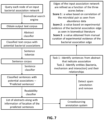
- FIG. 3A and 3B a flow diagram of a method 300 for annotation and classification of biomedical text having bacterial associations and further utilizing for the disease is shown in FIG. 3A and 3B .
- the method 300 depicted in the flow chart may be executed by a system, for example, the system, 100 of FIG. 1 .
- the system 100 may be embodied in a computing device.
- FIG. 7 shows a simplistic flow diagram of the method 300 for annotation of the biomedical text.
- Operations of the flowchart, and combinations of operation in the flowchart may be implemented by various means, such as hardware, firmware, processor, circuitry and/or other device associated with execution of software including one or more computer program instructions.
- one or more of the procedures described in various embodiments may be embodied by computer program instructions.
- the computer program instructions, which embody the procedures, described in various embodiments may be stored by at least one memory device of a system and executed by at least one processor in the system. Any such computer program instructions may be loaded onto a computer or other programmable system (for example, hardware) to produce a machine, such that the resulting computer or other programmable system embody means for implementing the operations specified in the flowchart.
- the operations of the method 300 are described with help of system 100. However, the operations of the method 300 can be described and/or practiced by using any other system.
- a disease is identified with a known or reported bacterial basis. Let the disease be named as 'DS'.
- a sample having a microbiological content is extracted from a group of patients suffering from the identified disease for investigating a disease.
- the environmental sample can be taken from fecal matter, saliva, swabs, etc. (or any sample having a microbiological content) from the subjects under consideration.
- the extracted genetic matter (like the DNA) from the environmental samples is then sequenced and the sequences are computationally analyzed to identify the bacterial taxa present by mapping the same to a database of microorganisms of various taxonomic hierarchy.
- bacterial abundance data is obtained from the sample corresponding to the disease using an experimental technique, wherein the bacterial abundance data is used to construct a bacterial taxonomic abundance matrix consisting of abundance information of individual bacterial taxon across the group of patients.
- the frequency of mapping of signature genetic elements e.g. 16s rRNA marker genes
- One or more of such matrices obtained from multiple metagenomic projects can be combined given they are performed and analyzed under similar experimental setup, parameters and conditions.
- a data normalization step is desirable in the next step to remove various sampling and experimental biases.
- the most common technique of normalization being a total sum scaling or a percentage normalization.
- advanced techniques including rarefaction based or centered log-ratio based transformation may also be used to normalize the abundance matrices.
- the bacterial taxonomic abundance matrix can then be used to identify relationship patterns between the bacteria (in the matrix) using proxy measures like significant correlations calculated from the matrix.
- a significant positive correlation between a pair of bacteria from the matrix can indicate a mutual association pattern while a significant negative correlation can serve as an indicator of a mutual inhibitory relationship between them. While the significance of an association can be ascertained by a statistical test using a probability value, the association itself can also be calculated by other computational methods.
- the bacterial association generated in the above step can serve as a starting for analysis of the bacterial community structure corresponding to a study (e.g., the diseases having a known bacterial basis).
- a study e.g., the diseases having a known bacterial basis.
- Experimental evidence of an association between a given set of bacteria is hence required to ascertain the bacterial relationships indicated by the bacterial association network.
- the set of steps presented in this disclosure can help achieve this task by obtaining evidence information pertaining to a given set of bacterial associations from biomedical literature of scientific texts reporting experimental findings (e.g. databases like PubMed central).
- a bacterial association network is constructed using significant statistical correlation or other methods to find relationships between the bacteria present in the bacterial taxonomic abundance data matrix.
- this network has 'm' number of bacteria as nodes (N1, N2....Nm) with their relationship as 'e' number of edges (E1,E2,...., En) and edge weights (EW1, EW2,..., EWn) as an association strength (e.g. correlation along with its probability values).
- the association strength is identified using score 1 which is obtained using the value of correlation.
- the score 1 can be range scaled to lie between 0 and 1 and identified with a probability value (ps1) of the correlation calculated using a test statistic (e.g., t distribution).
- a plurality of search queries is formulated for each node in the first bacterial association network (NT1), wherein each of the plurality of search queries is searched in a biomedical search engine to obtain output tuples as a set of output lists containing a plurality of biomedical texts, wherein each text is identified by an ID.
- Search queries are formulated for each node in the network using a biomedical search engine (like PubMed).
- Each search query is designed to fetch the plurality of biomedical text that contain the name of the search bacterial taxa node and obtain the output tuples (e.g., PubMed IDs with biomedical abstracts) as 'z' output lists.
- unique IDs e.g., PubMed IDs
- biomedical text e.g., Publication abstracts
- the set of domain features is calculated for each of the abstracts present in the biomedical text corpus 'Cz' to generate a feature count matrix with one set of features for every abstract.
- a first classifier or abstract classifier trained on the abstract corpus
- the feature count matrix is obtained using the first classifier (or sentence classifier trained on the sentence corpus) and if a condition is satisfied in the set of features.
- sentences having potential bacterial associations are utilized to create a first refined association network. It must be noted that, the first classifier can be trained to detect both abstracts as well as sentences containing bacterial associations.
- a second classifier (or readability classifier) is applied to the feature count matrix corresponding to the first list of biomedical text to obtain a readability for each text in the first list of biomedical text.
- a feature count matrix is a two-dimensional matrix composed of the abundance of each feature across each unique ID (e.g., PubMed IDs) of the biomedical corpus.
- a threshold annotation time required to annotate each biomedical text is estimated based on its readability;
- sentences in the first list of biomedical text are identified (by a method like sentence tokenization) with probable bacterial associations.
- a table of predicted sentences is created using the first classifier (or sentence classifier trained on the sentence corpus) and calculated domain features for each identified sentences in the first list of biomedical text that contain the bacterial association along with the ID. Additional information for each sentence in the table including the source ID (biomedical abstract that contains the sentence), output of features 16 to 21, information about the presence and location of the bacterial mechanism and the interaction entities from the identified sentences are also included in the table.
- the list of predicted sentences corresponding to the bacterial associations is recorded to calculate corresponding count along with their unique IDs.
- the first list of biomedical texts, the estimated threshold annotation time and the recorded list of predicted sentences corresponding to each unique ID is sent to a crowdsourcing annotation system for improved prediction of bacterial associations.
- a second refined association network is created utilizing the output of crowdsourcing annotation system and the first refined association network.
- the method 300 further comprises calculating a refined bacterial association network.
- the sentences with bacterial entities, interactions entities and mechanism entities are identified for the list of biomedical texts, wherein the bacterial entities mentioned in the sentences are connected by an edge.
- a total occurrence of the edge is counted across the sentences in the lists and a normalized edge weight is assigned.
- the edge weight (or score of a given edge) is identified using score 2 which is calculated as a ratio of the count of text chunk in the text corpus 'Cz' where a successful presence of the association is predicted using classifier 1 to the count of the text chunk in the text corpus 'Cz' containing both the bacterial nodes constituting the edge.
- the score 2 can be range scaled to lie between 0 and 1 and a probability (ps2) value is calculated for the bacterial association pair using a statistical test like Fisher's Exact Test.
- NT2 a second bacterial association network
- N1, N2,...,No 'o' number of nodes
- E1, E2,...., Ep 'p' number of edges
- EW1, EW2,...., EWp normalized edge weights
- one or more common edges are found present in the first bacterial association network NT1 and the second bacterial association network NT2 to calculate a refined bacterial association network NT3 with intersection edges having 'q' number of nodes (N1, N2, across,Nq) and 'r' number of edges (E1,E2,7-8,Er) with edge weight (EW1, EW2,.., EWr) as a function of the edge weights of the NT1 and NT2 identified using score 1 and score 2.
- This allows to obtain a first refined bacterial association network for improved insights.
- the crowdsourcing annotation system consists of the following tasks assigned to an annotator:
- the crowdsourcing annotation system can also record the time taken by an annotator (T-actual) to successfully complete an annotation as well as track annotator attentiveness. This can be achieved in several ways but not limited to tracking the mouse cursor, touch delays, eye tracking, active time of the user interface page, etc. Each text chunk is also annotated by two other independent annotators. The reliability and accuracy of an annotation is then calculated using the following ways:
- the list of sentences corresponding to the 'Consensus-annotated' for each text corpus is processed to further refine the bacterial association network by modifying the edge weights and create the second refined association network such that its edge weight is a function of score 1, score 2 and score 3, where,
- the refined bacterial association networks for the disease can also be used for clinical, therapeutic and diagnostic applications for treatment of the disease as explained above.
- microbial/bacteria biomarkers and drivers for a disease can be identified for by comparing the refined disease bacterial association network with a similarly refined healthy (control) bacterial association network obtained from matched heathy control sample data as shown in flowchart 400 of FIG. 4 .
- the refined bacterial association network is prepared for the disease sample and the healthy sample. The changes in local graph properties of the nodes in the two networks are then compared to identify bacterial biomarkers or drivers of the disease.
- the bacterial association network can also be used to augment the understanding of the functional relationships between the bacterial groups.
- Advanced probiotic cocktails can then be designed using this refined bacterial association networks as reference which minimizes all non-naturally feasible bacterial associations as shown in flowchart 500 of FIG. 5 .
- a list of pathogenic drivers or microbial strains pertaining to a disease are identified and prepared, e.g., pathogenic bacterial strains of Escherichia and Klebsiella in urogenital infections.
- a list of candidate anti pathogenic probiotic strains from experiments on microbiological samples (e.g., fecal specimens) from healthy human volunteers are identified using a probiotic strains database.
- This probiotic strain database can be created using one or more clinically approved and recommended list of probiotics.
- An alternate way is by selecting a group of bacteria that are known modulators of beneficial metabolites in humans like SCFA (or Short Chain Fatty Acids) using their known functional potential available from metabolic pathway and protein domain information.
- SCFA Short Chain Fatty Acids
- a biomedical literature search engine is queried with at least one pathogen and at least one commensal from the list as a search query with an additional filter to search only for human related results. This tries to ensure that the candidate bacterial strains of the probiotic cocktail are mostly of reported human origin.
- the biomedical text corpus is created corresponding to the search output and the domain-based feature count matrix is generated using the set of domain features described in the disclosure for the corpus.
- the classifier 1 is applied as described in the disclosure using the feature count matrix to obtain the text or list of sentences containing potential bacterial associations.
- the DICT_INT dictionary and the identified sentences using classifier 1 is used to identify potential commensal bacteria having a competitive or inhibitory (negative) relationship over a pathogen.
- the DICT_INT dictionary and the identified sentences are used to identify groups of commensal bacteria having a mutualistic or beneficial (positive) relationship among them.
- the identified groups of bacteria having a negative (or inhibitory) effect on the pathogen and a positive (or mutualistic) effect among themselves serve as potential candidates of a probiotic cocktail which can then be sent for experimental validation.
- Identification of mutualistic and inhibitory relationships between a pair of bacteria in a given classified sentence can be done either by manual curation or by application of machine learning methods for relationship prediction. It is pertinent to note that although the example case study demonstrates the applicability of the methodology using a specific disease, the method presented in this invention can be well extended to study various other bacterial ecosystems in diverse ecological regimes.
- Refined bacterial association networks generated from multiple studies can be combined to create a knowledge graph of bacterial associations along with other information like bacteria-disease, bacteria-food, bacteria-drug, bacteria-host genetic/epigenetic factors, bacteria-functions, bacteria-active substances, bacteria-virus, etc.
- knowledge graphs can be used by researchers and clinicians to design personalized recommendation systems pertaining to diet, drug, probiotics and prebiotics.
- knowledge graphs can also be used for discovering and designing novel drug candidates utilizing information of bacterial association and metabolites secreted by them using the dictionaries and classifiers presented in this invention. For example, one can identify structurally similar molecules secreted by one or more bacteria or bacterial community for a drug known to alleviate a disorder or improve health condition in a disease. Such identification can help to engineer and reuse the bacterial community as a natural alternative for the drug in order to minimize adverse effects.
- classifier 1 and classifier 2 the steps for the creation of data set for classifier training and validation, classifier 1 and classifier 2 is provided below.
- Relevant biomedical abstracts were downloaded from PubMed using keywords corresponding to bacterial associations and mechanisms. Unlike other relationships, bacterial associations require a special categorical evaluation. Hence, we introduce four categories which are required for evaluation of a classifier build for classifying bacterial associations.
- the downloaded corpus was then curated computationally for validation of 'association classification' (Classifier 1) to create these four categories namely, CATEGORY 1, CATEGORY 2, CATEGORY 3a and CATEGORY 3b (consisting of 300 abstracts belonging to each category with a total of 1200 abstracts):
- the CAT3a represents a 'TRUE' or 'POSITIVE' class while CAT1, CAT2 and CAT3b represents three types of 'FALSE' or 'NEGATIVE' classes encountered normally in biomedical text mining especially with respect to bacterial associations.
- 'TRUE' or 'POSITIVE' in this case refers to a text reporting one or more identifiable bacterial association. It is pertinent to note that, among the above classes, the most difficult task is to distinguish between CAT3a ('TRUE' or 'POSITIVE' class) and CAT3b ('FALSE' or 'NEGATIVE'). Following is an example of a sentence belonging to abstracts corresponding to CAT2, CAT3a and CAT3b.
- tSNE is a method for dimensionality reduction and visualization of high dimensional data, minimizes the divergence between pairs of data points in the high dimensional space and low dimension space, the points closer in high dimensional space remained close in the low dimensional space.
- the tSNE plots were generated to visualize the overall distribution of the four classes in multivariate space and obtain an initial idea of the clustering efficiency of the different types of features.
- a comparative visual inspection shows that the 'set of domain features' are able to better distinguish between the different categories as compared to the generic features namely BOW and TF-IDF. This was evident from the observation of datapoints belonging to same clusters having closer proximity and datapoints belonging to different clusters having a larger proximity in the two-dimensional ordination space as generated by tSNE.
- any cluster quality index known in art like silhouette index can be used for computational evaluation of cluster quality.
- a multiclass (Category 1 vs Category 2 vs Category 3a vs Category 3b) classification ( 'classifier 1' ) was performed using four algorithms namely Naive Bayes, Logistic Regression, SVM and Random Forests. Optimum hyper-parameters for SVM and Random Forest classifiers are obtained using Grid Searching. For Bag-of-words and TF-iDF models, top 100 features were considered with up to 4-grams. The algorithms were trained on 90% samples and tested on 10% chosen randomly. Optimum parameter estimation is done by 5-fold cross validated grid searching on a predefined parameter grid. During each parameter search operation, the training samples are split into 5 segments, wherein 4 are used for training and 1 for validation.
- a sentence corpus consisting of a set of 405 sentences identified by manual curation to contain reported microbial associations marked as TRUE and another set of 405 sentences manually curated to identify the ones having no bacterial associations marked as FALSE (although having the bacteria/mechanism/interaction entity names present in them).
- These sentences were obtained using manual curation from the 1200 abstracts (text corpus) belonging to the above described four categories (CAT1, CAT2, CAT3a and CAT3b).
- a classification was performed using four algorithms namely Naive Bayes, Logistic Regression, SVM and Random Forests. Optimum hyper-parameters for SVM and Random Forest classifiers are obtained using Grid Searching.
- a feature importance score was computed for each feature pertaining to each of the classifications as demonstrated by the classifier 1 in TABLE 1, 2 and 3.
- the feature importance was calculated for the Random Forest classifier using the Gini score or index measure.
- Gini score measures the probability of a particular variable being wrongly classified.
- a feature is given a higher importance, if its elimination from the feature set causes the Gini coefficient of the data to increase. Importance scores (as shown in TABLE 4 ) are therefore calculated as the normalized total reduction in Gini due the absence of that feature.
- a feature is deemed important, if its presence increases the information about the sample. For example, if the presence of interaction keywords is considered as a feature, then it is safe to conclude that the presence of this feature in any sentence should increase the chances of a reported interaction in that sentence.
- the aim of every split is to decrease the Gini score of the subsets.
- a feature's importance can thus be estimated by the fraction of Gini score lost when that feature is eliminated from the tree.
- feature importance is the reduction in Gini score due to the absence of that feature, averaged over all the trees in the forest. The final feature importance scores were calculated using the average score of each output across 100 bootstrap iterations.
- the feature importance scores for each feature corresponding to each classification can be used as a metric for building a decision tree. It can also be used as a decision metric to design a new classifier either as a subset of the existing features or in combination with new/other features.
- the features and the feature importance values can help in document classification, document clustering, automatic question answer generation as well as other methods of relationship extraction from biomedical text.
- the assignment of an abstract as 'easy to read' or 'difficult to read' was decided based on the majority voting by the group. Abstracts with a tie were discarded.
- This set was used for training and validation of the classifier 2.
- the same set of 29 domain features were used to train the classifier 2.
- a classification ('classifier 2') was performed using four algorithms namely Naive Bayes, Logistic Regression, SVM and Random Forests.
- Optimum hyper-parameters for SVM and Random Forest classifiers are obtained using Grid Searching. For Bag-of-words and TF-iDF models, top 100 features were considered with up to 4-grams. The algorithms were trained on 90% samples and tested on 10% chosen randomly. Re-sampling techniques were implemented using the 'imbalanced-learn' python package to minimize biases arising due to imbalanced classes. Optimum parameter estimation is done by 5-fold cross validated grid searching on a predefined parameter grid. During each parameter search operation, the training samples are split into 5 segments, wherein 4 are used for training and 1 for validation.
- the set of domain features could also distinguish the readability of the biomedical text having bacterial associations with an overall higher accuracy (including the Precision, Recall and F1 score) especially using the Logistic Regression, SVM and Random Forest classifier.
- a feature importance score is computed for each feature with a higher score denoting higher importance as shown in TABLE 6.
- Feature importance for this case was done for Random Forest classifier using Gini index measure as described earlier. A feature is given a higher importance, if its elimination from the feature set causes the Gini score of the data to increase.
- Importance scores are therefore normalized total reduction in Gini score due the absence of that feature. Higher the importance score, more importance does a feature hold for the corresponding classification.
- a feature is deemed important, if its presence increases the information about the sample. For example, if the presence of interaction keywords is considered as a feature, then it is safe to conclude that the presence of this feature in any sentence should increase the chances of a reported interaction in that sentence.
- a feature's importance can thus be estimated by the fraction of Gini score lost when that feature is eliminated from the tree.
- feature importance is the reduction in Gini score due to the absence of that feature, averaged over all the trees in the forest.
- TABLE 6 Feature importance table for classifier 2 based on the random forest classifier along with their importance score for classifier 2. Importance scores are therefore normalized total reduction in Gini score due the absence of that feature. Feature importance reported here are averaged across 100 bootstrap iterations.
- the feature importance scores for each feature corresponding to each classification can be used as a metric for building a decision tree. It can also be used as a decision metric to design a new classifier either as a subset of the existing features or as a combination with new/other features.
- the features and the feature importance values can help in document classification, document clustering, spam detection in crowdsourcing as well as other methods of readability analysis from biomedical text.
- the first classifier (classifier 1) consists of abstract classifier and sentence classifier.
- the task of the abstract classifier is to classify a given biomedical corpus (e.g.-list of abstracts) into abstracts having a potential bacterial association or not. Given an input biomedical corpus, this classifier generates an output comprising of a shortlisted abstract corpus having abstracts reporting potential bacterial associations, utilizing the unique domain features.
- the task of the sentence classifier is to classify a given sentence corpus (list of tokenized sentences) into sentences having a potential bacterial association or not. Given an input sentence corpus, the classifier generates an output comprising of a shortlisted sentence corpus having sentences reporting potential bacterial associations, based on the identification of the bacteria and interaction entities along with the positive count of the features 16 to 21 for each of the sentence.
- the second classifier (classifier 2) consists of the readability classifier.
- the task of the readability classifier is to classify a given biomedical corpus (e.g.-list of abstracts) based on their readability.
- the readability classifier Given an input biomedical corpus, the readability classifier generates an output of classified biomedical corpus comprising abstracts which are categorized into 'Easy' or 'Difficult' to read. This is followed by a step wherein a threshold annotation time range required to annotate each biomedical abstract based on its readability is also estimated.
- a biomedical text corpus classified using 'classifier 1' can be further analyzed to identify sentences with probable bacterial associations applying the following steps. For the text chunks (e.g. biomedical abstracts) classified as 'category 3a' using classifier 1, split the abstracts into the constituent sentences (sentence tokenization) and use the classifier1 trained with a sentence corpus shown to exhibit the maximum accuracy as described in TABLE 3 to identify sentences with potential bacterial associations.
- the text chunks e.g. biomedical abstracts classified as 'category 3a' using classifier 1
- split the abstracts into the constituent sentences (sentence tokenization) and use the classifier1 trained with a sentence corpus shown to exhibit the maximum accuracy as described in TABLE 3 to identify sentences with potential bacterial associations.
- the list of sentences having a positive nonzero value for the features BBM, BMB, MBB, IBB, BIB, BBI is identified with the index locations and sent as an output.
- This resultant output list of all sentences from the text corpus constitute the set of sentences with probable bacterial associations.
- Such sentences can be used for refinement of bacterial associations obtained from other data driven or machine learning approaches for relationship prediction.
- These set of sentences can also lower the annotator load when used as in input for a sentence annotation system where the identified entity indices can be used for manual or automatic curation. Further, they can also be used for automatic question answer generation which can serve as useful utility for benchmarking crowdsourcing annotations.
- the p-value of the correlation can be found using the t-distribution or using a Python functions using standard libraries like scipy.stats.pearsonr (available from scipy version 1.8.1).
- the correlation value ranges from -1 to +1.
- the absolute value of r xy can be used as score 1 and the sign can be used as a measure of the nature of association. A '+' sign indicates a positive association, and '-' sign denotes a negative association between the two bacteria (x and y).
- the absolute (or modulus) value of r xy can be used as score 1 which ranges from 0 to 1. This score 1 is calculated for all possible unique pairs of bacteria in a given bacterial abundance matrix.
- the ps1 for score 1 can then be used to select the subset of edges denoting a statistically significant association and all the identified edges can be combined to create NT1.
- Score 2 calculation For a given list of bacterial associations in form of a query bacterial association network (e.g., in NT1), the experimental evidence of the associations can be calculated using a score to refine it and create a subnetwork that contains only those edges that have valid experimental evidence. This can be done by constructing search queries with each query consisting of the name of the nodes in the query association network in addition to other keyworks relating to the domain of microbiology. The output of the search containing the list of identified biomedical abstracts corresponding to the search queries can be saved in a table of biomedical corpus Cz containing the unique set of biomedical abstracts along with their unique IDs.
- the domain features can be calculated for each abstract in corpus Cz and a matrix of domain features M1 for each unique ID is created.
- M1 as input for classifier 1 trained on the abstract training corpus (CAT1, CAT2, CAT3a and CAT3b)
- the predicted output O1 (table of abstracts with unique IDs classified as CAT3a) can be used to identify the biomedical abstracts that potentially contain bacterial association.
- O1 is further used to identify all sentences (classified as 'TRUE') using classifier 1 trained on the sentence corpus (containing a set of sentences with a 'TRUE' and 'FALSE' set) in the containing abstracts that contain a bacteria-bacteria association.
- the output is saved in a new table O2 containing the positively classified sentences along with the unique ID of the source abstract.
- This set of sentences in O2 can then be used to predict inter bacterial associations (each association representing an edge with the associating bacteria as the connecting nodes) from the available information (using the entity dictionaries and domain features) and construct a new bacterial association network NT2 by combining the edges.
- presence of bacterial entity information for each abstract can be identified and stored in a new matrix M2 along with the unique IDs corresponding to each abstract.
- the set of edges common between NT1 and NT2 are identified and combined to create a new bacterial association network NT3.
- the probability value (ps2) of the association between bacteria x and bacteria y can further be calculated using a hypergeometric tests like Fisher exact test using Cx, Cy, C0xy and C2xy. Python functions using standard libraries like scipy.stats.fisher_exact (available from scipy version 1.8.1) can be used to perform this calculation.
- the edge weight of NT3 can be calculated as a function of score 1, score 2, ps1 and ps2 which in simplest form can be a summation of score 1 and score 2.
- NT2 is used to refine NT1 and create a first refined association network NT3, it can also be used to create and update a knowledge graph (using the score as well as other resultant data generated using it) of bacterial association that is created by similar networks from multiple experiments.
- Score 3 calculation The list of biomedical abstracts available in O1 can be computationally annotated using the domain features, DICT BACT, DICT_INT, DICT_MECH and classifier 1 to identify entity locations as well as potential sentences with bacterial associations. However, not all abstracts classified using classifier 1 can be accurate and might contain false positives. Hence, an additional step of refinement of the previously identified bacterial association network can be performed using manual annotation in a crowdsourcing setup. Necessary steps can be used to eliminate spam annotations using features like annotation time and annotator attentiveness.
- an intermediate score is assigned to every valid annotator based on their tendency to over-annotator (reporting more associations than ideal) or under-annotate (reporting less associations than ideal). This is an important criterion for biomedical relation annotations as the relations reported between bacteria might not be explicit most of the time in the text, and the annotator needs to use their domain knowledge to decipher the association and make an annotation.
- ⁇ k ⁇ K b j k K denotes the average number of unique associations reported for the abstract j.
- the score Sx therefore quantifies the ratio of the sum of the number of associations reported by the annotator x to the sum of the average number of associations reported by all annotators for all abstracts annotated by x. Now this score is lower bounded by 0 but does not have an upper bound.
- the Sx for every annotator is taken and scaled using standard scaling.
- the final score Sd will range between -1 and +1, with a lower score indicating that the association carries less confidence and vice versa.
- Sd can be further range scaled to lie between 0 and 1 using the formula to obtain score 3 using the minimum (min) and maximum (max) value of Sd .
- the Final score for assigning a weight for each edge in NT3 post refinement using crowdsourcing to create the second and final refined association network is calculated as score S equal to the summation of products of score 1 with ps1, product of score 2 and ps2 and score 3.
- S score 1 * ps 1 + score 2 * ps 2 + score 3
- the entity relationship prediction using classifier 1 accompanied by machine learning techniques can be explained as follows: Although the methodology for finding microbial/bacterial associations using manual annotation with or without crowdsourcing is highly accurate, wherein the reported associations are likely to be true, the main disadvantage of such method is the lack of scalability. For any new disease or any new pair of bacteria, new manual annotators would be needed to annotate the associations. An alternative to this step would be to train machine learning algorithms on the abstracts (along with the reported associations) already annotated by valid annotators. In order to do this first, a dataset on which the model will be trained needs to be collected. The procedure for this is detailed in the following steps need to be performed:
- machine learning architectures can be used for this, including but not limited to transformer-based models, recurrent neural networks and its modifications like LSTMs, GRUs etc.
- the input is in text form (comprising of strings viz. sentence and bacterial mention terms)
- Appropriate methods for converting the text features into numeric features is employed.
- the method for using BERT a transformer based pretrained language model can be used which is explained in brief. For each input data, there are 3 texts, one for the sentence, and the others for each of the bacterial mentions / names.
- new unseen texts containing bacterial mentions, along with individual pairs of bacterial mentions can be provided to the model, and the model can predict the probability of an association being present among the bacterial pair.
- the model may be able to achieve human level performance in annotation accuracy, or at least reduce the annotation load from humans by filtering out texts/sentences and bacterial pairs having low probability of having an association.
- the model described above can be augmented using transfer learning.
- the estimation of threshold time required for an annotation based on the predicted readability can be explained as follows: Crowdsourcing has emerged to become very popular in recent times. Large scale experiments and data collection and annotation exercises are increasingly done using crowdsourcing. However, because of its inherent nature, crowdsourcing has been vulnerable to malicious or spam attacks. Therefore, detecting spam in crowdsourcing exercises is a very important area of research with applications in a wide variety of fields. It was hypothesized that spam annotators in order to maximize their reward given the constraint (time), would not typically spend time on reading the document and annotate them properly, but make random annotations before moving on to the next abstract. Therefore, the time taken by a crowd worker for an annotation can indicate if it was spam or not.
- a time range needed to properly annotate an abstract depending on the predicted readability of the abstract is computed. Any crowdsourced annotation which falls outside this range can be treated as potential span and sent for further screening.
- the results show biomedical abstracts predicted as 'Difficult to read' using 'set of domain features' and a Random forest algorithm (as described in 'classifier 2') ranged with a lower range of 60 seconds and a higher range of 208 seconds for annotators to complete the assigned annotation task.
- the biomedical abstracts classified as 'Easy to read' ranged between a 57 seconds to 166 seconds.
- T-threshold threshold annotation time range
- the crowdsourcing annotation system consists of the following tasks assigned to an annotator: Task 1 included identification of sentences in the given biomedical abstract that indicates a probable bacterial association. The sentence could be selected by a text highlighting feature which in turn can be used to capture its actual start and end index in the current text chunk. The annotator can also manually copy and paste the relevant sentences in a provided text box.
- Task 2 included identification of the possible bacterial, mechanism and interaction entities in each text chunk and assign a relationship between the observed bacterial names visible in the text chunk by human comprehension.
- the relationship could be identified by selecting the bacterial names, relationship and mechanism from a text dropdown or similar GUI based menu populated automatically in the crowdsourcing annotation system.
- the annotator can also manually list the observations in a provided text box indicating the exact bacterial entity names, their mechanism and interaction as visible in the text chunk.
- the set of domain features introduced in the present disclosure provides a higher classification accuracy.
- the biomedical text is automatically tagged with bacterial, mechanism and association entities which can be easily used for predicting the actual associations providing an improved entity recognition.
- the tagged biomedical text can be used as an input into a crowdsourcing platform with lower annotator workload.
- the threshold time estimates provide an estimate of the annotation quality and can be used to detect spam annotations in a crowdsourcing setup.
- a classifier trained with the set of domain features can be used to refine bacterial association networks obtained from microbiome abundance values in experimental data.
- the three dictionaries are generated as follows:
- the disclosure herein addresses unresolved problem related to effective utilization of the biomedical abstract.
- the embodiment thus provides the method and system for annotation and classification of biomedical text having bacterial associations.
- the hardware device can be any kind of device which can be programmed including e.g. any kind of computer like a server or a personal computer, or the like, or any combination thereof.
- the device may also include means which could be e.g. hardware means like e.g. an application-specific integrated circuit (ASIC), a field-programmable gate array (FPGA), or a combination of hardware and software means, e.g.
- ASIC application-specific integrated circuit
- FPGA field-programmable gate array
- the means can include both hardware means and software means.
- the method embodiments described herein could be implemented in hardware and software.
- the device may also include software means.
- the embodiments may be implemented on different hardware devices, e.g. using a plurality of CPUs, GPUs etc.
- the embodiments herein can comprise hardware and software elements.
- the embodiments that are implemented in software include but are not limited to, firmware, resident software, microcode, etc.
- the functions performed by various components described herein may be implemented in other components or combinations of other components.
- a computerusable or computer readable medium can be any apparatus that can comprise, store, communicate, propagate, or transport the program for use by or in connection with the instruction execution system, apparatus, or device.
- a computer-readable storage medium refers to any type of physical memory on which information or data readable by a processor may be stored.
- a computer-readable storage medium may store instructions for execution by one or more processors, including instructions for causing the processor(s) to perform steps or stages consistent with the embodiments described herein.
- the term "computer-readable medium” should be understood to include tangible items and exclude carrier waves and transient signals, i.e., be non-transitory. Examples include random access memory (RAM), read-only memory (ROM), volatile memory, nonvolatile memory, hard drives, CD ROMs, DVDs, flash drives, disks, and any other known physical storage media.
Landscapes
- Engineering & Computer Science (AREA)
- Health & Medical Sciences (AREA)
- General Health & Medical Sciences (AREA)
- Physics & Mathematics (AREA)
- Theoretical Computer Science (AREA)
- Life Sciences & Earth Sciences (AREA)
- Medical Informatics (AREA)
- Primary Health Care (AREA)
- Biotechnology (AREA)
- Spectroscopy & Molecular Physics (AREA)
- Epidemiology (AREA)
- Evolutionary Biology (AREA)
- Bioinformatics & Computational Biology (AREA)
- Public Health (AREA)
- Bioinformatics & Cheminformatics (AREA)
- Bioethics (AREA)
- Biophysics (AREA)
- Databases & Information Systems (AREA)
- Artificial Intelligence (AREA)
- Audiology, Speech & Language Pathology (AREA)
- General Physics & Mathematics (AREA)
- Computational Linguistics (AREA)
- General Engineering & Computer Science (AREA)
- Management, Administration, Business Operations System, And Electronic Commerce (AREA)
Applications Claiming Priority (1)
| Application Number | Priority Date | Filing Date | Title |
|---|---|---|---|
| IN202121033646 | 2021-07-27 |
Publications (2)
| Publication Number | Publication Date |
|---|---|
| EP4125091A1 true EP4125091A1 (de) | 2023-02-01 |
| EP4125091B1 EP4125091B1 (de) | 2026-02-18 |
Family
ID=82742634
Family Applications (1)
| Application Number | Title | Priority Date | Filing Date |
|---|---|---|---|
| EP22186855.7A Active EP4125091B1 (de) | 2021-07-27 | 2022-07-26 | Verfahren und system zur annotation und klassifizierung von biomedizinischen texten, die bakterielle assoziationen aufweisen |
Country Status (2)
| Country | Link |
|---|---|
| US (1) | US20230067976A1 (de) |
| EP (1) | EP4125091B1 (de) |
Families Citing this family (3)
| Publication number | Priority date | Publication date | Assignee | Title |
|---|---|---|---|---|
| US12086172B2 (en) * | 2021-10-13 | 2024-09-10 | Dell Products L.P. | Determining named entities associated with aspect terms extracted from documents having unstructured text data |
| US20230187033A1 (en) * | 2021-11-17 | 2023-06-15 | Pipa Llc | Method for prescribing a clinical trial |
| CN118471344B (zh) * | 2024-05-20 | 2024-11-15 | 迪辅乐生物(上海)有限公司 | 一种菌群互作网络构建、剪裁方法与系统及核心菌群标志物和应用 |
-
2022
- 2022-07-26 US US17/815,129 patent/US20230067976A1/en active Pending
- 2022-07-26 EP EP22186855.7A patent/EP4125091B1/de active Active
Non-Patent Citations (7)
| Title |
|---|
| KUNTAL BHUSAN K ET AL: "'NetShift': a methodology for understanding 'driver microbes' from healthy and disease microbiome datasets", THE ISME JOURNAL, NATURE PUBLISHING GROUP UK, LONDON, vol. 13, no. 2, 4 October 2018 (2018-10-04), pages 442 - 454, XP036673997, ISSN: 1751-7362, [retrieved on 20181004], DOI: 10.1038/S41396-018-0291-X * |
| LIM KUN MING KENNETH ET AL: "@MInter: automated text-mining of microbial interactions", BIOINFORMATICS, vol. 32, no. 19, 16 June 2016 (2016-06-16), GB, pages 2981 - 2987, XP093005268, ISSN: 1367-4803, DOI: 10.1093/bioinformatics/btw357 * |
| LO CHIEH ET AL: "MPLasso: Inferring microbial association networks using prior microbial knowledge", PLOS COMPUTATIONAL BIOLOGY, vol. 13, no. 12, 27 December 2017 (2017-12-27), US, pages 1 - 20, XP093005264, ISSN: 1553-734X, DOI: 10.1371/journal.pcbi.1005915 * |
| PARK YESOL ET AL: "Discovering microbe-disease associations from the literature using a hierarchical long short-term memory network and an ensemble parser model", SCIENTIFIC REPORTS, vol. 11, no. 1, 24 February 2021 (2021-02-24), XP093005872, DOI: 10.1038/s41598-021-83966-8 * |
| POKHREL VATSALA ET AL: "Utilizing domain-based features to improve classification accuracy of biomedical text having bacterial associations", 2021 IEEE INTERNATIONAL CONFERENCE ON BIOINFORMATICS AND BIOMEDICINE (BIBM), IEEE, 9 December 2021 (2021-12-09), pages 2840 - 2847, XP034066942, DOI: 10.1109/BIBM52615.2021.9669294 * |
| SRIVASTAVA DIVYANSHU ET AL: ""EviMass": A Literature Evidence-Based Miner for Human Microbial Associations", FRONTIERS IN GENETICS, vol. 10, 849, 13 September 2019 (2019-09-13), pages 1 - 10, XP093005265, DOI: 10.3389/fgene.2019.00849 * |
| SRIVASTAVA DIVYANSHU ET AL: "'EviMass' user manual Module 1 Module 2 Module 3", FRONTIERS IN GENETICS, 13 September 2019 (2019-09-13), pages 1 - 20, XP093006697, Retrieved from the Internet <URL:https://www.frontiersin.org/articles/10.3389/fgene.2019.00849/full#supplementary-material> [retrieved on 20221209], DOI: https://doi.org/10.3389/fgene.2019.00849 * |
Also Published As
| Publication number | Publication date |
|---|---|
| EP4125091B1 (de) | 2026-02-18 |
| US20230067976A1 (en) | 2023-03-02 |
Similar Documents
| Publication | Publication Date | Title |
|---|---|---|
| Karlicki et al. | Tiara: deep learning-based classification system for eukaryotic sequences | |
| Hamid et al. | Identifying antimicrobial peptides using word embedding with deep recurrent neural networks | |
| Verma et al. | A unified lightweight CNN-based model for disease detection and identification in corn, rice, and wheat | |
| Aliman et al. | Sentiment analysis using logistic regression | |
| EP4125091B1 (de) | Verfahren und system zur annotation und klassifizierung von biomedizinischen texten, die bakterielle assoziationen aufweisen | |
| Azeez et al. | Cyberbullying detection in social networks: Artificial intelligence approach | |
| Xing et al. | iAMP-Attenpred: a novel antimicrobial peptide predictor based on BERT feature extraction method and CNN-BiLSTM-Attention combination model | |
| Dowton et al. | A preliminary framework for DNA barcoding, incorporating the multispecies coalescent | |
| Rehman et al. | Semantics analysis of agricultural experts’ opinions for crop productivity through machine learning | |
| Hickl et al. | Binny: an automated binning algorithm to recover high-quality genomes from complex metagenomic datasets | |
| Jiang et al. | DCiPatho: deep cross-fusion networks for genome scale identification of pathogens | |
| Ji et al. | Optimal distance metrics for single-cell RNA-seq populations | |
| Sayyari et al. | TADA: phylogenetic augmentation of microbiome samples enhances phenotype classification | |
| Lamurias et al. | Chemical compound and drug name recognition using CRFs and semantic similarity based on ChEBI | |
| Azad et al. | XAI-enhanced machine learning for obesity risk classification: A stacking approach with LIME explanations | |
| Arango-Argoty et al. | MetaMLP: a fast word embedding based classifier to profile target gene databases in metagenomic samples | |
| LeBlanc et al. | Microbiome subcommunity learning with logistic-tree normal latent Dirichlet allocation | |
| Shi et al. | FuzzyID2: A software package for large data set species identification via barcoding and metabarcoding using hidden Markov models and fuzzy set methods | |
| Arif et al. | Optimizing lung cancer prediction: leveraging Kernel PCA with dendritic neural models | |
| Huang et al. | A novel approach for entity resolution in scientific documents using context graphs | |
| Chibani et al. | ClassiPhages 2.0: Sequence-based classification of phages using Artificial Neural Networks | |
| Querfurth et al. | mcBERT: Patient-Level Single-cell Transcriptomics Data Representation | |
| Emon et al. | DeepMRG: a multi-label deep learning classifier for predicting bacterial metal resistance genes | |
| Wiatrak et al. | Sequence-based modelling of bacterial genomes enables accurate antibiotic resistance prediction | |
| Molik et al. | Combining natural language processing and metabarcoding to reveal pathogen-environment associations |
Legal Events
| Date | Code | Title | Description |
|---|---|---|---|
| PUAI | Public reference made under article 153(3) epc to a published international application that has entered the european phase |
Free format text: ORIGINAL CODE: 0009012 |
|
| STAA | Information on the status of an ep patent application or granted ep patent |
Free format text: STATUS: THE APPLICATION HAS BEEN PUBLISHED |
|
| AK | Designated contracting states |
Kind code of ref document: A1 Designated state(s): AL AT BE BG CH CY CZ DE DK EE ES FI FR GB GR HR HU IE IS IT LI LT LU LV MC MK MT NL NO PL PT RO RS SE SI SK SM TR |
|
| STAA | Information on the status of an ep patent application or granted ep patent |
Free format text: STATUS: REQUEST FOR EXAMINATION WAS MADE |
|
| 17P | Request for examination filed |
Effective date: 20230512 |
|
| RBV | Designated contracting states (corrected) |
Designated state(s): AL AT BE BG CH CY CZ DE DK EE ES FI FR GB GR HR HU IE IS IT LI LT LU LV MC MK MT NL NO PL PT RO RS SE SI SK SM TR |
|
| STAA | Information on the status of an ep patent application or granted ep patent |
Free format text: STATUS: EXAMINATION IS IN PROGRESS |
|
| 17Q | First examination report despatched |
Effective date: 20240229 |
|
| GRAP | Despatch of communication of intention to grant a patent |
Free format text: ORIGINAL CODE: EPIDOSNIGR1 |
|
| STAA | Information on the status of an ep patent application or granted ep patent |
Free format text: STATUS: GRANT OF PATENT IS INTENDED |
|
| RIC1 | Information provided on ipc code assigned before grant |
Ipc: G16B 50/10 20190101AFI20251125BHEP Ipc: G16H 70/00 20180101ALI20251125BHEP |
|
| GRAS | Grant fee paid |
Free format text: ORIGINAL CODE: EPIDOSNIGR3 |
|
| INTG | Intention to grant announced |
Effective date: 20251210 |
|
| GRAA | (expected) grant |
Free format text: ORIGINAL CODE: 0009210 |
|
| STAA | Information on the status of an ep patent application or granted ep patent |
Free format text: STATUS: THE PATENT HAS BEEN GRANTED |