EP4125043B1 - Anisotrope texturfilterung mit bestimmten abständen zwischen den proben - Google Patents
Anisotrope texturfilterung mit bestimmten abständen zwischen den proben Download PDFInfo
- Publication number
- EP4125043B1 EP4125043B1 EP22186844.1A EP22186844A EP4125043B1 EP 4125043 B1 EP4125043 B1 EP 4125043B1 EP 22186844 A EP22186844 A EP 22186844A EP 4125043 B1 EP4125043 B1 EP 4125043B1
- Authority
- EP
- European Patent Office
- Prior art keywords
- filtering
- sampling points
- ellipse
- isotropic
- texture
- Prior art date
- Legal status (The legal status is an assumption and is not a legal conclusion. Google has not performed a legal analysis and makes no representation as to the accuracy of the status listed.)
- Active
Links
Images







Classifications
-
- G—PHYSICS
- G06—COMPUTING OR CALCULATING; COUNTING
- G06T—IMAGE DATA PROCESSING OR GENERATION, IN GENERAL
- G06T15/00—Three-dimensional [3D] image rendering
- G06T15/04—Texture mapping
-
- G—PHYSICS
- G06—COMPUTING OR CALCULATING; COUNTING
- G06F—ELECTRIC DIGITAL DATA PROCESSING
- G06F17/00—Digital computing or data processing equipment or methods, specially adapted for specific functions
- G06F17/10—Complex mathematical operations
- G06F17/18—Complex mathematical operations for evaluating statistical data, e.g. average values, frequency distributions, probability functions, regression analysis
-
- G—PHYSICS
- G06—COMPUTING OR CALCULATING; COUNTING
- G06T—IMAGE DATA PROCESSING OR GENERATION, IN GENERAL
- G06T15/00—Three-dimensional [3D] image rendering
- G06T15/50—Lighting effects
- G06T15/503—Blending, e.g. for anti-aliasing
-
- G—PHYSICS
- G06—COMPUTING OR CALCULATING; COUNTING
- G06T—IMAGE DATA PROCESSING OR GENERATION, IN GENERAL
- G06T7/00—Image analysis
- G06T7/60—Analysis of geometric attributes
Definitions
- This application relates to texture filtering and in particular, anisotropic texture filtering.
- the transformed primitives are mapped to pixels and the colour is identified for each pixel.
- This may comprise rasterizing the transformed geometry data (e.g. by performing scan conversion) to generate primitive fragments.
- fragment is used herein to mean a sample of a primitive at a sampling point, which is to be processed to render pixels of an image.
- there may be a one-to-one mapping of pixels to fragments.
- this oversampling can allow for higher quality rendering of pixel values.
- the primitive fragments that are hidden may then be removed through a process called hidden surface removal. Texturing and/or shading may then be applied to primitive fragments that are not hidden to determine pixel values of a rendered image. For example, in some cases, the colour of a fragment may be identified by applying a texture (e.g. an image) to the fragment.
- a texture e.g. an image
- Texture maps are formed of a plurality of texels (i.e. colour values), which may also be referred to as texture elements or texture pixels.
- Mipmaps allow an appropriate level of detail to be selected for a fragment, in the sense that the mipmap level whose texel footprints most closely match the fragment's footprint is a good candidate for filtering. Specifically, higher resolution mipmaps can be used for fragments/objects that are closer to the screen/viewer, and lower resolution mipmaps can be used for fragments/objects that are further from the screen/viewer. Mipmaps thus provide an efficient solution to enable texture minification without having to introduce additional filtering, with potentially unbounded computation and memory bandwidth cost. When point sampling and bilinear filtering are used with mipmapping, the texel(s) are selected from the closest mipmap level (or a scaled version of the closest mipmap level).
- bilinear nor trilinear filtering takes into account the fact that a fragment footprint may be warped by different amounts in different directions (e.g. when the texture is at a receding angle with respect to the screen/viewer), making it difficult to approximate the fragment footprint in texture space using a single parameter (e.g. the level of detail). In such cases, bilinear or trilinear filtering can produce blurry results.
- an anti-aliasing technique such as multi-sample anti-aliasing (MSAA)
- MSAA multi-sample anti-aliasing
- Anti-aliasing techniques apply a filter, such as, but not limited to, a box filter to the multiple samples to generate a single colour value for a pixel.
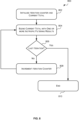
- the methods include: generating one or more parameters describing an elliptical footprint in texture space; performing isotropic filtering at each of a plurality of sampling points along a major axis of the elliptical footprint, wherein a spacing between adjacent sampling points of the plurality of sampling points is proportional to 1 ⁇ ⁇ ⁇ 2 units, wherein ⁇ is a ratio of a major radius of an ellipse to be sampled and a minor radius of the ellipse to be sampled, wherein the ellipse to be sampled is based on the elliptical footprint; and combining results of the isotropic filtering at the plurality of sampling points with a Gaussian filter to generate at least a portion of a filter result.
- a first aspect provides a computer-implemented method of performing anisotropic texture filtering, the method comprising: generating one or more parameters describing an elliptical footprint in texture space; identifying N sampling points along a major axis of an ellipse to be sampled, performing isotropic filtering at each of the N sampling points along a major axis of the elliptical footprint, wherein a spacing between adjacent sampling points of the plurality of the N sampling points is proportional to 1 ⁇ ⁇ ⁇ 2 units, calculating such value, wherein ⁇ is a ratio of a major radius of an ellipse to be sampled and a minor radius of the ellipse to be sampled, wherein the ellipse to be sampled is based on the elliptical footprint, the major axis of the ellipse to be sampled is aligned with a major axis of the elliptical footprint, a unit corresponds to the minor radius of the ellipse to
- the spacing between adjacent sampling points of the plurality of sampling points may be proportional to 1 ⁇ ⁇ ⁇ 2 units by a proportionality factor, the proportionality factor may be 1 ⁇ , where ⁇ is a sampling rate of the Gaussian filter.
- the spacing between adjacent sampling points of the plurality of sampling points may be proportional to 1 ⁇ ⁇ ⁇ 2 units by a proportionality factor, the proportionality factor being 1 ⁇ ⁇ ⁇ ⁇ , where ⁇ is a sampling rate of the Gaussian filter.
- the ellipse to be sampled may have the same eccentricity as the elliptical footprint and may be larger than the elliptical footprint, and the second ellipse to be sampled may have the same eccentricity as the elliptical footprint and may be smaller than the elliptical footprint.
- the plurality of sampling points may comprise N sampling points, wherein N is equal to 2 ⁇ ⁇ , 2 ⁇ is a width of the Gaussian filter in standard deviations, and ⁇ is a sampling rate of the Gaussian filter.
- the one or more parameters describing the elliptical footprint in texture space may comprise one or more of the major axis of the elliptical footprint, a length of the major axis of the elliptical footprint, and a length of the minor axis of the elliptical footprint.
- a second aspect provides a method of generating an image, the method comprising performing anisotropic texture filtering in accordance with the first aspect, and generating an image based on the at least a portion of the filter result.
- a fourth aspect provides a graphics processing system comprising the texture filtering unit of the third aspect.
- a fifth aspect provides a computer-implemented method of performing anisotropic texture filtering, the method comprising: generating one or more parameters describing an elliptical footprint in texture space; performing isotropic filtering at each of N sampling points along a major axis of an ellipse to be sampled, wherein a spacing between adjacent sampling points of the N sampling points is proportional to a value being calculated of 1 ⁇ ⁇ ⁇ 2 units by a proportionality factor ⁇ , wherein ⁇ is a ratio of a major radius of the ellipse to be sampled and a minor radius of the ellipse to be sampled, wherein the major axis of the ellipse to be sampled is aligned with a major axis of the elliptical footprint and a unit corresponds to the minor radius of the ellipse to be sampled; and combining results of the isotropic filtering at the N sampling points with a Gaussian filter to generate at least a portion of a filter
- texture mapping is a process in which a texture (i.e. an image) is mapped onto an object in a 3D scene.
- a texture i.e. an image
- a texture representing a brick pattern may be applied to a wall object to make it look as if the wall is made of brick.
- screen space is used herein to represent the 3D coordinate system of the display in which 3D objects such as primitives and patches are defined.
- Each pixel in screen space is defined by pixel coordinates ( x, y ) and a depth z.
- Texture space is used herein to represent the 2D coordinate system of a texture.
- Each texel in texture space is defined by texture coordinates (u, v ).
- Gaussian EWA when used in conjunction with a Gaussian filter profile, which may be referred to herein as Gaussian EWA, is considered to be one of the highest quality texture filtering techniques and is often used as a benchmark to measure the quality of other filtering techniques.
- the EWA technique has proven difficult to implement in hardware. Specifically, it can be expensive, in terms of computing resources, to calculate the weights and ellipse parameters, and in some cases may require obtaining many texels.
- TEXRAM uses the four partial derivatives ( ⁇ u / ⁇ x, ⁇ v / ⁇ x, ⁇ u / ⁇ y, ⁇ v / ⁇ y )) to create two vectors in texture space ( ⁇ u/ ⁇ x, ⁇ v / ⁇ x ) and ( ⁇ u / ⁇ y, ⁇ v / ⁇ y ) .
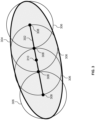
- the sample points 208 are placed along the line 210 that has the length and slope of the longer of the two vectors.
- the ratio between the major radius of the ellipse and the minor radius of the ellipse i.e. ⁇ ) may be referred to as the anisotropic ratio.
- the maximum error in the estimation is not dependent on the anisotropic ratio.
- the two techniques may be combined to obtain an even more accurate estimate of Gaussian EWA.
- described herein are methods and texture filtering units for performing anisotropic filtering of a texture using one or more of these techniques.
- the information defining the relationship between screen space and texture space may include the partial derivatives ( ⁇ u / ⁇ x, ⁇ v / ⁇ x, ⁇ u / ⁇ y, ⁇ v / ⁇ y ) that represent the rate of change of u and v in texture space relative to changes in x and y in screen space.
- the information defining the relationship between screen space and texture space may include information from which the partial derivatives can be determined, or at least estimated.
- the information defining the relationship between screen space and texture space may comprise texture co-ordinates corresponding to neighbouring pixels/fragments to the relevant pixel/fragment (e.g. a 2x2 block of pixels/fragments).
- the parameters of the elliptical footprint may also be based on the dimensions of the texture.
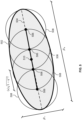
- Each set of equally spaced sampling points corresponds to, is associated with, or is related to, an ellipse in texture space to be sampled.
- the ellipse to be sampled is based on, and/or related to, the elliptical footprint identified in block 402. In some cases, the ellipse to be sampled is the elliptical footprint identified in block 402.
- ⁇ 1 2
- performing isotropic filtering at a sampling point may comprises: performing a first isotropic filtering at the sampling point at a first mipmap level; performing a second isotropic filtering at the sampling point at a second mipmap level; and interpolating between a result of the first isotropic filtering and a result of the second isotropic filtering to generate a result of the isotropic filtering for the sampling point. Therefore, in these cases, the interpolation between mipmaps is performed before the combination (i.e. before block 408).
- the length of the minor axis ⁇ - be equal to 2 base mipmap level texels
- the length of the major axis ⁇ + be equal to 3 2 base mipmap level texels.
- the minor and major axis lengths have a fixed size in normalised texture co-ordinates so will have a smaller texel size for lower resolution mipmap levels.
- ⁇ 3
- each set of equally spaced sampling points relates to, or is associated with, a different ellipse to be sampled, wherein each ellipse to be sampled is based on, and/or related to, the elliptical footprint identified in block 402.
- each set may have the same number of sampling points or different sets may have a different number of sampling points.
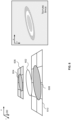
- the elliptical footprint identified in block 402) is a linear interpolation of an ellipse 604 that is smaller than the target ellipse 602 (from the higher resolution mipmap 606) and an ellipse 608 that is larger than the target ellipse 602 (from the lower resolution mipmap 610), each of which are concentric with respect to the target ellipse 602. Accordingly, the two ellipses to be sampled are the smaller ellipse 604 and the larger ellipse 608. This may be referred to herein as symmetric anisotropic filtering. Since the anisotropic ratio is the same for both ellipses 604, 608 to be sampled the number of samples in each set of sampling points is the same.
- the length of the minor axis ⁇ - be equal to 2 base mipmap level texels
- the length of the major axis ⁇ + be equal to 3 2 base mipmap level texels.
- the spacing for the higher resolution mipmap level is ⁇ 1 ⁇ 1 2 ⁇ 3 2 texels and the spacing for the lower resolution mipmap level is ⁇ 1 ⁇ 2 3 2 texels.
- a separate set of sample points is identified for each mipmap level.
- the box filter is the first order cardinal B-spline
- the tent filter is the second order cardinal B-spline, formed by convolving the box filter by itself.
- the central limit theorem indicates that if one applied repeated convolution of these filters (i.e. distributions), they tend towards the normal distribution, so the cardinal B-splines can be seen as a series of increasing order approximations of the Gaussian. In general, higher order B-splines have better anti-aliasing properties and thus may produce better results.
- block 410 it is interpolated between the combination results generated in block 408 for the different sets of sampling points.
- block 410 may comprise interpolating between the Gaussian combination result generated in block 408 for the set of sampling points for a higher resolution mipmap and the Gaussian combination result generated in block 408 for the set of sampling points for a lower resolution mipmap.
- the interpolation may be performed using a fractional level of detail (LOD) mipmap interpolation weight.
- LOD fractional level of detail
- the method 400 may end.
- the result of the method (block 408 or block 410), which may be referred to as a filter result, may be output for further processing.
- the output of the method (block 408 or block 410) may be output to a shader (or another component of a graphics processing unit or a graphics processing system) for use in generating a rendering output (e.g. an image).
- the preferred variance of the convolution is ⁇ + 2
- the preferred variance of the isotropic filter is ⁇ ⁇ 2
- the preferred variance of functions are additive under convolution the preferred variance of the Gaussian filter is ⁇ + 2 ⁇ ⁇ ⁇ 2 .
- Methods known to the Applicant for estimating forms of EWA e.g. Gaussian EWA
- Gaussian EWA which is not an admission that they are well-known, do not generally account for the contribution of the isotropic filter to the target variance, leading to inexact resultant kernel profiles.
- exponents in equation (16) can then be arranged as shown below to result in a representation of the exponents shown in equation (17) wherein the exponents are expressed as the combination of two terms - a first term which is dependent on n and a second term which is not dependent on n. It can be seen that this rearranging has been accomplished by completing the square.
- the offset may be set to 1 ⁇ 2. However, in other cases, the offset may be set to other values, such as, but not limited to, zero.
- ( n + ⁇ ) ⁇ can be expressed as shown in equation (39). If ( n + ⁇ ) ⁇ in equation (38) is replaced with the right-hand side of equation (39), equation (38) can be written as equation (40). Equation (40) can be rearranged to produce equation (41).
- a current total ( F k -1 ) is blended with the isotropic filtering result L K -( k -1) corresponding to the ( K - ( k - 1)) th sampling point to the left of the middle point of the major axis, and the isotropic filtering result R K - k corresponding to the ( K - ( k - 1)) th sample point to the right of the middle point of the major axis using a linear interpolation factor ⁇ k .
- the L isotropic filtering results and the R isotropic filtering results may be interpolated separately and the interpolation of the L isotropic filtering results may be averaged with the interpolation of the R isotropic filtering results.
- the linear interpolation factors ⁇ k may be calculated in accordance with equation (54).
- the results may be tabulated (e.g. in a hardware lookup table) directly for the finite (e.g. fixed point) set of anisotropic ratios for m and then apply lookup table optimisation techniques.
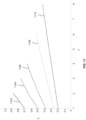
- FIG. 10 shows graphs 1002, 1004, 1006, 1008, 1010 of the factors ⁇ k of equation (54) for anisotropic ratios of 2, 3, 4, 6 and 8, respectively. It can be seen that they are generally linear.
- FIG. 11 shows graphs 1102, 1104, 1106, 1108 and 1110 of the factors ⁇ k of equation (54) for anisotropic ratios of 2, 3, 4, 6 and 8 respectively when the number of samples cover two standard deviations. It can be seen that in these cases the factors are almost perfectly linear.
- the weights of each anisotropic filter are selected, based on the parameters, to be the weights that minimize a cost function that penalizes high frequencies in the frequency response of the anisotropic filter, under one or more constraints to ensure that the filter satisfies one or more features of a texture filter.
- the weights the minimize of one of the cost functions, under the constraints may be dynamically determined - i.e. on the fly. However, this can be a fairly time and resource intensive process. Accordingly, in other cases, the weights that minimize one or more of the cost functions, under the constraints, may be determined off-line for expected ranges of the parameters - e.g. for ranges of sets of sample points S (which is described above and below), anisotropic ratios ⁇ , and sample spacing ⁇ ) . In such cases, the results may be stored in a look up table which is indexed by the parameters (e.g. set of sample points S, anisotropic ratio ⁇ , and sample spacing ⁇ ) .
- the anisotropic filter A can be pre-convolved with a Gaussian to define
- the pre-convolution with a Gaussian is performed because it is ultimately the frequency response of the composite filter that is of interest.
- the memory 1504 comprises a portion of memory 1508 for storing a texture (e.g. storing a mipmap representing the texture) and a portion of memory 1510 (which may be referred to as a frame buffer) for storing image data (e.g. rendered pixel values) which are output from the GPU 1502.
- a texture e.g. storing a mipmap representing the texture
- a portion of memory 1510 which may be referred to as a frame buffer
- image data e.g. rendered pixel values
- the texture filtering unit and graphics processing system of FIG. 15 are shown as comprising a number of functional blocks. This is schematic only and is not intended to define a strict division between different logic elements of such entities. Each functional block may be provided in any suitable manner. It is to be understood that intermediate values described herein as being formed by a unit or system need not be physically generated by the unit or system at any point and may merely represent logical values which conveniently describe the processing performed by the unit or system between its input and output.
- the texture filtering units and/or the graphics processing systems described herein may be embodied in hardware on an integrated circuit.
- the texture filtering units and/or the graphics processing system described herein may be configured to perform any of the methods described herein.
- any of the functions, methods, techniques or components described above can be implemented in software, firmware, hardware (e.g., fixed logic circuitry), or any combination thereof.
- the terms "module,” “functionality,” “component”, “element”, “unit”, “block” and “logic” may be used herein to generally represent software, firmware, hardware, or any combination thereof.
- the module, functionality, component, element, unit, block or logic represents program code that performs the specified tasks when executed on a processor.
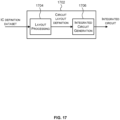
- the IC generation system 1706 generates an IC according to the circuit layout definition, as is known in the art.
- the IC generation system 1706 may implement a semiconductor device fabrication process to generate the IC, which may involve a multiple-step sequence of photo lithographic and chemical processing steps during which electronic circuits are gradually created on a wafer made of semiconducting material.
- the circuit layout definition may be in the form of a mask which can be used in a lithographic process for generating an IC according to the circuit definition.
- the circuit layout definition provided to the IC generation system 1706 may be in the form of computer-readable code which the IC generation system 1706 can use to form a suitable mask for use in generating an IC.
- the different processes performed by the IC manufacturing system 1702 may be implemented all in one location, e.g. by one party.
- the IC manufacturing system 1702 may be a distributed system such that some of the processes may be performed at different locations, and may be performed by different parties.
- some of the stages of: (i) synthesising RTL code representing the IC definition dataset to form a gate level representation of a circuit to be generated, (ii) generating a circuit layout based on the gate level representation, (iii) forming a mask in accordance with the circuit layout, and (iv) fabricating an integrated circuit using the mask may be performed in different locations and/or by different parties.
- an integrated circuit manufacturing definition dataset when processed in an integrated circuit manufacturing system, may cause an integrated circuit manufacturing system to generate a device as described herein.
- the configuration of an integrated circuit manufacturing system in the manner described above with respect to FIG. 17 by an integrated circuit manufacturing definition dataset may cause a device as described herein to be manufactured.
- an integrated circuit definition dataset could include software which runs on hardware defined at the dataset or in combination with hardware defined at the dataset.
- the IC generation system may further be configured by an integrated circuit definition dataset to, on manufacturing an integrated circuit, load firmware onto that integrated circuit in accordance with program code defined at the integrated circuit definition dataset or otherwise provide program code with the integrated circuit for use with the integrated circuit.
- performance improvements may include one or more of increased computational performance, reduced latency, increased throughput, and/or reduced power consumption.
- performance improvements can be traded-off against the physical implementation, thereby improving the method of manufacture. For example, a performance improvement may be traded against layout area, thereby matching the performance of a known implementation but using less silicon. This may be done, for example, by reusing functional blocks in a serialised fashion or sharing functional blocks between elements of the devices, apparatus, modules and/or systems.
Landscapes
- Engineering & Computer Science (AREA)
- Physics & Mathematics (AREA)
- General Physics & Mathematics (AREA)
- Theoretical Computer Science (AREA)
- Data Mining & Analysis (AREA)
- Computer Graphics (AREA)
- Mathematical Physics (AREA)
- Pure & Applied Mathematics (AREA)
- Mathematical Optimization (AREA)
- Mathematical Analysis (AREA)
- Computational Mathematics (AREA)
- Evolutionary Biology (AREA)
- Algebra (AREA)
- Bioinformatics & Cheminformatics (AREA)
- Life Sciences & Earth Sciences (AREA)
- Operations Research (AREA)
- Probability & Statistics with Applications (AREA)
- Computer Vision & Pattern Recognition (AREA)
- Bioinformatics & Computational Biology (AREA)
- Geometry (AREA)
- Databases & Information Systems (AREA)
- Software Systems (AREA)
- General Engineering & Computer Science (AREA)
- Image Processing (AREA)
- Image Generation (AREA)
Claims (15)
- Computerimplementiertes Verfahren (400) zur Durchführung von anisotroper Texturfilterung, wobei das Verfahren (400) Folgendes umfasst:Erzeugen eines oder mehrerer Parameter, die eine elliptische Grundfläche in einem Texturraum beschreiben, (402);Identifizieren von N Abtastpunkten entlang einer Hauptachse einer abzutastenden Ellipse, wobei das Identifizieren der N Abtastpunkte ein Berechnen von

 Durchführen von isotroper Filterung an den N Abtastpunkten entlang der Hauptachse der abzutastenden Ellipse (406); undKombinieren von Ergebnissen der isotropen Filterung an den N Abtastpunkten mit einem Gauß-Filter, um zumindest einen Teil eines Filterergebnisses zu erzeugen, (408).
 - Verfahren (400) nach Anspruch 1, wobei der Abstand zwischen benachbarten Abtastpunkten der N Abtastpunkte proportional, mit einem Proportionalitätsfaktor, zu


- Verfahren (400) nach Anspruch 1, wobei der Abstand zwischen benachbarten Abtastpunkten der N Abtastpunkte proportional, mit einem Proportionalitätsfaktor, zu


- Verfahren (400) nach einem der Ansprüche 1 bis 3, wobei das Durchführen von isotroper Filterung an jedem der N Abtastpunkte ein Durchführen von bilinearer Filterung an jedem der N Abtastpunkte umfasst; oder
wobei das Durchführen von isotroper Filterung an jedem der N Abtastpunkte ein Durchführen von trilinearer Filterung an jedem der N Abtastpunkte umfasst. - Verfahren (400) nach einem der Ansprüche 1 bis 3, wobei das Durchführen von isotroper Filterung an einem Abtastpunkt der N Abtastpunkte Folgendes umfasst:Durchführen einer ersten isotropen Filterung an dem Abtastpunkt auf einer ersten Mipmap-Ebene;Durchführen einer zweiten isotropen Filterung an dem Abtastpunkt auf einer zweiten Mipmap-Ebene; undInterpolieren zwischen einem Ergebnis der ersten isotropen Filterung und einem Ergebnis der zweiten isotropen Filterung, um ein Ergebnis der isotropen Filterung für den Abtastpunkt zu erzeugen.
- Verfahren (400) nach einem der vorhergehenden Ansprüche, wobei die abzutastende Ellipse die durch die elliptische Grundfläche definierte Ellipse ist.
- Verfahren (400) nach einem der Ansprüche 1 bis 3, wobei das Durchführen von isotroper Filterung an jedem der N Abtastpunkte ein Durchführen einer ersten isotropen Filterung an jedem Abtastpunkt der N Abtastpunkte umfasst; und das Verfahren (400) ferner Folgendes umfasst:Durchführen einer zweiten isotropen Filterung an jedem einer Vielzahl von Abtastpunkten entlang einer Hauptachse einer zweiten abzutastenden Ellipse, wobei ein Abstand zwischen benachbarten Abtastpunkten der Vielzahl von Abtastpunkten proportional zu
 Kombinieren von Ergebnissen der zweiten isotropen Filterung; undInterpolieren zwischen der Kombination der Ergebnisse der ersten isotropen Filterung und der Kombination der Ergebnisse der zweiten isotropen Filterung (410).
 - Verfahren (400) nach Anspruch 7, wobei die erste isotrope Filterung auf einer ersten Mipmap-Ebene durchgeführt wird und die zweite isotrope Filterung auf einer zweiten Mipmap-Ebene durchgeführt wird.
- Verfahren (400) nach Anspruch 7 oder Anspruch 8, wobei die abzutastende Ellipse eine Ellipse mit höherer Exzentrizität in Bezug auf die elliptische Grundfläche ist, und die zweite abzutastende Ellipse eine Ellipse mit niedrigerer Exzentrizität in Bezug auf die elliptische Grundfläche ist; oder
wobei die abzutastende Ellipse die gleiche Exzentrizität wie die elliptische Grundfläche aufweist und größer als die elliptische Grundfläche ist, und die zweite abzutastende Ellipse die gleiche Exzentrizität wie die elliptische Grundfläche aufweist und kleiner als die elliptische Grundfläche ist. - Verfahren (400) nach einem der vorhergehenden Ansprüche, wobei N gleich

- Verfahren (400) nach einem der vorhergehenden Ansprüche, wobei ein Ort der N Abtastpunkte ausgedrückt wird durch


- Verfahren (400) nach einem der vorhergehenden Ansprüche, wobei die Ergebnisse der isotropen Filterung durch eine Folge von linearen Interpolationen kombiniert werden, wobei jede lineare Interpolation in der Folge von linearen Interpolationen ein Verschmelzen eines Ergebnisses einer vorherigen linearen Interpolation in der Folge mit dem Ergebnis der isotropen Filterung für einen oder mehrere der N Abtastpunkte umfasst, wobei der eine oder die mehreren der N Abtastpunkte für eine lineare Interpolation näher an einem Mittelpunkt der Hauptachse der elliptischen Grundfläche liegen als der eine oder die mehreren der N Abtastpunkte für die vorherige lineare Interpolation in der Folge.
- Computerimplementiertes Verfahren zur Erzeugung eines Bilds, wobei das Verfahren ein Durchführen von anisotroper Texturfilterung gemäß dem Verfahren nach einem der vorhergehenden Ansprüche und ein Erzeugen eines Bilds basierend auf dem mindestens einen Teil des Filterergebnisses umfasst.
- Computerlesbares Speichermedium mit darauf gespeicherten computerlesbaren Anweisungen, die, wenn sie in einem Computersystem ausgeführt werden, das Computersystem veranlassen, das Verfahren nach einem der Ansprüche 1 bis 13 durchzuführen.
- Computerlesbares Speichermedium mit einer darauf gespeicherten computerlesbaren Beschreibung einer Texturfilterungseinheit, die konfiguriert ist, das Verfahren nach einem der Ansprüche 1 bis 12 zu implementieren, das, wenn es in einem System zur Herstellung integrierter Schaltungen verarbeitet wird, das System zur Herstellung integrierter Schaltungen veranlasst, eine integrierte Schaltung herzustellen, die die Texturfilterungseinheit verkörpert.
Applications Claiming Priority (3)
| Application Number | Priority Date | Filing Date | Title |
|---|---|---|---|
| GB2110744.6A GB2609246B (en) | 2021-07-26 | 2021-07-26 | Anisotropic texture filtering |
| GB2110742.0A GB2609244B (en) | 2021-07-26 | 2021-07-26 | Anisotropic texture filtering |
| GB2110743.8A GB2609245B (en) | 2021-07-26 | 2021-07-26 | Anisotropic texture filtering |
Publications (2)
| Publication Number | Publication Date |
|---|---|
| EP4125043A1 EP4125043A1 (de) | 2023-02-01 |
| EP4125043B1 true EP4125043B1 (de) | 2025-04-16 |
Family
ID=82493974
Family Applications (3)
| Application Number | Title | Priority Date | Filing Date |
|---|---|---|---|
| EP22186840.9A Active EP4125041B1 (de) | 2021-07-26 | 2022-07-26 | Anisotrope texturfilterung mittels isotroper filterung an einer vielzahl von abtastpunkten |
| EP22186844.1A Active EP4125043B1 (de) | 2021-07-26 | 2022-07-26 | Anisotrope texturfilterung mit bestimmten abständen zwischen den proben |
| EP22186842.5A Active EP4125042B1 (de) | 2021-07-26 | 2022-07-26 | Anisotrope texturfilterung mit gewichten eines anisotropen filters |
Family Applications Before (1)
| Application Number | Title | Priority Date | Filing Date |
|---|---|---|---|
| EP22186840.9A Active EP4125041B1 (de) | 2021-07-26 | 2022-07-26 | Anisotrope texturfilterung mittels isotroper filterung an einer vielzahl von abtastpunkten |
Family Applications After (1)
| Application Number | Title | Priority Date | Filing Date |
|---|---|---|---|
| EP22186842.5A Active EP4125042B1 (de) | 2021-07-26 | 2022-07-26 | Anisotrope texturfilterung mit gewichten eines anisotropen filters |
Country Status (3)
| Country | Link |
|---|---|
| US (8) | US12020366B2 (de) |
| EP (3) | EP4125041B1 (de) |
| CN (3) | CN115701870A (de) |
Families Citing this family (4)
| Publication number | Priority date | Publication date | Assignee | Title |
|---|---|---|---|---|
| US20250139806A1 (en) * | 2023-10-25 | 2025-05-01 | Qualcomm Incorporated | Efficient local normalization for dfs |
| CN117173056B (zh) * | 2023-11-01 | 2024-04-09 | 欣瑞华微电子(上海)有限公司 | 用于解决信息丢失的图像处理方法、设备及可读存储介质 |
| WO2025188383A2 (en) * | 2023-11-30 | 2025-09-12 | The Government Of The United States Of America, As Represented By The Secretary Of The Navy | Anisotropy elimination in monoclinic and triclinic crystal lattice semiconductors and composite substrates thereof |
| CN121788693A (zh) * | 2026-03-09 | 2026-04-03 | 武汉凌久微电子有限公司 | 一种基于张量核心加速的纹理映射系统及映射方法 |
Family Cites Families (8)
| Publication number | Priority date | Publication date | Assignee | Title |
|---|---|---|---|---|
| US6292193B1 (en) * | 1998-07-30 | 2001-09-18 | Compaq Computer Corporation | Techniques for anisotropic texture mapping using multiple space-invariant filtering operations per pixel |
| US6744435B2 (en) * | 2001-04-26 | 2004-06-01 | Mitsubishi Electric Research Laboratories, Inc. | Rendering discrete sample points projected to a screen space with a continuous resampling filter |
| US7339594B1 (en) * | 2005-03-01 | 2008-03-04 | Nvidia Corporation | Optimized anisotropic texture sampling |
| US7619635B1 (en) * | 2005-09-13 | 2009-11-17 | Nvidia Corporation | Anisotropic texture sampling for odd ratios |
| US7372467B1 (en) * | 2005-10-11 | 2008-05-13 | Nvidia Corporation | System and method for modifying a number of texture samples for anisotropic texture filtering |
| US7558400B1 (en) * | 2005-12-08 | 2009-07-07 | Nvidia Corporation | Anisotropic texture filtering optimization |
| GB2583154B (en) | 2019-10-17 | 2021-04-28 | Imagination Tech Ltd | Texture filtering |
| US11158110B1 (en) * | 2021-01-06 | 2021-10-26 | Arm Limited | Graphics texture mapping |
-
2022
- 2022-07-25 CN CN202210884582.9A patent/CN115701870A/zh active Pending
- 2022-07-25 CN CN202210877264.XA patent/CN115690296A/zh active Pending
- 2022-07-25 CN CN202210879140.5A patent/CN115690297A/zh active Pending
- 2022-07-26 US US17/873,425 patent/US12020366B2/en active Active
- 2022-07-26 EP EP22186840.9A patent/EP4125041B1/de active Active
- 2022-07-26 US US17/874,019 patent/US11961175B2/en active Active
- 2022-07-26 US US17/873,894 patent/US12026819B2/en active Active
- 2022-07-26 EP EP22186844.1A patent/EP4125043B1/de active Active
- 2022-07-26 EP EP22186842.5A patent/EP4125042B1/de active Active
-
2024
- 2024-04-15 US US18/635,206 patent/US12374021B2/en active Active
- 2024-05-21 US US18/670,442 patent/US12387416B2/en active Active
- 2024-06-24 US US18/752,412 patent/US12412334B2/en active Active
-
2025
- 2025-06-26 US US19/251,595 patent/US20250322588A1/en active Pending
- 2025-08-11 US US19/296,723 patent/US20250363714A1/en active Pending
Also Published As
| Publication number | Publication date |
|---|---|
| US12020366B2 (en) | 2024-06-25 |
| US20250322588A1 (en) | 2025-10-16 |
| US12387416B2 (en) | 2025-08-12 |
| CN115701870A (zh) | 2023-02-14 |
| US12374021B2 (en) | 2025-07-29 |
| US20250363714A1 (en) | 2025-11-27 |
| US20230055989A1 (en) | 2023-02-23 |
| EP4125041A1 (de) | 2023-02-01 |
| US20230050797A1 (en) | 2023-02-16 |
| US20240312114A1 (en) | 2024-09-19 |
| EP4125042A1 (de) | 2023-02-01 |
| US12412334B2 (en) | 2025-09-09 |
| EP4125041B1 (de) | 2025-04-23 |
| US20240303903A1 (en) | 2024-09-12 |
| EP4125042B1 (de) | 2025-04-16 |
| CN115690296A (zh) | 2023-02-03 |
| US20240355037A1 (en) | 2024-10-24 |
| CN115690297A (zh) | 2023-02-03 |
| US20230057658A1 (en) | 2023-02-23 |
| EP4125043A1 (de) | 2023-02-01 |
| US11961175B2 (en) | 2024-04-16 |
| US12026819B2 (en) | 2024-07-02 |
Similar Documents
| Publication | Publication Date | Title |
|---|---|---|
| EP4125042B1 (de) | Anisotrope texturfilterung mit gewichten eines anisotropen filters | |
| EP3809374B1 (de) | Texturfiltrierung | |
| US12198230B2 (en) | Anisotropic texture filtering using adaptive filter kernel | |
| US20250238999A1 (en) | Texture filtering of texture represented by multilevel mipmap | |
| GB2609245A (en) | Anisotropic texture filtering | |
| US20250166128A1 (en) | Image processing using filtering function covariance | |
| GB2609246A (en) | Anisotropic texture filtering | |
| GB2609244A (en) | Anisotropic texture filtering |
Legal Events
| Date | Code | Title | Description |
|---|---|---|---|
| PUAI | Public reference made under article 153(3) epc to a published international application that has entered the european phase |
Free format text: ORIGINAL CODE: 0009012 |
|
| STAA | Information on the status of an ep patent application or granted ep patent |
Free format text: STATUS: THE APPLICATION HAS BEEN PUBLISHED |
|
| AK | Designated contracting states |
Kind code of ref document: A1 Designated state(s): AL AT BE BG CH CY CZ DE DK EE ES FI FR GB GR HR HU IE IS IT LI LT LU LV MC MK MT NL NO PL PT RO RS SE SI SK SM TR |
|
| STAA | Information on the status of an ep patent application or granted ep patent |
Free format text: STATUS: REQUEST FOR EXAMINATION WAS MADE |
|
| 17P | Request for examination filed |
Effective date: 20230323 |
|
| RBV | Designated contracting states (corrected) |
Designated state(s): AL AT BE BG CH CY CZ DE DK EE ES FI FR GB GR HR HU IE IS IT LI LT LU LV MC MK MT NL NO PL PT RO RS SE SI SK SM TR |
|
| GRAP | Despatch of communication of intention to grant a patent |
Free format text: ORIGINAL CODE: EPIDOSNIGR1 |
|
| STAA | Information on the status of an ep patent application or granted ep patent |
Free format text: STATUS: GRANT OF PATENT IS INTENDED |
|
| INTG | Intention to grant announced |
Effective date: 20241122 |
|
| P01 | Opt-out of the competence of the unified patent court (upc) registered |
Free format text: CASE NUMBER: APP_64329/2024 Effective date: 20241204 |
|
| GRAS | Grant fee paid |
Free format text: ORIGINAL CODE: EPIDOSNIGR3 |
|
| GRAA | (expected) grant |
Free format text: ORIGINAL CODE: 0009210 |
|
| STAA | Information on the status of an ep patent application or granted ep patent |
Free format text: STATUS: THE PATENT HAS BEEN GRANTED |
|
| AK | Designated contracting states |
Kind code of ref document: B1 Designated state(s): AL AT BE BG CH CY CZ DE DK EE ES FI FR GB GR HR HU IE IS IT LI LT LU LV MC MK MT NL NO PL PT RO RS SE SI SK SM TR |
|
| REG | Reference to a national code |
Ref country code: GB Ref legal event code: FG4D |
|
| REG | Reference to a national code |
Ref country code: CH Ref legal event code: EP Ref country code: DE Ref legal event code: R096 Ref document number: 602022013151 Country of ref document: DE |
|
| REG | Reference to a national code |
Ref country code: IE Ref legal event code: FG4D |
|
| REG | Reference to a national code |
Ref country code: NL Ref legal event code: MP Effective date: 20250416 |
|
| PG25 | Lapsed in a contracting state [announced via postgrant information from national office to epo] |
Ref country code: NL Free format text: LAPSE BECAUSE OF FAILURE TO SUBMIT A TRANSLATION OF THE DESCRIPTION OR TO PAY THE FEE WITHIN THE PRESCRIBED TIME-LIMIT Effective date: 20250416 |
|
| REG | Reference to a national code |
Ref country code: AT Ref legal event code: MK05 Ref document number: 1786300 Country of ref document: AT Kind code of ref document: T Effective date: 20250416 |
|
| PG25 | Lapsed in a contracting state [announced via postgrant information from national office to epo] |
Ref country code: PT Free format text: LAPSE BECAUSE OF FAILURE TO SUBMIT A TRANSLATION OF THE DESCRIPTION OR TO PAY THE FEE WITHIN THE PRESCRIBED TIME-LIMIT Effective date: 20250818 Ref country code: ES Free format text: LAPSE BECAUSE OF FAILURE TO SUBMIT A TRANSLATION OF THE DESCRIPTION OR TO PAY THE FEE WITHIN THE PRESCRIBED TIME-LIMIT Effective date: 20250416 Ref country code: FI Free format text: LAPSE BECAUSE OF FAILURE TO SUBMIT A TRANSLATION OF THE DESCRIPTION OR TO PAY THE FEE WITHIN THE PRESCRIBED TIME-LIMIT Effective date: 20250416 |
|
| PGFP | Annual fee paid to national office [announced via postgrant information from national office to epo] |
Ref country code: DE Payment date: 20250722 Year of fee payment: 4 |
|
| REG | Reference to a national code |
Ref country code: LT Ref legal event code: MG9D |
|
| PG25 | Lapsed in a contracting state [announced via postgrant information from national office to epo] |
Ref country code: NO Free format text: LAPSE BECAUSE OF FAILURE TO SUBMIT A TRANSLATION OF THE DESCRIPTION OR TO PAY THE FEE WITHIN THE PRESCRIBED TIME-LIMIT Effective date: 20250716 Ref country code: GR Free format text: LAPSE BECAUSE OF FAILURE TO SUBMIT A TRANSLATION OF THE DESCRIPTION OR TO PAY THE FEE WITHIN THE PRESCRIBED TIME-LIMIT Effective date: 20250717 |
|
| PG25 | Lapsed in a contracting state [announced via postgrant information from national office to epo] |
Ref country code: PL Free format text: LAPSE BECAUSE OF FAILURE TO SUBMIT A TRANSLATION OF THE DESCRIPTION OR TO PAY THE FEE WITHIN THE PRESCRIBED TIME-LIMIT Effective date: 20250416 |
|
| PG25 | Lapsed in a contracting state [announced via postgrant information from national office to epo] |
Ref country code: BG Free format text: LAPSE BECAUSE OF FAILURE TO SUBMIT A TRANSLATION OF THE DESCRIPTION OR TO PAY THE FEE WITHIN THE PRESCRIBED TIME-LIMIT Effective date: 20250416 |
|
| PG25 | Lapsed in a contracting state [announced via postgrant information from national office to epo] |
Ref country code: HR Free format text: LAPSE BECAUSE OF FAILURE TO SUBMIT A TRANSLATION OF THE DESCRIPTION OR TO PAY THE FEE WITHIN THE PRESCRIBED TIME-LIMIT Effective date: 20250416 |
|
| PG25 | Lapsed in a contracting state [announced via postgrant information from national office to epo] |
Ref country code: AT Free format text: LAPSE BECAUSE OF FAILURE TO SUBMIT A TRANSLATION OF THE DESCRIPTION OR TO PAY THE FEE WITHIN THE PRESCRIBED TIME-LIMIT Effective date: 20250416 |
|
| PGFP | Annual fee paid to national office [announced via postgrant information from national office to epo] |
Ref country code: FR Payment date: 20250725 Year of fee payment: 4 |
|
| PG25 | Lapsed in a contracting state [announced via postgrant information from national office to epo] |
Ref country code: RS Free format text: LAPSE BECAUSE OF FAILURE TO SUBMIT A TRANSLATION OF THE DESCRIPTION OR TO PAY THE FEE WITHIN THE PRESCRIBED TIME-LIMIT Effective date: 20250716 |
|
| PG25 | Lapsed in a contracting state [announced via postgrant information from national office to epo] |
Ref country code: IS Free format text: LAPSE BECAUSE OF FAILURE TO SUBMIT A TRANSLATION OF THE DESCRIPTION OR TO PAY THE FEE WITHIN THE PRESCRIBED TIME-LIMIT Effective date: 20250816 |
|
| PG25 | Lapsed in a contracting state [announced via postgrant information from national office to epo] |
Ref country code: LV Free format text: LAPSE BECAUSE OF FAILURE TO SUBMIT A TRANSLATION OF THE DESCRIPTION OR TO PAY THE FEE WITHIN THE PRESCRIBED TIME-LIMIT Effective date: 20250416 |
|
| PG25 | Lapsed in a contracting state [announced via postgrant information from national office to epo] |
Ref country code: DK Free format text: LAPSE BECAUSE OF FAILURE TO SUBMIT A TRANSLATION OF THE DESCRIPTION OR TO PAY THE FEE WITHIN THE PRESCRIBED TIME-LIMIT Effective date: 20250416 Ref country code: SM Free format text: LAPSE BECAUSE OF FAILURE TO SUBMIT A TRANSLATION OF THE DESCRIPTION OR TO PAY THE FEE WITHIN THE PRESCRIBED TIME-LIMIT Effective date: 20250416 |
|
| REG | Reference to a national code |
Ref country code: DE Ref legal event code: R097 Ref document number: 602022013151 Country of ref document: DE |
|
| PG25 | Lapsed in a contracting state [announced via postgrant information from national office to epo] |
Ref country code: CZ Free format text: LAPSE BECAUSE OF FAILURE TO SUBMIT A TRANSLATION OF THE DESCRIPTION OR TO PAY THE FEE WITHIN THE PRESCRIBED TIME-LIMIT Effective date: 20250416 |
|
| PG25 | Lapsed in a contracting state [announced via postgrant information from national office to epo] |
Ref country code: EE Free format text: LAPSE BECAUSE OF FAILURE TO SUBMIT A TRANSLATION OF THE DESCRIPTION OR TO PAY THE FEE WITHIN THE PRESCRIBED TIME-LIMIT Effective date: 20250416 |
|
| PG25 | Lapsed in a contracting state [announced via postgrant information from national office to epo] |
Ref country code: SK Free format text: LAPSE BECAUSE OF FAILURE TO SUBMIT A TRANSLATION OF THE DESCRIPTION OR TO PAY THE FEE WITHIN THE PRESCRIBED TIME-LIMIT Effective date: 20250416 |
|
| PG25 | Lapsed in a contracting state [announced via postgrant information from national office to epo] |
Ref country code: IT Free format text: LAPSE BECAUSE OF FAILURE TO SUBMIT A TRANSLATION OF THE DESCRIPTION OR TO PAY THE FEE WITHIN THE PRESCRIBED TIME-LIMIT Effective date: 20250416 |
|
| PG25 | Lapsed in a contracting state [announced via postgrant information from national office to epo] |
Ref country code: RO Free format text: LAPSE BECAUSE OF FAILURE TO SUBMIT A TRANSLATION OF THE DESCRIPTION OR TO PAY THE FEE WITHIN THE PRESCRIBED TIME-LIMIT Effective date: 20250416 |
|
| PLBE | No opposition filed within time limit |
Free format text: ORIGINAL CODE: 0009261 |
|
| STAA | Information on the status of an ep patent application or granted ep patent |
Free format text: STATUS: NO OPPOSITION FILED WITHIN TIME LIMIT |
|
| REG | Reference to a national code |
Ref country code: CH Ref legal event code: H13 Free format text: ST27 STATUS EVENT CODE: U-0-0-H10-H13 (AS PROVIDED BY THE NATIONAL OFFICE) Effective date: 20260224 |
|
| REG | Reference to a national code |
Ref country code: CH Ref legal event code: L10 Free format text: ST27 STATUS EVENT CODE: U-0-0-L10-L00 (AS PROVIDED BY THE NATIONAL OFFICE) Effective date: 20260225 |
|
| PG25 | Lapsed in a contracting state [announced via postgrant information from national office to epo] |
Ref country code: LU Free format text: LAPSE BECAUSE OF NON-PAYMENT OF DUE FEES Effective date: 20250726 |
|
| 26N | No opposition filed |
Effective date: 20260119 |
|
| REG | Reference to a national code |
Ref country code: BE Ref legal event code: MM Effective date: 20250731 |
|
| PG25 | Lapsed in a contracting state [announced via postgrant information from national office to epo] |
Ref country code: BE Free format text: LAPSE BECAUSE OF NON-PAYMENT OF DUE FEES Effective date: 20250731 |
|
| PG25 | Lapsed in a contracting state [announced via postgrant information from national office to epo] |
Ref country code: CH Free format text: LAPSE BECAUSE OF NON-PAYMENT OF DUE FEES Effective date: 20250731 |