EP4124827B1 - Mems gyroscope having an improved rejection of the quadrature error - Google Patents
Mems gyroscope having an improved rejection of the quadrature error Download PDFInfo
- Publication number
- EP4124827B1 EP4124827B1 EP22184619.9A EP22184619A EP4124827B1 EP 4124827 B1 EP4124827 B1 EP 4124827B1 EP 22184619 A EP22184619 A EP 22184619A EP 4124827 B1 EP4124827 B1 EP 4124827B1
- Authority
- EP
- European Patent Office
- Prior art keywords
- mass
- mems gyroscope
- movement
- axis
- compliant portion
- Prior art date
- Legal status (The legal status is an assumption and is not a legal conclusion. Google has not performed a legal analysis and makes no representation as to the accuracy of the status listed.)
- Active
Links
Images


Classifications
-
- G—PHYSICS
- G01—MEASURING; TESTING
- G01C—MEASURING DISTANCES, LEVELS OR BEARINGS; SURVEYING; NAVIGATION; GYROSCOPIC INSTRUMENTS; PHOTOGRAMMETRY OR VIDEOGRAMMETRY
- G01C19/00—Gyroscopes; Turn-sensitive devices using vibrating masses; Turn-sensitive devices without moving masses; Measuring angular rate using gyroscopic effects
- G01C19/56—Turn-sensitive devices using vibrating masses, e.g. vibratory angular rate sensors based on Coriolis forces
- G01C19/5719—Turn-sensitive devices using vibrating masses, e.g. vibratory angular rate sensors based on Coriolis forces using planar vibrating masses driven in a translation vibration along an axis
- G01C19/5733—Structural details or topology
- G01C19/574—Structural details or topology the devices having two sensing masses in anti-phase motion
- G01C19/5747—Structural details or topology the devices having two sensing masses in anti-phase motion each sensing mass being connected to a driving mass, e.g. driving frames
-
- G—PHYSICS
- G01—MEASURING; TESTING
- G01C—MEASURING DISTANCES, LEVELS OR BEARINGS; SURVEYING; NAVIGATION; GYROSCOPIC INSTRUMENTS; PHOTOGRAMMETRY OR VIDEOGRAMMETRY
- G01C19/00—Gyroscopes; Turn-sensitive devices using vibrating masses; Turn-sensitive devices without moving masses; Measuring angular rate using gyroscopic effects
- G01C19/56—Turn-sensitive devices using vibrating masses, e.g. vibratory angular rate sensors based on Coriolis forces
- G01C19/5705—Turn-sensitive devices using vibrating masses, e.g. vibratory angular rate sensors based on Coriolis forces using masses driven in reciprocating rotary motion about an axis
- G01C19/5712—Turn-sensitive devices using vibrating masses, e.g. vibratory angular rate sensors based on Coriolis forces using masses driven in reciprocating rotary motion about an axis the devices involving a micromechanical structure
-
- G—PHYSICS
- G01—MEASURING; TESTING
- G01C—MEASURING DISTANCES, LEVELS OR BEARINGS; SURVEYING; NAVIGATION; GYROSCOPIC INSTRUMENTS; PHOTOGRAMMETRY OR VIDEOGRAMMETRY
- G01C19/00—Gyroscopes; Turn-sensitive devices using vibrating masses; Turn-sensitive devices without moving masses; Measuring angular rate using gyroscopic effects
- G01C19/56—Turn-sensitive devices using vibrating masses, e.g. vibratory angular rate sensors based on Coriolis forces
- G01C19/5719—Turn-sensitive devices using vibrating masses, e.g. vibratory angular rate sensors based on Coriolis forces using planar vibrating masses driven in a translation vibration along an axis
- G01C19/5733—Structural details or topology
- G01C19/5755—Structural details or topology the devices having a single sensing mass
- G01C19/5762—Structural details or topology the devices having a single sensing mass the sensing mass being connected to a driving mass, e.g. driving frames
Definitions
- the present invention relates to a MEMS gyroscope having an improved rejection of the quadrature error, in particular, relative to a yaw movement.
- a gyroscope obtained with MEMS (Micro-Electro-Mechanical Systems) technology is formed in a die of semiconductor material, for example silicon, and comprises at least one or more mobile masses suspended over a substrate and free to oscillate with respect to the substrate with one or more degrees of freedom.
- MEMS Micro-Electro-Mechanical Systems
- the mobile masses are capacitively coupled to the substrate through drive electrodes, which are configured to cause an oscillation of the mobile masses in a driving direction, and detection electrodes, which are configured to detect a displacement of the mobile masses in a detection direction.
- a mobile mass that oscillates with a linear velocity in a direction perpendicular to the axis of rotation is subject to a Coriolis force directed in a direction perpendicular to the axis of rotation and to the direction of the linear velocity.
- MEMS gyroscopes of a uniaxial, biaxial, or triaxial type are known, which are configured to detect a yaw movement associated with a yaw angular velocity of the MEMS gyroscope about an axis perpendicular to a plane of extension of the mobile mass.
- MEMS gyroscopes with two detection masses comprise a first mobile mass, a second mobile mass and an elastic element that couples the first and the second mobile masses.
- the first mobile mass is kept in oscillation by the drive electrodes in the driving direction, which lies in the plane of extension of the first and the second mobile masses.
- the elastic element is configured to transform the oscillation of the first mobile mass into an oscillation of the second mobile mass in an induced direction, which lies in the plane of extension of the first and the second mobile masses and is perpendicular to the driving direction.
- the second mobile mass is affected by a Coriolis force in a direction perpendicular to the induced direction (and parallel to the driving direction).
- the detection electrodes are configured to detect the yaw movement of the second mobile mass and generate a corresponding detection signal.
- a key parameter that determines the performance of a MEMS gyroscope is the stability of the detection signal in the absence of rotation (Zero Rate Output, ZRO).
- ZRO Zero Rate Output
- the elastic coupling elements have asymmetries.
- the induced direction also comprises a quadrature component parallel to the driving direction (and perpendicular to the induced direction).
- the quadrature component therefore generates a variation of the detection signal, also known as quadrature error, even in the absence of rotations of the MEMS gyroscope.
- An approach used for reducing the asymmetries of the elastic coupling elements envisages that, in the process of manufacturing the MEMS gyroscope, dedicated lithographic machinery and/or masks are used, capable of reducing the process variability.
- additional electrodes configured to compensate the quadrature error, are also integrated in the MEMS gyroscope.
- the additional electrodes may increase an occupation of die area and require additional manufacturing steps. Consequently, also this approach entails an increase in the difficulties and manufacturing times and costs of the MEMS gyroscope.
- the quadrature compensation electrodes entail a greater complexity of design of a control circuit of the MEMS gyroscope.
- Document US 2018/0283869 A1 discloses an example of a MEMS gyroscope wherein a primary mass is coupled to a Coriolis mass by a coupling structure comprising springs and a rigid lever portion.
- the rigid lever portion extends along the axis X and Y.
- the coupling structure couples a movement of the primary mass along the axis Y with a movement of the Coriolis mass along the axis X.
- Document US 2018/0283867 A1 discloses an example of a MEMS gyroscope having a driving mass and a proof mass mutually coupled by a coupling structure comprising springs and a rigid lever portion.
- the rigid lever portion extends along the axis X.
- the coupling structure couples a movement of the driving mass along the axis X with a movement of the proof mass along the axis Y.
- the aim of the present invention is to overcome the disadvantages of the known art.
- a MEMS gyroscope is provided, as defined in the annexed claims.
- Figure 1 shows a MEMS gyroscope 1 of a uniaxial type in a cartesian reference system XYZ comprising a first, a second and a third axis X, Y, Z.
- the MEMS gyroscope 1 is obtained in a die of semiconductor material, for example silicon, and comprises a substrate 5, and a first mobile mass 7 and a second mobile mass 10, which are suspended over the substrate 5.
- the first and the second mobile masses 7, 10 are substantially planar, with main extension in a plane XY, and here have an approximately rectangular shape.
- first and the second mobile masses 7, 10 are coupled, respectively, to first and second anchorage regions 13A, 13B, fixed to the substrate 5, by means of first elastic connections (flexures) 15A and second elastic connections (flexures) 15B, respectively.
- the first flexures 15A each extend between the first mobile mass 7 and a respective first anchorage region 13A, here in a direction parallel to the first axis X.
- the second flexures 15B each extend between the second mobile mass 10 and a respective second anchorage region 13B, here in a direction parallel to the second axis Y.
- first and the second mobile masses 7, 10 are also coupled to a central anchorage region 20, fixed to the substrate 5, via a respective first flexure 15A and a respective second flexure 15B.
- the first and the second flexures 15A, 15B may be linear or folded elastic elements and are configured, in a per se known manner, to enable movement of the first mobile mass 7 and, respectively, of the second mobile mass 10 with one or more degrees of freedom.
- the first and the second flexures 15A, 15B enable movement of the first and of the second mobile masses 7, 10, respectively, along the first axis X and along the second axis Y.
- the MEMS gyroscope 1 comprises an elastic coupling structure 25 that extends between, and couples together, the first and the second mobile masses 7, 10.
- the coupling structure 25 is formed by a stiff portion 26, a peripheral compliant portion 27, and a central compliant portion 28.
- the stiff portion 26 has a stiffness greater than the peripheral compliant portion 27 and the central compliant portion 28, for example by a factor comprised between 10 and 100.
- the peripheral compliant portion 27 comprises a first arm 30, extending from the first mobile mass 7 in a direction parallel to the first axis X, and a second arm 31, extending from the second mass 10 in a direction parallel to the second axis Y.
- the stiff portion 26 comprises a first connection arm 33 and a second connection arm 34 each extending between a respective first end 38, coupled to the peripheral compliant portion 27, and a respective second end 39, coupled to the central compliant portion 28.
- first end 38 of the first and the second connection arms 33, 34 is coupled to an end of the first and, respectively, the second arms 30, 31 of the peripheral compliant portion 27.
- the first and the second connection arms 33, 34 extend from the respective first end 38 in a direction parallel to an inclined direction C (here represented by a dashed line), in the plane XY, transversal to the first and the second axes X, Y, forming an angle ⁇ with respect to the first axis X, here an angle of 45°.
- the first and the second arms 30, 31 of the peripheral compliant portion 27 have smaller dimensions than the first and the second connection arms 33, 34 so as to have a greater compliance than the first and the second connection arms 33, 34.
- the first arm 30 of the peripheral compliant portion 27 and the second arm 31 of the peripheral compliant portion 27 each have a respective width, measured, respectively, in a direction parallel to the second axis Y and in a direction parallel to the first axis X, that is smaller than a width of the first and the second connection arms 33, 34 measured in the plane XY in a direction parallel to a direction C' (represented by a dashed-and-dotted line in Figure 1 ) perpendicular to the inclined direction C.
- the width of the first and the second arms 30, 31 of the peripheral compliant portion 27 may be comprised between one tenth and one hundredth of the width of the first and the second connection arms 33, 34.
- the first arm 30 of the peripheral compliant portion 27 and the second arm 31 of the peripheral compliant portion 27 each have a respective length, measured, respectively, in a direction parallel to the first axis X and in a direction parallel to the second axis Y, which is smaller than a length of the first and the second connection arms 33, 34 measured in a direction parallel to the inclined direction C.
- the length of the first and the second arms 30, 31 of the peripheral compliant portion 27 may be comprised between one tenth and one hundredth of the length of the first and the second connection arms 33, 34.
- first and the second arms 30, 31 of the peripheral compliant portion 27 have a thickness, along the third axis Z, equal to the thickness of the first and the second connection arms 33, 34.
- the thickness of the first and/or of the second arms 30, 31 of the peripheral compliant portion 27 may also be different from the thickness of the first and/or of the second connection arms 33, 34.
- the central compliant portion 28 comprises a first arm 36 and a second arm 37, coupled together at a joint end 40.
- the first arm 36 of the central compliant portion 28 extends in a direction parallel to the first axis X, between the joint end 40 and the second end 39 of the first connection arm 33.
- the second arm 37 of the central compliant portion 28 extends in a direction parallel to the second axis Y, between the joint end 40 and the second end 39 of the second connection arm 34.
- the first and the second arms 36, 37 of the central compliant portion 28 have smaller dimensions than the first and the second connection arms 33, 34 so as to have a greater compliance than the first and the second connection arms 33, 34.
- the first arm 36 of the central compliant portion 28 and the second arm 34 of the central compliant portion 28 each have a respective width, measured, respectively, parallel to the second axis Y and parallel to the first axis X, that is smaller than the width of the first and the second connection arms 33, 34 measured in the plane XY parallel to the direction C'.
- the width of the first and the second arms 36, 37 of the central compliant portion 28 may be comprised between one tenth and one hundredth of the width of the first and the second connection arms 33, 34.
- first arm 36 of the central compliant portion 28 and the second arm 37 of the central compliant portion 28 each have a respective length, measured, respectively, parallel to the first axis X and parallel to the second axis Y, that is smaller than the length of the first and the second connection arms 33, 34 measured parallel to the inclined direction C.
- the length of the first and the second arms 36, 37 of the central compliant portion 28 may be comprised between one tenth and one hundredth of the length of the first and the second connection arms 33, 34.
- first and the second arms 36, 37 of the central compliant portion 28 have a thickness, along the third axis Z, equal to the thickness of the first and the second connection arms 33, 34.
- the thickness of the first and/or of the second arms 36, 37 of the central compliant portion 28 may also be different from the thickness of the first connection arm 33 and/or of the second connection arm 34.
- the MEMS gyroscope 1 also comprises a drive structure 45 of a capacitive type and coupled to the first mobile mass 7, and a detection structure 46 of a capacitive type and coupled to the second mobile mass 10.
- the drive structure 45 comprises a fixed electrode 48, fixed to the substrate 5, and a mobile electrode 49, integral with respect to the first mobile mass 7.
- the drive structure 45 is a comb fingered capacitor.
- the mobile electrode 49 comprises a plurality of protrusions 50 extending from the first mobile mass 7 parallel to the first axis X and the fixed electrode 48 comprises a plurality of protrusions 51 extending parallel to the first axis X and are interdigitated with respect to the protrusions 50 of the mobile electrode 49.
- the drive structure 45 may have a shape different from the one illustrated in Figure 1 .
- the number, shape, and arrangement of the fixed electrode 48 and of the mobile electrode 49 may vary.
- the drive structure 45 may be a parallel-plate capacitor.
- the detection structure 46 is configured to detect a yaw movement, parallel to the first axis X, of the second mobile mass 10 and generate a corresponding yaw output signal.
- the detection structure 46 comprises a fixed electrode 54, fixed to the substrate 5, and a mobile electrode 55, integral with respect to the second mobile mass 10.
- the detection structure 46 is a capacitor with a parallel-plate structure.
- the mobile electrode 55 comprises a plurality of protrusions 56 extending from the second mobile mass 10 parallel to the second axis Y
- the fixed electrode 54 comprises a plurality of fixed portions 57 extending parallel to the second axis Y, each at a distance along the first axis X from a respective protrusion 56.
- the detection structure 46 may have a shape different from the one illustrated in Figure 1 .
- the number, shape, and arrangement of the fixed electrode 54 and of the mobile electrode 55 can vary.
- the detection structure 46 may be a comb fingered capacitor.
- the MEMS gyroscope 1 further comprises drive contact pads 60 and detection contact pads 62, which are electrically coupled to the drive structure 45 and to the detection structure 46, respectively, through respective connection tracks (here not illustrated).
- the drive contact pads 60 and the detection contact pads 62 enable coupling of the MEMS gyroscope 1 to an external control circuit (here not illustrated).
- the external control circuit may be obtained in the same die as that of the MEMS gyroscope 1 or in a separate die.
- a driving voltage is applied to the drive structure 45.
- the driving voltage causes a movement of the first mobile mass 7 in a primary driving direction M p parallel to the first axis X, for example an oscillation at a resonance frequency of the MEMS gyroscope 1.
- Figure 2 shows a simplified and enlarged detail of the MEMS gyroscope 1, in which the first mobile mass 7 is shifted in the primary driving direction M p , here to the right, with respect to a rest position (indicated for clarity by a dashed line).
- the elastic coupling structure 25 undergoes deformation in response to the movement of the first mobile mass 7.
- peripheral compliant portion 27 and the central compliant portion 28 undergo deformation so that the first ends 38 of the first and the second connection arms 33, 34 move away from one another, and the second ends 39 of the first and the second connection arms 33, 34 approach one another.
- first and the second connection arms 33, 34 do not undergo deformation, since they have a much greater stiffness than the arms 30, 31 and 36, 37, respectively, of the peripheral compliant portion 27 and of the central compliant portion 28, and undergo a rotation in the plane XY, about an axis parallel to the third axis Z.
- Displacement of the first end 38 of the second connection arm 34 causes a movement of the second mobile mass 10 in an induced driving direction Mi, perpendicular to the primary driving direction M p and parallel to the second axis Y (upwards in the example of Figure 2 ).
- first and the second arms 30, 31 of the peripheral compliant portion 27 undergo deformation so as to compensate spurious movements of the first and the second mobile masses 7, 10 along directions transversal, respectively, to the first and the second axes X, Y.
- the first mobile mass 7 undergoes only a displacement in the primary driving direction M p
- the second mobile mass 10 undergoes only a displacement in the induced driving direction Mi.
- first and the second connection arms 33, 34 which extend transversal to the first and the second axes X, Y, i.e., in a direction transversal to the primary driving direction M p and to the induced driving direction Mi, may be subject to a greater process variability than the arms 30, 31 and 36, 37 of the peripheral compliant portion 27 and of the central compliant portion 28, respectively, which extend in a direction parallel to the first and the second axes X, Y.
- the dimensions of these portions of the coupling structure 25 may be subject to a greater process variability, which could cause a high variability also in the respective elastic deformation properties.
- first and the second connection arms 33, 34 have a stiffness greater than that of the arms 30, 31 and 36, 37 of the peripheral compliant portion 27 and of the central compliant portion 28, respectively, and therefore to a first approximation do not undergo deformation, in use, entails that the coupling between the movement in the primary driving direction M p and the induced driving direction Mi is not affected by any possible asymmetries due to process variability.
- the MEMS gyroscope 1 when the MEMS gyroscope 1 is not subject to the yaw angular velocity ⁇ z about the third axis Z, the second mobile mass 10 does not move, to a first approximation, along the first axis X, and the detection structure 54 does not detect any variation of capacitance associated with a yaw movement.
- the coupling structure 25 enables rejection of the quadrature error associated with the yaw movement. Consequently, the MEMS gyroscope 1 has a high stability of the yaw output signal.
- the MEMS gyroscope 1 can have a stable output signal even without incorporating additional quadrature error compensation electrodes, which would involve an increase in complexity of the control circuit of the MEMS gyroscope 1.
- the process for manufacturing the MEMS gyroscope 1 does not require dedicated lithographic machinery or masks to improve rejection of the yaw quadrature error. Consequently, the MEMS gyroscope 1 can keep manufacturing costs low and manufacturing times short.
- FIG 3 shows a different embodiment of the present MEMS gyroscope, here designated by 100.
- the MEMS gyroscope 100 is of a uniaxial type, configured to detect a yaw angular velocity of the MEMS gyroscope 100, and has a general structure similar to that of the MEMS gyroscope 1 of Figure 1 ; consequently, elements in common are designated by the same reference numbers and are not described any further.
- the MEMS gyroscope 100 has a structure substantially symmetrical with respect to two central axes A, B passing through a centre O of the MEMS gyroscope 100 and parallel to the first and the second axes X, Y, respectively.
- the MEMS gyroscope 100 comprises the substrate 5 and four mobile masses suspended over the substrate 5, here referred to as first mobile mass 7, second mobile mass 10, third mobile mass 107, and fourth mobile mass 110.
- the first and the third mobile masses 7, 107 are arranged symmetrically with respect to the second central axis B and are coupled, respectively, to the first anchorage regions 13A and to third anchorage regions 113A, by the first flexures 15A and third flexures 115A, respectively.
- the third flexures 115A are equal to the first flexures 15A, here arranged symmetrically thereto with respect to the second central axis B, and extend parallel to the first axis X, each between a respective third anchorage region 113A and the third mobile mass 10.
- the second and the fourth mobile masses 10, 110 are arranged symmetrically with respect to the first central axis A and are coupled, respectively, to the second anchorage regions 13B and to fourth anchorage regions 113B, by the second flexures 15B and fourth flexures 115B, respectively.
- the fourth flexures 115B are equal to the second flexures 15B, here arranged symmetrically thereto with respect to the first central axis A, and extend parallel to the second axis Y, each between a respective fourth anchorage region 113B and the fourth mobile mass 110.
- first, the second, the third, and the fourth mobile masses 7, 10, 107, 110 are coupled to a central anchorage region 20, respectively, by a first flexure 15A, a second flexure 15B, a third flexure 115A, and a fourth flexure 115B.
- the MEMS gyroscope 100 further comprises four coupling structures 25A-25D, also referred to hereinafter as first, second, third, and fourth coupling structures 25A, 25B, 25C, 25D.
- the coupling structures 25A-25D are each equal to the coupling structure 25 of the MEMS gyroscope 1 of Figure 1 and are mutually arranged symmetrically with respect to the first and the second central axes A, B.
- first coupling structure 25A is symmetrical to the second coupling structure 25B with respect to the second central axis B and to the fourth coupling structure 25D with respect to the first central axis A.
- the third coupling structure 25C is symmetrical to the second coupling structure 25B with respect to the first central axis A and to the fourth coupling structure 25D with respect to the second central axis B.
- the first coupling structure 25A extends between the first and the second mobile masses 7, 10.
- the second coupling structure 25B extends between the second and the third mobile masses 10, 107.
- the third coupling structure 25C extends between the third and the fourth mobile masses 107, 110.
- the fourth coupling structure 25D extends between the fourth and the first mobile masses 110, 7.
- the coupling structures 25A-25D each comprise a stiff portion 26, a peripheral compliant portion 27, and a central compliant portion 28, as discussed above and not described any further herein.
- the MEMS gyroscope 100 comprises a first drive structure 145A and a second drive structure 145B of a capacitive type, which are coupled, respectively, to the first and the third mobile masses 7, 107, and a first detection structure 146A and a second detection structure 146B of a capacitive type, which are coupled to the second and the fourth mobile masses 10, 110, respectively.
- first and the second drive structures 145A, 145B each form a respective parallel-plate capacitor configured to cause a movement of the first mobile mass 7 and of the third mobile mass 107, respectively, along the first axis X.
- the first drive structure 145A comprises a fixed electrode 148 arranged at a distance along the first axis X from a mobile electrode, which is fixed with respect to the first mobile mass 7, in particular here formed by a wall 7A of the first mobile mass 7 facing the fixed electrode 148.
- the second drive structure 145B comprises a fixed electrode 149 arranged at a distance along the first axis X from a mobile electrode, which is fixed with respect to the third mobile mass 107, in particular here formed by a wall 107A of the third mobile mass 107 facing the fixed electrode 149.
- first and the second drive structures 145A, 145B may have a shape different from the one illustrated in Figure 3 .
- the number, shape, and arrangement of the fixed electrodes 148, 149 and of the mobile electrode 7A, 107A may vary.
- the first and the second drive structures 145A, 145B may be interdigitated capacitors.
- first and the second detection structures 146A, 146B each form a respective parallel-plate capacitor and are configured to detect a movement of the second mobile mass 10 and of the fourth mobile mass 110, respectively, along the first axis X.
- the first detection structure 146A comprises two fixed electrodes 150A, 150B each arranged at a distance along the first axis X from a respective mobile electrode, which is fixed with respect to the second mobile mass 10.
- the mobile electrodes of the first detection structure 146A are formed by two walls 10A, 10B of the second mobile mass 10 that are mutually symmetrical with respect to the second central axis B and face the fixed electrode 150A, 150B, respectively.
- the second detection structure 146B comprises two fixed electrodes 151A, 151B, each arranged at a distance along the first axis X from a respective mobile electrode that is fixed with respect to the fourth mobile mass 110.
- the mobile electrodes of the second detection structure 146B are formed by two walls 110A, 110B of the fourth mobile mass 110, which are mutually symmetrical with respect to the second central axis B and face the fixed electrode 150A, 150B, respectively.
- first and the second detection structures 146A, 146B may have a shape different from the one illustrated in Figure 3 .
- the number, shape, and arrangement of the fixed electrodes 150A, 150B, 151A, 151B and of the mobile electrodes 10A, 10B, 110A, 110B may vary.
- the first and the second detection structures 146A, 146B may be interdigitated capacitors.
- the MEMS gyroscope 100 here also comprises the drive contact pads 60, electrically coupled to the first and the second drive structures 145A, 145B, and the detection contact pads 62, electrically coupled to the first and the second detection structures 146A, 146B.
- a driving voltage is supplied to the first and the second drive structures 145A, 145B, which causes a movement, for example an oscillation at a resonance frequency of the MEMS gyroscope 100, of the first and the third mobile masses 7, 107 in the primary driving direction Mp, parallel to the first axis X.
- the driving voltage may be applied so that the relative movement of the first and the third mobile masses 7, 107 is in phase or in phase opposition. For instance, as indicated by the arrows M1, M2 in Figure 3 , the driving voltage may cause both the first and the third masses 7, 107 to move away from the central anchorage region 20, in two opposite directions of the primary driving direction Mp.
- the coupling structures 25A-25D undergo deformation in response to the movement of the first and the third masses 7, 107 each as described above for the coupling structure 25 of the MEMS gyroscope 1 of Figure 1 , causing a movement of the second and the fourth masses 10, 110 in the induced driving direction Mi parallel to the second axis Y.
- the second and the fourth mobile masses 10, 110 move away from the central anchorage region 20, in two opposite directions of the induced driving direction M i , as indicated by the arrows M3, M4 in Figure 3 .
- the coupling structures 25A-25D are not affected by possible process variabilities of the respective first and second connection arms 33, 34 of the stiff portion 26. Consequently, to a first approximation, the movement of the second and the fourth mobile masses 10, 110 does not have a quadrature component parallel to the first axis X.
- first and the second detection structures 146A, 146B do not detect any variation of capacitance, in the absence of the yaw angular velocity ⁇ z .
- the MEMS gyroscope 100 thus has a stable output signal associated with detection of the yaw angular velocity ⁇ z .
- FIG 4 shows a different embodiment of the present MEMS gyroscope, here designated by 200.
- the MEMS gyroscope 200 is of a triaxial type; i.e., it is configured to detect, in addition to a yaw angular velocity ⁇ z of the MEMS gyroscope 200, also a roll angular velocity ⁇ y , about an axis parallel to the second axis Y, and a pitch angular velocity ⁇ x , about an axis parallel to the first axis X.
- the MEMS gyroscope 200 has a general structure similar to the MEMS gyroscope 100 of Figure 3 ; consequently, elements in common are designated by the same reference numbers and are not described any further herein.
- the MEMS gyroscope 200 has a structure substantially symmetrical with respect to two central axes A, B passing through a center O of the MEMS gyroscope 200 and parallel to the first and the second axes X, Y, respectively.
- the MEMS gyroscope 200 comprises the substrate 5 and four mobile masses suspended over the substrate 5, here referred to as first mobile mass 207, second mobile mass 210, third mobile mass 217, and fourth mobile mass 220.
- the first, the second, the third, and the fourth mobile masses 207, 210, 217, 220 are also here coupled to the central anchorage region 20 and to respective first, second, third, and fourth anchorage regions 13A, 13B, 113A, 113B by respective first, second, third, and fourth flexures 15A, 15B, 115A, 115B.
- the first, the second, the third, and the fourth flexures 15A, 15B, 115A, 115B enable movement of the first, the second, the third, and the fourth mobile masses 207, 210, 217, 220, respectively, along the first, the second, and the third axes X, Y, Z.
- the MEMS gyroscope 200 also here comprises four coupling structures 25A-25D, which couple together the first, the second, the third, and the fourth mobile masses 207, 210, 217, 220, as described above with reference to the MEMS gyroscope 100 of Figure 3 .
- the second and the fourth mobile masses 210, 220 each delimit laterally a cavity, designated by 225 and 226, respectively.
- the cavities 225, 226 extend throughout the thickness, along the third axis Z, of the second and the fourth mobile masses 210, 220; i.e., they are of a through type.
- the second and the fourth mobile masses 210, 220 have approximately the shape of a frame.
- the MEMS gyroscope 200 comprises a first drive structure and a second drive structure of a capacitive type, here designated by 245A, 245B, coupled to the first and the third mobile masses 207, 217, respectively.
- the first and the second drive structures 245A, 245B are a comb-fingered capacitor.
- the first and the second drive structures 245A, 245B each comprise a respective fixed electrode, which is fixed to the substrate 5 and comprises a plurality of protrusions 251A, 251B, and a mobile electrode, which is integral with respect to the first and, respectively, to the third mobile masses 207, 217, each comprising a respective plurality of protrusions 253A, 253B.
- the MEMS gyroscope 200 comprises a first yaw-detection structure 260A and a second yaw-detection structure 260A, 260B, a first and a second roll-detection structure 263A, 263B and a first and a second pitch-detection structure 265A, 265B.
- the first and the second yaw-detection structures 260A, 260B are of a capacitive type and are coupled, respectively, to the second and the fourth mobile masses 210, 220.
- the first and the second yaw-detection structures 260A, 260B comprise, respectively, first and second fixed yaw electrodes 270, 271 extending parallel to the second axis Y and arranged inside the first cavity 225 of the second mobile mass 210 and inside the second cavity 226 of the fourth mobile mass 220, respectively.
- the first and the second yaw-detection structures 260A, 260B further comprise first and second mobile yaw electrodes 275, 276, respectively.
- the first mobile yaw electrodes 275 extend from the second mobile mass 210, parallel to the second axis Y, towards the inside of the first cavity 225, so as to be interdigitated with the first fixed electrodes 270.
- the second mobile yaw electrodes 276 extend from the fourth mobile mass 220, parallel to the second axis Y, towards the inside of the second cavity 226 so as to be interdigitated with the second fixed electrodes 271.
- the first and the second roll-detection structures 263A, 263B capacitively couple the first and the third mobile masses 207, 217, respectively, to the substrate 5.
- first and the second roll-detection structures 263A, 263B each comprise a respective fixed electrode 280, here indicated by a dashed line, fixed to the substrate 5 and arranged at a distance from the first and the third mobile masses 207, 217, respectively, along the third axis Z.
- the fixed electrode 280 of the first roll-detection structure 263A and the fixed electrode 280 of the second roll-detection structure 263B are arranged underneath the first and the third mobile masses 207, 217, respectively, facing thereto.
- the first and the second pitch-detection structures 265A, 265B capacitively couple the second and the fourth mobile masses 210, 220, respectively, to the substrate 5.
- first and the second pitch-detection structures 265A, 265B each comprise a respective fixed electrode 284, here indicated by a dashed line, fixed to the substrate 5 and arranged at a distance from the second and the fourth mobile masses 210, 220, respectively, along the third axis Z.
- the fixed electrode 284 of the first pitch-detection structure 265A and the fixed electrode 284 of the second pitch-detection structure 265B are arranged, respectively, underneath the second and fourth mobile masses 210, 220, facing thereto.
- the first and the second drive structures 245A, 245B and the first and the second yaw-detection structures 260A, 260B may have a shape different from the one illustrated in Figure 4 , for example similar to what is illustrated in Figure 1 and/or in Figure 3 .
- first and the second roll-detection structures 263A, 263B and the first and the second pitch-detection structures 265A, 265B may have a shape and arrangements different from the one illustrated in Figure 4 .
- the MEMS gyroscope 200 also here comprises the drive contact pads 60, electrically coupled to the first and the second drive structures 245A, 245B, and the detection contact pads 62, here electrically coupled to the first and the second yaw-detection structures 260A, 260B, to the first and the second roll-detection structures 263A, 263B, and to the first and the second pitch-detection structures 265A, 265B.
- the coupling structures 25A-25D cause the MEMS gyroscope 200 to have a low quadrature error relative to a yaw detection, as described above.
- roll-detection structures 263A, 263B and the pitch-detection structures 265A, 265B also enable detection of a roll movement and a pitch movement, respectively.
- the roll movement is caused by a roll angular velocity ⁇ y of the MEMS gyroscope 200 about the second axis Y.
- the first and the third mobile masses 207, 217 in oscillation along the first axis X, are affected by a Coriolis force directed along the third axis Z.
- the first and the third mobile masses 207, 217 are free to move along the third axis Z, and the roll-detection structures 263A, 263B detect the variation of capacitance associated with said movement.
- the pitch movement is caused by an angular velocity ⁇ x of the MEMS gyroscope 200 about the first axis X.
- the second and the fourth mobile masses 210, 220 in oscillation along the second axis Y, are affected by a Coriolis force directed along the third axis Z.
- the second and the fourth mobile masses 210, 220 are free to move along the third axis Z, and the pitch-detection structures 265A, 265B detect the variation of capacitance associated with said movement.
- the MEMS gyroscope 1, 100, 200 may be incorporated in an electronic apparatus 350, for example a smartphone, a laptop, a wearable device such as a watch or bracelet, a digital camera, etc.
- the electronic apparatus 350 comprises a processing unit 352 and a memory 354, operatively coupled to the MEMS gyroscope 1, 100, 200 via a bus 356.
- the electronic apparatus 350 may also comprise input/output devices 360 such as a keypad or a display, and a wireless interface 362 and/or a battery 364, which are also coupled to the bus 356.
- input/output devices 360 such as a keypad or a display
- wireless interface 362 and/or a battery 364 which are also coupled to the bus 356.
- the present MEMS gyroscope may also be adapted to operate as a gyroscope of a biaxial type.
- the detection and the drive structures of the MEMS gyroscopes 1, 100, 200 may have a shape and number different from the ones illustrated.
- the present MEMS gyroscope may also comprise a larger number of drive structures.
- the MEMS gyroscope 1 may also comprise a drive structure coupled to the second mobile mass 10 and configured to cause a movement of the second mobile mass 10 in the induced driving direction.
- the MEMS gyroscope 100, 200 may comprise an additional drive structure coupled to the second mobile mass and/or to the fourth mobile mass and configured to cause a movement of the second mobile mass and/or of the fourth mobile mass in the induced driving direction.
- the drive and/or the detection structures may have a different operating mechanism, for example of a piezoelectric or electromagnetic type.
Landscapes
- Physics & Mathematics (AREA)
- Engineering & Computer Science (AREA)
- General Physics & Mathematics (AREA)
- Radar, Positioning & Navigation (AREA)
- Remote Sensing (AREA)
- Gyroscopes (AREA)
Description
- The present invention relates to a MEMS gyroscope having an improved rejection of the quadrature error, in particular, relative to a yaw movement.
- As is known, a gyroscope obtained with MEMS (Micro-Electro-Mechanical Systems) technology is formed in a die of semiconductor material, for example silicon, and comprises at least one or more mobile masses suspended over a substrate and free to oscillate with respect to the substrate with one or more degrees of freedom.
- The mobile masses are capacitively coupled to the substrate through drive electrodes, which are configured to cause an oscillation of the mobile masses in a driving direction, and detection electrodes, which are configured to detect a displacement of the mobile masses in a detection direction.
- When the MEMS gyroscope rotates with an angular velocity about an axis of rotation, a mobile mass that oscillates with a linear velocity in a direction perpendicular to the axis of rotation is subject to a Coriolis force directed in a direction perpendicular to the axis of rotation and to the direction of the linear velocity.
- In particular, MEMS gyroscopes of a uniaxial, biaxial, or triaxial type are known, which are configured to detect a yaw movement associated with a yaw angular velocity of the MEMS gyroscope about an axis perpendicular to a plane of extension of the mobile mass.
- In this regard, MEMS gyroscopes with two detection masses are known. These MEMS gyroscopes comprise a first mobile mass, a second mobile mass and an elastic element that couples the first and the second mobile masses. The first mobile mass is kept in oscillation by the drive electrodes in the driving direction, which lies in the plane of extension of the first and the second mobile masses. The elastic element is configured to transform the oscillation of the first mobile mass into an oscillation of the second mobile mass in an induced direction, which lies in the plane of extension of the first and the second mobile masses and is perpendicular to the driving direction. Consequently, when the MEMS gyroscope is subject to a yaw angular velocity, the second mobile mass is affected by a Coriolis force in a direction perpendicular to the induced direction (and parallel to the driving direction). The detection electrodes are configured to detect the yaw movement of the second mobile mass and generate a corresponding detection signal.
- A key parameter that determines the performance of a MEMS gyroscope is the stability of the detection signal in the absence of rotation (Zero Rate Output, ZRO). In other words, it is desired that, in the absence of rotations of the MEMS gyroscope, when the first mobile mass is actuated in the driving direction, the movement of the second mobile mass does not generate any variation in the detection signal.
- However, in known MEMS gyroscopes, because of the process variability associated with manufacturing of the elastic coupling elements between the first and the second mobile masses, the elastic coupling elements have asymmetries. This means that the induced direction also comprises a quadrature component parallel to the driving direction (and perpendicular to the induced direction). The quadrature component therefore generates a variation of the detection signal, also known as quadrature error, even in the absence of rotations of the MEMS gyroscope.
- An approach used for reducing the asymmetries of the elastic coupling elements envisages that, in the process of manufacturing the MEMS gyroscope, dedicated lithographic machinery and/or masks are used, capable of reducing the process variability.
- However, this approach entails an increase in costs and times for manufacturing the MEMS gyroscope.
- According to another approach, additional electrodes, configured to compensate the quadrature error, are also integrated in the MEMS gyroscope.
- However, the additional electrodes may increase an occupation of die area and require additional manufacturing steps. Consequently, also this approach entails an increase in the difficulties and manufacturing times and costs of the MEMS gyroscope.
- Moreover, the quadrature compensation electrodes entail a greater complexity of design of a control circuit of the MEMS gyroscope.
- Document
US 2018/0283869 A1 discloses an example of a MEMS gyroscope wherein a primary mass is coupled to a Coriolis mass by a coupling structure comprising springs and a rigid lever portion. The rigid lever portion extends along the axis X and Y. The coupling structure couples a movement of the primary mass along the axis Y with a movement of the Coriolis mass along the axis X. - Document
US 2018/0283867 A1 discloses an example of a MEMS gyroscope having a driving mass and a proof mass mutually coupled by a coupling structure comprising springs and a rigid lever portion. The rigid lever portion extends along the axis X. The coupling structure couples a movement of the driving mass along the axis X with a movement of the proof mass along the axis Y. - Document
US 2015/0300821 A1 discoloses a further example of a MEMS gyroscope having a plurality of mobile masses mutually coupled by coupling units, and driving units coupled to the coupling units. - The aim of the present invention is to overcome the disadvantages of the known art.
- According to the present invention, a MEMS gyroscope is provided, as defined in the annexed claims.
- For a better understanding of the present invention, some embodiments thereof are now described, purely by way of non-limiting example, with reference to the attached drawings, wherein:
-
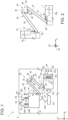
Figure 1 shows a top view of the present MEMS gyroscope, according to one embodiment; -
Figure 2 shows a top view of a portion of the MEMS gyroscope ofFigure 1 , in use; -
Figure 3 shows a top view of the present MEMS gyroscope, according to a different embodiment; -
Figure 4 shows a top view of the present MEMS gyroscope, according to a further embodiment; and -
Figure 5 shows a block diagram of an electronic apparatus incorporating the present MEMS gyroscope. -
Figure 1 shows a MEMS gyroscope 1 of a uniaxial type in a cartesian reference system XYZ comprising a first, a second and a third axis X, Y, Z. - The MEMS gyroscope 1 is obtained in a die of semiconductor material, for example silicon, and comprises a
substrate 5, and a first mobile mass 7 and a secondmobile mass 10, which are suspended over thesubstrate 5. - The first and the second
mobile masses 7, 10 are substantially planar, with main extension in a plane XY, and here have an approximately rectangular shape. - The first and the second
mobile masses 7, 10 are coupled, respectively, to first andsecond anchorage regions substrate 5, by means of first elastic connections (flexures) 15A and second elastic connections (flexures) 15B, respectively. - The
first flexures 15A each extend between the first mobile mass 7 and a respectivefirst anchorage region 13A, here in a direction parallel to the first axis X. - The
second flexures 15B each extend between the secondmobile mass 10 and a respectivesecond anchorage region 13B, here in a direction parallel to the second axis Y. - Furthermore, in this embodiment, the first and the second
mobile masses 7, 10 are also coupled to acentral anchorage region 20, fixed to thesubstrate 5, via a respectivefirst flexure 15A and a respectivesecond flexure 15B. - The first and the
second flexures mobile mass 10 with one or more degrees of freedom. - In detail, in this embodiment, the first and the
second flexures mobile masses 7, 10, respectively, along the first axis X and along the second axis Y. - The MEMS gyroscope 1 comprises an
elastic coupling structure 25 that extends between, and couples together, the first and the secondmobile masses 7, 10. - The
coupling structure 25 is formed by astiff portion 26, a peripheralcompliant portion 27, and a centralcompliant portion 28. - The
stiff portion 26 has a stiffness greater than the peripheralcompliant portion 27 and the centralcompliant portion 28, for example by a factor comprised between 10 and 100. - The peripheral
compliant portion 27 comprises afirst arm 30, extending from the first mobile mass 7 in a direction parallel to the first axis X, and asecond arm 31, extending from thesecond mass 10 in a direction parallel to the second axis Y. - The
stiff portion 26 comprises afirst connection arm 33 and asecond connection arm 34 each extending between a respectivefirst end 38, coupled to the peripheralcompliant portion 27, and a respectivesecond end 39, coupled to the centralcompliant portion 28. - In detail, the
first end 38 of the first and thesecond connection arms second arms compliant portion 27. - The first and the
second connection arms first end 38 in a direction parallel to an inclined direction C (here represented by a dashed line), in the plane XY, transversal to the first and the second axes X, Y, forming an angle α with respect to the first axis X, here an angle of 45°. - The first and the
second arms compliant portion 27 have smaller dimensions than the first and thesecond connection arms second connection arms - In detail, in this embodiment, the
first arm 30 of the peripheralcompliant portion 27 and thesecond arm 31 of the peripheralcompliant portion 27 each have a respective width, measured, respectively, in a direction parallel to the second axis Y and in a direction parallel to the first axis X, that is smaller than a width of the first and thesecond connection arms Figure 1 ) perpendicular to the inclined direction C. - For instance, the width of the first and the
second arms compliant portion 27 may be comprised between one tenth and one hundredth of the width of the first and thesecond connection arms - Furthermore, in this embodiment, the
first arm 30 of the peripheralcompliant portion 27 and thesecond arm 31 of the peripheralcompliant portion 27 each have a respective length, measured, respectively, in a direction parallel to the first axis X and in a direction parallel to the second axis Y, which is smaller than a length of the first and thesecond connection arms - For instance, the length of the first and the
second arms compliant portion 27 may be comprised between one tenth and one hundredth of the length of the first and thesecond connection arms - In this embodiment, the first and the
second arms compliant portion 27 have a thickness, along the third axis Z, equal to the thickness of the first and thesecond connection arms - However, the thickness of the first and/or of the
second arms compliant portion 27 may also be different from the thickness of the first and/or of thesecond connection arms - The central
compliant portion 28 comprises afirst arm 36 and asecond arm 37, coupled together at ajoint end 40. Thefirst arm 36 of the centralcompliant portion 28 extends in a direction parallel to the first axis X, between thejoint end 40 and thesecond end 39 of thefirst connection arm 33. - The
second arm 37 of the centralcompliant portion 28 extends in a direction parallel to the second axis Y, between thejoint end 40 and thesecond end 39 of thesecond connection arm 34. - The first and the
second arms compliant portion 28 have smaller dimensions than the first and thesecond connection arms second connection arms - In detail, in this embodiment, the
first arm 36 of the centralcompliant portion 28 and thesecond arm 34 of the centralcompliant portion 28 each have a respective width, measured, respectively, parallel to the second axis Y and parallel to the first axis X, that is smaller than the width of the first and thesecond connection arms - For instance, the width of the first and the
second arms compliant portion 28 may be comprised between one tenth and one hundredth of the width of the first and thesecond connection arms - Moreover, in this embodiment, the
first arm 36 of the centralcompliant portion 28 and thesecond arm 37 of the centralcompliant portion 28 each have a respective length, measured, respectively, parallel to the first axis X and parallel to the second axis Y, that is smaller than the length of the first and thesecond connection arms - For instance, the length of the first and the
second arms compliant portion 28 may be comprised between one tenth and one hundredth of the length of the first and thesecond connection arms - In this embodiment, the first and the
second arms compliant portion 28 have a thickness, along the third axis Z, equal to the thickness of the first and thesecond connection arms - However, the thickness of the first and/or of the
second arms compliant portion 28 may also be different from the thickness of thefirst connection arm 33 and/or of thesecond connection arm 34. - The MEMS gyroscope 1 also comprises a
drive structure 45 of a capacitive type and coupled to the first mobile mass 7, and adetection structure 46 of a capacitive type and coupled to the secondmobile mass 10. - The
drive structure 45 comprises a fixedelectrode 48, fixed to thesubstrate 5, and amobile electrode 49, integral with respect to the first mobile mass 7. - In this embodiment, the
drive structure 45 is a comb fingered capacitor. In detail, themobile electrode 49 comprises a plurality ofprotrusions 50 extending from the first mobile mass 7 parallel to the first axis X and the fixedelectrode 48 comprises a plurality ofprotrusions 51 extending parallel to the first axis X and are interdigitated with respect to theprotrusions 50 of themobile electrode 49. - However, the
drive structure 45 may have a shape different from the one illustrated inFigure 1 . For instance, the number, shape, and arrangement of the fixedelectrode 48 and of themobile electrode 49 may vary. In addition or as an alternative, thedrive structure 45 may be a parallel-plate capacitor. - The
detection structure 46 is configured to detect a yaw movement, parallel to the first axis X, of the secondmobile mass 10 and generate a corresponding yaw output signal. - In detail, the
detection structure 46 comprises a fixed electrode 54, fixed to thesubstrate 5, and amobile electrode 55, integral with respect to the secondmobile mass 10. - In this embodiment, the
detection structure 46 is a capacitor with a parallel-plate structure. In detail, themobile electrode 55 comprises a plurality ofprotrusions 56 extending from the secondmobile mass 10 parallel to the second axis Y, and the fixed electrode 54 comprises a plurality of fixedportions 57 extending parallel to the second axis Y, each at a distance along the first axis X from arespective protrusion 56. - However, the
detection structure 46 may have a shape different from the one illustrated inFigure 1 . For instance, the number, shape, and arrangement of the fixed electrode 54 and of themobile electrode 55 can vary. In addition or as an alternative, thedetection structure 46 may be a comb fingered capacitor. - The MEMS gyroscope 1 further comprises drive
contact pads 60 anddetection contact pads 62, which are electrically coupled to thedrive structure 45 and to thedetection structure 46, respectively, through respective connection tracks (here not illustrated). - The
drive contact pads 60 and thedetection contact pads 62 enable coupling of the MEMS gyroscope 1 to an external control circuit (here not illustrated). The external control circuit may be obtained in the same die as that of the MEMS gyroscope 1 or in a separate die. - In use, a driving voltage is applied to the
drive structure 45. The driving voltage causes a movement of the first mobile mass 7 in a primary driving direction Mp parallel to the first axis X, for example an oscillation at a resonance frequency of the MEMS gyroscope 1. By way of example,Figure 2 shows a simplified and enlarged detail of the MEMS gyroscope 1, in which the first mobile mass 7 is shifted in the primary driving direction Mp, here to the right, with respect to a rest position (indicated for clarity by a dashed line). - The
elastic coupling structure 25 undergoes deformation in response to the movement of the first mobile mass 7. - In detail, the peripheral
compliant portion 27 and the centralcompliant portion 28 undergo deformation so that the first ends 38 of the first and thesecond connection arms second connection arms - To a first approximation, the first and the
second connection arms arms compliant portion 27 and of the centralcompliant portion 28, and undergo a rotation in the plane XY, about an axis parallel to the third axis Z. - Displacement of the
first end 38 of thesecond connection arm 34 causes a movement of the secondmobile mass 10 in an induced driving direction Mi, perpendicular to the primary driving direction Mp and parallel to the second axis Y (upwards in the example ofFigure 2 ). - Furthermore, the first and the
second arms compliant portion 27 undergo deformation so as to compensate spurious movements of the first and the secondmobile masses 7, 10 along directions transversal, respectively, to the first and the second axes X, Y. In practice, the first mobile mass 7 undergoes only a displacement in the primary driving direction Mp, and the secondmobile mass 10 undergoes only a displacement in the induced driving direction Mi. - Moreover, the Applicant has verified that the first and the
second connection arms arms compliant portion 27 and of the centralcompliant portion 28, respectively, which extend in a direction parallel to the first and the second axes X, Y. - In fact, during the lithographic steps used for defining the
coupling structure 25, known lithographic machinery may cause a lower accuracy of definition of the portions of thecoupling structure 25 that extend in specific directions. - Consequently, the dimensions of these portions of the
coupling structure 25 may be subject to a greater process variability, which could cause a high variability also in the respective elastic deformation properties. - By increasing the stiffness of the portions of the MEMS gyroscope 1 that are subject to a greater process variability, it is possible to compensate the impact of this process variability on the performance of the MEMS gyroscope 1.
- In practice, the fact that the first and the
second connection arms arms compliant portion 27 and of the centralcompliant portion 28, respectively, and therefore to a first approximation do not undergo deformation, in use, entails that the coupling between the movement in the primary driving direction Mp and the induced driving direction Mi is not affected by any possible asymmetries due to process variability. - Consequently, when the MEMS gyroscope 1 is not subject to the yaw angular velocity Ωz about the third axis Z, the second
mobile mass 10 does not move, to a first approximation, along the first axis X, and the detection structure 54 does not detect any variation of capacitance associated with a yaw movement. - In other words, to a first approximation, the
coupling structure 25 enables rejection of the quadrature error associated with the yaw movement. Consequently, the MEMS gyroscope 1 has a high stability of the yaw output signal. - This entails that the MEMS gyroscope 1 can have a stable output signal even without incorporating additional quadrature error compensation electrodes, which would involve an increase in complexity of the control circuit of the MEMS gyroscope 1.
- Furthermore, the process for manufacturing the MEMS gyroscope 1 does not require dedicated lithographic machinery or masks to improve rejection of the yaw quadrature error. Consequently, the MEMS gyroscope 1 can keep manufacturing costs low and manufacturing times short.
-
Figure 3 shows a different embodiment of the present MEMS gyroscope, here designated by 100. Also theMEMS gyroscope 100 is of a uniaxial type, configured to detect a yaw angular velocity of theMEMS gyroscope 100, and has a general structure similar to that of the MEMS gyroscope 1 ofFigure 1 ; consequently, elements in common are designated by the same reference numbers and are not described any further. - The
MEMS gyroscope 100 has a structure substantially symmetrical with respect to two central axes A, B passing through a centre O of theMEMS gyroscope 100 and parallel to the first and the second axes X, Y, respectively. - The
MEMS gyroscope 100 comprises thesubstrate 5 and four mobile masses suspended over thesubstrate 5, here referred to as first mobile mass 7, secondmobile mass 10, thirdmobile mass 107, and fourthmobile mass 110. - The first and the third
mobile masses 7, 107 are arranged symmetrically with respect to the second central axis B and are coupled, respectively, to thefirst anchorage regions 13A and tothird anchorage regions 113A, by thefirst flexures 15A andthird flexures 115A, respectively. - The
third flexures 115A are equal to thefirst flexures 15A, here arranged symmetrically thereto with respect to the second central axis B, and extend parallel to the first axis X, each between a respectivethird anchorage region 113A and the thirdmobile mass 10. - The second and the fourth
mobile masses second anchorage regions 13B and tofourth anchorage regions 113B, by thesecond flexures 15B andfourth flexures 115B, respectively. - The
fourth flexures 115B are equal to thesecond flexures 15B, here arranged symmetrically thereto with respect to the first central axis A, and extend parallel to the second axis Y, each between a respectivefourth anchorage region 113B and the fourthmobile mass 110. - Also in this embodiment, the first, the second, the third, and the fourth
mobile masses central anchorage region 20, respectively, by afirst flexure 15A, asecond flexure 15B, athird flexure 115A, and afourth flexure 115B. - The
MEMS gyroscope 100 further comprises fourcoupling structures 25A-25D, also referred to hereinafter as first, second, third, andfourth coupling structures - The
coupling structures 25A-25D are each equal to thecoupling structure 25 of the MEMS gyroscope 1 ofFigure 1 and are mutually arranged symmetrically with respect to the first and the second central axes A, B. - In detail, the
first coupling structure 25A is symmetrical to thesecond coupling structure 25B with respect to the second central axis B and to thefourth coupling structure 25D with respect to the first central axis A. Thethird coupling structure 25C is symmetrical to thesecond coupling structure 25B with respect to the first central axis A and to thefourth coupling structure 25D with respect to the second central axis B. - The
first coupling structure 25A extends between the first and the secondmobile masses 7, 10. Thesecond coupling structure 25B extends between the second and the thirdmobile masses third coupling structure 25C extends between the third and the fourthmobile masses fourth coupling structure 25D extends between the fourth and the firstmobile masses 110, 7. - Also here, the
coupling structures 25A-25D each comprise astiff portion 26, a peripheralcompliant portion 27, and a centralcompliant portion 28, as discussed above and not described any further herein. - The
MEMS gyroscope 100 comprises afirst drive structure 145A and asecond drive structure 145B of a capacitive type, which are coupled, respectively, to the first and the thirdmobile masses 7, 107, and afirst detection structure 146A and asecond detection structure 146B of a capacitive type, which are coupled to the second and the fourthmobile masses - In this embodiment, the first and the
second drive structures mobile mass 107, respectively, along the first axis X. - In detail, the
first drive structure 145A comprises a fixedelectrode 148 arranged at a distance along the first axis X from a mobile electrode, which is fixed with respect to the first mobile mass 7, in particular here formed by awall 7A of the first mobile mass 7 facing the fixedelectrode 148. - The
second drive structure 145B comprises a fixedelectrode 149 arranged at a distance along the first axis X from a mobile electrode, which is fixed with respect to the thirdmobile mass 107, in particular here formed by awall 107A of the thirdmobile mass 107 facing the fixedelectrode 149. - However, the first and the
second drive structures Figure 3 . For instance, the number, shape, and arrangement of the fixedelectrodes mobile electrode second drive structures - Also the first and the
second detection structures mobile mass 10 and of the fourthmobile mass 110, respectively, along the first axis X. - In detail, the
first detection structure 146A comprises two fixedelectrodes mobile mass 10. In particular, here, the mobile electrodes of thefirst detection structure 146A are formed by twowalls mobile mass 10 that are mutually symmetrical with respect to the second central axis B and face the fixedelectrode - The
second detection structure 146B comprises two fixedelectrodes mobile mass 110. In particular, here, the mobile electrodes of thesecond detection structure 146B are formed by twowalls mobile mass 110, which are mutually symmetrical with respect to the second central axis B and face the fixedelectrode - However, the first and the
second detection structures Figure 3 . For instance, the number, shape, and arrangement of the fixedelectrodes mobile electrodes second detection structures - The
MEMS gyroscope 100 here also comprises thedrive contact pads 60, electrically coupled to the first and thesecond drive structures detection contact pads 62, electrically coupled to the first and thesecond detection structures - In use, a driving voltage is supplied to the first and the
second drive structures MEMS gyroscope 100, of the first and the thirdmobile masses 7, 107 in the primary driving direction Mp, parallel to the first axis X. - The driving voltage may be applied so that the relative movement of the first and the third
mobile masses 7, 107 is in phase or in phase opposition. For instance, as indicated by the arrows M1, M2 inFigure 3 , the driving voltage may cause both the first and thethird masses 7, 107 to move away from thecentral anchorage region 20, in two opposite directions of the primary driving direction Mp. - The
coupling structures 25A-25D undergo deformation in response to the movement of the first and thethird masses 7, 107 each as described above for thecoupling structure 25 of the MEMS gyroscope 1 ofFigure 1 , causing a movement of the second and thefourth masses - In detail, here, also the second and the fourth
mobile masses central anchorage region 20, in two opposite directions of the induced driving direction Mi, as indicated by the arrows M3, M4 inFigure 3 . - The
coupling structures 25A-25D, as described above, are not affected by possible process variabilities of the respective first andsecond connection arms stiff portion 26. Consequently, to a first approximation, the movement of the second and the fourthmobile masses - Consequently, also the first and the
second detection structures - The
MEMS gyroscope 100 thus has a stable output signal associated with detection of the yaw angular velocity Ωz. -
Figure 4 shows a different embodiment of the present MEMS gyroscope, here designated by 200. TheMEMS gyroscope 200 is of a triaxial type; i.e., it is configured to detect, in addition to a yaw angular velocity Ωz of theMEMS gyroscope 200, also a roll angular velocity Ωy, about an axis parallel to the second axis Y, and a pitch angular velocity Ωx, about an axis parallel to the first axis X. TheMEMS gyroscope 200 has a general structure similar to theMEMS gyroscope 100 ofFigure 3 ; consequently, elements in common are designated by the same reference numbers and are not described any further herein. - The
MEMS gyroscope 200 has a structure substantially symmetrical with respect to two central axes A, B passing through a center O of theMEMS gyroscope 200 and parallel to the first and the second axes X, Y, respectively. - Also the
MEMS gyroscope 200 comprises thesubstrate 5 and four mobile masses suspended over thesubstrate 5, here referred to as firstmobile mass 207, secondmobile mass 210, thirdmobile mass 217, and fourthmobile mass 220. - The first, the second, the third, and the fourth
mobile masses central anchorage region 20 and to respective first, second, third, andfourth anchorage regions fourth flexures - In this embodiment, the first, the second, the third, and the
fourth flexures mobile masses - Moreover, the
MEMS gyroscope 200 also here comprises fourcoupling structures 25A-25D, which couple together the first, the second, the third, and the fourthmobile masses MEMS gyroscope 100 ofFigure 3 . - In this embodiment, the second and the fourth
mobile masses cavities mobile masses mobile masses - The
MEMS gyroscope 200 comprises a first drive structure and a second drive structure of a capacitive type, here designated by 245A, 245B, coupled to the first and the thirdmobile masses - In this embodiment, the first and the
second drive structures second drive structures substrate 5 and comprises a plurality ofprotrusions mobile masses protrusions - In this embodiment, the
MEMS gyroscope 200 comprises a first yaw-detection structure 260A and a second yaw-detection structure 260A, 260B, a first and a second roll-detection structure detection structure - The first and the second yaw-
detection structures 260A, 260B are of a capacitive type and are coupled, respectively, to the second and the fourthmobile masses detection structures 260A, 260B comprise, respectively, first and second fixedyaw electrodes first cavity 225 of the secondmobile mass 210 and inside thesecond cavity 226 of the fourthmobile mass 220, respectively. - The first and the second yaw-
detection structures 260A, 260B further comprise first and secondmobile yaw electrodes mobile yaw electrodes 275 extend from the secondmobile mass 210, parallel to the second axis Y, towards the inside of thefirst cavity 225, so as to be interdigitated with the firstfixed electrodes 270. - The second
mobile yaw electrodes 276 extend from the fourthmobile mass 220, parallel to the second axis Y, towards the inside of thesecond cavity 226 so as to be interdigitated with the secondfixed electrodes 271. - The first and the second roll-
detection structures mobile masses substrate 5. - In detail, the first and the second roll-
detection structures fixed electrode 280, here indicated by a dashed line, fixed to thesubstrate 5 and arranged at a distance from the first and the thirdmobile masses - In practice, here, the fixed
electrode 280 of the first roll-detection structure 263A and the fixedelectrode 280 of the second roll-detection structure 263B are arranged underneath the first and the thirdmobile masses - The first and the second pitch-
detection structures mobile masses substrate 5. - In detail, the first and the second pitch-
detection structures fixed electrode 284, here indicated by a dashed line, fixed to thesubstrate 5 and arranged at a distance from the second and the fourthmobile masses - In practice, here, the fixed
electrode 284 of the first pitch-detection structure 265A and the fixedelectrode 284 of the second pitch-detection structure 265B are arranged, respectively, underneath the second and fourthmobile masses - The first and the
second drive structures detection structures 260A, 260B may have a shape different from the one illustrated inFigure 4 , for example similar to what is illustrated inFigure 1 and/or inFigure 3 . - In addition or as an alternative, the first and the second roll-
detection structures detection structures Figure 4 . - The
MEMS gyroscope 200 also here comprises thedrive contact pads 60, electrically coupled to the first and thesecond drive structures detection contact pads 62, here electrically coupled to the first and the second yaw-detection structures 260A, 260B, to the first and the second roll-detection structures detection structures - In use, the
coupling structures 25A-25D cause theMEMS gyroscope 200 to have a low quadrature error relative to a yaw detection, as described above. - In addition, the roll-
detection structures detection structures - The roll movement is caused by a roll angular velocity Ωy of the
MEMS gyroscope 200 about the second axis Y. In fact, in the presence of the roll angular velocity Ωy, the first and the thirdmobile masses mobile masses detection structures - The pitch movement is caused by an angular velocity Ωx of the
MEMS gyroscope 200 about the first axis X. In fact, in the presence of the pitch angular velocity Ωx, the second and the fourthmobile masses mobile masses detection structures - As illustrated in
Figure 5 , theMEMS gyroscope electronic apparatus 350, for example a smartphone, a laptop, a wearable device such as a watch or bracelet, a digital camera, etc. - The
electronic apparatus 350 comprises aprocessing unit 352 and amemory 354, operatively coupled to theMEMS gyroscope bus 356. - Furthermore, the
electronic apparatus 350 may also comprise input/output devices 360 such as a keypad or a display, and awireless interface 362 and/or abattery 364, which are also coupled to thebus 356. - Finally, it is clear that modifications and variations may be made to the
MEMS gyroscope - For instance, the present MEMS gyroscope may also be adapted to operate as a gyroscope of a biaxial type.
- Moreover, the detection and the drive structures of the
MEMS gyroscopes mobile mass 10 and configured to cause a movement of the secondmobile mass 10 in the induced driving direction. For instance, also theMEMS gyroscope - The drive and/or the detection structures may have a different operating mechanism, for example of a piezoelectric or electromagnetic type.
- For example, the embodiments described may be combined to form further solutions.
Claims (11)
- A MEMS gyroscope (1; 100; 200) comprising:
a substrate (5);a first mass (7; 207) and a second mass (10; 210), the first mass and the second mass being suspended over the substrate and extending, at rest, in a plane of extension (XY) defining a first direction (X) and a second direction (Y) transversal to the first direction;a drive structure (48; 145A; 245A) coupled to the first mass and configured, in use, to cause a movement of the first mass in the first direction;an elastic coupling structure (25; 25A) extending between the first mass and the second mass and configured to couple the movement of the first mass in the first direction (X) with a movement of the second mass in the second direction (Y); anda detection structure (46; 146A; 260A) coupled to the second mass (10; 210) and configured, in use, to detect a movement of the second mass in the first direction (X), in the presence of a rotation (Ωz) of the MEMS gyroscope about a fourth direction (Z) perpendicular to the first and the second directions (X, Y),wherein the elastic coupling structure comprises a peripheral compliant portion (27), a central compliant portion (28) and a stiff portion (26), wherein the stiff portion has a stiffness greater than the stiffness of the peripheral compliant portion and the central compliant portion,wherein the peripheral compliant portion (27) comprises a first arm (30) extending, at rest, from the first mobile mass in a direction parallel to the first direction (X), and a second arm (31) extending, at rest, from the second mobile mass in a direction parallel to the second direction (Y),wherein the stiff portion (26) comprises a first connection arm (33) and a second connection arm (34) each extending between a respective first end (38) coupled to the peripheral compliant portion (27), and a respective second end (39) coupled to the central compliant portion (28),wherein the first end (38) of the first and the second connection arms (33, 34) is coupled to an end of the first and, respectively, the second arms (30, 31) of the peripheral compliant portion (27),wherein the first and the second connection arms (33, 34) extend, at rest, from the respective first end (38) in a third direction (C) in the plane of extension (XY) transversal to the first and the second directions (X, Y),wherein the central compliant portion (28) comprises a first arm (36) and a second arm (37) coupled together at a joint end (40),wherein the first arm (36) of the central compliant portion extends, at rest, in a direction parallel to the first direction (X), between the joint end and the second end (39) of the first connection arm (33),wherein the second arm (37) of the central compliant portion extends, at rest, in a direction parallel to the second direction (Y), between the joint end and the second end (39) of the second connection arm (34). - The MEMS gyroscope according to claim 1, wherein the elastic coupling structure (25; 25A-25D) is configured to cause a movement of the second mass (10; 110; 210, 220) in the second direction (Y), in response to the movement of the first mass (7; 107; 207, 217) in the first direction (X) .
- The MEMS gyroscope according to any one of the preceding claims, wherein the first direction (X) is perpendicular to the second direction (Y).
- The MEMS gyroscope according to any one of the preceding claims, wherein the ratio between the stiffness of the stiff portion and the stiffness of the central compliant portion and the peripheral compliant portion is comprised between 10 and 100.
- The MEMS gyroscope according to any one of the preceding claims, wherein the first and the second arms (30, 31) of the peripheral compliant portion (27) have smaller dimensions than the first and the second connection arms (33, 34) .
- The MEMS gyroscope according to any one of the preceding claims, wherein the first and the second arms (36, 37) of the central compliant portion (28) have smaller dimensions than the first and the second connection arms (33, 34)
- The MEMS gyroscope according to any one of the preceding claims, further comprising a first anchorage region (13A, 20) and a second anchorage region (13B, 20) fixed to the substrate (5), and a first flexure (15A) and a second flexure (15B), the first flexure (15A) extending between the first mass (7; 207) and the first anchorage region (13A;20), the second flexure (15B) extending between the second mass and the second anchorage region (13B, 20).
- The MEMS gyroscope (100; 200) according to any one of the preceding claims, further comprising a third mass (107; 217) and a fourth mass (110; 220), the third and the fourth masses being suspended over the substrate, wherein the elastic coupling structure is a first elastic coupling structure (25A), the MEMS gyroscope further comprising a second, a third and a fourth elastic coupling structure (25B, 25C, 25D), wherein the second elastic coupling structure extends between the first mass and the fourth mass and is configured to couple the movement of the first mass along the first direction (X) with a movement of the fourth mass along the second direction (Y), the third elastic coupling structure extends between the fourth mass and the third mass and is configured to couple the movement of the fourth mass along the second direction (Y) with a movement of the third mass along the first direction (X), and the fourth elastic coupling structure extends between the second mass and the third mass and is configured to couple the movement of the second mass along the second direction (Y) with the movement of the third mass along the first direction (X), the second, the third and the fourth elastic coupling structures being equal to the first coupling structure.
- The MEMS gyroscope according to the preceding claim, wherein the MEMS gyroscope has a first and a second axis of symmetry (A, B) parallel to the first and the second directions, respectively, wherein the first mass is symmetrical to the third mass with respect to the second axis of symmetry, the second mass is symmetrical to the fourth mass with respect to the first axis of symmetry, the first elastic coupling structure is symmetrical to the second elastic coupling structure with respect to the second axis of symmetry and to the fourth elastic coupling structure with respect to the first axis of symmetry, and the third elastic coupling structure is symmetrical to the second elastic coupling structure with respect to the first axis of symmetry and to the fourth elastic coupling structure with respect to the second axis of symmetry.
- The MEMS gyroscope (100; 200) according to claim 8 or 9, comprising a second drive structure (145B; 245B) coupled to the third mass and configured, in use, to cause a movement of the third mass in the first direction, and a second detection structure coupled to the fourth mass and configured, in use, to detect a movement of the fourth mass in the first direction (X), in the presence of a rotation (Ωz) of the MEMS gyroscope about the fourth direction (Z) perpendicular to the first and second directions (X, Y).
- The MEMS gyroscope (200) according to any one of claims 8-10, further comprising a roll-detection structure (263A, 263B) and/or a pitch-detection structure (265A, 265B), wherein the roll-detection structure is configured to detect a movement of the first mass and/or of the third mass in the fourth direction (Z) perpendicular to the first and the second directions (X, Y), in the presence of a rotation (Ωy) of the MEMS gyroscope about the second direction (Y), and wherein the pitch-detection structure is configured to detect a movement of the second mass and/or of the fourth mass in the fourth direction, in the presence of a rotation (Ωx) of the MEMS gyroscope about the first direction (X).
Applications Claiming Priority (1)
| Application Number | Priority Date | Filing Date | Title |
|---|---|---|---|
| IT102021000020504A IT202100020504A1 (en) | 2021-07-30 | 2021-07-30 | MEMS GYROSCOPE HAVING IMPROVED SQUARE ERROR REJECTION |
Publications (2)
| Publication Number | Publication Date |
|---|---|
| EP4124827A1 EP4124827A1 (en) | 2023-02-01 |
| EP4124827B1 true EP4124827B1 (en) | 2024-10-30 |
Family
ID=78333161
Family Applications (1)
| Application Number | Title | Priority Date | Filing Date |
|---|---|---|---|
| EP22184619.9A Active EP4124827B1 (en) | 2021-07-30 | 2022-07-13 | Mems gyroscope having an improved rejection of the quadrature error |
Country Status (4)
| Country | Link |
|---|---|
| US (1) | US11965739B2 (en) |
| EP (1) | EP4124827B1 (en) |
| CN (2) | CN115683077B (en) |
| IT (1) | IT202100020504A1 (en) |
Families Citing this family (3)
| Publication number | Priority date | Publication date | Assignee | Title |
|---|---|---|---|---|
| IT202100020504A1 (en) * | 2021-07-30 | 2023-01-30 | St Microelectronics Srl | MEMS GYROSCOPE HAVING IMPROVED SQUARE ERROR REJECTION |
| IT202400000144A1 (en) | 2024-01-05 | 2025-07-05 | St Microelectronics Int Nv | MEMS INERTIAL DEVICE COMPRISING MEMS ACCELEROMETERS WITH DIFFERENT SENSITIVITY SCALE |
| IT202400000153A1 (en) | 2024-01-05 | 2025-07-05 | St Microelectronics Int Nv | MEMS ACCELEROMETER WITH HIGH MECHANICAL ROBUSTNESS |
Family Cites Families (22)
| Publication number | Priority date | Publication date | Assignee | Title |
|---|---|---|---|---|
| US7036372B2 (en) * | 2003-09-25 | 2006-05-02 | Kionix, Inc. | Z-axis angular rate sensor |
| US8534127B2 (en) * | 2009-09-11 | 2013-09-17 | Invensense, Inc. | Extension-mode angular velocity sensor |
| ITTO20091042A1 (en) * | 2009-12-24 | 2011-06-25 | St Microelectronics Srl | MICROELETTROMECHANICAL INTEGRATED GYROSCOPE WITH IMPROVED DRIVE STRUCTURE |
| JP5822177B2 (en) * | 2011-05-20 | 2015-11-24 | セイコーエプソン株式会社 | Gyro sensor, electronic equipment |
| TWI453371B (en) * | 2011-12-30 | 2014-09-21 | Ind Tech Res Inst | Micro-electro-mechanical-system device with oscillating assembly |
| DE102012219511A1 (en) * | 2012-10-25 | 2014-04-30 | Robert Bosch Gmbh | Micromechanical structure |
| US9958271B2 (en) * | 2014-01-21 | 2018-05-01 | Invensense, Inc. | Configuration to reduce non-linear motion |
| JP2015184009A (en) * | 2014-03-20 | 2015-10-22 | セイコーエプソン株式会社 | Vibration element, electronic device, and moving object |
| JP6344033B2 (en) * | 2014-04-22 | 2018-06-20 | セイコーエプソン株式会社 | Angular velocity sensor, electronic device and moving object |
| US10247554B2 (en) * | 2014-09-24 | 2019-04-02 | The Regents Of The University Of California | Fully balanced micro-machined inertial sensor |
| CN104931032B (en) * | 2015-06-26 | 2018-04-10 | 清华大学 | A kind of mass MEMS resonant formula gyroscope of single anchor point four |
| ITUA20162160A1 (en) * | 2016-03-31 | 2017-10-01 | St Microelectronics Srl | MICROMECHANICAL STRUCTURE FOR DETECTION OF A MEMS MULTI-FACTORY GYROSCOPE, HAVING REDUCED DERIVED FROM RELATED ELECTRICAL CHARACTERISTICS |
| US20180031602A1 (en) * | 2016-07-27 | 2018-02-01 | Lumedyne Technologies Incorporated | Converting rotational motion to linear motion |
| US20180031603A1 (en) * | 2016-07-27 | 2018-02-01 | Lumedyne Technologies Incorporated | Systems and methods for detecting inertial parameters using a vibratory accelerometer with multiple degrees of freedom |
| US10466053B2 (en) * | 2017-04-04 | 2019-11-05 | Invensense, Inc. | Out-of-plane sensing gyroscope robust to external acceleration and rotation |
| TWI669267B (en) * | 2017-04-04 | 2019-08-21 | 日商村田製作所股份有限公司 | Micro-mechanical sensor element of angular velocity |
| JP6610706B2 (en) * | 2017-05-24 | 2019-11-27 | 株式会社村田製作所 | Piezoelectric gyroscope with lateral drive transducer |
| US10330476B2 (en) * | 2017-07-12 | 2019-06-25 | Nxp Usa, Inc. | Angular rate sensor with in-phase motion suppression structure |
| US10760909B2 (en) * | 2018-06-18 | 2020-09-01 | Nxp Usa, Inc. | Angular rate sensor with in-phase drive and sense motion suppression |
| DE102021200483A1 (en) * | 2021-01-20 | 2022-07-21 | Robert Bosch Gesellschaft mit beschränkter Haftung | Triaxial yaw rate sensor with a substrate and a double rotor |
| US11460301B2 (en) * | 2021-03-02 | 2022-10-04 | Nxp Usa, Inc. | Angular rate sensor based on frequency modulation and drive strategy for same |
| IT202100020504A1 (en) * | 2021-07-30 | 2023-01-30 | St Microelectronics Srl | MEMS GYROSCOPE HAVING IMPROVED SQUARE ERROR REJECTION |
-
2021
- 2021-07-30 IT IT102021000020504A patent/IT202100020504A1/en unknown
-
2022
- 2022-07-13 EP EP22184619.9A patent/EP4124827B1/en active Active
- 2022-07-19 US US17/868,479 patent/US11965739B2/en active Active
- 2022-07-29 CN CN202210909420.6A patent/CN115683077B/en active Active
- 2022-07-29 CN CN202221983503.1U patent/CN218600576U/en active Active
Also Published As
| Publication number | Publication date |
|---|---|
| CN115683077B (en) | 2025-11-21 |
| US20230036566A1 (en) | 2023-02-02 |
| US11965739B2 (en) | 2024-04-23 |
| IT202100020504A1 (en) | 2023-01-30 |
| EP4124827A1 (en) | 2023-02-01 |
| CN115683077A (en) | 2023-02-03 |
| CN218600576U (en) | 2023-03-10 |
Similar Documents
| Publication | Publication Date | Title |
|---|---|---|
| US11808574B2 (en) | Micromechanical detection structure of a MEMS multi-axis gyroscope, with reduced drifts of corresponding electrical parameters | |
| EP4124827B1 (en) | Mems gyroscope having an improved rejection of the quadrature error | |
| US11047685B2 (en) | Configuration to reduce non-linear motion | |
| KR100363246B1 (en) | Intrinsic frequency control method of vibration structure and vibration structure | |
| JP5649972B2 (en) | Yaw rate sensor | |
| US9038461B2 (en) | Gyro sensor and electronic device | |
| US9234913B2 (en) | Microelectromechanical device incorporating a gyroscope and an accelerometer | |
| CN109425332B (en) | MEMS gyroscope for adjusting mismatch between drive frequency and sense frequency | |
| US7513155B2 (en) | Inertial sensor | |
| CN102119318B (en) | MEMS | |
| US9046367B2 (en) | Micro-electro-mechanical-system device with oscillating assembly | |
| US9170107B2 (en) | Micromachined gyroscope including a guided mass system | |
| KR101694586B1 (en) | Micromachined gyroscope including a guided mass system | |
| CN117452023A (en) | Physical quantity sensors and inertial measurement devices | |
| US20230135941A1 (en) | Mems gyroscope having quadrature compensation electrodes and method for compensating a quadrature error | |
| CN118348279B (en) | Discrete differential detection Z-axis MEMS accelerometer | |
| JPH10300476A (en) | Angular velocity detecting device | |
| CN120467306A (en) | MEMS gyroscope with fully differential structure and pitch/roll sensing | |
| JP2017150997A (en) | Vibration gyro with reduced bias | |
| JP2008261772A (en) | Inertial force sensor |
Legal Events
| Date | Code | Title | Description |
|---|---|---|---|
| PUAI | Public reference made under article 153(3) epc to a published international application that has entered the european phase |
Free format text: ORIGINAL CODE: 0009012 |
|
| STAA | Information on the status of an ep patent application or granted ep patent |
Free format text: STATUS: THE APPLICATION HAS BEEN PUBLISHED |
|
| AK | Designated contracting states |
Kind code of ref document: A1 Designated state(s): AL AT BE BG CH CY CZ DE DK EE ES FI FR GB GR HR HU IE IS IT LI LT LU LV MC MK MT NL NO PL PT RO RS SE SI SK SM TR |
|
| STAA | Information on the status of an ep patent application or granted ep patent |
Free format text: STATUS: REQUEST FOR EXAMINATION WAS MADE |
|
| 17P | Request for examination filed |
Effective date: 20230728 |
|
| RBV | Designated contracting states (corrected) |
Designated state(s): AL AT BE BG CH CY CZ DE DK EE ES FI FR GB GR HR HU IE IS IT LI LT LU LV MC MK MT NL NO PL PT RO RS SE SI SK SM TR |
|
| GRAP | Despatch of communication of intention to grant a patent |
Free format text: ORIGINAL CODE: EPIDOSNIGR1 |
|
| STAA | Information on the status of an ep patent application or granted ep patent |
Free format text: STATUS: GRANT OF PATENT IS INTENDED |
|
| INTG | Intention to grant announced |
Effective date: 20240523 |
|
| GRAS | Grant fee paid |
Free format text: ORIGINAL CODE: EPIDOSNIGR3 |
|
| GRAA | (expected) grant |
Free format text: ORIGINAL CODE: 0009210 |
|
| STAA | Information on the status of an ep patent application or granted ep patent |
Free format text: STATUS: THE PATENT HAS BEEN GRANTED |
|
| AK | Designated contracting states |
Kind code of ref document: B1 Designated state(s): AL AT BE BG CH CY CZ DE DK EE ES FI FR GB GR HR HU IE IS IT LI LT LU LV MC MK MT NL NO PL PT RO RS SE SI SK SM TR |
|
| REG | Reference to a national code |
Ref country code: GB Ref legal event code: FG4D |
|
| REG | Reference to a national code |
Ref country code: CH Ref legal event code: EP |
|
| REG | Reference to a national code |
Ref country code: IE Ref legal event code: FG4D |
|
| REG | Reference to a national code |
Ref country code: DE Ref legal event code: R096 Ref document number: 602022007179 Country of ref document: DE |
|
| REG | Reference to a national code |
Ref country code: LT Ref legal event code: MG9D |
|
| REG | Reference to a national code |
Ref country code: NL Ref legal event code: MP Effective date: 20241030 |
|
| PG25 | Lapsed in a contracting state [announced via postgrant information from national office to epo] |
Ref country code: IS Free format text: LAPSE BECAUSE OF FAILURE TO SUBMIT A TRANSLATION OF THE DESCRIPTION OR TO PAY THE FEE WITHIN THE PRESCRIBED TIME-LIMIT Effective date: 20250228 Ref country code: HR Free format text: LAPSE BECAUSE OF FAILURE TO SUBMIT A TRANSLATION OF THE DESCRIPTION OR TO PAY THE FEE WITHIN THE PRESCRIBED TIME-LIMIT Effective date: 20241030 Ref country code: PT Free format text: LAPSE BECAUSE OF FAILURE TO SUBMIT A TRANSLATION OF THE DESCRIPTION OR TO PAY THE FEE WITHIN THE PRESCRIBED TIME-LIMIT Effective date: 20250228 |
|
| PG25 | Lapsed in a contracting state [announced via postgrant information from national office to epo] |
Ref country code: FI Free format text: LAPSE BECAUSE OF FAILURE TO SUBMIT A TRANSLATION OF THE DESCRIPTION OR TO PAY THE FEE WITHIN THE PRESCRIBED TIME-LIMIT Effective date: 20241030 Ref country code: NL Free format text: LAPSE BECAUSE OF FAILURE TO SUBMIT A TRANSLATION OF THE DESCRIPTION OR TO PAY THE FEE WITHIN THE PRESCRIBED TIME-LIMIT Effective date: 20241030 |
|
| REG | Reference to a national code |
Ref country code: AT Ref legal event code: MK05 Ref document number: 1737255 Country of ref document: AT Kind code of ref document: T Effective date: 20241030 |
|
| PG25 | Lapsed in a contracting state [announced via postgrant information from national office to epo] |
Ref country code: BG Free format text: LAPSE BECAUSE OF FAILURE TO SUBMIT A TRANSLATION OF THE DESCRIPTION OR TO PAY THE FEE WITHIN THE PRESCRIBED TIME-LIMIT Effective date: 20241030 |
|
| PG25 | Lapsed in a contracting state [announced via postgrant information from national office to epo] |
Ref country code: ES Free format text: LAPSE BECAUSE OF FAILURE TO SUBMIT A TRANSLATION OF THE DESCRIPTION OR TO PAY THE FEE WITHIN THE PRESCRIBED TIME-LIMIT Effective date: 20241030 |
|
| PG25 | Lapsed in a contracting state [announced via postgrant information from national office to epo] |
Ref country code: NO Free format text: LAPSE BECAUSE OF FAILURE TO SUBMIT A TRANSLATION OF THE DESCRIPTION OR TO PAY THE FEE WITHIN THE PRESCRIBED TIME-LIMIT Effective date: 20250130 |
|
| PG25 | Lapsed in a contracting state [announced via postgrant information from national office to epo] |
Ref country code: GR Free format text: LAPSE BECAUSE OF FAILURE TO SUBMIT A TRANSLATION OF THE DESCRIPTION OR TO PAY THE FEE WITHIN THE PRESCRIBED TIME-LIMIT Effective date: 20250131 Ref country code: LV Free format text: LAPSE BECAUSE OF FAILURE TO SUBMIT A TRANSLATION OF THE DESCRIPTION OR TO PAY THE FEE WITHIN THE PRESCRIBED TIME-LIMIT Effective date: 20241030 Ref country code: AT Free format text: LAPSE BECAUSE OF FAILURE TO SUBMIT A TRANSLATION OF THE DESCRIPTION OR TO PAY THE FEE WITHIN THE PRESCRIBED TIME-LIMIT Effective date: 20241030 |
|
| PG25 | Lapsed in a contracting state [announced via postgrant information from national office to epo] |
Ref country code: PL Free format text: LAPSE BECAUSE OF FAILURE TO SUBMIT A TRANSLATION OF THE DESCRIPTION OR TO PAY THE FEE WITHIN THE PRESCRIBED TIME-LIMIT Effective date: 20241030 |
|
| PG25 | Lapsed in a contracting state [announced via postgrant information from national office to epo] |
Ref country code: RS Free format text: LAPSE BECAUSE OF FAILURE TO SUBMIT A TRANSLATION OF THE DESCRIPTION OR TO PAY THE FEE WITHIN THE PRESCRIBED TIME-LIMIT Effective date: 20250130 |
|
| PG25 | Lapsed in a contracting state [announced via postgrant information from national office to epo] |
Ref country code: SM Free format text: LAPSE BECAUSE OF FAILURE TO SUBMIT A TRANSLATION OF THE DESCRIPTION OR TO PAY THE FEE WITHIN THE PRESCRIBED TIME-LIMIT Effective date: 20241030 |
|
| PG25 | Lapsed in a contracting state [announced via postgrant information from national office to epo] |
Ref country code: DK Free format text: LAPSE BECAUSE OF FAILURE TO SUBMIT A TRANSLATION OF THE DESCRIPTION OR TO PAY THE FEE WITHIN THE PRESCRIBED TIME-LIMIT Effective date: 20241030 |
|
| PG25 | Lapsed in a contracting state [announced via postgrant information from national office to epo] |
Ref country code: EE Free format text: LAPSE BECAUSE OF FAILURE TO SUBMIT A TRANSLATION OF THE DESCRIPTION OR TO PAY THE FEE WITHIN THE PRESCRIBED TIME-LIMIT Effective date: 20241030 |
|
| PG25 | Lapsed in a contracting state [announced via postgrant information from national office to epo] |
Ref country code: RO Free format text: LAPSE BECAUSE OF FAILURE TO SUBMIT A TRANSLATION OF THE DESCRIPTION OR TO PAY THE FEE WITHIN THE PRESCRIBED TIME-LIMIT Effective date: 20241030 |
|
| PG25 | Lapsed in a contracting state [announced via postgrant information from national office to epo] |
Ref country code: SK Free format text: LAPSE BECAUSE OF FAILURE TO SUBMIT A TRANSLATION OF THE DESCRIPTION OR TO PAY THE FEE WITHIN THE PRESCRIBED TIME-LIMIT Effective date: 20241030 |
|
| PG25 | Lapsed in a contracting state [announced via postgrant information from national office to epo] |
Ref country code: CZ Free format text: LAPSE BECAUSE OF FAILURE TO SUBMIT A TRANSLATION OF THE DESCRIPTION OR TO PAY THE FEE WITHIN THE PRESCRIBED TIME-LIMIT Effective date: 20241030 |
|
| PG25 | Lapsed in a contracting state [announced via postgrant information from national office to epo] |
Ref country code: IT Free format text: LAPSE BECAUSE OF FAILURE TO SUBMIT A TRANSLATION OF THE DESCRIPTION OR TO PAY THE FEE WITHIN THE PRESCRIBED TIME-LIMIT Effective date: 20241030 |
|
| REG | Reference to a national code |
Ref country code: DE Ref legal event code: R097 Ref document number: 602022007179 Country of ref document: DE |
|
| PLBE | No opposition filed within time limit |
Free format text: ORIGINAL CODE: 0009261 |
|
| STAA | Information on the status of an ep patent application or granted ep patent |
Free format text: STATUS: NO OPPOSITION FILED WITHIN TIME LIMIT |
|
| PG25 | Lapsed in a contracting state [announced via postgrant information from national office to epo] |
Ref country code: SE Free format text: LAPSE BECAUSE OF FAILURE TO SUBMIT A TRANSLATION OF THE DESCRIPTION OR TO PAY THE FEE WITHIN THE PRESCRIBED TIME-LIMIT Effective date: 20241030 |
|
| 26N | No opposition filed |
Effective date: 20250731 |
|
| PGFP | Annual fee paid to national office [announced via postgrant information from national office to epo] |
Ref country code: DE Payment date: 20250620 Year of fee payment: 4 |
|
| REG | Reference to a national code |
Ref country code: CH Ref legal event code: H13 Free format text: ST27 STATUS EVENT CODE: U-0-0-H10-H13 (AS PROVIDED BY THE NATIONAL OFFICE) Effective date: 20260224 |
|
| PG25 | Lapsed in a contracting state [announced via postgrant information from national office to epo] |
Ref country code: LU Free format text: LAPSE BECAUSE OF NON-PAYMENT OF DUE FEES Effective date: 20250713 |
|
| REG | Reference to a national code |
Ref country code: BE Ref legal event code: MM Effective date: 20250731 |
|
| PG25 | Lapsed in a contracting state [announced via postgrant information from national office to epo] |
Ref country code: BE Free format text: LAPSE BECAUSE OF NON-PAYMENT OF DUE FEES Effective date: 20250731 |
|
| PG25 | Lapsed in a contracting state [announced via postgrant information from national office to epo] |
Ref country code: FR Free format text: LAPSE BECAUSE OF NON-PAYMENT OF DUE FEES Effective date: 20250731 |
|
| PG25 | Lapsed in a contracting state [announced via postgrant information from national office to epo] |
Ref country code: CH Free format text: LAPSE BECAUSE OF NON-PAYMENT OF DUE FEES Effective date: 20250731 |