EP4123930B1 - Antwortverfahren und system für ressourcenanfragen - Google Patents
Antwortverfahren und system für ressourcenanfragen Download PDFInfo
- Publication number
- EP4123930B1 EP4123930B1 EP20944169.0A EP20944169A EP4123930B1 EP 4123930 B1 EP4123930 B1 EP 4123930B1 EP 20944169 A EP20944169 A EP 20944169A EP 4123930 B1 EP4123930 B1 EP 4123930B1
- Authority
- EP
- European Patent Office
- Prior art keywords
- resource request
- server
- client
- resource
- type
- Prior art date
- Legal status (The legal status is an assumption and is not a legal conclusion. Google has not performed a legal analysis and makes no representation as to the accuracy of the status listed.)
- Active
Links
Images

Classifications
-
- H—ELECTRICITY
- H04—ELECTRIC COMMUNICATION TECHNIQUE
- H04L—TRANSMISSION OF DIGITAL INFORMATION, e.g. TELEGRAPHIC COMMUNICATION
- H04L67/00—Network arrangements or protocols for supporting network services or applications
- H04L67/50—Network services
- H04L67/60—Scheduling or organising the servicing of application requests, e.g. requests for application data transmissions using the analysis and optimisation of the required network resources
-
- H—ELECTRICITY
- H04—ELECTRIC COMMUNICATION TECHNIQUE
- H04L—TRANSMISSION OF DIGITAL INFORMATION, e.g. TELEGRAPHIC COMMUNICATION
- H04L67/00—Network arrangements or protocols for supporting network services or applications
- H04L67/50—Network services
- H04L67/56—Provisioning of proxy services
-
- H—ELECTRICITY
- H04—ELECTRIC COMMUNICATION TECHNIQUE
- H04L—TRANSMISSION OF DIGITAL INFORMATION, e.g. TELEGRAPHIC COMMUNICATION
- H04L67/00—Network arrangements or protocols for supporting network services or applications
- H04L67/50—Network services
- H04L67/60—Scheduling or organising the servicing of application requests, e.g. requests for application data transmissions using the analysis and optimisation of the required network resources
- H04L67/63—Routing a service request depending on the request content or context
-
- H—ELECTRICITY
- H04—ELECTRIC COMMUNICATION TECHNIQUE
- H04L—TRANSMISSION OF DIGITAL INFORMATION, e.g. TELEGRAPHIC COMMUNICATION
- H04L67/00—Network arrangements or protocols for supporting network services or applications
- H04L67/01—Protocols
- H04L67/10—Protocols in which an application is distributed across nodes in the network
- H04L67/1001—Protocols in which an application is distributed across nodes in the network for accessing one among a plurality of replicated servers
- H04L67/1004—Server selection for load balancing
-
- H—ELECTRICITY
- H04—ELECTRIC COMMUNICATION TECHNIQUE
- H04L—TRANSMISSION OF DIGITAL INFORMATION, e.g. TELEGRAPHIC COMMUNICATION
- H04L67/00—Network arrangements or protocols for supporting network services or applications
- H04L67/01—Protocols
- H04L67/10—Protocols in which an application is distributed across nodes in the network
- H04L67/1001—Protocols in which an application is distributed across nodes in the network for accessing one among a plurality of replicated servers
- H04L67/1004—Server selection for load balancing
- H04L67/1014—Server selection for load balancing based on the content of a request
-
- H—ELECTRICITY
- H04—ELECTRIC COMMUNICATION TECHNIQUE
- H04L—TRANSMISSION OF DIGITAL INFORMATION, e.g. TELEGRAPHIC COMMUNICATION
- H04L67/00—Network arrangements or protocols for supporting network services or applications
- H04L67/50—Network services
- H04L67/51—Discovery or management thereof, e.g. service location protocol [SLP] or web services
Definitions
- the present disclosure relates to the field of data processing, and in particular, to a method for responding to a resource request, a redirect server, and a decision delivery server.
- CN106161636 discloses a method for providing value-added service.
- the method includes that an HTTP 302 redirection server screens HTTP requests to obtain the HTTP request meeting the preset condition, where the HTTP request meeting the preset condition is an HTTP request with the target web address being the preset web address in the HTTP requests; the HTTP 302 redirection server returns an IP address of a value-added service platform to a user terminal initiating the HTTP request meeting the preset condition; the user terminal requests value-added service through the IP address of the value-added service platform.
- Fig. 1 shows a possible system architecture according to an embodiment of the present disclosure.
- the system architecture includes a client 110 (110a, 1 10b, and 110c in the figure), at least one redirect server 111, at least one decision delivery server 112, at least one cache server 113 and a source station server 114.
- the redirect server 111, the decision delivery server 112, and the cache server 113 may constitute a network service system to implement proxy acceleration for the client 110.
- the client 110 may include smart terminal devices such as a mobile phone and a computer, and a user may obtain various resources, such as video resources and image resources, through the client.
- the redirect server 111 and the decision delivery server 112 may identify a received client request to determine whether proxy acceleration needs to be performed on the client request. It may be understood that whether to perform proxy acceleration for traffic depends on an actual service requirement. For example, if a customer (such as an operator) subscribes to a video traffic acceleration service, the acceleration service shall be provided for a customer request identified by the redirect server 111 and the decision delivery server 112 as video traffic.
- a network service provider may set an identifying rule according to a service requirement of a customer to satisfy different service scenarios.
- the cache server 113 is configured to cache a resource requested by the client, to quickly respond to a request for a cached resource.
- the source station server 114 is deployed by a service provider to provide a content resource for a user.
- the client 110, the redirect server 111, the decision delivery server 112, the cache server 113, and the source station server 114 may communicate with each other based on a network.
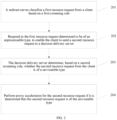
- an embodiment of the present disclosure provides a method for responding to a resource request. As shown in Fig. 2 , the method includes the following steps.
- Step 201 A redirect server classifies a first resource request from a client based on a first screening rule.
- first resource requests sent from all clients arrive at a network egress of an operator first, and the operator may mirror all requested traffic (the first resource requests) from the network egress to the redirect server.
- the redirect server identifies all the request traffic to determine request traffic for which an acceleration service needs to be provided.
- the redirect server may first classify the received first resource request based on the first screening rule, and a classification result may include a processable type and an unprocessable type.
- the first resource request of the processable type indicates that the redirect server has determined whether to perform proxy acceleration for the resource request, and may directly perform processing thereon.
- the first resource request of the unprocessable type indicates that the redirect server cannot directly determine whether to perform proxy acceleration for the resource request, and therefore, cannot directly perform processing. It is worth noting that the redirect server may be deployed at the network egress of the operator, to quickly receive the first resource request transferred from the network egress.
- Step 202 Respond to the first resource request determined to be of an unprocessable type, to enable the client to send a second resource request to a decision delivery server.
- the first resource request determined to be of the unprocessable type needs to be further identified by the decision delivery server to finally determine whether to provide an acceleration service for the first resource request determined to be of the unprocessable type.
- the redirect server may first respond to the first request, and the response content may include a 301/302 redirect message, to instruct the client to request a resource from the decision delivery server.
- Step 203 The decision delivery server determines, based on a second screening rule, whether the second resource request from the client is of a serviceable type.
- Step 204 Perform proxy acceleration for the second resource request if it is determined that the second resource request is of the serviceable type.
- a redirect server quickly classifies the first resource request from the client based on the first screening rule, and responds to the first resource request of which a classification result belongs to the unprocessable type, to enable the client to send the second resource request to the decision delivery server.
- the decision delivery server may determine, based on the second screening rule, whether the second resource request is classified as a resource request of a serviceable type, and perform proxy acceleration for the second resource request belonging to the serviceable type. In this case, redirecting a request of the unprocessable type to the decision delivery server can reduce the processing pressure of the redirect server.
- a length of time consumed for executing the second screening rule may be longer than a length of time consumed for executing the first screening rule.
- the first screening rule may be field-based matching
- the second screening rule may be regular expression matching, that is, determining, by using a regular expression, whether a uniform resource locator (URL) includes target content.
- URL uniform resource locator
- the first resource request received by the redirect server from the client may be directly sent from the client to the redirect server, or the operator forwards or mirrors and sends the received first resource request from the client to the redirect server.
- the redirect server classifies a first resource request from the client based on the first screening rule may specifically include: the redirect server may resolve the first resource request to obtain a requested domain name, match the requested domain name with a preset name list, and determine a classification result of the first resource request based on a matching result.
- a preset name list may be set first according to a service requirement.
- the redirect server When receiving the first resource request from the client, the redirect server first resolves the first resource request to convert received binary data into a corresponding character string, extracts content of a specific field, and identifies the content as corresponding characteristic information.
- the redirect server uses a TCP/IP four-layer reference model as an example, when a first resource request arrives at the redirect server, the first resource request sequentially passes through a network access layer, an internetwork layer, and a transport layer, and finally arrives at an application layer. Each layer may obtain corresponding message content from a corresponding field of a string obtained through resolution.
- characteristic information in the message may be quickly obtained.
- a destination IP address may be obtained at the internetwork layer, and a requested domain name may be obtained at the application layer.
- the redirect server may match the characteristic information with the preset name list to determine a classification.
- the redirect server identifies, based on the first screening rule, whether the first resource request is processable very quickly.
- the redirect server may quickly respond to the first resource request, to enable a client to send a second resource request to the decision delivery server.
- the preset name list may include a blacklist, the blacklist includes a domain name that is refused to be provided with a service, and if the requested domain name is recorded in the blacklist, it is determined that the first resource request is of the processable type, and the first resource request is discarded.
- the preset name list may include a whitelist, the whitelist includes a domain name capable of providing a service, and if the requested domain name is recorded in the whitelist, it is determined that the first resource request is of the processable type, and proxy acceleration is performed for the first resource request.
- the redirect server may perform proxy acceleration for the first resource request in the following two manners.
- proxy acceleration is implemented based on a cache server.
- the redirect server may serve as a source station (that is, a source station server corresponding to a destination address) of the first resource request, construct an acceleration redirection message, and send the acceleration redirection message to the client.
- the acceleration redirection message is used for instructing the client to request a resource from a cache server.
- the acceleration redirection message may be a 301/302 message.
- a client browser After receiving the acceleration redirection message, a client browser automatically sends a resource request to the cache server, so that the cache server can provide proxy acceleration for the resource request.
- proxy acceleration is implemented based on path selection.
- the redirect server may select an acceleration path based on a destination IP address, a domain name, or resource content of the first resource request, perform back-to-source based on the acceleration path to obtain a resource requested by the client, and responds to the client with the obtained requested resource.
- the preset name list includes a fuzzy list, and if the requested domain name is recorded in the fuzzy list, it is determined that the first resource request is of the unprocessable type.
- the foregoing various lists may be selectively used. That is, the redirect server may identify a resource request based on one or more of the lists. Settings may be made according to actual requirements, and are not limited in the present disclosure. In addition, for the settings of the foregoing various lists, collections and updates may be made based on actual service requirements, to respond to changes in service requirements in real time.
- the redirect server classifies a first resource request from a client based on a first screening rule may specifically include that: the redirect server may resolve the first resource request and determine whether the first resource request includes an anti-stealing-link; and if yes, the redirect server may determine that the first resource request is of the unprocessable type.
- the redirect server resolves the first resource request to convert the first resource request into a character string that can be easily identified.
- whether the character string includes "?” may first be identified directly to determine whether the first resource request includes the anti-stealing-link.
- the first resource request including "?” that is, including the anti-stealing-link may be directly determined to be of an unprocessable type. In this way, the first resource request may be identified faster, and the first resource request of this type is transferred to the decision delivery server for processing, so that the processing pressure of the redirect server can be shared.
- the redirect server classifies a first resource request from the client based on the first screening rule may specifically include: the redirect server may resolve the first resource request to obtain a requested domain name, and determine, if the requested domain name is an IP address, that the first resource request is of the unprocessable type. That is because if domain name information in a URL is an IP address, the redirect server cannot identify the domain name information according to a preset name list, the first resource request may be directly determined to be of an unprocessable type.
- the redirect server classifies a first resource request from the client based on the first screening rule may specifically include: the redirect server may resolve the first resource request to obtain a requested domain name, and determine, if the requested domain name is an IP address and the first resource request includes an anti-stealing-link, that the first resource request is of the unprocessable type. That is because if domain name information in a URL is an IP address, the redirect server cannot identify the domain name information according to a preset name list, the first resource request may be directly determined to be of an unprocessable type. Since there is a large number of requests from clients, in some application scenarios, to quickly perform proxy acceleration for a target request, some resource requests that are difficult to identify may be selectively discarded to reduce the pressure of a network service system.
- the redirect server determines the request to be of an unprocessable type. In other words, if the requested domain name is an IP address, but does not include an anti-stealing-link, the redirect server may directly discard the request, thereby reducing the processing pressure.
- the decision delivery server may determine, according to the second screening rule, whether the second resource request is a resource request of a serviceable type or a resource request of an unserviceable type.
- the second screening rule includes regular expression matching.
- the following will give an example on how the decision delivery server determines, by using regular expression matching, a type to which the second resource request belongs.
- the decision delivery server needs to determine, by determining whether a URL of a second resource request includes a video file identifier, whether to perform proxy acceleration for the second resource request.
- whether the second resource request is of a serviceable type may be determined according to whether a URL includes ".mp4". Since positions of ".mp4" in different URLs are greatly different, the determining may not be performed by intercepting a specific field. Therefore, the determining shall be implemented based on regular expression matching. It is well-known to a person skilled in the art that in a process of performing regular expression matching, the matching needs to be started from the first character of a URL and performed in sequence.
- a decision delivery server is added, and the decision delivery server is used to determine a type to which a resource request belongs by executing a regular expression matching rule that is more time-consuming, which can share the processing pressure of a redirect server to a large extent.
- the redirect server can quickly screen resource requests through some simple rules (such as a preset name list, field matching of an anti-stealing-link), to quickly respond to a client.
- the decision delivery server accelerates the second resource request.
- the decision delivery server may also accelerate the second resource request in the following two manners.
- acceleration is implemented based on a cache server.
- the decision delivery server may forward the second resource request to a corresponding cache server, and feedback, to the client, a resource with which the cache server responds, to implement cache acceleration.
- acceleration is implemented based on path selection.
- the decision delivery server may select an acceleration path based on resource content of the second resource request, perform back-to-source based on the acceleration path to obtain a resource requested by a client, and respond to the client with the obtained requested resource.
- the decision delivery server may select one of the two acceleration manners according to the requested resource content.
- the decision delivery server determines the second resource request to be of an unserviceable type. That is, the second resource request is not a request for which an acceleration service needs to be provided. For example, the request does not belong to video traffic.
- the decision delivery server may select one of the following manners to process the second resource request.
- the decision delivery server forwards the second resource request to the source station server through the default path.
- the source station server responds to the second resource request, and sends, to the decision delivery server, a resource with which the source station server responds.
- the decision delivery server feeds back, to the client, the resource with which the source station server responds.
- the decision delivery server may respond to the client with a secondary redirection message (because the redirect server has sent a decision redirection message to the client before, a redirection message sent by the decision delivery server to the client may be referred to as a secondary redirection message herein).
- the secondary redirection message may be used for instructing the client browser to automatically send a third resource request to the source station server to request resource content, and enabling a URI of the third resource request to carry an identifier, where the identifier is used for instructing the redirect server to discard the third resource request.
- the decision delivery server may enable, in a manner of setting set-cookie, the client browser to automatically add a corresponding cookie value to the third resource request that is sent.
- the redirect server may directly discard the request.
- the decision delivery server may add an identifier following the anti-stealing-link when constructing the secondary redirection message, and enable the URI of the third resource request to carry the identifier.
- the redirect server may directly discard the request.
- some resource requests may be redirected to the decision delivery server for processing, which can effectively reduce the load pressure of the redirect server and release processing resources. Therefore, accumulation of request traffic at the redirect server is reduced, and thus processing efficiency of the redirect server on the resource requests is improved. Particularly, if traffic requests suddenly surge, an effect of optimizing the processing efficiency of the redirect server through pressure-sharing is reflected better.
- execution of the second screening rule that consumes more processing time is transferred to the decision delivery server for processing, and the redirect server just execute the first screening rule that consumes less time, so that a time in which the redirect server processes a single resource request is optimized, thereby implementing a quick response and improving user experience.
- the redirect server which may be referred to the redirect server 111 in the system shown in Fig. 1 .
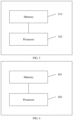
- the redirect server at least includes a memory 310 and a processor 320.
- the memory is configured to store program instructions.
- the processor is configured to call the program instructions stored in the memory, and at least implement the following method by executing the obtained program instructions: a first resource request from a client is classified based on a first screening rule, where a classification result includes a processable type and an unprocessable type; and response is made to the first resource request determined to be of the unprocessable type, to enable the client to send a second resource request to a decision delivery server, where the decision delivery server responds to the second resource request.
- some embodiments of the present disclosure further provide a decision delivery server, which may be referred to the decision delivery server 112 in the system shown in Fig. 1 .
- the decision delivery server at least includes a memory 401 and a processor 402.
- the memory is configured to store program instructions.
- the processor is configured to call the program instructions stored in the memory, and implements at least the following method by executing an obtained program instructions: the decision delivery server determines, based on a second screening rule, whether a second resource request from a client is of a serviceable type, where the second resource request is initiated by the client based on a redirection message sent from a redirect server; and proxy acceleration is performed for the second resource request if it is determined that the second resource request is of the serviceable type.
- the system includes at least one redirect server 111, at least one decision delivery server 112, and at least one cache server 113, where the servers may communicate with each other based on a network.
- the redirect server may be configured to classify a first resource request from a client based on a first screening rule, where a classification result includes a processable type and an unprocessable type, and respond to the first resource request determined to be of the unprocessable type, to enable the client to send a second resource request to a decision delivery server.
- the decision delivery server may be configured to determine, based on a second screening rule, whether the second resource request from the client is of a serviceable type, and perform proxy acceleration for the second resource request if it is determined that the second resource request is of the serviceable type, where a length of time consumed for executing the second screening rule is longer than a length of time consumed for executing the first screening rule.
- the cache server is configured to provide a cache acceleration service for a received resource request.
- the computing device may be specifically a desktop computer, a portable computer, a smart phone, a tablet computer, a personal digital assistant (PDA), or the like.
- the computing device may include a center processing unit (CPU), a memory, an input/output device, and the like.
- the input device may include a keyboard, a mouse, a touch screen, and the like.
- the output device may include a display device such as a liquid crystal display (LCD) or a cathode ray tube (CRT).
- LCD liquid crystal display
- CRT cathode ray tube
- the memory may include a read-only memory (ROM) and a random access memory (RAM), and provide program instructions and data stored in the memory for the processor.
- the memory may be configured to store program instructions of the method for responding to the resource request; and the processor may be configured to call the program instructions stored in the memory, and perform the method for responding to the resource request according to obtained program instructions.
- Some embodiments of the present disclosure further provide a computer-readable storage medium.
- the computer-readable storage medium stores computer executable instructions, and the computer executable instructions are used for causing a computer to perform the method for responding to the resource request.
- the embodiments of the present disclosure may be provided as a method or a computer program product. Therefore, the present disclosure may use a form of total hardware embodiments, total software embodiments, or embodiments combining software and hardware. In addition, the present disclosure may use a form of a computer program product that is implemented on one or more computer-usable storage media (including but not limited to a disk memory, a CD-ROM, an optical memory, and the like) that include computer-usable program code.
- a computer-usable storage media including but not limited to a disk memory, a CD-ROM, an optical memory, and the like
- These computer program instructions may be provided to a general-purpose computer, a special-purpose computer, an embedded processor, or a processor of other programmable data processing device to generate a machine, so that an apparatus configured to implement functions specified in one or more procedures in the flowcharts and/or one or more blocks in the block diagrams is generated by using instructions executed by the general-purpose computer or the processor of another programmable data processing device.
- These computer program instructions may also be stored in a computer readable memory that can guide a computer or other programmable data processing device to work in a specific manner, so that the instructions stored in the computer readable memory generate a product including an instruction apparatus, where the instruction apparatus implements functions specified in one or more procedures in the flowcharts and/or one or more blocks in the block diagrams.
- These computer program instructions may also be loaded into a computer or other programmable data processing device, so that a series of operation steps are performed on the computer or other programmable data processing device to generate processing implemented by a computer, and instructions executed on the computer or another programmable data processing device provide steps for implementing functions specified in one or more procedures in the flowcharts and/or one or more blocks in the block diagrams.
Landscapes
- Engineering & Computer Science (AREA)
- Computer Networks & Wireless Communication (AREA)
- Signal Processing (AREA)
- Information Transfer Between Computers (AREA)
Claims (13)
- Verfahren zum Antworten auf eine Ressourcenanforderung, das Folgendes umfasst:Klassifizieren (201) einer ersten Ressourcenanforderung von einem Client durch einen Umleitungsserver auf Basis einer ersten Überprüfungsregel, um ein Klassifizierungsergebnis zu erhalten, wobei das Klassifizierungsergebnis einen verarbeitbaren Typ und einen nicht verarbeitbaren Typ umfasst;Antworten (202) auf eine erste Ressourcenanforderung, von der bestimmt wird, dass sie vom nicht verarbeitbaren Typ ist, um es dem Client zu ermöglichen, eine zweite Ressourcenanforderung an einen Entscheidungszustellungsserver zu senden;Bestimmen (203) durch den Entscheidungszustellungsserver auf Basis einer zweiten Überprüfungsregel, ob die zweite Ressourcenanforderung vom Client von einem bedienbaren Typ ist; undDurchführen (204) einer Proxybeschleunigung für die zweite Ressourcenanforderung, wenn bestimmt wird, dass die zweite Ressourcenanforderung vom bedienbaren Typ ist, wobeieine Zeitlänge, die zum Ausführen der zweiten Überprüfungsregel verbraucht wird, länger ist als eine Zeitlänge, die zum Ausführen der ersten Überprüfungsregel verbraucht wird.
- Verfahren nach Anspruch 1, wobei die erste Überprüfungsregel eine Feldabfrage umfasst; und die zweite Überprüfungsregel einen Abgleich eines regulären Ausdrucks umfasst.
- Verfahren nach Anspruch 1 oder 2, wobei das Klassifizieren (201) einer ersten Ressourcenanforderung von einem Client durch einen Umleitungsserver auf Basis einer ersten Überprüfungsregel Folgendes umfasst:
Erhalten eines angeforderten Domänennamens durch den Umleitungsserver von der ersten Ressourcenanforderung nach Auflösen der ersten Ressourcenanforderung, Abgleichen des angeforderten Domänennamens mit einer voreingestellten Namensliste und Bestimmen einer Klassifizierung der ersten Ressourcenanforderung auf Basis eines Abgleichergebnisses. - Verfahren nach Anspruch 3, wobei die voreingestellte Namensliste eine Schwarzliste umfasst, die Schwarzliste einen Domänennamen umfasst, dessen Bereitstellung mit einem Dienst abgelehnt wird, und, wenn der angeforderte Domänenname in der Schwarzliste aufgezeichnet ist, bestimmt wird, dass die erste Ressourcenanforderung vom verarbeitbaren Typ ist und die erste Ressourcenanforderung verworfen wird.
- Verfahren nach Anspruch 3, wobei die voreingestellte Namensliste eine Weißliste umfasst, die Weißliste einen Domänennamen umfasst, der in der Lage ist, einen Dienst bereitzustellen, und, wenn der angeforderte Domänenname in der Weißliste aufgezeichnet ist, bestimmt wird, dass die erste Ressourcenanforderung vom verarbeitbaren Typ ist und eine Proxybeschleunigung für die erste Ressourcenanforderung durchgeführt wird.
- Verfahren nach Anspruch 5, wobei das Durchführen einer Proxybeschleunigung durch den Umleitungsserver für die erste Ressourcenanforderung Folgendes umfasst:
Maskieren als eine Quellstation der ersten Ressourcenanforderung durch den Umleitungsserver, Konstruieren einer Beschleunigungsumleitungsnachricht und Senden der Beschleunigungsumleitungsnachricht an den Client, wobei die Beschleunigungsumleitungsnachricht zum Anweisen des Client, eine Ressource von einem Cacheserver anzufordern, verwendet wird. - Verfahren nach Anspruch 3, wobei die voreingestellte Namensliste eine Fuzzyliste umfasst und, wenn der angeforderte Domänenname in der Fuzzyliste aufgezeichnet ist, bestimmt wird, dass die erste Ressourcenanforderung vom nicht verarbeitbaren Typ ist.
- Verfahren nach Anspruch 1, wobei das Klassifizieren (201) einer ersten Ressourcenanforderung von einem Client durch einen Umleitungsserver auf Basis einer ersten Überprüfungsregel Folgendes umfasst:Bestimmen durch den Umleitungsserver nach Auflösen der ersten Ressourcenanforderung, ob die erste Ressourcenanforderung einen Diebstahlschutzlink umfasst, und, wenn ja, Bestimmen, dass die erste Ressourcenanforderung vom nicht verarbeitbaren Typ ist;
oder,Erhalten eines angeforderten Domänennamens durch den Umleitungsserver von der ersten Ressourcenanforderung nach Auflösen der ersten Ressourcenanforderung und Bestimmen, wenn der angeforderte Domänenname eine IP-Adresse ist und die erste Ressourcenanforderung einen Diebstahlschutzlink umfasst, dass die erste Ressourcenanforderung vom nicht verarbeitbaren Typ ist. - Verfahren nach Anspruch 1, wobei das Antworten auf die erste Ressourcenanforderung, von der bestimmt wird, dass sie vom nicht verarbeitbaren Typ ist, Folgendes umfasst:
Maskieren als eine Quellstation der ersten Ressourcenanforderung durch den Umleitungsserver, Konstruieren einer Entscheidungsumleitungsnachricht und Senden der Entscheidungsumleitungsnachricht an den Client, wobei die Entscheidungsumleitungsnachricht zum Anweisen des Client, eine zweite Ressourcenanforderung an den Entscheidungszustellungsserver zu senden, verwendet wird. - Verfahren nach Anspruch 1, wobei das Durchführen (204) einer Proxybeschleunigung für die zweite Ressourcenanforderung Folgendes umfasst:Weiterleiten der zweiten Ressourcenanforderung durch den Entscheidungszustellungsserver an einen entsprechenden Cacheserver; und Rückmelden einer Ressource, mit der der Cacheserver antwortet, zum Client;
oder,Anfordern einer Ressource von einer Quellstation auf Basis eines Beschleunigungspfades; und Rückmelden einer Ressource, mit der die Quellstation antwortet, an den Client. - Verfahren nach Anspruch 1, das ferner Folgendes umfasst:Anfordern einer Ressource von einer Quellstation auf Basis eines Standardpfades, wenn bestimmt wird, dass die zweite Ressourcenanforderung von einem nicht bedienbaren Typ ist; und Rückmelden einer Ressource, mit der die Quellstation antwortet, an den Client;
oder,Antworten an den Client mit einer sekundären Umleitungsnachricht, um es dem Client zu ermöglichen, eine dritte Ressourcenanforderung an die Quellstation zu senden; wobei eine einheitliche Ressourcenkennung der dritten Ressourcenanforderung dazu ausgelegt ist, eine Kennung zu enthalten, und die Kennung zum Anweisen des Umleitungsservers, die dritte Ressourcenanforderung zu verwerfen, verwendet wird. - Netzwerkdienstsystem, das einen Umleitungsserver (111) und einen Entscheidungszustellungsserver (112) umfasst, wobei
der Umleitungsserver (111) zu Folgendem ausgelegt ist:Klassifizieren einer ersten Ressourcenanforderung von einem Client auf Basis einer ersten Überprüfungsregel, wobei ein Klassifizierungsergebnis einen verarbeitbaren Typ und einen nicht verarbeitbaren Typ umfasst; und,Antworten auf eine erste Ressourcenanforderung, von der bestimmt wird, dass sie vom nicht verarbeitbaren Typ ist, um es dem Client zu ermöglichen, eine zweite Ressourcenanforderung an den Entscheidungszustellungsserver zu senden; und,wobei der Entscheidungszustellungsserver zu Folgendem ausgelegt ist:Bestimmen auf Basis einer zweiten Überprüfungsregel, ob die zweite Ressourcenanforderung vom Client von einem bedienbaren Typ ist; und,Durchführen einer Proxybeschleunigung für die zweite Ressourcenanforderung, wenn bestimmt wird, dass die zweite Ressourcenanforderung vom bedienbaren Typ ist; wobei,eine Zeitlänge, die zum Ausführen der zweiten Überprüfungsregel verbraucht wird, länger ist als eine Zeitlänge, die zum Ausführen der ersten Überprüfungsregel verbraucht wird. - Netzwerkdienstsystem nach Anspruch 12, das mindestens einen Cacheserver (113) umfasst, wobei der Cacheserver (113) dazu ausgelegt ist, einen Cachebeschleunigungsdienst für eine empfangene Ressourcenanforderung bereitzustellen, und der Cacheserver (113), der Umleitungsserver (111) und der Entscheidungszustellungsserver (112) auf Basis eines Netzwerks miteinander in Kommunikation sind.
Applications Claiming Priority (2)
| Application Number | Priority Date | Filing Date | Title |
|---|---|---|---|
| CN202010650014.3A CN111901396B (zh) | 2020-07-08 | 2020-07-08 | 一种资源请求响应方法、重定向服务器及决策分发服务器 |
| PCT/CN2020/103935 WO2022007008A1 (zh) | 2020-07-08 | 2020-07-24 | 一种资源请求响应方法、重定向服务器及决策分发服务器 |
Publications (3)
| Publication Number | Publication Date |
|---|---|
| EP4123930A1 EP4123930A1 (de) | 2023-01-25 |
| EP4123930A4 EP4123930A4 (de) | 2023-09-20 |
| EP4123930B1 true EP4123930B1 (de) | 2025-01-22 |
Family
ID=73191941
Family Applications (1)
| Application Number | Title | Priority Date | Filing Date |
|---|---|---|---|
| EP20944169.0A Active EP4123930B1 (de) | 2020-07-08 | 2020-07-24 | Antwortverfahren und system für ressourcenanfragen |
Country Status (4)
| Country | Link |
|---|---|
| US (1) | US11799987B2 (de) |
| EP (1) | EP4123930B1 (de) |
| CN (1) | CN111901396B (de) |
| WO (1) | WO2022007008A1 (de) |
Families Citing this family (5)
| Publication number | Priority date | Publication date | Assignee | Title |
|---|---|---|---|---|
| US11374900B2 (en) * | 2020-10-26 | 2022-06-28 | Cisco Technology, Inc. | Network address translation (NAT) traversal and proxy between user plane function (UPF) and session management function (SMF) |
| US11822642B2 (en) * | 2020-10-29 | 2023-11-21 | Stripe, Inc. | Processing transactions involving card reader devices containerized execution of code |
| CN112713924A (zh) * | 2021-03-23 | 2021-04-27 | 南通先进通信技术研究院有限公司 | 一种基于卫星通信的cdn网络系统的工作方法 |
| US12185220B2 (en) * | 2021-11-09 | 2024-12-31 | At&T Intellectual Property I, L.P. | Message routing for partner carrier subscribers |
| US20250138865A1 (en) * | 2023-10-30 | 2025-05-01 | Dell Products L.P. | Priority-driven migration optimization system |
Family Cites Families (15)
| Publication number | Priority date | Publication date | Assignee | Title |
|---|---|---|---|---|
| CN100346324C (zh) * | 2003-08-14 | 2007-10-31 | 华为技术有限公司 | 一种对用户请求的解析方法 |
| EP2211500B1 (de) * | 2009-01-26 | 2016-01-20 | Comptel Corporation | Zugriffssteuerung mit Belohnungsmechanismus |
| CN102143211A (zh) * | 2010-12-31 | 2011-08-03 | 华为技术有限公司 | 媒体内容的处理方法、设备和系统 |
| US9161080B2 (en) * | 2011-01-28 | 2015-10-13 | Level 3 Communications, Llc | Content delivery network with deep caching infrastructure |
| CN102611756B (zh) * | 2012-03-28 | 2015-06-10 | 北京蓝汛通信技术有限责任公司 | 一种发送访问请求的方法及系统 |
| CN105100178B (zh) * | 2014-05-23 | 2019-12-20 | 中兴通讯股份有限公司 | 一种自适应重定向加速处理方法及装置 |
| US10115138B1 (en) * | 2015-01-09 | 2018-10-30 | Dahbry Ling Streets | Freight quoting process |
| CN105847458B (zh) * | 2015-01-16 | 2019-04-16 | 网宿科技股份有限公司 | 基于dns的p2p缓存引导系统及方法 |
| CN105871773A (zh) * | 2015-01-18 | 2016-08-17 | 吴正明 | 一种基于SDN网络架构的DDoS过滤方法 |
| CN106375265A (zh) * | 2015-07-22 | 2017-02-01 | 中兴通讯股份有限公司 | 家庭网关及其通信管理方法、通信系统 |
| CN106487846A (zh) * | 2015-08-28 | 2017-03-08 | 中国电信股份有限公司 | 缓存系统的白名单更新方法、采集分析装置及缓存系统 |
| CN106657183A (zh) * | 2015-10-30 | 2017-05-10 | 中兴通讯股份有限公司 | 缓存加速的方法及装置 |
| CN107104997A (zh) * | 2016-02-22 | 2017-08-29 | 中国移动通信集团浙江有限公司 | 一种重定向方法、终端及系统 |
| CN106161636B (zh) * | 2016-07-21 | 2019-05-24 | 网宿科技股份有限公司 | 提供增值服务的方法、装置和系统 |
| CN109040153B (zh) * | 2017-06-08 | 2022-06-28 | 中兴通讯股份有限公司 | 缓存内容的缓存方法、相关设备和计算机可读存储介质 |
-
2020
- 2020-07-08 CN CN202010650014.3A patent/CN111901396B/zh active Active
- 2020-07-24 WO PCT/CN2020/103935 patent/WO2022007008A1/zh not_active Ceased
- 2020-07-24 EP EP20944169.0A patent/EP4123930B1/de active Active
-
2022
- 2022-10-19 US US17/969,609 patent/US11799987B2/en active Active
Also Published As
| Publication number | Publication date |
|---|---|
| CN111901396A (zh) | 2020-11-06 |
| EP4123930A1 (de) | 2023-01-25 |
| US20230038228A1 (en) | 2023-02-09 |
| US11799987B2 (en) | 2023-10-24 |
| EP4123930A4 (de) | 2023-09-20 |
| CN111901396B (zh) | 2021-08-06 |
| WO2022007008A1 (zh) | 2022-01-13 |
Similar Documents
| Publication | Publication Date | Title |
|---|---|---|
| US11799987B2 (en) | Method for responding to resource request, redirect server, and decision delivery server | |
| US10425375B2 (en) | Message sending method, apparatus, and system, and server | |
| US10798577B2 (en) | Unified data repository proxy | |
| CN110830564A (zh) | Cdn调度方法、装置、系统及计算机可读存储介质 | |
| US9282157B2 (en) | Intermediary API for providing presence data to requesting clients | |
| US8291481B2 (en) | Sessionless redirection in terminal services | |
| CN110336848B (zh) | 一种访问请求的调度方法及调度系统、设备 | |
| CN113517985B (zh) | 文件数据处理方法、装置、电子设备及计算机可读介质 | |
| US20050091653A1 (en) | Method and apparatus for load sharing and data distribution in servers | |
| US20020138660A1 (en) | Method and system for the redirection of client requests | |
| WO2017128713A1 (zh) | 订阅消息的发布方法及装置 | |
| US20260019451A1 (en) | Establishing and managing connections for real time communications | |
| CN110191186A (zh) | Cdn服务器调度方法、设备及计算机可读存储介质 | |
| US20090094611A1 (en) | Method and Apparatus for Load Distribution in Multiprocessor Servers | |
| US9679262B2 (en) | Image index routing | |
| US11532013B2 (en) | Optimized simultaneous use of content experimentation and content caching | |
| CN115022110B (zh) | 消息分发方法、可读介质以及电子设备 | |
| US20190037044A1 (en) | Content distribution and delivery optimization in a content delivery network (cdn) | |
| WO2023179709A1 (zh) | 信息处理方法、装置、通信设备及可读存储介质 | |
| CN119629182B (zh) | 基于Nginx和Lua的会话保持方法、系统和存储介质 | |
| US10992608B2 (en) | Proxy presence server | |
| US10958580B2 (en) | System and method of performing load balancing over an overlay network | |
| US20200394678A1 (en) | Minimizing impact of experimental content delivery on computing devices | |
| US8307112B2 (en) | Mediated information flow | |
| US20110238712A1 (en) | Active session search |
Legal Events
| Date | Code | Title | Description |
|---|---|---|---|
| STAA | Information on the status of an ep patent application or granted ep patent |
Free format text: STATUS: THE INTERNATIONAL PUBLICATION HAS BEEN MADE |
|
| PUAI | Public reference made under article 153(3) epc to a published international application that has entered the european phase |
Free format text: ORIGINAL CODE: 0009012 |
|
| STAA | Information on the status of an ep patent application or granted ep patent |
Free format text: STATUS: REQUEST FOR EXAMINATION WAS MADE |
|
| 17P | Request for examination filed |
Effective date: 20221018 |
|
| AK | Designated contracting states |
Kind code of ref document: A1 Designated state(s): AL AT BE BG CH CY CZ DE DK EE ES FI FR GB GR HR HU IE IS IT LI LT LU LV MC MK MT NL NO PL PT RO RS SE SI SK SM TR |
|
| REG | Reference to a national code |
Ref country code: DE Ref legal event code: R079 Free format text: PREVIOUS MAIN CLASS: H99Z9999999999 Ipc: H04L0067560000 Ref country code: DE Ref legal event code: R079 Ref document number: 602020045388 Country of ref document: DE Free format text: PREVIOUS MAIN CLASS: H99Z9999999999 Ipc: H04L0067560000 |
|
| A4 | Supplementary search report drawn up and despatched |
Effective date: 20230822 |
|
| RIC1 | Information provided on ipc code assigned before grant |
Ipc: H04L 67/56 20220101AFI20230816BHEP |
|
| DAV | Request for validation of the european patent (deleted) | ||
| DAX | Request for extension of the european patent (deleted) | ||
| STAA | Information on the status of an ep patent application or granted ep patent |
Free format text: STATUS: EXAMINATION IS IN PROGRESS |
|
| 17Q | First examination report despatched |
Effective date: 20240516 |
|
| GRAP | Despatch of communication of intention to grant a patent |
Free format text: ORIGINAL CODE: EPIDOSNIGR1 |
|
| STAA | Information on the status of an ep patent application or granted ep patent |
Free format text: STATUS: GRANT OF PATENT IS INTENDED |
|
| INTG | Intention to grant announced |
Effective date: 20241008 |
|
| GRAS | Grant fee paid |
Free format text: ORIGINAL CODE: EPIDOSNIGR3 |
|
| GRAA | (expected) grant |
Free format text: ORIGINAL CODE: 0009210 |
|
| STAA | Information on the status of an ep patent application or granted ep patent |
Free format text: STATUS: THE PATENT HAS BEEN GRANTED |
|
| AK | Designated contracting states |
Kind code of ref document: B1 Designated state(s): AL AT BE BG CH CY CZ DE DK EE ES FI FR GB GR HR HU IE IS IT LI LT LU LV MC MK MT NL NO PL PT RO RS SE SI SK SM TR |
|
| REG | Reference to a national code |
Ref country code: GB Ref legal event code: FG4D |
|
| REG | Reference to a national code |
Ref country code: CH Ref legal event code: EP |
|
| REG | Reference to a national code |
Ref country code: IE Ref legal event code: FG4D |
|
| REG | Reference to a national code |
Ref country code: DE Ref legal event code: R096 Ref document number: 602020045388 Country of ref document: DE |
|
| REG | Reference to a national code |
Ref country code: NL Ref legal event code: MP Effective date: 20250122 |
|
| PG25 | Lapsed in a contracting state [announced via postgrant information from national office to epo] |
Ref country code: NL Free format text: LAPSE BECAUSE OF FAILURE TO SUBMIT A TRANSLATION OF THE DESCRIPTION OR TO PAY THE FEE WITHIN THE PRESCRIBED TIME-LIMIT Effective date: 20250122 |
|
| PG25 | Lapsed in a contracting state [announced via postgrant information from national office to epo] |
Ref country code: RS Free format text: LAPSE BECAUSE OF FAILURE TO SUBMIT A TRANSLATION OF THE DESCRIPTION OR TO PAY THE FEE WITHIN THE PRESCRIBED TIME-LIMIT Effective date: 20250422 |
|
| PG25 | Lapsed in a contracting state [announced via postgrant information from national office to epo] |
Ref country code: FI Free format text: LAPSE BECAUSE OF FAILURE TO SUBMIT A TRANSLATION OF THE DESCRIPTION OR TO PAY THE FEE WITHIN THE PRESCRIBED TIME-LIMIT Effective date: 20250122 |
|
| PG25 | Lapsed in a contracting state [announced via postgrant information from national office to epo] |
Ref country code: PL Free format text: LAPSE BECAUSE OF FAILURE TO SUBMIT A TRANSLATION OF THE DESCRIPTION OR TO PAY THE FEE WITHIN THE PRESCRIBED TIME-LIMIT Effective date: 20250122 |
|
| PG25 | Lapsed in a contracting state [announced via postgrant information from national office to epo] |
Ref country code: ES Free format text: LAPSE BECAUSE OF FAILURE TO SUBMIT A TRANSLATION OF THE DESCRIPTION OR TO PAY THE FEE WITHIN THE PRESCRIBED TIME-LIMIT Effective date: 20250122 |
|
| REG | Reference to a national code |
Ref country code: LT Ref legal event code: MG9D |
|
| PG25 | Lapsed in a contracting state [announced via postgrant information from national office to epo] |
Ref country code: IS Free format text: LAPSE BECAUSE OF FAILURE TO SUBMIT A TRANSLATION OF THE DESCRIPTION OR TO PAY THE FEE WITHIN THE PRESCRIBED TIME-LIMIT Effective date: 20250522 Ref country code: NO Free format text: LAPSE BECAUSE OF FAILURE TO SUBMIT A TRANSLATION OF THE DESCRIPTION OR TO PAY THE FEE WITHIN THE PRESCRIBED TIME-LIMIT Effective date: 20250422 |
|
| REG | Reference to a national code |
Ref country code: AT Ref legal event code: MK05 Ref document number: 1762337 Country of ref document: AT Kind code of ref document: T Effective date: 20250122 |
|
| PG25 | Lapsed in a contracting state [announced via postgrant information from national office to epo] |
Ref country code: HR Free format text: LAPSE BECAUSE OF FAILURE TO SUBMIT A TRANSLATION OF THE DESCRIPTION OR TO PAY THE FEE WITHIN THE PRESCRIBED TIME-LIMIT Effective date: 20250122 |
|
| PG25 | Lapsed in a contracting state [announced via postgrant information from national office to epo] |
Ref country code: LV Free format text: LAPSE BECAUSE OF FAILURE TO SUBMIT A TRANSLATION OF THE DESCRIPTION OR TO PAY THE FEE WITHIN THE PRESCRIBED TIME-LIMIT Effective date: 20250122 Ref country code: PT Free format text: LAPSE BECAUSE OF FAILURE TO SUBMIT A TRANSLATION OF THE DESCRIPTION OR TO PAY THE FEE WITHIN THE PRESCRIBED TIME-LIMIT Effective date: 20250522 |
|
| PG25 | Lapsed in a contracting state [announced via postgrant information from national office to epo] |
Ref country code: BG Free format text: LAPSE BECAUSE OF FAILURE TO SUBMIT A TRANSLATION OF THE DESCRIPTION OR TO PAY THE FEE WITHIN THE PRESCRIBED TIME-LIMIT Effective date: 20250122 Ref country code: GR Free format text: LAPSE BECAUSE OF FAILURE TO SUBMIT A TRANSLATION OF THE DESCRIPTION OR TO PAY THE FEE WITHIN THE PRESCRIBED TIME-LIMIT Effective date: 20250423 |
|
| PG25 | Lapsed in a contracting state [announced via postgrant information from national office to epo] |
Ref country code: AT Free format text: LAPSE BECAUSE OF FAILURE TO SUBMIT A TRANSLATION OF THE DESCRIPTION OR TO PAY THE FEE WITHIN THE PRESCRIBED TIME-LIMIT Effective date: 20250122 |
|
| PG25 | Lapsed in a contracting state [announced via postgrant information from national office to epo] |
Ref country code: SE Free format text: LAPSE BECAUSE OF FAILURE TO SUBMIT A TRANSLATION OF THE DESCRIPTION OR TO PAY THE FEE WITHIN THE PRESCRIBED TIME-LIMIT Effective date: 20250122 |
|
| PG25 | Lapsed in a contracting state [announced via postgrant information from national office to epo] |
Ref country code: SM Free format text: LAPSE BECAUSE OF FAILURE TO SUBMIT A TRANSLATION OF THE DESCRIPTION OR TO PAY THE FEE WITHIN THE PRESCRIBED TIME-LIMIT Effective date: 20250122 |
|
| PG25 | Lapsed in a contracting state [announced via postgrant information from national office to epo] |
Ref country code: DK Free format text: LAPSE BECAUSE OF FAILURE TO SUBMIT A TRANSLATION OF THE DESCRIPTION OR TO PAY THE FEE WITHIN THE PRESCRIBED TIME-LIMIT Effective date: 20250122 |
|
| PGFP | Annual fee paid to national office [announced via postgrant information from national office to epo] |
Ref country code: DE Payment date: 20250722 Year of fee payment: 6 |
|
| PG25 | Lapsed in a contracting state [announced via postgrant information from national office to epo] |
Ref country code: IT Free format text: LAPSE BECAUSE OF FAILURE TO SUBMIT A TRANSLATION OF THE DESCRIPTION OR TO PAY THE FEE WITHIN THE PRESCRIBED TIME-LIMIT Effective date: 20250122 |
|
| PG25 | Lapsed in a contracting state [announced via postgrant information from national office to epo] |
Ref country code: EE Free format text: LAPSE BECAUSE OF FAILURE TO SUBMIT A TRANSLATION OF THE DESCRIPTION OR TO PAY THE FEE WITHIN THE PRESCRIBED TIME-LIMIT Effective date: 20250122 Ref country code: CZ Free format text: LAPSE BECAUSE OF FAILURE TO SUBMIT A TRANSLATION OF THE DESCRIPTION OR TO PAY THE FEE WITHIN THE PRESCRIBED TIME-LIMIT Effective date: 20250122 |
|
| REG | Reference to a national code |
Ref country code: DE Ref legal event code: R097 Ref document number: 602020045388 Country of ref document: DE |
|
| PG25 | Lapsed in a contracting state [announced via postgrant information from national office to epo] |
Ref country code: RO Free format text: LAPSE BECAUSE OF FAILURE TO SUBMIT A TRANSLATION OF THE DESCRIPTION OR TO PAY THE FEE WITHIN THE PRESCRIBED TIME-LIMIT Effective date: 20250122 |
|
| PG25 | Lapsed in a contracting state [announced via postgrant information from national office to epo] |
Ref country code: SK Free format text: LAPSE BECAUSE OF FAILURE TO SUBMIT A TRANSLATION OF THE DESCRIPTION OR TO PAY THE FEE WITHIN THE PRESCRIBED TIME-LIMIT Effective date: 20250122 |
|
| PLBE | No opposition filed within time limit |
Free format text: ORIGINAL CODE: 0009261 |
|
| STAA | Information on the status of an ep patent application or granted ep patent |
Free format text: STATUS: NO OPPOSITION FILED WITHIN TIME LIMIT |
|
| REG | Reference to a national code |
Ref country code: CH Ref legal event code: L10 Free format text: ST27 STATUS EVENT CODE: U-0-0-L10-L00 (AS PROVIDED BY THE NATIONAL OFFICE) Effective date: 20251203 |
|
| 26N | No opposition filed |
Effective date: 20251023 |
|
| REG | Reference to a national code |
Ref country code: CH Ref legal event code: H13 Free format text: ST27 STATUS EVENT CODE: U-0-0-H10-H13 (AS PROVIDED BY THE NATIONAL OFFICE) Effective date: 20260224 |
|
| PG25 | Lapsed in a contracting state [announced via postgrant information from national office to epo] |
Ref country code: LU Free format text: LAPSE BECAUSE OF NON-PAYMENT OF DUE FEES Effective date: 20250724 |
|
| GBPC | Gb: european patent ceased through non-payment of renewal fee |
Effective date: 20250724 |
|
| REG | Reference to a national code |
Ref country code: BE Ref legal event code: MM Effective date: 20250731 |
|
| PG25 | Lapsed in a contracting state [announced via postgrant information from national office to epo] |
Ref country code: GB Free format text: LAPSE BECAUSE OF NON-PAYMENT OF DUE FEES Effective date: 20250724 |
|
| PG25 | Lapsed in a contracting state [announced via postgrant information from national office to epo] |
Ref country code: BE Free format text: LAPSE BECAUSE OF NON-PAYMENT OF DUE FEES Effective date: 20250731 |
|
| PG25 | Lapsed in a contracting state [announced via postgrant information from national office to epo] |
Ref country code: FR Free format text: LAPSE BECAUSE OF NON-PAYMENT OF DUE FEES Effective date: 20250731 |
|
| PG25 | Lapsed in a contracting state [announced via postgrant information from national office to epo] |
Ref country code: CH Free format text: LAPSE BECAUSE OF NON-PAYMENT OF DUE FEES Effective date: 20250731 |