EP4123870A1 - Secure plant selection guidance device, secure plant selection guidance method, and plant operation method - Google Patents
Secure plant selection guidance device, secure plant selection guidance method, and plant operation method Download PDFInfo
- Publication number
- EP4123870A1 EP4123870A1 EP21770462.6A EP21770462A EP4123870A1 EP 4123870 A1 EP4123870 A1 EP 4123870A1 EP 21770462 A EP21770462 A EP 21770462A EP 4123870 A1 EP4123870 A1 EP 4123870A1
- Authority
- EP
- European Patent Office
- Prior art keywords
- factory
- factories
- operating
- power
- safety
- Prior art date
- Legal status (The legal status is an assumption and is not a legal conclusion. Google has not performed a legal analysis and makes no representation as to the accuracy of the status listed.)
- Pending
Links
Images


Classifications
-
- H—ELECTRICITY
- H02—GENERATION; CONVERSION OR DISTRIBUTION OF ELECTRIC POWER
- H02J—ELECTRIC POWER NETWORKS; CIRCUIT ARRANGEMENTS OR SYSTEMS FOR SUPPLYING OR DISTRIBUTING ELECTRIC POWER; SYSTEMS FOR STORING ELECTRIC ENERGY
- H02J9/00—Circuit arrangements for emergency or stand-by power supply, e.g. for emergency lighting
-
- H—ELECTRICITY
- H02—GENERATION; CONVERSION OR DISTRIBUTION OF ELECTRIC POWER
- H02J—ELECTRIC POWER NETWORKS; CIRCUIT ARRANGEMENTS OR SYSTEMS FOR SUPPLYING OR DISTRIBUTING ELECTRIC POWER; SYSTEMS FOR STORING ELECTRIC ENERGY
- H02J3/00—Circuit arrangements for AC mains or AC distribution networks
- H02J3/12—Arrangements for adjusting voltage in AC networks by changing a characteristic of the network load
- H02J3/14—Arrangements for adjusting voltage in AC networks by changing a characteristic of the network load by switching loads on to, or off from, the networks, e.g. progressively balanced loading
-
- H—ELECTRICITY
- H02—GENERATION; CONVERSION OR DISTRIBUTION OF ELECTRIC POWER
- H02J—ELECTRIC POWER NETWORKS; CIRCUIT ARRANGEMENTS OR SYSTEMS FOR SUPPLYING OR DISTRIBUTING ELECTRIC POWER; SYSTEMS FOR STORING ELECTRIC ENERGY
- H02J13/00—Circuit arrangements for providing remote monitoring or remote control of equipment in a power distribution network
-
- H—ELECTRICITY
- H02—GENERATION; CONVERSION OR DISTRIBUTION OF ELECTRIC POWER
- H02J—ELECTRIC POWER NETWORKS; CIRCUIT ARRANGEMENTS OR SYSTEMS FOR SUPPLYING OR DISTRIBUTING ELECTRIC POWER; SYSTEMS FOR STORING ELECTRIC ENERGY
- H02J13/00—Circuit arrangements for providing remote monitoring or remote control of equipment in a power distribution network
- H02J13/10—Circuit arrangements for providing remote monitoring or remote control of equipment in a power distribution network characterised by displaying of information or by user interaction, e.g. supervisory control and data acquisition [SCADA] systems
-
- H—ELECTRICITY
- H02—GENERATION; CONVERSION OR DISTRIBUTION OF ELECTRIC POWER
- H02J—ELECTRIC POWER NETWORKS; CIRCUIT ARRANGEMENTS OR SYSTEMS FOR SUPPLYING OR DISTRIBUTING ELECTRIC POWER; SYSTEMS FOR STORING ELECTRIC ENERGY
- H02J3/00—Circuit arrangements for AC mains or AC distribution networks
-
- H—ELECTRICITY
- H02—GENERATION; CONVERSION OR DISTRIBUTION OF ELECTRIC POWER
- H02J—ELECTRIC POWER NETWORKS; CIRCUIT ARRANGEMENTS OR SYSTEMS FOR SUPPLYING OR DISTRIBUTING ELECTRIC POWER; SYSTEMS FOR STORING ELECTRIC ENERGY
- H02J2103/00—Details of circuit arrangements for mains or AC distribution networks
- H02J2103/30—Simulating, planning, modelling, reliability check or computer assisted design [CAD] of electric power networks
-
- H—ELECTRICITY
- H02—GENERATION; CONVERSION OR DISTRIBUTION OF ELECTRIC POWER
- H02J—ELECTRIC POWER NETWORKS; CIRCUIT ARRANGEMENTS OR SYSTEMS FOR SUPPLYING OR DISTRIBUTING ELECTRIC POWER; SYSTEMS FOR STORING ELECTRIC ENERGY
- H02J2105/00—Networks for supplying or distributing electric power characterised by their spatial reach or by the load
- H02J2105/10—Local stationary networks having a local or delimited stationary reach
-
- H—ELECTRICITY
- H02—GENERATION; CONVERSION OR DISTRIBUTION OF ELECTRIC POWER
- H02J—ELECTRIC POWER NETWORKS; CIRCUIT ARRANGEMENTS OR SYSTEMS FOR SUPPLYING OR DISTRIBUTING ELECTRIC POWER; SYSTEMS FOR STORING ELECTRIC ENERGY
- H02J2105/00—Networks for supplying or distributing electric power characterised by their spatial reach or by the load
- H02J2105/10—Local stationary networks having a local or delimited stationary reach
- H02J2105/12—Local stationary networks having a local or delimited stationary reach supplying households or buildings
-
- H—ELECTRICITY
- H02—GENERATION; CONVERSION OR DISTRIBUTION OF ELECTRIC POWER
- H02J—ELECTRIC POWER NETWORKS; CIRCUIT ARRANGEMENTS OR SYSTEMS FOR SUPPLYING OR DISTRIBUTING ELECTRIC POWER; SYSTEMS FOR STORING ELECTRIC ENERGY
- H02J2105/00—Networks for supplying or distributing electric power characterised by their spatial reach or by the load
- H02J2105/50—Networks for supplying or distributing electric power characterised by their spatial reach or by the load for selectively controlling the operation of the loads
- H02J2105/54—Networks for supplying or distributing electric power characterised by their spatial reach or by the load for selectively controlling the operation of the loads according to a non-electrical condition, e.g. temperature
- H02J2105/55—Networks for supplying or distributing electric power characterised by their spatial reach or by the load for selectively controlling the operation of the loads according to a non-electrical condition, e.g. temperature according to an economic condition, e.g. tariff-based load management
-
- Y—GENERAL TAGGING OF NEW TECHNOLOGICAL DEVELOPMENTS; GENERAL TAGGING OF CROSS-SECTIONAL TECHNOLOGIES SPANNING OVER SEVERAL SECTIONS OF THE IPC; TECHNICAL SUBJECTS COVERED BY FORMER USPC CROSS-REFERENCE ART COLLECTIONS [XRACs] AND DIGESTS
- Y02—TECHNOLOGIES OR APPLICATIONS FOR MITIGATION OR ADAPTATION AGAINST CLIMATE CHANGE
- Y02B—CLIMATE CHANGE MITIGATION TECHNOLOGIES RELATED TO BUILDINGS, e.g. HOUSING, HOUSE APPLIANCES OR RELATED END-USER APPLICATIONS
- Y02B70/00—Technologies for an efficient end-user side electric power management and consumption
- Y02B70/30—Systems integrating technologies related to power network operation and communication or information technologies for improving the carbon footprint of the management of residential or tertiary loads, i.e. smart grids as climate change mitigation technology in the buildings sector, including also the last stages of power distribution and the control, monitoring or operating management systems at local level
- Y02B70/3225—Demand response systems, e.g. load shedding, peak shaving
-
- Y—GENERAL TAGGING OF NEW TECHNOLOGICAL DEVELOPMENTS; GENERAL TAGGING OF CROSS-SECTIONAL TECHNOLOGIES SPANNING OVER SEVERAL SECTIONS OF THE IPC; TECHNICAL SUBJECTS COVERED BY FORMER USPC CROSS-REFERENCE ART COLLECTIONS [XRACs] AND DIGESTS
- Y02—TECHNOLOGIES OR APPLICATIONS FOR MITIGATION OR ADAPTATION AGAINST CLIMATE CHANGE
- Y02P—CLIMATE CHANGE MITIGATION TECHNOLOGIES IN THE PRODUCTION OR PROCESSING OF GOODS
- Y02P80/00—Climate change mitigation technologies for sector-wide applications
- Y02P80/10—Efficient use of energy, e.g. using compressed air or pressurized fluid as energy carrier
-
- Y—GENERAL TAGGING OF NEW TECHNOLOGICAL DEVELOPMENTS; GENERAL TAGGING OF CROSS-SECTIONAL TECHNOLOGIES SPANNING OVER SEVERAL SECTIONS OF THE IPC; TECHNICAL SUBJECTS COVERED BY FORMER USPC CROSS-REFERENCE ART COLLECTIONS [XRACs] AND DIGESTS
- Y04—INFORMATION OR COMMUNICATION TECHNOLOGIES HAVING AN IMPACT ON OTHER TECHNOLOGY AREAS
- Y04S—SYSTEMS INTEGRATING TECHNOLOGIES RELATED TO POWER NETWORK OPERATION, COMMUNICATION OR INFORMATION TECHNOLOGIES FOR IMPROVING THE ELECTRICAL POWER GENERATION, TRANSMISSION, DISTRIBUTION, MANAGEMENT OR USAGE, i.e. SMART GRIDS
- Y04S10/00—Systems supporting electrical power generation, transmission or distribution
- Y04S10/50—Systems or methods supporting the power network operation or management, involving a certain degree of interaction with the load-side end user applications
- Y04S10/52—Outage or fault management, e.g. fault detection or location
-
- Y—GENERAL TAGGING OF NEW TECHNOLOGICAL DEVELOPMENTS; GENERAL TAGGING OF CROSS-SECTIONAL TECHNOLOGIES SPANNING OVER SEVERAL SECTIONS OF THE IPC; TECHNICAL SUBJECTS COVERED BY FORMER USPC CROSS-REFERENCE ART COLLECTIONS [XRACs] AND DIGESTS
- Y04—INFORMATION OR COMMUNICATION TECHNOLOGIES HAVING AN IMPACT ON OTHER TECHNOLOGY AREAS
- Y04S—SYSTEMS INTEGRATING TECHNOLOGIES RELATED TO POWER NETWORK OPERATION, COMMUNICATION OR INFORMATION TECHNOLOGIES FOR IMPROVING THE ELECTRICAL POWER GENERATION, TRANSMISSION, DISTRIBUTION, MANAGEMENT OR USAGE, i.e. SMART GRIDS
- Y04S20/00—Management or operation of end-user stationary applications or the last stages of power distribution; Controlling, monitoring or operating thereof
- Y04S20/20—End-user application control systems
- Y04S20/222—Demand response systems, e.g. load shedding, peak shaving
Definitions
- the input unit 2 is an operation input unit to the calculation unit 4, and includes an input device such as a keyboard, a mouse pointer, and a numeric keypad.
- the input unit 2 outputs an operation input signal to the calculation unit 4.
- Step S5 the calculation unit 4 determines whether or not to inhibit the number of times of change in the selections of a factory/factories of operation/non-operation based on the setting value input from the input unit 2.
- Step S6 the calculation unit 4 advances the guidance processing to Step S6.
- Step S8 the calculation unit 4 advances the guidance processing to Step S8.
Landscapes
- Engineering & Computer Science (AREA)
- Power Engineering (AREA)
- Business, Economics & Management (AREA)
- Emergency Management (AREA)
- Management, Administration, Business Operations System, And Electronic Commerce (AREA)
- Supply And Distribution Of Alternating Current (AREA)
- Remote Monitoring And Control Of Power-Distribution Networks (AREA)
- Human Computer Interaction (AREA)
- Testing And Monitoring For Control Systems (AREA)
Abstract
Description
- The present invention relates to a guidance device for selecting a safety factory, a guidance method for selecting a safety factory, and a method of operating a factory.
- In an energy management process of a factory, management, such as reducing a power purchase amount by energy operation in accordance with a power price and selling surplus of generated power to a power company, is performed by grasping power demand-supply of the factory. In contrast, when a power source supplied from the outside of a power company and the like goes off or is turned off (hereinafter, referred to as power-off), a stable operation that does not cause a power failure in a system is required due to a decrease in an energy supply amount. Measures such as lowering production capacity of a factory and stopping operation of the factory are required. From such a background,
Patent Literature 1 proposes a method of controlling the operation of a rolling mill such that the operation falls within a range of power that can be supplied by private power generation at the time of power-off. - Patent Literature 1:
JP S61-221535 A - In the method described in
Patent Literature 1, however, the operation of a specific factory is significantly restricted. In addition, the operation may fail to fall within the range of power that can be supplied by private power generation only by controlling the operation of the specific factory. Furthermore, the factory may be stopped to prioritize power selling depending on a power selling unit price. Thus, a safety operation plan for a factory (Operation/non-operation of a factory is determined in accordance with power demand-supply. In this case, a factory to be operated is referred to as a safety factory) can be desirably created as the entire system. - The present invention has been made in view of the above-described problems, and an object thereof is to provide a guidance device and a guidance method for selecting a safety factory, which can calculate a safety operation plan for a factory such that the operation falls within a range in which power can be supplied and present a combination of an operating factory and a non-operating factory. Furthermore, another object of the present invention is to provide a factory operating method capable of operating a factory such that operation falls within a power range in which power can be supplied.
- A guidance device according to the present invention for selecting a safety factory operating at a time of a power failure, and presenting a safety operation plan for a plurality of factories in a power system, includes a presentation unit configured to calculate a combination of an operating factory and a non-operating factory within a predetermined period from a planned value of power demand-supply of the factories such that a power consumption amount of the factories satisfies a predetermined condition, and present information on the calculated combination.
- The presentation unit may be configured to calculate the combination in accordance with a constraint condition for inhibiting number of times of changing an operation state of the factories within the predetermined period.
- The plurality of factories may be preliminarily classified into a group of a factory to operate, a group of a factory to stop operating, and a group of another factory, and the presentation unit may be configured to calculate the combination of an operating factory and a non-operating factory for the factory classified into the group of another factory.
- A guidance method according to the present invention for selecting a safety factory operating at a time of a power failure, and presenting a safety operation plan for a plurality of factories in a power system, includes the steps of: calculating a combination of an operating factory and a non-operating factory within a predetermined period from a planned value of power demand-supply of the factories such that a power consumption amount of the factories satisfies a predetermined condition; and presenting information on the calculated combination.
- A method of operating a factory according to the present invention includes a step of operating a factory in accordance with the information on the combination of the operating factory and the non-operating factory, the information being presented by the guidance method for selecting a safety factory, according to the present invention.
- According to the guidance device and the guidance method for selecting a safety factory of the present invention, a safety operation plan for a factory can be calculated such that operation falls within a power range in which power can be supplied, and a combination of an operating factory and a non-operating factory can be presented. Furthermore, according to a method of operating a factory of the present invention, the factory can be operated such that the operation falls within a power range in which power can be supplied.
-
-
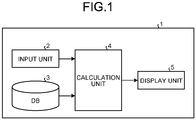
FIG. 1 is a block diagram illustrating the configuration of a guidance device for selecting a safety factory, which is an embodiment of the present invention. -
FIG. 2 is a flowchart illustrating the flow of guidance processing, which is the embodiment of the present invention. -
FIG. 3 illustrates one example of the number of times of change in operation/non-operation of a factory. -
FIG. 4 illustrates one example of a status of selection of operation/non-operation of a factory. -
FIG. 5 illustrates one example of the status of selection of operation/non-operation of a factory. -
FIG. 6 illustrates one example of the status of selection of operation/non-operation of a factory. -
FIG. 7 illustrates one example of a guidance screen. - A guidance device for selecting a safety factory, which is an embodiment of the present invention, will be described below with reference to the drawings.
- First, the configuration of the guidance device for selecting a safety factory, which is the embodiment of the present invention, will be described with reference to
FIG. 1 . -
FIG. 1 is a block diagram illustrating the configuration of the guidance device for selecting a safety factory, which is the embodiment of the present invention. As illustrated inFIG. 1 , aguidance device 1 for selecting a safety factory, which is the embodiment of the present invention, creates and presents a safety operation plan for a plurality of factories in a power system of a steel mill, and includes a general-purpose information processing device such as a personal computer and a workstation. In the present embodiment, theguidance device 1 for selecting a safety factory includes aninput unit 2, a database (DB) 3, acalculation unit 4, and adisplay unit 5. - The
input unit 2 is an operation input unit to thecalculation unit 4, and includes an input device such as a keyboard, a mouse pointer, and a numeric keypad. Theinput unit 2 outputs an operation input signal to thecalculation unit 4. - The
database 3 stores information on power demand-supply plans for a plurality of factories to be managed in a form readable by thecalculation unit 4. - The
calculation unit 4 includes a processor and a memory (main storage unit). The processor includes, for example, a central processing unit (CPU). The memory (main storage unit) includes a random access memory (RAM), a read only memory (ROM), and the like. Thecalculation unit 4 loads and executes a computer program in a work area of the main storage unit, and implements a function matching a predetermined object by controlling each component and the like through execution of the computer program. - The
display unit 5 includes a general-purpose display device such as a liquid crystal display device, and displays and outputs various pieces of information in accordance with a control signal from thecalculation unit 4. - The
guidance device 1 for selecting a safety factory having such configuration executes guidance processing to be described below to calculate a safety operation plan for a factory such that operation falls within a power range in which power can be supplied, and present a combination of an operating factory and a non-operating factory to an operator. Hereinafter, the operation of theguidance device 1 for selecting a safety factory at the time when the guidance processing is executed will be described with reference to a flowchart inFIG. 2 . -
FIG. 2 is the flowchart illustrating the flow of the guidance processing, which is the embodiment of the present invention. The flowchart inFIG. 2 starts at the timing when an execution command and a setting value for the guidance processing are input via theinput unit 2. The guidance processing proceeds to processing of Step S1. - In the processing of Step S1, the
calculation unit 4 reads information on power demand-supply plans for factories to be managed from theDB 3, and registers a planned value of power demand-supply of the factories to be managed within a predetermined period based on the read information. Note that the planned value of power demand-supply of the factories may be a predetermined fixed value, a predicted value determined by a regression expression based on a rolling plan and a steelmaking plan of a steel mill, and the like. As a result, the processing of Step S1 is completed, and the guidance processing proceeds to Step S2. - In the processing of Step S2, the
calculation unit 4 sets creation of a safety operation plan for a factory within a predetermined period under the condition that the power consumption amount of the factory is maximum within a range of a private power generation amount based on the setting value input from theinput unit 2. Note that the power consumption amount of the factory does not necessarily need to indicate the maximum value, and is only required to have a value asymptotic to the maximum value. Furthermore, in addition to the condition that the power consumption amount of the factory is maximum, a condition that a sold power amount is maximum may be set. As a result, the processing of Step S2 is completed, and the guidance processing proceeds to Step S3. - In the processing of Step S3, the
calculation unit 4 determines whether or not to group factories into, for example, a group of factories to operate, a group of factories to stop operating, a group of other factories, and the like based on the setting value input from theinput unit 2. When the factories are grouped as a result of the determination (Step S3: Yes), thecalculation unit 4 advances the guidance processing to Step S4. In contrast, when the factories are not grouped (Step S3: No), thecalculation unit 4 advances the guidance processing to Step S5. - In the processing of Step S4, the
calculation unit 4 sets a constraint condition at the time of calculating a safety operation plan of grouping the factories. A specific example of the constraint condition will be described later. A plurality of factories is preliminarily classified into a group of factories to operate, a group of factories to stop operating, and a group of other factories, and a combination of selections of a factory/factories of operation/non-operation is calculated for factories classified into the group of other factories, which can facilitate the selections of a factory/factories of operation/non-operation. - Note that factories may be grouped in accordance with operation priority. Specifically, a raw material is tapped as molten iron in a blast furnace of a steel mill. If the operation of the blast furnace is temporarily stopped, a long time is required for recovery. Thus, the operation of the blast furnace is desired to be maintained. Furthermore, since the blast furnace needs a supply of not only electric power but oxygen, an oxygen plant is required to be operated to prevent the lack of oxygen. Moreover, a blast furnace blower is also required to be operated to continue the supply. Therefore, the blast furnace, the oxygen plant, and the blast furnace blower may be classified into a group having high operation priority. Similarly, there are integrally operated facilities, such as a converter and a continuous casting machine. In such facilities, if one facility is stopped, the other facility is forced to stop. Facilities included in such a facility group of a main production line in the steel mill may be collectively classified into a group having high operation priority.
- Furthermore, the factories may be grouped in accordance with the magnitude of the amplitude and cycle of power fluctuation. Specifically, in a rolling mill, the power consumption increases when a semi-finished product such as a continuously cast slab is rolled, whereas the power consumption decreases at the time of idling, so that the power fluctuation has a large amplitude in a relatively short cycle. In contrast, in a factory or a business that always operates at a constant level, the power fluctuation has a small amplitude in a relatively long cycle. Therefore, these factories may be grouped and treated as a factory group of constant power.
- Furthermore, two factories having similar levels of amplitude and cycle of the power fluctuation and the opposite phases of the fluctuation may be classified into the same group. Specifically, if similar pieces of rolling are alternately performed in rolling mills of the same power system and the same scale, it appears that constant power is used, so that leveling can be expected. Therefore, the rolling mills of the same power system and the same scale may be classified into the same group. As a result, the processing of Step S4 is completed, and the guidance processing proceeds to Step S5.
- In the processing of Step S5, the
calculation unit 4 determines whether or not to inhibit the number of times of change in the selections of a factory/factories of operation/non-operation based on the setting value input from theinput unit 2. When the number of times of change in the selections of a factory/factories of operation/non-operation is inhibited as a result of the determination (Step S5: Yes), thecalculation unit 4 advances the guidance processing to Step S6. In contrast, when the number of times of change in the selections of a factory/factories of operation/non-operation is not inhibited (Step S5: No), thecalculation unit 4 advances the guidance processing to Step S8. - In the processing of Step S6, the
calculation unit 4 sets a constraint condition at the time of calculating a safety operation plan in a case where the number of times of change in the selections of a factory/factories of operation/non-operation is inhibited. A specific example of the constraint condition will be described later. A labor of an operator who switches operation/non-operation of a factory can be reduced by inhibiting the number of times of change in the selections of a factory/factories of operation/non-operation. As a result, the processing of Step S6 is completed, and the guidance processing proceeds to Step S7. - In the processing of Step S7, the
calculation unit 4 calculates a safety operation plan for a factory, which satisfies the calculation condition and the constraint condition set in the processing of Step S2, by using the planned value of the power demand-supply of the factory, which has been registered in the processing of Step S1. Then, thecalculation unit 4 calculates a combination of the selections of a factory/factories of operation/non-operation in a time zone within a predetermined period from the calculated safety operation plan. As a result, the processing of Step S7 is completed, and the guidance processing proceeds to Step S9. - In the processing of Step S8, the
calculation unit 4 calculates a safety operation plan for a factory, which satisfies the calculation condition and the constraint condition set in the processing of Step S2, by using the planned value of the power demand-supply of the factory, which has been registered in the processing of Step S1. Then, thecalculation unit 4 calculates a combination of the selections of a factory/factories of operation/non-operation in a time zone within a certain predetermined period or a certain time section (time point) from the calculated safety operation plan. As a result, the processing of Step S8 is completed, and the guidance processing proceeds to Step S9. - In the processing of Step S9, the
calculation unit 4 displays, on thedisplay unit 5, information (guidance screen) on the combination of selections of a factory/factories/factories of operation/non-operation calculated in the processing of Step S7 or S8. As a result, the processing of Step S9 is completed, and a series of guidance processing ends. - In an example, the present invention was applied to processing of selecting a factory to be operated or not to be operated such that a power consumption amount of the factory is maximized within a range of a private power generation amount in the case where a power failure occurs due to interruption of power supply from the outside and a part of a power source in a power system is turned off. Note that, in the example, an ideal situation in which power consumption of a factory can be accurately grasped was assumed, and an actual value was used as a power value of the factory. Then, under the assumption, an integer programming problem was created and a combination of selections of a factory/factories of operation/non-operation was calculated for three cases of a case (a) where the number of times of change in the selections of a factory/factories of operation/non-operation is not inhibited, a case (b) where the number of times of change in the selections of a factory/factories of operation/non-operation is inhibited but factories are not grouped, and a case (c) where the number of times of change in the selections of a factory/factories is inhibited and the factories are grouped.
- Specifically, the following problem (a) was set for the case (a) where the number of times of change in the selections of a factory/factories of operation/non-operation is not inhibited. Note that, when a sold power amount is desired to be considered in the problem, a term indicating the sold power amount is only required to be added to an objective function.

- Decision variable: Factory selection [t] [i] ∈ {0, 1} (0: not selected (not operated), 1: selected (operated))
- Constraint condition: Factory power amount [t] [i] = actual value, objective function ≥ 0.1 MWh
- Subscript: p: Generator name, i: Factory name, t: Time
- Furthermore, in the case (b) where the number of times of change in the selections of a factory/factories of operation/non-operation is inhibited but factories are not grouped, a problem (b) obtained by adding the following constraint conditions to the problem (a) was set. The following constraint conditions are that a factory cannot be selected as a factory to be switched between operation and non-operation unless the operation time and the stop time continue for four hours.
- Operation continuation (four hours): Factory selection [t] [i] - factory selection [t - 1] [i] ≤ factory selection [t + T] [i], T ∈ {1, 2, 3} Stop continuation (four hours):

- Furthermore, in the case (c) where the number of times of change in the selections of a factory/factories is inhibited and the factories are grouped, a problem (c) obtained by adding the following constraint conditions to the problem (b) was set. Here, factories are grouped such that a factory considered to be minimum necessary for operating a steel mill is prioritized.
- Operate during power failure: Factory selection [t] [j] = 1, j ∈ A = main factory of steel mill = {blast furnace blower, blast furnace, oxygen center, sintering, converter, AP, RH, continuous casting, hot rolling, thick plate, cold rolling}
- Not operate during power failure: Factory selection [t] [j] = 0, j ∈ B = streetlamp and the like of steel mill = {others}
- Grouping of specific factories: Factory selection [t] [k] = factory selection [t] [l], k, l ∈ C = office, subsidiary, and the like = {subsidiary A, subsidiary B, pickling factory, central office, blooming refining, shaft furnace}
-
FIG. 3 illustrates the number of times of change in operation/non-operation of a factory in each case as a calculation result of selections of a factory/factories of operation/non-operation in a certain time zone (20 hours). In the case (a), operation/non-operation of a factory is changed each time. The number of times of change is reduced by approximately 30% in the case (b) and the number of times of change is reduced by approximately 80% in the case (c) as compared with that in the case (a). A burden on an operator can be reduced and operation efficiency can be improved by reducing the number of times of change. Furthermore,FIGS. 4 ,5 , and6 illustrate a factory selection status in each case. The example illustrates operation/non-operation of a factory at each subsequent time of each case by setting the state of operation/non-operation of each factory attimes 0 to 3 as an initial state. InFIGS. 4 to 6 , 1 indicates selection (operation), and 0 indicates non-selection (non-operation). Any state is assumed as the initial state. Here, a case where all are in an unselected sate is assumed. A hatched portion indicates a time point when a change in operation/non-operation occurs. Moreover,FIG. 7 illustrates one example of guidance screen display. The operator adjusts the operation state of a factory with reference to the guidance screen inFIG. 7 . Note that, in the example ofFIGS. 4 and5 , the operation/non-operation of a factory is selected on the assumption of the case where the relation between factories does not need to be considered. Actually, the factories have interdependent relation in operation. A problem may occur unless the operation/non-operation is simultaneously selected. In such a case, the grouping in (c) inFIG. 7 is only required to be performed. InFIG. 7 , the operation/non-operation of each factory is selected including other factories that perform processing essential for operating each factory by designating a factory group essential for operating a steel mill as a priority group. Thus, factory selection that makes operation of the steel mill impossible is not performed. The operation/non-operation of a factory can be selected within a range in which power can be supplied. - Although the embodiment to which the invention made by the present inventors is applied has been described above, the present invention is not limited by the description and drawings constituting a part of the disclosure of the present invention according to the embodiment. That is, other embodiments, examples, operation techniques, and the like made by those skilled in the art based on the present embodiment are all included in the scope of the present invention.
- According to the present invention, there can be provided a guidance device and a guidance method for selecting a safety factory, which can calculate a safety operation plan for a factory such that operation falls within a range in which power can be supplied and present a combination of an operating factory and a non-operating factory. Furthermore, according to the present invention, there can be provided a factory operating method capable of operating a factory such that the operation falls within a power range in which power can be supplied.
-
- 1
- GUIDANCE DEVICE FOR SELECTING SAFETY FACTORY
- 2
- INPUT UNIT
- 3
- DATABASE (DB)
- 4
- CALCULATION UNIT
- 5
- DISPLAY UNIT
Claims (5)
- A guidance device for selecting a safety factory operating at a time of a power failure, and presenting a safety operation plan for a plurality of factories in a power system, the guidance device comprising
a presentation unit configured tocalculate a combination of an operating factory and a non-operating factory within a predetermined period from a planned value of power demand-supply of the factories such that a power consumption amount of the factories satisfies a predetermined condition, andpresent information on the calculated combination. - The guidance device for selecting a safety factory according to claim 1, wherein the presentation unit is configured to calculate the combination in accordance with a constraint condition for inhibiting number of times of changing an operation state of the factories within the predetermined period.
- The guidance device for selecting a safety factory according to claim 1 or 2, whereinthe plurality of factories are preliminarily classified into a group of a factory to operate, a group of a factory to stop operating, and a group of another factory, andthe presentation unit is configured to calculate the combination of an operating factory and a non-operating factory for the factory classified into the group of another factory.
- A guidance method for selecting a safety factory operating at a time of a power failure, and presenting a safety operation plan for a plurality of factories in a power system, the guidance method comprising the steps of:calculating a combination of an operating factory and a non-operating factory within a predetermined period from a planned value of power demand-supply of the factories such that a power consumption amount of the factories satisfies a predetermined condition; andpresenting information on the calculated combination.
- A method of operating a factory, the method comprising
a step of operating a factory in accordance with the information on the combination of the operating factory and the non-operating factory, the information being presented by the guidance method for selecting a safety factory, according to claim 4.
Applications Claiming Priority (2)
| Application Number | Priority Date | Filing Date | Title |
|---|---|---|---|
| JP2020045927 | 2020-03-17 | ||
| PCT/JP2021/010407 WO2021187428A1 (en) | 2020-03-17 | 2021-03-15 | Secure plant selection guidance device, secure plant selection guidance method, and plant operation method |
Publications (2)
| Publication Number | Publication Date |
|---|---|
| EP4123870A1 true EP4123870A1 (en) | 2023-01-25 |
| EP4123870A4 EP4123870A4 (en) | 2023-09-13 |
Family
ID=77770877
Family Applications (1)
| Application Number | Title | Priority Date | Filing Date |
|---|---|---|---|
| EP21770462.6A Pending EP4123870A4 (en) | 2020-03-17 | 2021-03-15 | SECURE POWER PANEL SELECTION GUIDANCE DEVICE, SECURE POWER PANEL SELECTION GUIDANCE METHOD, AND POWER PANEL OPERATING METHOD |
Country Status (6)
| Country | Link |
|---|---|
| US (1) | US12489293B2 (en) |
| EP (1) | EP4123870A4 (en) |
| JP (1) | JP7126101B2 (en) |
| KR (1) | KR102835140B1 (en) |
| CN (1) | CN115244814A (en) |
| WO (1) | WO2021187428A1 (en) |
Family Cites Families (23)
| Publication number | Priority date | Publication date | Assignee | Title |
|---|---|---|---|---|
| US4551812A (en) * | 1981-06-17 | 1985-11-05 | Cyborex Laboratories, Inc. | Energy controller and method for dynamic allocation of priorities of controlled load curtailment to ensure adequate load sharing |
| JPS61221535A (en) | 1985-03-25 | 1986-10-01 | 川崎製鉄株式会社 | Selection load control system for security power system |
| JPH03276201A (en) | 1990-03-26 | 1991-12-06 | Nkk Corp | Energy management and control methods in integrated steelworks |
| GB2467283A (en) * | 2007-12-06 | 2010-07-28 | Prosafe Production Pte Ltd | System and method for power management and load shedding |
| US8068938B2 (en) * | 2009-05-15 | 2011-11-29 | General Electric Company | Method and system for managing a load demand on an electrical grid |
| EP2330481A1 (en) * | 2009-12-03 | 2011-06-08 | Racktivity NV | Data center management unit with improved disaster prevention and recovery |
| US20110029142A1 (en) | 2010-07-02 | 2011-02-03 | David Sun | System tools that provides dispatchers in power grid control centers with a capability to make changes |
| KR20120070903A (en) * | 2010-12-22 | 2012-07-02 | 한국전자통신연구원 | Smart Grid Power Control Device and Power Control Method Using The Same |
| JP5247850B2 (en) * | 2011-04-18 | 2013-07-24 | 三菱電機株式会社 | Power control system |
| US9082141B2 (en) * | 2011-10-27 | 2015-07-14 | General Electric Company | Systems and methods to implement demand response events |
| JP5879941B2 (en) | 2011-11-07 | 2016-03-08 | 株式会社ダイフク | Goods transport equipment |
| JP5926156B2 (en) * | 2012-09-10 | 2016-05-25 | 株式会社日立製作所 | Consumer energy management device and system |
| US20140371942A1 (en) | 2013-01-11 | 2014-12-18 | Nitto Denko Corporation | On-demand power control system, on-demand power control system program, and computer-readable recording medium recording the same program |
| JP6091337B2 (en) | 2013-05-29 | 2017-03-08 | 三菱電機株式会社 | Energy management system and operation plan creation method |
| JP6139306B2 (en) * | 2013-07-10 | 2017-05-31 | 株式会社東芝 | Operation plan optimization device, operation plan optimization method, and operation plan optimization program |
| US9691076B2 (en) * | 2013-07-11 | 2017-06-27 | Honeywell International Inc. | Demand response system having a participation predictor |
| US20150019275A1 (en) * | 2013-07-11 | 2015-01-15 | Honeywell International Inc. | Optimizing a selection of demand response resources |
| JP6319993B2 (en) | 2013-11-11 | 2018-05-09 | 株式会社東芝 | Load control system and central control unit |
| US9705327B2 (en) * | 2015-07-14 | 2017-07-11 | Restore Nv | Self-learning, real-time, data-driven power metering system |
| WO2017221240A1 (en) * | 2016-06-21 | 2017-12-28 | Foresight Energy Ltd. | System and method for management and forecasting power consumption data |
| US11126486B2 (en) * | 2018-10-25 | 2021-09-21 | Dell Products, L.P. | Prediction of power shutdown and outage incidents |
| CN109687471A (en) * | 2019-02-01 | 2019-04-26 | 国网江苏省电力有限公司 | A kind of urgent accurate control method and system of extensive interruptible load |
| US12272951B2 (en) * | 2022-04-19 | 2025-04-08 | General Electric Company | Severe weather-driven large-scale outage management for emergency power grid |
-
2021
- 2021-03-15 WO PCT/JP2021/010407 patent/WO2021187428A1/en not_active Ceased
- 2021-03-15 US US17/910,750 patent/US12489293B2/en active Active
- 2021-03-15 EP EP21770462.6A patent/EP4123870A4/en active Pending
- 2021-03-15 JP JP2021535764A patent/JP7126101B2/en active Active
- 2021-03-15 KR KR1020227030905A patent/KR102835140B1/en active Active
- 2021-03-15 CN CN202180019883.9A patent/CN115244814A/en active Pending
Also Published As
| Publication number | Publication date |
|---|---|
| KR20220136425A (en) | 2022-10-07 |
| CN115244814A (en) | 2022-10-25 |
| KR102835140B1 (en) | 2025-07-16 |
| EP4123870A4 (en) | 2023-09-13 |
| JP7126101B2 (en) | 2022-08-26 |
| JPWO2021187428A1 (en) | 2021-09-23 |
| BR112022018142A2 (en) | 2022-10-25 |
| US20230246439A1 (en) | 2023-08-03 |
| US12489293B2 (en) | 2025-12-02 |
| WO2021187428A1 (en) | 2021-09-23 |
Similar Documents
| Publication | Publication Date | Title |
|---|---|---|
| Ashok | Peak-load management in steel plants | |
| Biondi et al. | Optimization of multipurpose process plant operations: A multi-time-scale maintenance and production scheduling approach | |
| Oosthuizen et al. | Economic evaluation and design of an electric arc furnace controller based on economic objectives | |
| JP4189930B2 (en) | Microgrid power monitoring measurement control system, power monitoring measurement control method thereof, and power monitoring measurement control program thereof | |
| JP6954479B2 (en) | Operation result prediction method, learning model learning method, operation result prediction device and learning model learning device | |
| Dalle Ave et al. | Demand side management scheduling formulation for a steel plant considering electrode degradation | |
| EP4123870A1 (en) | Secure plant selection guidance device, secure plant selection guidance method, and plant operation method | |
| JP2012188752A (en) | Evaluation device of unit consumption of fuel and heating furnace control system | |
| EP4138008A1 (en) | Energy supply/demand operation guidance device and method for energy supply/demand operation in ironworks | |
| JP7355712B2 (en) | Furnace operation management device, furnace operation management method, and furnace operation management program | |
| JP2008109813A (en) | Demand control device and power consumption system | |
| EP2354873A2 (en) | Manipulation-monitoring device | |
| Wang et al. | An improved cross entropy algorithm for steelmaking-continuous casting production scheduling with complicated technological routes | |
| CN106463959B (en) | Power supply and demand guidance device and power supply and demand guidance method | |
| BR112022018142B1 (en) | GUIDANCE DEVICE FOR SELECTING A SAFETY FACTORY, GUIDANCE METHOD FOR SELECTING A SAFETY FACTORY, AND FACTORY OPERATION METHOD | |
| Parsunkin et al. | The results of a study on the implementation of energy-saving control of heating billets in heating furnaces of rolling mills | |
| Fallmann et al. | Experimental validation of mixed-integer Model Predictive Control for energy management in an industrial food processing plant | |
| Matsveichuk et al. | Models and Methods for Planning and Scheduling in Iron and Steel Making: Review and Prospects | |
| JP2010011615A (en) | Method, device and program for evaluating power generation cost, system for scheduling power generation, and system for controlling start/stop of power generation facility | |
| JPH11341892A (en) | How to make a generator repair plan | |
| Storck et al. | A lean production strategy for hot charge operation of a steel mill | |
| Mui et al. | A SCADA-based expert system to provide delay strategies for a steel billet reheat furnace | |
| Tsukanov et al. | Evaluation and formation of production schedules for complex structured production | |
| EP4632081A1 (en) | Silicon concentration prediction method, operation guidance method, silicon concentration prediction device, operation guidance device, operation guidance system, and terminal device | |
| Pang et al. | Intelligent rescheduling system for steelmaking and continuous casting production |
Legal Events
| Date | Code | Title | Description |
|---|---|---|---|
| STAA | Information on the status of an ep patent application or granted ep patent |
Free format text: STATUS: THE INTERNATIONAL PUBLICATION HAS BEEN MADE |
|
| PUAI | Public reference made under article 153(3) epc to a published international application that has entered the european phase |
Free format text: ORIGINAL CODE: 0009012 |
|
| STAA | Information on the status of an ep patent application or granted ep patent |
Free format text: STATUS: REQUEST FOR EXAMINATION WAS MADE |
|
| 17P | Request for examination filed |
Effective date: 20220915 |
|
| AK | Designated contracting states |
Kind code of ref document: A1 Designated state(s): AL AT BE BG CH CY CZ DE DK EE ES FI FR GB GR HR HU IE IS IT LI LT LU LV MC MK MT NL NO PL PT RO RS SE SI SK SM TR |
|
| DAV | Request for validation of the european patent (deleted) | ||
| DAX | Request for extension of the european patent (deleted) | ||
| A4 | Supplementary search report drawn up and despatched |
Effective date: 20230816 |
|
| RIC1 | Information provided on ipc code assigned before grant |
Ipc: H02J 3/14 20060101ALI20230809BHEP Ipc: H02J 3/00 20060101ALI20230809BHEP Ipc: H02J 13/00 20060101AFI20230809BHEP |