EP4123121B1 - Torque loading in component stack assembly - Google Patents
Torque loading in component stack assembly Download PDFInfo
- Publication number
- EP4123121B1 EP4123121B1 EP22183969.9A EP22183969A EP4123121B1 EP 4123121 B1 EP4123121 B1 EP 4123121B1 EP 22183969 A EP22183969 A EP 22183969A EP 4123121 B1 EP4123121 B1 EP 4123121B1
- Authority
- EP
- European Patent Office
- Prior art keywords
- stack
- torque
- assembly
- component
- friction
- Prior art date
- Legal status (The legal status is an assumption and is not a legal conclusion. Google has not performed a legal analysis and makes no representation as to the accuracy of the status listed.)
- Active
Links
Images



Classifications
-
- G—PHYSICS
- G01—MEASURING; TESTING
- G01L—MEASURING FORCE, STRESS, TORQUE, WORK, MECHANICAL POWER, MECHANICAL EFFICIENCY, OR FLUID PRESSURE
- G01L3/00—Measuring torque, work, mechanical power, or mechanical efficiency, in general
- G01L3/02—Rotary-transmission dynamometers
- G01L3/04—Rotary-transmission dynamometers wherein the torque-transmitting element comprises a torsionally-flexible shaft
- G01L3/10—Rotary-transmission dynamometers wherein the torque-transmitting element comprises a torsionally-flexible shaft involving electric or magnetic means for indicating
- G01L3/101—Rotary-transmission dynamometers wherein the torque-transmitting element comprises a torsionally-flexible shaft involving electric or magnetic means for indicating involving magnetic or electromagnetic means
-
- F—MECHANICAL ENGINEERING; LIGHTING; HEATING; WEAPONS; BLASTING
- F01—MACHINES OR ENGINES IN GENERAL; ENGINE PLANTS IN GENERAL; STEAM ENGINES
- F01D—NON-POSITIVE DISPLACEMENT MACHINES OR ENGINES, e.g. STEAM TURBINES
- F01D5/00—Blades; Blade-carrying members; Heating, heat-insulating, cooling or antivibration means on the blades or the members
- F01D5/02—Blade-carrying members, e.g. rotors
- F01D5/025—Fixing blade carrying members on shafts
-
- B—PERFORMING OPERATIONS; TRANSPORTING
- B25—HAND TOOLS; PORTABLE POWER-DRIVEN TOOLS; MANIPULATORS
- B25B—TOOLS OR BENCH DEVICES NOT OTHERWISE PROVIDED FOR, FOR FASTENING, CONNECTING, DISENGAGING, OR HOLDING
- B25B23/00—Details of, or accessories for, spanners, wrenches, screwdrivers
- B25B23/14—Arrangement of torque limiters or torque indicators in wrenches or screwdrivers
- B25B23/142—Arrangement of torque limiters or torque indicators in wrenches or screwdrivers specially adapted for hand operated wrenches or screwdrivers
- B25B23/1422—Arrangement of torque limiters or torque indicators in wrenches or screwdrivers specially adapted for hand operated wrenches or screwdrivers torque indicators or adjustable torque limiters
- B25B23/1427—Arrangement of torque limiters or torque indicators in wrenches or screwdrivers specially adapted for hand operated wrenches or screwdrivers torque indicators or adjustable torque limiters by mechanical means
-
- B—PERFORMING OPERATIONS; TRANSPORTING
- B25—HAND TOOLS; PORTABLE POWER-DRIVEN TOOLS; MANIPULATORS
- B25B—TOOLS OR BENCH DEVICES NOT OTHERWISE PROVIDED FOR, FOR FASTENING, CONNECTING, DISENGAGING, OR HOLDING
- B25B27/00—Hand tools, specially adapted for fitting together or separating parts or objects whether or not involving some deformation, not otherwise provided for
- B25B27/14—Hand tools, specially adapted for fitting together or separating parts or objects whether or not involving some deformation, not otherwise provided for for assembling objects other than by press fit or detaching same
-
- F—MECHANICAL ENGINEERING; LIGHTING; HEATING; WEAPONS; BLASTING
- F01—MACHINES OR ENGINES IN GENERAL; ENGINE PLANTS IN GENERAL; STEAM ENGINES
- F01D—NON-POSITIVE DISPLACEMENT MACHINES OR ENGINES, e.g. STEAM TURBINES
- F01D25/00—Component parts, details, or accessories, not provided for in, or of interest apart from, other groups
- F01D25/16—Arrangement of bearings; Supporting or mounting bearings in casings
-
- F—MECHANICAL ENGINEERING; LIGHTING; HEATING; WEAPONS; BLASTING
- F01—MACHINES OR ENGINES IN GENERAL; ENGINE PLANTS IN GENERAL; STEAM ENGINES
- F01D—NON-POSITIVE DISPLACEMENT MACHINES OR ENGINES, e.g. STEAM TURBINES
- F01D5/00—Blades; Blade-carrying members; Heating, heat-insulating, cooling or antivibration means on the blades or the members
- F01D5/005—Repairing methods or devices
-
- F—MECHANICAL ENGINEERING; LIGHTING; HEATING; WEAPONS; BLASTING
- F01—MACHINES OR ENGINES IN GENERAL; ENGINE PLANTS IN GENERAL; STEAM ENGINES
- F01D—NON-POSITIVE DISPLACEMENT MACHINES OR ENGINES, e.g. STEAM TURBINES
- F01D5/00—Blades; Blade-carrying members; Heating, heat-insulating, cooling or antivibration means on the blades or the members
- F01D5/02—Blade-carrying members, e.g. rotors
- F01D5/06—Rotors for more than one axial stage, e.g. of drum or multiple disc type; Details thereof, e.g. shafts, shaft connections
-
- F—MECHANICAL ENGINEERING; LIGHTING; HEATING; WEAPONS; BLASTING
- F01—MACHINES OR ENGINES IN GENERAL; ENGINE PLANTS IN GENERAL; STEAM ENGINES
- F01D—NON-POSITIVE DISPLACEMENT MACHINES OR ENGINES, e.g. STEAM TURBINES
- F01D5/00—Blades; Blade-carrying members; Heating, heat-insulating, cooling or antivibration means on the blades or the members
- F01D5/02—Blade-carrying members, e.g. rotors
- F01D5/06—Rotors for more than one axial stage, e.g. of drum or multiple disc type; Details thereof, e.g. shafts, shaft connections
- F01D5/066—Connecting means for joining rotor-discs or rotor-elements together, e.g. by a central bolt, by clamps
-
- F—MECHANICAL ENGINEERING; LIGHTING; HEATING; WEAPONS; BLASTING
- F02—COMBUSTION ENGINES; HOT-GAS OR COMBUSTION-PRODUCT ENGINE PLANTS
- F02C—GAS-TURBINE PLANTS; AIR INTAKES FOR JET-PROPULSION PLANTS; CONTROLLING FUEL SUPPLY IN AIR-BREATHING JET-PROPULSION PLANTS
- F02C7/00—Features, components parts, details or accessories, not provided for in, or of interest apart form groups F02C1/00 - F02C6/00; Air intakes for jet-propulsion plants
- F02C7/06—Arrangements of bearings; Lubricating
-
- G—PHYSICS
- G01—MEASURING; TESTING
- G01L—MEASURING FORCE, STRESS, TORQUE, WORK, MECHANICAL POWER, MECHANICAL EFFICIENCY, OR FLUID PRESSURE
- G01L3/00—Measuring torque, work, mechanical power, or mechanical efficiency, in general
-
- G—PHYSICS
- G01—MEASURING; TESTING
- G01M—TESTING STATIC OR DYNAMIC BALANCE OF MACHINES OR STRUCTURES; TESTING OF STRUCTURES OR APPARATUS, NOT OTHERWISE PROVIDED FOR
- G01M99/00—Subject matter not provided for in other groups of this subclass
- G01M99/008—Subject matter not provided for in other groups of this subclass by doing functionality tests
-
- F—MECHANICAL ENGINEERING; LIGHTING; HEATING; WEAPONS; BLASTING
- F05—INDEXING SCHEMES RELATING TO ENGINES OR PUMPS IN VARIOUS SUBCLASSES OF CLASSES F01-F04
- F05D—INDEXING SCHEME FOR ASPECTS RELATING TO NON-POSITIVE-DISPLACEMENT MACHINES OR ENGINES, GAS-TURBINES OR JET-PROPULSION PLANTS
- F05D2230/00—Manufacture
- F05D2230/60—Assembly methods
-
- F—MECHANICAL ENGINEERING; LIGHTING; HEATING; WEAPONS; BLASTING
- F05—INDEXING SCHEMES RELATING TO ENGINES OR PUMPS IN VARIOUS SUBCLASSES OF CLASSES F01-F04
- F05D—INDEXING SCHEME FOR ASPECTS RELATING TO NON-POSITIVE-DISPLACEMENT MACHINES OR ENGINES, GAS-TURBINES OR JET-PROPULSION PLANTS
- F05D2230/00—Manufacture
- F05D2230/80—Repairing, retrofitting or upgrading methods
-
- F—MECHANICAL ENGINEERING; LIGHTING; HEATING; WEAPONS; BLASTING
- F05—INDEXING SCHEMES RELATING TO ENGINES OR PUMPS IN VARIOUS SUBCLASSES OF CLASSES F01-F04
- F05D—INDEXING SCHEME FOR ASPECTS RELATING TO NON-POSITIVE-DISPLACEMENT MACHINES OR ENGINES, GAS-TURBINES OR JET-PROPULSION PLANTS
- F05D2240/00—Components
- F05D2240/50—Bearings
-
- F—MECHANICAL ENGINEERING; LIGHTING; HEATING; WEAPONS; BLASTING
- F05—INDEXING SCHEMES RELATING TO ENGINES OR PUMPS IN VARIOUS SUBCLASSES OF CLASSES F01-F04
- F05D—INDEXING SCHEME FOR ASPECTS RELATING TO NON-POSITIVE-DISPLACEMENT MACHINES OR ENGINES, GAS-TURBINES OR JET-PROPULSION PLANTS
- F05D2260/00—Function
- F05D2260/81—Modelling or simulation
Definitions
- the present invention pertains to the art of apparatus assembly and, more particularly, to friction correcting of a torque loaded component stack for a gas turbine engine and the corresponding method.
- components are arranged in one or more stacks.
- components can be arranged on a shaft with an interference fit and be preloaded during assembly with a targeted torque value.
- the application of torque to the component stack during assembly can be subject to a wide range of variability based on a combination of intrinsic properties of the components as manufactured and characteristics of the components during assembly.
- the stack load must be sufficient to keep components of the stack in place, but too high of a load may cause components to prematurely fail or sustain damage. Designing components in a stack to meet a large stack load range may result in oversized components that add weight to the overall system, which in the case of a gas turbine engine, could result in increased fuel consumption.
- EP 0914910 A1 discloses a wrenching method, an apparatus wrenching attachment, and a medium storing wrenching torque control program.
- a system that includes a memory system configured to store a plurality of instructions and a processing system as claimed in claim 1.
- the friction torque ratio can relate a difference between the assembly torque and the initial torque to the angle of turn as scaled by a stiffness of the component stack.
- the friction torque ratio can be scaled based on a number of threads per unit distance.
- the component stack can be a bearing stack of a gas turbine engine.
- the indicator of the stack load can be output with respect to target value.
- the memory system and the processing system can be integrated with a torque wrench.
- the memory system and the processing system can be integrated in an assembly support system.
- the memory system and the processing system can be distributed between a torque wrench and an assembly support system.
- a method that includes determining, by a processing system, an initial torque applied to a component stack as claimed in claim 8.
- the processing system can be integrated in or distributed between a torque wrench and an assembly support system.
- the calibrated force display can be integrated with the torque wrench, and the load specification can be compared to a stack load that is determined by a processing system based on monitoring the initial torque, the assembly torque, and a turn angle applied to the stack nut.
- FIG. 1 schematically illustrates a gas turbine engine 20.
- the gas turbine engine 20 is disclosed herein as a two-spool turbofan that generally incorporates a fan section 22, a compressor section 24, a combustor section 26 and a turbine section 28.
- Alternative engines might include other systems or features.
- the fan section 22 drives air along a bypass flow path B in a bypass duct, while the compressor section 24 drives air along a core flow path C for compression and communication into the combustor section 26 then expansion through the turbine section 28.
- FIG. 1 schematically illustrates a gas turbine engine 20.
- the gas turbine engine 20 is disclosed herein as a two-spool turbofan that generally incorporates a fan section 22, a compressor section 24, a combustor section 26 and a turbine section 28.
- Alternative engines might include other systems or features.
- the fan section 22 drives air along a bypass flow path B in a bypass duct
- the compressor section 24 drives air along a core flow path C for compression and communication into the combustor section 26
- the low speed spool 30 generally includes an inner shaft 40 that interconnects a fan 42, a low pressure compressor 44 and a low pressure turbine 46.
- the inner shaft 40 is connected to the fan 42 through a speed change mechanism, which in exemplary gas turbine engine 20 is illustrated as a geared architecture 48 to drive the fan 42 at a lower speed than the low speed spool 30.
- the high speed spool 32 includes an outer shaft 50 that interconnects a high pressure compressor 52 and high pressure turbine 54.
- a combustor 56 is arranged in exemplary gas turbine 20 between the high pressure compressor 52 and the high pressure turbine 54.
- An engine static structure 36 is arranged generally between the high pressure turbine 54 and the low pressure turbine 46.
- the engine static structure 36 further supports bearing systems 38 in the turbine section 28.
- the inner shaft 40 and the outer shaft 50 are concentric and rotate via bearing systems 38 about the engine central longitudinal axis A which is collinear with their longitudinal axes.
- each of the positions of the fan section 22, compressor section 24, combustor section 26, turbine section 28, and fan drive gear system 48 may be varied.
- gear system 48 may be located aft of combustor section 26 or even aft of turbine section 28, and fan section 22 may be positioned forward or aft of the location of gear system 48.
- the engine 20 in one example is a high-bypass geared aircraft engine.
- the engine 20 bypass ratio is greater than about six (6), with an example embodiment being greater than about ten (10)
- the geared architecture 48 is an epicyclic gear train, such as a planetary gear system or other gear system, with a gear reduction ratio of greater than about 2.3
- the low pressure turbine 46 has a pressure ratio that is greater than about five.
- the engine 20 bypass ratio is greater than about ten (10:1)
- the fan diameter is significantly larger than that of the low pressure compressor 44
- the low pressure turbine 46 has a pressure ratio that is greater than about five 5:1.
- Low pressure turbine 46 pressure ratio is pressure measured prior to inlet of low pressure turbine 46 as related to the pressure at the outlet of the low pressure turbine 46 prior to an exhaust nozzle.
- the geared architecture 48 may be an epicycle gear train, such as a planetary gear system or other gear system, with a gear reduction ratio of greater than about 2.3:1. It should be understood, however, that the above parameters are only exemplary of one embodiment of a geared architecture engine and that the present disclosure is applicable to other gas turbine engines including direct drive turbofans.
- the fan section 22 of the engine 20 is designed for a particular flight condition--typically cruise at about 0.8Mach and about 35,000 feet (10,688 meters).
- 'TSFC' Thrust Specific Fuel Consumption
- Low fan pressure ratio is the pressure ratio across the fan blade alone, without a Fan Exit Guide Vane (“FEGV”) system.
- the low fan pressure ratio as disclosed herein according to one non-limiting embodiment is less than about 1.45.
- Low corrected fan tip speed is the actual fan tip speed in ft/sec divided by an industry standard temperature correction of [(Tram °R)/(518.7 °R)]0.5.
- the "Low corrected fan tip speed” as disclosed herein according to one non-limiting embodiment is less than about 1150 ft/second (350.5 m/sec).
- FIG. 2 depicts an example of a component stack 200 that can be integrated in an apparatus, such as the gas turbine engine 20 of FIG. 1 .
- the component stack 200 can be part of the bearing systems 38 of FIG. 1 , such as a bearing stack.
- the component stack 200 includes a seal 206, a first bearing 212a, a spacer 218, and a second bearing 212b arranged relative to (e.g., radially outward from) a shaft 224.
- the first bearing 212a includes a first roller/rolling element 213a and a first race 214a
- the second bearing 212b includes a second roller/rolling element 213b and a second race 214b.
- the components 206-218 can be installed on the shaft 224 in the order mentioned above (e.g., left-to-right in FIG. 2 ).
- the seal 206 is installed first, then the first bearing 212a, then the spacer 218, then the second bearing 212b.
- the arrangement/positioning of components (e.g., the components 206-218) adjacent to one another about a shaft (e.g., the shaft 224) may be referred to as a "stack" herein.
- a stack end 224a which is integrally formed with shaft 224, provides a lip/shoulder for applying a torque to the components 206-218 arranged on the shaft 224 relative to a stack nut 240.
- the stack end 224a can act as a bolt head.
- the stack nut 240 can be rotated on a threaded interface 245 to apply a load torque to ensure that the components 206-218 remain properly seated and gaps do not form between the components 206-218 in the component stack 200.
- FIG. 2 depicts one example of a component stack, various arrangements of components are contemplated, such as seals, spacers, oil scoops, etc. Further, other component stack configurations may be any type of bolted joint with targeted torque requirements, such as oil fittings, bolted flanges, and the like.
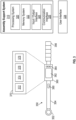
- FIG. 3 is a block diagram of a system 300 that can include an assembly support system 310 and a torque wrench 350.
- the assembly support system 310 can include a processing system 320, a memory system 322, an input/output interface 324, and a communication interface 326.
- the processing system 320 can include any type or combination of central processing unit (CPU), including one or more of: a microprocessor, a digital signal processor (DSP), a microcontroller, an application specific integrated circuit (ASIC), a field programmable gate array (FPGA), or the like.
- CPU central processing unit
- DSP digital signal processor
- ASIC application specific integrated circuit
- FPGA field programmable gate array
- the memory system 322 may include volatile memory, such as random access memory (RAM), and non-volatile memory, such as Flash memory, read only memory (ROM), and/or other electronic, optical, magnetic, or any other computer readable medium onto which is stored data and algorithms in a non-transitory form.
- volatile memory such as random access memory (RAM)
- non-volatile memory such as Flash memory, read only memory (ROM), and/or other electronic, optical, magnetic, or any other computer readable medium onto which is stored data and algorithms in a non-transitory form.
- the input/output interface 324 can process data input through a user interface 328 and output data to the user interface 328.
- the user interface 328 can include a keyboard, a mouse, a display, a touchscreen, and/or input/output devices.
- the communication interface 326 can establish communication with various systems and/or devices through wired, wireless, and/or fiber optic connections.
- the torque wrench 350 includes a tool head 352, a wrench body 354, and a handle 356.
- the torque wrench 350 can be implemented as a digital torque wrench with a user interface 360 having a display 362 and inputs 364.
- the user interface 360 can be coupled to a controller 370 disposed on, remotely connected to, or incorporated in the torque wrench 350.
- the controller 370 can include a processing system 372, a memory system 374, and an input/output interface 376.
- the controller 370 can also include a communication interface 378 to communicate with other devices, such as the assembly support system 310 through communication interface 326.
- the processing system 372 can include any type or combination of central processing unit (CPU), including one or more of: a microprocessor, a digital signal processor (DSP), a microcontroller, an application specific integrated circuit (ASIC), a field programmable gate array (FPGA), or the like.
- the memory system 374 can store data and instructions that are executed by the processing system 372.
- the memory system 374 may include random access memory (RAM), read only memory (ROM), or other electronic, optical, magnetic, or any other computer readable medium onto which is stored data and algorithms in a non-transitory form.
- the input/output interface 376 is configured to output information on the display 362 and receive input from inputs 364.
- the input/output interface 376 can collect sensor data from the one or more sensors 380.
- the sensors 380 can detect torque (e.g., using one or more torque sensing elements) and angle of turn (e.g., using one or more angle sensing elements) status of the tool head 352.
- the tool head 352 can be sized to engage with the stack nut 240 of FIG. 2 and apply a torque to the stack nut 240.
- a user such as a mechanic, can use the torque wrench 350 to apply torque to a component stack, such as the component stack 200 of FIG. 2 .
- the torque wrench 350 is used in conjunction with the assembly support system 310 to determine a stack load to be applied to the component stack 200 and monitor progress as the torque wrench 350 is used to apply torque to the stack nut 240 during assembly of the component stack 200.
- FIG. 4 is a flow chart illustrating a method 400 in accordance with an embodiment.
- the method 400 may be performed, for example, by a user working with the assembly support system 310 and/or the torque wrench 350 of FIG. 3 .
- thread and stiffness information associated with a component stack is determined prior to assembly.
- a design of the component stack 200 can be initially created using modeling and design tools to establish dimensions, materials, thread density, etc.
- a finite element analysis can be performed on the design to analyze an initial approximate preload to determine tightening and loosening effects experienced in the component stack 200 during operation. Operating effects and minimum load requirements can used to define a target stack preload for assembly, with a set tolerance range added to account for tool accuracy/precision.
- the finite element analysis can also be used to determine stiffness values, such as axial stiffness of one or more joints.
- Thread and stiffness information can be stored in computer memory, such as the memory system 322.
- the analysis may be performed by software instructions executed by the assembly support system 310 or another system (not depicted). When analysis and computations are performed by another computer system, the results of the analysis and computations can be transmitted to the assembly support system 310 and/or the torque wrench 350.
- the torque wrench 350 is calibrated based on the thread and stiffness information associated with the component stack 200 prior to assembly.
- the information can be manually input into the torque wrench 350 by a mechanic through user interface 360 or transferred in through the communication interface 378.
- the mechanic can install the stack nut 240 on the shaft 224, engaging the threaded interface 245, and apply an initial torque to the stack nut 240 of the component stack 200 to place components 206-218 of the component stack 200 in contact between a stack end 224a and the stack nut 240.
- the initial torque ensures that gaps are closed between the components 206-218.
- the mechanic can apply an assembly torque to the stack nut 240 using the torque wrench 350 until a calibrated force display (e.g., on display 362 integrated with the torque wrench 350) indicates that a load specification has been met.
- the load specification can be defined based on previous analysis, such as that described with respect to block 402.
- a stack load can be determined in part by either processing system 320, 372 or a combination thereof for comparison with the load specification.
- the stack load can be based on monitoring the initial torque, the assembly torque, and a turn angle applied to the stack nut 240, as further described with respect to FIG. 5 .
- verification can be performed to ensure that no load limits were violated in applying the assembly torque.
- the torque wrench 350 and/or the assembly support system 310 can use internal limits and/or flags that are set and automatically checked during installation to prevent assembly abnormalities from entering into the fielded fleet. For instance, if an applied torque exceeds a maximum limit during installation but the torque is then lowered to be within range, a record of the over-torque condition can be captured and reported.
- calculating friction during a stack assembly procedure can reduce preload variability.
- Three assembly variables in stack preloading include initial torque, angle of turn, and friction.
- the initial torque ensures that stack components are properly seated.
- the angle of turn is an applied rotation angle for a more controlled stack load.
- Friction can be an unknown variable that determines load from the initial torque.
- Calculating friction during the assembly process can allow for real-time feedback about the stack load to a mechanic or monitoring system. By recording an angle of turn and torque data detected by the torque wrench 350, friction can be solved using, for example, equation (1).
- K TD ⁇ 360 T f ⁇ T i ⁇ K s
- K friction (also referred to as friction torque ratio);
- TD is number of threads per unit distance (e.g., threads-per-inch);
- Tf is current torque;
- Ti is initial torque;
- ⁇ is angle of turn in degrees; and
- Ks is stiffness.
- the stack load can be computed using, for example, equation (2) and as further described with respect to FIG. 5 .
- F ⁇ T ⁇ K s TD ⁇ 360 T T ⁇ T i
- F stack load force
- ⁇ angle of turn in degrees
- T current torque
- Ks stiffness
- TD number of threads per unit distance
- Ti initial torque
- FIG. 5 is a flow chart illustrating a method 500 in accordance with an embodiment.
- the method 500 may be performed, for example, using the assembly support system 310 and/or the torque wrench 350 of FIG. 3 .
- the term "processing system" used with respect to FIG. 5 can indicate either processing system 320, 372 or a combination thereof (e.g., processing distributed between torque wrench 350 and assembly support system 310).
- a processing system can be determined an initial torque applied to component stack 200, for example, by a user engaging the torque wrench 350 with the stack nut 240 on the component stack 200.
- Torque may be determined by monitoring a torque sensor of the sensors 380.
- the processing system can determine an assembly torque and an angle of turn applied to the component stack 200 by the torque wrench 350 after the initial torque is applied.
- the processing system can determine a friction value associated with the component stack 200.
- the friction value can be a friction torque ratio based on the initial torque, the assembly torque, and the angle of turn.
- the friction torque ratio can relate a difference between the assembly torque and the initial torque to the angle of turn as scaled by a stiffness of the component stack 200.
- the friction torque ratio can be scaled based on a number of threads per unit distance.
- the processing system can determine a stack load of the component stack 200 based on the friction value, the assembly torque, and the angle of turn.
- the stack load can be determined between a stack end 224a of the component stack 200 and a stack nut 240.
- the processing system can output an indicator of the stack load.
- the indicator of the stack load can be output with respect to target value.
- the indicator may be output on display 362 and/or user interface 328.
- the indicator can be set based on a stack load target or a target torque. For example, a user can visually compare the results to a target value or an alternate form of alert can be used, such as a light, audio output, haptic feedback, etc. upon meeting the target.
Landscapes
- Engineering & Computer Science (AREA)
- Mechanical Engineering (AREA)
- General Engineering & Computer Science (AREA)
- Physics & Mathematics (AREA)
- General Physics & Mathematics (AREA)
- Chemical & Material Sciences (AREA)
- Combustion & Propulsion (AREA)
- Electromagnetism (AREA)
- Details Of Spanners, Wrenches, And Screw Drivers And Accessories (AREA)
Description
- The present invention pertains to the art of apparatus assembly and, more particularly, to friction correcting of a torque loaded component stack for a gas turbine engine and the corresponding method.
- During assembly of complex mechanical systems, such as a gas turbine engine, multiple components are arranged in one or more stacks. For example, components can be arranged on a shaft with an interference fit and be preloaded during assembly with a targeted torque value. The application of torque to the component stack during assembly can be subject to a wide range of variability based on a combination of intrinsic properties of the components as manufactured and characteristics of the components during assembly. The stack load must be sufficient to keep components of the stack in place, but too high of a load may cause components to prematurely fail or sustain damage. Designing components in a stack to meet a large stack load range may result in oversized components that add weight to the overall system, which in the case of a gas turbine engine, could result in increased fuel consumption.
-
EP 0914910 A1 discloses a wrenching method, an apparatus wrenching attachment, and a medium storing wrenching torque control program. - According to an aspect of the present invention there is provided a system that includes a memory system configured to store a plurality of instructions and a processing system as claimed in claim 1.
- In addition to one or more of the features described above or below, or as an alternative to any of the foregoing embodiments, the friction torque ratio can relate a difference between the assembly torque and the initial torque to the angle of turn as scaled by a stiffness of the component stack.
- In addition to one or more of the features described above or below, or as an alternative to any of the foregoing embodiments, the friction torque ratio can be scaled based on a number of threads per unit distance.
- In addition to one or more of the features described above or below, or as an alternative to any of the foregoing embodiments, the component stack can be a bearing stack of a gas turbine engine.
- In addition to one or more of the features described above or below, or as an alternative to any of the foregoing embodiments, the indicator of the stack load can be output with respect to target value.
- In addition to one or more of the features described above or below, or as an alternative to any of the foregoing embodiments, the memory system and the processing system can be integrated with a torque wrench.
- In addition to one or more of the features described above or below, or as an alternative to any of the foregoing embodiments, the memory system and the processing system can be integrated in an assembly support system.
- In addition to one or more of the features described above or below, or as an alternative to any of the foregoing embodiments, the memory system and the processing system can be distributed between a torque wrench and an assembly support system.
- According to another aspect of the present invention there is provided a method that includes determining, by a processing system, an initial torque applied to a component stack as claimed in claim 8.
- In addition to one or more of the features described above or below, or as an alternative to any of the foregoing embodiments, the processing system can be integrated in or distributed between a torque wrench and an assembly support system.
- In addition to one or more of the features described above or below, or as an alternative to any of the foregoing embodiments, the calibrated force display can be integrated with the torque wrench, and the load specification can be compared to a stack load that is determined by a processing system based on monitoring the initial torque, the assembly torque, and a turn angle applied to the stack nut.
- The following descriptions should not be considered limiting in any way. With reference to the accompanying drawings, like elements are numbered alike:
-
FIG. 1 is a partial cross-sectional view of a gas turbine engine; -
FIG. 2 is a block diagram of a component stack to which torque is applied during assembly, in accordance with an embodiment of the disclosure; -
FIG. 3 is a block diagram of a system, in accordance with an embodiment of the disclosure; -
FIG. 4 is a flow chart illustrating a method, in accordance with an embodiment of the disclosure; and -
FIG. 5 is a flow chart illustrating a method, in accordance with an embodiment of the disclosure. - A detailed description of one or more embodiments of the disclosed apparatus and method are presented herein by way of exemplification and not limitation with reference to the Figures.
-
FIG. 1 schematically illustrates agas turbine engine 20. Thegas turbine engine 20 is disclosed herein as a two-spool turbofan that generally incorporates afan section 22, acompressor section 24, acombustor section 26 and aturbine section 28. Alternative engines might include other systems or features. Thefan section 22 drives air along a bypass flow path B in a bypass duct, while thecompressor section 24 drives air along a core flow path C for compression and communication into thecombustor section 26 then expansion through theturbine section 28. Although depicted as a two-spool turbofan gas turbine engine in the disclosed non-limiting embodiment, it should be understood that the concepts described herein are not limited to use with two-spool turbofans as the teachings may be applied to other types of turbine engines including three-spool architectures. - The
exemplary engine 20 generally includes alow speed spool 30 and ahigh speed spool 32 mounted for rotation about an engine central longitudinal axis A relative to an enginestatic structure 36 viaseveral bearing systems 38. It should be understood thatvarious bearing systems 38 at various locations may alternatively or additionally be provided, and the location ofbearing systems 38 may be varied as appropriate to the application. - The
low speed spool 30 generally includes aninner shaft 40 that interconnects afan 42, alow pressure compressor 44 and alow pressure turbine 46. Theinner shaft 40 is connected to thefan 42 through a speed change mechanism, which in exemplarygas turbine engine 20 is illustrated as a gearedarchitecture 48 to drive thefan 42 at a lower speed than thelow speed spool 30. Thehigh speed spool 32 includes anouter shaft 50 that interconnects ahigh pressure compressor 52 andhigh pressure turbine 54. Acombustor 56 is arranged inexemplary gas turbine 20 between thehigh pressure compressor 52 and thehigh pressure turbine 54. An enginestatic structure 36 is arranged generally between thehigh pressure turbine 54 and thelow pressure turbine 46. The enginestatic structure 36 further supports bearingsystems 38 in theturbine section 28. Theinner shaft 40 and theouter shaft 50 are concentric and rotate viabearing systems 38 about the engine central longitudinal axis A which is collinear with their longitudinal axes. - The core airflow is compressed by the
low pressure compressor 44 then thehigh pressure compressor 52, mixed and burned with fuel in thecombustor 56, then expanded over thehigh pressure turbine 54 andlow pressure turbine 46. Theturbines low speed spool 30 andhigh speed spool 32 in response to the expansion. It will be appreciated that each of the positions of thefan section 22,compressor section 24,combustor section 26,turbine section 28, and fandrive gear system 48 may be varied. For example,gear system 48 may be located aft ofcombustor section 26 or even aft ofturbine section 28, andfan section 22 may be positioned forward or aft of the location ofgear system 48. - The
engine 20 in one example is a high-bypass geared aircraft engine. In a further example, theengine 20 bypass ratio is greater than about six (6), with an example embodiment being greater than about ten (10), the gearedarchitecture 48 is an epicyclic gear train, such as a planetary gear system or other gear system, with a gear reduction ratio of greater than about 2.3 and thelow pressure turbine 46 has a pressure ratio that is greater than about five. In one disclosed embodiment, theengine 20 bypass ratio is greater than about ten (10:1), the fan diameter is significantly larger than that of thelow pressure compressor 44, and thelow pressure turbine 46 has a pressure ratio that is greater than about five 5:1.Low pressure turbine 46 pressure ratio is pressure measured prior to inlet oflow pressure turbine 46 as related to the pressure at the outlet of thelow pressure turbine 46 prior to an exhaust nozzle. The gearedarchitecture 48 may be an epicycle gear train, such as a planetary gear system or other gear system, with a gear reduction ratio of greater than about 2.3:1. It should be understood, however, that the above parameters are only exemplary of one embodiment of a geared architecture engine and that the present disclosure is applicable to other gas turbine engines including direct drive turbofans. - A significant amount of thrust is provided by the bypass flow B due to the high bypass ratio. The
fan section 22 of theengine 20 is designed for a particular flight condition--typically cruise at about 0.8Mach and about 35,000 feet (10,688 meters). The flight condition of 0.8 Mach and 35,000 ft (10,688 meters), with the engine at its best fuel consumption--also known as "bucket cruise Thrust Specific Fuel Consumption ('TSFC')"--is the industry standard parameter of lbm of fuel being burned divided by lbf of thrust the engine produces at that minimum point. "Low fan pressure ratio" is the pressure ratio across the fan blade alone, without a Fan Exit Guide Vane ("FEGV") system. The low fan pressure ratio as disclosed herein according to one non-limiting embodiment is less than about 1.45. "Low corrected fan tip speed" is the actual fan tip speed in ft/sec divided by an industry standard temperature correction of [(Tram °R)/(518.7 °R)]0.5. The "Low corrected fan tip speed" as disclosed herein according to one non-limiting embodiment is less than about 1150 ft/second (350.5 m/sec). -
FIG. 2 depicts an example of acomponent stack 200 that can be integrated in an apparatus, such as thegas turbine engine 20 ofFIG. 1 . For instance, thecomponent stack 200 can be part of thebearing systems 38 ofFIG. 1 , such as a bearing stack. In the example ofFIG. 2 , thecomponent stack 200 includes aseal 206, a first bearing 212a, aspacer 218, and a second bearing 212b arranged relative to (e.g., radially outward from) ashaft 224. The first bearing 212a includes a first roller/rollingelement 213a and afirst race 214a, and the second bearing 212b includes a second roller/rollingelement 213b and asecond race 214b. - During assembly, the components 206-218 can be installed on the
shaft 224 in the order mentioned above (e.g., left-to-right inFIG. 2 ). For example, theseal 206 is installed first, then thefirst bearing 212a, then thespacer 218, then thesecond bearing 212b. The arrangement/positioning of components (e.g., the components 206-218) adjacent to one another about a shaft (e.g., the shaft 224) may be referred to as a "stack" herein. Astack end 224a, which is integrally formed withshaft 224, provides a lip/shoulder for applying a torque to the components 206-218 arranged on theshaft 224 relative to astack nut 240. Thestack end 224a can act as a bolt head. Thestack nut 240 can be rotated on a threadedinterface 245 to apply a load torque to ensure that the components 206-218 remain properly seated and gaps do not form between the components 206-218 in thecomponent stack 200. WhileFIG. 2 depicts one example of a component stack, various arrangements of components are contemplated, such as seals, spacers, oil scoops, etc. Further, other component stack configurations may be any type of bolted joint with targeted torque requirements, such as oil fittings, bolted flanges, and the like. -
FIG. 3 is a block diagram of a system 300 that can include anassembly support system 310 and atorque wrench 350. Theassembly support system 310 can include aprocessing system 320, amemory system 322, an input/output interface 324, and acommunication interface 326. Theprocessing system 320 can include any type or combination of central processing unit (CPU), including one or more of: a microprocessor, a digital signal processor (DSP), a microcontroller, an application specific integrated circuit (ASIC), a field programmable gate array (FPGA), or the like. Also, in embodiments, thememory system 322 may include volatile memory, such as random access memory (RAM), and non-volatile memory, such as Flash memory, read only memory (ROM), and/or other electronic, optical, magnetic, or any other computer readable medium onto which is stored data and algorithms in a non-transitory form. The input/output interface 324 can process data input through auser interface 328 and output data to theuser interface 328. For example, theuser interface 328 can include a keyboard, a mouse, a display, a touchscreen, and/or input/output devices. Thecommunication interface 326 can establish communication with various systems and/or devices through wired, wireless, and/or fiber optic connections. - In embodiments, the
torque wrench 350 includes atool head 352, awrench body 354, and ahandle 356. Thetorque wrench 350 can be implemented as a digital torque wrench with auser interface 360 having adisplay 362 andinputs 364. Theuser interface 360 can be coupled to acontroller 370 disposed on, remotely connected to, or incorporated in thetorque wrench 350. Thecontroller 370 can include aprocessing system 372, amemory system 374, and an input/output interface 376. Thecontroller 370 can also include acommunication interface 378 to communicate with other devices, such as theassembly support system 310 throughcommunication interface 326. - The
processing system 372 can include any type or combination of central processing unit (CPU), including one or more of: a microprocessor, a digital signal processor (DSP), a microcontroller, an application specific integrated circuit (ASIC), a field programmable gate array (FPGA), or the like. Thememory system 374 can store data and instructions that are executed by theprocessing system 372. In embodiments, thememory system 374 may include random access memory (RAM), read only memory (ROM), or other electronic, optical, magnetic, or any other computer readable medium onto which is stored data and algorithms in a non-transitory form. The input/output interface 376 is configured to output information on thedisplay 362 and receive input frominputs 364. Further, the input/output interface 376 can collect sensor data from the one ormore sensors 380. Thesensors 380 can detect torque (e.g., using one or more torque sensing elements) and angle of turn (e.g., using one or more angle sensing elements) status of thetool head 352. - The
tool head 352 can be sized to engage with thestack nut 240 ofFIG. 2 and apply a torque to thestack nut 240. A user, such as a mechanic, can use thetorque wrench 350 to apply torque to a component stack, such as thecomponent stack 200 ofFIG. 2 . In some embodiments, thetorque wrench 350 is used in conjunction with theassembly support system 310 to determine a stack load to be applied to thecomponent stack 200 and monitor progress as thetorque wrench 350 is used to apply torque to thestack nut 240 during assembly of thecomponent stack 200. - Referring now to
FIG. 4 with continued reference toFIGS. 1-3 ,FIG. 4 is a flow chart illustrating amethod 400 in accordance with an embodiment. Themethod 400 may be performed, for example, by a user working with theassembly support system 310 and/or thetorque wrench 350 ofFIG. 3 . - At
block 402, thread and stiffness information associated with a component stack is determined prior to assembly. For example, a design of thecomponent stack 200 can be initially created using modeling and design tools to establish dimensions, materials, thread density, etc. A finite element analysis can be performed on the design to analyze an initial approximate preload to determine tightening and loosening effects experienced in thecomponent stack 200 during operation. Operating effects and minimum load requirements can used to define a target stack preload for assembly, with a set tolerance range added to account for tool accuracy/precision. The finite element analysis can also be used to determine stiffness values, such as axial stiffness of one or more joints. Thread and stiffness information can be stored in computer memory, such as thememory system 322. The analysis may be performed by software instructions executed by theassembly support system 310 or another system (not depicted). When analysis and computations are performed by another computer system, the results of the analysis and computations can be transmitted to theassembly support system 310 and/or thetorque wrench 350. - At
block 404, thetorque wrench 350 is calibrated based on the thread and stiffness information associated with thecomponent stack 200 prior to assembly. The information can be manually input into thetorque wrench 350 by a mechanic throughuser interface 360 or transferred in through thecommunication interface 378. - At
block 406, the mechanic can install thestack nut 240 on theshaft 224, engaging the threadedinterface 245, and apply an initial torque to thestack nut 240 of thecomponent stack 200 to place components 206-218 of thecomponent stack 200 in contact between astack end 224a and thestack nut 240. The initial torque ensures that gaps are closed between the components 206-218. - At
block 408, the mechanic can apply an assembly torque to thestack nut 240 using thetorque wrench 350 until a calibrated force display (e.g., ondisplay 362 integrated with the torque wrench 350) indicates that a load specification has been met. The load specification can be defined based on previous analysis, such as that described with respect to block 402. A stack load can be determined in part by eitherprocessing system stack nut 240, as further described with respect toFIG. 5 . - At
block 410, verification can be performed to ensure that no load limits were violated in applying the assembly torque. For example, thetorque wrench 350 and/or theassembly support system 310 can use internal limits and/or flags that are set and automatically checked during installation to prevent assembly abnormalities from entering into the fielded fleet. For instance, if an applied torque exceeds a maximum limit during installation but the torque is then lowered to be within range, a record of the over-torque condition can be captured and reported. - While the above description has described the flow process of
FIG. 4 in a particular order, it should be appreciated that unless otherwise specifically required in the attached claims that the ordering of the steps may be varied. - In embodiments, calculating friction during a stack assembly procedure can reduce preload variability. Three assembly variables in stack preloading include initial torque, angle of turn, and friction. The initial torque ensures that stack components are properly seated. The angle of turn is an applied rotation angle for a more controlled stack load. Friction can be an unknown variable that determines load from the initial torque. Calculating friction during the assembly process can allow for real-time feedback about the stack load to a mechanic or monitoring system. By recording an angle of turn and torque data detected by the
torque wrench 350, friction can be solved using, for example, equation (1).
- Where K is friction (also referred to as friction torque ratio); TD is number of threads per unit distance (e.g., threads-per-inch); Tf is current torque; Ti is initial torque; θ is angle of turn in degrees; and Ks is stiffness.
- Based on equation (1), the stack load can be computed using, for example, equation (2) and as further described with respect to
FIG. 5 .
- Where F is stack load force; θ is angle of turn in degrees; T is current torque; Ks is stiffness; TD is number of threads per unit distance; and Ti is initial torque.
- Referring now to
FIG. 5 with continued reference toFIGS. 1-4 ,FIG. 5 is a flow chart illustrating amethod 500 in accordance with an embodiment. Themethod 500 may be performed, for example, using theassembly support system 310 and/or thetorque wrench 350 ofFIG. 3 . The term "processing system" used with respect toFIG. 5 can indicate eitherprocessing system torque wrench 350 and assembly support system 310). - At
block 502, a processing system can be determined an initial torque applied tocomponent stack 200, for example, by a user engaging thetorque wrench 350 with thestack nut 240 on thecomponent stack 200. Torque may be determined by monitoring a torque sensor of thesensors 380. - At
block 504, the processing system can determine an assembly torque and an angle of turn applied to thecomponent stack 200 by thetorque wrench 350 after the initial torque is applied. - At
block 506, the processing system can determine a friction value associated with thecomponent stack 200. The friction value can be a friction torque ratio based on the initial torque, the assembly torque, and the angle of turn. The friction torque ratio can relate a difference between the assembly torque and the initial torque to the angle of turn as scaled by a stiffness of thecomponent stack 200. The friction torque ratio can be scaled based on a number of threads per unit distance. - At
block 508, the processing system can determine a stack load of thecomponent stack 200 based on the friction value, the assembly torque, and the angle of turn. The stack load can be determined between astack end 224a of thecomponent stack 200 and astack nut 240. - At
block 510, the processing system can output an indicator of the stack load. The indicator of the stack load can be output with respect to target value. The indicator may be output ondisplay 362 and/oruser interface 328. The indicator can be set based on a stack load target or a target torque. For example, a user can visually compare the results to a target value or an alternate form of alert can be used, such as a light, audio output, haptic feedback, etc. upon meeting the target. - While the above description has described the flow process of
FIG. 5 in a particular order, it should be appreciated that unless otherwise specifically required in the attached claims that the ordering of the steps may be varied. - Technical effects can include reducing the variability in torque preloading to allow for leaner designs and better control over variability when designing and installing hardware. Additionally, in the case where the least controllable input, friction, is found to be outside of an assumed range, the assembly processes disclosed herein can detect and correct for such a condition. With the ability to calculate more assembly parameters on-the-fly, limits can be introduced to prevent unintended installation or over-torque of components.
- The term "about" is intended to include the degree of error associated with measurement of the particular quantity based upon the equipment available at the time of filing the application. For example, "about" can include a range of ± 8% or 5%, or 2% of a given value.
- The terminology used herein is for the purpose of describing particular embodiments only and is not intended to be limiting of the present disclosure. As used herein, the singular forms "a", "an" and "the" are intended to include the plural forms as well, unless the context clearly indicates otherwise. It will be further understood that the terms "comprises" and/or "comprising," when used in this specification, specify the presence of stated features, integers, steps, operations, elements, and/or components, but do not preclude the presence or addition of one or more other features, integers, steps, operations, element components, and/or groups thereof.
- While the present disclosure has been described with reference to an exemplary embodiment or embodiments, it will be understood by those skilled in the art that various changes may be made and equivalents may be substituted for elements thereof without departing from the scope of the present disclosure. In addition, many modifications may be made to adapt a particular situation or material to the teachings of the present disclosure without departing from the essential scope thereof. Therefore, it is intended that the present disclosure not be limited to the particular embodiment disclosed as the best mode contemplated for carrying out this present disclosure, but that the present disclosure will include all embodiments falling within the scope of the claims.
Claims (13)
- A system comprising:
a component stack (200) of a mechanical system, said stack comprising a plurality of components arranged on a shaft (224) between a stack end (224a) integrally formed with the shaft (224) and a stack nut (240);a memory system (322,374) configured to store a plurality of instructions; anda processing system (320,372) configured to communicate with the memory system (322,374) and execute the instructions that result in:determining an initial torque applied to the component stack wherein the initial torque closes gaps between the components;determining an assembly torque and an angle of turn applied to the component stack (200) after the initial torque is applied;determining a friction value associated with the component stack (200), wherein the friction value comprises a friction torque ratio based on the initial torque, the assembly torque, and the angle of turn;determining a stack load of the component stack (200) based on the friction value, the assembly torque, and the angle of turn, wherein the stack load is determined between the stack end (224a) of the component stack (200) and the stack nut (240); andoutputting an indicator of the stack load. - The system of claim 1, wherein the friction torque ratio relates a difference between the assembly torque and the initial torque to the angle of turn as scaled by a stiffness of the component stack (200).
- The system of claim 2, wherein the friction torque ratio is scaled based on a number of threads (245) per unit distance.
- The system of any of claims 1 to 3, wherein the component stack is a bearing stack of a gas turbine engine (20).
- The system of any preceding claim, wherein the indicator of the stack load is output with respect to target value.
- The system of any preceding claim, wherein the memory system (322,374) and the processing system (320,372) are integrated with a torque wrench (350) or in an assembly support system (310).
- The system of any of claims 1 to 5, wherein the memory system (322,374) and the processing system (320,372) are distributed between a torque wrench and an assembly support system (310).
- A method comprising:determining, by a processing system, an initial torque applied to a component stack (200) of a mechanical system, the component stack (200) comprising a plurality of components arranged on a shaft (224) between a stack end (224a) integrally formed with the shaft (224) and a stack nut (240), wherein the initial torque closes gaps between the components;determining, by the processing system (320,372), an assembly torque and an angle of turn applied to the component stack (200) after the initial torque is applied;determining, by the processing system (320,372), a friction value associated with the component stack (200), the friction value comprises a friction torque ratio based on the initial torque, the assembly torque, and the angle of turn;determining, by the processing system (320,372), a stack load of the component stack (200) based on the friction value, the assembly torque, and the angle of turn, wherein the stack load is determined between the stack end (224a) of the component stack (200) and the stack nut (240); andoutputting, by the processing system (320,372), an indicator of the stack load.
- The method of claim 8, wherein the friction torque ratio relates a difference between the assembly torque and the initial torque to the angle of turn as scaled by a stiffness of the component stack (200).
- The method of claim 9, wherein the friction torque ratio is scaled based on a number of threads (245) per unit distance.
- The method of any of claims 9 to 10, wherein the component stack (200) is a bearing stack of a gas turbine engine (20).
- The method of any of claims 9 to 11, wherein the indicator of the stack load is output with respect to target value.
- The method of any of claims 9 to 12, wherein the processing system (320,372) is integrated in or distributed between a torque wrench (350) and an assembly support system (310).
Applications Claiming Priority (1)
| Application Number | Priority Date | Filing Date | Title |
|---|---|---|---|
| US17/370,437 US12061128B2 (en) | 2021-07-08 | 2021-07-08 | Torque loading in component stack assembly |
Publications (2)
| Publication Number | Publication Date |
|---|---|
| EP4123121A1 EP4123121A1 (en) | 2023-01-25 |
| EP4123121B1 true EP4123121B1 (en) | 2025-01-01 |
Family
ID=82404328
Family Applications (1)
| Application Number | Title | Priority Date | Filing Date |
|---|---|---|---|
| EP22183969.9A Active EP4123121B1 (en) | 2021-07-08 | 2022-07-08 | Torque loading in component stack assembly |
Country Status (2)
| Country | Link |
|---|---|
| US (1) | US12061128B2 (en) |
| EP (1) | EP4123121B1 (en) |
Citations (2)
| Publication number | Priority date | Publication date | Assignee | Title |
|---|---|---|---|---|
| EP3056683B1 (en) * | 2015-02-16 | 2018-05-23 | MTU Aero Engines GmbH | Axially split inner ring for a flow machine and guide blade assembly |
| US10472979B2 (en) * | 2016-08-18 | 2019-11-12 | United Technologies Corporation | Stator shroud with mechanical retention |
Family Cites Families (14)
| Publication number | Priority date | Publication date | Assignee | Title |
|---|---|---|---|---|
| US4845998A (en) * | 1988-02-01 | 1989-07-11 | Kent-Moore Corporation | Apparatus for precision tensioning of threaded fasteners |
| US5224403A (en) * | 1992-04-06 | 1993-07-06 | Rueb Ward A | Predetermined torque yielding wrench |
| US5760289A (en) | 1996-01-02 | 1998-06-02 | General Electric Company | System for balancing loads on a thrust bearing of a gas turbine engine rotor and process for calibrating control therefor |
| EP0914910A1 (en) | 1997-10-30 | 1999-05-12 | Yukitaka Murakami | Wrenching method and apparatus wrenching attachment, and medium storing wrenching torque control program |
| US7470115B2 (en) * | 2004-07-13 | 2008-12-30 | Honeywell International Inc. | Outer diameter nut piloting for improved rotor balance |
| US9908223B2 (en) | 2016-03-16 | 2018-03-06 | Temper Axle Products Corporation | Systems and methods for preloading a bearing and aligning a lock nut |
| GB2434621B (en) | 2006-01-27 | 2008-10-29 | John E Rode | Method, apparatus and nut for preloading a bearing |
| US7912587B2 (en) | 2007-07-25 | 2011-03-22 | Pratt & Whitney Canada Corp. | Method of balancing a gas turbine engine rotor |
| US8517687B2 (en) * | 2010-03-10 | 2013-08-27 | United Technologies Corporation | Gas turbine engine compressor and turbine section assembly utilizing tie shaft |
| DE102010019792A1 (en) * | 2010-05-06 | 2011-11-10 | Lösomat Schraubtechnik Neef Gmbh | Device for generating a torque-precise tightening torque for screw connections and method for calibrating such a device |
| GB2541701A (en) | 2015-08-27 | 2017-03-01 | Rolls Royce Plc | A method of assembling a rotor stack |
| US10119422B2 (en) * | 2015-11-19 | 2018-11-06 | United Technologies Corporation | Coupling system comprising self locking joint |
| US10710202B2 (en) * | 2017-07-18 | 2020-07-14 | Raytheon Technologies Corporation | Engine component stack and assembly thereof |
| US10927709B2 (en) * | 2018-06-05 | 2021-02-23 | Raytheon Technologies Corporation | Turbine bearing stack load bypass nut |
-
2021
- 2021-07-08 US US17/370,437 patent/US12061128B2/en active Active
-
2022
- 2022-07-08 EP EP22183969.9A patent/EP4123121B1/en active Active
Patent Citations (2)
| Publication number | Priority date | Publication date | Assignee | Title |
|---|---|---|---|---|
| EP3056683B1 (en) * | 2015-02-16 | 2018-05-23 | MTU Aero Engines GmbH | Axially split inner ring for a flow machine and guide blade assembly |
| US10472979B2 (en) * | 2016-08-18 | 2019-11-12 | United Technologies Corporation | Stator shroud with mechanical retention |
Also Published As
| Publication number | Publication date |
|---|---|
| US20230008290A1 (en) | 2023-01-12 |
| EP4123121A1 (en) | 2023-01-25 |
| US12061128B2 (en) | 2024-08-13 |
Similar Documents
| Publication | Publication Date | Title |
|---|---|---|
| US9830747B2 (en) | Engine health monitoring | |
| US8783119B2 (en) | Vane arm testing rig | |
| EP4119776B1 (en) | Turbine engine shaft shear detection | |
| EP3014089B1 (en) | Excessive deformation monitoring using a fan drive gear system | |
| US11726859B2 (en) | Switchover for redundant control systems | |
| US12095791B2 (en) | Cyber monitor segmented processing for control systems | |
| US20190120078A1 (en) | Drive system health monitor | |
| EP3819805B1 (en) | Parametric component design process | |
| US9933313B2 (en) | Method for determining circumferential sensor positioning | |
| CN108368747A (en) | For monitoring the method, system and computer program of turbine start sequence by monitoring the speed of high laminate | |
| EP3312746A1 (en) | System and method for simulating an operation of a gas turbine engine on an engine simulator in communication with a fadec | |
| EP3372794B1 (en) | Wear indicator for gas turbine engine | |
| EP4484715A2 (en) | Method of inlet distortion prediction and monitoring | |
| EP4123121B1 (en) | Torque loading in component stack assembly | |
| US20180058257A1 (en) | Autonomous engine health management system | |
| US10400624B2 (en) | System and method for planning engine borescope inspections based on FOD probability estimation | |
| EP3141725B1 (en) | Control system and method of controlling a variable area gas turbine engine | |
| CA3213269A1 (en) | Systems and methods for determining gas turbine engine temperatures | |
| EP3712605B1 (en) | Multi-zone automatic magnetoscop inspection system | |
| EP4223997B1 (en) | Method and apparatus for measuring compressor bleed flow | |
| US12421866B2 (en) | Anti-rotation feature for instrumentation of gas turbine engine | |
| RU2514460C1 (en) | Method of diagnostics of axial-flow compressor distributor | |
| EP1890012A1 (en) | Method for running a gasturbine |
Legal Events
| Date | Code | Title | Description |
|---|---|---|---|
| PUAI | Public reference made under article 153(3) epc to a published international application that has entered the european phase |
Free format text: ORIGINAL CODE: 0009012 |
|
| STAA | Information on the status of an ep patent application or granted ep patent |
Free format text: STATUS: THE APPLICATION HAS BEEN PUBLISHED |
|
| AK | Designated contracting states |
Kind code of ref document: A1 Designated state(s): AL AT BE BG CH CY CZ DE DK EE ES FI FR GB GR HR HU IE IS IT LI LT LU LV MC MK MT NL NO PL PT RO RS SE SI SK SM TR |
|
| STAA | Information on the status of an ep patent application or granted ep patent |
Free format text: STATUS: REQUEST FOR EXAMINATION WAS MADE |
|
| 17P | Request for examination filed |
Effective date: 20230725 |
|
| RBV | Designated contracting states (corrected) |
Designated state(s): AL AT BE BG CH CY CZ DE DK EE ES FI FR GB GR HR HU IE IS IT LI LT LU LV MC MK MT NL NO PL PT RO RS SE SI SK SM TR |
|
| RAP3 | Party data changed (applicant data changed or rights of an application transferred) |
Owner name: RTX CORPORATION |
|
| GRAP | Despatch of communication of intention to grant a patent |
Free format text: ORIGINAL CODE: EPIDOSNIGR1 |
|
| STAA | Information on the status of an ep patent application or granted ep patent |
Free format text: STATUS: GRANT OF PATENT IS INTENDED |
|
| INTG | Intention to grant announced |
Effective date: 20240119 |
|
| GRAJ | Information related to disapproval of communication of intention to grant by the applicant or resumption of examination proceedings by the epo deleted |
Free format text: ORIGINAL CODE: EPIDOSDIGR1 |
|
| STAA | Information on the status of an ep patent application or granted ep patent |
Free format text: STATUS: REQUEST FOR EXAMINATION WAS MADE |
|
| INTC | Intention to grant announced (deleted) | ||
| GRAP | Despatch of communication of intention to grant a patent |
Free format text: ORIGINAL CODE: EPIDOSNIGR1 |
|
| STAA | Information on the status of an ep patent application or granted ep patent |
Free format text: STATUS: GRANT OF PATENT IS INTENDED |
|
| INTG | Intention to grant announced |
Effective date: 20240725 |
|
| GRAS | Grant fee paid |
Free format text: ORIGINAL CODE: EPIDOSNIGR3 |
|
| GRAA | (expected) grant |
Free format text: ORIGINAL CODE: 0009210 |
|
| STAA | Information on the status of an ep patent application or granted ep patent |
Free format text: STATUS: THE PATENT HAS BEEN GRANTED |
|
| AK | Designated contracting states |
Kind code of ref document: B1 Designated state(s): AL AT BE BG CH CY CZ DE DK EE ES FI FR GB GR HR HU IE IS IT LI LT LU LV MC MK MT NL NO PL PT RO RS SE SI SK SM TR |
|
| REG | Reference to a national code |
Ref country code: GB Ref legal event code: FG4D |
|
| REG | Reference to a national code |
Ref country code: DE Ref legal event code: R096 Ref document number: 602022009260 Country of ref document: DE |
|
| REG | Reference to a national code |
Ref country code: CH Ref legal event code: EP |
|
| REG | Reference to a national code |
Ref country code: IE Ref legal event code: FG4D |
|
| REG | Reference to a national code |
Ref country code: LT Ref legal event code: MG9D |
|
| REG | Reference to a national code |
Ref country code: NL Ref legal event code: MP Effective date: 20250101 |
|
| REG | Reference to a national code |
Ref country code: AT Ref legal event code: MK05 Ref document number: 1756413 Country of ref document: AT Kind code of ref document: T Effective date: 20250101 |
|
| PG25 | Lapsed in a contracting state [announced via postgrant information from national office to epo] |
Ref country code: NL Free format text: LAPSE BECAUSE OF FAILURE TO SUBMIT A TRANSLATION OF THE DESCRIPTION OR TO PAY THE FEE WITHIN THE PRESCRIBED TIME-LIMIT Effective date: 20250101 |
|
| PG25 | Lapsed in a contracting state [announced via postgrant information from national office to epo] |
Ref country code: FI Free format text: LAPSE BECAUSE OF FAILURE TO SUBMIT A TRANSLATION OF THE DESCRIPTION OR TO PAY THE FEE WITHIN THE PRESCRIBED TIME-LIMIT Effective date: 20250101 |
|
| PG25 | Lapsed in a contracting state [announced via postgrant information from national office to epo] |
Ref country code: PL Free format text: LAPSE BECAUSE OF FAILURE TO SUBMIT A TRANSLATION OF THE DESCRIPTION OR TO PAY THE FEE WITHIN THE PRESCRIBED TIME-LIMIT Effective date: 20250101 |
|
| PG25 | Lapsed in a contracting state [announced via postgrant information from national office to epo] |
Ref country code: ES Free format text: LAPSE BECAUSE OF FAILURE TO SUBMIT A TRANSLATION OF THE DESCRIPTION OR TO PAY THE FEE WITHIN THE PRESCRIBED TIME-LIMIT Effective date: 20250101 |
|
| PG25 | Lapsed in a contracting state [announced via postgrant information from national office to epo] |
Ref country code: IS Free format text: LAPSE BECAUSE OF FAILURE TO SUBMIT A TRANSLATION OF THE DESCRIPTION OR TO PAY THE FEE WITHIN THE PRESCRIBED TIME-LIMIT Effective date: 20250501 Ref country code: NO Free format text: LAPSE BECAUSE OF FAILURE TO SUBMIT A TRANSLATION OF THE DESCRIPTION OR TO PAY THE FEE WITHIN THE PRESCRIBED TIME-LIMIT Effective date: 20250401 |
|
| PG25 | Lapsed in a contracting state [announced via postgrant information from national office to epo] |
Ref country code: HR Free format text: LAPSE BECAUSE OF FAILURE TO SUBMIT A TRANSLATION OF THE DESCRIPTION OR TO PAY THE FEE WITHIN THE PRESCRIBED TIME-LIMIT Effective date: 20250101 |
|
| PG25 | Lapsed in a contracting state [announced via postgrant information from national office to epo] |
Ref country code: PT Free format text: LAPSE BECAUSE OF FAILURE TO SUBMIT A TRANSLATION OF THE DESCRIPTION OR TO PAY THE FEE WITHIN THE PRESCRIBED TIME-LIMIT Effective date: 20250502 Ref country code: LV Free format text: LAPSE BECAUSE OF FAILURE TO SUBMIT A TRANSLATION OF THE DESCRIPTION OR TO PAY THE FEE WITHIN THE PRESCRIBED TIME-LIMIT Effective date: 20250101 |
|
| PGFP | Annual fee paid to national office [announced via postgrant information from national office to epo] |
Ref country code: FR Payment date: 20250620 Year of fee payment: 4 |
|
| PG25 | Lapsed in a contracting state [announced via postgrant information from national office to epo] |
Ref country code: BG Free format text: LAPSE BECAUSE OF FAILURE TO SUBMIT A TRANSLATION OF THE DESCRIPTION OR TO PAY THE FEE WITHIN THE PRESCRIBED TIME-LIMIT Effective date: 20250101 Ref country code: GR Free format text: LAPSE BECAUSE OF FAILURE TO SUBMIT A TRANSLATION OF THE DESCRIPTION OR TO PAY THE FEE WITHIN THE PRESCRIBED TIME-LIMIT Effective date: 20250402 |
|
| PG25 | Lapsed in a contracting state [announced via postgrant information from national office to epo] |
Ref country code: AT Free format text: LAPSE BECAUSE OF FAILURE TO SUBMIT A TRANSLATION OF THE DESCRIPTION OR TO PAY THE FEE WITHIN THE PRESCRIBED TIME-LIMIT Effective date: 20250101 |
|
| PG25 | Lapsed in a contracting state [announced via postgrant information from national office to epo] |
Ref country code: CZ Free format text: LAPSE BECAUSE OF FAILURE TO SUBMIT A TRANSLATION OF THE DESCRIPTION OR TO PAY THE FEE WITHIN THE PRESCRIBED TIME-LIMIT Effective date: 20250101 |
|
| PG25 | Lapsed in a contracting state [announced via postgrant information from national office to epo] |
Ref country code: SE Free format text: LAPSE BECAUSE OF FAILURE TO SUBMIT A TRANSLATION OF THE DESCRIPTION OR TO PAY THE FEE WITHIN THE PRESCRIBED TIME-LIMIT Effective date: 20250101 |
|
| REG | Reference to a national code |
Ref country code: DE Ref legal event code: R097 Ref document number: 602022009260 Country of ref document: DE |
|
| PG25 | Lapsed in a contracting state [announced via postgrant information from national office to epo] |
Ref country code: SM Free format text: LAPSE BECAUSE OF FAILURE TO SUBMIT A TRANSLATION OF THE DESCRIPTION OR TO PAY THE FEE WITHIN THE PRESCRIBED TIME-LIMIT Effective date: 20250101 |
|
| PG25 | Lapsed in a contracting state [announced via postgrant information from national office to epo] |
Ref country code: DK Free format text: LAPSE BECAUSE OF FAILURE TO SUBMIT A TRANSLATION OF THE DESCRIPTION OR TO PAY THE FEE WITHIN THE PRESCRIBED TIME-LIMIT Effective date: 20250101 |
|
| PGFP | Annual fee paid to national office [announced via postgrant information from national office to epo] |
Ref country code: DE Payment date: 20250620 Year of fee payment: 4 |
|
| PG25 | Lapsed in a contracting state [announced via postgrant information from national office to epo] |
Ref country code: IT Free format text: LAPSE BECAUSE OF FAILURE TO SUBMIT A TRANSLATION OF THE DESCRIPTION OR TO PAY THE FEE WITHIN THE PRESCRIBED TIME-LIMIT Effective date: 20250101 |
|
| PG25 | Lapsed in a contracting state [announced via postgrant information from national office to epo] |
Ref country code: EE Free format text: LAPSE BECAUSE OF FAILURE TO SUBMIT A TRANSLATION OF THE DESCRIPTION OR TO PAY THE FEE WITHIN THE PRESCRIBED TIME-LIMIT Effective date: 20250101 |
|
| PG25 | Lapsed in a contracting state [announced via postgrant information from national office to epo] |
Ref country code: RO Free format text: LAPSE BECAUSE OF FAILURE TO SUBMIT A TRANSLATION OF THE DESCRIPTION OR TO PAY THE FEE WITHIN THE PRESCRIBED TIME-LIMIT Effective date: 20250101 |
|
| PG25 | Lapsed in a contracting state [announced via postgrant information from national office to epo] |
Ref country code: SK Free format text: LAPSE BECAUSE OF FAILURE TO SUBMIT A TRANSLATION OF THE DESCRIPTION OR TO PAY THE FEE WITHIN THE PRESCRIBED TIME-LIMIT Effective date: 20250101 |
|
| PLBE | No opposition filed within time limit |
Free format text: ORIGINAL CODE: 0009261 |
|
| STAA | Information on the status of an ep patent application or granted ep patent |
Free format text: STATUS: NO OPPOSITION FILED WITHIN TIME LIMIT |
|
| REG | Reference to a national code |
Ref country code: CH Ref legal event code: L10 Free format text: ST27 STATUS EVENT CODE: U-0-0-L10-L00 (AS PROVIDED BY THE NATIONAL OFFICE) Effective date: 20251112 |
|
| 26N | No opposition filed |
Effective date: 20251002 |
|
| REG | Reference to a national code |
Ref country code: CH Ref legal event code: H13 Free format text: ST27 STATUS EVENT CODE: U-0-0-H10-H13 (AS PROVIDED BY THE NATIONAL OFFICE) Effective date: 20260224 |
|
| PG25 | Lapsed in a contracting state [announced via postgrant information from national office to epo] |
Ref country code: LU Free format text: LAPSE BECAUSE OF NON-PAYMENT OF DUE FEES Effective date: 20250708 |
|
| REG | Reference to a national code |
Ref country code: BE Ref legal event code: MM Effective date: 20250731 |
|
| PG25 | Lapsed in a contracting state [announced via postgrant information from national office to epo] |
Ref country code: BE Free format text: LAPSE BECAUSE OF NON-PAYMENT OF DUE FEES Effective date: 20250731 |
|
| PG25 | Lapsed in a contracting state [announced via postgrant information from national office to epo] |
Ref country code: CH Free format text: LAPSE BECAUSE OF NON-PAYMENT OF DUE FEES Effective date: 20250731 |