EP4122569A2 - Verfahren und system zur entwicklung einer virtuellen umgebung - Google Patents
Verfahren und system zur entwicklung einer virtuellen umgebung Download PDFInfo
- Publication number
- EP4122569A2 EP4122569A2 EP22184809.6A EP22184809A EP4122569A2 EP 4122569 A2 EP4122569 A2 EP 4122569A2 EP 22184809 A EP22184809 A EP 22184809A EP 4122569 A2 EP4122569 A2 EP 4122569A2
- Authority
- EP
- European Patent Office
- Prior art keywords
- player object
- template
- model
- application
- state information
- Prior art date
- Legal status (The legal status is an assumption and is not a legal conclusion. Google has not performed a legal analysis and makes no representation as to the accuracy of the status listed.)
- Pending
Links
Images

Classifications
-
- A—HUMAN NECESSITIES
- A63—SPORTS; GAMES; AMUSEMENTS
- A63F—CARD, BOARD, OR ROULETTE GAMES; INDOOR GAMES USING SMALL MOVING PLAYING BODIES; VIDEO GAMES; GAMES NOT OTHERWISE PROVIDED FOR
- A63F13/00—Video games, i.e. games using an electronically generated display having two or more dimensions
- A63F13/60—Generating or modifying game content before or while executing the game program, e.g. authoring tools specially adapted for game development or game-integrated level editor
- A63F13/67—Generating or modifying game content before or while executing the game program, e.g. authoring tools specially adapted for game development or game-integrated level editor adaptively or by learning from player actions, e.g. skill level adjustment or by storing successful combat sequences for re-use
-
- A—HUMAN NECESSITIES
- A63—SPORTS; GAMES; AMUSEMENTS
- A63F—CARD, BOARD, OR ROULETTE GAMES; INDOOR GAMES USING SMALL MOVING PLAYING BODIES; VIDEO GAMES; GAMES NOT OTHERWISE PROVIDED FOR
- A63F13/00—Video games, i.e. games using an electronically generated display having two or more dimensions
- A63F13/55—Controlling game characters or game objects based on the game progress
- A63F13/56—Computing the motion of game characters with respect to other game characters, game objects or elements of the game scene, e.g. for simulating the behaviour of a group of virtual soldiers or for path finding
-
- A—HUMAN NECESSITIES
- A63—SPORTS; GAMES; AMUSEMENTS
- A63F—CARD, BOARD, OR ROULETTE GAMES; INDOOR GAMES USING SMALL MOVING PLAYING BODIES; VIDEO GAMES; GAMES NOT OTHERWISE PROVIDED FOR
- A63F13/00—Video games, i.e. games using an electronically generated display having two or more dimensions
- A63F13/55—Controlling game characters or game objects based on the game progress
-
- A—HUMAN NECESSITIES
- A63—SPORTS; GAMES; AMUSEMENTS
- A63F—CARD, BOARD, OR ROULETTE GAMES; INDOOR GAMES USING SMALL MOVING PLAYING BODIES; VIDEO GAMES; GAMES NOT OTHERWISE PROVIDED FOR
- A63F13/00—Video games, i.e. games using an electronically generated display having two or more dimensions
- A63F13/55—Controlling game characters or game objects based on the game progress
- A63F13/58—Controlling game characters or game objects based on the game progress by computing conditions of game characters, e.g. stamina, strength, motivation or energy level
-
- A—HUMAN NECESSITIES
- A63—SPORTS; GAMES; AMUSEMENTS
- A63F—CARD, BOARD, OR ROULETTE GAMES; INDOOR GAMES USING SMALL MOVING PLAYING BODIES; VIDEO GAMES; GAMES NOT OTHERWISE PROVIDED FOR
- A63F13/00—Video games, i.e. games using an electronically generated display having two or more dimensions
- A63F13/60—Generating or modifying game content before or while executing the game program, e.g. authoring tools specially adapted for game development or game-integrated level editor
- A63F13/69—Generating or modifying game content before or while executing the game program, e.g. authoring tools specially adapted for game development or game-integrated level editor by enabling or updating specific game elements, e.g. unlocking hidden features, items, levels or versions
-
- G—PHYSICS
- G06—COMPUTING OR CALCULATING; COUNTING
- G06N—COMPUTING ARRANGEMENTS BASED ON SPECIFIC COMPUTATIONAL MODELS
- G06N20/00—Machine learning
-
- G—PHYSICS
- G06—COMPUTING OR CALCULATING; COUNTING
- G06N—COMPUTING ARRANGEMENTS BASED ON SPECIFIC COMPUTATIONAL MODELS
- G06N3/00—Computing arrangements based on biological models
-
- G—PHYSICS
- G06—COMPUTING OR CALCULATING; COUNTING
- G06N—COMPUTING ARRANGEMENTS BASED ON SPECIFIC COMPUTATIONAL MODELS
- G06N3/00—Computing arrangements based on biological models
- G06N3/004—Artificial life, i.e. computing arrangements simulating life
- G06N3/006—Artificial life, i.e. computing arrangements simulating life based on simulated virtual individual or collective life forms, e.g. social simulations or particle swarm optimisation [PSO]
-
- G—PHYSICS
- G06—COMPUTING OR CALCULATING; COUNTING
- G06N—COMPUTING ARRANGEMENTS BASED ON SPECIFIC COMPUTATIONAL MODELS
- G06N3/00—Computing arrangements based on biological models
- G06N3/02—Neural networks
- G06N3/08—Learning methods
-
- G—PHYSICS
- G06—COMPUTING OR CALCULATING; COUNTING
- G06F—ELECTRIC DIGITAL DATA PROCESSING
- G06F8/00—Arrangements for software engineering
- G06F8/30—Creation or generation of source code
- G06F8/36—Software reuse
Definitions
- the present invention relates to a virtual environment development system and method.
- NPCs non-user characters
- NPCs with appropriate functionality so that they interact with the user, other NPCs and/or the environment, preferably without too much repetition of behaviour, is a burdensome task for an application developer, and the trade-off between development time and NPC behaviour development can impact the quality of the eventual NPCs.
- the present invention seeks to mitigate or alleviate this problem.
- a method of controlling at least a first non-player object within a virtual environment of an application is provided in accordance with claim 1.
- a system for controlling at least a first non-player object within a virtual environment of an application is provided in accordance with claim 13.
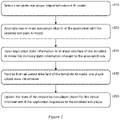
- FIG. 1 shows a flow diagram of a virtual environment development method in accordance with embodiments of the present description.
- the method enables controlling at least a first non-player object within a virtual environment of an application.
- Example objects include people, animals, monsters, robots, insects, or any object that may behave in a manner responsive to the environment, optionally and typically in a manner that is not limited to a physics simulation of response but also includes one or more internal drives or goals.
- the method comprises a first step s110 of selecting a template non-player object behavioural AI model, the AI model being previously trained separately to the application using reinforcement learning (or any suitable supervised or semi supervised learning scheme), to characterise behaviour of a respective non-player object type, from among a plurality of template AI models.
- reinforcement learning or any suitable supervised or semi supervised learning scheme
- the method may optionally comprise selecting a template non-player object behavioural AI model, the AI model being previously trained separately to the application using reinforcement learning (or any suitable supervised or semi supervised learning scheme) to characterise one or more behaviours of a respective non-player object type.
- reinforcement learning or any suitable supervised or semi supervised learning scheme
- This template non-player object behavioural AI model may then be refined or tuned for the desired application as follows.
- the training state information corresponding to state information of the application e.g. information about the environment appropriate to the template AI model - for example whether a prey animal is within a field of view and/or audible range, or the direction/distance to food, danger, another object of the same type, prey, a predator, an environmental hazard / obstruction / discontinuity, or the like).
- non-player object state information for example one or more of a change in direction and/or movement, a value corresponding arousal of fear, hunger, anger, predation, or the like, a particular action or response unique to that template such as jumping, camouflaging or the like, or any other suitable response to the input environmental state information.
- the training of the selected template AI model may be refined within a development environment comprising the relevant environmental stimuli for the template type in order to exhibit the desired / appropriate behaviour.
- duplicates of a selected template AI model may be refined slightly differently for the same non-player object, to provide different personalities when distributed within a group of such objects.
- the selected template non-player object behavioural AI model may itself be initially trained in such a manner as well, with the goals and/or behaviours for the desired application being replaced with possibly more general the goals and/or behaviours that typify the intended template type.
- the template type may be an archetype such as the people, animals, etc., mentioned previously herein, and/or may relate to an overall mode of behaviour, such as flocking or swarming, avoiding its own kind or some other environment feature, seeking a specific kind or some other environment feature, being aggressive / predatory or non-aggressive, and the like.
- a plurality of template non-player object behavioural AI models may respectively characterise the behaviour of one selected from the list consisting of:
- Non-goal driven ambient creatures may include insects or birds, that move in response to the environment or each other (e.g. flocking) but do not necessarily try to achieve anything.
- goal driven creatures are trained to increase or maximise achievement of a goal, such as eating food, finding shelter, or attacking / fleeing the player. They may also exhibit non-goal driven behaviours such a flocking.
- predator creatures and prey creatures are typically trained to respond to each other and optionally also the user, as well as having a goal of attacking prey or fleeing predators, as appropriate.
- any such goals can be unrelated to goals of a game in which the object exists.
- Such goals may optionally relate to the environmental ambience, or to a story point, but not to game progress or increasing some form of user score or completion.
- a plurality of template non-player object behavioural AI models may respectively characterise behaviour of one selected from the list consisting of:
- a calm non-goal driven crowd may provide general ambience with in a city.
- a calm goal driven crowd may help to propel a narrative by moving towards a particular location, or exiting a location, or providing or removing a resource.
- a panicked crowd may have different behaviours, such as a propensity to attack the user of they are in the way, or a desire to avoid other member of the crowd (which again may create emergent behaviours when at odds with a goal such as trying to reach a common destination or resource).
- non-player object is not limited to things that may be traditionally thought of as alive of having independent agency (such as people, creatures or robots) but may also relate to other objects whose behaviour is not, or is not solely determined by virtual physics in the environment.
- the vehicle may be a race car, a pursuit vehicle, or ambient traffic.
- a structure may be a street, house or room, where lights or a fire or other 'outputs' of the structure may activate in response to the environment, such as time of day, weather, number of occupants, and the like.
- a second step s120 comprises associating one or more non-player objects of the application with the selected template AI model.
- this model is selected to drive one or more non-player objects of the application, typically with each such object using a respective instance of the model, or optionally the model being re-used successively for each such object, or a mixture of the two approaches (for example a plurality of models running in parallel, each used multiple times to drive respective ones or a large plurality of non-player objects, such as a flock, swarm or herd of creatures).
- the method comprises a third step s130 of inputting application state information to an input interface of the template AI model for receiving state information relevant to the associated non-player object's type.
- Such inputs may relate to the background state of the environment (e.g. the type of terrain the object is on, any obstacles in its path, relevant visual or audio triggers, and the like), or the state of neighbouring objects (e.g. for flocking behaviour), or goal-based information such as the distance and/or direction to a goal.
- the background state of the environment e.g. the type of terrain the object is on, any obstacles in its path, relevant visual or audio triggers, and the like
- the state of neighbouring objects e.g. for flocking behaviour
- goal-based information such as the distance and/or direction to a goal.
- Non-limiting examples of such inputs include one or more selected from the list consisting of:
- non- limiting examples of such inputs include one or more selected from the list consisting of:
- Such inputs may relate to the preferred behaviour of the non-player object, for example as determined by the application and/or as scripted by the developer.
- Non- limiting examples of such inputs include one or more selected from the list consisting of:
- such inputs are typically respective binary or scalar values input to the AI template model during training and/or refinement and associated with target output values corresponding to responses of a non-player object of that template type to such inputs.
- the method comprises a fourth step s140 of receiving from an output interface of the template AI model non-player object state information.
- the output values of the trained or refined AI template model generated in response to the input values.
- These outputs may relate to navigation, for example as a change in position, orientation and/or speed. Similarly they may relate to situational awareness, such as a change in a level or alertness, optionally for a specific thing such as the user, a resource, or an environmental hazard. Likewise they may relate to the behaviour of the non-player object, such as a level of urgency or panic in their behaviour (which for example may be used as a weighting or multiplier by the application when translating outputs of the AI model into portrayed actions of the objects within the application).
- non-limiting examples of received non-player object state information comprise one or more selected from the list consisting of:
- 'goal attraction' may simply describe a degree of attraction to a goal (for example for the purpose of deciding between which of competing stimuli to act upon), or may be more complex based on trained context. For example attractions of the non-player object to other things in the virtual environment may be a factor; if the goal is to reach the player, but the non-player object is hungry and near food, then the goal attraction value may be reduced or negative to encourage the non-player object to eat and survive. Similarly proximity to shelter or cover from weaponry of the user may override the general goal, so that non-player objects to not suicidally attack the user.
- a proximity awareness value may indicate when a non-player object is able to become goal oriented, or detect a resource, or the like.
- the value may also act as a multiplier or weight, either within the AI model itself or as part of the calculation of a reward function during training (for example, there is no point penalising or rewarding an object for behaviour it is not supposed to exhibit until it is 'aware' of the stimulus in the environment).
- a fifth step s150 comprises updating the state of the respective non-player object for the virtual environment of the application responsive to the received non-player object state information.
- this may relate to updating the position, orientation, speed or pose of the object, and/or altering its situational awareness (which in turn may trigger predefined behavioural changes, such as abandoning a pre-set path to search for the user, or change a default sound of the object), and/or altering behavioural aspects of the object chosen to be controlled by the AI model, such as for example fear or panic.
- the application may thus use the received non-player object state information from the AI model to update the non-player object's state within the game, and optionally portray this as needed (noting that non-player objects may not currently be visible or audible in the environment, even if they are being maintained within it by the application).
- a sixth step is to optionally portray the updated non-player object (e.g. render it on screen and/or output its audio) to the user of the application.
- the AI model(s) may be managed by the application itself, or by a system OS, middleware layer, and/or helper app associated with the system OS.
- the method may optionally comprise providing an application interface between the application and a system (whether the OS or a helper app) managing one or more template AI models, with the application specifying via the application interface the required number and type of template AI models and providing application state information for input by the system to respective template AI models, and the system providing to the application via the application interface non-player object state information.
- the app or the system may also implement resource management functions; for example if there are not enough resources to run the required number of AI instances (or iterations) for the present number of non-player objects being updated (e.g. within a frame, or within a longer period such as for example a 2, 3, or 4 frame period or whatever the update period for a given type of non-player object is chosen to be, e.g. by the developer), then the system may duplicate outputs of an AI for other objects of the same type, for example as a function of proximity to an object that has have an AI model processed for it (on the basis that the most proximate non-player objects are the most likely to respond to the application state in the same way).
- resource management functions for example if there are not enough resources to run the required number of AI instances (or iterations) for the present number of non-player objects being updated (e.g. within a frame, or within a longer period such as for example a 2, 3, or 4 frame period or whatever the update period for a given type of non-player object is
- the system may also schedule non-player objects for AI model processing according to position, for example first processing every second, third or fourth object of a particular type in a spatial distribution so that if the system runs low on time or resources, the results can be efficiently duplicated to neighbouring objects (or interpolated for an object located between two objects for which AI models were run).
- a conventional equivalent device may be implemented in the form of a computer program product comprising processor implementable instructions stored on a non-transitory machine-readable medium such as a floppy disk, optical disk, hard disk, solid state disk, PROM, RAM, flash memory or any combination of these or other storage media, or realised in hardware as an ASIC (application specific integrated circuit) or an FPGA (field programmable gate array) or other configurable circuit suitable to use in adapting the conventional equivalent device.
- a computer program may be transmitted via data signals on a network such as an Ethernet, a wireless network, the Internet, or any combination of these or other networks.
- an example of suitable hardware is an entertainment system 10 such as the Sony ® PlayStation 5 ® (PS5), or a similar console or computer.
- an entertainment system 10 such as the Sony ® PlayStation 5 ® (PS5), or a similar console or computer.
- the entertainment system 10 comprises a central processor 20. This may be a single or multi core processor, for example comprising eight cores as in the PS5.
- the entertainment system also comprises a graphical processing unit or GPU 30.
- the GPU can be physically separate to the CPU, or integrated with the CPU as a system on a chip (SoC).
- the entertainment device also comprises RAM 40, and may either have separate RAM for each of the CPU and GPU, or shared RAM as in the PS5.
- the or each RAM can be physically separate, or integrated as part of an SoC.
- Further storage is provided by a disk 50, either as an external or internal hard drive, or as an external solid state drive, or an internal solid state drive.
- the entertainment device may transmit or receive data via one or more data ports 60, such as a USB port, Ethernet ® port, WiFi ® port, Bluetooth ® port or similar, as appropriate. It may also optionally receive data via an optical drive 70.
- data ports 60 such as a USB port, Ethernet ® port, WiFi ® port, Bluetooth ® port or similar, as appropriate. It may also optionally receive data via an optical drive 70.
- Interaction with the system is typically provided using one or more handheld controllers 80, such as the DualSense ® controller in the case of the PS5.
- Audio/visual outputs from the entertainment device are typically provided through one or more A/V ports 90, or through one or more of the wired or wireless data ports 60.
- An example of a device for displaying images output by the entertainment system is a head mounted display 'HMD' 802, worn by a user 800.
- Another example is a TV (not shown).
- a selection processor (such as CPU 20 and/or GPU 30) configured (for example by suitable software instruction) to select a template non-player object behavioural AI model, the AI model being previously trained separately to the application using reinforcement learning to characterise behaviour of a respective non-player object type, from among a plurality of template AI models.
- the system also comprises an association processor (again such as CPU 20 and/or GPU 30) configured (again for example by suitable software instruction) to associate one or more non-player objects of the application with the selected template AI model
- an AI model management processor (again such as CPU 20 and/or GPU 30) is configured (again for example by suitable software instruction) to input application state information to an input interface of the template AI model for receiving generic state information relevant to the associated non-player object's type; and receive from an output interface of the template AI model non-player object state information; and
- the system also comprises an update processor (again such as CPU 20 and/or GPU 30) configured (again for example by suitable software instruction) to update the state of a respective non-player object for the virtual environment of the application responsive to the received non-player object state information.
- an update processor (again such as CPU 20 and/or GPU 30) configured (again for example by suitable software instruction) to update the state of a respective non-player object for the virtual environment of the application responsive to the received non-player object state information.
- the above system may comprise the following.
- a training processor (such as CPU 20 and/or GPU 30) configured (for example by use of suitable software instruction) to provide a training virtual environment separate from the application environment.
- the system is then operable in a development mode, in which the selection processor is configured to select a template non-player object behavioural AI model, the AI model being previously trained separately to the application using reinforcement learning to characterise behaviour of a respective non-player object type. Meanwhile the association processor is again configured to associate one or more non-player objects with the selected template AI model.
- the AI model management processor is configured to input training state information to an input interface of the template AI model for receiving generic state information relevant to the associated non-player object's type, the training state information corresponding to state information of the application, receive from an output interface of the template AI model non-player object state information, compare this state against a preferred state to generate a reward value, and feed the reward value back to the respective template AI model to reinforce the preferred state, as described elsewhere herein.
- the update processor is again configured update the state of the respective non-player object for the training environment.
- refinement training and the initial training may be implement on a separate system to the system that runs the application, and so these systems may be wholly independent (although typically it is preferable to be able to switch between training or refinement and testing, in order to see how the trained models currently cause the non-player object(s) to behave).
Landscapes
- Engineering & Computer Science (AREA)
- Theoretical Computer Science (AREA)
- Multimedia (AREA)
- Physics & Mathematics (AREA)
- Software Systems (AREA)
- Data Mining & Analysis (AREA)
- Artificial Intelligence (AREA)
- Mathematical Physics (AREA)
- Computing Systems (AREA)
- Evolutionary Computation (AREA)
- General Physics & Mathematics (AREA)
- General Engineering & Computer Science (AREA)
- Human Computer Interaction (AREA)
- Biomedical Technology (AREA)
- Molecular Biology (AREA)
- General Health & Medical Sciences (AREA)
- Computational Linguistics (AREA)
- Biophysics (AREA)
- Life Sciences & Earth Sciences (AREA)
- Health & Medical Sciences (AREA)
- Computer Vision & Pattern Recognition (AREA)
- Medical Informatics (AREA)
- Management, Administration, Business Operations System, And Electronic Commerce (AREA)
- Processing Or Creating Images (AREA)
- Electrically Operated Instructional Devices (AREA)
Applications Claiming Priority (1)
| Application Number | Priority Date | Filing Date | Title |
|---|---|---|---|
| GB2110542.4A GB2609207A (en) | 2021-07-22 | 2021-07-22 | Virtual environment development method and system |
Publications (2)
| Publication Number | Publication Date |
|---|---|
| EP4122569A2 true EP4122569A2 (de) | 2023-01-25 |
| EP4122569A3 EP4122569A3 (de) | 2023-03-01 |
Family
ID=77541023
Family Applications (1)
| Application Number | Title | Priority Date | Filing Date |
|---|---|---|---|
| EP22184809.6A Pending EP4122569A3 (de) | 2021-07-22 | 2022-07-13 | Verfahren und system zur entwicklung einer virtuellen umgebung |
Country Status (3)
| Country | Link |
|---|---|
| US (1) | US12138542B2 (de) |
| EP (1) | EP4122569A3 (de) |
| GB (1) | GB2609207A (de) |
Family Cites Families (16)
| Publication number | Priority date | Publication date | Assignee | Title |
|---|---|---|---|---|
| US9174128B2 (en) * | 2012-04-26 | 2015-11-03 | Zynga Inc. | Dynamic quests in game |
| US9861894B2 (en) * | 2015-09-29 | 2018-01-09 | International Business Machines Corporation | Dynamic personalized location and contact-aware games |
| US20180314942A1 (en) * | 2017-04-19 | 2018-11-01 | AIBrain Corporation | Scalable framework for autonomous artificial intelligence characters |
| US11803764B2 (en) * | 2017-09-29 | 2023-10-31 | Sony Interactive Entertainment Inc. | Mobile and autonomous personal companion based on an artificial intelligence (AI) model for a user |
| US10839215B2 (en) * | 2018-05-21 | 2020-11-17 | Electronic Arts Inc. | Artificial intelligence for emulating human playstyles |
| US10706637B2 (en) * | 2018-11-21 | 2020-07-07 | Best Apps, Llc | Computer aided systems and methods for creating custom products |
| US10922449B2 (en) * | 2018-11-21 | 2021-02-16 | Best Apps, Llc | Computer aided systems and methods for creating custom products |
| US11679330B2 (en) * | 2018-12-18 | 2023-06-20 | Activision Publishing, Inc. | Systems and methods for generating improved non-player characters |
| US11253783B2 (en) * | 2019-01-24 | 2022-02-22 | Kabushiki Kaisha Ubitus | Method for training AI bot in computer game |
| CN110134375B (zh) * | 2019-05-14 | 2023-11-21 | 网易(杭州)网络有限公司 | 游戏角色行为的控制方法、装置及可读存储介质 |
| US12536403B2 (en) * | 2019-09-25 | 2026-01-27 | Nvidia Corporation | Player analysis using one or more neural networks |
| CN111450537B (zh) * | 2020-04-01 | 2023-04-07 | 网易(杭州)网络有限公司 | 游戏角色的模型确定方法、装置和服务器 |
| CN111632379B (zh) * | 2020-04-28 | 2022-03-22 | 腾讯科技(深圳)有限公司 | 游戏角色行为控制方法、装置、存储介质及电子设备 |
| US11554324B2 (en) * | 2020-06-25 | 2023-01-17 | Sony Interactive Entertainment LLC | Selection of video template based on computer simulation metadata |
| US11364443B2 (en) * | 2020-06-30 | 2022-06-21 | Sony Interactive Entertainment LLC | Selection of video widgets based on computer simulation metadata |
| CN112402986B (zh) * | 2020-11-19 | 2022-09-02 | 腾讯科技(深圳)有限公司 | 一种对战游戏中强化学习模型的训练方法及装置 |
-
2021
- 2021-07-22 GB GB2110542.4A patent/GB2609207A/en active Pending
-
2022
- 2022-07-13 EP EP22184809.6A patent/EP4122569A3/de active Pending
- 2022-07-19 US US17/867,896 patent/US12138542B2/en active Active
Also Published As
| Publication number | Publication date |
|---|---|
| GB202110542D0 (en) | 2021-09-08 |
| US12138542B2 (en) | 2024-11-12 |
| US20230023980A1 (en) | 2023-01-26 |
| EP4122569A3 (de) | 2023-03-01 |
| GB2609207A (en) | 2023-02-01 |
Similar Documents
| Publication | Publication Date | Title |
|---|---|---|
| Evans et al. | Cognitive control of escape behaviour | |
| Chittka | Bee cognition | |
| Blumberg | Old tricks, new dogs: ethology and interactive creatures | |
| Miklósi | Dog behaviour, evolution, and cognition | |
| US20190202054A1 (en) | Autonomously acting robot, server, and behavior control program | |
| US20080058988A1 (en) | Robots with autonomous behavior | |
| CN101241561A (zh) | 表现软件机器人的行为的设备和方法 | |
| US20220379217A1 (en) | Non-Player Character Artificial Intelligence | |
| Marchesini | The creative animal: How every animal builds its own existence | |
| Anderson | The nature of the beast: how emotions guide us | |
| US12138542B2 (en) | Virtual environment development method and system | |
| CN117707123A (zh) | 基于群智知识库的无人机仿生集群防碰撞方法 | |
| US20220343132A1 (en) | Method for controlling virtual pets, and smart projection device | |
| Strannegård et al. | Learning and decision-making in artificial animals. | |
| CN120860591A (zh) | 虚拟对象的控制方法和装置、存储介质及电子设备 | |
| Richards et al. | Evaluating the models and behaviour of 3D intelligent virtual animals in a predator-prey relationship | |
| Kim et al. | An experiment in rule-based crowd behavior for intelligent games | |
| Żmuda | Autonomous weapons of pleasure. Media archaeology of automated killing in military and gaming technologies | |
| Ochoa-Zezzatti et al. | Shipwrecked on fear: Selection of electives in school minorities in a university using cuckoo search algorithm | |
| Eccles et al. | Evolving a virtual ecosystem with genetic algorithms | |
| Kwasnicka et al. | Flocking behaviour in simple ecosystems as a result of artificial evolution | |
| JP5132058B2 (ja) | シミュレータシステム | |
| Vaughan | Evolutionary robot swarm cooperative retrieval | |
| Blumberg | D-learning: what learning in dogs tells us about building characters that learn what they ought to learn | |
| CN116920401A (zh) | 虚拟对象的控制方法、装置、设备、存储介质及程序产品 |
Legal Events
| Date | Code | Title | Description |
|---|---|---|---|
| PUAI | Public reference made under article 153(3) epc to a published international application that has entered the european phase |
Free format text: ORIGINAL CODE: 0009012 |
|
| STAA | Information on the status of an ep patent application or granted ep patent |
Free format text: STATUS: REQUEST FOR EXAMINATION WAS MADE |
|
| 17P | Request for examination filed |
Effective date: 20220730 |
|
| AK | Designated contracting states |
Kind code of ref document: A2 Designated state(s): AL AT BE BG CH CY CZ DE DK EE ES FI FR GB GR HR HU IE IS IT LI LT LU LV MC MK MT NL NO PL PT RO RS SE SI SK SM TR |
|
| REG | Reference to a national code |
Ref country code: DE Ref legal event code: R079 Free format text: PREVIOUS MAIN CLASS: A63F0013560000 Ipc: A63F0013670000 |
|
| PUAL | Search report despatched |
Free format text: ORIGINAL CODE: 0009013 |
|
| AK | Designated contracting states |
Kind code of ref document: A3 Designated state(s): AL AT BE BG CH CY CZ DE DK EE ES FI FR GB GR HR HU IE IS IT LI LT LU LV MC MK MT NL NO PL PT RO RS SE SI SK SM TR |
|
| RIC1 | Information provided on ipc code assigned before grant |
Ipc: A63F 13/58 20140101ALI20230126BHEP Ipc: A63F 13/56 20140101ALI20230126BHEP Ipc: A63F 13/67 20140101AFI20230126BHEP |
|
| STAA | Information on the status of an ep patent application or granted ep patent |
Free format text: STATUS: EXAMINATION IS IN PROGRESS |
|
| 17Q | First examination report despatched |
Effective date: 20250702 |
|
| GRAP | Despatch of communication of intention to grant a patent |
Free format text: ORIGINAL CODE: EPIDOSNIGR1 |
|
| STAA | Information on the status of an ep patent application or granted ep patent |
Free format text: STATUS: GRANT OF PATENT IS INTENDED |
|
| INTG | Intention to grant announced |
Effective date: 20260323 |