EP4122275B1 - Beschleunigung der sensormeldung in einem netzwerk mit gemeinsam genutztem zeitmultiplex-mehrfachzugriff - Google Patents
Beschleunigung der sensormeldung in einem netzwerk mit gemeinsam genutztem zeitmultiplex-mehrfachzugriff Download PDFInfo
- Publication number
- EP4122275B1 EP4122275B1 EP21722094.6A EP21722094A EP4122275B1 EP 4122275 B1 EP4122275 B1 EP 4122275B1 EP 21722094 A EP21722094 A EP 21722094A EP 4122275 B1 EP4122275 B1 EP 4122275B1
- Authority
- EP
- European Patent Office
- Prior art keywords
- sensor
- sensor device
- timeslot
- assigned
- data
- Prior art date
- Legal status (The legal status is an assumption and is not a legal conclusion. Google has not performed a legal analysis and makes no representation as to the accuracy of the status listed.)
- Active
Links
Images


Classifications
-
- H—ELECTRICITY
- H04—ELECTRIC COMMUNICATION TECHNIQUE
- H04W—WIRELESS COMMUNICATION NETWORKS
- H04W74/00—Wireless channel access
- H04W74/02—Hybrid access
-
- G—PHYSICS
- G08—SIGNALLING
- G08G—TRAFFIC CONTROL SYSTEMS
- G08G1/00—Traffic control systems for road vehicles
- G08G1/14—Traffic control systems for road vehicles indicating individual free spaces in parking areas
- G08G1/145—Traffic control systems for road vehicles indicating individual free spaces in parking areas where the indication depends on the parking areas
- G08G1/146—Traffic control systems for road vehicles indicating individual free spaces in parking areas where the indication depends on the parking areas where the parking area is a limited parking space, e.g. parking garage, restricted space
-
- H—ELECTRICITY
- H04—ELECTRIC COMMUNICATION TECHNIQUE
- H04L—TRANSMISSION OF DIGITAL INFORMATION, e.g. TELEGRAPHIC COMMUNICATION
- H04L5/00—Arrangements affording multiple use of the transmission path
- H04L5/003—Arrangements for allocating sub-channels of the transmission path
- H04L5/0037—Inter-user or inter-terminal allocation
-
- H—ELECTRICITY
- H04—ELECTRIC COMMUNICATION TECHNIQUE
- H04L—TRANSMISSION OF DIGITAL INFORMATION, e.g. TELEGRAPHIC COMMUNICATION
- H04L5/00—Arrangements affording multiple use of the transmission path
- H04L5/003—Arrangements for allocating sub-channels of the transmission path
- H04L5/0053—Allocation of signalling, i.e. of overhead other than pilot signals
- H04L5/0055—Physical resource allocation for ACK/NACK
-
- H—ELECTRICITY
- H04—ELECTRIC COMMUNICATION TECHNIQUE
- H04L—TRANSMISSION OF DIGITAL INFORMATION, e.g. TELEGRAPHIC COMMUNICATION
- H04L5/00—Arrangements affording multiple use of the transmission path
- H04L5/003—Arrangements for allocating sub-channels of the transmission path
- H04L5/0058—Allocation criteria
- H04L5/0064—Rate requirement of the data, e.g. scalable bandwidth, data priority
-
- H—ELECTRICITY
- H04—ELECTRIC COMMUNICATION TECHNIQUE
- H04W—WIRELESS COMMUNICATION NETWORKS
- H04W4/00—Services specially adapted for wireless communication networks; Facilities therefor
- H04W4/30—Services specially adapted for particular environments, situations or purposes
- H04W4/38—Services specially adapted for particular environments, situations or purposes for collecting sensor information
-
- H—ELECTRICITY
- H04—ELECTRIC COMMUNICATION TECHNIQUE
- H04W—WIRELESS COMMUNICATION NETWORKS
- H04W72/00—Local resource management
- H04W72/04—Wireless resource allocation
- H04W72/044—Wireless resource allocation based on the type of the allocated resource
- H04W72/0446—Resources in time domain, e.g. slots or frames
-
- H—ELECTRICITY
- H04—ELECTRIC COMMUNICATION TECHNIQUE
- H04W—WIRELESS COMMUNICATION NETWORKS
- H04W72/00—Local resource management
- H04W72/12—Wireless traffic scheduling
-
- H—ELECTRICITY
- H04—ELECTRIC COMMUNICATION TECHNIQUE
- H04W—WIRELESS COMMUNICATION NETWORKS
- H04W74/00—Wireless channel access
- H04W74/04—Scheduled access
-
- H—ELECTRICITY
- H04—ELECTRIC COMMUNICATION TECHNIQUE
- H04W—WIRELESS COMMUNICATION NETWORKS
- H04W84/00—Network topologies
- H04W84/18—Self-organising networks, e.g. ad-hoc networks or sensor networks
- H04W84/22—Self-organising networks, e.g. ad-hoc networks or sensor networks with access to wired networks
-
- H—ELECTRICITY
- H04—ELECTRIC COMMUNICATION TECHNIQUE
- H04W—WIRELESS COMMUNICATION NETWORKS
- H04W72/00—Local resource management
- H04W72/12—Wireless traffic scheduling
- H04W72/1263—Mapping of traffic onto schedule, e.g. scheduled allocation or multiplexing of flows
- H04W72/1268—Mapping of traffic onto schedule, e.g. scheduled allocation or multiplexing of flows of uplink data flows
-
- H—ELECTRICITY
- H04—ELECTRIC COMMUNICATION TECHNIQUE
- H04W—WIRELESS COMMUNICATION NETWORKS
- H04W84/00—Network topologies
- H04W84/18—Self-organising networks, e.g. ad-hoc networks or sensor networks
Definitions
- Sensor devices can be configured to report data, such as sensor measurements, wirelessly to a host system using a time-division multiple access (TDMA) shared-medium network.
- TDMA time-division multiple access
- each sensor device can be assigned a timeslot. When the timeslot occurs, the corresponding sensor device is permitted to transmit data while the other sensor devices are prohibited from transmitting data.
- Such an arrangement may work well with a limited number of sensor devices, for measuring time-insensitive phenomena, or both.
- a TDMA shared-medium network may not work well.
- a significant amount of time such as a minute or more, may elapse between a particular sensor device's consecutive timeslots, thus resulting in a lag time between when measurements are made by the sensor device and when the measurements are reported to a remote system.
- SEBASTIAN HANIGK "RSQ-MAC: A robust, self-organising, hybrid TDMA/OFDMA medium access protocol for vehicular, sensor, and tactical ad-hoc networks", COMMUNICATION SYSTEMS (ICCS), 2010 IEEE INTERNATIONAL CONFERENCE ON, IEEE, PISCATAWAY, NJ, USA, pages 534 - 539 describes how 802.11-based radio networks and 802.16-based mesh networks respectively provide cheap local networking functionality and high-bandwidth connectivity, and both technologies operate by creating a necessary infrastructure (access points or base stations). The document further argues that there exists a gap in existing functionality for kilometre-scale, infrastructure-less and mobile radio networks, providing robust and fair service, and reliable quality of service guarantees.
- the paper develops and analyses a medium access protocol for vehicular and tactical ad-hoc networks which is based on a self-organising hybrid TDMA/OFDMA-approach and achieves hard real-time QoS levels and includes an implementation study on a software-defined radio platform providing real-world experience.
- US-A1-2005/122231 describes a power efficient system architecture that exploits the characteristics of sensor networks in order to decrease the power consumption in the network.
- the primary characteristic of sensor networks is that the destination of all the data packets in the network is a central data collector and this central data collector, which is usually denoted as access point (AP), has unlimited transmission power and energy whereas the sensor nodes have limited battery energy and transmission power.
- AP access point
- the system uses the AP to directly synchronize and explicitly schedule the nodes' transmissions over Time Division Multiple Access (TDMA) time slots.
- TDMA Time Division Multiple Access
- STANGACIU VALENTIN ET AL "General slot stealing TDMA scheme to improve the low channel utilization factor" 2015 IEEE 9TH INTERNATIONAL SYMPOSIUM ON INTELLIGENT SIGNAL PROCESSING (WISP) PROCEEDINGS, IEEE, pages 1 - 4 , describes how time division multiple access (TDMA) schemes are intensively the main solution to provide predictability and timeliness in data communication systems requiring real-time operation.
- WISP time division multiple access
- a wireless network host system performs a TDMA channel allocation process for the wireless hybrid TDMA shared-medium network such that each sensor device of a plurality of sensor devices is assigned a different timeslot of a plurality of timeslots for data transmissions on the wireless hybrid TDMA shared-medium network.
- a grant-free transmission window is reserved within (or, not as claimed, immediately after) each timeslot of the plurality of timeslots. Any sensor device of the plurality of sensor devices is permitted to transmit data during any grant-free transmission window. Sensor data is measured by a sensor device.
- the sensor device determines that the sensor data is to be transmitted to the wireless network host system prior to a next assigned timeslot assigned to the sensor device.
- the sensor device transmits a message indicative of the sensor data and an identifier of the sensor device during a grant-free transmission window of a timeslot assigned to a different sensor device of the plurality of sensor devices.
- the sensor device determines an amount of time until the timeslot that is assigned to the sensor device.
- the sensor device determines that the amount of time until the timeslot is assigned to the sensor device exceeds a defined threshold amount of time. Transmitting the message by the sensor device is further based on determining that the amount of time until the timeslot is assigned to the sensor device exceeds the defined threshold amount of time.
- the wireless network host system may transmit, in response to receiving the message indicative of the sensor data and the identifier of the sensor device during the grant-free transmission window of the timeslot assigned to the different sensor device of the plurality of sensor devices, an acknowledgement message indicative of the message having been successfully received by the wireless network host system.
- the sensor device may determine, after a defined period of time, that no acknowledgement message indicative of the message having been successfully received by the wireless network host system has been received by the sensor device. In response to determining that no acknowledgment message has been received, the sensor device may wait a pseudo-random amount of time to retry transmission of the message.
- the sensor device may retransmit the message during a second grant-free transmission window of a second timeslot assigned to a second different sensor device of the plurality of sensor devices.
- the pseudo-random amount of time may be calculated based at least in part on the identifier of the sensor device.
- the message may use a single bit to represent the sensor data.
- Each sensor device of the plurality of sensor devices may be a parking sensor that detects whether a vehicle is present in a parking space in which the parking sensor is installed.
- Each sensor device of the plurality of sensor devices may include a magnetometer.
- a duration of each grant-free transmission window of the plurality of timeslots may be increased based on an increase in a number of sensor devices present in the plurality of sensor devices.
- a TDMA shared-medium network may result in data, such as sensor measurements, from one or more sensors being received by a host system with a significant amount of time lag.
- a parking sensor system can include a parking sensor being present in each parking space of a parking facility. If the parking facility has a large number of parking spaces, such as 1,500 parking spaces, a significant amount of time may elapse between timeslots during which a particular parking sensor is permitted to transmit. For example, even if each timeslot is only 0.05 s in duration, that could mean that each parking sensor is allotted a timeslot once every 75 seconds.
- a significant amount of delay can exist between when a parking space is determined by the sensor to be occupied or unoccupied and when a network host system receives an indication of the correct state of the parking space. This situation could result in incorrect information being passed to a motorist, such as that a particular parking space is available even though another car has recently parked there or that a particular parking space is not available, even though another vehicle recently departed from the parking space.
- sensor devices that report data using a TDMA shared-medium arrangement, such as a wireless TDMA shared-medium network.
- a wireless TDMA shared-medium network such as a wireless TDMA shared-medium network.
- many types of specialized and generic 433 MHz sensor devices may use a wireless TDMA shared-medium network for communicating with a remote host system.
- Such sensor devices can include: weather sensors, crop sensors, water sensors, home automation sensors, alarm system sensors, and hazard sensors.
- Embodiments detailed herein describe a hybrid TDMA shared-medium network in which each sensor device is assigned a timeslot. However, a portion of some or all timeslots are reserved for grant-free transmissions by any of the sensor devices. (Alternatively, embodiments herein can be understood as a time between subsequent timeslots is reserved for grant-free transmissions).
- a sensor device has a message (e.g., an urgent message) to be sent to the host system, the sensor device can transmit during any grant-free transmission window without permission.
- the urgent message may be short, such as it may only include: an identifier of the sensor device and a status update (which could be as small as a single bit).
- the parking sensor device may be programmed to classify this as urgent data.
- the sensor device may transmit its identifier and state data (e.g., a bit indicating whether a vehicle is present or not).
- Other data that is to be transmitted by the sensor device e.g., magnetometer readings, battery level measurements, signal strength measurements
- an analysis may be performed by the sensor device to determine an amount of time between when urgent data is ready to be transmitted and when the sensor device's next assigned timeslot occurs. If the amount of time does not exceed a defined threshold, rather than transmitting using a grant-free transmission window, the urgent data may be stored and sent during the sensor device's next assigned timeslot.
- the urgent message may be determined by the sensor device to not have been received by the remote host system. Since any sensor device can transmit during a grant-free transmission window, it may be possible that a collision occurred in that multiple (two or more) sensor devices attempted to transmit during the same grant-free transmission window. By multiple sensor devices transmitting at the same time, none or only some of the transmitted data may be successfully received by the remote host system. In such a situation, each sensor device may wait a pseudorandom amount of time and then attempt to retransmit the urgent message during (likely different) future grant-free transmission windows. As previously discussed, if an amount of time remaining until a next assigned timeslot for the sensor device is below a stored threshold, the sensor device may store the urgent message and send during the sensor device's assigned timeslot.
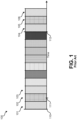
- FIG. 1 illustrates an embodiment 100 of timeslots in a time-division multiple access (TDMA) shared-medium network.
- TDMA time-division multiple access
- ten timeslots are illustrated that periodically repeat.
- timeslot 101 occurs, followed by timeslot 102, and followed by timeslot 103.
- Each of these timeslots is assigned to a different device as part of a TDMA shared-medium network.
- a first device is permitted to transmit wireless data according to a particular protocol.
- other devices that are part of the TDMA shared-medium network are prohibited from wirelessly transmitting any form of data to prevent collisions with the data being transmitted by the first device.
- timeslot 102 a second device is permitted to transmit wireless data according to the particular protocol.
- timeslot 102 other devices besides the second device are prohibited from wirelessly transmitting any form of data to prevent collisions with the data being transmitted by the second device.
- a similar pattern of one particular device being assigned and permitted to transmit during a particular timeslot is continued for other devices.
- ten devices are present which are each assigned their own timeslot.
- timeslot 104 corresponds to the same device as timeslot 101.
- Timeslot 105 corresponds to the same device as timeslot 102.
- timeslot 106 corresponds to the same wireless device as timeslot 103.
- Equation 1 Q Devices is the total number of devices and ⁇ is the duration of an individual timeslot assigned to a device.
- the first device that is assigned to timeslot 101 determines that it has data that needs to be transmitted at time 111, the first device is required to wait until timeslot 104 to transmit the data. Assuming that the duration of each timeslot is relatively short, such as in a system that only has ten devices, waiting until timeslot 104 may be tolerable, depending on how the sensor data is used by the host system. However, if individual device timeslots ( ⁇ ) are long in duration and/or there is a much larger number of devices ( Q Devices ) that are each assigned a timeslot, the amount of time elapsing between timeslot 101 and timeslot 104 may be significant and may negatively impact the overall performance of a system.
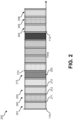
- FIG. 2 illustrates an embodiment 100 of timeslots in a hybrid TDMA shared-medium network with grant-free windows.
- Embodiment 200 represents a significant modification from the arrangement of embodiment 100.
- a portion of each timeslot has been reserved for grant-free transmissions.
- grant-free transmission window 211 has been reserved; for timeslot 202, grant-free transmission window 212 has been reserved; and for timeslot 203, grant-free transmission window 213 has been reserved, and so on.
- the timeslots assigned to individual devices periodically repeat. For example, timeslot 204 is assigned to the same device as timeslot 201, timeslot 205 is assigned to the same device as timeslot 202, and timeslot 206 is assigned to the same device as timeslot 203.
- any device operating as part of the hybrid TDMA shared-medium network is permitted to transmit without first obtaining permission from any other device or host system. Therefore, for example, assuming that ten devices are present in the system communicating using the hybrid TDMA arrangement of embodiment 200, during timeslot 201 only a first device may be permitted to transmit; however, during grant-free transmission window 211 of timeslot 201, any of the devices that communicate using the hybrid TDMA shared-medium network may transmit.
- a grant-free transmission window is illustrated as occurring at the end of each timeslot; however, in other embodiments, grant-free transmission windows may occur at the start of each timeslot or even possibly for a duration of time within timeslots.
- the network host system can transmit a definition of when grant-free transmission windows are to occur to each device communicating using the hybrid TDMA shared-medium network.
- the duration of grant-free transmission windows may represent a small percentage of the overall duration of the timeslot of which it is a part. For example, a grant-free transmission window may be less than 5%, 10%, 20%, or 30% of the duration of the entire timeslot.
- the duration of a grant-free transmission window of a timeslot may be set to be only long enough in order for the device to transmit: (1) an identifier of the device sending the grant-free transmission; and (2) a small number of bits representing data sensed by the device or a state of the device. For example, in some embodiments, a single bit may be used to represent data sensed by the device or the state of the device. In other embodiments, 100 or fewer bits may be sufficient to send a sensor measurement or other urgent data.
- the duration of each individual grant-free transmission window may be based on the minimum or near minimum amount of bits that are necessary to be transmitted in order for an identifier of the device to be transmitted along with some number of bits representing the data sensed by the device or the stated device, which may be as small as a single bit.
- the number of bits representing the identifier of the device may be based on the number of devices present on the hybrid TDMA shared-medium network. For example, at minimum, four bits may be necessary to be used for an identifier if ten devices are present on the hybrid TDMA shared-medium network. If a greater number of devices is added to the hybrid TDMA shared-medium network, the number of bits used to identify each device may need to be increased such that each device can retain a unique identifier.
- the duration of each individual grant-free transmission window may have to be increased to accommodate the transmission of a greater number of bits within the grant-free transmission window. For example, if ten devices are added to the hybrid TDMA shared-medium network of the previous example, to bring the total number of devices to 20, it may be necessary to use five bits, rather than four, such that each device can be represented with the unique identifier in binary.
- the duration of the individual grant-free transmission windows of each timeslot may need to be increased slightly to permit an additional bit to be transmitted.
- the adjustment of the duration may be performed by a network host system that coordinates assignments of the timeslots to devices. This adjustment can include increasing the overall duration of each timeslot to permit the additional data to be transmitted or can include adjusting the percentage of each timeslot assigned to grant-free transmissions, thereby decreasing the amount of the timeslot dedicated to the device assigned to the particular timeslot.
- a grant-free transmission window may only be present in some number of windows, such as every seventh window.
- one or more additional pieces of data e.g., a specific data field
- the one or more additional pieces of data may not be sent by the sensor device to the host system, thus creating room for the grant-free transmission window.
- FIG. 3 illustrates an embodiment 300 of timeslots in a hybrid TDMA shared-medium network with grant-free windows in which a collision has occurred.
- a first wireless device transmitted data (as indicated by circle 221) during grant-free transmission window 212 of timeslot 202.
- a second wireless device also transmitted data (as indicated by circle 231) during grant-free transmission window 212 of timeslot 202.
- Neither device may be aware that another device also transmitted during grant-free transmission window 212.
- each device may be expecting an acknowledgment message from the network host system (e.g., gateway 730 of FIG. 7 ).
- Each device may be listening for up to a predefined acknowledgement period of time for an acknowledgment message to be received from the network host system.
- the first device may determine that an acknowledgment message has not been received within a predefined period of time during which the acknowledgement was expected.
- the second device may determine that an acknowledgment message has not been received within the predefined period of time during which the acknowledgement was expected.
- each device may attempt to retransmit during a future grant-free transmission window of a timeslot.
- Which grant-free transmission window is used by each device may be selected individually by each device pseudorandomly. For example, a pseudorandom function may be performed based at least in part on the identifier of each device. Ideally, these pseudorandom functions will result in each device retransmitting the unacknowledged messages during different grant-free transmission windows of different timeslots.
- the pseudorandom function results in the first device waiting for time 223 and the unacknowledged message being retransmitted to the network host system during grant-free transmission window 235 at time 224.
- pseudorandom functions also result in the second device waiting for time 233 and the unacknowledged message being retransmitted to the network host system during grant-free transmission window 234. If acknowledgments are received, each device may take no further action. If one of the devices fails to receive an acknowledgment again, it may again try to retransmit the message or, if a timeslot assigned to the device is occurring within a predefined period of time, the device may wait until its assigned timeslot.
- FIG. 4 illustrates an embodiment of a method 400 for expediting sensor reporting in a hybrid TDMA shared-medium network.
- Method 400 may be performed in part by a network host system (e.g., gateway 730 of FIG. 7 ) that is in communication with or is part of an access point (AP).
- a network host system e.g., gateway 730 of FIG. 7
- AP access point
- an AP may communicate wirelessly with each device that communicates, using the hybrid TDMA shared-medium network.
- a TDMA channel allocation process may be performed.
- the TDMA channel allocation process can include the network host system assigning a timeslot to each device that is to communicate using the hybrid TDMA shared-medium network.
- These devices may be sensor devices, such as parking space sensors that reside within parking spaces and use a magnetometer to detect whether a vehicle is present within the parking space.
- a separate timeslot may be assigned to each device. Therefore, for example, if 1000 devices are to use the hybrid TDMA shared-medium network, 1000 timeslots may be assigned.
- the sensor devices that are used to perform method 400 can have one or more wireless or wired transceivers. Each transceiver can communicate using the hybrid TDMA shared-medium arrangements detailed herein. Additionally, the sensor devices can each have one or more non-transitory processor-readable mediums, one or more processors, and one or more sensor devices, such as a magnetometer and/or a time-of-flight sensor. The network host system can also have one or more transceivers that can communicate using the hybrid TDMA shared-medium arrangements detailed here. Additionally, the network host system can each have one or more non-transitory processor-readable mediums and one or more processors. The network host system can be configured to provide network configuration data to the sensor devices and modify the configuration of the hybrid TDMA shared-medium network as needed to increase efficiency and/or the number of sensor devices that can communicate via the hybrid TDMA shared-medium network.
- a grant-free transmission window may be reserved by the network host system.
- any device that communicates as part of the hybrid TDMA shared-medium network may be permitted to transmit data without being explicitly authorized to do so during that window.
- Block 420 can include the network host system transmitting an indication to each device that communicates using the hybrid TDMA shared-medium network that indicates the duration and location of where grant-free transmission windows fall within the timeslots.
- sensor devices may transmit sensor data according to the TDMA channel allocation process performed at block 410. Therefore, as part of the portion of the timeslot reserved for a particular sensor device, that particular sensor device may transmit data to a network host system.
- the data transmitted during the sensor device's assigned timeslot can include data such as: the identifier of the sensor device, a battery level of the sensor device, magnetometer measurements of the sensor device, signal strength measurements of the assigned device, a state of the device, a determined state of a parking space in which the sensor device is installed, etc. While these examples of data are focused on wireless parking sensor devices, other types of wireless sensor devices (or wireless or wired devices) in general may result in other types of data being transmitted during the assigned timeslot.
- a sensor device may measure sensor data.
- the sensor device may determine that this sensor data is in some way urgent at block 450.
- the sensor device may have one or more stored conditions that are used to evaluate sensor data to determine whether the sensor data is urgent. For example, referring to a parking space sensor, if sensor data is indicative of a vehicle having arrived or left a parking space, the sensor data may be classified as urgent. In such a situation, the actual measurements (e.g., magnetometer measurements) may not need to be transmitted in an urgent fashion, but an indication of the data, such as an indication of whether the parking space is occupied or not (e.g., a state change) may be transmitted as urgent.
- Various thresholds used to analyze data may be used by the sensor device to categorize whether the sensor data is urgent. If not urgent, the data may be stored and transmitted to the network host system during the device's assigned timeslot.
- an urgent message indicative of the sensor data may be transmitted during the next grant-free transmission window.
- the urgent message may include data that is indicative of the sensor data and the identifier of the sensor device.
- the data indicative of the sensor data may be as small as a single bit. For example, for a parking space sensor, a single bit may be used to indicate whether a vehicle is or is not present within the parking space in which the parking space sensor is installed. In other embodiments, a greater number of bits may be used to represent the sensor data.
- the urgent message may be transmitted based on the determination at block 450 that the sensor data is urgent.
- the urgent message that is transmitted as part of block 460 may be transmitted during a grant-free transmission window of a timeslot that is assigned to a different sensor device. Therefore, while the transmitting sensor device does not have permission to transmit during the timeslot in general, the sensor device can transmit during the grant-free transmission window of the timeslot, which has been reserved for any sensor device to transmit an urgent message.
- the data to be transmitted during the grant-free transmission window does not need to be classified as urgent. Rather, the sensor device may have non-urgent data available to transmit and, therefore, may transmit during a grant-free transmission window. In some embodiments, the number of retries for transmission until an acknowledgment is received may be based on the urgency level of the data.
- FIG. 5 illustrates an embodiment of a method 500 for expediting sensor reporting in a hybrid TDMA shared-medium network in which an acknowledgement has not been received.
- Method 500 may be performed in part by a network host system that is in communication with or is incorporated as part of an access point (AP).
- AP access point
- an AP may communicate wirelessly with each device that communicates using the hybrid TDMA shared-medium network.
- Method 500 may be performed as part of or following method 400.
- a sensor device may monitor for up to a predefined period of time for an acknowledgment from a network host system that an urgent message transmitted during a grant-free transmission window has been received. For example, this urgent message may have been transmitted at block 460 of method 400.
- the sensor device may store an indication of a predefined acknowledgement period of time for which the sensor device may monitor for an acknowledgment message from the network host system. If an acknowledgment is successfully received by the sensor device, the sensor device may need to take no further action because the urgent message was successfully received by the network host system. However, at block 520, an acknowledgment message may be determined to have not been received by the sensor device. Therefore, the urgent message can be assumed to have not been received by the network host system. For example, a collision with data transmitted by another sensor device during the same grant-free transmission window may have occurred.
- the sensor device may determine a pseudorandom amount of time to wait before retransmitting the urgent message.
- the pseudorandom amount of time is based on the identifier of the sensor device. As such, if multiple sensor devices initially transmitted during the same grant-free transmission window, by the pseudorandom amount of time being based on different identifiers for each sensor device, the sensor devices may likely retransmit the urgent message during different future grant-free transmission windows.
- method 500 may proceed to block 550 from block 530.
- the urgent message may be retransmitted during a future grant-free transmission window that occurs next after the pseudorandom amount of time of block 530.
- method 500 may proceed to block 540 from block 530.
- the sensor device may make a determination whether the amount of time until the next timeslot assigned to the sensor device exceeds a predefined time threshold. If it does, method 500 may then proceed to block 550. If it does not, method 500 may proceed to block 560, at which the urgent data may be stored and then sent during the sensor device's assigned timeslot. The reasoning behind this is that, if a relatively short amount of time exists until the sensor device's next assigned timeslot, there is little advantage to transmitting during a grant-free transmission window.
- method 500 may return to block 510. If acknowledgment is received, method 500 may conclude. If acknowledgment is again not received, method 500 may continue to be repeated until its acknowledgment is received or a predetermined amount of attempts to retransmit is performed.
- FIG. 6 illustrates an embodiment of a method 600 for expediting sensor reporting in a hybrid TDMA shared-medium network in which use of a grant-free transmission window is dependent on how much time remains until an assigned timeslot.
- Method 600 may be performed in part by a network host system that is in communication with or is part of an access point (AP).
- AP access point
- an AP may communicate wirelessly with each device that communicates using the hybrid TDMA shared-medium network.
- Method 600 can represent a more detailed embodiment of method 400 of FIG. 4 .
- a TDMA channel allocation process may be performed.
- the TDMA channel allocation process can include the network host system assigning a timeslot to each device that is to communicate using the hybrid TDMA shared-medium network. An indication of the timeslot may be sent to the corresponding device.
- These devices may be sensor devices, such as parking space sensor devices that reside within parking spaces and use a magnetometer to detect whether a vehicle is present within the parking space.
- a separate timeslot may be assigned to each device.
- a grant-free transmission window may be reserved by the network host system.
- any device that communicates as part of the hybrid TDMA shared-medium network may be permitted to transmit data without being explicitly authorized to do so during that window.
- Block 620 can include the network host system transmitting an indication to each device on the hybrid TDMA shared-medium network that indicates the duration and location of grant-free transmission windows within the timeslots.
- sensor devices may transmit sensor data according to the TDMA channel allocation process performed at block 410. Therefore, as part of the portion of the timeslot reserved for a particular sensor device, that particular sensor device may transmit data to a network host system.
- the data transmitted during the sensor device's assigned timeslot can include data such as: the identifier of the sensor device; a battery level of the sensor device; magnetometer measurements of the sensor device; signal strength measurements of the assigned device; a state of the device; a determined state of the parking space in which the sensor device is installed; etc. While these examples of data are focused on parking sensor devices, other types of sensor devices or devices in general may result in other types of data being transmitted during the assigned timeslot.
- the data transmitted by a sensor device during a sensor device's assigned window may include urgent data, non-urgent data, or both.
- a sensor device may measure sensor data.
- the sensor device may determine that this sensor data is in some way urgent at block 650.
- the sensor device may have one or more stored conditions that are used to evaluate sensor data to determine whether the sensor data is urgent. For example, referring to a parking space sensor, if sensor data is indicative of a vehicle having arrived or left of parking space, the sensor data may be classified as urgent. Other ways of analyzing data may be used by the sensor device to categorize whether the sensor data is urgent. If not urgent, the data may be stored and transmitted to the network host system during the device's assigned timeslot.
- the sensor device may determine an amount of time until the next timeslot that is specifically assigned to the sensor device. If the amount of time until the next timeslot assigned by the sensor device exceeds a stored predefined threshold time period, method 600 may proceed to block 670. However, if the determination at block 660 is that the amount of time until the next timeslot assigned to the sensor device does not exceed the stored predefined threshold time period, method 600 may proceed to block 680. At block 680, the urgent data may be stored and sent to the network host system during the sensor device's assigned timeslot.
- Such an arrangement may help prevent the sensor device from having to attempt to transmit during a grant-free transmission window if the sensor device's next assigned timeslot is within an amount of time that has previously been set as an acceptable amount of time to wait before the urgent data is received by the network host system.
- an urgent message indicative of the sensor data may be transmitted during the next grant-free transmission window.
- the urgent message may include data that is indicative of the sensor data and the identifier of the sensor device.
- the data indicative of the sensor data (or the state of the sensor device) may be a single bit or greater in size. For example, for a parking space sensor, a single bit may be used to indicate whether a vehicle is or is not present within the parking space in which the parking space sensor is installed. In other embodiments, a greater number of bits may be used to represent the sensor data.
- the urgent message may be transmitted based on the determination at block 650 that the sensor data is urgent and the determination of block 660.
- the urgent message that is transmitted as part of block 460 may be transmitted during a grant-free transmission window of a timeslot that is assigned to a different sensor device. Therefore, while the transmitting sensor device does not have permission to transmit during the timeslot in general, the sensor device can transmit during the grant-free transmission window of the timeslot, which has been reserved for any sensor device to transmit an urgent message.
- FIG. 7 illustrates an embodiment of a parking sensor system 700 that can use the hybrid TDMA shared-medium network arrangements detailed in relation to FIGS. 2-6 .
- Parking sensor system 700 may include: vehicle 701; parking sensors 710 (illustrated as parking sensors 710-2, 710-3, 710-4, 710-5, 710-6, and 710-7 in FIG. 7 ); gateway 730; cellular network 740 (e.g., 3G, 4G, 5G, or more advanced cellular networks); narrow-band internet of things (NB-IoT) network 742; the Internet 744; cloud-based server system 750.
- cellular network 740 e.g., 3G, 4G, 5G, or more advanced cellular networks
- NB-IoT narrow-band internet of things
- Vehicle 701 may be a car, truck, motorcycle, scooter, or any other form of vehicle that is typically parked when not in use. Vehicle 701 may be operated by a private owner or by a company as part of a vehicle fleet. Vehicle 701 may park in a defined parking space, such as a parking space 706, which is defined by parking space border lines 705 (105-1 and 705-2). Within parking space 706, parking sensor device 710-1 may be installed. In-space parking sensor device (also referred to as a "parking sensor”) 710-1 may, for example, be attached to the ground within parking space 706 such that when a vehicle, such as vehicle 701, parks in parking space 706, vehicle 701 is positioned above parking sensor device 710-1. Parking sensors 710 may each use magnetometers to detect a vehicle's presence in or absence from parking spaces.
- Parking sensors 710 may each use magnetometers to detect a vehicle's presence in or absence from parking spaces.
- Parking sensor device 710-1 may communicate wirelessly with various other components of parking sensor system 700. Parking sensor device 710-1 may communicate with gateway 730, which can function as the wireless network host. Gateway 730 may serve as a wireless network host that communicates with a plurality of parking sensors (e.g., parking sensors 710). Gateway 730 and parking sensors 710 may use a low-power wireless communication protocol to communicate.
- gateway 730 can function as the wireless network host. Gateway 730 may serve as a wireless network host that communicates with a plurality of parking sensors (e.g., parking sensors 710). Gateway 730 and parking sensors 710 may use a low-power wireless communication protocol to communicate.
- Data from parking sensors 710 may be communicated to cloud-based server system 750 via Internet 744.
- Gateway 730 may use cellular network 740 to communicate with cloud-based server system 750 via Internet 744.
- gateway 730 may use NB-IoT network 742 to communicate with cloud-based server system 750.
- NB-IoT network 742 may allow for a small amount of data to be transmitted over relatively large distances.
- NB-IoT is classified as a low power wide area network (LoPWAN).
- NB-IoT network 742 may limit the bandwidth to a single narrow-band of 200 kHz.
- Data transfer rates may be limited to 70 Mbit/s or slower for downlink communications to devices and 5 Mbit/s or faster for uplink communications from the devices. Further detail regarding cloud-based server system 750 is provided in relation to FIG. 4 . In other embodiments, a different type of wireless network may be used.
- hybrid TDMA shared-medium network embodiments can be applied to other types of sensor devices or, more generally, other types of devices.
- configurations may be described as a process which is depicted as a flow diagram or block diagram. Although each may describe the operations as a sequential process, many of the operations can be performed in parallel or concurrently. In addition, the order of the operations may be rearranged. A process may have additional steps not included in the figure.
- examples of the methods may be implemented by hardware, software, firmware, middleware, microcode, hardware description languages, or any combination thereof. When implemented in software, firmware, middleware, or microcode, the program code or code segments to perform the necessary tasks may be stored in a non-transitory computer-readable medium such as a storage medium. Processors may perform the described tasks.
- the above elements may be components of a larger system, wherein other rules may take precedence over or otherwise modify the application of the invention. Also, a number of steps may be undertaken before, during, or after the above elements are considered.
Landscapes
- Engineering & Computer Science (AREA)
- Signal Processing (AREA)
- Computer Networks & Wireless Communication (AREA)
- Physics & Mathematics (AREA)
- General Physics & Mathematics (AREA)
- Mobile Radio Communication Systems (AREA)
Claims (14)
- Verfahren zum Beschleunigen einer Sensormeldung in einem drahtlosen hybriden Shared-Medium-Netzwerk mit Zeitmultiplex-Mehrfachzugriff, TDMA, wobei das Verfahren umfasst:Durchführen (410, 610) eines TDMA-Kanalzuweisungsprozesses für das drahtlose hybride Shared-Medium-Netzwerk mit TDMA durch ein Host-System (730) des drahtlosen Netzwerks, so dass jeder Sensorvorrichtung (710) von einer Mehrzahl von Sensorvorrichtungen (710) ein anderer Zeitschlitz von einer Mehrzahl von Zeitschlitzen zum Senden von Daten über das drahtlose hybride Shared-Medium-Netzwerk mit TDMA zugewiesen wird;Reservieren (420, 620) eines genehmigungsfreien Übertragungsfensters innerhalb jedes Zeitschlitzes von der Mehrzahl von Zeitschlitzen, wobei einer beliebigen Sensorvorrichtung (710) von der Mehrzahl von Sensorvorrichtungen (710) gestattet wird, während eines beliebigen genehmigungsfreien Übertragungsfensters Daten zu senden;Messen (440, 640) von Sensordaten durch eine Sensorvorrichtung (710) von der Mehrzahl von Sensorvorrichtungen (710);Bestimmen (450, 650), dass die Sensordaten vor einem nächsten zugewiesenen Zeitschlitz, welcher der Sensorvorrichtung (710) zugewiesen wird, an das Host-System des drahtlosen Netzwerks gesendet werden sollen, durch die Sensorvorrichtung (710);Bestimmen der Länge einer Zeit, bis der Sensorvorrichtung (710) der Zeitschlitz zugewiesen wird, durch die Sensorvorrichtung (710); undBestimmen (540, 660), dass die Länge der Zeit, bis der Sensorvorrichtung (710) der Zeitschlitz zugewiesen wird, einen definierten Schwellenwert für die Länge der Zeit überschreitet, durch die Sensorvorrichtung (710);Senden (460, 670) einer die Sensordaten angebenden Mitteilung und einer Kennung der Sensorvorrichtung (710) durch die Sensorvorrichtung (710) während eines genehmigungsfreien Übertragungsfensters eines Zeitschlitzes, der einer anderen Sensorvorrichtung (710) von der Mehrzahl von Sensorvorrichtungen (710) zugewiesen wurde, als Reaktion darauf, dass die Sensorvorrichtung (710) bestimmt, dass die Sensordaten gesendet werden sollen, und ferner zumindest zum Teil auf Basis der Bestimmung, dass die Länge der Zeit, bis der Sensorvorrichtung (710) der Zeitschlitz zugewiesen wird, den definierten Schwellenwert für die Länge der Zeit überschreitet.
- Verfahren zum Beschleunigen einer Sensormeldung in dem drahtlosen hybriden Shared-Medium-Netzwerk mit TDMA nach Anspruch 1, wobei das Verfahren ferner umfasst:
als Reaktion auf den Empfang der die Sensordaten angebenden Mitteilung und der Kennung der Sensorvorrichtung (710) während des genehmigungsfreien Übertragungsfenster des Zeitschlitzes, welcher der anderen Sensorvorrichtung (710) von der Mehrzahl von Sensorvorrichtungen (710) zugewiesen wurde: Senden einer Bestätigungsmitteilung, die angibt, dass die Mitteilung erfolgreich an dem Host-System des drahtlosen Netzwerks empfangen wurde, durch das Host-System des drahtlosen Netzwerks. - Verfahren zum Beschleunigen einer Sensormeldung in dem drahtlosen hybriden Shared-Medium-Netzwerk mit TDMA nach Anspruch 1, wobei das Verfahren ferner umfasst:nach einer definierten Zeitspanne: Bestimmen, dass an der Sensorvorrichtung (710) keine Bestätigungsmitteilung empfangen wurde, die angibt, dass die Mitteilung erfolgreich an dem Host-System des drahtlosen Netzwerks empfangen wurde, durch die Sensorvorrichtung (710);als Reaktion auf die Bestimmung, dass keine Bestätigungsmitteilung empfangen wurde: Abwarten einer pseudo-zufällig langen Zeit bis zu einem erneuten Versuch, die Mitteilung zu senden, undnach dem Abwarten der pseudo-zufällig langen Zeit: Senden der Mitteilung durch die Sensorvorrichtung (710) während eines zweiten genehmigungsfreien Übertragungsfensters eines zweiten Zeitschlitzes, der einer zweiten anderen Sensorvorrichtung (710) von der Mehrzahl von Sensorvorrichtungen (710) zugewiesen wurde.
- Verfahren zum Beschleunigen einer Sensormeldung in dem drahtlosen hybriden Shared-Medium-Netzwerk mit TDMA nach Anspruch 3, ferner umfassend:
Berechnen der pseudo-zufällig langen Zeit zumindest zum Teil auf Basis der Kennung der Sensorvorrichtung (710). - Verfahren zum Beschleunigen einer Sensormeldung in dem drahtlosen hybriden Shared-Medium-Netzwerk mit TDMA nach Anspruch 1, wobei die Mitteilung ein einzelnes Bit nutzt, um die Sensordaten darzustellen.
- Verfahren zum Beschleunigen einer Sensormeldung in dem drahtlosen hybriden Shared-Medium-Netzwerk mit TDMA nach Anspruch 1, wobei jede Sensorvorrichtung (710) von der Mehrzahl von Sensorvorrichtungen (710) ein Parksensor (710) ist, der detektiert, ob auf einem Stellplatz (706), an dem der Parksensor (710) installiert ist, ein Fahrzeug (701) steht.
- Verfahren zum Beschleunigen einer Sensormeldung in dem drahtlosen hybriden Shared-Medium-Netzwerk mit TDMA nach Anspruch 6, wobei jede Sensorvorrichtung (710) von der Mehrzahl von Sensorvorrichtungen (710) ein Magnetometer umfasst.
- Verfahren zum Beschleunigen einer Sensormeldung in dem drahtlosen hybriden Shared-Medium-Netzwerk mit TDMA nach Anspruch 1, ferner umfassend:
Vergrößern der Dauer jedes genehmigungsfreien Übertragungsfensters der Mehrzahl von Zeitschlitzen auf Basis einer Vergrößerung einer Zahl von Sensorvorrichtungen (710), die in der Mehrzahl von Sensorvorrichtungen (710) vorhanden sind. - Hybrides Shared-Medium-Netzwerksystem mit Zeitmultiplex-Mehrfachzugriff, TDMA, umfassend:ein Netzwerk-Host-System, das dazu eingerichtet ist, mit einer Mehrzahl von Sensorvorrichtungen (710) zu kommunizieren, wobei das Netzwerk-Host-System dazu eingerichtet ist,einen TDMA-Kanalzuweisungsprozesses für das hybride Shared-Medium-Netzwerk mit TDMA durchzuführen, so dass jeder Sensorvorrichtung (710) von einer Mehrzahl von Sensorvorrichtungen (710) ein anderer Zeitschlitz von einer Mehrzahl von Zeitschlitzen zum Senden von Daten über das hybride Shared-Medium-Netzwerk mit TDMA zugewiesen wird; undinnerhalb jedes Zeitschlitzes von der Mehrzahl von Zeitschlitzen ein genehmigungsfreies Übertragungsfenster zu reservieren, wobei jeder Sensorvorrichtung (710) von der Mehrzahl von Sensorvorrichtungen (710) gestattet wird, während eines beliebigen genehmigungsfreien Übertragungsfensters Daten zu senden; unddie Mehrzahl von Sensorvorrichtungen (710), wobei eine Sensorvorrichtung (710) von der Mehrzahl von Sensorvorrichtungen (710):dazu eingerichtet ist, während eines Zeitschlitzes von der Mehrzahl von der Sensorvorrichtung (710) zugewiesenen Zeitschlitzen Sensordaten an das Netzwerk-Host-System zu senden; Sensordaten zu messen;zu bestimmen, dass die Sensordaten vor einem nächsten zugewiesenen Zeitschlitz, welcher der Sensorvorrichtung (710) zugewiesen wird, an das Netzwerk-Host-System gesendet werden sollen;eine Länge der Zeit, bis der Sensorvorrichtung (710) der Zeitschlitz zugewiesen wird, zu bestimmen; undzu bestimmen, dass die Länge der Zeit, bis der Sensorvorrichtung (710) der Zeitschlitz zugewiesen wird, einen definierten Schwellenwert für die Länge der Zeit überschreitet; undals Reaktion darauf, dass die Sensorvorrichtung (710) bestimmt, dass die Sensordaten vor einem nächsten zugewiesenen Zeitschlitz, welcher der Sensorvorrichtung (710) zugewiesen wird, an das Netzwerk-Host-System gesendet werden sollen, und ferner zumindest zum Teil auf Basis der Bestimmung, dass die Länge der Zeit, bis der Sensorvorrichtung (710) der Zeitschlitz zugewiesen wird, den definierten Schwellenwert für die Länge der Zeit überschreitet: Senden einer die Sensordaten angebenden Mitteilung und einer Kennung der Sensorvorrichtung (710) während eines genehmigungsfreien Übertragungsfensters eines Zeitschlitzes, der einer anderen Sensorvorrichtung (710) von der Mehrzahl von Sensorvorrichtungen (710) zugewiesen wurde.
- Hybrides Shared-Medium-Netzwerksystem mit TDMA nach Anspruch 9, wobei das Netzwerk-Host-System ferner dazu eingerichtet ist,
als Reaktion auf den Empfang der die Sensordaten angebenden Mitteilung und der Kennung der Sensorvorrichtung (710) während des genehmigungsfreien Übertragungsfenster des Zeitschlitzes, welcher der anderen Sensorvorrichtung (710) von der Mehrzahl von Sensorvorrichtungen (710) zugewiesen wurde, eine Bestätigungsmitteilung zu senden, die angibt, dass die Mitteilung erfolgreich an dem Netzwerk-Host-System empfangen wurde. - Hybrides Shared-Medium-Netzwerksystem mit TDMA nach Anspruch 9, wobei die Sensorvorrichtung (710) ferner dazu eingerichtet ist,nach einer definierten Zeitspanne zu bestimmen, dass keine Bestätigungsmitteilung, die angibt, dass die Mitteilung erfolgreich an dem Netzwerk-Host-System empfangen wurde, an der Sensorvorrichtung (710) empfangen wurde;als Reaktion auf die Bestimmung, dass keine Bestätigungsmitteilung empfangen wurde, eine pseudo-zufällig lange Zeit abzuwarten; undnach dem Abwarten der pseudo-zufällig langen Zeit die Mitteilung während eines zweiten genehmigungsfreien Übertragungsfensters eines zweiten Zeitschlitzes, der einer zweiten anderen Sensorvorrichtung (710) von der Mehrzahl von Sensorvorrichtungen (710) zugewiesen wurde, durch die Sensorvorrichtung (710) erneut zu senden.
- Hybrides Shared-Medium-Netzwerksystem mit TDMA nach Anspruch 11, wobei die Sensorvorrichtung (710) dazu eingerichtet ist, die pseudo-zufällig lange Zeit zumindest zum Teil auf Basis der Kennung der Sensorvorrichtung (710) zu berechnen.
- Hybrides Shared-Medium-Netzwerksystem mit TDMA nach Anspruch 9, wobei jede Sensorvorrichtung (710) von der Mehrzahl von Sensorvorrichtungen (710) umfasst: einen drahtlosen Empfänger, der verwendet wird, um über das hybride Shared-Medium-Netzwerk mit TDMA zu kommunizieren, einen oder mehrere Prozessoren, ein oder mehrere nicht-flüchtige, prozessorlesbare Medien und einen oder mehrere Sensoren.
- Hybrides Shared-Medium-Netzwerksystem mit TDMA nach Anspruch 13, wobei jede Sensorvorrichtung (710) von der Mehrzahl von Sensorvorrichtungen (710) ein Parksensor (710) ist, der detektiert, ob auf einem Stellplatz (706), an dem der Parksensor (710) installiert ist, ein Fahrzeug (701) steht.
Applications Claiming Priority (3)
| Application Number | Priority Date | Filing Date | Title |
|---|---|---|---|
| US202063009753P | 2020-04-14 | 2020-04-14 | |
| US17/211,654 US11638299B2 (en) | 2020-04-14 | 2021-03-24 | Expediting sensor reporting in a time division multiple access shared-medium network |
| PCT/US2021/027231 WO2021211684A1 (en) | 2020-04-14 | 2021-04-14 | Expediting sensor reporting in a time division multiple access shared-medium network |
Publications (2)
| Publication Number | Publication Date |
|---|---|
| EP4122275A1 EP4122275A1 (de) | 2023-01-25 |
| EP4122275B1 true EP4122275B1 (de) | 2025-03-12 |
Family
ID=78006731
Family Applications (1)
| Application Number | Title | Priority Date | Filing Date |
|---|---|---|---|
| EP21722094.6A Active EP4122275B1 (de) | 2020-04-14 | 2021-04-14 | Beschleunigung der sensormeldung in einem netzwerk mit gemeinsam genutztem zeitmultiplex-mehrfachzugriff |
Country Status (3)
| Country | Link |
|---|---|
| US (1) | US11638299B2 (de) |
| EP (1) | EP4122275B1 (de) |
| WO (1) | WO2021211684A1 (de) |
Families Citing this family (2)
| Publication number | Priority date | Publication date | Assignee | Title |
|---|---|---|---|---|
| CN114125751A (zh) * | 2021-11-03 | 2022-03-01 | 中盈优创资讯科技有限公司 | 一种电力物联网传感器上报周期的排程方法及装置 |
| US20240365378A1 (en) * | 2023-04-28 | 2024-10-31 | Honeywell International Inc. | Network supporting tdma and csma based devices |
Family Cites Families (5)
| Publication number | Priority date | Publication date | Assignee | Title |
|---|---|---|---|---|
| US7738413B2 (en) | 2003-12-08 | 2010-06-15 | The Regents Of The University Of California | Minimizing power consumption in a wireless system for a sensor networks using time slots for nodes |
| CA3001385C (en) * | 2014-10-15 | 2023-03-07 | Weihua ZHUANG | Method, system and apparatus for enabling vehicular communications |
| US10333678B2 (en) * | 2015-05-29 | 2019-06-25 | Huawei Technologies Co., Ltd. | Systems and methods of adaptive frame structure for time division duplex |
| US10104454B2 (en) * | 2015-10-05 | 2018-10-16 | Parkifi, Inc. | Parking data aggregation and distribution |
| US10187183B2 (en) * | 2016-07-29 | 2019-01-22 | Huawei Technologies Co., Ltd. | System and method for retransmission of grant-free traffic |
-
2021
- 2021-03-24 US US17/211,654 patent/US11638299B2/en active Active
- 2021-04-14 EP EP21722094.6A patent/EP4122275B1/de active Active
- 2021-04-14 WO PCT/US2021/027231 patent/WO2021211684A1/en not_active Ceased
Also Published As
| Publication number | Publication date |
|---|---|
| EP4122275A1 (de) | 2023-01-25 |
| US11638299B2 (en) | 2023-04-25 |
| WO2021211684A1 (en) | 2021-10-21 |
| US20210321453A1 (en) | 2021-10-14 |
Similar Documents
| Publication | Publication Date | Title |
|---|---|---|
| EP4221021B1 (de) | Verfahren, vorrichtung und system zur übertragung von feedbackinformationen zwischen internet-der-fahrzeuge-vorrichtungen | |
| US11690049B2 (en) | Method and apparatus for selecting resources in V2X communications | |
| CN104039016B (zh) | 业务数据的传输处理、传输方法及装置 | |
| US20210219320A1 (en) | Multi-Level Indicator Of Radio Resource Status For Intended D2D Transmission | |
| JP5043954B2 (ja) | チャネル品質パラメータが所定の閾値未満に低下したときに別のアップリンクで基地局と通信する移動局 | |
| US9930693B2 (en) | Wireless network, access point, and terminal | |
| EP3911091A1 (de) | Übertragung von indikatoren von ressourcenkonflikte für gerät-zu-gerät mobilkommunikationen | |
| EP2493129A2 (de) | Verfahren zur zuweisung von gruppenadressen in einem wlan, verfahren zur übertragung von antwortanfragerahmen und antwortrahmen an endgeräte sowie datenübertragungsverfahren mit derselben gruppenadresse | |
| WO2019148489A1 (zh) | 一种资源预留方法及装置、计算机存储介质 | |
| KR101176028B1 (ko) | 무선 랜 시스템 및 그 통신 방법 | |
| CN111492708A (zh) | 用户设备及其无线通信方法 | |
| US12022514B2 (en) | Early backoff termination for longest-waiting users in 5G/6G messaging | |
| CN113302882B (zh) | 通信方法和通信设备 | |
| US20040228311A1 (en) | Communication system, communication apparatus, communication method, and program | |
| US20170150492A1 (en) | Wireless communication system, access point, and wireless device | |
| CN104025123A (zh) | 无线标签装置、无线通信系统和重发送控制方法 | |
| CN108235279A (zh) | 组织通信的方法、移动无线电网络用户站和管理单元 | |
| WO2016184219A1 (zh) | 一种非授权频谱的共享方法及装置 | |
| EP4224969A1 (de) | Kommunikationsverfahren und -vorrichtung | |
| US11638299B2 (en) | Expediting sensor reporting in a time division multiple access shared-medium network | |
| CN107682930A (zh) | 一种资源选择方法及装置 | |
| EP4216631B1 (de) | Kommunikationsverfahren und kommunikationsvorrichtung | |
| KR20240121334A (ko) | 다중 비인가 반송파에 대한 사이드링크 통신 | |
| CN103379549B (zh) | 一种无线网络中的数据传输方法、系统及装置 | |
| Khandish et al. | An efficient backoff scheme in wireless sensor networks |
Legal Events
| Date | Code | Title | Description |
|---|---|---|---|
| STAA | Information on the status of an ep patent application or granted ep patent |
Free format text: STATUS: UNKNOWN |
|
| STAA | Information on the status of an ep patent application or granted ep patent |
Free format text: STATUS: THE INTERNATIONAL PUBLICATION HAS BEEN MADE |
|
| PUAI | Public reference made under article 153(3) epc to a published international application that has entered the european phase |
Free format text: ORIGINAL CODE: 0009012 |
|
| STAA | Information on the status of an ep patent application or granted ep patent |
Free format text: STATUS: REQUEST FOR EXAMINATION WAS MADE |
|
| 17P | Request for examination filed |
Effective date: 20221020 |
|
| AK | Designated contracting states |
Kind code of ref document: A1 Designated state(s): AL AT BE BG CH CY CZ DE DK EE ES FI FR GB GR HR HU IE IS IT LI LT LU LV MC MK MT NL NO PL PT RO RS SE SI SK SM TR |
|
| P01 | Opt-out of the competence of the unified patent court (upc) registered |
Effective date: 20230530 |
|
| DAV | Request for validation of the european patent (deleted) | ||
| DAX | Request for extension of the european patent (deleted) | ||
| GRAP | Despatch of communication of intention to grant a patent |
Free format text: ORIGINAL CODE: EPIDOSNIGR1 |
|
| STAA | Information on the status of an ep patent application or granted ep patent |
Free format text: STATUS: GRANT OF PATENT IS INTENDED |
|
| INTG | Intention to grant announced |
Effective date: 20241119 |
|
| RIC1 | Information provided on ipc code assigned before grant |
Ipc: H04W 84/18 20090101ALN20241108BHEP Ipc: H04W 4/38 20180101ALN20241108BHEP Ipc: H04W 72/1268 20230101ALN20241108BHEP Ipc: H04W 72/0446 20230101ALN20241108BHEP Ipc: H04W 74/04 20090101ALI20241108BHEP Ipc: H04L 5/00 20060101ALI20241108BHEP Ipc: G08G 1/14 20060101ALI20241108BHEP Ipc: H04W 84/22 20090101ALI20241108BHEP Ipc: H04W 74/02 20090101AFI20241108BHEP |
|
| GRAS | Grant fee paid |
Free format text: ORIGINAL CODE: EPIDOSNIGR3 |
|
| GRAA | (expected) grant |
Free format text: ORIGINAL CODE: 0009210 |
|
| STAA | Information on the status of an ep patent application or granted ep patent |
Free format text: STATUS: THE PATENT HAS BEEN GRANTED |
|
| AK | Designated contracting states |
Kind code of ref document: B1 Designated state(s): AL AT BE BG CH CY CZ DE DK EE ES FI FR GB GR HR HU IE IS IT LI LT LU LV MC MK MT NL NO PL PT RO RS SE SI SK SM TR |
|
| REG | Reference to a national code |
Ref country code: GB Ref legal event code: FG4D |
|
| REG | Reference to a national code |
Ref country code: CH Ref legal event code: EP |
|
| REG | Reference to a national code |
Ref country code: DE Ref legal event code: R096 Ref document number: 602021027501 Country of ref document: DE |
|
| REG | Reference to a national code |
Ref country code: IE Ref legal event code: FG4D |
|
| PG25 | Lapsed in a contracting state [announced via postgrant information from national office to epo] |
Ref country code: RS Free format text: LAPSE BECAUSE OF FAILURE TO SUBMIT A TRANSLATION OF THE DESCRIPTION OR TO PAY THE FEE WITHIN THE PRESCRIBED TIME-LIMIT Effective date: 20250612 |
|
| PG25 | Lapsed in a contracting state [announced via postgrant information from national office to epo] |
Ref country code: FI Free format text: LAPSE BECAUSE OF FAILURE TO SUBMIT A TRANSLATION OF THE DESCRIPTION OR TO PAY THE FEE WITHIN THE PRESCRIBED TIME-LIMIT Effective date: 20250312 |
|
| PGFP | Annual fee paid to national office [announced via postgrant information from national office to epo] |
Ref country code: DE Payment date: 20250422 Year of fee payment: 5 |
|
| PG25 | Lapsed in a contracting state [announced via postgrant information from national office to epo] |
Ref country code: ES Free format text: LAPSE BECAUSE OF FAILURE TO SUBMIT A TRANSLATION OF THE DESCRIPTION OR TO PAY THE FEE WITHIN THE PRESCRIBED TIME-LIMIT Effective date: 20250312 |
|
| REG | Reference to a national code |
Ref country code: LT Ref legal event code: MG9D |
|
| PG25 | Lapsed in a contracting state [announced via postgrant information from national office to epo] |
Ref country code: NO Free format text: LAPSE BECAUSE OF FAILURE TO SUBMIT A TRANSLATION OF THE DESCRIPTION OR TO PAY THE FEE WITHIN THE PRESCRIBED TIME-LIMIT Effective date: 20250612 |
|
| PG25 | Lapsed in a contracting state [announced via postgrant information from national office to epo] |
Ref country code: HR Free format text: LAPSE BECAUSE OF FAILURE TO SUBMIT A TRANSLATION OF THE DESCRIPTION OR TO PAY THE FEE WITHIN THE PRESCRIBED TIME-LIMIT Effective date: 20250312 |
|
| REG | Reference to a national code |
Ref country code: NL Ref legal event code: MP Effective date: 20250312 |
|
| PG25 | Lapsed in a contracting state [announced via postgrant information from national office to epo] |
Ref country code: LV Free format text: LAPSE BECAUSE OF FAILURE TO SUBMIT A TRANSLATION OF THE DESCRIPTION OR TO PAY THE FEE WITHIN THE PRESCRIBED TIME-LIMIT Effective date: 20250312 |
|
| PG25 | Lapsed in a contracting state [announced via postgrant information from national office to epo] |
Ref country code: GR Free format text: LAPSE BECAUSE OF FAILURE TO SUBMIT A TRANSLATION OF THE DESCRIPTION OR TO PAY THE FEE WITHIN THE PRESCRIBED TIME-LIMIT Effective date: 20250613 Ref country code: BG Free format text: LAPSE BECAUSE OF FAILURE TO SUBMIT A TRANSLATION OF THE DESCRIPTION OR TO PAY THE FEE WITHIN THE PRESCRIBED TIME-LIMIT Effective date: 20250312 |
|
| REG | Reference to a national code |
Ref country code: AT Ref legal event code: MK05 Ref document number: 1776079 Country of ref document: AT Kind code of ref document: T Effective date: 20250312 |
|
| PG25 | Lapsed in a contracting state [announced via postgrant information from national office to epo] |
Ref country code: NL Free format text: LAPSE BECAUSE OF FAILURE TO SUBMIT A TRANSLATION OF THE DESCRIPTION OR TO PAY THE FEE WITHIN THE PRESCRIBED TIME-LIMIT Effective date: 20250312 |
|
| PG25 | Lapsed in a contracting state [announced via postgrant information from national office to epo] |
Ref country code: SE Free format text: LAPSE BECAUSE OF FAILURE TO SUBMIT A TRANSLATION OF THE DESCRIPTION OR TO PAY THE FEE WITHIN THE PRESCRIBED TIME-LIMIT Effective date: 20250312 |
|
| PG25 | Lapsed in a contracting state [announced via postgrant information from national office to epo] |
Ref country code: SM Free format text: LAPSE BECAUSE OF FAILURE TO SUBMIT A TRANSLATION OF THE DESCRIPTION OR TO PAY THE FEE WITHIN THE PRESCRIBED TIME-LIMIT Effective date: 20250312 |
|
| PG25 | Lapsed in a contracting state [announced via postgrant information from national office to epo] |
Ref country code: PT Free format text: LAPSE BECAUSE OF FAILURE TO SUBMIT A TRANSLATION OF THE DESCRIPTION OR TO PAY THE FEE WITHIN THE PRESCRIBED TIME-LIMIT Effective date: 20250714 |
|
| PG25 | Lapsed in a contracting state [announced via postgrant information from national office to epo] |
Ref country code: IT Free format text: LAPSE BECAUSE OF FAILURE TO SUBMIT A TRANSLATION OF THE DESCRIPTION OR TO PAY THE FEE WITHIN THE PRESCRIBED TIME-LIMIT Effective date: 20250312 Ref country code: PL Free format text: LAPSE BECAUSE OF FAILURE TO SUBMIT A TRANSLATION OF THE DESCRIPTION OR TO PAY THE FEE WITHIN THE PRESCRIBED TIME-LIMIT Effective date: 20250312 |
|
| PG25 | Lapsed in a contracting state [announced via postgrant information from national office to epo] |
Ref country code: AT Free format text: LAPSE BECAUSE OF FAILURE TO SUBMIT A TRANSLATION OF THE DESCRIPTION OR TO PAY THE FEE WITHIN THE PRESCRIBED TIME-LIMIT Effective date: 20250312 |
|
| PG25 | Lapsed in a contracting state [announced via postgrant information from national office to epo] |
Ref country code: CZ Free format text: LAPSE BECAUSE OF FAILURE TO SUBMIT A TRANSLATION OF THE DESCRIPTION OR TO PAY THE FEE WITHIN THE PRESCRIBED TIME-LIMIT Effective date: 20250312 Ref country code: EE Free format text: LAPSE BECAUSE OF FAILURE TO SUBMIT A TRANSLATION OF THE DESCRIPTION OR TO PAY THE FEE WITHIN THE PRESCRIBED TIME-LIMIT Effective date: 20250312 |
|
| PG25 | Lapsed in a contracting state [announced via postgrant information from national office to epo] |
Ref country code: RO Free format text: LAPSE BECAUSE OF FAILURE TO SUBMIT A TRANSLATION OF THE DESCRIPTION OR TO PAY THE FEE WITHIN THE PRESCRIBED TIME-LIMIT Effective date: 20250312 |
|
| PG25 | Lapsed in a contracting state [announced via postgrant information from national office to epo] |
Ref country code: SK Free format text: LAPSE BECAUSE OF FAILURE TO SUBMIT A TRANSLATION OF THE DESCRIPTION OR TO PAY THE FEE WITHIN THE PRESCRIBED TIME-LIMIT Effective date: 20250312 |
|
| PG25 | Lapsed in a contracting state [announced via postgrant information from national office to epo] |
Ref country code: IS Free format text: LAPSE BECAUSE OF FAILURE TO SUBMIT A TRANSLATION OF THE DESCRIPTION OR TO PAY THE FEE WITHIN THE PRESCRIBED TIME-LIMIT Effective date: 20250712 |
|
| REG | Reference to a national code |
Ref country code: CH Ref legal event code: H13 Free format text: ST27 STATUS EVENT CODE: U-0-0-H10-H13 (AS PROVIDED BY THE NATIONAL OFFICE) Effective date: 20251125 |
|
| PG25 | Lapsed in a contracting state [announced via postgrant information from national office to epo] |
Ref country code: LU Free format text: LAPSE BECAUSE OF NON-PAYMENT OF DUE FEES Effective date: 20250414 |
|
| REG | Reference to a national code |
Ref country code: DE Ref legal event code: R097 Ref document number: 602021027501 Country of ref document: DE |
|
| PG25 | Lapsed in a contracting state [announced via postgrant information from national office to epo] |
Ref country code: MC Free format text: LAPSE BECAUSE OF FAILURE TO SUBMIT A TRANSLATION OF THE DESCRIPTION OR TO PAY THE FEE WITHIN THE PRESCRIBED TIME-LIMIT Effective date: 20250312 |
|
| REG | Reference to a national code |
Ref country code: BE Ref legal event code: MM Effective date: 20250430 |
|
| PG25 | Lapsed in a contracting state [announced via postgrant information from national office to epo] |
Ref country code: DK Free format text: LAPSE BECAUSE OF FAILURE TO SUBMIT A TRANSLATION OF THE DESCRIPTION OR TO PAY THE FEE WITHIN THE PRESCRIBED TIME-LIMIT Effective date: 20250312 |
|
| PG25 | Lapsed in a contracting state [announced via postgrant information from national office to epo] |
Ref country code: BE Free format text: LAPSE BECAUSE OF NON-PAYMENT OF DUE FEES Effective date: 20250430 |
|
| PLBE | No opposition filed within time limit |
Free format text: ORIGINAL CODE: 0009261 |
|
| STAA | Information on the status of an ep patent application or granted ep patent |
Free format text: STATUS: NO OPPOSITION FILED WITHIN TIME LIMIT |
|
| PG25 | Lapsed in a contracting state [announced via postgrant information from national office to epo] |
Ref country code: CH Free format text: LAPSE BECAUSE OF NON-PAYMENT OF DUE FEES Effective date: 20250430 |
|
| REG | Reference to a national code |
Ref country code: CH Ref legal event code: L10 Free format text: ST27 STATUS EVENT CODE: U-0-0-L10-L00 (AS PROVIDED BY THE NATIONAL OFFICE) Effective date: 20260121 |
|
| REG | Reference to a national code |
Ref country code: DE Ref legal event code: R081 Ref document number: 602021027501 Country of ref document: DE Owner name: BOOST SUBSCRIBERCO L.L.C., ENGLEWOOD, US Free format text: FORMER OWNER: DISH WIRELESS L.L.C., ENGLEWOOD, CO, US |
|
| 26N | No opposition filed |
Effective date: 20251215 |
|
| REG | Reference to a national code |
Ref country code: GB Ref legal event code: 732E Free format text: REGISTERED BETWEEN 20260312 AND 20260318 |
|
| PGFP | Annual fee paid to national office [announced via postgrant information from national office to epo] |
Ref country code: GB Payment date: 20260313 Year of fee payment: 6 |
|
| PG25 | Lapsed in a contracting state [announced via postgrant information from national office to epo] |
Ref country code: IE Free format text: LAPSE BECAUSE OF NON-PAYMENT OF DUE FEES Effective date: 20250414 |
|
| PGFP | Annual fee paid to national office [announced via postgrant information from national office to epo] |
Ref country code: FR Payment date: 20260309 Year of fee payment: 6 |