EP4122162B1 - Ressourceneffiziente netzwerkleistungsanalytik - Google Patents
Ressourceneffiziente netzwerkleistungsanalytik Download PDFInfo
- Publication number
- EP4122162B1 EP4122162B1 EP20719493.7A EP20719493A EP4122162B1 EP 4122162 B1 EP4122162 B1 EP 4122162B1 EP 20719493 A EP20719493 A EP 20719493A EP 4122162 B1 EP4122162 B1 EP 4122162B1
- Authority
- EP
- European Patent Office
- Prior art keywords
- subscribers
- representative
- network
- subset
- activity
- Prior art date
- Legal status (The legal status is an assumption and is not a legal conclusion. Google has not performed a legal analysis and makes no representation as to the accuracy of the status listed.)
- Active
Links
Images


Classifications
-
- H—ELECTRICITY
- H04—ELECTRIC COMMUNICATION TECHNIQUE
- H04L—TRANSMISSION OF DIGITAL INFORMATION, e.g. TELEGRAPHIC COMMUNICATION
- H04L41/00—Arrangements for maintenance, administration or management of data switching networks, e.g. of packet switching networks
- H04L41/50—Network service management, e.g. ensuring proper service fulfilment according to agreements
- H04L41/5003—Managing SLA; Interaction between SLA and QoS
- H04L41/5009—Determining service level performance parameters or violations of service level contracts, e.g. violations of agreed response time or mean time between failures [MTBF]
-
- H—ELECTRICITY
- H04—ELECTRIC COMMUNICATION TECHNIQUE
- H04L—TRANSMISSION OF DIGITAL INFORMATION, e.g. TELEGRAPHIC COMMUNICATION
- H04L41/00—Arrangements for maintenance, administration or management of data switching networks, e.g. of packet switching networks
- H04L41/08—Configuration management of networks or network elements
- H04L41/0803—Configuration setting
- H04L41/0813—Configuration setting characterised by the conditions triggering a change of settings
- H04L41/0816—Configuration setting characterised by the conditions triggering a change of settings the condition being an adaptation, e.g. in response to network events
-
- H—ELECTRICITY
- H04—ELECTRIC COMMUNICATION TECHNIQUE
- H04L—TRANSMISSION OF DIGITAL INFORMATION, e.g. TELEGRAPHIC COMMUNICATION
- H04L41/00—Arrangements for maintenance, administration or management of data switching networks, e.g. of packet switching networks
- H04L41/14—Network analysis or design
- H04L41/142—Network analysis or design using statistical or mathematical methods
-
- H—ELECTRICITY
- H04—ELECTRIC COMMUNICATION TECHNIQUE
- H04L—TRANSMISSION OF DIGITAL INFORMATION, e.g. TELEGRAPHIC COMMUNICATION
- H04L43/00—Arrangements for monitoring or testing data switching networks
- H04L43/02—Capturing of monitoring data
- H04L43/022—Capturing of monitoring data by sampling
- H04L43/024—Capturing of monitoring data by sampling by adaptive sampling
-
- H—ELECTRICITY
- H04—ELECTRIC COMMUNICATION TECHNIQUE
- H04W—WIRELESS COMMUNICATION NETWORKS
- H04W16/00—Network planning, e.g. coverage or traffic planning tools; Network deployment, e.g. resource partitioning or cells structures
- H04W16/18—Network planning tools
-
- H—ELECTRICITY
- H04—ELECTRIC COMMUNICATION TECHNIQUE
- H04W—WIRELESS COMMUNICATION NETWORKS
- H04W24/00—Supervisory, monitoring or testing arrangements
- H04W24/04—Arrangements for maintaining operational condition
-
- H—ELECTRICITY
- H04—ELECTRIC COMMUNICATION TECHNIQUE
- H04W—WIRELESS COMMUNICATION NETWORKS
- H04W24/00—Supervisory, monitoring or testing arrangements
- H04W24/10—Scheduling measurement reports ; Arrangements for measurement reports
-
- H—ELECTRICITY
- H04—ELECTRIC COMMUNICATION TECHNIQUE
- H04W—WIRELESS COMMUNICATION NETWORKS
- H04W24/00—Supervisory, monitoring or testing arrangements
- H04W24/02—Arrangements for optimising operational condition
-
- H—ELECTRICITY
- H04—ELECTRIC COMMUNICATION TECHNIQUE
- H04W—WIRELESS COMMUNICATION NETWORKS
- H04W4/00—Services specially adapted for wireless communication networks; Facilities therefor
- H04W4/02—Services making use of location information
Definitions
- the present disclosure relates generally to a network analytics system for monitoring network performance and, more particularly to a resource efficient network analytics system that is configured to monitor a limited set of events for a limited number of subscribers for detection of service quality degradation and network issues.
- KPIs basic network key performance indicators
- the KPIs are based on node and network counters.
- Node counters are implemented in network nodes and collected periodically by the performance monitoring (PM) systems. Counters are aggregated in time for network node or other dimensions.
- KPIs can indicate node or network failures but usually they are not detailed enough for troubleshooting, and they are not suitable for identifying end-to-end, user-perceived service quality issues. Troubleshooting is typically performed by investigating more detailed network logs collected from different network nodes and domains.
- Advanced analytics systems such as the Ericsson Expert Analytics (EEA) are based on collecting and correlating atomic network events. These type of passive monitoring solutions are suitable for session-based troubleshooting and analysis of network issues as well as for monitoring service quality and end-to-end customer experience.
- EAA Ericsson Expert Analytics
- Event-based analytics requires real-time collection and correlation of characteristic node and protocol events from different radio and core nodes, probing signaling interface and sampling of the user-plane traffic as well.
- the system requires an advanced database, rule engine, and a big data analytics platform as well.
- One of the major issues with the event-based monitoring methods is the large amount of data which needs be processed, and consequently the large hardware requirement of the solution.
- events are collected per UE from radio and core nodes, which includes heavy radio environment measurements (especially periodic measurements) and the registration and re-registration messages.
- the other major data source is related to the user-plane traffic which can be as much as 1-2 terabytes per second (Tbps) and the corresponding processing and storage capacity in cloud environment.
- Document US 2015/264644 A1 discloses a technique pertaining to optimization of mobile telecommunications service during a power outage at one or more base stations.
- Said optimization includes identifying one or more of a plurality of base stations to which non-emergency electrical power has been interrupted, determining an initial number of users in areas corresponding to the one or more of the plurality of base stations, generating a user location probability model and a user call probability model, scheduling initial battery power operation for the plurality of base stations, monitoring user calls and user movement after the battery power operation has started, updating the user location probability model and the user call probability model based on the monitoring, and updating battery power operation scheduling for the plurality of base stations.
- the task model mostly focuses on mobility of office workers and is based on the current findings from research on meetings analysis.
- the agent model is based on the work from urban planning that has collected extensive knowledge of pedestrian flow.
- the models presented are implemented in a mobility simulator that is integrated with a wireless propagation model.
- Document US 2017/078171 A1 discloses a communication analytics engine that executes in conjunction with a data collection platform that may provide a unified and scalable solution for call data aggregation and processing.
- a data collection platform may establish a communication connection with a wireless carrier network.
- the data collection platform may collect call data of multiple user devices via the communication connection, in which the multiple user devices may use the wireless carrier network to initiate and receive calls to one or more additional devices.
- the data collection platform may convert the call data into a format that is readable by the communication analytics engine.
- the communication analytics engine may analyze the call data to generate analytic results that includes one or more key performance indicators (KPIs).
- KPIs key performance indicators
- Document US 2018/077033 A1 discloses methods, computer-readable media and devices for selecting a plurality of network devices to perform a plurality of tasks in accordance with a set of functional network analytics instructions.
- a processor deployed in a telecommunication network may receive a set of functional network analytics instructions compiled from a set of instructions in accordance with a functional network analytics platform application programming interface.
- the processor may further, in accordance with the set of functional network analytics instructions, select a plurality of network devices to perform a plurality of tasks, send the plurality of tasks to the plurality of network devices, receive control plane data from the plurality of network devices, correlate the control plane data in accordance with operations defined in the set of functional network analytics instructions to create resulting data, and forward the resulting data to at least one recipient device.
- event-based network analytics system for monitoring KPIs.
- the event-based analytics system implements an adaptive approach for network performance monitoring to reduce the required hardware resources of event-based network analytics system.
- performance monitoring is performed for a subset of KPIs, which are used for symptom detections, for a representative subset of subscribers.
- Dynamic filtering is performed in the different event data sources in order to ensure the statistically required samples for calculating KPIs for symptom detection.
- the monitoring of the limited set of events is only performed for an adaptively selected subset of the total subscriber base that is estimated to cover the geographical area of the mobile network in a statistically reliable way.
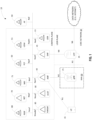
- FIG. 1 illustrates a wireless communication network 10 according to one exemplary embodiment.
- the wireless communication network 10 comprises a radio access network (RAN) 20 and a core network 30 employing a service-based architecture.
- the RAN 20 comprises one or more base stations 25 providing radio access to UEs 100 operating within the wireless communication network 10.
- the base stations 25 are also referred to as gNodeBs (gNBs).
- the core network 30 provides a connection between the RAN 20 and other packet data networks, such as the IMS or the Internet.
- the core network 30 comprises a plurality of network functions (NFs), such as a User Plane Function (UPF) 35, an Access And Mobility Management Function (AMF) 40, a Session Management Function (SMF) 45, a Policy Control Function (PCF) 50, a Unified Data Management (UDM) function 55, a Authentication Server Function (AUSF) 60, a Unified Data Repository (UDR) 65, a Network Exposure Function (NEF) 70, a Network Repository Function (NRF) 75 and a Network Slice Selection Function 80.
- the core network 30 additionally includes a NWDAF 85 for generating and distributing analytics reports.
- NWDAF 85 for generating and distributing analytics reports.
- NFs comprise logical entities that reside in one or more core network nodes, which may be implemented by one or more processors, hardware, firmware, or a combination thereof.
- the functions may reside in a single core network node or may be distributed among two or more core network nodes.
- the network 10 may further include one or more Application Functions (AFs) 90 providing services to the network and or subscribers.
- AFs 90 may be located in the core network 30 or be external to the core network 30.
- the various NFs e.g., SMF 45, AMF 40, etc.
- the wireless communication network 10 uses a services model in which the NFs query the NRF 75 or other NF discovery node to discover and communicate with each other.
- an event-based network analytics system 100 ( Fig. 3 ) is provided for network performance monitoring.
- the network analytics system 100 can be implemented by one or more instances of a NWDAF 85, application function (AF) 90, or some combination thereof.
- the event-based network analytics system 100 implements an adaptive approach to reduce the required hardware resources for event-based network analytics system.
- network performance monitoring is limited to a subset of events, which are used for symptom detection, for a representative subset of subscribers. Dynamic filtering in the different event data sources is performed in order to ensure the statistically required samples for calculating KPIs for symptom detection.
- the monitoring of the limited set of events is only performed for an adaptively chosen small subset of the total subscriber base that is estimated to cover the geographical entirety of the mobile network in a statistically reliable way.
- the network is divided into monitoring areas, each covering multiple cells or the serving areas of several base stations.
- the network analytics system continuously collects and updates location and activity data for the subscribers in the monitoring areas and maintains a list of the active subscribers in these monitoring areas. Using statistical methods, the number of active subscribers that are required for symptom detection is determined per monitoring area and per event source. Based on the statistical methods, the analytical system selects the subscribers for which the event collection should be activated in each data sources. The selected number of subscribers is much lower than the total number of active subscribers. The user selection is done in representative way.
- the symptom KPIs can be monitored for other dimensions as well, such as per terminal, per service provider, etc.
- the analytics system collects subscriber information related to usage in these dimensions. If the symptom KPIs show degradation in another dimension, the number of monitored subscribers in the relevant dimension is increased to the troubleshooting level.
- the network analytics systems as herein described uses much lower hardware resources to monitor session in these areas than for sessions in monitoring areas where service quality degradation and network or node issues are detected. This reduction is achieved by monitoring only a limited number of symptoms KPIs per monitoring area for a subset of all the active users in the network.
- the network analytics system automatically detects and localizes issues where more detailed monitoring is needed and automatically increases the event rate or changes the event filtering settings to enable detailed troubleshooting and root cause analysis for the areas where service quality degradation or network issues are detected.
- the network analytics system can reduce hardware resources (processing capacity, memory and disk) by 60%-80% compared to full monitoring.
- the number of subscribers at different times can be different and change dynamically over time in the different monitoring areas.
- the network analytics system maintains a list of active subscribers per monitoring area. At any time, it can select explicitly the list of subscribers per area and for the whole network for which event collection should be performed and set automatically subscriber filters at each event source. Therefore, event collection is performed only for the required number of subscribers.
- the symptom KPIs are calculated per monitoring area, which enables detecting cell related, i.e., radio issues.
- the symptom KPIs can be monitored in other dimension as well, which enables detecting other issues such as terminal or service-related issues.
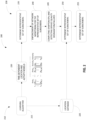
- FIG. 2 illustrates an exemplary process flow 200 for event-based network analytics as herein described.
- the process flow includes a learning loop 210 and an operational loop 230. Both loops are in action continuously.
- the learning loop 210 implements a learning algorithm 225 that is continuously working to infer the currently best model of the subscribers' location and activity patterns.
- the operational loop 230 is continuously working to enable network performance monitoring and analytics for a suitable subset of representative subscribers based on the location and activity models 220, who are identified by International Mobile Subscriber Identities (IMSIs).
- IMSIs International Mobile Subscriber Identities
- the main functions performed by the operational loop 230 comprises computing an optimal or representative set of subscribers to be monitored based on the location and activity models (235) , enforcing performance monitoring for the representative set of subscribers (240), computing symptom KPIs and detecting service degradation and/or network and node failures (245), expanding performance monitoring when service quality degradation and/or failure is detected (250), and determining root cause and corrective actions for any service quality degradation or failure (255).
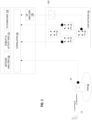
- FIG. 3 illustrates an overall architecture for event and data collection according to an embodiment of the present disclosure.
- the network analytics system 100 includes a mobility and activity manager 110, a filtering manager 120, user plane (UP) analyzer 130, correlator 140 and network analyzer 150.
- the mobility and activity manager 110 implements the learning loop 210 and generates the location and activity models 220 for individual subscribers.
- the filtering manager 120, user plane (UP) analyzer 130, correlator 140 and network analyzer 150 implement the operational loop 230.
- the filtering manager 120 determines the representative set of subscribers for which basic KPI monitoring is performed based on the location and activity models provided by the mobility and activity manager 110.
- the filtering manager 120 also interacts with various network nodes in the network 10 to enforce the data collection for the representative set of subscribers.
- the UP analyzer 130 computes the basic KPIs based on a filtered user plane traffic stream provided by a packet filer in the network.
- the correlator 140 correlates event streams provided by various network nodes (e.g., AMF 40, SMF 45, gNB 25) with corresponding packets in the user plane traffic.
- the network analyzer 150 detects service degradation and/or network and node failures, and performs root cause analysis when service quality degradation or failure is detected by the UP analyzer. When service quality degradation is detected, the network analyzer 150 signals the filtering manager to add additional subscribers and root cause analysis (RCA) events for monitoring areas where service degradation is detected to enable root cause analysis by the network analyzer 150.
- RCA root cause analysis
- the input data sources for the learning loop 210 comprise mobility events that can signal a new location for a subscriber and activity signaling events that can signal activity of the subscriber.
- a mobility event stream and activity event stream are preferably collected for all subscribers, or as many as is practical.
- the term input event is used herein to refer to both mobility events and activity signaling events.
- An input event typically comprises a subscriber identifier (e.g., IMSI), which can be used for correlating mobility events with activity signaling events and user plane traffic flows.
- IMSI subscriber identifier
- the following mobility events can be used to identify the location of a subscriber in Fourth Generation (4G) and 5G networks:
- An activity signaling event is generated for a given time resolution (e.g., once per hour) if there is any data traffic during the time bin. Signaling traffic is captured independently from the sampling performed by the operational loop 230.
- the activity signaling event contains a subscriber identifier (e.g., IMSI), timestamp, and bytes uploaded and downloaded.
- reference data may optionally be obtained.
- the reference data can be used to provide analytics in dimensions other that locations.
- KPIs could be generated for different device types, subscription types and/or subscription plans.
- Exemplary reference data may include:
- the mobility event streams and activity signaling event streams are input to the mobility and activity manager 110, which implements the learning loop 210.
- the learning algorithm 215 implemented by the mobility and activity manager 110 has three main tasks: to learn the location model for each subscriber from the mobility event stream; to learn the activity model for each subscriber from the input activity event stream, and maintain a location database 225 indicating the current location of each subscriber.
- the location database 225 is updated responsive to a mobility event if there is any change in the actual location of the subscriber.
- the learning parts of the learning algorithm are based on statistical data collection.
- the location and activity models 220 are derived for a particular time window (e.g., one week).
- the same time window is preferably used for both the location model and activity model.
- the time window is divided into N time bins based on a desired time resolution of the models 220 (e.g. 1 hour time bins).
- a desired time resolution of the models 220 e.g. 1 hour time bins.
- the location model also includes a geographic dimension.
- the network coverage area is divided into M distinct geographic area based on a desired geographic resolution. Examples of different geographic resolutions include:
- Location and activity modelling is performed on a per subscriber basis. That is, separate location models 220 and activity models 220 are derived for each subscriber.
- the location model is a N ⁇ M matrix containing probabilities p_i, j that the subscriber is at time segment i located within AreaJ with the given probability.
- the location model is independent of any traffic activity, so inactive periods can still produce input to location model whenever the subscriber is moving, though the most location updates may be performed when there is actual traffic detected.
- the activity model comprises an activity vector of N elements q_i that contain the probability that the subscriber will be active at time segment I with the given probability.
- the activity model may further include an activity intensity vector indicating the intensity of the activity.
- the activity intensity vector comprises N elements, each containing a numeric indicator (e.g., falling into [0-1] range) that is proportional to the traffic volume in case of activity.
- This intensity can be a derivative of the traffic bytes, even by further transformations such as logarithm, etc.
- the aim is to provide a magnitude of traffic. All other factors being equal, the operational model can choose subscribers with higher activity to generate more KPI samples for analysis.
- the mobility and activity manager 110 also maintains the location database 225.
- the location database 225 is a simple database that provides a way to lookup subscriber location (last known location for a given IMSI or a list of subscribers in a given monitoring area, AreaJ.
- the mobility and activity manager 110 automatically updates the location database 225 whenever a new location event arrives for a subscriber in the input stream.
- the mobility and activity manager 110 provides the location and activity models 220 for the individual subscribers to the filtering manager 120, which implements part of the operational loop 230.
- the function of the operational loop 230 can be divided into five main aspects:
- the filtering manager 120 determines a representative set of subscribers for which monitoring is performed.
- the representative subscriber set is primarily focused on covering the entire geographical area of the network 10 by active subscribers in order to provide a statistically large enough set of KP! samples so that the network health can be evaluated in each of the defined geographical areas without monitoring the whole subscriber base, which is expensive.
- the representative subscriber set computation is an optimization process that aims to fulfill the following conditions:
- the optimization process can take these dimensions into account as well, beyond the primary dimension location. Whenever multiple solutions exist for covering the entire geographical area of the mobile network with minimal number of subscribers in the representative set, the process can select that representative subscriber set among those where the values of these additional dimensions are also more evenly distributed. In practice this yields good coverage for all subscription types, all available device types, etc.
- the filtering manager 120 generates and sends control signaling to various network node in the RAN 20 and core network 30 to enforce the data collection for the representative set of subscribers.
- Figure 3 illustrates the data sources and control signaling in an exemplary embodiment.
- the solid black dots in Figure 3 represent the data sources (user data and events).
- the dashed lines show the flow of data and events to the network analytics system 100.
- user plane traffic is filtered by a packet broker and the filtered traffic flow is input to the UP analyzer.
- Events captured by the AMF 40 and SMF 45 in the core network30 and gNB 25 are input to the correlator 140.
- User plane traffic is captured by a packet broker 160 or virtual TAP (vTAP).
- the filtering manager 120 sends the representative subscriber list to the packet broker 160 periodically, which filters the traffic for the required subscribers.
- the UP Analyzer 130 receives the UP traffic for the representative subscribers and calculates the user plane KPIs for the filtered traffic.
- the filtering manager 120 activates the events needed for calculating the symptom KPIs in the monitoring phase.
- the filtering manager 120 also activates additional troubleshooting events for troubleshooting KPIs as needed.
- the troubleshooting events are activated for subscribers in the affected monitoring area and for specific node instances that are being impacted.
- the activation of events in the network nodes and filtering of user plane traffic is done by sending configuration messages.
- the correlator 140 receives and timestamps the events real-time and correlates them by IMSI with the user plane traffic flow.
- the symptom KPIs are calculated in by the network analyzer 150.
- a limited set of symptom KPIs/events is monitored to detect service quality degradation.
- the monitoring solution can detect rebuffering events (based on user plane transport network metrics) and can calculate an average playback time between two rebufferings KPI as a service quality metric.
- the set of representative subscribers and/or events can be temporarily expanded to enable root cause analysis. Generally, the expansion of the data collection focuses on the problematic monitoring areas.
- the location database 225 contains a list of all subscribers and their last known location.
- the filtering manager 120 can query the location database 225 to obtain a list of subscribers in the affected monitoring area.
- the filtering manager 120 can add additional subscribers in the affected monitoring area to the representative set of subscribers.
- the additional subscribers may comprise a predetermined number of additional subscribers, the subscribers in the affected monitoring area that meet some predetermined criteria (e.g., active subscribers with a predetermined level of activity), or all subscribers in the affected area.
- the representative set is expanded temporarily during a troubleshooting period to collect more data for root cause analysis. Once, the causes of the service quality degradation are determined, the additional subscribers added during the troubleshooting period can be removed.
- the filtering manager 120 can temporarily expand the number and type of events that are collected during the troubleshooting period to facilitate root cause analysis.
- the events activated during the troubleshooting period are referred to herein as the troubleshooting events or RCA events.
- These additional event types can help understanding of the service quality degradation problem and find the root cause of the service quality degradation.
- the filtering manager 120 can enable radio environment measurements, radio connection loss events, and more details on handovers to aid the root cause analysis. Once, the causes of the service quality degradation are determined, the filtering manager 120 can revert to the base set of events used for normal KPI monitoring.
- the quality of the representative set of subscribers may be modified from time to time.
- the location and activity models 220 may be recomputed at periodic intervals (e.g., once per week) or responsive to some predetermined events.
- the filtering manager 120 can recompute a new set of representative subscribers based on the new location and activity models 220.
- the filtering manager 120 can be configured to make minor adjustments to the set of representative subscribers before new location and activity models 220 are available.
- the representative set of subscribers is a best estimate based on past behavior based on the location and activity models 220. Actual events may deviate from the location and activity model used to generate the set of representative subscribers. For example, a subscriber selected for inclusion in the representative set may be inactive, or may be active but not in the location predicted in the location model. Also, the activity level could be lower than expected. In some cases, the representative set may include less than the desired minimum number of subscribers for a particular monitoring area.
- the filtering manager 120 can be configured to make adjustments to the set of representative subscribers.
- the filtering manager 120 can, for example, replace an inactive subscriber or subscriber with low activity with an active subscriber or another subscriber with a higher activity level in the same monitoring area. When the number of active subscribers is less than a desired minimum, the filtering manager 120 can add additional subscribers to the set. In some cases, the filtering manager 120 may trigger a recomputation of the location and activity models 220, in which case the set of representative subscribers is determined based on the new location and activity models 220.
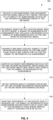
- Figure 4 illustrates an exemplary method 300 implemented by a network analytics system 100 comprising one or more network nodes.
- the network analytics system 100 receives a per subscriber, time dependent location model and activity model for each of a plurality of subscribers located in one or more geographic areas of the network (block 310).
- the network analytics system 100 determines, based on the location models and activity models, a subset of representative subscribers that includes a representative sample of subscribers in each of the one more or geographic areas (block 320).
- the network analytics system 100 further generates and sends control signals to one or more network nodes to capture user plane traffic and events for the subset of representative subscribers (block 330).
- Some embodiments of the method 300 further comprise computing network performance metrics (e.g., KPIs) for the one or more geographic areas based on the captured user plane traffic and events for the subset of representative subscribers (block 340), and detecting service quality degradation in one of the one or more geographic areas based on the network performance metrics (block 350).
- network performance metrics e.g., KPIs
- Some embodiments of the method 300 further comprise adapting, responsive to service quality degradation, the subset of representative subscribers to increase a number of the representative subscribers for at least one geographic area where service quality degradation is detected (block 360).
- Some embodiments of the method 300 further comprise expanding event types being captured for the subset of representative subscribers to include one or more troubleshooting events.
- Some embodiments of the method 300 further comprise updating the subset of representative subscribers.
- updating the subset of representative subscribers is performed periodically or responsive to predetermined triggers.
- updating the subset of representative subscribers comprises replacing a current representative subscriber with a new representative subscriber with a higher activity level.
- updating the subset of representative subscribers comprises replacing comprises adding representative subscribers to the subset when a number of active subscribers in one of the geographic areas falls below a threshold.
- updating the subset of representative subscribers comprises is performed responsive to a mobility event for one of the representative subscribers.
- updating the subset of representative subscribers comprises receiving an updated location model and activity model, and determining an updated subset of representative subscribers based on the updated location model and activity model.
- Some embodiments of the method 300 further comprise generating the location model and activity model.
- the location model comprises, for each of the plurality of subscribers, a set of location probabilities, each location probability representing a likelihood that the subscriber will be within a particular geographic area at a particular time.
- the activity model comprises, for each of the plurality of subscribers, a set of activity probabilities, each activity probability representing a likelihood that the subscriber will be active at a particular time.
- Figure 5 illustrates an exemplary method 400 implemented by a network analytics system 100 comprising one or more network nodes of generating location and activity models 220 for network monitoring.
- the network analytics system 100 receives location events for a subscriber, wherein the location events indicate a location of the subscriber (block 410).
- the network analytics system 100 further receives activity events for the subscriber, wherein the activity events indicate activity of the subscriber (block 420).
- the network analytics system 100 generates a location model for the subscriber based on the location events (block 430).
- the location model comprises a set of location probabilities, each location probability representing a likelihood that the subscriber will be within a particular geographic area at a particular time.
- the network analytics system 100 further generates an activity model for the subscriber based on the activity events (block 440).
- the activity model comprises a set of activity probabilities, each activity probability representing a likelihood that the subscriber will be active at a particular time.
- the activity model further comprises a set of intensity parameters, each intensity parameter indicating a predicted activity level of the subscriber at a particular time.
- Some embodiments of the method 400 further comprise maintaining a location database indicating a current location of each of the one or more subscribers, and updating the location database responsive to the location events.
- Some embodiments of the method 400 further comprise receiving a request from a network monitoring control node for subscribers in a specified geographic area, and providing, responsive to the request, a list of one or more subscribers in the specified geographic area to the network monitoring control node.
- Some embodiments of the method 400 further comprise receiving a location request from a network monitoring control node, the location request including a subscriber identifier for one of the subscribers, and providing, responsive to the request and for each, the geographic area in which the subscriber is currently located.
- an apparatus can perform any of the methods herein described by implementing any functional means, modules, units, or circuitry.
- the apparatuses comprise respective circuits or circuitry configured to perform the steps shown in the method figures.
- the circuits or circuitry in this regard may comprise circuits dedicated to performing certain functional processing and/or one or more microprocessors in conjunction with memory.
- the circuitry may include one or more microprocessor or microcontrollers, as well as other digital hardware, which may include Digital Signal Processors (DSPs), special-purpose digital logic, and the like.
- the processing circuitry may be configured to execute program code stored in memory, which may include one or several types of memory such as read-only memory (ROM), random-access memory, cache memory, flash memory devices, optical storage devices, etc.
- Program code stored in memory may include program instructions for executing one or more telecommunications and/or data communications protocols as well as instructions for carrying out one or more of the techniques described herein, in several embodiments.
- the memory stores program code that, when executed by the one or more processors, carries out the techniques described herein.
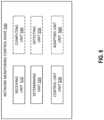
- FIG. 6 illustrates an exemplary network monitoring control node 500 configured to perform the method shown in Figure 5 .
- the network monitoring control node 500 comprises a receiving unit 510, a determining unit 520 a control unit 530, and optional computing unit 540, an optional detecting unit 550 and an optional adapting unit 560.
- the various units 510 - 560 can be implemented by hardware and/or by software code that is executed by a processor or processing circuit.
- the receiving unit 520 is configured to receive a per subscriber, time dependent location model and activity model for a plurality of subscribers located in one or more geographic areas of the network.
- the determining unit 520 is configured to determine, based on the location models and activity models, a subset of representative subscribers that includes a representative sample of subscribers in each of the one more or geographic areas.
- the control unit 530 is configured to generate and send control signals to one or more network nodes to capture user plane traffic and events for the for the subset of representative subscribers.
- the computing unit 540 when present, is configured to compute network performance metrics for the one or more geographic areas based on the captured user plane traffic and events for the subset of representative subscribers.
- the detecting unit 550 when present, is configured to detect service quality degradation in one of the one or more geographic areas based on the network performance metrics.
- the adapting unit 560 when present, is configured to adapt, responsive to service quality degradation, the subset of representative subscribers to increase a number of the representative subscribers for at least one geographic area where service quality degradation is detected, the event types being captured for the subset of representative subscribers to include one or more troubleshooting events, or both.
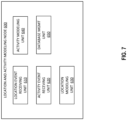
- the location modeling unit 630 is configured to generate a location model for the subscriber based on the location events.
- the location model comprises a set of location probabilities, each location probability representing a likelihood that the subscriber will be within a particular geographic area at a particular time.
- the activity modeling unit 640 when present, is configured to generate an activity model for the subscriber based on the activity events.
- the activity model comprises a set of activity probabilities, each activity probability representing a likelihood that the subscriber will be active at a particular time.
- the activity model further comprises, for each subscriber, intensity parameters indicating a predicted activity level of the subscriber at a particular time.
- the database management unit 650 when present, is configured to maintain a location database storing a last known location for each of the subscribers.
- the communication circuitry 720 comprises network interface circuitry for communicating with other network nodes in the wireless communication network over a communication network.
- Processing circuitry 730 controls the overall operation of the network node 700 and is configured to perform one or more of the methods 200, 300 shown in Figures 4 and 5 respectively. Such processing includes coding and modulation of transmitted data signals, and the demodulation and decoding of received data signals.
- the processing circuitry 730 may comprise one or more microprocessors, hardware, firmware, or a combination thereof.
- Memory 740 comprises both volatile and non-volatile memory for storing computer program code and data needed by the processing circuitry 730 for operation.
- Memory 740 may comprise any tangible, non-transitory computer-readable storage medium for storing data including electronic, magnetic, optical, electromagnetic, or semiconductor data storage.
- Memory 740 stores a computer program 750 comprising executable instructions that configure the processing circuitry 730 to implement the methods 200, 300 according to Figures 4 and 5 respectively.
- a computer program in this regard may comprise one or more code modules corresponding to the means or units described above.
- computer program instructions and configuration information are stored in a non-volatile memory, such as a ROM, erasable programmable read only memory (EPROM) or flash memory.
- Temporary data generated during operation may be stored in a volatile memory, such as a random access memory (RAM).
- computer program 750 for configuring the processing circuitry 730 as herein described may be stored in a removable memory, such as a portable compact disc, portable digital video disc, or other removable media.
- the computer program 750 may also be embodied in a carrier such as an electronic signal, optical signal, radio signal, or computer readable storage medium.
- a computer program comprises instructions which, when executed on at least one processor of an apparatus, cause the apparatus to carry out any of the respective processing described above.
- a computer program in this regard may comprise one or more code modules corresponding to the means or units described above.
- Embodiments further include a carrier containing such a computer program.
- This carrier may comprise one of an electronic signal, optical signal, radio signal, or computer readable storage medium.
- embodiments herein also include a computer program product stored on a non-transitory computer readable (storage or recording) medium and comprising instructions that, when executed by a processor of an apparatus, cause the apparatus to perform as described above.
- Embodiments further include a computer program product comprising program code portions for performing the steps of any of the embodiments herein when the computer program product is executed by a computing device.
- This computer program product may be stored on a computer readable recording medium.
Landscapes
- Engineering & Computer Science (AREA)
- Computer Networks & Wireless Communication (AREA)
- Signal Processing (AREA)
- Physics & Mathematics (AREA)
- Algebra (AREA)
- General Physics & Mathematics (AREA)
- Mathematical Analysis (AREA)
- Mathematical Optimization (AREA)
- Mathematical Physics (AREA)
- Probability & Statistics with Applications (AREA)
- Pure & Applied Mathematics (AREA)
- Mobile Radio Communication Systems (AREA)
- Data Exchanges In Wide-Area Networks (AREA)
Claims (15)
- Verfahren (300) zur Netzwerkleistungsüberwachung, das von einem Netzwerkknoten (500, 700) implementiert wird, wobei das Verfahren (300) umfasst:Empfangen (310) eines zeitabhängigen Standortmodells pro Teilnehmer und eines zeitabhängigen Aktivitätsmodells pro Teilnehmer für jeden einer Mehrzahl von Teilnehmern, die sich in einem oder mehreren geografischen Bereichen des Netzwerks befinden;Bestimmen (320) einer Teilmenge repräsentativer Teilnehmer, die eine repräsentative Stichprobe von Teilnehmern in jedem des einen oder der mehreren geografischen Bereiche umfasst, basierend auf den Standortmodellen und den Aktivitätsmodellen;Erzeugen und Senden (330) von Steuersignalen an einen oder mehrere Netzwerkknoten, um Verkehr und Ereignisse auf Benutzerebene für die Teilmenge repräsentativer Teilnehmer zu erfassen;Berechnen (340) von Netzwerkleistungsmetriken für den einen oder die mehreren geografischen Bereiche basierend auf dem erfassten Verkehr und den erfassten Ereignissen auf Benutzerebene für die Teilmenge repräsentativer Teilnehmer; undErkennen (350) einer Dienstqualitätsverschlechterung in einem des einen oder der mehreren geografischen Bereiche basierend auf den Netzwerkleistungsmetriken.
- Verfahren (300) nach Anspruch 1, ferner umfassend ein Anpassen der Teilmenge repräsentativer Teilnehmer in Reaktion auf die Dienstqualitätsverschlechterung, um eine Anzahl der repräsentativen Teilnehmer in der Teilmenge repräsentativer Teilnehmer für mindestens einen geografischen Bereich zu erhöhen, in dem die Dienstqualitätsverschlechterung erkannt wird.
- Verfahren (300) nach Anspruch 1 oder 2, ferner umfassend ein Erweitern der Ereignistypen, die für die Teilmenge repräsentativer Teilnehmer erfasst werden, um ein oder mehrere Fehlerbehebungsereignisse für die Ursachenanalyse einzubeziehen.
- Verfahren (300) nach einem der Ansprüche 1 bis 3, ferner umfassend ein Aktualisieren der Teilmenge repräsentativer Teilnehmer.
- Verfahren (300) nach Anspruch 4, wobei das Aktualisieren der Teilmenge repräsentativer Teilnehmer periodisch oder in Reaktion auf vorbestimmte Auslöser durchgeführt wird.
- Verfahren (300) nach Anspruch 4, wobei das Aktualisieren der Teilmenge repräsentativer Teilnehmer ein Ersetzen eines aktuellen repräsentativen Teilnehmers durch einen neuen repräsentativen Teilnehmer mit einem höheren Aktivitätsgrad umfasst.
- Verfahren (300) nach Anspruch 4, wobei das Aktualisieren der Teilmenge repräsentativer Teilnehmer ein Hinzufügen repräsentativer Teilnehmer zu der Teilmenge umfasst, wenn eine Anzahl aktiver Teilnehmer in einem der geografischen Bereiche unter einen Schwellenwert abfällt.
- Verfahren (300) nach Anspruch 4, wobei das Aktualisieren der Teilmenge repräsentativer Teilnehmer in Reaktion auf ein Mobilitätsereignis für einen der repräsentativen Teilnehmer in der Teilmenge repräsentativer Teilnehmer durchgeführt wird.
- Verfahren (300) nach Anspruch 4, wobei das Aktualisieren der Teilmenge repräsentativer Teilnehmer umfasst:Empfangen eines aktualisierten Standortmodells und Aktivitätsmodells; undBestimmen einer aktualisierten Teilmenge repräsentativer Teilnehmer basierend auf dem aktualisierten Standortmodell und Aktivitätsmodell.
- Verfahren (300) nach einem der Ansprüche 1 bis 9, ferner umfassend ein Erzeugen der Standortmodelle und Aktivitätsmodelle.
- Verfahren (300) nach einem der Ansprüche 1 bis 10, wobei:das Standortmodell für jeden der Mehrzahl von Teilnehmern in der Teilmenge repräsentativer Teilnehmer einen Satz von Standortwahrscheinlichkeiten umfasst, wobei jede Standortwahrscheinlichkeit eine Wahrscheinlichkeit darstellt, dass sich der Teilnehmer zu einem spezifischen Zeitpunkt innerhalb eines spezifischen geografischen Bereichs befinden wird; unddas Aktivitätsmodell für jeden der Mehrzahl von Teilnehmern in der Teilmenge repräsentativer Teilnehmer einen Satz von Aktivitätswahrscheinlichkeiten umfasst, wobei jede Aktivitätswahrscheinlichkeit eine Wahrscheinlichkeit darstellt, dass der Teilnehmer zu einem spezifischen Zeitpunkt aktiv sein wird.
- Netzwerkanalysesystem (100) zur Netzwerkleistungsüberwachung, wobei das Netzwerkanalysesystem konfiguriert ist zum:Empfangen (310) eines zeitabhängigen Standortmodells pro Teilnehmer und eines zeitabhängigen Aktivitätsmodells pro Teilnehmer für jeden einer Mehrzahl von Teilnehmern, die sich in einem oder mehreren geografischen Bereichen des Netzwerks befinden;Bestimmen (320) einer Teilmenge repräsentativer Teilnehmer, die eine repräsentative Stichprobe von Teilnehmern in jedem des einen oder der mehreren geografischen Bereiche umfasst, basierend auf dem Standortmodell und dem Aktivitätsmodell;Erzeugen und Senden (330) von Steuersignalen an einen oder mehrere Netzwerkknoten, um Verkehr und Ereignisse auf Benutzerebene für die Teilmenge repräsentativer Teilnehmer zu erfassen;Berechnen von Netzwerkleistungsmetriken für den einen oder die mehreren geografischen Bereiche basierend auf dem erfassten Verkehr und den erfassten Ereignissen auf Benutzerebene für die Teilmenge repräsentativer Teilnehmer; undErkennen einer Dienstqualitätsverschlechterung in einem des einen oder der mehreren geografischen Bereiche basierend auf den Netzwerkleistungsmetriken.
- Netzwerkanalysesystem (100) nach Anspruch 12, das ferner so konfiguriert ist, dass es das Verfahren nach einem der Ansprüche 2 bis 11 durchführt.
- Computerprogramm, umfassend ausführbare Anweisungen, die bei Ausführung durch eine Verarbeitungsschaltung in einem Netzwerkanalysesystem (100) das Netzwerkanalysesystem (100) zum Durchführen eines der Verfahren nach Anspruch 1 bis 11 veranlassen.
- Datenträger, der ein Computerprogramm nach Anspruch 14 enthält, wobei der Datenträger eines von einem elektronischen Signal, einem optischen Signal, einem Funksignal oder einem computerlesbaren Speichermedium ist.
Applications Claiming Priority (1)
| Application Number | Priority Date | Filing Date | Title |
|---|---|---|---|
| PCT/IB2020/052561 WO2021186221A1 (en) | 2020-03-19 | 2020-03-19 | Resource efficient network performance analytics |
Publications (2)
| Publication Number | Publication Date |
|---|---|
| EP4122162A1 EP4122162A1 (de) | 2023-01-25 |
| EP4122162B1 true EP4122162B1 (de) | 2024-09-18 |
Family
ID=70289823
Family Applications (1)
| Application Number | Title | Priority Date | Filing Date |
|---|---|---|---|
| EP20719493.7A Active EP4122162B1 (de) | 2020-03-19 | 2020-03-19 | Ressourceneffiziente netzwerkleistungsanalytik |
Country Status (2)
| Country | Link |
|---|---|
| EP (1) | EP4122162B1 (de) |
| WO (1) | WO2021186221A1 (de) |
Families Citing this family (7)
| Publication number | Priority date | Publication date | Assignee | Title |
|---|---|---|---|---|
| EP4165837B1 (de) * | 2020-06-11 | 2024-02-21 | Telefonaktiebolaget LM Ericsson (publ) | Adaptive ereignisverarbeitung für kosteneffizientes cem |
| US20250008315A1 (en) * | 2021-11-03 | 2025-01-02 | Telefonaktiebolaget Lm Ericsson (Publ) | Technique for subscriber monitoring in a communication network |
| EP4430875A1 (de) | 2021-11-08 | 2024-09-18 | Telefonaktiebolaget LM Ericsson (publ) | Analytikerzeugung in einem kommunikationsnetzwerk |
| CN114884987B (zh) * | 2022-04-24 | 2024-03-29 | 青岛海信医疗设备股份有限公司 | 获取设备状态信息的方法、装置及存储介质 |
| CN115334559B (zh) * | 2022-08-19 | 2024-07-02 | 中国联合网络通信集团有限公司 | 网络检测方法、装置、设备及介质 |
| US12549464B2 (en) | 2022-12-30 | 2026-02-10 | T-Mobile Usa, Inc. | Event detection based on uplink traffic in a telecommunications network |
| WO2025032362A1 (en) * | 2023-08-10 | 2025-02-13 | Telefonaktiebolaget Lm Ericsson (Publ) | Network degradation detection with encrypted data streams |
Family Cites Families (5)
| Publication number | Priority date | Publication date | Assignee | Title |
|---|---|---|---|---|
| US6807156B1 (en) * | 2000-11-07 | 2004-10-19 | Telefonaktiebolaget Lm Ericsson (Publ) | Scalable real-time quality of service monitoring and analysis of service dependent subscriber satisfaction in IP networks |
| CN101217758B (zh) * | 2007-12-26 | 2010-09-08 | 中国移动通信集团北京有限公司 | 生成蜂窝网络的用户移动性模型的方法及装置 |
| US9572101B2 (en) * | 2014-03-13 | 2017-02-14 | International Business Machines Corporation | Optimization of mobile phone service during power failure |
| US10164850B2 (en) * | 2015-09-10 | 2018-12-25 | Tupl, Inc | Wireless communication data analysis and reporting |
| US11025485B2 (en) * | 2016-09-15 | 2021-06-01 | At&T Intellectual Property I, L.P. | Telecommunication network analytics platform |
-
2020
- 2020-03-19 WO PCT/IB2020/052561 patent/WO2021186221A1/en not_active Ceased
- 2020-03-19 EP EP20719493.7A patent/EP4122162B1/de active Active
Also Published As
| Publication number | Publication date |
|---|---|
| EP4122162A1 (de) | 2023-01-25 |
| WO2021186221A1 (en) | 2021-09-23 |
Similar Documents
| Publication | Publication Date | Title |
|---|---|---|
| US11388070B2 (en) | Method and system for providing service experience analysis based on network data analysis | |
| EP4122162A1 (de) | Ressourceneffiziente netzwerkleistungsanalytik | |
| US11381494B2 (en) | Method and system for providing communication analysis of user equipment based on network data analysis | |
| KR102913254B1 (ko) | Nwdaf를 위한 af 장치로부터의 네트워크 데이터 수집 방법 | |
| GB2587697A (en) | Service experience analytics for network slice instance | |
| US20220408293A1 (en) | Method and device for providing network analysis information for rfsp index selection in mobile communication network | |
| US12477462B2 (en) | Transition control between radio resource control states | |
| US20250111223A1 (en) | User Consent Based Model Provisioning | |
| GB2621428A (en) | External exposure of control plane to user plane switch parameter | |
| US10721707B2 (en) | Characterization of a geographical location in a wireless network | |
| US12356248B2 (en) | System and method for delivering quality of service | |
| KR20200129053A (ko) | 네트워크 데이터 분석에 기초한 서비스 경험 분석 제공 방법 및 시스템 | |
| CN114342450B (zh) | 自组织网络系统 | |
| US12177084B2 (en) | Method for providing data relating to at least one equipment of a network user, method for obtaining data, and entities implementing these methods | |
| CN107889126B (zh) | 网络状态的识别方法、dpi监测分析设备和网络系统 | |
| CN119450582A (zh) | 基于ai智能体的pcc自智网络的定向流量业务保障方法 | |
| WO2025017363A1 (en) | Data analytics for energy management | |
| EP4270876B1 (de) | Verfahren und vorrichtung zur abrechnung in einem kommunikationsnetzwerk unter verwendung von mdas | |
| EP4319082A1 (de) | Verfahren, vorrichtung und computerprogramm | |
| CN116847412A (zh) | 切片负载评估方法、装置、管理数据分析功能网元及介质 | |
| WO2021160270A1 (en) | Technique for determining an impact of a failure in a mobile communication network | |
| US20250008315A1 (en) | Technique for subscriber monitoring in a communication network | |
| GB2619582A (en) | Monitoring for application AI/ML-based services and operations | |
| US20220248214A1 (en) | System and Method for Network Traffic Analysis | |
| EP4721360A1 (de) | Datenanalyse für skalierbaren durchsatz mit niedriger latenz und geringem verlust |
Legal Events
| Date | Code | Title | Description |
|---|---|---|---|
| STAA | Information on the status of an ep patent application or granted ep patent |
Free format text: STATUS: UNKNOWN |
|
| STAA | Information on the status of an ep patent application or granted ep patent |
Free format text: STATUS: THE INTERNATIONAL PUBLICATION HAS BEEN MADE |
|
| PUAI | Public reference made under article 153(3) epc to a published international application that has entered the european phase |
Free format text: ORIGINAL CODE: 0009012 |
|
| STAA | Information on the status of an ep patent application or granted ep patent |
Free format text: STATUS: REQUEST FOR EXAMINATION WAS MADE |
|
| 17P | Request for examination filed |
Effective date: 20220916 |
|
| AK | Designated contracting states |
Kind code of ref document: A1 Designated state(s): AL AT BE BG CH CY CZ DE DK EE ES FI FR GB GR HR HU IE IS IT LI LT LU LV MC MK MT NL NO PL PT RO RS SE SI SK SM TR |
|
| DAV | Request for validation of the european patent (deleted) | ||
| DAX | Request for extension of the european patent (deleted) | ||
| REG | Reference to a national code |
Ref country code: DE Ref legal event code: R079 Free format text: PREVIOUS MAIN CLASS: H04L0012240000 Ipc: H04L0041142000 Ref country code: DE Ref legal event code: R079 Ref document number: 602020037894 Country of ref document: DE Free format text: PREVIOUS MAIN CLASS: H04L0012240000 Ipc: H04L0041142000 |
|
| GRAP | Despatch of communication of intention to grant a patent |
Free format text: ORIGINAL CODE: EPIDOSNIGR1 |
|
| STAA | Information on the status of an ep patent application or granted ep patent |
Free format text: STATUS: GRANT OF PATENT IS INTENDED |
|
| RIC1 | Information provided on ipc code assigned before grant |
Ipc: H04W 24/02 20090101ALN20240313BHEP Ipc: H04W 4/02 20180101ALN20240313BHEP Ipc: H04W 24/10 20090101ALI20240313BHEP Ipc: H04W 24/04 20090101ALI20240313BHEP Ipc: H04W 16/18 20090101ALI20240313BHEP Ipc: H04L 43/024 20220101ALI20240313BHEP Ipc: H04L 41/5009 20220101ALI20240313BHEP Ipc: H04L 41/0816 20220101ALI20240313BHEP Ipc: H04L 41/142 20220101AFI20240313BHEP |
|
| INTG | Intention to grant announced |
Effective date: 20240325 |
|
| GRAS | Grant fee paid |
Free format text: ORIGINAL CODE: EPIDOSNIGR3 |
|
| GRAA | (expected) grant |
Free format text: ORIGINAL CODE: 0009210 |
|
| STAA | Information on the status of an ep patent application or granted ep patent |
Free format text: STATUS: THE PATENT HAS BEEN GRANTED |
|
| AK | Designated contracting states |
Kind code of ref document: B1 Designated state(s): AL AT BE BG CH CY CZ DE DK EE ES FI FR GB GR HR HU IE IS IT LI LT LU LV MC MK MT NL NO PL PT RO RS SE SI SK SM TR |
|
| REG | Reference to a national code |
Ref country code: GB Ref legal event code: FG4D |
|
| REG | Reference to a national code |
Ref country code: CH Ref legal event code: EP |
|
| REG | Reference to a national code |
Ref country code: IE Ref legal event code: FG4D |
|
| REG | Reference to a national code |
Ref country code: DE Ref legal event code: R096 Ref document number: 602020037894 Country of ref document: DE |
|
| REG | Reference to a national code |
Ref country code: LT Ref legal event code: MG9D |
|
| PG25 | Lapsed in a contracting state [announced via postgrant information from national office to epo] |
Ref country code: NO Free format text: LAPSE BECAUSE OF FAILURE TO SUBMIT A TRANSLATION OF THE DESCRIPTION OR TO PAY THE FEE WITHIN THE PRESCRIBED TIME-LIMIT Effective date: 20241218 |
|
| PG25 | Lapsed in a contracting state [announced via postgrant information from national office to epo] |
Ref country code: GR Free format text: LAPSE BECAUSE OF FAILURE TO SUBMIT A TRANSLATION OF THE DESCRIPTION OR TO PAY THE FEE WITHIN THE PRESCRIBED TIME-LIMIT Effective date: 20241219 Ref country code: FI Free format text: LAPSE BECAUSE OF FAILURE TO SUBMIT A TRANSLATION OF THE DESCRIPTION OR TO PAY THE FEE WITHIN THE PRESCRIBED TIME-LIMIT Effective date: 20240918 |
|
| PG25 | Lapsed in a contracting state [announced via postgrant information from national office to epo] |
Ref country code: BG Free format text: LAPSE BECAUSE OF FAILURE TO SUBMIT A TRANSLATION OF THE DESCRIPTION OR TO PAY THE FEE WITHIN THE PRESCRIBED TIME-LIMIT Effective date: 20240918 |
|
| PG25 | Lapsed in a contracting state [announced via postgrant information from national office to epo] |
Ref country code: LV Free format text: LAPSE BECAUSE OF FAILURE TO SUBMIT A TRANSLATION OF THE DESCRIPTION OR TO PAY THE FEE WITHIN THE PRESCRIBED TIME-LIMIT Effective date: 20240918 |
|
| PG25 | Lapsed in a contracting state [announced via postgrant information from national office to epo] |
Ref country code: HR Free format text: LAPSE BECAUSE OF FAILURE TO SUBMIT A TRANSLATION OF THE DESCRIPTION OR TO PAY THE FEE WITHIN THE PRESCRIBED TIME-LIMIT Effective date: 20240918 |
|
| REG | Reference to a national code |
Ref country code: NL Ref legal event code: MP Effective date: 20240918 |
|
| PG25 | Lapsed in a contracting state [announced via postgrant information from national office to epo] |
Ref country code: RS Free format text: LAPSE BECAUSE OF FAILURE TO SUBMIT A TRANSLATION OF THE DESCRIPTION OR TO PAY THE FEE WITHIN THE PRESCRIBED TIME-LIMIT Effective date: 20241218 |
|
| PG25 | Lapsed in a contracting state [announced via postgrant information from national office to epo] |
Ref country code: RS Free format text: LAPSE BECAUSE OF FAILURE TO SUBMIT A TRANSLATION OF THE DESCRIPTION OR TO PAY THE FEE WITHIN THE PRESCRIBED TIME-LIMIT Effective date: 20241218 Ref country code: NO Free format text: LAPSE BECAUSE OF FAILURE TO SUBMIT A TRANSLATION OF THE DESCRIPTION OR TO PAY THE FEE WITHIN THE PRESCRIBED TIME-LIMIT Effective date: 20241218 Ref country code: LV Free format text: LAPSE BECAUSE OF FAILURE TO SUBMIT A TRANSLATION OF THE DESCRIPTION OR TO PAY THE FEE WITHIN THE PRESCRIBED TIME-LIMIT Effective date: 20240918 Ref country code: HR Free format text: LAPSE BECAUSE OF FAILURE TO SUBMIT A TRANSLATION OF THE DESCRIPTION OR TO PAY THE FEE WITHIN THE PRESCRIBED TIME-LIMIT Effective date: 20240918 Ref country code: GR Free format text: LAPSE BECAUSE OF FAILURE TO SUBMIT A TRANSLATION OF THE DESCRIPTION OR TO PAY THE FEE WITHIN THE PRESCRIBED TIME-LIMIT Effective date: 20241219 Ref country code: FI Free format text: LAPSE BECAUSE OF FAILURE TO SUBMIT A TRANSLATION OF THE DESCRIPTION OR TO PAY THE FEE WITHIN THE PRESCRIBED TIME-LIMIT Effective date: 20240918 Ref country code: BG Free format text: LAPSE BECAUSE OF FAILURE TO SUBMIT A TRANSLATION OF THE DESCRIPTION OR TO PAY THE FEE WITHIN THE PRESCRIBED TIME-LIMIT Effective date: 20240918 |
|
| REG | Reference to a national code |
Ref country code: AT Ref legal event code: MK05 Ref document number: 1725637 Country of ref document: AT Kind code of ref document: T Effective date: 20240918 |
|
| PG25 | Lapsed in a contracting state [announced via postgrant information from national office to epo] |
Ref country code: NL Free format text: LAPSE BECAUSE OF FAILURE TO SUBMIT A TRANSLATION OF THE DESCRIPTION OR TO PAY THE FEE WITHIN THE PRESCRIBED TIME-LIMIT Effective date: 20240918 |
|
| PG25 | Lapsed in a contracting state [announced via postgrant information from national office to epo] |
Ref country code: IS Free format text: LAPSE BECAUSE OF FAILURE TO SUBMIT A TRANSLATION OF THE DESCRIPTION OR TO PAY THE FEE WITHIN THE PRESCRIBED TIME-LIMIT Effective date: 20250118 Ref country code: PT Free format text: LAPSE BECAUSE OF FAILURE TO SUBMIT A TRANSLATION OF THE DESCRIPTION OR TO PAY THE FEE WITHIN THE PRESCRIBED TIME-LIMIT Effective date: 20250120 |
|
| PG25 | Lapsed in a contracting state [announced via postgrant information from national office to epo] |
Ref country code: RO Free format text: LAPSE BECAUSE OF FAILURE TO SUBMIT A TRANSLATION OF THE DESCRIPTION OR TO PAY THE FEE WITHIN THE PRESCRIBED TIME-LIMIT Effective date: 20240918 Ref country code: SM Free format text: LAPSE BECAUSE OF FAILURE TO SUBMIT A TRANSLATION OF THE DESCRIPTION OR TO PAY THE FEE WITHIN THE PRESCRIBED TIME-LIMIT Effective date: 20240918 |
|
| PG25 | Lapsed in a contracting state [announced via postgrant information from national office to epo] |
Ref country code: ES Free format text: LAPSE BECAUSE OF FAILURE TO SUBMIT A TRANSLATION OF THE DESCRIPTION OR TO PAY THE FEE WITHIN THE PRESCRIBED TIME-LIMIT Effective date: 20240918 |
|
| PG25 | Lapsed in a contracting state [announced via postgrant information from national office to epo] |
Ref country code: AT Free format text: LAPSE BECAUSE OF FAILURE TO SUBMIT A TRANSLATION OF THE DESCRIPTION OR TO PAY THE FEE WITHIN THE PRESCRIBED TIME-LIMIT Effective date: 20240918 Ref country code: EE Free format text: LAPSE BECAUSE OF FAILURE TO SUBMIT A TRANSLATION OF THE DESCRIPTION OR TO PAY THE FEE WITHIN THE PRESCRIBED TIME-LIMIT Effective date: 20240918 |
|
| PG25 | Lapsed in a contracting state [announced via postgrant information from national office to epo] |
Ref country code: PL Free format text: LAPSE BECAUSE OF FAILURE TO SUBMIT A TRANSLATION OF THE DESCRIPTION OR TO PAY THE FEE WITHIN THE PRESCRIBED TIME-LIMIT Effective date: 20240918 Ref country code: CZ Free format text: LAPSE BECAUSE OF FAILURE TO SUBMIT A TRANSLATION OF THE DESCRIPTION OR TO PAY THE FEE WITHIN THE PRESCRIBED TIME-LIMIT Effective date: 20240918 |
|
| PG25 | Lapsed in a contracting state [announced via postgrant information from national office to epo] |
Ref country code: IT Free format text: LAPSE BECAUSE OF FAILURE TO SUBMIT A TRANSLATION OF THE DESCRIPTION OR TO PAY THE FEE WITHIN THE PRESCRIBED TIME-LIMIT Effective date: 20240918 Ref country code: SK Free format text: LAPSE BECAUSE OF FAILURE TO SUBMIT A TRANSLATION OF THE DESCRIPTION OR TO PAY THE FEE WITHIN THE PRESCRIBED TIME-LIMIT Effective date: 20240918 |
|
| REG | Reference to a national code |
Ref country code: DE Ref legal event code: R097 Ref document number: 602020037894 Country of ref document: DE |
|
| PG25 | Lapsed in a contracting state [announced via postgrant information from national office to epo] |
Ref country code: DK Free format text: LAPSE BECAUSE OF FAILURE TO SUBMIT A TRANSLATION OF THE DESCRIPTION OR TO PAY THE FEE WITHIN THE PRESCRIBED TIME-LIMIT Effective date: 20240918 |
|
| PLBE | No opposition filed within time limit |
Free format text: ORIGINAL CODE: 0009261 |
|
| STAA | Information on the status of an ep patent application or granted ep patent |
Free format text: STATUS: NO OPPOSITION FILED WITHIN TIME LIMIT |
|
| 26N | No opposition filed |
Effective date: 20250619 |
|
| PG25 | Lapsed in a contracting state [announced via postgrant information from national office to epo] |
Ref country code: SE Free format text: LAPSE BECAUSE OF FAILURE TO SUBMIT A TRANSLATION OF THE DESCRIPTION OR TO PAY THE FEE WITHIN THE PRESCRIBED TIME-LIMIT Effective date: 20240918 |
|
| PG25 | Lapsed in a contracting state [announced via postgrant information from national office to epo] |
Ref country code: MC Free format text: LAPSE BECAUSE OF FAILURE TO SUBMIT A TRANSLATION OF THE DESCRIPTION OR TO PAY THE FEE WITHIN THE PRESCRIBED TIME-LIMIT Effective date: 20240918 |
|
| REG | Reference to a national code |
Ref country code: CH Ref legal event code: H13 Free format text: ST27 STATUS EVENT CODE: U-0-0-H10-H13 (AS PROVIDED BY THE NATIONAL OFFICE) Effective date: 20251023 |
|
| PG25 | Lapsed in a contracting state [announced via postgrant information from national office to epo] |
Ref country code: LU Free format text: LAPSE BECAUSE OF NON-PAYMENT OF DUE FEES Effective date: 20250319 |
|
| REG | Reference to a national code |
Ref country code: BE Ref legal event code: MM Effective date: 20250331 |
|
| PG25 | Lapsed in a contracting state [announced via postgrant information from national office to epo] |
Ref country code: FR Free format text: LAPSE BECAUSE OF NON-PAYMENT OF DUE FEES Effective date: 20250331 |
|
| PG25 | Lapsed in a contracting state [announced via postgrant information from national office to epo] |
Ref country code: BE Free format text: LAPSE BECAUSE OF NON-PAYMENT OF DUE FEES Effective date: 20250331 |
|
| PG25 | Lapsed in a contracting state [announced via postgrant information from national office to epo] |
Ref country code: CH Free format text: LAPSE BECAUSE OF NON-PAYMENT OF DUE FEES Effective date: 20250331 |
|
| PG25 | Lapsed in a contracting state [announced via postgrant information from national office to epo] |
Ref country code: IE Free format text: LAPSE BECAUSE OF NON-PAYMENT OF DUE FEES Effective date: 20250319 |
|
| PGFP | Annual fee paid to national office [announced via postgrant information from national office to epo] |
Ref country code: GB Payment date: 20260327 Year of fee payment: 7 |
|
| PGFP | Annual fee paid to national office [announced via postgrant information from national office to epo] |
Ref country code: DE Payment date: 20260327 Year of fee payment: 7 |