EP4121877B1 - Erkennung von hochrisiko-blobs basierend auf einer analyse zugeordneter graphischer elemente - Google Patents
Erkennung von hochrisiko-blobs basierend auf einer analyse zugeordneter graphischer elemente Download PDFInfo
- Publication number
- EP4121877B1 EP4121877B1 EP21707114.1A EP21707114A EP4121877B1 EP 4121877 B1 EP4121877 B1 EP 4121877B1 EP 21707114 A EP21707114 A EP 21707114A EP 4121877 B1 EP4121877 B1 EP 4121877B1
- Authority
- EP
- European Patent Office
- Prior art keywords
- urls
- url
- score
- computer
- document
- Prior art date
- Legal status (The legal status is an assumption and is not a legal conclusion. Google has not performed a legal analysis and makes no representation as to the accuracy of the status listed.)
- Active
Links
Images






Classifications
-
- H—ELECTRICITY
- H04—ELECTRIC COMMUNICATION TECHNIQUE
- H04L—TRANSMISSION OF DIGITAL INFORMATION, e.g. TELEGRAPHIC COMMUNICATION
- H04L63/00—Network architectures or network communication protocols for network security
- H04L63/14—Network architectures or network communication protocols for network security for detecting or protecting against malicious traffic
- H04L63/1408—Network architectures or network communication protocols for network security for detecting or protecting against malicious traffic by monitoring network traffic
- H04L63/1416—Event detection, e.g. attack signature detection
-
- G—PHYSICS
- G06—COMPUTING OR CALCULATING; COUNTING
- G06F—ELECTRIC DIGITAL DATA PROCESSING
- G06F21/00—Security arrangements for protecting computers, components thereof, programs or data against unauthorised activity
- G06F21/50—Monitoring users, programs or devices to maintain the integrity of platforms, e.g. of processors, firmware or operating systems
- G06F21/52—Monitoring users, programs or devices to maintain the integrity of platforms, e.g. of processors, firmware or operating systems during program execution, e.g. stack integrity ; Preventing unwanted data erasure; Buffer overflow
- G06F21/53—Monitoring users, programs or devices to maintain the integrity of platforms, e.g. of processors, firmware or operating systems during program execution, e.g. stack integrity ; Preventing unwanted data erasure; Buffer overflow by executing in a restricted environment, e.g. sandbox or secure virtual machine
-
- G—PHYSICS
- G06—COMPUTING OR CALCULATING; COUNTING
- G06F—ELECTRIC DIGITAL DATA PROCESSING
- G06F21/00—Security arrangements for protecting computers, components thereof, programs or data against unauthorised activity
- G06F21/50—Monitoring users, programs or devices to maintain the integrity of platforms, e.g. of processors, firmware or operating systems
- G06F21/55—Detecting local intrusion or implementing counter-measures
- G06F21/56—Computer malware detection or handling, e.g. anti-virus arrangements
- G06F21/562—Static detection
-
- G—PHYSICS
- G06—COMPUTING OR CALCULATING; COUNTING
- G06F—ELECTRIC DIGITAL DATA PROCESSING
- G06F21/00—Security arrangements for protecting computers, components thereof, programs or data against unauthorised activity
- G06F21/50—Monitoring users, programs or devices to maintain the integrity of platforms, e.g. of processors, firmware or operating systems
- G06F21/55—Detecting local intrusion or implementing counter-measures
- G06F21/56—Computer malware detection or handling, e.g. anti-virus arrangements
- G06F21/566—Dynamic detection, i.e. detection performed at run-time, e.g. emulation, suspicious activities
-
- H—ELECTRICITY
- H04—ELECTRIC COMMUNICATION TECHNIQUE
- H04L—TRANSMISSION OF DIGITAL INFORMATION, e.g. TELEGRAPHIC COMMUNICATION
- H04L63/00—Network architectures or network communication protocols for network security
- H04L63/14—Network architectures or network communication protocols for network security for detecting or protecting against malicious traffic
- H04L63/1408—Network architectures or network communication protocols for network security for detecting or protecting against malicious traffic by monitoring network traffic
- H04L63/1425—Traffic logging, e.g. anomaly detection
-
- H—ELECTRICITY
- H04—ELECTRIC COMMUNICATION TECHNIQUE
- H04L—TRANSMISSION OF DIGITAL INFORMATION, e.g. TELEGRAPHIC COMMUNICATION
- H04L63/00—Network architectures or network communication protocols for network security
- H04L63/14—Network architectures or network communication protocols for network security for detecting or protecting against malicious traffic
- H04L63/1441—Countermeasures against malicious traffic
- H04L63/145—Countermeasures against malicious traffic the attack involving the propagation of malware through the network, e.g. viruses, trojans or worms
-
- H—ELECTRICITY
- H04—ELECTRIC COMMUNICATION TECHNIQUE
- H04L—TRANSMISSION OF DIGITAL INFORMATION, e.g. TELEGRAPHIC COMMUNICATION
- H04L63/00—Network architectures or network communication protocols for network security
- H04L63/14—Network architectures or network communication protocols for network security for detecting or protecting against malicious traffic
- H04L63/1441—Countermeasures against malicious traffic
- H04L63/1483—Countermeasures against malicious traffic service impersonation, e.g. phishing, pharming or web spoofing
-
- H—ELECTRICITY
- H04—ELECTRIC COMMUNICATION TECHNIQUE
- H04L—TRANSMISSION OF DIGITAL INFORMATION, e.g. TELEGRAPHIC COMMUNICATION
- H04L63/00—Network architectures or network communication protocols for network security
- H04L63/20—Network architectures or network communication protocols for network security for managing network security; network security policies in general
-
- G—PHYSICS
- G06—COMPUTING OR CALCULATING; COUNTING
- G06F—ELECTRIC DIGITAL DATA PROCESSING
- G06F2221/00—Indexing scheme relating to security arrangements for protecting computers, components thereof, programs or data against unauthorised activity
- G06F2221/21—Indexing scheme relating to G06F21/00 and subgroups addressing additional information or applications relating to security arrangements for protecting computers, components thereof, programs or data against unauthorised activity
- G06F2221/2119—Authenticating web pages, e.g. with suspicious links
Definitions
- Scenarios like the one described above also present complex design challenges when it comes to balancing a system's security level and a desired level of performance.
- users require emails to be delivered with minimal delay.
- this expectation can be difficult to meet as email traffic increases.
- blobs Binary Large Objects
- fraudulent practices implementing various forms of malware and phishing tactics attempt to inundate systems with large volumes of emails having a large number of embedded links and objects. This can compromise the security of a system in a number of ways.
- a system can focus computing resources on testing URLs and/or code that are most likely to be selected by a user.
- the techniques disclosed herein function as a filter that allows a system to concentrate resources on the analysis of URLs that are most likely to be selected by user and thus pose a higher level of risk. Thus, the system does not spend resources analyzing links that are not likely to be selected, which can lead to vast amounts of inefficiencies and stunts a system's ability to scale to large volumes of data.
- the disclosed techniques can also improve the security of a system by enabling a system to increase its accuracy in targeting specific URLs that have the highest probability of introducing malware and phishing tactics.
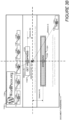
- FIGURE 1 illustrates a system 100 for implementing aspects of the present disclosure.
- the system 100 can provide a sandbox solution to identify malware and phishing activity that may be introduced via a document or a URL used for retrieving a document.
- the system 100 When a document 100 is received, the system 100 generates a rendering 111 of the document 110.
- the system can apply an enrichment process to identify URLs 114 directly embedded in the document 110.
- the enrichment process can also utilize a click simulation process to generate URLs 114 from executable code 117 embedded in the document 110.
- the system 100 can then analyze visual elements 112 displayed in the rendering 111 to generate a score for associated blobs.
- the score of each blob can be based on a number of different factors, including a size and/or position of an associated visual element.
- the score can indicate a probability that a user is likely to select an associated visual element.
- the system 100 can then generate a ranked list of blobs based on the generated scores.
- each object of the document may be referred to herein as a Binary Large Object ("blob"), where each blob may be associated with a selectable region 113, a visual element, a URL, and/or code that can be executed to generate a URL.
- a selectable region 113 can define coordinates that specify a predetermined area of a document rendering 111 that can receive an input to invoke some type of action. For instance, a selectable region 113 may be associated with a URL.
- a computing device may retrieve data from a target host using the associated URL.
- the process can also involve an enrichment stage where the computing device determines if a blob is actionable.
- any suitable code such as Java Script
- the computing device 101 can determine if a visual element, is associated with any executable code 117, e.g., a script, or if a visual element is associated with a link identifying a target host.
- Any suitable technique can be utilized to identify a link, e.g., a URL or any other type of network address, associated with the selectable region 113.
- the computing device can utilize click simulation to identify actionable blobs that are associated with scripts or any other type of executable code 117.
- the computing device can execute any type of code 117 embedded in the document 110 that may generate a URL, which may be in the form of a page request.
- the URL is captured and placed in a list, such as a URL list 114 shown in FIGURE 1 .
- the computing device can block any outgoing page requests 116A that may be caused by executable code 117 embedded in the document 110.
- any click simulation processing can be performed in a sandbox, such as the first sandbox 130A.
- a selection process based on a score for each URL can help a computing device to identify links that are most likely to be selected by a user, and thus ignoring links that are not likely to be selected. This can save in number of computing resources, including processing resources, memory resources, and networking resources, by avoiding the need to test each link is discovered within a document.
- the techniques disclosed herein may allow systems to meet performance metrics.
- an email system may be able to test incoming emails more efficiently and mitigate the delay in an email delivery process.
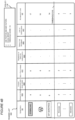
- example scores for characteristic of each visual element is shown in FIGURE 4A . These examples are provided for illustrative purposes and are not to be construed as limiting. It can be appreciated that other scores or any order indicating a ranking using different scales can be utilized. It can also be appreciated that any predetermined point within a visual element, other than a center of gravity, may be used. It can also be appreciated other points can be utilized other than the center point of a user interface. For instance, a distance between any point in a visual element and an edge of the user interface or a document rendering can be utilized to calculate a score or ranking.
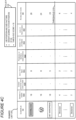
- the ranked list 300 can be generated based on the use of any combination of factors. For example, as shown in FIGURE 4B , the ranked list 300 can be based on a position of each associated visual element with respect to a particular point in a document rendering, e.g., a center point, and a size of the visual element.
- the system may weight different scores based on contextual information related to a state of a computer or a testing preference. For instance, a position of a visual element may be given more weight when calculating an accumulative score. A weight may be given to a particular score, for instance, based on data indicating a type of computer that is associated with end users, historical patterns of end users, etc. A weight may be given to a particular score, for instance, based on a screen size of a device or the capabilities of a screen. For instance, a score based on a color of a visual element may be given less weight if a computer has a grayscale screen or a screen is set to a grayscale mode.
- FIGURE 4C illustrates an example of a ranked list that is influenced by a policy defining different weights for different factors. In this example, the score associated with each position is given more weight versus other factors.
- FIGURE 4D illustrates another example of a ranked list that is influenced by a position of each visual element and a level of suspiciousness of each associated link.
- the policy 118 indicates that a threshold for analyzing each link can be time-based. For instance, a server can test as many links as possible with the list, starting with the highest ranked URL, within a predetermined period of time. The server can then test as many URLs as possible during that time period. Such thresholds can also be based on other factors such as a system's current workload level or available processing resources. For example, a time period, a number of selected URLs, or a threshold may increase when the workload is lower and the time period, number of selected URLs, or the threshold may decrease when a system workload is higher.
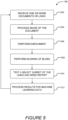
- FIGURE 5 aspects of a routine 500 for providing efficient detection of high-risk blobs based on an analysis of graphical elements of a document are shown and described below. It should be understood that the operations of the methods disclosed herein are not presented in any particular order and that performance of some or all of the operations in an alternative order(s) is possible and is contemplated. The operations have been presented in the demonstrated order for ease of description and illustration. Operations may be added, omitted, and/or performed simultaneously, without departing from the scope of the appended claims.
- the logical operations described herein are implemented (1) as a sequence of computer implemented acts or program modules running on a computing system and/or (2) as interconnected machine logic circuits or circuit modules within the computing system.
- the implementation is a matter of choice dependent on the performance and other requirements of the computing system.
- the logical operations described herein are referred to variously as states, operations, structural devices, acts, or modules. These operations, structural devices, acts, and modules may be implemented in software, in firmware, in special purpose digital logic, and any combination thereof.
- routine 500 is described herein as being implemented, at least in part, by modules running the features disclosed herein can be a dynamically linked library (DLL), a statically linked library, functionality produced by an application programing interface (API), a compiled program, an interpreted program, a script or any other executable set of instructions.
- DLL dynamically linked library
- API application programing interface
- Data can be stored in a data structure in one or more memory components. Data can be retrieved from the data structure by addressing links or references to the data structure.
- routine 500 may be also implemented in many other ways.
- routine 500 may be implemented, at least in part, by a processor of another remote computer or a local circuit.
- one or more of the operations of the routine 500 may alternatively or additionally be implemented, at least in part, by a chipset working alone or in conjunction with other software modules.
- one or more modules of a computing system can receive and/or process the data disclosed herein. Any service, circuit or application suitable for providing the techniques disclosed herein can be used in operations described herein.
- the routine 500 begins at operation 502 where the analysis module 129 and/or other modules receives, obtains, or otherwise accesses a document.
- Operation 502 can involve receiving a request 102 to determine a risk level an electronic document 110.
- the document can have a number of blogs each having one or more visual elements 112, and associated URL and/or embedded code that can generate a URL.
- the techniques disclosed herein can apply to any type of document, including but not limited to a Webpage retrieved from a URL, a calendar invitation, a PDF file, or any other data that defines a layout of content.
- the analysis module 129 and/or other modules can process an image of a document.
- one or more applications can be utilized to render a document on a user interface.
- operation 504 can identify elements of the document, such as a position of visual elements, the size of visual elements, etc. Coordinates can be generated for each visual element and other aspects of the document can be identified, such as coordinates for associated selectable regions, etc.
- the analysis module 129 and/or other modules can perform an enrichment process to identify URLs associated with the visual elements.
- any suitable code such as Java Script
- the computing device 101 can determine if a visual element, is associated with any executable code 117, e.g., a script, or if a visual element is associated with a link identifying a target host.
- Any suitable technique can be utilized to identify a link, e.g., a URL or any other type of network address, associated with the selectable region 113.
- the analysis module 129 can analyze the visual elements 112 to identify URLs 114 embedded in the document, wherein each of the URLs 114 embedded in the document are associated with at least one visual element 112 and at least one associated selectable region 113 of the document 110.
- the analysis module 129 and/or other modules can perform a click simulation process 205 for executable code 117 embedded in the document 110, wherein the click simulation process 205 causes the executable code 117 associated with one or more selectable regions 113 of the document 110 to generate additional URLs 114, wherein each of the additional URLs 114 are associated with one or more visual elements 112 and one or more selectable regions 113.
- the page requests 116A generated by the click simulation process 205 are blocked from transmission to one or more remote computing devices 140.
- a first score for a first URL of the one or more URLs is greater than a second score for a second URL of the one or more URLs when a first visual element associated with the first URL is physically larger than a second visual element associated with the second URL.
- a first score for a first URL of the one or more URLs is greater than a second score for a second URL of the one or more URLs when a first visual element associated with the first URL is has a color or a graphical feature that is more prominent than a second visual element associated with the second URL.
- the analysis module 129 and/or other modules select a subset of URLs 115 from the URLs 114 identified in the analysis of the visual elements 112 and the additional URLs 114 generated by the executable code 117.
- the individual URLs 114 that have an associated score that meets one or more criteria are selected for the subset of URLs 115.
- the analysis module 129 and/or other modules can then cause an execution of a testing process 209 for the subset of URLs 115, wherein the testing process 209 comprises generating subsequent page requests 116B for target data 119 from the one or more remote computing devices 140 identified in the subset of URLs 115.
- the testing process 209 can generate risk level data 120 from an analysis of one or more computer-implemented actions caused by the target data 119.
- the risk level data 120 can indicate a risk level for the individual URLs of the subset of URLs 115.
- the computing device can communicate the risk level data 120 to a requesting device 103 providing an indication of one or more security measures to be performed in association with the individual URLs of the subset of URLs 115.
- the risk level data 120 can also be used locally to identify one or more security measures to be performed.
- the computing device can generate a ranked list 300 of the individual URLs, wherein the ranked list is based on individual scores associated with the individual URLs.
- the subset of URLs can then be is based on a number of URLs that are tested within a predetermined time period, wherein the testing process processes the individual URLs in an order according to the individual scores, starting with URLs that are ranked highest in the ranked list.
- machine learning processes can be applied to adjust the time period based on the results of the testing process. For instance, if a number of test results indicate that risk levels have increased for certain documents, a computing system may increase the given time period to allocate more resources for the testing process. In addition to a time period, the system may determine a threshold number of items to test on the list, where testing would start with the highest rate items on the list. Threshold can change based on the factors described above that can be used to adjust the time period. From operation 512, the system can return to operation 502 for further processing.
- FIGURE 6 shows additional details of an example computer architecture 600 for a computer, such as the document server 120 ( FIGURE 1 ), capable of executing the program components described herein.
- the computer architecture 600 illustrated in FIGURE 6 illustrates an architecture for a server computer, a mobile phone, a PDA, a smart phone, a desktop computer, a netbook computer, a tablet computer, and/or a laptop computer.
- the computer architecture 600 may be utilized to execute any aspects of the software components presented herein.
- the computer architecture 600 illustrated in FIGURE 6 includes a central processing unit 602 ("CPU"), a system memory 604, including a random-access memory 606 (“RAM”) and a read-only memory (“ROM”) 608, and a system bus 610 that couples the memory 604 to the CPU 602.
- the computer architecture 600 further includes a mass storage device 612 for storing an operating system 607, other data, and one or more applications, such as the analysis module 129.
- the mass storage device 612 can also store other items such as the document 110.
- a document can comprise at least one blob 609 that comprises at least one visual element, coordinates of the visual element for identifying a selectable region within a document, an address such as URL, and/or executable code for generating a URL.
- Communication media includes computer readable instructions, data structures, program modules, or other data in a modulated data signal such as a carrier wave or other transport mechanism and includes any delivery media.
- modulated data signal means a signal that has one or more of its characteristics changed or set in a manner so as to encode information in the signal.
- communication media includes wired media such as a wired network or direct-wired connection, and wireless media such as acoustic, RF, infrared and other wireless media. Combinations of the any of the above should also be included within the scope of computer-readable media.
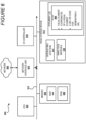
- any one of the application servers 708 may communicate or facilitate the functionality and features described herein.
- a social networking application, mail client, messaging client or a browser running on a phone or any other client 706 may communicate with a networking service 722 and facilitate the functionality, even in part, described above with respect to FIGURE 7 .
- Any device or service depicted herein can be used as a resource for supplemental data, including email servers, storage servers, etc.
- the application servers 708 also can host other services, applications, portals, and/or other resources (“other resources") 724.
- the other resources 724 can include, but are not limited to, document sharing, rendering or any other functionality. It thus can be appreciated that the computing environment 702 can provide integration of the concepts and technologies disclosed herein with various mailbox, messaging, social networking, and/or other services or resources.
- the processor 802 is, or is included in, a system-on-chip ("SoC") along with one or more of the other components described herein below.
- SoC may include the processor 802, a GPU, one or more of the network connectivity components 806, and one or more of the sensor components 808.
- the processor 802 is fabricated, in part, utilizing a package-on-package (“PoP") integrated circuit packaging technique.
- the processor 802 may be a single core or multi-core processor.
- the memory components 804 include a random access memory (“RAM”) 814, a read-only memory (“ROM”) 816, an integrated storage memory (“integrated storage”) 818, and a removable storage memory (“removable storage”) 820.
- RAM random access memory
- ROM read-only memory
- integrated storage integrated storage
- removable storage removable storage memory
- the RAM 814 or a portion thereof, the ROM 816 or a portion thereof, and/or some combination of the RAM 814 and the ROM 816 is integrated in the processor 802.
- the ROM 816 is configured to store a firmware, an operating system or a portion thereof (e.g., operating system kernel), and/or a bootloader to load an operating system kernel from the integrated storage 818 and/or the removable storage 820.
- the network 856 may be or may include a WWAN, such as a mobile telecommunications network utilizing one or more mobile telecommunications technologies to provide voice and/or data services to a computing device utilizing the computing device architecture 800 via the WWAN component 822.
- the mobile telecommunications technologies can include, but are not limited to, Global System for Mobile communications ("GSM”), Code Division Multiple Access (“CDMA”) ONE, CDMA7000, Universal Mobile Telecommunications System (“UMTS”), Long Term Evolution (“LTE”), and Worldwide Interoperability for Microwave Access (“WiMAX”).
- GSM Global System for Mobile communications
- CDMA Code Division Multiple Access
- UMTS Universal Mobile Telecommunications System
- LTE Long Term Evolution
- WiMAX Worldwide Interoperability for Microwave Access
- the network 856 may be a WPAN operating in accordance with Infrared Data Association (“IrDA”), BLUETOOTH, wireless Universal Serial Bus (“USB”), Z-Wave, ZIGBEE, or some other short-range wireless technology.
- the WPAN component 826 is configured to facilitate communications with other devices, such as peripherals, computers, or other computing devices via the WPAN.
- the sensor components 808 include a magnetometer 828, an ambient light sensor 830, a proximity sensor 832, an accelerometer 834, a gyroscope 836, and a Global Positioning System sensor (“GPS sensor”) 838. It is contemplated that other sensors, such as, but not limited to, temperature sensors or shock detection sensors, also may be incorporated in the computing device architecture 800.
- GPS sensor Global Positioning System sensor
- the accelerometer 834 is configured to measure proper acceleration.
- output from the accelerometer 834 is used by an application program as an input mechanism to control some functionality of the application program.
- the application program may be a video game in which a character, a portion thereof, or an object is moved or otherwise manipulated in response to input received via the accelerometer 834.
- output from the accelerometer 834 is provided to an application program for use in switching between landscape and portrait modes, calculating coordinate acceleration, or detecting a fall. Other uses of the accelerometer 834 are contemplated.
- the video I/O interface component 848 is configured to provide video input and/or output capabilities to the computing device.
- the video I/O interface component 848 includes a video connector configured to receive video as input from another device (e.g., a video media player such as a DVD or BLURAY player) or send video as output to another device (e.g., a monitor, a television, or some other external display).
- the video I/O interface component 848 includes a High-Definition Multimedia Interface ("HDMI"), mini-HDMI, micro-HDMI, DisplayPort, or proprietary connector to input/output video content.
- the video I/O interface component 848 or portions thereof is combined with the audio I/O interface component 846 or portions thereof.
- one or more hardware buttons may also be included in the computing device architecture 800.
- the hardware buttons may be used for controlling some operational aspect of the computing device.
- the hardware buttons may be dedicated buttons or multi-use buttons.
- the hardware buttons may be mechanical or sensor-based.
- the power components 812 may also include a power connector, which may be combined with one or more of the aforementioned I/O components 810.
- the power components 812 may interface with an external power system or charging equipment via an I/O component.
Landscapes
- Engineering & Computer Science (AREA)
- Computer Security & Cryptography (AREA)
- Computer Hardware Design (AREA)
- General Engineering & Computer Science (AREA)
- Computing Systems (AREA)
- Signal Processing (AREA)
- Computer Networks & Wireless Communication (AREA)
- Software Systems (AREA)
- Theoretical Computer Science (AREA)
- General Physics & Mathematics (AREA)
- Virology (AREA)
- General Health & Medical Sciences (AREA)
- Health & Medical Sciences (AREA)
- Physics & Mathematics (AREA)
- Information Transfer Between Computers (AREA)
Claims (15)
- Computerimplementiertes Verfahren, das umfasst:Analysieren visueller Elemente (112) eines Dokuments (110), um in das Dokument eingebettete URLs (114) zu identifizieren, wobei jeder der URLs (114) des Dokuments mindestens ein visuelles Element (112) und mindestens ein zugeordneter auswählbarer Bereich (113) des Dokuments (110) zugeordnet ist, wobei das mindestens eine visuelle Element (112) dem mindestens einen zugeordneten auswählbaren Bereich (113) zugeordnet ist;Bewirken, dass ein in das Dokument (110) eingebetteter ausführbarer Code (117) zusätzliche URLs (114) generiert, wobei jede der zusätzlichen URLs (114) einem oder mehreren visuellen Elementen (112) und einem oder mehreren auswählbaren Bereichen (113) zugeordnet ist, wobei die Übertragung von Seitenanforderungen (116A), die durch den in das Dokument (110) eingebetteten ausführbaren Code (117) generiert werden, an ein oder mehrere Remote-Computergeräte (140) blockiert wird;Generieren einer Bewertung für jede der einen oder mehreren URLs (114), die bei der Analyse der visuellen Elemente (112) identifiziert wurden, und der zusätzlichen URLs (114), die durch den ausführbaren Code (117) erzeugt wurden, wobei die Bewertung für jede URL (114)eine Wahrscheinlichkeit angibt, mit der ein Benutzer wahrscheinlich ein visuelles Element auswählt, das der URL (114) zugeordnet ist, und wobei die Bewertung für jede URL (114) auf einer Größe oder einer Position mindestens eines zugeordneten visuellen Elements basiert;Auswählen einer Teilmenge von URLs (115) aus den bei der Analyse der visuellen Elemente (112) identifizierten URLs (114) und aus den vom ausführbaren Code (117) generierten zusätzlichen URLs (114), wobei einzelne URLs mit einer zugeordneten Bewertung, die ein oder mehrere Kriterien erfüllt, für die Teilmenge von URLs ausgewählt werden;Generieren nachfolgender Seitenanforderungen (116B) unter Verwendung jeder der URLs der Teilmenge von URLs (115), wobei die nachfolgenden Seitenanforderungen (116B) Zieldaten (119) von dem einen oder den mehreren Remote-Computergeräten (140) erhalten, die in der Teilmenge von URLs (115) identifiziert werden; undGenerieren von Risikostufendaten (120) aus einer Analyse einer oder mehrerer computerimplementierter Aktionen, die durch die als Reaktion auf die nachfolgenden Seitenanforderungen (116B) empfangenen Zieldaten (119) verursacht werden, wobei die Risikostufendaten (120) eine Risikostufe für die einzelnen URLs der Teilmenge von URLs (115) angeben, wobei die Risikostufendaten (120) einen Hinweis auf eine oder mehrere Sicherheitsmaßnahmen bereitstellen, die in Verbindung mit den einzelnen URLs der der Teilmenge von URLs (115) durchzuführen sind.
- Computerimplementiertes Verfahren nach Anspruch 1, das ferner umfasst: Generieren einer Rangliste (300) der einzelnen URLs der Teilmenge von URLs (115), wobei die Rangliste eine erste URL umfasst, die einen höheren Rang als eine zweite URL hat, als Reaktion auf die Bestimmung, dass ein erstes visuelles Element, das der ersten URL zugeordnet ist, eine kürzere Distanz zu einem Mittelpunkt (301) einer Darstellung des Dokuments hat als ein zweites visuelles Element, das der zweiten URL zugeordnet ist, wobei Zieldaten (119), die in Zuordnung zu der ersten URL empfangen wurden, vor der Analyse der Zieldaten (119), die in Zuordnung zu der zweiten URL empfangen wurden, analysiert werden.
- Computerimplementiertes Verfahren nach Anspruch 1, das ferner umfasst: Generieren einer Rangliste (300) der einzelnen URLs der Teilmenge von URLs (115), wobei die Rangliste eine erste URL umfasst, die einen höheren Rang als eine zweite URL hat, als Reaktion auf die Bestimmung, dass ein erstes visuelles Element, das der ersten URL zugeordnet ist, größer als ein zweites visuelles Element ist, das der zweiten URL zugeordnet ist, wobei Zieldaten (119), die in Zuordnung zu der ersten URL empfangenen wurden, vor der Analyse der Zieldaten (119), die in Zuordnung zu der zweiten URL empfangen wurden, analysiert werden.
- Computerimplementiertes Verfahren nach Anspruch 1, das ferner umfasst: Generieren einer Rangliste (300) der einzelnen URLs der Teilmenge von URLs (115), wobei die Rangliste eine erste URL umfasst, die einen höheren Rang als eine zweite URL hat, als Reaktion auf die Bestimmung, dass ein erstes visuelles Element, das der ersten URL zugeordnet ist, eine Farbe oder ein grafisches Merkmal aufweist, das auffälliger ist als ein zweites visuelles Element, das der zweiten URL zugeordnet ist, wobei Zieldaten (119), die in Zuordnung zu der ersten URL empfangenen wurden, vor der Analyse der Zieldaten (119), die in Zuordnung zu der zweiten URL empfangen wurden, analysiert werden.
- Computerimplementiertes Verfahren nach Anspruch 1, das ferner umfasst: Generieren einer Rangliste (300) der einzelnen URLs der Teilmenge von URLs (115), wobei die Rangliste eine erste URL umfasst, die einen höheren Rang als eine zweite URL hat, als Reaktion auf die Bestimmung, dass die erste URL einen höheren Grad an Verdächtigkeit aufweist als die zweite URL, wobei Zieldaten (119), die in Zuordnung zu der ersten URL empfangenen wurden, vor der Analyse der Zieldaten (119), die in Zuordnung zu der zweiten URL empfangen wurden, analysiert werden.
- Computerimplementiertes Verfahren nach Anspruch 1, das ferner umfasst:Empfangen einer Anfrage (102) zur Bestimmung einer Risikostufe eines elektronischen Dokuments (110), das eine Anzahl visueller Elemente (112) aufweist; undKommunizieren der Risikostufendaten (120) an ein anforderndes Gerät (103), das einen Hinweis auf die eine oder mehreren Sicherheitsmaßnahmen bereitstellt, die in Zuordnung zu den einzelnen URLs der Teilmenge von URLs (115) durchzuführen sind; wobeidas Bewirken, dass der in das Dokument (110) eingebettete ausführbare Code (117) zusätzliche URLs (114) generiert, das Bewirken einer Ausführung eines Klicksimulationsverfahrens (205) für den in das Dokument (110) eingebetteten ausführbaren Code (117) umfasst, wobei das Klicksimulationsverfahren (205) den einem oder mehreren auswählbaren Bereichen (113) des Dokuments (110) zugeordneten ausführbaren Code (117) veranlasst, zusätzliche URLs (114) zu generieren, und wobei die Übertragung von durch das Klicksimulationsverfahren (205) generierten Seitenanforderungen (116A) an ein oder mehrere Remote-Computergeräte (140) blockiert wird; unddas Kommunizieren nachfolgender Seitenanforderungen (116B) unter Verwendung jeder der URLs der Teilmenge von URLs (115) das Bewirken der Ausführung eines Testverfahrens (209) für die Teilmenge von URLs (115) umfasst, wobei das Testverfahren (209) das Generieren nachfolgender Seitenanforderungen (116B) für Zieldaten (119) von den einem oder den mehreren Remote-Computergeräten (140) umfasst, die in der Teilmenge von URLs (115) identifiziert sind, wobei das Testverfahren (209) die Risikostufendaten (120) aus einer Analyse einer oder mehrerer computerimplementierter Aktionen generiert, die durch die Zieldaten (119) bewirkt werden.
- Computerimplementiertes Verfahren nach Anspruch 6, wobei eine erste Bewertung für eine erste URL der einen oder mehreren URLs höher ist als eine zweite Bewertung für eine zweite URL der einen oder mehreren URLs, wenn ein erstes visuelles Element, das der ersten URL zugeordnet ist, einen kürzeren Abstand zu einem Mittelpunkt (301) einer Darstellung des Dokuments aufweist als ein zweites visuelles Element, das der zweiten URL zugeordnet ist.
- Computerimplementiertes Verfahren nach Anspruch 6, wobei eine erste Bewertung für eine erste URL der einen oder mehreren URLs höher ist als eine zweite Bewertung für eine zweite URL der einen oder mehreren URLs, wenn ein erstes visuelles Element, das der ersten URL zugeordnet ist, größer ist als ein zweites visuelles Element, das der zweiten URL zugeordnet ist.
- Computerimplementiertes Verfahren nach Anspruch 6, wobei eine erste Bewertung für eine erste URL der einen oder mehreren URLs höher ist als eine zweite Bewertung für eine zweite URL der einen oder mehreren URLs, wenn ein erstes visuelles Element, das der ersten URL zugeordnet ist, eine Farbe oder ein grafisches Merkmal aufweist, das auffälliger ist als ein zweites visuelles Element, das der zweiten URL zugeordnet ist.
- Computerimplementiertes Verfahren nach Anspruch 6, wobei jede Bewertung der einen oder der mehreren URLs ferner auf einem zugeordneten Grad der Verdächtigkeit jeder URL basiert, wobei eine erste Bewertung für eine erste URL der einen oder der mehreren URLs höher ist als eine zweite Bewertung für eine zweite URL der einen oder der mehreren URLs, wenn ein der ersten URL zugeordneter Grad der Verdächtigkeit höher ist als ein der zweiten URL zugeordneter Grad der Verdächtigkeit.
- Computerimplementiertes Verfahren nach Anspruch 6, wobei das Klicksimulationsverfahren in einer ersten Sandbox-Computerumgebung ausgeführt wird, die konfiguriert ist, um alle ausgehenden Seitenanforderungen zu blockieren, wobei das Testverfahren für die Teilmenge von Links in einer zweiten Sandbox-Computerumgebung ausgeführt wird, wobei die zweite Sandbox-Computerumgebung konfiguriert ist, um Vorgänge des Testverfahrens von Vorgängen des Klicksimulationsverfahrens zu isolieren.
- Computerimplementiertes Verfahren nach Anspruch 6, das ferner umfasst:Generieren einer Rangliste (300) der einzelnen URLs, wobei die Rangliste auf den einzelnen Bewertungen basiert, die den einzelnen URLs zugeordnet sind, wobei die Teilmenge der URLs auf einer Anzahl von URLs basiert, die innerhalb eines vorgegebenen Zeitraums getestet werden, wobei das Testverfahren die einzelnen URLs in einer Reihenfolge gemäß den einzelnen Bewertungen verarbeitet, beginnend mit den URLs, die in der Rangliste am höchsten bewertet sind.
- Computerimplementiertes Verfahren nach Anspruch 6, wobei eine einzelne Bewertung einer einzelnen URL ein oder mehrere Kriterien erfüllt, wenn die einzelne Bewertung einen vorgegebenen Schwellenwert überschreitet.
- Computerimplementiertes Verfahren nach Anspruch 13, wobei der vorgegebene Schwellenwert basierend auf mindestens einem von historischen Daten, die eine Erhöhung der Bedrohungsstufen und eine Erhöhung oder Verringerung der für das Testverfahren verfügbaren Computerressourcen anzeigen, eingestellt wird.
- Computerlesbares Speichermedium, auf dem computerausführbare Anweisungen codiert sind, die bei Ausführung bewirken, dass eine oder mehrere Verarbeitungseinheiten ein Verfahren nach einem der Ansprüche 1 bis 14 ausführen.
Applications Claiming Priority (2)
| Application Number | Priority Date | Filing Date | Title |
|---|---|---|---|
| US16/823,273 US11665181B2 (en) | 2020-03-18 | 2020-03-18 | Detection of high-risk blobs based on an analysis of associated graphical elements |
| PCT/US2021/015597 WO2021188210A1 (en) | 2020-03-18 | 2021-01-29 | Detection of high-risk blobs based on an analysis of associated graphical elements |
Publications (2)
| Publication Number | Publication Date |
|---|---|
| EP4121877A1 EP4121877A1 (de) | 2023-01-25 |
| EP4121877B1 true EP4121877B1 (de) | 2024-07-10 |
Family
ID=74672464
Family Applications (1)
| Application Number | Title | Priority Date | Filing Date |
|---|---|---|---|
| EP21707114.1A Active EP4121877B1 (de) | 2020-03-18 | 2021-01-29 | Erkennung von hochrisiko-blobs basierend auf einer analyse zugeordneter graphischer elemente |
Country Status (3)
| Country | Link |
|---|---|
| US (1) | US11665181B2 (de) |
| EP (1) | EP4121877B1 (de) |
| WO (1) | WO2021188210A1 (de) |
Families Citing this family (7)
| Publication number | Priority date | Publication date | Assignee | Title |
|---|---|---|---|---|
| US11595418B2 (en) * | 2020-07-21 | 2023-02-28 | T-Mobile Usa, Inc. | Graphical connection viewer for discovery of suspect network traffic |
| US11582187B1 (en) * | 2022-02-18 | 2023-02-14 | Uab 360 It | Method and apparatus for providing IP address filtering |
| US12541591B2 (en) | 2022-04-25 | 2026-02-03 | Palo Alto Networks, Inc. | Malware detection for documents using knowledge distillation assisted learning |
| US12348560B2 (en) * | 2022-04-25 | 2025-07-01 | Palo Alto Networks, Inc. | Detecting phishing PDFs with an image-based deep learning approach |
| US12417286B2 (en) | 2023-01-31 | 2025-09-16 | Splunk Inc. | Automated attack chain following by a threat analysis platform |
| US12483588B2 (en) * | 2023-01-31 | 2025-11-25 | Cisco Technology, Inc. | Web analyzer engine for identifying security-related threats |
| US12393688B2 (en) | 2023-01-31 | 2025-08-19 | Splunk Inc. | File analysis engines for identifying security-related threats |
Family Cites Families (11)
| Publication number | Priority date | Publication date | Assignee | Title |
|---|---|---|---|---|
| MY154409A (en) * | 2008-07-21 | 2015-06-15 | Secure Corp M Sdn Bhd F | Website content regulation |
| US8505094B1 (en) * | 2010-01-13 | 2013-08-06 | Trend Micro, Inc. | Detection of malicious URLs in a web page |
| US9648036B2 (en) * | 2014-12-29 | 2017-05-09 | Palantir Technologies Inc. | Systems for network risk assessment including processing of user access rights associated with a network of devices |
| US10339300B2 (en) * | 2015-03-23 | 2019-07-02 | Binary Guard Corp. | Advanced persistent threat and targeted malware defense |
| US10268976B2 (en) * | 2016-02-17 | 2019-04-23 | SecurityScorecard, Inc. | Non-intrusive techniques for discovering and using organizational relationships |
| EP3267349A1 (de) * | 2016-07-04 | 2018-01-10 | Cyan Security Group GmbH | Verfahren und computersystem zum ermitteln einer bedrohungspunktzahl |
| US10880322B1 (en) * | 2016-09-26 | 2020-12-29 | Agari Data, Inc. | Automated tracking of interaction with a resource of a message |
| US10728241B2 (en) * | 2018-01-26 | 2020-07-28 | Jumio Corporation | Triage engine for document authentication |
| US11323464B2 (en) * | 2018-08-08 | 2022-05-03 | Rightquestion, Llc | Artifact modification and associated abuse detection |
| US20200153842A1 (en) * | 2018-11-09 | 2020-05-14 | SRM Institute of Science and Technology | System and method for preventing a stegosploit attack |
| US10686826B1 (en) * | 2019-03-28 | 2020-06-16 | Vade Secure Inc. | Optical scanning parameters computation methods, devices and systems for malicious URL detection |
-
2020
- 2020-03-18 US US16/823,273 patent/US11665181B2/en active Active
-
2021
- 2021-01-29 WO PCT/US2021/015597 patent/WO2021188210A1/en not_active Ceased
- 2021-01-29 EP EP21707114.1A patent/EP4121877B1/de active Active
Also Published As
| Publication number | Publication date |
|---|---|
| US11665181B2 (en) | 2023-05-30 |
| US20210297428A1 (en) | 2021-09-23 |
| WO2021188210A1 (en) | 2021-09-23 |
| EP4121877A1 (de) | 2023-01-25 |
Similar Documents
| Publication | Publication Date | Title |
|---|---|---|
| EP3834115B1 (de) | Automatische generierung von zugangskontrollregeln für rechnerresourcen | |
| US11665181B2 (en) | Detection of high-risk blobs based on an analysis of associated graphical elements | |
| US10896284B2 (en) | Transforming data to create layouts | |
| US10521251B2 (en) | Hosting application experiences within storage service viewers | |
| US20140046923A1 (en) | Generating queries based upon data points in a spreadsheet application | |
| US12289321B2 (en) | Automated generation and deployment of honey tokens in provisioned resources on a remote computer resource platform | |
| US20150120748A1 (en) | Indexing spreadsheet structural attributes for searching | |
| US10922388B2 (en) | Session control for client-side applications in proxy solutions | |
| US10111620B2 (en) | Enhanced motion tracking using transportable inertial sensors to determine that a frame of reference is established | |
| US11269818B2 (en) | Smart versioning for files | |
| US20160140250A1 (en) | Dynamic adjustment of elements of a document | |
| WO2015074011A1 (en) | Enhanced event handler attachment | |
| US20180006983A1 (en) | Enhanced search filters for emails and email attachments in an electronic mailbox | |
| US20180025731A1 (en) | Cascading Specialized Recognition Engines Based on a Recognition Policy | |
| WO2018128954A1 (en) | Identification of documents based on location, usage patterns and content | |
| EP3436975A1 (de) | Erzeugen einer dienstanwendung | |
| EP3266165B1 (de) | Bedingte sofortige lieferung von e-mail-nachrichten | |
| US20160379226A1 (en) | Intelligent identification of multidimensional insights from process data |
Legal Events
| Date | Code | Title | Description |
|---|---|---|---|
| STAA | Information on the status of an ep patent application or granted ep patent |
Free format text: STATUS: UNKNOWN |
|
| STAA | Information on the status of an ep patent application or granted ep patent |
Free format text: STATUS: THE INTERNATIONAL PUBLICATION HAS BEEN MADE |
|
| PUAI | Public reference made under article 153(3) epc to a published international application that has entered the european phase |
Free format text: ORIGINAL CODE: 0009012 |
|
| STAA | Information on the status of an ep patent application or granted ep patent |
Free format text: STATUS: REQUEST FOR EXAMINATION WAS MADE |
|
| 17P | Request for examination filed |
Effective date: 20220812 |
|
| AK | Designated contracting states |
Kind code of ref document: A1 Designated state(s): AL AT BE BG CH CY CZ DE DK EE ES FI FR GB GR HR HU IE IS IT LI LT LU LV MC MK MT NL NO PL PT RO RS SE SI SK SM TR |
|
| DAV | Request for validation of the european patent (deleted) | ||
| DAX | Request for extension of the european patent (deleted) | ||
| GRAP | Despatch of communication of intention to grant a patent |
Free format text: ORIGINAL CODE: EPIDOSNIGR1 |
|
| STAA | Information on the status of an ep patent application or granted ep patent |
Free format text: STATUS: GRANT OF PATENT IS INTENDED |
|
| RIC1 | Information provided on ipc code assigned before grant |
Ipc: H04L 9/40 20220101ALI20240115BHEP Ipc: G06F 21/56 20130101ALI20240115BHEP Ipc: G06F 21/53 20130101AFI20240115BHEP |
|
| INTG | Intention to grant announced |
Effective date: 20240201 |
|
| P01 | Opt-out of the competence of the unified patent court (upc) registered |
Effective date: 20240313 |
|
| GRAS | Grant fee paid |
Free format text: ORIGINAL CODE: EPIDOSNIGR3 |
|
| GRAA | (expected) grant |
Free format text: ORIGINAL CODE: 0009210 |
|
| STAA | Information on the status of an ep patent application or granted ep patent |
Free format text: STATUS: THE PATENT HAS BEEN GRANTED |
|
| AK | Designated contracting states |
Kind code of ref document: B1 Designated state(s): AL AT BE BG CH CY CZ DE DK EE ES FI FR GB GR HR HU IE IS IT LI LT LU LV MC MK MT NL NO PL PT RO RS SE SI SK SM TR |
|
| REG | Reference to a national code |
Ref country code: CH Ref legal event code: EP |
|
| REG | Reference to a national code |
Ref country code: DE Ref legal event code: R096 Ref document number: 602021015461 Country of ref document: DE |
|
| REG | Reference to a national code |
Ref country code: LT Ref legal event code: MG9D |
|
| REG | Reference to a national code |
Ref country code: NL Ref legal event code: MP Effective date: 20240710 |
|
| PG25 | Lapsed in a contracting state [announced via postgrant information from national office to epo] |
Ref country code: PT Free format text: LAPSE BECAUSE OF FAILURE TO SUBMIT A TRANSLATION OF THE DESCRIPTION OR TO PAY THE FEE WITHIN THE PRESCRIBED TIME-LIMIT Effective date: 20241111 |
|
| REG | Reference to a national code |
Ref country code: AT Ref legal event code: MK05 Ref document number: 1702665 Country of ref document: AT Kind code of ref document: T Effective date: 20240710 |
|
| PG25 | Lapsed in a contracting state [announced via postgrant information from national office to epo] |
Ref country code: NL Free format text: LAPSE BECAUSE OF FAILURE TO SUBMIT A TRANSLATION OF THE DESCRIPTION OR TO PAY THE FEE WITHIN THE PRESCRIBED TIME-LIMIT Effective date: 20240710 |
|
| PG25 | Lapsed in a contracting state [announced via postgrant information from national office to epo] |
Ref country code: PT Free format text: LAPSE BECAUSE OF FAILURE TO SUBMIT A TRANSLATION OF THE DESCRIPTION OR TO PAY THE FEE WITHIN THE PRESCRIBED TIME-LIMIT Effective date: 20241111 Ref country code: NL Free format text: LAPSE BECAUSE OF FAILURE TO SUBMIT A TRANSLATION OF THE DESCRIPTION OR TO PAY THE FEE WITHIN THE PRESCRIBED TIME-LIMIT Effective date: 20240710 |
|
| PG25 | Lapsed in a contracting state [announced via postgrant information from national office to epo] |
Ref country code: NO Free format text: LAPSE BECAUSE OF FAILURE TO SUBMIT A TRANSLATION OF THE DESCRIPTION OR TO PAY THE FEE WITHIN THE PRESCRIBED TIME-LIMIT Effective date: 20241010 |
|
| PG25 | Lapsed in a contracting state [announced via postgrant information from national office to epo] |
Ref country code: FI Free format text: LAPSE BECAUSE OF FAILURE TO SUBMIT A TRANSLATION OF THE DESCRIPTION OR TO PAY THE FEE WITHIN THE PRESCRIBED TIME-LIMIT Effective date: 20240710 Ref country code: GR Free format text: LAPSE BECAUSE OF FAILURE TO SUBMIT A TRANSLATION OF THE DESCRIPTION OR TO PAY THE FEE WITHIN THE PRESCRIBED TIME-LIMIT Effective date: 20241011 Ref country code: PL Free format text: LAPSE BECAUSE OF FAILURE TO SUBMIT A TRANSLATION OF THE DESCRIPTION OR TO PAY THE FEE WITHIN THE PRESCRIBED TIME-LIMIT Effective date: 20240710 |
|
| PG25 | Lapsed in a contracting state [announced via postgrant information from national office to epo] |
Ref country code: BG Free format text: LAPSE BECAUSE OF FAILURE TO SUBMIT A TRANSLATION OF THE DESCRIPTION OR TO PAY THE FEE WITHIN THE PRESCRIBED TIME-LIMIT Effective date: 20240710 |
|
| PG25 | Lapsed in a contracting state [announced via postgrant information from national office to epo] |
Ref country code: LV Free format text: LAPSE BECAUSE OF FAILURE TO SUBMIT A TRANSLATION OF THE DESCRIPTION OR TO PAY THE FEE WITHIN THE PRESCRIBED TIME-LIMIT Effective date: 20240710 |
|
| PG25 | Lapsed in a contracting state [announced via postgrant information from national office to epo] |
Ref country code: AT Free format text: LAPSE BECAUSE OF FAILURE TO SUBMIT A TRANSLATION OF THE DESCRIPTION OR TO PAY THE FEE WITHIN THE PRESCRIBED TIME-LIMIT Effective date: 20240710 Ref country code: IS Free format text: LAPSE BECAUSE OF FAILURE TO SUBMIT A TRANSLATION OF THE DESCRIPTION OR TO PAY THE FEE WITHIN THE PRESCRIBED TIME-LIMIT Effective date: 20241110 |
|
| PG25 | Lapsed in a contracting state [announced via postgrant information from national office to epo] |
Ref country code: HR Free format text: LAPSE BECAUSE OF FAILURE TO SUBMIT A TRANSLATION OF THE DESCRIPTION OR TO PAY THE FEE WITHIN THE PRESCRIBED TIME-LIMIT Effective date: 20240710 |
|
| PG25 | Lapsed in a contracting state [announced via postgrant information from national office to epo] |
Ref country code: ES Free format text: LAPSE BECAUSE OF FAILURE TO SUBMIT A TRANSLATION OF THE DESCRIPTION OR TO PAY THE FEE WITHIN THE PRESCRIBED TIME-LIMIT Effective date: 20240710 Ref country code: RS Free format text: LAPSE BECAUSE OF FAILURE TO SUBMIT A TRANSLATION OF THE DESCRIPTION OR TO PAY THE FEE WITHIN THE PRESCRIBED TIME-LIMIT Effective date: 20241010 |
|
| PG25 | Lapsed in a contracting state [announced via postgrant information from national office to epo] |
Ref country code: RS Free format text: LAPSE BECAUSE OF FAILURE TO SUBMIT A TRANSLATION OF THE DESCRIPTION OR TO PAY THE FEE WITHIN THE PRESCRIBED TIME-LIMIT Effective date: 20241010 Ref country code: PL Free format text: LAPSE BECAUSE OF FAILURE TO SUBMIT A TRANSLATION OF THE DESCRIPTION OR TO PAY THE FEE WITHIN THE PRESCRIBED TIME-LIMIT Effective date: 20240710 Ref country code: NO Free format text: LAPSE BECAUSE OF FAILURE TO SUBMIT A TRANSLATION OF THE DESCRIPTION OR TO PAY THE FEE WITHIN THE PRESCRIBED TIME-LIMIT Effective date: 20241010 Ref country code: LV Free format text: LAPSE BECAUSE OF FAILURE TO SUBMIT A TRANSLATION OF THE DESCRIPTION OR TO PAY THE FEE WITHIN THE PRESCRIBED TIME-LIMIT Effective date: 20240710 Ref country code: IS Free format text: LAPSE BECAUSE OF FAILURE TO SUBMIT A TRANSLATION OF THE DESCRIPTION OR TO PAY THE FEE WITHIN THE PRESCRIBED TIME-LIMIT Effective date: 20241110 Ref country code: HR Free format text: LAPSE BECAUSE OF FAILURE TO SUBMIT A TRANSLATION OF THE DESCRIPTION OR TO PAY THE FEE WITHIN THE PRESCRIBED TIME-LIMIT Effective date: 20240710 Ref country code: GR Free format text: LAPSE BECAUSE OF FAILURE TO SUBMIT A TRANSLATION OF THE DESCRIPTION OR TO PAY THE FEE WITHIN THE PRESCRIBED TIME-LIMIT Effective date: 20241011 Ref country code: FI Free format text: LAPSE BECAUSE OF FAILURE TO SUBMIT A TRANSLATION OF THE DESCRIPTION OR TO PAY THE FEE WITHIN THE PRESCRIBED TIME-LIMIT Effective date: 20240710 Ref country code: ES Free format text: LAPSE BECAUSE OF FAILURE TO SUBMIT A TRANSLATION OF THE DESCRIPTION OR TO PAY THE FEE WITHIN THE PRESCRIBED TIME-LIMIT Effective date: 20240710 Ref country code: BG Free format text: LAPSE BECAUSE OF FAILURE TO SUBMIT A TRANSLATION OF THE DESCRIPTION OR TO PAY THE FEE WITHIN THE PRESCRIBED TIME-LIMIT Effective date: 20240710 Ref country code: AT Free format text: LAPSE BECAUSE OF FAILURE TO SUBMIT A TRANSLATION OF THE DESCRIPTION OR TO PAY THE FEE WITHIN THE PRESCRIBED TIME-LIMIT Effective date: 20240710 |
|
| REG | Reference to a national code |
Ref country code: DE Ref legal event code: R097 Ref document number: 602021015461 Country of ref document: DE |
|
| PG25 | Lapsed in a contracting state [announced via postgrant information from national office to epo] |
Ref country code: DK Free format text: LAPSE BECAUSE OF FAILURE TO SUBMIT A TRANSLATION OF THE DESCRIPTION OR TO PAY THE FEE WITHIN THE PRESCRIBED TIME-LIMIT Effective date: 20240710 Ref country code: RO Free format text: LAPSE BECAUSE OF FAILURE TO SUBMIT A TRANSLATION OF THE DESCRIPTION OR TO PAY THE FEE WITHIN THE PRESCRIBED TIME-LIMIT Effective date: 20240710 Ref country code: SM Free format text: LAPSE BECAUSE OF FAILURE TO SUBMIT A TRANSLATION OF THE DESCRIPTION OR TO PAY THE FEE WITHIN THE PRESCRIBED TIME-LIMIT Effective date: 20240710 |
|
| PG25 | Lapsed in a contracting state [announced via postgrant information from national office to epo] |
Ref country code: EE Free format text: LAPSE BECAUSE OF FAILURE TO SUBMIT A TRANSLATION OF THE DESCRIPTION OR TO PAY THE FEE WITHIN THE PRESCRIBED TIME-LIMIT Effective date: 20240710 |
|
| PG25 | Lapsed in a contracting state [announced via postgrant information from national office to epo] |
Ref country code: CZ Free format text: LAPSE BECAUSE OF FAILURE TO SUBMIT A TRANSLATION OF THE DESCRIPTION OR TO PAY THE FEE WITHIN THE PRESCRIBED TIME-LIMIT Effective date: 20240710 |
|
| PG25 | Lapsed in a contracting state [announced via postgrant information from national office to epo] |
Ref country code: IT Free format text: LAPSE BECAUSE OF FAILURE TO SUBMIT A TRANSLATION OF THE DESCRIPTION OR TO PAY THE FEE WITHIN THE PRESCRIBED TIME-LIMIT Effective date: 20240710 Ref country code: SK Free format text: LAPSE BECAUSE OF FAILURE TO SUBMIT A TRANSLATION OF THE DESCRIPTION OR TO PAY THE FEE WITHIN THE PRESCRIBED TIME-LIMIT Effective date: 20240710 |
|
| PLBE | No opposition filed within time limit |
Free format text: ORIGINAL CODE: 0009261 |
|
| STAA | Information on the status of an ep patent application or granted ep patent |
Free format text: STATUS: NO OPPOSITION FILED WITHIN TIME LIMIT |
|
| 26N | No opposition filed |
Effective date: 20250411 |
|
| REG | Reference to a national code |
Ref country code: DE Ref legal event code: R119 Ref document number: 602021015461 Country of ref document: DE |
|
| REG | Reference to a national code |
Ref country code: CH Ref legal event code: PL |
|
| PG25 | Lapsed in a contracting state [announced via postgrant information from national office to epo] |
Ref country code: SE Free format text: LAPSE BECAUSE OF FAILURE TO SUBMIT A TRANSLATION OF THE DESCRIPTION OR TO PAY THE FEE WITHIN THE PRESCRIBED TIME-LIMIT Effective date: 20240710 |
|
| PG25 | Lapsed in a contracting state [announced via postgrant information from national office to epo] |
Ref country code: MC Free format text: LAPSE BECAUSE OF FAILURE TO SUBMIT A TRANSLATION OF THE DESCRIPTION OR TO PAY THE FEE WITHIN THE PRESCRIBED TIME-LIMIT Effective date: 20240710 Ref country code: LU Free format text: LAPSE BECAUSE OF NON-PAYMENT OF DUE FEES Effective date: 20250129 |
|
| GBPC | Gb: european patent ceased through non-payment of renewal fee |
Effective date: 20250129 |
|
| PG25 | Lapsed in a contracting state [announced via postgrant information from national office to epo] |
Ref country code: DE Free format text: LAPSE BECAUSE OF NON-PAYMENT OF DUE FEES Effective date: 20250801 |
|
| PG25 | Lapsed in a contracting state [announced via postgrant information from national office to epo] |
Ref country code: GB Free format text: LAPSE BECAUSE OF NON-PAYMENT OF DUE FEES Effective date: 20250129 Ref country code: BE Free format text: LAPSE BECAUSE OF NON-PAYMENT OF DUE FEES Effective date: 20250131 |
|
| PG25 | Lapsed in a contracting state [announced via postgrant information from national office to epo] |
Ref country code: FR Free format text: LAPSE BECAUSE OF NON-PAYMENT OF DUE FEES Effective date: 20250131 |
|
| PG25 | Lapsed in a contracting state [announced via postgrant information from national office to epo] |
Ref country code: CH Free format text: LAPSE BECAUSE OF NON-PAYMENT OF DUE FEES Effective date: 20250131 |
|
| REG | Reference to a national code |
Ref country code: BE Ref legal event code: MM Effective date: 20250131 |
|
| PG25 | Lapsed in a contracting state [announced via postgrant information from national office to epo] |
Ref country code: IE Free format text: LAPSE BECAUSE OF NON-PAYMENT OF DUE FEES Effective date: 20250129 |