EP4121573B1 - Method for recovering valuable metals from spent lithium-ion-batteries - Google Patents
Method for recovering valuable metals from spent lithium-ion-batteries Download PDFInfo
- Publication number
- EP4121573B1 EP4121573B1 EP21717563.7A EP21717563A EP4121573B1 EP 4121573 B1 EP4121573 B1 EP 4121573B1 EP 21717563 A EP21717563 A EP 21717563A EP 4121573 B1 EP4121573 B1 EP 4121573B1
- Authority
- EP
- European Patent Office
- Prior art keywords
- ion batteries
- lithium ion
- lithium
- spent
- temperature
- Prior art date
- Legal status (The legal status is an assumption and is not a legal conclusion. Google has not performed a legal analysis and makes no representation as to the accuracy of the status listed.)
- Active
Links
Images
Classifications
-
- B—PERFORMING OPERATIONS; TRANSPORTING
- B03—SEPARATION OF SOLID MATERIALS USING LIQUIDS OR USING PNEUMATIC TABLES OR JIGS; MAGNETIC OR ELECTROSTATIC SEPARATION OF SOLID MATERIALS FROM SOLID MATERIALS OR FLUIDS; SEPARATION BY HIGH-VOLTAGE ELECTRIC FIELDS
- B03B—SEPARATING SOLID MATERIALS USING LIQUIDS OR USING PNEUMATIC TABLES OR JIGS
- B03B9/00—General arrangement of separating plant, e.g. flow sheets
- B03B9/06—General arrangement of separating plant, e.g. flow sheets specially adapted for refuse
-
- B—PERFORMING OPERATIONS; TRANSPORTING
- B09—DISPOSAL OF SOLID WASTE; RECLAMATION OF CONTAMINATED SOIL
- B09B—DISPOSAL OF SOLID WASTE NOT OTHERWISE PROVIDED FOR
- B09B3/00—Destroying solid waste or transforming solid waste into something useful or harmless
- B09B3/30—Destroying solid waste or transforming solid waste into something useful or harmless involving mechanical treatment
- B09B3/35—Shredding, crushing or cutting
-
- B—PERFORMING OPERATIONS; TRANSPORTING
- B09—DISPOSAL OF SOLID WASTE; RECLAMATION OF CONTAMINATED SOIL
- B09B—DISPOSAL OF SOLID WASTE NOT OTHERWISE PROVIDED FOR
- B09B3/00—Destroying solid waste or transforming solid waste into something useful or harmless
- B09B3/40—Destroying solid waste or transforming solid waste into something useful or harmless involving thermal treatment, e.g. evaporation
-
- B—PERFORMING OPERATIONS; TRANSPORTING
- B09—DISPOSAL OF SOLID WASTE; RECLAMATION OF CONTAMINATED SOIL
- B09B—DISPOSAL OF SOLID WASTE NOT OTHERWISE PROVIDED FOR
- B09B3/00—Destroying solid waste or transforming solid waste into something useful or harmless
- B09B3/70—Chemical treatment, e.g. pH adjustment or oxidation
-
- C—CHEMISTRY; METALLURGY
- C22—METALLURGY; FERROUS OR NON-FERROUS ALLOYS; TREATMENT OF ALLOYS OR NON-FERROUS METALS
- C22B—PRODUCTION AND REFINING OF METALS; PRETREATMENT OF RAW MATERIALS
- C22B1/00—Preliminary treatment of ores or scrap
-
- C—CHEMISTRY; METALLURGY
- C22—METALLURGY; FERROUS OR NON-FERROUS ALLOYS; TREATMENT OF ALLOYS OR NON-FERROUS METALS
- C22B—PRODUCTION AND REFINING OF METALS; PRETREATMENT OF RAW MATERIALS
- C22B1/00—Preliminary treatment of ores or scrap
- C22B1/005—Preliminary treatment of scrap
-
- C—CHEMISTRY; METALLURGY
- C22—METALLURGY; FERROUS OR NON-FERROUS ALLOYS; TREATMENT OF ALLOYS OR NON-FERROUS METALS
- C22B—PRODUCTION AND REFINING OF METALS; PRETREATMENT OF RAW MATERIALS
- C22B1/00—Preliminary treatment of ores or scrap
- C22B1/02—Roasting processes
-
- C—CHEMISTRY; METALLURGY
- C22—METALLURGY; FERROUS OR NON-FERROUS ALLOYS; TREATMENT OF ALLOYS OR NON-FERROUS METALS
- C22B—PRODUCTION AND REFINING OF METALS; PRETREATMENT OF RAW MATERIALS
- C22B23/00—Obtaining nickel or cobalt
-
- C—CHEMISTRY; METALLURGY
- C22—METALLURGY; FERROUS OR NON-FERROUS ALLOYS; TREATMENT OF ALLOYS OR NON-FERROUS METALS
- C22B—PRODUCTION AND REFINING OF METALS; PRETREATMENT OF RAW MATERIALS
- C22B23/00—Obtaining nickel or cobalt
- C22B23/02—Obtaining nickel or cobalt by dry processes
- C22B23/026—Obtaining nickel or cobalt by dry processes from spent catalysts
-
- C—CHEMISTRY; METALLURGY
- C22—METALLURGY; FERROUS OR NON-FERROUS ALLOYS; TREATMENT OF ALLOYS OR NON-FERROUS METALS
- C22B—PRODUCTION AND REFINING OF METALS; PRETREATMENT OF RAW MATERIALS
- C22B26/00—Obtaining alkali, alkaline earth metals or magnesium
- C22B26/10—Obtaining alkali metals
- C22B26/12—Obtaining lithium
-
- C—CHEMISTRY; METALLURGY
- C22—METALLURGY; FERROUS OR NON-FERROUS ALLOYS; TREATMENT OF ALLOYS OR NON-FERROUS METALS
- C22B—PRODUCTION AND REFINING OF METALS; PRETREATMENT OF RAW MATERIALS
- C22B3/00—Extraction of metal compounds from ores or concentrates by wet processes
- C22B3/20—Treatment or purification of solutions, e.g. obtained by leaching
- C22B3/22—Treatment or purification of solutions, e.g. obtained by leaching by physical processes, e.g. by filtration, by magnetic means, or by thermal decomposition
-
- C—CHEMISTRY; METALLURGY
- C22—METALLURGY; FERROUS OR NON-FERROUS ALLOYS; TREATMENT OF ALLOYS OR NON-FERROUS METALS
- C22B—PRODUCTION AND REFINING OF METALS; PRETREATMENT OF RAW MATERIALS
- C22B9/00—General processes of refining or remelting of metals; Apparatus for electroslag or arc remelting of metals
- C22B9/10—General processes of refining or remelting of metals; Apparatus for electroslag or arc remelting of metals with refining or fluxing agents; Use of materials therefor, e.g. slagging or scorifying agents
-
- H—ELECTRICITY
- H01—ELECTRIC ELEMENTS
- H01M—PROCESSES OR MEANS, e.g. BATTERIES, FOR THE DIRECT CONVERSION OF CHEMICAL ENERGY INTO ELECTRICAL ENERGY
- H01M10/00—Secondary cells; Manufacture thereof
- H01M10/05—Accumulators with non-aqueous electrolyte
- H01M10/052—Li-accumulators
- H01M10/0525—Rocking-chair batteries, i.e. batteries with lithium insertion or intercalation in both electrodes; Lithium-ion batteries
-
- H—ELECTRICITY
- H01—ELECTRIC ELEMENTS
- H01M—PROCESSES OR MEANS, e.g. BATTERIES, FOR THE DIRECT CONVERSION OF CHEMICAL ENERGY INTO ELECTRICAL ENERGY
- H01M10/00—Secondary cells; Manufacture thereof
- H01M10/54—Reclaiming serviceable parts of waste accumulators
-
- B—PERFORMING OPERATIONS; TRANSPORTING
- B03—SEPARATION OF SOLID MATERIALS USING LIQUIDS OR USING PNEUMATIC TABLES OR JIGS; MAGNETIC OR ELECTROSTATIC SEPARATION OF SOLID MATERIALS FROM SOLID MATERIALS OR FLUIDS; SEPARATION BY HIGH-VOLTAGE ELECTRIC FIELDS
- B03B—SEPARATING SOLID MATERIALS USING LIQUIDS OR USING PNEUMATIC TABLES OR JIGS
- B03B9/00—General arrangement of separating plant, e.g. flow sheets
- B03B9/06—General arrangement of separating plant, e.g. flow sheets specially adapted for refuse
- B03B2009/066—General arrangement of separating plant, e.g. flow sheets specially adapted for refuse the refuse being batteries
-
- B—PERFORMING OPERATIONS; TRANSPORTING
- B09—DISPOSAL OF SOLID WASTE; RECLAMATION OF CONTAMINATED SOIL
- B09B—DISPOSAL OF SOLID WASTE NOT OTHERWISE PROVIDED FOR
- B09B2101/00—Type of solid waste
- B09B2101/15—Electronic waste
- B09B2101/16—Batteries
-
- Y—GENERAL TAGGING OF NEW TECHNOLOGICAL DEVELOPMENTS; GENERAL TAGGING OF CROSS-SECTIONAL TECHNOLOGIES SPANNING OVER SEVERAL SECTIONS OF THE IPC; TECHNICAL SUBJECTS COVERED BY FORMER USPC CROSS-REFERENCE ART COLLECTIONS [XRACs] AND DIGESTS
- Y02—TECHNOLOGIES OR APPLICATIONS FOR MITIGATION OR ADAPTATION AGAINST CLIMATE CHANGE
- Y02E—REDUCTION OF GREENHOUSE GAS [GHG] EMISSIONS, RELATED TO ENERGY GENERATION, TRANSMISSION OR DISTRIBUTION
- Y02E60/00—Enabling technologies; Technologies with a potential or indirect contribution to GHG emissions mitigation
- Y02E60/10—Energy storage using batteries
-
- Y—GENERAL TAGGING OF NEW TECHNOLOGICAL DEVELOPMENTS; GENERAL TAGGING OF CROSS-SECTIONAL TECHNOLOGIES SPANNING OVER SEVERAL SECTIONS OF THE IPC; TECHNICAL SUBJECTS COVERED BY FORMER USPC CROSS-REFERENCE ART COLLECTIONS [XRACs] AND DIGESTS
- Y02—TECHNOLOGIES OR APPLICATIONS FOR MITIGATION OR ADAPTATION AGAINST CLIMATE CHANGE
- Y02P—CLIMATE CHANGE MITIGATION TECHNOLOGIES IN THE PRODUCTION OR PROCESSING OF GOODS
- Y02P10/00—Technologies related to metal processing
- Y02P10/20—Recycling
-
- Y—GENERAL TAGGING OF NEW TECHNOLOGICAL DEVELOPMENTS; GENERAL TAGGING OF CROSS-SECTIONAL TECHNOLOGIES SPANNING OVER SEVERAL SECTIONS OF THE IPC; TECHNICAL SUBJECTS COVERED BY FORMER USPC CROSS-REFERENCE ART COLLECTIONS [XRACs] AND DIGESTS
- Y02—TECHNOLOGIES OR APPLICATIONS FOR MITIGATION OR ADAPTATION AGAINST CLIMATE CHANGE
- Y02W—CLIMATE CHANGE MITIGATION TECHNOLOGIES RELATED TO WASTEWATER TREATMENT OR WASTE MANAGEMENT
- Y02W30/00—Technologies for solid waste management
- Y02W30/50—Reuse, recycling or recovery technologies
- Y02W30/84—Recycling of batteries or fuel cells
Definitions
- This invention is directed to a method for recovering valuable metals from spent lithium-ion-batteries.
- LIBs lithium ion batteries
- CN 109652655 discloses a method for recycling lithium during the preparation of lithium batteries.
- Assefi et al. discloses the pyrometallurgical recycling of Li-ion, Nd-Cd and NiMH batteries (Current opinion in green and sustainable chemistry, vol. 24, 4 February 2020, pages 26-31, DOI: 10.1016/j.cogsc.2020.01.005 ).
- This invention provides a method for recovering valuable metals from spent lithium ion batteries, the method comprising:
- the particulate spent lithium ion batteries material obtained in step (b) has a grain size of between 2-10 mm or between 2-5 mm.
- the predetermined temperature of the grinding of the remaining spent LIB to obtain a particulate spent lithium ion batteries material is between 20-50 °C.
- the separation of plastic matrix from the particulate spent lithium ion batteries material is done by air separation.
- the lithium carbonate precipitate obtained in step (g) is further dried to obtain a dry lithium carbonate powder.
- step (d) of the separated particulate spent lithium ion batteries material with CH 4 /air is carried out at a temperature of between 100 °C to 900 °C.
- heating at a predetermined temperature of the lithium carbonate filtrate of step (g) is carried out at a temperature of between of 80 °C to 120 °C.
- the flux for smelting the other valuable metals comprises silica, carbon, calcium oxide, sodium oxide, alumina, iron oxide, or combination thereof.
- treating the residue comprising cobalt, other valuable metals, iron and non-metal impurities with a flux of step (h) is carried out at a temperature in the range of 1200 °C to 1500 °C.
- the metallic ingots of step (h) comprise non-ferrous metals selected from Cobalt, Nickel, Manganese, Copper, Aluminum, Titanium, Tin, Lead, Zinc, Sodium, calcium, and combination thereof or iron ingots.
- the present invention provides a method for recovering valuable metals from spent lithium ion batteries, the method comprising:
- "spent LIB” refers herein to used/exhausted lithium ion battery mainly comprising a metallic shell, membrane separator, cathode materials (LiCoO 2 , LiMn 2 O 4 , LiFePO 4 , Li 4 Ti 5 O 12 , LiNi 0.3 Al 0.3 CO 0.3 O 2 , as well as other lithium metal oxides), aluminum foil, anode materials (graphite), copper foil, and organic electrolytes.
- the recovered valuable metals may include Cobalt, Nickel, Manganese, Copper, Aluminum, Iron, Titanium, Tin, Lead, Zinc, Sodium, calcium.
- Examples of the valuable metals obtained by the method of this invention include: Li 2 CO 3 , Co, TiO 2 , Cu, alumina, iron oxide, sodium oxide, calcium oxide.
- other valuable metals refers herein to at least one of Nickel, Manganese, Copper, Aluminum, Titanium, Tin, Lead, Zinc, Sodium or calcium.
- the valuable metals are obtained as metallic ingots and can be used as raw material for other products.
- opening the lithium ion battery and removing the coating layer or shell of the battery includes removing the gases therein.
- the remaining spent LIB is further used in the method of this invention.
- the opening of a LIB is done by any known technique known in the art such as described in Zheng X. A Mini-Review on Metal Recycling from Spent Lithium Ion Batteries. Engineering, 2018, 4, 3, 361-370; and Meshram P. Extraction of lithium from primary and secondary sources by pre-treatment, leaching and separation: A comprehensive review. Hydrometallurgy, 2014, 150, 12, 192-208 .
- the method of this invention comprises grinding the remaining spent lithium-ion-batteries (LIBs) at a predetermined temperature to obtain a particulate spent lithium ion batteries material.
- the predetermined temperature used in the grinding step is between 20-50 °C.
- the particulate spent lithium ion batteries material have a grain size of between 2-10 mm. In another embodiment, between 2-5 mm. In another embodiment, between 4-10 mm.
- the method of this invention comprises separating from the particulate spent lithium ion batteries material any plastic matrix.
- the separation is done by air, wherein the separation is based on different gravity of the material.
- the separation is done by any other method known in the art such as described in Peukert W. Industrial separation of fine particles with difficult dust properties. Powder Technology, 2001, 118, 1-2, 8, 136-148 .
- a CH 4 /air gas mixture refers to a mixture of CH 4 in the presence of air or the presence of oxygen.
- the method of this invention comprises treating the separated particulate spent lithium ion batteries material with a CH 4 /air gas mixture, wherein the partial pressure of CH 4 is between 0.1% to 100% v/v; at a predetermined temperature for carbonization of the lithium to obtain a particulate spent lithium ion batteries material comprising lithium carbonate.
- the treatment is carried out at a temperature of between 100 °C to 900 °C. In other embodiments, at a temperature of between 100 °C to 300 °C. In another embodiment, at a temperature of between 100 °C to 200 °C. In another embodiment, at a temperature of between 150 °C to 300 °C. In another embodiment, at a temperature of between 150 °C to 250 °C.
- the CH 4 /air gas mixture used in the method of this invention includes a partial pressure of CH 4 between 0.1% to 100% v/v.
- a partial pressure of CH 4 is between 0.1 % to 50% v/v.
- a partial pressure CH 4 is between 10 % to 50% v/v.
- a partial pressure of CH 4 is between 1% to 30% v/v.
- a partial pressure of CH 4 is between 20% to 50% v/v.
- a partial pressure of CH 4 is between 0.1% to 10% v/v.
- a partial pressure of CH 4 is between 30 % to 100% v/v.
- the weight ratio between the carbon used in the method of this invention to the separated particulate spent lithium ion batteries material is from 10:100 to 200:100. In another embodiment, the weight ratio is from 50:100 to 200:100. In another embodiment, the weight ratio is from 100:100 to 200:100. In another embodiment, the weight ratio is from 150:100 to 200:100. In another embodiment, the weight ratio is from 10:100 to 100:100. In another embodiment, the weight ratio is from 50:100 to 150:100. In another embodiment, the weight ratio is from 50:100 to 100:100. In another embodiment, the weight ratio is from 70:100 to 100:100. In another embodiment, the weight ratio is from 50:100 to 80:100.
- the method of this invention provides lithium extraction.
- the yield of the lithium extraction is between 85-100%. In another embodiment, is between 90-100%.
- the treatment with a CH 4 /air gas mixture provides lithium extraction.
- the yield of the lithium extraction is between 90-100%.
- the yield of the non-ferrous metal extraction is above 99%. In another embodiment, the yield of the Non-ferrous metal extraction is above 99.2%.
- the solubility of the Li 2 CO 3 in the cold water is high.
- the solubility of Li 2 CO 3 is much higher than that of the d-metals, i.e. ⁇ 12.9 gm/L ( cf. solubility of NiCO 3 , 0.093 gm/L).
- the solubility of Li 2 CO 3 falls to 6.9 gm/L at 100 °C.
- the treatment of the separated particulate spent lithium ion batteries material with the CH 4 /air mixture at the predetermined temperature results in a carbonization reaction to yield particulate spent lithium ion batteries material comprising lithium carbonate.
- a slurry is obtained which is filtered to obtain a lithium carbonate filtrate and a residue containing cobalt, iron, other valuable metals, and non-metal impurities.
- other valuable metals include, Nickel, Manganese, Copper, Aluminum (i.e. alumina), Iron (i.e. iron oxide), Titanium, Tin, Lead, Zinc, Sodium (i.e. sodium oxide), calcium (i.e. calcium oxide) or combination thereof.
- the Aluminum is alumina.
- the Iron is iron oxide.
- the Sodium is sodium oxide.
- the calcium is calcium oxide.
- the non-metal impurities comprise organic binders, hard carbon, plastic case, polymer foil & electrolyte, silica or combination thereof.
- the lithium carbonate filtrate is heated at a predetermined temperature to obtain lithium carbonate precipitate sedimentation followed by filtration to obtain lithium carbonate precipitate and a mother liquid.
- the lithium carbonate filtrate is heated to a temperature of between 80 °C to 120 °C. In another embodiment, to a temperature of between 80 °C to 100 °C. In another embodiment, to a temperature of between 80 °C to 90 °C. In another embodiment, to a temperature of between 90 °C to 120 °C. In another embodiment, to a temperature of between 100 °C to 120 °C.
- the lithium carbonate precipitate is further dried to obtain a dry lithium carbonate powder.
- the lithium carbonate precipitate or the lithium carbonate powder prepared by the method of this invention is further used as a raw material in the field of ceramics, glass and batteries.
- Lithium carbonate is used in the production of ceramics and glass, and of lithium ion batteries.
- Lithium carbonate is a common ingredient in both low-fire and high-fire ceramic glaze. It forms low-melting fluxes with silica and other materials. Glasses derived from lithium carbonate are useful in ovenware.
- the residue containing cobalt, iron, other valuable metal, and non-metal impurities obtained following the filtration of the slurry is treated with a flux for smelting the valuable metal at predetermined temperature to obtain metallic ingots.
- the flux comprises silica, carbon, calcium oxide, sodium oxide, alumina, iron oxide, or combination thereof.
- Flux is a chemical cleaning agent, flowing agent, or purifying agent. They are used in both extractive metallurgy and metal joining.
- the slag is a liquid mixture of ash, flux, and other impurities.
- the role of a flux is typically dual: dissolving the oxides already present on the metal surface, which facilitates wetting by molten metal, and acting as an oxygen barrier by coating the hot surface, preventing its oxidation.
- the metallic ingots comprise non-ferrous metals selected from Cobalt, Nickel, Manganese, Copper, Aluminum, Titanium, Tin, Lead, Zinc, Sodium, calcium and combination thereof or iron ingots.
- the Aluminum is alumina.
- the Sodium is sodium oxide.
- the calcium is calcium oxide.
- the treatment with the flux is carried out at a temperature of between 1200 °C to 1500 °C. In another embodiment, the treatment with the flux is carried out at a temperature of between 1200 °C to 1300 °C. In another embodiment, the treatment with the flux is carried out at a temperature of between 1300 °C to 1400 °C. In another embodiment, the treatment with the flux is carried out at a temperature of between 1300 °C to 1500 °C. In another embodiment, the treatment with the flux is carried out at a temperature of between 1400 °C to 1500 °C.
- the metallic ingot prepared by the method of this invention may be used as a raw material metal production and as a dopant in various alloys.
- the "metallic ingot” includes/refers to herein to non-ferrous metals selected from Cobalt, Nickel, Manganese, Copper, Aluminum (i.e. alumina), Titanium, Tin, Lead, Zinc, Sodium (i.e. sodium oxide), calcium (i.e. calcium oxide) and combination thereof or iron ingots.
- the Aluminum is alumina.
- the Sodium is sodium oxide.
- the calcium is calcium oxide.
- the method of the present invention may be used in a system comprising:
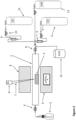
- Figure 2 is a schematic illustration of a system that may be used in the method of the invention.
- Figure 2 illustrates schematically a system for use in recovering valuable metals from spent lithium ion batteries, in a non-limiting manner, a furnace with temperature control 1 which is in contact with the reaction chamber 2.
- the reaction chamber includes the sample 3 (and optionally solid carbon).
- the sample includes a separated particulate spent lithium ion batteries material as described in the methods of this invention.
- the sample may be treated with a CO 2 /CO/H 2 O mixture, wherein the CO 2 cylinder 4, CO cylinder 11, CH 4 cylinder 14 and the water vapor generator 12 are connected to the reaction chamber and feed the sample with a CO 2 /CO/ H 2 O or CH 4 /air mixture.
- the system further comprises a gas cleaning bottle 5 for the neutralization of the gases which is connected to the reaction chamber; a gas sampler for GC analysis 6 for the gas mixtures which is connected to the gas cleaning bottle 5; a thermocouple 7 which is attached to the sample to measure its temperature; optionally additional temperature monitor 8 attached to the sample to measure its temperature; a flowmeter 9, connected to the CO and CO 2 cylinders to determine their partial pressure to be used; and valves 10, connected to the CO and CO 2 cylinders before each flowmeter 9, to determine the flow of the gas.
- the furnace with temperature control 1 which is in contact with the reaction chamber 2 is configured to heat the reaction chamber to a temperature of between 100 °C to 900 °C, for the treatment with the CO 2 /CO/H 2 O mixture, a temperature of between 600 °C to 900 °C for treatment with the CH 4 /air mixture and solid carbon.
- Carbonization tests with gas mixtures of CO 2 /CO /H 2 O (not according to the invention) or CH 4 /air (according to the invention) or solid carbon (not according to the invention) and cold-water treatment of the obtained products were carried out with the lithium-containing components of the rechargeable lithium-ion batteries. Exposure of the lithium-containing components of the rechargeable lithium-ion batteries was carried out at a temperature of 100-900°C.
- Powder of the model mixtures was placed in the furnace in a or quarts boat. Prior to heating, the quartz reactor was cleaned under 100 ml/min nitrogen flow, following which the furnace was heated to a given temperature, again under 100 ml/min nitrogen flow. CO 2 /CO/H 2 O or CH 4 /air gas mixture was fed into the reactor after the latter had reached the designated temperature. Possible chemical reactions that occur during carbonization of said separated particulate spent lithium ion batteries material at predetermined temperature.
- Carbonization tests with solid carbon and cold-water treatment of the obtained products were carried out with the lithium-containing components of the rechargeable lithium-ion batteries. Exposure of the lithium-containing components of the rechargeable lithium-ion batteries was carried out at a temperature of 600-900°C. At temperatures below 600°C, the extraction of lithium and non-ferrous metals (cobalt and nickel) sharply decreases due to a decrease in the carbon reducing ability. At temperatures above 900°C, the material was sintered and the extraction of lithium and non-ferrous metals (cobalt and nickel) sharply decreased due to a decrease of the material porosity.
- Powder of the model mixtures with solid carbon was placed in the furnace in a alumina boat. Prior to heating, the quartz reactor was cleaned under 100 ml/min nitrogen flow, following which the furnace was heated to a given temperature, again under 100 ml/min nitrogen flow. Nitrogen was fed into the reactor after the latter had reached the designated temperature. Possible chemical reactions that occur during carbonization of said separated particulate spent lithium ion batteries material at predetermined temperature.
- Results are presented in Table 3. Table 3. Results of the carbonization tests with solid carbon and cold-water treatment Material Weight ratio carbon to separated particulate spent lithium ion batteries material Temperature, C Lithium extraction yield, % Non-ferrous metals extraction yield, % LiCoO 2 50/100 600 96.1 99.4 50/100 900 99.3 99.8 100/100 600 96.6 99.6 100/100 900 99.4 99.8 LiFePO 4 50/100 600 93.2 - 50/100 900 97.5 - 100/100 600 94.6 - 100/100 900 97.5 - LiNi x Mn y Co z O 2 50/100 600 98.2 99.2 50/100 900 99.6 99.8 100/100 600 98.4 99.5 100/100 900 99.7 99.8 LiNi x Co y Al z O 2 50/100 600 97.8 99.4 50/100 900 99.2 99.7 100/100 600 98.5 99.6 100/100 900 99.7 99
Landscapes
- Engineering & Computer Science (AREA)
- Chemical & Material Sciences (AREA)
- Manufacturing & Machinery (AREA)
- Materials Engineering (AREA)
- Mechanical Engineering (AREA)
- Organic Chemistry (AREA)
- Metallurgy (AREA)
- Environmental & Geological Engineering (AREA)
- Life Sciences & Earth Sciences (AREA)
- Geology (AREA)
- General Life Sciences & Earth Sciences (AREA)
- Chemical Kinetics & Catalysis (AREA)
- General Chemical & Material Sciences (AREA)
- Geochemistry & Mineralogy (AREA)
- Electrochemistry (AREA)
- Physics & Mathematics (AREA)
- Health & Medical Sciences (AREA)
- General Health & Medical Sciences (AREA)
- Toxicology (AREA)
- Thermal Sciences (AREA)
- Manufacture And Refinement Of Metals (AREA)
- Secondary Cells (AREA)
- Battery Electrode And Active Subsutance (AREA)
- Processing Of Solid Wastes (AREA)
Description
- This invention is directed to a method for recovering valuable metals from spent lithium-ion-batteries.
- Energy storage devices, and particularly rechargeable batteries such as lithium ion batteries (LIBs), are in high demand in consumer electronics and electric vehicles. LIBs have been significant such that they have become the most popular power source for portable electronics equipment. LIBs are used for a growing range of applications, as their capacity and charging rates are increased.
- This increased demand has greatly stimulated LIBs production, which subsequently has led to greatly increased quantities of spent LIBs, which will have to be treated by suitable processes. Therefore, considerable efforts are underway to minimize environmental pollution and recover battery components.
- It is usually not easy to achieve high recovery of valuable metals (i.e., cobalt, lithium, nickel, manganese, copper, aluminum, and iron) from LIBs.
- There is a need for an efficient method to recover valuable metals from spent LIBs. Recycling of spent LIBs enhances environmental protection and enhances a circular economy by separating the valuable metallic constituents into different product.
-
CN 109652655 discloses a method for recycling lithium during the preparation of lithium batteries. - Assefi et al. discloses the pyrometallurgical recycling of Li-ion, Nd-Cd and NiMH batteries (Current opinion in green and sustainable chemistry, vol. 24, 4 February 2020, pages 26-31, DOI: 10.1016/j.cogsc.2020.01.005).
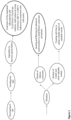
- This invention provides a method for recovering valuable metals from spent lithium ion batteries, the method comprising:
- a) opening a spent lithium ion battery (LIB), and remove its cover;
- b) grinding the remaining spent LIB at a predetermined temperature to obtain a particulate spent lithium ion batteries material including particles having a predetermined grain size;
- c) separating from said particulate spent lithium ion batteries material any plastic matrix;
- d) treating said separated particulate spent lithium ion batteries material with a CH4/air gas mixture, wherein the partial pressure of CH4 is between 0.1% to 100% v/v; at a predetermined temperature for carbonization of the lithium to obtain a particulate spent lithium ion batteries material comprising lithium carbonate;
- e) treating said particulate spent lithium ion batteries material comprising lithium carbonate with cold water and optionally with additional CO2;
- f) filtering the slurry obtained in step (e) to obtain a lithium carbonate filtrate and a residue comprising cobalt, iron, other valuable metals, and non-metal impurities;
- g) heating said lithium carbonate filtrate at a predetermined temperature to lithium carbonate precipitate sedimentation followed by filtration to obtain lithium carbonate precipitate and a mother liquid; and
- h) treating said residue comprising cobalt, iron, other valuable metals, and non-metal impurities of step (f) with a flux at a predetermined temperature to obtain valuable metallic ingots.
- In an embodiment, the particulate spent lithium ion batteries material obtained in step (b) has a grain size of between 2-10 mm or between 2-5 mm.
- In an embodiment, the predetermined temperature of the grinding of the remaining spent LIB to obtain a particulate spent lithium ion batteries material is between 20-50 °C.
- In an embodiment, the separation of plastic matrix from the particulate spent lithium ion batteries material is done by air separation.
- In an embodiment, the lithium carbonate precipitate obtained in step (g) is further dried to obtain a dry lithium carbonate powder.
- In an embodiment, the treatment of step (d) of the separated particulate spent lithium ion batteries material with CH4/air is carried out at a temperature of between 100 °C to 900 °C.
- In an embodiment, heating at a predetermined temperature of the lithium carbonate filtrate of step (g) is carried out at a temperature of between of 80 °C to 120 °C.
- In an embodiment, the flux for smelting the other valuable metals comprises silica, carbon, calcium oxide, sodium oxide, alumina, iron oxide, or combination thereof.
- In an embodiment, treating the residue comprising cobalt, other valuable metals, iron and non-metal impurities with a flux of step (h) is carried out at a temperature in the range of 1200 °C to 1500 °C.
- In an embodiment, the metallic ingots of step (h) comprise non-ferrous metals selected from Cobalt, Nickel, Manganese, Copper, Aluminum, Titanium, Tin, Lead, Zinc, Sodium, calcium, and combination thereof or iron ingots.
- The subject matter regarded as the invention is particularly pointed out and distinctly claimed in the concluding portion of the specification. The invention, however, both as to organization and method of operation, together with objects, features, and advantages thereof, may best be understood by reference to the following detailed description when read with the accompanying drawings in which:
-
Figure 1 presents a schematic method steps for recovering valuable metals from spent lithium ion batteries. -
Figure 2 presents a schematic illustration of a system (a laboratory setup) that may be used in a method of this invention 1 - furnace with temperature controller, 2 - reaction chamber (pyrex), 3 - sample or sample with solid carbon, 4 - CO2 cylinder, 5 - gas cleaning bottle, 6 - gas sampler for GC analysis, 7 - thermocouple, 8 - additional temperature monitor, 9 - flowmeter, 10 - valve, 11 - CO cylinder, 12 - water vapor generator, 13 - CH4 cylinder. - It will be appreciated that for simplicity and clarity of illustration, elements shown in the figures have not necessarily been drawn to scale. For example, the dimensions of some of the elements may be exaggerated relative to other elements for clarity. Further, where considered appropriate, reference numerals may be repeated among the figures to indicate corresponding or analogous elements.
- In the following detailed description, numerous specific details are set forth in order to provide a thorough understanding of the invention. However, it will be understood by those skilled in the art that the present invention may be practiced without these specific details. In other instances, well-known methods, procedures, and components have not been described in detail so as not to obscure the present invention.
- The present invention provides a method for recovering valuable metals from spent lithium ion batteries, the method comprising:
- a) opening a spent lithium ion battery (LIB), and remove its cover;
- b) grinding the remaining spent LIB at a predetermined temperature to obtain a particulate spent lithium ion batteries material including particles having a predetermined grain size;
- c) separating from said particulate spent lithium ion batteries material any plastic matrix;
- d) treating said separated particulate spent lithium ion batteries material with a CH4/air gas mixture, wherein the partial pressure of CH4 is between 0.1% to 100% v/v; at a predetermined temperature for carbonization of the lithium to obtain a particulate spent lithium ion batteries material comprising lithium carbonate;
- e) treating said particulate spent lithium ion batteries material comprising lithium carbonate with cold water and optionally with additional CO2;
- f) filtering the slurry obtained in step (e) to obtain a lithium carbonate filtrate and a residue comprising cobalt, iron, other valuable metals, and non-metal impurities;
- g) heating said lithium carbonate filtrate at a predetermined temperature to lithium carbonate precipitate sedimentation followed by filtration to obtain lithium carbonate precipitate and a mother liquid; and
- h) treating said residue comprising cobalt, iron, other valuable metals, and non-metal impurities of step (f) with a flux at predetermined temperature to obtain valuable metallic ingots.
- In one embodiment, "spent LIB" refers herein to used/exhausted lithium ion battery mainly comprising a metallic shell, membrane separator, cathode materials (LiCoO2, LiMn2O4, LiFePO4, Li4Ti5O12, LiNi0.3Al0.3CO0.3O2, as well as other lithium metal oxides), aluminum foil, anode materials (graphite), copper foil, and organic electrolytes.
- The recovered valuable metals may include Cobalt, Nickel, Manganese, Copper, Aluminum, Iron, Titanium, Tin, Lead, Zinc, Sodium, calcium. Examples of the valuable metals obtained by the method of this invention include: Li2CO3, Co, TiO2, Cu, alumina, iron oxide, sodium oxide, calcium oxide.
- The term "other valuable metals" refers herein to at least one of Nickel, Manganese, Copper, Aluminum, Titanium, Tin, Lead, Zinc, Sodium or calcium.
- The valuable metals are obtained as metallic ingots and can be used as raw material for other products.
- In one embodiment, opening the lithium ion battery and removing the coating layer or shell of the battery includes removing the gases therein. The remaining spent LIB is further used in the method of this invention.
- The opening of a LIB is done by any known technique known in the art such as described in Zheng X. A Mini-Review on Metal Recycling from Spent Lithium Ion Batteries. Engineering, 2018, 4, 3, 361-370; and Meshram P. Extraction of lithium from primary and secondary sources by pre-treatment, leaching and separation: A comprehensive review. Hydrometallurgy, 2014, 150, 12, 192-208.
- The method of this invention comprises grinding the remaining spent lithium-ion-batteries (LIBs) at a predetermined temperature to obtain a particulate spent lithium ion batteries material. In other embodiments, the predetermined temperature used in the grinding step is between 20-50 °C. In other embodiments, the particulate spent lithium ion batteries material have a grain size of between 2-10 mm. In another embodiment, between 2-5 mm. In another embodiment, between 4-10 mm.
- The method of this invention comprises separating from the particulate spent lithium ion batteries material any plastic matrix. In an embodiment, the separation is done by air, wherein the separation is based on different gravity of the material. In another embodiment, the separation is done by any other method known in the art such as described in Peukert W. Industrial separation of fine particles with difficult dust properties. Powder Technology, 2001, 118, 1-2, 8, 136-148.
- A CH4/air gas mixture refers to a mixture of CH4 in the presence of air or the presence of oxygen.
- The method of this invention comprises treating the separated particulate spent lithium ion batteries material with a CH4/air gas mixture, wherein the partial pressure of CH4 is between 0.1% to 100% v/v; at a predetermined temperature for carbonization of the lithium to obtain a particulate spent lithium ion batteries material comprising lithium carbonate. In other embodiments, the treatment is carried out at a temperature of between 100 °C to 900 °C. In other embodiments, at a temperature of between 100 °C to 300 °C. In another embodiment, at a temperature of between 100 °C to 200 °C. In another embodiment, at a temperature of between 150 °C to 300 °C. In another embodiment, at a temperature of between 150 °C to 250 °C. In other embodiments, at a temperature of between 100 °C to 500 °C. In other embodiments, at temperature of between 600 °C to 900 °C. In other embodiments, at temperature of between 200 °C to 800 °C. In other embodiments, at temperature of between 100 °C to 700 °C. In other embodiments, at temperature of between 650°C to 850°C. In other embodiments, at temperature of between 700 °C to 900 °C. In other embodiments, at temperature of between 600 °C to 700 °C. In other embodiments, at temperature of between 700 °C to 800 °C. In other embodiments, at temperature of between 800 °C to 900 °C.
- The CH4/air gas mixture used in the method of this invention includes a partial pressure of CH4 between 0.1% to 100% v/v. In another embodiment, a partial pressure of CH4 is between 0.1 % to 50% v/v. In another embodiment, a partial pressure CH4 is between 10 % to 50% v/v. In another embodiment, a partial pressure of CH4 is between 1% to 30% v/v. In another embodiment, a partial pressure of CH4 is between 20% to 50% v/v. In another embodiment, a partial pressure of CH4 is between 0.1% to 10% v/v. In another embodiment, a partial pressure of CH4 is between 30 % to 100% v/v. In another embodiment, a partial pressure of CH4 of between 50 % to 100% v/v.
- In some embodiments, the weight ratio between the carbon used in the method of this invention to the separated particulate spent lithium ion batteries material is from 10:100 to 200:100. In another embodiment, the weight ratio is from 50:100 to 200:100. In another embodiment, the weight ratio is from 100:100 to 200:100. In another embodiment, the weight ratio is from 150:100 to 200:100. In another embodiment, the weight ratio is from 10:100 to 100:100. In another embodiment, the weight ratio is from 50:100 to 150:100. In another embodiment, the weight ratio is from 50:100 to 100:100. In another embodiment, the weight ratio is from 70:100 to 100:100. In another embodiment, the weight ratio is from 50:100 to 80:100.
- In some embodiments, the method of this invention provides lithium extraction. In another embodiment, the yield of the lithium extraction is between 85-100%. In another embodiment, is between 90-100%.
- In some embodiments, the treatment with a CH4/air gas mixture provides lithium extraction. In another embodiment, the yield of the lithium extraction is between 90-100%.
- In another embodiment, the yield of the non-ferrous metal extraction is above 99%. In another embodiment, the yield of the Non-ferrous metal extraction is above 99.2%.
- The solubility of the Li2CO3 in the cold water is high. For example, at 25 °C, the solubility of Li2CO3 is much higher than that of the d-metals, i.e.~12.9 gm/L (cf. solubility of NiCO3, 0.093 gm/L). However, the solubility of Li2CO3 falls to 6.9 gm/L at 100 °C.
- The treatment of the separated particulate spent lithium ion batteries material with the CH4/air mixture at the predetermined temperature results in a carbonization reaction to yield particulate spent lithium ion batteries material comprising lithium carbonate.
- The following are possible carbonization reactions which can occur:
LiCoO2 + 0.5 CH4 (g) + 0.25 O2(g) => 0.5 Li2CO3 + Co + H2O (g) (5)
LiCoO2 + 3/8 CH4 (g) + 1/8 CO2 (g) => 0.5Li2CO3 + Co + 3/4 H2O (g) (6)
2LiFePO4 + CH4 (g) + 2.5O2 (g) => Li2CO3 + Fe2O3 + P2O5 (g) + 2H2O (g) (7)
Li2TiO3 + CH4 (g) + 2O2 (g) => Li2CO3 + TiO2 + 2H2O (g) (8)
LiNi0.3Mn0.3Co0.3O2 + CH4 (g) => 0.3Li2CO3 + 0.3 Co + 0.3 Ni + 0.3Mn2O3 + H2O (g) (9)
- Following the treatment with cold water (following the treatment with CH4/air), a slurry is obtained which is filtered to obtain a lithium carbonate filtrate and a residue containing cobalt, iron, other valuable metals, and non-metal impurities. In some embodiments, other valuable metals include, Nickel, Manganese, Copper, Aluminum (i.e. alumina), Iron (i.e. iron oxide), Titanium, Tin, Lead, Zinc, Sodium (i.e. sodium oxide), calcium (i.e. calcium oxide) or combination thereof. In another embodiment, the Aluminum is alumina. In another embodiment, the Iron is iron oxide. In another embodiment, the Sodium is sodium oxide. In another embodiment, the calcium is calcium oxide.
- In other embodiment, the non-metal impurities comprise organic binders, hard carbon, plastic case, polymer foil & electrolyte, silica or combination thereof.
- The lithium carbonate filtrate is heated at a predetermined temperature to obtain lithium carbonate precipitate sedimentation followed by filtration to obtain lithium carbonate precipitate and a mother liquid.
- In another embodiment, the lithium carbonate filtrate is heated to a temperature of between 80 °C to 120 °C. In another embodiment, to a temperature of between 80 °C to 100 °C. In another embodiment, to a temperature of between 80 °C to 90 °C. In another embodiment, to a temperature of between 90 °C to 120 °C. In another embodiment, to a temperature of between 100 °C to 120 °C.
- In some embodiments, the lithium carbonate precipitate is further dried to obtain a dry lithium carbonate powder. In other embodiments, the lithium carbonate precipitate or the lithium carbonate powder prepared by the method of this invention is further used as a raw material in the field of ceramics, glass and batteries.
- Lithium carbonate is used in the production of ceramics and glass, and of lithium ion batteries. Lithium carbonate is a common ingredient in both low-fire and high-fire ceramic glaze. It forms low-melting fluxes with silica and other materials. Glasses derived from lithium carbonate are useful in ovenware.
- The residue containing cobalt, iron, other valuable metal, and non-metal impurities obtained following the filtration of the slurry is treated with a flux for smelting the valuable metal at predetermined temperature to obtain metallic ingots. In another embodiment, the flux comprises silica, carbon, calcium oxide, sodium oxide, alumina, iron oxide, or combination thereof.
- Flux is a chemical cleaning agent, flowing agent, or purifying agent. They are used in both extractive metallurgy and metal joining.
- In the process of smelting fluxes added to the contents of a smelting furnace or a cupola for the purpose of purging the metal of chemical impurities and of rendering slag more liquid at the smelting temperature. The slag is a liquid mixture of ash, flux, and other impurities.
- The role of a flux is typically dual: dissolving the oxides already present on the metal surface, which facilitates wetting by molten metal, and acting as an oxygen barrier by coating the hot surface, preventing its oxidation.
- In another embodiment, the metallic ingots comprise non-ferrous metals selected from Cobalt, Nickel, Manganese, Copper, Aluminum, Titanium, Tin, Lead, Zinc, Sodium, calcium and combination thereof or iron ingots.
- In another embodiment, the Aluminum is alumina. In another embodiment, the Sodium is sodium oxide. In another embodiment, the calcium is calcium oxide.
- In another embodiment, the treatment with the flux is carried out at a temperature of between 1200 °C to 1500 °C. In another embodiment, the treatment with the flux is carried out at a temperature of between 1200 °C to 1300 °C. In another embodiment, the treatment with the flux is carried out at a temperature of between 1300 °C to 1400 °C. In another embodiment, the treatment with the flux is carried out at a temperature of between 1300 °C to 1500 °C. In another embodiment, the treatment with the flux is carried out at a temperature of between 1400 °C to 1500 °C.
- The metallic ingot prepared by the method of this invention may be used as a raw material metal production and as a dopant in various alloys.
- In other embodiments, the "metallic ingot" includes/refers to herein to non-ferrous metals selected from Cobalt, Nickel, Manganese, Copper, Aluminum (i.e. alumina), Titanium, Tin, Lead, Zinc, Sodium (i.e. sodium oxide), calcium (i.e. calcium oxide) and combination thereof or iron ingots. In another embodiment, the Aluminum is alumina. In another embodiment, the Sodium is sodium oxide. In another embodiment, the calcium is calcium oxide.
- The method of the present invention may be used in a system comprising:
- a reaction chamber comprising a sample,
- a furnace for heating the sample, and
- a CH4 cylinder;
-
Figure 2 is a schematic illustration of a system that may be used in the method of the invention.Figure 2 illustrates schematically a system for use in recovering valuable metals from spent lithium ion batteries, in a non-limiting manner, a furnace withtemperature control 1 which is in contact with thereaction chamber 2. The reaction chamber includes the sample 3 (and optionally solid carbon). The sample includes a separated particulate spent lithium ion batteries material as described in the methods of this invention. The sample may be treated with a CO2/CO/H2O mixture, wherein the CO2 cylinder 4,CO cylinder 11, CH4 cylinder 14 and thewater vapor generator 12 are connected to the reaction chamber and feed the sample with a CO2/CO/ H2O or CH4/air mixture. The system further comprises a gas cleaning bottle 5 for the neutralization of the gases which is connected to the reaction chamber; a gas sampler for GC analysis 6 for the gas mixtures which is connected to the gas cleaning bottle 5; athermocouple 7 which is attached to the sample to measure its temperature; optionally additional temperature monitor 8 attached to the sample to measure its temperature; aflowmeter 9, connected to the CO and CO2 cylinders to determine their partial pressure to be used; andvalves 10, connected to the CO and CO2 cylinders before eachflowmeter 9, to determine the flow of the gas. - The furnace with
temperature control 1 which is in contact with thereaction chamber 2 is configured to heat the reaction chamber to a temperature of between 100 °C to 900 °C, for the treatment with the CO2/CO/H2O mixture, a temperature of between 600 °C to 900 °C for treatment with the CH4/air mixture and solid carbon. - As such, those skilled in the art to which the present invention pertains, can appreciate that while the present invention has been described in terms of preferred embodiments, the conception, upon which this disclosure is based, may readily be utilized as a basis for the designing of other structures systems and processes for carrying out the several purposes of the present invention.
- Carbonization tests with gas mixtures of CO2/CO /H2O (not according to the invention) or CH4/air (according to the invention) or solid carbon (not according to the invention) and cold-water treatment of the obtained products were carried out with the lithium-containing components of the rechargeable lithium-ion batteries. Exposure of the lithium-containing components of the rechargeable lithium-ion batteries was carried out at a temperature of 100-900°C.
- For the experiments, model mixtures consisting of lithium titanate (Li4Ti5O12), lithium cobalt oxide (LiCoO2), lithium iron phosphate (LiFePO4), lithium nickel manganese cobalt oxide LiNixMnyCozO2 (x+y+z=1), lithium nickel cobalt aluminum oxide LiNixCoyAlzO2 (x+y+z=1) and lithium phosphate (Li3PO4) were used. These substances are used in various types of rechargeable lithium-ion batteries as cathodes or anodes.
- Carbonization of model mixtures with CO2/CO/H2O or CH4/air gas mixture were carried out in a temperature-controlled laboratory furnace at 100- 900°C: test duration was 2 hour. The laboratory setup is described in
Figure 2 . - Powder of the model mixtures was placed in the furnace in a or quarts boat. Prior to heating, the quartz reactor was cleaned under 100 ml/min nitrogen flow, following which the furnace was heated to a given temperature, again under 100 ml/min nitrogen flow. CO2/CO/H2O or CH4/air gas mixture was fed into the reactor after the latter had reached the designated temperature. Possible chemical reactions that occur during carbonization of said separated particulate spent lithium ion batteries material at predetermined temperature.
Li4Ti5O12 + CO2 + CO + H2O → 2 Li2CO3 + 5 TiO2 (1)
4 LiCoO2 + CO2 + CO + H2O → 2 Li2CO3 + 4 Co (2)
2 LiFePO4 + CO2 + CO + H2O → LiHCO3 + FeHPO4 (3)
Li3PO4 + CO2 + CO + H2O → LiHCO3 + LiH2PO4 (4)
LiCoO2 + 0.5 CH4 (g) + 0.25 O2(g) => 0.5 Li2CO3 + Co + H2O (g) (5)
LiCoO2 + 3/8 CH4 (g) + 1/8 CO2 (g) => 0.5Li2CO3 + Co + 3/4 H2O (g) (6)
2LiFePO4 + CH4 (g) + 2.5O2 (g) => Li2CO3 + Fe2O3 + P2O5 (g) + 2H2O (g) (7)
Li2TiO3 + CH4 (g) + 2O2 (g) => Li2CO3 + TiO2 + 2H2O (g) (8)
LiNi0.3Mn0.3Co0.3O2 + CH4 (g) => 0.3Li2CO3 + 0.3 Co + 0.3 Ni + 0.3Mn2O3 + H2O (g) (9)
- After cooling under nitrogen flow, the Pyrex glass boat was removed from the furnace. The final product was weighed, and cold water treated. Thereafter, slurry after treatment was filtered. Filtrate was analyzed with ICP MS. Lithium balances of each test were calculated. Lithium extraction yield to the filtrate was evaluated from each lithium balance.
- Results are presented in Tables 1 and 2.
Table 1. Results of the carbonization with CO2/CO/H2O - cold-water treatment tests. Mixture Ratio CO2/CO Temperature, C Lithium extraction yield, % Non-ferrous metals extraction yield, % Li4Ti5O12 0.4 200 93.1 - 1.5 200 94.1 - 20.0 200 97.5 - LiCoO2 0.4 200 91.2 - 1.5 200 92.9 - 20.0 200 96.3 - 0.4 700 97.3 99.2 0.4 850 97.7 99.6 LiFePO4 0.4 200 90.8 - 1.5 200 93.1 - 20.0 200 97.3 - Li3PO4 0.4 200 94.5 - 1.5 200 96.2 - 20.0 200 98.0 - LiNixMnyCozO2 0.4 700 96.7 99.3 0.4 850 97.4 99.6 LiNixCoyAlzO2 0.4 700 96.9 99.5 0.4 850 98.2 99.8 Mixture 10.4 200 90.6 - 1.5 200 95.2 - 20.0 200 97.8 - Mixture 20.4 200 94.1 - 1.5 200 94.9 - 20.0 200 96.9 - Mixture 1: Li4Ti5O12 - 25%, LiCoO2 - 25%, LiFePO4 - 25%, Li3PO4 - 25%.
Mixture 2: Li4Ti5O12 - 20%, LiCoO2 - 40%, LiFePO4 - 20%, Li3PO4 - 20%.Table 2. Results of the carbonization tests with CH4 and cold-water treatment. Material Partial pressure CH4/air mixture (%) Temperature, C Lithium extraction yield, % Non-ferrous metals extraction yield, % LiCoO 2 10 600 96.3 99.5 10 900 99.1 99.5 LiNixMnyCozO2 10 600 97.6 99.2 10 900 99.2 99.3 LiNixCoyAlzO2 10 600 97.8 99.5 10 900 99.2 99.8 - Carbonization tests with solid carbon and cold-water treatment of the obtained products were carried out with the lithium-containing components of the rechargeable lithium-ion batteries. Exposure of the lithium-containing components of the rechargeable lithium-ion batteries was carried out at a temperature of 600-900°C. At temperatures below 600°C, the extraction of lithium and non-ferrous metals (cobalt and nickel) sharply decreases due to a decrease in the carbon reducing ability. At temperatures above 900°C, the material was sintered and the extraction of lithium and non-ferrous metals (cobalt and nickel) sharply decreased due to a decrease of the material porosity.
- For the experiments, model mixtures consisting lithium cobalt oxide (LiCoO2), lithium iron phosphate (LiFePO4), lithium nickel manganese cobalt oxide LiNixMnyCozO2 (x+y+z=1), and lithium nickel cobalt aluminum oxide LiNixCoyAlzO2 (x+y+z=1) were used. These substances were used in various types of rechargeable lithium-ion batteries as cathodes or anodes.
- Carbonization of model mixtures with solid carbon was carried out in a temperature-controlled laboratory furnace at 600-900°C: test duration was 2 hours. The laboratory setup is described in
Figure 2 . - Powder of the model mixtures with solid carbon was placed in the furnace in a alumina boat. Prior to heating, the quartz reactor was cleaned under 100 ml/min nitrogen flow, following which the furnace was heated to a given temperature, again under 100 ml/min nitrogen flow. Nitrogen was fed into the reactor after the latter had reached the designated temperature. Possible chemical reactions that occur during carbonization of said separated particulate spent lithium ion batteries material at predetermined temperature.
LiFePO4 + C + O2 => Li2CO3 + FePO4 + CO (10)
LiCoO2 + C => Li2CO3 + CO + Co (11)
LiFePO4 + C => Li2CO3 + FePO4 (12)
LiNi0.3Mn0.3Co0.3O2 + 0.3C => 0.3Li2CO3 + 0.3 Co + 0.3 Ni + 0.3Mn2O3 (13)
LiNi0.3Al0.3Co0.3O2 + C => Li2CO3 + Co + Ni + Al2O3 (14)
LiNi0.3Mn0.3Co0.3O2 + C => Li2CO3 + CoO + NiO + Mn2O3 (15)
LiNi0.3Al0.3Co0.3O2 + C => 5Li2CO3 + CoO + NiO + Al2O3 (16)
- After cooling under nitrogen flow, the alumina boat was removed from the furnace. The final product was weighed, and cold water treated. Thereafter, slurry after treatment was filtered. Filtrate and precipitate were analyzed with ICP MS. Lithium, cobalt and nickel balances of each test were calculated. Lithium extraction yield to the filtrate and cobalt and nickel extraction yield to the precipitate were evaluated from each balance.
- Results are presented in Table 3.
Table 3. Results of the carbonization tests with solid carbon and cold-water treatment Material Weight ratio carbon to separated particulate spent lithium ion batteries material Temperature, C Lithium extraction yield, % Non-ferrous metals extraction yield, % LiCoO2 50/100 600 96.1 99.4 50/100 900 99.3 99.8 100/100 600 96.6 99.6 100/100 900 99.4 99.8 LiFePO4 50/100 600 93.2 - 50/100 900 97.5 - 100/100 600 94.6 - 100/100 900 97.5 - LiNixMnyCozO2 50/100 600 98.2 99.2 50/100 900 99.6 99.8 100/100 600 98.4 99.5 100/100 900 99.7 99.8 LiNixCoyAlzO2 50/100 600 97.8 99.4 50/100 900 99.2 99.7 100/100 600 98.5 99.6 100/100 900 99.7 99.9
Claims (10)
- A method for recovering valuable metals from spent lithium ion batteries, the method comprising:a) opening a spent lithium ion battery (LIB), and remove its cover;b) grinding the remaining spent LIB at a predetermined temperature to obtain a particulate spent lithium ion batteries material including particles having a predetermined grain size;c) separating from said particulate spent lithium ion batteries material any plastic matrix;d) treating said separated particulate spent lithium ion batteries material with a CH4/air gas mixture, wherein the partial pressure of CH4 is between 0.1% to 100% v/v; at a predetermined temperature for carbonization of the lithium to obtain a particulate spent lithium ion batteries material comprising lithium carbonate;e) treating said particulate spent lithium ion batteries material comprising lithium carbonate with cold water and optionally with CO2;f) filtering the slurry obtained in step (e) to obtain a lithium carbonate filtrate and a residue comprising cobalt, iron, other valuable metals, and non-metal impurities;g) heating said lithium carbonate filtrate at a predetermined temperature to lithium carbonate precipitate sedimentation followed by filtration to obtain lithium carbonate precipitate and a mother liquid; andh) treating said residue comprising cobalt, iron, other valuable metals, and non-metal impurities of step (f) with a flux at a predetermined temperature to obtain valuable metallic ingots.
- The method of claim 1, wherein said particulate spent lithium ion batteries material obtained in step (b) has a grain size of between 2-10 mm or between 2-5 mm.
- The method of claim 1, wherein the predetermined temperature of the grinding of the remaining spent LIB to obtain a particulate spent lithium ion batteries material is between 20-50 °C.
- The method of claim 1, wherein the separation of plastic matrix from said particulate spent lithium ion batteries material is done by air separation.
- The method of claim 1, wherein said lithium carbonate precipitate obtained in step (g) is further dried to obtain a dry lithium carbonate powder.
- The method of claim 1, wherein said treatment of step (d) of said separated particulate spent lithium ion batteries material with CH4/air is carried out at a temperature of between 100 °C to 900 °C.
- The method of claim 1, wherein heating at a predetermined temperature of said lithium carbonate filtrate of step (g) is carried out at a temperature of between 80 °C to 120 °C.
- The method of claim 1, wherein said flux for smelting the other valuable metals comprises silica, carbon, calcium oxide, sodium oxide, alumina, iron oxide, or combination thereof.
- The method of claim 1, wherein treating said residue comprising cobalt, other valuable metals, iron and non-metal impurities with a flux of step (h) is carried out at a temperature in the range of 1200 °C to 1500 °C.
- The method of claim 1, wherein said metallic ingots of step (h) comprise non-ferrous metals selected from Cobalt, Nickel, Manganese, Copper, Aluminum, Titanium, Tin, Lead, Zinc, Sodium, calcium, and combination thereof or iron ingots.
Applications Claiming Priority (2)
| Application Number | Priority Date | Filing Date | Title |
|---|---|---|---|
| IL273457A IL273457A (en) | 2020-03-19 | 2020-03-19 | Method for recovery of valuable metals from spent lithium ion batteries |
| PCT/IL2021/050299 WO2021186445A1 (en) | 2020-03-19 | 2021-03-18 | Method for recovering valuable metals from spent lithium-ion-batteries |
Publications (3)
| Publication Number | Publication Date |
|---|---|
| EP4121573A1 EP4121573A1 (en) | 2023-01-25 |
| EP4121573B1 true EP4121573B1 (en) | 2025-02-12 |
| EP4121573C0 EP4121573C0 (en) | 2025-02-12 |
Family
ID=77771744
Family Applications (1)
| Application Number | Title | Priority Date | Filing Date |
|---|---|---|---|
| EP21717563.7A Active EP4121573B1 (en) | 2020-03-19 | 2021-03-18 | Method for recovering valuable metals from spent lithium-ion-batteries |
Country Status (7)
| Country | Link |
|---|---|
| US (1) | US20220263147A1 (en) |
| EP (1) | EP4121573B1 (en) |
| JP (1) | JP7636816B2 (en) |
| CN (1) | CN115698348A (en) |
| IL (1) | IL273457A (en) |
| PL (1) | PL4121573T3 (en) |
| WO (1) | WO2021186445A1 (en) |
Families Citing this family (12)
| Publication number | Priority date | Publication date | Assignee | Title |
|---|---|---|---|---|
| CN111807359B (en) * | 2020-06-01 | 2022-03-15 | 广东邦普循环科技有限公司 | Graphite purification and lattice reconstruction method in power battery |
| CN112139203B (en) * | 2020-08-24 | 2022-08-16 | 广东邦普循环科技有限公司 | Vacuum cracking method and cracking equipment for power battery |
| CN114309006B (en) * | 2021-12-13 | 2022-11-25 | 生态环境部华南环境科学研究所 | Process and treatment equipment for harmless recycling of barium slag |
| ES2945487A1 (en) * | 2021-12-31 | 2023-07-03 | Consejo Superior Investigacion | Procedure for obtaining Li, Ni and Co from discarded lithium ion batteries |
| CN114717422B (en) * | 2022-04-27 | 2024-04-09 | 江西格润新材料有限公司 | Method for recovering valuable metals in retired lithium battery by mechanochemical method |
| GB202209479D0 (en) * | 2022-06-28 | 2022-08-10 | Univ Warwick | Battery recycling |
| EP4589724A4 (en) * | 2022-09-16 | 2026-04-08 | Rd Solution Co Ltd | Apparatus for vertical recycling apparatus of waste batteries |
| WO2024058603A1 (en) * | 2022-09-16 | 2024-03-21 | 주식회사 알디솔루션 | Apparatus for recycling waste batteries |
| CN115806292A (en) * | 2022-11-28 | 2023-03-17 | 武汉瑞科美新能源有限责任公司 | Impurity removal method for waste graphite cathode |
| EP4417580A1 (en) | 2023-02-14 | 2024-08-21 | LANXESS Deutschland GmbH | Recovery of phosphorus and iron compounds from lfp/lfmp-containing materials |
| TWI863507B (en) * | 2023-08-15 | 2024-11-21 | 三旺科技股份有限公司 | Method for recovering valuable metals in lithium-ion batteries |
| CN117954724B (en) * | 2024-02-28 | 2025-07-22 | 中南大学 | Homogenizing regeneration method for waste lithium ion battery anode material |
Citations (1)
| Publication number | Priority date | Publication date | Assignee | Title |
|---|---|---|---|---|
| CN107046154A (en) * | 2017-04-18 | 2017-08-15 | 中科过程(北京)科技有限公司 | A kind of method that useless ternary lithium battery strengthens reducing leaching |
Family Cites Families (16)
| Publication number | Priority date | Publication date | Assignee | Title |
|---|---|---|---|---|
| JP2012229481A (en) * | 2011-04-27 | 2012-11-22 | Japan Metals & Chem Co Ltd | Method for separating and recovering valuable material from used lithium ion battery |
| MY187232A (en) * | 2015-07-06 | 2021-09-13 | Attero Recycling Pvt Ltd | A method of recovering metals from spent li-ion batteries |
| CN106910889B (en) * | 2017-02-27 | 2019-07-23 | 中南大学 | A method of regenerating positive active material from waste lithium iron phosphate battery |
| JP2018197385A (en) * | 2017-05-24 | 2018-12-13 | 住友金属鉱山株式会社 | Phosphorus removal method, valuable metal recovery method |
| CN107742760A (en) * | 2017-09-26 | 2018-02-27 | 北京矿冶研究总院 | Method for extracting lithium from waste lithium ion battery |
| CN109297031B (en) * | 2018-10-31 | 2024-12-17 | 株洲鼎端装备股份有限公司 | Pyrolysis equipment for organic matters in crushed aggregates of waste lithium ion batteries |
| CN109652655B (en) * | 2018-12-30 | 2021-01-26 | 沈阳化工研究院有限公司 | Method for recovering lithium in lithium battery recovery and treatment process |
| CN110079671B (en) * | 2019-04-23 | 2021-02-02 | 广东光华科技股份有限公司 | Method for comprehensively recovering valuable elements of waste lithium ion batteries |
| JP6651115B1 (en) * | 2019-05-07 | 2020-02-19 | 株式会社アサカ理研 | Method for recovering lithium from lithium ion battery |
| TWI877188B (en) * | 2019-07-26 | 2025-03-21 | 德商巴斯夫歐洲公司 | Process for the recovery of lithium from waste lithium ion batteries |
| TWI888394B (en) * | 2019-07-26 | 2025-07-01 | 德商巴斯夫歐洲公司 | Process for the recovery of lithium and other metals from waste lithium ion batteries |
| KR102685070B1 (en) * | 2019-10-02 | 2024-07-12 | 에스케이이노베이션 주식회사 | Method of recycling lithium precursor |
| CN110938743B (en) * | 2019-10-29 | 2022-01-28 | 北京矿冶科技集团有限公司 | Method for extracting lithium and nickel and cobalt from waste lithium ion battery step by step |
| CN111170343B (en) * | 2019-12-23 | 2022-07-01 | 北京矿冶科技集团有限公司 | Method for recovering and producing lithium hydroxide from waste lithium ion battery |
| CN111146523A (en) * | 2019-12-30 | 2020-05-12 | 江西赣锋循环科技有限公司 | Disassembling, classifying and recycling process method for waste batteries |
| CN111847487A (en) * | 2020-07-24 | 2020-10-30 | 赣州天奇锂致实业有限公司 | Method for preparing lithium carbonate by using waste lithium ion battery and battery-grade lithium carbonate |
-
2020
- 2020-03-19 IL IL273457A patent/IL273457A/en unknown
-
2021
- 2021-03-18 EP EP21717563.7A patent/EP4121573B1/en active Active
- 2021-03-18 PL PL21717563.7T patent/PL4121573T3/en unknown
- 2021-03-18 JP JP2022555807A patent/JP7636816B2/en active Active
- 2021-03-18 WO PCT/IL2021/050299 patent/WO2021186445A1/en not_active Ceased
- 2021-03-18 CN CN202180022515.XA patent/CN115698348A/en active Pending
-
2022
- 2022-05-03 US US17/735,227 patent/US20220263147A1/en active Pending
Patent Citations (1)
| Publication number | Priority date | Publication date | Assignee | Title |
|---|---|---|---|---|
| CN107046154A (en) * | 2017-04-18 | 2017-08-15 | 中科过程(北京)科技有限公司 | A kind of method that useless ternary lithium battery strengthens reducing leaching |
Also Published As
| Publication number | Publication date |
|---|---|
| KR20220152324A (en) | 2022-11-15 |
| WO2021186445A1 (en) | 2021-09-23 |
| US20220263147A1 (en) | 2022-08-18 |
| EP4121573A1 (en) | 2023-01-25 |
| CN115698348A (en) | 2023-02-03 |
| JP2023517723A (en) | 2023-04-26 |
| PL4121573T3 (en) | 2025-04-22 |
| EP4121573C0 (en) | 2025-02-12 |
| IL273457A (en) | 2021-09-30 |
| JP7636816B2 (en) | 2025-02-27 |
Similar Documents
| Publication | Publication Date | Title |
|---|---|---|
| EP4121573B1 (en) | Method for recovering valuable metals from spent lithium-ion-batteries | |
| EP3822375B1 (en) | Method for recovering valuable metals from waste lithium ion batteries | |
| US12410493B2 (en) | Process for the recovery of lithium from waste lithium ion batteries | |
| EP4004245B1 (en) | Process for the recovery of lithium and other metals from waste lithium ion batteries | |
| EP4004244B1 (en) | Process for the recovery of lithium and other metals from waste lithium ion batteries | |
| EP4180137B1 (en) | Method for recovering valuable metal | |
| EP4180136B1 (en) | Method for recovering valuable metal | |
| KR102960309B1 (en) | Method for recovering valuable metals from spent lithium-ion batteries | |
| EP4372110A1 (en) | Production method for valuable metals | |
| KR102926092B1 (en) | Methods of recovering valuable metals | |
| EP4328340B1 (en) | Method for producing valuable metal | |
| EP4534707A1 (en) | Lithium-containing slag and method for producing valuable metal | |
| JP7238939B2 (en) | Valuable metal manufacturing method | |
| KR102956721B1 (en) | Method for recovering lithium from discarded lithium-ion batteries | |
| KR102956065B1 (en) | Method for recovering lithium and other metals from discarded lithium-ion batteries | |
| KR102956064B1 (en) | Method for recovering lithium and other metals from discarded lithium-ion batteries | |
| KR20240038763A (en) | Methods for recovering valuable metals | |
| EP4534708A1 (en) | Lithium-containing slag, and method for producing valuable metal | |
| WO2022224711A1 (en) | Method for producing valuable metal | |
| Itoh et al. | Recovery of rare metals from spent lithium ion cells by hydrothermal treatment and its technology assessment |
Legal Events
| Date | Code | Title | Description |
|---|---|---|---|
| STAA | Information on the status of an ep patent application or granted ep patent |
Free format text: STATUS: UNKNOWN |
|
| STAA | Information on the status of an ep patent application or granted ep patent |
Free format text: STATUS: THE INTERNATIONAL PUBLICATION HAS BEEN MADE |
|
| PUAI | Public reference made under article 153(3) epc to a published international application that has entered the european phase |
Free format text: ORIGINAL CODE: 0009012 |
|
| STAA | Information on the status of an ep patent application or granted ep patent |
Free format text: STATUS: REQUEST FOR EXAMINATION WAS MADE |
|
| 17P | Request for examination filed |
Effective date: 20221003 |
|
| AK | Designated contracting states |
Kind code of ref document: A1 Designated state(s): AL AT BE BG CH CY CZ DE DK EE ES FI FR GB GR HR HU IE IS IT LI LT LU LV MC MK MT NL NO PL PT RO RS SE SI SK SM TR |
|
| DAV | Request for validation of the european patent (deleted) | ||
| DAX | Request for extension of the european patent (deleted) | ||
| P01 | Opt-out of the competence of the unified patent court (upc) registered |
Effective date: 20230605 |
|
| STAA | Information on the status of an ep patent application or granted ep patent |
Free format text: STATUS: EXAMINATION IS IN PROGRESS |
|
| 17Q | First examination report despatched |
Effective date: 20231109 |
|
| GRAP | Despatch of communication of intention to grant a patent |
Free format text: ORIGINAL CODE: EPIDOSNIGR1 |
|
| STAA | Information on the status of an ep patent application or granted ep patent |
Free format text: STATUS: GRANT OF PATENT IS INTENDED |
|
| RIC1 | Information provided on ipc code assigned before grant |
Ipc: H01M 10/54 20060101ALI20240405BHEP Ipc: H01M 10/0525 20100101ALI20240405BHEP Ipc: C22B 3/22 20060101ALI20240405BHEP Ipc: C22B 1/00 20060101ALI20240405BHEP Ipc: C22B 26/12 20060101ALI20240405BHEP Ipc: C22B 23/00 20060101ALI20240405BHEP Ipc: C22B 9/10 20060101ALI20240405BHEP Ipc: C22B 3/04 20060101ALI20240405BHEP Ipc: C22B 1/02 20060101AFI20240405BHEP |
|
| INTG | Intention to grant announced |
Effective date: 20240502 |
|
| GRAJ | Information related to disapproval of communication of intention to grant by the applicant or resumption of examination proceedings by the epo deleted |
Free format text: ORIGINAL CODE: EPIDOSDIGR1 |
|
| STAA | Information on the status of an ep patent application or granted ep patent |
Free format text: STATUS: EXAMINATION IS IN PROGRESS |
|
| INTC | Intention to grant announced (deleted) | ||
| GRAP | Despatch of communication of intention to grant a patent |
Free format text: ORIGINAL CODE: EPIDOSNIGR1 |
|
| STAA | Information on the status of an ep patent application or granted ep patent |
Free format text: STATUS: GRANT OF PATENT IS INTENDED |
|
| INTG | Intention to grant announced |
Effective date: 20240909 |
|
| GRAS | Grant fee paid |
Free format text: ORIGINAL CODE: EPIDOSNIGR3 |
|
| GRAA | (expected) grant |
Free format text: ORIGINAL CODE: 0009210 |
|
| STAA | Information on the status of an ep patent application or granted ep patent |
Free format text: STATUS: THE PATENT HAS BEEN GRANTED |
|
| AK | Designated contracting states |
Kind code of ref document: B1 Designated state(s): AL AT BE BG CH CY CZ DE DK EE ES FI FR GB GR HR HU IE IS IT LI LT LU LV MC MK MT NL NO PL PT RO RS SE SI SK SM TR |
|
| REG | Reference to a national code |
Ref country code: GB Ref legal event code: FG4D |
|
| REG | Reference to a national code |
Ref country code: CH Ref legal event code: EP |
|
| REG | Reference to a national code |
Ref country code: DE Ref legal event code: R096 Ref document number: 602021025992 Country of ref document: DE |
|
| REG | Reference to a national code |
Ref country code: IE Ref legal event code: FG4D |
|
| U01 | Request for unitary effect filed |
Effective date: 20250218 |
|
| U07 | Unitary effect registered |
Designated state(s): AT BE BG DE DK EE FI FR IT LT LU LV MT NL PT RO SE SI Effective date: 20250224 |
|
| P04 | Withdrawal of opt-out of the competence of the unified patent court (upc) registered |
Free format text: CASE NUMBER: APP_8565/2025 Effective date: 20250219 |
|
| U20 | Renewal fee for the european patent with unitary effect paid |
Year of fee payment: 5 Effective date: 20250225 |
|
| PG25 | Lapsed in a contracting state [announced via postgrant information from national office to epo] |
Ref country code: RS Free format text: LAPSE BECAUSE OF FAILURE TO SUBMIT A TRANSLATION OF THE DESCRIPTION OR TO PAY THE FEE WITHIN THE PRESCRIBED TIME-LIMIT Effective date: 20250512 |
|
| PG25 | Lapsed in a contracting state [announced via postgrant information from national office to epo] |
Ref country code: ES Free format text: LAPSE BECAUSE OF FAILURE TO SUBMIT A TRANSLATION OF THE DESCRIPTION OR TO PAY THE FEE WITHIN THE PRESCRIBED TIME-LIMIT Effective date: 20250212 |
|
| PG25 | Lapsed in a contracting state [announced via postgrant information from national office to epo] |
Ref country code: IS Free format text: LAPSE BECAUSE OF FAILURE TO SUBMIT A TRANSLATION OF THE DESCRIPTION OR TO PAY THE FEE WITHIN THE PRESCRIBED TIME-LIMIT Effective date: 20250612 Ref country code: NO Free format text: LAPSE BECAUSE OF FAILURE TO SUBMIT A TRANSLATION OF THE DESCRIPTION OR TO PAY THE FEE WITHIN THE PRESCRIBED TIME-LIMIT Effective date: 20250512 |
|
| PG25 | Lapsed in a contracting state [announced via postgrant information from national office to epo] |
Ref country code: HR Free format text: LAPSE BECAUSE OF FAILURE TO SUBMIT A TRANSLATION OF THE DESCRIPTION OR TO PAY THE FEE WITHIN THE PRESCRIBED TIME-LIMIT Effective date: 20250212 |
|
| PG25 | Lapsed in a contracting state [announced via postgrant information from national office to epo] |
Ref country code: GR Free format text: LAPSE BECAUSE OF FAILURE TO SUBMIT A TRANSLATION OF THE DESCRIPTION OR TO PAY THE FEE WITHIN THE PRESCRIBED TIME-LIMIT Effective date: 20250513 |
|
| PG25 | Lapsed in a contracting state [announced via postgrant information from national office to epo] |
Ref country code: SM Free format text: LAPSE BECAUSE OF FAILURE TO SUBMIT A TRANSLATION OF THE DESCRIPTION OR TO PAY THE FEE WITHIN THE PRESCRIBED TIME-LIMIT Effective date: 20250212 |
|
| PG25 | Lapsed in a contracting state [announced via postgrant information from national office to epo] |
Ref country code: CZ Free format text: LAPSE BECAUSE OF FAILURE TO SUBMIT A TRANSLATION OF THE DESCRIPTION OR TO PAY THE FEE WITHIN THE PRESCRIBED TIME-LIMIT Effective date: 20250212 |
|
| REG | Reference to a national code |
Ref country code: CH Ref legal event code: H13 Free format text: ST27 STATUS EVENT CODE: U-0-0-H10-H13 (AS PROVIDED BY THE NATIONAL OFFICE) Effective date: 20251024 |
|
| PG25 | Lapsed in a contracting state [announced via postgrant information from national office to epo] |
Ref country code: SK Free format text: LAPSE BECAUSE OF FAILURE TO SUBMIT A TRANSLATION OF THE DESCRIPTION OR TO PAY THE FEE WITHIN THE PRESCRIBED TIME-LIMIT Effective date: 20250212 |
|
| PLBE | No opposition filed within time limit |
Free format text: ORIGINAL CODE: 0009261 |
|
| STAA | Information on the status of an ep patent application or granted ep patent |
Free format text: STATUS: NO OPPOSITION FILED WITHIN TIME LIMIT |
|
| PG25 | Lapsed in a contracting state [announced via postgrant information from national office to epo] |
Ref country code: MC Free format text: LAPSE BECAUSE OF FAILURE TO SUBMIT A TRANSLATION OF THE DESCRIPTION OR TO PAY THE FEE WITHIN THE PRESCRIBED TIME-LIMIT Effective date: 20250212 |
|
| PG25 | Lapsed in a contracting state [announced via postgrant information from national office to epo] |
Ref country code: CH Free format text: LAPSE BECAUSE OF NON-PAYMENT OF DUE FEES Effective date: 20250331 |
|
| PG25 | Lapsed in a contracting state [announced via postgrant information from national office to epo] |
Ref country code: IE Free format text: LAPSE BECAUSE OF NON-PAYMENT OF DUE FEES Effective date: 20250318 |
|
| 26N | No opposition filed |
Effective date: 20251113 |
|
| U20 | Renewal fee for the european patent with unitary effect paid |
Year of fee payment: 6 Effective date: 20260209 |
|
| PGFP | Annual fee paid to national office [announced via postgrant information from national office to epo] |
Ref country code: GB Payment date: 20260106 Year of fee payment: 6 |
|
| PGFP | Annual fee paid to national office [announced via postgrant information from national office to epo] |
Ref country code: PL Payment date: 20260119 Year of fee payment: 6 |