EP4120183B1 - Bildverbesserungsverfahren und elektronische vorrichtung - Google Patents
Bildverbesserungsverfahren und elektronische vorrichtung Download PDFInfo
- Publication number
- EP4120183B1 EP4120183B1 EP21795665.5A EP21795665A EP4120183B1 EP 4120183 B1 EP4120183 B1 EP 4120183B1 EP 21795665 A EP21795665 A EP 21795665A EP 4120183 B1 EP4120183 B1 EP 4120183B1
- Authority
- EP
- European Patent Office
- Prior art keywords
- channel component
- enhanced
- electronic device
- component
- image
- Prior art date
- Legal status (The legal status is an assumption and is not a legal conclusion. Google has not performed a legal analysis and makes no representation as to the accuracy of the status listed.)
- Active
Links
Images




Classifications
-
- G—PHYSICS
- G06—COMPUTING OR CALCULATING; COUNTING
- G06T—IMAGE DATA PROCESSING OR GENERATION, IN GENERAL
- G06T5/00—Image enhancement or restoration
-
- G—PHYSICS
- G06—COMPUTING OR CALCULATING; COUNTING
- G06T—IMAGE DATA PROCESSING OR GENERATION, IN GENERAL
- G06T5/00—Image enhancement or restoration
- G06T5/90—Dynamic range modification of images or parts thereof
- G06T5/92—Dynamic range modification of images or parts thereof based on global image properties
-
- G—PHYSICS
- G06—COMPUTING OR CALCULATING; COUNTING
- G06T—IMAGE DATA PROCESSING OR GENERATION, IN GENERAL
- G06T5/00—Image enhancement or restoration
- G06T5/60—Image enhancement or restoration using machine learning, e.g. neural networks
-
- G—PHYSICS
- G06—COMPUTING OR CALCULATING; COUNTING
- G06T—IMAGE DATA PROCESSING OR GENERATION, IN GENERAL
- G06T5/00—Image enhancement or restoration
- G06T5/90—Dynamic range modification of images or parts thereof
-
- G—PHYSICS
- G06—COMPUTING OR CALCULATING; COUNTING
- G06T—IMAGE DATA PROCESSING OR GENERATION, IN GENERAL
- G06T7/00—Image analysis
- G06T7/90—Determination of colour characteristics
-
- H—ELECTRICITY
- H04—ELECTRIC COMMUNICATION TECHNIQUE
- H04N—PICTORIAL COMMUNICATION, e.g. TELEVISION
- H04N9/00—Details of colour television systems
- H04N9/64—Circuits for processing colour signals
- H04N9/68—Circuits for processing colour signals for controlling the amplitude of colour signals, e.g. automatic chroma control circuits
-
- G—PHYSICS
- G06—COMPUTING OR CALCULATING; COUNTING
- G06T—IMAGE DATA PROCESSING OR GENERATION, IN GENERAL
- G06T2207/00—Indexing scheme for image analysis or image enhancement
- G06T2207/10—Image acquisition modality
- G06T2207/10024—Color image
-
- G—PHYSICS
- G06—COMPUTING OR CALCULATING; COUNTING
- G06T—IMAGE DATA PROCESSING OR GENERATION, IN GENERAL
- G06T2207/00—Indexing scheme for image analysis or image enhancement
- G06T2207/20—Special algorithmic details
- G06T2207/20081—Training; Learning
-
- G—PHYSICS
- G06—COMPUTING OR CALCULATING; COUNTING
- G06T—IMAGE DATA PROCESSING OR GENERATION, IN GENERAL
- G06T2207/00—Indexing scheme for image analysis or image enhancement
- G06T2207/20—Special algorithmic details
- G06T2207/20084—Artificial neural networks [ANN]
-
- G—PHYSICS
- G06—COMPUTING OR CALCULATING; COUNTING
- G06T—IMAGE DATA PROCESSING OR GENERATION, IN GENERAL
- G06T2207/00—Indexing scheme for image analysis or image enhancement
- G06T2207/20—Special algorithmic details
- G06T2207/20172—Image enhancement details
-
- G—PHYSICS
- G06—COMPUTING OR CALCULATING; COUNTING
- G06T—IMAGE DATA PROCESSING OR GENERATION, IN GENERAL
- G06T2207/00—Indexing scheme for image analysis or image enhancement
- G06T2207/20—Special algorithmic details
- G06T2207/20172—Image enhancement details
- G06T2207/20208—High dynamic range [HDR] image processing
Definitions
- This application relates to the field of image processing technologies, and in particular, to an image enhancement method and an electronic device.
- Image enhancement is to use a series of image enhancement technologies to improve quality and a visual effect of an image, highlight a feature of interest in the image, and obtain valuable information in the image, so as to convert the image into a form more suitable for analysis and processing by a person or a machine, so that the processed image has a better effect for some specific applications.
- An image enhancement theory is widely applied to the biomedical field, the industrial production field, the public security field, the aerospace field, and the like.
- an image enhancement method is to use a super-resolution (super resolution, SR) technology to up-convert an input image into a high-resolution output image.
- Another image enhancement method is to use a high dynamic range imaging (high dynamic range imaging, HDR) technology to extend a value of each pixel in an input image in a standard dynamic range to a high dynamic range.
- HDR high dynamic range imaging
- a decoding result of a video decoder on a side of the smartphone is usually presented by using YUV color space instead of RGB color space.
- a current image enhancement method is generated by performing model training and inference by using a video in the RGB color space, and therefore is not applicable to a mobile platform such as the smartphone.
- Document CN 107 302 657 A generally discloses an image collection system applicable to the Internet of things.
- the system comprises a plurality of wireless image collection nodes, and an ARM wireless control unit, a multimode wireless baseband processing unit, a network server, an FPGA (Field-Programmable Gate Array) image processing unit, an NAS (Network Attached Storage) server and a client which are connected in sequence.
- the wireless image collection nodes are connected with the ARM wireless control unit.
- Each wireless image collection node comprises a camera which is placed in an area of which image needing to be collected and carries out photographing after a control command sent by the ARM wireless control unit is received and a wireless image transmission module which transmits the photographed image back.
- the FPGA image processing unit comprises an image signal processing module which processes a bayer domain image to an RGB domain and a single image super-resolution reconstruction module which carries out super-resolution reconstruction.
- the FPGA image processing unit outputs the processed image and stores the processed image to the NAS server.
- the client checks the image by accessing the NAS server.
- Embodiments of the present application provide an image enhancement method, an electronic device, and a computer-readable storage medium.
- a CPU in the electronic device enlarges the first U-channel component and the first V-channel component in the color image, to obtain the enlarged second U-channel component and the enlarged second V-channel component, and an NPU in the electronic device performs super-resolution processing on the first Y-channel component in the color image, to obtain the processed second Y-channel component; and the NPU in the electronic device performs high dynamic range imaging processing on the color image, to obtain the component coefficients respectively corresponding to the three channels. It may be learned that both the CPU and the NPU in the electronic device perform processing, to increase an image processing speed, so as to meet a real-time requirement of a mobile terminal for video processing.
- the method and an apparatus are based on a same technical idea. Because the method and the apparatus have a similar problem-resolving principle, for implementations of the apparatus and the method, refer to each other, and no repeated description is provided.
- This application may be applied to a video stream play scenario, for example, play of a video in a mobile phone, play of a video in a video application, or play of multimedia content in a television.
- the image enhancement method provided in this application may be applied to an electronic device including a central processing unit (central processing unit, CPU) and an embedded neural-network processing unit (neural-network processing unit, NPU).
- the electronic device includes but is not limited to a portable terminal such as a camera, a video camera, a smart camera, a smart camcorder, an intelligent mobile terminal (for example, a mobile phone (mobile phone) or a tablet computer), or a smart television.
- the image enhancement method provided in this application may be further applied to a video play device in a video surveillance system, or may be implemented by a cloud server in a video surveillance system.
- An example embodiment of the portable terminal includes but is not limited to a portable terminal equipped with iOS ® , Android ® , Microsoft ® , or another operating system.
- the portable terminal may alternatively be, for example, a laptop (Laptop) including a touch-sensitive surface (for example, a touch panel). It should be further understood that in some other embodiments, the terminal may alternatively be a desktop computer including a touch-sensitive surface (for example, a touch panel).
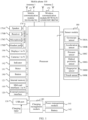
- the mobile phone 100 may include a processor 110, an external memory interface 120, an internal memory 121, a USB port 130, a charging management module 140, a power management module 141, a battery 142, an antenna 1, an antenna 2, a mobile communication module 151, a wireless communication module 152, an audio module 170, a speaker 170A, a receiver 170B, a microphone 170C, a headset jack 170D, a sensor module 180, a button 190, a motor 191, an indicator 192, a camera 193, a display screen 194, a SIM card interface 195, and the like.
- the sensor module 180 may include a gyroscope sensor 180A, an acceleration sensor 180B, a pressure sensor 180C, a proximity sensor 180G, a fingerprint sensor 180H, and a touch sensor 180K (certainly, the mobile phone 100 may further include other sensors such as a temperature sensor, a distance sensor, a magnetic sensor, an ambient light sensor, a barometric pressure sensor, a bone conduction sensor, and the like, which are not shown in the figure).
- the processor 110 may run the image enhancement method provided in the embodiments of this application, to achieve a better image enhancement effect and resolve a problem, in the conventional technology, that a real-time requirement of a mobile terminal for video processing is not met by using an image quality algorithm.
- the processor 110 may include different devices. For example, when a CPU and a GPU are integrated, the CPU and the GPU may cooperate to perform the image enhancement method provided in the embodiments of this application. For example, in the image enhancement method, some algorithms are executed by the CPU, and the other algorithms are executed by the GPU, to obtain relatively high processing efficiency.
- the mobile phone 100 may include one or N display screens 194, where N is a positive integer greater than 1.
- a touch sensor and/or a pressure sensor on the display screen 194 may collect a touch operation performed by a user, and the touch sensor and/or the pressure sensor may transfer detected sensor data to the processor 110, so that the processor 110 determines a status corresponding to a sensor unit.
- the display screen 194 may be an integrated flexible display screen, or may be a display screen that is obtained through splicing and that includes two rigid screens and one flexible screen located between the two rigid screens.
- the processor 110 may control an image enhancement effect of a display interface on the display screen 194 based on the image enhancement method.
- the camera 193 (a front-facing camera or a rear-facing camera, or a camera that can serve as a front-facing camera and a rear-facing camera) is configured to capture a static image or a video.
- the camera 193 may include a photosensitive element such as a lens group and an image sensor.
- the lens group includes a plurality of lenses (convex lens or concave lens), and is configured to: collect an optical signal reflected by a to-be-photographed object, and transfer the collected optical signal to the image sensor.
- the image sensor generates an original image of the to-be-photographed object based on the optical signal.
- the internal memory 121 may be configured to store computer-executable program code.
- the executable program code includes instructions.
- the processor 110 implements various function applications and data processing of the mobile phone 100 by running the instructions stored in the internal memory 121.
- the internal memory 121 may include a program storage area and a data storage area.
- the program storage area may store an operating system, code of an application (for example, a camera application or a WeChat application), and the like.
- the data storage area may store data created in a process of using the mobile phone 100 (for example, data collected by the sensor and a preset reference state sequence set).
- the internal memory 121 may further store code of an image enhancement algorithm provided in the embodiments of this application.
- the processor 110 may control the display interface on the display screen 194.
- the internal memory 121 may include a high-speed random access memory, and may further include a nonvolatile memory, for example, at least one magnetic disk storage device, a flash storage device, or a universal flash storage (universal flash storage, UFS).
- a nonvolatile memory for example, at least one magnetic disk storage device, a flash storage device, or a universal flash storage (universal flash storage, UFS).
- the code of the image enhancement algorithm provided in the embodiments of this application may be alternatively stored in an external memory.
- the processor 110 may run, by using the external memory interface 120, the code of the image enhancement algorithm stored in the external memory.
- the processor 110 determines an enhanced image of an electronic device, and then controls the display interface on the display screen 194 based on the enhanced image.
- the gyroscope sensor 180A may be configured to determine a motion posture of the mobile phone 100.
- the gyroscope sensor 180A may be used to determine angular velocities of the mobile phone 100 around three axes (namely, axes x, y, and z). That is, the gyroscope sensor 180A may be configured to detect a current motion state of the mobile phone 100.
- the mobile phone 100 jitters or is static.
- the mobile phone 100 is in a portrait mode or a landscape mode.
- the gyroscope sensor 180A may be configured to detect a folding operation or an unfolding operation that acts on the display screen 194.
- the gyroscope sensor 180A may report the detected folding operation or unfolding operation to the processor 110 as an event, to determine a folded state or an unfolded state of the display screen 194.
- the acceleration sensor 180B may detect a magnitude of acceleration of the mobile phone 100 in various directions (usually on three axes).
- the acceleration sensor 180B may be configured to detect a folding operation or an unfolding operation that acts on the display screen 194.
- the acceleration sensor 180B may report the detected folding operation or unfolding operation to the processor 110 as an event, to determine a folded state or an unfolded state of the display screen 194.
- the pressure sensor 180C is configured to sense a pressure signal, and can convert the pressure signal into an electrical signal.
- the pressure sensor 180B may be disposed on the display screen 194 or a housing part.
- the capacitive pressure sensor may include at least two parallel plates made of conductive materials.
- the mobile phone 100 may further calculate a touch position based on a detected signal of the pressure sensor 180B.
- touch operations that are performed at a same touch location but have different touch operation intensity may correspond to different operation instructions. For example, when a touch operation whose strength is greater than a first pressure threshold acts on both sides of a housing, an instruction for viewing an unread message is executed.
- the optical proximity sensor 180G may include a light-emitting diode (LED) and an optical detector, for example, a photodiode.
- the light-emitting diode may be an infrared light-emitting diode.
- the mobile phone emits infrared light by using the light-emitting diode.
- the mobile phone detects infrared reflected light from a nearby object by using the photodiode. When sufficient reflected light is detected, it may be determined that there is an object near the mobile phone. When insufficient reflected light is detected, the mobile phone may determine that there is no object near the mobile phone.
- the proximity sensor 180G may be disposed on an upper side of the display screen 194, and the proximity sensor 180G may detect, based on an optical path difference of an infrared signal, whether there is a face that approaches the screen.
- the proximity sensor 180G may be disposed on a first screen of the foldable display screen 194, and the proximity sensor 180G may detect, based on an optical path difference of an infrared signal, an angle at which the first screen and a second screen area folded or unfolded.
- the fingerprint sensor 180H is configured to collect a fingerprint.
- the mobile phone 100 may use a feature of the collected fingerprint to implement fingerprint-based unlocking, application lock access, fingerprint-based photographing, fingerprint-based call answering, and the like.
- the touch sensor 180K is also referred to as a "touch panel".
- the touch sensor 180K may be disposed on the display 194 or a housing part, and the touch sensor 180K and the display 194 form a touchscreen.
- the touch sensor 180K is configured to detect a touch operation performed on or near the touch sensor.
- the touch sensor may transfer detected sensor data to the processor 110, so that the processor 110 determines a status of the sensor unit based on the sensor data, and then determines a state sequence corresponding to the sensor unit in the electronic device.
- a visual output related to the touch operation may be provided through the display 194.
- the touch sensor 180K may alternatively be disposed on a surface of the mobile phone 100 at a location different from a location of the display 194.
- a home screen is displayed on the display screen 194 of the mobile phone 100, and the home screen includes icons of a plurality of applications (for example, a camera application and a WeChat application).
- the user taps an icon of the camera application on the home screen by using the touch sensor 180K, to trigger the processor 110 to start the camera application and turn on the camera 193.
- An interface for example, a viewfinder interface, of the camera application is displayed on the display screen 194.
- a wireless communications function of the mobile phone 100 may be implemented by using the antenna 1, the antenna 1, the mobile communication module 151, the wireless communication module 152, the modem processor, the baseband processor, and the like.
- the antenna 1 and the antenna 2 are configured to transmit and receive an electromagnetic wave signal.
- Each antenna in the mobile phone 100 may be configured to cover one or more communication bands. Different antennas may be further multiplexed, to improve antenna utilization.
- the antenna 1 may be multiplexed as a diversity antenna in a wireless local area network.
- an antenna may be used in combination with a tuning switch.
- the mobile communication module 151 may provide a solution to wireless communication such as 2G/3G/4G/5G applied to the mobile phone 100.
- the mobile communication module 151 may include at least one filter, a switch, a power amplifier, a low noise amplifier (low noise amplifier, LNA), and the like.
- the mobile communication module 151 may receive an electromagnetic wave through the antenna 1, perform processing such as filtering or amplification on the received electromagnetic wave, and transmit the electromagnetic wave to the modem processor for demodulation.
- the mobile communication module 151 may further amplify a signal modulated by the modem processor, and convert the signal into an electromagnetic wave for radiation through the antenna 1.
- at least some functional modules of the mobile communication module 151 may be disposed in the processor 110.
- at least some functional modules of the mobile communication module 151 may be disposed in a same device as at least some modules of the processor 110.
- the modem processor may include a modulator and a demodulator.
- the modulator is configured to modulate a to-be-sent low-frequency baseband signal into a medium-high frequency signal.
- the demodulator is configured to demodulate a received electromagnetic wave signal into a low-frequency baseband signal. Then, the demodulator transmits the low-frequency baseband signal obtained through demodulation to the baseband processor for processing.
- the baseband processor processes the low-frequency baseband signal, and then transfers an obtained signal to the application processor.
- the application processor outputs a sound signal by using an audio device (which is not limited to the speaker 170A, the receiver 170B, and the like), or displays an image or a video on the display 194.
- the modem processor may be an independent component.
- the modem processor may be independent of the processor 110, and is disposed in the same device as the mobile communication module 151 or another functional module.
- the wireless communication module 152 may provide a wireless communication solution that includes a wireless local area network (wireless local area network, WLAN) (for example, a wireless fidelity (wireless fidelity, Wi-Fi) network), Bluetooth (Bluetooth, BT), a global navigation satellite system (global navigation satellite system, GNSS), frequency modulation (frequency modulation, FM), near field communication (near field communication, NFC), an infrared (infrared, IR) technology, or the like and that is applied to the mobile phone 100.
- the wireless communication module 152 may be one or more components integrating at least one communications processor module.
- the wireless communication module 152 receives an electromagnetic wave through the antenna 2, performs frequency modulation and filtering processing on an electromagnetic wave signal, and sends a processed signal to the processor 110.
- the wireless communication module 152 may further receive a to-be-sent signal from the processor 110, perform frequency modulation and amplification on the signal, and convert the signal into an electromagnetic wave for radiation through the antenna 2.
- the mobile phone 100 may implement an audio function such as music playing or recording by using the audio module 170, the speaker 170A, the receiver 170B, the microphone 170C, the headset jack 170D, the application processor, and the like.
- the mobile phone 100 may receive an input from the button 190, and generate a button signal input related to user settings and function control of the mobile phone 100.
- the mobile phone 100 may generate a vibration prompt (for example, an incoming call vibration prompt) by using the motor 191.
- the indicator 192 in the mobile phone 100 may be an indicator light, and may be configured to indicate a charging status and a power change, or may be configured to indicate a message, a missed call, a notification, and the like.
- the SIM card interface 195 in the mobile phone 100 is configured to be connected to a SIM card. The SIM card may be inserted into the SIM card interface 195 or removed from the SIM card interface 195, to implement contact with and separation from the mobile phone 100.
- the mobile phone 100 may include more or fewer components than those shown in FIG. 1 . This is not limited in this embodiment of this application.
- the mobile phone 100 shown in the figure is merely an example, and the mobile phone 100 may include more or fewer components than those shown in the figure, and may combine two or more components or have different component configurations.
- the components shown in the figure may be implemented in hardware that includes one or more signal processors and/or application-specific integrated circuits, in software, or in a combination of hardware and software.
- a software system of the electronic device may use a layered architecture, an event-driven architecture, a microkernel architecture, a micro service architecture, or a cloud architecture.
- an Android system of a layered architecture is used as an example to illustrate the software structure of the electronic device.
- FIG. 2 is a block diagram of a software structure of the electronic device according to an embodiment of the present invention.
- a layered architecture software is divided into several layers, and each layer has a clear role and task.
- the layers communicate with each other through a software interface.
- the Android system is divided into four layers: an application layer, an application framework layer, an Android runtime (Android runtime) and system library, and a kernel layer from top to bottom.
- the application layer may include a series of application packages.
- the application package may include applications such as Phone, Camera, Gallery, Calendar, Call, Map, Navigation, WLAN, Bluetooth, Music, Video, and Messages.
- the application framework layer provides an application programming interface (application programming interface, API) and a programming framework for an application at the application layer.
- the application framework layer includes some predefined functions.
- the application framework layer may include a window manager, a content provider, a view system, a phone manager, a resource manager, a notification manager, and the like.
- the window manager is configured to manage a window program.
- the window manager may obtain a size of a display, determine whether there is a status bar, perform screen locking, take a screenshot, and the like.
- the content provider is configured to store and obtain data, and enable the data to be accessed by an application.
- the data may include a video, an image, audio, calls that are made and received, a browsing history and bookmarks, a phone book, and the like.
- the view system includes visual controls, such as a control for displaying a text and a control for displaying an image.
- the view system may be configured to construct an application.
- a display interface may include one or more views.
- a display interface including a notification icon of Messages may include a text display view and a picture display view.
- the phone manager is configured to provide a communication function of the electronic device, for example, management of a call status (including answering, declining, or the like).
- the resource manager provides, for an application, various resources such as a localized character string, an icon, a picture, a layout file, and a video file.
- the notification manager enables an application to display notification information in the status bar, and may be configured to transmit a notification-type message.
- the displayed information may automatically disappear after a short pause without user interaction.
- the notification manager is configured to notify download completion, provide a message notification, and the like.
- the notification manager may alternatively be a notification that appears in a top status bar of the system in a form of a graph or a scroll bar text, for example, a notification of an application running on the background or a notification that appears on a screen in a form of a dialog window.
- text information is displayed in the status bar, an announcement is given, the electronic device vibrates, or the indicator light blinks.
- the Android runtime includes a kernel library and a virtual machine.
- the Android runtime is responsible for scheduling and management of the Android system.
- the kernel library includes two parts: a function that needs to be called in Java language, and a kernel library of Android.
- the application layer and the application framework layer run on a virtual machine.
- the virtual machine executes Java files at the application layer and the application framework layer as binary files.
- the virtual machine is configured to perform functions such as object lifecycle management, stack management, thread management, security and exception management, and garbage collection.
- the system library may include a plurality of functional modules, for example, a surface manager (surface manager), a media library (Media Libraries), a three-dimensional graphics processing library (for example, OpenGL ES), and a 2D graphics engine (for example, SGL).
- a surface manager surface manager
- Media Libraries media libraries
- a three-dimensional graphics processing library for example, OpenGL ES
- 2D graphics engine for example, SGL
- the surface manager is configured to manage a display subsystem and provide fusion of 2D and 3D layers for a plurality of applications.
- the three-dimensional graphics processing library is configured to implement three-dimensional graphics drawing, image rendering, composition, layer processing, and the like.
- the 2D graphics engine is a drawing engine for 2D drawing.
- the kernel layer is a layer between hardware and software.
- the kernel layer includes at least a display driver, a camera driver, an audio driver, and a sensor driver.
- the hardware may refer to various types of sensors, for example, an acceleration sensor, a gyroscope sensor, a touch sensor, and a pressure sensor in the embodiments of this application.
- the electronic device in this embodiment of this application may include at least one processor 301, a memory 302, a video encoder 304, and a video decoder 303.
- the processor 301 may include a CPU 301A and an NPU 301B.
- the processor 301 may refer to the processor 110 in FIG. 1
- the memory 302 may refer to the internal memory 121 in FIG. 1 .
- the image enhancement method provided in this application includes the following process: (1) The video decoder 303 first decodes an input video stream in RGB color space, to obtain one or more frames of input images in YUV color space. (2) Subsequently, the one or more frames of input images in the YUV color space are transferred to the CPU 301A for data preprocessing. (3) An image obtained after processing by the CPU 301A is transferred to a two-branch multitask neural network model in the NPU 301B for processing.
- a super-resolution (super resolution, SR) image obtained after super-resolution processing and a component coefficient obtained after high dynamic range imaging processing are obtained, and the SR image and the component coefficient are transferred back to the CPU 301A to execute a post-processing thread, to obtain a final enhanced image through combination.
- the enhanced image is transferred to the video encoder 304 by using the NPU 301B, and the video encoder 304 encodes the enhanced image into a video stream in the RGB color space, and then outputs the video stream.
- the two-branch multitask neural network model in the NPU 301B is generated through pre-training.
- the two-branch multitask neural network model includes two branches. A first branch corresponds to a super-resolution processing task, and a second branch corresponds to a high dynamic range imaging processing task.
- the super-resolution processing task and the high dynamic range imaging processing task may be executed in parallel.
- the first branch in the two-branch multitask neural network model may include four convolutional layers and four ReLU (activation) layers, and the first branch is configured to perform super-resolution processing on an input color image.
- a fourth convolutional layer is a sub-pixel convolutional layer, which means that an output at this layer is to be up-sampled to target resolution.
- a feature dimension is extended, for example, extended from 3 to 32, and at a subsequent second convolutional layer 401b and a subsequent third convolutional layer 401c, a local feature of each pixel is extracted from a feature map.
- the fourth sub-pixel convolutional layer 401d is used to up-sample the feature map, to enlarge the feature map to the target resolution.
- An output result at the fourth sub-pixel convolutional layer 401d is activated by the ReLU (activation) layer, to ensure that a value of each pixel is greater than 0.
- the second branch in the two-branch multitask neural network model may include four convolutional layers and four ReLU (activation) layers.
- the second branch is configured to perform high dynamic range imaging processing on the input color image.
- a fourth convolutional layer is a sub-pixel convolutional layer.
- the second branch trains a network to predict a weight mask map instead of directly predicting the value of each pixel.
- the electronic device may further include one or more of the following: a general-purpose processor, an image signal processor (image signal processor, ISP), a microprocessor, a digital signal processor (digital signal processor, DSP), a field-programmable gate array (field-programmable gate array, FPGA), and the like.
- a general-purpose processor an image signal processor (image signal processor, ISP), a microprocessor, a digital signal processor (digital signal processor, DSP), a field-programmable gate array (field-programmable gate array, FPGA), and the like.
- the memory 302 in the electronic device may be a read-only memory (read-only memory, ROM) or another type of static storage device that can store static information and instructions, or a random access memory (random access memory, RAM) or another type of dynamic storage device that can store information and instructions, or may be an electrically erasable programmable read-only memory (Electrically Erasable Programmable Read-Only Memory, EEPROM), a compact disc read-only memory (Compact Disc Read-Only Memory, CD-ROM) or another optical disk storage, an optical disc storage (including a compact disc, a laser disc, an optical disc, a digital versatile disc, a Blu-ray disc, or the like), a disk storage medium or another magnetic storage device, or any other medium that can be used to carry or store expected program code in a form of instructions or a data structure and that can be accessed by the apparatus.
- the memory 302 is not limited thereto.
- the memory may exist alone, and is connected to the processor 301 by using a bus (a
- the memory 302 may be configured to store application program code for executing the solutions of this application, and execution is controlled by the processor 301.
- the processor is configured to execute the program code stored in the memory 302 to implement the image enhancement method in the embodiments of this application.
- the image enhancement method may be implemented by an image enhancement apparatus in an electronic device, and the image enhancement apparatus may be integrated into program code of the electronic device as a plug-in.
- the image enhancement apparatus may be implemented by an image enhancement apparatus in an electronic device, and the image enhancement apparatus may be integrated into program code of the electronic device as a plug-in.
- FIG. 5A and FIG. 5B-1 to FIG. 5B-3 For a specific method, refer to FIG. 5A and FIG. 5B-1 to FIG. 5B-3 .
- Step 501 The electronic device obtains a color image in YUV color space.
- the color image includes a first Y-channel component, a first U-channel component, and a first V-channel component.
- an input image of the electronic device is a color image in RGB color space
- a video decoder in the electronic device needs to decode an input video stream, to generate the color image.
- the electronic device obtains a video stream from a video server corresponding to the video application.
- Each frame of color image in the video stream is a color image in the RGB color space.
- an input color image is a color image in the RGB color space
- the video decoder in the electronic device performs video decoding on a video stream from a network side.
- Each frame of color image obtained after decoding is a color image in the YUV color space.
- Step 502 The electronic device performs image size enlargement on the first U-channel component and the first V-channel component, to obtain a processed second U-channel component and a processed second V-channel component, and the electronic device performs super-resolution processing on the first Y-channel component, to obtain a processed second Y-channel component.
- the electronic device may simultaneously scale, by using a bilinear interpolation algorithm, the first U-channel color component and the first V-channel color component in the color image, in the YUV color space, obtained after decoding.
- a CPU in the electronic device may simultaneously enlarge, by using the bilinear interpolation algorithm, the first U-channel color component and the first V-channel color component in the color image obtained after decoding, to obtain the enlarged second U-channel component and the enlarged second V-channel component.
- the electronic device separately performs super-resolution processing on the first Y-channel component.
- a two-branch multitask neural network model in an NPU in the electronic device separately performs super-resolution processing on the Ychannel component in the input color image, to implement targeted optimization on the image for a characteristic of the YUV color space.
- Step 503 The electronic device performs high dynamic range imaging processing on the color image, to obtain component coefficients respectively corresponding to the first Y-channel component, the first U-channel component, and the first V-channel component.
- the component coefficient is also referred to as a weight mask map
- a value range of the component coefficient may be from 0 to 1
- component coefficients of channels respectively represent variation coefficients of values of pixels on a Y channel, a U channel, and a V channel.
- the variation coefficient of the value of the pixel is obtained as follows: A difference between a target component of a pixel on any channel and a component of the current image is calculated, and then a ratio of an absolute value of the difference to a target component is used as a variation coefficient of a value of the pixel, in other words, used as a component coefficient.
- the two-branch multitask neural network model in the NPU in the electronic device performs high dynamic range imaging processing on the input color image, to obtain the component coefficient corresponding to the first Y-channel component, the component coefficient corresponding to the first U-channel component, and the component coefficient corresponding to the first V-channel component.
- step 502 and step 503 may be performed in parallel, that is, the CPU in the electronic device enlarges the first U-channel component and the first V-channel component, to obtain the enlarged second U-channel component and the enlarged second V-channel component, and the two-branch multitask neural network model in the NPU in the electronic device performs super-resolution processing on the first Ychannel component in the input color image; and the two-branch multitask neural network model in the NPU in the electronic device performs high dynamic range imaging processing on the input color image, to obtain the component coefficient corresponding to the first Y-channel component, the component coefficient corresponding to the first U-channel component, and the component coefficient corresponding to the first V-channel component.
- image processing efficiency can be further improved, to meet a real-time requirement of a mobile terminal for video processing.
- a first branch and a second branch in the two-branch multitask neural network model in the NPU are capable of performing processing in parallel. Therefore, the two-branch multitask neural network model in the NPU in the electronic device performs super-resolution processing on the first Y-channel component in the input color image, and the two-branch multitask neural network model in the NPU in the electronic device performs high dynamic range imaging processing on the input color image, to obtain the component coefficient corresponding to the first Y-channel component, the component coefficient corresponding to the first U-channel component, and the component coefficient corresponding to the first V-channel component.
- the image processing efficiency can be further improved, to meet the real-time requirement of the mobile terminal for video processing.
- Step 504 The electronic device obtains an enhanced channel component corresponding to the first Y-channel component based on the second Y-channel component and the component coefficient corresponding to the first Y-channel component, obtains an enhanced channel component corresponding to the first U-channel component based on the second U-channel component and the component coefficient corresponding to the first U-channel component, and obtains an enhanced channel component corresponding to the first V-channel component based on the second V-channel component and the component coefficient corresponding to the first V-channel component.
- the electronic device may multiply the component coefficient corresponding to the first Y-channel component by the second Y-channel component, to obtain the enhanced channel component corresponding to the first Y-channel component. That is, the electronic device obtains a color value of the Y channel based on a weight mask map of the Y channel predicted by the two-branch multitask neural network model in the NPU and an up-sampling result, on the Y channel, of a pixel value output by the two-branch multitask neural network model.
- values of W U and W V may be set to be the same in this embodiment of this application.
- Step 505 The electronic device obtains an enhanced color image through combination based on the enhanced channel component corresponding to the first Y-channel component, the enhanced channel component corresponding to the first U-channel component, and the enhanced channel component corresponding to the first V channel.
- the electronic device performs calculation based on the component coefficient predicted by the NPU and the component that corresponds to each channel and that is obtained after super-resolution processing, to obtain the enhanced color image in the YUV color space through combination.
- a video encoder in the electronic device may further encode each frame of enhanced color image, to obtain a video stream obtained after image enhancement processing.
- Color images in the video stream obtained after image enhancement processing are color images in the RGB color space.
- the electronic device may obtain a video stream from the video server corresponding to the video application. After the electronic device performs the image enhancement processing on the video stream, encoding is performed by the video encoder. A final output color image in the RGB color space may be displayed on a display.
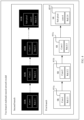
- a manner in which the CPU and a GPU perform processing in parallel may be used to improve the image processing efficiency. Details are shown in FIG. 6 .
- Two threads namely, a preprocessing thread and a post-processing thread, are set for the CPU in the electronic device in this embodiment of this application.
- a neural network inference thread is set for the NPU in the electronic device in this embodiment of this application.
- Data is processed in parallel in the three threads, to speed up calculation.
- Enlargement processing shown in step 502 is performed on the i th frame of color image.
- the following operation is performed in the neural network inference thread for the NPU in the electronic device:
- Super-resolution processing shown in step 502 and high dynamic range imaging processing shown in step 503 are performed on the i th frame of color image.
- the following operation is performed in the post-processing thread for the CPU in the electronic device:
- the calculation process shown in step 504 and the process that is of obtaining the enhanced image through combination and that is shown in step 505 are performed on the i th frame of color image. As shown in FIG.
- the following operation may be simultaneously performed in the preprocessing thread for the CPU: Enlargement processing shown in step 502 is performed on an (i+1) th frame of color image, and when the processing process is performed in the post-processing thread for the CPU in the electronic device, the following operation may be simultaneously performed in the neural network inference thread for the NPU in the electronic device: Super-resolution processing shown in step 502 and high dynamic range imaging processing shown in step 503 are performed on the (i+1) th frame of color image.
- the CPU and the NPU perform calculation in parallel. Therefore, in the present invention, a video can be processed in real time on a processor (including a CPU and an NPU) of a mobile terminal, to improve picture quality of the video without occupying more network bandwidths.
- the image enhancement apparatus may include an image obtaining unit 701, configured to obtain a color image in YUV color space; a first processing unit 702, configured to scale a first U-channel component and a first V-channel component, to obtain an enlarged second U-channel component and an enlarged second V-channel component; and a second processing unit 703, configured to: perform super-resolution processing on a first Y-channel component, to obtain a processed second Y-channel component; and perform high dynamic range imaging processing on the color image, to obtain component coefficients respectively corresponding to the first Y-channel component, the first U-channel component, and the first V-channel component.
- the first processing unit 702 is further configured to: obtain an enhanced channel component corresponding to the first Y-channel component based on the second Y-channel component and the component coefficient corresponding to the first Y-channel component, obtain an enhanced channel component corresponding to the first U-channel component based on the second U-channel component and the component coefficient corresponding to the first U-channel component, and obtain an enhanced channel component corresponding to the first V-channel component based on the second V-channel component and the component coefficient corresponding to the first V-channel component; and obtain an enhanced color image through combination based on the enhanced channel component corresponding to the first Y-channel component, the enhanced channel component corresponding to the first U-channel component, and the enhanced channel component corresponding to the first V channel.
- the component coefficient corresponding to the first U-channel component is the same as the component coefficient corresponding to the first V channel.
- the apparatus further includes a decoding unit 704, specifically configured to decode an input video stream, to generate the color image in the YUV color space.
- a decoding unit 704 specifically configured to decode an input video stream, to generate the color image in the YUV color space.
- Each frame of image in the input video stream is a color image in RGB color space.
- the apparatus further includes an encoding unit 705, specifically configured to: after the first processing unit 702 obtains the enhanced color image through combination, encode each frame of enhanced color image, to generate a video stream obtained after image enhancement.
- Each frame of image in the video stream obtained after image enhancement is a color image in RGB color space.
- division into the units is an example, and is merely logical function division. During actual implementation, another division manner may be used.
- functional units in embodiments of this application may be integrated into one processing unit, or each of the units may exist alone physically, or two or more units are integrated into one unit.
- the integrated unit may be implemented in a form of hardware, or may be implemented in a form of a software function unit.
- this application may be provided as a method, a system, or a computer program product. Therefore, this application may use a form of a hardware-only embodiment, a software-only embodiment, or an embodiment with a combination of software and hardware. In addition, this application may use a form of a computer program product that is implemented on one or more computer-usable storage media (including but not limited to a disk memory, a CD-ROM, an optical memory, and the like) that include computer-usable program code.
- a computer-usable storage media including but not limited to a disk memory, a CD-ROM, an optical memory, and the like
- the computer program instructions may be provided for a general-purpose computer, a dedicated computer, an embedded processor, or a processor of another programmable data processing device to generate a machine, so that the instructions executed by the computer or the processor of the another programmable data processing device generate an apparatus for implementing a specific function in one or more procedures in the flowcharts and/or in one or more blocks in the block diagrams.
- the computer program instructions may alternatively be stored in a computer-readable memory that can indicate a computer or another programmable data processing device to work in a specific manner, so that the instructions stored in the computer-readable memory generate an artifact that includes an instruction apparatus.
- the instruction apparatus implements a specific function in one or more procedures in the flowcharts and/or in one or more blocks in the block diagrams.
- the computer program instructions may alternatively be loaded onto a computer or another programmable data processing device, so that a series of operations and steps are performed on the computer or the another programmable device, so that computer-implemented processing is generated. Therefore, the instructions executed on the computer or the another programmable device provide steps for implementing a specific function in one or more procedures in the flowcharts and/or in one or more blocks in the block diagrams.
Landscapes
- Engineering & Computer Science (AREA)
- Physics & Mathematics (AREA)
- General Physics & Mathematics (AREA)
- Theoretical Computer Science (AREA)
- Multimedia (AREA)
- Signal Processing (AREA)
- Computer Vision & Pattern Recognition (AREA)
- Image Processing (AREA)
- Studio Devices (AREA)
- Telephone Function (AREA)
Claims (11)
- Bildverbesserungsverfahren, umfassend:Erhalten (S501), durch eine elektronische Vorrichtung, eines Farbbildes, wobei das Farbbild eine erste Y-Kanalkomponente, eine erste U-Kanalkomponente und eine erste V-Kanalkomponente umfasst;Durchführen (S502), durch die elektronische Vorrichtung, von Bildgrößenvergrößerung an der ersten U-Kanalkomponente und der ersten V-Kanalkomponente zum Erhalten einer verarbeiteten zweiten U-Kanalkomponente und einer verarbeiteten zweiten V-Kanalkomponente, und Durchführen von Superauflösungsverarbeitung an der ersten Y-Kanalkomponente zum Erhalten einer verarbeiteten zweiten Y-Kanalkomponente;Durchführen (S503), durch die elektronische Vorrichtung, von Bildverarbeitung mit großem Dynamikbereich am Farbbild zum Erhalten von Gewichtungsmaskenkarten, die jeweils der ersten Y-Kanalkomponente, der ersten U-Kanalkomponente und der ersten V-Kanalkomponente entsprechen;Erhalten (S504), durch die elektronische Vorrichtung, einer verbesserten Kanalkomponente, die der ersten Y-Kanalkomponente entspricht, auf der Grundlage der zweiten Y-Kanalkomponente und der Gewichtungsmaskenkarte, die der ersten Y-Kanalkomponente entspricht, Erhalten einer verbesserten Kanalkomponente, die der ersten U-Kanalkomponente entspricht, auf der Grundlage der zweiten U-Kanalkomponente und der Gewichtungsmaskenkarte, die der ersten U-Kanalkomponente entspricht, und Erhalten einer verbesserten Kanalkomponente, die der ersten V-Kanalkomponente entspricht, auf der Grundlage der zweiten V-Kanalkomponente und der Gewichtungsmaskenkarte, die der ersten V-Kanalkomponente entspricht, undErhalten (S505), durch die elektronische Vorrichtung, eines verbesserten Farbbildes durch Kombination auf der Grundlage der verbesserten Kanalkomponente, die der ersten Y-Kanalkomponente entspricht, der verbesserten Kanalkomponente, die der ersten U-Kanalkomponente entspricht, und der verbesserten Kanalkomponente, die der ersten V-Kanalkomponente entspricht,wobei die elektronische Vorrichtung eine eingebettete Neuralnetz-Verarbeitungseinheit, NPU, und eine zentrale Verarbeitungseinheit, CPU, umfasst und ein neuronales Multitasking-Netzmodell mit zwei Zweigen in die NPU integriert ist;wobei das Durchführen von Superauflösungsverarbeitung an der ersten Y-Kanalkomponente umfasst: Durchführen, durch einen ersten Zweig des neuronalen Multitasking-Netzes mit zwei Zweigen in der NPU der elektronischen Vorrichtung, von Superauflösungsverarbeitung an der ersten Y-Kanalkomponente, die in das neuronale Multitasking-Netzmodell mit zwei Zweigen eingegeben wird, zum Ausgeben der zweiten Y-Kanalkomponente;wobei das Durchführen von Bildgrößenvergrößerung an der ersten U-Kanalkomponente und der ersten V-Kanalkomponente umfasst: Durchführen, durch die CPU der elektronischen Vorrichtung, von Bildgrößenvergrößerung an der ersten U-Kanalkomponente und der ersten V-Kanalkomponente zum Erhalten der verarbeiteten zweiten U-Kanalkomponente und der zweiten V-Kanalkomponente; und wobei das Durchführen von Bildverarbeitung mit großem Dynamikbereich am Farbbild umfasst: Durchführen, durch einen zweiten Zweig des neuronalen Multitasking-Netzes mit zwei Zweigen in der NPU der elektronischen Vorrichtung, von Bildverarbeitung mit großem Dynamikbereich an dem Farbbild, das in das neuronale Multitasking-Netzmodell mit zwei Zweigen eingegeben wird, zum Ausgeben der Gewichtungsmaskenkarten, die jeweils der ersten Y-Kanalkomponente, der ersten U-Kanalkomponente und der ersten V-Kanalkomponente entsprechen.
- Verfahren nach Anspruch 1, wobeidie verbesserte Kanalkomponente, die der ersten Y-Kanalkomponente entspricht, die folgende Bedingung erfüllt: Y' = WY × Y, wobei Y' die verbesserte Kanalkomponente repräsentiert, die der ersten Y-Kanalkomponente entspricht, WY die Gewichtungsmaskenkarte repräsentiert, die der ersten Y-Kanalkomponente entspricht, und Y die zweite Y-Kanalkomponente repräsentiert,die verbesserte Kanalkomponente, die der ersten U-Kanalkomponente entspricht, die folgende Bedingung erfüllt: U' = Wu × (U - ϕ1) + ϕ2, wobei U' die verbesserte Kanalkomponente repräsentiert, die der ersten U-Kanalkomponente entspricht, Wu die Gewichtungsmaskenkarte repräsentiert, die der ersten U-Kanalkomponente entspricht, U die zweite U-Kanalkomponente repräsentiert, ϕ1 ein fester Parameter ist, ϕ2 ein fester Parameter ist, und ein Wertebereich von ϕ1 und ϕ2 [0, 1] ist; unddie verbesserte Kanalkomponente, die der ersten V-Kanalkomponente entspricht, die folgende Bedingung erfüllt: V' = Wv × (V - ϕ1) + ϕ2, wobei V' die verbesserte Kanalkomponente repräsentiert, die der ersten V-Kanalkomponente entspricht, Wv die Gewichtungsmaskenkarte repräsentiert, die der ersten V-Kanalkomponente entspricht, V die zweite V-Kanalkomponente repräsentiert, ϕ1 ein fester Parameter ist, ϕ2 ein fester Parameter ist, und ein Wertebereich von ϕ1 und ϕ2 [0, 1] ist.
- Verfahren nach Anspruch 1 oder 2, wobei die der ersten U-Kanalkomponente entsprechende Gewichtungsmaskenkarte die gleiche ist wie die dem ersten V-Kanal entsprechende Gewichtungsmaskenkarte.
- Verfahren nach einem der Ansprüche 1 bis 3, wobei das Erhalten (S501), durch eine elektronische Vorrichtung, eines Farbbildes umfasst:
Dekodieren, durch einen Videodekodierer der elektronischen Vorrichtung, eines Eingangsvideostroms zum Erzeugen des Farbbildes, wobei jedes Einzelbild im Eingangsvideostrom ein Farbbild im RGB-Farbraum ist. - Verfahren nach einem der Ansprüche 1 bis 4, wobei das Verfahren nach dem Erhalten (S505), durch die elektronische Vorrichtung, eines verbesserten Farbbildes durch Kombination ferner umfasst:
Kodieren, durch einen Videokodierer der elektronischen Vorrichtung, jedes verbesserten Einzelfarbbildes zum Erzeugen eines Videostroms, wobei jedes Einzelbild im Videostrom ein Farbbild im RGB-Farbraum ist. - Elektronische Vorrichtung, wobei die elektronische Vorrichtung einen Prozessor (301) und einen Speicher (302) umfasst;der Speicher (302) eine Programmanweisung speichert, undder Prozessor (301) dafür ausgelegt ist, die im Speicher (302) gespeicherten Programmanweisungen auszuführen und damit die elektronische Vorrichtung in die Lage zu versetzen, die folgenden Vorgänge durchzuführen:Erhalten eines Farbbildes, wobei das Farbbild eine erste Y-Kanalkomponente, eine erste U-Kanalkomponente und eine erste V-Kanalkomponente umfasst;Durchführen von Bildgrößenvergrößerung an der ersten U-Kanalkomponente und der ersten V-Kanalkomponente zum Erhalten einer verarbeiteten zweiten U-Kanalkomponente und einer verarbeiteten zweiten V-Kanalkomponente, und Durchführen von Superauflösungsverarbeitung an der ersten Y-Kanalkomponente zum Erhalten einer verarbeiteten zweiten Y-Kanalkomponente;Durchführen von Bildverarbeitung mit großem Dynamikbereich am Farbbild zum Erhalten von Gewichtungsmaskenkarten, die jeweils der ersten Y-Kanalkomponente, der ersten U-Kanalkomponente und der ersten V-Kanalkomponente entsprechen;Erhalten einer verbesserten Kanalkomponente, die der ersten Y-Kanalkomponente entspricht, auf der Grundlage der zweiten Y-Kanalkomponente und der Gewichtungsmaskenkarte, die der ersten Y-Kanalkomponente entspricht, Erhalten einer verbesserten Kanalkomponente, die der ersten U-Kanalkomponente entspricht, auf der Grundlage der zweiten U-Kanalkomponente und der Gewichtungsmaskenkarte, die der ersten U-Kanalkomponente entspricht, und Erhalten einer verbesserten Kanalkomponente, die der ersten V-Kanalkomponente entspricht, auf der Grundlage der zweiten V-Kanalkomponente und der Gewichtungsmaskenkarte, die der ersten V-Kanalkomponente entspricht; undErhalten eines verbesserten Farbbildes durch Kombination auf der Grundlage der verbesserten Kanalkomponente, die der ersten Y-Kanalkomponente entspricht, der verbesserten Kanalkomponente, die der ersten U-Kanalkomponente entspricht, und der verbesserten Kanalkomponente, die der ersten V-Kanalkomponente entspricht,wobei der Prozessor (301) eine eingebettete Neuralnetz-Verarbeitungseinheit, NPU, (301B) und eine zentrale Verarbeitungseinheit, CPU, (301A) umfasst und ein neuronales Multitasking-Netzmodell mit zwei Zweigen in die NPU (301B) integriert ist;die NPU (301B) dafür ausgelegt ist, die im Speicher (302) gespeicherten Programmanweisungen auszuführen und damit die NPU (301B) in die Lage zu versetzen, den folgenden Vorgang durchzuführen:Durchführen, in einem ersten Zweig des neuronalen Multitasking-Netzes mit zwei Zweigen, von Superauflösungsverarbeitung der ersten Y-Kanalkomponente, die in das neuronale Multitasking-Netzmodell mit zwei Zweigen eingegeben wird, zum Ausgeben der zweiten Y-Kanalkomponente,die CPU (301A) dafür ausgelegt ist, die im Speicher (302) gespeicherten Programmanweisungen auszuführen und damit die CPU (301A) in die Lage zu versetzen, den folgenden Vorgang durchzuführen:Durchführen von Bildgrößenvergrößerung an der ersten U-Kanalkomponente und der ersten V-Kanalkomponente zum Erhalten der verarbeiteten zweiten U-Kanalkomponente und der verarbeiteten zweiten V-Kanalkomponente; unddie NPU (301B) ferner dafür ausgelegt ist, die im Speicher (302) gespeicherten Programmanweisungen auszuführen, zu dem Zweck, in einem zweiten Zweig des neuronalen Multitasking-Netzes mit zwei Zweigen Bildverarbeitung mit großem Dynamikbereich an dem Farbbild durchzuführen, das in das neuronale Multitasking-Netzmodell mit zwei Zweigen eingegeben wird, zum Ausgeben der Gewichtungsmaskenkarten, die jeweils der ersten Y-Kanalkomponente, der ersten U-Kanalkomponente und der ersten V-Kanalkomponente entsprechen.
- Elektronische Vorrichtung nach Anspruch 6, wobei die verbesserte Kanalkomponente, die der ersten Y-Kanalkomponente entspricht, die folgende Bedingung erfüllt: Y' = WY × Y, wobei Y' die verbesserte Kanalkomponente repräsentiert, die der ersten Y-Kanalkomponente entspricht, WY die Gewichtungsmaskenkarte repräsentiert, die der ersten Y-Kanalkomponente entspricht, und Y die zweite Y-Kanalkomponente repräsentiert,die verbesserte Kanalkomponente, die der ersten U-Kanalkomponente entspricht, die folgende Bedingung erfüllt: U' = Wu × (U - ϕ1) + ϕ2, wobei U' die verbesserte Kanalkomponente repräsentiert, die der ersten U-Kanalkomponente entspricht, Wu die Gewichtungsmaskenkarte repräsentiert, die der ersten U-Kanalkomponente entspricht, U die zweite U-Kanalkomponente repräsentiert, ϕ1 ein fester Parameter ist, ϕ2 ein fester Parameter ist, und ein Wertebereich von ϕ1 und ϕ2 [0, 1] ist; unddie verbesserte Kanalkomponente, die der ersten V-Kanalkomponente entspricht, die folgende Bedingung erfüllt: V' = Wv × (V - ϕ1) + ϕ2, wobei V' die verbesserte Kanalkomponente repräsentiert, die der ersten V-Kanalkomponente entspricht, Wv die Gewichtungsmaskenkarte repräsentiert, die der ersten V-Kanalkomponente entspricht, V die zweite V-Kanalkomponente repräsentiert, ϕ1 ein fester Parameter ist, ϕ2 ein fester Parameter ist, und ein Wertebereich von ϕ1 und ϕ2 [0, 1] ist.
- Elektronische Vorrichtung nach Anspruch 6 oder 7, wobei die der ersten U-Kanalkomponente entsprechende Gewichtungsmaskenkarte die gleiche ist wie die der ersten V-Kanalkomponente entsprechende Gewichtungsmaskenkarte.
- Elektronische Vorrichtung nach einem der Ansprüche 6 bis 8, wobei die elektronische Vorrichtung ferner einen Videodekodierer (303) umfasst; und
der Videodekodierer (303) dafür ausgelegt ist, einen Eingangsvideostrom zum Erzeugen des Farbbildes zu dekodieren, und das Farbbild an den Prozessor zu senden, wobei jedes Einzelbild im Eingangsvideostrom ein Farbbild im RGB-Farbraum ist. - Elektronische Vorrichtung nach einem der Ansprüche 6 bis 9, wobei die elektronische Vorrichtung ferner einen Videokodierer (304) umfasst; undder Videokodierer (304) dafür ausgelegt ist, jedes verbesserte Einzelfarbbild zum Erzeugen eines Videostroms zu kodieren,wobei jedes Einzelbild im Videostrom ein Farbbild im RGB-Farbraum ist.
- Computerlesbares Speichermedium, wobei das computerlesbare Speichermedium ein Programm oder Anweisungen speichert, und wenn das Programm oder die Anweisungen von einem oder mehreren Prozessoren gelesen und ausgeführt wird bzw. werden, das Bildverbesserungsverfahren nach einem der Ansprüche 1 bis 5 implementiert wird.
Applications Claiming Priority (2)
| Application Number | Priority Date | Filing Date | Title |
|---|---|---|---|
| CN202010342912.2A CN113643186B (zh) | 2020-04-27 | 2020-04-27 | 一种图像增强方法及电子设备 |
| PCT/CN2021/078787 WO2021218364A1 (zh) | 2020-04-27 | 2021-03-02 | 一种图像增强方法及电子设备 |
Publications (3)
| Publication Number | Publication Date |
|---|---|
| EP4120183A1 EP4120183A1 (de) | 2023-01-18 |
| EP4120183A4 EP4120183A4 (de) | 2023-06-21 |
| EP4120183B1 true EP4120183B1 (de) | 2024-08-21 |
Family
ID=78331748
Family Applications (1)
| Application Number | Title | Priority Date | Filing Date |
|---|---|---|---|
| EP21795665.5A Active EP4120183B1 (de) | 2020-04-27 | 2021-03-02 | Bildverbesserungsverfahren und elektronische vorrichtung |
Country Status (3)
| Country | Link |
|---|---|
| EP (1) | EP4120183B1 (de) |
| CN (1) | CN113643186B (de) |
| WO (1) | WO2021218364A1 (de) |
Families Citing this family (8)
| Publication number | Priority date | Publication date | Assignee | Title |
|---|---|---|---|---|
| CN114913063B (zh) * | 2021-02-10 | 2024-08-20 | 京东方科技集团股份有限公司 | 一种图像处理方法和装置 |
| CN113947553B (zh) * | 2021-12-20 | 2022-03-18 | 山东信通电子股份有限公司 | 一种图像亮度增强方法及设备 |
| CN116055778B (zh) * | 2022-05-30 | 2023-11-21 | 荣耀终端有限公司 | 视频数据的处理方法、电子设备及可读存储介质 |
| CN118803356B (zh) * | 2022-11-22 | 2025-05-23 | 荣耀终端股份有限公司 | 增强视频画质的方法与电子设备 |
| KR20240142064A (ko) * | 2023-03-21 | 2024-09-30 | 삼성전자주식회사 | 슈퍼 샘플링을 이용한 방법 및 장치 |
| CN116524198A (zh) * | 2023-03-23 | 2023-08-01 | 人工智能与数字经济广东省实验室(广州) | 可解释性恶劣环境图像增强方法、系统、设备和介质 |
| CN116528060B (zh) * | 2023-07-04 | 2023-09-19 | 长春希达电子技术有限公司 | 一种暗光图像增强器件、方法和装置以及电子设备 |
| CN117059047B (zh) * | 2023-10-12 | 2023-12-22 | 深圳市柯达科电子科技有限公司 | 一种用于lcd显示图像色彩智能调整方法 |
Family Cites Families (14)
| Publication number | Priority date | Publication date | Assignee | Title |
|---|---|---|---|---|
| US9858495B2 (en) * | 2015-06-23 | 2018-01-02 | Hong Kong Applied Science And Technology Research | Wavelet-based image decolorization and enhancement |
| CN107851309A (zh) * | 2016-04-05 | 2018-03-27 | 华为技术有限公司 | 一种图像增强方法及装置 |
| CN107302657B (zh) * | 2017-05-16 | 2019-07-23 | 苏州大学 | 适用于物联网的图像采集系统 |
| CN107527332B (zh) * | 2017-10-12 | 2020-07-31 | 长春理工大学 | 基于改进Retinex的低照度图像色彩保持增强方法 |
| WO2019112085A1 (en) * | 2017-12-06 | 2019-06-13 | Korea Advanced Institute Of Science And Technology | Method and apparatus for inverse tone mapping |
| WO2019186407A1 (en) * | 2018-03-26 | 2019-10-03 | Artomatix Limited | Systems and methods for generative ensemble networks |
| CN109191390A (zh) * | 2018-08-03 | 2019-01-11 | 湘潭大学 | 一种基于不同颜色空间多算法融合的图像增强算法 |
| US10692191B2 (en) * | 2018-08-10 | 2020-06-23 | Apple Inc. | Per-pixel photometric contrast enhancement with noise control |
| CN109146814B (zh) * | 2018-08-20 | 2021-02-23 | Oppo广东移动通信有限公司 | 图像处理方法、装置、存储介质及电子设备 |
| US20210319541A1 (en) * | 2018-09-06 | 2021-10-14 | Carmel Haifa University Economic Corporation Ltd. | Model-free physics-based reconstruction of images acquired in scattering media |
| CN109255774B (zh) * | 2018-09-28 | 2022-03-25 | 中国科学院长春光学精密机械与物理研究所 | 一种图像融合方法、装置及其设备 |
| CN110378859B (zh) * | 2019-07-29 | 2022-03-11 | 西南科技大学 | 一种新的高动态范围图像生成方法 |
| CN110428382B (zh) * | 2019-08-07 | 2023-04-18 | 杭州微帧信息科技有限公司 | 一种用于移动终端的高效视频增强方法、装置和存储介质 |
| CN111028186B (zh) * | 2019-11-25 | 2023-07-04 | 泰康保险集团股份有限公司 | 一种图像增强方法和装置 |
-
2020
- 2020-04-27 CN CN202010342912.2A patent/CN113643186B/zh active Active
-
2021
- 2021-03-02 WO PCT/CN2021/078787 patent/WO2021218364A1/zh not_active Ceased
- 2021-03-02 EP EP21795665.5A patent/EP4120183B1/de active Active
Also Published As
| Publication number | Publication date |
|---|---|
| EP4120183A4 (de) | 2023-06-21 |
| CN113643186B (zh) | 2025-02-28 |
| EP4120183A1 (de) | 2023-01-18 |
| CN113643186A (zh) | 2021-11-12 |
| WO2021218364A1 (zh) | 2021-11-04 |
Similar Documents
| Publication | Publication Date | Title |
|---|---|---|
| EP4120183B1 (de) | Bildverbesserungsverfahren und elektronische vorrichtung | |
| US12299461B2 (en) | User interface layout method and electronic device | |
| CN112712470B (zh) | 一种图像增强方法及装置 | |
| CN111768416B (zh) | 照片裁剪方法及装置 | |
| US12430875B2 (en) | Image processing method and electronic device | |
| US12028477B2 (en) | Display method applied to electronic device, graphical user interface, and electronic device | |
| CN111882642B (zh) | 三维模型的纹理填充方法及装置 | |
| CN113538227B (zh) | 一种基于语义分割的图像处理方法及相关设备 | |
| CN111553846A (zh) | 超分辨率处理方法及装置 | |
| US20220214892A1 (en) | Foreground element display method and electronic device | |
| CN115735226B (zh) | 一种图像处理方法及芯片 | |
| US20250123861A1 (en) | Live wallpaper display method and apparatus, and electronic device | |
| CN114596819A (zh) | 亮度调节方法及相关装置 | |
| US12499572B2 (en) | Image processing method and electronic device | |
| CN113724151B (zh) | 一种图像增强方法、电子设备和计算机可读存储介质 | |
| CN115359105B (zh) | 景深扩展图像生成方法、设备及存储介质 | |
| CN115460343B (zh) | 图像处理方法、设备及存储介质 | |
| CN115643485B (zh) | 拍摄的方法和电子设备 | |
| CN115589539A (zh) | 一种图像调节的方法、设备及存储介质 | |
| CN115802145A (zh) | 拍摄方法及电子设备 | |
| CN116152123B (zh) | 图像处理方法、电子设备及可读存储介质 | |
| CN114510192B (zh) | 图像处理方法及相关装置 | |
| CN116052236A (zh) | 人脸检测处理引擎、涉及人脸检测的拍摄方法及设备 | |
| CN117689545B (zh) | 图像处理方法、电子设备和计算机可读存储介质 | |
| CN119251048A (zh) | 一种超分模型训练方法及图像缩放方法 |
Legal Events
| Date | Code | Title | Description |
|---|---|---|---|
| STAA | Information on the status of an ep patent application or granted ep patent |
Free format text: STATUS: THE INTERNATIONAL PUBLICATION HAS BEEN MADE |
|
| PUAI | Public reference made under article 153(3) epc to a published international application that has entered the european phase |
Free format text: ORIGINAL CODE: 0009012 |
|
| STAA | Information on the status of an ep patent application or granted ep patent |
Free format text: STATUS: REQUEST FOR EXAMINATION WAS MADE |
|
| 17P | Request for examination filed |
Effective date: 20221013 |
|
| AK | Designated contracting states |
Kind code of ref document: A1 Designated state(s): AL AT BE BG CH CY CZ DE DK EE ES FI FR GB GR HR HU IE IS IT LI LT LU LV MC MK MT NL NO PL PT RO RS SE SI SK SM TR |
|
| A4 | Supplementary search report drawn up and despatched |
Effective date: 20230523 |
|
| RIC1 | Information provided on ipc code assigned before grant |
Ipc: H04N 5/262 20060101ALI20230516BHEP Ipc: H04N 9/68 20230101ALI20230516BHEP Ipc: G06T 5/00 20060101AFI20230516BHEP |
|
| DAV | Request for validation of the european patent (deleted) | ||
| DAX | Request for extension of the european patent (deleted) | ||
| REG | Reference to a national code |
Ref country code: DE Ref legal event code: R079 Free format text: PREVIOUS MAIN CLASS: G06T0005000000 Ipc: H04N0009680000 Ref country code: DE Ref legal event code: R079 Ref document number: 602021017645 Country of ref document: DE Free format text: PREVIOUS MAIN CLASS: G06T0005000000 Ipc: H04N0009680000 |
|
| GRAP | Despatch of communication of intention to grant a patent |
Free format text: ORIGINAL CODE: EPIDOSNIGR1 |
|
| STAA | Information on the status of an ep patent application or granted ep patent |
Free format text: STATUS: GRANT OF PATENT IS INTENDED |
|
| RIC1 | Information provided on ipc code assigned before grant |
Ipc: G06T 5/92 20240101ALI20240318BHEP Ipc: G06T 5/60 20240101ALI20240318BHEP Ipc: G06T 5/00 20060101ALI20240318BHEP Ipc: H04N 9/68 20060101AFI20240318BHEP |
|
| INTG | Intention to grant announced |
Effective date: 20240411 |
|
| GRAS | Grant fee paid |
Free format text: ORIGINAL CODE: EPIDOSNIGR3 |
|
| GRAA | (expected) grant |
Free format text: ORIGINAL CODE: 0009210 |
|
| STAA | Information on the status of an ep patent application or granted ep patent |
Free format text: STATUS: THE PATENT HAS BEEN GRANTED |
|
| AK | Designated contracting states |
Kind code of ref document: B1 Designated state(s): AL AT BE BG CH CY CZ DE DK EE ES FI FR GB GR HR HU IE IS IT LI LT LU LV MC MK MT NL NO PL PT RO RS SE SI SK SM TR |
|
| REG | Reference to a national code |
Ref country code: GB Ref legal event code: FG4D |
|
| REG | Reference to a national code |
Ref country code: CH Ref legal event code: EP |
|
| REG | Reference to a national code |
Ref country code: IE Ref legal event code: FG4D |
|
| REG | Reference to a national code |
Ref country code: DE Ref legal event code: R096 Ref document number: 602021017645 Country of ref document: DE |
|
| REG | Reference to a national code |
Ref country code: LT Ref legal event code: MG9D |
|
| REG | Reference to a national code |
Ref country code: NL Ref legal event code: MP Effective date: 20240821 |
|
| PG25 | Lapsed in a contracting state [announced via postgrant information from national office to epo] |
Ref country code: NO Free format text: LAPSE BECAUSE OF FAILURE TO SUBMIT A TRANSLATION OF THE DESCRIPTION OR TO PAY THE FEE WITHIN THE PRESCRIBED TIME-LIMIT Effective date: 20241121 |
|
| REG | Reference to a national code |
Ref country code: AT Ref legal event code: MK05 Ref document number: 1716710 Country of ref document: AT Kind code of ref document: T Effective date: 20240821 |
|
| PG25 | Lapsed in a contracting state [announced via postgrant information from national office to epo] |
Ref country code: NL Free format text: LAPSE BECAUSE OF FAILURE TO SUBMIT A TRANSLATION OF THE DESCRIPTION OR TO PAY THE FEE WITHIN THE PRESCRIBED TIME-LIMIT Effective date: 20240821 Ref country code: FI Free format text: LAPSE BECAUSE OF FAILURE TO SUBMIT A TRANSLATION OF THE DESCRIPTION OR TO PAY THE FEE WITHIN THE PRESCRIBED TIME-LIMIT Effective date: 20240821 Ref country code: PL Free format text: LAPSE BECAUSE OF FAILURE TO SUBMIT A TRANSLATION OF THE DESCRIPTION OR TO PAY THE FEE WITHIN THE PRESCRIBED TIME-LIMIT Effective date: 20240821 Ref country code: GR Free format text: LAPSE BECAUSE OF FAILURE TO SUBMIT A TRANSLATION OF THE DESCRIPTION OR TO PAY THE FEE WITHIN THE PRESCRIBED TIME-LIMIT Effective date: 20241122 Ref country code: PT Free format text: LAPSE BECAUSE OF FAILURE TO SUBMIT A TRANSLATION OF THE DESCRIPTION OR TO PAY THE FEE WITHIN THE PRESCRIBED TIME-LIMIT Effective date: 20241223 |
|
| PG25 | Lapsed in a contracting state [announced via postgrant information from national office to epo] |
Ref country code: BG Free format text: LAPSE BECAUSE OF FAILURE TO SUBMIT A TRANSLATION OF THE DESCRIPTION OR TO PAY THE FEE WITHIN THE PRESCRIBED TIME-LIMIT Effective date: 20240821 |
|
| PG25 | Lapsed in a contracting state [announced via postgrant information from national office to epo] |
Ref country code: LV Free format text: LAPSE BECAUSE OF FAILURE TO SUBMIT A TRANSLATION OF THE DESCRIPTION OR TO PAY THE FEE WITHIN THE PRESCRIBED TIME-LIMIT Effective date: 20240821 |
|
| PG25 | Lapsed in a contracting state [announced via postgrant information from national office to epo] |
Ref country code: AT Free format text: LAPSE BECAUSE OF FAILURE TO SUBMIT A TRANSLATION OF THE DESCRIPTION OR TO PAY THE FEE WITHIN THE PRESCRIBED TIME-LIMIT Effective date: 20240821 Ref country code: IS Free format text: LAPSE BECAUSE OF FAILURE TO SUBMIT A TRANSLATION OF THE DESCRIPTION OR TO PAY THE FEE WITHIN THE PRESCRIBED TIME-LIMIT Effective date: 20241221 |
|
| PG25 | Lapsed in a contracting state [announced via postgrant information from national office to epo] |
Ref country code: HR Free format text: LAPSE BECAUSE OF FAILURE TO SUBMIT A TRANSLATION OF THE DESCRIPTION OR TO PAY THE FEE WITHIN THE PRESCRIBED TIME-LIMIT Effective date: 20240821 |
|
| PG25 | Lapsed in a contracting state [announced via postgrant information from national office to epo] |
Ref country code: ES Free format text: LAPSE BECAUSE OF FAILURE TO SUBMIT A TRANSLATION OF THE DESCRIPTION OR TO PAY THE FEE WITHIN THE PRESCRIBED TIME-LIMIT Effective date: 20240821 Ref country code: RS Free format text: LAPSE BECAUSE OF FAILURE TO SUBMIT A TRANSLATION OF THE DESCRIPTION OR TO PAY THE FEE WITHIN THE PRESCRIBED TIME-LIMIT Effective date: 20241121 |
|
| PG25 | Lapsed in a contracting state [announced via postgrant information from national office to epo] |
Ref country code: RS Free format text: LAPSE BECAUSE OF FAILURE TO SUBMIT A TRANSLATION OF THE DESCRIPTION OR TO PAY THE FEE WITHIN THE PRESCRIBED TIME-LIMIT Effective date: 20241121 Ref country code: PT Free format text: LAPSE BECAUSE OF FAILURE TO SUBMIT A TRANSLATION OF THE DESCRIPTION OR TO PAY THE FEE WITHIN THE PRESCRIBED TIME-LIMIT Effective date: 20241223 Ref country code: PL Free format text: LAPSE BECAUSE OF FAILURE TO SUBMIT A TRANSLATION OF THE DESCRIPTION OR TO PAY THE FEE WITHIN THE PRESCRIBED TIME-LIMIT Effective date: 20240821 Ref country code: NO Free format text: LAPSE BECAUSE OF FAILURE TO SUBMIT A TRANSLATION OF THE DESCRIPTION OR TO PAY THE FEE WITHIN THE PRESCRIBED TIME-LIMIT Effective date: 20241121 Ref country code: NL Free format text: LAPSE BECAUSE OF FAILURE TO SUBMIT A TRANSLATION OF THE DESCRIPTION OR TO PAY THE FEE WITHIN THE PRESCRIBED TIME-LIMIT Effective date: 20240821 Ref country code: LV Free format text: LAPSE BECAUSE OF FAILURE TO SUBMIT A TRANSLATION OF THE DESCRIPTION OR TO PAY THE FEE WITHIN THE PRESCRIBED TIME-LIMIT Effective date: 20240821 Ref country code: IS Free format text: LAPSE BECAUSE OF FAILURE TO SUBMIT A TRANSLATION OF THE DESCRIPTION OR TO PAY THE FEE WITHIN THE PRESCRIBED TIME-LIMIT Effective date: 20241221 Ref country code: HR Free format text: LAPSE BECAUSE OF FAILURE TO SUBMIT A TRANSLATION OF THE DESCRIPTION OR TO PAY THE FEE WITHIN THE PRESCRIBED TIME-LIMIT Effective date: 20240821 Ref country code: GR Free format text: LAPSE BECAUSE OF FAILURE TO SUBMIT A TRANSLATION OF THE DESCRIPTION OR TO PAY THE FEE WITHIN THE PRESCRIBED TIME-LIMIT Effective date: 20241122 Ref country code: FI Free format text: LAPSE BECAUSE OF FAILURE TO SUBMIT A TRANSLATION OF THE DESCRIPTION OR TO PAY THE FEE WITHIN THE PRESCRIBED TIME-LIMIT Effective date: 20240821 Ref country code: ES Free format text: LAPSE BECAUSE OF FAILURE TO SUBMIT A TRANSLATION OF THE DESCRIPTION OR TO PAY THE FEE WITHIN THE PRESCRIBED TIME-LIMIT Effective date: 20240821 Ref country code: BG Free format text: LAPSE BECAUSE OF FAILURE TO SUBMIT A TRANSLATION OF THE DESCRIPTION OR TO PAY THE FEE WITHIN THE PRESCRIBED TIME-LIMIT Effective date: 20240821 Ref country code: AT Free format text: LAPSE BECAUSE OF FAILURE TO SUBMIT A TRANSLATION OF THE DESCRIPTION OR TO PAY THE FEE WITHIN THE PRESCRIBED TIME-LIMIT Effective date: 20240821 |
|
| PGFP | Annual fee paid to national office [announced via postgrant information from national office to epo] |
Ref country code: DE Payment date: 20250204 Year of fee payment: 5 |
|
| PG25 | Lapsed in a contracting state [announced via postgrant information from national office to epo] |
Ref country code: DK Free format text: LAPSE BECAUSE OF FAILURE TO SUBMIT A TRANSLATION OF THE DESCRIPTION OR TO PAY THE FEE WITHIN THE PRESCRIBED TIME-LIMIT Effective date: 20240821 Ref country code: RO Free format text: LAPSE BECAUSE OF FAILURE TO SUBMIT A TRANSLATION OF THE DESCRIPTION OR TO PAY THE FEE WITHIN THE PRESCRIBED TIME-LIMIT Effective date: 20240821 Ref country code: SM Free format text: LAPSE BECAUSE OF FAILURE TO SUBMIT A TRANSLATION OF THE DESCRIPTION OR TO PAY THE FEE WITHIN THE PRESCRIBED TIME-LIMIT Effective date: 20240821 |
|
| PG25 | Lapsed in a contracting state [announced via postgrant information from national office to epo] |
Ref country code: EE Free format text: LAPSE BECAUSE OF FAILURE TO SUBMIT A TRANSLATION OF THE DESCRIPTION OR TO PAY THE FEE WITHIN THE PRESCRIBED TIME-LIMIT Effective date: 20240821 |
|
| PG25 | Lapsed in a contracting state [announced via postgrant information from national office to epo] |
Ref country code: CZ Free format text: LAPSE BECAUSE OF FAILURE TO SUBMIT A TRANSLATION OF THE DESCRIPTION OR TO PAY THE FEE WITHIN THE PRESCRIBED TIME-LIMIT Effective date: 20240821 |
|
| PG25 | Lapsed in a contracting state [announced via postgrant information from national office to epo] |
Ref country code: SK Free format text: LAPSE BECAUSE OF FAILURE TO SUBMIT A TRANSLATION OF THE DESCRIPTION OR TO PAY THE FEE WITHIN THE PRESCRIBED TIME-LIMIT Effective date: 20240821 Ref country code: IT Free format text: LAPSE BECAUSE OF FAILURE TO SUBMIT A TRANSLATION OF THE DESCRIPTION OR TO PAY THE FEE WITHIN THE PRESCRIBED TIME-LIMIT Effective date: 20240821 |
|
| PGFP | Annual fee paid to national office [announced via postgrant information from national office to epo] |
Ref country code: GB Payment date: 20250130 Year of fee payment: 5 |
|
| REG | Reference to a national code |
Ref country code: DE Ref legal event code: R097 Ref document number: 602021017645 Country of ref document: DE |
|
| PLBE | No opposition filed within time limit |
Free format text: ORIGINAL CODE: 0009261 |
|
| STAA | Information on the status of an ep patent application or granted ep patent |
Free format text: STATUS: NO OPPOSITION FILED WITHIN TIME LIMIT |
|
| 26N | No opposition filed |
Effective date: 20250522 |
|
| PG25 | Lapsed in a contracting state [announced via postgrant information from national office to epo] |
Ref country code: SE Free format text: LAPSE BECAUSE OF FAILURE TO SUBMIT A TRANSLATION OF THE DESCRIPTION OR TO PAY THE FEE WITHIN THE PRESCRIBED TIME-LIMIT Effective date: 20240821 |
|
| PG25 | Lapsed in a contracting state [announced via postgrant information from national office to epo] |
Ref country code: MC Free format text: LAPSE BECAUSE OF FAILURE TO SUBMIT A TRANSLATION OF THE DESCRIPTION OR TO PAY THE FEE WITHIN THE PRESCRIBED TIME-LIMIT Effective date: 20240821 |
|
| REG | Reference to a national code |
Ref country code: CH Ref legal event code: H13 Free format text: ST27 STATUS EVENT CODE: U-0-0-H10-H13 (AS PROVIDED BY THE NATIONAL OFFICE) Effective date: 20251024 |
|
| PG25 | Lapsed in a contracting state [announced via postgrant information from national office to epo] |
Ref country code: LU Free format text: LAPSE BECAUSE OF NON-PAYMENT OF DUE FEES Effective date: 20250302 |
|
| REG | Reference to a national code |
Ref country code: BE Ref legal event code: MM Effective date: 20250331 |
|
| PG25 | Lapsed in a contracting state [announced via postgrant information from national office to epo] |
Ref country code: FR Free format text: LAPSE BECAUSE OF NON-PAYMENT OF DUE FEES Effective date: 20250331 |
|
| PG25 | Lapsed in a contracting state [announced via postgrant information from national office to epo] |
Ref country code: BE Free format text: LAPSE BECAUSE OF NON-PAYMENT OF DUE FEES Effective date: 20250331 |
|
| PG25 | Lapsed in a contracting state [announced via postgrant information from national office to epo] |
Ref country code: CH Free format text: LAPSE BECAUSE OF NON-PAYMENT OF DUE FEES Effective date: 20250331 |
|
| PG25 | Lapsed in a contracting state [announced via postgrant information from national office to epo] |
Ref country code: IE Free format text: LAPSE BECAUSE OF NON-PAYMENT OF DUE FEES Effective date: 20250302 |