EP4120171B1 - Réseau q profond à contrainte budgétaire pour une attribution dynamique de campagnes dans la publicité informatique - Google Patents
Réseau q profond à contrainte budgétaire pour une attribution dynamique de campagnes dans la publicité informatique Download PDFInfo
- Publication number
- EP4120171B1 EP4120171B1 EP22183904.6A EP22183904A EP4120171B1 EP 4120171 B1 EP4120171 B1 EP 4120171B1 EP 22183904 A EP22183904 A EP 22183904A EP 4120171 B1 EP4120171 B1 EP 4120171B1
- Authority
- EP
- European Patent Office
- Prior art keywords
- user
- point
- state
- conversion
- time
- Prior art date
- Legal status (The legal status is an assumption and is not a legal conclusion. Google has not performed a legal analysis and makes no representation as to the accuracy of the status listed.)
- Active
Links
Images

Classifications
-
- G—PHYSICS
- G06—COMPUTING OR CALCULATING; COUNTING
- G06Q—INFORMATION AND COMMUNICATION TECHNOLOGY [ICT] SPECIALLY ADAPTED FOR ADMINISTRATIVE, COMMERCIAL, FINANCIAL, MANAGERIAL OR SUPERVISORY PURPOSES; SYSTEMS OR METHODS SPECIALLY ADAPTED FOR ADMINISTRATIVE, COMMERCIAL, FINANCIAL, MANAGERIAL OR SUPERVISORY PURPOSES, NOT OTHERWISE PROVIDED FOR
- G06Q30/00—Commerce
- G06Q30/02—Marketing; Price estimation or determination; Fundraising
- G06Q30/0241—Advertisements
- G06Q30/0242—Determining effectiveness of advertisements
- G06Q30/0244—Optimization
-
- G—PHYSICS
- G06—COMPUTING OR CALCULATING; COUNTING
- G06Q—INFORMATION AND COMMUNICATION TECHNOLOGY [ICT] SPECIALLY ADAPTED FOR ADMINISTRATIVE, COMMERCIAL, FINANCIAL, MANAGERIAL OR SUPERVISORY PURPOSES; SYSTEMS OR METHODS SPECIALLY ADAPTED FOR ADMINISTRATIVE, COMMERCIAL, FINANCIAL, MANAGERIAL OR SUPERVISORY PURPOSES, NOT OTHERWISE PROVIDED FOR
- G06Q30/00—Commerce
- G06Q30/02—Marketing; Price estimation or determination; Fundraising
- G06Q30/0241—Advertisements
- G06Q30/0249—Advertisements based upon budgets or funds
-
- G—PHYSICS
- G06—COMPUTING OR CALCULATING; COUNTING
- G06Q—INFORMATION AND COMMUNICATION TECHNOLOGY [ICT] SPECIALLY ADAPTED FOR ADMINISTRATIVE, COMMERCIAL, FINANCIAL, MANAGERIAL OR SUPERVISORY PURPOSES; SYSTEMS OR METHODS SPECIALLY ADAPTED FOR ADMINISTRATIVE, COMMERCIAL, FINANCIAL, MANAGERIAL OR SUPERVISORY PURPOSES, NOT OTHERWISE PROVIDED FOR
- G06Q30/00—Commerce
- G06Q30/02—Marketing; Price estimation or determination; Fundraising
- G06Q30/0241—Advertisements
- G06Q30/0242—Determining effectiveness of advertisements
-
- G—PHYSICS
- G06—COMPUTING OR CALCULATING; COUNTING
- G06Q—INFORMATION AND COMMUNICATION TECHNOLOGY [ICT] SPECIALLY ADAPTED FOR ADMINISTRATIVE, COMMERCIAL, FINANCIAL, MANAGERIAL OR SUPERVISORY PURPOSES; SYSTEMS OR METHODS SPECIALLY ADAPTED FOR ADMINISTRATIVE, COMMERCIAL, FINANCIAL, MANAGERIAL OR SUPERVISORY PURPOSES, NOT OTHERWISE PROVIDED FOR
- G06Q30/00—Commerce
- G06Q30/02—Marketing; Price estimation or determination; Fundraising
- G06Q30/0241—Advertisements
- G06Q30/0251—Targeted advertisements
- G06Q30/0255—Targeted advertisements based on user history
-
- G—PHYSICS
- G06—COMPUTING OR CALCULATING; COUNTING
- G06Q—INFORMATION AND COMMUNICATION TECHNOLOGY [ICT] SPECIALLY ADAPTED FOR ADMINISTRATIVE, COMMERCIAL, FINANCIAL, MANAGERIAL OR SUPERVISORY PURPOSES; SYSTEMS OR METHODS SPECIALLY ADAPTED FOR ADMINISTRATIVE, COMMERCIAL, FINANCIAL, MANAGERIAL OR SUPERVISORY PURPOSES, NOT OTHERWISE PROVIDED FOR
- G06Q30/00—Commerce
- G06Q30/02—Marketing; Price estimation or determination; Fundraising
- G06Q30/0241—Advertisements
- G06Q30/0273—Determination of fees for advertising
-
- G—PHYSICS
- G06—COMPUTING OR CALCULATING; COUNTING
- G06Q—INFORMATION AND COMMUNICATION TECHNOLOGY [ICT] SPECIALLY ADAPTED FOR ADMINISTRATIVE, COMMERCIAL, FINANCIAL, MANAGERIAL OR SUPERVISORY PURPOSES; SYSTEMS OR METHODS SPECIALLY ADAPTED FOR ADMINISTRATIVE, COMMERCIAL, FINANCIAL, MANAGERIAL OR SUPERVISORY PURPOSES, NOT OTHERWISE PROVIDED FOR
- G06Q30/00—Commerce
- G06Q30/02—Marketing; Price estimation or determination; Fundraising
- G06Q30/0241—Advertisements
- G06Q30/0273—Determination of fees for advertising
- G06Q30/0275—Auctions
Definitions
- the disclosure herein generally relates to the field of reinforcement learning, and, more particularly, to budget constrained deep Q-network for dynamic campaign allocation in computational advertising.
- the world of advertising has seen a radical shift from traditional modes of advertising such as radio, TV, billboards to digital channels such as websites, social media, and email.
- users visit publisher webpages, and advertisers (brands, retailers) use these sites to promote relevant advertisements (ads) to users.
- the advertiser decides a fixed marketing budget for an advertising duration and runs multiple campaigns for that duration.
- Each advertisement campaign comprises one or more advertisements which are typically aimed at a unique objective termed as a conversion which is an umbrella term for the end goal of a campaign like click of an ad, purchase of a product via an online ad, brand-awareness, or increase in advertiser's traffic.
- the computation flow of a digital ad involves a user who visits a publisher's webpage and can choose to interact with ad slots that are made available to advertisers on the publisher's webpage for online promotion of relevant products.
- the advertiser makes a two-fold decision regarding (a) campaign selection and (b) bid-price.
- campaigns utilize data logs available from the user's past online transactions and estimate conversion score for ad allocation from available campaigns.
- the campaign with the highest score is selected, and an ad from the selected campaign is then displayed to the user.
- marketing budget for an advertising duration is fixed by the advertiser, there is also a need to allocate campaigns under a constrained budget along with the conversion score.
- allocating campaigns for an advertising duration with a goal of maximizing number of conversions within a fixed or constrained budget i.e., maximization of Return on Investment (ROI) is important.
- ROI maximization of Return on Investment
- a system for budget constrained deep Q-network for dynamic campaign allocation in computational advertising is provided.
- the invention is set out in the appended set of system claims.
- non-transitory machine-readable information storage mediums comprising one or more instructions which when executed by one or more hardware processors cause a method for training the budget constrained deep Q-network for dynamic campaign allocation in computational advertising.
- Digital advertising companies typically conduct several advertising campaigns in parallel while being constrained by a fixed overall advertising budget. This gives rise to the problem of distributing the budget across the different campaigns dynamically so as to optimize the overall ROI (or some other metric) within a specified time duration.
- Prior work on marketing budget allocation distributes a fixed advertising budget across campaigns in proportion to campaign ROI ( K. Ren, Y. Fang, W. Zhang, S. Liu, J. Li, Y. Zhang, Y. Yu, and J. Wang, "Learning multi-touch conversion attribution with dual-attention mechanisms for online advertising," in Proceedings of the 27th ACM International Conference on Information and Knowledge Management, 2018 ), ( S. C. Geyik, A. Saxena, and A.
- the present disclosure provides a robust and easily generalizable method of optimal allocation of advertisement campaign within a fixed budget in an advertising duration by formulating it as a constrained Markov Decision Process (MDP) and jointly training a Deep Q-Network (DQN) and cumulative reward model for solving the constrained MDP.
- MDP constrained Markov Decision Process
- DQN Deep Q-Network
- the MDP is defined by a tuple of four elements ( s, a, s', r ( s, a )) wherein s is agent state comprising user state and advertiser state, a is an action selected from an action space comprising a plurality of ad campaigns, s' is the updated agent state after performing the action and is determined by a state transition routine and r ( s, a ) is value of reward received when agent state is changed from s to s' on performing the action a .
- the reward is determined by a cumulative reward model which rewards maximum total conversions in an advertising duration as opposed to a typical RL framework which rewards immediate conversion.
- FIG. 1 through 7 where similar reference characters denote corresponding features consistently throughout the figures, there are shown preferred embodiments and these embodiments are described in the context of the following exemplary system and/or method.
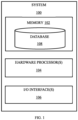
- FIG. 1 illustrates an exemplary system for implementing budget constrained deep Q-network for dynamic campaign allocation in computational advertising, according to some embodiments of the present disclosure.
- the system 100 includes one or more processors 104, communication interface device(s) or Input/Output (I/O) interface(s) 106, and one or more data storage devices or memory 102 operatively coupled to the one or more processors 104.
- the memory 102 comprises a database 108.
- the one or more processors 104 that are hardware processors can be implemented as one or more microprocessors, microcomputers, microcontrollers, digital signal processors, central processing units, state machines, logic circuitries, and/or any devices that manipulate signals based on operational instructions.
- the processor(s) is configured to fetch and execute computer-readable instructions stored in the memory.
- the system 100 can be implemented in a variety of computing systems, such as laptop computers, notebooks, hand-held devices, workstations, mainframe computers, servers, a network cloud, and the like.
- the I/O interface device(s) 106 can include a variety of software and hardware interfaces, for example, a web interface, a graphical user interface, and the like and can facilitate multiple communications within a wide variety of networks N/W and protocol types, including wired networks, for example, LAN, cable, etc., and wireless networks, such as WLAN, cellular, or satellite.
- the I/O interface device(s) can include one or more ports for connecting a number of devices to one another or to another server.
- the I/O interface device(s) 106 are used to display advertisement campaigns to one or more users wherein suitable advertisement campaign of an advertiser is determined by method of present disclosure.
- the memory 102 may include any computer-readable medium known in the art including, for example, volatile memory, such as static random access memory (SRAM) and dynamic random access memory (DRAM), and/or non-volatile memory, such as read only memory (ROM), erasable programmable ROM, flash memories, hard disks, optical disks, and magnetic tapes.
- volatile memory such as static random access memory (SRAM) and dynamic random access memory (DRAM)
- DRAM dynamic random access memory
- non-volatile memory such as read only memory (ROM), erasable programmable ROM, flash memories, hard disks, optical disks, and magnetic tapes.
- the database 108 may store information but is not limited to, information associated with at least one of: (i) browsing history of one or more users for each of a plurality of touchpoints occurring at corresponding time-points, (ii) advertisement campaigns by an advertiser, (iii) pre-defined budget for an advertising duration, (iv) information generated during training of deep Q-network and cumulative reward model and so on. Further, the database 108 stores information pertaining to inputs fed to the system 100 and/or outputs generated by the system (e.g., at each stage), specific to the methodology described herein. Functions of the components of system 100 are explained in conjunction with diagrams depicted in FIGS. 2 through 4 for dynamic campaign allocation in computational advertising.
- the system 100 comprises one or more data storage devices or the memory 102 operatively coupled to the processor(s) 104 and is configured to store instructions for execution of steps of the method depicted in FIGS 2 through 4 by the processor(s) or one or more hardware processors 104.
- the steps of the method of the present disclosure will now be explained with reference to the components or blocks of the system 100 as depicted in FIG. 1 and the steps of flow diagram as depicted in FIG. 2 and block diagrams of FIGS. 3 and 4 .
- process steps, method steps, techniques or the like may be described in a sequential order, such processes, methods, and techniques may be configured to work in alternate orders. In other words, any sequence or order of steps that may be described does not necessarily indicate a requirement that the steps to be performed in that order.
- the steps of processes described herein may be performed in any order practical. Further, some steps may be performed simultaneously.
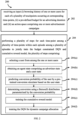
- FIG. 2 is a flowchart illustrating method (200) of training the deep Q-network for dynamic campaign allocation in computational advertising, according to some embodiments of the present disclosure.
- the one or more hardware processors 104 are configured to receive, as input, (i) browsing history of one or more users ( u n ) for each of a plurality of touchpoints (TP) occurring at corresponding time-points, (ii) a pre-defined budget for an advertising duration (T), (iii) an action space comprising one or more advertisement campaigns.
- the conversion is an end goal of an advertisement campaign comprising at least one of: click of an advertisement by a user, purchase of a product via the advertisement, brand-awareness, and increase in advertiser's traffic.
- one or more hardware processors are configured to perform a plurality of steps for each time-point among a plurality of time-points within each episode among a plurality of episodes to jointly train a budget constrained DQN and a cumulative reward model, the plurality of steps comprising steps 204(a) to 204(f) described herein.
- Each of the plurality of episodes terminate if the advertising duration is passed or if the pre-defined budget gets exhausted.
- a user (u l ) from among the one or more users is selected (or sampled), wherein the browsing history of the user for touchpoint corresponding to the time-point is comprised in the received input.
- an agent state comprising an advertiser state and a user state is obtained.
- the advertiser state comprises a budget Bt of advertisement available at the time-point and number of conversions Yt occurred till the time-point.
- the advertiser state is represented as (B t , Y t ).
- the user state of the user (u l ) is derived from a pre-trained autoencoder using the browsing history of the user (represented as X l,tp wherein tp is touchpoint of user u l at the time-point t).
- the pre-trained autoencoder maps the browsing history of the user to a fixed dimensional user-representation ⁇ l using encoder of the pre-trained autoencoder according to equation 1.
- the agent state is represented by equation 2.
- ⁇ e X l , tp ⁇ ⁇ l
- ⁇ l ⁇ R 1 ⁇ K s t ⁇ l B t Y t
- the pre-trained autoencoder is a recurrent autoencoder (comprising an encoder and a decoder) that was trained using a portion of the browsing history of the user with L1 norm between input user browsing history and reconstructed user sequence as the loss function given by equation 3.
- 20-30% of user browsing history is considered as training data.
- the reconstructed user sequence is generated by the decoder during training of the recurrent autoencoder.
- L ae ⁇ X l , t ⁇ X ′ l , t ⁇ 1
- L1 norm loss function or L1 loss function minimizes error which is the sum of all the absolute differences between true value (herein, user browsing history) and the predicted value (herein, reconstructed user sequence).
- conversion probability of the user is predicted by a pre-trained conversion simulator based on the user state.
- the pre-trained conversion simulator is a Long Short Term Memory (LSTM) based Encoder-Decoder model with Bahdanau Attention followed by linear and SoftMax layers. It is trained by using a portion of user browsing history as training data and cross-entropy loss function given by equation 4. In an embodiment, 20-30% of user browsing history is considered as training data.
- LSTM Long Short Term Memory
- Bernoulli distribution is a discrete probability distribution for an experiment having only 2 possible outcomes.
- Conversion determined by equation 5 is a value '0' or '1' indicating no conversion of advertisement or conversion of an advertisement respectively.
- the conversion ⁇ l,tp is considered as immediate reward for the agent state and is further utilized in training a cumulative reward model as described in step 204(e) of the method 200.
- a cumulative reward model ( N R ) is trained.
- the cumulative reward model is represented by N R ( s, a, ⁇ R ) wherein s is agent state, a is action and ⁇ R is weights of the cumulative reward model.
- the cumulative reward model employs 3 layers of Rectified Linear Unit (ReLU) multi-layer perceptron (MLP) parameterized by ⁇ R and is trained to reward the conversions in an episode.
- the training of the cumulative reward model is performed by- assigning cumulative sum of all the immediate rewards determined in the episode to all pairs of agent state and action that occur in the episode, wherein action corresponding to the agent state is determined by the DQN.
- ReLU Rectified Linear Unit
- MLP multi-layer perceptron
- maximum cumulative rewards across all episodes for all the agent state-action pairs are stored in a dictionary.
- all agent state, action and maximum cumulative reward tuples are stored in a first replay buffer ( M R ), and weights of the cumulative reward model are updated using a loss function (given by equation 6) which minimizes squared error between (i) maximum reward across all episodes obtained from the first replay buffer and (ii) maximum reward predicted using the cumulative reward model for the agent state.
- the budget constrained Deep Q-network (DQN) is trained.
- the DQN is represented by N Q ( s, a, ⁇ Q ) wherein s is agent state, a is action and ⁇ Q is weights of the DQN and employs 2 layers of Rectified Linear Unit Multi-Layer Perceptron (ReLU MLP) followed by a fully connected layer and is trained to determine optimal campaign allocation policy with a fixed budget for an advertising duration.
- the DQN is trained by determining an action from the action space based on the agent state st using an epsilon greedy policy.
- the epsilon greedy policy selects action with highest estimated reward. Further, a cumulative reward R t corresponding to the determined action is obtained using the cumulative reward model. Further, updated agent state s t+1 corresponding to the user at a successive time-point from among the plurality of time-points is determined using a state transition routine (illustrated in FIG. 3 ). Further, a tuple comprising agent state st, action at, cumulative reward R t , and updated agent state s t+1 is stored in a second replay buffer M Q and weights of the DQN are updated using Bellman rule (given by equation 7) based on a tuple sampled from the second replay buffer.
- N Q s a ⁇ Q N Q s a ⁇ Q + ⁇ r s a + max ⁇ , N Q s ′ , a ′ , ⁇ Q ⁇ N Q s a ⁇ Q wherein ⁇ is learning rate and r ( s, a ) is the cumulative reward.
- the DQN learns optimal policy ⁇ which determines an action for a given agent state such that maximum cumulative reward is obtained for the determined action.
- the trained DQN and the trained cumulative reward model resulting after the plurality of episodes is used to allocate optimal campaigns to online users during advertising duration as illustrated by FIG. 4 .
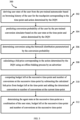
- FIG. 3 is a flowchart illustrating state transition routine (300), according to some embodiments of the present disclosure.
- the state transition routine determines an agent state at a successive time-point (t+1) from among the plurality of time-points.
- user state of the user is derived from the pre-trained autoencoder based on browsing history of the user for the touchpoint corresponding to the time-point and action determined by the DQN.
- conversion probability of the user is predicted by the pre-trained conversion simulator based on the user state at the time-point and action determined by the DQN using the step 204(c) of the method 200.
- step 306 conversion ⁇ k,tp is predicted based on the user state at the time-point t and action determined by the DQN using the step 204(d) of the method 200. Further, at step 308, a bid-price is determined corresponding to the action determined for the user at the current time-point using an offline bidding process by the advertiser.
- budget left (B t+1 ) at the successive time-point t+1 and number of conversions ( Yt+1 ) at the successive time-point t+1 are computed based on budget left Bt and number of conversions Yt at the time-point t respectively by subtracting the calculated bid-price from budget left at the time-point and adding the determined conversion to number of conversions at the current time-point according to equations 7 and 8.
- the agent state at the successive time-point t+1 is determined as combination of the user state, budget left at the successive time-point and number of conversions at the successive time-point.
- the agent state at the successive time-point t+1 is [ ⁇ k , B t+1 , Y t+1 ].
- B t + 1 B t ⁇ b k , tp
- Y t + 1 Y t + y ⁇ k , tp
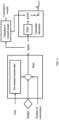
- FIG. 4 is a block diagram illustrating process of state representation (402) and process of campaign allocation (404), according to some embodiments of the present disclosure.
- the process of state representation (block 402) determines agent state at the current time-point t by: determining user state based on browsing history of the user using the pre-trained autoencoder; and concatenating the user state with advertiser state (comprising budget Bt left at time t and number of conversions Yt at time t) to obtain the agent state at time t.
- the process of campaign allocation 404 determines an optimal ad campaign to be displayed to the user at the time-point t based on the agent state by using the DQN trained by the method 200.
- the DQN predicts suitable action i.e. the ad campaign which achieves maximum cumulative reward for the agent state.
- Dataset an online advertising dataset by Criteo is used for the experiments.
- the dataset has 30 days of live traffic data, with ⁇ 16M impressions (ad displayed to the user corresponding to a particular ad campaign), 45K conversions and 675 campaigns.
- Each row in the dataset corresponds to an impression displayed to a user, context features, cost of impression and whether the user converted within 30 days.
- User sequences are obtained by grouping user identity (ID) and conversion identity (ID) given in Criteo dataset. Following which, user sequences containing more than 20 touchpoints are discarded.
- the pre-processed dataset contains 1,244,318 user sequences with 675 campaigns.
- Each unique combination of the context features are considered (9 categorical columns given as cat1, cat2,.., cat9) to represent a distinct ad.
- Each campaign has one or more ads associated with it.
- bid-price is provided as 'cost' along-with each impression and is scaled by a factor of 100 for experimental analysis.
- Campaign, cat1, cat2 mecanical attributes at each touchpoint are used to train the pre-trained auto-encoder and the pre-trained conversion simulator. Further reduced, pre-processed dataset is obtained by randomly selecting 10 campaigns to create a training dataset containing 310,209 impressions and 96,074 user sequences.
- Evaluation metrics Four evaluation metrics are used to evaluate method of present disclosure.
- the evaluation metrics include - (i) conversion rate, (ii) budget utilization, (iii) Cost Per Conversion (CPA), and (iv) Return on Investment (ROI) calculated according to equations 9-12.
- Performance of method of present disclosure is compared against following 2 baselines - (i) Random Actions (RA) wherein campaigns are randomly selected; and (ii) Historical Actions (HA) wherein campaigns are selected according to user's sequence in historical data. Essentially, the next action for a user is the next campaign/ad that occurs in the corresponding sequence in the historical dataset.
- the budget allocation using method of present disclosure is compared with attribution based budget allocation approaches. It is to be noted that method of present disclosure is dynamic budget allocation approach while attribution based approaches are static, wherein budget is distributed across campaigns at the start of advertising duration.
- the attribution based budget allocation approaches include: (i) Equal Budget Allocation (EBA): The total budget (B) is equally divided equally amongst all campaigns. (ii) Criteo Attribution Based Budget Allocation (CBA): The total budget is divided amongst all campaigns in proportion to attribution values assigned by Criteo's attribution model. The attribution value associated with a campaign is obtained by summing over values in the attribution column from the Criteo dataset for impressions associated with that campaign. (iii) Modified DNAMTA (M-DNAMTA): DNAMTA model ( S. K. Arava, C. Dong, Z. Yan, A.
- For user state representation ⁇ n , K 16 is used, making the user state representation 1x18 vector.
- the replay buffers for both DQN and Cumulative Reward Model are assigned a size of 10 5 and, batch size and learning rate for training both networks are 16 and 0.0005, respectively. Discount factor gamma is set as 1, and the network is updated every 2 steps. The soft update parameter tau is set as 1e -3 . While training of DQN, the batches sampled from the replay buffer are such that only tuples that have converted are selected. For all the baselines, the number of users and overall budget is kept the same, and the same conversion prediction model is employed during performance evaluation.
- the method of present disclosure is compared against two baselines policies: Random Actions (RA) and Historical Actions (HA). The comparisons are performed along 4 metrics - Conversions Rate, Budget Utilization, CPA, ROI.
- RA Random Actions
- HA Historical Actions
- CPA ROI
- all the users' touchpoint sequences are initialized. For each user, an initial sequence is randomly picked from the training dataset and length of the initial sequence is set as min ⁇ length of picked sequence in dataset, ⁇ Poisson(2) ⁇ . This initialization is repeated for each test episode.
- ad campaigns are allocated to the users using method of present disclosure and conversions rate, budget utilized, and CPA of each test episode are computed.
- ad campaigns are allocated to the users using RA and HA policies and the results are recorded in Table 1.
- method of present disclosure outperforms RA and HA across all episodes with higher average conversion rate and a lower average CPA. From Table 1, it can be inferred that budget utilization across all three policies is similar. In terms of % increase in ROI, it can be seen that method of present disclosure leads to an 80.7% and a 100.1% ROI increase in comparison to RA and HA respectively, when each conversion has unit value. These results suggest that under the same budget constraint, a policy learnt using cumulative rewards and user, advertiser's state information, leads to much better overall performance than heuristic or random campaign allocation approaches predominantly used by advertisers. Table 1 Approach Conversion rate Budget utilization CPA ROI Method of present disclosure 20.63% 94.7% 0.039 25.64 RA 9.83% 81.6% 0.082 12.195 HA 9.27% 85.5% 0.084 11.90
- the method of present disclosure uses a dynamic approach for budget allocation by virtue of dynamically allocating campaigns under a fixed budget constraint. Performance of this approach is compared with heuristic and attribution based static budget allocation approaches - EBA, CBA, M-DNAMTA and DARNN as described in the earlier section.
- Baseline approaches allocate campaign-wise budget before the start of advertising duration. During the advertising duration, if the budget for a certain campaign gets exhausted, the campaign is no longer allocated to any user. User-initialization as described previously is performed and same total budget B for all approaches is used for a fair comparison. Using campaign-wise budgets and historical actions, baseline approaches are evaluated in terms of conversion rate and budget utilized, averaged across multiple episodes.
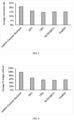
- the total budget utilized in an episode for baseline approaches is computed as the difference in total budget and sum of budget remaining in all campaigns. Performance of method of present disclosure is computed using the same metrics and results are recorded in table 2 and illustrated in FIG. 5 . It is observed that the method of present disclosure results in a higher average conversion rate with 21% of users converting in an episode on average whereas static budget allocation approaches - EBA, CBA, M-DNAMTA and DARNN lead to 16%, 14.5%, 15% and 15% average conversion rate respectively. It is also seen that method of present disclosure utilizes almost the entire budget while the baseline approaches utilize approximately 55% to 66% of the total budget as illustrated in FIG. 6 .
- Cumulative Reward Model for learning budget effective campaign allocation policy.
- the performance of method of present disclosure with policy learned using immediate rewards instead of proposed Cumulative Reward Model are compared and illustrated in FIG. 7 . It is observed that the median conversion rate is much higher when the policy is learned using Cumulative Reward Model than with immediate rewards.
- the long whiskers in the box plot are a result of different user initializations across test episodes.
- the policy learnt using immediate rewards focuses on learning the best policy for maximizing conversion probability for an individual user sequence. Whereas employing cumulative reward model considers the current budget and number of conversions so far and aims to find the best policy for maximizing the performance of the entire advertising duration.
- the embodiments of present disclosure herein addresses unresolved problem of optimally allocating ad campaigns to a user by maximizing number of conversions within a fixed advertising budget and advertising duration.
- the embodiment thus provides a method of training a deep-Q network and a cumulative reward model for optimally allocating ad campaigns to a user.
- Such computer-readable storage means contain program-code means for implementation of one or more steps of the method, when the program runs on a server or mobile device or any suitable programmable device.
- the hardware device can be any kind of device which can be programmed including e.g., any kind of computer like a server or a personal computer, or the like, or any combination thereof.
- the device may also include means which could be e.g., hardware means like e.g., an application-specific integrated circuit (ASIC), a field-programmable gate array (FPGA), or a combination of hardware and software means, e.g., an ASIC and an FPGA, or at least one microprocessor and at least one memory with software processing components located therein.
- the means can include both hardware means, and software means.
- the method embodiments described herein could be implemented in hardware and software.
- the device may also include software means. Alternatively, the embodiments may be implemented on different hardware devices, e.g., using a plurality of CPUs.
- the embodiments herein can comprise hardware and software elements.
- the embodiments that are implemented in software include but are not limited to, firmware, resident software, microcode, etc.
- the functions performed by various components described herein may be implemented in other components or combinations of other components.
- a computer-usable or computer readable medium can be any apparatus that can comprise, store, communicate, propagate, or transport the program for use by or in connection with the instruction execution system, apparatus, or device.
- a computer-readable storage medium refers to any type of physical memory on which information or data readable by a processor may be stored.
- a computer-readable storage medium may store instructions for execution by one or more processors, including instructions for causing the processor(s) to perform steps or stages consistent with the embodiments described herein.
- the term "computer-readable medium” should be understood to include tangible items and exclude carrier waves and transient signals, i.e., be non-transitory. Examples include random access memory (RAM), read-only memory (ROM), volatile memory, nonvolatile memory, hard drives, CD ROMs, DVDs, flash drives, disks, and any other known physical storage media.
Landscapes
- Business, Economics & Management (AREA)
- Engineering & Computer Science (AREA)
- Accounting & Taxation (AREA)
- Development Economics (AREA)
- Strategic Management (AREA)
- Finance (AREA)
- Game Theory and Decision Science (AREA)
- Entrepreneurship & Innovation (AREA)
- Economics (AREA)
- Marketing (AREA)
- Physics & Mathematics (AREA)
- General Business, Economics & Management (AREA)
- General Physics & Mathematics (AREA)
- Theoretical Computer Science (AREA)
- Management, Administration, Business Operations System, And Electronic Commerce (AREA)
Claims (15)
- Procédé (200), mis en oeuvre par processeur, d'entraînement d'un réseau Q profond, DQN, à contrainte budgétaire dans le cadre d'une attribution dynamique de campagnes dans la publicité informatique, le procédé comprenant les étapes ci-dessous consistant à :recevoir (202), en tant qu'entrée, par l'intermédiaire d'un ou plusieurs processeurs matériels, i. l'historique de navigation d'un ou plusieurs utilisateurs pour chaque point de contact d'une pluralité de points de contact se produisant à des points temporels correspondants, ii. un budget prédéfini pour une durée de publicité T, et iii. un espace d'action comprenant une ou plusieurs campagnes publicitaires, dans lequel l'historique de navigation comprend une publicité associée à une campagne publicitaire correspondante de l'espace d'action, et un champ défini sur une valeur parmi « 0 », indiquant une absence de conversion de la publicité, et « 1 », indiquant une conversion de la publicité, à un point de contact correspondant parmi la pluralité de points de contact ;mettre en oeuvre (204), par l'intermédiaire dudit un ou desdits plusieurs processeurs matériels, une pluralité d'étapes pour chaque point temporel parmi une pluralité de points temporels, dans chaque épisode parmi une pluralité d'épisodes, pour entraîner conjointement un réseau DQN à contrainte budgétaire et un modèle de récompense cumulative, la pluralité d'étapes comprenant les étapes ci-dessous consistant à :sélectionner (204(a)) un utilisateur parmi ledit un ou lesdits plusieurs utilisateurs, dans lequel l'historique de navigation de l'utilisateur pour le point de contact correspondant au point temporel est compris dans l'entrée reçue ;obtenir (204(b)) un état d'agent comprenant un état d'annonceur et un état d'utilisateur, dans lequel l'état d'annonceur comprend un budget de publicité disponible au point temporel et un nombre de conversions occasionnées jusqu'au point temporel, et dans lequel l'état d'utilisateur est dérivé d'un auto-encodeur pré-entraîné basé sur l'historique de navigation de l'utilisateur pour le point de contact correspondant au point temporel ;prédire (204(c)) une probabilité de conversion de l'utilisateur par le biais d'un simulateur de conversion pré-entraîné sur la base de l'état d'utilisateur ;déterminer (204(d)) une conversion en faisant appel à une distribution de Bernoulli paramétrée par la probabilité de conversion, dans laquelle la conversion déterminée est une récompense immédiate correspondant à l'état d'agent ;entraîner (204(e)) le modèle de récompense cumulative en mettant en oeuvre les étapes ci-dessous consistant à :attribuer une somme cumulative de toutes les récompenses immédiates déterminées dans un épisode parmi une pluralité d'épisodes, à toutes les paires d'état d'agent et d'action qui se produisent dans l'épisode, dans laquelle une action correspondant à l'état d'agent est déterminée par le réseau DQN ;stocker des récompenses cumulatives maximales à travers l'ensemble de la pluralité d'épisodes pour toutes les paires d'état d'agent et d'action dans un dictionnaire ;stocker tous les uplets d'état d'agent, d'action et de récompense cumulative maximale dans un premier tampon de relecture ; etmettre à jour des poids du modèle de récompense cumulative sur la base d'une fonction de perte qui minimise une erreur quadratique entre i. une récompense maximale sur l'ensemble de la pluralité d'épisodes obtenue à partir du premier tampon de relecture et ii. une récompense maximale prédite par le modèle de récompense cumulative pour l'état d'agent ;entraîner (204(f)) le réseau DQN pour une attribution dynamique de campagnes, en mettant en oeuvre les étapes ci-dessous consistant à :déterminer une action à partir de l'espace d'action sur la base de l'état d'agent en faisant appel à une politique epsilon-gloutonne ;obtenir une récompense cumulative correspondant à l'action déterminée en faisant appel au modèle de récompense cumulative ;déterminer un état d'agent mis à jour correspondant à l'utilisateur, à un point temporel successif parmi la pluralité de points temporels, en faisant appel à une routine de transition d'état ;stocker un uplet comprenant un état d'agent correspondant à l'utilisateur, à l'action, à la récompense cumulative et à l'état d'agent mis à jour correspondant à l'utilisateur, dans un second tampon de relecture ; etmettre à jour des poids du réseau DQN, en faisant appel à une règle de Bellman, sur la base d'un uplet échantillonné à partir du second tampon de relecture.
- Procédé selon la revendication 1, dans lequel la conversion est un objectif final d'une campagne publicitaire comprenant au moins l'un des éléments parmi : un clic sur une publicité par un utilisateur, l'achat d'un produit par l'intermédiaire de la publicité, une sensibilisation à la marque et une augmentation du trafic de l'annonceur.
- Procédé selon la revendication 1, dans lequel l'auto-encodeur pré-entraîné est un auto-encodeur récurrent comprenant un encodeur et un décodeur entraînés en utilisant une partie de l'historique de navigation dudit un ou desdits plusieurs utilisateurs avec une norme L1 entre un historique de navigation d'utilisateur d'entrée et une séquence d'utilisateur reconstruite en tant qu'une fonction de perte, dans laquelle la séquence d'utilisateur reconstruite est générée par le décodeur.
- Procédé selon la revendication 1, dans lequel le simulateur de conversion pré-entraîné est un encodeur-décodeur basé sur une mémoire à long et court terme, LSTM, avec une attention de Bahdanau suivie de couches linéaires et SoftMax, et il est entraîné en utilisant une partie de l'historique de navigation dudit un ou desdits plusieurs utilisateurs, en tant que des données d'entraînement, et une fonction de perte d'entropie croisée.
- Procédé selon la revendication 1, dans lequel chaque épisode de la pluralité d'épisodes se termine si la durée de publicité est dépassée ou si le budget prédéfini s'épuise.
- Procédé selon la revendication 1, dans lequel la routine de transition d'état (300) comprend les étapes ci-dessous consistant à :dériver (302) un état d'utilisateur de l'utilisateur à partir de l'auto-encodeur pré-entraîné sur la base d'un historique de navigation de l'utilisateur pour le point de contact correspondant au point temporel et de l'action déterminée par le réseau DQN;prédire (304) une probabilité de conversion de l'utilisateur par le biais du simulateur de conversion pré-entraîné sur la base de l'état d'utilisateur au point temporel et de l'action déterminée par le réseau DQN ;déterminer (306) une conversion en faisant appel à la distribution de Bernoulli paramétrée par la probabilité de conversion ;calculer (308) un prix offert correspondant à l'action déterminée par le réseau DQN, en faisant appel à un processus d'offre hors ligne par un annonceur ;calculer (310) un budget restant au point temporel successif et un nombre de conversions au point temporel successif, en soustrayant le prix offert calculé du budget restant au point temporel et en ajoutant la conversion déterminée au nombre de conversions au point temporel en cours ; etdéterminer (312) l'état d'agent au point temporel successif en tant qu'une combinaison de l'état d'utilisateur, du budget restant au point temporel successif et du nombre de conversions au point temporel successif.
- Système (100) pour un réseau Q profond, DQN, à contrainte budgétaire dans le cadre d'une attribution dynamique de campagnes dans la publicité informatique, le système comprenant :une mémoire (102) stockant des instructions ;une ou plusieurs interfaces de communication (106) ; etun ou plusieurs processeurs matériels (104) couplés à la mémoire (102) par l'intermédiaire de ladite une ou desdites plusieurs interfaces de communication (106), dans lequel ledit un ou lesdits plusieurs processeurs matériels (104) sont configurés par les instructions de manière à mettre en oeuvre les étapes ci-dessous consistant à :recevoir, en tant qu'entrée, i. l'historique de navigation d'un ou plusieurs utilisateurs pour chaque point de contact d'une pluralité de points de contact se produisant à des points temporels correspondants, ii. un budget prédéfini pour une durée de publicité T, et iii. un espace d'action comprenant une ou plusieurs campagnes publicitaires, dans lequel l'historique de navigation comprend une publicité associée à une campagne publicitaire correspondante de l'espace d'action, et un champ défini sur une valeur parmi « 0 », indiquant une absence de conversion de la publicité, et « 1 », indiquant une conversion de la publicité, à un point de contact correspondant parmi la pluralité de points de contact ;mettre en oeuvre une pluralité d'étapes pour chaque point temporel parmi une pluralité de points temporels, dans chaque épisode parmi une pluralité d'épisodes, pour entraîner conjointement un réseau DQN à contrainte budgétaire et un modèle de récompense cumulative, la pluralité d'étapes comprenant les étapes ci-dessous consistant à :sélectionner un utilisateur parmi ledit un ou lesdits plusieurs utilisateurs, dans lequel l'historique de navigation de l'utilisateur pour le point de contact correspondant au point temporel est compris dans l'entrée reçue ;obtenir un état d'agent comprenant un état d'annonceur et un état d'utilisateur, dans lequel l'état d'annonceur comprend un budget de publicité disponible au point temporel et un nombre de conversions occasionnées jusqu'au point temporel, et dans lequel l'état d'utilisateur est dérivé d'un auto-encodeur pré-entraîné basé sur l'historique de navigation de l'utilisateur pour le point de contact correspondant au point temporel ;prédire une probabilité de conversion de l'utilisateur par le biais d'un simulateur de conversion pré-entraîné sur la base de l'état d'utilisateur ;déterminer une conversion en faisant appel à une distribution de Bernoulli paramétrée par la probabilité de conversion, dans laquelle la conversion déterminée est une récompense immédiate correspondant à l'état d'agent ;entraîner le modèle de récompense cumulative en mettant en oeuvre les étapes ci-dessous consistant à :attribuer une somme cumulative de toutes les récompenses immédiates déterminées dans un épisode parmi une pluralité d'épisodes, à toutes les paires d'état d'agent et d'action qui se produisent dans l'épisode, dans laquelle une action correspondant à l'état d'agent est déterminée par le réseau DQN ;stocker des récompenses cumulatives maximales à travers l'ensemble de la pluralité d'épisodes pour toutes les paires d'état d'agent et d'action dans un dictionnaire ;stocker tous les uplets d'état d'agent, d'action et de récompense cumulative maximale dans un premier tampon de relecture ; etmettre à jour des poids du modèle de récompense cumulative sur la base d'une fonction de perte qui minimise une erreur quadratique entre i. une récompense maximale sur l'ensemble de la pluralité d'épisodes obtenue à partir du premier tampon de relecture et ii. une récompense maximale prédite par le modèle de récompense cumulative pour l'état d'agent ;entraîner le réseau DQN pour une attribution dynamique de campagnes, en mettant en oeuvre les étapes ci-dessous consistant à :déterminer une action à partir de l'espace d'action sur la base de l'état d'agent en faisant appel à une politique epsilon-gloutonne ;obtenir une récompense cumulative correspondant à l'action déterminée en faisant appel au modèle de récompense cumulative ;déterminer un état d'agent mis à jour correspondant à l'utilisateur, à un point temporel successif parmi la pluralité de points temporels, en faisant appel à une routine de transition d'état ;stocker un uplet comprenant un état d'agent correspondant à l'utilisateur, à l'action, à la récompense cumulative et à l'état d'agent mis à jour correspondant à l'utilisateur, dans un second tampon de relecture ; etmettre à jour des poids du réseau DQN, en faisant appel à une règle de Bellman, sur la base d'un uplet échantillonné à partir du second tampon de relecture.
- Système selon la revendication 7, dans lequel la conversion est un obj ectif final d'une campagne publicitaire comprenant au moins l'un des éléments parmi : un clic sur une publicité par un utilisateur, l'achat d'un produit par l'intermédiaire de la publicité, une sensibilisation à la marque et une augmentation du trafic de l'annonceur.
- Système selon la revendication 7, dans lequel l'auto-encodeur pré-entraîné est un auto-encodeur récurrent comprenant un encodeur et un décodeur entraînés en utilisant une partie de l'historique de navigation dudit un ou desdits plusieurs utilisateurs avec une norme L1 entre un historique de navigation d'utilisateur d'entrée et une séquence d'utilisateur reconstruite en tant qu'une fonction de perte, dans laquelle la séquence d'utilisateur reconstruite est générée par le décodeur.
- Système selon la revendication 7, dans lequel le simulateur de conversion pré-entraîné est un encodeur-décodeur basé sur une mémoire à long et court terme, LSTM, avec une attention de Bahdanau suivie de couches linéaires et SoftMax, et il est entraîné en utilisant une partie de l'historique de navigation dudit un ou desdits plusieurs utilisateurs, en tant que des données d'entraînement, et une fonction de perte d'entropie croisée.
- Système selon la revendication 7, dans lequel chaque épisode de la pluralité d'épisodes se termine si la durée de publicité est dépassée ou si le budget prédéfini s'épuise.
- Système selon la revendication 7, dans lequel la routine de transition d'état comprend les étapes ci-dessous consistant à :dériver un état d'utilisateur de l'utilisateur à partir de l'auto-encodeur pré-entraîné sur la base d'un historique de navigation de l'utilisateur pour le point de contact correspondant au point temporel et de l'action déterminée par le réseau DQN;prédire une probabilité de conversion de l'utilisateur par le biais du simulateur de conversion pré-entraîné sur la base de l'état d'utilisateur au point temporel et de l'action déterminée par le réseau DQN ;déterminer une conversion en faisant appel à la distribution de Bernoulli paramétrée par la probabilité de conversion ;calculer un prix offert correspondant à l'action déterminée par le réseau DQN, en faisant appel à un processus d'offre hors ligne par un annonceur ;calculer un budget restant au point temporel successif et un nombre de conversions au point temporel successif, en soustrayant le prix offert calculé du budget restant au point temporel et en ajoutant la conversion déterminée au nombre de conversions au point temporel en cours ; etdéterminer l'état d'agent au point temporel successif en tant qu'une combinaison de l'état d'utilisateur, du budget restant au point temporel successif et du nombre de conversions au point temporel successif.
- Un ou plusieurs supports non transitoires de stockage d'informations lisibles par machine comprenant une ou plusieurs instructions qui, lorsqu'elles sont exécutées par un ou plusieurs processeurs matériels, occasionnent la mise en oeuvre des étapes ci-dessous consistant à :recevoir, en tant qu'entrée, i. l'historique de navigation d'un ou plusieurs utilisateurs pour chaque point de contact d'une pluralité de points de contact se produisant à des points temporels correspondants, ii. un budget prédéfini pour une durée de publicité T, et iii. un espace d'action comprenant une ou plusieurs campagnes publicitaires, dans lequel l'historique de navigation comprend une publicité associée à une campagne publicitaire correspondante de l'espace d'action, et un champ défini sur une valeur parmi « 0 », indiquant une absence de conversion de la publicité, et « 1 », indiquant une conversion de la publicité, à un point de contact correspondant parmi la pluralité de points de contact ;mettre en oeuvre une pluralité d'étapes pour chaque point temporel parmi une pluralité de points temporels, dans chaque épisode parmi une pluralité d'épisodes, pour entraîner conjointement un réseau DQN à contrainte budgétaire et un modèle de récompense cumulative, la pluralité d'étapes comprenant les étapes ci-dessous consistant à :sélectionner un utilisateur parmi ledit un ou lesdits plusieurs utilisateurs, dans lequel l'historique de navigation de l'utilisateur pour le point de contact correspondant au point temporel est compris dans l'entrée reçue ;obtenir un état d'agent comprenant un état d'annonceur et un état d'utilisateur, dans lequel l'état d'annonceur comprend un budget de publicité disponible au point temporel et un nombre de conversions occasionnées jusqu'au point temporel, et dans lequel l'état d'utilisateur est dérivé d'un auto-encodeur pré-entraîné basé sur l'historique de navigation de l'utilisateur pour le point de contact correspondant au point temporel ;prédire une probabilité de conversion de l'utilisateur par le biais d'un simulateur de conversion pré-entraîné sur la base de l'état d'utilisateur ;déterminer une conversion en faisant appel à une distribution de Bernoulli paramétrée par la probabilité de conversion, dans laquelle la conversion déterminée est une récompense immédiate correspondant à l'état d'agent ;entraîner le modèle de récompense cumulative en mettant en oeuvre les étapes ci-dessous consistant à :attribuer une somme cumulative de toutes les récompenses immédiates déterminées dans un épisode parmi une pluralité d'épisodes, à toutes les paires d'état d'agent et d'action qui se produisent dans l'épisode, dans laquelle une action correspondant à l'état d'agent est déterminée par le réseau DQN ;stocker des récompenses cumulatives maximales à travers l'ensemble de la pluralité d'épisodes pour toutes les paires d'état d'agent et d'action dans un dictionnaire ;stocker tous les uplets d'état d'agent, d'action et de récompense cumulative maximale dans un premier tampon de relecture ; etmettre à jour des poids du modèle de récompense cumulative sur la base d'une fonction de perte qui minimise une erreur quadratique entre i. une récompense maximale sur l'ensemble de la pluralité d'épisodes obtenue à partir du premier tampon de relecture et ii. une récompense maximale prédite par le modèle de récompense cumulative pour l'état d'agent ;entraîner le réseau DQN pour une attribution dynamique de campagnes, en mettant en oeuvre les étapes ci-dessous consistant à :déterminer une action à partir de l'espace d'action sur la base de l'état d'agent en faisant appel à une politique epsilon-gloutonne ;obtenir une récompense cumulative correspondant à l'action déterminée en faisant appel au modèle de récompense cumulative ;déterminer un état d'agent mis à jour correspondant à l'utilisateur, à un point temporel successif parmi la pluralité de points temporels, en faisant appel à une routine de transition d'état ;stocker un uplet comprenant un état d'agent correspondant à l'utilisateur, à l'action, à la récompense cumulative et à l'état d'agent mis à jour correspondant à l'utilisateur, dans un second tampon de relecture ; etmettre à jour des poids du réseau DQN, en faisant appel à une règle de Bellman, sur la base d'un uplet échantillonné à partir du second tampon de relecture.
- Ledit un ou lesdits plusieurs supports non transitoires de stockage d'informations lisibles par machine selon la revendication 13, dans lesquels l'auto-encodeur pré-entraîné est un auto-encodeur récurrent comprenant un encodeur et un décodeur entraînés en utilisant une partie de l'historique de navigation dudit un ou desdits plusieurs utilisateurs avec une norme L1 entre un historique de navigation d'utilisateur d'entrée et une séquence d'utilisateur reconstruite en tant qu'une fonction de perte, dans laquelle la séquence d'utilisateur reconstruite est générée par le décodeur, et dans lequel le simulateur de conversion pré-entraîné est un encodeur-décodeur basé sur une mémoire à long et court terme, LSTM, avec une attention de Bahdanau suivie de couches linéaires et SoftMax, et il est entraîné en utilisant une partie de l'historique de navigation dudit un ou desdits plusieurs utilisateurs, en tant que des données d'entraînement, et une fonction de perte d'entropie croisée.
- Ledit un ou lesdits plusieurs supports non transitoires de stockage d'informations lisibles par machine selon la revendication 13, dans lesquels la routine de transition d'état comprend les étapes ci-dessous consistant à :dériver un état d'utilisateur de l'utilisateur à partir de l'auto-encodeur pré-entraîné sur la base d'un historique de navigation de l'utilisateur pour le point de contact correspondant au point temporel et de l'action déterminée par le réseau DQN;prédire une probabilité de conversion de l'utilisateur par le biais du simulateur de conversion pré-entraîné sur la base de l'état d'utilisateur au point temporel et de l'action déterminée par le réseau DQN ;déterminer une conversion en faisant appel à la distribution de Bernoulli paramétrée par la probabilité de conversion ;calculer un prix offert correspondant à l'action déterminée par le réseau DQN, en faisant appel à un processus d'offre hors ligne par un annonceur ;calculer un budget restant au point temporel successif et un nombre de conversions au point temporel successif, en soustrayant le prix offert calculé du budget restant au point temporel et en ajoutant la conversion déterminée au nombre de conversions au point temporel en cours ; etdéterminer l'état d'agent au point temporel successif en tant qu'une combinaison de l'état d'utilisateur, du budget restant au point temporel successif et du nombre de conversions au point temporel successif.
Applications Claiming Priority (1)
| Application Number | Priority Date | Filing Date | Title |
|---|---|---|---|
| IN202121032123 | 2021-07-16 |
Publications (3)
| Publication Number | Publication Date |
|---|---|
| EP4120171A1 EP4120171A1 (fr) | 2023-01-18 |
| EP4120171B1 true EP4120171B1 (fr) | 2023-09-20 |
| EP4120171C0 EP4120171C0 (fr) | 2023-09-20 |
Family
ID=82403353
Family Applications (1)
| Application Number | Title | Priority Date | Filing Date |
|---|---|---|---|
| EP22183904.6A Active EP4120171B1 (fr) | 2021-07-16 | 2022-07-08 | Réseau q profond à contrainte budgétaire pour une attribution dynamique de campagnes dans la publicité informatique |
Country Status (2)
| Country | Link |
|---|---|
| US (1) | US11915262B2 (fr) |
| EP (1) | EP4120171B1 (fr) |
Families Citing this family (3)
| Publication number | Priority date | Publication date | Assignee | Title |
|---|---|---|---|---|
| CN118972951B (zh) * | 2024-04-10 | 2025-11-07 | 华南师范大学 | 基于dqn的时隙分配和功率控制方法 |
| CN119419751A (zh) * | 2024-10-18 | 2025-02-11 | 中国南方电网有限责任公司 | 一种基于深度强化学习的电网协调控制方法及装置 |
| CN121094468A (zh) * | 2025-09-12 | 2025-12-09 | 东莞嘉丰机电设备有限公司 | 基于人工智能的自动售货机智能调度方法及系统 |
Family Cites Families (7)
| Publication number | Priority date | Publication date | Assignee | Title |
|---|---|---|---|---|
| US11062351B1 (en) | 2007-11-15 | 2021-07-13 | Verizon Media Inc. | Systems and methods for allocating electronic advertising opportunities |
| US20170032245A1 (en) * | 2015-07-01 | 2017-02-02 | The Board Of Trustees Of The Leland Stanford Junior University | Systems and Methods for Providing Reinforcement Learning in a Deep Learning System |
| US11775850B2 (en) * | 2016-01-27 | 2023-10-03 | Microsoft Technology Licensing, Llc | Artificial intelligence engine having various algorithms to build different concepts contained within a same AI model |
| US10762424B2 (en) * | 2017-09-11 | 2020-09-01 | Sas Institute Inc. | Methods and systems for reinforcement learning |
| US20190311042A1 (en) * | 2018-04-04 | 2019-10-10 | Didi Research America, Llc | Intelligent incentive distribution |
| US12572150B2 (en) * | 2019-11-05 | 2026-03-10 | Strong Force Vcn Portfolio 2019, Llc | Robot fleet management for value chain networks |
| KR102929597B1 (ko) * | 2020-01-30 | 2026-02-23 | 엘지전자 주식회사 | IoT 디바이스를 이용하여 사용자에게 서비스를 제공하는 시스템 및 방법 |
-
2022
- 2022-07-08 EP EP22183904.6A patent/EP4120171B1/fr active Active
- 2022-07-13 US US17/812,396 patent/US11915262B2/en active Active
Also Published As
| Publication number | Publication date |
|---|---|
| US20230072777A1 (en) | 2023-03-09 |
| US11915262B2 (en) | 2024-02-27 |
| EP4120171A1 (fr) | 2023-01-18 |
| EP4120171C0 (fr) | 2023-09-20 |
Similar Documents
| Publication | Publication Date | Title |
|---|---|---|
| EP4120171A1 (fr) | Réseau q profond à contrainte budgétaire pour une attribution dynamique de campagnes dans la publicité informatique | |
| Miralles-Pechuán et al. | A novel methodology for optimizing display advertising campaigns using genetic algorithms | |
| Zhou et al. | Direct heterogeneous causal learning for resource allocation problems in marketing | |
| US20170083937A1 (en) | Micro-moment analysis | |
| WO2021081962A1 (fr) | Procédé d'apprentissage de modèle de recommandation, procédé de recommandation, dispositif, et support lisible par ordinateur | |
| US20170278173A1 (en) | Personalized bundle recommendation system and method | |
| US8732015B1 (en) | Social media pricing engine | |
| US11288709B2 (en) | Training and utilizing multi-phase learning models to provide digital content to client devices in a real-time digital bidding environment | |
| US20120253927A1 (en) | Machine learning approach for determining quality scores | |
| US10528959B2 (en) | Micro-moment analysis | |
| CN102640179A (zh) | 用于多渠道广告的基于广告受众历史的竞价生成系统和方法 | |
| CN113763019A (zh) | 一种用户信息管理方法和装置 | |
| EP4250215B1 (fr) | Systèmes et procédés pour effectuer une segmentation d'utilisateur et recommander des offres personnalisées en temps réel | |
| US9858526B2 (en) | Method and system using association rules to form custom lists of cookies | |
| US11756076B2 (en) | Systems and methods for providing sponsored recommendations | |
| US10181130B2 (en) | Real-time updates to digital marketing forecast models | |
| Jha et al. | Optimizing real-time bidding strategies: an experimental analysis of reinforcement learning and machine learning techniques | |
| EP4372656A1 (fr) | Procédé et système de calcul d'élasticité de prix pour une tarification optimale de produits | |
| Qureshi et al. | Optimisation and cross-validation of an e-hailing hybrid pricing algorithm using a supervised learning classification and regression tree model: a heuristic approach | |
| WO2024012219A1 (fr) | Appareil associé à un procédé d'entraînement de modèle | |
| US20080140519A1 (en) | Advertising based on simplified input expansion | |
| US10275795B1 (en) | System and method for ranking, allocation and pricing of content recommendations | |
| US10977673B2 (en) | System and method for rule based forecasting in multichannel, multi-offer, and multi-customer-segment environments | |
| US20220253745A1 (en) | Methods and systems for multiple time-series data forecasting | |
| Gubela et al. | Interpretable multiple treatment revenue uplift modeling |
Legal Events
| Date | Code | Title | Description |
|---|---|---|---|
| PUAI | Public reference made under article 153(3) epc to a published international application that has entered the european phase |
Free format text: ORIGINAL CODE: 0009012 |
|
| STAA | Information on the status of an ep patent application or granted ep patent |
Free format text: STATUS: THE APPLICATION HAS BEEN PUBLISHED |
|
| AK | Designated contracting states |
Kind code of ref document: A1 Designated state(s): AL AT BE BG CH CY CZ DE DK EE ES FI FR GB GR HR HU IE IS IT LI LT LU LV MC MK MT NL NO PL PT RO RS SE SI SK SM TR |
|
| STAA | Information on the status of an ep patent application or granted ep patent |
Free format text: STATUS: REQUEST FOR EXAMINATION WAS MADE |
|
| 17P | Request for examination filed |
Effective date: 20230127 |
|
| RBV | Designated contracting states (corrected) |
Designated state(s): AL AT BE BG CH CY CZ DE DK EE ES FI FR GB GR HR HU IE IS IT LI LT LU LV MC MK MT NL NO PL PT RO RS SE SI SK SM TR |
|
| REG | Reference to a national code |
Ref country code: DE Ref legal event code: R079 Free format text: PREVIOUS MAIN CLASS: G06Q0030020000 Ipc: G06Q0030025100 Ref country code: DE Ref legal event code: R079 Ref document number: 602022000542 Country of ref document: DE Free format text: PREVIOUS MAIN CLASS: G06Q0030020000 Ipc: G06Q0030025100 |
|
| GRAP | Despatch of communication of intention to grant a patent |
Free format text: ORIGINAL CODE: EPIDOSNIGR1 |
|
| STAA | Information on the status of an ep patent application or granted ep patent |
Free format text: STATUS: GRANT OF PATENT IS INTENDED |
|
| RIC1 | Information provided on ipc code assigned before grant |
Ipc: G06Q 30/0273 20230101ALI20230308BHEP Ipc: G06Q 30/0241 20230101ALI20230308BHEP Ipc: G06Q 30/0251 20230101AFI20230308BHEP Ipc: G06Q 30/0242 20230101ALI20230308BHEP |
|
| INTG | Intention to grant announced |
Effective date: 20230330 |
|
| GRAS | Grant fee paid |
Free format text: ORIGINAL CODE: EPIDOSNIGR3 |
|
| GRAA | (expected) grant |
Free format text: ORIGINAL CODE: 0009210 |
|
| STAA | Information on the status of an ep patent application or granted ep patent |
Free format text: STATUS: THE PATENT HAS BEEN GRANTED |
|
| AK | Designated contracting states |
Kind code of ref document: B1 Designated state(s): AL AT BE BG CH CY CZ DE DK EE ES FI FR GB GR HR HU IE IS IT LI LT LU LV MC MK MT NL NO PL PT RO RS SE SI SK SM TR |
|
| REG | Reference to a national code |
Ref country code: GB Ref legal event code: FG4D |
|
| REG | Reference to a national code |
Ref country code: CH Ref legal event code: EP |
|
| REG | Reference to a national code |
Ref country code: IE Ref legal event code: FG4D |
|
| REG | Reference to a national code |
Ref country code: DE Ref legal event code: R096 Ref document number: 602022000542 Country of ref document: DE |
|
| U01 | Request for unitary effect filed |
Effective date: 20231018 |
|
| U07 | Unitary effect registered |
Designated state(s): AT BE BG DE DK EE FI FR IT LT LU LV MT NL PT SE SI Effective date: 20231025 |
|
| PG25 | Lapsed in a contracting state [announced via postgrant information from national office to epo] |
Ref country code: GR Free format text: LAPSE BECAUSE OF FAILURE TO SUBMIT A TRANSLATION OF THE DESCRIPTION OR TO PAY THE FEE WITHIN THE PRESCRIBED TIME-LIMIT Effective date: 20231221 |
|
| PG25 | Lapsed in a contracting state [announced via postgrant information from national office to epo] |
Ref country code: RS Free format text: LAPSE BECAUSE OF FAILURE TO SUBMIT A TRANSLATION OF THE DESCRIPTION OR TO PAY THE FEE WITHIN THE PRESCRIBED TIME-LIMIT Effective date: 20230920 Ref country code: NO Free format text: LAPSE BECAUSE OF FAILURE TO SUBMIT A TRANSLATION OF THE DESCRIPTION OR TO PAY THE FEE WITHIN THE PRESCRIBED TIME-LIMIT Effective date: 20231220 Ref country code: HR Free format text: LAPSE BECAUSE OF FAILURE TO SUBMIT A TRANSLATION OF THE DESCRIPTION OR TO PAY THE FEE WITHIN THE PRESCRIBED TIME-LIMIT Effective date: 20230920 Ref country code: GR Free format text: LAPSE BECAUSE OF FAILURE TO SUBMIT A TRANSLATION OF THE DESCRIPTION OR TO PAY THE FEE WITHIN THE PRESCRIBED TIME-LIMIT Effective date: 20231221 |
|
| PG25 | Lapsed in a contracting state [announced via postgrant information from national office to epo] |
Ref country code: IS Free format text: LAPSE BECAUSE OF FAILURE TO SUBMIT A TRANSLATION OF THE DESCRIPTION OR TO PAY THE FEE WITHIN THE PRESCRIBED TIME-LIMIT Effective date: 20240120 |
|
| PG25 | Lapsed in a contracting state [announced via postgrant information from national office to epo] |
Ref country code: ES Free format text: LAPSE BECAUSE OF FAILURE TO SUBMIT A TRANSLATION OF THE DESCRIPTION OR TO PAY THE FEE WITHIN THE PRESCRIBED TIME-LIMIT Effective date: 20230920 |
|
| PG25 | Lapsed in a contracting state [announced via postgrant information from national office to epo] |
Ref country code: SM Free format text: LAPSE BECAUSE OF FAILURE TO SUBMIT A TRANSLATION OF THE DESCRIPTION OR TO PAY THE FEE WITHIN THE PRESCRIBED TIME-LIMIT Effective date: 20230920 Ref country code: RO Free format text: LAPSE BECAUSE OF FAILURE TO SUBMIT A TRANSLATION OF THE DESCRIPTION OR TO PAY THE FEE WITHIN THE PRESCRIBED TIME-LIMIT Effective date: 20230920 Ref country code: IS Free format text: LAPSE BECAUSE OF FAILURE TO SUBMIT A TRANSLATION OF THE DESCRIPTION OR TO PAY THE FEE WITHIN THE PRESCRIBED TIME-LIMIT Effective date: 20240120 Ref country code: ES Free format text: LAPSE BECAUSE OF FAILURE TO SUBMIT A TRANSLATION OF THE DESCRIPTION OR TO PAY THE FEE WITHIN THE PRESCRIBED TIME-LIMIT Effective date: 20230920 Ref country code: CZ Free format text: LAPSE BECAUSE OF FAILURE TO SUBMIT A TRANSLATION OF THE DESCRIPTION OR TO PAY THE FEE WITHIN THE PRESCRIBED TIME-LIMIT Effective date: 20230920 Ref country code: SK Free format text: LAPSE BECAUSE OF FAILURE TO SUBMIT A TRANSLATION OF THE DESCRIPTION OR TO PAY THE FEE WITHIN THE PRESCRIBED TIME-LIMIT Effective date: 20230920 |
|
| PG25 | Lapsed in a contracting state [announced via postgrant information from national office to epo] |
Ref country code: PL Free format text: LAPSE BECAUSE OF FAILURE TO SUBMIT A TRANSLATION OF THE DESCRIPTION OR TO PAY THE FEE WITHIN THE PRESCRIBED TIME-LIMIT Effective date: 20230920 |
|
| REG | Reference to a national code |
Ref country code: DE Ref legal event code: R097 Ref document number: 602022000542 Country of ref document: DE |
|
| PLBE | No opposition filed within time limit |
Free format text: ORIGINAL CODE: 0009261 |
|
| STAA | Information on the status of an ep patent application or granted ep patent |
Free format text: STATUS: NO OPPOSITION FILED WITHIN TIME LIMIT |
|
| 26N | No opposition filed |
Effective date: 20240621 |
|
| U20 | Renewal fee for the european patent with unitary effect paid |
Year of fee payment: 3 Effective date: 20240725 |
|
| PG25 | Lapsed in a contracting state [announced via postgrant information from national office to epo] |
Ref country code: MC Free format text: LAPSE BECAUSE OF FAILURE TO SUBMIT A TRANSLATION OF THE DESCRIPTION OR TO PAY THE FEE WITHIN THE PRESCRIBED TIME-LIMIT Effective date: 20230920 |
|
| PG25 | Lapsed in a contracting state [announced via postgrant information from national office to epo] |
Ref country code: IE Free format text: LAPSE BECAUSE OF NON-PAYMENT OF DUE FEES Effective date: 20240708 |
|
| U20 | Renewal fee for the european patent with unitary effect paid |
Year of fee payment: 4 Effective date: 20250725 |
|
| PGFP | Annual fee paid to national office [announced via postgrant information from national office to epo] |
Ref country code: CH Payment date: 20250801 Year of fee payment: 4 |
|
| PG25 | Lapsed in a contracting state [announced via postgrant information from national office to epo] |
Ref country code: CY Free format text: LAPSE BECAUSE OF FAILURE TO SUBMIT A TRANSLATION OF THE DESCRIPTION OR TO PAY THE FEE WITHIN THE PRESCRIBED TIME-LIMIT; INVALID AB INITIO Effective date: 20220708 |
|
| PG25 | Lapsed in a contracting state [announced via postgrant information from national office to epo] |
Ref country code: HU Free format text: LAPSE BECAUSE OF FAILURE TO SUBMIT A TRANSLATION OF THE DESCRIPTION OR TO PAY THE FEE WITHIN THE PRESCRIBED TIME-LIMIT; INVALID AB INITIO Effective date: 20220708 |