EP4120138B1 - System und verfahren zur vorhersage von molekularen eigenschaften unter verwendung eines neuronalen hypergraph-nachrichtenaustausch-netzes (hmpnn) - Google Patents
System und verfahren zur vorhersage von molekularen eigenschaften unter verwendung eines neuronalen hypergraph-nachrichtenaustausch-netzes (hmpnn) Download PDFInfo
- Publication number
- EP4120138B1 EP4120138B1 EP21201603.4A EP21201603A EP4120138B1 EP 4120138 B1 EP4120138 B1 EP 4120138B1 EP 21201603 A EP21201603 A EP 21201603A EP 4120138 B1 EP4120138 B1 EP 4120138B1
- Authority
- EP
- European Patent Office
- Prior art keywords
- node
- nodes
- hyperedge
- hypergraph
- transient
- Prior art date
- Legal status (The legal status is an assumption and is not a legal conclusion. Google has not performed a legal analysis and makes no representation as to the accuracy of the status listed.)
- Active
Links
Images



Classifications
-
- G—PHYSICS
- G16—INFORMATION AND COMMUNICATION TECHNOLOGY [ICT] SPECIALLY ADAPTED FOR SPECIFIC APPLICATION FIELDS
- G16C—COMPUTATIONAL CHEMISTRY; CHEMOINFORMATICS; COMPUTATIONAL MATERIALS SCIENCE
- G16C20/00—Chemoinformatics, i.e. ICT specially adapted for the handling of physicochemical or structural data of chemical particles, elements, compounds or mixtures
- G16C20/30—Prediction of properties of chemical compounds, compositions or mixtures
-
- G—PHYSICS
- G06—COMPUTING OR CALCULATING; COUNTING
- G06N—COMPUTING ARRANGEMENTS BASED ON SPECIFIC COMPUTATIONAL MODELS
- G06N3/00—Computing arrangements based on biological models
- G06N3/02—Neural networks
- G06N3/04—Architecture, e.g. interconnection topology
- G06N3/042—Knowledge-based neural networks; Logical representations of neural networks
-
- G—PHYSICS
- G06—COMPUTING OR CALCULATING; COUNTING
- G06N—COMPUTING ARRANGEMENTS BASED ON SPECIFIC COMPUTATIONAL MODELS
- G06N3/00—Computing arrangements based on biological models
- G06N3/02—Neural networks
- G06N3/04—Architecture, e.g. interconnection topology
- G06N3/044—Recurrent networks, e.g. Hopfield networks
- G06N3/0442—Recurrent networks, e.g. Hopfield networks characterised by memory or gating, e.g. long short-term memory [LSTM] or gated recurrent units [GRU]
-
- G—PHYSICS
- G06—COMPUTING OR CALCULATING; COUNTING
- G06N—COMPUTING ARRANGEMENTS BASED ON SPECIFIC COMPUTATIONAL MODELS
- G06N3/00—Computing arrangements based on biological models
- G06N3/02—Neural networks
- G06N3/04—Architecture, e.g. interconnection topology
- G06N3/045—Combinations of networks
-
- G—PHYSICS
- G06—COMPUTING OR CALCULATING; COUNTING
- G06N—COMPUTING ARRANGEMENTS BASED ON SPECIFIC COMPUTATIONAL MODELS
- G06N3/00—Computing arrangements based on biological models
- G06N3/02—Neural networks
- G06N3/04—Architecture, e.g. interconnection topology
- G06N3/0464—Convolutional networks [CNN, ConvNet]
-
- G—PHYSICS
- G06—COMPUTING OR CALCULATING; COUNTING
- G06N—COMPUTING ARRANGEMENTS BASED ON SPECIFIC COMPUTATIONAL MODELS
- G06N3/00—Computing arrangements based on biological models
- G06N3/02—Neural networks
- G06N3/08—Learning methods
- G06N3/09—Supervised learning
-
- G—PHYSICS
- G16—INFORMATION AND COMMUNICATION TECHNOLOGY [ICT] SPECIALLY ADAPTED FOR SPECIFIC APPLICATION FIELDS
- G16C—COMPUTATIONAL CHEMISTRY; CHEMOINFORMATICS; COMPUTATIONAL MATERIALS SCIENCE
- G16C20/00—Chemoinformatics, i.e. ICT specially adapted for the handling of physicochemical or structural data of chemical particles, elements, compounds or mixtures
- G16C20/70—Machine learning, data mining or chemometrics
Definitions
- the disclosure herein generally relates to molecular property predictions, and, more particularly, to system and method for molecular property prediction using Hypergraph Message Passing Neural Network (HMPNN).
- HMPNN Hypergraph Message Passing Neural Network
- the prediction of molecular properties is a fundamental task in the field of drug discovery.
- the prediction can be done by a variety of computational methods that significantly accelerate the overall process of finding better drug candidates in a time and cost-efficient manner.
- Machine learning technique in specific, supervised learning on drug-like potential molecules has remarkable applications for use in more effective drug discovery. It provides substantial prospects in diminishing the computational complexity which is a key desideratum for prognostication of molecular properties and aid in billion price tag cost reduction of developing a potential drug for treatment.
- CNNs Convolution Neural Networks
- its variant structured neural network architectures obtain dimensionality reduction and extract dominant features for molecular properties prediction tasks by performing spatial convolutions on Euclidean domains.
- the CNNs input is obliged to, therefore, have a regular and grid-like structure. This restriction hampers the utilization of CNN's to numerous scientific disciplines, where irregular graph structure or manifold data are commonly accessible.
- Graph Neural Networks are popularly been looked upon as a noteworthy modeling framework, to perform inference on graph data.
- GNNs learn hidden representations of nodes, subgraphs, and the whole input graph by synchronous message-aggregation from node neighborhood by following through computational graph of the nodes. These learned hidden representations are rotation and translation invariant.
- Graph Neural Network (GNN) or its subsequent improvised variants are effective algorithms for learning the discriminative node embeddings of the arbitrary sized, graph-structured data by utilizing the relational inductive biases that are shared across the non-Euclidean graph domain.
- These low-dimensional representations of each node entities serve as feature inputs for graph-pooling, to evaluate the graph-level embeddings and aid in graph based inductive(semi-supervised) or rather for transductive (supervised) learning tasks.
- Each node in the graph sends neural messages to its local-node neighborhood based on its hidden states and overhauls its hidden states established on the aggregated message received from its immediate adjoining neighbors through the edge-type connecting them as overlapping partitions of the original graph.
- Still another study presented a unique and distinct neural message-aggregation and node embeddings update algorithmic approach to evaluate a representation of the entire input complex topology molecular graphs.
- MPNNs message passing neural networks
- a state-of-the-art performance was achieved and a benchmark for predicting molecular properties was established.
- alternative models in the MPNN foster family set can be introduced that can complement with a decrease in time complexity, thereby yielding a considerable drop in resource consumption over previous MPNNs for computation of low dimensional node embeddings in comparison with the baselines.
- Molecular graphs are discrete, non-linear data structure and irregular in size.
- MPNN's Message Passing Neural Networks
- the MPNN architectures assist in the chemical graphs representation learning when solved for inductive learning tasks.
- the expressive power of the state-of-the-art message-passing schemes is limited.
- the drawbacks are to (1) its inefficiency to learn long-range dependencies for homogeneous graphs. (2) Its ineffectiveness to model topological properties of graphs taking into consideration the multiscale representations. (3) Lack of anti-smoothing weighting mechanism to address graphs random walk limit distribution.
- WO2021/062366 A1 discloses systems and methods quantify the tumor microenvironment for diagnosis, prognosis and therapeutic response prediction by fusing different data types (e.g., morphological information from histology and molecular information from omics) using an algorithm that harnesses deep learning.
- the algorithm employs tensor fusion to provide end-to-end multimodal fusion to model the pairwise interactions of features across multiple modalities (e.g., histology and molecular features) and deep learning.
- the systems and methods improve upon traditional methods for quantifying the tumor microenvironment that rely on concatenation of extracted features.
- US 2020/050737 A1 discloses the use of hypergraphs in order to model the structure of molecules in a neural network used to predict the properties of molecules.
- a processor implemented method for molecular property prediction using a hypergraph message passing neural network includes accessing a database comprising information associated with a plurality of molecules, via one or more hardware processors. Each molecule of the plurality of molecules represented as a molecular graph.
- the method includes representing each of the molecular graph as an undirected hypergraph, via the one or more hardware processors, wherein the undirected hypergraph comprises a plurality of nodes and a plurality of hyperedges connecting the plurality of nodes, and wherein each hyperedge is associated with a weight of the plurality of hyperedges of the molecular graph cached in a scaling diagonal matrix.
- the method includes learning, in a plurality of iterations, a dynamic transient incidence matrix through a hypergraph-attention mechanism between a node and a set of hyperedges associated with the node of the hypergraph to perform a hyper-graph convolution using the HMPNN, via the one or more hardware processors.
- Learning the dynamic transient incidence matrix through the hypergraph-attention mechanism in an iteration from amongst the plurality of iterations includes performing attention over each node of a set of nodes from amongst the plurality of nodes with a first set of feature vectors associated with a hyperedge within a local-intra neighborhood of the node to compute a plurality of intra-hyperedge neural-message aggregations.
- Performing the attention within the local-intra neighborhood of the node comprises evaluating a first transient incidence matrix; updating a set of hidden state vectors for each node of the set of nodes in the hyperedge by utilizing the plurality of intra-hyperedge neural-message aggregations; performing attention over each node from amongst the set of nodes with a second set feature vectors associated with a set of inter-hyperedges within a global-inter neighborhood of the node to compute a plurality of inter-hyperedge neural-message aggregations, wherein performing the attention within the global-inter neighborhood of the node comprises evaluating a second transient incidence matrix; and updating the set of hidden state vectors of each nodes from amongst the set of nodes based on the plurality of inter-hyperedge neural-message aggregations of the node.
- the method includes performing, via the one or more hardware processors, a hypergraph pooling on the set of hidden state vectors using a read-out function to determine a hypergraph level vector representation. Also, the method includes applying, via the one or more hardware processors, a linear layer on hypergraph-level vector representation to compute the molecular properties, via the one or more hardware processors.
- a system for molecular property prediction using a hypergraph message passing neural network includes a memory storing instructions; one or more communication interfaces; and one or more hardware processors coupled to the memory via the one or more communication interfaces, wherein the one or more hardware processors are configured by the instructions to access a database comprising an information associated with a plurality of molecules, wherein each molecule of the plurality of molecules represented as a molecular graph.
- HMPNN hypergraph message passing neural network
- the one or more hardware processors are configured by the instructions to represent each of the molecular graph as an undirected hypergraph, wherein the undirected hypergraph comprises a plurality of nodes and a plurality of hyperedges connecting the plurality of nodes, and wherein each hyperedge is associated with a weight of the plurality of hyperedges of the molecular graph cached in a scaling diagonal matrix.
- a dynamic transient incidence matrix through a hypergraph-attention mechanism between a node and a set of hyperedges associated with the node of the hypergraph to perform a hyper-graph convolution using the HMPNN.
- the one or more hardware processors are configured by the instructions to perform attention over each node of a set of nodes from amongst the plurality of nodes with a first set of feature vectors associated with a hyperedge within a local-intra neighborhood of the node to compute a plurality of intra-hyperedge neural-message aggregations, wherein performing the attention within the local-intra neighborhood of the node comprises evaluating a first transient incidence matrix; update a set of hidden state vectors for each node of the set of nodes in the hyperedge by utilizing the plurality of intra-hyperedge neural-message aggregations; perform attention over each node from amongst the set of nodes with a second set feature vectors associated with a set of inter-hyperedges within a global-inter neighborhood of the node to compute a plurality of inter-hyperedge neural-message aggregations, wherein
- the one or more hardware processors are configured by the instructions to perform a hypergraph pooling on the set of hidden state vectors using a read-out function to determine a hypergraph level vector representation; and apply a linear layer on hypergraph-level vector representation to compute the molecular properties.
- one or more non-transitory machine-readable information storage mediums comprising one or more instructions which when executed by one or more hardware processors cause accessing a database comprising information associated with a plurality of molecules, via one or more hardware processors.
- Each molecule of the plurality of molecules represented as a molecular graph.
- the method includes representing each of the molecular graph as an undirected hypergraph, via the one or more hardware processors, wherein the undirected hypergraph comprises a plurality of nodes and a plurality of hyperedges connecting the plurality of nodes, and wherein each hyperedge is associated with a weight of the plurality of hyperedges of the molecular graph cached in a scaling diagonal matrix.
- the method includes learning, in a plurality of iterations, a dynamic transient incidence matrix through a hypergraph-attention mechanism between a node and a set of hyperedges associated with the node of the hypergraph to perform a hyper-graph convolution using the HMPNN, via the one or more hardware processors.
- Learning the dynamic transient incidence matrix through the hypergraph-attention mechanism in an iteration from amongst the plurality of iterations includes performing attention over each node of a set of nodes from amongst the plurality of nodes with a first set of feature vectors associated with a hyperedge within a local-intra neighborhood of the node to compute a plurality of intra-hyperedge neural-message aggregations.
- Performing the attention within the local-intra neighborhood of the node comprises evaluating a first transient incidence matrix; updating a set of hidden state vectors for each node of the set of nodes in the hyperedge by utilizing the plurality of intra-hyperedge neural-message aggregations; performing attention over each node from amongst the set of nodes with a second set feature vectors associated with a set of inter-hyperedges within a global-inter neighborhood of the node to compute a plurality of inter-hyperedge neural-message aggregations, wherein performing the attention within the global-inter neighborhood of the node comprises evaluating a second transient incidence matrix; and updating the set of hidden state vectors of each nodes from amongst the set of nodes based on the plurality of inter-hyperedge neural-message aggregations of the node.
- the method includes performing, via the one or more hardware processors, a hypergraph pooling on the set of hidden state vectors using a read-out function to determine a hypergraph level vector representation. Also, the method includes applying, via the one or more hardware processors, a linear layer on hypergraph-level vector representation to compute the molecular properties, via the one or more hardware processors.
- Geometric Deep learning on non-Euclidean domains has found extensive applications to address real-world scenarios by extending state-of-the-art deep learning architectures onto graph structured/ manifold data.
- Graph-based solutions in a multitude of diverse fields including but not limited to systems to optimize delivery, recommendation systems, social networks, manufacturing and supply-chain logistics, knowledge graphs, and information retrieval.
- Gated recurrent units (units) and long short-term memory (LSTM) are in practice existing architectures utilized in modeling sequential data that extend the memory of recurrent neural networks.
- RNNs are extended onto the graphs.
- Graph RNNs apprehend recursive and regular succession motifs of graphs.
- Graph RNNs are classified based on the operating level as either node-level or rather at the whole graph level.
- Graph RNNs categorized as node-level RNNs address node-focused tasks where patterns lie at the node-level for node classification, and recommendation.
- Graph Neural Networks is a typical example of node-level RNNs which are modeled by low-dimensional hidden characteristic vectors of nodes.
- Graph-level RNNs describe patterns at the whole graph level.
- Graph-level RNNs abstract the epitome of the graph and address the graph-focused tasks such as multi-set graph multi-classification, predicting diverse graph properties, and graph generation.
- Graph-level RNNs for graph generation capture the time dynamics of the formation of nodes and edges for dynamic graphs & comprehend the sequential network motifs at unlike degrees of graph granularities, and essentially, the generation of nodes and edges in an autoregressive approach respectively.
- Graph Convolution Neural Networks gain an understanding of the local node-neighborhood and coarse-grained network motifs of graphs through well-designed spatial convolutions.
- GCNs take into account the node neighborhoods which transform only the node's representations.
- the learnt node embeddings effectively encapsulates the graph structure information and node features in their respective one-hop neighborhood.
- GCNs is an effective message-passing framework for representation learning of graphs.
- GCN graph attention network
- JKNets Jumping knowledge networks
- GCNs utilize only vertex features and task-relevant sub-graph or whole level graph structures.
- the additional information of the edge features is not looked upon in great detail.
- distinct parameters established based on the edge types were trained and leveraged to the downstream graph classification task with an appropriate choice of graph coarsening algorithm which considers the edge features.
- the autoencoder (AE) and its variations have been widely applied in unsupervised learning tasks and are suitable for learning node representations for nonlinear low-rank manifold structure data such as graphs.
- a knowledge graph obtains and amalgamates information into an ontology and puts in a reasoner to extract brand new knowledge.
- Google augments its search engine's outcome with information accumulated from diverse sources (Google Knowledge Graph Search API2).
- Recent works include message passing networks for large-scale knowledge graph reasoning and, estimate node importance for reasoning on knowledge graphs.
- recommendation systems a subclass of information filtering systems, work up to date has looked upon based on algorithmic approaches as either content-based or collaborative filtering recommendation systems.
- Knowledge-based recommender systems that are based on explicit knowledge (what item shall be recommended based on known given context) is proposed as an alternative where cold start in computer-based information systems is addressed in great detail.
- Recent works are the graph convolution on knowledge graphs networks for recommendation systems, attention network for the recommendation, web-scale recommender systems and, for social recommendation.
- Noteworthy graph-based natural language processing and information retrieval based recent studies are graph neural networks for Question Answering, Graph-to-Sequence Learning, for information extraction, for text generation, for text summarization, for relation extraction and, for text classification.
- Recent advances in Deep learning algorithmic approaches on the Euclidean domain have been extended for molecular property prediction task on graph-structured data.
- Deep learning on graphs approaches is subclassified as either transductive (otherwise semi-supervised) or as inductive (otherwise supervised) tasks.
- the model learns to output for which a target is known, T Y . ⁇ : T X ⁇ T Y ; t y x ⁇ t k y which can potentially generalize to instances that aren't perceived before or present in training data.
- the training dataset has m labeled data points t 1 x t 1 y , ... t m x t m y and n unlabeled data points t m + 1 x , ... , t m + n y where t y x ⁇ R d .
- d is the characteristic dimension of the graph-level representation.
- l ⁇ j ⁇ m+n is the input of a labeled otherwise unlabeled data point and t j y ⁇ ⁇ 1,1 , l ⁇ j ⁇ m + n ; is the label type of a labeled data point.
- the objective here is to predict the label of unlabelled data points.
- MPNN Message Passing Neural Networks
- ) denote the number of nodes and (
- i & j ⁇ refer to the neighboring nodes of the chemical graph and are connected by an arbitrary edge, ( i , j ) ⁇ ⁇ ( j , i ) ⁇ , ⁇ j ⁇ ( i ).
- the chemical graph connectivity ( , ) is given by the adjacency matrix, G A M .
- Molecules are represented as annotated undirected chemical graphs. The atoms are considered to be the nodes of the chemical graphs. The bonds connecting adjacent atoms in the chemical graphs correspond to edges.
- the MPNN framework is leveraged in this particular scientific discipline for mathematical modeling of the drug-like organic molecules. It helps to gain insight and assists in the description of the chemical graph's topology into a characteristic representation of the entire chemical graphs to later aid in the molecular property prediction task. Based on the graph's connectivity, an incident edge in between two neighboring atoms in the chemical compound (or nodes in a chemical graph) acts as both arriving and departing edge tagged by the same label (bond type).
- the MPNNs forward pass consists of two phases - a message passing phase (illustrated in FIG. 1A ) and a readout phase (illustrated in FIG. 1B ).
- the message passing phase generates neural messages and update node representations by aggregating encoded information of node's embeddings from confined graph neighborhood.
- a permutation invariant readout phase is leveraged to perform graph pooling.
- Readout phase function takes an adjacency matrix as input and satisfies the following property, Here, P is a permutation matrix.
- the message propagation utilizes the distinct message generating functions acting on the undirected chemical graph topology M in f and M out f represents the universal function approximator for the generation of neural messages received through a particular edge type and propagated from the same edge-type between the nodes of the chemical graphs, respectively.
- M in f the undirected chemical graph topology
- M out f represents the universal function approximator for the generation of neural messages received through a particular edge type and propagated from the same edge-type between the nodes of the chemical graphs, respectively.
- the MPNNs forward pass communicates messages as described by a computational graph for every target node from the bottom (leaf) node to the top (root) node by iterating for T computational time steps. These outgoing messages are evaluated for every edge by transforming the source node's hidden state according to the edge feature vector.
- Each node in the molecular graph aggregates neural messages (message-pooling operation) from its local T-hop neighbors, as determined from and the received messages are perceived by the target node by performing mathematical computations to update its hidden representation.
- This message-passing scheme assists in learning effective discriminative hidden representations of the nodes in the chemical graphs, by adopting a Back-propagation through time (BPTT) learning algorithm for training the MPNNs framework when solved for graph-based inductive learning tasks.
- BPTT Back-propagation through time
- the MPNNs are synchronous message-passing systems. They update all messages in parallel.
- each edge between the vertices in the chemical graph have messages evaluated in both directions from the source to sink and contrariwise.
- the message passing phase is described by utilizing a message generating function, M f , and node-embedding update neural network function, V f .M f and V f might take possession of diverse in specific to be at variance with function settings.
- ⁇ j ⁇ N (i) depicts the aggregation of neural-information embedded messages over the local one-hop neighborhood of the node, i ⁇ in the chemical graph, .
- h i is learned with the MPNN model parameters through a representative function of the entire input graph when solved for addressing supervised graph regression tasks such as molecular graph property prediction.
- the readout phase of the MPNN framework performs graph-pooling through set-pooling approach by determining a discriminative graph embedding for the entire input molecular graph by utilizing a differentiable node-reordering invariant neural network function, R f according to, M f , V f , and R f are differentiable neural network functions and have learnable parameters.
- ⁇ ⁇ d e notes a multilayer perceptron, parameterized by A.
- the aggregated vector message perceived by the sink node, i is described by
- the MPNN framework message-generating neural-network function is described by, he vertex update function is described by, V f h i t m i t + 1 : GRU h i t m i t + 1 .
- GRU is a known Gated Recurrent Unit.
- the hidden state of the previous state is given by, V f h i t m i t + 1 : GRU h i t m i t + 1 .
- n denotes the total number of nodes in the chemical graphs in a given batch size.
- d m & d h are the characteristic dimension of neural messages and node attributes respectively.
- the graph-level global pooling neural network is evaluated as Algorithm: Message Passing Neural Networks (MPNN) 1: Input Feature Training set: data:x; data:edgeindex; data:edgeattr 2: Input Target Label: data:y 3: Regularization Term: Apply dropout on data.x, data.edgeindex, data.edgeattr 4: Message-Passing Phase 5: for t ⁇ T do 6: Forward Pass: Perform Edge-Conditioned Convolution 7: Vertex Update: Update hidden states through a GRU 8: end for 9: Read out Phase: Apply Set2Set algorithm 10: Linear Layer (Predict DFT target properties) 11: Return Graph level output
- MPNN Message Passing Neural Networks
- the MPNN however leads to over-smoothing of learnable embeddings for vertices with higher valency.
- Various embodiments described herein provides a method and system for molecular property prediction using hyperedge MPNN (HMPNN) in a manner that can alleviate the expressivity of the GCN by leveraging the hyperedge-information in the graph structure of the molecules. Further, the disclosed method and system preventing over-smoothing of learnable embeddings for vertices with higher valency, as will be explained further in the description below.
- HMPNN hyperedge MPNN
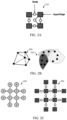
- a hypergraph 210 is viewed as a generalization of the graph.
- Superscript, H here applies to hypergraphs.
- a k-regular hypergraph has each node to have a degree k .
- the edge connecting two nodes in the chemical/molecular graph is associated with an edge label and it is the bond type.
- a molecule is represented as a hypergraph.
- each node in the molecular hypergraph has degree 2 (2-regular).
- the label on a hyperedge dictates the nodes it has (referred to as valence).
- a hypergraph is illustrated and explained further with reference to FIGS. 2B-2C .
- a simple graph 220 and a hyper-graph 230 are illustrated.
- every edge at most connects two nodes.
- each hyperedge represented by a color shade eclipse connects furthermore than two vertices.
- FIG. 2C illustrates a molecular graph 240 and a corresponding undirected hypergraph 250.
- FIG. 3 through 5 where similar reference characters denote corresponding features consistently throughout the figures, there are shown preferred embodiments and these embodiments are described in the context of the following exemplary system and/or method.
- FIG. 3 illustrates an example network implementation 300 of a system 302 for molecular property prediction using HyperGraph convolution based Message-Passing Neural Networks (HMPNNs) in accordance with example embodiment of present disclosure.
- HMPNNs HyperGraph convolution based Message-Passing Neural Networks
- the disclosed system 302 facilitates in building a model to prognosticate the desired properties of organic molecules.
- y denotes the target property to predict.
- the disclosed system 302 leverages node-ordering invariant, read-out function (for example, Set2Set algorithm to perform graph-pooling, and to determine discriminative graph/hypergraph level embedding.
- h G * . f " : h G * ⁇ R a downstream mathematical function for evaluating the chemical properties of interest.
- d is the characteristic dimension of the node embedding.
- the disclosed system 302 provides a supervised learning on drug-like potential molecules for use in effective drug discovery. It provides substantial prospects in diminishing the computational complexity which is a key desideratum for prognostication of molecular properties and aid in billion price tag cost reduction of developing a potential drug for treatment.
- the system 302 enables design variants for injective multi-set neural-network functions for message-generation and message pooling mechanism on hypergraph local and global neighborhood following the computational graph of each node in the given molecular graphs.
- the system 302 may also be implemented in a variety of computing systems 304, such as a laptop computer, a desktop computer, a notebook, a workstation, a cloud-based computing environment and the like. It will be understood that the system 302 may be accessed through one or more devices 306-1, 306-2... 306-N, collectively referred to as devices 306 hereinafter, or applications residing on the devices 306. Examples of the devices 306 may include, but are not limited to, a portable computer, a personal digital assistant, a handheld device, a smartphone, a tablet computer, a workstation and the like. The devices 306 are communicatively coupled to the system 302 through a network 308.
- the network 308 may be a wireless or a wired network, or a combination thereof.
- the network 308 can be implemented as a computer network, as one of the different types of networks, such as virtual private network (VPN), intranet, local area network (LAN), wide area network (WAN), the internet, and such.
- the network 306 may either be a dedicated network or a shared network, which represents an association of the different types of networks that use a variety of protocols, for example, Hypertext Transfer Protocol (HTTP), Transmission Control Protocol/Internet Protocol (TCP/IP), and Wireless Application Protocol (WAP), to communicate with each other.
- the network 308 may include a variety of network devices, including routers, bridges, servers, computing devices, storage devices. The network devices within the network 308 may interact with the system 302 through communication links.
- the system 302 may be implemented in a computing device 304, such as a hand-held device, a laptop or other portable computer, a tablet computer, a mobile phone, a PDA, a smartphone, and a desktop computer.
- the system 302 may also be implemented in a workstation, a mainframe computer, a server, and a network server.
- the system 302 may be coupled to a data repository, for example, a repository 312.
- the repository 312 may store data processed, received, and generated by the system 302.
- the system 302 may include the data repository 312.
- the network implementation 300 supports various connectivity options such as BLUETOOTH ® , USB, ZigBee and other cellular services.
- the network environment enables connection of devices 306 such as Smartphone with the server 304, and accordingly with the database 312 using any communication link including Internet, WAN, MAN, and so on.
- the system 302 is implemented to operate as a stand-alone device. In another embodiment, the system 302 may be implemented to work as a loosely coupled device to a smart computing environment.
- FIGS. 4A-4B illustrates a flow chart of a method 400 for molecular property prediction using hypergraph message passing neural network (HMPNN), in accordance with an example embodiment of present disclosure.
- HMPNN hypergraph message passing neural network
- Operations of the flowchart, and combinations of operation in the flowchart may be implemented by various means, such as hardware, firmware, processor, circuitry and/or other device associated with execution of software including one or more computer program instructions.
- one or more of the procedures described in various embodiments may be embodied by computer program instructions.
- the computer program instructions, which embody the procedures, described in various embodiments may be stored by at least one memory device of a system and executed by at least one processor in the system.
- Any such computer program instructions may be loaded onto a computer or other programmable system (for example, hardware) to produce a machine, such that the resulting computer or other programmable system embody means for implementing the operations specified in the flowchart. It will be noted herein that the operations of the method 400 are described with help of system 102. However, the operations of the method 400 can be described and/or practiced by using any other system.
- a database comprising a plurality of molecular graphs associated with a plurality of molecules is accessed via one or more hardware processors.
- the database includes an information associated with a plurality of molecules such that each molecule of the plurality of molecules is represented as a molecular graph.
- An example of a molecular graph is illustrated and described with reference to FIG. 3C.
- each of the molecular graph is represented as an undirected hypergraph.
- the undirected hypergraph includes a plurality of nodes and a plurality of hyperedges connecting the plurality of nodes.
- a hyperedge of the hypergraph model will bind over many vertices.
- the method 400 includes learning, in a plurality of iterations, a dynamic transient incidence matrix through hypergraph-attention mechanism between a node and a set of hyperedges associated with the node of the hypergraph to perform a hyper-graph convolution using the HMPNN.
- D H ⁇ R M H ⁇ M H and B H ⁇ R N H ⁇ N H are both diagonal matrices.
- F k L is the abstract representation of the k -th node in the ( L )-th layer.
- ⁇ (.) denotes denotes a non-linear tanh activation function.
- P ⁇ R F L ⁇ F L + 1 is the learnable weight matrix.
- F L ⁇ R M H ⁇ F L and F L + 1 ⁇ R M H ⁇ F L + 1 are the input of the (L)-th and (L + 1)-th layer respectively.
- the disclosed method includes performing the hypergraph attention whose sole objective is to learn the dynamic incidence matrix.
- the system learns the non-binary representation of the measure the degree of connectivity and is computed as below
- ⁇ (.) is a non-linear activation function. is the neighborhood hyperedge set of v k ⁇ .
- ( ⁇ ) is an attention function that computes the pairwise attention coefficients between the given vertex and its associated hyperedge, defined as
- a is a weight vector used to output a scalar attention value.
- step 406 of learning the dynamic transient incidence matrix through the hypergraph-attention mechanism in an iteration from amongst the plurality of iterations is described further with reference to steps 408-414.
- the method 406 includes performing attention over each node of a set of nodes from amongst the plurality of nodes with a first set of feature vectors associated with a hyperedge within a local-intra neighborhood of the node to compute a plurality of intra-hyperedge neural-message aggregations.
- the local-intra neighborhood of the node refers to the set of nodes within the same hyperedge as the node.
- the local-intra neighborhood of the node v l ⁇ for any hyperedge ⁇ j ⁇ is defined as the set of nodes v l belonging to ⁇ j .
- Performing the attention within the local-intra neighborhood of the node includes evaluating a first transient incidence matrix.
- the first transient incidence matrix H lj H refers to the transient matrix learnt by computing pairwise attention coefficients between the node and its associated hyperedge.
- the method 406 includes updating a set of hidden state vectors for the set of nodes in the hyperedge by utilizing the plurality of intra-hyperedge neural-message aggregations.
- the term ⁇ i 1 M H H li H F l L P denotes the intra-hyperedge neural-message aggregations.
- the method 406 performing attention over each node from amongst the set of nodes with a second set feature vectors associated with a set of inter-hyperedges within a global-inter neighborhood of the node to compute a plurality of inter-hyperedge neural-message aggregations.
- Performing the attention within the global-inter neighborhood of the node comprises evaluating a second transient incidence matrix.
- the method 406 includes updating the set of hidden state vectors of each nodes from amongst the set of nodes based on the inter-hyperedge neural-message aggregations of the node.
- the global-inter neighborhood of the node refers to the nodes in neighboring hyperedges of the hyperedge belonging to the node.
- the second transient incidence matrix H kj H refers to the transient matrix learnt by computing pairwise attention coefficients between the node and one or more nodes in one or more hyperedges in the neighborhood of the node's hyperedge.
- the hypergraph convolution operator is interleaved with a read-out function to learn discriminative hypergraph embeddings in an end-to-end training by optimizing it through a gradient descent algorithm.
- the method 400 includes performing a hypergraph pooling on the set of hidden state vectors using a read-out function to determine a hypergraph-level vector representation.
- the method 400 includes applying a linear layer on hypergraph-level vector representation to compute the molecular properties.
- a read-out function for example, Set2Set algorithm
- d is the characteristic dimension of the node embedding.
- Algorithm Hypergraph message passing neural network 1: Input Feature Training set: data.x, data.edgeindex, data.edgeattr 2: Input Target Label: data.y 3: Regularization Term: Apply dropout on data.x, data.edgeindex, & data.edgeattr 4: Message-Passing Phase 5: for t ⁇ T do 6: Forward Pass & Vertex Update: Perform HyperGraph Convolution 7: end for 8: Read out Operation: Apply Set2Set Algorithm 9: Linear Layer 10: Return Graph level output: Predict DFT target properties
- FIG. 5 is a block diagram of an exemplary computer system 501 for implementing embodiments consistent with the present disclosure.
- the computer system 501 may be implemented in alone or in combination of components of the system 302 ( FIG. 3 ). Variations of computer system 501 may be used for implementing the devices included in this disclosure.
- Computer system 501 may comprise a central processing unit ("CPU” or "hardware processor") 502.
- the hardware processor 502 may comprise at least one data processor for executing program components for executing user- or system-generated requests.
- the processor may include specialized processing units such as integrated system (bus) controllers, memory management control units, floating point units, graphics processing units, digital signal processing units, etc.
- the processor may include a microprocessor, such as AMD Athlon TM , Duron TM or Opteron TM , ARM's application, embedded or secure processors, IBM PowerPC TM , Intel's Core, Itanium TM , Xeon TM , Celeron TM or other line of processors, etc.
- the processor 502 may be implemented using mainframe, distributed processor, multi-core, parallel, grid, or other architectures. Some embodiments may utilize embedded technologies like application specific integrated circuits (ASICs), digital signal processors (DSPs), Field Programmable Gate Arrays (FPGAs), etc.
- the processor 502 may be a multi-core multi-threaded processor.
- I/O Processor 502 may be disposed in communication with one or more input/output (I/O) devices via I/O interface 503.
- the I/O interface 503 may employ communication protocols/methods such as, without limitation, audio, analog, digital, monoaural, RCA, stereo, IEEE-1394, serial bus, universal serial bus (USB), infrared, PS/2, BNC, coaxial, component, composite, digital visual interface (DVI), high-definition multimedia interface (HDMI), RF antennas, S-Video, VGA, IEEE 802.11 a/b/g/n/x, Bluetooth, cellular (e.g., code-division multiple access (CDMA), high-speed packet access (HSPA+), global system for mobile communications (GSM), long-term evolution (LTE), WiMax, or the like), etc.
- CDMA code-division multiple access
- HSPA+ high-speed packet access
- GSM global system for mobile communications
- LTE long-term evolution
- WiMax wireless wide area network
- the computer system 501 may communicate with one or more I/O devices.
- the input device 504 may be an antenna, keyboard, mouse, joystick, (infrared) remote control, camera, card reader, fax machine, dongle, biometric reader, microphone, touch screen, touchpad, trackball, sensor (e.g., accelerometer, light sensor, GPS, gyroscope, proximity sensor, or the like), stylus, scanner, storage device, transceiver, video device/source, visors, etc.
- Output device 505 may be a printer, fax machine, video display (e.g., cathode ray tube (CRT), liquid crystal display (LCD), light-emitting diode (LED), plasma, or the like), audio speaker, etc.
- video display e.g., cathode ray tube (CRT), liquid crystal display (LCD), light-emitting diode (LED), plasma, or the like
- audio speaker etc.
- a transceiver 506 may be disposed in connection with the processor 502. The transceiver may facilitate various types of wireless transmission or reception.
- the transceiver may include an antenna operatively connected to a transceiver chip (e.g., Texas Instruments WiLink WL1283, Broadcom BCM4750IUB8, Infineon Technologies X-Gold 618-PMB9800, or the like), providing IEEE 802.11a/b/g/n, Bluetooth, FM, global positioning system (GPS), 2G/3G HSDPA/HSUPA communications, etc.
- a transceiver chip e.g., Texas Instruments WiLink WL1283, Broadcom BCM4750IUB8, Infineon Technologies X-Gold 618-PMB9800, or the like
- IEEE 802.11a/b/g/n e.g., Texas Instruments WiLink WL1283, Broadcom BCM4750IUB8, Infineon Technologies X-Gold 618-PMB9800, or the like
- IEEE 802.11a/b/g/n e.g., Bluetooth, FM, global positioning system (GPS), 2G/3G HSDPA/HS
- the processor 502 may be disposed in communication with a communication network 508 via a network interface 507.
- the network interface 507 may communicate with the communication network 508.
- the network interface may employ connection protocols including, without limitation, direct connect, Ethernet (e.g., twisted pair 10/100/1000 Base T), transmission control protocol/internet protocol (TCP/IP), token ring, IEEE 802.11a/b/g/n/x, etc.
- the communication network 508 may include, without limitation, a direct interconnection, local area network (LAN), wide area network (WAN), wireless network (e.g., using Wireless Application Protocol), the Internet, etc.
- LAN local area network
- WAN wide area network
- wireless network e.g., using Wireless Application Protocol
- the computer system 501 may communicate with devices 509 and 510.
- These devices may include, without limitation, personal computer(s), server(s), fax machines, printers, scanners, various mobile devices such as cellular telephones, smartphones (e.g., Apple iPhone, Blackberry, Android-based phones, etc.), tablet computers, eBook readers (Amazon Kindle, Nook, etc.), laptop computers, notebooks, gaming consoles (Microsoft Xbox, Nintendo DS, Sony PlayStation, etc.), or the like.
- the computer system 501 may itself embody one or more of these devices.
- the processor 502 may be disposed in communication with one or more memory devices (e.g., RAM 513, ROM 514, etc.) via a storage interface 512.
- the storage interface may connect to memory devices including, without limitation, memory drives, removable disc drives, etc., employing connection protocols such as serial advanced technology attachment (SATA), integrated drive electronics (IDE), IEEE-1394, universal serial bus (USB), fiber channel, small computer systems interface (SCSI), etc.
- the memory drives may further include a drum, magnetic disc drive, magneto-optical drive, optical drive, redundant array of independent discs (RAID), solid-state memory devices, solid-state drives, etc. Variations of memory devices may be used for implementing, for example, any databases utilized in this disclosure.
- the memory devices may store a collection of programs or database components, including, without limitation, an operating system 516, user interface application 517, user/application data 518 (e.g., any data variables or data records discussed in this disclosure), etc.
- the operating system 516 may facilitate resource management and operation of the computer system 501.
- Examples of operating systems include, without limitation, Apple Macintosh OS X, Unix, Unix-like system distributions (e.g., Berkeley Software Distribution (BSD), FreeBSD, NetBSD, OpenBSD, etc.), Linux distributions (e.g., Red Hat, Ubuntu, Kubuntu, etc.), IBM OS/2, Microsoft Windows (XP, Vista/7/8, etc.), Apple iOS, Google Android, Blackberry OS, or the like.
- User interface 517 may facilitate display, execution, interaction, manipulation, or operation of program components through textual or graphical facilities.
- user interfaces may provide computer interaction interface elements on a display system operatively connected to the computer system 501, such as cursors, icons, check boxes, menus, scrollers, windows, widgets, etc.
- Graphical user interfaces may be employed, including, without limitation, Apple Macintosh operating systems' Aqua, IBM OS/2, Microsoft Windows (e.g., Aero, Metro, etc.), Unix X-Windows, web interface libraries (e.g., ActiveX, Java, Javascript, AJAX, HTML, Adobe Flash, etc.), or the like.
- computer system 501 may store user/application data 518, such as the data, variables, records, etc. as described in this disclosure.
- databases may be implemented as fault-tolerant, relational, scalable, secure databases such as Oracle or Sybase.
- databases may be implemented using standardized data structures, such as an array, hash, linked list, structured text file (e.g., XML), table, or as hand-oriented databases (e.g., using HandStore, Poet, Zope, etc.).
- hand-oriented databases e.g., using HandStore, Poet, Zope, etc.
- Such databases may be consolidated or distributed, sometimes among various computer systems discussed above. It is to be understood that the structure and operation of any computer or database component may be combined, consolidated, or distributed in any working combination.
- the server, messaging and instructions transmitted or received may emanate from hardware, including operating system, and program code (i.e., application code) residing in a cloud implementation.
- program code i.e., application code
- one or more of the systems and methods provided herein may be suitable for cloud-based implementation.
- some or all of the data used in the disclosed methods may be sourced from or stored on any cloud computing platform.
- Every atom in a given molecule in the known QM-8 dataset is associated with diverse characteristic features at hand that comprehend both the possessions of the electrons in the atom and the edge-types namely, single, double, triple bond or it's a part of an aromatic ring in which the atom is binded.
- the hydrogen atoms are assumed to be explicit nodes in the graph.
- the atom(node) attributes and their associated representation include the atom type (one-hot), atomic number (integer), acceptor (binary), donor (binary), aromatic (binary), hybridization (one-hot or null) and the number of hydrogen atoms (integer). The remaining are one-hot encoding descriptions of the bond kind.
- the edge (bond) characteristic feature attributes include only the bond type (one-hot), aromatic ring (binary), and the Euclidean distance between nodes (vector). Here the Euclidean separation distance are pre-determined by the DFT simulations.
- GCN-FP Graph convolution networks
- GGNN Gated graph neural networks
- DCNN Diffusion convolutional neural networks
- ChebyNet Chebyshev networks
- GCN Graph convolutional networks
- MPNN message passing neural networks
- GAT Graph attention networks
- Table 1 The validation and test MAEs are shown in Table 1. The results from the baselines are reproduced. Table 1: The table reports the Mean absolute error (MAE) metric evaluated on the QM8 dataset.
- the disclosed method includes an appropriate choice of the message generating update, and output functions have a useful inductive bias for the hypergraph-level representation learning.
- the effectiveness of learning in the depiction of the task pertinent chemical hypergraph substructures into augmented expressiveness of the node embeddings on the graph/hypergraph topology leads to improvements in property prediction tasks accuracies.
- the HyperGraph attention-driven HyperGraph Convolution achieves state-of-the-art results in the Quantum chemistry property prediction task.
- Such computer-readable storage means contain program-code means for implementation of one or more steps of the method, when the program runs on a server or mobile device or any suitable programmable device.
- the hardware device can be any kind of device which can be programmed including e.g., any kind of computer like a server or a personal computer, or the like, or any combination thereof.
- the device may also include means which could be e.g., hardware means like e.g., an application-specific integrated circuit (ASIC), a field-programmable gate array (FPGA), or a combination of hardware and software means, e.g., an ASIC and an FPGA, or at least one microprocessor and at least one memory with software processing components located therein.
- the means can include both hardware means and software means.
- the method embodiments described herein could be implemented in hardware and software.
- the device may also include software means. Alternatively, the embodiments may be implemented on different hardware devices, e.g., using a plurality of CPUs.
- the embodiments herein can comprise hardware and software elements.
- the embodiments that are implemented in software include but are not limited to, firmware, resident software, microcode, etc.
- the functions performed by various components described herein may be implemented in other components or combinations of other components.
- a computer-usable or computer readable medium can be any apparatus that can comprise, store, communicate, propagate, or transport the program for use by or in connection with the instruction execution system, apparatus, or device.
- a computer-readable storage medium refers to any type of physical memory on which information or data readable by a processor may be stored.
- a computer-readable storage medium may store instructions for execution by one or more processors, including instructions for causing the processor(s) to perform steps or stages consistent with the embodiments described herein.
- the term "computer-readable medium” should be understood to include tangible items and exclude carrier waves and transient signals, i.e., be non-transitory. Examples include random access memory (RAM), read-only memory (ROM), volatile memory, nonvolatile memory, hard drives, CD ROMs, DVDs, flash drives, disks, and any other known physical storage media.
Landscapes
- Engineering & Computer Science (AREA)
- Theoretical Computer Science (AREA)
- Physics & Mathematics (AREA)
- Life Sciences & Earth Sciences (AREA)
- Computing Systems (AREA)
- Evolutionary Computation (AREA)
- General Health & Medical Sciences (AREA)
- Software Systems (AREA)
- Health & Medical Sciences (AREA)
- Data Mining & Analysis (AREA)
- Artificial Intelligence (AREA)
- Biomedical Technology (AREA)
- Mathematical Physics (AREA)
- General Physics & Mathematics (AREA)
- General Engineering & Computer Science (AREA)
- Molecular Biology (AREA)
- Computational Linguistics (AREA)
- Biophysics (AREA)
- Crystallography & Structural Chemistry (AREA)
- Bioinformatics & Computational Biology (AREA)
- Bioinformatics & Cheminformatics (AREA)
- Chemical & Material Sciences (AREA)
- Computer Vision & Pattern Recognition (AREA)
- Databases & Information Systems (AREA)
- Medical Informatics (AREA)
- Information Retrieval, Db Structures And Fs Structures Therefor (AREA)
Claims (9)
- Prozessorimplementiertes Verfahren (400) zur Vorhersage molekularer Eigenschaften für die Arzneimittelentdeckung unter Verwendung eines Hypergraphen-neuronalen Nachrichtenübertragungsnetzwerks (HMPNN), wobei das Verfahren umfasst:Zugreifen (402) auf eine Datenbank, die Informationen umfasst, die einer Mehrzahl von Molekülen zugeordnet sind, über einen oder mehrere Hardwareprozessoren, wobei jedes Molekül der Mehrzahl von Molekülen als ein molekularer Graph dargestellt wird;Darstellen (404) jedes des molekularen Graphen als einen ungerichteten Hypergraphen über den einen oder die mehreren Hardwareprozessoren, wobei der ungerichtete Hypergraph eine Mehrzahl von Knoten und eine Mehrzahl von Hyperkanten umfasst, die die Mehrzahl von Knoten verbinden, und wobei jede Hyperkante einem Gewicht der Mehrzahl von Hyperkanten des molekularen Graphen zugeordnet ist, das in einer Skalierungsdiagonalmatrix zwischengespeichert ist;Lernen (406), in einer Mehrzahl von Iterationen, einer dynamischen Transienten-Inzidenzmatrix durch einen Hypergraphen-Aufmerksamkeitsmechanismus zwischen einem Knoten und einem Satz von Hyperkanten, die dem Knoten des Hypergraphen zugeordnet sind, um eine Hypergraphen-Faltung unter Verwendung des HMPNN durchzuführen, über den einen oder die mehreren Hardwareprozessoren, wobei das Lernen der dynamischen Transienten-Inzidenzmatrix durch den Hypergraphen-Aufmerksamkeitsmechanismus in einer Iteration aus der Mehrzahl von Iterationen umfasst:Durchführen von Aufmerksamkeit (408) über jeden Knoten eines Satzes von Knoten aus der Mehrzahl von Knoten mit einem ersten Satz von Merkmalsvektoren, die einer Hyperkante innerhalb einer lokalen-Intra-Nachbarschaft des Knotens zugeordnet sind, um eine Mehrzahl von Intra-Hyperkanten-neuronalen Nachrichtenaggregationen zu berechnen, wobei das Durchführen der Aufmerksamkeit innerhalb der lokalen-Intra-Nachbarschaft des Knotens das Auswerten einer ersten Transienten-Inzidenzmatrix umfasst, und wobei sich die erste Transienten-Inzidenzmatrix auf eine Transiente Matrix bezieht, die durch Berechnen paarweiser Aufmerksamkeitskoeffizienten zwischen dem Knoten und einer Hyperkante, die zu dem Knoten gehört, gelernt wird;Aktualisieren (410) eines Satzes von verborgenen Zustandsvektoren für jeden Knoten des Satzes von Knoten in der Hyperkante durch Verwenden der Mehrzahl von Intra-Hyperkanten-neuronalen Nachrichtenaggregationen;Durchführen von Aufmerksamkeit (412) über jeden Knoten aus dem Satz von Knoten mit einem zweiten Satz von Merkmalsvektoren, die einem Satz von Inter-Hyperkanten innerhalb einer globalen-Inter-Nachbarschaft des Knotens zugeordnet sind, um eine Mehrzahl von Inter-Hyperkanten-neuronalen Nachrichtenaggregationen zu berechnen, wobei sich die globale-Inter-Nachbarschaft des Knotens auf Knoten in benachbarten Hyperkanten des Knotens bezieht, wobei das Durchführen der Aufmerksamkeit innerhalb der globalen-Inter-Nachbarschaft des Knotens das Auswerten einer zweiten Transienten-Inzidenzmatrix umfasst, und wobei sich die zweite Transienten-Inzidenzmatrix auf eine Transiente Matrix bezieht, die durch Berechnen paarweiser Aufmerksamkeitskoeffizienten zwischen dem Knoten und einem oder mehreren Knoten in einer oder mehreren Hyperkanten in der Nachbarschaft einer Hyperkante, die zu dem Knoten gehört, gelernt wird; undAktualisieren (414) des Satzes von verborgenen Zustandsvektoren jedes Knotens aus dem Satz von Knoten basierend auf der Mehrzahl von Inter-Hyperkanten-neuronalen Nachrichtenaggregationen des Knotens;Durchführen (416), über den einen oder die mehreren Hardwareprozessoren, eines Hypergraphen-Pooling auf dem Satz von verborgenen Zustandsvektoren unter Verwendung einer Auslesefunktion, um eine Hypergraphenebenen-Vektordarstellung zu bestimmen; undAnwenden (418), über den einen oder die mehreren Hardwareprozessoren, einer linearen Schicht auf der Hypergraphenebenen-Vektordarstellung, um die molekularen Eigenschaften über den einen oder die mehreren Hardwareprozessoren zu berechnen.
- Prozessorimplementiertes Verfahren nach Anspruch 1, wobei die Mehrzahl von Inter-Hyperkanten-neuronalen Nachrichtenaggregationen des Knotens durch die Gleichung bezeichnet wird:
 wobei,
 P eine lernbare Gewichtsmatrix ist.
 - Prozessorimplementiertes Verfahren nach Anspruch 1, wobei die Mehrzahl von Inter-Hyperkanten-neuronalen Nachrichtenaggregationen des Knotens durch die Gleichung bezeichnet wird:
 wobei,

 P eine lernbare Gewichtsmatrix ist.
 - System (500) zur Vorhersage molekularer Eigenschaften für die Arzneimittelentdeckung unter Verwendung eines Hypergraphen-neuronalen Nachrichtenübertragungsnetzwerks (HMPNN), umfassend:einen Speicher (515), der Anweisungen speichert;eine oder mehrere Kommunikationsschnittstellen (503); undeinen oder mehrere Hardwareprozessoren (502), die mit dem Speicher (515) über die eine oder die mehreren Kommunikationsschnittstellen (503) gekoppelt sind, wobei der eine oder die mehreren Hardwareprozessoren (502) durch die Anweisungen konfiguriert sind zum:Zugreifen auf eine Datenbank, die Informationen umfasst, die einer Mehrzahl von Molekülen zugeordnet sind, wobei jedes Molekül der Mehrzahl von Molekülen als ein molekularer Graph dargestellt wird;Darstellen jedes des molekularen Graphen als einen ungerichteten Hypergraphen, wobei der ungerichtete Hypergraph eine Mehrzahl von Knoten und eine Mehrzahl von Hyperkanten umfasst, die die Mehrzahl von Knoten verbinden, und wobei jede Hyperkante einem Gewicht der Mehrzahl von Hyperkanten des molekularen Graphen zugeordnet ist, das in einer Skalierungsdiagonalmatrix zwischengespeichert ist;Lernen, in einer Mehrzahl von Iterationen, einer dynamischen Transienten-Inzidenzmatrix durch einen Hypergraphen-Aufmerksamkeitsmechanismus zwischen einem Knoten und einem Satz von Hyperkanten, die dem Knoten des Hypergraphen zugeordnet sind, um eine Hypergraphen-Faltung unter Verwendung des HMPNN durchzuführen, wobei zum Lernen der dynamischen Transienten-Inzidenzmatrix durch den Hypergraphen-Aufmerksamkeitsmechanismus in einer Iteration aus der Mehrzahl von Iterationen der eine oder die mehreren Hardwareprozessoren durch die Anweisungen konfiguriert sind zum:Durchführen von Aufmerksamkeit über jeden Knoten eines Satzes von Knoten aus der Mehrzahl von Knoten mit einem ersten Satz von Merkmalsvektoren, die einer Hyperkante innerhalb einer lokalen-Intra-Nachbarschaft des Knotens zugeordnet sind, um eine Mehrzahl von Intra-Hyperkanten-neuronalen Nachrichtenaggregationen zu berechnen, wobei das Durchführen der Aufmerksamkeit innerhalb der lokalen-Intra-Nachbarschaft des Knotens das Auswerten einer ersten Transienten-Inzidenzmatrix umfasst, und wobei sich die erste Transienten-Inzidenzmatrix auf eine Transiente Matrix bezieht, die durch Berechnen paarweiser Aufmerksamkeitskoeffizienten zwischen dem Knoten und einer Hyperkante, die zu dem Knoten gehört, gelernt wird;Aktualisieren eines Satzes von verborgenen Zustandsvektoren für jeden Knoten des Satzes von Knoten in der Hyperkante durch Verwenden der Mehrzahl von Intra-Hyperkanten-neuronalen Nachrichtenaggregationen;Durchführen von Aufmerksamkeit über jeden Knoten aus dem Satz von Knoten mit einem zweiten Satz von Merkmalsvektoren, die einem Satz von Inter-Hyperkanten innerhalb einer globalen-Inter-Nachbarschaft des Knotens zugeordnet sind, um eine Mehrzahl von Inter-Hyperkanten-neuronalen Nachrichtenaggregationen zu berechnen, wobei sich die globale-Inter-Nachbarschaft des Knotens auf Knoten in benachbarten Hyperkanten des Knotens bezieht, wobei das Durchführen der Aufmerksamkeit innerhalb der globalen-Inter-Nachbarschaft des Knotens das Auswerten einer zweiten Transienten-Inzidenzmatrix umfasst, und wobei sich die zweite Transienten-Inzidenzmatrix auf eine Transiente Matrix bezieht, die durch Berechnen paarweiser Aufmerksamkeitskoeffizienten zwischen dem Knoten und einem oder mehreren Knoten in einer oder mehreren Hyperkanten in der Nachbarschaft einer Hyperkante, die zu dem Knoten gehört, gelernt wird; undAktualisieren des Satzes von verborgenen Zustandsvektoren jedes Knotens aus dem Satz von Knoten basierend auf der Mehrzahl von Inter-Hyperkanten-neuronalen Nachrichtenaggregationen des Knotens;Durchführen eines Hypergraphen-Pooling auf dem Satz von verborgenen Zustandsvektoren unter Verwendung einer Auslesefunktion, um eine Hypergraphenebenen-Vektordarstellung zu bestimmen; undAnwenden einer linearen Schicht auf der Hypergraphenebenen-Vektordarstellung, um die molekularen Eigenschaften zu berechnen.
- System nach Anspruch 4, wobei die Mehrzahl von Inter-Hyperkanten-neuronalen Nachrichtenaggregationen des Knotens durch die Gleichung bezeichnet wird:
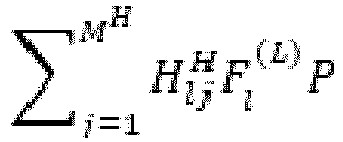 wobei,
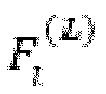 P eine lernfähige Gewichtsmatrix ist.
 - System nach Anspruch 4, wobei die Mehrzahl von Inter-Hyperkanten-neuronalen Nachrichtenaggregationen des Knotens durch die Gleichung bezeichnet wird:
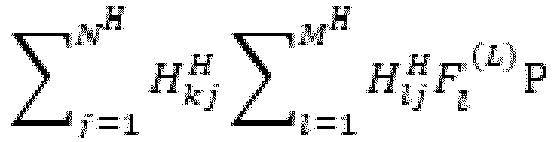 wobei,

 P eine lernfähige Gewichtsmatrix ist.
 - Ein oder mehrere nichtflüchtige maschinenlesbare Informationsspeichermedien, die eine oder mehrere Anweisungen umfassen, die, wenn sie von einem oder mehreren Hardwareprozessoren ausgeführt werden, bewirken:Zugreifen auf eine Datenbank, die Informationen umfasst, die einer Mehrzahl von Molekülen zugeordnet sind, über einen oder mehrere Hardwareprozessoren, wobei jedes Molekül der Mehrzahl von Molekülen als ein molekularer Graph dargestellt wird;Darstellen jedes des molekularen Graphen als einen ungerichteten Hypergraphen über den einen oder die mehreren Hardwareprozessoren, wobei der ungerichtete Hypergraph eine Mehrzahl von Knoten und eine Mehrzahl von Hyperkanten umfasst, die die Mehrzahl von Knoten verbinden, und wobei jede Hyperkante einem Gewicht der Mehrzahl von Hyperkanten des molekularen Graphen zugeordnet ist, das in einer Skalierungsdiagonalmatrix zwischengespeichert ist;Lernen, in einer Mehrzahl von Iterationen, einer dynamischen Transienten-Inzidenzmatrix durch einen Hypergraphen-Aufmerksamkeitsmechanismus zwischen einem Knoten und einem Satz von Hyperkanten, die dem Knoten des Hypergraphen zugeordnet sind, um eine Hypergraphen-Faltung unter Verwendung des HMPNN durchzuführen, über den einen oder die mehreren Hardwareprozessoren, wobei das Lernen der dynamischen Transienten-Inzidenzmatrix durch den Hypergraphen-Aufmerksamkeitsmechanismus in einer Iteration aus der Mehrzahl von Iterationen umfasst:Durchführen von Aufmerksamkeit über jeden Knoten eines Satzes von Knoten aus der Mehrzahl von Knoten mit einem ersten Satz von Merkmalsvektoren, die einer Hyperkante innerhalb einer lokalen-Intra-Nachbarschaft des Knotens zugeordnet sind, um eine Mehrzahl von Intra-Hyperkanten-neuronalen Nachrichtenaggregationen zu berechnen, wobei das Durchführen der Aufmerksamkeit innerhalb der lokalen-Intra-Nachbarschaft des Knotens das Auswerten einer ersten Transienten-Inzidenzmatrix umfasst, und wobei sich die erste Transienten-Inzidenzmatrix auf eine Transiente Matrix bezieht, die durch Berechnen paarweiser Aufmerksamkeitskoeffizienten zwischen dem Knoten und einer Hyperkante, die zu dem Knoten gehört, gelernt wird;Aktualisieren eines Satzes von verborgenen Zustandsvektoren für jeden Knoten des Satzes von Knoten in der Hyperkante durch Verwenden der Mehrzahl von Intra-Hyperkanten-neuronalen Nachrichtenaggregationen;Durchführen von Aufmerksamkeit über jeden Knoten aus dem Satz von Knoten mit einem zweiten Satz von Merkmalsvektoren, die einem Satz von Inter-Hyperkanten innerhalb einer globalen-Inter-Nachbarschaft des Knotens zugeordnet sind, um eine Mehrzahl von Inter-Hyperkanten-neuronalen Nachrichtenaggregationen zu berechnen, wobei sich die globale-Inter-Nachbarschaft des Knotens auf Knoten in benachbarten Hyperkanten des Knotens bezieht, wobei das Durchführen der Aufmerksamkeit innerhalb der globalen-Inter-Nachbarschaft des Knotens das Auswerten einer zweiten Transienten-Inzidenzmatrix umfasst, und wobei sich die zweite Transienten-Inzidenzmatrix auf eine Transiente Matrix bezieht, die durch Berechnen paarweiser Aufmerksamkeitskoeffizienten zwischen dem Knoten und einem oder mehreren Knoten in einer oder mehreren Hyperkanten in der Nachbarschaft einer Hyperkante, die zu dem Knoten gehört, gelernt wird; undAktualisieren des Satzes von verborgenen Zustandsvektoren jedes Knotens aus dem Satz von Knoten basierend auf der Mehrzahl von Inter-Hyperkanten-neuronalen Nachrichtenaggregationen des Knotens;Durchführen, über den einen oder die mehreren Hardwareprozessoren, eines Hypergraphen-Pooling auf dem Satz von verborgenen Zustandsvektoren unter Verwendung einer Auslesefunktion, um eine Hypergraphenebenen-Vektordarstellung zu bestimmen; undAnwenden, über den einen oder die mehreren Hardwareprozessoren, einer linearen Schicht auf der Hypergraphenebenen-Vektordarstellung, um die molekularen Eigenschaften für die Arzneimittelentdeckung über den einen oder die mehreren Hardwareprozessoren zu berechnen.
- Ein oder mehrere nichtflüchtige maschinenlesbare Informationsspeichermedien nach Anspruch 7, wobei die Mehrzahl von Inter-Hyperkanten-neuronalen Nachrichtenaggregationen des Knotens durch die Gleichung bezeichnet wird:
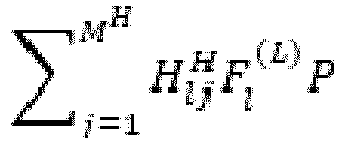 wobei,
 P eine lernfähige Gewichtsmatrix ist.
 - Ein oder mehrere nichtflüchtige maschinenlesbare Informationsspeichermedien nach Anspruch 7, wobei die Mehrzahl von Inter-Hyperkanten-neuronalen Nachrichtenaggregationen des Knotens durch die Gleichung bezeichnet wird:
 wobei,

 P eine lernfähige Gewichtsmatrix ist.
Applications Claiming Priority (1)
| Application Number | Priority Date | Filing Date | Title |
|---|---|---|---|
| IN202121032177 | 2021-07-16 |
Publications (3)
| Publication Number | Publication Date |
|---|---|
| EP4120138A1 EP4120138A1 (de) | 2023-01-18 |
| EP4120138B1 true EP4120138B1 (de) | 2024-03-27 |
| EP4120138C0 EP4120138C0 (de) | 2024-03-27 |
Family
ID=78086296
Family Applications (1)
| Application Number | Title | Priority Date | Filing Date |
|---|---|---|---|
| EP21201603.4A Active EP4120138B1 (de) | 2021-07-16 | 2021-10-08 | System und verfahren zur vorhersage von molekularen eigenschaften unter verwendung eines neuronalen hypergraph-nachrichtenaustausch-netzes (hmpnn) |
Country Status (1)
| Country | Link |
|---|---|
| EP (1) | EP4120138B1 (de) |
Families Citing this family (21)
| Publication number | Priority date | Publication date | Assignee | Title |
|---|---|---|---|---|
| CN115862751B (zh) * | 2023-02-16 | 2023-06-27 | 泉州装备制造研究所 | 基于边特征更新聚合注意力机制的量子化学性质计算方法 |
| CN116561376B (zh) * | 2023-03-02 | 2026-02-13 | 大连理工大学 | 一种多智能体超图建模与表示方法 |
| CN116401447B (zh) * | 2023-03-07 | 2026-01-23 | 清华大学 | 基于层级化多通道超图建模的用户属性推断方法及装置 |
| CN116306818B (zh) * | 2023-03-21 | 2025-11-11 | 浙江师范大学 | 一种基于超图神经网络的在线学习同伴互评分数聚合方法 |
| CN116189847B (zh) * | 2023-05-05 | 2023-07-14 | 武汉纺织大学 | 一种基于注意力机制的lstm-cnn策略的安全药物推荐方法 |
| CN116248522B (zh) * | 2023-05-11 | 2023-09-22 | 中国电信股份有限公司四川分公司 | 一种业务意愿与确定性网络切片关联方法 |
| CN116894097B (zh) * | 2023-09-04 | 2023-12-22 | 中南大学 | 一种基于超图建模的知识图谱标签预测方法 |
| CN117807939B (zh) * | 2023-12-29 | 2024-12-10 | 苏州异格技术有限公司 | 电路超图确定方法、装置、计算机设备及存储介质 |
| CN117912597B (zh) * | 2024-01-19 | 2024-08-23 | 天津大学 | 一种基于全局注意力机制的分子毒性预测方法 |
| CN118052272B (zh) * | 2024-02-20 | 2024-11-01 | 北京邮电大学 | 多智能体强化学习方法及装置、电子设备、存储介质 |
| CN117979370B (zh) * | 2024-04-02 | 2024-07-12 | 国网江苏省电力有限公司南京供电分公司 | 一种电力异构网络资源动态切片优化方法及系统 |
| CN118246482B (zh) * | 2024-05-24 | 2024-08-06 | 小语智能信息科技(云南)有限公司 | 基于跨视图超图自监督对比学习的显著事件检测方法 |
| CN119443345B (zh) * | 2024-09-26 | 2025-10-31 | 北京航空航天大学 | 一种基于超图学习的城市区域到访者动态预测方法 |
| CN119004456B (zh) * | 2024-10-23 | 2025-04-08 | 浙江工业大学 | 一种基于超图表征学习的apt恶意行为发现方法 |
| CN119405272B (zh) * | 2024-10-30 | 2025-12-09 | 内蒙古大学 | 基于多尺度超图网络的mci诊断系统 |
| CN119623513B (zh) * | 2024-12-06 | 2026-01-06 | 厦门大学 | 一种基于路径的k跳超图神经网络卷积方法 |
| CN119339827B (zh) * | 2024-12-19 | 2025-05-23 | 鲁东大学 | 一种基于局部图特征与全局关系的分子性质预测方法 |
| CN119963080B (zh) * | 2025-01-07 | 2025-09-12 | 湖北海弘达铁路车辆配件有限公司 | 基于物联网和大数据的高速轻载铁路货运物流方法及系统 |
| CN119669580B (zh) * | 2025-02-20 | 2025-05-23 | 江西省影票文化传媒股份有限公司 | 一种基于本地生活服务平台的内容推荐方法及系统 |
| CN120163577B (zh) * | 2025-05-20 | 2025-08-05 | 国网浙江省电力有限公司杭州市临平区供电公司 | 一种电力设备的检修方法及系统 |
| CN120632121B (zh) * | 2025-06-10 | 2025-12-02 | 中国司法大数据研究院有限公司 | 一种基于图神经网络的司法信息检索方法及系统 |
Family Cites Families (2)
| Publication number | Priority date | Publication date | Assignee | Title |
|---|---|---|---|---|
| US11417415B2 (en) * | 2018-08-10 | 2022-08-16 | International Business Machines Corporation | Molecular representation |
| US12230399B2 (en) * | 2019-09-27 | 2025-02-18 | The Brigham And Women's Hospital, Inc. | Multimodal fusion for diagnosis, prognosis, and therapeutic response prediction |
-
2021
- 2021-10-08 EP EP21201603.4A patent/EP4120138B1/de active Active
Also Published As
| Publication number | Publication date |
|---|---|
| EP4120138A1 (de) | 2023-01-18 |
| EP4120138C0 (de) | 2024-03-27 |
Similar Documents
| Publication | Publication Date | Title |
|---|---|---|
| EP4120138B1 (de) | System und verfahren zur vorhersage von molekularen eigenschaften unter verwendung eines neuronalen hypergraph-nachrichtenaustausch-netzes (hmpnn) | |
| US12387083B2 (en) | System and method for molecular property prediction using hypergraph message passing neural network (HMPNN) | |
| US11809993B2 (en) | Systems and methods for determining graph similarity | |
| US12380510B1 (en) | Training gradient boosted decision trees with progressive maximum depth for parsimony and interpretability | |
| US20240419942A1 (en) | Entity Tag Association Prediction Method, Device, and Computer Readable Storage Medium | |
| US12462157B2 (en) | Automatic channel pruning via graph neural network based hypernetwork | |
| JP2022548654A (ja) | 機械学習モデルにおいて動的外れ値偏り低減を実装するように構成されるコンピュータベースシステム、コンピュータコンポーネント及びコンピュータオブジェクト | |
| EP4163918B1 (de) | Kantenbedingte dynamische nachbarschaftsaggregationsbasierte molekulare eigenschaftsvorhersage | |
| US11704559B2 (en) | Learning to search user experience designs based on structural similarity | |
| CN107392319A (zh) | 生成机器学习样本的组合特征的方法及系统 | |
| EP4163919A1 (de) | System und verfahren zur vorhersage von molekularen eigenschaften unter verwendung eines neuronalen netzwerks mit kantenbedingter graphenaufmerksamkeit | |
| CN113609345B (zh) | 目标对象关联方法和装置、计算设备以及存储介质 | |
| Zhu et al. | Deep learning for learning graph representations | |
| EP4163916B1 (de) | System und verfahren zur vorhersage molekularer eigenschaften unter verwendung einer hierarchischen schichtweisen ausbreitung einer graphen-pooling-schicht | |
| US12248534B2 (en) | Automated feature engineering for predictive modeling using deep reinforcement learning | |
| CN116975427A (zh) | 确定对象对资源信息的感兴趣程度的方法、装置和计算设备 | |
| US20240330650A1 (en) | Scalable evolving inception graph neural networks for dynamic graphs | |
| EP4163917B1 (de) | Vorhersage molekularer eigenschaften unter verwendung von kanteninformationen, die mit der funktion eines globalen neuronalen netzes mit graph-lesefunktion verschmolzen sind | |
| Pourkhoshgoftar et al. | Graph-Based Inductive Learning for Credit Risk Prediction with Imbalance Mitigation | |
| US12555650B2 (en) | System and method for molecular property prediction using edge-conditioned graph attention neural network | |
| Vo et al. | Real estate image classification for e-commerce website | |
| CN116127204A (zh) | 多视角用户画像方法、多视角用户画像系统、设备和介质 | |
| Ziani et al. | Enhancing the parallel uc2b framework: Approach validation and scalability study | |
| Tomeo et al. | L1-PCA with quantum annealing | |
| Liu et al. | Pruning multilayered elm using cholesky factorization and givens rotation transformation |
Legal Events
| Date | Code | Title | Description |
|---|---|---|---|
| PUAI | Public reference made under article 153(3) epc to a published international application that has entered the european phase |
Free format text: ORIGINAL CODE: 0009012 |
|
| STAA | Information on the status of an ep patent application or granted ep patent |
Free format text: STATUS: REQUEST FOR EXAMINATION WAS MADE |
|
| 17P | Request for examination filed |
Effective date: 20220726 |
|
| AK | Designated contracting states |
Kind code of ref document: A1 Designated state(s): AL AT BE BG CH CY CZ DE DK EE ES FI FR GB GR HR HU IE IS IT LI LT LU LV MC MK MT NL NO PL PT RO RS SE SI SK SM TR |
|
| GRAP | Despatch of communication of intention to grant a patent |
Free format text: ORIGINAL CODE: EPIDOSNIGR1 |
|
| STAA | Information on the status of an ep patent application or granted ep patent |
Free format text: STATUS: GRANT OF PATENT IS INTENDED |
|
| INTG | Intention to grant announced |
Effective date: 20231017 |
|
| GRAS | Grant fee paid |
Free format text: ORIGINAL CODE: EPIDOSNIGR3 |
|
| GRAA | (expected) grant |
Free format text: ORIGINAL CODE: 0009210 |
|
| STAA | Information on the status of an ep patent application or granted ep patent |
Free format text: STATUS: THE PATENT HAS BEEN GRANTED |
|
| AK | Designated contracting states |
Kind code of ref document: B1 Designated state(s): AL AT BE BG CH CY CZ DE DK EE ES FI FR GB GR HR HU IE IS IT LI LT LU LV MC MK MT NL NO PL PT RO RS SE SI SK SM TR |
|
| REG | Reference to a national code |
Ref country code: GB Ref legal event code: FG4D |
|
| REG | Reference to a national code |
Ref country code: CH Ref legal event code: EP |
|
| REG | Reference to a national code |
Ref country code: DE Ref legal event code: R096 Ref document number: 602021010887 Country of ref document: DE |
|
| REG | Reference to a national code |
Ref country code: IE Ref legal event code: FG4D |
|
| U01 | Request for unitary effect filed |
Effective date: 20240419 |
|
| U07 | Unitary effect registered |
Designated state(s): AT BE BG DE DK EE FI FR IT LT LU LV MT NL PT SE SI Effective date: 20240425 |
|
| PG25 | Lapsed in a contracting state [announced via postgrant information from national office to epo] |
Ref country code: GR Free format text: LAPSE BECAUSE OF FAILURE TO SUBMIT A TRANSLATION OF THE DESCRIPTION OR TO PAY THE FEE WITHIN THE PRESCRIBED TIME-LIMIT Effective date: 20240628 |
|
| PG25 | Lapsed in a contracting state [announced via postgrant information from national office to epo] |
Ref country code: HR Free format text: LAPSE BECAUSE OF FAILURE TO SUBMIT A TRANSLATION OF THE DESCRIPTION OR TO PAY THE FEE WITHIN THE PRESCRIBED TIME-LIMIT Effective date: 20240327 Ref country code: RS Free format text: LAPSE BECAUSE OF FAILURE TO SUBMIT A TRANSLATION OF THE DESCRIPTION OR TO PAY THE FEE WITHIN THE PRESCRIBED TIME-LIMIT Effective date: 20240627 |
|
| PG25 | Lapsed in a contracting state [announced via postgrant information from national office to epo] |
Ref country code: RS Free format text: LAPSE BECAUSE OF FAILURE TO SUBMIT A TRANSLATION OF THE DESCRIPTION OR TO PAY THE FEE WITHIN THE PRESCRIBED TIME-LIMIT Effective date: 20240627 Ref country code: NO Free format text: LAPSE BECAUSE OF FAILURE TO SUBMIT A TRANSLATION OF THE DESCRIPTION OR TO PAY THE FEE WITHIN THE PRESCRIBED TIME-LIMIT Effective date: 20240627 Ref country code: HR Free format text: LAPSE BECAUSE OF FAILURE TO SUBMIT A TRANSLATION OF THE DESCRIPTION OR TO PAY THE FEE WITHIN THE PRESCRIBED TIME-LIMIT Effective date: 20240327 Ref country code: GR Free format text: LAPSE BECAUSE OF FAILURE TO SUBMIT A TRANSLATION OF THE DESCRIPTION OR TO PAY THE FEE WITHIN THE PRESCRIBED TIME-LIMIT Effective date: 20240628 |
|
| PG25 | Lapsed in a contracting state [announced via postgrant information from national office to epo] |
Ref country code: IS Free format text: LAPSE BECAUSE OF FAILURE TO SUBMIT A TRANSLATION OF THE DESCRIPTION OR TO PAY THE FEE WITHIN THE PRESCRIBED TIME-LIMIT Effective date: 20240727 |
|
| PG25 | Lapsed in a contracting state [announced via postgrant information from national office to epo] |
Ref country code: SM Free format text: LAPSE BECAUSE OF FAILURE TO SUBMIT A TRANSLATION OF THE DESCRIPTION OR TO PAY THE FEE WITHIN THE PRESCRIBED TIME-LIMIT Effective date: 20240327 |
|
| PG25 | Lapsed in a contracting state [announced via postgrant information from national office to epo] |
Ref country code: ES Free format text: LAPSE BECAUSE OF FAILURE TO SUBMIT A TRANSLATION OF THE DESCRIPTION OR TO PAY THE FEE WITHIN THE PRESCRIBED TIME-LIMIT Effective date: 20240327 |
|
| PG25 | Lapsed in a contracting state [announced via postgrant information from national office to epo] |
Ref country code: CZ Free format text: LAPSE BECAUSE OF FAILURE TO SUBMIT A TRANSLATION OF THE DESCRIPTION OR TO PAY THE FEE WITHIN THE PRESCRIBED TIME-LIMIT Effective date: 20240327 |
|
| PG25 | Lapsed in a contracting state [announced via postgrant information from national office to epo] |
Ref country code: PL Free format text: LAPSE BECAUSE OF FAILURE TO SUBMIT A TRANSLATION OF THE DESCRIPTION OR TO PAY THE FEE WITHIN THE PRESCRIBED TIME-LIMIT Effective date: 20240327 |
|
| PG25 | Lapsed in a contracting state [announced via postgrant information from national office to epo] |
Ref country code: SK Free format text: LAPSE BECAUSE OF FAILURE TO SUBMIT A TRANSLATION OF THE DESCRIPTION OR TO PAY THE FEE WITHIN THE PRESCRIBED TIME-LIMIT Effective date: 20240327 |
|
| PG25 | Lapsed in a contracting state [announced via postgrant information from national office to epo] |
Ref country code: SM Free format text: LAPSE BECAUSE OF FAILURE TO SUBMIT A TRANSLATION OF THE DESCRIPTION OR TO PAY THE FEE WITHIN THE PRESCRIBED TIME-LIMIT Effective date: 20240327 Ref country code: SK Free format text: LAPSE BECAUSE OF FAILURE TO SUBMIT A TRANSLATION OF THE DESCRIPTION OR TO PAY THE FEE WITHIN THE PRESCRIBED TIME-LIMIT Effective date: 20240327 Ref country code: RO Free format text: LAPSE BECAUSE OF FAILURE TO SUBMIT A TRANSLATION OF THE DESCRIPTION OR TO PAY THE FEE WITHIN THE PRESCRIBED TIME-LIMIT Effective date: 20240327 Ref country code: PL Free format text: LAPSE BECAUSE OF FAILURE TO SUBMIT A TRANSLATION OF THE DESCRIPTION OR TO PAY THE FEE WITHIN THE PRESCRIBED TIME-LIMIT Effective date: 20240327 Ref country code: IS Free format text: LAPSE BECAUSE OF FAILURE TO SUBMIT A TRANSLATION OF THE DESCRIPTION OR TO PAY THE FEE WITHIN THE PRESCRIBED TIME-LIMIT Effective date: 20240727 Ref country code: ES Free format text: LAPSE BECAUSE OF FAILURE TO SUBMIT A TRANSLATION OF THE DESCRIPTION OR TO PAY THE FEE WITHIN THE PRESCRIBED TIME-LIMIT Effective date: 20240327 Ref country code: CZ Free format text: LAPSE BECAUSE OF FAILURE TO SUBMIT A TRANSLATION OF THE DESCRIPTION OR TO PAY THE FEE WITHIN THE PRESCRIBED TIME-LIMIT Effective date: 20240327 |
|
| U20 | Renewal fee for the european patent with unitary effect paid |
Year of fee payment: 4 Effective date: 20241025 |
|
| REG | Reference to a national code |
Ref country code: DE Ref legal event code: R097 Ref document number: 602021010887 Country of ref document: DE |
|
| PLBE | No opposition filed within time limit |
Free format text: ORIGINAL CODE: 0009261 |
|
| STAA | Information on the status of an ep patent application or granted ep patent |
Free format text: STATUS: NO OPPOSITION FILED WITHIN TIME LIMIT |
|
| 26N | No opposition filed |
Effective date: 20250103 |
|
| PG25 | Lapsed in a contracting state [announced via postgrant information from national office to epo] |
Ref country code: MC Free format text: LAPSE BECAUSE OF FAILURE TO SUBMIT A TRANSLATION OF THE DESCRIPTION OR TO PAY THE FEE WITHIN THE PRESCRIBED TIME-LIMIT Effective date: 20240327 |
|
| PG25 | Lapsed in a contracting state [announced via postgrant information from national office to epo] |
Ref country code: IE Free format text: LAPSE BECAUSE OF NON-PAYMENT OF DUE FEES Effective date: 20241008 |
|
| REG | Reference to a national code |
Ref country code: CH Ref legal event code: U11 Free format text: ST27 STATUS EVENT CODE: U-0-0-U10-U11 (AS PROVIDED BY THE NATIONAL OFFICE) Effective date: 20251101 |
|
| U20 | Renewal fee for the european patent with unitary effect paid |
Year of fee payment: 5 Effective date: 20251027 |
|
| PGFP | Annual fee paid to national office [announced via postgrant information from national office to epo] |
Ref country code: GB Payment date: 20251023 Year of fee payment: 5 |
|
| PGFP | Annual fee paid to national office [announced via postgrant information from national office to epo] |
Ref country code: CH Payment date: 20251101 Year of fee payment: 5 |
|
| PG25 | Lapsed in a contracting state [announced via postgrant information from national office to epo] |
Ref country code: CY Free format text: LAPSE BECAUSE OF FAILURE TO SUBMIT A TRANSLATION OF THE DESCRIPTION OR TO PAY THE FEE WITHIN THE PRESCRIBED TIME-LIMIT; INVALID AB INITIO Effective date: 20211008 |