EP4120100A1 - Abrufen von daten industrieller assets aus unterschiedlichen datenquellen - Google Patents
Abrufen von daten industrieller assets aus unterschiedlichen datenquellen Download PDFInfo
- Publication number
- EP4120100A1 EP4120100A1 EP21185901.2A EP21185901A EP4120100A1 EP 4120100 A1 EP4120100 A1 EP 4120100A1 EP 21185901 A EP21185901 A EP 21185901A EP 4120100 A1 EP4120100 A1 EP 4120100A1
- Authority
- EP
- European Patent Office
- Prior art keywords
- types
- data objects
- query
- data
- term
- Prior art date
- Legal status (The legal status is an assumption and is not a legal conclusion. Google has not performed a legal analysis and makes no representation as to the accuracy of the status listed.)
- Pending
Links
Images

Classifications
-
- G—PHYSICS
- G06—COMPUTING OR CALCULATING; COUNTING
- G06N—COMPUTING ARRANGEMENTS BASED ON SPECIFIC COMPUTATIONAL MODELS
- G06N5/00—Computing arrangements using knowledge-based models
- G06N5/02—Knowledge representation; Symbolic representation
- G06N5/022—Knowledge engineering; Knowledge acquisition
-
- G—PHYSICS
- G05—CONTROLLING; REGULATING
- G05B—CONTROL OR REGULATING SYSTEMS IN GENERAL; FUNCTIONAL ELEMENTS OF SUCH SYSTEMS; MONITORING OR TESTING ARRANGEMENTS FOR SUCH SYSTEMS OR ELEMENTS
- G05B19/00—Program-control systems
- G05B19/02—Program-control systems electric
- G05B19/418—Total factory control, i.e. centrally controlling a plurality of machines, e.g. direct or distributed numerical control [DNC], flexible manufacturing systems [FMS], integrated manufacturing systems [IMS] or computer integrated manufacturing [CIM]
- G05B19/41865—Total factory control, i.e. centrally controlling a plurality of machines, e.g. direct or distributed numerical control [DNC], flexible manufacturing systems [FMS], integrated manufacturing systems [IMS] or computer integrated manufacturing [CIM] characterised by job scheduling, process planning, material flow
-
- G—PHYSICS
- G05—CONTROLLING; REGULATING
- G05B—CONTROL OR REGULATING SYSTEMS IN GENERAL; FUNCTIONAL ELEMENTS OF SUCH SYSTEMS; MONITORING OR TESTING ARRANGEMENTS FOR SUCH SYSTEMS OR ELEMENTS
- G05B19/00—Program-control systems
- G05B19/02—Program-control systems electric
- G05B19/418—Total factory control, i.e. centrally controlling a plurality of machines, e.g. direct or distributed numerical control [DNC], flexible manufacturing systems [FMS], integrated manufacturing systems [IMS] or computer integrated manufacturing [CIM]
- G05B19/4183—Total factory control, i.e. centrally controlling a plurality of machines, e.g. direct or distributed numerical control [DNC], flexible manufacturing systems [FMS], integrated manufacturing systems [IMS] or computer integrated manufacturing [CIM] characterised by data acquisition, e.g. workpiece identification
-
- G—PHYSICS
- G05—CONTROLLING; REGULATING
- G05B—CONTROL OR REGULATING SYSTEMS IN GENERAL; FUNCTIONAL ELEMENTS OF SUCH SYSTEMS; MONITORING OR TESTING ARRANGEMENTS FOR SUCH SYSTEMS OR ELEMENTS
- G05B19/00—Program-control systems
- G05B19/02—Program-control systems electric
- G05B19/418—Total factory control, i.e. centrally controlling a plurality of machines, e.g. direct or distributed numerical control [DNC], flexible manufacturing systems [FMS], integrated manufacturing systems [IMS] or computer integrated manufacturing [CIM]
- G05B19/4188—Total factory control, i.e. centrally controlling a plurality of machines, e.g. direct or distributed numerical control [DNC], flexible manufacturing systems [FMS], integrated manufacturing systems [IMS] or computer integrated manufacturing [CIM] characterised by CIM planning or realisation
-
- G—PHYSICS
- G06—COMPUTING OR CALCULATING; COUNTING
- G06F—ELECTRIC DIGITAL DATA PROCESSING
- G06F16/00—Information retrieval; Database structures therefor; File system structures therefor
- G06F16/90—Details of database functions independent of the retrieved data types
- G06F16/903—Querying
- G06F16/90335—Query processing
Definitions
- the invention relates to the management of data that relate to industrial assets in industrial plants and are obtainable from disparate data sources in disparate manners.
- An industrial asset's lifecycle consists of different phases such as design, commissioning and operations.
- data objects are produced by specialized software packages.
- Each such software package has its own data model that its respective developer has seen fit for the purpose of this software package.
- software packages from multiple different vendors are used during different phases of the lifecycle of one and the same asset.
- the data objects gathered during the lifecycle of the asset are stored in many disparate data models.
- a design tool may use a proprietary XML data model
- the commissioning parameters may be modeled in JSON format
- service data gathered during operation of the asset may be stored in an SQL database.
- Querying asset information requires familiarity with the respective data models and associated meanings, which the average user does not have. That is, the data objects are locked in their respective silos and cannot be put to use.
- EP 3 709 227 A1 discloses a computer system for generating a "digital twin" of an industrial asset.
- This "digital twin” stores a plurality of data models and semantic relations between these data models.
- the invention provides a computer-implemented method for retrieving data that relates to at least one industrial asset.
- a query is received from a requesting entity.
- this lifecycle phase may comprise the design, the commissioning, and/or the operation, of the industrial asset.
- the design may comprise the planning how to manufacture the asset according to a given target specification.
- the commissioning may comprise the integration of the manufactured asset into an industrial plant such that it can perform its intended function in the plant.
- the operation may comprise the use of the asset in the plant according to its intended function.
- the query need not explicitly specify from which lifecycle phase data objects are sought. For example, a plant operator may not know whether a property of interest, such as a maximal rotation speed of a pump, is fixed as a design parameter in a control unit of the pump, or was measured during a calibration run when the pump was commissioned on-site.
- the query is mapped to one or more types of data objects that are available from one or more given data sources relating to the at least one industrial asset.
- One or more data objects of the one or more types are then obtained from the one or more data sources.
- a response to the query is produced. This response is transmitted to the requesting entity.
- Data objects may, for example, comprise variables of any kind, such as numeric, string or Boolean variables, as well as aggregations of such variables into arbitrary structures.
- Data objects may also, for example, comprise records retrieved from a database.
- a separation of duties is introduced that allows for an abstraction between the identifying of types of to-be-returned data objects on the one hand, and the intricacies of finding a suitable data source for these data objects and communicating with this source on the other hand.
- the logic with which the query is analyzed and broken down into types of data objects on the one hand, and the logic with which data sources are identified and the data objects are then obtained from these data sources on the other hand may be maintained and upgraded independently.
- the structure of a database in which a control software stores data objects gathered during the operation of the asset may change.
- the control software for a pump may initially only record a single numeric value that represents the intensity of vibration of the pump, and store this value in a numeric field of the database.
- an upgraded version of the software may exploit the existing sensors on the pump to record a spectrum of this intensity. This spectrum is then stored in an array field in the database that associates intensity values to frequency bins.
- Logic that is responsible for obtaining data objects of given types from data sources may then be augmented to retrieve and return the frequency spectrum when asked for it. But this logic may also be adapted to compute, from the frequency spectrum, the previously used single vibration intensity value.
- the requesting entity may be a control software of a distributed control system, DCS, or any other software that is only designed to accept said single vibration intensity value and cannot handle a frequency spectrum.
- DCS distributed control system
- the manufacturer of a first software package may acquire the manufacturer of a second software package.
- the formerly disparate two software packages that stored their data objects in disparate databases may be merged into one single software package that stores data objects in one single database with a different table structure.
- the logic that is responsible for obtaining the data objects may then be updated accordingly to retrieve any desired data object from its new location in the new table structure.
- mapping of the query to the one or more types of data objects comprises:
- the given graph comprises paths between all types of data objects that relate to the industrial asset, and/or the industrial plant, and are available from the one or more given data sources.
- all potential candidates for types of data objects to be returned in response to the query may be enumerated and considered, even without any knowledge about where in the graph a certain type of data objects might be located. But if such knowledge is available, it may be utilized to navigate to a data type in a structured manner.
- the graph may be presented in a "dynamic discovery view" to a user who can then learn a hierarchy which data objects relating to the industrial asset, and/or to the industrial plant, are available in the first place. In one example, for a pump as the industrial asset,
- the given set of semantic associations comprises at least one pair of:
- mapping of the query to the one or more types of data objects comprises:
- the previous queries may be stored in the history in association with respective previous responses. If the query matches a previous query in the history, then the respective previous response may be directly returned. Whether it is more advantageous to re-use previously identified data types or to re-use the previous response depends on the nature of the sought data. For example, if the sought data comprises information that is valid indefinitely, such as the rated power of a motor, it is more advantageous to directly return the previous response that already contains that rated power. But if the sought data comprises recent measurement results, such as a voltage, a current, a power or a torque, it is more advantageous to re-use the previously identified type of data objects and then obtain fresh data objects with measurement result from the respective data sources.
- This system may preferably continue to learn from new queries during continued use. Therefore, in a further advantageous embodiment, feedback is obtained from the requesting entity as to how useful the response is deemed by this requesting entity.
- the query is recorded in the history in association with the types of data objects in the response and with the usefulness feedback.
- the re-using of types of data objects stored in association with a particular query may be made dependent on the usefulness rating meeting at least one predetermined criterion.
- the query may be recorded in the history in association with the response itself. Whether it is more advantageous to record the types of data objects or to record the response itself depends on how quickly the data in the response can be expected to become outdated.
- the invention also provides a computer-implemented method for producing a system and/or service for use in the method described above.
- a set of types of data objects that this data source provides is retrieved. For each such type, based on a synonym library and/or on contextual information of the industrial asset, at least one term is determined that is to serve, besides the type itself, as a handle for accessing the respective data objects. A semantic association between the so-obtained term and the type is established.
- the individual types of data objects are lifted to a higher abstraction level.
- this abstraction level meets the abstraction level on which the query is dissected into types of data objects to query, the query can be matched to concrete types of data objects that shall be returned in response to the query.
- a set of types of data objects is clustered by means of an unsupervised learning technique. That is, the types of data objects are set in a working space, and by virtue of similarities and/or differences between them, at least some of the types aggregate to form one or more clusters.
- a semantic association is established also between the remaining types belonging to this cluster on the one hand and that term on the other hand. The reasoning behind this is that by virtue of types of data objects belonging to one and the same cluster, there is some similarity between these types, so the semantic associations of these types should be similar as well.
- missing semantics may be filled in.
- a graph is established that represents the industrial asset, and/or an industrial plant that comprises the industrial asset.
- the vertices of this graph correspond to types of data objects.
- the edges of this graph correspond to relationships between data objects of these types. In this manner, the relationships between types of data objects are transformed into a form in which they may be easily browsed by a user of the system, but also easily traversed by machine when matching the query to one or more types of data objects.
- a set of types of data objects is clustered by means of an unsupervised learning technique. That is, the types of data objects are set in a working space, and by virtue of similarities and/or differences between them, at least some of the types aggregate to form one or more clusters. A relationship is then established between all types that are members of at least one same cluster. By virtue of the types of data objects being members of the same cluster and thus being close together in the working space, it is thus inferred that these types are related.
- additional information may be obtained from any suitable source.
- technical documentation, at least one semantic standard, and/or input from a domain expert is chosen as a source of information for establishing semantic associations, and/or for establishing relationships between data objects of different types.
- the industrial asset when performing one of the methods described above, may be chosen to comprise one or more of:
- the methods are computer-implemented, they may be wholly or partially embodied in software.
- the invention therefore also provides one or more computer programs with machine readable instructions that, when executed on one or more computers and/or compute instances, cause the one or more computers to perform one of the methods described above.
- a virtualization platform and one or more hardware controllers may be regarded as computers.
- the invention also provides one or more non-transitory storage media and/or download products with the one or more computer programs.
- a download product is a product that may be sold in an online shop for immediate fulfillment by download.
- the invention also provides one or more computers and/or compute instances with the one or more computer programs, and/or with the one or more non-transitory machine-readable storage media and/or download products.
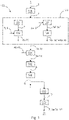
- Figure 1 is a schematic flow chart of an exemplary embodiment of the method 100 for retrieving data that relates to at least one industrial asset.
- step 110 a query 2 for data objects 5a-5c from one or more lifecycle phases of the at least one industrial asset is received from a requesting entity 1.
- step 120 the query 2 is mapped to one or more types 3a-3c of data objects 5a-5c that are available from one or more given data sources 4a-4c relating to the at least one industrial asset.
- At least one term 7 that is indicative of one or more types 3a-3c of data objects 5a-5c may be extracted from the query 2. According to block 2, this at least one term 7 may be mapped to the sought types 3a-3c of data objects 5a-5c based at least in part on
- the query 2 may be matched to a history 2a of previous queries 2' that are stored in association with one or more types 3a'-3c' of data objects 5a-5c returned in responses 6' to those previous queries 2'. According to block 124, these one or more types 3a'-3c' may then be added to the set of types 3a-3c to which the present query 2 is mapped.
- step 130 one or more data sources of the one or more types 3a-3c are obtained from the one or more data sources 4a-4c.
- step 140 a response 6 to the query 2 is produced from the one or more data objects 5a-5c.
- step 150 the response 6 is transmitted to the requesting entity 1.
- step 160 feedback 10 is obtained from the requesting entity 1 as to how useful the response 6 is deemed by this requesting entity 1.
- step 170 the query is recorded in the history 2a in association with the types 3a-3c of data objects 5a-5c in the response 6 and with the usefulness feedback 10.
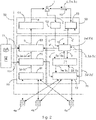
- Figure 2 is a schematic block chart of an exemplary embodiment of a system 80 for use in the method 100. That is, the system 80 may be used to perform a part or all of the method 100.
- the system 80 comprises a user interface 50, a semantic enhancer 60 and a query handler 70.
- the user interface 50 comprises a dynamic discovery view 51, a query input form 52, and a query response view 53.
- the dynamic discovery view 51 is configured to present a graph 8 of the industrial asset, and/or of the industrial plant comprising the industrial asset, to the requesting entity 1.
- the dynamic discovery view 51 may show elements available for querying based on user selections combined with filtering mechanisms derived from the graph 8.
- the dynamic discovery view 51 may also display related elements available for querying.
- a user selection of a traversal path may expose all elements that can be queried together with associated semantics.
- a history of graphs 8 may be stored for faster processing.
- the query input form 52 is configured to receive the query from the requesting entity 1.
- the query input form 52 may combine user-chosen terms from Dynamic Discovery View together with user-entry of asset instance identifier (e.g. serial number of powertrain) user query, e.g. "Motor Torque for Powertrain XYZ123" where "Motor Torque” and “Powertrain” are user-selected and Powertrain serial number "XYZ123" is entered by the user, into a semantic query using a suitable graph database or linked data query language, e.g. Cypher, SPARQL.
- the example user query may be formulated as the following semantic query using Cypher:
- the query response view 53 is configured to display a response 6 to the query 2 with data objects 5a-5c, i.e., the values comprised in these data objects 5a-5c.
- the query response view 53 may prompt the requesting entity 1 with a usefulness rating scale to obtain usefulness feedback 10 from the requesting entity 1, which may then be passed on to the history 2a.
- the semantic enricher 60 comprises APIs 61 for type information retrieval, a semantic enrichment component 62 and a graph generator 63.
- the APIs 61 for type information retrieval access original data models of data sources 4a-4c and extracts data model entity type information 3a-3c in original semantics with any related information such as entity names, identifiers, tags, descriptions, attributes, value data types, constraints, structural information, relationships with other entity types, usage etc. They may also store entity type endpoint mapping information in entity type for aiding conversion of a semantic query to an object query (using this information subsequently stored in the graph 8).
- the semantic enrichment component 62 creates semantic associations by linking types 3a-3c of data objects 5a-5c to at least one term 7. It extends retrieved entity type descriptions 3a-3c with synonyms and contextual information using entity names, IDs, tags, descriptions, data model structural information, as well as additional sources.
- the contextual information 11 may comprise technical documentation, semantic standards, and input from domain experts.
- the semantic enrichment component 62 may use unsupervised learning techniques on example instances of the entity types 3a-3c from value domains, data types, units, etc. to fill missing semantics and relationships with other entity types using calls to APIs for object value retrieval.
- the graph generator 63 produces the graph 8. It models entity types as vertices with associated semantic information and relationships as edges connecting different data models of same or different assets using a graph database or linked data format, e.g. MongoDB, RDF, JSON-LD.
- the graph generator 63 associates related entity types found via extended semantic descriptions as well as from technical documentation, domain expert knowledge. Relationships can be further described using formulae or descriptive terms if such information is provided.
- the graph generator 63 may use unsupervised learning techniques to fill in missing edges by:
- the query handler 70 comprises a query processor 71 and APIs 72 for data object 5a-5c value retrieval. It may also store the history 2a and comprise a history analyzer to evaluate this history 2a.
- the query 2 received from the query input form 52 of the user interface 50 is first passed through the history 2a to check for a matching past query 2' for which a past response 6' is available. If such a past response 6' is available, it may be passed on directly to the query response view 53 of the user interface 50 to be returned to the requesting entity as new response 6.
- past types 3a'-3c' of data objects 5a-5c identified upon a previous query 2 may be re-used by the APIs 72 for data object 5a-5c value retrieval.
- updates 8' to the graph 8 may be notified to the graph generator 63 of the semantic enricher 60.
- the query processor 71 maps the query 2 to one or more types 3a-3c of data objects 5a-5c and passes these types 3a-3c on to the APIs 72. If needed, the query processor 71 may consult the graph 8 obtained from the graph generator 63 of the semantic enricher 60 for this mapping.
- the query processor 71 may convert semantic query on the graph 8 to object queries for specific APIs 72, e.g. DataSense Query Language for Mulesoft API, optionally using mappings information stored in relevant entity types in the graph 8.
- specific APIs 72 e.g. DataSense Query Language for Mulesoft API
- the APIs 72 request the data objects 5a-5c identified by the types 3a-3c from the data sources 4a-4c. If needed, the APIs 72 may consult the semantic enrichment component 63 of the semantic enricher 60 for The data objects 5a-5c are passed back to the query processor 71 that generates the response 6 and passes this response 6 on to the query response view 53 of the user interface 50.
- Figure 3 is a schematic flow chart of the method 200 for producing the system 80, and/or a service for use in the method 100.
- step 210 from at least one data source 4a-4c relating to at least one industrial asset, a set of types 3a-3c of data objects 5a-5c that this data source 4a-4c provides is retrieved.
- step 220 for each type 3a-3c, based on a synonym library and/or on contextual information 11 of the industrial asset, at least one term 7 that is to serve, besides this type 3a-3c, as a handle for accessing the respective data objects 5a-5c is determined.
- step 230 a semantic association 9 between the so-obtained term 7 and the type 3a-3c is established.
- step 240 a set of types 3a-3c of data objects 5a-5c is clustered into clusters C by means of an unsupervised learning technique.
- a graph 8 that represents the industrial asset, and/or an industrial plant that comprises the industrial asset is established.
- the vertices of this graph 8 correspond to types 3a-3c of data objects 5a-5c, and the edges of this graph 8 correspond to relationships between data objects 5a-5c of these types 3a-3c.
- the clusters C obtained in step 240 may be used in two different manners.
- step 250 it may be checked whether a part of the types 3a-3c belonging to at least one cluster C has a semantic association 9 with at least one term 7. If this is the case (truth value 1), in step 260, a semantic association 9 may also be established between the remaining types 3a-3c belonging to this cluster C and that term 7.
- a relationship may be established between all types 3a-3c that are members of at least one same cluster C.
Landscapes
- Engineering & Computer Science (AREA)
- General Engineering & Computer Science (AREA)
- Physics & Mathematics (AREA)
- General Physics & Mathematics (AREA)
- Manufacturing & Machinery (AREA)
- Quality & Reliability (AREA)
- Automation & Control Theory (AREA)
- Theoretical Computer Science (AREA)
- Computational Linguistics (AREA)
- Data Mining & Analysis (AREA)
- Databases & Information Systems (AREA)
- Evolutionary Computation (AREA)
- Computing Systems (AREA)
- Mathematical Physics (AREA)
- Software Systems (AREA)
- Artificial Intelligence (AREA)
- Management, Administration, Business Operations System, And Electronic Commerce (AREA)
Priority Applications (2)
| Application Number | Priority Date | Filing Date | Title |
|---|---|---|---|
| EP21185901.2A EP4120100A1 (de) | 2021-07-15 | 2021-07-15 | Abrufen von daten industrieller assets aus unterschiedlichen datenquellen |
| US17/859,252 US12411477B2 (en) | 2021-07-15 | 2022-07-07 | Retrieving industrial asset data from disparate data sources |
Applications Claiming Priority (1)
| Application Number | Priority Date | Filing Date | Title |
|---|---|---|---|
| EP21185901.2A EP4120100A1 (de) | 2021-07-15 | 2021-07-15 | Abrufen von daten industrieller assets aus unterschiedlichen datenquellen |
Publications (1)
| Publication Number | Publication Date |
|---|---|
| EP4120100A1 true EP4120100A1 (de) | 2023-01-18 |
Family
ID=76942930
Family Applications (1)
| Application Number | Title | Priority Date | Filing Date |
|---|---|---|---|
| EP21185901.2A Pending EP4120100A1 (de) | 2021-07-15 | 2021-07-15 | Abrufen von daten industrieller assets aus unterschiedlichen datenquellen |
Country Status (2)
| Country | Link |
|---|---|
| US (1) | US12411477B2 (de) |
| EP (1) | EP4120100A1 (de) |
Citations (1)
| Publication number | Priority date | Publication date | Assignee | Title |
|---|---|---|---|---|
| EP3709227A1 (de) | 2019-03-11 | 2020-09-16 | ABB Schweiz AG | System und verfahren zur interoperablen kommunikation einer automatisierungssystemkomponente mit mehreren informationsquellen |
Family Cites Families (6)
| Publication number | Priority date | Publication date | Assignee | Title |
|---|---|---|---|---|
| US9134971B2 (en) * | 2010-09-29 | 2015-09-15 | Rockwell Automation Technologies, Inc. | Extensible device object model |
| CN105809314A (zh) | 2014-12-31 | 2016-07-27 | 中兴通讯股份有限公司 | 一种资产管理方法及系统 |
| WO2019117852A1 (en) | 2017-12-11 | 2019-06-20 | Siemens Aktiengesellschaft | System and method for semantics assisted asset onboarding for industrial digital services |
| US20200103877A1 (en) * | 2018-09-28 | 2020-04-02 | Rockwell Automation Technologies, Inc. | Industrial automation recommendation engine |
| US11243515B2 (en) * | 2018-09-28 | 2022-02-08 | Rockwell Automation Technologies, Inc. | Industrial automation personalization engine |
| EP3809216A1 (de) | 2019-10-15 | 2021-04-21 | ABB Schweiz AG | Fertigungslinie zur herstellung eines teils eines fahrzeugs |
-
2021
- 2021-07-15 EP EP21185901.2A patent/EP4120100A1/de active Pending
-
2022
- 2022-07-07 US US17/859,252 patent/US12411477B2/en active Active
Patent Citations (1)
| Publication number | Priority date | Publication date | Assignee | Title |
|---|---|---|---|---|
| EP3709227A1 (de) | 2019-03-11 | 2020-09-16 | ABB Schweiz AG | System und verfahren zur interoperablen kommunikation einer automatisierungssystemkomponente mit mehreren informationsquellen |
Also Published As
| Publication number | Publication date |
|---|---|
| US12411477B2 (en) | 2025-09-09 |
| US20230022369A1 (en) | 2023-01-26 |
Similar Documents
| Publication | Publication Date | Title |
|---|---|---|
| US12450204B2 (en) | Generating and reusing transformations for evolving schema mapping | |
| JP4410681B2 (ja) | 相関基準を用いてデータにアクセスする方法 | |
| JP6527197B2 (ja) | プロセス制御システムに検索サービスを提供するためのシステム、方法、製品、プログラム | |
| US11645299B2 (en) | Data management device and data management method | |
| Kučera et al. | Semantic BMS: Allowing usage of building automation data in facility benchmarking | |
| US20080320012A1 (en) | Dynamic data discovery of a source data schema and mapping to a target data schema | |
| US20020120620A1 (en) | Method and system for composing a query for a database and traversing the database | |
| WO2006017779A1 (en) | Data mart generation and use in association with an operations intelligence platform | |
| US7668888B2 (en) | Converting object structures for search engines | |
| JP7141270B2 (ja) | データベース検索システムおよび方法 | |
| US20100049694A1 (en) | Method and system for extending a relational schema | |
| US7693857B2 (en) | Clinical genomics merged repository and partial episode support with support abstract and semantic meaning preserving data sniffers | |
| Damasio et al. | Guided automated learning for query workload re-optimization | |
| EP3264338A1 (de) | Verfahren zur bereitstellung einer durchsuchbaren datenbank von modellen zur beschreibung technischer prozesse | |
| US20040083239A1 (en) | Generalized configurator software system | |
| CN116702892B (zh) | 一种知识库生成方法、装置、电子设备及存储介质 | |
| Sheth et al. | Complex relationships and knowledge discovery support in the InfoQuilt system | |
| US12411477B2 (en) | Retrieving industrial asset data from disparate data sources | |
| US8700559B2 (en) | Interface chaining to populate a class-based model | |
| US7617224B2 (en) | System and method for managing hierarchically related software components | |
| Johansson et al. | Database and knowledge base integration–a data mapping method for Arden Syntax knowledge modules | |
| US7143081B2 (en) | Automated abstract database generation through existing application statement analysis | |
| US8078598B2 (en) | Efficient SQL access to point data and relational data | |
| CN114896252B (zh) | 物联网设备的查询方法、装置、计算机设备及存储介质 | |
| CN112733274B (zh) | 一种汽车热管理一维仿真数据的管理方法、存储介质及管理系统 |
Legal Events
| Date | Code | Title | Description |
|---|---|---|---|
| PUAI | Public reference made under article 153(3) epc to a published international application that has entered the european phase |
Free format text: ORIGINAL CODE: 0009012 |
|
| STAA | Information on the status of an ep patent application or granted ep patent |
Free format text: STATUS: THE APPLICATION HAS BEEN PUBLISHED |
|
| AK | Designated contracting states |
Kind code of ref document: A1 Designated state(s): AL AT BE BG CH CY CZ DE DK EE ES FI FR GB GR HR HU IE IS IT LI LT LU LV MC MK MT NL NO PL PT RO RS SE SI SK SM TR |
|
| STAA | Information on the status of an ep patent application or granted ep patent |
Free format text: STATUS: REQUEST FOR EXAMINATION WAS MADE |
|
| 17P | Request for examination filed |
Effective date: 20230629 |
|
| RBV | Designated contracting states (corrected) |
Designated state(s): AL AT BE BG CH CY CZ DE DK EE ES FI FR GB GR HR HU IE IS IT LI LT LU LV MC MK MT NL NO PL PT RO RS SE SI SK SM TR |
|
| STAA | Information on the status of an ep patent application or granted ep patent |
Free format text: STATUS: EXAMINATION IS IN PROGRESS |
|
| 17Q | First examination report despatched |
Effective date: 20250805 |