EP4118569B1 - Light intensity control system for a vehicle - Google Patents
Light intensity control system for a vehicle Download PDFInfo
- Publication number
- EP4118569B1 EP4118569B1 EP21719739.1A EP21719739A EP4118569B1 EP 4118569 B1 EP4118569 B1 EP 4118569B1 EP 21719739 A EP21719739 A EP 21719739A EP 4118569 B1 EP4118569 B1 EP 4118569B1
- Authority
- EP
- European Patent Office
- Prior art keywords
- vehicle
- unit
- ambient light
- control unit
- light intensity
- Prior art date
- Legal status (The legal status is an assumption and is not a legal conclusion. Google has not performed a legal analysis and makes no representation as to the accuracy of the status listed.)
- Active
Links
Images



Classifications
-
- B—PERFORMING OPERATIONS; TRANSPORTING
- B60—VEHICLES IN GENERAL
- B60Q—ARRANGEMENT OF SIGNALLING OR LIGHTING DEVICES, THE MOUNTING OR SUPPORTING THEREOF OR CIRCUITS THEREFOR, FOR VEHICLES IN GENERAL
- B60Q1/00—Arrangement of optical signalling or lighting devices, the mounting or supporting thereof or circuits therefor
- B60Q1/02—Arrangement of optical signalling or lighting devices, the mounting or supporting thereof or circuits therefor the devices being primarily intended to illuminate the way ahead or to illuminate other areas of way or environments
- B60Q1/04—Arrangement of optical signalling or lighting devices, the mounting or supporting thereof or circuits therefor the devices being primarily intended to illuminate the way ahead or to illuminate other areas of way or environments the devices being headlights
- B60Q1/14—Arrangement of optical signalling or lighting devices, the mounting or supporting thereof or circuits therefor the devices being primarily intended to illuminate the way ahead or to illuminate other areas of way or environments the devices being headlights having dimming means
- B60Q1/1415—Dimming circuits
- B60Q1/1423—Automatic dimming circuits, i.e. switching between high beam and low beam due to change of ambient light or light level in road traffic
-
- B—PERFORMING OPERATIONS; TRANSPORTING
- B60—VEHICLES IN GENERAL
- B60Q—ARRANGEMENT OF SIGNALLING OR LIGHTING DEVICES, THE MOUNTING OR SUPPORTING THEREOF OR CIRCUITS THEREFOR, FOR VEHICLES IN GENERAL
- B60Q1/00—Arrangement of optical signalling or lighting devices, the mounting or supporting thereof or circuits therefor
- B60Q1/26—Arrangement of optical signalling or lighting devices, the mounting or supporting thereof or circuits therefor the devices being primarily intended to indicate the vehicle, or parts thereof, or to give signals, to other traffic
- B60Q1/2603—Attenuation of the light according to ambient luminiosity, e.g. for braking or direction indicating lamps
-
- B—PERFORMING OPERATIONS; TRANSPORTING
- B60—VEHICLES IN GENERAL
- B60Q—ARRANGEMENT OF SIGNALLING OR LIGHTING DEVICES, THE MOUNTING OR SUPPORTING THEREOF OR CIRCUITS THEREFOR, FOR VEHICLES IN GENERAL
- B60Q1/00—Arrangement of optical signalling or lighting devices, the mounting or supporting thereof or circuits therefor
- B60Q1/26—Arrangement of optical signalling or lighting devices, the mounting or supporting thereof or circuits therefor the devices being primarily intended to indicate the vehicle, or parts thereof, or to give signals, to other traffic
- B60Q1/2661—Arrangement of optical signalling or lighting devices, the mounting or supporting thereof or circuits therefor the devices being primarily intended to indicate the vehicle, or parts thereof, or to give signals, to other traffic mounted on parts having other functions
- B60Q1/2673—Arrangement of optical signalling or lighting devices, the mounting or supporting thereof or circuits therefor the devices being primarily intended to indicate the vehicle, or parts thereof, or to give signals, to other traffic mounted on parts having other functions on parts worn by the driver, e.g. clothes, gloves or bags, specially adapted to provide auxiliary vehicle signalling
- B60Q1/2676—Helmets
-
- B—PERFORMING OPERATIONS; TRANSPORTING
- B60—VEHICLES IN GENERAL
- B60Q—ARRANGEMENT OF SIGNALLING OR LIGHTING DEVICES, THE MOUNTING OR SUPPORTING THEREOF OR CIRCUITS THEREFOR, FOR VEHICLES IN GENERAL
- B60Q3/00—Arrangement of lighting devices for vehicle interiors; Lighting devices specially adapted for vehicle interiors
- B60Q3/10—Arrangement of lighting devices for vehicle interiors; Lighting devices specially adapted for vehicle interiors for dashboards
- B60Q3/16—Circuits; Control arrangements
- B60Q3/18—Circuits; Control arrangements for varying the light intensity
-
- G—PHYSICS
- G02—OPTICS
- G02B—OPTICAL ELEMENTS, SYSTEMS OR APPARATUS
- G02B27/00—Optical systems or apparatus not provided for by any of the groups G02B1/00 - G02B26/00, G02B30/00
- G02B27/01—Head-up displays
- G02B27/017—Head mounted
- G02B27/0172—Head mounted characterised by optical features
-
- H—ELECTRICITY
- H05—ELECTRIC TECHNIQUES NOT OTHERWISE PROVIDED FOR
- H05B—ELECTRIC HEATING; ELECTRIC LIGHT SOURCES NOT OTHERWISE PROVIDED FOR; CIRCUIT ARRANGEMENTS FOR ELECTRIC LIGHT SOURCES, IN GENERAL
- H05B47/00—Circuit arrangements for operating light sources in general, i.e. where the type of light source is not relevant
- H05B47/10—Controlling the light source
- H05B47/105—Controlling the light source in response to determined parameters
- H05B47/11—Controlling the light source in response to determined parameters by determining the brightness or colour temperature of ambient light
-
- A—HUMAN NECESSITIES
- A42—HEADWEAR
- A42B—HATS; HEAD COVERINGS
- A42B3/00—Helmets; Helmet covers ; Other protective head coverings
- A42B3/04—Parts, details or accessories of helmets
- A42B3/0406—Accessories for helmets
- A42B3/0433—Detecting, signalling or lighting devices
- A42B3/044—Lighting devices, e.g. helmets with lamps
- A42B3/0446—Lighting devices, e.g. helmets with lamps intended to light the way ahead
-
- B—PERFORMING OPERATIONS; TRANSPORTING
- B60—VEHICLES IN GENERAL
- B60Q—ARRANGEMENT OF SIGNALLING OR LIGHTING DEVICES, THE MOUNTING OR SUPPORTING THEREOF OR CIRCUITS THEREFOR, FOR VEHICLES IN GENERAL
- B60Q2300/00—Indexing codes for automatically adjustable headlamps or automatically dimmable headlamps
- B60Q2300/20—Indexing codes relating to the driver or the passengers
- B60Q2300/23—Driver's line of sight
-
- B—PERFORMING OPERATIONS; TRANSPORTING
- B60—VEHICLES IN GENERAL
- B60Q—ARRANGEMENT OF SIGNALLING OR LIGHTING DEVICES, THE MOUNTING OR SUPPORTING THEREOF OR CIRCUITS THEREFOR, FOR VEHICLES IN GENERAL
- B60Q2300/00—Indexing codes for automatically adjustable headlamps or automatically dimmable headlamps
- B60Q2300/30—Indexing codes relating to the vehicle environment
- B60Q2300/31—Atmospheric conditions
- B60Q2300/314—Ambient light
-
- B—PERFORMING OPERATIONS; TRANSPORTING
- B60—VEHICLES IN GENERAL
- B60Q—ARRANGEMENT OF SIGNALLING OR LIGHTING DEVICES, THE MOUNTING OR SUPPORTING THEREOF OR CIRCUITS THEREFOR, FOR VEHICLES IN GENERAL
- B60Q2900/00—Features of lamps not covered by other groups in B60Q
- B60Q2900/30—Lamps commanded by wireless transmissions
-
- F—MECHANICAL ENGINEERING; LIGHTING; HEATING; WEAPONS; BLASTING
- F21—LIGHTING
- F21W—INDEXING SCHEME ASSOCIATED WITH SUBCLASSES F21K, F21L, F21S and F21V, RELATING TO USES OR APPLICATIONS OF LIGHTING DEVICES OR SYSTEMS
- F21W2107/00—Use or application of lighting devices on or in particular types of vehicles
- F21W2107/10—Use or application of lighting devices on or in particular types of vehicles for land vehicles
- F21W2107/13—Use or application of lighting devices on or in particular types of vehicles for land vehicles for cycles
- F21W2107/17—Use or application of lighting devices on or in particular types of vehicles for land vehicles for cycles for motorcycles
-
- G—PHYSICS
- G02—OPTICS
- G02B—OPTICAL ELEMENTS, SYSTEMS OR APPARATUS
- G02B27/00—Optical systems or apparatus not provided for by any of the groups G02B1/00 - G02B26/00, G02B30/00
- G02B27/01—Head-up displays
- G02B27/017—Head mounted
- G02B2027/0178—Eyeglass type
-
- Y—GENERAL TAGGING OF NEW TECHNOLOGICAL DEVELOPMENTS; GENERAL TAGGING OF CROSS-SECTIONAL TECHNOLOGIES SPANNING OVER SEVERAL SECTIONS OF THE IPC; TECHNICAL SUBJECTS COVERED BY FORMER USPC CROSS-REFERENCE ART COLLECTIONS [XRACs] AND DIGESTS
- Y02—TECHNOLOGIES OR APPLICATIONS FOR MITIGATION OR ADAPTATION AGAINST CLIMATE CHANGE
- Y02B—CLIMATE CHANGE MITIGATION TECHNOLOGIES RELATED TO BUILDINGS, e.g. HOUSING, HOUSE APPLIANCES OR RELATED END-USER APPLICATIONS
- Y02B20/00—Energy efficient lighting technologies, e.g. halogen lamps or gas discharge lamps
- Y02B20/40—Control techniques providing energy savings, e.g. smart controller or presence detection
Definitions
- the present invention relates generally to a vehicle.
- the present subject matter is related to a light intensity control system for a vehicle.
- automatic turning-on and turning-off system for automobile lamplight provides a system and method for switching ON/OFF headlamp depending on distance sensor and ambient brightness acquisition system. This method turns headlamp ON/OFF during threshold conditions and is aimed at helping the driver for better view of external conditions while driving. Some even have wired communication between sensor circuit and headlamp driver circuit and hence it is prone to damage due to wire getting cut or short circuit.
- the patent application EP0608453 A1 describes an device for automatic switching between full beam headlights and dipped beam comprising directional brightness sensors oriented towards the vehicles travelling in the opposite direction.
- LED based systems where automatic dimming system are provided for avoiding visual problems caused by the headlamp operated at the same time by two approaching cars. It uses distance sensor and ambient light sensor to achieve the result.
- a helmet with a head-mounted display for the rider of a two-wheeled motor vehicle with a control unit that changes the image displayed on a LCD based on the visual field information received from a brightness sensor is disclosed in the patent application JP2009092810 A .
- An ambient light sensor is placed in the vehicle body and is claimed to be in the vehicle field. But in two wheelers, the vehicle field is not always coinciding with driver's visual field and additionally location of ambient light acquisition system in vehicle makes it prone to damage due to presence of a wire getting cut or short circuit or damage due to vehicle condition.
- the instrument cluster display illumination needs to vary as per the ambient light for better view and hence the location of the ambient light acquisition unit is very crucial to control the ambient light based digital system.
- the location of the ambient light sensor is provided on the vehicle near the display of the instrument cluster. The location of the ambient light sensor on the vehicle whether near the display of the instrument cluster or somewhere inside the vehicle makes the ambient light sensor prone to damage and the presence of wired communication from the ambient light sensor to the brightness control system makes the system prone to noise.
- the received ambient light intensity by the ambient light sensor mounted on vehicle may not be same as what the human eye perceives.
- the object of the present invention is to provide a light intensity control system which overcomes all problems cited above as well as other problems of known art.
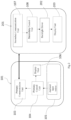
- Fig. 1 depicts the architecture of the light intensity control system (100) comprising a head mounting unit (101) mounted on wearable headgear such as a helmet or goggles and a headlamp (102).
- the head mounting unit (101) further comprises a primary communication unit (103) which is electrically connected to a primary control unit (104).
- the primary control unit (104) is connected to an ambient light sensor (105) in the field view of the user that is the driver.
- the ambient light sensor (105) can detect the light quality and intensity outside of the helmet when the driver is driving a vehicle.
- the ambient light sensor (105) receives the ambient light intensity and the received input is used to modify or calibrate an illuminating device to match with the human eye's response to light under variety of lighting conditions as the person driving the vehicle receives the same intensity of light which is received by the ambient light sensor (105).
- Ambient light means the light that is already present in a scene, before any additional lighting is added.
- the ambient light sensor (105) is a device that detects the amount of light in the vicinity.
- the ambient light sensor (105) is located on the head mounting unit (101) or on the outer surface of the helmet.
- Ambient light sensor (105) is used to sense the ambient light and provide the primary control unit (104) the necessary information to make decisions dependent on it and depending on the decisions made the headlamp (102) changes the intensity to match with the human's eye response.
- the primary control unit (104) is also electrically connected to a primary display unit (106) which displays the features like parameters of the vehicle such as engine temperature, speed, distance travelled or any menu selected from the handheld device like incoming call.
- the primary communication unit (103) is a wireless unit such as Bluetooth, Wireless fidelity (Wi-Fi), Zigbee and ANT.
- the headlamp (102) comprises of a secondary communication unit (107) which is also a wireless unit.
- the secondary communication unit (107) is electrically connected to a secondary control unit (108) which controls a light source (110) through an illumination control unit (109).
- the ambient light in the field of view of the rider of the vehicle is acquired by the ambient light sensor (105) and then it is transferred to the secondary communication unit (107) of the headlamp (102).
- the primary communication unit (103) functions as transceiver and the secondary communication unit (107) functions as a receiver which gathers the information related to ambient light.
- the ambient light information is then transferred to the secondary control unit (108) of the headlamp (102) and then the secondary control unit (108) controls the light source (110) like LED light array through a illumination control unit (109).
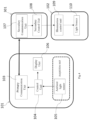
- Fig. 2 illustrates another embodiment where the headlamp (102) has been replaced with an instrument cluster (201) with an illuminating display.
- the instrument cluster also comprises of a secondary communication unit (107) which receives the ambient light information form the primary communication unit (103).
- the secondary control unit (108) provided in the instrument cluster (201) compares the received ambient light data with a threshold value.
- the threshold value depends on the current brightness value of the illuminating display of the instrument cluster (201).
- the gradient at which the brightness of the illuminating display of the instrument cluster (201) changes is such that it is not detectable to a backlight driver (202).
- a backlight driver (202) is controlled according to the brightness value which the secondary control unit (108) decides after comparing the received the ambient light data with that of the current brightness value and after comparing the ambient light data with the current brightness value of the instrument cluster (201), the backlight driver (202) controls the illumination of a display unit (203).
- Fig.3 illustrates a block diagram of the present invention to automatically switch the light source (110) between high and low beam position in order to assist the driver as well as the approaching vehicle to get better view of the road.
- the ambient light sensor (105) receives the ambient light that is incident in the field of view of the driver. Since the location of the ambient light sensor (105) is in the field of view of the rider, the primary control unit (104) in the head mounted unit (101) identifies the high beam from an approaching vehicle which may cause disturbance to the driver.
- the primary control unit (104) sends a message to a vehicle engine control unit (ECU) (301).
- the message is transmitted wirelessly to the vehicle ECU (301) from the primary communication unit (103).
- the vehicle ECU (301) relays the message to the headlamp unit (102). This relay message is transmitted wirelessly.
- the headlamp control unit (304) in the headlamp unit (102) checks the current illumination condition of the light source (110), whether it is in high beam or low beam condition.
- the light source (110) switches to low beam when current ambient light intensity is low and then switches back to high beam condition if the current ambient light intensity gets high.
- the switch action is similar to toggle function which switches the light source (110) of the headlamp unit (102) to low beam position or high beam position depending on the ambient light intensity.
- the light source (110) can be LED-array based or LASER-based.
- the illumination control unit (109) of the headlamp (102) can be a switching regulator or a linear regulator or a solenoid actuator to perform the switching action depending on the type of light source such as the (Light emitting diode) LED arrangement used in the headlamp unit (102).
- the illumination control unit (109) changes the duty cycle of the Pulse width modulation (PWM) input accordingly in order to switch from high beam to low beam.
- PWM Pulse width modulation
- the illumination control unit (109) sets the resistance accordingly to control the LED array to switch between high and low beam.
- a solenoid actuator basically controls the switch to perform the switching action from high beam to low beam and vice versa.
- All the functionalities described above automatically function once wireless communication is established and automatic switching can be deactivated with the help of a switch provided on the handle bar or head mounted unit (101) or the instrument cluster (201). This functionality can also be deactivated through a mobile application.
- a switch provided on the handle bar or head mounted unit (101) or the instrument cluster (201).
- This functionality can also be deactivated through a mobile application.
- when operating in automatic mode in case the user presses the switch to change from high to low beam then the user input is taken on high priority to override the action of the control unit.
- Fig. 4 illustrates another embodiment where, instead of wireless communication , the vehicle ECU (301) controls the headlamp (102) directly such that the headlamp (102) is electrically connected to the vehicle ECU (301) and the vehicle ECU (301) has a software installed in the secondary control unit (108) and in order to control the illumination control unit (109) of the headlamp (102) and the light source (110), necessary instructions are provided from the secondary control unit (108) of the vehicle ECU (301) to the illumination control unit (109).
- Fig. 5 illustrates front portion of wearable headgear such as a helmet (500).
- the helmet (500) comprises of a transparent wind screen (501) through which the driver can see the outside objects.
- the head mounting unit (101) is being mounted on the wind screen (501) which allows the ambient light sensor (105) to receive the outside ambient light intensity which is in the view field of the driver.
- the helmet (500) can be replaced by other headgear or an eye gear such as goggles on to which the head mounting unit (101) can be placed.
Landscapes
- Engineering & Computer Science (AREA)
- Mechanical Engineering (AREA)
- Physics & Mathematics (AREA)
- General Physics & Mathematics (AREA)
- Optics & Photonics (AREA)
- Lighting Device Outwards From Vehicle And Optical Signal (AREA)
Description
- The present invention relates generally to a vehicle. The present subject matter is related to a light intensity control system for a vehicle.
- Automatic headlamp switching between high and low beam during night travel helps in safe driving and reduces rider effort. In certain cases automatic turning-on and turning-off system for automobile lamplight provides a system and method for switching ON/OFF headlamp depending on distance sensor and ambient brightness acquisition system. This method turns headlamp ON/OFF during threshold conditions and is aimed at helping the driver for better view of external conditions while driving. Some even have wired communication between sensor circuit and headlamp driver circuit and hence it is prone to damage due to wire getting cut or short circuit. For example, the patent application
EP0608453 A1 describes an device for automatic switching between full beam headlights and dipped beam comprising directional brightness sensors oriented towards the vehicles travelling in the opposite direction. - There are also LED based systems where automatic dimming system are provided for avoiding visual problems caused by the headlamp operated at the same time by two approaching cars. It uses distance sensor and ambient light sensor to achieve the result. Furthermore, a helmet with a head-mounted display for the rider of a two-wheeled motor vehicle with a control unit that changes the image displayed on a LCD based on the visual field information received from a brightness sensor is disclosed in the patent application
JP2009092810 A - The detailed description is described with reference to the accompanying figures. The same numbers are used throughout the drawings to reference like features and components.
-
Fig. 1 illustrates architecture of the light intensity control system comprising a head mounting unit and a headlamp. -
Fig. 2 illustrates an embodiment of the light intensity control system where the headlamp has been replaced with an instrument cluster. -
Fig. 3 illustrates an embodiment utilizing an engine control unit (ECU) of the vehicle which allows automatically switching of the light source between high and low beam position in order to assist the driver as well as the approaching vehicle. The vehicle ECU communicates with the headlamp through wireless communication. -
Fig. 4 illustrates another embodiment involving vehicle Engine control unit directly controlling the headlamp. - Ambient light plays a crucial role in comfort as well as safety of the rider. Especially during night time, when ambient light becomes low in intensity, driving in multi-lane roads with vehicles moving in both direction affects the visibility for the rider resulting in safety risk & potential accidents.
- During driving at night, when two vehicles are approaching each other with headlamp in high beam position, visibility of the road becomes poor for both riders. Hence riders switches the headlamp to low beam position for a brief period of time. This improves visibility to the approaching rider. Usually, switching headlamp to low beam position to improve road visibility for the approaching rider is done with the help of handle bar switches and handle bar switches requires manual intervention and it may not give better response during the time when within split seconds the ambient light changes which may result in cloudy judgement of the rider leading to an accident.
- An ambient light sensor is placed in the vehicle body and is claimed to be in the vehicle field. But in two wheelers, the vehicle field is not always coinciding with driver's visual field and additionally location of ambient light acquisition system in vehicle makes it prone to damage due to presence of a wire getting cut or short circuit or damage due to vehicle condition.
- Similarly, the instrument cluster display illumination needs to vary as per the ambient light for better view and hence the location of the ambient light acquisition unit is very crucial to control the ambient light based digital system. Generally, the location of the ambient light sensor is provided on the vehicle near the display of the instrument cluster. The location of the ambient light sensor on the vehicle whether near the display of the instrument cluster or somewhere inside the vehicle makes the ambient light sensor prone to damage and the presence of wired communication from the ambient light sensor to the brightness control system makes the system prone to noise. Also, the received ambient light intensity by the ambient light sensor mounted on vehicle may not be same as what the human eye perceives.
- Hence, the object of the present invention is to provide a light intensity control system which overcomes all problems cited above as well as other problems of known art.
-
Fig. 1 depicts the architecture of the light intensity control system (100) comprising a head mounting unit (101) mounted on wearable headgear such as a helmet or goggles and a headlamp (102). The head mounting unit (101) further comprises a primary communication unit (103) which is electrically connected to a primary control unit (104). The primary control unit (104) is connected to an ambient light sensor (105) in the field view of the user that is the driver. The ambient light sensor (105) can detect the light quality and intensity outside of the helmet when the driver is driving a vehicle. The ambient light sensor (105) receives the ambient light intensity and the received input is used to modify or calibrate an illuminating device to match with the human eye's response to light under variety of lighting conditions as the person driving the vehicle receives the same intensity of light which is received by the ambient light sensor (105). - Ambient light means the light that is already present in a scene, before any additional lighting is added. The ambient light sensor (105) is a device that detects the amount of light in the vicinity. The ambient light sensor (105) is located on the head mounting unit (101) or on the outer surface of the helmet. Ambient light sensor (105) is used to sense the ambient light and provide the primary control unit (104) the necessary information to make decisions dependent on it and depending on the decisions made the headlamp (102) changes the intensity to match with the human's eye response.
- The primary control unit (104) is also electrically connected to a primary display unit (106) which displays the features like parameters of the vehicle such as engine temperature, speed, distance travelled or any menu selected from the handheld device like incoming call. The primary communication unit (103) is a wireless unit such as Bluetooth, Wireless fidelity (Wi-Fi), Zigbee and ANT.
- The headlamp (102) comprises of a secondary communication unit (107) which is also a wireless unit. The secondary communication unit (107) is electrically connected to a secondary control unit (108) which controls a light source (110) through an illumination control unit (109).
- The ambient light in the field of view of the rider of the vehicle is acquired by the ambient light sensor (105) and then it is transferred to the secondary communication unit (107) of the headlamp (102). The primary communication unit (103) functions as transceiver and the secondary communication unit (107) functions as a receiver which gathers the information related to ambient light. The ambient light information is then transferred to the secondary control unit (108) of the headlamp (102) and then the secondary control unit (108) controls the light source (110) like LED light array through a illumination control unit (109).
-
Fig. 2 illustrates another embodiment where the headlamp (102) has been replaced with an instrument cluster (201) with an illuminating display. The instrument cluster also comprises of a secondary communication unit (107) which receives the ambient light information form the primary communication unit (103). - The secondary control unit (108) provided in the instrument cluster (201) compares the received ambient light data with a threshold value. The threshold value depends on the current brightness value of the illuminating display of the instrument cluster (201). The gradient at which the brightness of the illuminating display of the instrument cluster (201) changes is such that it is not detectable to a backlight driver (202). A backlight driver (202) is controlled according to the brightness value which the secondary control unit (108) decides after comparing the received the ambient light data with that of the current brightness value and after comparing the ambient light data with the current brightness value of the instrument cluster (201), the backlight driver (202) controls the illumination of a display unit (203).
-
Fig.3 illustrates a block diagram of the present invention to automatically switch the light source (110) between high and low beam position in order to assist the driver as well as the approaching vehicle to get better view of the road. - The ambient light sensor (105) receives the ambient light that is incident in the field of view of the driver. Since the location of the ambient light sensor (105) is in the field of view of the rider, the primary control unit (104) in the head mounted unit (101) identifies the high beam from an approaching vehicle which may cause disturbance to the driver.
- When high beam is detected from the approaching vehicle, the primary control unit (104) sends a message to a vehicle engine control unit (ECU) (301). The message is transmitted wirelessly to the vehicle ECU (301) from the primary communication unit (103). The vehicle ECU (301) relays the message to the headlamp unit (102). This relay message is transmitted wirelessly. After receiving the message, the headlamp control unit (304) in the headlamp unit (102) checks the current illumination condition of the light source (110), whether it is in high beam or low beam condition.
- If the current illumination condition of the light source (110) is in high beam condition then the light source (110) switches to low beam when current ambient light intensity is low and then switches back to high beam condition if the current ambient light intensity gets high. The switch action is similar to toggle function which switches the light source (110) of the headlamp unit (102) to low beam position or high beam position depending on the ambient light intensity. The light source (110) can be LED-array based or LASER-based.
- The illumination control unit (109) of the headlamp (102) can be a switching regulator or a linear regulator or a solenoid actuator to perform the switching action depending on the type of light source such as the (Light emitting diode) LED arrangement used in the headlamp unit (102).
- In a case where individual Light emitting diodes (LEDs) are controlled by a switching regulator, the illumination control unit (109) changes the duty cycle of the Pulse width modulation (PWM) input accordingly in order to switch from high beam to low beam. In case the illumination control unit (109) is through linear regulator, the illumination control unit (109) sets the resistance accordingly to control the LED array to switch between high and low beam. In case a separate array of LEDs controlled by a switch, a solenoid actuator basically controls the switch to perform the switching action from high beam to low beam and vice versa.
- All the functionalities described above automatically function once wireless communication is established and automatic switching can be deactivated with the help of a switch provided on the handle bar or head mounted unit (101) or the instrument cluster (201). This functionality can also be deactivated through a mobile application. As per an embodiment, when operating in automatic mode, in case the user presses the switch to change from high to low beam then the user input is taken on high priority to override the action of the control unit.
-
Fig. 4 illustrates another embodiment where, instead of wireless communication , the vehicle ECU (301) controls the headlamp (102) directly such that the headlamp (102) is electrically connected to the vehicle ECU (301) and the vehicle ECU (301) has a software installed in the secondary control unit (108) and in order to control the illumination control unit (109) of the headlamp (102) and the light source (110), necessary instructions are provided from the secondary control unit (108) of the vehicle ECU (301) to the illumination control unit (109). -
Fig. 5 illustrates front portion of wearable headgear such as a helmet (500). The helmet (500) comprises of a transparent wind screen (501) through which the driver can see the outside objects. The head mounting unit (101) is being mounted on the wind screen (501) which allows the ambient light sensor (105) to receive the outside ambient light intensity which is in the view field of the driver. Similarly, the helmet (500) can be replaced by other headgear or an eye gear such as goggles on to which the head mounting unit (101) can be placed. - Many modifications and variations of the present invention are possible in the light of above disclosure. Therefore, within the scope of the claims of the present invention, the present invention may be practiced other than as specifically described.
Claims (9)
- A light intensity control system (100) for a vehicle comprising:a head mounting unit (101) comprising a primary communication unit (103),a primary control unit (104),a display unit (106),an ambient light sensor (105) to collect an input;wherein said head mounting unit (101) is configured to be mounted on a headgear in order to receive ambient light intensity in a field view of a rider of the vehicle through said ambient light sensor (105) andsaid head mounting unit (101) is configured to be connected to one or more illuminating devices provided insaid vehicle to control illumination of said one or more illuminating devices, said one or more illuminating devices including a headlamp (102),wherein controlling comprises toggling one or more beam positions of a light source (110) of the headlamp (102).
- The light intensity control system for a vehicle as claimed in claim 1, wherein said headgear is a helmet or a goggle.
- A light intensity control system (100) for a vehicle comprising:a head mounting unit (101) comprising a primary communication unit (103),a primary control unit (104),a display unit (106),an ambient light sensor (105) to collect an input;wherein said head mounting unit (101) is configured to be mounted on a headgear in order to receive ambient light intensity in a field view of a rider of the vehicle through said ambient light sensor (105), and said head mounting unit (101) is configured to be connected to one or more illumination devices provided in said vehicle to control illumination of said one or more illuminating devices,wherein said one or more illuminating devices includes an illuminating display of an instrument cluster (201).
- The light intensity control system for a vehicle as claimed in claim 1, further comprising:the headlamp (102) being connected to a secondary communication unit (107) to receive said input from said primary communication unit (103),a secondary control unit (108) configured to control the headlamp (102),an illumination control unit (109) to control an output from a light source (110);wherein said input received from said ambient light sensor (105) located in the field view of the rider of the vehicle is sent to said secondary control unit (107) through said secondary communication unit (107), said secondary control unit (107) being configured to toggle one or more beam position of said light source (110) through said illumination control unit (109).
- The light intensity control system for a vehicle as claimed in claim 4, wherein said beam position is a high beam position or a low beam position.
- The light intensity control system for a vehicle as claimed in claim 3, wherein
said input collected from said ambient light sensor (105) located in the field view of the rider of the vehicle is compared with a threshold value to control illumination of said display unit (203) of said instrument cluster (201) through a backlight driver (202) embedded in said instrument cluster (201). - The light intensity control system for a vehicle as claimed in claim 6, wherein said threshold value is
at least one of a current brightness value of the instrument cluster (201) with an illuminating display or ambient brightness value. - The light intensity control system for a vehicle as claimed in claim 4, further comprisinga vehicle Engine Control Unit (ECU) (301) comprising said secondary communication unit (107) to receive said input from said primary communication unit (103);said headlamp (102) comprisinga headlamp communication unit (303),a headlamp control unit (304), andthe illumination control unit (109) to control a light source (110);said head lamp control unit (304) being configured to receive said input from said ambient light sensor (105) through said secondary communication unit (107) of the vehicle ECU (301) based on comparison of said input with one or more beam position of said light source (110); and wherein said beam position of said light source (110) is changed to match with said input collected from said ambient light sensor (105).
- The light intensity control system for a vehicle as claimed in claim 8, wherein said illumination control unit (109) is a at least one of a switching regulator, a linear regulator or a solenoid actuator.
Applications Claiming Priority (2)
| Application Number | Priority Date | Filing Date | Title |
|---|---|---|---|
| IN202041010511 | 2020-03-12 | ||
| PCT/IN2021/050230 WO2021181413A1 (en) | 2020-03-12 | 2021-03-10 | Light intensity control system for a vehicle |
Publications (3)
| Publication Number | Publication Date |
|---|---|
| EP4118569A1 EP4118569A1 (en) | 2023-01-18 |
| EP4118569C0 EP4118569C0 (en) | 2024-08-21 |
| EP4118569B1 true EP4118569B1 (en) | 2024-08-21 |
Family
ID=75562798
Family Applications (1)
| Application Number | Title | Priority Date | Filing Date |
|---|---|---|---|
| EP21719739.1A Active EP4118569B1 (en) | 2020-03-12 | 2021-03-10 | Light intensity control system for a vehicle |
Country Status (3)
| Country | Link |
|---|---|
| US (1) | US12325353B2 (en) |
| EP (1) | EP4118569B1 (en) |
| WO (1) | WO2021181413A1 (en) |
Families Citing this family (3)
| Publication number | Priority date | Publication date | Assignee | Title |
|---|---|---|---|---|
| CN114132273B (en) * | 2021-10-27 | 2024-02-27 | 江铃汽车股份有限公司 | Backlight brightness control method and system and automobile |
| EP4559750A1 (en) * | 2023-11-21 | 2025-05-28 | Volvo Truck Corporation | An exterior lighting system for a vehicle |
| CN117676982B (en) * | 2023-12-11 | 2024-08-09 | 东莞依沃特电子有限公司 | Emergency lamp control method and system |
Citations (9)
| Publication number | Priority date | Publication date | Assignee | Title |
|---|---|---|---|---|
| US4997263A (en) * | 1989-06-12 | 1991-03-05 | Allied-Signal Inc. | Ambient light illuminated liquid crystal display system |
| EP0608453A1 (en) * | 1993-01-28 | 1994-08-03 | Fulvio Briata | Device for switching full beam headlights to dipped beam, in particular for motor vehicles or the like |
| US6731253B1 (en) * | 1999-08-05 | 2004-05-04 | Honeywell International Inc. | Ambient adaptable optical combiner |
| US20120326949A1 (en) * | 2010-02-04 | 2012-12-27 | Jean-Michel Asfour | Device For Presenting Information Near The Eyes |
| EP2329974B1 (en) * | 2009-12-04 | 2013-03-20 | Hella KGaA Hueck & Co. | Method and device for reducing the dazzling effect of an approaching vehicle |
| CN105974589A (en) * | 2016-06-24 | 2016-09-28 | 赵宇 | Near-to-eye display for headset goggles |
| US9925921B1 (en) * | 2017-04-17 | 2018-03-27 | Feniex Industries, Inc. | Head tracking control system for controlling an auxiliary vehicle light |
| DE102018201285A1 (en) * | 2018-01-29 | 2019-08-01 | Robert Bosch Gmbh | Motor vehicle headlight system, method for operating a motor vehicle headlight system |
| US20200355920A1 (en) * | 2019-05-08 | 2020-11-12 | Matvey Lvovskiy | Collimating display system for motorcyclists |
Family Cites Families (14)
| Publication number | Priority date | Publication date | Assignee | Title |
|---|---|---|---|---|
| US6008946A (en) * | 1997-11-07 | 1999-12-28 | Honeywell, Inc. | Ambient light display illumination for a head-mounted display |
| EP1990674A1 (en) * | 2007-05-09 | 2008-11-12 | Harman Becker Automotive Systems GmbH | Head-mounted display system |
| JP2009092810A (en) * | 2007-10-05 | 2009-04-30 | Nikon Corp | Head mounted display device |
| US20110241545A1 (en) * | 2010-03-30 | 2011-10-06 | Ford Global Technologies, Llc | Vehicle headlight alert system and method |
| US8905611B2 (en) * | 2011-12-09 | 2014-12-09 | Medibotics Llc | Antlights (TM) bicycle lights that span a bilateral safety zone |
| DE102012103293A1 (en) | 2012-04-17 | 2013-10-17 | Dr. Ing. H.C. F. Porsche Aktiengesellschaft | Method for operating headlamp of motor vehicle, for determining resolution of headlamp, involves detecting illuminated area surrounding car and determining overall intensity distribution depends on total adaptation level of driver eye |
| IL235088A (en) * | 2014-10-07 | 2017-06-29 | Elbit Systems Ltd | Helmet system having adjustable light transmission |
| GB2532757A (en) * | 2014-11-27 | 2016-06-01 | Ibm | A dashboard illumination system for a vehicle |
| KR101685534B1 (en) * | 2014-12-16 | 2016-12-12 | 현대자동차주식회사 | Vehicle lighting control system and there of method using wearable glasses |
| US9844119B2 (en) * | 2015-02-10 | 2017-12-12 | Daqri, Llc | Dynamic lighting for head mounted device |
| DE102015205107A1 (en) * | 2015-03-20 | 2016-09-22 | Rheinmetall Defence Electronics Gmbh | Helmet for the use of aircraft and / or helicopter pilots |
| CN110383141A (en) * | 2016-12-29 | 2019-10-25 | 曼戈泰克有限责任公司 | Improvement type head-up display system for being used together with the helmet |
| US20180334099A1 (en) * | 2017-05-16 | 2018-11-22 | GM Global Technology Operations LLC | Vehicle environment imaging systems and methods |
| DE102018214638A1 (en) * | 2018-08-29 | 2020-03-05 | Robert Bosch Gmbh | Method and control device for automatically darkening at least a partial area of a visor, black-out visor, and helmet with a black-out visor |
-
2021
- 2021-03-10 US US17/799,757 patent/US12325353B2/en active Active
- 2021-03-10 WO PCT/IN2021/050230 patent/WO2021181413A1/en not_active Ceased
- 2021-03-10 EP EP21719739.1A patent/EP4118569B1/en active Active
Patent Citations (9)
| Publication number | Priority date | Publication date | Assignee | Title |
|---|---|---|---|---|
| US4997263A (en) * | 1989-06-12 | 1991-03-05 | Allied-Signal Inc. | Ambient light illuminated liquid crystal display system |
| EP0608453A1 (en) * | 1993-01-28 | 1994-08-03 | Fulvio Briata | Device for switching full beam headlights to dipped beam, in particular for motor vehicles or the like |
| US6731253B1 (en) * | 1999-08-05 | 2004-05-04 | Honeywell International Inc. | Ambient adaptable optical combiner |
| EP2329974B1 (en) * | 2009-12-04 | 2013-03-20 | Hella KGaA Hueck & Co. | Method and device for reducing the dazzling effect of an approaching vehicle |
| US20120326949A1 (en) * | 2010-02-04 | 2012-12-27 | Jean-Michel Asfour | Device For Presenting Information Near The Eyes |
| CN105974589A (en) * | 2016-06-24 | 2016-09-28 | 赵宇 | Near-to-eye display for headset goggles |
| US9925921B1 (en) * | 2017-04-17 | 2018-03-27 | Feniex Industries, Inc. | Head tracking control system for controlling an auxiliary vehicle light |
| DE102018201285A1 (en) * | 2018-01-29 | 2019-08-01 | Robert Bosch Gmbh | Motor vehicle headlight system, method for operating a motor vehicle headlight system |
| US20200355920A1 (en) * | 2019-05-08 | 2020-11-12 | Matvey Lvovskiy | Collimating display system for motorcyclists |
Also Published As
| Publication number | Publication date |
|---|---|
| WO2021181413A1 (en) | 2021-09-16 |
| US20230077175A1 (en) | 2023-03-09 |
| EP4118569C0 (en) | 2024-08-21 |
| US12325353B2 (en) | 2025-06-10 |
| EP4118569A1 (en) | 2023-01-18 |
Similar Documents
| Publication | Publication Date | Title |
|---|---|---|
| US10787177B2 (en) | Exterior rearview device with illumination functions and autonomous vehicles using same | |
| JP7053743B2 (en) | Camera system that uses filters and exposure time to detect blinking illuminated objects | |
| EP4118569B1 (en) | Light intensity control system for a vehicle | |
| US10741083B2 (en) | Road surface image-drawing system for vehicle | |
| JP6591618B2 (en) | Automobile night driving support device | |
| JP7217243B2 (en) | Automated driving display system and vehicle communication system | |
| US10493898B2 (en) | Automated vehicle and a vehicle lighting system thereof | |
| CN103963784B (en) | Anti-bias for automobile sails auxiliary system | |
| US20180118109A1 (en) | Information presentation apparatus | |
| EP2736028A1 (en) | Vehicle information transmitting apparatus | |
| US10137823B2 (en) | Exterior rearview device with illumination functions | |
| EP2295292A1 (en) | Lighting device foe vehicle and lighting method | |
| JP2015514230A (en) | Adaptive glasses for car drivers or passengers | |
| JP2007011457A (en) | Driving assistance car | |
| JP3205778U (en) | Headlamp color temperature control module | |
| US11987171B2 (en) | Method and system for regulating the light emission from a vehicle light | |
| CN210733969U (en) | Vehicle communication system | |
| Akinsanmi et al. | Design and development of an automatic automobile headlight switching system | |
| US10201062B2 (en) | Vehicle-based lighting control | |
| KR20200043280A (en) | Automobile | |
| US7417533B2 (en) | Vehicle signaling system | |
| JP2023112364A (en) | Control device | |
| US10485067B2 (en) | Method and light system for protection from dazzling light and machine having the light system | |
| KR102543620B1 (en) | Head-up display device for automobiles having an external speed display function | |
| KR20170040912A (en) | LED headlamp illumination control method and apparatus according to the vehicle speed |
Legal Events
| Date | Code | Title | Description |
|---|---|---|---|
| STAA | Information on the status of an ep patent application or granted ep patent |
Free format text: STATUS: UNKNOWN |
|
| STAA | Information on the status of an ep patent application or granted ep patent |
Free format text: STATUS: THE INTERNATIONAL PUBLICATION HAS BEEN MADE |
|
| PUAI | Public reference made under article 153(3) epc to a published international application that has entered the european phase |
Free format text: ORIGINAL CODE: 0009012 |
|
| STAA | Information on the status of an ep patent application or granted ep patent |
Free format text: STATUS: REQUEST FOR EXAMINATION WAS MADE |
|
| 17P | Request for examination filed |
Effective date: 20220909 |
|
| AK | Designated contracting states |
Kind code of ref document: A1 Designated state(s): AL AT BE BG CH CY CZ DE DK EE ES FI FR GB GR HR HU IE IS IT LI LT LU LV MC MK MT NL NO PL PT RO RS SE SI SK SM TR |
|
| DAV | Request for validation of the european patent (deleted) | ||
| DAX | Request for extension of the european patent (deleted) | ||
| REG | Reference to a national code |
Ref country code: DE Ref legal event code: R079 Free format text: PREVIOUS MAIN CLASS: G06K0009000000 Ipc: B60Q0001140000 Ref document number: 602021017526 Country of ref document: DE |
|
| RIC1 | Information provided on ipc code assigned before grant |
Ipc: B60Q 3/18 20170101ALI20230904BHEP Ipc: G02B 27/01 20060101ALI20230904BHEP Ipc: G06F 3/01 20060101ALI20230904BHEP Ipc: A42B 3/04 20060101ALI20230904BHEP Ipc: B60W 40/02 20060101ALI20230904BHEP Ipc: A42B 3/30 20060101ALI20230904BHEP Ipc: F21V 23/04 20060101ALI20230904BHEP Ipc: B60Q 1/26 20060101ALI20230904BHEP Ipc: B60Q 1/14 20060101AFI20230904BHEP |
|
| GRAP | Despatch of communication of intention to grant a patent |
Free format text: ORIGINAL CODE: EPIDOSNIGR1 |
|
| STAA | Information on the status of an ep patent application or granted ep patent |
Free format text: STATUS: GRANT OF PATENT IS INTENDED |
|
| INTG | Intention to grant announced |
Effective date: 20231218 |
|
| GRAJ | Information related to disapproval of communication of intention to grant by the applicant or resumption of examination proceedings by the epo deleted |
Free format text: ORIGINAL CODE: EPIDOSDIGR1 |
|
| STAA | Information on the status of an ep patent application or granted ep patent |
Free format text: STATUS: REQUEST FOR EXAMINATION WAS MADE |
|
| INTC | Intention to grant announced (deleted) | ||
| GRAP | Despatch of communication of intention to grant a patent |
Free format text: ORIGINAL CODE: EPIDOSNIGR1 |
|
| STAA | Information on the status of an ep patent application or granted ep patent |
Free format text: STATUS: GRANT OF PATENT IS INTENDED |
|
| INTG | Intention to grant announced |
Effective date: 20240320 |
|
| GRAS | Grant fee paid |
Free format text: ORIGINAL CODE: EPIDOSNIGR3 |
|
| GRAA | (expected) grant |
Free format text: ORIGINAL CODE: 0009210 |
|
| STAA | Information on the status of an ep patent application or granted ep patent |
Free format text: STATUS: THE PATENT HAS BEEN GRANTED |
|
| AK | Designated contracting states |
Kind code of ref document: B1 Designated state(s): AL AT BE BG CH CY CZ DE DK EE ES FI FR GB GR HR HU IE IS IT LI LT LU LV MC MK MT NL NO PL PT RO RS SE SI SK SM TR |
|
| REG | Reference to a national code |
Ref country code: GB Ref legal event code: FG4D |
|
| REG | Reference to a national code |
Ref country code: CH Ref legal event code: EP |
|
| REG | Reference to a national code |
Ref country code: DE Ref legal event code: R096 Ref document number: 602021017526 Country of ref document: DE |
|
| REG | Reference to a national code |
Ref country code: IE Ref legal event code: FG4D |
|
| U01 | Request for unitary effect filed |
Effective date: 20240917 |
|
| U07 | Unitary effect registered |
Designated state(s): AT BE BG DE DK EE FI FR IT LT LU LV MT NL PT RO SE SI Effective date: 20241007 |
|
| PG25 | Lapsed in a contracting state [announced via postgrant information from national office to epo] |
Ref country code: NO Free format text: LAPSE BECAUSE OF FAILURE TO SUBMIT A TRANSLATION OF THE DESCRIPTION OR TO PAY THE FEE WITHIN THE PRESCRIBED TIME-LIMIT Effective date: 20241121 |
|
| PG25 | Lapsed in a contracting state [announced via postgrant information from national office to epo] |
Ref country code: PL Free format text: LAPSE BECAUSE OF FAILURE TO SUBMIT A TRANSLATION OF THE DESCRIPTION OR TO PAY THE FEE WITHIN THE PRESCRIBED TIME-LIMIT Effective date: 20240821 Ref country code: GR Free format text: LAPSE BECAUSE OF FAILURE TO SUBMIT A TRANSLATION OF THE DESCRIPTION OR TO PAY THE FEE WITHIN THE PRESCRIBED TIME-LIMIT Effective date: 20241122 |
|
| PG25 | Lapsed in a contracting state [announced via postgrant information from national office to epo] |
Ref country code: IS Free format text: LAPSE BECAUSE OF FAILURE TO SUBMIT A TRANSLATION OF THE DESCRIPTION OR TO PAY THE FEE WITHIN THE PRESCRIBED TIME-LIMIT Effective date: 20241221 |
|
| PG25 | Lapsed in a contracting state [announced via postgrant information from national office to epo] |
Ref country code: HR Free format text: LAPSE BECAUSE OF FAILURE TO SUBMIT A TRANSLATION OF THE DESCRIPTION OR TO PAY THE FEE WITHIN THE PRESCRIBED TIME-LIMIT Effective date: 20240821 |
|
| PG25 | Lapsed in a contracting state [announced via postgrant information from national office to epo] |
Ref country code: RS Free format text: LAPSE BECAUSE OF FAILURE TO SUBMIT A TRANSLATION OF THE DESCRIPTION OR TO PAY THE FEE WITHIN THE PRESCRIBED TIME-LIMIT Effective date: 20241121 Ref country code: ES Free format text: LAPSE BECAUSE OF FAILURE TO SUBMIT A TRANSLATION OF THE DESCRIPTION OR TO PAY THE FEE WITHIN THE PRESCRIBED TIME-LIMIT Effective date: 20240821 |
|
| PG25 | Lapsed in a contracting state [announced via postgrant information from national office to epo] |
Ref country code: RS Free format text: LAPSE BECAUSE OF FAILURE TO SUBMIT A TRANSLATION OF THE DESCRIPTION OR TO PAY THE FEE WITHIN THE PRESCRIBED TIME-LIMIT Effective date: 20241121 Ref country code: PL Free format text: LAPSE BECAUSE OF FAILURE TO SUBMIT A TRANSLATION OF THE DESCRIPTION OR TO PAY THE FEE WITHIN THE PRESCRIBED TIME-LIMIT Effective date: 20240821 Ref country code: NO Free format text: LAPSE BECAUSE OF FAILURE TO SUBMIT A TRANSLATION OF THE DESCRIPTION OR TO PAY THE FEE WITHIN THE PRESCRIBED TIME-LIMIT Effective date: 20241121 Ref country code: IS Free format text: LAPSE BECAUSE OF FAILURE TO SUBMIT A TRANSLATION OF THE DESCRIPTION OR TO PAY THE FEE WITHIN THE PRESCRIBED TIME-LIMIT Effective date: 20241221 Ref country code: HR Free format text: LAPSE BECAUSE OF FAILURE TO SUBMIT A TRANSLATION OF THE DESCRIPTION OR TO PAY THE FEE WITHIN THE PRESCRIBED TIME-LIMIT Effective date: 20240821 Ref country code: GR Free format text: LAPSE BECAUSE OF FAILURE TO SUBMIT A TRANSLATION OF THE DESCRIPTION OR TO PAY THE FEE WITHIN THE PRESCRIBED TIME-LIMIT Effective date: 20241122 Ref country code: ES Free format text: LAPSE BECAUSE OF FAILURE TO SUBMIT A TRANSLATION OF THE DESCRIPTION OR TO PAY THE FEE WITHIN THE PRESCRIBED TIME-LIMIT Effective date: 20240821 |
|
| PG25 | Lapsed in a contracting state [announced via postgrant information from national office to epo] |
Ref country code: SM Free format text: LAPSE BECAUSE OF FAILURE TO SUBMIT A TRANSLATION OF THE DESCRIPTION OR TO PAY THE FEE WITHIN THE PRESCRIBED TIME-LIMIT Effective date: 20240821 |
|
| PG25 | Lapsed in a contracting state [announced via postgrant information from national office to epo] |
Ref country code: CZ Free format text: LAPSE BECAUSE OF FAILURE TO SUBMIT A TRANSLATION OF THE DESCRIPTION OR TO PAY THE FEE WITHIN THE PRESCRIBED TIME-LIMIT Effective date: 20240821 |
|
| PG25 | Lapsed in a contracting state [announced via postgrant information from national office to epo] |
Ref country code: SK Free format text: LAPSE BECAUSE OF FAILURE TO SUBMIT A TRANSLATION OF THE DESCRIPTION OR TO PAY THE FEE WITHIN THE PRESCRIBED TIME-LIMIT Effective date: 20240821 |
|
| U20 | Renewal fee for the european patent with unitary effect paid |
Year of fee payment: 5 Effective date: 20250331 |
|
| PLBE | No opposition filed within time limit |
Free format text: ORIGINAL CODE: 0009261 |
|
| STAA | Information on the status of an ep patent application or granted ep patent |
Free format text: STATUS: NO OPPOSITION FILED WITHIN TIME LIMIT |
|
| 26N | No opposition filed |
Effective date: 20250522 |
|
| PG25 | Lapsed in a contracting state [announced via postgrant information from national office to epo] |
Ref country code: MC Free format text: LAPSE BECAUSE OF FAILURE TO SUBMIT A TRANSLATION OF THE DESCRIPTION OR TO PAY THE FEE WITHIN THE PRESCRIBED TIME-LIMIT Effective date: 20240821 |
|
| REG | Reference to a national code |
Ref country code: CH Ref legal event code: H13 Free format text: ST27 STATUS EVENT CODE: U-0-0-H10-H13 (AS PROVIDED BY THE NATIONAL OFFICE) Effective date: 20251023 |
|
| GBPC | Gb: european patent ceased through non-payment of renewal fee |
Effective date: 20250310 |
|
| PG25 | Lapsed in a contracting state [announced via postgrant information from national office to epo] |
Ref country code: GB Free format text: LAPSE BECAUSE OF NON-PAYMENT OF DUE FEES Effective date: 20250310 |
|
| PG25 | Lapsed in a contracting state [announced via postgrant information from national office to epo] |
Ref country code: CH Free format text: LAPSE BECAUSE OF NON-PAYMENT OF DUE FEES Effective date: 20250331 |
|
| PG25 | Lapsed in a contracting state [announced via postgrant information from national office to epo] |
Ref country code: IE Free format text: LAPSE BECAUSE OF NON-PAYMENT OF DUE FEES Effective date: 20250310 |