EP4116884A2 - Procédé et appareil d'apprentissage de modèle de recommandation d'étiquette, et procédé et appareil d'obtention d'étiquette - Google Patents
Procédé et appareil d'apprentissage de modèle de recommandation d'étiquette, et procédé et appareil d'obtention d'étiquette Download PDFInfo
- Publication number
- EP4116884A2 EP4116884A2 EP22208688.6A EP22208688A EP4116884A2 EP 4116884 A2 EP4116884 A2 EP 4116884A2 EP 22208688 A EP22208688 A EP 22208688A EP 4116884 A2 EP4116884 A2 EP 4116884A2
- Authority
- EP
- European Patent Office
- Prior art keywords
- training
- vectors
- tag
- obtaining
- semantic
- Prior art date
- Legal status (The legal status is an assumption and is not a legal conclusion. Google has not performed a legal analysis and makes no representation as to the accuracy of the status listed.)
- Withdrawn
Links
Images




Classifications
-
- G—PHYSICS
- G06—COMPUTING OR CALCULATING; COUNTING
- G06N—COMPUTING ARRANGEMENTS BASED ON SPECIFIC COMPUTATIONAL MODELS
- G06N3/00—Computing arrangements based on biological models
- G06N3/02—Neural networks
- G06N3/04—Architecture, e.g. interconnection topology
-
- G—PHYSICS
- G06—COMPUTING OR CALCULATING; COUNTING
- G06F—ELECTRIC DIGITAL DATA PROCESSING
- G06F18/00—Pattern recognition
- G06F18/20—Analysing
- G06F18/21—Design or setup of recognition systems or techniques; Extraction of features in feature space; Blind source separation
- G06F18/214—Generating training patterns; Bootstrap methods, e.g. bagging or boosting
-
- G—PHYSICS
- G06—COMPUTING OR CALCULATING; COUNTING
- G06F—ELECTRIC DIGITAL DATA PROCESSING
- G06F16/00—Information retrieval; Database structures therefor; File system structures therefor
- G06F16/30—Information retrieval; Database structures therefor; File system structures therefor of unstructured textual data
- G06F16/35—Clustering; Classification
- G06F16/355—Creation or modification of classes or clusters
-
- G—PHYSICS
- G06—COMPUTING OR CALCULATING; COUNTING
- G06F—ELECTRIC DIGITAL DATA PROCESSING
- G06F18/00—Pattern recognition
- G06F18/20—Analysing
- G06F18/24—Classification techniques
- G06F18/241—Classification techniques relating to the classification model, e.g. parametric or non-parametric approaches
-
- G—PHYSICS
- G06—COMPUTING OR CALCULATING; COUNTING
- G06F—ELECTRIC DIGITAL DATA PROCESSING
- G06F40/00—Handling natural language data
- G06F40/20—Natural language analysis
- G06F40/205—Parsing
-
- G—PHYSICS
- G06—COMPUTING OR CALCULATING; COUNTING
- G06F—ELECTRIC DIGITAL DATA PROCESSING
- G06F40/00—Handling natural language data
- G06F40/30—Semantic analysis
-
- G—PHYSICS
- G06—COMPUTING OR CALCULATING; COUNTING
- G06N—COMPUTING ARRANGEMENTS BASED ON SPECIFIC COMPUTATIONAL MODELS
- G06N3/00—Computing arrangements based on biological models
- G06N3/02—Neural networks
- G06N3/04—Architecture, e.g. interconnection topology
- G06N3/044—Recurrent networks, e.g. Hopfield networks
-
- G—PHYSICS
- G06—COMPUTING OR CALCULATING; COUNTING
- G06N—COMPUTING ARRANGEMENTS BASED ON SPECIFIC COMPUTATIONAL MODELS
- G06N3/00—Computing arrangements based on biological models
- G06N3/02—Neural networks
- G06N3/04—Architecture, e.g. interconnection topology
- G06N3/045—Combinations of networks
-
- G—PHYSICS
- G06—COMPUTING OR CALCULATING; COUNTING
- G06N—COMPUTING ARRANGEMENTS BASED ON SPECIFIC COMPUTATIONAL MODELS
- G06N3/00—Computing arrangements based on biological models
- G06N3/02—Neural networks
- G06N3/04—Architecture, e.g. interconnection topology
- G06N3/0464—Convolutional networks [CNN, ConvNet]
-
- G—PHYSICS
- G06—COMPUTING OR CALCULATING; COUNTING
- G06N—COMPUTING ARRANGEMENTS BASED ON SPECIFIC COMPUTATIONAL MODELS
- G06N3/00—Computing arrangements based on biological models
- G06N3/02—Neural networks
- G06N3/08—Learning methods
-
- G—PHYSICS
- G06—COMPUTING OR CALCULATING; COUNTING
- G06N—COMPUTING ARRANGEMENTS BASED ON SPECIFIC COMPUTATIONAL MODELS
- G06N3/00—Computing arrangements based on biological models
- G06N3/02—Neural networks
- G06N3/08—Learning methods
- G06N3/09—Supervised learning
-
- G—PHYSICS
- G06—COMPUTING OR CALCULATING; COUNTING
- G06N—COMPUTING ARRANGEMENTS BASED ON SPECIFIC COMPUTATIONAL MODELS
- G06N5/00—Computing arrangements using knowledge-based models
- G06N5/02—Knowledge representation; Symbolic representation
- G06N5/022—Knowledge engineering; Knowledge acquisition
-
- G—PHYSICS
- G06—COMPUTING OR CALCULATING; COUNTING
- G06Q—INFORMATION AND COMMUNICATION TECHNOLOGY [ICT] SPECIALLY ADAPTED FOR ADMINISTRATIVE, COMMERCIAL, FINANCIAL, MANAGERIAL OR SUPERVISORY PURPOSES; SYSTEMS OR METHODS SPECIALLY ADAPTED FOR ADMINISTRATIVE, COMMERCIAL, FINANCIAL, MANAGERIAL OR SUPERVISORY PURPOSES, NOT OTHERWISE PROVIDED FOR
- G06Q10/00—Administration; Management
- G06Q10/40—Business processes related to social networking or social networking services
- G06Q10/42—Determination of affinities or common interests between users
-
- G—PHYSICS
- G06—COMPUTING OR CALCULATING; COUNTING
- G06Q—INFORMATION AND COMMUNICATION TECHNOLOGY [ICT] SPECIALLY ADAPTED FOR ADMINISTRATIVE, COMMERCIAL, FINANCIAL, MANAGERIAL OR SUPERVISORY PURPOSES; SYSTEMS OR METHODS SPECIALLY ADAPTED FOR ADMINISTRATIVE, COMMERCIAL, FINANCIAL, MANAGERIAL OR SUPERVISORY PURPOSES, NOT OTHERWISE PROVIDED FOR
- G06Q30/00—Commerce
- G06Q30/02—Marketing; Price estimation or determination; Fundraising
- G06Q30/0201—Market modelling; Market analysis; Collecting market data
-
- G—PHYSICS
- G06—COMPUTING OR CALCULATING; COUNTING
- G06Q—INFORMATION AND COMMUNICATION TECHNOLOGY [ICT] SPECIALLY ADAPTED FOR ADMINISTRATIVE, COMMERCIAL, FINANCIAL, MANAGERIAL OR SUPERVISORY PURPOSES; SYSTEMS OR METHODS SPECIALLY ADAPTED FOR ADMINISTRATIVE, COMMERCIAL, FINANCIAL, MANAGERIAL OR SUPERVISORY PURPOSES, NOT OTHERWISE PROVIDED FOR
- G06Q30/00—Commerce
- G06Q30/02—Marketing; Price estimation or determination; Fundraising
- G06Q30/0241—Advertisements
- G06Q30/0251—Targeted advertisements
-
- G—PHYSICS
- G06—COMPUTING OR CALCULATING; COUNTING
- G06Q—INFORMATION AND COMMUNICATION TECHNOLOGY [ICT] SPECIALLY ADAPTED FOR ADMINISTRATIVE, COMMERCIAL, FINANCIAL, MANAGERIAL OR SUPERVISORY PURPOSES; SYSTEMS OR METHODS SPECIALLY ADAPTED FOR ADMINISTRATIVE, COMMERCIAL, FINANCIAL, MANAGERIAL OR SUPERVISORY PURPOSES, NOT OTHERWISE PROVIDED FOR
- G06Q30/00—Commerce
- G06Q30/02—Marketing; Price estimation or determination; Fundraising
- G06Q30/0282—Rating or review of business operators or products
-
- G—PHYSICS
- G06—COMPUTING OR CALCULATING; COUNTING
- G06V—IMAGE OR VIDEO RECOGNITION OR UNDERSTANDING
- G06V10/00—Arrangements for image or video recognition or understanding
- G06V10/70—Arrangements for image or video recognition or understanding using pattern recognition or machine learning
- G06V10/764—Arrangements for image or video recognition or understanding using pattern recognition or machine learning using classification, e.g. of video objects
-
- G—PHYSICS
- G06—COMPUTING OR CALCULATING; COUNTING
- G06N—COMPUTING ARRANGEMENTS BASED ON SPECIFIC COMPUTATIONAL MODELS
- G06N3/00—Computing arrangements based on biological models
- G06N3/02—Neural networks
- G06N3/04—Architecture, e.g. interconnection topology
- G06N3/048—Activation functions
-
- G—PHYSICS
- G06—COMPUTING OR CALCULATING; COUNTING
- G06N—COMPUTING ARRANGEMENTS BASED ON SPECIFIC COMPUTATIONAL MODELS
- G06N5/00—Computing arrangements using knowledge-based models
- G06N5/04—Inference or reasoning models
Definitions
- the disclosure relates to the technical field of data processing, especially to, the technical field of deep learning, cloud service, and content search, in particular to, a method for training a tag recommendation model, an apparatus for training a tag recommendation model, a method for obtaining a tag, and an apparatus for obtaining a tag.
- Interest profiles include two kinds of technical solution, i.e., rule-based technical solutions and technical solutions based on conventional models. Attribute profiles include fixed attributes such as age and gender, which are easy and convenient to obtain. Interest profiles represent interests, such as preferences, skills, and habits. The characteristics of the two kinds of technical solution are features, and text is often used to represent features.
- a method for training a tag recommendation model includes: collecting training materials that include interest tags in response to receiving an instruction for collecting training materials; obtaining training semantic vectors that include the interest tags by representing features of the training materials using a semantic enhanced representation frame; obtaining training encoding vectors by aggregating social networks into the training semantic vectors; and obtaining a tag recommendation model by training a double-layer neural network structure using the training encoding vectors as inputs and the interest tags as outputs.
- a method for obtaining a tag includes: obtaining materials in response to receiving an instruction for obtaining an interest tag; obtaining semantic vectors that include interest tags by representing features of the materials using a semantic enhanced representation frame; obtaining encoding vectors by aggregating social networks into the semantic vectors; and obtaining the interest tags by inputting the encoding vectors into a pre-trained tag recommendation model.
- an apparatus for training a tag recommendation model includes: an obtaining module, a processing module, and a training module.
- the obtaining module is configured to collect training materials that include interest tags in response to receiving an instruction for collecting training materials.
- the processing module is configured to obtain training semantic vectors that include the interest tags by representing features of the training materials using a semantic enhanced representation frame, and obtain training encoding vectors by aggregating social networks into the training semantic vectors.
- the training module is configured to obtain a tag recommendation model by training a double-layer neural network structure using the training encoding vectors as inputs and the interest tags as outputs.
- an apparatus for obtaining a tag includes: an obtaining module, a processing module, and a predicting module.
- the obtaining module is configured to obtain materials in response to receiving an instruction for obtaining an interest tag.
- the processing module is configured to obtain semantic vectors that include interest tags by representing features of the materials using a semantic enhanced representation frame, and obtain encoding vectors by aggregating social networks into the semantic vectors.
- the predicting module is configured to obtain the interest tags by inputting the encoding vectors into a pre-trained tag recommendation model.
- an electronic device includes at least one processor and a memory communicatively coupled to the at least one processor.
- the memory stores instructions executable by the at least one processor, and when the instructions are executed by the at least one processor, the at least one processor is caused to implement the method of the first aspect of the disclosure or the method of the second aspect of the disclosure.
- a non-transitory computer-readable storage medium storing computer instructions.
- the computer instructions are configured to cause a computer to implement the method of the first aspect of the disclosure or the method of the second aspect of the disclosure.
- a computer program product including computer programs is provided.
- the computer programs are executed by a processor, the method of the first aspect of the disclosure or the method of the second aspect of the disclosure is implemented.
- Tags are widely applied in various products such as personalized recommendation, search, and advertisement click-through rate estimation, and are used to obtain accurate interest preferences, usage habits and demographic attributes based on interest profiles.
- the user's experience and benefits for the product can be improved through the profiles.
- General tags can be divided into attribute tags and interest tags.
- the attribute tags are used to represent fixed attributes such as age, gender, and graduate school.
- the interest tags may include preferences, possessed skills, and habits.
- the interest tags are not only widely used, but also reflect the individual effect for people, so as to improve the accuracy of services.
- interests and hobbies are implicit and are generally difficult to collect or predict based on rules, and it is even difficult for users to accurately describe their own interests and hobbies. In this case, how to accurately obtain interests and hobbies, and how to accurately obtain interest tags has become key issues at present.
- general rules or conventional models are used in the method for obtaining interest tags.
- users are marked with relevant tags based on artificially defined rules. For example, in an enterprise office scenario, if the user mentions "deep learning” many times in the weekly report, the user is marked with the interest tag "deep learning”, and if the user's main work is product design and planning, the user is assigned with the tag of "product manager (PM)".
- PM product manager
- the user's materials are collected, the materials may be the user's work content in an office scene and materials or files related to the work content, and the characteristics of the user are obtained from the work content, materials or files related to the work content.
- the classification models are applied for classification, such as eXtreme Gradient Boosting (XGBoost) and Support Vector Machine (SVM), where each category can be an interest tag.
- XGBoost eXtreme Gradient Boosting
- SVM Support Vector Machine
- the disclosure provides a method to realize accurate generation of the user's interest profiles based on the user's social networks and graph neural network technologies, so that a model that can accurately obtain the interest profiles is determined.
- FIG. 1 is a flowchart of a method for training a tag recommendation model according to some embodiments of the disclosure. As illustrated in FIG. 1 , the method may include the following.
- training materials that include interest tags are collected in response to receiving an instruction for collecting training materials.
- training materials are historical data, and the training materials also include the interest tags.
- the training materials collected in the disclosure may be materials related to users or other materials, which are not limited herein.
- the training materials can be clicked/collected/read articles.
- behavior training materials are collected from behavior logs of knowledge recommendation products and search products.
- Service training materials are collected based on relevant articles written/edited during working.
- the relevant articles written/edited during working can be weekly reports, promotion materials, project summaries, and requirements documents.
- the service training materials can be service-related information, for example, code distribution (C++ 90%, Python 10%) submitted during working.
- training semantic vectors that include the interest tags are obtained by representing features of the training materials using a semantic enhanced representation frame.
- the semantic enhanced representation frame is an Enhanced Representation from kNowledge IntEgration (ERNIE). Semantic representations of the training materials are performed based on the ERNIE, to obtain the training semantic vectors that include the interest tags.
- ERNIE Enhanced Representation from kNowledge IntEgration
- the frame combines pre-trained big data with rich knowledge from multiple sources, and through continuous learning techniques, knowledge on vocabulary, structure and semantics is continuously absorbed from massive text data, to achieve continuous evolution of model effects.
- training encoding vectors are obtained by aggregating social networks into the training semantic vectors.
- social network relations are obtained.
- social relations can be friends, and online friends can also be called neighbors in the network.
- the social network relations are aggregated into the training semantic vectors, to strengthen the training semantic vectors, and obtain the training encoding vectors.
- a tag recommendation model is obtained by training a double-layer neural network structure using the training encoding vectors as inputs and the interest tags as outputs.
- the neural networks can be Deep Neural Networks (DNN) or other kinds of neural networks.
- DNN Deep Neural Networks
- a double-layer DNN structure is generated by taking the neural network as the DNN as an example.
- the training encoding vectors are used as the inputs of the double-layer DNN structure, and the interest tags are used as the outputs of the double-layer DNN structure, so that the double-layer neural network structure is trained to obtain the tag recommendation model.
- the ERNIE is used to represent the training materials semantically, which can make the representations of features of the training materials more accurate.
- the coverage of the materials is increased, thereby improving the accuracy of the obtained interest tags.
- FIG. 2 is a flowchart of a method for determining training semantic vectors according to some embodiments of the disclosure. As illustrated in FIG. 2 , the method includes the following.
- the behavior training materials are represented as training behavior vectors of different lengths, and the service training materials are represented as fixed-length training service vectors, in the semantic enhanced representation frame.
- the training materials in the disclosure include the behavior training materials and the service training materials.
- the behavior training materials are represented in discriminative semantic vectors.
- the behavior training materials similar to the interests are represented by semantic vectors at relatively short distances
- the behavior training materials dissimilar to the interests are represented by semantic vectors at relatively long distances, thus the training behavior vectors of different lengths are obtained.
- Other training materials are represented as fixed-length training service vectors, for example, service training materials. Semantic representations of service training materials are performed through the ERNIE, such as code distribution [0.9, 0.1, ...], where the dimension of the vector is equal to a number of programming languages, which can be set to 10 in the project.
- the training semantic vectors are obtained by averaging the training behavior vectors and fusing the training behavior vectors that are averaged with the training service vectors.
- the training behavior vectors of different lengths are averaged and then spliced with the training service vectors to obtain the training semantic vectors.
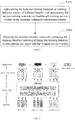
- FIG. 3 is a schematic diagram of a semantic vector representation according to some embodiments of the disclosure.
- clicked titles, searched logs, and weekly reports are passing through the input layer, the encoding layer, and the aggregating layer.
- the output layer after aggregation, outputs the semantic vectors that are represented by codes.
- the social networks are coded based on the interests and idea similar to other interests that are socially connected to the interests. For example, a user who likes games is in social relation with other users who also like games. Encoding is performed on the basis of the determined semantic vectors to obtain encoding vectors.
- the following embodiments of the disclosure will explain the process of obtaining the training encoding vectors by aggregating the social networks into the training semantic vectors.
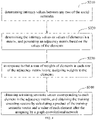
- FIG. 4 is a flowchart of a method for determining training encoding vectors according to some embodiments of the disclosure. As illustrated in FIG. 4 , the method further includes the following.
- the social networks may be social situations among the users, such as interaction situations among the users.
- the intimacy values between any two of the users may be calculated according to the intimacy values between any two of the social networks, and the intimacy value in the disclosure may also be referred to as intimacy.
- the range of the intimacy value can be (0 ⁇ 1.0).
- score (sigmoid (the number of recent communication days) + sigmoid (the number of recent communication times)) / 2.0.
- the intimacy values are determined as values of elements in a matrix, and an adjacency matrix is generated based on the values of the elements.
- each row represents a user
- each column represents other users socially connected to the user
- the intimacy values are determined as values of elements in the matrix
- the adjacency matrix is generated based on the values of the elements and represented by A.
- weights are assigned to the elements.
- a weight assigned to each of elements arranged diagonally in the adjacency matrix is greater than weights assigned to other elements.
- a larger weight is assigned to each of elements arranged diagonally in the adjacency matrix, such as 5 to 10.0.
- the weight of the adjacency matrix is normalized by the following expression, so that the sum of weights of elements in each row is 1.
- i represents the row in the adjacency matrix
- j represents the column in the adjacency matrix
- ⁇ represents the adjacency matrix
- D ⁇ ii represents the intimacy value.
- ⁇ X represents the encoding vectors
- ⁇ represents the encoding vectors
- X represents the vector matrix.
- a training semantic vector corresponding to each element in the adjacency matrix is obtained, and the training encoding vectors are obtained by calculating a product of the training semantic vector and a value of each element after the assigning by a graph convolutional network.
- the training encoding vectors are determined by calculating the product of the training semantic vector and the value of each element after the assigning by the graph convolutional network.
- a larger weight is assigned to each of elements arranged diagonally in the adjacency matrix, to make the vector sum generated after the encoding more biased towards the user's information.
- the social relations are encoded, which solves the problem of cold start of the model, and even captures features without collected materials.
- the following embodiments will explain the process of obtaining the tag recommendation model by training the double-layer neural network structure using the training encoding vectors as inputs and the interest tags as outputs.
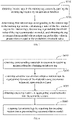
- FIG. 5 is a flowchart of a method for training a model according to some embodiments of the disclosure. As illustrated in FIG. 5 , the method includes the following.
- new training encoding vectors are obtained by inputting the training encoding vectors into a forward network.
- the disclosure adopts Relu as the activation function of the forward network, which is represented as ReLU( ⁇ X W 0 ), in which W° represents a fully-connected matrix of the neural network and parameters of the neural network, and the output new training encoding vectors are the training encoding vectors after aggregation.
- FIG. 6 is a schematic diagram of a neural network according to some embodiments of the disclosure.
- A, B, C, D, E, and F represent different users.
- User A is in a social relation with user B and user C.
- User B is in a social relation with user A, user E, and user D.
- User C is in a social relation with user A and user F.
- the training encoding vectors of user A after the first aggregation of the training encoding vectors of user A, the training encoding vectors of user B who is in a social relation with user A, and the training encoding vectors of user C who is in a social relation with user A, according to the social relation, the training encoding vectors of user A are obtained, and also the training encoding vectors of user B and the training encoding vectors of user C are obtained after the aggregation.
- training tag vectors are obtained by inputting the new training encoding vectors into a fully-connected network.
- the new training encoding vectors ReLU( ⁇ X W 0 ) is used as the input of a second fully-connected network layer, the expression is expressed as AV W 1 and the output training tag vectors are written as ⁇ ReLU( ⁇ X W 0 ) W 1 .
- the obtained training encoding vectors of user A after the aggregating, the obtained training encoding vectors of user B who is in a social relation with user A after the aggregating, and the obtained training encoding vectors of user C who is in a social relation with user A after the aggregating are input into the DNN fully-connected network W 1 , to obtain new user training encoding vectors.
- this disclosure marks ReLU( ⁇ X W 0 ) as V.
- the training encoding vectors of user A, user B, and user C are aggregated again, to obtain the training encoding vectors ReLU( ⁇ X W 0 ) as the inputs of the second layer neural network in the double-layer neural network, and then input into the fully-connected network of the neural network again.
- the expression is expressed as AV W 1 , and the tag vectors ⁇ ReLU( ⁇ X W 0 ) W 1 are obtained, that is, Y in FIG. 6 .
- the encoding vectors after the aggregating are multi-dimensional vectors, for example, a 100-dimensional vector that maps 100 tags, that is, each dimension represents a tag.
- the disclosure adopts a double-layer neural network structure, to increases the user materials through the user's social relations, and expand the collection range of user materials, thereby avoiding the problem of overfitting.
- the tag recommendation model is obtained by determining the training tag vectors as independent variables, and outputs as the interest tags.
- the training tag vectors are parsed by a function acting on the training tag vectors, and the training interest tags are output.
- the tag recommendation model is determined by calculating the relation between the training interest tag and the actual interest tag.
- FIG. 7 is a flowchart of a method for training a tag recommendation model according to some embodiments of the disclosure. As illustrated in FIG. 7 , the method further includes the following.
- interest tags in the training tag vectors are obtained by parsing the training tag vectors by an activation function.
- the activation function acting on the training tag vector is determined.
- the activation function may be a sigmoid function.
- the obtained training tag vectors are taken as independent variables of the activation function, and the training tag vectors are analyzed by the activation function to obtain multiple tags, i.e., training interest tags.
- first interest tags corresponding to the interest tags in the training tag vectors are determined, a ratio of the first interest tags to the interest tags is calculated, a probability threshold value of the tag recommendation model is determined, and the tag recommendation model whose output tag probability value is greater than or equal to the probability threshold value is obtained.
- a probability of a number of occurrence of each tag in the plurality of tags to a number of occurrence of all tags is calculated.
- a probability of a number of occurrence of first interest tags corresponding to the interest tags to a number of occurrence of all tags is calculated to determine a probability threshold value of the tag recommendation model, so that the tag recommendation model whose output tag probability value is greater than or equal to the probability threshold value is obtained.
- the disclosure also provides a method for obtaining a tag.
- FIG. 8 is a flowchart of a method for obtaining a tag according to some embodiments of the disclosure. As illustrated in FIG. 8 , the method further includes the following blocks.
- corresponding materials are obtained in response to receiving an instruction for obtaining an interest tag.
- the materials corresponding to the instruction is obtained.
- the materials include behavior materials and service materials.
- semantic vectors that include interest tags are obtained by representing features of the materials using a semantic enhanced representation frame.
- the semantic enhanced representation frame is used to represent the obtained behavior materials and service materials, to obtain behavior vectors and service vectors including the interest tags.
- encoding vectors are obtained by aggregating social networks into the semantic vectors.
- the behavior vectors and the service vectors are fused according to the method provided in the above embodiments, and the graph convolution network is used to encode the semantic vectors that are in social relation with each other.
- the obtained semantic vectors are integrated into the semantic vectors through the obtained adjacency matrix to obtain the encoding vectors.
- the interest tags are obtained by inputting the encoding vectors into a pre-trained tag recommendation model.
- the obtained encoding vectors are input into the trained tag recommendation model, and the tag recommendation model outputs the interest tags. In this way, the user's interest tags are obtained.
- the user's interest tags can be accurately obtained, so that relevant materials can be recommended accurately.
- FIG. 9 is a flowchart of a method for using a tag recommendation model according to some embodiments of the disclosure. As illustrated in FIG. 9 , the method further includes the following.
- new encoding vectors are obtained by inputting the encoding vectors into a forward network in the tag recommendation model.
- the encoding vectors are obtained according to the method for determining the training encoding vectors, and the encoding vectors are input into the forward network in the tag recommendation model, so that the new encoding vectors are obtained through the fully-connected network of the current layer of the model.
- tag vectors are obtained by inputting the new encoding vectors into a fully-connected network.
- the new encoding vectors are input into the fully-connected network of the second layer in the tag recommendation model to obtain the tag vectors.
- the tag vectors include features of the user, such as deep learning, architecture technology, cloud computing, and natural language processing.
- the tag vectors are parsed, and the interest tags are output based on a probability threshold value of the tag recommendation model.
- the tag vectors are parsed by using sigmoid as the activation function.
- the interest tags corresponding to the features are obtained from the features in the tag vectors, and the interest tags of the user are determined from the obtained interest tags.
- multiple features can correspond to one interest tag.
- features such as text classification, TF-IDF and ONE-HOT can all correspond to the tag of "natural language processing".
- the following embodiments will explain the process of parsing the tag vectors, and outputting the interest tags based on the probability threshold value of the tag recommendation model.
- FIG. 10 is a flowchart of a method for obtaining a tag according to some embodiments of the disclosure. As illustrated in FIG. 10 , the method further includes the following.
- a plurality of tags are obtained by parsing the tag vectors based on an activation function in the tag recommendation model.
- the tag vectors are expressed as ⁇ ReLU( ⁇ X W 0 ) W 1 .
- Z represents the prediction interest tags, and the plurality of tags are obtained.
- tags whose occurrence probability is greater than or equal to the probability threshold value in the plurality of tags are determined as the interest tags.
- a probability of a number of occurrence of each interest tag in the plurality of interest tags to a number of occurrence of all interest tags is calculated, and the interest tag whose occurrence probability is greater than or equal to the probability threshold value is determined as the interest tag of the user.
- the tag whose prediction value is greater than 0.5 in the parsed dimension results is determined as the interest tag of the user.
- the method can be applied to a variety of different scenarios, especially for internal knowledge management, such as office scenarios of enterprises.
- the disclosure takes the office scenarios of enterprises as an example, but is not limited to this scene.
- Skills refer to knowledge classification systems, such as deep learning, architecture technology, cloud computing, and natural language processing.
- Services refer to products or projects that employees participate in, such as application A and application B.
- Pro professions also known as sequences, represent the roles of users.
- the professions can be specifically divided into Research and Development engineer (RD), Quality Assurance (QA), PM, operator (OP), and administrator.
- RD Research and Development engineer
- QA Quality Assurance
- PM Quality Assurance
- OP operator
- the object of the disclosure is to predict an accurate interest profile for each user, for example, the tags of user A are: path planning, map technology, and RD
- the method of the disclosure can also be applied to internal knowledge recommendation and product search to achieve the individual effect for different person and accurate search effect.
- the knowledge recommendation product with the help of the interest tags of the user profile, the user's preferences can be accurately learned, so that articles and videos of interest can be recommended to the user.
- interest tags can describe a wider range and better reflect personal preferences of the users, so the recommendation effect is better.
- the user is associated with product/item, when searching for the product/item, the structured information of relevant people can be directly returned, so that the user can obtain the information of relevant people more quickly, thereby reducing the search cost. Therefore, accurate user profile prediction is conducive to improving the experience of downstream products, such as recommendation and search.
- FIG. 11 is a schematic diagram of an apparatus for training a tag recommendation model according to some embodiments of the disclosure.
- the apparatus 100 may include an obtaining module 101, a processing module 102, and a training module 103.
- the obtaining module 101 is configured to collect training materials that include interest tags in response to receiving an instruction for collecting training materials.
- the processing module 102 is configured to obtain training semantic vectors that include the interest tags by representing features of the training materials using a semantic enhanced representation frame, and obtain training encoding vectors by aggregating social networks into the training semantic vectors.
- the training module 103 is configured to obtain a tag recommendation model by training a double-layer neural network structure using the training encoding vectors as inputs and the interest tags as outputs.
- the training materials include behavior training materials and service training materials.
- the processing module 102 is configured to: represent the behavior training materials as training behavior vectors of different lengths, and represent the service training materials as fixed-length training service vectors, in the semantic enhanced representation frame; and obtain the training semantic vectors by averaging the training behavior vectors and fusing the training behavior vectors that are averaged with the training service vectors.
- the processing module 102 is further configured to: determine intimacy values between any two of the social networks; determine the intimacy values as values of elements in a matrix, and generate an adjacency matrix based on the values of the elements; in response to that a sum of weights of elements in each row of the adjacency matrix is one, assign weights to the elements, wherein a weight assigned to each of elements arranged diagonally in the adjacency matrix is greater than weights assigned to other elements; and obtain a training semantic vector corresponding to each element in the adjacency matrix, and obtain a training semantic vector corresponding to each element in the adjacency matrix, and obtaining the training encoding vectors by calculating a product of the training semantic vector and a value of each element after the assigning by a graph convolutional network.
- the training module 103 is further configured to: obtain new training encoding vectors by inputting the training encoding vectors into a forward network; obtain training tag vectors by inputting the new training encoding vectors into a fully-connected network; and obtain the tag recommendation model by determining the training tag vectors as independent variables, and outputs as the interest tags.
- the training module 103 is further configured to: obtain interest tags in the training tag vectors by parsing the training tag vectors by an activation function; and determine first interest tags corresponding to the interest tags in the training tag vectors, calculate a ratio of the first interest tags to the interest tags, determine a probability threshold value of the tag recommendation model, and obtain the tag recommendation model whose output tag probability value is greater than or equal to the probability threshold value.
- FIG. 12 is a schematic diagram of an apparatus for obtaining a tag according to some embodiments of the disclosure.
- the apparatus 200 for obtaining a tag may include an obtaining module 201, a processing module 202, and a predicting module 203.
- the obtaining module 210 is configured to obtain corresponding materials in response to receiving an instruction for obtaining an interest tag.
- the processing module 202 is configured to obtain semantic vectors that include interest tags by representing features of the materials using a semantic enhanced representation frame, and obtain encoding vectors by aggregating social networks into the semantic vectors.
- the predicting module 203 is configured to obtain the interest tags by inputting the encoding vectors into a pre-trained tag recommendation model.
- the predicting module 203 is further configured to: obtain new encoding vectors by inputting the encoding vectors into a forward network in the tag recommendation model; obtain tag vectors by inputting the new encoding vectors into a fully-connected network; and parse the tag vectors, and output the interest tags based on a probability threshold value of the tag recommendation model.
- the predicting module 203 is further configured to: obtain a plurality of tags by parsing the tag vectors based on an activation function in the tag recommendation model; and determine tags whose occurrence probability is greater than or equal to the probability threshold value in the plurality of tags as the interest tags.
- the disclosure provides an electronic device, and a readable storage medium, and a computer program product.
- FIG. 13 is a block diagram of an example electronic device 300 used to implement the embodiments of the disclosure.
- Electronic devices are intended to represent various forms of digital computers, such as laptop computers, desktop computers, workbenches, personal digital assistants, servers, blade servers, mainframe computers, and other suitable computers.
- Electronic devices may also represent various forms of mobile devices, such as personal digital processing, cellular phones, smart phones, wearable devices, and other similar computing devices.
- the components shown here, their connections and relations, and their functions are merely examples, and are not intended to limit the implementation of the disclosure described and/or required herein.
- the electronic device 300 includes: a computing unit 301 performing various appropriate actions and processes based on computer programs stored in a read-only memory (ROM) 302 or computer programs loaded from the storage unit 308 to a random access memory (RAM) 303.
- ROM read-only memory
- RAM random access memory
- various programs and data required for the operation of the device 300 are stored.
- the computing unit 301, the ROM 302, and the RAM 303 are connected to each other through a bus 304.
- An input/output (I/O) interface 305 is also connected to the bus 304.
- Components in the device 300 are connected to the I/O interface 305, including: an inputting unit 306, such as a keyboard, a mouse; an outputting unit 307, such as various types of displays, speakers; a storage unit 308, such as a disk, an optical disk; and a communication unit 309, such as network cards, modems, and wireless communication transceivers.
- the communication unit 309 allows the device 300 to exchange information/data with other devices through a computer network such as the Internet and/or various telecommunication networks.
- the computing unit 301 may be various general-purpose and/or dedicated processing components with processing and computing capabilities. Some examples of computing unit 301 include, but are not limited to, a CPU, a graphics processing unit (GPU), various dedicated AI computing chips, various computing units that run machine learning model algorithms, and a digital signal processor (DSP), and any appropriate processor, controller and microcontroller.
- the computing unit 301 executes the various methods and processes described above, such as the method for training a tag recommendation model and a method for obtaining a tag.
- the above method may be implemented as a computer software program, which is tangibly contained in a machine-readable medium, such as the storage unit 308.
- part or all of the computer program may be loaded and/or installed on the device 300 via the ROM 302 and/or the communication unit 309.
- the computer program When the computer program is loaded on the RAM 303 and executed by the computing unit 301, one or more steps of the methods described above may be executed.
- the computing unit 301 may be configured to perform the method in any other suitable manner (for example, by means of firmware).
- Various implementations of the systems and techniques described above may be implemented by a digital electronic circuit system, an integrated circuit system, Field Programmable Gate Arrays (FPGAs), Application Specific Integrated Circuits (ASICs), Application Specific Standard Products (ASSPs), System on Chip (SOCs), Load programmable logic devices (CPLDs), computer hardware, firmware, software, and/or a combination thereof.
- FPGAs Field Programmable Gate Arrays
- ASICs Application Specific Integrated Circuits
- ASSPs Application Specific Standard Products
- SOCs System on Chip
- CPLDs Load programmable logic devices
- programmable system including at least one programmable processor, which may be a dedicated or general programmable processor for receiving data and instructions from the storage system, at least one input device and at least one output device, and transmitting the data and instructions to the storage system, the at least one input device and the at least one output device.
- programmable processor which may be a dedicated or general programmable processor for receiving data and instructions from the storage system, at least one input device and at least one output device, and transmitting the data and instructions to the storage system, the at least one input device and the at least one output device.
- the program code configured to implement the method of the disclosure may be written in any combination of one or more programming languages. These program codes may be provided to the processors or controllers of general-purpose computers, dedicated computers, or other programmable data processing devices, so that the program codes, when executed by the processors or controllers, enable the functions/operations specified in the flowchart and/or block diagram to be implemented.
- the program code may be executed entirely on the machine, partly executed on the machine, partly executed on the machine and partly executed on the remote machine as an independent software package, or entirely executed on the remote machine or server.
- a machine-readable medium may be a tangible medium that may contain or store a program for use by or in combination with an instruction execution system, apparatus, or device.
- the machine-readable medium may be a machine-readable signal medium or a machine-readable storage medium.
- a machine-readable medium may include, but is not limited to, an electronic, magnetic, optical, electromagnetic, infrared, or semiconductor system, apparatus, or device, or any suitable combination of the foregoing.
- machine-readable storage medium include electrical connections based on one or more wires, portable computer disks, hard disks, random access memories (RAM), read-only memories (ROM), electrically programmable read-only-memory (EPROM), flash memory, fiber optics, compact disc read-only memories (CD-ROM), optical storage devices, magnetic storage devices, or any suitable combination of the foregoing.
- RAM random access memories
- ROM read-only memories
- EPROM electrically programmable read-only-memory
- flash memory fiber optics
- CD-ROM compact disc read-only memories
- optical storage devices magnetic storage devices, or any suitable combination of the foregoing.
- the systems and techniques described herein may be implemented on a computer having a display device (e.g., a Cathode Ray Tube (CRT) or a Liquid Crystal Display (LCD) monitor for displaying information to a user); and a keyboard and pointing device (such as a mouse or trackball) through which the user can provide input to the computer.
- a display device e.g., a Cathode Ray Tube (CRT) or a Liquid Crystal Display (LCD) monitor for displaying information to a user
- LCD Liquid Crystal Display
- keyboard and pointing device such as a mouse or trackball
- Other kinds of devices may also be used to provide interaction with the user.
- the feedback provided to the user may be any form of sensory feedback (e.g., visual feedback, auditory feedback, or haptic feedback), and the input from the user may be received in any form (including acoustic input, voice input, or tactile input).
- the systems and technologies described herein can be implemented in a computing system that includes background components (for example, a data server), or a computing system that includes middleware components (for example, an application server), or a computing system that includes front-end components (for example, a user computer with a graphical user interface or a web browser, through which the user can interact with the implementation of the systems and technologies described herein), or include such background components, intermediate computing components, or any combination of front-end components.
- the components of the system may be interconnected by any form or medium of digital data communication (e.g., a communication network). Examples of communication networks include: local area network (LAN), wide area network (WAN), and the Internet.
- the computer system may include a client and a server.
- the client and server are generally remote from each other and interacting through a communication network.
- the client-server relation is generated by computer programs running on the respective computers and having a client-server relation with each other.
- the server can be a cloud server, a server of a distributed system, or a server combined with a block-chain.
Landscapes
- Engineering & Computer Science (AREA)
- Theoretical Computer Science (AREA)
- Physics & Mathematics (AREA)
- General Physics & Mathematics (AREA)
- General Engineering & Computer Science (AREA)
- Data Mining & Analysis (AREA)
- Artificial Intelligence (AREA)
- Business, Economics & Management (AREA)
- Evolutionary Computation (AREA)
- General Health & Medical Sciences (AREA)
- Health & Medical Sciences (AREA)
- Computational Linguistics (AREA)
- Life Sciences & Earth Sciences (AREA)
- Strategic Management (AREA)
- Computing Systems (AREA)
- Software Systems (AREA)
- Mathematical Physics (AREA)
- Development Economics (AREA)
- Finance (AREA)
- Accounting & Taxation (AREA)
- Computer Vision & Pattern Recognition (AREA)
- Entrepreneurship & Innovation (AREA)
- Biomedical Technology (AREA)
- Biophysics (AREA)
- Molecular Biology (AREA)
- Economics (AREA)
- Marketing (AREA)
- General Business, Economics & Management (AREA)
- Evolutionary Biology (AREA)
- Bioinformatics & Computational Biology (AREA)
- Bioinformatics & Cheminformatics (AREA)
- Audiology, Speech & Language Pathology (AREA)
- Databases & Information Systems (AREA)
- Game Theory and Decision Science (AREA)
- Human Resources & Organizations (AREA)
- Operations Research (AREA)
- Quality & Reliability (AREA)
- Tourism & Hospitality (AREA)
- Medical Informatics (AREA)
- Multimedia (AREA)
Applications Claiming Priority (1)
| Application Number | Priority Date | Filing Date | Title |
|---|---|---|---|
| CN202111446672.1A CN114169418B (zh) | 2021-11-30 | 2021-11-30 | 标签推荐模型训练方法及装置、标签获取方法及装置 |
Publications (2)
| Publication Number | Publication Date |
|---|---|
| EP4116884A2 true EP4116884A2 (fr) | 2023-01-11 |
| EP4116884A3 EP4116884A3 (fr) | 2023-05-24 |
Family
ID=80481939
Family Applications (1)
| Application Number | Title | Priority Date | Filing Date |
|---|---|---|---|
| EP22208688.6A Withdrawn EP4116884A3 (fr) | 2021-11-30 | 2022-11-22 | Procédé et appareil d'apprentissage de modèle de recommandation d'étiquette, et procédé et appareil d'obtention d'étiquette |
Country Status (5)
| Country | Link |
|---|---|
| US (1) | US20230085599A1 (fr) |
| EP (1) | EP4116884A3 (fr) |
| JP (1) | JP7454630B2 (fr) |
| KR (1) | KR20220166761A (fr) |
| CN (1) | CN114169418B (fr) |
Cited By (1)
| Publication number | Priority date | Publication date | Assignee | Title |
|---|---|---|---|---|
| CN118822699A (zh) * | 2024-09-19 | 2024-10-22 | 温州城市一卡通服务有限公司 | 基于大数据的积分商城订单管理方法及系统 |
Families Citing this family (6)
| Publication number | Priority date | Publication date | Assignee | Title |
|---|---|---|---|---|
| CN114840745B (zh) * | 2022-03-30 | 2024-10-15 | 达观数据有限公司 | 一种基于图表征学习和深度语义匹配模型的个性化推荐方法及系统 |
| CN116186434A (zh) * | 2023-03-14 | 2023-05-30 | 北京有竹居网络技术有限公司 | 用于生成标签集合的方法、装置、设备和存储介质 |
| CN116486195B (zh) * | 2023-03-22 | 2024-04-16 | 北京百度网讯科技有限公司 | 视频推荐模型的训练方法、视频推荐方法和装置 |
| CN116756411A (zh) * | 2023-05-10 | 2023-09-15 | 支付宝(杭州)信息技术有限公司 | 内容项的推荐方法、装置、设备以及存储介质 |
| CN120654194B (zh) * | 2025-06-17 | 2026-03-17 | 北京智信互联科技有限公司 | 一种可实时反馈并影响元素标签的控制方法与系统 |
| CN120407952B (zh) * | 2025-07-07 | 2025-09-26 | 浪潮通用软件有限公司 | 一种跨模态内容推荐方法、装置、设备、介质及产品 |
Family Cites Families (17)
| Publication number | Priority date | Publication date | Assignee | Title |
|---|---|---|---|---|
| US20120084657A1 (en) * | 2010-09-30 | 2012-04-05 | Yahoo! Inc. | Providing content to a user from multiple sources based on interest tag(s) that are included in an interest cloud |
| CN102867016A (zh) * | 2012-07-18 | 2013-01-09 | 北京开心人信息技术有限公司 | 一种基于标签的社交网络用户兴趣挖掘方法与装置 |
| CN104021233B (zh) * | 2014-06-30 | 2017-02-15 | 电子科技大学 | 一种基于社区发现的社交网络好友推荐方法 |
| CN105260410A (zh) * | 2015-09-22 | 2016-01-20 | 天津大学 | 基于亲密度和影响力的微博社交兴趣圈挖掘方法及其装置 |
| CN105844508B (zh) * | 2016-03-22 | 2020-04-17 | 天津中科智能识别产业技术研究院有限公司 | 一种基于动态周期神经网络的商品推荐方法 |
| CN108268556A (zh) * | 2017-01-03 | 2018-07-10 | 南宁富桂精密工业有限公司 | 信息推荐方法及信息推送端 |
| JP6794921B2 (ja) * | 2017-05-01 | 2020-12-02 | トヨタ自動車株式会社 | 興味判定装置、興味判定方法、及びプログラム |
| CN110162690B (zh) * | 2018-10-23 | 2023-04-18 | 腾讯科技(深圳)有限公司 | 确定用户对物品的兴趣度的方法与装置、设备和存储介质 |
| US20210150565A1 (en) * | 2019-11-19 | 2021-05-20 | Affinio Inc. | Method and apparatus for directing acquisition of information in a social network |
| CN112825076B (zh) * | 2019-11-20 | 2024-03-01 | 北京搜狗科技发展有限公司 | 一种信息推荐方法、装置和电子设备 |
| CN111460302B (zh) * | 2020-03-31 | 2023-08-08 | 拉扎斯网络科技(上海)有限公司 | 数据处理方法、装置、电子设备及计算机可读存储介质 |
| CN111260493A (zh) * | 2020-04-27 | 2020-06-09 | 深圳市爱聊科技有限公司 | 基于亲密度的用户交友分组方法、电子装置及存储介质 |
| CN112084427A (zh) * | 2020-09-15 | 2020-12-15 | 辽宁工程技术大学 | 一种基于图神经网络的兴趣点推荐方法 |
| CN112559749B (zh) * | 2020-12-18 | 2024-04-09 | 深圳赛安特技术服务有限公司 | 在线教育师生智能匹配方法、装置及存储介质 |
| CN113434762A (zh) * | 2021-06-28 | 2021-09-24 | 平安银行股份有限公司 | 基于用户信息的关联推送方法、装置、设备及存储介质 |
| CN113626704A (zh) * | 2021-08-10 | 2021-11-09 | 平安国际智慧城市科技股份有限公司 | 基于word2vec模型的推荐信息方法、装置及设备 |
| CN114329013B (zh) * | 2021-09-29 | 2025-08-19 | 腾讯科技(深圳)有限公司 | 一种数据处理方法、设备以及计算机可读存储介质 |
-
2021
- 2021-11-30 CN CN202111446672.1A patent/CN114169418B/zh active Active
-
2022
- 2022-11-21 US US18/057,560 patent/US20230085599A1/en active Pending
- 2022-11-22 EP EP22208688.6A patent/EP4116884A3/fr not_active Withdrawn
- 2022-11-30 JP JP2022192347A patent/JP7454630B2/ja active Active
- 2022-11-30 KR KR1020220163970A patent/KR20220166761A/ko active Pending
Cited By (1)
| Publication number | Priority date | Publication date | Assignee | Title |
|---|---|---|---|---|
| CN118822699A (zh) * | 2024-09-19 | 2024-10-22 | 温州城市一卡通服务有限公司 | 基于大数据的积分商城订单管理方法及系统 |
Also Published As
| Publication number | Publication date |
|---|---|
| US20230085599A1 (en) | 2023-03-16 |
| KR20220166761A (ko) | 2022-12-19 |
| CN114169418A (zh) | 2022-03-11 |
| EP4116884A3 (fr) | 2023-05-24 |
| JP7454630B2 (ja) | 2024-03-22 |
| JP2023025147A (ja) | 2023-02-21 |
| CN114169418B (zh) | 2023-12-01 |
Similar Documents
| Publication | Publication Date | Title |
|---|---|---|
| EP4116884A2 (fr) | Procédé et appareil d'apprentissage de modèle de recommandation d'étiquette, et procédé et appareil d'obtention d'étiquette | |
| US20240346059A1 (en) | System for determining and optimizing for relevance in match-making systems | |
| US20220415195A1 (en) | Method for training course recommendation model, method for course recommendation, and apparatus | |
| US8719192B2 (en) | Transfer of learning for query classification | |
| US10095782B2 (en) | Summarization of short comments | |
| US10147037B1 (en) | Method and system for determining a level of popularity of submission content, prior to publicizing the submission content with a question and answer support system | |
| CN104484815B (zh) | 基于模糊本体面向产品方面的情感分析方法及系统 | |
| CN112733042A (zh) | 推荐信息的生成方法、相关装置及计算机程序产品 | |
| CN117150000B (zh) | 一种投标书的生成方法、装置、设备及存储介质 | |
| CN112905885B (zh) | 向用户推荐资源的方法、装置、设备、介质和程序产品 | |
| CN113392920B (zh) | 生成作弊预测模型的方法、装置、设备、介质及程序产品 | |
| CN112560461A (zh) | 新闻线索的生成方法、装置、电子设备及存储介质 | |
| CN114912009B (zh) | 用户画像的生成方法、装置、电子设备和计算机程序介质 | |
| CN111104590A (zh) | 信息推荐方法、装置、介质及电子设备 | |
| CN113469752A (zh) | 内容推荐方法、装置、存储介质及电子设备 | |
| CN111444338B (zh) | 文本处理、装置、存储介质及设备 | |
| CN115203570A (zh) | 预测模型的训练方法、专家推荐匹配方法、装置以及介质 | |
| KR102458510B1 (ko) | 실시간 보완 가능한 마케팅 시스템 | |
| US10394804B1 (en) | Method and system for increasing internet traffic to a question and answer customer support system | |
| CN117573973A (zh) | 资源推荐方法、装置、电子设备以及存储介质 | |
| US20260038002A1 (en) | Method, apparatus, and electronic device for generating user interest features | |
| US10853820B2 (en) | Method and apparatus for recommending topic-cohesive and interactive implicit communities in social customer relationship management | |
| CN117421471A (zh) | 多样性感知模型训练方法、推荐排序方法及装置 | |
| CN115858923A (zh) | 一种挽留弹窗的生成方法、装置、设备以及存储介质 | |
| CN115080845A (zh) | 推荐理由的生成方法、装置、电子设备及可读存储介质 |
Legal Events
| Date | Code | Title | Description |
|---|---|---|---|
| PUAI | Public reference made under article 153(3) epc to a published international application that has entered the european phase |
Free format text: ORIGINAL CODE: 0009012 |
|
| STAA | Information on the status of an ep patent application or granted ep patent |
Free format text: STATUS: THE APPLICATION HAS BEEN PUBLISHED |
|
| AK | Designated contracting states |
Kind code of ref document: A2 Designated state(s): AL AT BE BG CH CY CZ DE DK EE ES FI FR GB GR HR HU IE IS IT LI LT LU LV MC ME MK MT NL NO PL PT RO RS SE SI SK SM TR |
|
| REG | Reference to a national code |
Ref country code: DE Ref legal event code: R079 Free format text: PREVIOUS MAIN CLASS: G06N0003040000 Ipc: G06N0005022000 |
|
| PUAL | Search report despatched |
Free format text: ORIGINAL CODE: 0009013 |
|
| AK | Designated contracting states |
Kind code of ref document: A3 Designated state(s): AL AT BE BG CH CY CZ DE DK EE ES FI FR GB GR HR HU IE IS IT LI LT LU LV MC ME MK MT NL NO PL PT RO RS SE SI SK SM TR |
|
| RIC1 | Information provided on ipc code assigned before grant |
Ipc: G06N 3/048 20230101ALN20230420BHEP Ipc: G06N 3/0464 20230101ALN20230420BHEP Ipc: G06N 5/04 20230101ALN20230420BHEP Ipc: G06N 3/09 20230101ALI20230420BHEP Ipc: G06N 5/022 20230101AFI20230420BHEP |
|
| STAA | Information on the status of an ep patent application or granted ep patent |
Free format text: STATUS: THE APPLICATION IS DEEMED TO BE WITHDRAWN |
|
| 18D | Application deemed to be withdrawn |
Effective date: 20231125 |