EP4116852B1 - Verfahren und vorrichtung zur überwachung des verhaltens von genehmigungskontrollierten versteckten sensiblen anwendungen bei laufzeit - Google Patents
Verfahren und vorrichtung zur überwachung des verhaltens von genehmigungskontrollierten versteckten sensiblen anwendungen bei laufzeit Download PDFInfo
- Publication number
- EP4116852B1 EP4116852B1 EP22192899.7A EP22192899A EP4116852B1 EP 4116852 B1 EP4116852 B1 EP 4116852B1 EP 22192899 A EP22192899 A EP 22192899A EP 4116852 B1 EP4116852 B1 EP 4116852B1
- Authority
- EP
- European Patent Office
- Prior art keywords
- application
- access
- resource
- permission
- monitor
- Prior art date
- Legal status (The legal status is an assumption and is not a legal conclusion. Google has not performed a legal analysis and makes no representation as to the accuracy of the status listed.)
- Active
Links
Images




Classifications
-
- G—PHYSICS
- G06—COMPUTING OR CALCULATING; COUNTING
- G06F—ELECTRIC DIGITAL DATA PROCESSING
- G06F21/00—Security arrangements for protecting computers, components thereof, programs or data against unauthorised activity
- G06F21/50—Monitoring users, programs or devices to maintain the integrity of platforms, e.g. of processors, firmware or operating systems
- G06F21/55—Detecting local intrusion or implementing counter-measures
-
- G—PHYSICS
- G06—COMPUTING OR CALCULATING; COUNTING
- G06F—ELECTRIC DIGITAL DATA PROCESSING
- G06F21/00—Security arrangements for protecting computers, components thereof, programs or data against unauthorised activity
- G06F21/30—Authentication, i.e. establishing the identity or authorisation of security principals
- G06F21/44—Program or device authentication
-
- G—PHYSICS
- G06—COMPUTING OR CALCULATING; COUNTING
- G06F—ELECTRIC DIGITAL DATA PROCESSING
- G06F21/00—Security arrangements for protecting computers, components thereof, programs or data against unauthorised activity
- G06F21/50—Monitoring users, programs or devices to maintain the integrity of platforms, e.g. of processors, firmware or operating systems
- G06F21/57—Certifying or maintaining trusted computer platforms, e.g. secure boots or power-downs, version controls, system software checks, secure updates or assessing vulnerabilities
- G06F21/577—Assessing vulnerabilities and evaluating computer system security
-
- G—PHYSICS
- G06—COMPUTING OR CALCULATING; COUNTING
- G06F—ELECTRIC DIGITAL DATA PROCESSING
- G06F21/00—Security arrangements for protecting computers, components thereof, programs or data against unauthorised activity
- G06F21/60—Protecting data
-
- G—PHYSICS
- G06—COMPUTING OR CALCULATING; COUNTING
- G06F—ELECTRIC DIGITAL DATA PROCESSING
- G06F2221/00—Indexing scheme relating to security arrangements for protecting computers, components thereof, programs or data against unauthorised activity
- G06F2221/21—Indexing scheme relating to G06F21/00 and subgroups addressing additional information or applications relating to security arrangements for protecting computers, components thereof, programs or data against unauthorised activity
- G06F2221/2141—Access rights, e.g. capability lists, access control lists, access tables, access matrices
Definitions
- Electronic devices running applications manage permissions for applications to access the electronic devices' resources, such as the devices' cameras or microphones.
- the management of such permissions may be defined according to a permission set at the time of the application's installation on the electronic device or at a subsequent runtime.
- the initially set permission may create opportunities for the application to access resources under circumstances unforeseen or undesired by the user at the time the permission was initially set by a user.
- a user of a mobile terminal may, at the time of installing a social media application, grant the application permission to access the mobile terminal's microphone, on the assumption that the application would only access the microphone when the social media application was open and actively being used by the user.
- Patent document US2012/255021 represents relevant prior art.
- various functions described below can be implemented or supported by one or more computer programs, each of which is formed from computer readable program code and embodied in a computer readable medium.
- application and “program” refer to one or more computer programs, software components, sets of instructions, procedures, functions, objects, classes, instances, related data, or a portion thereof adapted for implementation in a suitable computer readable program code.
- computer readable program code includes any type of computer code, including source code, object code, and executable code.
- FIGURE 1 illustrates an example of a device for implementing monitoring of suspicious application access according to this disclosure.
- the embodiment of device 100 illustrated in FIGURE 1 is for illustration only, and other configurations are possible. However, suitable devices come in a wide variety of configurations, and FIGURE 1 does not limit the scope of this disclosure to any particular implementation of a device.
- Applications 162 can include games, social media applications, applications for geotagging photographs and other items of digital content, virtual reality (VR) applications, augmented reality (AR) applications, operating systems, device security (e.g., anti-theft and device tracking) applications or any other applications which access resources of device 100, the resources of device 100 including, without limitation, speaker 130, microphone 120, input/output devices 150, and additional resources 180. Further, applications 162 can include applications containing program code that when executed by a processor, such as main processor 140, cause the processor to perform steps of methods for monitoring suspicious application access according to certain embodiments of the present disclosure.
- a processor such as main processor 140
- the communication unit 110 can receive an incoming RF signal, for example, a near field communication signal such as a Bluetooth or Wi-Fi signal.
- the communication unit 110 can down-convert the incoming RF signal to generate an intermediate frequency (IF) or baseband signal.
- IF or baseband signal is sent to the RX processing circuitry 125, which generates a processed baseband signal by filtering, decoding, or digitizing the baseband or IF signal.
- the RX processing circuitry 125 transmits the processed baseband signal to the speaker 130 (such as for voice data) or to the main processor 140 for further processing (such as for web browsing data, online gameplay data, notification data, or other message data).
- the TX processing circuitry 115 receives analog or digital voice data from the microphone 120 or other outgoing baseband data (such as web data, e-mail, or interactive video game data) from the main processor 140.
- the TX processing circuitry 115 encodes, multiplexes, or digitizes the outgoing baseband data to generate a processed baseband or IF signal.
- the communication unit 110 receives the outgoing processed baseband or IF signal from the TX processing circuitry 115 and up-converts the baseband or IF signal to an RF signal for transmission.
- the main processor 140 can include one or more processors or other processing devices and execute the OS program 161 stored in the memory 160 in order to control the overall operation of the device 100.
- the main processor 140 could control the reception of forward channel signals and the transmission of reverse channel signals by the communication unit 110, the RX processing circuitry 125, and the TX processing circuitry 115 in accordance with well-known principles.
- the main processor 140 includes at least one microprocessor or microcontroller.
- the main processor 140 is also capable of executing other processes and programs resident in the memory 160.
- the main processor 140 can move data into or out of the memory 160 as required by an executing process.
- the main processor 140 is configured to execute the applications 162 based on the OS program 161 or in response to inputs from a user or applications 162.
- Applications 162 can include applications specifically developed for the platform of device 100, or legacy applications developed for earlier platforms.
- main processor 140 can be manufactured to include program logic for implementing methods for monitoring suspicious application access according to certain embodiments of the present disclosure.
- the main processor 140 is also coupled to the I/O interface 145, which provides the device 100 with the ability to connect to other devices such as laptop computers and handheld computers.
- the I/O interface 145 is the communication path between these accessories and the main processor 140.
- Input/output device(s) 150 can include one or more screens, which can be a liquid crystal display, light-emitting diode (LED) display, an optical LED (OLED), an active matrix OLED (AMOLED), or other screens capable of rendering graphics.
- screens can be a liquid crystal display, light-emitting diode (LED) display, an optical LED (OLED), an active matrix OLED (AMOLED), or other screens capable of rendering graphics.
- the communication unit 110, the TX processing circuitry 115, the microphone 120, the RX processing circuitry 125, the speaker 130, the main processor 140, the I/O IF 145, the input/output device(s) 150, the memory 160, the GPU, and the additional resources are described as separate units in the device 100 in FIG. 1 , it is to be understood that the device 100 may be implemented with a form into which at least two of the communication unit 110, the TX processing circuitry 115, the microphone 120, the RX processing circuitry 125, the speaker 130, the main processor 140, the I/O IF 145, the input/output device(s) 150, the memory 160, the GPU, and the additional resources are incorporated.
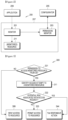
- a device performs an initial determination of whether an application running on the device has been granted permission to access a resource on the device, such as a phone book, location information, camera, etc.
- operation 301 is performed by the operating system of the device at runtime for the application, and the determination is based on permissions set by the user at the time the application was installed, or in response to a post-installation request by the application.
- the determination performed in operation 301 is based on permissions updated by the user through a "settings" menu at some time after the application was installed. If, at operation 301, it is determined that the application does not have a pre-set permission to access the monitored resource, the method proceeds to operation 399, and the application is denied access to the monitored resource.
- the method proceeds to operation 311.
- the application attempting to access the monitored resource is identified.
- operation 311 is performed by a monitor operating on the device (such as monitor 201 shown in FIGURE 2 ).
- the monitor is implemented as a code snippet on each of the critical access paths to the monitored resource.
- the identification of the application at operation 311 further comprises collecting information, such as a unique user ID (UID) or process ID (PID) for the application, permission information related to the application, a time stamp associated with the access attempt, or information regarding the monitored resource's and/or application's access history.
- UID unique user ID
- PID process ID
- operation 322 is performed by a permission monitor (for example, permission monitor 203 in FIGURE 2 ) using information generated or collected by the monitor as part of operation 311.
- the evaluation of the potential risk can be based on, without limitation, a unique user ID (UID) or process ID (PID) for the application, permission information related to the application, a time stamp associated with the access attempt, information regarding the monitored resource's and/or application's access history or other contextual information regarding the access attempt.
- UID unique user ID
- PID process ID
- the method proceeds to operation 333, wherein the access request is granted and the application is permitted to access the monitored resource.
- FIGURE 3 illustrates operations of one exemplary method for monitoring suspicious application access on an electronic device according to this disclosure
- operation 301 may be removed from the method in cases where the operating system on the device does not provide any mechanism for a user to revoke or adjust an application's permissions to access a resource apart from uninstalling and reinstalling the application.
- the operating system on the device does not provide any mechanism for a user to revoke or adjust an application's permissions to access a resource apart from uninstalling and reinstalling the application.
- steps in FIGURE 3 could overlap, occur in parallel, occur in a different order, or occur multiple times.
- monitor 401 is configured along the critical access path(s) between an application 455 and a monitored resource 466. According to certain embodiments, monitor 401 is one of a plurality of monitors running on a device along critical access paths between applications and monitored resources. Further, according to some embodiments, monitor 401 resides on the critical access path(s) between application 455 and a plurality of monitored resources 466. The present disclosure contemplates a wide range of mappings between application(s), monitor(s) and monitored resource(s).
- access detector 411 performs an initial query to determine whether monitoring application 455's access to monitored resource 466 has been enabled or disabled. For example, a user may be able to selectively enable and disable such monitoring through by adjusting settings through a GUI provided by a configurator, such as configurator 701 shown in FIGURE 7 .
- access detector 411 detects access attempts by application 455 to monitored resource 466. In some embodiments, the detection of access attempts is implemented by detecting the operation of processes of application 455 associated with monitored resource 466. According to some embodiments, when access detector 411 detects the operation of a process associated with monitored resource 466, access detector 411 routes the detected process to contextual information collector 422.
- contextual information collector 422 collects information indicating the context of the access attempt.
- information includes, without limitation, the identity of the application 455 (for example, the application's UID or PID) attempting to access to monitored resource 466, permission information related to the access, which according to some embodiments can be read from system information 477, and a time stamp for the access attempt.
- monitor 401 can permit application 455 to access monitored resource 466. According to certain embodiments, this permission is performed by returning the process associated with the access attempt which was detected by access detector 411 to the critical access path for the process. In this way, monitor 401 acts as a checkpoint along the critical access path between application 455 and monitored resource 466.
- local information processor 433 will, according to certain embodiments, notify communicator 444 and provide the collected contextual information regarding the access attempt and the determination by local information processor that the access attempt was suspicious. In response to receiving a notification from local information processor 433, communicator 444 will call permission monitor 488 to report the access attempt.
- FIGURE 4 illustrates operations of one example of a monitor included as part of a system for monitoring suspicious application access on an electronic device according to this disclosure
- monitor 401 may be configured to be "always on,” thereby eliminating the operation of determining by access detector 411 whether monitor 401 is enabled.
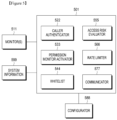
- permission monitor 501 is implemented as software, specifically as a system service launched by the device at boot time. Additionally, permission monitor is continuously running and able to accept calls and communications from monitor(s) 511. According to certain embodiments, permission monitor 501 is implemented as hardware, including as part of a system on a chip (SoC) system.
- SoC system on a chip
- UIDs having certain characteristics may be checked via a binder, such as "getCallingUid.” Where the UID has a value of less than 10,000, this indicates that the caller is an application pre-loaded onto the device, such as a monitor or an application associated with a monitor, and thus inherently more trustworthy than an application having a UID of 10,000 or greater.
- permission monitor activator 533 performs a determination as to whether permission monitoring of the application's access attempts to the given resource has been activated. To perform this determination, permission monitor activator 533 can read the system information 599 for the application to determine whether monitoring has been activated. In the non-limiting example of FIGURE 5 , system information 599 includes system properties information.
- whitelist 544 performs a further analysis of the access attempt based on the information provided to process monitor 501 as part of an authenticated call from monitor 511.
- whitelist 544 operates to allow the application to access the monitored resource if certain criteria are satisfied. Such criteria include whether the application seeking access to the monitored resource is a pre-loaded application or whether the application belongs to a predefined list of trusted applications.
- the predefined list of trusted applications is set according to a policy of the device manufacturer.
- the access attempt is further reviewed by access risk evaluator 555.
- access risk evaluator 555 operates as a process of permission monitor 501 to determine, based on the context and/or states of the application attempting access to a monitored resource, the potential risk of the access being requested. For example, access risk evaluator 555 can check whether the application has any threads running in the foreground of the device, whether the screen of the device is off or whether the screen or device itself is locked. In cases where access risk evaluator 555 determines the extent to which the context of the access request presents a potential risk. For example, access risk evaluator 555 can determine that an application's request to access the device's camera while the device itself is in a locked state presents a significant potential risk.
- rate limiter 566 operates to deny an application access to a monitored resource if the access attempt satisfies certain criteria. For example, rate limiter 566 can operate to deny or ignore an application's access attempt if the same type of access has been reported within a certain period of time. For example, rate limiter 566 can permit a social media application to occasionally access a device's location information, but to deny repeated accesses to this information, lest the application unwantedly operate as a tracker of a user's location.
- FIGURE 5 illustrates components of one example of a permission monitor included as part of a system for monitoring suspicious application access on an electronic device according to this disclosure
- whitelist 544 may be omitted or incorporated within access risk evaluator 555.
- FIGURE 6 illustrates, in flowchart form, operations performed by a permission monitor in a method 600 for monitoring suspicious application access according to this disclosure.
- method 600 begins with operation 605, wherein a permission monitor, such as permission monitor 501 shown in FIGURE 5 , receives, from a monitor (such as monitor 401 shown in FIGURE 4 ) a call reporting an application attempting to access one or more monitored resources.
- a permission monitor such as permission monitor 501 shown in FIGURE 5
- receives from a monitor (such as monitor 401 shown in FIGURE 4 ) a call reporting an application attempting to access one or more monitored resources.
- method 600 then proceeds to operation 610, in which a determination of whether the received call is authentic, or from an application "spoofing," or pretending to be, an application authorized to call the permission monitor, such as a monitor.
- the determination performed at operation 610 can be based on criteria, which depending on the operating system of the device, may be difficult to "spoof,” such as an application's unique ID (“UID”).
- UID application's unique ID
- Certain embodiments are possible, wherein authentication is performed based on a different indicia, such as a process ID (“PID”) associated with the call.
- PID process ID
- method 600 may proceed to operation 695, wherein the call to the permission monitor is ignored. According to some embodiments and depending on configuration, this results in the application being denied access to the resource.
- method 600 advances to operation 625, wherein a determination is performed as to whether the application attempting to access the monitored resource is a whitelisted application.
- method 600 advances to operation 695, wherein the call to the permission monitor is ignored. According to some embodiments and depending on configuration, this results in the application being denied access to the resource. If, at operation 625 it is determined that the application is a whitelisted application, method 600 proceeds to operation 630.
- method 600 proceeds to operation 635.
- a permission monitor or one or more components thereof performs rate limiting on the application.
- a permission monitor determines the time interval since the application last attempted to access the monitored resource, and if the time interval is less than a threshold value, causes the permission monitor to ignore the application's access attempt or otherwise denies the application's access attempt. By ignoring reports within a specified time period, the performance of a device may be optimized, in that processing and battery resources are not wasted generating redundant access reports for multiple instances of the same suspicious access attempt.
- method 600 proceeds to operation 645, wherein the permission monitor or one or more components thereof (such as communicator 577 shown in FIGURE 5 ) calls a configurator (such as configurator 701 shown in FIGURE 7 ) and sends the generated intent to the configurator.
- the generated intent is an explicit intent to be received only by a configurator.
- FIGURE 6 illustrates operations of one example of method for monitoring suspicious application access on an electronic device according to this disclosure
- various changes may be made to FIGURE 6 .
- the sequence of operations shown in FIGURE 6 may be reordered and steps added or omitted.
- operation 615 may, depending on embodiments, be omitted.
- operations 625, 630 and 635 may be performed in a different order than shown in FIGURE 6 .
- Numerous variations are possible.
- various steps in FIGURE 6 could overlap, occur in parallel, occur in a different order, or occur multiple times.
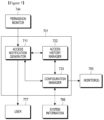
- FIGURE 7 illustrates, in block diagram format, an example of a configurator 701 included as part of a system for monitoring suspicious application access according to this disclosure.
- configuration information (including, without limitation, permission settings, rules, and monitor activation settings for the system for monitoring suspicious application access) is stored within system information 844 as a bitmap designated "Persist.app.permission.monitor.”
- system information 844 is configured such that, for each application, a flag is set, the flag indicating whether the application's attempt to access a particular resource is to be reported.
Landscapes
- Engineering & Computer Science (AREA)
- Computer Security & Cryptography (AREA)
- Theoretical Computer Science (AREA)
- Software Systems (AREA)
- Computer Hardware Design (AREA)
- General Engineering & Computer Science (AREA)
- Physics & Mathematics (AREA)
- General Physics & Mathematics (AREA)
- Computing Systems (AREA)
- Health & Medical Sciences (AREA)
- Bioethics (AREA)
- General Health & Medical Sciences (AREA)
- Storage Device Security (AREA)
- Telephone Function (AREA)
- Telephonic Communication Services (AREA)
Claims (10)
- Vorrichtung zur Überwachung eines Zugriffs auf Ressourcen der Vorrichtung, umfassend:eine Anzeige;einen Speicher zum Speichern von Anweisungen; undeinen oder mehrere Prozessoren, die dazu konfiguriert sind, die gespeicherten Anweisungen auszuführen zum:Erteilen einer Zugriffsgenehmigung für eine Ressource der Vorrichtung an eine Anwendung während einer Laufzeit der Anwendung nach einer Installation der Anwendung auf der Vorrichtung;Identifizieren eines Zugriffsversuchs durch die Anwendung für die Ressource, wobei die Identifizierung erfolgt, nachdem der Anwendung die Zugriffsgenehmigung für die Ressource der Vorrichtung während der Laufzeit der Anwendung nach der Installation der Anwendung auf der Vorrichtung erteilt wurde;auf der Grundlage der der Anwendung erteilten Zugriffsgenehmigung Bestimmen, dass der Zugriffsversuch mit einer verdächtigen Aktivität im Zusammenhang steht, indem der Zugriffsversuch von der Anwendung ausgewertet wird, die auf die Ressource der Vorrichtung zugreift; undauf der Grundlage des Bestimmens, dass der Zugriffsversuch mit der verdächtigen Aktivität in Zusammenhang steht, Anzeigen einer grafischen Benutzeroberfläche, GUI, einschließlich einer Benachrichtigung über den Zugriffsversuch, der mit der verdächtigen Aktivität im Zusammenhang steht, auf der Anzeige,auf der Grundlage einer Benutzereingabe Durchführen mindestens eines von Genehmigen des Zugriffs der Anwendung auf die Ressource oder Blockieren des Zugriffs der Anwendung auf die Ressource.
- Vorrichtung nach Anspruch 1, wobei der eine oder die mehreren Prozessoren dazu konfiguriert sind, die Anweisungen ferner auszuführen zum:auf Grundlage der der Anwendung erteilten Zugriffsgenehmigung Erhalten erster Informationen, die dem Zugriffsversuch zugeordnet sind; undBestimmen, dass der Zugriffsversuch mit der verdächtigen Aktivität in Zusammenhang steht, teilweise auf Grundlage der ersten Informationen,wobei die ersten Informationen mindestens einen von einem Zugriffsverlauf oder einem Betriebsstatus der Anwendung beinhalten.
- Vorrichtung nach Anspruch 1, wobei der eine oder die mehreren Prozessoren dazu konfiguriert sind, die Anweisungen ferner auszuführen zum:Überwachen eines Zugriffspfads zwischen der Ressource der Vorrichtung und der in der Vorrichtung installierten Anwendung; undauf Grundlage des Überwachens des Zugriffspfads zwischen der Ressource und der Anwendung Identifizieren des Zugriffsversuchs für die Ressource durch die Anwendung.
- Vorrichtung nach Anspruch 1, wobei der eine oder die mehreren Prozessoren dazu konfiguriert sind, die Anweisungen ferner auszuführen zum:
Identifizieren zweiter Informationen, die den Zugriffsversuch für die Ressource durch die Anwendung melden. - Vorrichtung nach Anspruch 4, wobei der eine oder die mehreren Prozessoren dazu konfiguriert sind, die Anweisungen ferner auszuführen zum:
Authentifizieren der zweiten Informationen, die den Zugriffsversuch melden. - Verfahren zum Überwachen eines Zugriffs auf Ressourcen einer Vorrichtung, umfassend:Erteilen einer Zugriffsgenehmigung für eine Ressource der Vorrichtung an eine Anwendung während einer Laufzeit der Anwendung nach einer Installation der Anwendung auf der Vorrichtung;Identifizieren eines Zugriffsversuchs durch die Anwendung für die Ressource, wobei die Identifizierung erfolgt, nachdem der Anwendung die Zugriffsgenehmigung für die Ressource der Vorrichtung während der Laufzeit der Anwendung nach der Installation der Anwendung auf der Vorrichtung erteilt wurde;auf der Grundlage der der Anwendung erteilten Zugriffsgenehmigung Bestimmen, dass der Zugriffsversuch mit einer verdächtigen Aktivität im Zusammenhang steht, indem der Zugriffsversuch von der Anwendung ausgewertet wird, die auf die Ressource der Vorrichtung zugreift;auf der Grundlage des Bestimmens, dass der Zugriffsversuch mit der verdächtigen Aktivität in Zusammenhang steht, Anzeigen einer grafischen Benutzeroberfläche, GUI, einschließlich einer Benachrichtigung über den Zugriffsversuch, der mit der verdächtigen Aktivität im Zusammenhang steht, auf der Anzeige der Vorrichtung, undauf der Grundlage einer Benutzereingabe Durchführen mindestens eines von Genehmigen des Zugriffs der Anwendung aufauf die Ressource oder Blockieren des Zugriffs der Anwendung auf die Ressource.
- Verfahren nach Anspruch 6, ferner umfassend:auf Grundlage der der Anwendung erteilten Zugriffsgenehmigung Erhalten erster Informationen, die dem Zugriffsversuch zugeordnet sind; undBestimmen, dass der Zugriffsversuch mit der verdächtigen Aktivität in Zusammenhang steht, teilweise auf Grundlage der ersten Informationen,wobei die ersten Informationen mindestens einen von einem Zugriffsverlauf oder einem Betriebsstatus der Anwendung beinhalten.
- Verfahren nach Anspruch 6, ferner umfassend:Überwachen eines Zugriffspfads zwischen der Ressource der Vorrichtung und der in der Vorrichtung installierten Anwendung; undauf Grundlage des Überwachens des Zugriffspfads zwischen der Ressource und der Anwendung Identifizieren des Zugriffsversuchs für die Ressource durch die Anwendung.
- Verfahren nach Anspruch 6, ferner umfassend:
Identifizieren zweiter Informationen, die den Zugriffsversuch für die Ressource durch die Anwendung melden. - Verfahren nach Anspruch 9, ferner umfassend:
Authentifizieren der zweiten Informationen, die den Zugriffsversuch melden.
Applications Claiming Priority (5)
| Application Number | Priority Date | Filing Date | Title |
|---|---|---|---|
| US201762537949P | 2017-07-27 | 2017-07-27 | |
| US15/870,619 US10713354B2 (en) | 2017-07-27 | 2018-01-12 | Methods and apparatus to monitor permission-controlled hidden sensitive application behavior at run-time |
| PCT/KR2018/008571 WO2019022573A1 (en) | 2017-07-27 | 2018-07-27 | METHODS AND APPARATUS FOR MONITORING AUTHORIZED MASKED SENSITIVE APPLICATION BEHAVIOR DURING EXECUTION |
| EP18839111.4A EP3610404B1 (de) | 2017-07-27 | 2018-07-27 | Verfahren und vorrichtung zur überwachung des verhaltens von genehmigungskontrollierten verstecktem sensiblen anwendungen bei laufzeit |
| EP21173418.1A EP3882800B1 (de) | 2017-07-27 | 2018-07-27 | Verfahren und vorrichtung zur überwachung des verhaltens von genehmigungskontrollierten versteckten sensiblen anwendungen bei laufzeit |
Related Parent Applications (2)
| Application Number | Title | Priority Date | Filing Date |
|---|---|---|---|
| EP21173418.1A Division EP3882800B1 (de) | 2017-07-27 | 2018-07-27 | Verfahren und vorrichtung zur überwachung des verhaltens von genehmigungskontrollierten versteckten sensiblen anwendungen bei laufzeit |
| EP18839111.4A Division EP3610404B1 (de) | 2017-07-27 | 2018-07-27 | Verfahren und vorrichtung zur überwachung des verhaltens von genehmigungskontrollierten verstecktem sensiblen anwendungen bei laufzeit |
Publications (3)
| Publication Number | Publication Date |
|---|---|
| EP4116852A1 EP4116852A1 (de) | 2023-01-11 |
| EP4116852B1 true EP4116852B1 (de) | 2025-04-09 |
| EP4116852C0 EP4116852C0 (de) | 2025-04-09 |
Family
ID=65038797
Family Applications (3)
| Application Number | Title | Priority Date | Filing Date |
|---|---|---|---|
| EP22192899.7A Active EP4116852B1 (de) | 2017-07-27 | 2018-07-27 | Verfahren und vorrichtung zur überwachung des verhaltens von genehmigungskontrollierten versteckten sensiblen anwendungen bei laufzeit |
| EP18839111.4A Active EP3610404B1 (de) | 2017-07-27 | 2018-07-27 | Verfahren und vorrichtung zur überwachung des verhaltens von genehmigungskontrollierten verstecktem sensiblen anwendungen bei laufzeit |
| EP21173418.1A Active EP3882800B1 (de) | 2017-07-27 | 2018-07-27 | Verfahren und vorrichtung zur überwachung des verhaltens von genehmigungskontrollierten versteckten sensiblen anwendungen bei laufzeit |
Family Applications After (2)
| Application Number | Title | Priority Date | Filing Date |
|---|---|---|---|
| EP18839111.4A Active EP3610404B1 (de) | 2017-07-27 | 2018-07-27 | Verfahren und vorrichtung zur überwachung des verhaltens von genehmigungskontrollierten verstecktem sensiblen anwendungen bei laufzeit |
| EP21173418.1A Active EP3882800B1 (de) | 2017-07-27 | 2018-07-27 | Verfahren und vorrichtung zur überwachung des verhaltens von genehmigungskontrollierten versteckten sensiblen anwendungen bei laufzeit |
Country Status (3)
| Country | Link |
|---|---|
| US (2) | US10713354B2 (de) |
| EP (3) | EP4116852B1 (de) |
| WO (1) | WO2019022573A1 (de) |
Families Citing this family (14)
| Publication number | Priority date | Publication date | Assignee | Title |
|---|---|---|---|---|
| US10853490B2 (en) | 2017-10-26 | 2020-12-01 | Futurewei Technologies, Inc. | Method and apparatus for managing hardware resource access in an electronic device |
| WO2019117920A1 (en) * | 2017-12-14 | 2019-06-20 | Hewlett-Packard Development Company, L.P. | Enabling access to capturing devices by basic input and output systems (bios) |
| JP7105640B2 (ja) * | 2018-07-10 | 2022-07-25 | キヤノン株式会社 | 画像処理装置、その制御方法、及びプログラム |
| US11297073B2 (en) | 2018-08-31 | 2022-04-05 | Sophos Limited | Forensic query of local event streams in an enterprise network |
| US20200104476A1 (en) * | 2018-09-28 | 2020-04-02 | Kromtech Alliance Corp. | Method for protecting a camera and a microphone from unauthorized access |
| CN111131613A (zh) * | 2019-12-25 | 2020-05-08 | 惠州Tcl移动通信有限公司 | 一种数据发送方法、装置、存储介质及移动终端 |
| US11539705B2 (en) | 2020-02-14 | 2022-12-27 | The Toronto-Dominion Bank | Systems and methods for controlling third-party access of protected data |
| US20220284128A1 (en) * | 2021-03-04 | 2022-09-08 | Ramesh Arumugam | Smartphone application data security module |
| US11921842B2 (en) * | 2021-06-14 | 2024-03-05 | Kyndryl, Inc. | Multifactor authorization on accessing hardware resources |
| CN116419057A (zh) * | 2021-12-28 | 2023-07-11 | 北京小米移动软件有限公司 | 拍摄方法、装置及存储介质 |
| US12265526B2 (en) | 2022-03-31 | 2025-04-01 | Sophos Limited | Methods and apparatus for natural language interface for constructing complex database queries |
| US12204870B2 (en) | 2022-03-31 | 2025-01-21 | Sophos Limited | Natural language analysis of a command line using a machine learning model to generate a natural language description of the command line |
| US12130923B2 (en) | 2022-03-31 | 2024-10-29 | Sophos Limited | Methods and apparatus for augmenting training data using large language models |
| US12526289B2 (en) | 2022-05-17 | 2026-01-13 | Sophos Limited | Methods and apparatus for machine learning to generate a decision tree database to identify commands similar to a command of interest |
Family Cites Families (22)
| Publication number | Priority date | Publication date | Assignee | Title |
|---|---|---|---|---|
| JP2003044297A (ja) | 2000-11-20 | 2003-02-14 | Humming Heads Inc | コンピュータリソースの制御を行なう情報処理方法および装置、情報処理システム及びその制御方法並びに記憶媒体、プログラム |
| US20040158734A1 (en) * | 2002-02-01 | 2004-08-12 | Larsen Vincent Alan | System and method for process-based security in a portable electronic device |
| JP4007873B2 (ja) | 2002-07-09 | 2007-11-14 | 富士通株式会社 | データ保護プログラムおよびデータ保護方法 |
| JP4624181B2 (ja) | 2004-07-28 | 2011-02-02 | 株式会社エヌ・ティ・ティ・データ | 不正アクセス対策制御装置および不正アクセス対策制御プログラム |
| US7516477B2 (en) * | 2004-10-21 | 2009-04-07 | Microsoft Corporation | Method and system for ensuring that computer programs are trustworthy |
| US7970788B2 (en) * | 2005-08-02 | 2011-06-28 | International Business Machines Corporation | Selective local database access restriction |
| KR101456489B1 (ko) | 2007-07-23 | 2014-10-31 | 삼성전자주식회사 | CLDC OSGi 환경에서 어플리케이션의 접속 권한을관리하는 방법 및 장치 |
| US8621605B2 (en) | 2007-10-09 | 2013-12-31 | International Business Machines Corporation | Method for reducing the time to diagnose the cause of unexpected changes to system files |
| US9069706B2 (en) | 2008-02-11 | 2015-06-30 | Nvidia Corporation | Confidential information protection system and method |
| US8281410B1 (en) * | 2008-03-31 | 2012-10-02 | Symantec Corporation | Methods and systems for providing resource-access information |
| US9367680B2 (en) * | 2008-10-21 | 2016-06-14 | Lookout, Inc. | System and method for mobile communication device application advisement |
| US9202049B1 (en) * | 2010-06-21 | 2015-12-01 | Pulse Secure, Llc | Detecting malware on mobile devices |
| US8763060B2 (en) | 2010-07-11 | 2014-06-24 | Apple Inc. | System and method for delivering companion content |
| US8966624B2 (en) * | 2011-03-31 | 2015-02-24 | Mcafee, Inc. | System and method for securing an input/output path of an application against malware with a below-operating system security agent |
| US8763080B2 (en) * | 2011-06-07 | 2014-06-24 | Blackberry Limited | Method and devices for managing permission requests to allow access to a computing resource |
| CN103136472B (zh) | 2011-11-29 | 2016-08-31 | 腾讯科技(深圳)有限公司 | 一种防应用程序窃取隐私的方法及移动设备 |
| US8769676B1 (en) * | 2011-12-22 | 2014-07-01 | Symantec Corporation | Techniques for identifying suspicious applications using requested permissions |
| US9336358B2 (en) * | 2014-03-25 | 2016-05-10 | Google Inc. | Granting permission in association with an application |
| KR101633490B1 (ko) | 2014-12-12 | 2016-06-24 | 연세대학교 산학협력단 | 모바일 기기에서 민감정보 사용 내역의 실시간 확인을 위한 사용자 인터페이스 장치 및 그 방법 |
| US10467409B2 (en) | 2014-12-23 | 2019-11-05 | Mcafee, Llc | Identification of malicious execution of a process |
| KR101666176B1 (ko) | 2015-06-25 | 2016-10-14 | 한국전자통신연구원 | 안드로이드 플랫폼 기반의 어플리케이션 모니터링 장치 및 방법 |
| CN108476076B (zh) * | 2015-10-27 | 2021-10-08 | 黑莓有限公司 | 监测资源访问的方法、电子设备和计算机可读介质 |
-
2018
- 2018-01-12 US US15/870,619 patent/US10713354B2/en not_active Ceased
- 2018-07-27 EP EP22192899.7A patent/EP4116852B1/de active Active
- 2018-07-27 EP EP18839111.4A patent/EP3610404B1/de active Active
- 2018-07-27 WO PCT/KR2018/008571 patent/WO2019022573A1/en not_active Ceased
- 2018-07-27 EP EP21173418.1A patent/EP3882800B1/de active Active
-
2022
- 2022-07-14 US US17/865,293 patent/USRE50053E1/en active Active
Also Published As
| Publication number | Publication date |
|---|---|
| US20190034624A1 (en) | 2019-01-31 |
| EP3882800B1 (de) | 2022-08-31 |
| WO2019022573A1 (en) | 2019-01-31 |
| USRE50053E1 (en) | 2024-07-23 |
| EP3882800A1 (de) | 2021-09-22 |
| EP4116852C0 (de) | 2025-04-09 |
| EP3610404B1 (de) | 2021-05-12 |
| US10713354B2 (en) | 2020-07-14 |
| EP3610404A1 (de) | 2020-02-19 |
| EP3610404A4 (de) | 2020-04-22 |
| EP4116852A1 (de) | 2023-01-11 |
Similar Documents
| Publication | Publication Date | Title |
|---|---|---|
| USRE50053E1 (en) | Methods and apparatus to monitor permission-controlled hidden sensitive application behavior at run-time | |
| US10846425B2 (en) | Data protection based on user input during device boot-up, user login, and device shut-down states | |
| US9275221B2 (en) | Context-aware permission control of hybrid mobile applications | |
| JP6198231B2 (ja) | デバイスデータのためのセキュリティポリシー | |
| US10565378B1 (en) | Exploit of privilege detection framework | |
| US20200401419A1 (en) | Method for Managing Application Program Use Time Offline, and Terminal Device | |
| US20020171546A1 (en) | Universal, customizable security system for computers and other devices | |
| US20250217476A1 (en) | Mobile device with secure private memory | |
| CN112262384A (zh) | 用于资源访问认证的系统和方法 | |
| KR20200060488A (ko) | 전자 장치에서 하드웨어 리소스 액세스를 관리하기 위한 방법 및 장치 | |
| CN113360863B (zh) | 操作执行方法、装置、电子设备及介质 | |
| CN106878548A (zh) | 移动终端远程控制方法、装置和移动终端 | |
| KR101314720B1 (ko) | 모바일 단말기의 다중환경 제공방법 및 모바일 단말기 | |
| CN117082446B (zh) | 设备查找定位方法及相关设备 | |
| Yadav et al. | WhiteLie: A Robust System for Spoofing User Data in Android Platforms | |
| CN106126985B (zh) | 一种基于智能终端的信息安全处理方法及系统 | |
| KR101569045B1 (ko) | 애플리케이션 제어방법 및 그 시스템 | |
| Barbar et al. | A Bluetooth Secure Solution for Accessing Personal Computers | |
| Reichl et al. | Android 11 vs. iOS 14-Differences in the Aspects of System Security | |
| KR20140122971A (ko) | 이중환경을 제공하는 모바일 단말기 및 그 제공방법 |
Legal Events
| Date | Code | Title | Description |
|---|---|---|---|
| PUAI | Public reference made under article 153(3) epc to a published international application that has entered the european phase |
Free format text: ORIGINAL CODE: 0009012 |
|
| STAA | Information on the status of an ep patent application or granted ep patent |
Free format text: STATUS: THE APPLICATION HAS BEEN PUBLISHED |
|
| AC | Divisional application: reference to earlier application |
Ref document number: 3610404 Country of ref document: EP Kind code of ref document: P Ref document number: 3882800 Country of ref document: EP Kind code of ref document: P |
|
| AK | Designated contracting states |
Kind code of ref document: A1 Designated state(s): AL AT BE BG CH CY CZ DE DK EE ES FI FR GB GR HR HU IE IS IT LI LT LU LV MC MK MT NL NO PL PT RO RS SE SI SK SM TR |
|
| STAA | Information on the status of an ep patent application or granted ep patent |
Free format text: STATUS: REQUEST FOR EXAMINATION WAS MADE |
|
| 17P | Request for examination filed |
Effective date: 20230406 |
|
| RBV | Designated contracting states (corrected) |
Designated state(s): AL AT BE BG CH CY CZ DE DK EE ES FI FR GB GR HR HU IE IS IT LI LT LU LV MC MK MT NL NO PL PT RO RS SE SI SK SM TR |
|
| GRAP | Despatch of communication of intention to grant a patent |
Free format text: ORIGINAL CODE: EPIDOSNIGR1 |
|
| STAA | Information on the status of an ep patent application or granted ep patent |
Free format text: STATUS: GRANT OF PATENT IS INTENDED |
|
| INTG | Intention to grant announced |
Effective date: 20241030 |
|
| RIN1 | Information on inventor provided before grant (corrected) |
Inventor name: KIM, JI-SU Inventor name: KIM, HYUNG-DEUK Inventor name: MOON, SEONG-HUN Inventor name: CHEN, XUN |
|
| GRAS | Grant fee paid |
Free format text: ORIGINAL CODE: EPIDOSNIGR3 |
|
| GRAA | (expected) grant |
Free format text: ORIGINAL CODE: 0009210 |
|
| STAA | Information on the status of an ep patent application or granted ep patent |
Free format text: STATUS: THE PATENT HAS BEEN GRANTED |
|
| AC | Divisional application: reference to earlier application |
Ref document number: 3610404 Country of ref document: EP Kind code of ref document: P Ref document number: 3882800 Country of ref document: EP Kind code of ref document: P |
|
| AK | Designated contracting states |
Kind code of ref document: B1 Designated state(s): AL AT BE BG CH CY CZ DE DK EE ES FI FR GB GR HR HU IE IS IT LI LT LU LV MC MK MT NL NO PL PT RO RS SE SI SK SM TR |
|
| REG | Reference to a national code |
Ref country code: GB Ref legal event code: FG4D |
|
| REG | Reference to a national code |
Ref country code: CH Ref legal event code: EP |
|
| REG | Reference to a national code |
Ref country code: DE Ref legal event code: R096 Ref document number: 602018081075 Country of ref document: DE |
|
| REG | Reference to a national code |
Ref country code: IE Ref legal event code: FG4D |
|
| U01 | Request for unitary effect filed |
Effective date: 20250409 |
|
| U07 | Unitary effect registered |
Designated state(s): AT BE BG DE DK EE FI FR IT LT LU LV MT NL PT RO SE SI Effective date: 20250416 |
|
| PGFP | Annual fee paid to national office [announced via postgrant information from national office to epo] |
Ref country code: GB Payment date: 20250625 Year of fee payment: 8 |
|
| U20 | Renewal fee for the european patent with unitary effect paid |
Year of fee payment: 8 Effective date: 20250723 |
|
| PG25 | Lapsed in a contracting state [announced via postgrant information from national office to epo] |
Ref country code: ES Free format text: LAPSE BECAUSE OF FAILURE TO SUBMIT A TRANSLATION OF THE DESCRIPTION OR TO PAY THE FEE WITHIN THE PRESCRIBED TIME-LIMIT Effective date: 20250409 |
|
| PG25 | Lapsed in a contracting state [announced via postgrant information from national office to epo] |
Ref country code: GR Free format text: LAPSE BECAUSE OF FAILURE TO SUBMIT A TRANSLATION OF THE DESCRIPTION OR TO PAY THE FEE WITHIN THE PRESCRIBED TIME-LIMIT Effective date: 20250710 Ref country code: NO Free format text: LAPSE BECAUSE OF FAILURE TO SUBMIT A TRANSLATION OF THE DESCRIPTION OR TO PAY THE FEE WITHIN THE PRESCRIBED TIME-LIMIT Effective date: 20250709 |
|
| PG25 | Lapsed in a contracting state [announced via postgrant information from national office to epo] |
Ref country code: PL Free format text: LAPSE BECAUSE OF FAILURE TO SUBMIT A TRANSLATION OF THE DESCRIPTION OR TO PAY THE FEE WITHIN THE PRESCRIBED TIME-LIMIT Effective date: 20250409 |
|
| PG25 | Lapsed in a contracting state [announced via postgrant information from national office to epo] |
Ref country code: HR Free format text: LAPSE BECAUSE OF FAILURE TO SUBMIT A TRANSLATION OF THE DESCRIPTION OR TO PAY THE FEE WITHIN THE PRESCRIBED TIME-LIMIT Effective date: 20250409 |
|
| PG25 | Lapsed in a contracting state [announced via postgrant information from national office to epo] |
Ref country code: RS Free format text: LAPSE BECAUSE OF FAILURE TO SUBMIT A TRANSLATION OF THE DESCRIPTION OR TO PAY THE FEE WITHIN THE PRESCRIBED TIME-LIMIT Effective date: 20250709 |
|
| PG25 | Lapsed in a contracting state [announced via postgrant information from national office to epo] |
Ref country code: IS Free format text: LAPSE BECAUSE OF FAILURE TO SUBMIT A TRANSLATION OF THE DESCRIPTION OR TO PAY THE FEE WITHIN THE PRESCRIBED TIME-LIMIT Effective date: 20250809 |
|
| PG25 | Lapsed in a contracting state [announced via postgrant information from national office to epo] |
Ref country code: SM Free format text: LAPSE BECAUSE OF FAILURE TO SUBMIT A TRANSLATION OF THE DESCRIPTION OR TO PAY THE FEE WITHIN THE PRESCRIBED TIME-LIMIT Effective date: 20250409 |
|
| PG25 | Lapsed in a contracting state [announced via postgrant information from national office to epo] |
Ref country code: CZ Free format text: LAPSE BECAUSE OF FAILURE TO SUBMIT A TRANSLATION OF THE DESCRIPTION OR TO PAY THE FEE WITHIN THE PRESCRIBED TIME-LIMIT Effective date: 20250409 |
|
| PG25 | Lapsed in a contracting state [announced via postgrant information from national office to epo] |
Ref country code: SK Free format text: LAPSE BECAUSE OF FAILURE TO SUBMIT A TRANSLATION OF THE DESCRIPTION OR TO PAY THE FEE WITHIN THE PRESCRIBED TIME-LIMIT Effective date: 20250409 |
|
| PLBE | No opposition filed within time limit |
Free format text: ORIGINAL CODE: 0009261 |
|
| STAA | Information on the status of an ep patent application or granted ep patent |
Free format text: STATUS: NO OPPOSITION FILED WITHIN TIME LIMIT |
|
| REG | Reference to a national code |
Ref country code: CH Ref legal event code: L10 Free format text: ST27 STATUS EVENT CODE: U-0-0-L10-L00 (AS PROVIDED BY THE NATIONAL OFFICE) Effective date: 20260218 |
|
| REG | Reference to a national code |
Ref country code: CH Ref legal event code: H13 Free format text: ST27 STATUS EVENT CODE: U-0-0-H10-H13 (AS PROVIDED BY THE NATIONAL OFFICE) Effective date: 20260224 |
|
| 26N | No opposition filed |
Effective date: 20260112 |