EP4116559B1 - De-preserving a fuel system of a turbine engine - Google Patents
De-preserving a fuel system of a turbine engine Download PDFInfo
- Publication number
- EP4116559B1 EP4116559B1 EP22184087.9A EP22184087A EP4116559B1 EP 4116559 B1 EP4116559 B1 EP 4116559B1 EP 22184087 A EP22184087 A EP 22184087A EP 4116559 B1 EP4116559 B1 EP 4116559B1
- Authority
- EP
- European Patent Office
- Prior art keywords
- fuel
- fluid
- fuel system
- pump
- preservation
- Prior art date
- Legal status (The legal status is an assumption and is not a legal conclusion. Google has not performed a legal analysis and makes no representation as to the accuracy of the status listed.)
- Active
Links
Images





Classifications
-
- F—MECHANICAL ENGINEERING; LIGHTING; HEATING; WEAPONS; BLASTING
- F02—COMBUSTION ENGINES; HOT-GAS OR COMBUSTION-PRODUCT ENGINE PLANTS
- F02C—GAS-TURBINE PLANTS; AIR INTAKES FOR JET-PROPULSION PLANTS; CONTROLLING FUEL SUPPLY IN AIR-BREATHING JET-PROPULSION PLANTS
- F02C7/00—Features, components parts, details or accessories, not provided for in, or of interest apart form groups F02C1/00 - F02C6/00; Air intakes for jet-propulsion plants
- F02C7/22—Fuel supply systems
- F02C7/232—Fuel valves; Draining valves or systems
-
- F—MECHANICAL ENGINEERING; LIGHTING; HEATING; WEAPONS; BLASTING
- F02—COMBUSTION ENGINES; HOT-GAS OR COMBUSTION-PRODUCT ENGINE PLANTS
- F02M—SUPPLYING COMBUSTION ENGINES IN GENERAL WITH COMBUSTIBLE MIXTURES OR CONSTITUENTS THEREOF
- F02M37/00—Apparatus or systems for feeding liquid fuel from storage containers to carburettors or fuel-injection apparatus; Arrangements for purifying liquid fuel specially adapted for, or arranged on, internal-combustion engines
- F02M37/22—Arrangements for purifying liquid fuel specially adapted for, or arranged on, internal-combustion engines, e.g. arrangements in the feeding system
-
- B—PERFORMING OPERATIONS; TRANSPORTING
- B67—OPENING, CLOSING OR CLEANING BOTTLES, JARS OR SIMILAR CONTAINERS; LIQUID HANDLING
- B67D—DISPENSING, DELIVERING OR TRANSFERRING LIQUIDS, NOT OTHERWISE PROVIDED FOR
- B67D7/00—Apparatus or devices for transferring liquids from bulk storage containers or reservoirs into vehicles or into portable containers, e.g. for retail sale purposes
- B67D7/02—Apparatus or devices for transferring liquids from bulk storage containers or reservoirs into vehicles or into portable containers, e.g. for retail sale purposes for transferring liquids other than fuel or lubricants
-
- F—MECHANICAL ENGINEERING; LIGHTING; HEATING; WEAPONS; BLASTING
- F01—MACHINES OR ENGINES IN GENERAL; ENGINE PLANTS IN GENERAL; STEAM ENGINES
- F01D—NON-POSITIVE DISPLACEMENT MACHINES OR ENGINES, e.g. STEAM TURBINES
- F01D19/00—Starting of machines or engines; Regulating, controlling, or safety means in connection therewith
-
- F—MECHANICAL ENGINEERING; LIGHTING; HEATING; WEAPONS; BLASTING
- F01—MACHINES OR ENGINES IN GENERAL; ENGINE PLANTS IN GENERAL; STEAM ENGINES
- F01D—NON-POSITIVE DISPLACEMENT MACHINES OR ENGINES, e.g. STEAM TURBINES
- F01D25/00—Component parts, details, or accessories, not provided for in, or of interest apart from, other groups
- F01D25/002—Cleaning of turbomachines
-
- F—MECHANICAL ENGINEERING; LIGHTING; HEATING; WEAPONS; BLASTING
- F02—COMBUSTION ENGINES; HOT-GAS OR COMBUSTION-PRODUCT ENGINE PLANTS
- F02M—SUPPLYING COMBUSTION ENGINES IN GENERAL WITH COMBUSTIBLE MIXTURES OR CONSTITUENTS THEREOF
- F02M7/00—Carburettors with means for influencing, e.g. enriching or keeping constant, fuel/air ratio of charge under varying conditions
- F02M7/12—Other installations, with moving parts, for influencing fuel/air ratio, e.g. having valves
- F02M7/22—Other installations, with moving parts, for influencing fuel/air ratio, e.g. having valves fuel flow cross-sectional area being controlled dependent on air-throttle-valve position
-
- F—MECHANICAL ENGINEERING; LIGHTING; HEATING; WEAPONS; BLASTING
- F05—INDEXING SCHEMES RELATING TO ENGINES OR PUMPS IN VARIOUS SUBCLASSES OF CLASSES F01-F04
- F05D—INDEXING SCHEME FOR ASPECTS RELATING TO NON-POSITIVE-DISPLACEMENT MACHINES OR ENGINES, GAS-TURBINES OR JET-PROPULSION PLANTS
- F05D2230/00—Manufacture
- F05D2230/72—Maintenance
-
- F—MECHANICAL ENGINEERING; LIGHTING; HEATING; WEAPONS; BLASTING
- F05—INDEXING SCHEMES RELATING TO ENGINES OR PUMPS IN VARIOUS SUBCLASSES OF CLASSES F01-F04
- F05D—INDEXING SCHEME FOR ASPECTS RELATING TO NON-POSITIVE-DISPLACEMENT MACHINES OR ENGINES, GAS-TURBINES OR JET-PROPULSION PLANTS
- F05D2260/00—Function
- F05D2260/60—Fluid transfer
- F05D2260/602—Drainage
-
- F—MECHANICAL ENGINEERING; LIGHTING; HEATING; WEAPONS; BLASTING
- F05—INDEXING SCHEMES RELATING TO ENGINES OR PUMPS IN VARIOUS SUBCLASSES OF CLASSES F01-F04
- F05D—INDEXING SCHEME FOR ASPECTS RELATING TO NON-POSITIVE-DISPLACEMENT MACHINES OR ENGINES, GAS-TURBINES OR JET-PROPULSION PLANTS
- F05D2260/00—Function
- F05D2260/95—Preventing corrosion
Definitions
- This disclosure (invention) relates generally to a turbine engine and, more particularly, to a preserved fuel system of the turbine engine.
- a turbine engine includes a fuel system for directing fuel from a fuel reservoir to one or more fuel injectors. During turbine engine operation, these fuel injectors inject the fuel into a combustion chamber for mixing with compressed air and subsequent combustion.
- This preservation fluid is typically less combustible/volatile than the fuel or non-combustible.
- the preservation fluid may be less susceptible to forming deposits within the fuel system, while maintaining and preserving rubber materials such as O-rings from drying out and cracking.
- the preservation fluid may prevent or reduce moisture accumulating within the fuel system which may otherwise corrode the fuel system.
- the preservation fluid may also reduce or prevent varnishing or other contamination within the fuel system.
- IL 198 606 A discloses a method and device for internal preservation and/or depreservation of gas-turbine engines.
- a method for treating a fuel system of a turbine engine as claimed in claim 1.
- the method may also include actuating a flow regulator of the fuel system to facilitate the drawing of the preservation fluid out of the fuel system.
- the flow regulator may be actuated using a control system.
- the treatment system may be configured as a mobile unit.
- the treatment system may include the control system.
- the preservation fluid may be drawn out of the fuel system independent of start up of the turbine engine.
- the treatment system may include a mobile housing.
- the control system and/or the fluid system may be arranged with and/or mounted to the mobile housing.
- control system may include a wiring harness with a power input.
- the control system may be configured to selectively direct electrical current from power input to the flow regulator through the wiring harness.
- the treatment system may also include a battery.
- the power input may be configured to electrically couple the control system to the battery.
- the fluid system may also include a container configured to receive the fluid drawn out from the fuel system by the pump.
- the pump may be a first pump, and the fluid may be preservation fluid.
- the fluid system may also include a second pump configured to prime the fuel system with fuel after the preservation fluid is drawn out of the fuel system by the first pump.
- the fluid may be preservation fluid.
- the pump may also be configured to prime the fuel system with fuel after the preservation fluid is drawn out of the fuel system.
- the present invention may include any one or more of the individual features disclosed above and/or below alone or in any combination thereof.
- FIG. 1 schematically illustrates a system 20 for treating (e.g., de-preserving) a fuel system 22 of a turbine engine 24.
- This treatment system 20 of FIG. 1 is configured to extract / remove preservation fluid from the fuel system 22.
- the preservation include, but are not limited to, MIL-PRF-6081E Grade 1010, and MIL-PRF-32033.
- the treatment of FIG. 1 includes a control system 26 and a fluid system 28.
- the control system 26 is configured to facilitate actuation of at least one fuel system flow regulator 30 of the fuel system 22.
- the control system 26 of FIG. 1 is configured to signal the flow regulator 30 to open during treatment system operation.
- the flow regulator 30 may be configured as a fuel control valve such as, but not limited to, a main solenoid valve, a start solenoid valve or a fuel servo valve.
- the present disclosure is not limited to the foregoing exemplary flow regulator configurations.
- control system 26 includes a control system control element 32, a control system power source 34 and a control system wiring harness 36.
- the control system 26 may also include a control system indicator 38.
- the control element 32 may be configured as a switch.
- This switch may be a manually triggered switch; e.g., a switch triggered by an operator.
- the switch may alternatively be an electronically triggered switch; e.g., a switch triggered by or configured as part of an electronic controller.
- the power source 34 of FIG. 2 is configured as a battery. This battery may be electrically coupled with the wiring harness 36 through one or more power inputs; e.g., positive and negative terminals. Alternatively, the power source 34 may be configured as an external power source such as, but not limited to, an electric generator or an electric power grid, where the control system 26 may be electrically coupled to (e.g., plugged into) the external power source via, for example, a power input such as a chord.
- the wiring harness 36 is configured to electrically couple the control system elements 32, 34 and 38 together.
- the wiring harness 36 is also configured to electrically couple the control system 26 to the turbine engine 24 and, more particularly, the fuel system 22 and its flow regulator 30.
- the wiring harness 36 of FIG. 2 includes a harness interface 40 configured to (e.g., removably, temporarily) mate with a fuel system interface 42 of the fuel system 22.
- the harness interface 40 may be a plug where the fuel system interface 42 is a receptacle.
- the harness interface 40 may be a receptacle where the fuel system interface 42 is a plug.
- various types of electrical interfaces are known in the art, and the present disclosure is not limited to any particular types or configurations thereof.
- the indicator 38 is configured to provide an indication when, for example, the flow regulator 30 is actuated.
- the indicator 38 may be configured to provide the indication when the control element 32 signals the flow regulator 30 to open.
- the indication may be a visual indicator and/or an audible indication.
- the indicator 38 for example, may be configured as an indicator light.
- various other types of indicators are known in the art, and the present disclosure is not limited to any particular types or configurations thereof.
- the fluid system 28 is configured to draw (e.g., pull, suction or otherwise direct) the preservation fluid out of the fuel system 22.
- the fluid system 28 may also be configured to facilitate environmentally friendly disposal of the preservation fluid.
- the fluid system 28 includes a preservation fluid pump system 44 and a preservation fluid removal flow circuit 46.
- the fluid system 28 may also include a preservation fluid container 48 and/or a pressure gauge 50.
- the pump system 44 of FIG. 3 includes a preservation fluid removal pump 52, a pump system control element 54, a pump system power source 56 and a pump system wiring harness 58.
- the pump system 44 may also include a pump system indicator 60.
- the pump 52 is configured to generate a suction force to draw the preservation fluid out of the fuel system 22.
- the pump 52 for example, may be configurable as a vacuum pump.
- the pump 52 of FIG. 3 is configured as an electrically driven pump.
- the pump 52 may be configured as a gear pump or a centrifugal pump.
- various types of pumps are known in the art, and the present disclosure is not limited to any particular types or configurations thereof.
- the control element 54 may be configured as a switch.
- This switch may be a manually triggered switch; e.g., a switch triggered by an operator.
- the switch may alternatively be an electronically triggered switch; e.g., a switch triggered by or configured as part of the electronic controller.
- the fluid system control element 54 of FIG. 3 is configured discrete (e.g., separate) from the control system control element 32 of FIG. 2 . However, in other embodiments, these two control elements 32 and 54 may be combined as a single control element.
- the power source 56 of FIG. 3 is configured as a battery. This battery may be electrically coupled with the wiring harness 58 through one or more power inputs; e.g., positive and negative terminals. Alternatively, the power source 56 may be configured as an external power source such as, but not limited to, an electric generator or an electric power grid, where the control system pump system 44 may be electrically coupled to (e.g., plugged into) the external power source via, for example, a power input such as a chord.
- the fluid system power source 56 of FIG. 3 is configured discrete (e.g., separate) from the control system power source 34 of FIG. 2 . However, in other embodiments, these two power sources 34 and 56 may be combined as a single power source.
- the indicator 60 is configured to provide an indication when, for example, the pump 52 is operational; e.g., energized, turned on.
- the indicator 60 may be configured to provide the indication when the control element 54 provides electrical power to the pump 52.
- the indication may be a visual indicator and/or an audible indication.
- the indicator 60 for example, may be configured as an indicator light.
- various other types of indicators are known in the art, and the present disclosure is not limited to any particular types or configurations thereof.
- the flow circuit 46 is configured to fluidly couple the pump system 44 and its pump 52 to the preservation fluid container 48.
- the flow circuit 46 is also configured to fluidly couple the fluid system 28 to the turbine engine 24 and, more particularly, the fuel system 22.
- the flow circuit 46 of FIG. 3 includes a circuit interface 62 (e.g., a port) configured to (e.g., removably, temporarily) mate with a fuel system interface 64 (e.g., a port) of the fuel system 22.
- the circuit interface 62 may be a male fitting where the fuel system interface 64 is a receptacle.
- the circuit interface 62 may be a receptacle where the fuel system interface 64 is a male fitting.
- various types of fluid interfaces are known in the art, and the present disclosure is not limited to any particular types or configurations thereof.
- the pressure gauge 50 is configured to measure fluid pressure of the preservation fluid flowing through the flow circuit 46. In addition or alternatively, the pressure gauge 50 may be configured to measure vacuum suction being applied to the fuel system 22 by the pump 52.
- the treatment system 20 may be configured as a mobile unit.
- the treatment system 20 of FIG. 4 includes a mobile housing 66 such as, but not limited to, a push / pull cart.
- the mobile housing 66 of FIG. 4 includes a housing structure 68 and one or more wheels 70 (e.g., casters) mounted to a base of the housing structure 68.
- the control system 26 and/or the fluid system 28 is arranged within, on and/or otherwise with the housing structure 68.
- the control system 26 and/or fluid system 28 may also be mounted to the housing structure 68.
- One or more of the control system components (e.g., 32, 34 and/or 38) and/or one or more of the fluid system components (e.g., 48, 50, 52, 54, 56 and/or 60) of FIG. 4 are supported by the housing structure 68.
- a portion 72 (e.g., a flexible electrical conduit) of the control system wiring harness 36 and/or a portion 74 (e.g., a flexible fluid conduit) of the flow circuit 46 may be configured outside of (e.g., and not support by) the housing structure 68 to facilitate mating with the turbine engine 24 (see FIG. 1 ).
- Configuring the treatment system 20 as a mobile unit may facilitate treatment of the turbine engine 24 at various different locations.
- a manufacturing facility may include various different assembly stations, where a respective turbine engine is located at each of those assembly stations.
- the mobile treatment system 20 may be moved (e.g., pushed or pulled by hand) from one assembly station to another assembly station as needed.
- the treatment system 20 may be removed from the assembly station to provide additional work room before and/or after turbine engine treatment.
- FIG. 5 is a flow diagram of a method 500 for treating a turbine engine fuel system using a (e.g., mobile) treatment system.
- a (e.g., mobile) treatment system For ease of description, the treatment method 500 is described below with reference to the treatment system 20 and the turbine engine 24 of FIG. 1 .
- the treatment method 500 is not limited thereto.
- the treatment method 500 may be performed using another treatment system and/or performed on another turbine engine.
- the treatment system 20 is arranged with the turbine engine 24.
- the treatment system 20, for example, may be moved (e.g., pushed or pulled by an individual) from a first location to a second location. At this second location, the treatment system 20 is positioned close to (e.g., adjacent or proximate) the turbine engine 24.
- the preservation fluid is removed from the fuel system 22.
- the control element 54 of FIG. 3 may provide a control signal (e.g., a predetermined electrical current) to the pump 52.
- the pump 52 may turn on (e.g., energize) in response to receiving the control signal.
- the pump 52 may generate a suction force within the flow circuit 46 between, for example, the pump 52 and the circuit interface 62. This suction force may draw (e.g., pull, suction or otherwise direct) the preservation fluid out of the fuel system 22 and into the fluid system 28.
- the suction force may draw the preservation fluid away from (e.g., and out of) at least one (or more) fuel injector 75 of the fuel system 22, through the open flow regulator 30, and into the fluid system 28.
- a first direction of the flow of the preservation fluid within (e.g., out of) the fuel system 22 may be opposite a second direction of flow of fuel within (e.g., through) the fuel system 22 during normal turbine engine operation.
- the pump system 44 may thereby operate the fuel system 22 in reverse flow during the removal of the preservation fluid.
- substantially (e.g., at least 80-90% or more) all or completely all of the preservation fluid may be removed from the turbine engine 24 and its fuel system 22 during the removal step 508.
- the treatment method 500 of the present disclosure is not limited to such substantial or complete removal of the preservation fluid.
- the pump 52 may be operated for a shorter period of time to remove a select portion of the preservation fluid from the turbine engine 24 and its fuel system 22.
- the treatment system 20 is disconnected from the turbine engine 24.
- the harness interface 40 may be disconnected from the fuel system interface 42.
- the circuit interface 62 may also or alternatively be disconnected from the fuel system interface 64.
- the turbine engine 24 may be started for normal operation.
- substantially all or completely all of the preservation fluid is already removed from the turbine engine 24 and its fuel system 22.
- the preservation fluid therefore does not interfere with turbine engine starting and/or operation.
- Performing the treatment method 500 before starting a turbine engine that was previously stored and/or transported with preservation fluid may thereby facilitate, for example, quicker and more environmentally friendly turbine engine start up as compared, for example, to pumping the preservation fluid through the injector during turbine engine start up.
- the fluid system 28 may also be configured to prime the fuel system 22 (see FIG. 1 ) following the removal of the preservation fluid, but before the disconnection step 510 (e.g., the steps 510 and 512 may be reversed). This priming may also serve to purge any remaining preservation fluid remnants out of the fuel system 22.
- the fluid system 28 of FIG. 7 includes a fuel priming flow circuit 84 in addition to the preservation fluid removal flow circuit 46. These flow circuits 46 and 84 are fluidly coupled in parallel with the circuit interface 62 through a (e.g., common, shared) intermediate flow circuit 86.
- the fluid system 28 of FIG. 7 includes a fuel priming pump 92 and a fuel container 94.
- the fluid system 28 may also include a fuel filter 96 and/or a pressure relief flow regulator 98; e.g., a pressure relief valve.
- These fluid system components 92, 94, 96 and 98 are configured with and fluidly coupled together by the fuel priming flow circuit 84.
- the fuel container 94 is configured to at least temporarily store (e.g., contain, hold) the fuel.
- the fuel container 94 of FIG. 7 may be configured as a tank, a pressure vessel or a bladder.
- various types of fuel containers are known in the art, and the present disclosure is not limited to any particular types or configurations thereof.
- the pressure relief flow regulator 98 is configured to regulate pressure of the fuel directed out of the fuel priming flow circuit 84 through the flow regulator 90.
- the pressure relief flow regulator 98 of FIG. 7 includes an inlet 100 and an outlet 102.
- the inlet 100 is fluidly coupled to and inline between the priming pump 92 and the flow regulator 90.
- the outlet 102 is fluidly coupled to and inline between the priming pump 92 and the fuel filter 96.
- the flow regulator 88 is closed and the flow regulator 90 is opened.
- the priming pump 92 is turned on (e.g., energized) and directs (e.g., pumps) fuel contained in the fuel container 94 through the flow circuits 84 and 86 and into the fuel system 22 (see FIG. 1 ).
- the control system 26 may signal the flow regulator 30 to open such that the fuel may flow towards (e.g., to and/or into) the fuel injector 75.
- the treatment system 20 may thereby prime the fuel system 22 of the turbine engine 24 following removal of the preservation fluid.
- the priming pump 92 may be omitted, and the pump 52 may be configured as a priming / removal pump.
- the flow regulator 90 may also be omitted, and the flow regulator 88 may be configured as a common, shared flow regulator; e.g., a three way valve.
- the pump 52 of FIG. 8 is fluidly coupled in parallel with both the preservation fluid container 48 and the fuel container 94 through the flow regulator 88.
- the flow regulator 88 is configured to fluidly couple the preservation fluid container 48 with the intermediate flow circuit 86, and to fluid decouple the fuel container 94 from the intermediate flow circuit 86.
- the flow regulator 88 is configured to fluidly decouple the preservation fluid container 48 from the intermediate flow circuit 86, and to fluid couple the fuel container 94 with the intermediate flow circuit 86.
- the fluid system 28 may also be configured to charge the fuel system 22 of the turbine engine 24 with the preservation fluid.
- the removal processes described above, for example, may be run in reverse in order to direct any preservation fluid contained, for example, within the preservation fluid container 48 (or another container) into the fuel system 22.
- the priming system may be used to charge the fuel system 22 with the preservation fluid rather than prime the fuel system 22 with the fuel.
- the fluid system 28 may be configured with another flow circuit (e.g., similar to the fuel priming flow circuit 84) dedicated to charging the fuel system 22 with the preservation fluid.
- the fluid system 28 may be configured without the pump 52 (see FIG. 3 ).
- the treatment system 20 may be configured to temporally power and/or control the fuel pump 76 (see FIG. 6 ) of the fuel system 22 for the preservation fluid removal.
- the control system 26 may be configured to communicate with and control a plurality of flow regulators 30A-C (generally referred to as "30") of the fuel system 22.
- the flow regulator 30A may be configured as or otherwise include a main solenoid valve.
- the flow regulator 30B may be configured as or otherwise include a start solenoid valve.
- the flow regulator 30C may be configured as or otherwise include a fuel servo valve.
- the present disclosure is not limited to the foregoing exemplary combination of flow regulators 30.
- control system 26 may be configured with multiple power sources 34A and 34B (generally referred to as "34").
- these power sources 34 may each be an internal power source such as, but not limited to, a battery.
- one or more of the power sources 34 may each be an external power source such as, but not limited to, an electric generator or an electric power grid.
- control system 26 may be configured independent of (e.g., discrete from) the fluid system 28 and the housing structure 68.
- FIG. 10 is a side cutaway illustration of the turbine engine 24 configured as a geared turbine engine.
- This turbine engine 24 extends along an axial centerline 104 between an upstream airflow inlet 106 and a downstream airflow exhaust 108.
- the turbine engine 24 includes a fan section 110, a compressor section 111, a combustor section 112 and a turbine section 113.
- the compressor section 111 includes a low pressure compressor (LPC) section 111A and a high pressure compressor (HPC) section 111B.
- the turbine section 113 includes a high pressure turbine (HPT) section 113A and a low pressure turbine (LPT) section 113B.
- the engine sections 110-113B are arranged sequentially along the centerline 104 within an engine housing 116.
- This engine housing 116 includes an inner case 118 (e.g., a core case) and an outer case 120 (e.g., a fan case).
- the inner case 118 may house one or more of the engine sections 111A-113B; e.g., an engine core.
- the outer case 120 may house at least the fan section 110.
- Each of the engine sections 110, 111A, 111B, 113A and 113B includes a respective rotor 122-126.
- Each of these rotors 122-126 includes a plurality of rotor blades arranged circumferentially around and connected to one or more respective rotor disks.
- the rotor blades may be formed integral with or mechanically fastened, welded, brazed, adhered and/or otherwise attached to the respective rotor disk(s).
- the fan rotor 122 is connected to a gear train 128, for example, through a fan shaft 130.
- the gear train 128 and the LPC rotor 123 are connected to and driven by the LPT rotor 126 through a low speed shaft 131.
- the HPC rotor 124 is connected to and driven by the HPT rotor 125 through a high speed shaft 132.
- the shafts 130-132 are rotatably supported by a plurality of bearings 134; e.g., rolling element and/or thrust bearings. Each of these bearings 134 is connected to the engine housing 116 by at least one stationary structure such as, for example, an annular support strut.
- This air is directed through the fan section 110 and into a core flowpath 136 and a bypass flowpath 138.
- the core flowpath 136 extends sequentially through the engine sections 111A-113B.
- the air within the core flowpath 136 may be referred to as "core air”.
- the bypass flowpath 138 extends through a bypass duct, which bypasses the engine core.
- the air within the bypass flowpath 138 may be referred to as "bypass air”.
- the core air is compressed by the compressor rotors 123 and 124 and directed into a combustion chamber 140 of a combustor in the combustor section 112.
- Fuel is injected via one or more of the fuel injectors 75 (see FIG. 6 ) into the combustion chamber 140 and mixed with the compressed core air to provide a fuel-air mixture.
- This fuel air mixture is ignited and combustion products thereof flow through and sequentially cause the turbine rotors 125 and 126 to rotate.
- the rotation of the turbine rotors 125 and 126 respectively drive rotation of the compressor rotors 124 and 123 and, thus, compression of the air received from a core airflow inlet.
- the rotation of the turbine rotor 126 also drives rotation of the fan rotor 122, which propels bypass air through and out of the bypass flowpath 138.
- the propulsion of the bypass air may account for a majority of thrust generated by the turbine engine 24, e.g., more than seventy-five percent (75%) of engine thrust.
- the turbine engine 24 of the present disclosure is not limited to the foregoing exemplary thrust ratio.
- the treatment system 20 may be configured for use with various turbine engines other than the one described above.
- the treatment system 20, for example, may be configured for use with a geared turbine engine where a gear train connects one or more shafts to one or more rotors in a fan section, a compressor section and/or any other engine section.
- the treatment system 20 may be configured for use with a turbine engine configured without a gear train.
- the turbine engine may be configured as a turbofan engine, a turbojet engine, a turboprop engine, a turboshaft engine, a propfan engine, a pusher fan engine, an auxiliary power unit or any other type of turbine engine.
- the present disclosure therefore is not limited to any particular types or configurations of turbine engines.
- the turbine engine is described above for use in an aircraft application, the present disclosure is not limited to such aircraft applications.
- the turbine engine may alternatively be configured as an industrial gas turbine engine, for example, for a land based power plant.
Landscapes
- Engineering & Computer Science (AREA)
- Mechanical Engineering (AREA)
- General Engineering & Computer Science (AREA)
- Chemical & Material Sciences (AREA)
- Combustion & Propulsion (AREA)
- Structures Of Non-Positive Displacement Pumps (AREA)
- Lubrication Details And Ventilation Of Internal Combustion Engines (AREA)
Description
- This disclosure (invention) relates generally to a turbine engine and, more particularly, to a preserved fuel system of the turbine engine.
- A turbine engine includes a fuel system for directing fuel from a fuel reservoir to one or more fuel injectors. During turbine engine operation, these fuel injectors inject the fuel into a combustion chamber for mixing with compressed air and subsequent combustion.
- At an engine manufacturer following turbine engine assembly, the fuel system is typically primed with fuel and the turbine engine is subsequently tested. Following this testing, the turbine engine may be dormant (e.g., non-operational and stored) for extended periods of time during, for example, turbine engine transport from the engine manufacturer to an aircraft manufacturer and/or turbine engine storage at the aircraft manufacturer, on or off wing. Leftover fuel from turbine engine testing can pose a potential hazard during turbine engine transport and/or turbine engine storage. The leftover fuel may also degrade (e.g., form deposits within or collect moisture within) the fuel system. Therefore, prior to shipment or long term storage of the turbine engine, it is known to inject preservation fluid into the fuel system to replace the fuel. This preservation fluid is typically less combustible/volatile than the fuel or non-combustible. The preservation fluid may be less susceptible to forming deposits within the fuel system, while maintaining and preserving rubber materials such as O-rings from drying out and cracking. The preservation fluid may prevent or reduce moisture accumulating within the fuel system which may otherwise corrode the fuel system. The preservation fluid may also reduce or prevent varnishing or other contamination within the fuel system.
- Following installation of the turbine engine into an aircraft, the aircraft manufacturer may prepare the turbine engine for operation. The aircraft manufacturer, for example, typically cycles the fuel system with fresh fuel to push the preservation fluid out of the fuel system through the fuel injectors and into the combustion chamber. During this cycling, the turbine engine may begin its starting sequence and at least some of the preservation fluid may be burnt and/or be discharged from the turbine engine through its exhaust. Alternatively, the cycling may be performed prior to the starting sequence and the preservation fluid may be collected from a combustor drain following injection of the preservation fluid into the combustion chamber through the fuel injectors. However, some of the preservation fluid may still coat internal components of the turbine engine and eventually be burnt or otherwise discharged during the engine starting sequence. Both preservation fluid and burnt preservation fluid can pose a potential environmental hazard. Preservation fluid may also coke at elevated temperatures thereby forming deposits on hardware within the engine.
- There is a need in the art for improved methods and systems for preparing a turbine engine for operation following fuel system preservation.
-
EP 3450725 A1 discloses an integrated fuel pump and control preservation system. -
IL 198 606 A -
US 2016/349762 A1 discloses a method and kit for preserving a fuel system of an aircraft engine. - According to an aspect of the present invention, a method is provided for treating a fuel system of a turbine engine as claimed in claim 1.
- According to another aspect of the present invention, a treatment system is provided for a fuel system of a turbine engine as claimed in claim 8.
- The following optional features may be applied to any of the above aspects.
- Optionally, the treatment system may also include a mobile housing. The fluid system may be arranged with and mounted to the mobile housing.
- Optionally, the method may also include priming the fuel system with fuel using the treatment system after the drawing of the preservation fluid out of the fuel system.
- Optionally, the method may also include injecting the preservation fluid into the fuel system using the treatment system prior to drawing of the preservation fluid out of the fuel system. Optionally, the drawing of the preservation fluid out of the fuel system may include applying suction to the fuel system using the treatment system to draw the preservation fluid out of the fuel system.
- Optionally, the fuel may flow in a first direction within the fuel system during operation of the turbine engine. The preservation fluid may flow in a second direction within the fuel system during the drawing of the preservation fluid out of the fuel system. The second direction may be opposite the first direction.
- Optionally, the method may also include directing the preservation fluid drawn out of the fuel system into a container. The treatment system may be configured as a mobile unit. The treatment system may include the container.
- Optionally, the drawing of the preservation fluid out of the fuel system may include applying suction to the fuel system using a pump. The treatment system may be configured as a mobile unit. The treatment system may include the pump.
- Optionally, the method may also include actuating a flow regulator of the fuel system to facilitate the drawing of the preservation fluid out of the fuel system.
- Optionally, the flow regulator may be actuated using a control system. The treatment system may be configured as a mobile unit. The treatment system may include the control system. Optionally, the preservation fluid may be drawn out of the fuel system independent of start up of the turbine engine.
- Optionally, the treatment system may include a mobile housing. The control system and/or the fluid system may be arranged with and/or mounted to the mobile housing.
- Optionally the control system may include a wiring harness with a power input. The control system may be configured to selectively direct electrical current from power input to the flow regulator through the wiring harness.
- Optionally, the power input may be configured to electrically couple the control system with an outside power source.
- Optionally, the treatment system may also include a battery. The power input may be configured to electrically couple the control system to the battery.
- Optionally, the fluid system may also include a container configured to receive the fluid drawn out from the fuel system by the pump.
- Optionally, the pump may be a first pump, and the fluid may be preservation fluid. The fluid system may also include a second pump configured to prime the fuel system with fuel after the preservation fluid is drawn out of the fuel system by the first pump.
- Optionally, the fluid may be preservation fluid. The pump may also be configured to prime the fuel system with fuel after the preservation fluid is drawn out of the fuel system.
- The present invention may include any one or more of the individual features disclosed above and/or below alone or in any combination thereof.
- The foregoing features and the operation of the invention will become more apparent in light of the following description and the accompanying drawings.
-
-
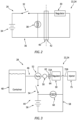
FIG. 1 is a schematic illustration of a system for treating a fuel system of a turbine engine. -
FIG. 2 is a schematic illustration of a control system for the treatment system in signal communication with the fuel system. -
FIG. 3 is a schematic illustration of a fluid system for the treatment system in fluid communication with the fuel system. -
FIG. 4 is a schematic illustration of the treatment system configured as a mobile unit. -
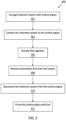
FIG. 5 is a flow diagram for treating the fuel system of the turbine engine using the treatment system. -
FIG. 6 is a schematic illustration of the fuel system. -
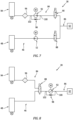
FIG. 7 is a schematic illustration of the fluid system configured with a fuel priming circuit. -
FIG. 8 is a schematic illustration of the fluid system configured with another fuel priming circuit. -
FIG. 9 is a schematic illustration of the control system configured in signal communication with a fuel system with multiple flow regulators. -
FIG. 10 is a side sectional illustration of an embodiment of the turbine engine. -
FIG. 1 schematically illustrates asystem 20 for treating (e.g., de-preserving) afuel system 22 of aturbine engine 24. Thistreatment system 20 ofFIG. 1 , in particular, is configured to extract / remove preservation fluid from thefuel system 22. Examples of the preservation include, but are not limited to, MIL-PRF-6081E Grade 1010, and MIL-PRF-32033. The treatment ofFIG. 1 includes acontrol system 26 and afluid system 28. - The
control system 26 is configured to facilitate actuation of at least one fuelsystem flow regulator 30 of thefuel system 22. Thecontrol system 26 ofFIG. 1 , for example, is configured to signal theflow regulator 30 to open during treatment system operation. Briefly, theflow regulator 30 may be configured as a fuel control valve such as, but not limited to, a main solenoid valve, a start solenoid valve or a fuel servo valve. The present disclosure, of course, is not limited to the foregoing exemplary flow regulator configurations. - Referring to
FIG. 2 , thecontrol system 26 includes a controlsystem control element 32, a controlsystem power source 34 and a controlsystem wiring harness 36. Thecontrol system 26 may also include acontrol system indicator 38. - The
control element 32 may be configured as a switch. This switch may be a manually triggered switch; e.g., a switch triggered by an operator. The switch may alternatively be an electronically triggered switch; e.g., a switch triggered by or configured as part of an electronic controller. - The
power source 34 ofFIG. 2 is configured as a battery. This battery may be electrically coupled with thewiring harness 36 through one or more power inputs; e.g., positive and negative terminals. Alternatively, thepower source 34 may be configured as an external power source such as, but not limited to, an electric generator or an electric power grid, where thecontrol system 26 may be electrically coupled to (e.g., plugged into) the external power source via, for example, a power input such as a chord. - The
wiring harness 36 is configured to electrically couple thecontrol system elements wiring harness 36 is also configured to electrically couple thecontrol system 26 to theturbine engine 24 and, more particularly, thefuel system 22 and itsflow regulator 30. Thewiring harness 36 ofFIG. 2 , for example, includes aharness interface 40 configured to (e.g., removably, temporarily) mate with afuel system interface 42 of thefuel system 22. For example, theharness interface 40 may be a plug where thefuel system interface 42 is a receptacle. Alternatively, theharness interface 40 may be a receptacle where thefuel system interface 42 is a plug. Of course, various types of electrical interfaces are known in the art, and the present disclosure is not limited to any particular types or configurations thereof. - The
indicator 38 is configured to provide an indication when, for example, theflow regulator 30 is actuated. Theindicator 38, for example, may be configured to provide the indication when thecontrol element 32 signals theflow regulator 30 to open. The indication may be a visual indicator and/or an audible indication. Theindicator 38, for example, may be configured as an indicator light. Of course, various other types of indicators are known in the art, and the present disclosure is not limited to any particular types or configurations thereof. - Referring to
FIG. 1 , thefluid system 28 is configured to draw (e.g., pull, suction or otherwise direct) the preservation fluid out of thefuel system 22. Thefluid system 28 may also be configured to facilitate environmentally friendly disposal of the preservation fluid. - Referring to
FIG. 3 , thefluid system 28 includes a preservationfluid pump system 44 and a preservation fluidremoval flow circuit 46. Thefluid system 28 may also include apreservation fluid container 48 and/or apressure gauge 50. - The
pump system 44 ofFIG. 3 includes a preservationfluid removal pump 52, a pumpsystem control element 54, a pumpsystem power source 56 and a pumpsystem wiring harness 58. Thepump system 44 may also include apump system indicator 60. - The
pump 52 is configured to generate a suction force to draw the preservation fluid out of thefuel system 22. Thepump 52, for example, may be configurable as a vacuum pump. Thepump 52 ofFIG. 3 is configured as an electrically driven pump. Thepump 52 may be configured as a gear pump or a centrifugal pump. Of course, various types of pumps are known in the art, and the present disclosure is not limited to any particular types or configurations thereof. - The
control element 54 may be configured as a switch. This switch may be a manually triggered switch; e.g., a switch triggered by an operator. The switch may alternatively be an electronically triggered switch; e.g., a switch triggered by or configured as part of the electronic controller. The fluidsystem control element 54 ofFIG. 3 is configured discrete (e.g., separate) from the controlsystem control element 32 ofFIG. 2 . However, in other embodiments, these twocontrol elements - The
power source 56 ofFIG. 3 is configured as a battery. This battery may be electrically coupled with thewiring harness 58 through one or more power inputs; e.g., positive and negative terminals. Alternatively, thepower source 56 may be configured as an external power source such as, but not limited to, an electric generator or an electric power grid, where the controlsystem pump system 44 may be electrically coupled to (e.g., plugged into) the external power source via, for example, a power input such as a chord. The fluidsystem power source 56 ofFIG. 3 is configured discrete (e.g., separate) from the controlsystem power source 34 ofFIG. 2 . However, in other embodiments, these twopower sources - The
wiring harness 58 is configured to electrically couple thepump system elements - The
indicator 60 is configured to provide an indication when, for example, thepump 52 is operational; e.g., energized, turned on. Theindicator 60, for example, may be configured to provide the indication when thecontrol element 54 provides electrical power to thepump 52. The indication may be a visual indicator and/or an audible indication. Theindicator 60, for example, may be configured as an indicator light. Of course, various other types of indicators are known in the art, and the present disclosure is not limited to any particular types or configurations thereof. - The
flow circuit 46 is configured to fluidly couple thepump system 44 and itspump 52 to thepreservation fluid container 48. Theflow circuit 46 is also configured to fluidly couple thefluid system 28 to theturbine engine 24 and, more particularly, thefuel system 22. Theflow circuit 46 ofFIG. 3 , for example, includes a circuit interface 62 (e.g., a port) configured to (e.g., removably, temporarily) mate with a fuel system interface 64 (e.g., a port) of thefuel system 22. For example, thecircuit interface 62 may be a male fitting where thefuel system interface 64 is a receptacle. Alternatively, thecircuit interface 62 may be a receptacle where thefuel system interface 64 is a male fitting. Of course, various types of fluid interfaces are known in the art, and the present disclosure is not limited to any particular types or configurations thereof. - The
preservation fluid container 48 is configured to receive the preservation fluid removed (e.g., drawn out) from thefuel system 22 by thepump 52. Thepreservation fluid container 48 is also configured to at least temporarily store (e.g., contain, hold) the removed preservation fluid. Thepreservation fluid container 48 ofFIG. 3 , for example, may be configured as a tank, a pressure vessel or a bladder. Of course, various types of fluid containers are known in the art, and the present disclosure is not limited to any particular types or configurations thereof. - The
pressure gauge 50 is configured to measure fluid pressure of the preservation fluid flowing through theflow circuit 46. In addition or alternatively, thepressure gauge 50 may be configured to measure vacuum suction being applied to thefuel system 22 by thepump 52. Referring toFIG. 4 , thetreatment system 20 may be configured as a mobile unit. Thetreatment system 20 ofFIG. 4 , for example, includes amobile housing 66 such as, but not limited to, a push / pull cart. Themobile housing 66 ofFIG. 4 includes ahousing structure 68 and one or more wheels 70 (e.g., casters) mounted to a base of thehousing structure 68. Thecontrol system 26 and/or thefluid system 28 is arranged within, on and/or otherwise with thehousing structure 68. Thecontrol system 26 and/orfluid system 28 may also be mounted to thehousing structure 68. One or more of the control system components (e.g., 32, 34 and/or 38) and/or one or more of the fluid system components (e.g., 48, 50, 52, 54, 56 and/or 60) ofFIG. 4 , for example, are supported by thehousing structure 68. However, a portion 72 (e.g., a flexible electrical conduit) of the controlsystem wiring harness 36 and/or a portion 74 (e.g., a flexible fluid conduit) of theflow circuit 46 may be configured outside of (e.g., and not support by) thehousing structure 68 to facilitate mating with the turbine engine 24 (seeFIG. 1 ). - Configuring the
treatment system 20 as a mobile unit may facilitate treatment of theturbine engine 24 at various different locations. For example, a manufacturing facility may include various different assembly stations, where a respective turbine engine is located at each of those assembly stations. Rather than providing each assembly station with a dedicated treatment system, themobile treatment system 20 may be moved (e.g., pushed or pulled by hand) from one assembly station to another assembly station as needed. Furthermore, thetreatment system 20 may be removed from the assembly station to provide additional work room before and/or after turbine engine treatment. -
FIG. 5 is a flow diagram of amethod 500 for treating a turbine engine fuel system using a (e.g., mobile) treatment system. For ease of description, thetreatment method 500 is described below with reference to thetreatment system 20 and theturbine engine 24 ofFIG. 1 . Thetreatment method 500, however, is not limited thereto. For example, in other embodiments, thetreatment method 500 may be performed using another treatment system and/or performed on another turbine engine. - In
step 502, thetreatment system 20 is arranged with theturbine engine 24. Thetreatment system 20, for example, may be moved (e.g., pushed or pulled by an individual) from a first location to a second location. At this second location, thetreatment system 20 is positioned close to (e.g., adjacent or proximate) theturbine engine 24. - In
step 504, thetreatment system 20 is connected to theturbine engine 24. Theharness interface 40, for example, may be mated with thefuel system interface 42. Thecontrol system 26 may thereby be electronically coupled with thefuel system 22, and in communication with theflow regulator 30. Thecircuit interface 62 may also or alternatively be mated with thefuel system interface 64. Thefluid system 28 may thereby be fluidly coupled with thefuel system 22. - In
step 506, theflow regulator 30 is actuated. Thecontrol element 32 ofFIG. 2 , for example, may provide a control signal (e.g., a predetermined electrical current) to theflow regulator 30. Theflow regulator 30 may open in response to receiving the control signal. Referring toFIG. 1 , this opening of theflow regulator 30 may fluidly couple a plurality of fuelsystem circuit segments flow regulator 30. The opening of theflow regulator 30 thereby facilitates fluid flow through theopen flow regulator 30 between the fuelsystem circuit segments - In
step 508, the preservation fluid is removed from thefuel system 22. Thecontrol element 54 ofFIG. 3 , for example, may provide a control signal (e.g., a predetermined electrical current) to thepump 52. Thepump 52 may turn on (e.g., energize) in response to receiving the control signal. When on, thepump 52 may generate a suction force within theflow circuit 46 between, for example, thepump 52 and thecircuit interface 62. This suction force may draw (e.g., pull, suction or otherwise direct) the preservation fluid out of thefuel system 22 and into thefluid system 28. The suction force, for example, may draw the preservation fluid away from (e.g., and out of) at least one (or more)fuel injector 75 of thefuel system 22, through theopen flow regulator 30, and into thefluid system 28. Under this suction force, a first direction of the flow of the preservation fluid within (e.g., out of) thefuel system 22 may be opposite a second direction of flow of fuel within (e.g., through) thefuel system 22 during normal turbine engine operation. Thepump system 44 may thereby operate thefuel system 22 in reverse flow during the removal of the preservation fluid. - Once the preservation fluid is within the
fluid system 28, thepump 52 directs (e.g., pumps) the preservation fluid to thepreservation fluid container 48. Thepreservation fluid container 48 may store (e.g., contain) the preservation fluid for later disposal and/or reuse. It is worth noting, thestep 508 may also remove remnants of old fuel that may have remained within thefuel system 22 following the preservation process. This old fuel may also be directed into and stored within thefluid container 48. - Depending upon the length of time the
pump 52 is turned on, substantially (e.g., at least 80-90% or more) all or completely all of the preservation fluid may be removed from theturbine engine 24 and itsfuel system 22 during theremoval step 508. Thetreatment method 500 of the present disclosure, however, is not limited to such substantial or complete removal of the preservation fluid. For example, thepump 52 may be operated for a shorter period of time to remove a select portion of the preservation fluid from theturbine engine 24 and itsfuel system 22. - The
removal step 508 is described above as occurring after theactuation step 506. However, in other embodiments, theactuation step 506 and theremoval step 508 may be performed concurrently; e.g., initiated simultaneously or otherwise overlapping. - In
step 510, thetreatment system 20 is disconnected from theturbine engine 24. Theharness interface 40, for example, may be disconnected from thefuel system interface 42. Thecircuit interface 62 may also or alternatively be disconnected from thefuel system interface 64. - In
step 512, theturbine engine 24 is primed with fuel. For example, referring toFIG. 6 , afuel pump 76 of thefuel system 22 may be turn on (e.g., energize) in response to receiving a control signal from an onboard engine controller 78 (e.g., an electronic control unit (ECU), an electronic engine controller (EEC), etc.). Theengine controller 78 may also send a signal to theflow regulator 30 to open. When thefuel pump 76 is on and theflow regulator 30 is open, fuel may be directed (e.g., pumped) from a fuel reservoir 80 (e.g., a fuel tank) through afuel system circuit 82 to theinjector 75. Thefuel system 22 may thereby be operated to self-prime. Examples of the fuel include, but are not limited to, jet fuel, kerosene, JP4, JP5, JP8, JP10, Jet A, Jet B, NATO F24, TS-1, etc. - Following the priming, the
turbine engine 24 may be started for normal operation. During the starting of theturbine engine 24, substantially all or completely all of the preservation fluid is already removed from theturbine engine 24 and itsfuel system 22. The preservation fluid therefore does not interfere with turbine engine starting and/or operation. Performing thetreatment method 500 before starting a turbine engine that was previously stored and/or transported with preservation fluid may thereby facilitate, for example, quicker and more environmentally friendly turbine engine start up as compared, for example, to pumping the preservation fluid through the injector during turbine engine start up. - In some embodiments, referring to
FIG. 7 , thefluid system 28 may also be configured to prime the fuel system 22 (seeFIG. 1 ) following the removal of the preservation fluid, but before the disconnection step 510 (e.g., thesteps fuel system 22. Thefluid system 28 ofFIG. 7 , for example, includes a fuelpriming flow circuit 84 in addition to the preservation fluidremoval flow circuit 46. Theseflow circuits circuit interface 62 through a (e.g., common, shared)intermediate flow circuit 86. - Each of the
flow circuits respective flow regulator flow regulator 88 is configured to fluidly couple the preservation fluidremoval flow circuit 46 with theintermediate flow circuit 86, and theflow regulator 90 is configured to fluidly decouple the fuelpriming flow circuit 84 from theintermediate flow circuit 86. During a second (e.g., fuel priming) mode of operation, theflow regulator 88 is configured to fluidly decouple the preservation fluidremoval flow circuit 46 from theintermediate flow circuit 86, and theflow regulator 90 is configured to fluidly couple the fuelpriming flow circuit 84 with theintermediate flow circuit 86. - The
fluid system 28 ofFIG. 7 includes afuel priming pump 92 and afuel container 94. Thefluid system 28 may also include afuel filter 96 and/or a pressurerelief flow regulator 98; e.g., a pressure relief valve. Thesefluid system components priming flow circuit 84. - The priming pump 92 of
FIG. 7 is configured as an electrically driven pump. The priming pump 92 may be configured as a gear pump or a centrifugal pump. Of course, various types of pumps are known in the art, and the present disclosure is not limited to any particular types or configurations thereof. The priming pump 92 ofFIG. 7 may be actuated in a similar manner as thepump 52; e.g., seecontrol element 54 inFIG. 3 . - The
fuel container 94 is configured to at least temporarily store (e.g., contain, hold) the fuel. Thefuel container 94 ofFIG. 7 , for example, may be configured as a tank, a pressure vessel or a bladder. Of course, various types of fuel containers are known in the art, and the present disclosure is not limited to any particular types or configurations thereof. - The pressure
relief flow regulator 98 is configured to regulate pressure of the fuel directed out of the fuelpriming flow circuit 84 through theflow regulator 90. The pressurerelief flow regulator 98 ofFIG. 7 includes aninlet 100 and anoutlet 102. Theinlet 100 is fluidly coupled to and inline between the primingpump 92 and theflow regulator 90. Theoutlet 102 is fluidly coupled to and inline between the primingpump 92 and thefuel filter 96. - During the first mode of operation, the
flow regulator 88 is opened and theflow regulator 90 is closed. Thefluid system 28 may be operated as described above to remove the preservation fluid from theturbine engine 24 and itsfuel system 22. - During the second mode of operation, the
flow regulator 88 is closed and theflow regulator 90 is opened. The priming pump 92 is turned on (e.g., energized) and directs (e.g., pumps) fuel contained in thefuel container 94 through theflow circuits FIG. 1 ). During this second mode of operation, thecontrol system 26 may signal theflow regulator 30 to open such that the fuel may flow towards (e.g., to and/or into) thefuel injector 75. Thetreatment system 20 may thereby prime thefuel system 22 of theturbine engine 24 following removal of the preservation fluid. - In some embodiments, referring to
FIG. 8 , thepriming pump 92 may be omitted, and thepump 52 may be configured as a priming / removal pump. Theflow regulator 90 may also be omitted, and theflow regulator 88 may be configured as a common, shared flow regulator; e.g., a three way valve. - The
pump 52 ofFIG. 8 is fluidly coupled in parallel with both thepreservation fluid container 48 and thefuel container 94 through theflow regulator 88. During the first mode of operation, theflow regulator 88 is configured to fluidly couple thepreservation fluid container 48 with theintermediate flow circuit 86, and to fluid decouple thefuel container 94 from theintermediate flow circuit 86. During the second mode of operation, theflow regulator 88 is configured to fluidly decouple thepreservation fluid container 48 from theintermediate flow circuit 86, and to fluid couple thefuel container 94 with theintermediate flow circuit 86. - In some embodiments, referring to
FIGS. 1 ,7 and 8 , thefluid system 28 may also be configured to charge thefuel system 22 of theturbine engine 24 with the preservation fluid. The removal processes described above, for example, may be run in reverse in order to direct any preservation fluid contained, for example, within the preservation fluid container 48 (or another container) into thefuel system 22. Alternatively, the priming system may be used to charge thefuel system 22 with the preservation fluid rather than prime thefuel system 22 with the fuel. Still alternatively, thefluid system 28 may be configured with another flow circuit (e.g., similar to the fuel priming flow circuit 84) dedicated to charging thefuel system 22 with the preservation fluid. In some embodiments, thefluid system 28 may be configured without the pump 52 (seeFIG. 3 ). In such embodiments, thetreatment system 20 may be configured to temporally power and/or control the fuel pump 76 (seeFIG. 6 ) of thefuel system 22 for the preservation fluid removal. - In some embodiments, referring to
FIG. 9 , thecontrol system 26 may be configured to communicate with and control a plurality offlow regulators 30A-C (generally referred to as "30") of thefuel system 22. Theflow regulator 30A may be configured as or otherwise include a main solenoid valve. Theflow regulator 30B may be configured as or otherwise include a start solenoid valve. Theflow regulator 30C may be configured as or otherwise include a fuel servo valve. The present disclosure, however, is not limited to the foregoing exemplary combination offlow regulators 30. - In some embodiments, the
control system 26 may be configured withmultiple power sources power sources 34 may each be an internal power source such as, but not limited to, a battery. In addition or alternatively, one or more of thepower sources 34 may each be an external power source such as, but not limited to, an electric generator or an electric power grid. - In some embodiments, the
control system 26 may be configured independent of (e.g., discrete from) thefluid system 28 and thehousing structure 68. -
FIG. 10 is a side cutaway illustration of theturbine engine 24 configured as a geared turbine engine. Thisturbine engine 24 extends along anaxial centerline 104 between anupstream airflow inlet 106 and adownstream airflow exhaust 108. Theturbine engine 24 includes afan section 110, acompressor section 111, acombustor section 112 and aturbine section 113. Thecompressor section 111 includes a low pressure compressor (LPC)section 111A and a high pressure compressor (HPC)section 111B. Theturbine section 113 includes a high pressure turbine (HPT)section 113A and a low pressure turbine (LPT)section 113B. - The engine sections 110-113B are arranged sequentially along the
centerline 104 within anengine housing 116. Thisengine housing 116 includes an inner case 118 (e.g., a core case) and an outer case 120 (e.g., a fan case). Theinner case 118 may house one or more of theengine sections 111A-113B; e.g., an engine core. Theouter case 120 may house at least thefan section 110. - Each of the
engine sections - The
fan rotor 122 is connected to agear train 128, for example, through afan shaft 130. Thegear train 128 and theLPC rotor 123 are connected to and driven by theLPT rotor 126 through alow speed shaft 131. TheHPC rotor 124 is connected to and driven by theHPT rotor 125 through ahigh speed shaft 132. The shafts 130-132 are rotatably supported by a plurality ofbearings 134; e.g., rolling element and/or thrust bearings. Each of thesebearings 134 is connected to theengine housing 116 by at least one stationary structure such as, for example, an annular support strut. - During turbine engine operation, air enters the
turbine engine 24 through theairflow inlet 106. This air is directed through thefan section 110 and into acore flowpath 136 and abypass flowpath 138. Thecore flowpath 136 extends sequentially through theengine sections 111A-113B. The air within thecore flowpath 136 may be referred to as "core air". Thebypass flowpath 138 extends through a bypass duct, which bypasses the engine core. The air within thebypass flowpath 138 may be referred to as "bypass air". - The core air is compressed by the
compressor rotors combustion chamber 140 of a combustor in thecombustor section 112. Fuel is injected via one or more of the fuel injectors 75 (seeFIG. 6 ) into thecombustion chamber 140 and mixed with the compressed core air to provide a fuel-air mixture. This fuel air mixture is ignited and combustion products thereof flow through and sequentially cause theturbine rotors turbine rotors compressor rotors turbine rotor 126 also drives rotation of thefan rotor 122, which propels bypass air through and out of thebypass flowpath 138. The propulsion of the bypass air may account for a majority of thrust generated by theturbine engine 24, e.g., more than seventy-five percent (75%) of engine thrust. Theturbine engine 24 of the present disclosure, however, is not limited to the foregoing exemplary thrust ratio. - The
treatment system 20 may be configured for use with various turbine engines other than the one described above. Thetreatment system 20, for example, may be configured for use with a geared turbine engine where a gear train connects one or more shafts to one or more rotors in a fan section, a compressor section and/or any other engine section. Alternatively, thetreatment system 20 may be configured for use with a turbine engine configured without a gear train. The turbine engine may be configured as a turbofan engine, a turbojet engine, a turboprop engine, a turboshaft engine, a propfan engine, a pusher fan engine, an auxiliary power unit or any other type of turbine engine. The present disclosure therefore is not limited to any particular types or configurations of turbine engines. In addition, while the turbine engine is described above for use in an aircraft application, the present disclosure is not limited to such aircraft applications. For example, the turbine engine may alternatively be configured as an industrial gas turbine engine, for example, for a land based power plant. - While various embodiments of the present disclosure have been described, it will be apparent to those of ordinary skill in the art that many more embodiments and implementations are possible within the scope of the disclosure. present disclosure is not to be restricted except in light of the attached claims.
Claims (15)
- A method for treating a fuel system (22) of a turbine engine (24), the method comprising:connecting a treatment system (20) to the turbine engine (24); andcharacterised in that it further comprises;drawing preservation fluid out of the fuel system (22) using the treatment system (20).
- The method of claim 1, further comprising:priming the fuel system (22) with fuel using the treatment system (20) after the drawing of the preservation fluid out of the fuel system (22); and orinjecting the preservation fluid into the fuel system (22) using the treatment system (20) prior to drawing of the preservation fluid out of the fuel system (22).
- The method of claim 1 or 2, wherein the drawing of the preservation fluid out of the fuel system (22) comprises applying suction to the fuel system (22) using the treatment system (20) to draw the preservation fluid out of the fuel system (22).
- The method of any of claims 1 to 3, wherein:the drawing of the preservation fluid out of the fuel system (22) comprises applying suction to the fuel system (22) using a pump (52) and the treatment system (20) is configured as a mobile unit and includes the pump (52); and/orthe fuel flows in a first direction within the fuel system (22) during operation of the turbine engine (24) and the preservation fluid flows in a second direction within the fuel system (22) during the drawing of the preservation fluid out of the fuel system (22), and the second direction is opposite the first direction.
- The method of any preceding claim, further comprising:actuating a flow regulator (30;88,90) of the fuel system (22) to facilitate the drawing of the preservation fluid out of the fuel system (22); and/ordirecting the preservation fluid drawn out of the fuel system (22) into a container (48) wherein the treatment system (20) is configured as a mobile unit and includes the container (48).
- The method of claim 5, wherein:the flow regulator (30;88,90) is actuated using a control system (26); andthe treatment system (20) is configured as a mobile unit and includes the control system (26).
- The method of any preceding claim, wherein the preservation fluid is drawn out of the fuel system (22) independent of start up of the turbine engine.
- The method of any preceding claim, wherein the fuel system (22) includes an injector (75), and the drawing of the preservation fluid comprises drawing the preservation fluid out of the injector (75).
- A treatment system (20) for a fuel system (22) of a turbine engine (24), the fuel system including an injector (75), a fuel system interface (42) and a flow regulator (30;88,90) fluidly coupled between the injector (75) and the fuel system interface (42), the treatment system (20) comprising:a control system (26) configured to signal the flow regulator to open,characterised in that the treatment system (20) further comprises:
a fluid system (28) including a fluid system interface (42) and a pump (52) fluidly coupled with the fluid system interface (42), the fluid system interface (42) configured to fluidly couple with the fuel system interface (42), and the pump (52) configured to draw fluid out from the fuel system (22) at the injector (75) through the flow regulator (30;88,90). - The treatment system (20) of claim 9, further comprising:a mobile housing,wherein at least one of the control system (26) or the fluid system (28) is arranged with and mounted to the mobile housing.
- The treatment system (20) of claim 9 or 10, wherein:the control system (26) includes a wiring harness (36) with a power input;
the control system (26) is configured to selectively direct electrical current from power input to the flow regulator (30;88,90) through the wiring harness (36),wherein the power input is optionally configured to electrically couple the control system (26) with an outside power source (34). - The treatment system (20) of claim 11, further comprising:a battery; andthe power input is configured to electrically couple the control system (26) to the battery.
- The treatment system (20) of any of claims 9 to 12, wherein:the pump is a first pump (52), and the fluid is preservation fluid; andthe fluid system (28) further includes a second pump (92) configured to prime the fuel system (22) with fuel after the preservation fluid is drawn out of the fuel system (22) by the first pump (52).
- The treatment system (20) of any of claims 9 to 13, wherein:the fluid is preservation fluid and the pump (92) is further configured to prime the fuel system (22) with fuel after the preservation fluid is drawn out of the fuel system (22); and/orthe fluid system (28) further includes a container configured to receive the fluid drawn out from the fuel system (22) by the pump (52).
- In combination, a treatment system (20) and a fuel system (22) of a turbine engine (24), the fuel system including an injector (75), a fuel system interface (42) and a flow regulator (30;88,90) fluidly coupled between the injector (75) and the fuel system interface (42), the treatment system (20) comprising:a control system (26) configured to signal the flow regulator to open,characterised in that the treatment system (20) further comprisesa fluid system (28) including a fluid system interface (42) and a pump (52) fluidly coupled with the fluid system interface (42), the fluid system interface (42) configured to fluidly couple with the fuel system interface (42), and the pump (52) configured to draw fluid out from the fuel system (22) at the injector (75) through the flow regulator (30;88,90).
Priority Applications (1)
| Application Number | Priority Date | Filing Date | Title |
|---|---|---|---|
| EP25173372.1A EP4589128A3 (en) | 2021-07-09 | 2022-07-11 | De-preserving a fuel system of a turbine engine |
Applications Claiming Priority (1)
| Application Number | Priority Date | Filing Date | Title |
|---|---|---|---|
| US17/371,218 US11885287B2 (en) | 2021-07-09 | 2021-07-09 | De-preserving a fuel system of a turbine engine |
Related Child Applications (1)
| Application Number | Title | Priority Date | Filing Date |
|---|---|---|---|
| EP25173372.1A Division EP4589128A3 (en) | 2021-07-09 | 2022-07-11 | De-preserving a fuel system of a turbine engine |
Publications (2)
| Publication Number | Publication Date |
|---|---|
| EP4116559A1 EP4116559A1 (en) | 2023-01-11 |
| EP4116559B1 true EP4116559B1 (en) | 2025-05-21 |
Family
ID=82403765
Family Applications (2)
| Application Number | Title | Priority Date | Filing Date |
|---|---|---|---|
| EP22184087.9A Active EP4116559B1 (en) | 2021-07-09 | 2022-07-11 | De-preserving a fuel system of a turbine engine |
| EP25173372.1A Pending EP4589128A3 (en) | 2021-07-09 | 2022-07-11 | De-preserving a fuel system of a turbine engine |
Family Applications After (1)
| Application Number | Title | Priority Date | Filing Date |
|---|---|---|---|
| EP25173372.1A Pending EP4589128A3 (en) | 2021-07-09 | 2022-07-11 | De-preserving a fuel system of a turbine engine |
Country Status (4)
| Country | Link |
|---|---|
| US (2) | US11885287B2 (en) |
| EP (2) | EP4116559B1 (en) |
| AU (1) | AU2022204741A1 (en) |
| CA (1) | CA3166913A1 (en) |
Family Cites Families (17)
| Publication number | Priority date | Publication date | Assignee | Title |
|---|---|---|---|---|
| US3774394A (en) * | 1971-08-09 | 1973-11-27 | Gen Electric | Gas turbine engine fuel drain system and cooperating valve and pump means |
| US4059123A (en) * | 1976-10-18 | 1977-11-22 | Avco Corporation | Cleaning and preservation unit for turbine engine |
| JPS588259A (en) * | 1981-07-03 | 1983-01-18 | Nissan Motor Co Ltd | Cleaning method and device for fuel injection valve |
| US4606311A (en) * | 1982-01-04 | 1986-08-19 | Miller Special Tools, Div. Of Triangle Corp. | Fuel injection cleaning system and apparatus |
| US4706636A (en) * | 1984-12-06 | 1987-11-17 | Davco Manufacturing Corporation | Purge and prime fuel delivery system and method |
| US4877043A (en) * | 1987-03-20 | 1989-10-31 | Maurice Carmichael | Internal combustion engine scrubber |
| US5633457A (en) * | 1992-06-05 | 1997-05-27 | Triangle Special Products | Fuel injection cleaning and testing system and apparatus |
| US6722398B2 (en) * | 2001-10-29 | 2004-04-20 | Norco Industries, Inc. | Integrated automobile fluid servicing apparatus |
| FR2871519B1 (en) * | 2004-06-10 | 2006-08-04 | Snecma Moteurs Sa | METHOD AND SYSTEM FOR PROTECTING GAS TURBINE FUEL INJECTORS |
| US7805947B2 (en) * | 2005-05-19 | 2010-10-05 | Djamal Moulebhar | Aircraft with disengageable engine and auxiliary power unit components |
| WO2008057002A1 (en) * | 2006-11-07 | 2008-05-15 | Zakrytoe Aktsionernoe Obschestvo 'vao 'interprofavia' | Method and device for internal preservation and/or depreservation of gas-turbine engines |
| US8225822B2 (en) * | 2008-11-14 | 2012-07-24 | Honeywell International Inc. | Electric fueling system for a vehicle that requires a metered amount of fuel |
| DE102010014637B4 (en) * | 2010-04-12 | 2016-05-04 | MTU Aero Engines AG | Method of preserving a fuel system and an oil system |
| US9739168B2 (en) * | 2014-06-05 | 2017-08-22 | General Electric Company | Off-line wash systems and methods for a gas turbine engine |
| US10287909B2 (en) * | 2015-05-29 | 2019-05-14 | Pratt & Whitney Canada Corp. | Method and kit for preserving a fuel system of an aircraft engine |
| GB2557603B (en) * | 2016-12-09 | 2020-01-15 | Rolls Royce Plc | Fuel supply system |
| US11053863B2 (en) * | 2017-09-01 | 2021-07-06 | Raytheon Technologies Corporation | Integrated fuel pump and control preservation system |
-
2021
- 2021-07-09 US US17/371,218 patent/US11885287B2/en active Active
-
2022
- 2022-07-01 AU AU2022204741A patent/AU2022204741A1/en active Pending
- 2022-07-06 CA CA3166913A patent/CA3166913A1/en active Pending
- 2022-07-11 EP EP22184087.9A patent/EP4116559B1/en active Active
- 2022-07-11 EP EP25173372.1A patent/EP4589128A3/en active Pending
-
2024
- 2024-01-29 US US18/425,680 patent/US12366220B2/en active Active
Also Published As
| Publication number | Publication date |
|---|---|
| US12366220B2 (en) | 2025-07-22 |
| AU2022204741A1 (en) | 2023-02-02 |
| CA3166913A1 (en) | 2023-01-09 |
| EP4116559A1 (en) | 2023-01-11 |
| US20230009768A1 (en) | 2023-01-12 |
| US11885287B2 (en) | 2024-01-30 |
| US20240167444A1 (en) | 2024-05-23 |
| EP4589128A3 (en) | 2025-10-29 |
| EP4589128A2 (en) | 2025-07-23 |
Similar Documents
| Publication | Publication Date | Title |
|---|---|---|
| EP3805528B1 (en) | System and method for cleaning gas paths in gas turbine engines | |
| EP3184780B1 (en) | Electric windmill pump for improved gearbox durability of a geared fan engine | |
| US11815029B2 (en) | Power assisted engine start bleed system | |
| EP2987961B1 (en) | Gas turbine engine system and corresponding method | |
| EP3611360B1 (en) | Modified aircraft idle for reduced thermal cycling | |
| US2952973A (en) | Turbofan-ramjet engine | |
| EP4086175B1 (en) | Cabin blower system | |
| FR2975375A1 (en) | AUTONOMOUS ELECTRIC POWER GENERATION AND PACKAGING SYSTEM FOR AN AIRCRAFT, AIRCRAFT AND ASSOCIATED METHOD | |
| US12326111B2 (en) | Hybrid-electric single engine descent failure management | |
| CN105658915A (en) | System and method for the emergency starting of an aircraft turbomachine | |
| CN107100681A (en) | Secondary system for gas-turbine unit | |
| EP4116559B1 (en) | De-preserving a fuel system of a turbine engine | |
| US20190226356A1 (en) | Method and kit for preserving a fuel system of an aircraft engine | |
| US12560101B2 (en) | Lubrication system for a turbine engine | |
| US3446425A (en) | Means and method for minimizing bleed air contamination | |
| US12552545B1 (en) | Drivetrain for aircraft powerplant with boosted turbine engine | |
| WO2008057002A1 (en) | Method and device for internal preservation and/or depreservation of gas-turbine engines | |
| EP4726189A1 (en) | Aircraft powerplant with boosted turbine engine and fuel cell system | |
| EP4563800A1 (en) | Turbine engine including an air turbine starter | |
| CA2907258C (en) | Method and kit for preserving a fuel system of an aircraft engine | |
| CN121341434A (en) | A ground oil seal system for an engine in flight field | |
| WO2025131477A1 (en) | Engine cooling system |
Legal Events
| Date | Code | Title | Description |
|---|---|---|---|
| PUAI | Public reference made under article 153(3) epc to a published international application that has entered the european phase |
Free format text: ORIGINAL CODE: 0009012 |
|
| STAA | Information on the status of an ep patent application or granted ep patent |
Free format text: STATUS: THE APPLICATION HAS BEEN PUBLISHED |
|
| AK | Designated contracting states |
Kind code of ref document: A1 Designated state(s): AL AT BE BG CH CY CZ DE DK EE ES FI FR GB GR HR HU IE IS IT LI LT LU LV MC MK MT NL NO PL PT RO RS SE SI SK SM TR |
|
| STAA | Information on the status of an ep patent application or granted ep patent |
Free format text: STATUS: REQUEST FOR EXAMINATION WAS MADE |
|
| 17P | Request for examination filed |
Effective date: 20230711 |
|
| RBV | Designated contracting states (corrected) |
Designated state(s): AL AT BE BG CH CY CZ DE DK EE ES FI FR GB GR HR HU IE IS IT LI LT LU LV MC MK MT NL NO PL PT RO RS SE SI SK SM TR |
|
| RAP3 | Party data changed (applicant data changed or rights of an application transferred) |
Owner name: RTX CORPORATION |
|
| GRAP | Despatch of communication of intention to grant a patent |
Free format text: ORIGINAL CODE: EPIDOSNIGR1 |
|
| STAA | Information on the status of an ep patent application or granted ep patent |
Free format text: STATUS: GRANT OF PATENT IS INTENDED |
|
| INTG | Intention to grant announced |
Effective date: 20241210 |
|
| GRAS | Grant fee paid |
Free format text: ORIGINAL CODE: EPIDOSNIGR3 |
|
| GRAA | (expected) grant |
Free format text: ORIGINAL CODE: 0009210 |
|
| STAA | Information on the status of an ep patent application or granted ep patent |
Free format text: STATUS: THE PATENT HAS BEEN GRANTED |
|
| AK | Designated contracting states |
Kind code of ref document: B1 Designated state(s): AL AT BE BG CH CY CZ DE DK EE ES FI FR GB GR HR HU IE IS IT LI LT LU LV MC MK MT NL NO PL PT RO RS SE SI SK SM TR |
|
| REG | Reference to a national code |
Ref country code: GB Ref legal event code: FG4D |
|
| REG | Reference to a national code |
Ref country code: CH Ref legal event code: EP |
|
| REG | Reference to a national code |
Ref country code: DE Ref legal event code: R096 Ref document number: 602022014862 Country of ref document: DE |
|
| REG | Reference to a national code |
Ref country code: IE Ref legal event code: FG4D |
|
| PGFP | Annual fee paid to national office [announced via postgrant information from national office to epo] |
Ref country code: FR Payment date: 20250620 Year of fee payment: 4 |
|
| REG | Reference to a national code |
Ref country code: NL Ref legal event code: MP Effective date: 20250521 |
|
| PG25 | Lapsed in a contracting state [announced via postgrant information from national office to epo] |
Ref country code: FI Free format text: LAPSE BECAUSE OF FAILURE TO SUBMIT A TRANSLATION OF THE DESCRIPTION OR TO PAY THE FEE WITHIN THE PRESCRIBED TIME-LIMIT Effective date: 20250521 Ref country code: PT Free format text: LAPSE BECAUSE OF FAILURE TO SUBMIT A TRANSLATION OF THE DESCRIPTION OR TO PAY THE FEE WITHIN THE PRESCRIBED TIME-LIMIT Effective date: 20250922 Ref country code: ES Free format text: LAPSE BECAUSE OF FAILURE TO SUBMIT A TRANSLATION OF THE DESCRIPTION OR TO PAY THE FEE WITHIN THE PRESCRIBED TIME-LIMIT Effective date: 20250521 |
|
| PGFP | Annual fee paid to national office [announced via postgrant information from national office to epo] |
Ref country code: DE Payment date: 20250620 Year of fee payment: 4 |
|
| REG | Reference to a national code |
Ref country code: LT Ref legal event code: MG9D |
|
| PG25 | Lapsed in a contracting state [announced via postgrant information from national office to epo] |
Ref country code: GR Free format text: LAPSE BECAUSE OF FAILURE TO SUBMIT A TRANSLATION OF THE DESCRIPTION OR TO PAY THE FEE WITHIN THE PRESCRIBED TIME-LIMIT Effective date: 20250822 Ref country code: NO Free format text: LAPSE BECAUSE OF FAILURE TO SUBMIT A TRANSLATION OF THE DESCRIPTION OR TO PAY THE FEE WITHIN THE PRESCRIBED TIME-LIMIT Effective date: 20250821 |
|
| PG25 | Lapsed in a contracting state [announced via postgrant information from national office to epo] |
Ref country code: NL Free format text: LAPSE BECAUSE OF FAILURE TO SUBMIT A TRANSLATION OF THE DESCRIPTION OR TO PAY THE FEE WITHIN THE PRESCRIBED TIME-LIMIT Effective date: 20250521 Ref country code: PL Free format text: LAPSE BECAUSE OF FAILURE TO SUBMIT A TRANSLATION OF THE DESCRIPTION OR TO PAY THE FEE WITHIN THE PRESCRIBED TIME-LIMIT Effective date: 20250521 |
|
| PG25 | Lapsed in a contracting state [announced via postgrant information from national office to epo] |
Ref country code: BG Free format text: LAPSE BECAUSE OF FAILURE TO SUBMIT A TRANSLATION OF THE DESCRIPTION OR TO PAY THE FEE WITHIN THE PRESCRIBED TIME-LIMIT Effective date: 20250521 |
|
| PG25 | Lapsed in a contracting state [announced via postgrant information from national office to epo] |
Ref country code: HR Free format text: LAPSE BECAUSE OF FAILURE TO SUBMIT A TRANSLATION OF THE DESCRIPTION OR TO PAY THE FEE WITHIN THE PRESCRIBED TIME-LIMIT Effective date: 20250521 |
|
| PG25 | Lapsed in a contracting state [announced via postgrant information from national office to epo] |
Ref country code: RS Free format text: LAPSE BECAUSE OF FAILURE TO SUBMIT A TRANSLATION OF THE DESCRIPTION OR TO PAY THE FEE WITHIN THE PRESCRIBED TIME-LIMIT Effective date: 20250821 |
|
| PG25 | Lapsed in a contracting state [announced via postgrant information from national office to epo] |
Ref country code: IS Free format text: LAPSE BECAUSE OF FAILURE TO SUBMIT A TRANSLATION OF THE DESCRIPTION OR TO PAY THE FEE WITHIN THE PRESCRIBED TIME-LIMIT Effective date: 20250921 |
|
| PG25 | Lapsed in a contracting state [announced via postgrant information from national office to epo] |
Ref country code: LV Free format text: LAPSE BECAUSE OF FAILURE TO SUBMIT A TRANSLATION OF THE DESCRIPTION OR TO PAY THE FEE WITHIN THE PRESCRIBED TIME-LIMIT Effective date: 20250521 |
|
| REG | Reference to a national code |
Ref country code: AT Ref legal event code: MK05 Ref document number: 1796930 Country of ref document: AT Kind code of ref document: T Effective date: 20250521 |
|
| PG25 | Lapsed in a contracting state [announced via postgrant information from national office to epo] |
Ref country code: AT Free format text: LAPSE BECAUSE OF FAILURE TO SUBMIT A TRANSLATION OF THE DESCRIPTION OR TO PAY THE FEE WITHIN THE PRESCRIBED TIME-LIMIT Effective date: 20250521 Ref country code: SM Free format text: LAPSE BECAUSE OF FAILURE TO SUBMIT A TRANSLATION OF THE DESCRIPTION OR TO PAY THE FEE WITHIN THE PRESCRIBED TIME-LIMIT Effective date: 20250521 Ref country code: DK Free format text: LAPSE BECAUSE OF FAILURE TO SUBMIT A TRANSLATION OF THE DESCRIPTION OR TO PAY THE FEE WITHIN THE PRESCRIBED TIME-LIMIT Effective date: 20250521 |
|
| PG25 | Lapsed in a contracting state [announced via postgrant information from national office to epo] |
Ref country code: CZ Free format text: LAPSE BECAUSE OF FAILURE TO SUBMIT A TRANSLATION OF THE DESCRIPTION OR TO PAY THE FEE WITHIN THE PRESCRIBED TIME-LIMIT Effective date: 20250521 |
|
| PG25 | Lapsed in a contracting state [announced via postgrant information from national office to epo] |
Ref country code: EE Free format text: LAPSE BECAUSE OF FAILURE TO SUBMIT A TRANSLATION OF THE DESCRIPTION OR TO PAY THE FEE WITHIN THE PRESCRIBED TIME-LIMIT Effective date: 20250521 |
|
| PG25 | Lapsed in a contracting state [announced via postgrant information from national office to epo] |
Ref country code: SK Free format text: LAPSE BECAUSE OF FAILURE TO SUBMIT A TRANSLATION OF THE DESCRIPTION OR TO PAY THE FEE WITHIN THE PRESCRIBED TIME-LIMIT Effective date: 20250521 |
|
| PG25 | Lapsed in a contracting state [announced via postgrant information from national office to epo] |
Ref country code: IT Free format text: LAPSE BECAUSE OF FAILURE TO SUBMIT A TRANSLATION OF THE DESCRIPTION OR TO PAY THE FEE WITHIN THE PRESCRIBED TIME-LIMIT Effective date: 20250521 |
|
| PG25 | Lapsed in a contracting state [announced via postgrant information from national office to epo] |
Ref country code: RO Free format text: LAPSE BECAUSE OF FAILURE TO SUBMIT A TRANSLATION OF THE DESCRIPTION OR TO PAY THE FEE WITHIN THE PRESCRIBED TIME-LIMIT Effective date: 20250521 |
|
| REG | Reference to a national code |
Ref country code: CH Ref legal event code: H13 Free format text: ST27 STATUS EVENT CODE: U-0-0-H10-H13 (AS PROVIDED BY THE NATIONAL OFFICE) Effective date: 20260224 Ref country code: DE Ref legal event code: R097 Ref document number: 602022014862 Country of ref document: DE |
|
| PG25 | Lapsed in a contracting state [announced via postgrant information from national office to epo] |
Ref country code: LU Free format text: LAPSE BECAUSE OF NON-PAYMENT OF DUE FEES Effective date: 20250711 |
|
| REG | Reference to a national code |
Ref country code: BE Ref legal event code: MM Effective date: 20250731 |
|
| PLBE | No opposition filed within time limit |
Free format text: ORIGINAL CODE: 0009261 |
|
| STAA | Information on the status of an ep patent application or granted ep patent |
Free format text: STATUS: NO OPPOSITION FILED WITHIN TIME LIMIT |
|
| REG | Reference to a national code |
Ref country code: CH Ref legal event code: L10 Free format text: ST27 STATUS EVENT CODE: U-0-0-L10-L00 (AS PROVIDED BY THE NATIONAL OFFICE) Effective date: 20260402 |
|
| PGFP | Annual fee paid to national office [announced via postgrant information from national office to epo] |
Ref country code: AT Payment date: 20260410 Year of fee payment: 4 |
|
| PG25 | Lapsed in a contracting state [announced via postgrant information from national office to epo] |
Ref country code: BE Free format text: LAPSE BECAUSE OF NON-PAYMENT OF DUE FEES Effective date: 20250731 |
|
| PG25 | Lapsed in a contracting state [announced via postgrant information from national office to epo] |
Ref country code: CH Free format text: LAPSE BECAUSE OF NON-PAYMENT OF DUE FEES Effective date: 20250731 |
|
| 26N | No opposition filed |
Effective date: 20260224 |