EP4115750A1 - Filter, smoking article, and flavor inhalation article - Google Patents
Filter, smoking article, and flavor inhalation article Download PDFInfo
- Publication number
- EP4115750A1 EP4115750A1 EP20922656.2A EP20922656A EP4115750A1 EP 4115750 A1 EP4115750 A1 EP 4115750A1 EP 20922656 A EP20922656 A EP 20922656A EP 4115750 A1 EP4115750 A1 EP 4115750A1
- Authority
- EP
- European Patent Office
- Prior art keywords
- filter
- main body
- filter main
- lot
- end surface
- Prior art date
- Legal status (The legal status is an assumption and is not a legal conclusion. Google has not performed a legal analysis and makes no representation as to the accuracy of the status listed.)
- Granted
Links
Images






Classifications
-
- A—HUMAN NECESSITIES
- A24—TOBACCO; CIGARS; CIGARETTES; SIMULATED SMOKING DEVICES; SMOKERS' REQUISITES
- A24D—CIGARS; CIGARETTES; TOBACCO SMOKE FILTERS; MOUTHPIECES OF CIGARS OR CIGARETTES; MANUFACTURE OF TOBACCO SMOKE FILTERS OR MOUTHPIECES
- A24D3/00—Tobacco smoke filters, e.g. filter tips or filtering inserts; Filters specially adapted for simulated smoking devices; Mouthpieces of cigars or cigarettes
- A24D3/04—Tobacco smoke filters characterised by their shape or structure
-
- A—HUMAN NECESSITIES
- A24—TOBACCO; CIGARS; CIGARETTES; SIMULATED SMOKING DEVICES; SMOKERS' REQUISITES
- A24D—CIGARS; CIGARETTES; TOBACCO SMOKE FILTERS; MOUTHPIECES OF CIGARS OR CIGARETTES; MANUFACTURE OF TOBACCO SMOKE FILTERS OR MOUTHPIECES
- A24D3/00—Tobacco smoke filters, e.g. filter tips or filtering inserts; Filters specially adapted for simulated smoking devices; Mouthpieces of cigars or cigarettes
- A24D3/02—Manufacture of tobacco smoke filters
- A24D3/0229—Filter rod forming processes
-
- A—HUMAN NECESSITIES
- A24—TOBACCO; CIGARS; CIGARETTES; SIMULATED SMOKING DEVICES; SMOKERS' REQUISITES
- A24D—CIGARS; CIGARETTES; TOBACCO SMOKE FILTERS; MOUTHPIECES OF CIGARS OR CIGARETTES; MANUFACTURE OF TOBACCO SMOKE FILTERS OR MOUTHPIECES
- A24D3/00—Tobacco smoke filters, e.g. filter tips or filtering inserts; Filters specially adapted for simulated smoking devices; Mouthpieces of cigars or cigarettes
- A24D3/02—Manufacture of tobacco smoke filters
- A24D3/0275—Manufacture of tobacco smoke filters for filters with special features
- A24D3/0291—Manufacture of tobacco smoke filters for filters with special features for hollow tipped filters, e.g. recess filters
Definitions
- the present invention relates to a filter, a smoking article, and a flavor inhalation article.
- Jpn. PCT National Publication No. 2014-515933 discloses a paper filter in which a surface of a biodegradable base material (paper) is coated.
- a filter paper filter
- a filter made of paper for example, a requirement exists to improve the aesthetic appearance of the filter.
- filters a requirement exists to control a degree of filtration of, for example, the amount of tar, the amount of nicotine, and the like.
- An object of this invention is to a provide a filter that is formed of a paper sheet or non-woven fabric sheet, enhances aesthetic appearance, and has appropriate filtration characteristics, a smoking article including the filter, and a flavor inhalation article including the filter.
- a filter includes: a first filter main body including a first end surface on a mouthpiece side and a second end surface on a side opposite to the mouthpiece side; and a second filter main body on a side of the second end surface of the first filter main body, and including a third end surface facing the second end surface.
- the first filter main body and the second filter main body are formed of a paper sheet or a non-woven fabric sheet. A void volume when the first end surface of the first filter main body is viewed is smaller than a void volume when the third end surface of the second filter main body is viewed.
- a flavor inhalation article member includes a base member.
- the base member is, for example, a flavor inhalation article member to be used in combination with a tobacco material.
- the base member may be at least one of a member constituting a combustion type flavor inhalation article, a member constituting a non-combustion heating type flavor inhalation article, or a member constituting a non-heating type flavor inhalation article.
- the tobacco material is, for example, cut tobacco.
- a material for the cut tobacco is not particularly limited, and known materials such as lamina and stem can be used.
- the tobacco material may also be, for example, granular.
- a combustion type flavor inhalation article is a smoking article that provides tobacco flavor to a consumer by burning a tobacco material.
- the non-combustion heating type flavor inhalation article is an article that provides tobacco flavor to a consumer by heating a tobacco material without burning the tobacco material.
- a heating temperature of the non-combustion heating type flavor inhalation article can be appropriately set, and is in a wide range, for example, from a temperature close to normal temperature to a temperature at which the tobacco material does not burn.
- the heating temperature of the non-combustion heating type flavor inhalation article is, for example, approximately 30 °Cto 350 °C.
- the non-heating type flavor inhalation article is an article that provides tobacco flavor to a consumer without burning or heating the tobacco material.
- a cigarette as a typical example of a combustion type flavor inhalation article (smoking article) 10 containing a tobacco material will be described.
- an example of the cigarette 10 will be described with reference to FIGS. 1 to 16B .
- FIG. 1 is a cross-sectional view of the cigarette 10.
- the cigarette 10 includes a tobacco rod 12, a filter 14, and tipping paper 16.
- the cigarette 10 has a total length of, for example, approximately 65 mm to 100 mm.
- the cigarette 10 has an outer diameter of, for example, approximately 5 mm to 10 mm.
- the tobacco rod 12 includes a tobacco material (cut tobacco) 22, and cigarette paper 24 wrapped around the tobacco material 22.
- the tobacco rod 12 according to the present embodiment has, for example, a diameter of approximately 7 mm, and a length of approximately 83 mm.
- the filter 14 includes a first filter plug 32 on the mouthpiece side, a second filter plug 34 on the tobacco rod 12 side, and forming paper 36 wrapped around outer peripheries of the first filter plug 32 and the second filter plug 34. Lengths of the first filter plug 32 and the second filter plug 34 along longitudinal axis L are referred to as L1 and L2, respectively.
- the first filter plug 32 includes a first filter main body (filter element, filter material) 42, and a first wrapper (tubular portion) 44 wrapped around the outer periphery of the first filter main body 42.
- the length L1 of the first filter plug 32 is the same as the length of the first filter main body 42.
- the first filter main body 42 includes a first end surface 46 on the mouthpiece side (mouthpiece side end surface), and a second end surface 48 on the side opposite to the mouthpiece side (end surface on the tobacco rod 12 side).
- the first end surface 46 and the second end surface 48 have an outer shape that is, for example, substantially circular.
- a longitudinal axis (center axis) L that intersects the first end surface 46 and the second end surface 48 is defined.
- the first end surface 46 is on the mouthpiece side
- the second end surface 48 is on the tobacco rod 12 side.
- the first end surface 46 is exposed outside.
- the second filter plug 34 includes a second filter main body (filter element, filter material) 52, and a second wrapper (tubular portion) 54 wrapped around the outer periphery of the second filter main body 52.
- the length L2 of the second filter plug 34 is the same as the length of the second filter main body 52.
- the second filter main body 52 includes a third end surface 56 and a fourth end surface 58.
- the third end surface 56 and the fourth end surface 58 have an outer shape that is, for example, substantially circular.
- a longitudinal axis (center axis) L that intersects the third end surface 56 and the fourth end surface 58 is defined.
- the third end surface 56 is on the mouthpiece side, and the fourth end surface 58 is on the tobacco rod 12 side.
- the third end surface 56 faces or is in contact with the second end surface 48.
- a plasticizer such as triacetin, an adsorbent such as activated carbon, or a flavoring agent such as menthol may be added as an additive.
- the forming paper 36 is wrapped around the outer peripheries of the first wrapper 44 and the second wrapper 54 to connect the first wrapper 44 and the second wrapper 54.
- the tipping paper 16 is wrapped around the outer peripheries of the tobacco rod 12 and the filter 14 to connect the tobacco rod 12 and the filter 14.
- the first filter main body 42 and the second filter main body 52 are formed of a paper sheet or a non-woven fabric sheet.
- a sheet (material) forming the first filter main body 42 and the second filter main body 52 is made of paper.
- a paper sheet one that can be used as a so-called paper filter by a person skilled in the art can be used as is.
- glassine paper can be used in addition to the above.
- a paper sheet 102 for example, is crimped by a crimping tool 100 described below.
- the crimped sheet 102 is subjected to folding process in order to be formed into, for example, a rod of substantially 120 mm. Thereafter, it is cut into appropriate lengths to form the first filter main body 42 and the second filter main body 52.
- the shape of the first filter main body 4 s 2 is maintained by the first wrapper 44.
- the shape of the second filter main body 52 is maintained by the second wrapper 54.
- the crimp process to the first filter main body 42 and the second filter main body 52 is performed by passing the paper sheet 102 through an appropriate crimping tool 100 shown in FIGS. 2A and 2B from a front side of the drawing sheets in FIGS. 2A and 2B to a direction perpendicular to the drawing sheets.
- the crimping tool 100 shown in FIGS. 2A and 2B is formed to have an appropriate length in a direction perpendicular to the drawing sheets.
- the length of the crimping tool 100 in the direction perpendicular to the drawing sheets is an appropriate length in which the sheet 102 can be crimped. It is preferable that the width of crimping tool 100 be greater than the width of sheet 102.
- the crimping tool 100 includes a first base 112, a second base 114, a plurality of first protrusions 116 protruding from the first base 112 toward the second base 114, and a plurality of second protrusions 118 protruding from the second base 114 toward the first base 112.
- the first base 112 and the second base 114 may be relatively close to or away from each other.
- the protrusion amounts of the plurality of first protrusions 116 with respect to the first base 112 are substantially the same.
- the plurality of first protrusions 116 are spaced apart at predetermined intervals in the width direction.
- the protrusion amounts of the plurality of second protrusions 118 with respect to the second base 114 are substantially the same.
- the plurality of second protrusions 118 are spaced apart at predetermined intervals in the width direction.
- the first protrusions 116 and the second protrusions 118 are located at positions separated from each other when the first base 112 and the second base 114 are brought close to each other.
- a distance between a top part 116a of the first protrusion 116 and a top part 118a of the second protrusion 118 along a direction in which the first base 112 and the second base 114 are close to or away from each other (reference numeral D1 in FIG. 2A and reference numeral D2 in FIG. 2B ) is defined as an amount of engagement. It is preferable that distances D1 and D2 be, for example, approximately 1 mm, or less.
- the crimp depth can be replaced with a distance between the top parts 116a and 118a of the adjacent protrusions 116 and 118 orthogonal to the moving direction of the sheet 102 of the crimping tool 100.
- distance D1 in FIG. 2A is compared with distance D2 in FIG. 2B , distance D2 is larger.
- the crimp depth of the sheet 102 is larger in the example shown in FIG. 2B than in the example shown in FIG. 2A .
- the first base 112, the second base 114, the first protrusions 116, and the second protrusions 118 of the crimping tool 100 are prevented from moving, and their positional relationship is fixed.
- the sheet of the first filter main body 42 is crimped (creped) to a greater crimp depth than the sheet of the second filter main body 52. That is, the crimp depth of the sheet of the first filter main body 42 (the distance between folds of the sheet) is greater than the crimp depth of the sheet of the second filter main body 52 (the distance between folds of the sheet).
- the paper sheet (material) of the first filter main body 42 has an air permeability of, for example, 1000 CU (CORESTA Unit) to 30000 CU after crimp process.
- the paper sheet (material) of the second filter main body 52 has an air permeability of, for example, 0 CU to 10000 CU after crimp process.
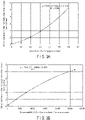
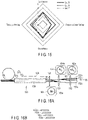
- FIG. 3A shows a graph in which the horizontal axis represents the crimp depth of the crimped paper sheet used for the first filter main body 42 and the second filter main body 52, and the vertical axis represents the airflow resistance (mmH 2 O/mm) per 1 mm of the filter main body after crimp process serving as the first filter main body 42 and the second filter main body 52. It is appreciated that the airflow resistance per unit length increases as the crimp depth increases.
- FIG. 3B shows a graph in which the horizontal axis represents the air permeability (CU) of the first filter main body 42 and the second filter main body 52 after crimping process of the paper sheet used for the first filter main body 42 and the second filter main body 52, and the vertical axis represents the airflow resistance (mmH 2 O/mm) per 1 mm of the filter body after crimp process serving as the first filter main body 42 and the second filter main body 52.
- the lower left plot in FIG. 3B is an example in which the crimp depth is 0 mm.
- the upper right plot in FIG. 3B is an example in which the crimp depth is 0.6 mm.
- the remaining plot in FIG. 3B is an example in which the crimp depth is 0.3 mm.
- the airflow resistance of the first filter main body 42 be higher than the airflow resistance of the second filter main body 52.
- the airflow resistance of the first filter main body 42 is, for example, 0 mmH 2 O/mm to 12 mmH 2 O/mm, preferably 4 mmH 2 O/mm to 12 mmH 2 O/mm.
- the airflow resistance of the second filter main body 52 is, for example, 0 mmH 2 O/mm to 12 mmH 2 O/mm, preferably 3 mmH 2 O/mm to 12 mmH 2 O/mm.
- the first wrapper 44, the second wrapper 54, and the forming paper 36 are formed from pulp, for example.
- the first wrapper 44, the second wrapper 54, and the forming paper 36 are used to maintain the shape of the first filter main body 42 and the second filter main body 52. It is preferable that the first wrapper 44, the second wrapper 54, and the forming paper 36 have a basis weight of, for example, 30 g/m 2 or more.
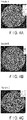
- FIGS. 4A to 4C show the mouthpiece side end surface 46 of the filter 14 of the cigarette 10 before smoking, in which the crimp depth via the crimp process is changed accordingly.
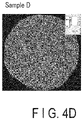
- FIG. 4D shows a mouthpiece side end of an acetate filter of a smoking article (here, Winston compact 6 mg manufactured by JAPAN TOBACCO INC.).
- the filter 14 shown in FIGS. 4A to 4D has an outer diameter of, for example, 6.8 mm.
- FIG. 4A The example shown in FIG. 4A is referred to as Sample A
- the example shown in FIG. 4B is referred to as Sample B
- the example shown in FIG. 4C is referred to as Sample C
- the example (reference example) shown in FIG. 4D is referred to as Sample D.
- the void areas of Samples A, B, C, and D were measured using a digital microscope (VHX2000) manufactured by Keyence Corporation. This time, each of Samples A, B, C, and D was photographed at a magnification of 300 times (10 ⁇ 30 times). At this moment, two kinds of photographs were taken, a photograph taken with normal exposure and a photograph taken with gain (adjustment of light) increased to the maximum.
- VHX2000 digital microscope
- the area measurement processing was executed by setting the following:
- the crimp depth (the distance between the top parts 116a and 118a of the crimping tool 100) is 0.6 mm.
- the crimp depth is 0.3 mm.
- the crimp depth is 0.1 mm.
- the crimp process is irrelevant.
- FIG. 5 shows the void areas of Samples A, B, C, and D.
- the void area of the example shown in Sample A of FIG. 4A is approximately 1.4 to 1.5 mm 2 .
- the void area of the example shown in Sample B of FIG. 4B is approximately 3.1 to 3.2 mm 2 .
- the void area of the example shown in Sample C of FIG. 4C is approximately 9.3 to 9.4 mm 2 .
- the void area of the example shown in Sample C of FIG. 4D is approximately 0.2 mm 2 .
- the mouthpiece side end surface 46 of the first filter main body (paper filter) 42 shown in Sample A of FIG. 4A particularly a region between the center axis L of the filter 14 and the outer peripheral surface of the first filter main body 42, a user does not visually recognize voids easily, similarly to the mouthpiece side end of the acetate filter. Therefore, the mouthpiece side end surface 46 of the first filter main body 42 having an appropriately large crimp depth has an appropriate aesthetic appearance.
- the area of voids when the first end surface 46 of the first filter main body 42 is viewed be preferably 3 mm 2 or less.
- the void volume when the first end surface 46 of the first filter main body 42 is viewed be equal to or greater than the void volume of the mouthpiece end surface of the acetate filter.
- a cigarette 10 including the filter 14, for example, will be considered. As shown in FIGS. 6 and 7 , here, Lot 1 to Lot 7 were prepared.
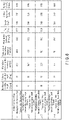
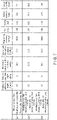
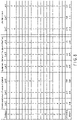
- FIGS. 6 and 7 show a filter structure, filter body length, airflow resistance, tar amount, nicotine amount, carbon monoxide amount, and the number of puffs of Lot 1 to Lot 7 of combustion type flavor inhalation articles.
- the tar and nicotine values shown in FIGS. 6 and 7 are measured using an automatic smoking machine.
- the nicotine value is measured by collecting a particulate fraction of mainstream smoke under determined conditions via the automatic smoking machine and then melting the collected particles.
- the tar value is measured by subtracting the weights of nicotine and water from the weight of the mainstream smoke particles.
- Lot 1 and Lot 5 are reference examples in which no paper filter is used.
- an acetate filter is used for a mouthpiece side filter corresponding to the first filter main body 42
- a charcoal filter is used for the tobacco rod 12 side filter corresponding to the second filter main body 52.
- Lot 1 is a reference example of Lot 2 to Lot 4 using a paper filter for the filter 14.
- Lot 1 is a cigarette sold as Winston compact blue 6 by JAPAN TOBACCO INC. in Japan and having a controlled tar amount of approximately 6 mg.
- Lot 5 is a reference example of Lot 6 and Lot 7 using a paper filter for the filter 14.
- Lot 5 is a cigarette sold as Winston compact blue 1 by JAPAN TOBACCO INC. in Japan and having a controlled tar amount of approximately 1 mg.
- the cigarettes 10 have an entire length of, for example, 83 mm as described above.
- the composition of the rods 12 is substantially the same.
- the tobacco rods 12 have a substantially common entire length of, for example, 56 mm.
- the filters 14 have a common entire length of, for example, substantially 27 mm.
- the target of the amount of tar was set to 6 mg.
- the crimp depth of the sheet of the second filter main body 52 on the tobacco rod 12 side was set to 0.2 mm.
- glassine paper was used for the second filter main body 52 of Lot 2. It is said that glassine paper tends to have a low airflow resistance.
- the airflow resistance of the tobacco side filter is 3.0 mmH 2 O.
- the airflow resistance of the second filter main body 5 2 formed of the paper filter paper of Lot 3 is greater than the airflow resistance of the second filter main body 52 formed of the glassine paper of Lot 2.
- the void volume (void area) when the first end surface 46 of the first filter main body 42 is viewed is smaller than the void volume (void area) when the third end surface 56 of the second filter main body 52 is viewed.
- the airflow resistance of the first filter main body 42 on the mouthpiece side be higher than the airflow resistance of the second filter main body 52 on the tobacco rod 12 side, and that the first filter main body 42 have a higher filtration for the fluid flowing from the tobacco rod 12 toward the mouthpiece side end surface 46 than that of the second filter main body 52.
- the target of the amount of tar was set to 1 mg.
- the airflow resistance of the first filter main body 42 on the mouthpiece side is higher than the airflow resistance of the second filter main body 52 on the tobacco rod 12 side, and the first filter main body 42 has a higher filtration than that of the second filter main body 52.
- the airflow resistance of the first filter main body 42 on the mouthpiece side is lower than the airflow resistance of the second filter main body 52 on the tobacco rod 12 side, and contrary to Lot 2 to Lot 4 and Lot 6, the second filter main body 52 has a higher filtration than that of the first filter main body 42.
- the void volume (void area) when the first end surface 46 of the first filter main body 42 is viewed is smaller than the void volume (void area) when the third end surface 56 of the second filter main body 52 is viewed.
- the void volume (void area) when the first end surface 46 of the first filter main body 42 is viewed is greater than the void volume (void area) when the third end surface 56 of the second filter main body 52 is viewed.
- the first filter main body 42 and the second filter main body 52 made of paper exhibit appropriate filtration characteristics for the fluid flowing from the tobacco rod 12 toward the mouthpiece side end surface 46 through appropriate settings of the sheet crimp depth and length As in Lots 2 to 4, 6 and 7, either the first filter main body 42 or the second filter main body 52 may be longer.
- the first filter main body 42 and the second filter main body 52 may have the same length
- Lot 1 to Lot 4 of the cigarettes 10 before smoking were subjected to the sensory evaluation of the overall appearance difference of the cigarette 10, the appearance difference of the mouthpiece side end surface 46, and the like/dislike level of the appearance of the cigarette 10.
- the evaluation criterion is the appearance of Lot 1 (Winston compact 6 mg). That is, evaluation was performed on the difference in appearance and the like/dislike level of appearance as compared to Lot 1.
- the number of evaluators was nineteen.
- the appearance difference shown in FIGS. 8 to 10 represents a comparison with the cigarette of Lot 1.
- the evaluation of the appearance difference was set as follows:
- Lot 2 has an evaluation score average of 4.37, and it can be evaluated that there is no difference in appearance from the cigarette of Lot 1.
- Lot 3 also has an evaluation score average of 3.74, and it can be evaluated that the difference in appearance from the cigarette of Lot 1 is small.
- Lot 4 has an evaluation score average of 2.84, and it can be evaluated that there is a difference in appearance from the cigarette of Lot 1.
- Lot 2 has the smallest standard deviation. Therefore, it can be said that the evaluation score average of the overall appearance difference of the cigarette 10 of Lot 2 has a small variation in evaluation as compared to Lot 3 and Lot 4. However, it can be said that the standard deviations of Lot 3 and Lot 4 are also sufficiently small. Therefore, it can be said that the evaluation score averages of the overall appearance difference of the cigarettes 10 of Lot 2 to Lot 4 have, on the whole, small variations in evaluation and exhibit high reliability.
- the mouthpiece side end surface 46 of the cigarette 10 of Lot 2 has an evaluation score average of 3.53, and it can be evaluated that the difference in appearance from the mouthpiece end surface of the cigarette of Lot 1 (see FIG. 4D ) is small.
- the mouthpiece side end surface 46 of the cigarette 10 of Lot 3 has an evaluation score average of 2.37, and it can be evaluated that there is a difference in appearance from the mouthpiece end surface of the cigarette of Lot 1.
- the mouthpiece side end surface 46 of the cigarette 10 of Lot 4 (see FIG. 4C ) has an evaluation score average of 1.26, and it can be evaluated that there is a significant difference in appearance from the mouthpiece end surface of the cigarette of Lot 1.
- Lot 4 has the smallest standard deviation. Therefore, it can be said that the valuation score average of the appearance difference of the mouthpiece side end surface 46 the cigarette 10 of Lot 4 has a small variation in evaluation as compared to Lot 2 and Lot 3. However, it can be said that the standard deviations of Lot 2 and Lot 3 are also sufficiently small. Therefore, it can be said that the evaluation score averages of the appearance difference of the mouthpiece side end surfaces 46 of the cigarettes 10 of Lot 2 to Lot 4 have, on the whole, small variations in evaluation and exhibit high reliability.
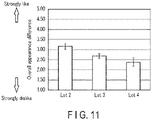
- the like/dislike level shown in FIGS. 8 and 11 represents a comparison with the cigarette of Lot 1.
- the like/dislike evaluation was set as follows:
- the cigarette 10 Lot 2 has an evaluation score average of 3.16, and it can be evaluated that there is no difference in appearance from the cigarette of Lot 1.
- the cigarette 10 of Lot 3 has an evaluation score average of 2.68, and it can be evaluated that the cigarette 10 of Lot 3 has a difference in appearance from the cigarette of Lot 1. That is, it can be evaluated that the appearance of the cigarette 10 of Lot 3 was evaluated lower as compared to that of the cigarette 10 of Lot 2.
- Lot 4 has an evaluation score average of 2.37, and it can be evaluated that the cigarette 10 of Lot 4 has a difference in appearance from the cigarette of Lot 1. Further, it can be evaluated that the appearance of the cigarette 10 of Lot 4 was evaluated lower as compared to those of the cigarettes 10 of Lot 2 and Lot 3.
- Lot 3 has the smallest standard deviation. Therefore, it can be said that the evaluation score average of the like/dislike level of the cigarette 10 of Lot 3 has a small variation in evaluation as compared to Lot 2 and Lot 4. However, it can be said that the standard deviations of Lot 2 and Lot 4 are also sufficiently small. Therefore, it can be said that the evaluation score averages of the like/dislike levels of the cigarettes 10 of Lot 2 to Lot 4 have, on the whole, small variations in evaluation and exhibit high reliability.
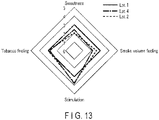
- the smoking taste was evaluated from the four viewpoints of sweetness, smoke volume feeling, stimulation, and tobacco feeling (smoking satisfaction).
- the evaluation criterion is the smoking taste (sweetness, smoke volume feeling, stimulation, and tobacco feeling) of Lot 1 (Winston compact 6 mg), and this was set to 3 points.
- the number of evaluators was sixteen, partly overlapping with those of the sensory evaluation described above. It can be evaluated that as the average value (AVERAGE) of the evaluation score of sweetness, smoke volume feeling, stimulation, and tobacco feeling approaches 3 points, the user determines that the appearance difference from Lot 1 is small. It can be determined that as the value of the standard deviation (STDEV) is smaller, the variance of the evaluation among sixteen people is small.
- the sweetness of both Lot 2 and Lot 4 was evaluated to be lower than that of Lot 1.
- the sweetness of Lot 2 is closer to that of Lot 1 than Lot 4.
- the smoke volume feeling of both Lot 2 and Lot 4 was evaluated to be lower than that of Lot 1.
- the smoke volume feeling of Lot 4 is closer to that of Lot 1 than Lot 2.
- the stimulation of Lot 6 was evaluated to be improved (elevated) upon that of Lot 5, and the stimulation of Lot 7 was evaluated to be nearly equal to that of Lot 5.
- a cigarette has a higher tobacco feeling (smoking satisfaction) as the tar amount or the nicotine amount increases. For this reason, it is easy to predict that the tobacco feeling is difficult to obtain for Lot 5, Lot 6, and Lot 7 having a low tar amount of 1 mg as compared to those of 6 mg.
- the cigarette 10 that includes the filter 14 formed of a paper sheet.
- the filter 14 having the same outer diameter
- the filter 14 formed of a paper sheet is made of paper, it is possible to have an aesthetic appearance equivalent to that of an acetate filter by forming the first end surface (mouthpiece side end surface) 46 to have a void volume equivalent to that of the acetate filter.
- the filter 14 formed of a paper sheet can have an aesthetic appearance equivalent to that of the acetate filter. Therefore, while the filter 14 according to the present embodiment is made of paper, it is possible to improve the aesthetic appearance.
- the filter 14 formed of a paper sheet, by appropriately adjusting a material, basis weight, air permeability, crimp depth, void volume, airflow resistance, and the like of the first filter main body 42 and the second filter main body 52, it is possible to control the amount of tar, and the like, and control smoking taste (sweetness, smoke volume feeling, stimulation, and tobacco feeling).
- the filter 14 is provided with suitable filtration characteristics for the fluid flowing from the tobacco rod 12 toward the mouthpiece side end surface 46 during smoking. That is, the cigarette 10 is provided that includes the filter 14 having suitable filtration characteristics.
- the first filter main body 42 and the second filter main body 52 are formed by, for example, crimping a paper sheet.
- the types of processing for the sheet forming the filter main body can be appropriately combined, for example, the first filter main body 42 can be formed by crimp process and the second filter main body 52 can be formed by corrugate process.
- the crimping tool 100 as shown inFIGS. 2A and 2B is not used. If a non-woven fabric is used, instead of the crimping tool 100, a sheet folding machine 150 (see FIG. 16A ) that overlaps and folds a plurality of sheets 152a, 152b, 152c, and 152d is used. The sheet folding machine 150 folds, as shown in FIGS.
- the plurality of non-woven fabric sheets 152a, 152b, 152c, 152d overlapped with their ends shifted, while bending the sheets into a substantially S shape or a substantially Z shape using a plurality of guides 162, 164, and 166, for example.
- the guides 162, 164, and 166 are spaced apart from each other along the moving direction of the sheets 152a, 152b, 152c, and 152d.
- the guides 162, 164 and 166 each have, for example, a disk shape, and are respectively provided with opening grooves 162a, 164a, 166a for performing folding process on the plurality of sheets 152a, 152b, 152c and 152d.
- the plurality of sheets 152a, 152b, 152c, and 152d are gradually close to the substantially S shape or substantially Z shape, and are folded inside the pipe 156. After the first filter main body 42 is folded, the shape of the first filter main body 42 is maintained by the first wrapper 44.
- the shape of the second filter main body 52 is maintained by the second wrapper 54.
- the first filter main body 42 and the second filter main body 52 are once formed into, for example, a substantially 120 mm rod shape, and are then cut into appropriate lengths.
- the void volume when the first end surface 46 of the first filter main body 42 made of non-woven fabric is viewed is smaller than the void volume when the third end surface 56 of the second filter main body 52 made of non-woven fabric or paper is viewed. It is preferable that the area of voids when the first end surface 46 of the first filter main body 42 made of non-woven fabric is viewed be, for example, 3 mm 2 or less, similarly to the area of voids when the first end surface 46 of the first filter main body 42 made of paper is viewed. It is preferable that the void volume when the first end surface 46 of the first filter main body 42 made of non-woven fabric is viewed be greater than the void volume of the acetate filter on the mouthpiece side.
- the airflow resistance of the first filter main body 42 made of non-woven fabric be higher than the airflow resistance of the second filter main body 52 made of non-woven fabric or paper. If the first filter main body 42 of the filter 14 is made of non-woven fabric, it is also possible to enhance the aesthetic appearance in the same manner as when it is made of paper. Further, even if the first filter main body 42 and the second filter main body 52 are made of non-woven fabric, it is possible to exhibit substantially the same filter performance (filtration characteristics) as the first filter main body 42 and the second filter main body 52 made of paper.
- the filter 14 that is formed of a paper sheet or a non-woven fabric sheet, enhances the aesthetic appearance, and has appropriate filtration characteristics, and the cigarette (smoking article) 10 including the filter 14.
- a paper material and tobacco material can be formed of naturally derived components. Therefore, it is possible to reduce environmental load on nature as compared to the case of using an acetate filter (Lot 1 and Lot 5), for example.
- a second embodiment will be described with reference to FIG. 17 .
- This embodiment is a modification of the first embodiment.
- a flavor inhalation article 210 is one of members constituting a non-combustion heating type flavor inhalation article.
- the flavor inhalation article 210 shown in FIG. 17 is a replaceable cartridge for use with a heater.
- the flavor inhalation article 210 has a columnar shape extending along one direction.
- the flavor inhalation article 210 has a base portion 212 forming one end thereof, a filter 214 forming an end opposite to the base portion 212, and a paper tube portion 216 between the base portion 212 and the filter 214.
- the base portion 212, the paper tube portion 216, and the filter 214 are connected by a cigarette paper 218.
- the paper tube portion 216 is a paper tube formed by wrapping paper into a cylindrical shape, and the inside thereof is hollow.
- the base portion 212 includes a filler 222 and a first cigarette paper 224 wrapped around the filler 222.
- the filler 222 includes, for example, a tobacco material and an aerosol source.
- the aerosol source is heated at a predetermined temperature to generate an aerosol with a substance such as a flavor substance derived from a flavor source of the filler 222.
- the aerosol source may be, for example, glycerin, propylene glycol, triacetin, 1,3 -butanediol, or a mixture thereof.
- the content of the aerosol source in the filler 222 is not particularly limited, and from the viewpoint of generating a sufficient amount of aerosol and providing decent flavor, the content is usually 5% by mass or more, preferably 10% by mass or more, and usually 50% by mass or less, preferably 25% by mass or less.
- the filler 222 includes a tobacco material as a flavor source.
- the tobacco material is, for example, cut tobacco.
- the content of the filler 222 in the flavor inhalation article 210 is, for example, 200 to 400 mg, and preferably 250 to 320 mg.
- the moisture content of the filler 222 is, for example, 8 to 18% by mass, preferably 10 to 16% by mass. Such a moisture content suppresses occurrence of staining on the wrapping paper and improves roll-up machinability during production of the base portion 212.
- the filter 214 includes a first filter plug 232, a second filter plug 234, and forming paper 236 covering and connecting them. Lengths of the first filter plug 232 and the second filter plug 234 along longitudinal axis L are referred to as L1 and L2, respectively.
- the second filter plug 234 is disposed between the paper tube portion 216 and the first filter plug 232.
- the first filter plug 232 includes a first filter main body (filter element, filter material) 242, and a first plug wrapper (tubular portion) 244 wrapped around the first filter main body 242.
- the length L1 of the first filter plug 232 is the same as the length of the first filter main body 242.
- the first filter main body 242 includes a first end surface 246 on the mouthpiece side (mouthpiece side end surface), and a second end surface 248 on the side opposite to the mouthpiece side (end surface on the base portion 212 side).
- the first end surface 246 and the second end surface 248 have an outer shape of, for example, a substantially circular shape.
- a longitudinal axis (center axis) L that intersects the first end surface 246 and the second end surface 248 is defined.
- the first end surface 246 is on the mouthpiece side, and the second end surface 248 is on the base portion 212 side. The first end surface 246 is exposed outside.
- the second filter plug 234 includes a second filter main body (filter element, filter material) 252, and a second wrapper (tubular portion) 254 wrapped around the outer periphery of the second filter main body 252.
- the length L2 of the second filter plug 234 is the same as the length of the second filter main body 252.
- the second filter main body 252 includes a third end surface 256 and a fourth end surface 258.
- the third end surface 256 and the fourth end surface 258 have an outer shape of, for example, a substantially circular shape.
- a longitudinal axis (center axis) L that intersects the third end surface 256 and the fourth end surface 258 is defined.
- the third end surface 256 is on the mouthpiece side, and the fourth end surface 258 is on the substrate 212 side.
- the third end surface 256 faces or is in contact with the second end surface 248.
- the forming paper 236 is wrapped around the outer peripheries of the first wrapper 244 and the second wrapper 254 to connect the first wrapper 244 and the second wrapper 254.
- the cigarette paper 218 is wrapped around the outer peripheries of the base portion 212, the paper tube portion 216, and the filter 214 to connect the base portion 212 and the filter 214 via the paper tube portion 216.
- the first filter main body 242 and the second filter main body 252 are formed of a paper sheet or a non-woven fabric sheet.
- the relationship between the first filter main body 242 and the second filter main body 252 is the same as the relationship between the first filter main body 42 and the second filter main body 52 described in the first embodiment.
- the sheet of the first filter main body 242 be crimped to a greater extent than the sheet of the second filter main body 252. It is preferable that the airflow resistance of the first filter main body 242 be higher than the airflow resistance of the second filter main body 252. The airflow resistance of the first filter main body 242 may be lower than the airflow resistance of the second filter main body 252. It is preferable that the airflow resistance of the first filter main body 242 be, for example, 0 mmH 2 O/mm to 12 mmH 2 O/mm, and that the airflow resistance of the second filter mainbody 252 be, for example, 0 mmH 2 O/mm to 12 mmH 2 O/mm.
- the air permeability of the sheet of the first filter main body 242 be 1000 CU (CORESTA Unit) to 30000 CU after crimp process, and that the air permeability of the sheet of the second filter main body 252 be 0 CU to 10000 CU after crimp process.
- the void volume when the mouthpiece side end surface 246 of the first filter main body 242 is viewed is equal to or greater than the void volume of the acetate filter on the mouthpiece side. It is preferable that the area of voids when the mouthpiece side end surface 246 of the first filter main body 242 is viewed be 3 mm 2 or less.
- the filter 214 has the aesthetic appearance as in the filter 14 described in the first embodiment, and is formed in a state of having appropriate filtration characteristics for an aerosol containing a substance such as a flavor substance derived from a flavor source of the filler 222 flowing from the filler 222 of the base portion 212 toward the mouthpiece side end surface 246.
- the flavor inhalation article 210 that includes the filter 14 formed of a paper sheet
- the filter 214 formed of a paper sheet is made of paper, it is possible to have an aesthetic appearance equivalent to that of an acetate filter by forming voids equivalent to those of the acetate filter. Therefore, while the filter 214 according to the present embodiment is made of paper, it is possible to improve the aesthetic appearance.
- the filter 214 formed of a paper sheet it is possible to control smoking taste (sweetness, smoke volume feeling, stimulation, and tobacco feeling) by appropriately adjusting a material, basis weight, air permeability, crimp depth, void volume, airflow resistance, and the like of the first filter main body 242 and the second filter main body 252.
- smoking taste sweetness, smoke volume feeling, stimulation, and tobacco feeling
- the filter 214 having suitable filtration characteristics is provided. That is, the flavor inhalation article 210 is provided that includes the filter 214 having suitable filtration characteristics.
- the filter 214 that is formed of a paper sheet or a non-woven fabric sheet, enhances aesthetic appearance, and has appropriate filtration characteristics, and the flavor inhalation article 210 including the filter 214
- the filter 214 may be provided with an opening portion to take in air from the outside. In this case, it is desirable to provide an opening portion in the paper tube portion 216.
- the dimension in the longitudinal direction i.e., the length
- the peripheral length of the flavor inhalation article 210 is preferably 15 to 25 mm, more preferably 17 to 24 mm, and even more preferably 20 to 23 mm.
- the lengths of the base portion 212, the paper tube portion 216, the first filter plug 232, and the second filter plug 234 may be 20 mm, 20 mm, 7 mm, and 8 mm, respectively, but the lengths of these individual segments can be appropriately changed according to manufacturing suitability, required qualities, and the like.
- the size of the cut tobacco used in the filler 222 and the method for preparing them are not particularly limited.
- dried tobacco leaf cut to have a width of 0.8 to 1.2 mm may be used.
- dried tobacco leaf may be pulverized and homogenized to have an average particle size of about 20 to 200 ⁇ m, processed into a sheet, and then cut to have a width of 0.8 to 1.2 mm.
- the above sheet-processed material that is gathered instead of being cut may be used as the tobacco material.
- first wrapper 244 and second wrapper 254 those the same as the wrappers 44 and 54 and the tipping paper 16 used for the cigarette 10 described in the first embodiment can be used.
- the flavor inhalation article 210 including the filter 214 all or most of elements such as a paper material and tobacco material can be formed of naturally derived components. Therefore, it is possible to reduce environmental burden nature as compared with the case of using, for example, an acetate filter for the filter.
- a third embodiment will be described with reference to FIG. 18 .
- a flavor inhalation article 310 is one of members constituting a non-combustion heating type flavor inhalation article.
- a flavor inhalation article (capsule) 310 shown in FIG. 18 is a replaceable cartridge for use with a heater.
- the flavor inhalation article 310 has a columnar shape extending along one direction.
- the flavor inhalation article 310 includes a capsule body (tubular portion) 311, a tobacco material 312 enclosed in the capsule body 311, a filter 314 preventing the tobacco material 312 from leaking, and a ring-shaped cap (end piece) 316 supporting the filter 314 with respect to the capsule body 311.
- the capsule body 311 includes an opening 322 at one end (mouthpiece side) and a mesh portion 324 at the other end (tobacco material 312 side).
- the capsule body 311 includes a step 326 on which the filter 314 is seated.
- the mesh portion 324 of the capsule body 311 the mesh size is adjusted, for example, such that it is permeable to air and appropriate vapor but prevents the tobacco material 312 from leaking out.
- the capsule body 311 and the cap 316 an appropriate material such as a paper material or non-woven fabric is used.
- the capsule body 311 and the cap 316 may be formed of a resin material.
- the tobacco material 312 may also be, for example, granular.
- the filter 314 allows air and appropriate vapor to pass therethrough and is formed in a substantially cylindrical shape.
- the filter 314 includes a first filter main body 342, and a second filter main body 352. Lengths of the first filter main body 342 and the second filter main body 352 along longitudinal axis L are referred to as L1 and L2, respectively.
- the first filter main body 342 and the second filter main body 352 are held by the capsule body (tubular portion) 311.
- the cap (end piece) 316 When the cap (end piece) 316 is placed for the capsule body 311, the cap 316 supports the first filter main body 342 and the second filter main body 352 and prevents the first filter main body 342 and the second filter main body 352 from being pulled out of the capsule body 311.
- the first filter main body 342 is formed of an appropriate paper material or non-woven fabric, and a material, basis weight, air permeability, crimp depth, void volume, airflow resistance, and the like are appropriately adjusted.
- the second filter main body 52 described in the first embodiment and the first filter main body 252 described in the second embodiment the second filter main body 352 is formed of an appropriate paper material or non-woven fabric, and a material, basis weight, air permeability, crimp depth, void volume, airflow resistance, and the like are appropriately adjusted.
- the first filter main body 342 includes a first end surface 346 on the mouthpiece side (mouthpiece side end surface) and a second end surface 348 on the side opposite to the mouthpiece side (end surface on the tobacco material 312 side).
- the second filter main body 352 includes a first end surface 356 and a second end surface 358.
- the second end surface 348 and the first end surface 356 face each other or are in contact with each other.
- the first end surface 346 is exposed outside.
- the sheet of the first filter main body 342 is crimped to a greater extent than the sheet of the second filter main body 352. It is preferable that the airflow resistance of the first filter main body 342 be higher than the airflow resistance of the second filter main body 352. The airflow resistance of the first filter main body 342 may be lower than the airflow resistance of the second filter main body 352. It is preferable that the airflow resistance of the first filter main body 342 be, for example, 0 mmH 2 O/mm to 12 mmH 2 O/mm. It is preferable that the airflow resistance of the second filter main body 352 be, for example, 0 mmH 2 O/mm to 12 mmH 2 O/mm.
- the sheet of the first filter main body 342 have an air permeability of, for example, 1000 CU (CORESTA Unit) to 30000 CU after crimp process. It is preferable that the sheet of the second filter main body 352 have an air permeability of, for example, 0 CU to 10000 CU after crimp process.
- the void volume when the first end surface 346 of the first filter main body 342 is viewed is equal to or greater than the void volume of the acetate filter on the mouthpiece. It is preferable that the area of voids when the first end surface 346 of the first filter main body 342 is viewed be 3 mm 2 or less.
- the filter 314 has an aesthetic appearance as in the filter 14 described in the first embodiment and the filter 214 described in the second embodiment, and is formed in a state of having appropriate filtration characteristics for the substance such as the flavor substance derived from the flavor source and the aerosol flowing from the tobacco material 312 toward the mouthpiece side end surface 46.
- the flavor inhalation article 310 that includes the filter 314 formed of a paper sheet
- the filter 314 formed of a paper sheet is made of paper
- the filter 314 formed of a paper sheet it is possible to control smoking taste (sweetness, smoke volume feeling, stimulation, and tobacco feeling) by appropriately adjusting a material, basis weight, air permeability, crimp depth, void volume, airflow resistance, and the like of the first filter main body 342 and the second filter main body 352.
- the filter 314 having suitable filtration characteristics is provided. That is, the flavor inhalation article 310 is provided that includes the filter 314 having suitable filtration characteristics.
- the filter 314 that is formed of a paper sheet or a non-woven fabric sheet, enhances aesthetic appearance, and has appropriate filtration characteristics, and the flavor inhalation article 310 including the filter 314
- the invention of the present application is not limited to the above-described embodiment, and can be variously modified at the implementation stage without departing from the gist thereof.
- each embodiment may be carried out in combination as appropriate as possible, and in that case, the combined effect can be obtained.
- the above-described embodiment includes inventions at various stages, and various inventions can be extracted by an appropriate combination in a plurality of disclosed constitutional requirements.
Landscapes
- Cigarettes, Filters, And Manufacturing Of Filters (AREA)
Abstract
Description
- The present invention relates to a filter, a smoking article, and a flavor inhalation article.
- For example, Jpn.
PCT National Publication No. 2014-515933 - In the case of using a filter (paper filter) obtained by folding a paper sheet, for example, it is usual that a user can visually recognize a large number of holes formed by the folding process on the mouthpiece side. Therefore, if a filter made of paper is used, for example, a requirement exists to improve the aesthetic appearance of the filter. Furthermore, for filters, a requirement exists to control a degree of filtration of, for example, the amount of tar, the amount of nicotine, and the like.
-
- [Patent Literature 1] Jpn. Pat. Appln. KOKAI Publication No.
H7-166 - [Patent Literature 2] Jpn. Pat. Appln. KOKAI Publication No.
7-8254 - [Patent Literature 3] Jpn. PCT National Publication No.
2014-515933 - An object of this invention is to a provide a filter that is formed of a paper sheet or non-woven fabric sheet, enhances aesthetic appearance, and has appropriate filtration characteristics, a smoking article including the filter, and a flavor inhalation article including the filter.
- According to one embodiment, a filter includes: a first filter main body including a first end surface on a mouthpiece side and a second end surface on a side opposite to the mouthpiece side; and a second filter main body on a side of the second end surface of the first filter main body, and including a third end surface facing the second end surface. The first filter main body and the second filter main body are formed of a paper sheet or a non-woven fabric sheet. A void volume when the first end surface of the first filter main body is viewed is smaller than a void volume when the third end surface of the second filter main body is viewed.
-
-
FIG. 1 is a schematic cross-sectional view showing a combustion type flavor inhalation article including a filter according to a first embodiment. -
FIG. 2A is a schematic view showing a state in which a paper sheet serving as a first filter main body and a second filter main body passes through a crimping tool to have a suitable crimp depth -
FIG. 2B is a schematic view showing a state in which the paper sheet serving the first filter main body and the second filter main body passes through the crimping tool to have a suitable crimp depth greater than the example shown inFIG. 2A . -
FIG. 3A is a graph showing a crimp depth after crimping process of the paper sheet serving as the first filter main body and the second filter main body, and airflow resistance (mmH2O/mm) per 1 mm length of the filter main body after crimp process serving as the first filter main body and the second filter main body. -
FIG. 3B is a graph showing air permeability (CU) of the filter main body after crimping process of the paper sheet serving as the first filter main body and the second filter main body, and airflow resistance per 1 mm (mmH2O/mm) of the filter main body after crimp process serving as the first filter main body and the second filter main body. -
FIG. 4A is a photograph showing a mouthpiece side end surface of a first filter plug including the first filter main body formed of a sheet having a crimp depth of 0.6 mm, viewed from a direction of arrow IV inFIG. 1 . -
FIG. 4B is a photograph showing the mouthpiece side end surface of the first filter plug including the first filter main body formed of the sheet having a crimp depth of 0.3 mm, viewed from the direction of arrow IV inFIG. 1 . -
FIG. 4C is a photograph showing the mouthpiece side end surface of the first filter plug including the first filter main body formed of the sheet having a crimp depth of 0.1 mm, viewed from the direction of arrow IV inFIG. 1 . -
FIG. 4D is a photograph showing the mouthpiece side end surface of the first filter plug formed of an acetate filter. -
FIG. 5 is a schematic graph showing void areas of mouthpiece side end surfaces of the filters shown inFIGS. 4A to 4D . -
FIG. 6 schematically shows a filter structure, filter body length, airflow resistance, tar amount, nicotine amount, carbon monoxide amount, and the number of puffs ofLot 1 toLot 4 of combustion type flavor inhalation articles in which the tar amount is set to 6 mg. -
FIG. 7 schematically shows a filter structure, filter body length, airflow resistance, tar amount, nicotine amount, carbon monoxide amount, and the number of puffs ofLot 5 toLot 7 of combustion type flavor inhalation articles in which the tar amount is set to 1 mg. -
FIG. 8 schematically shows the scores of sensory evaluation by nineteen evaluators for the overall appearance difference of the cigarettes, the appearance difference of the mouthpiece end surfaces of the filters, and the like/dislike levels ofLot 2 toLot 4 as compared toLot 1. -
FIG. 9 is a schematic graph showing the results of sensory evaluation by nineteen evaluators for the overall appearance difference of the cigarettes ofLot 2 toLot 4 as compared toLot 1. -
FIG. 10 is a schematic graph showing the results of sensory evaluationby nineteen evaluators for the appearance difference of the mouthpiece end surfaces of the cigarettes ofLot 2 toLot 4 as compared toLot 1. -
FIG. 11 is a schematic graph showing the results of sensory evaluation by nineteen evaluators for the like/dislike level of the cigarettes ofLot 2 toLot 4 as compared toLot 1. -
FIG. 12 schematically shows the scores of sensory evaluation by nineteen evaluators for the smoking tastes (sweetness, smoke volume feeling, stimulation, and tobacco feeling) of the cigarettes ofLot 2 toLot 4 as compared toLot 1 when the smoking tastes (sweetness, smoke volume feeling, stimulation, and tobacco feeling) ofLot 1 are set to three points. -
FIG. 13 is a schematic graph showing the results of sensory evaluationby nineteen evaluators for the smoking tastes (sweetness, smoke volume feeling, stimulation, and tobacco feeling) of the cigarettes ofLot 2 toLot 4 as compared toLot 1 when the smoking tastes (sweetness, smoke volume feeling, stimulation, and tobacco feeling) ofLot 1 are set to three points. -
FIG. 14 schematically shows the scores of sensory evaluation by sixteen evaluators for the smoking tastes (sweetness, smoke volume feeling, stimulation, and tobacco feeling) of the cigarettes ofLot 6 andLot 7 as compared toLot 5 when the smoking tastes (sweetness, smoke volume feeling, stimulation, and tobacco feeling) ofLot 5 are set to three points. -
FIG. 15 is a schematic graph showing the results of sensory evaluationby sixteen evaluators for the smoking tastes (sweetness, smoke volume feeling, stimulation, and tobacco feeling) of the cigarettes ofLot 6 toLot 7 as compared toLot 5 when the smoking tastes (sweetness, smoke volume feeling, stimulation, and tobacco feeling) ofLot 5 are set to three points. -
FIG. 16A is a schematic view showing a state in which a filter main body is folded into a pipe through a plurality of guides of a filter main body forming machine with the ends of non-woven fabric sheets being shifted and overlapped. -
FIG. 16B is a schematic view showing a state of a non-woven fabric viewed from a direction indicated byarrow 16B inFIG. 16A in which the ends of sheets are shifted and overlapped. -
FIG. 17 is a schematic cross-sectional view showing a non-combustion heating type flavor inhalation article including a filter according to a second embodiment. -
FIG. 18 is a schematic cross-sectional view showing a non-combustion heating type flavor inhalation article including a filter according to a third embodiment. - Hereinafter, a filter used for a flavor inhalation article and a flavor inhalation article will be described with reference to the drawings.
- A flavor inhalation article member according to an embodiment includes a base member. The base member is, for example, a flavor inhalation article member to be used in combination with a tobacco material. The base member may be at least one of a member constituting a combustion type flavor inhalation article, a member constituting a non-combustion heating type flavor inhalation article, or a member constituting a non-heating type flavor inhalation article.
- The tobacco material is, for example, cut tobacco. A material for the cut tobacco is not particularly limited, and known materials such as lamina and stem can be used. In addition to the cut tobacco, the tobacco material may also be, for example, granular.
- A combustion type flavor inhalation article is a smoking article that provides tobacco flavor to a consumer by burning a tobacco material.
- The non-combustion heating type flavor inhalation article is an article that provides tobacco flavor to a consumer by heating a tobacco material without burning the tobacco material. A heating temperature of the non-combustion heating type flavor inhalation article can be appropriately set, and is in a wide range, for example, from a temperature close to normal temperature to a temperature at which the tobacco material does not burn. The heating temperature of the non-combustion heating type flavor inhalation article is, for example, approximately 30 °Cto 350 °C.
- The non-heating type flavor inhalation article is an article that provides tobacco flavor to a consumer without burning or heating the tobacco material.
- In the first embodiment, a cigarette as a typical example of a combustion type flavor inhalation article (smoking article) 10 containing a tobacco material will be described. In the first embodiment, an example of the
cigarette 10 will be described with reference toFIGS. 1 to 16B . -
FIG. 1 is a cross-sectional view of thecigarette 10. Thecigarette 10 includes atobacco rod 12, afilter 14, and tippingpaper 16. Thecigarette 10 has a total length of, for example, approximately 65 mm to 100 mm. Thecigarette 10 has an outer diameter of, for example, approximately 5 mm to 10 mm. - The
tobacco rod 12 includes a tobacco material (cut tobacco) 22, andcigarette paper 24 wrapped around thetobacco material 22. Thetobacco rod 12 according to the present embodiment has, for example, a diameter of approximately 7 mm, and a length of approximately 83 mm. - The
filter 14 includes afirst filter plug 32 on the mouthpiece side, asecond filter plug 34 on thetobacco rod 12 side, and formingpaper 36 wrapped around outer peripheries of thefirst filter plug 32 and thesecond filter plug 34. Lengths of thefirst filter plug 32 and thesecond filter plug 34 along longitudinal axis L are referred to as L1 and L2, respectively. - The
first filter plug 32 includes a first filter main body (filter element, filter material) 42, and a first wrapper (tubular portion) 44 wrapped around the outer periphery of the first filtermain body 42. The length L1 of thefirst filter plug 32 is the same as the length of the first filtermain body 42. The first filtermain body 42 includes afirst end surface 46 on the mouthpiece side (mouthpiece side end surface), and asecond end surface 48 on the side opposite to the mouthpiece side (end surface on thetobacco rod 12 side). Thefirst end surface 46 and thesecond end surface 48 have an outer shape that is, for example, substantially circular. In the first filtermain body 42, a longitudinal axis (center axis) L that intersects thefirst end surface 46 and thesecond end surface 48 is defined. Thefirst end surface 46 is on the mouthpiece side, and thesecond end surface 48 is on thetobacco rod 12 side. Thefirst end surface 46 is exposed outside. - The
second filter plug 34 includes a second filter main body (filter element, filter material) 52, and a second wrapper (tubular portion) 54 wrapped around the outer periphery of the second filtermain body 52. The length L2 of thesecond filter plug 34 is the same as the length of the second filtermain body 52. The second filtermain body 52 includes athird end surface 56 and afourth end surface 58. Thethird end surface 56 and thefourth end surface 58 have an outer shape that is, for example, substantially circular. In the second filtermain body 52, a longitudinal axis (center axis) L that intersects thethird end surface 56 and thefourth end surface 58 is defined. Thethird end surface 56 is on the mouthpiece side, and thefourth end surface 58 is on thetobacco rod 12 side. Thethird end surface 56 faces or is in contact with thesecond end surface 48. - To the first filter
main body 42 and the second filtermain body 52, for example, a plasticizer such as triacetin, an adsorbent such as activated carbon, or a flavoring agent such as menthol may be added as an additive. - The forming
paper 36 is wrapped around the outer peripheries of thefirst wrapper 44 and thesecond wrapper 54 to connect thefirst wrapper 44 and thesecond wrapper 54. - The tipping
paper 16 is wrapped around the outer peripheries of thetobacco rod 12 and thefilter 14 to connect thetobacco rod 12 and thefilter 14. - The first filter
main body 42 and the second filtermain body 52 are formed of a paper sheet or a non-woven fabric sheet. In the present embodiment, an example will be described in which a sheet (material) forming the first filtermain body 42 and the second filtermain body 52 is made of paper. As a paper sheet, one that can be used as a so-called paper filter by a person skilled in the art can be used as is. As the sheet (material) of the first filtermain body 42 and the second filtermain body 52, for example, glassine paper can be used in addition to the above. - A
paper sheet 102, for example, is crimped by a crimpingtool 100 described below. Thecrimped sheet 102 is subjected to folding process in order to be formed into, for example, a rod of substantially 120 mm. Thereafter, it is cut into appropriate lengths to form the first filtermain body 42 and the second filtermain body 52. The shape of the first filter main body 4s 2 is maintained by thefirst wrapper 44. The shape of the second filtermain body 52 is maintained by thesecond wrapper 54. When the first filtermain body 42 and the second filtermain body 52 are cut to, for example, appropriate lengths, planar end surfaces (mouthpiece side end surfaces 46 and 56, and tobacco-side end surfaces 48 and 58) are respectively formed in the first filtermain body 42 and the second filtermain body 52. - The crimp process to the first filter
main body 42 and the second filtermain body 52 is performed by passing thepaper sheet 102 through an appropriate crimpingtool 100 shown inFIGS. 2A and 2B from a front side of the drawing sheets inFIGS. 2A and 2B to a direction perpendicular to the drawing sheets. The crimpingtool 100 shown inFIGS. 2A and 2B is formed to have an appropriate length in a direction perpendicular to the drawing sheets. The length of the crimpingtool 100 in the direction perpendicular to the drawing sheets is an appropriate length in which thesheet 102 can be crimped. It is preferable that the width of crimpingtool 100 be greater than the width ofsheet 102. - The crimping
tool 100 includes afirst base 112, asecond base 114, a plurality offirst protrusions 116 protruding from thefirst base 112 toward thesecond base 114, and a plurality ofsecond protrusions 118 protruding from thesecond base 114 toward thefirst base 112. Thefirst base 112 and thesecond base 114 may be relatively close to or away from each other. The protrusion amounts of the plurality offirst protrusions 116 with respect to thefirst base 112 are substantially the same. The plurality offirst protrusions 116 are spaced apart at predetermined intervals in the width direction. The protrusion amounts of the plurality ofsecond protrusions 118 with respect to thesecond base 114 are substantially the same. The plurality ofsecond protrusions 118 are spaced apart at predetermined intervals in the width direction. Thefirst protrusions 116 and thesecond protrusions 118 are located at positions separated from each other when thefirst base 112 and thesecond base 114 are brought close to each other. A distance between atop part 116a of thefirst protrusion 116 and atop part 118a of thesecond protrusion 118 along a direction in which thefirst base 112 and thesecond base 114 are close to or away from each other (reference numeral D1 inFIG. 2A and reference numeral D2 inFIG. 2B ) is defined as an amount of engagement. It is preferable that distances D1 and D2 be, for example, approximately 1 mm, or less. By adjusting the amount of engagement of the crimpingtool 100, it is possible to adjust the crimp depth of thepaper sheet 102. The crimp depth can be replaced with a distance between thetop parts adjacent protrusions sheet 102 of the crimpingtool 100. When distance D1 inFIG. 2A is compared with distance D2 inFIG. 2B , distance D2 is larger. At this moment, the crimp depth of thesheet 102 is larger in the example shown inFIG. 2B than in the example shown inFIG. 2A . During the crimp process of thesheet 102, thefirst base 112, thesecond base 114, thefirst protrusions 116, and thesecond protrusions 118 of the crimpingtool 100 are prevented from moving, and their positional relationship is fixed. - The sheet of the first filter
main body 42 is crimped (creped) to a greater crimp depth than the sheet of the second filtermain body 52. That is, the crimp depth of the sheet of the first filter main body 42 (the distance between folds of the sheet) is greater than the crimp depth of the sheet of the second filter main body 52 (the distance between folds of the sheet). - The paper sheet (material) of the first filter
main body 42 has an air permeability of, for example, 1000 CU (CORESTA Unit) to 30000 CU after crimp process. The paper sheet (material) of the second filtermain body 52 has an air permeability of, for example, 0 CU to 10000 CU after crimp process. -
FIG. 3A shows a graph in which the horizontal axis represents the crimp depth of the crimped paper sheet used for the first filtermain body 42 and the second filtermain body 52, and the vertical axis represents the airflow resistance (mmH2O/mm) per 1 mm of the filter main body after crimp process serving as the first filtermain body 42 and the second filtermain body 52. It is appreciated that the airflow resistance per unit length increases as the crimp depth increases. A broken line inFIG. 3A can be approximated by, for example,
-
FIG. 3B shows a graph in which the horizontal axis represents the air permeability (CU) of the first filtermain body 42 and the second filtermain body 52 after crimping process of the paper sheet used for the first filtermain body 42 and the second filtermain body 52, and the vertical axis represents the airflow resistance (mmH2O/mm) per 1 mm of the filter body after crimp process serving as the first filtermain body 42 and the second filtermain body 52. The lower left plot inFIG. 3B is an example in which the crimp depth is 0 mm. The upper right plot inFIG. 3B is an example in which the crimp depth is 0.6 mm. The remaining plot inFIG. 3B is an example in which the crimp depth is 0.3 mm. It is appreciated that not only the airflow resistance but also the air permeability (CU) increase as the crimp depth increases. A broken line inFIG. 3B canbe approximated by, for example,
- It is preferable that the airflow resistance of the first filter
main body 42 be higher than the airflow resistance of the second filtermain body 52. The airflow resistance of the first filtermain body 42 is, for example, 0 mmH2O/mm to 12 mmH2O/mm, preferably 4 mmH2O/mm to 12 mmH2O/mm. The airflow resistance of the second filtermain body 52 is, for example, 0 mmH2O/mm to 12 mmH2O/mm, preferably 3 mmH2O/mm to 12 mmH2O/mm. - The
first wrapper 44, thesecond wrapper 54, and the formingpaper 36 are formed from pulp, for example. Thefirst wrapper 44, thesecond wrapper 54, and the formingpaper 36 are used to maintain the shape of the first filtermain body 42 and the second filtermain body 52. It is preferable that thefirst wrapper 44, thesecond wrapper 54, and the formingpaper 36 have a basis weight of, for example, 30 g/m2 or more. -
FIGS. 4A to 4C show the mouthpieceside end surface 46 of thefilter 14 of thecigarette 10 before smoking, in which the crimp depth via the crimp process is changed accordingly. As a reference example,FIG. 4D shows a mouthpiece side end of an acetate filter of a smoking article (here, Winston compact 6 mg manufactured by JAPAN TOBACCO INC.). Thefilter 14 shown inFIGS. 4A to 4D has an outer diameter of, for example, 6.8 mm. - The example shown in
FIG. 4A is referred to as Sample A, the example shown inFIG. 4B is referred to as Sample B, the example shown inFIG. 4C is referred to as Sample C, and the example (reference example) shown inFIG. 4D is referred to as Sample D. - The void areas of Samples A, B, C, and D were measured using a digital microscope (VHX2000) manufactured by Keyence Corporation. This time, each of Samples A, B, C, and D was photographed at a magnification of 300 times (10×30 times). At this moment, two kinds of photographs were taken, a photograph taken with normal exposure and a photograph taken with gain (adjustment of light) increased to the maximum.
- At the time of photographing, focusing is performed under normal light intensity. Thereafter, the light intensity is maximized, and the
end surface 46 is photographed in a white state. This makes it possible to easily extract theend surface 46 of each of Samples A, B, C, and D based on the luminance value. - The area measurement processing was executed by setting the following:
- Extraction parameter → Dark
- Threshold: 49 (35 for tobacco rod)
- Removal of small molecule and Uncheck hole filling
- Set extraction region if there is a shaded portion
- The images after extraction (see
FIGS. 4A to 4D ) and the results of the void areas of the respective images were obtained. - In the first filter main body (paper filter) 42 of Sample A of
FIG. 4A , the crimp depth (the distance between thetop parts FIG. 4B , the crimp depth is 0.3 mm. In the first filter main body (paper filter) 42 of Sample C ofFIG. 4C , the crimp depth is 0.1 mm. For the acetate filter shown inFIG. 4D , the crimp process is irrelevant. -
FIG. 5 shows the void areas of Samples A, B, C, and D. As shown inFIGS. 4A to 4C andFIG. 5 , the greater the crimp depth of the sheet forming the filtermain bodies FIG. 4A is approximately 1.4 to 1.5 mm2. The void area of the example shown in Sample B ofFIG. 4B is approximately 3.1 to 3.2 mm2. The void area of the example shown in Sample C ofFIG. 4C is approximately 9.3 to 9.4 mm2. The void area of the example shown in Sample C ofFIG. 4D is approximately 0.2 mm2. - In the example shown in Sample A of
FIG. 4A , it was observed that many voids were present in the vicinity of the boundary between the inner peripheral surface of thefirst wrapper 44 and the outer peripheral surface of the first filtermain body 42 on the mouthpieceside end surface 46. On the other hand, it was observed that almost no voids were present in a region inside the vicinity of the boundary - In the example shown in Sample D of
FIG. 4D , it was observed that many voids were present in the vicinity of the outer peripheral surface of the acetate filter. On the other hand, it was observed that almost no voids were present in a region inside the vicinity of the outer peripheral surface of the acetate filter. - In the mouthpiece
side end surface 46 of the first filter main body (paper filter) 42 shown in Sample A ofFIG. 4A , particularly a region between the center axis L of thefilter 14 and the outer peripheral surface of the first filtermain body 42, a user does not visually recognize voids easily, similarly to the mouthpiece side end of the acetate filter. Therefore, the mouthpieceside end surface 46 of the first filtermain body 42 having an appropriately large crimp depth has an appropriate aesthetic appearance. - It is preferable that the area of voids when the
first end surface 46 of the first filtermain body 42 is viewed be preferably 3 mm2 or less. Although depending on various factors such as a basis weight, air permeability of the sheet, and airflow resistance of the filter main body, that is, depending on factors such as a tar amount, nicotine amount, carbon monoxide amount, and the number of puffs required for thecigarette 10, it is preferable that the void volume when thefirst end surface 46 of the first filtermain body 42 is viewed be equal to or greater than the void volume of the mouthpiece end surface of the acetate filter. - A
cigarette 10 including thefilter 14, for example, will be considered. As shown inFIGS. 6 and7 , here,Lot 1 toLot 7 were prepared. -
FIGS. 6 and7 show a filter structure, filter body length, airflow resistance, tar amount, nicotine amount, carbon monoxide amount, and the number of puffs ofLot 1 toLot 7 of combustion type flavor inhalation articles. The tar and nicotine values shown inFIGS. 6 and7 are measured using an automatic smoking machine. The nicotine value is measured by collecting a particulate fraction of mainstream smoke under determined conditions via the automatic smoking machine and then melting the collected particles. The tar value is measured by subtracting the weights of nicotine and water from the weight of the mainstream smoke particles. -
Lot 1 andLot 5 are reference examples in which no paper filter is used. ForLot 1 andLot 5, for example, an acetate filter is used for a mouthpiece side filter corresponding to the first filtermain body 42, and a charcoal filter is used for thetobacco rod 12 side filter corresponding to the second filtermain body 52. -
Lot 1 is a reference example ofLot 2 toLot 4 using a paper filter for thefilter 14.Lot 1 is a cigarette sold as Winston compact blue 6 by JAPAN TOBACCO INC. in Japan and having a controlled tar amount of approximately 6 mg. -
Lot 5 is a reference example ofLot 6 andLot 7 using a paper filter for thefilter 14.Lot 5 is a cigarette sold as Winston compact blue 1 by JAPAN TOBACCO INC. in Japan and having a controlled tar amount of approximately 1 mg. - For
Lot 1 toLot 7, thecigarettes 10 have an entire length of, for example, 83 mm as described above. The composition of therods 12 is substantially the same. Thetobacco rods 12 have a substantially common entire length of, for example, 56 mm. Thefilters 14 have a common entire length of, for example, substantially 27 mm. - For the
cigarettes 10 ofLot 2 toLot 4 shown inFIG. 6 , the target of the amount of tar was set to 6 mg. - For
Lot 2, the crimp depth of the sheet of the first filtermain body 42 on the mouthpiece side was set to 0.6 mm, which is the largest amongLot 2 toLot 4. Since the first filtermain body 42 has a length of 9 mm, the airflow resistance of the mouthpiece side filter is 94.7 mmH2O (=9(mm)×10.52(mmH2O/mm)). ForLot 2, the crimp depth of the sheet of the second filtermain body 52 on thetobacco rod 12 side was set to 0.2 mm. Since the second filtermain body 52 has a length of 18 mm, if paper usually used for a paper filter is used, the airflow resistance of the tobacco side filter is calculated to be, for example, 39.24 mmH2O (=18(mm)×2.18(mmH2O/mm)). For the second filtermain body 52 ofLot 2, glassine paper was used. It is said that glassine paper tends to have a low airflow resistance. In the example ofLot 2, the airflow resistance of the tobacco side filter is 3.0 mmH2O. - For
Lot 3, the crimp depth of the sheet of the first filtermain body 42 on the mouthpiece side was set to 0.3 mm, which is a value intermediate betweenLot 2 andLot 4. Since the first filtermain body 42 has a length of 15 mm, the airflow resistance of the mouthpiece side filter is 59.3 mmH2O (=15(mm)×3.96(mmH2O/mm)). ForLot 3, the crimp depth of the sheet of the second filtermain body 52 on thetobacco rod 12 side was set to 0.2 mm that is the same asLot 2. Since the second filtermain body 52 has a length of 12 mm, the airflow resistance of the tobacco side filter is 26.1 mmH2O (=12(mm)×2.18(mmH2O/mm)). The airflow resistance of the second filtermain body 5 2 formed of the paper filter paper ofLot 3 is greater than the airflow resistance of the second filtermain body 52 formed of the glassine paper ofLot 2. - For
Lot 4, the crimp depth of the sheet of the first filtermain body 42 on the mouthpiece side was set to the minimum value of 0.1 mm. Since the first filtermain body 42 has a length of 7 mm, the airflow resistance of the mouthpiece side filter is 4.1 mmH2O (=7(mm)×0.36(mmH2O/mm)). ForLot 4, the crimp depth of the sheet of the second filtermain body 52 on thetobacco rod 12 side was set to 0.3 mm. Since the second filtermain body 52 has a length of 20 mm, the airflow resistance of the tobacco side filter is 79.1 mmH2O (=20(mm)×3.96(mmH2O/mm)). - For every
filter 14 ofLot 2 toLot 4, the void volume (void area) when thefirst end surface 46 of the first filtermain body 42 is viewed is smaller than the void volume (void area) when thethird end surface 56 of the second filtermain body 52 is viewed. - For every
filter 14 ofLot 2 toLot 4, it is preferable that the airflow resistance of the first filtermain body 42 on the mouthpiece side be higher than the airflow resistance of the second filtermain body 52 on thetobacco rod 12 side, and that the first filtermain body 42 have a higher filtration for the fluid flowing from thetobacco rod 12 toward the mouthpieceside end surface 46 than that of the second filtermain body 52. - For the
cigarettes 10 ofLot 6 andLot 7 shown inFIG. 7 , the target of the amount of tar was set to 1 mg. - For
Lot 6, the crimp depth of the sheet of the first filtermain body 42 on the mouthpiece side was set to 0.6 mm. Since the first filtermain body 42 has a length of 15 mm, the airflow resistance of the mouthpiece side filter is 157.9 mmH2O (=15(mm)×10.52(mmH2O/mm)). ForLot 6, the crimp depth of the sheet of the second filtermain body 52 on thetobacco rod 12 side was set to 0.2 mm. Since the second filtermain body 52 has a length of 12 mm, the airflow resistance of the tobacco side filter is 26.1 mmH2O (=12(mm)×2.18(mmH2O/mm)). For thefilter 14 ofLot 6, the airflow resistance of the first filtermain body 42 on the mouthpiece side is higher than the airflow resistance of the second filtermain body 52 on thetobacco rod 12 side, and the first filtermain body 42 has a higher filtration than that of the second filtermain body 52. - For
Lot 7, the crimp depth of the sheet of the first filtermain body 42 on the mouthpiece side was set to 0.2 mm. Since the first filtermain body 42 has a length of 12 mm, the airflow resistance of the mouthpiece side filter is 26.1 mmH2O (=12(mm)×3.96(mmH2O/mm)). ForLot 7, the crimp depth of the sheet of the second filtermain body 52 on thetobacco rod 12 side was set to 0.6 mm. Since the second filtermain body 52 has a length of 15 mm, the airflow resistance of the tobacco side filter is 157.9 mmH2O (=15(mm)×10.52(mmH2O/mm)). For thefilter 14 ofLot 7, the airflow resistance of the first filtermain body 42 on the mouthpiece side is lower than the airflow resistance of the second filtermain body 52 on thetobacco rod 12 side, and contrary toLot 2 toLot 4 andLot 6, the second filtermain body 52 has a higher filtration than that of the first filtermain body 42. - For the
filter 14 ofLot 6, the void volume (void area) when thefirst end surface 46 of the first filtermain body 42 is viewed is smaller than the void volume (void area) when thethird end surface 56 of the second filtermain body 52 is viewed. On the other hand, for thefilter 14 ofLot 7, the void volume (void area) when thefirst end surface 46 of the first filtermain body 42 is viewed is greater than the void volume (void area) when thethird end surface 56 of the second filtermain body 52 is viewed. - For
Lots 2 to 4, 6 and 7, the first filtermain body 42 and the second filtermain body 52 made of paper exhibit appropriate filtration characteristics for the fluid flowing from thetobacco rod 12 toward the mouthpieceside end surface 46 through appropriate settings of the sheet crimp depth and length As inLots 2 to 4, 6 and 7, either the first filtermain body 42 or the second filtermain body 52 may be longer. The first filtermain body 42 and the second filtermain body 52 may have the same length - As shown in
FIGS. 8 to 11 ,Lot 1 toLot 4 of thecigarettes 10 before smoking were subjected to the sensory evaluation of the overall appearance difference of thecigarette 10, the appearance difference of the mouthpieceside end surface 46, and the like/dislike level of the appearance of thecigarette 10. The evaluation criterion is the appearance of Lot 1 (Winston compact 6 mg). That is, evaluation was performed on the difference in appearance and the like/dislike level of appearance as compared toLot 1. The number of evaluators was nineteen. - Here, the appearance difference shown in
FIGS. 8 to 10 represents a comparison with the cigarette ofLot 1. The evaluation of the appearance difference was set as follows: - 1 point: Significant difference
- 2 points: Some difference
- 3 points: Slight difference
- 4 points: Almost no difference
- 5 points: No difference at all
- That is, it can be evaluated that as the average value (AVERAGE) of the evaluation score approaches 5 points, the user determines that the appearance difference from
Lot 1 is small. It can be determined that as the value of the standard deviation (STDEV) is smaller, a variance of the evaluation by nineteen people is small. - As shown in
FIGS. 8 and9 , for the overall appearance difference of thecigarette 10,Lot 2 has an evaluation score average of 4.37, and it can be evaluated that there is no difference in appearance from the cigarette ofLot 1.Lot 3 also has an evaluation score average of 3.74, and it can be evaluated that the difference in appearance from the cigarette ofLot 1 is small. On the other hand,Lot 4 has an evaluation score average of 2.84, and it can be evaluated that there is a difference in appearance from the cigarette ofLot 1. - Among the standard deviations of the overall appearance differences of the
cigarettes 10 ofLot 2 toLot 4,Lot 2 has the smallest standard deviation. Therefore, it can be said that the evaluation score average of the overall appearance difference of thecigarette 10 ofLot 2 has a small variation in evaluation as compared toLot 3 andLot 4. However, it can be said that the standard deviations ofLot 3 andLot 4 are also sufficiently small. Therefore, it can be said that the evaluation score averages of the overall appearance difference of thecigarettes 10 ofLot 2 toLot 4 have, on the whole, small variations in evaluation and exhibit high reliability. - As shown in
FIGS. 8 and10 , for the overall appearance difference of the mouthpieceside end surface 46, the mouthpieceside end surface 46 of thecigarette 10 of Lot 2 (seeFIG. 4A ) has an evaluation score average of 3.53, and it can be evaluated that the difference in appearance from the mouthpiece end surface of the cigarette of Lot 1 (seeFIG. 4D ) is small. The mouthpieceside end surface 46 of thecigarette 10 of Lot 3 (seeFIG. 4B ) has an evaluation score average of 2.37, and it can be evaluated that there is a difference in appearance from the mouthpiece end surface of the cigarette ofLot 1. The mouthpieceside end surface 46 of thecigarette 10 of Lot 4 (seeFIG. 4C ) has an evaluation score average of 1.26, and it can be evaluated that there is a significant difference in appearance from the mouthpiece end surface of the cigarette ofLot 1. - Among the standard deviations of the appearance differences of the mouthpiece side end surfaces 46 of the
cigarettes 10 ofLot 2 toLot 4,Lot 4 has the smallest standard deviation. Therefore, it can be said that the valuation score average of the appearance difference of the mouthpieceside end surface 46 thecigarette 10 ofLot 4 has a small variation in evaluation as compared toLot 2 andLot 3. However, it can be said that the standard deviations ofLot 2 andLot 3 are also sufficiently small. Therefore, it can be said that the evaluation score averages of the appearance difference of the mouthpiece side end surfaces 46 of thecigarettes 10 ofLot 2 toLot 4 have, on the whole, small variations in evaluation and exhibit high reliability. - The like/dislike level shown in
FIGS. 8 and11 represents a comparison with the cigarette ofLot 1. The like/dislike evaluation was set as follows: - 1 point: Strongly dislike
- 2 points: Somewhat dislike
- 3 points: Neither
- 4 points: Somewhat like
- 5 points: Strongly like
- That is, it can be evaluated that as the average value (AVERAGE) of the evaluation score approaches 5 points, the user evaluates the appearance as compared to
Lot 1. Further, it can be determined that as the value of the standard deviation (STDEV) is smaller, the variance of the evaluation by the nineteen people is small. - As shown in
FIGS. 8 and11 , for the overall like/dislike level of thecigarette 10, thecigarette 10Lot 2 has an evaluation score average of 3.16, and it can be evaluated that there is no difference in appearance from the cigarette ofLot 1. Thecigarette 10 ofLot 3 has an evaluation score average of 2.68, and it can be evaluated that thecigarette 10 ofLot 3 has a difference in appearance from the cigarette ofLot 1. That is, it can be evaluated that the appearance of thecigarette 10 ofLot 3 was evaluated lower as compared to that of thecigarette 10 ofLot 2.Lot 4 has an evaluation score average of 2.37, and it can be evaluated that thecigarette 10 ofLot 4 has a difference in appearance from the cigarette ofLot 1. Further, it can be evaluated that the appearance of thecigarette 10 ofLot 4 was evaluated lower as compared to those of thecigarettes 10 ofLot 2 andLot 3. - Among the standard deviations of the overall like/dislike levels of the
cigarettes 10 ofLot 2 toLot 4,Lot 3 has the smallest standard deviation. Therefore, it can be said that the evaluation score average of the like/dislike level of thecigarette 10 ofLot 3 has a small variation in evaluation as compared toLot 2 andLot 4. However, it can be said that the standard deviations ofLot 2 andLot 4 are also sufficiently small. Therefore, it can be said that the evaluation score averages of the like/dislike levels of thecigarettes 10 ofLot 2 toLot 4 have, on the whole, small variations in evaluation and exhibit high reliability. - As shown in
FIGS. 12 and13 , forLots cigarettes 10 were actually smoked, and the smoking taste was evaluated. Here, the smoking taste was evaluated from the four viewpoints of sweetness, smoke volume feeling, stimulation, and tobacco feeling (smoking satisfaction). The evaluation criterion is the smoking taste (sweetness, smoke volume feeling, stimulation, and tobacco feeling) of Lot 1 (Winston compact 6 mg), and this was set to 3 points. The number of evaluators was sixteen, partly overlapping with those of the sensory evaluation described above. It can be evaluated that as the average value (AVERAGE) of the evaluation score of sweetness, smoke volume feeling, stimulation, and tobacco feeling approaches 3 points, the user determines that the appearance difference fromLot 1 is small. It can be determined that as the value of the standard deviation (STDEV) is smaller, the variance of the evaluation among sixteen people is small. - The sweetness of both
Lot 2 andLot 4 was evaluated to be lower than that ofLot 1. The sweetness ofLot 2 is closer to that ofLot 1 thanLot 4. - The smoke volume feeling of both
Lot 2 andLot 4 was evaluated to be lower than that ofLot 1. The smoke volume feeling ofLot 4 is closer to that ofLot 1 thanLot 2. - The stimulation of both
Lot 2 andLot 4 was evaluated to be improved (elevated) upon that ofLot 1. The stimulation ofLot 2 andLot 4 is nearly equal. - The tobacco feeling of both
Lot 2 andLot 4 was evaluated to be substantially the same as that ofLot 1. - As shown in
FIG. 12 , the standard deviation of lot-to-lot evaluation is sufficiently small. Therefore, it can be said that the reliability of the average of each evaluation score ofLot 2 andLot 4 is high. - As shown in
FIGS. 14 and15 , forLots cigarettes 10 were actually smoked, and the evaluation was performed on sweetness, smoke volume feeling, stimulation, and tobacco feeling (smoking satisfaction). The evaluation criterion is the smoking taste (sweetness, smoke volume feeling, stimulation, and tobacco feeling) of Lot 5 (Winston compact 1 mg), and this was set to 3 points. The number of evaluators was sixteen, partly overlapping with those of the sensory evaluation described above. It can be evaluated that as the average value (AVERAGE) of the evaluation score of sweetness, smoke volume feeling, stimulation, and tobacco feeling approaches 3 points, the user determines that the appearance difference fromLot 5 is small. It can be determined that as the value of the standard deviation (STDEV) is smaller, the variance of the evaluation among sixteen people is small. - The sweetness of both
Lot 6 andLot 7 was evaluated to be slightly lower than that ofLot 5. The sweetness ofLot 7 is closer to that ofLot 5 thanLot 6. - The smoke volume feeling of both
Lot 6 andLot 7 was evaluated to be lower than that ofLot 5. - The stimulation of
Lot 6 was evaluated to be improved (elevated) upon that ofLot 5, and the stimulation ofLot 7 was evaluated to be nearly equal to that ofLot 5. - The tobacco feeling of both
Lot 6 andLot 7 was evaluated to be slightly lower than that ofLot 5. - As shown in
FIG. 14 , the standard deviation of the lot-to-lot evaluation is sufficiently small. Therefore, it can be said that the reliability of the average of each of the evaluation scores ofLot 6 andLot 7 is high - As shown in
FIGS. 13 and15 , it can be evaluated that the use of thefilter 14 made of paper for thecigarette 10 generally tends to reduce the sweetness and the smoke volume feeling but increase the stimulation. The tobacco feeling (smoking satisfaction) also tends to decrease slightly, but the degree of decrease is small. The tobacco feeling ofLot 2 andLot 4 in which the amount of tar was set to 6 mg that was neither too high nor too low is almost the same as that ofLot 1. Therefore, it can be said that the smoking satisfaction levels of thecigarettes 10 ofLots cigarettes 10 having 1 mg of tar regarded as a low amount of tar, the tobacco feeling ofLot 6 andLot 7 is lower than that ofLot 5. It is generally considered that a cigarette has a higher tobacco feeling (smoking satisfaction) as the tar amount or the nicotine amount increases. For this reason, it is easy to predict that the tobacco feeling is difficult to obtain forLot 5,Lot 6, andLot 7 having a low tar amount of 1 mg as compared to those of 6 mg. - As described above, according to the present embodiment, the following canbe said.
- It is possible to provide the
cigarette 10 that includes thefilter 14 formed of a paper sheet. Considering thefilter 14 having the same outer diameter, while thefilter 14 formed of a paper sheet is made of paper, it is possible to have an aesthetic appearance equivalent to that of an acetate filter by forming the first end surface (mouthpiece side end surface) 46 to have a void volume equivalent to that of the acetate filter. In addition, even if the void volume of the first end surface (mouthpiece side end surface) 46 is slightly greater than the void volume of the mouthpiece side end surface of the acetate filter, thefilter 14 formed of a paper sheet can have an aesthetic appearance equivalent to that of the acetate filter. Therefore, while thefilter 14 according to the present embodiment is made of paper, it is possible to improve the aesthetic appearance. - For the
filter 14 formed of a paper sheet, by appropriately adjusting a material, basis weight, air permeability, crimp depth, void volume, airflow resistance, and the like of the first filtermain body 42 and the second filtermain body 52, it is possible to control the amount of tar, and the like, and control smoking taste (sweetness, smoke volume feeling, stimulation, and tobacco feeling). Thus, thefilter 14 is provided with suitable filtration characteristics for the fluid flowing from thetobacco rod 12 toward the mouthpieceside end surface 46 during smoking. That is, thecigarette 10 is provided that includes thefilter 14 having suitable filtration characteristics. - In the first embodiment, mainly the example has been described in which the first filter
main body 42 and the second filtermain body 52 are formed by, for example, crimping a paper sheet. The types of processing for the sheet forming the filter main body can be appropriately combined, for example, the first filtermain body 42 can be formed by crimp process and the second filtermain body 52 can be formed by corrugate process. This also applies to a second embodiment and a third embodiment described below. - In the present embodiment, a description has been given of the example in which paper is used for the first filter
main body 42 and the second filtermain body 52, but it is also possible to use non-woven fabric by appropriately adjusting a material, basis weight, air permeability, crimp depth, void volume, airflow resistance, and the like. - If a non-woven fabric is used for the first filter
main body 42 and the second filtermain body 52, the crimpingtool 100 as shown inFIGS. 2A and 2B is not used. If a non-woven fabric is used, instead of the crimpingtool 100, a sheet folding machine 150 (seeFIG. 16A ) that overlaps and folds a plurality ofsheets sheet folding machine 150 folds, as shown inFIGS. 16A and 16B , the plurality ofnon-woven fabric sheets guides guides sheets guides grooves sheets sheets guide pipe 156 in front of theguide 166 by anendless belt 158. By sequentially passing through the openinggrooves guides sheets pipe 156. After the first filtermain body 42 is folded, the shape of the first filtermain body 42 is maintained by thefirst wrapper 44. If the second filtermain body 52 is folded, the shape of the second filtermain body 52 is maintained by thesecond wrapper 54. Thus, the first filtermain body 42 and the second filtermain body 52 are once formed into, for example, a substantially 120 mm rod shape, and are then cut into appropriate lengths. - The void volume when the
first end surface 46 of the first filtermain body 42 made of non-woven fabric is viewed is smaller than the void volume when thethird end surface 56 of the second filtermain body 52 made of non-woven fabric or paper is viewed. It is preferable that the area of voids when thefirst end surface 46 of the first filtermain body 42 made of non-woven fabric is viewed be, for example, 3 mm2 or less, similarly to the area of voids when thefirst end surface 46 of the first filtermain body 42 made of paper is viewed. It is preferable that the void volume when thefirst end surface 46 of the first filtermain body 42 made of non-woven fabric is viewed be greater than the void volume of the acetate filter on the mouthpiece side. It is preferable that the airflow resistance of the first filtermain body 42 made of non-woven fabric be higher than the airflow resistance of the second filtermain body 52 made of non-woven fabric or paper. If the first filtermain body 42 of thefilter 14 is made of non-woven fabric, it is also possible to enhance the aesthetic appearance in the same manner as when it is made of paper. Further, even if the first filtermain body 42 and the second filtermain body 52 are made of non-woven fabric, it is possible to exhibit substantially the same filter performance (filtration characteristics) as the first filtermain body 42 and the second filtermain body 52 made of paper. - That is, according to the present embodiment, there are provided the
filter 14 that is formed of a paper sheet or a non-woven fabric sheet, enhances the aesthetic appearance, and has appropriate filtration characteristics, and the cigarette (smoking article) 10 including thefilter 14. - In the
cigarette 10 including thefilter 14 according to this embodiment, all or most of elements such as a paper material and tobacco material can be formed of naturally derived components. Therefore, it is possible to reduce environmental load on nature as compared to the case of using an acetate filter (Lot 1 and Lot 5), for example. - A second embodiment will be described with reference to
FIG. 17 . This embodiment is a modification of the first embodiment. - A
flavor inhalation article 210 is one of members constituting a non-combustion heating type flavor inhalation article. - The
flavor inhalation article 210 shown inFIG. 17 is a replaceable cartridge for use with a heater. Theflavor inhalation article 210 has a columnar shape extending along one direction. - As shown in
FIG. 17 , theflavor inhalation article 210 has abase portion 212 forming one end thereof, afilter 214 forming an end opposite to thebase portion 212, and apaper tube portion 216 between thebase portion 212 and thefilter 214. Thebase portion 212, thepaper tube portion 216, and thefilter 214 are connected by acigarette paper 218. Thepaper tube portion 216 is a paper tube formed by wrapping paper into a cylindrical shape, and the inside thereof is hollow. - The
base portion 212 includes afiller 222 and afirst cigarette paper 224 wrapped around thefiller 222. - The
filler 222 includes, for example, a tobacco material and an aerosol source. - The aerosol source is heated at a predetermined temperature to generate an aerosol with a substance such as a flavor substance derived from a flavor source of the
filler 222. The aerosol source may be, for example, glycerin, propylene glycol, triacetin, 1,3 -butanediol, or a mixture thereof. The content of the aerosol source in thefiller 222 is not particularly limited, and from the viewpoint of generating a sufficient amount of aerosol and providing decent flavor, the content is usually 5% by mass or more, preferably 10% by mass or more, and usually 50% by mass or less, preferably 25% by mass or less. - The
filler 222 includes a tobacco material as a flavor source. The tobacco material is, for example, cut tobacco. When thebase portion 212 has a peripheral length of 22 mm and a length of 20 mm, the content of thefiller 222 in theflavor inhalation article 210 is, for example, 200 to 400 mg, and preferably 250 to 320 mg. The moisture content of thefiller 222 is, for example, 8 to 18% by mass, preferably 10 to 16% by mass. Such a moisture content suppresses occurrence of staining on the wrapping paper and improves roll-up machinability during production of thebase portion 212. - The
filter 214 includes afirst filter plug 232, asecond filter plug 234, and formingpaper 236 covering and connecting them. Lengths of thefirst filter plug 232 and thesecond filter plug 234 along longitudinal axis L are referred to as L1 and L2, respectively. Thesecond filter plug 234 is disposed between thepaper tube portion 216 and thefirst filter plug 232. - The
first filter plug 232 includes a first filter main body (filter element, filter material) 242, and a first plug wrapper (tubular portion) 244 wrapped around the first filtermain body 242. The length L1 of thefirst filter plug 232 is the same as the length of the first filtermain body 242. The first filtermain body 242 includes afirst end surface 246 on the mouthpiece side (mouthpiece side end surface), and asecond end surface 248 on the side opposite to the mouthpiece side (end surface on thebase portion 212 side). Thefirst end surface 246 and thesecond end surface 248 have an outer shape of, for example, a substantially circular shape. In the first filtermain body 242, a longitudinal axis (center axis) L that intersects thefirst end surface 246 and thesecond end surface 248 is defined. Thefirst end surface 246 is on the mouthpiece side, and thesecond end surface 248 is on thebase portion 212 side. Thefirst end surface 246 is exposed outside. - The
second filter plug 234 includes a second filter main body (filter element, filter material) 252, and a second wrapper (tubular portion) 254 wrapped around the outer periphery of the second filtermain body 252. The length L2 of thesecond filter plug 234 is the same as the length of the second filtermain body 252. The second filtermain body 252 includes athird end surface 256 and afourth end surface 258. Thethird end surface 256 and thefourth end surface 258 have an outer shape of, for example, a substantially circular shape. In the second filtermain body 252, a longitudinal axis (center axis) L that intersects thethird end surface 256 and thefourth end surface 258 is defined. Thethird end surface 256 is on the mouthpiece side, and thefourth end surface 258 is on thesubstrate 212 side. Thethird end surface 256 faces or is in contact with thesecond end surface 248. - The forming
paper 236 is wrapped around the outer peripheries of thefirst wrapper 244 and thesecond wrapper 254 to connect thefirst wrapper 244 and thesecond wrapper 254. - The
cigarette paper 218 is wrapped around the outer peripheries of thebase portion 212, thepaper tube portion 216, and thefilter 214 to connect thebase portion 212 and thefilter 214 via thepaper tube portion 216. - The first filter
main body 242 and the second filtermain body 252 are formed of a paper sheet or a non-woven fabric sheet. The relationship between the first filtermain body 242 and the second filtermain body 252 is the same as the relationship between the first filtermain body 42 and the second filtermain body 52 described in the first embodiment. - Thus, it is preferable that the sheet of the first filter
main body 242 be crimped to a greater extent than the sheet of the second filtermain body 252. It is preferable that the airflow resistance of the first filtermain body 242 be higher than the airflow resistance of the second filtermain body 252. The airflow resistance of the first filtermain body 242 may be lower than the airflow resistance of the second filtermain body 252. It is preferable that the airflow resistance of the first filtermain body 242 be, for example, 0 mmH2O/mm to 12 mmH2O/mm, and that the airflow resistance of thesecond filter mainbody 252 be, for example, 0 mmH2O/mm to 12 mmH2O/mm. - It is preferable that the air permeability of the sheet of the first filter
main body 242 be 1000 CU (CORESTA Unit) to 30000 CU after crimp process, and that the air permeability of the sheet of the second filtermain body 252 be 0 CU to 10000 CU after crimp process. - The void volume when the mouthpiece
side end surface 246 of the first filtermain body 242 is viewed is equal to or greater than the void volume of the acetate filter on the mouthpiece side. It is preferable that the area of voids when the mouthpieceside end surface 246 of the first filtermain body 242 is viewed be 3 mm2 or less. - Thus, the
filter 214 has the aesthetic appearance as in thefilter 14 described in the first embodiment, and is formed in a state of having appropriate filtration characteristics for an aerosol containing a substance such as a flavor substance derived from a flavor source of thefiller 222 flowing from thefiller 222 of thebase portion 212 toward the mouthpieceside end surface 246. - As described above, according to the present embodiment, the following canbe said.
- It is possible to provide the
flavor inhalation article 210 that includes thefilter 14 formed of a paper sheet In this case, while thefilter 214 formed of a paper sheet is made of paper, it is possible to have an aesthetic appearance equivalent to that of an acetate filter by forming voids equivalent to those of the acetate filter. Therefore, while thefilter 214 according to the present embodiment is made of paper, it is possible to improve the aesthetic appearance. - For the
filter 214 formed of a paper sheet, it is possible to control smoking taste (sweetness, smoke volume feeling, stimulation, and tobacco feeling) by appropriately adjusting a material, basis weight, air permeability, crimp depth, void volume, airflow resistance, and the like of the first filtermain body 242 and the second filtermain body 252. Thus, thefilter 214 having suitable filtration characteristics is provided. That is, theflavor inhalation article 210 is provided that includes thefilter 214 having suitable filtration characteristics. - In the present embodiment, a description has been given of the example in which paper is used for the first filter
main body 242 and the second filtermain body 252, but it is also possible to use thenon-woven fabric sheets FIG. 16A ) described in the first embodiment by appropriately adjusting a material, basis weight, air permeability, crimp depth, void volume, airflow resistance, and the like. That is, according to the present embodiment, there are provided thefilter 214 that is formed of a paper sheet or a non-woven fabric sheet, enhances aesthetic appearance, and has appropriate filtration characteristics, and theflavor inhalation article 210 including thefilter 214 - Although illustration is omitted, for appropriately adjusting the airflow resistance of the
flavor inhalation article 210, thefilter 214 may be provided with an opening portion to take in air from the outside. In this case, it is desirable to provide an opening portion in thepaper tube portion 216. - For the
flavor inhalation article 210, the dimension in the longitudinal direction, i.e., the length, is preferably 40 to 90 mm, more preferably 50 to 75 mm, and even more preferably 50 to 60 mm. The peripheral length of theflavor inhalation article 210 is preferably 15 to 25 mm, more preferably 17 to 24 mm, and even more preferably 20 to 23 mm. In theflavor inhalation article 210, the lengths of thebase portion 212, thepaper tube portion 216, thefirst filter plug 232, and thesecond filter plug 234 may be 20 mm, 20 mm, 7 mm, and 8 mm, respectively, but the lengths of these individual segments can be appropriately changed according to manufacturing suitability, required qualities, and the like. - The size of the cut tobacco used in the
filler 222 and the method for preparing them are not particularly limited. For example, dried tobacco leaf cut to have a width of 0.8 to 1.2 mm may be used. Alternatively, dried tobacco leaf may be pulverized and homogenized to have an average particle size of about 20 to 200 µm, processed into a sheet, and then cut to have a width of 0.8 to 1.2 mm. Further, the above sheet-processed material that is gathered instead of being cut may be used as the tobacco material. - For the
first wrapper 244 andsecond wrapper 254, those the same as thewrappers paper 16 used for thecigarette 10 described in the first embodiment can be used. - In the
flavor inhalation article 210 including thefilter 214 according to this embodiment, all or most of elements such as a paper material and tobacco material can be formed of naturally derived components. Therefore, it is possible to reduce environmental burden nature as compared with the case of using, for example, an acetate filter for the filter. - A third embodiment will be described with reference to
FIG. 18 . - A
flavor inhalation article 310 is one of members constituting a non-combustion heating type flavor inhalation article. - A flavor inhalation article (capsule) 310 shown in
FIG. 18 is a replaceable cartridge for use with a heater. Theflavor inhalation article 310 has a columnar shape extending along one direction. - As shown in
FIG. 18 , theflavor inhalation article 310 includes a capsule body (tubular portion) 311, atobacco material 312 enclosed in thecapsule body 311, afilter 314 preventing thetobacco material 312 from leaking, and a ring-shaped cap (end piece) 316 supporting thefilter 314 with respect to thecapsule body 311. - The
capsule body 311 includes anopening 322 at one end (mouthpiece side) and amesh portion 324 at the other end (tobacco material 312 side). Thecapsule body 311 includes astep 326 on which thefilter 314 is seated. For themesh portion 324 of thecapsule body 311, the mesh size is adjusted, for example, such that it is permeable to air and appropriate vapor but prevents thetobacco material 312 from leaking out. - For the
capsule body 311 and thecap 316, an appropriate material such as a paper material or non-woven fabric is used. Thecapsule body 311 and thecap 316 may be formed of a resin material. When thecapsule body 311 and thecap 316 are formed of a resin material, it is preferable that all or a part of the material be recyclable. - In addition to the cut tobacco, the
tobacco material 312 may also be, for example, granular. - The
filter 314 allows air and appropriate vapor to pass therethrough and is formed in a substantially cylindrical shape. Thefilter 314 includes a first filtermain body 342, and a second filtermain body 352. Lengths of the first filtermain body 342 and the second filtermain body 352 along longitudinal axis L are referred to as L1 and L2, respectively. The first filtermain body 342 and the second filtermain body 352 are held by the capsule body (tubular portion) 311. When the cap (end piece) 316 is placed for thecapsule body 311, thecap 316 supports the first filtermain body 342 and the second filtermain body 352 and prevents the first filtermain body 342 and the second filtermain body 352 from being pulled out of thecapsule body 311. - Similarly to the first filter
main body 42 described in the first embodiment and the first filtermain body 242 described in the second embodiment, the first filtermain body 342 is formed of an appropriate paper material or non-woven fabric, and a material, basis weight, air permeability, crimp depth, void volume, airflow resistance, and the like are appropriately adjusted. Similarly to the second filtermain body 52 described in the first embodiment and the first filtermain body 252 described in the second embodiment, the second filtermain body 352 is formed of an appropriate paper material or non-woven fabric, and a material, basis weight, air permeability, crimp depth, void volume, airflow resistance, and the like are appropriately adjusted. - The first filter
main body 342 includes afirst end surface 346 on the mouthpiece side (mouthpiece side end surface) and asecond end surface 348 on the side opposite to the mouthpiece side (end surface on thetobacco material 312 side). The second filtermain body 352 includes afirst end surface 356 and asecond end surface 358. Thesecond end surface 348 and thefirst end surface 356 face each other or are in contact with each other. Thefirst end surface 346 is exposed outside. - The sheet of the first filter
main body 342 is crimped to a greater extent than the sheet of the second filtermain body 352. It is preferable that the airflow resistance of the first filtermain body 342 be higher than the airflow resistance of the second filtermain body 352. The airflow resistance of the first filtermain body 342 may be lower than the airflow resistance of the second filtermain body 352. It is preferable that the airflow resistance of the first filtermain body 342 be, for example, 0 mmH2O/mm to 12 mmH2O/mm. It is preferable that the airflow resistance of the second filtermain body 352 be, for example, 0 mmH2O/mm to 12 mmH2O/mm. - It is preferable that the sheet of the first filter
main body 342 have an air permeability of, for example, 1000 CU (CORESTA Unit) to 30000 CU after crimp process. It is preferable that the sheet of the second filtermain body 352 have an air permeability of, for example, 0 CU to 10000 CU after crimp process. - The void volume when the
first end surface 346 of the first filtermain body 342 is viewed is equal to or greater than the void volume of the acetate filter on the mouthpiece. It is preferable that the area of voids when thefirst end surface 346 of the first filtermain body 342 is viewed be 3 mm2 or less. - Thus, the
filter 314 has an aesthetic appearance as in thefilter 14 described in the first embodiment and thefilter 214 described in the second embodiment, and is formed in a state of having appropriate filtration characteristics for the substance such as the flavor substance derived from the flavor source and the aerosol flowing from thetobacco material 312 toward the mouthpieceside end surface 46. - As described above, according to the present embodiment, the following canbe said.
- It is possible to provide the
flavor inhalation article 310 that includes thefilter 314 formed of a paper sheet In this case, while thefilter 314 formed of a paper sheet is made of paper, it is possible to have an aesthetic appearance equivalent to that of an acetate filter by forming voids equivalent to those of the acetate filter. Therefore, while thefilter 314 according to the present embodiment is made of paper, it is possible to improve the aesthetic appearance. - For the
filter 314 formed of a paper sheet, it is possible to control smoking taste (sweetness, smoke volume feeling, stimulation, and tobacco feeling) by appropriately adjusting a material, basis weight, air permeability, crimp depth, void volume, airflow resistance, and the like of the first filtermain body 342 and the second filtermain body 352. Thus, thefilter 314 having suitable filtration characteristics is provided. That is, theflavor inhalation article 310 is provided that includes thefilter 314 having suitable filtration characteristics. - In the present embodiment, a description has been given of the example in which paper is used for the first filter
main body 342 and the second filtermain body 352, but it is also possible to use thenon-woven fabric sheets FIG. 16A ) described in the first embodiment by appropriately adjusting a sheet material, basis weight, air permeability, crimp depth, void volume, airflow resistance, and the like. That is, according to the present embodiment, there are provided thefilter 314 that is formed of a paper sheet or a non-woven fabric sheet, enhances aesthetic appearance, and has appropriate filtration characteristics, and theflavor inhalation article 310 including thefilter 314 - The invention of the present application is not limited to the above-described embodiment, and can be variously modified at the implementation stage without departing from the gist thereof. In addition, each embodiment may be carried out in combination as appropriate as possible, and in that case, the combined effect can be obtained. Further, the above-described embodiment includes inventions at various stages, and various inventions can be extracted by an appropriate combination in a plurality of disclosed constitutional requirements.
Claims (13)
- A filter, comprising:a first filter main body including a first end surface on a mouthpiece side and a second end surface on a side opposite to the mouthpiece side; anda second filter main body on a side of the second end surface of the first filter main body, and including a third end surface facing the second end surface,the first filter main body and the second filter main body being formed of a paper sheet or a non-wovenfabric sheet,a void volume when the first end surface of the first filter main body is viewed being smaller than a void volume when the third end surface of the second filter main body is viewed.
- The filter according to claim 1, wherein the first end surface is exposed outside.
- The filter according to claim 1 or 2, wherein the first filter main body has an airflow resistance higher than an airflow resistance of the second filter main body.
- The filter according to claim 1 or claim 2, whereinthe first filter main body has an airflow resistance of 0 mmH2O/mm to 12 mmH2O/mm, andthe second filter main body has an airflow resistance of 0 mmH2O/mm to 12 mmH2O/mm.
- The filter according to any one of claims 1 to 4, wherein the paper sheet is crimped.
- The filter according to claim 5, whereinthe paper sheet of the first filter main body has an air permeability of 1000 CU (CORESTA Unit) to 30000 CU after the paper sheet is crimped, andthe paper sheet of the second filter main body has an air permeability of 0 CU to 10000 CU after the paper sheet is crimped.
- The filter according to any one of claims 1 to 4, wherein a plurality of the non-woven fabric sheets are overlapped and folded.
- The filter according to any one of claims 1 to 7, wherein a void volume when the first end surface of the first filter main body is viewed is greater than a void volume of an acetate filter on the mouthpiece side.
- The filter according to any one of claims 1 to 8, wherein an area of voids when the first end surface of the first filter main body is viewed is 3 mm2 or less.
- The filter according to any one of claims 1 to 9, comprising:a first wrapper wrapped around an outer periphery of the first filter main body;a second wrapper wrapped around an outer periphery of the second filter main body; anda forming paper wrapped around the outer peripheries of the first wrapper and the second wrapper to connect the first wrapper and the second wrapper.
- The filter according to any one of claims 1 to 9, comprising:a capsule body holding the first filter main body and the second filter main body; anda cap disposed for the capsule body, and supporting the first filter main body and the second filter main body.
- A smoking article comprising the filter according to any one of claims 1 to 10.
- A flavor inhalation article comprising the filter according to any one of claims 1 to 11.
Applications Claiming Priority (1)
| Application Number | Priority Date | Filing Date | Title |
|---|---|---|---|
| PCT/JP2020/008711 WO2021176524A1 (en) | 2020-03-02 | 2020-03-02 | Filter, smoking article, and flavor inhalation article |
Publications (3)
| Publication Number | Publication Date |
|---|---|
| EP4115750A1 true EP4115750A1 (en) | 2023-01-11 |
| EP4115750A4 EP4115750A4 (en) | 2023-10-04 |
| EP4115750B1 EP4115750B1 (en) | 2025-01-01 |
Family
ID=77613957
Family Applications (1)
| Application Number | Title | Priority Date | Filing Date |
|---|---|---|---|
| EP20922656.2A Active EP4115750B1 (en) | 2020-03-02 | 2020-03-02 | Filter, smoking article, and flavor inhalation article |
Country Status (5)
| Country | Link |
|---|---|
| EP (1) | EP4115750B1 (en) |
| JP (1) | JP7310008B2 (en) |
| PL (1) | PL4115750T3 (en) |
| TW (1) | TW202133743A (en) |
| WO (1) | WO2021176524A1 (en) |
Cited By (2)
| Publication number | Priority date | Publication date | Assignee | Title |
|---|---|---|---|---|
| WO2025012392A1 (en) * | 2023-07-13 | 2025-01-16 | Philip Morris Products S.A. | Aerosol-generating article comprising a plug element comprising a processed paper material |
| WO2026153974A1 (en) * | 2025-01-15 | 2026-07-23 | Philip Morris Products S.A. | Plug element for use in an aerosol-generating article comprising a paper material, an aerosol-generating article comprising the plug element, and a method of manufacturing |
Families Citing this family (2)
| Publication number | Priority date | Publication date | Assignee | Title |
|---|---|---|---|---|
| CN120282720A (en) * | 2022-12-19 | 2025-07-08 | 日本烟草产业株式会社 | Flavored inhalant product and filter segment for flavored inhalant product |
| WO2026074601A1 (en) * | 2024-10-01 | 2026-04-09 | 日本たばこ産業株式会社 | Filter for aerosol-generating article, and aerosol-generating article comprising said filter |
Family Cites Families (23)
| Publication number | Priority date | Publication date | Assignee | Title |
|---|---|---|---|---|
| JPS352052B1 (en) | 1958-03-11 | 1960-03-11 | ||
| JPS443727B1 (en) | 1965-06-01 | 1969-02-17 | ||
| AT291835B (en) * | 1968-10-10 | 1971-07-26 | Supla Ets | Cigarette filters |
| FR2314679A1 (en) | 1975-06-19 | 1977-01-14 | Job Ets Bardou Job Pauilhac | METHOD AND DEVICE FOR THE REALIZATION OF A NEW TYPE OF FILTERING STRUCTURE FOR CIGARETTE FILTERS, FILTERS OBTAINED AND CIGARETTES EQUIPPED WITH THIS FILTER |
| JPS55148080A (en) | 1979-05-07 | 1980-11-18 | Mitsubishi Rayon Co | Filter plug |
| JPS59196082A (en) * | 1983-04-19 | 1984-11-07 | ダイセル化学工業株式会社 | Cigarette filter |
| US4807809A (en) | 1988-02-12 | 1989-02-28 | R. J. Reynolds Tobacco Company | Rod making apparatus for smoking article manufacture |
| US5360023A (en) * | 1988-05-16 | 1994-11-01 | R. J. Reynolds Tobacco Company | Cigarette filter |
| DK499289A (en) | 1988-10-12 | 1990-04-13 | Rothmans Int Tobacco | CANDLE ELEMENTS FOR CIGARET FILTERS AND CIGARETTE EQUIPPED WITH SUCH CUSTOM ELEMENTS |
| US5365951A (en) | 1990-08-24 | 1994-11-22 | Philip Morris Incorporated | Concentric smoking filter having cellulose acetate tow periphery and carbon-particle-loaded web filter core |
| GB9303583D0 (en) | 1993-02-23 | 1993-04-07 | British American Tobacco Co | Improvements relating to smoking articles |
| EP1098036B1 (en) | 1998-05-12 | 2006-01-11 | Japan Tobacco Inc. | Cigarette filter roll paper, cigarette filter, and filter cigarette |
| DE20221123U1 (en) | 2001-08-30 | 2005-02-10 | Jurop Ag | Filter device comprises cigarette paper and inner filter and tip located next to each other at one end |
| CA2708837C (en) | 2007-12-14 | 2013-02-05 | Japan Tobacco Inc. | Cigarette filter and filter-tipped cigarette |
| EP2550878B1 (en) | 2010-03-26 | 2015-05-13 | Japan Tobacco, Inc. | Charcoal filter and cigarette |
| US20120305015A1 (en) | 2011-05-31 | 2012-12-06 | Sebastian Andries D | Coated paper filter |
| GB201110863D0 (en) | 2011-06-27 | 2011-08-10 | British American Tobacco Co | Smoking article filter and insertable filter unit thereof |
| EP2625974A1 (en) * | 2012-02-13 | 2013-08-14 | Philip Morris Products S.A. | Aerosol-generating article having a flavour-generating component |
| DE102012106154B4 (en) | 2012-07-09 | 2014-06-12 | Delfortgroup Ag | Cigarette paper with improved air permeability, cigarette and method for producing a cigarette paper |
| GB201217682D0 (en) | 2012-10-03 | 2012-11-14 | British American Tobacco Co | A smoking article and a method of manfacturing a smoking article |
| JP6416512B2 (en) | 2014-06-19 | 2018-10-31 | 株式会社ダイセル | Method for producing hollow cigarette filter member |
| RU2739544C1 (en) | 2017-06-19 | 2020-12-25 | Джапан Тобакко Инк. | Smoking article filter and method of manufacturing thereof |
| WO2019072962A1 (en) | 2017-10-13 | 2019-04-18 | Philip Morris Products S.A. | Aerosol generating article having cavity with particulate aerosol altering material |
-
2020
- 2020-03-02 WO PCT/JP2020/008711 patent/WO2021176524A1/en not_active Ceased
- 2020-03-02 EP EP20922656.2A patent/EP4115750B1/en active Active
- 2020-03-02 PL PL20922656.2T patent/PL4115750T3/en unknown
- 2020-03-02 JP JP2022504783A patent/JP7310008B2/en active Active
- 2020-05-18 TW TW109116408A patent/TW202133743A/en unknown
Cited By (2)
| Publication number | Priority date | Publication date | Assignee | Title |
|---|---|---|---|---|
| WO2025012392A1 (en) * | 2023-07-13 | 2025-01-16 | Philip Morris Products S.A. | Aerosol-generating article comprising a plug element comprising a processed paper material |
| WO2026153974A1 (en) * | 2025-01-15 | 2026-07-23 | Philip Morris Products S.A. | Plug element for use in an aerosol-generating article comprising a paper material, an aerosol-generating article comprising the plug element, and a method of manufacturing |
Also Published As
| Publication number | Publication date |
|---|---|
| JP7310008B2 (en) | 2023-07-18 |
| PL4115750T3 (en) | 2025-05-12 |
| WO2021176524A1 (en) | 2021-09-10 |
| TW202133743A (en) | 2021-09-16 |
| EP4115750A4 (en) | 2023-10-04 |
| EP4115750B1 (en) | 2025-01-01 |
| JPWO2021176524A1 (en) | 2021-09-10 |
Similar Documents
| Publication | Publication Date | Title |
|---|---|---|
| EP4115751A1 (en) | Filter, smoking article, and flavor inhalation article | |
| EP4115750B1 (en) | Filter, smoking article, and flavor inhalation article | |
| KR102660137B1 (en) | Non-combustible heated smoking articles and electrically heated smoking systems | |
| EP3698654B1 (en) | Smoking article with mouth end cavity | |
| RU2725371C1 (en) | Smoking article, in which technology of improvement of quality of side smoke flow is applied, and pack for smoking products with such products | |
| JP3547768B2 (en) | cigarette | |
| JP5886822B2 (en) | Low-ignition smoking article wrapper, smoking article, and method and apparatus for producing the same | |
| CA2821655C (en) | Smoking article having an inner wrapper comprising reconstitued tobacco material | |
| JP2018174938A (en) | Smoking article with reduced suction end fouling | |
| NO317865B1 (en) | Cigarette and heating element for use in an electric smoke system | |
| IE52461B1 (en) | Tipping assembly for elongate smoking article | |
| JPH07147964A (en) | Cigarette filters, cigarettes, and methods for controlling particulate emissions from cigarettes | |
| KR20180021690A (en) | Smoking products with improved digestibility | |
| RU2746454C1 (en) | Filter unit for smoking product | |
| CN111918563A (en) | smoking products | |
| KR20240024968A (en) | Components for articles for use in aerosol delivery systems | |
| EP4164421B1 (en) | Cigarette paper - tobacco sheet lamination | |
| JPWO2021176524A5 (en) | ||
| TWI230040B (en) | Smoking product with hollow mouth piece-tobacco filter | |
| US20080168998A1 (en) | Slim Cigarette | |
| KR20240138543A (en) | Aerosol-generating article comprising a filter having a hollow inner tube | |
| KR20240023440A (en) | Components for articles for use in aerosol delivery systems | |
| RU2804626C1 (en) | Filter for smoking product or aromatic product, smoking product and flavoring product itself | |
| KR20210143311A (en) | smoking articles | |
| RU2809865C2 (en) | Smoking article |
Legal Events
| Date | Code | Title | Description |
|---|---|---|---|
| STAA | Information on the status of an ep patent application or granted ep patent |
Free format text: STATUS: THE INTERNATIONAL PUBLICATION HAS BEEN MADE |
|
| PUAI | Public reference made under article 153(3) epc to a published international application that has entered the european phase |
Free format text: ORIGINAL CODE: 0009012 |
|
| STAA | Information on the status of an ep patent application or granted ep patent |
Free format text: STATUS: REQUEST FOR EXAMINATION WAS MADE |
|
| 17P | Request for examination filed |
Effective date: 20220920 |
|
| AK | Designated contracting states |
Kind code of ref document: A1 Designated state(s): AL AT BE BG CH CY CZ DE DK EE ES FI FR GB GR HR HU IE IS IT LI LT LU LV MC MK MT NL NO PL PT RO RS SE SI SK SM TR |
|
| DAV | Request for validation of the european patent (deleted) | ||
| DAX | Request for extension of the european patent (deleted) | ||
| A4 | Supplementary search report drawn up and despatched |
Effective date: 20230901 |
|
| RIC1 | Information provided on ipc code assigned before grant |
Ipc: A24D 3/02 20060101ALI20230828BHEP Ipc: A24D 3/04 20060101AFI20230828BHEP |
|
| RIC1 | Information provided on ipc code assigned before grant |
Ipc: A24D 3/02 20060101ALI20240513BHEP Ipc: A24D 3/04 20060101AFI20240513BHEP |
|
| GRAP | Despatch of communication of intention to grant a patent |
Free format text: ORIGINAL CODE: EPIDOSNIGR1 |
|
| STAA | Information on the status of an ep patent application or granted ep patent |
Free format text: STATUS: GRANT OF PATENT IS INTENDED |
|
| INTG | Intention to grant announced |
Effective date: 20240725 |
|
| GRAS | Grant fee paid |
Free format text: ORIGINAL CODE: EPIDOSNIGR3 |
|
| GRAA | (expected) grant |
Free format text: ORIGINAL CODE: 0009210 |
|
| STAA | Information on the status of an ep patent application or granted ep patent |
Free format text: STATUS: THE PATENT HAS BEEN GRANTED |
|
| AK | Designated contracting states |
Kind code of ref document: B1 Designated state(s): AL AT BE BG CH CY CZ DE DK EE ES FI FR GB GR HR HU IE IS IT LI LT LU LV MC MK MT NL NO PL PT RO RS SE SI SK SM TR |
|
| REG | Reference to a national code |
Ref country code: GB Ref legal event code: FG4D |
|
| REG | Reference to a national code |
Ref country code: CH Ref legal event code: EP |
|
| REG | Reference to a national code |
Ref country code: DE Ref legal event code: R096 Ref document number: 602020044335 Country of ref document: DE |
|
| REG | Reference to a national code |
Ref country code: IE Ref legal event code: FG4D |
|
| REG | Reference to a national code |
Ref country code: LT Ref legal event code: MG9D |
|
| REG | Reference to a national code |
Ref country code: NL Ref legal event code: MP Effective date: 20250101 |
|
| REG | Reference to a national code |
Ref country code: AT Ref legal event code: MK05 Ref document number: 1755314 Country of ref document: AT Kind code of ref document: T Effective date: 20250101 |
|
| PG25 | Lapsed in a contracting state [announced via postgrant information from national office to epo] |
Ref country code: NL Free format text: LAPSE BECAUSE OF FAILURE TO SUBMIT A TRANSLATION OF THE DESCRIPTION OR TO PAY THE FEE WITHIN THE PRESCRIBED TIME-LIMIT Effective date: 20250101 |
|
| PG25 | Lapsed in a contracting state [announced via postgrant information from national office to epo] |
Ref country code: FI Free format text: LAPSE BECAUSE OF FAILURE TO SUBMIT A TRANSLATION OF THE DESCRIPTION OR TO PAY THE FEE WITHIN THE PRESCRIBED TIME-LIMIT Effective date: 20250101 |
|
| PG25 | Lapsed in a contracting state [announced via postgrant information from national office to epo] |
Ref country code: ES Free format text: LAPSE BECAUSE OF FAILURE TO SUBMIT A TRANSLATION OF THE DESCRIPTION OR TO PAY THE FEE WITHIN THE PRESCRIBED TIME-LIMIT Effective date: 20250101 |
|
| PG25 | Lapsed in a contracting state [announced via postgrant information from national office to epo] |
Ref country code: NO Free format text: LAPSE BECAUSE OF FAILURE TO SUBMIT A TRANSLATION OF THE DESCRIPTION OR TO PAY THE FEE WITHIN THE PRESCRIBED TIME-LIMIT Effective date: 20250401 Ref country code: IS Free format text: LAPSE BECAUSE OF FAILURE TO SUBMIT A TRANSLATION OF THE DESCRIPTION OR TO PAY THE FEE WITHIN THE PRESCRIBED TIME-LIMIT Effective date: 20250501 |
|
| PG25 | Lapsed in a contracting state [announced via postgrant information from national office to epo] |
Ref country code: HR Free format text: LAPSE BECAUSE OF FAILURE TO SUBMIT A TRANSLATION OF THE DESCRIPTION OR TO PAY THE FEE WITHIN THE PRESCRIBED TIME-LIMIT Effective date: 20250101 |
|
| PG25 | Lapsed in a contracting state [announced via postgrant information from national office to epo] |
Ref country code: LV Free format text: LAPSE BECAUSE OF FAILURE TO SUBMIT A TRANSLATION OF THE DESCRIPTION OR TO PAY THE FEE WITHIN THE PRESCRIBED TIME-LIMIT Effective date: 20250101 Ref country code: PT Free format text: LAPSE BECAUSE OF FAILURE TO SUBMIT A TRANSLATION OF THE DESCRIPTION OR TO PAY THE FEE WITHIN THE PRESCRIBED TIME-LIMIT Effective date: 20250502 |
|
| PG25 | Lapsed in a contracting state [announced via postgrant information from national office to epo] |
Ref country code: GR Free format text: LAPSE BECAUSE OF FAILURE TO SUBMIT A TRANSLATION OF THE DESCRIPTION OR TO PAY THE FEE WITHIN THE PRESCRIBED TIME-LIMIT Effective date: 20250402 Ref country code: BG Free format text: LAPSE BECAUSE OF FAILURE TO SUBMIT A TRANSLATION OF THE DESCRIPTION OR TO PAY THE FEE WITHIN THE PRESCRIBED TIME-LIMIT Effective date: 20250101 |
|
| PG25 | Lapsed in a contracting state [announced via postgrant information from national office to epo] |
Ref country code: AT Free format text: LAPSE BECAUSE OF FAILURE TO SUBMIT A TRANSLATION OF THE DESCRIPTION OR TO PAY THE FEE WITHIN THE PRESCRIBED TIME-LIMIT Effective date: 20250101 |
|
| PG25 | Lapsed in a contracting state [announced via postgrant information from national office to epo] |
Ref country code: CZ Free format text: LAPSE BECAUSE OF FAILURE TO SUBMIT A TRANSLATION OF THE DESCRIPTION OR TO PAY THE FEE WITHIN THE PRESCRIBED TIME-LIMIT Effective date: 20250101 |
|
| PG25 | Lapsed in a contracting state [announced via postgrant information from national office to epo] |
Ref country code: SE Free format text: LAPSE BECAUSE OF FAILURE TO SUBMIT A TRANSLATION OF THE DESCRIPTION OR TO PAY THE FEE WITHIN THE PRESCRIBED TIME-LIMIT Effective date: 20250101 |
|
| REG | Reference to a national code |
Ref country code: DE Ref legal event code: R026 Ref document number: 602020044335 Country of ref document: DE |
|
| PG25 | Lapsed in a contracting state [announced via postgrant information from national office to epo] |
Ref country code: SM Free format text: LAPSE BECAUSE OF FAILURE TO SUBMIT A TRANSLATION OF THE DESCRIPTION OR TO PAY THE FEE WITHIN THE PRESCRIBED TIME-LIMIT Effective date: 20250101 |
|
| PG25 | Lapsed in a contracting state [announced via postgrant information from national office to epo] |
Ref country code: DK Free format text: LAPSE BECAUSE OF FAILURE TO SUBMIT A TRANSLATION OF THE DESCRIPTION OR TO PAY THE FEE WITHIN THE PRESCRIBED TIME-LIMIT Effective date: 20250101 |
|
| PLBI | Opposition filed |
Free format text: ORIGINAL CODE: 0009260 |
|
| PG25 | Lapsed in a contracting state [announced via postgrant information from national office to epo] |
Ref country code: MC Free format text: LAPSE BECAUSE OF FAILURE TO SUBMIT A TRANSLATION OF THE DESCRIPTION OR TO PAY THE FEE WITHIN THE PRESCRIBED TIME-LIMIT Effective date: 20250101 |
|
| REG | Reference to a national code |
Ref country code: CH Ref legal event code: L10 Free format text: ST27 STATUS EVENT CODE: U-0-0-L10-L00 (AS PROVIDED BY THE NATIONAL OFFICE) Effective date: 20251015 |
|
| PG25 | Lapsed in a contracting state [announced via postgrant information from national office to epo] |
Ref country code: EE Free format text: LAPSE BECAUSE OF FAILURE TO SUBMIT A TRANSLATION OF THE DESCRIPTION OR TO PAY THE FEE WITHIN THE PRESCRIBED TIME-LIMIT Effective date: 20250101 |
|
| PG25 | Lapsed in a contracting state [announced via postgrant information from national office to epo] |
Ref country code: RO Free format text: LAPSE BECAUSE OF FAILURE TO SUBMIT A TRANSLATION OF THE DESCRIPTION OR TO PAY THE FEE WITHIN THE PRESCRIBED TIME-LIMIT Effective date: 20250101 |
|
| PG25 | Lapsed in a contracting state [announced via postgrant information from national office to epo] |
Ref country code: SK Free format text: LAPSE BECAUSE OF FAILURE TO SUBMIT A TRANSLATION OF THE DESCRIPTION OR TO PAY THE FEE WITHIN THE PRESCRIBED TIME-LIMIT Effective date: 20250101 |
|
| PLAX | Notice of opposition and request to file observation + time limit sent |
Free format text: ORIGINAL CODE: EPIDOSNOBS2 |
|
| 26 | Opposition filed |
Opponent name: PHILIP MORRIS PRODUCTS S.A. Effective date: 20251001 |
|
| PG25 | Lapsed in a contracting state [announced via postgrant information from national office to epo] |
Ref country code: LU Free format text: LAPSE BECAUSE OF NON-PAYMENT OF DUE FEES Effective date: 20250302 |
|
| REG | Reference to a national code |
Ref country code: BE Ref legal event code: MM Effective date: 20250331 |
|
| PG25 | Lapsed in a contracting state [announced via postgrant information from national office to epo] |
Ref country code: BE Free format text: LAPSE BECAUSE OF NON-PAYMENT OF DUE FEES Effective date: 20250331 |
|
| PG25 | Lapsed in a contracting state [announced via postgrant information from national office to epo] |
Ref country code: IE Free format text: LAPSE BECAUSE OF NON-PAYMENT OF DUE FEES Effective date: 20250302 |
|
| PLBB | Reply of patent proprietor to notice(s) of opposition received |
Free format text: ORIGINAL CODE: EPIDOSNOBS3 |
|
| REG | Reference to a national code |
Ref country code: CH Ref legal event code: U11 Free format text: ST27 STATUS EVENT CODE: U-0-0-U10-U11 (AS PROVIDED BY THE NATIONAL OFFICE) Effective date: 20260401 |
|
| PGFP | Annual fee paid to national office [announced via postgrant information from national office to epo] |
Ref country code: GB Payment date: 20260324 Year of fee payment: 7 |
|
| PGFP | Annual fee paid to national office [announced via postgrant information from national office to epo] |
Ref country code: DE Payment date: 20260319 Year of fee payment: 7 |
|
| PGFP | Annual fee paid to national office [announced via postgrant information from national office to epo] |
Ref country code: IT Payment date: 20260324 Year of fee payment: 7 |
|
| PGFP | Annual fee paid to national office [announced via postgrant information from national office to epo] |
Ref country code: FR Payment date: 20260323 Year of fee payment: 7 |
|
| PGFP | Annual fee paid to national office [announced via postgrant information from national office to epo] |
Ref country code: PL Payment date: 20260223 Year of fee payment: 7 |
|
| PG25 | Lapsed in a contracting state [announced via postgrant information from national office to epo] |
Ref country code: CY Free format text: LAPSE BECAUSE OF FAILURE TO SUBMIT A TRANSLATION OF THE DESCRIPTION OR TO PAY THE FEE WITHIN THE PRESCRIBED TIME-LIMIT Effective date: 20250101 |
|
| PG25 | Lapsed in a contracting state [announced via postgrant information from national office to epo] |
Ref country code: RS Free format text: LAPSE BECAUSE OF FAILURE TO SUBMIT A TRANSLATION OF THE DESCRIPTION OR TO PAY THE FEE WITHIN THE PRESCRIBED TIME-LIMIT Effective date: 20250101 |
|
| PG25 | Lapsed in a contracting state [announced via postgrant information from national office to epo] |
Ref country code: LT Free format text: LAPSE BECAUSE OF FAILURE TO SUBMIT A TRANSLATION OF THE DESCRIPTION OR TO PAY THE FEE WITHIN THE PRESCRIBED TIME-LIMIT Effective date: 20250101 |
|
| PG25 | Lapsed in a contracting state [announced via postgrant information from national office to epo] |
Ref country code: TR Free format text: LAPSE BECAUSE OF FAILURE TO SUBMIT A TRANSLATION OF THE DESCRIPTION OR TO PAY THE FEE WITHIN THE PRESCRIBED TIME-LIMIT Effective date: 20250101 |
|
| PGFP | Annual fee paid to national office [announced via postgrant information from national office to epo] |
Ref country code: CH Payment date: 20260401 Year of fee payment: 7 |