EP4113422A2 - Verfahren und vorrichtung zur fernschadenbewertung eines fahrzeugs, elektronische vorrichtung und medium - Google Patents
Verfahren und vorrichtung zur fernschadenbewertung eines fahrzeugs, elektronische vorrichtung und medium Download PDFInfo
- Publication number
- EP4113422A2 EP4113422A2 EP22201249.4A EP22201249A EP4113422A2 EP 4113422 A2 EP4113422 A2 EP 4113422A2 EP 22201249 A EP22201249 A EP 22201249A EP 4113422 A2 EP4113422 A2 EP 4113422A2
- Authority
- EP
- European Patent Office
- Prior art keywords
- fraud probability
- target vehicle
- determining
- fraud
- information
- Prior art date
- Legal status (The legal status is an assumption and is not a legal conclusion. Google has not performed a legal analysis and makes no representation as to the accuracy of the status listed.)
- Withdrawn
Links
Images

Classifications
-
- G—PHYSICS
- G06—COMPUTING OR CALCULATING; COUNTING
- G06Q—INFORMATION AND COMMUNICATION TECHNOLOGY [ICT] SPECIALLY ADAPTED FOR ADMINISTRATIVE, COMMERCIAL, FINANCIAL, MANAGERIAL OR SUPERVISORY PURPOSES; SYSTEMS OR METHODS SPECIALLY ADAPTED FOR ADMINISTRATIVE, COMMERCIAL, FINANCIAL, MANAGERIAL OR SUPERVISORY PURPOSES, NOT OTHERWISE PROVIDED FOR
- G06Q40/00—Finance; Insurance; Tax strategies; Processing of corporate or income taxes
- G06Q40/08—Insurance
-
- G—PHYSICS
- G06—COMPUTING OR CALCULATING; COUNTING
- G06F—ELECTRIC DIGITAL DATA PROCESSING
- G06F16/00—Information retrieval; Database structures therefor; File system structures therefor
- G06F16/30—Information retrieval; Database structures therefor; File system structures therefor of unstructured textual data
- G06F16/35—Clustering; Classification
- G06F16/355—Creation or modification of classes or clusters
-
- G—PHYSICS
- G06—COMPUTING OR CALCULATING; COUNTING
- G06F—ELECTRIC DIGITAL DATA PROCESSING
- G06F18/00—Pattern recognition
- G06F18/20—Analysing
- G06F18/24—Classification techniques
- G06F18/241—Classification techniques relating to the classification model, e.g. parametric or non-parametric approaches
- G06F18/2415—Classification techniques relating to the classification model, e.g. parametric or non-parametric approaches based on parametric or probabilistic models, e.g. based on likelihood ratio or false acceptance rate versus a false rejection rate
-
- G—PHYSICS
- G06—COMPUTING OR CALCULATING; COUNTING
- G06F—ELECTRIC DIGITAL DATA PROCESSING
- G06F40/00—Handling natural language data
- G06F40/20—Natural language analysis
- G06F40/279—Recognition of textual entities
- G06F40/289—Phrasal analysis, e.g. finite state techniques or chunking
- G06F40/295—Named entity recognition
-
- G—PHYSICS
- G06—COMPUTING OR CALCULATING; COUNTING
- G06F—ELECTRIC DIGITAL DATA PROCESSING
- G06F40/00—Handling natural language data
- G06F40/30—Semantic analysis
-
- G—PHYSICS
- G06—COMPUTING OR CALCULATING; COUNTING
- G06N—COMPUTING ARRANGEMENTS BASED ON SPECIFIC COMPUTATIONAL MODELS
- G06N3/00—Computing arrangements based on biological models
- G06N3/02—Neural networks
- G06N3/04—Architecture, e.g. interconnection topology
- G06N3/045—Combinations of networks
-
- G—PHYSICS
- G06—COMPUTING OR CALCULATING; COUNTING
- G06N—COMPUTING ARRANGEMENTS BASED ON SPECIFIC COMPUTATIONAL MODELS
- G06N3/00—Computing arrangements based on biological models
- G06N3/02—Neural networks
- G06N3/04—Architecture, e.g. interconnection topology
- G06N3/0464—Convolutional networks [CNN, ConvNet]
-
- G—PHYSICS
- G06—COMPUTING OR CALCULATING; COUNTING
- G06N—COMPUTING ARRANGEMENTS BASED ON SPECIFIC COMPUTATIONAL MODELS
- G06N3/00—Computing arrangements based on biological models
- G06N3/02—Neural networks
- G06N3/04—Architecture, e.g. interconnection topology
- G06N3/047—Probabilistic or stochastic networks
-
- G—PHYSICS
- G06—COMPUTING OR CALCULATING; COUNTING
- G06N—COMPUTING ARRANGEMENTS BASED ON SPECIFIC COMPUTATIONAL MODELS
- G06N3/00—Computing arrangements based on biological models
- G06N3/02—Neural networks
- G06N3/08—Learning methods
-
- G—PHYSICS
- G06—COMPUTING OR CALCULATING; COUNTING
- G06N—COMPUTING ARRANGEMENTS BASED ON SPECIFIC COMPUTATIONAL MODELS
- G06N3/00—Computing arrangements based on biological models
- G06N3/02—Neural networks
- G06N3/08—Learning methods
- G06N3/09—Supervised learning
-
- G—PHYSICS
- G06—COMPUTING OR CALCULATING; COUNTING
- G06N—COMPUTING ARRANGEMENTS BASED ON SPECIFIC COMPUTATIONAL MODELS
- G06N7/00—Computing arrangements based on specific mathematical models
- G06N7/01—Probabilistic graphical models, e.g. probabilistic networks
-
- G—PHYSICS
- G06—COMPUTING OR CALCULATING; COUNTING
- G06Q—INFORMATION AND COMMUNICATION TECHNOLOGY [ICT] SPECIALLY ADAPTED FOR ADMINISTRATIVE, COMMERCIAL, FINANCIAL, MANAGERIAL OR SUPERVISORY PURPOSES; SYSTEMS OR METHODS SPECIALLY ADAPTED FOR ADMINISTRATIVE, COMMERCIAL, FINANCIAL, MANAGERIAL OR SUPERVISORY PURPOSES, NOT OTHERWISE PROVIDED FOR
- G06Q10/00—Administration; Management
- G06Q10/10—Office automation; Time management
-
- G—PHYSICS
- G06—COMPUTING OR CALCULATING; COUNTING
- G06Q—INFORMATION AND COMMUNICATION TECHNOLOGY [ICT] SPECIALLY ADAPTED FOR ADMINISTRATIVE, COMMERCIAL, FINANCIAL, MANAGERIAL OR SUPERVISORY PURPOSES; SYSTEMS OR METHODS SPECIALLY ADAPTED FOR ADMINISTRATIVE, COMMERCIAL, FINANCIAL, MANAGERIAL OR SUPERVISORY PURPOSES, NOT OTHERWISE PROVIDED FOR
- G06Q10/00—Administration; Management
- G06Q10/20—Administration of product repair or maintenance
-
- G—PHYSICS
- G06—COMPUTING OR CALCULATING; COUNTING
- G06Q—INFORMATION AND COMMUNICATION TECHNOLOGY [ICT] SPECIALLY ADAPTED FOR ADMINISTRATIVE, COMMERCIAL, FINANCIAL, MANAGERIAL OR SUPERVISORY PURPOSES; SYSTEMS OR METHODS SPECIALLY ADAPTED FOR ADMINISTRATIVE, COMMERCIAL, FINANCIAL, MANAGERIAL OR SUPERVISORY PURPOSES, NOT OTHERWISE PROVIDED FOR
- G06Q30/00—Commerce
- G06Q30/018—Certifying business or products
- G06Q30/0185—Product, service or business identity fraud
-
- G—PHYSICS
- G06—COMPUTING OR CALCULATING; COUNTING
- G06Q—INFORMATION AND COMMUNICATION TECHNOLOGY [ICT] SPECIALLY ADAPTED FOR ADMINISTRATIVE, COMMERCIAL, FINANCIAL, MANAGERIAL OR SUPERVISORY PURPOSES; SYSTEMS OR METHODS SPECIALLY ADAPTED FOR ADMINISTRATIVE, COMMERCIAL, FINANCIAL, MANAGERIAL OR SUPERVISORY PURPOSES, NOT OTHERWISE PROVIDED FOR
- G06Q30/00—Commerce
- G06Q30/02—Marketing; Price estimation or determination; Fundraising
- G06Q30/0283—Price estimation or determination
-
- G—PHYSICS
- G06—COMPUTING OR CALCULATING; COUNTING
- G06Q—INFORMATION AND COMMUNICATION TECHNOLOGY [ICT] SPECIALLY ADAPTED FOR ADMINISTRATIVE, COMMERCIAL, FINANCIAL, MANAGERIAL OR SUPERVISORY PURPOSES; SYSTEMS OR METHODS SPECIALLY ADAPTED FOR ADMINISTRATIVE, COMMERCIAL, FINANCIAL, MANAGERIAL OR SUPERVISORY PURPOSES, NOT OTHERWISE PROVIDED FOR
- G06Q50/00—Information and communication technology [ICT] specially adapted for implementation of business processes of specific business sectors, e.g. utilities or tourism
- G06Q50/40—Business processes related to the transportation industry
-
- G—PHYSICS
- G06—COMPUTING OR CALCULATING; COUNTING
- G06V—IMAGE OR VIDEO RECOGNITION OR UNDERSTANDING
- G06V10/00—Arrangements for image or video recognition or understanding
- G06V10/70—Arrangements for image or video recognition or understanding using pattern recognition or machine learning
- G06V10/84—Arrangements for image or video recognition or understanding using pattern recognition or machine learning using probabilistic graphical models from image or video features, e.g. Markov models or Bayesian networks
-
- G—PHYSICS
- G06—COMPUTING OR CALCULATING; COUNTING
- G06V—IMAGE OR VIDEO RECOGNITION OR UNDERSTANDING
- G06V20/00—Scenes; Scene-specific elements
- G06V20/50—Context or environment of the image
- G06V20/52—Surveillance or monitoring of activities, e.g. for recognising suspicious objects
-
- G—PHYSICS
- G06—COMPUTING OR CALCULATING; COUNTING
- G06V—IMAGE OR VIDEO RECOGNITION OR UNDERSTANDING
- G06V20/00—Scenes; Scene-specific elements
- G06V20/60—Type of objects
- G06V20/64—Three-dimensional [3D] objects
- G06V20/647—Three-dimensional [3D] objects by matching two-dimensional images to three-dimensional objects
-
- G—PHYSICS
- G06—COMPUTING OR CALCULATING; COUNTING
- G06N—COMPUTING ARRANGEMENTS BASED ON SPECIFIC COMPUTATIONAL MODELS
- G06N3/00—Computing arrangements based on biological models
- G06N3/02—Neural networks
- G06N3/04—Architecture, e.g. interconnection topology
- G06N3/0475—Generative networks
-
- G—PHYSICS
- G06—COMPUTING OR CALCULATING; COUNTING
- G06V—IMAGE OR VIDEO RECOGNITION OR UNDERSTANDING
- G06V2201/00—Indexing scheme relating to image or video recognition or understanding
- G06V2201/08—Detecting or categorising vehicles
Definitions
- the present disclosure relates to the technical field of artificial intelligence, in particular to the technical field of image and text recognition, and specifically relates to a method and apparatus for remote damage assessment of a vehicle, an electronic device, a computer readable storage medium and a computer program product.
- Artificial intelligence is a subject to study how to make computers simulate certain thinking processes and intelligent behaviors (such as learning, reasoning, thinking, planning, etc.) of people, and has both a hardware-level technology and a software-level technology.
- Artificial intelligence hardware technologies generally include technologies such as sensors, dedicated artificial intelligence chips, cloud computing, distributed storage, and big data processing.
- Artificial intelligence software technologies mainly include a computer vision technology, a speech recognition technology, a natural language processing technology, machine learning/deep learning, a big data processing technology, a knowledge mapping technology and other major directions.
- Investigation and damage determination in claim settlement work of motor vehicle insurance is to investigate and inspect the loss, describe and record the extent of the loss objectively and professionally, and judge the possibility of repair. For those that may be repaired, the mode and cost of repair should be determined.
- the present disclosure provides a method and apparatus for remote damage assessment of a vehicle, an electronic device, a computer readable storage medium and a computer program product.
- a method for remote damage assessment of a vehicle includes: performing data collection on a target vehicle to determine damage information of the target vehicle; obtaining call content of an insurance claiming call for the target vehicle, and extracting accident-related information from the call content, wherein the accident-related information includes named entities in the call content and a relationship between the named entities; and determining a first fraud probability corresponding to the target vehicle at least based on the damage information and the accident-related information.
- an apparatus for remote damage assessment of a vehicle includes: a collecting module, configured to perform data collection on a target vehicle to determine damage information of the target vehicle; an obtaining module, configured to obtain call content of an insurance claiming call for the target vehicle, and extract accident-related information from the call content, wherein the accident-related information includes named entities in the call content and a relationship between the named entities; and a first determining module, configured to determine a first fraud probability corresponding to the target vehicle at least based on the damage information and the accident-related information.
- an electronic device includes: at least one processor; and a memory in communication connection with the at least one processor.
- the memory stores instructions executed by the at least one processor, and the instructions are executed by the at least one processor such that the at least one processor can execute a method for remote damage assessment of a vehicle.
- a non-transitory computer readable storage medium storing computer instructions.
- the computer instructions are configured to cause a computer to perform a method for remote damage assessment of a vehicle.
- a computer program product includes a computer program.
- the computer program when executed by a processor, implements a method for remote damage assessment of a vehicle.
- the damage information of the vehicle may be determined through the data collected remotely, and be compared with a user's description in the call content, so as to judge the fraud probability, thereby reducing human resources for on-site investigation and reducing the probability of remote damage assessment fraud cases.
- first, second and the like are used to describe various elements and are not intended to limit the positional relationship, temporal relationship or importance relationship of these elements. These terms are only used to distinguish one element from another element.
- a first element and a second element may point to the same instance of the element, and in some cases, based on the context description, they can also refer to different instances.
- the present disclosure judges a fraud probability by determining damage information of the vehicle through data collected remotely, and comparing the damage information with a user's description in call content. Therefore, human resources for on-site investigation are reduced, and the probability of remote damage assessment fraud cases can be reduced.
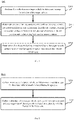
- Fig. 1 shows a flow diagram of a method for remote damage assessment of a vehicle according to an embodiment of the present disclosure.
- the method 100 for remote damage assessment of the vehicle includes: step S101, data collection is performed on a target vehicle to determine damage information of the target vehicle; step S102, call content of an insurance claiming call for the target vehicle is obtained, and accident-related information is extracted from the call content, wherein the accident-related information includes named entities in the call content and a relationship between the named entities; and step S103, a first fraud probability corresponding to the target vehicle is determined at least based on the damage information and the accident-related information.
- the damage information of the vehicle is determined by remotely collected accident scene data of the target vehicle, and is compared with a user's description in the insurance claiming call to judge whether the collected accident scene data and the user's description are inconsistent.
- the accident-related information including the named entities and the relationship between the named entities is extracted from the call content, irrelevant information and redundant information in the call content are excluded, the authenticity of the content described by the user may be judged more quickly, and the fraud probability is then judged based on this so as to determine whether the user is fraudulent in describing the damage information of the vehicle. Therefore, human resources for on-site investigation are reduced, and the probability of remote damage assessment fraud cases can be reduced.
- the named entities are concrete instances of a certain concept and are main components of constructing a sentence.
- vehicle brand is a concept
- brand A and “brand B” are two named entities under this concept.
- two named entities "brand A” and "brand B” and the relationship "collided” between the two named entities in the sentence may be extracted to obtain the accident-related information of "brand A- brand B-collided", thereby excluding the redundant information in the call content to improve the subsequent judgment efficiency of the authenticity of the call content.
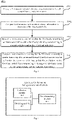
- the method S101 of determining the damage information of the target vehicle includes: step S201, image data of the target vehicle are collected, and an accident type for the target vehicle is determined based on the collected image data; and/or step S202, video data of the target vehicle are collected, and a damaged part and a damage type of the target vehicle are determined based on a plurality of video frames in the video data.
- the image data and the video data may be captured by the user at the accident scene, so as to determine the damage information of the target vehicle.
- an image classification model may be used to determine the accident type for the target vehicle based on the collected image data, and the accident type may include, for example, rear-end collision, collision between people and vehicles, accident at curves, lane change accident, and the like.
- Preprocessing operations such as extracting a plurality of key frames may be performed on the collected video data, and the damage information of the target vehicle may be obtained based on image information of the plurality of extracted key frames and changes between the frames.
- a Yolo-v5 algorithm may be used to detect an overall damaged part of the target vehicle in the plurality of key frames, an image semantic segmentation model is used to further determine a more specific damaged part and damage type of the target vehicle, and the damage type may include, for example, scratches, dents, and tears.
- the image semantic segmentation model may include a Deeplab V3+ model and an Img2txt model. After the Deeplab V3+ model is pre-trained with samples in an early stage, the damaged part and damage type of the target vehicle in the plurality of key frames may be identified, and then the Img2txt model is used to convert the damage information in an image output by Deeplab V3+ into text information to obtain the damage information of the target vehicle. Therefore, by combining the Yolo-v5 algorithm and the image semantic segmentation model, the damaged part and damage type of the target vehicle may be located more quickly and finely.
- the accident-related information of the call content of the insurance claiming call may be extracted and compared with the above damage information to more quickly judge whether the user has misreported or exaggerated losses.
- a BERT model may be combined with a conditional random field (CRF) model to extract the named entities in the call content, wherein the BERT model may obtain a starting position and an end position of the named entities, and the CRF model is added to an output layer of the BERT model, so that the model considers the correlation between class labels, thereby improving the accuracy of extraction of the named entities.
- CRF conditional random field
- a Piece-Wise-CNN (PCNN) model may be used to extract the relationship between the named entities from the call content, and the entities are linked through the relationship to form a networked knowledge structure, so as to obtain semantic information.
- PCNN Piece-Wise-CNN
- the step of extracting the relationship between the named entities by using the PCNN model includes: data are preprocessed, position encoding is performed on text data, and a distance between each word in each sentence in the call content and the named entities is encoded; the sentences are segmented, and each sentence in the call content is segmented according to the named entities; after a location feature and a text feature are spliced, features of the data are extracted through a CNN model respectively; and the extracted features pass through a Softmax function to complete classification of the relationship.
- key information of the call content may be extracted, the redundant information may be removed, and the extraction of core points can be completed.
- Fig. 3 shows a flow diagram of a method for determining a first fraud probability corresponding to a target vehicle according to an embodiment of the present disclosure.
- the method S103 for determining the first fraud probability corresponding to the target vehicle includes: step S301, a first answer corresponding to a preset question in the call content is extracted from the damage information; step S302, the first answer is compared with the accident-related information to determine a fifth fraud probability; and step S303, in response to determining that the fifth fraud probability is smaller than a second threshold, the first fraud probability corresponding to the target vehicle is determined based on the fifth fraud probability; or step S304, in response to determining that the fifth fraud probability is greater than or equal to the second threshold, the first answer is compared with the call content to determine a sixth fraud probability, and the first fraud probability corresponding to the target vehicle is determined based on the fifth fraud probability and the sixth fraud probability.
- a retrospective reader for machine reading comprehension (RRMRC) model may be used to extract answers corresponding to the above preset questions from the damage information obtained through the collected image data or video data, and compare the answers with user's answers in the accident-related information so as to judge whether there is a conflict or contradiction between the extracted answers and the user's answers to determine the fifth fraud probability. Since the accident-related information is the key information extracted from the call content to exclude the redundant information, a speed of the above judgment is improved.
- the fifth fraud probability When the fifth fraud probability is smaller than the second threshold, it indicates that the user corresponding to the target vehicle has a small possibility of fraud in describing the damage information of the target vehicle, so the fifth fraud probability may be directly used as the first fraud probability corresponding to the target vehicle and used for the calculation of a composite fraud probability.
- the fifth fraud probability is greater than the second threshold, it indicates that the user corresponding to the target vehicle has a large possibility of fraud in describing the damage information of the target vehicle, it is necessary to compare the first answer with the complete call content to more comprehensively and accurately determine whether the user has misreported or exaggerated in the process of describing the damage information of the target vehicle, then the sixth fraud probability is determined, and based on the fifth fraud probability and the sixth fraud probability, the first fraud probability corresponding to the target vehicle is determined to be used for the calculation of the composite fraud probability.
- Such a calculation mode enables a smaller amount of calculation data to improve the calculation speed when the fraud probability is smaller than the threshold, and performs more comprehensive comparison to make a calculation result more accurate when the fraud probability is greater than the threshold.
- the first answer corresponding to the above-mentioned preset question and extracted from the damage information may be, for example, "brand B vehicle, front and rear pillars are pierced, and the depressed and deformed part of the pillars reaches 20% of the pillars", and the call content of the insurance claiming call is: "Q: Excuse me, what brand of vehicle is yours? A: Mine is a brand B vehicle. Q: What's the problem? A: There is a vehicle accident today and pillars are broken after crashed.” The key information of the call content is: brand B vehicle -vehicle accident, and brand B vehicle-pillars are broken after crashed.
- the PRMRC model may extract the corresponding answer from the damage information as "front and rear pillars are pierced", and use a text similarity model to compare based on the above three aspects of information to determine the fifth fraud probability or the sixth fraud probability.
- the method for remote damage assessment of the vehicle further includes: the composite fraud probability configured to indicate whether an accident involves fraud is determined based on the first fraud probability.
- the first fraud probability may be used to quantify the probability that the user has fraud in describing the damage information of the vehicle, and this probability may be used as an aspect of fraud to confirm the composite fraud probability that the user has a fraudulent behavior.
- determining the composite fraud probability configured to indicate whether the accident involves fraud based on the first fraud probability includes: the composite fraud probability is determined based on the first fraud probability and at least one of: a second fraud probability determined based on geographic location information of the target vehicle during insurance claiming; a third fraud probability determined based on user information corresponding to the target vehicle and the call content; and a fourth fraud probability determined based on a character map of a caller corresponding to the insurance claiming call.
- the calculation of the composite fraud probability may be based on the calculation of the fraud probabilities in a plurality of aspects.
- the damage information of the target vehicle it may also be considered whether the user has a fraudulent behavior in aspects of geographic location information, user information, and the like.
- the third fraud probability may indicate whether the user corresponding to the target vehicle has fraud in user information during the call.
- the user information is obtained from a database, basic information of the user is extracted from the call content, and then the two are compared to judge whether the user has a fraudulent behavior. For example, in the call content, the user claims to be 21 years old, and the birth time recorded in the database is 2014. Therefore, the third fraud probability of the information may be obtained.
- the fourth fraud probability indicates a gang fraud probability corresponding to the target vehicle.
- the same vehicle was involved in each accident, and it was an irresponsible vehicle that was rear-ended.
- the same person was present in a plurality of photos of the insurance company's damage assessment, the fraud gang was headed by that person, many members apply for insurance to the insurance company, and the roles of a policy holder, a reporter, an insured, a driver and the like are alternately replaced. It can be seen that in vehicle insurance, the detection of the fraud gang is extremely important.
- a community detection algorithm infomap may be used to quickly and effectively complete the detection of the crime gang based on the character map of the caller corresponding to the insurance claiming call, and output the fourth fraud probability that the caller is in the fraud gang.
- the second fraud probability is determined in a following manner: a seventh fraud probability is determined based on the geographic location information and a preset risk region; location information in the call content is extracted and compared with the geographic location information to determine an eighth fraud probability; and the second fraud probability corresponding to the target vehicle is determined based on the seventh fraud probability and the eighth fraud probability.
- the second fraud probability of the geographic location information corresponding to the target vehicle may be calculated based on two aspects: one is judging whether the target vehicle is in the risk region and obtaining the seventh fraud probability representing the probability that the target vehicle may be in the risk region, wherein the risk region refers to a high-probability region where fraud occurs based on historical data; and second is determining the eighth fraud probability through comparing the location information in the call content with the geographic location information of the target vehicle, wherein the farther the distance between the location information in the call content and the geographic location information of the target vehicle is, the greater the eighth fraud probability is.
- the method further includes: in response to determining that the composite fraud probability is smaller than a first threshold, a maintenance mode for the target vehicle is determined based on the damage information.
- the damage assessment process may include three parts: information query, maintenance mode classification, and maintenance price query of damaged components.
- Vehicle insurance report information includes basic information of the vehicle, a cause of the accident, a location of the accident and the like.
- the basic information of the vehicle includes a license plate number and a frame number of the accident vehicle.
- an information base may be retrieved to obtain detailed information of the target vehicle.
- the detailed information of the target vehicle includes information such as a vehicle model and vehicle series, purchase time, and a vehicle age.
- a text classification model may be used to judge whether to repair or replace components based on the damage information and the detailed information of the target vehicle.
- a repair mode (such as sheet metal, painting, etc.) will also be given.
- the damage information is "front and rear pillars are pierced, and the depressed and deformed part of the pillars reaches 20% of the pillars”
- the text classification model will obtain a damage handling suggestion as "replace”.
- For maintenance price query of the damaged components according to the detailed information of the target vehicle and the damaged components, information of corresponding accessories saved in the information database may be inquired, and the maintenance price of the damaged vehicle may be obtained thereby.
- the composite fraud probability is greater than the first threshold, which indicates that the target vehicle has a high possibility of fraud and the reporter is suspected of fraud
- a system will display early warning information, and the insurance company and surveyors will pay special attention to the reporter.
- a speech synthesis technology may be used to call back to the reporter, tell him the doubts of the case, and explain the legal consequences of deliberately creating a false accident to cheat compensation.
- follow-up treatment is performed according to the response of the reporter.
- the apparatus 400 for remote damage assessment of the vehicle includes: a collecting module 401, configured to perform data collection on a target vehicle to determine damage information of the target vehicle; an obtaining module 402, configured to obtain call content of an insurance claiming call for the target vehicle, and extract accident-related information from the call content, wherein the accident-related information includes named entities in the call content and a relationship between the named entities; and a first determining module 403, configured to determine a first fraud probability corresponding to the target vehicle at least based on the damage information and the accident-related information.
- modules 401-403 of the apparatus 400 for remote damage assessment of the vehicle are similar to the operations of steps S101-S103 described above, and are not repeated here.
- the damage information of the vehicle is determined by accident scene data, remotely collected by the collecting module 401, of the target vehicle, and is compared with a user's description in the insurance claiming call to judge whether the collected accident scene data and the user's description are inconsistent.
- the accident-related information including the named entities and the relationship between the named entities is extracted from the call content by the obtaining module 402, irrelevant information and redundant information in the call content are excluded, the authenticity of the content described by the user may be judged more quickly by the first determining module 403, and the fraud probability is judged so as to determine whether the user is fraudulent in describing the damage information of the vehicle. Therefore, human resources for on-site investigation are reduced, and the probability of remote damage assessment fraud cases can be reduced.
- Fig. 5 shows a structural block diagram of a collecting module for determining damage information of a target vehicle according to an embodiment of the present disclosure.
- the collecting module 401 includes: a first determining unit 501, configured to collect image data of the target vehicle, and determine an accident type for the target vehicle based on the collected image data; and/or, a second determining unit 502, configured to collect video data of the target vehicle, and determine a damaged part and a damage type of the target vehicle based on a plurality of video frames in the video data.
- the image data and the video data may be captured by the user through the first determining unit 501 and the second determining unit 502 at the accident scene, so as to determine the damage information of the target vehicle.
- the first determining unit 501 may use an image classification model to determine the accident type for the target vehicle based on the collected image data, and the accident type may include, for example, rear-end collision, collision between people and vehicles, accident at curves, lane change accident, and the like.
- the second determining unit 502 may perform preprocessing operations such as extracting a plurality of key frames from the collected video data, and obtain the damage information of the target vehicle based on image information of the plurality of extracted key frames and changes between the frames.
- the second determining unit 502 may use a Yolo-v5 algorithm to detect an overall damaged part of the target vehicle in the plurality of key frames, and use an image semantic segmentation model to further determine a more specific damaged part and damage type of the target vehicle, and the damage type may include, for example, scratches, dents, and tears.
- the image semantic segmentation model may include a Deeplab V3+ model and an Img2txt model.
- the damaged part and damage type of the target vehicle in the plurality of key frames may be identified, and then the Img2txt model is used to convert the damage information in an image output by Deeplab V3+ into text information to obtain the damage information of the target vehicle. Therefore, by combining the Yolo-v5 algorithm and the image semantic segmentation model, the damaged part and damage type of the target vehicle may be located more quickly and finely.
- the obtaining module 402 may extract the accident-related information of the call content of the insurance claiming call and compare it with the above damage information to more quickly judge whether the user has misreported or exaggerated losses.
- the obtaining module 402 may combine a BERT model with a conditional random field (CRF) model to extract the named entities in the call content, wherein the BERT model may obtain a starting position and an end position of the named entities, and the CRF model is added to an output layer of the BERT model, so that the model considers the correlation between class labels, thereby improving the accuracy of extraction of the named entities.
- CRF conditional random field
- a Piece-Wise-CNN (PCNN) model may be used to extract the relationship between the named entities from the call content, and the entities are linked through the relationship to form a networked knowledge structure, so as to obtain semantic information.
- PCNN Piece-Wise-CNN
- the step of extracting the relationship between the named entities by using the PCNN model through the obtaining module 402 includes: data are preprocessed, position encoding is performed on text data, and a distance between each word in each sentence in the call content and the named entities is encoded; the sentences are segmented, and each sentence in the call content is segmented according to the named entities; after a location feature and a text feature are spliced, features of the data are extracted through a CNN model respectively; and the extracted features pass through a Softmax function to complete classification of the relationship.
- key information of the call content may be extracted, the redundant information may be removed, and the extraction of core points can be completed.
- Fig. 6 shows a structural block diagram of a first determining module for determining a first fraud probability corresponding to a target vehicle according to an embodiment of the present disclosure.
- the first determining module 403 includes: an extracting unit 601, configured to extract a first answer corresponding to a preset question in the call content from the damage information; a third determining unit 602, configured to compare the first answer with the accident-related information to determine a fifth fraud probability; and a fourth determining unit 603, configured to determine, in response to determining that the fifth fraud probability is smaller than a second threshold, the first fraud probability corresponding to the target vehicle based on the fifth fraud probability; or, a fifth determining unit 604, configured to compare, in response to determining that the fifth fraud probability is greater than or equal to the second threshold, the first answer with the call content to determine a sixth fraud probability, and determine the first fraud probability corresponding to the target vehicle based on the fifth fraud probability and the sixth fraud probability.
- the extracting unit 601 may use a retrospective reader for machine reading comprehension (RRMRC) model to extract answers corresponding to the above preset questions from damage information obtained through the collected image data or video data, and the third determining unit 602 compares the answers with user's answers in the accident-related information so as to judge whether there is a conflict or contradiction between the extracted answers and the user's answers to determine the fifth fraud probability. Since the accident-related information is the key information extracted from the call content to exclude the redundant information, a speed of the above judgment is improved.
- RRMRC retrospective reader for machine reading comprehension
- the fifth fraud probability When the fifth fraud probability is smaller than the second threshold, it indicates that the user corresponding to the target vehicle has a small possibility of fraud in describing the damage information of the target vehicle, so the fifth fraud probability may be directly used as the first fraud probability corresponding to the target vehicle and used for the calculation of a composite fraud probability.
- the fifth fraud probability is greater than the second threshold, it indicates that the user corresponding to the target vehicle has a large possibility of fraud in describing the damage information of the target vehicle, it is necessary to compare the first answer with the complete call content to more comprehensively and accurately determine whether the user has misreported or exaggerated in the process of describing the damage information of the target vehicle, then the sixth fraud probability is determined, and based on the fifth fraud probability and the sixth fraud probability, the first fraud probability corresponding to the target vehicle is determined to be used for calculation of the composite fraud probability.
- Such a calculation mode enables a smaller amount of calculation data to improve the calculation speed when the fraud probability is smaller than the threshold, and performs more comprehensive comparison to make a calculation result more accurate when the fraud probability is greater than the threshold.
- the first answer corresponding to the above-mentioned preset question and extracted from the damage information by the extracting unit 601 may be, for example, "brand B vehicle, front and rear pillars are pierced, and the depressed and deformed part of the pillars reaches 20% of the pillars", and the call content of the insurance claiming call is: "Q: Excuse me, what brand of vehicle is yours? A: Mine is a brand B vehicle. Q: What's the problem? A: There is a vehicle accident today and pillars are broken after crashed.” The key information of the call content is: brand B vehicle- vehicle accident, and brand B vehicle -pillars are broken after crashed.
- the PRMRC model may extract the corresponding answer from the damage information as "front and rear pillars are pierced", and use a text similarity model to compare based on the above three aspects of information to determine the fifth fraud probability or the sixth fraud probability.
- the apparatus for remote damage assessment of the vehicle further includes: a second determining module, configured to determine the composite fraud probability configured to indicate whether an accident involves fraud based on the first fraud probability.
- the first fraud probability may be used to quantify the probability that the user has fraud in describing the damage information of the vehicle, and this probability may be used as an aspect of fraud to confirm the composite fraud probability that the user has a fraudulent behavior.
- the second determining module is further configured to: determine the composite fraud probability based on the first fraud probability and at least one of: a second fraud probability determined based on geographic location information of the target vehicle during insurance claiming; a third fraud probability determined based on user information corresponding to the target vehicle and the call content; and a fourth fraud probability determined based on a character map of a caller corresponding to the insurance claiming call.
- the calculation of the composite fraud probability may be based on the calculation of the fraud probabilities in a plurality of aspects.
- the damage information of the target vehicle it may also be considered whether the user has a fraudulent behavior in aspects of geographic location information, user information, and the like.
- the third fraud probability may indicate whether the user corresponding to the target vehicle has fraud in user information during the call.
- the user information is obtained from a database, basic information of the user is extracted from the call content, and then the two are compared to judge whether the user has a fraudulent behavior. For example, in the call content, the user claims to be 21 years old, and the birth time recorded in the database is 2014. Therefore, the third fraud probability of the information may be obtained.
- the fourth fraud probability indicates a gang fraud probability corresponding to the target vehicle.
- the same vehicle was involved in each accident, and it was an irresponsible vehicle that was rear-ended.
- the same person was present in a plurality of photos of the insurance company's damage assessment, the fraud gang was headed by that person, many members apply for insurance to the insurance company, and the roles of a policy holder, a reporter, an insured, a driver and the like are alternately replaced. It can be seen that in vehicle insurance, the detection of the fraud gang is extremely important.
- a community detection algorithm infomap may be used to quickly and effectively complete the detection of the crime gang based on the character map of the caller corresponding to the insurance claiming call, and output the fourth fraud probability that the caller is in the fraud gang.
- the second determining module includes the following units to determine the second fraud probability: a sixth determining unit, configured to determine a seventh fraud probability based on the geographic location information and a preset risk region; a seventh determining unit, configured to extract location information in the call content and compare the location information in the call content with the geographic location information to determine an eighth fraud probability; and an eighth determining unit, configured to determine the second fraud probability corresponding to the target vehicle based on the seventh fraud probability and the eighth fraud probability.
- the second fraud probability of the geographic location information corresponding to the target vehicle may be calculated based on two aspects: one is judging whether the target vehicle is in the risk region and obtaining the seventh fraud probability representing the probability that the target vehicle may be in the risk region, wherein the risk region refers to a high-probability region where fraud occurs based on historical data; and second is determining the eighth fraud probability through comparing the location information in the call content with the geographic location information of the target vehicle, wherein the farther the distance between the location information in the call content and the geographic location information of the target vehicle is, the greater the eighth fraud probability is.
- the apparatus further includes: a third determining module, configured to determine, in response to determining that the composite fraud probability is smaller than a first threshold, a maintenance mode for the target vehicle based on the damage information.
- the apparatus further includes: a storage module to record the captured image data, video data and the call content of the user.
- a storage system contains a large amount of user information and vehicle information, which is used for damage assessment of the vehicle.
- the information base of the storage module consists of two parts, the first part is user information and insurance information, and the second part is vehicle information and a vehicle map.
- the first part includes identity information of the insured, the date of insurance purchase, the amount insured, the type of insurance, and the like.
- the second part is the vehicle information and the vehicle map.
- the vehicle information here corresponds to a frame number, including a vehicle age, mileage, displacement and other information.
- the central node of the vehicle map is the brand, the node that expands the brand outward is the vehicle model and vehicle series, and the node that extends the vehicle model and vehicle series to the outside is spare parts.
- the connection with the spare parts is the vehicle model for which the parts are applicable.
- Each node itself contains its own characteristics. For example, for the node Mercedes-Benz C200, its attribute values include a body length, displacement, an engine model, etc. If the node is an accessory, its attribute value is the accessory name, the accessory price, image data of the accessory, etc.
- an electronic device a readable storage medium and a computer program product are further provided.
- the electronic device 700 is intended to represent various forms of digital electronic computer devices, such as, a laptop computer, a desktop computer, a workstation, a personal digital assistant, a server, a blade server, a mainframe computer, and other suitable computers.
- the electronic device may further represent various forms of mobile apparatuses, such as, personal digital processing, a cell phone, a smart phone, a wearable device and other similar computing apparatuses.
- the components shown herein, their connections and relationships, and their functions are merely used as examples, and are not intended to limit the implementations of the present disclosure described and/or required herein.
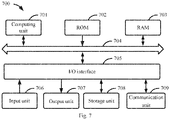
- the electronic device 700 includes a computing unit 701 that may perform various appropriate actions and processing according to computer programs stored in a read-only memory (ROM) 702 or computer programs loaded from a storage unit 708 into a random access memory (RAM) 703.
- ROM read-only memory
- RAM random access memory
- various programs and data required for operations of the electronic device 700 may further be stored.
- the computing unit 701, the ROM 702 and the RAM 703 are connected to each other through a bus 704.
- An input/output (I/O) interface 705 is also connected to the bus 704.
- a plurality of components in the electronic device 700 are connected to the I/O interface 705, including: an input unit 706, an output unit 707, a storage unit 708 and a communication unit 709.
- the input unit 706 may be any type of device capable of inputting information to the electronic device 700.
- the input unit 706 may receive input digital or character information and generate key signal input related to user settings and/or function control of the electronic device, and may include but not limited to a mouse, a keyboard, a touch screen, a trackpad, a trackball, a joystick, a microphone and/or a remote control.
- the output unit 707 may be any type of device capable of presenting information, and may include but not limited to a display, a speaker, a video/audio output terminal, a vibrator and/or a printer.
- the storage unit 708 may include but not limited to a magnetic disk and an optical disk.
- the communication unit 709 allows the electronic device 700 to exchange information/data with other devices through computer networks such as the Internet and/or various telecommunication networks, and may include but not limited to a modem, a network card, an infrared communication device, a wireless communication transceiver and/or a chipset, such as a Bluetooth TM device, an 802.11 device, a WiFi device, a WiMax device, a cellular communication device and/or the like.
- the computing unit 701 may be various general-purpose and/or special-purpose processing components with processing and computing capabilities. Some examples of the computing unit 701 include but not limited to a central processing unit (CPU), a graphics processing unit (GPU), various dedicated artificial intelligence (AI) computing chips, various computing units running machine learning model algorithms, a digital signal processor (DSP), and any appropriate processor, controller, microcontroller, etc.
- the computing unit 701 performs various methods and processing described above, such as a method for remote damage assessment of the vehicle.
- the method for remote damage assessment of the vehicle may be implemented as a computer software program that is tangibly included in a machine-readable medium such as the storage unit 708.
- part or all the computer programs may be loaded and/or installed onto the electronic device 700 via the ROM 702 and/or the communication unit 709.
- the computer programs When the computer programs are loaded into the RAM 703 and executed by the computing unit 701, one or more steps of the method for remote damage assessment of the vehicle described above may be performed.
- the computing unit 701 may be configured to perform the method for remote damage assessment of the vehicle in any other suitable manner (for example, by means of firmware).
- Various implementations of the systems and technologies described above in this paper may be implemented in a digital electronic circuit system, an integrated circuit system, a field programmable gate array (FPGA), an application specific integrated circuit (ASIC), an application specific standard part (ASSP), a system on chip (SOC), a complex programmable logic device (CPLD), computer hardware, firmware, software and/or their combinations.
- FPGA field programmable gate array
- ASIC application specific integrated circuit
- ASSP application specific standard part
- SOC system on chip
- CPLD complex programmable logic device
- These various implementations may include: being implemented in one or more computer programs, wherein the one or more computer programs may be executed and/or interpreted on a programmable system including at least one programmable processor, and the programmable processor may be a special-purpose or general-purpose programmable processor, and may receive data and instructions from a storage system, at least one input apparatus, and at least one output apparatus, and transmit the data and the instructions to the storage system, the at least one input apparatus, and the at least one output apparatus.
- Program codes for implementing the methods of the present disclosure may be written in any combination of one or more programming languages. These program codes may be provided to processors or controllers of a general-purpose computer, a special-purpose computer or other programmable data processing apparatuses, so that when executed by the processors or controllers, the program codes enable the functions/operations specified in the flow diagrams and/or block diagrams to be implemented.
- the program codes may be executed completely on a machine, partially on the machine, partially on the machine and partially on a remote machine as a separate software package, or completely on the remote machine or server.
- a machine readable medium may be a tangible medium that may contain or store a program for use by or in connection with an instruction execution system, apparatus or device.
- the machine readable medium may be a machine readable signal medium or a machine readable storage medium.
- the machine readable medium may include but not limited to an electronic, magnetic, optical, electromagnetic, infrared, or semiconductor system, apparatus or device, or any suitable combination of the above contents.
- machine readable storage medium will include electrical connections based on one or more lines, a portable computer disk, a hard disk, a random access memory (RAM), a read only memory (ROM), an erasable programmable read only memory (EPROM or flash memory), an optical fiber, a portable compact disk read only memory (CD-ROM), an optical storage device, a magnetic storage device, or any suitable combination of the above contents.
- RAM random access memory
- ROM read only memory
- EPROM or flash memory erasable programmable read only memory
- CD-ROM compact disk read only memory
- magnetic storage device or any suitable combination of the above contents.
- the systems and techniques described herein may be implemented on a computer, and the computer has: a display apparatus for displaying information to the users (e.g., a CRT (cathode ray tube) or LCD (liquid crystal display) monitor); and a keyboard and a pointing device (e.g., a mouse or trackball), through which the users may provide input to the computer.
- a display apparatus for displaying information to the users
- a keyboard and a pointing device e.g., a mouse or trackball
- Other types of apparatuses may further be used to provide interactions with users; for example, feedback provided to the users may be any form of sensory feedback (e.g., visual feedback, auditory feedback, or tactile feedback); an input from the users may be received in any form (including acoustic input, voice input or tactile input).
- the systems and techniques described herein may be implemented in a computing system including background components (e.g., as a data server), or a computing system including middleware components (e.g., an application server) or a computing system including front-end components (e.g., a user computer with a graphical user interface or a web browser through which a user may interact with the implementations of the systems and technologies described herein), or a computing system including any combination of such background components, middleware components, or front-end components.
- the components of the system may be interconnected by digital data communication (e.g., a communication network) in any form or medium. Examples of the communication network include: a local area network (LAN), a wide area network (WAN) and the Internet.
- a computer system may include a client and a server.
- the client and the server are generally far away from each other and usually interact through a communication network.
- the relationship between the client and the server is generated by computer programs running on the corresponding computer and having a client-server relationship with each other.
- the server may be a cloud server, and may also be a server of a distributed system, or a server combined with a block chain.
Landscapes
- Engineering & Computer Science (AREA)
- Theoretical Computer Science (AREA)
- Physics & Mathematics (AREA)
- Business, Economics & Management (AREA)
- General Physics & Mathematics (AREA)
- Artificial Intelligence (AREA)
- Data Mining & Analysis (AREA)
- General Engineering & Computer Science (AREA)
- Strategic Management (AREA)
- Finance (AREA)
- Accounting & Taxation (AREA)
- General Health & Medical Sciences (AREA)
- Health & Medical Sciences (AREA)
- General Business, Economics & Management (AREA)
- Economics (AREA)
- Marketing (AREA)
- Evolutionary Computation (AREA)
- Development Economics (AREA)
- Computational Linguistics (AREA)
- Software Systems (AREA)
- Life Sciences & Earth Sciences (AREA)
- Computing Systems (AREA)
- Mathematical Physics (AREA)
- Entrepreneurship & Innovation (AREA)
- Biomedical Technology (AREA)
- Biophysics (AREA)
- Molecular Biology (AREA)
- Human Resources & Organizations (AREA)
- Probability & Statistics with Applications (AREA)
- Technology Law (AREA)
- Multimedia (AREA)
- Computer Vision & Pattern Recognition (AREA)
- Tourism & Hospitality (AREA)
- Audiology, Speech & Language Pathology (AREA)
- Operations Research (AREA)
- Bioinformatics & Computational Biology (AREA)
- Bioinformatics & Cheminformatics (AREA)
- Evolutionary Biology (AREA)
- Quality & Reliability (AREA)
- Databases & Information Systems (AREA)
Applications Claiming Priority (1)
| Application Number | Priority Date | Filing Date | Title |
|---|---|---|---|
| CN202111492460.7A CN114170030B (zh) | 2021-12-08 | 2021-12-08 | 用于车辆远程定损的方法、装置、电子设备和介质 |
Publications (2)
| Publication Number | Publication Date |
|---|---|
| EP4113422A2 true EP4113422A2 (de) | 2023-01-04 |
| EP4113422A3 EP4113422A3 (de) | 2023-05-17 |
Family
ID=80484265
Family Applications (1)
| Application Number | Title | Priority Date | Filing Date |
|---|---|---|---|
| EP22201249.4A Withdrawn EP4113422A3 (de) | 2021-12-08 | 2022-10-13 | Verfahren und vorrichtung zur fernschadenbewertung eines fahrzeugs, elektronische vorrichtung und medium |
Country Status (3)
| Country | Link |
|---|---|
| US (1) | US20230038645A1 (de) |
| EP (1) | EP4113422A3 (de) |
| CN (1) | CN114170030B (de) |
Families Citing this family (2)
| Publication number | Priority date | Publication date | Assignee | Title |
|---|---|---|---|---|
| CN116777488A (zh) * | 2023-06-07 | 2023-09-19 | 中国人民财产保险股份有限公司 | 用于车辆定损的管理地图实现方法、电子设备和可读介质 |
| CN120218973B (zh) * | 2025-03-10 | 2025-12-26 | 深圳市奕保科技有限责任公司 | 一种基于多模态数据处理的智能车险报价系统 |
Family Cites Families (16)
| Publication number | Priority date | Publication date | Assignee | Title |
|---|---|---|---|---|
| CN104427079B (zh) * | 2013-09-09 | 2019-02-15 | 中兴通讯股份有限公司 | 用户语音通话预警方法及装置 |
| US10628890B2 (en) * | 2017-02-23 | 2020-04-21 | International Business Machines Corporation | Visual analytics based vehicle insurance anti-fraud detection |
| CN107403326A (zh) * | 2017-08-14 | 2017-11-28 | 云数信息科技(深圳)有限公司 | 一种基于电信数据的保险欺诈识别方法及装置 |
| CN107862614B (zh) * | 2017-11-08 | 2021-12-14 | 广东翼卡车联网服务有限公司 | 一种防止车险骗保的方法、存储设备及车载终端 |
| CN108334647A (zh) * | 2018-04-12 | 2018-07-27 | 阿里巴巴集团控股有限公司 | 保险欺诈识别的数据处理方法、装置、设备及服务器 |
| CN108734479A (zh) * | 2018-04-12 | 2018-11-02 | 阿里巴巴集团控股有限公司 | 保险欺诈识别的数据处理方法、装置、设备及服务器 |
| CN109784170B (zh) * | 2018-12-13 | 2023-11-17 | 平安科技(深圳)有限公司 | 基于图像识别的车险定损方法、装置、设备及存储介质 |
| CN110175928A (zh) * | 2019-05-14 | 2019-08-27 | 安泰保险科技(深圳)有限公司 | 一种识别故意制造车辆互碰保险事故的保险反欺诈方法 |
| CN110458718A (zh) * | 2019-08-09 | 2019-11-15 | 泰康保险集团股份有限公司 | 车险欺诈识别方法、装置、介质及电子设备 |
| CN110781916B (zh) * | 2019-09-18 | 2024-07-16 | 平安科技(深圳)有限公司 | 视频数据的欺诈检测方法、装置、计算机设备和存储介质 |
| WO2021136939A1 (en) * | 2020-01-03 | 2021-07-08 | Tractable Ltd | Method of determining repair operations for a damaged vehicle |
| CN111507848B (zh) * | 2020-03-23 | 2024-03-15 | 南京金盾公共安全技术研究院有限公司 | 一种基于大数据的车辆保险反欺诈检测方法 |
| CN112416979B (zh) * | 2020-11-24 | 2024-08-02 | 辽宁自贸试验区(营口片区)桔子数字科技有限公司 | 基于地理位置的反欺诈方法、装置、设备及存储介质 |
| CN112667854A (zh) * | 2020-12-28 | 2021-04-16 | 深圳壹账通智能科技有限公司 | 虚假保险报案处理方法、装置、计算机设备及存储介质 |
| CN112800272A (zh) * | 2021-01-18 | 2021-05-14 | 德联易控科技(北京)有限公司 | 识别保险理赔欺诈行为的方法及装置 |
| CN113726942A (zh) * | 2021-08-31 | 2021-11-30 | 深圳壹账通智能科技有限公司 | 一种智能电话接听方法、系统、介质及电子终端 |
-
2021
- 2021-12-08 CN CN202111492460.7A patent/CN114170030B/zh active Active
-
2022
- 2022-10-13 EP EP22201249.4A patent/EP4113422A3/de not_active Withdrawn
- 2022-10-17 US US17/967,761 patent/US20230038645A1/en not_active Abandoned
Also Published As
| Publication number | Publication date |
|---|---|
| CN114170030B (zh) | 2023-09-26 |
| CN114170030A (zh) | 2022-03-11 |
| EP4113422A3 (de) | 2023-05-17 |
| US20230038645A1 (en) | 2023-02-09 |
Similar Documents
| Publication | Publication Date | Title |
|---|---|---|
| US10248716B2 (en) | Real-time guidance for content collection | |
| US20080077451A1 (en) | System for synergistic data processing | |
| CN117407507A (zh) | 基于大语言模型的事件处理方法、装置、设备及介质 | |
| WO2020024407A1 (zh) | 电子装置、车险智能理赔方法及存储介质 | |
| CN107862339B (zh) | 用于输出信息的方法和装置 | |
| EP4113422A2 (de) | Verfahren und vorrichtung zur fernschadenbewertung eines fahrzeugs, elektronische vorrichtung und medium | |
| CN118229272A (zh) | 基于事件检测的智能化巡检决策方法及装置 | |
| CN115205058A (zh) | 车辆事故损失评估方法、装置、计算机设备及存储介质 | |
| CN119106921A (zh) | 一种基于人工智能的风控规则效果评价方法及系统 | |
| CN111797211A (zh) | 业务信息搜索方法、装置、计算机设备和存储介质 | |
| CN120744068B (zh) | 基于大模型的交通数据分析方法、装置及计算机程序产品 | |
| CN116542783A (zh) | 基于人工智能的风险评估方法、装置、设备及存储介质 | |
| US20220309388A1 (en) | Systems and Methods for Classification and Time Series Calibration in Identity Health Analysis | |
| CN119693948A (zh) | 车险理赔照片智能分类方法、装置、计算机设备及介质 | |
| CN119006230A (zh) | 案件处理方案的生成方法、设备及存储介质 | |
| US20220390249A1 (en) | Method and apparatus for generating direction identifying model, device, medium, and program product | |
| WO2021042905A1 (zh) | 车辆信息处理方法、装置、计算机设备和存储介质 | |
| CN117057735A (zh) | 一种车险理赔报案方法、装置、计算机设备及存储介质 | |
| CN117591669A (zh) | 一种客服数据挖掘方法、装置、设备及介质 | |
| CN116630060A (zh) | 一种数据处理方法、装置、车载终端及介质 | |
| CN112686037B (zh) | 线上业务断点提醒方法、装置、计算机设备及存储介质 | |
| CN116645108A (zh) | 基于知识图谱的投诉用户识别方法、装置、设备及介质 | |
| CN115829237A (zh) | 交通运输工具调动方法、装置、设备、介质及产品 | |
| Jadhav et al. | Road accident analysis and prediction | |
| CN113723811A (zh) | 基于机器学习的设备维保单位评估方法、装置及电子设备 |
Legal Events
| Date | Code | Title | Description |
|---|---|---|---|
| PUAI | Public reference made under article 153(3) epc to a published international application that has entered the european phase |
Free format text: ORIGINAL CODE: 0009012 |
|
| STAA | Information on the status of an ep patent application or granted ep patent |
Free format text: STATUS: REQUEST FOR EXAMINATION WAS MADE |
|
| 17P | Request for examination filed |
Effective date: 20221013 |
|
| AK | Designated contracting states |
Kind code of ref document: A2 Designated state(s): AL AT BE BG CH CY CZ DE DK EE ES FI FR GB GR HR HU IE IS IT LI LT LU LV MC ME MK MT NL NO PL PT RO RS SE SI SK SM TR |
|
| PUAL | Search report despatched |
Free format text: ORIGINAL CODE: 0009013 |
|
| AK | Designated contracting states |
Kind code of ref document: A3 Designated state(s): AL AT BE BG CH CY CZ DE DK EE ES FI FR GB GR HR HU IE IS IT LI LT LU LV MC ME MK MT NL NO PL PT RO RS SE SI SK SM TR |
|
| RIC1 | Information provided on ipc code assigned before grant |
Ipc: G06N 7/01 20230101ALI20230413BHEP Ipc: G06N 3/02 20060101ALI20230413BHEP Ipc: G06V 10/764 20220101ALI20230413BHEP Ipc: G06F 40/30 20200101ALI20230413BHEP Ipc: G06F 18/2415 20230101ALI20230413BHEP Ipc: G06F 40/295 20200101ALI20230413BHEP Ipc: G06Q 30/018 20230101ALI20230413BHEP Ipc: G06Q 40/08 20120101AFI20230413BHEP |
|
| STAA | Information on the status of an ep patent application or granted ep patent |
Free format text: STATUS: EXAMINATION IS IN PROGRESS |
|
| 17Q | First examination report despatched |
Effective date: 20240117 |
|
| STAA | Information on the status of an ep patent application or granted ep patent |
Free format text: STATUS: THE APPLICATION HAS BEEN WITHDRAWN |
|
| 18W | Application withdrawn |
Effective date: 20240514 |