EP4113387A2 - Suchverfahren und -gerät basierend auf einem neuronalen netzwerkmodell, vorrichtung und medium - Google Patents
Suchverfahren und -gerät basierend auf einem neuronalen netzwerkmodell, vorrichtung und medium Download PDFInfo
- Publication number
- EP4113387A2 EP4113387A2 EP22192187.7A EP22192187A EP4113387A2 EP 4113387 A2 EP4113387 A2 EP 4113387A2 EP 22192187 A EP22192187 A EP 22192187A EP 4113387 A2 EP4113387 A2 EP 4113387A2
- Authority
- EP
- European Patent Office
- Prior art keywords
- model
- semantic representation
- recall
- sample
- output
- Prior art date
- Legal status (The legal status is an assumption and is not a legal conclusion. Google has not performed a legal analysis and makes no representation as to the accuracy of the status listed.)
- Withdrawn
Links
Images



Classifications
-
- G—PHYSICS
- G06—COMPUTING OR CALCULATING; COUNTING
- G06F—ELECTRIC DIGITAL DATA PROCESSING
- G06F16/00—Information retrieval; Database structures therefor; File system structures therefor
- G06F16/90—Details of database functions independent of the retrieved data types
- G06F16/903—Querying
-
- G—PHYSICS
- G06—COMPUTING OR CALCULATING; COUNTING
- G06N—COMPUTING ARRANGEMENTS BASED ON SPECIFIC COMPUTATIONAL MODELS
- G06N3/00—Computing arrangements based on biological models
- G06N3/02—Neural networks
- G06N3/08—Learning methods
-
- G—PHYSICS
- G06—COMPUTING OR CALCULATING; COUNTING
- G06F—ELECTRIC DIGITAL DATA PROCESSING
- G06F16/00—Information retrieval; Database structures therefor; File system structures therefor
- G06F16/90—Details of database functions independent of the retrieved data types
- G06F16/903—Querying
- G06F16/9038—Presentation of query results
-
- G—PHYSICS
- G06—COMPUTING OR CALCULATING; COUNTING
- G06F—ELECTRIC DIGITAL DATA PROCESSING
- G06F16/00—Information retrieval; Database structures therefor; File system structures therefor
- G06F16/90—Details of database functions independent of the retrieved data types
- G06F16/95—Retrieval from the web
- G06F16/953—Querying, e.g. by the use of web search engines
-
- G—PHYSICS
- G06—COMPUTING OR CALCULATING; COUNTING
- G06N—COMPUTING ARRANGEMENTS BASED ON SPECIFIC COMPUTATIONAL MODELS
- G06N3/00—Computing arrangements based on biological models
- G06N3/02—Neural networks
- G06N3/04—Architecture, e.g. interconnection topology
- G06N3/042—Knowledge-based neural networks; Logical representations of neural networks
-
- G—PHYSICS
- G06—COMPUTING OR CALCULATING; COUNTING
- G06N—COMPUTING ARRANGEMENTS BASED ON SPECIFIC COMPUTATIONAL MODELS
- G06N3/00—Computing arrangements based on biological models
- G06N3/02—Neural networks
- G06N3/04—Architecture, e.g. interconnection topology
- G06N3/045—Combinations of networks
-
- G—PHYSICS
- G06—COMPUTING OR CALCULATING; COUNTING
- G06N—COMPUTING ARRANGEMENTS BASED ON SPECIFIC COMPUTATIONAL MODELS
- G06N3/00—Computing arrangements based on biological models
- G06N3/02—Neural networks
- G06N3/04—Architecture, e.g. interconnection topology
- G06N3/0499—Feedforward networks
-
- G—PHYSICS
- G06—COMPUTING OR CALCULATING; COUNTING
- G06N—COMPUTING ARRANGEMENTS BASED ON SPECIFIC COMPUTATIONAL MODELS
- G06N3/00—Computing arrangements based on biological models
- G06N3/02—Neural networks
- G06N3/08—Learning methods
- G06N3/09—Supervised learning
Definitions
- the present disclosure relates to the technical field of artificial intelligence, in particular to the technical field of intelligent search and deep learning, and specifically to a search method and apparatus based on a neural network model, an electronic device, a computer-readable storage medium, and a computer program product.
- Artificial intelligence is a subject on making a computer simulate some thinking processes and intelligent behaviors (such as learning, reasoning, thinking, and planning) of a human, and involves both hardware-level technologies and software-level technologies.
- Artificial intelligence hardware technologies generally include technologies such as sensors, dedicated artificial intelligence chips, cloud computing, distributed storage, and big data processing.
- Artificial intelligence software technologies mainly include the following several general directions: computer vision technologies, speech recognition technologies, natural language processing technologies, machine learning/deep learning, big data processing technologies, and knowledge graph technologies.
- a better ranking effect can help a user obtain required information more quickly, improve user experience, and meet a requirement for accurate retrieval of specific data in massive data.
- the present disclosure provides a search method and apparatus based on a neural network model, an electronic device, a computer-readable storage medium, and a computer program product.
- a search method based on a neural network model including a semantic representation model, a recall model, and a ranking model
- the method including: inputting a target search and a plurality of objects to be matched to the semantic representation model to obtain a first output of the semantic representation model, where the first output has a semantic understanding representation of recall and ranking; inputting the first output of the semantic representation model to the recall model, and obtaining at least one recall object matching the target search from the plurality of objects to be matched by using the recall model; and inputting a second output of the semantic representation model to the ranking model, and obtaining a matching value of each of the at least one recall object by using the ranking model, where the second output of the semantic representation model is obtained based on the input target search and the at least one recall object.
- a search apparatus based on a neural network model, the neural network model including a semantic representation model, a recall model, and a ranking model
- the apparatus including: a first obtaining module configured to input a target search and a plurality of objects to be matched to the semantic representation model to obtain a first output of the semantic representation model, where the first output has a semantic understanding representation of recall and ranking; a second obtaining module configured to input the first output of the semantic representation model to the recall model, and obtain at least one recall object matching the target search from the plurality of objects to be matched by using the recall model; and a third obtaining module configured to input a second output of the semantic representation model to the ranking model, and obtain a matching value of each of the at least one recall object by using the ranking model, where the second output of the semantic representation model is obtained based on the input target search and the at least one recall object.
- a non-transitory computer-readable storage medium storing computer instructions, where the computer instructions are used to cause the computer to perform the method described above.
- a computer program product including a computer program, where when the computer program is executed by a processor, the method described above is implemented.
- two stages of recall and ranking share one semantic representation model
- the semantic representation model can meet semantic representation requirements of recall and ranking such that the two stages have the same semantic representation, which makes a target and distribution of parameters of the two stages more consistent, thus improving a ranking effect.
- first, second, etc. used to describe various elements are not intended to limit the positional, temporal or importance relationship of these elements, but rather only to distinguish one component from another.
- first element and the second element may refer to the same instance of the element, and in some cases, based on contextual descriptions, the first element and the second element may also refer to different instances.
- recall stage and ranking stage use different semantic representation models for respective iteration and optimization due to different targets; the recall stage focuses on quickly screening a large amount of data coarsely, while the ranking stage needs to rank recalled data finely, and the two stages have different targets.
- this construction mode may cause a disjunction of optimization targets in the recall stage and the ranking stage
- the recall stage only focuses on whether an object to be matched matches a target search, but does not focus on a specific degree of matching, and consequently, data with a low matching value is recalled while highly matching data cannot be recalled
- the ranking stage focuses on a relative difference of a degree of matching between different recall objects, but does not focus much on an absolute degree of matching between a recall object and the target search, and consequently, even if all data matching values are low, the ranking stage is unable to give an early warning indication on the degree of matching, and unable to indicate that the degree of matching between found results under the target search is low, thus affecting a ranking and searching effect.
- two stages of recall and ranking share one semantic representation model, and the semantic representation model can meet semantic representation requirements of recall and ranking, so that the two stages have the same semantic representation, which makes a target and distribution of parameters of the two stages more consistent, thus improving a ranking effect.
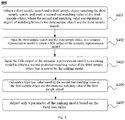
- FIG. 1 is a flowchart of a search method based on a neural network model according to an embodiment of the present disclosure, the neural network model including a semantic representation model, a recall model, and a ranking model.
- the search method 100 based on the neural network model may include: step S101: inputting a target search and a plurality of objects to be matched to the semantic representation model to obtain a first output of the semantic representation model, where the first output has a semantic understanding representation of recall and ranking; step S102: inputting the first output of the semantic representation model to the recall model, and obtaining at least one recall object matching the target search from the plurality of objects to be matched by using the recall model; and step S103: inputting a second output of the semantic representation model to the ranking model, and obtaining a matching value of each of the at least one recall object by using the ranking model, where the second output of the semantic representation model is obtained based on the input target search and the at least one recall object.
- the recall model in the neural network model is used to recall a matching object based on the target search, and then the ranking model calculates the matching value of a recalled object and ranks the recalled object based on the matching value; and operations of the recall model and the ranking model are both based on the semantic representation model.
- the semantic representation model can meet semantic representation requirements of recall and ranking such that a recall stage and a ranking stage have the same semantic representation for a search object and the objects to be matched, and a target and distribution of parameters of the two stages are more consistent, thus improving a final ranking effect.
- the neural network model further includes a feature extraction model
- the feature extraction model is configured to: obtain, based on the input first output of the semantic representation model, one or more recall objects and a matching value of each of the one or more recall objects. Therefore, by introducing the feature extraction model, the semantic representation model can meet the semantic representation requirements of recall and ranking, so that an output of the semantic representation model has the semantic understanding representation of recall and ranking. It can be understood that the feature extraction model may also be used to recall and rank, based on the semantic representation output by the semantic representation model, an object matching the target search, to obtain a search result having a better ranking effect.
- a training method for a neural network model for searching including a semantic representation model, a feature extraction model, a recall model, and a ranking model
- the training method including a training method for the semantic representation model and the feature extraction model, a training method for the recall model, and a training method for the ranking model.
- FIG. 2 is a flowchart of a training method for a semantic representation model and a feature extraction model according to an embodiment of the present disclosure.
- the training method 200 for the semantic representation model and the feature extraction model may include: step S201: obtaining a first sample search and a first sample object, and marking a first real classification label and a first real matching value of the first sample object, where the first real classification label can represent whether the first sample object matches the first sample search, and the first real matching value can represent a degree of matching between the first sample object and the first sample search; step S202: inputting the first sample search and the first sample object to the semantic representation model to obtain a third output of the semantic representation model; step S203: inputting the third output of the semantic representation model to the feature extraction model to obtain a first predicted classification label and a first predicted matching value of the first sample object that are output by the feature extraction model; step S204: calculating a first loss value based on the first real classification label and the first real matching value of the first sample object and the first
- the semantic representation model and the feature extraction model are used to predict whether sample data matches a sample search and a specific matching value between the sample data and the sample search, and a predicted value is compared with a corresponding real value to calculate the first loss value, which can be used to adjust the parameter of the semantic representation model and the parameter of the feature extraction model.
- a trained semantic representation model and a trained feature extraction model are finally obtained through a plurality of rounds of training of a large amount of sample data, so that the trained semantic representation model can meet semantic representation requirements of recall and ranking, and the recall model and ranking model are subsequently trained based on an output of the semantic representation model, so that the consistency between a recall step and a ranking step can be improved, and recall can be optimized and ranking tasks can be better completed.
- the first loss value includes a first sub-loss value and a second sub-loss value
- the calculating a first loss value includes: calculating the first sub-loss value based on the first real classification label of the first sample object and the first predicted classification label of the first sample object; calculating the second sub-loss value based on the first real matching value of the first sample object and the first predicted matching value of the first sample object; and calculating the first loss value based on the first sub-loss value and a first weight thereof and the second sub-loss value and a second weight thereof
- the training method for the semantic representation model and the feature extraction model further includes: adjusting the first weight and the second weight based on the first loss value.
- the first sub-loss value and the second sub-loss value are used to separately quantify predicted loss values indicating whether the sample data matches the sample search and the specific matching value between the sample data and the sample search, a final first loss value is calculated based on weighting the first sub-loss value and the second sub-loss value in the training process, and the first loss value is used to adjust the parameter of the semantic representation model and the parameter of the feature extraction model, so that the semantic representation model can better meet the semantic representation requirements of recall and ranking, the consistency between the recall step and the ranking step is further improved, and the recall can be optimized and the ranking tasks can be better completed.
- the first sub-loss value is used to optimize prediction performance of the semantic representation model and the feature extraction model on whether the first sample object matches the target search, so that the models can focus on an absolute relevance between the first sample object and the target search;
- the second sub-loss value is used to optimize prediction performance of the semantic representation model and the feature extraction model on a specific degree of matching between the first sample object and the target search, so that the models can focus on relevance ranking of the first sample object.
- the first loss value including the first sub-loss value and the second sub-loss value has an ability to focus on both the relevance ranking and the absolute relevance
- the semantic representation model and the feature extraction model are adjusted by the first loss value, so that a final trained semantic representation model and feature extraction model are optimized to have the ability to focus on both the relevance ranking and the absolute relevance, to improve a ranking effect when the models are used in search.
- the first sub-loss value may be calculated by a cross entropy loss function
- the second sub-loss value may be calculated by a ranking loss function.
- different weights are assigned to the two types of loss functions based on performance of the models, so that the two have different propagation strength and propagation layers in a model network, and are used to calculate the final first loss value to obtain the best optimization effect.
- the first sample object includes a positive example object that matches the first sample search and a negative example object that does not match the first sample search.
- Such positive and negative example objects are constructed as training samples, such that the models have an ability to predict whether input data matches the target search.
- the first real classification label of the first sample object includes a real classification label of the positive example object and a real classification label of the negative example object
- the first predicted classification label of the first sample object includes a predicted classification label of the positive example object and a predicted classification label of the negative example object.
- the first real matching value of the first sample object includes a real similarity between the positive example object and the negative example object
- the first predicted matching value of the first sample object includes a predicted similarity between the positive example object and the negative example object.
- CrossEntropyLoss represents the cross entropy loss function
- RankLoss represents the ranking loss function
- ⁇ 1 and ⁇ 2 represent weights of a cross entropy loss value in the first loss value
- ⁇ 3 represents a weight of a ranking loss value in the first loss value
- C 1 represents the positive example object in the first sample object
- label 1 is the real classification label of the positive example object
- C 2 represents a negative example object in a second sample object
- label 2 is a real classification label of the negative example object
- label 3 represents the real similarity between the positive example object and the negative example object.
- the first sample object may further include a first positive example object that matches the first sample search and a second positive example object that matches the first sample search.
- a constructed composite loss function may be the same as the above example, and will not be described in detail herein. It can be understood that a corresponding composite loss function may be constructed according to a specific case of the first sample object, which is not limited herein.
- the first sample object includes a highly matching object having a high degree of matching with the first sample search, a moderately matching object having a moderate degree of matching with the first sample search, and a low-degree matching object having a low degree of matching with the first sample search.
- the degree of matching may be further divided more finely and more accurately, and the first sample object for training the model is constructed based on a more accurate matching interval, to obtain a better ranking effect.
- training data used to train the semantic representation model and the feature extraction model may be constructed to have the following data structure: the first sample search, the first sample object, the first real classification label of the first sample object, and the first real matching value of the first sample object.
- the training method for the recall model and the training method for the ranking model are performed in response to completion of training for the semantic representation model and the feature extraction model, and an input to the recall model and an input to the ranking model each are an output of the semantic representation model.
- the parameter of the semantic representation model is fixed. It can be understood that the feature extraction model provides a specific training scenario for training of the semantic representation model, so that a trained semantic representation model is more applicable to a search scenario.
- the trained semantic representation model is used to train the recall model and the ranking model based on a corresponding recall scenario and a ranking scenario respectively, so that the recall model and the ranking model are trained based on more accurate tasks to obtain a better training effect, and obtain a better ranking effect when applied to the search scenario.
- At least one of the recall model and the ranking model is a pre-trained model. It can be understood that after the training for the semantic representation model is completed, parameters of a pre-trained recall model and a pre-trained ranking model can be adjusted based on the trained semantic representation model in a real recall scenario and a real ranking scenario respectively, so that the recall model and the ranking model have more accurate prediction performance on a real recall task and a real ranking task.
- FIG. 3 is a flowchart of a training method for a recall model according to an embodiment of the present disclosure.
- the training method 300 for the recall model may include: step S301: obtaining a second sample search and a second sample object, and marking a second real classification label of the second sample object, where the second real classification label can represent whether the second sample object matches the second sample search; step S302: inputting the second sample search and the second sample object to the semantic representation model to obtain a fourth output of the semantic representation model; step S303: inputting the fourth output of the semantic representation model to the recall model to obtain a second predicted classification label of the second sample object that is output by the recall model; step S304: calculating a second loss value based on the second real classification label of the second sample object and the predicted classification label of the second sample object; and step S305: adjusting only a parameter of the recall model based on the second loss value.
- the recall model is obtained by performing parameter adjustment on a pre-trained recall model based on a semantic representation output by a trained semantic representation model in a recall scenario. Therefore, it is necessary to construct a corresponding small amount of training data based on a specific recall task to optimize and adjust the parameter of the pre-trained recall model.
- the second sample object includes a positive sample object that matches the second sample search and a negative sample object that does not match the second sample search.
- the recall model is applied to a recall stage in a search, and is intended to recall data matching a target search in a large amount of data to be matched, that is, to make binary classification prediction on objects to be matched: whether the objects to be matched match the target search. Therefore, it is necessary to construct a corresponding training sample to train the recall model, and a constructed training data structure may include the second sample search, the second sample object, and the second real classification label corresponding to the second sample object.
- FIG. 4 is a flowchart of a training method for a ranking model according to an embodiment of the present disclosure.
- the training method 400 for the ranking model may include: step S401: obtaining a third sample search and a third sample object matching the third sample search, and marking a second real matching value of the third sample object, where the second real matching value can represent a degree of matching between the third sample object and the third sample search; step S402: inputting the third sample search and the third sample object to the semantic representation model to obtain a fifth output of the semantic representation model; step S403: inputting the fifth output of the semantic representation model to the ranking model to obtain a second predicted matching value of the third sample object that is output by the ranking model; step S404: calculating a third loss value based on the second real matching value of the third sample object and the predicted matching value of the third sample object; and step S405: adjusting only a parameter of the ranking model based on the third loss value.
- the ranking model is obtained by performing parameter adjustment on a pre-trained ranking model based on a semantic representation output by a trained semantic representation model in a ranking scenario. Therefore, it is necessary to construct a corresponding small amount of training data based on a specific ranking task to optimize and adjust the parameter of the pre-trained ranking model.
- the second real matching value lies in an interval [0,1].
- the ranking model is applied to a ranking stage in a search, and is intended to perform more accurate ranking on data recalled by the recall model for a specific degree of matching, that is, to perform multi-classification prediction on a recalled object, and to calculate a relatively accurate matching value for a degree of matching between the recalled object and a target search. Therefore, it is necessary to construct corresponding training samples with different degrees of matching whose matching values lie in the interval [0,1] to train the ranking model, and a constructed training data structure may include the third sample search, the third sample object, and the second real matching value of the third sample object.
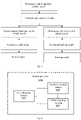
- FIG. 5 is a schematic diagram of a training method for a neural network model for searching according to an embodiment of the present disclosure.
- the training method for the neural network model for searching includes: training a semantic representation model and a feature extraction model by using a first sample object and a first sample search, and using the trained semantic representation model for subsequent training for a recall model and a ranking model; using a second sample object and a second sample search as training data and training a pre-trained recall model based on the trained semantic representation model, to adjust a parameter of the recall model and obtain a final recall model; and using a third sample object and a third sample search as training data and training a pre-trained ranking model based on the trained semantic representation model, to adjust a parameter of the ranking model and obtain a final ranking model.
- Corresponding data structures of the training data used to train the recall model and the training data used to train the ranking model may be constructed depending on corresponding training scenarios, to optimize prediction performance of the recall model and the ranking model.
- the search apparatus 600 includes: a first obtaining module 601 configured to input a target search and a plurality of objects to be matched to the semantic representation model to obtain a first output of the semantic representation model, where the first output has a semantic understanding representation of recall and ranking; a second obtaining module 602 configured to input the first output of the semantic representation model to the recall model, and obtain at least one recall object matching the target search from the plurality of objects to be matched by using the recall model; and a third obtaining module 603 configured to input a second output of the semantic representation model to the ranking model, and obtain a matching value of each of the at least one recall object by using the ranking model, where the second output of the semantic representation model is obtained based on the input target search and the at least one recall object.
- the second obtaining module 602 uses the recall model in the neural network model to recall a matching object based on the target search, and then the third obtaining module 603 uses the ranking model to calculate the matching value of a recalled object and rank the recalled object based on the matching value; and operations of the recall model and the ranking model are both based on the semantic representation model. Therefore, a recall stage and a ranking stage have the same semantic representation for a search object and the objects to be matched, and a target and distribution of parameters of the two stages are more consistent, thus improving a final ranking effect.
- a training apparatus for a neural network model for searching including a semantic representation model, a feature extraction model, a recall model, and a ranking model
- the training apparatus including a first training apparatus for training the semantic representation model and the feature extraction model, a second training apparatus for training the recall model, and a third training apparatus for training the ranking model.
- FIG. 7 is a structural block diagram of a first training apparatus for training a semantic representation model and a feature extraction model according to an embodiment of the present disclosure.
- the first training apparatus 700 includes: a fourth obtaining module 701 configured to obtain a first sample search and a first sample object, and mark a first real classification label and a first real matching value of the first sample object, where the first real classification label can represent whether the first sample object matches the first sample search, and the first real matching value can represent a degree of matching between the first sample object and the first sample search; a fifth obtaining module 702 configured to input the first sample search and the first sample object to the semantic representation model to obtain a third output of the semantic representation model; a sixth obtaining module 703 configured to input the third output of the semantic representation model to the feature extraction model to obtain a first predicted classification label and a first predicted matching value of the first sample object that are output by the feature extraction model; a calculation module 704 configured to calculate a first loss value based on the first real classification label and the first real
- Operations of the modules 701 to 705 of the first training apparatus 700 are similar to operations of steps S201 to S205 described above. Details are not described herein again.
- the second training apparatus and the third training apparatus each are configured to perform a respective training operation in response to completion of a training operation of the first training apparatus, and the second training apparatus is configured to input an output of the semantic representation model to the recall model, and the third training apparatus is configured to input the output of the semantic representation model to the ranking model.
- an electronic device a readable storage medium, and a computer program product.
- FIG. 8 a structural block diagram of an electronic device 800 that can serve as a server or a client of the present disclosure is now described, which is an example of a hardware device that can be applied to various aspects of the present disclosure.
- the electronic device is intended to represent various forms of digital electronic computer devices, such as a laptop computer, a desktop computer, a workstation, a personal digital assistant, a server, a blade server, a mainframe computer, and other suitable computers.
- the electronic device may further represent various forms of mobile apparatuses, such as a personal digital assistant, a cellular phone, a smartphone, a wearable device, and other similar computing apparatuses.
- the components shown herein, their connections and relationships, and their functions are merely examples, and are not intended to limit the implementation of the present disclosure described and/or required herein.
- the device 800 includes a computing unit 801, which may perform various appropriate actions and processing according to a computer program stored in a read-only memory (ROM) 802 or a computer program loaded from a storage unit 808 to a random access memory (RAM) 803.
- the RAM 803 may further store various programs and data required for the operation of the device 800.
- the computing unit 801, the ROM 802, and the RAM 803 are connected to each other through a bus 804.
- An input/output (I/O) interface 805 is also connected to the bus 804.
- a plurality of components in the device 800 are connected to the I/O interface 805, including: an input unit 806, an output unit 807, the storage unit 808, and a communication unit 809.
- the input unit 806 may be any type of device capable of entering information to the device 800.
- the input unit 806 can receive entered digit or character information, and generate a key signal input related to user settings and/or function control of the electronic device, and may include, but is not limited to, a mouse, a keyboard, a touchscreen, a trackpad, a trackball, a joystick, a microphone, and/or a remote controller.
- the output unit 807 may be any type of device capable of presenting information, and may include, but is not limited to, a display, a speaker, a video/audio output terminal, a vibrator, and/or a printer.
- the storage unit 808 may include, but is not limited to, a magnetic disk and an optical disc.
- the communication unit 809 allows the device 800 to exchange information/data with other devices via a computer network such as the Internet and/or various telecommunications networks, and may include, but is not limited to, a modem, a network interface card, an infrared communication device, a wireless communication transceiver and/or a chipset, e.g., a Bluetooth TM device, a 1302.11 device, a Wi-Fi device, a WiMAX device, a cellular communication device, and/or the like.
- the computing unit 801 may be various general-purpose and/or special-purpose processing components with processing and computing capabilities. Some examples of the computing unit 801 include, but are not limited to, a central processing unit (CPU), a graphics processing unit (GPU), various dedicated artificial intelligence (AI) computing chips, various computing units that run machine learning model algorithms, a digital signal processor (DSP), and any appropriate processor, controller, microcontroller, etc.
- the computing unit 801 performs the various methods and processing described above, for example, the search method based on the neural network model or the training method for the neural network model for searching.
- the search method based on the neural network model or the training method for the neural network model for searching may be implemented as a computer software program, which is tangibly contained in a machine-readable medium, such as the storage unit 808.
- a part or all of the computer program may be loaded and/or installed onto the device 800 via the ROM 802 and/or the communication unit 809.
- the computing unit 801 may be configured, by any other suitable means (for example, by means of firmware), to perform the search method based on the neural network model or the training method for the neural network model for searching.
- Various implementations of the systems and technologies described herein above can be implemented in a digital electronic circuit system, an integrated circuit system, a field programmable gate array (FPGA), an application-specific integrated circuit (ASIC), an application-specific standard product (ASSP), a system-on-chip (SOC) system, a complex programmable logical device (CPLD), computer hardware, firmware, software, and/or a combination thereof.
- FPGA field programmable gate array
- ASIC application-specific integrated circuit
- ASSP application-specific standard product
- SOC system-on-chip
- CPLD complex programmable logical device
- computer hardware firmware, software, and/or a combination thereof.
- the programmable processor may be a dedicated or general-purpose programmable processor that can receive data and instructions from a storage system, at least one input apparatus, and at least one output apparatus, and transmit data and instructions to the storage system, the at least one input apparatus, and the at least one output apparatus.
- Program codes used to implement the method of the present disclosure can be written in any combination of one or more programming languages. These program codes may be provided for a processor or a controller of a general-purpose computer, a special-purpose computer, or other programmable data processing apparatuses, such that when the program codes are executed by the processor or the controller, the functions/operations specified in the flowcharts and/or block diagrams are implemented.
- the program codes may be completely executed on a machine, or partially executed on a machine, or may be, as an independent software package, partially executed on a machine and partially executed on a remote machine, or completely executed on a remote machine or a server.
- the machine-readable medium may be a tangible medium, which may contain or store a program for use by an instruction execution system, apparatus, or device, or for use in combination with the instruction execution system, apparatus, or device.
- the machine-readable medium may be a machine-readable signal medium or a machine-readable storage medium.
- the machine-readable medium may include, but is not limited to, an electronic, magnetic, optical, electromagnetic, infrared, or semiconductor system, apparatus, or device, or any suitable combination thereof.
- machine-readable storage medium may include an electrical connection based on one or more wires, a portable computer disk, a hard disk, a random access memory (RAM), a read-only memory (ROM), an erasable programmable read-only memory (EPROM or flash memory), an optical fiber, a portable compact disk read-only memory (CD-ROM), an optical storage device, a magnetic storage device, or any suitable combination thereof.
- RAM random access memory
- ROM read-only memory
- EPROM or flash memory erasable programmable read-only memory
- CD-ROM compact disk read-only memory
- magnetic storage device or any suitable combination thereof.
- a computer which has: a display apparatus (for example, a cathode-ray tube (CRT) or a liquid crystal display (LCD) monitor) configured to display information to the user; and a keyboard and a pointing apparatus (for example, a mouse or a trackball) through which the user can provide an input to the computer.
- a display apparatus for example, a cathode-ray tube (CRT) or a liquid crystal display (LCD) monitor
- a keyboard and a pointing apparatus for example, a mouse or a trackball
- Other types of apparatuses can also be used to provide interaction with the user; for example, feedback provided to the user can be any form of sensory feedback (for example, visual feedback, auditory feedback, or tactile feedback), and an input from the user can be received in any form (including an acoustic input, a voice input, or a tactile input).
- the systems and technologies described herein can be implemented in a computing system (for example, as a data server) including a backend component, or a computing system (for example, an application server) including a middleware component, or a computing system (for example, a user computer with a graphical user interface or a web browser through which the user can interact with the implementation of the systems and technologies described herein) including a frontend component, or a computing system including any combination of the backend component, the middleware component, or the frontend component.
- the components of the system can be connected to each other through digital data communication (for example, a communications network) in any form or medium. Examples of the communications network include: a local area network (LAN), a wide area network (WAN), and the Internet.
- a computer system may include a client and a server.
- the client and the server are generally far away from each other and usually interact through a communications network.
- a relationship between the client and the server is generated by computer programs running on respective computers and having a client-server relationship with each other.
- the server may be a cloud server, a server in a distributed system, or a server combined with a blockchain.
- steps may be reordered, added, or deleted based on the various forms of procedures shown above.
- the steps recorded in the present disclosure may be performed in parallel, in order, or in a different order, provided that the desired result of the technical solutions disclosed in the present disclosure can be achieved, which is not limited herein.
Landscapes
- Engineering & Computer Science (AREA)
- Theoretical Computer Science (AREA)
- Physics & Mathematics (AREA)
- Data Mining & Analysis (AREA)
- General Physics & Mathematics (AREA)
- General Engineering & Computer Science (AREA)
- Databases & Information Systems (AREA)
- Computational Linguistics (AREA)
- General Health & Medical Sciences (AREA)
- Evolutionary Computation (AREA)
- Biophysics (AREA)
- Molecular Biology (AREA)
- Computing Systems (AREA)
- Biomedical Technology (AREA)
- Artificial Intelligence (AREA)
- Mathematical Physics (AREA)
- Software Systems (AREA)
- Life Sciences & Earth Sciences (AREA)
- Health & Medical Sciences (AREA)
- Information Retrieval, Db Structures And Fs Structures Therefor (AREA)
- Machine Translation (AREA)
Applications Claiming Priority (1)
| Application Number | Priority Date | Filing Date | Title |
|---|---|---|---|
| CN202111229493.2A CN113961765B (zh) | 2021-10-21 | 2021-10-21 | 基于神经网络模型的搜索方法、装置、设备和介质 |
Publications (2)
| Publication Number | Publication Date |
|---|---|
| EP4113387A2 true EP4113387A2 (de) | 2023-01-04 |
| EP4113387A3 EP4113387A3 (de) | 2023-03-01 |
Family
ID=79466041
Family Applications (1)
| Application Number | Title | Priority Date | Filing Date |
|---|---|---|---|
| EP22192187.7A Withdrawn EP4113387A3 (de) | 2021-10-21 | 2022-08-25 | Suchverfahren und -gerät basierend auf einem neuronalen netzwerkmodell, vorrichtung und medium |
Country Status (3)
| Country | Link |
|---|---|
| US (1) | US20220414474A1 (de) |
| EP (1) | EP4113387A3 (de) |
| CN (1) | CN113961765B (de) |
Families Citing this family (9)
| Publication number | Priority date | Publication date | Assignee | Title |
|---|---|---|---|---|
| CN115762559B (zh) * | 2022-11-22 | 2026-04-17 | 北京百度网讯科技有限公司 | 音频召回方法、模型训练方法、装置及电子设备 |
| CN116610944A (zh) * | 2023-03-15 | 2023-08-18 | 浙江大华技术股份有限公司 | 一种模型训练方法、装置、设备及介质 |
| CN116226678B (zh) * | 2023-05-10 | 2023-07-21 | 腾讯科技(深圳)有限公司 | 模型处理方法、装置、设备及存储介质 |
| CN116701570A (zh) * | 2023-05-12 | 2023-09-05 | 北京字跳网络技术有限公司 | 一种召回结果筛选方法、装置、计算机设备和存储介质 |
| CN116821459B (zh) * | 2023-05-19 | 2025-03-25 | 北京百度网讯科技有限公司 | 模型处理方法、装置、设备以及存储介质 |
| CN117034088A (zh) * | 2023-08-23 | 2023-11-10 | 支付宝(杭州)信息技术有限公司 | 对象分类模型训练方法、对象分类预测方法及装置 |
| CN117370492A (zh) * | 2023-09-12 | 2024-01-09 | 联想(北京)有限公司 | 一种搜索匹配方法及搜索匹配装置 |
| CN117453857B (zh) * | 2023-10-24 | 2024-12-10 | 北京百度网讯科技有限公司 | 召回模型训练方法、数据搜索方法及相关装置和程序产品 |
| CN118503404B (zh) * | 2024-07-17 | 2024-11-29 | 阿里云飞天(杭州)云计算技术有限公司 | 信息处理方法和装置、电子设备及计算机程序产品 |
Family Cites Families (7)
| Publication number | Priority date | Publication date | Assignee | Title |
|---|---|---|---|---|
| US9361365B2 (en) * | 2008-05-01 | 2016-06-07 | Primal Fusion Inc. | Methods and apparatus for searching of content using semantic synthesis |
| CN106547871B (zh) * | 2016-10-31 | 2020-04-07 | 北京百度网讯科技有限公司 | 基于神经网络的搜索结果的召回方法和装置 |
| CN107491518B (zh) * | 2017-08-15 | 2020-08-04 | 北京百度网讯科技有限公司 | 一种搜索召回方法和装置、服务器、存储介质 |
| CN111538908B (zh) * | 2020-06-22 | 2020-10-20 | 腾讯科技(深圳)有限公司 | 搜索排序方法、装置、计算机设备和存储介质 |
| CN112164391B (zh) * | 2020-10-16 | 2024-04-05 | 腾讯科技(深圳)有限公司 | 语句处理方法、装置、电子设备及存储介质 |
| CN112650907B (zh) * | 2020-12-25 | 2023-07-14 | 百度在线网络技术(北京)有限公司 | 搜索词的推荐方法、目标模型的训练方法、装置及设备 |
| CN113159187B (zh) * | 2021-04-23 | 2024-06-14 | 北京金山数字娱乐科技有限公司 | 分类模型训练方法及装置、目标文本确定方法及装置 |
-
2021
- 2021-10-21 CN CN202111229493.2A patent/CN113961765B/zh active Active
-
2022
- 2022-08-25 EP EP22192187.7A patent/EP4113387A3/de not_active Withdrawn
- 2022-09-01 US US17/901,803 patent/US20220414474A1/en active Pending
Also Published As
| Publication number | Publication date |
|---|---|
| CN113961765B (zh) | 2023-12-19 |
| CN113961765A (zh) | 2022-01-21 |
| EP4113387A3 (de) | 2023-03-01 |
| US20220414474A1 (en) | 2022-12-29 |
Similar Documents
| Publication | Publication Date | Title |
|---|---|---|
| EP4113387A2 (de) | Suchverfahren und -gerät basierend auf einem neuronalen netzwerkmodell, vorrichtung und medium | |
| US12423576B2 (en) | Method and apparatus for updating parameter of multi-task model, and storage medium | |
| US12333795B2 (en) | Multimodal data processing | |
| JP7331975B2 (ja) | クロスモーダル検索モデルのトレーニング方法、装置、機器、および記憶媒体 | |
| EP4033453A1 (de) | Trainingsverfahren und -vorrichtung für ein zieldetektionsmodell, vorrichtung und speichermedium | |
| EP4116859A2 (de) | Verfahren und vorrichtung zur dokumentverarbeitung und medium | |
| US20230215136A1 (en) | Method for training multi-modal data matching degree calculation model, method for calculating multi-modal data matching degree, and related apparatuses | |
| EP4195110A1 (de) | Verfahren und vorrichtung zum trainieren eines tiefenlernmodells sowie verfahren und vorrichtung zur verarbeitung von natürlicher sprache | |
| US20230066021A1 (en) | Object detection | |
| US20220101199A1 (en) | Point-of-interest recommendation | |
| US20220374678A1 (en) | Method for determining pre-training model, electronic device and storage medium | |
| CN113516185B (zh) | 模型训练的方法、装置、电子设备及存储介质 | |
| US12380328B2 (en) | Lightweight model training method, image processing method, electronic device, and storage medium | |
| JP2022095895A (ja) | 交通データ予測方法、交通データ予測装置、電子機器、記憶媒体、コンピュータプログラム製品及びコンピュータプログラム | |
| US20250054494A1 (en) | Method and device for training speech translation model, and storage medium | |
| US12038989B2 (en) | Methods for community search, method for training community search model, and electronic device | |
| US12505304B2 (en) | Dialog data generating | |
| CN113065644A (zh) | 用于压缩神经网络模型的方法及装置、设备和介质 | |
| CN116091824B (zh) | 车辆分类模型的微调方法、车辆分类方法、装置及设备 | |
| EP4109353A2 (de) | Verfahren und vorrichtung zur erzeugung eines vortrainingsmodells, elektronische vorrichtung und speichermedium | |
| CN113553407B (zh) | 事件追溯方法、装置、电子设备及存储介质 | |
| CN113361575A (zh) | 模型训练方法、装置和电子设备 | |
| CN113408632A (zh) | 提高图像分类准确性的方法、装置、电子设备及存储介质 | |
| US20250390683A1 (en) | Method for training text question and answer model, and electronic device | |
| CN115758142A (zh) | 深度学习模型的训练方法、数据处理方法和装置 |
Legal Events
| Date | Code | Title | Description |
|---|---|---|---|
| PUAI | Public reference made under article 153(3) epc to a published international application that has entered the european phase |
Free format text: ORIGINAL CODE: 0009012 |
|
| STAA | Information on the status of an ep patent application or granted ep patent |
Free format text: STATUS: REQUEST FOR EXAMINATION WAS MADE |
|
| 17P | Request for examination filed |
Effective date: 20220825 |
|
| AK | Designated contracting states |
Kind code of ref document: A2 Designated state(s): AL AT BE BG CH CY CZ DE DK EE ES FI FR GB GR HR HU IE IS IT LI LT LU LV MC MK MT NL NO PL PT RO RS SE SI SK SM TR |
|
| REG | Reference to a national code |
Ref country code: DE Ref legal event code: R079 Free format text: PREVIOUS MAIN CLASS: G06N0003040000 Ipc: G06N0003042000 |
|
| PUAL | Search report despatched |
Free format text: ORIGINAL CODE: 0009013 |
|
| AK | Designated contracting states |
Kind code of ref document: A3 Designated state(s): AL AT BE BG CH CY CZ DE DK EE ES FI FR GB GR HR HU IE IS IT LI LT LU LV MC MK MT NL NO PL PT RO RS SE SI SK SM TR |
|
| RIC1 | Information provided on ipc code assigned before grant |
Ipc: G06F 16/9038 20190101ALI20230126BHEP Ipc: G06N 3/045 20230101ALI20230126BHEP Ipc: G06N 3/09 20230101ALI20230126BHEP Ipc: G06N 3/042 20230101AFI20230126BHEP |
|
| STAA | Information on the status of an ep patent application or granted ep patent |
Free format text: STATUS: THE APPLICATION IS DEEMED TO BE WITHDRAWN |
|
| 18D | Application deemed to be withdrawn |
Effective date: 20230902 |