EP4113333A1 - Information processing apparatus, information processing program, and information processing method - Google Patents
Information processing apparatus, information processing program, and information processing method Download PDFInfo
- Publication number
- EP4113333A1 EP4113333A1 EP21211634.7A EP21211634A EP4113333A1 EP 4113333 A1 EP4113333 A1 EP 4113333A1 EP 21211634 A EP21211634 A EP 21211634A EP 4113333 A1 EP4113333 A1 EP 4113333A1
- Authority
- EP
- European Patent Office
- Prior art keywords
- license
- employment
- priority
- information processing
- administrator
- Prior art date
- Legal status (The legal status is an assumption and is not a legal conclusion. Google has not performed a legal analysis and makes no representation as to the accuracy of the status listed.)
- Withdrawn
Links
Images




Classifications
-
- G—PHYSICS
- G06—COMPUTING OR CALCULATING; COUNTING
- G06F—ELECTRIC DIGITAL DATA PROCESSING
- G06F21/00—Security arrangements for protecting computers, components thereof, programs or data against unauthorised activity
- G06F21/10—Protecting distributed programs or content, e.g. vending or licensing of copyrighted material ; Digital rights management [DRM]
- G06F21/105—Arrangements for software license management or administration, e.g. for managing licenses at corporate level
-
- G—PHYSICS
- G06—COMPUTING OR CALCULATING; COUNTING
- G06Q—INFORMATION AND COMMUNICATION TECHNOLOGY [ICT] SPECIALLY ADAPTED FOR ADMINISTRATIVE, COMMERCIAL, FINANCIAL, MANAGERIAL OR SUPERVISORY PURPOSES; SYSTEMS OR METHODS SPECIALLY ADAPTED FOR ADMINISTRATIVE, COMMERCIAL, FINANCIAL, MANAGERIAL OR SUPERVISORY PURPOSES, NOT OTHERWISE PROVIDED FOR
- G06Q10/00—Administration; Management
- G06Q10/10—Office automation; Time management
-
- G—PHYSICS
- G06—COMPUTING OR CALCULATING; COUNTING
- G06Q—INFORMATION AND COMMUNICATION TECHNOLOGY [ICT] SPECIALLY ADAPTED FOR ADMINISTRATIVE, COMMERCIAL, FINANCIAL, MANAGERIAL OR SUPERVISORY PURPOSES; SYSTEMS OR METHODS SPECIALLY ADAPTED FOR ADMINISTRATIVE, COMMERCIAL, FINANCIAL, MANAGERIAL OR SUPERVISORY PURPOSES, NOT OTHERWISE PROVIDED FOR
- G06Q30/00—Commerce
- G06Q30/06—Buying, selling or leasing transactions
Definitions
- the processor may be configured to set a range in which the license of the application owned by the administrator is employable for the device other than the device under the management of the administrator for each application or each device.
- the processor may be configured to display the license information and information on the device for which the license information is employed.
- the acquisition unit 101 acquires the license information representing the license 50 of the application owned by each of the plurality of users.
Landscapes
- Engineering & Computer Science (AREA)
- Theoretical Computer Science (AREA)
- Software Systems (AREA)
- Physics & Mathematics (AREA)
- General Physics & Mathematics (AREA)
- Business, Economics & Management (AREA)
- Computer Security & Cryptography (AREA)
- General Engineering & Computer Science (AREA)
- Computer Hardware Design (AREA)
- Technology Law (AREA)
- Multimedia (AREA)
- Human Resources & Organizations (AREA)
- Entrepreneurship & Innovation (AREA)
- Strategic Management (AREA)
- Data Mining & Analysis (AREA)
- Economics (AREA)
- Marketing (AREA)
- Operations Research (AREA)
- Quality & Reliability (AREA)
- Tourism & Hospitality (AREA)
- General Business, Economics & Management (AREA)
- Management, Administration, Business Operations System, And Electronic Commerce (AREA)
Abstract
Description
- The present invention relates to an information processing apparatus, an information processing program, and an information processing method.
-
JP2012-022621A -
JP2012-234525A - One of license employment methods for executing an application is a serial license method in which one license is employed for each device. In license management of the application that employs the serial license method, a user having the management authority of the application for the device needs to explicitly select the device and assign the license as appropriate according to the number of devices and the number of licenses.
- For example, even though a certain user purchases the license for the number of devices managed by the user, the number of licenses may be surplus in a case where the number of operating devices decreases due to a use situation of the devices. On the other hand, even though another administrator purchases the licenses for the number of devices managed by the administrator, the number of licenses may be insufficient for the devices managed by the administrator in a case where the number of devices to be managed is added.
- An object of the present invention is to provide an information processing apparatus, an information processing program, and an information processing method capable of effectively using a license as compared with a case where an administrator employs a license only to a device managed by the administrator.
- According to a first aspect of the present disclosure, there is provided an information processing apparatus including a processor configured to acquire information related to management authority representing which device of a plurality of devices to be managed is under management of which administrator of a plurality of administrators, set employment priority to employ a license of an application to be installed and used for the plurality of devices, acquire license information representing the license of the application owned by each of the plurality of administrators, and employ a license owned by a first administrator for a device other than a device under management of the first administrator among the plurality of administrators according to the employment priority.
- According to a second aspect of the present disclosure, there is provide the information processing apparatus, in which the processor may be configured to employ the license owned by the first administrator for a second device under the management of a second administrator among the plurality of administrators in a case where the employment priority set for a first device under management of the first administrator is lower than the employment priority of the second device.
- According to a third aspect of the present disclosure, there is provide the information processing apparatus, in which the processor may be configured to set the employment priority based on use frequency of the device.
- According to a fourth aspect of the present disclosure, there is provide the information processing apparatus, in which the processor may be configured to set the use frequency of the device based on at least one of the number of users, an operation rate, or a use situation of the device.
- According to a fifth aspect of the present disclosure, there is provide the information processing apparatus, in which the processor may be configured to set the employment priority according to the use frequency of the device in a predetermined period.
- According to a sixth aspect of the present disclosure, there is provide the information processing apparatus, in which the processor may be configured to receive update of the employment priority and set the employment priority according to the use frequency of the device in the predetermined period based on a change of the employment priority.
- According to a seventh aspect of the present disclosure, there is provide the information processing apparatus, in which the processor may be configured to cancel the employment of the license for a third device among the plurality of devices in a case where the license is already employed, before the license is employed, for the third device and the employment priority set for the third device is lower than the employment priority set for a fourth device for which the license is not employed among the plurality of devices.
- According to an eighth aspect of the present disclosure, there is provide the information processing apparatus, in which the processor may be configured to display a warning to the administrator having the management authority for a predetermined period before the employment of the license is canceled.
- According to a ninth aspect of the present disclosure, there is provide the information processing apparatus, in which the processor may be configured to employ the license for which the employment is canceled, for the fourth device.
- According to a tenth aspect of the present disclosure, there is provide the information processing apparatus, in which the processor may be configured to set a range in which the license of the application owned by the administrator is employable for the device other than the device under the management of the administrator for each application or each device.
- According to an eleventh aspect of the present disclosure, there is provide the information processing apparatus, in which the processor may be configured to display the license information and information on the device for which the license information is employed.
- According to a twelfth aspect of the present disclosure, there is provided an information processing program causing a computer to execute a process including acquiring information related to management authority representing which device of a plurality of devices to be managed is under management of which administrator of a plurality of administrators, setting employment priority to employ a license of an application to be installed and used for the plurality of devices, acquiring license information representing the license of the application owned by each of the plurality of administrators, and employing a license owned by a first administrator for a device other than a device under management of the first administrator among the plurality of administrators according to the employment priority.
- According to a thirteenth aspect of the present disclosure, there is provided an information processing method including acquiring information related to management authority representing which device of a plurality of devices to be managed is under management of which administrator of a plurality of administrators, setting employment priority to employ a license of an application to be installed and used for the plurality of devices, acquiring license information representing the license of the application owned by each of the plurality of administrators, and employing a license owned by a first administrator for a device other than a device under management of the first administrator among the plurality of administrators according to the employment priority.
- With the information processing apparatus according to the first aspect of the present invention, the license can be effectively used as compared with the case where the administrator employs the license only for the device managed by the administrator.
- With the information processing apparatus according to the second aspect of the present invention, the license can be employed for the device having relatively high employment priority based on the employment priority, even for the device outside the management authority.
- With the information processing apparatus according to the third aspect of the present invention, the license can be employed for the device having the high use frequency.
- With the information processing apparatus according to the fourth aspect of the present invention, the employment priority can be set according to the use record of the device.
- With the information processing apparatus according to the fifth aspect of the present invention, the employment priority can be set only for the predetermined period.
- With the information processing apparatus according to the sixth aspect of the present invention, the license can be employed based on the employment priority in the latest situation of the device.
- With the information processing apparatus according to the seventh aspect of the present invention, the license can be more effectively used by not only the employment of the license but also the cancellation of the employment of the license.
- With the information processing apparatus according to the eighth aspect of the present invention, the employment of the license for the device can be prevented from being canceled without knowledge of the administrator.
- With the information processing apparatus according to the ninth aspect of the present invention, the license can be more effectively used by reemploying the surplus license for which the employment is canceled for the device having the higher employment priority.
- With the information processing apparatus according to the tenth aspect of the present invention, the administrator can select the employable range of the license, and thus the license can be effectively used more in line with the current situation.
- With the information processing apparatus according to the eleventh aspect of the present invention, the latest license employment situation can be visually recognizable.
- With the information processing program according to the twelfth aspect of the present invention, the license can be effectively used as compared with the case where the administrator employs the license only for the device managed by the administrator.
- With the information processing method according to the thirteenth aspect of the present invention, the license can be effectively used as compared with the case where the administrator employs the license only for the device managed by the administrator.
- Exemplary embodiment(s) of the present invention will be described in detail based on the following figures, wherein:
-
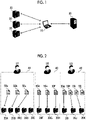
Fig. 1 is a diagram showing an outline of an entire information processing system according to the present exemplary embodiment; -
Fig. 2 is a diagram showing an example of employment of a license by a serial license method; -
Fig. 3 is a diagram showing an example of employment of a license using an information processing apparatus according to the present exemplary embodiment; -
Fig. 4 is a block diagram showing a hardware configuration of the information processing apparatus according to the present exemplary embodiment; -
Fig. 5 is a block diagram showing a functional configuration of the information processing apparatus according to the present exemplary embodiment; -
Fig. 6 is a table showing an example of information related to management authority; -
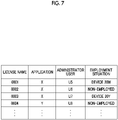
Fig. 7 is a table showing an example of information related to a license; -
Fig. 8 is a table showing an example of information related to setting of employment priority; -
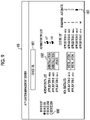
Fig. 9 is a diagram showing a display example related to an employment situation of a license; and -
Fig. 10 is a flowchart representing processing of an information processing apparatus according to the present exemplary embodiment. - Hereinafter, an example of exemplary embodiments according to the disclosed technique will be described in detail with reference to drawings.
-
Fig. 1 is a diagram showing an outline of an entire information processing system including aninformation processing apparatus 10 according to the present exemplary embodiment. As shown inFig. 1 , the information processing system according to the present exemplary embodiment includes theinformation processing apparatus 10, adevice 20, and aninformation management server 30. Each of thedevice 20 and theinformation management server 30 is connected to theinformation processing apparatus 10. Although not shown, these apparatuses are connected to a network and can communicate with each other through the network. Examples of the network include the Internet, a local area network (LAN), and a wide area network (WAN). - The
device 20 is a multifunction device in which functions such as a copier, a printer, an image scanner, and a facsimile are integrated into one. Thedevice 20 is a device having various functions. In addition to the functions provided in advance, an application can be installed at any time to add a new function. - In a case where the application is installed on the
device 20, information related to the license issued at the time of purchasing the application is input. The information related to the license is information for authentication. For example, in a case where authentication is performed between an application seller and a purchaser with inputting of a predetermined number, text, symbol, or the like as a license key and the authentication is successful, the application can be installed on thedevice 20. In the present exemplary embodiment, the inputting of the information related to the license into thedevice 20 is expressed as employment of the license. Thedevice 20 may be any device, such as a smartphone, a personal computer, or a server, on which an application authenticated by the license key can be installed, other than an image forming apparatus such as the multifunction device. - The
device 20 holds device information. An example of the device information includes information related to thedevice 20 such as an ID of thedevice 20, information about an administrator who manages thedevice 20, and information related to use frequency of thedevice 20. Thedevice 20 is interconnected with theinformation processing apparatus 10 in order to transmit the held device information to theinformation processing apparatus 10 and receive the license employment and the like in accordance with the installation of the application from theinformation processing apparatus 10. As shown inFig. 1 , theinformation processing apparatus 10 can communicate with a plurality ofdevices 20 at the same time. - The
information management server 30 is an apparatus that manages information related to management authority and the license information. Theinformation management server 30 transmits the information related to the management authority and the license information to theinformation processing apparatus 10, and receives communication, an instruction, and the like from theinformation processing apparatus 10. - The
information management server 30 holds, as the information related to the management authority, information about a user name of the administrator of thedevice 20, thedevice 20 managed by each administrator, and the license held by each administrator, for example. Examples of the license information include a name and type of the application based on the license, a form of the license, the administrator holding the license, a version of the application, a target model, and an access destination in a case where the application is installed. In the present exemplary embodiment, the administrator of thedevice 20 is expressed as a user. The management of the device by the administrator means that the administrator determines whether or not to employ the license to the device. - Next, a case where the license is employed for the
device 20 and the application is installed will be described.Fig. 2 is a diagram showing an example of the employment of the license by a serial license method. As described above, one of the license employment methods for executing the application is the serial license method in which one license is employed for each device. -
Fig. 2 shows users as U1, U2, and U3. A dottedline 40 surrounding each of the users U1, U2, and U3 at the center represents the management authority. Hereinafter, the management authority is expressed asmanagement authority 40. Themanagement authority 40 represents whichdevice 20 is under the management of which user among the plurality of users for the plurality ofdevices 20, which are management targets of the users. InFig. 2 , as an example, the user U1 manages fivedevices 20A to 20E, the user U2 manages threedevices 20F to 20H, and the user U3 manages three devices 20I to 20K. Hereinafter, in a case where thedevices 20 are described in a distinguished manner, the devices are expressed as thedevices 20A to 20K. Each user holds alicense 50 for installing the application on thedevice 20. As an example, the user U1 holdslicenses 50a to 50c, the user U2 holdslicenses 50d to 50f, and the user U3 holdslicenses 50g to 50j. Hereinafter, in a case where thelicenses 50 are described in a distinguished manner, the licenses are expressed as thelicenses 50a to 50j . - In the serial license method, each user explicitly selects the
device 20 and assigns and employs thelicense 50 according to the number ofdevices 20 managed and the number oflicenses 50 held. However, as shown inFig. 2 , the user U1 has fivedevices 20 to be managed while the user holds threelicenses 50. Therefore, the user has twosurplus devices 20 for which thelicense 50 is not employed. Thelicense 50 is not employed for thesurplus devices license 50 is insufficient. On the other hand, the user U3 has threedevices 20 to be managed while the user holds fourlicenses 50. Therefore, the user has onesurplus license 50j. Therefore, thelicense 50j of the purchased application is left over without being used. In the example shown inFig. 2 , both the users U1 and U3 waste thedevice 20 and thelicense 50. - Next, a case where the
license 50 is employed for thedevice 20 using theinformation processing apparatus 10 according to the present exemplary embodiment and the application is installed will be described.Fig. 3 is a diagram showing an example of employment of thelicense 50 using theinformation processing apparatus 10. In the example ofFig. 3 , each management situation of the users U1 to U3, thedevices 20A to 20K, and thelicenses 50a to 50j is the same as the management situation ofFig. 2 . However, the example ofFig. 3 differs from the example ofFig. 2 in the following two points. The first is that thelicense 50 is also employed for thedevices licenses 50a to 50j are employed for any one of thedevices 20A to 20K. The second is that thelicenses devices licenses devices 20F to 20H or thedevices 201 to 20K, which are under the management of the users U2 and U3 who originally hold thelicenses - As shown in
Fig. 3 , with use of theinformation processing apparatus 10 according to the present exemplary embodiment, thelicense 50 can be employed for thedevice 20 selected beyond a frame of themanagement authority 40 of thedevice 20. Therefore, thelicense 50 can be effectively used as compared with the case where thelicense 50 is employed only for thedevice 20 managed by the user within the frame of themanagement authority 40 of thedevice 20. A method of employing thelicense 50 will be described below. - Next, a configuration of the
information processing apparatus 10 will be described with reference toFig. 4. Fig. 4 is a block diagram showing an example of a hardware configuration of theinformation processing apparatus 10 according to the present exemplary embodiment. As an example, theinformation processing apparatus 10 according to the present exemplary embodiment will be described as a terminal such as a personal computer. However, the present invention is not limited thereto. Theinformation processing apparatus 10 may be mounted on the image forming apparatus, such as the multifunction device, which is thedevice 20. - As shown in
Fig. 4 , theinformation processing apparatus 10 according to the present exemplary embodiment includes a central processing unit (CPU) 11, a read only memory (ROM) 12, a random access memory (RAM) 13, astorage 14, aninput unit 15, amonitor 16, and a communication interface (communication I/F) 17. TheCPU 11, theROM 12, theRAM 13, thestorage 14, theinput unit 15, themonitor 16, and the communication I/F 17 are each connected by abus 18. Here, theCPU 11 is an example of a processor. - The
CPU 11 integrally controls the entireinformation processing apparatus 10. TheROM 12 stores various programs, data, and the like including an information processing program used in the present exemplary embodiment. TheRAM 13 is a memory used as a work area in a case where various programs are executed. TheCPU 11 expands the program stored in theROM 12 into theRAM 13 and executes the program to perform processing of displaying each image and a text string. Thestorage 14 is, for example, a hard disk drive (HDD), a solid state drive (SSD), or a flash memory. The information processing program and the like may be stored in thestorage 14. Theinput unit 15 is a mouse, a keyboard, or the like that receives a text input or the like. Themonitor 16 displays each screen. The communication I/F 17 transmits and receives data. - Next, a functional configuration of the
information processing apparatus 10 will be described with reference toFig. 5. Fig. 5 is a block diagram showing an example of the functional configuration of theinformation processing apparatus 10 according to the present exemplary embodiment. - As shown in
Fig. 5 , theinformation processing apparatus 10 includes, as the functional configuration, anacquisition unit 101, asetting unit 102, anemployment unit 103, and adisplay unit 104. TheCPU 11 executes the information processing program to function as theacquisition unit 101, thesetting unit 102, theemployment unit 103, and thedisplay unit 104. - The
acquisition unit 101 acquires the information related to themanagement authority 40 representing whichdevice 20 is under the management of which user among the plurality of users for the plurality ofdevices 20 to be managed. - As shown in
Figs. 2 and3 , themanagement authority 40 represents whichdevice 20 is under the management of which user, and theacquisition unit 101 acquires the information related to themanagement authority 40 from theinformation management server 30.Fig. 6 is a table showing an example of the information related to themanagement authority 40 in eachdevice 20. Theacquisition unit 101 acquires information about which user manages for eachdevice 20. In the example ofFig. 6 , the user U5 or U6 is associated with device names of adevice 20W, adevice 20X, ···, and the like as the ID of eachdevice 20. In the example ofFig. 6 , thedevice 20 and the user are associated with each other on a one-to-one basis. However, the plurality of users may be registered as administrators for onedevice 20 or the information related to themanagement authority 40 may include an employment situation of thelicense 50 for eachdevice 20. - The
acquisition unit 101 acquires the license information representing thelicense 50 of the application owned by each of the plurality of users. - The license information is, for example, the name and type of the application, the user of the
license 50, the version of the application, and the access destination in a case where the application is installed.Fig. 7 is a table showing an example of information related to thelicense 50. InFig. 7 , the name and type of the application, the user holding eachlicense 50, and the employment situation of eachlicense 50 corresponding to licensenames license 50 are recorded as examples of the information related to thelicense 50. Theacquisition unit 101 acquires the license information from theinformation management server 30. - The
setting unit 102 sets the employment priority to employ thelicense 50 of the application to be installed and used for the plurality ofdevices 20. - The employment priority is a standard used for selecting the
device 20 for which thelicense 50 is employed in a case where the assignment of thelicense 50 is performed at the time of employing thelicense 50. InFig. 3 , the employment priority is indicated by "high", "medium", "low", and "none" for each of thedevices 20A to 20K. In the present exemplary embodiment, the employment priority has four levels in the order of "high", "medium", "low", and "none". Thelicense 50 is preferentially assigned to thedevice 20 set with the employment priority of "high" among the plurality ofdevices 20. In a case where there is thelicense 50 remaining after thelicense 50 is employed for thedevice 20 set with the employment priority of "high", the remaininglicense 50 is employed for thedevices 20 set with the employment priority of "medium", "low", and "none". Also inFig. 3 , thelicense 50 is employed for all thedevices 20 set with the employment priority of "high". However, there is nosurplus license 50 after thelicense 50 is employed in the order of employment priority "high", "medium", and "low". Therefore, thelicense 50 is not employed for thedevice 20H set with the employment priority of "none". - The
setting unit 102 sets the employment priority based on the use frequency of thedevice 20. - In the example shown in
Fig. 6 , as an example of the information related to themanagement authority 40, information related to a use record of eachdevice 20 is recorded as the use frequency, in addition to the user information related to eachdevice 20 and the information of the license employment situation. Thesetting unit 102 sets the employment priority based on the use frequency of thedevice 20, based on the information related to themanagement authority 40 acquired by theacquisition unit 101. - The
setting unit 102 sets the use frequency of thedevice 20 based on at least one of the number of users, operation rate, or use situation of thedevice 20. - In the example shown in
Fig. 6 , theacquisition unit 101 acquires the use frequency of thedevice 20 included in the information related to themanagement authority 40 as the number of users, the operation rate, and the use situation. The number of users is information that the number of users who use thedevice 20 is cumulatively recorded, and the user may include the administrator. The operation rate is information obtained by calculating a ratio of a time for which thedevice 20 executes the function to a time for which power supply is turned on. The use situation is an item input by the user. In the example ofFig. 6 , the use situation is described in three levels of "very frequently used", "frequently used", and "non-used". The use situation is an item that the user can randomly input, and the number of levels and variations may be increased such as "not used much", not limited to the example ofFig. 6 . The information related to the use record of thedevice 20 referred to as the use frequency may not be limited to the three items of the number of users, the operation rate, and the use situation. In the present exemplary embodiment, thesetting unit 102 sets the use frequency of thedevice 20 based on at least one of the number of users, operation rate, or use situation of thedevice 20. Therefore, the use frequency of thedevice 20 can be calculated by combining any of a plurality of items. -
Fig. 8 is a table showing an example of information related to setting of the employment priority. In the example ofFig. 8 , the employment priority is set to four levels of "high", "medium", "low", and "none". Whichdevice 20 is to be set with which employment priority is set by thesetting unit 102 based on the information related to the setting of the employment priority acquired by theacquisition unit 101. InFig. 8 , "priority definition" and "license employment determination logic" are respectively defined for the employment priority "high", "medium", "low", and "none". - The "priority definition" is a definition of the employment priority using the use frequency of the
device 20. For example, the employment priority "high" is set in a case where any one of a case where "use situation" is "very frequently used" or a case where "operation rate" is 3% or more and "user" is 30 or more is satisfied. In the "priority definition" inFig. 8 , the user can randomly change or delete a condition. For example, the priority definition of the employment priority "medium" is defined as satisfying any one of three conditions, but may be defined only in a case where all three conditions are satisfied. A numerical value and the like in each condition may be changed. The condition can be added and deleted. - Further, the "license employment determination logic" is also used for the setting of the employment priority. As shown in
Fig. 8 , the license employment determination logic can be selected from each of three logics for each of the employment priority "high", "medium", "low", and "none". For example, the employment of the license regardless of a license holder is set inlogic 1. That is, as thelogic 1 is set, thedevice 20 for which thelicense 50 is employed is selected according to the high or low employment priority beyond the frame of themanagement authority 40. However, as shown inFig. 8 , even in a case where thelogic 1 is set, in a case where thedevices 20 having the same employment priority are present, thelicense 50 is preferentially employed for thedevice 20 within themanagement authority 40 of thelicense 50 holder. - There are three types of "license employment determination logic" shown in
Fig. 8 . However, the present invention is not limited thereto, and the user may change or the like a content of the logic as appropriate. As shown inFig. 8 , the "license employment determination logic" may not be employed uniformly for all pieces of the employment priority. The "license employment determination logic" can be set for each of the employment priority "high", "medium", "low", and "none". Therefore, in the example ofFig. 8 , thelogic 1 is employed for the employment priority "high" and "medium". However, thelogic 2 is employed for the employment priority "low" and thelogic 3 is employed for the employment priority "none". - The
setting unit 102 sets the employment priority according to the use frequency of thedevice 20 in a predetermined period. - The
setting unit 102 sets a period for calculating the use frequency of thedevice 20 used in a case where the employment priority is set in advance, for example, the last three months. Therefore, thesetting unit 102 can set the employment priority based on the use frequency according to the latest situation. - The
setting unit 102 receives update of the employment priority and sets the employment priority according to the use frequency of thedevice 20 in the predetermined period based on the change of the employment priority. - The
setting unit 102 receives the update for changing the employment priority in accordance with the use frequency of thedevice 20 in the predetermined period. As described above, the user can randomly change the "priority definition" and the "license employment determination logic" related to the setting of the employment priority. Therefore, with the update of the employment priority by thesetting unit 102, the employment priority that reflects intention of the user according to the latest situation can be set. - The
setting unit 102 sets a range in which thelicense 50 of the application owned by the user can be employed for thedevice 20 other than thedevice 20 under the management of the user for each application or eachdevice 20. - In the employment of the
license 50 in the present exemplary embodiment, the range in which thelicense 50 of the application owned by the user can be employed for thedevice 20 other than thedevice 20 under the management of the user may be set for eachdevice 20. The range in which thelicense 50 of the application owned by the user can be employed for thedevice 20 other than thedevice 20 under the management of the user may be set for eachlicense 50 of the application owned by the user. For example, acertain license 50 may be permitted to be employed beyond the frame of themanagement authority 40, and theother license 50 may not be permitted to be employed beyond the frame of themanagement authority 40. - The
employment unit 103 employs thelicense 50 owned by a first user for a device other than a device under the management of the first user among the plurality of users, according to the employment priority. - The
employment unit 103 employs thelicense 50 for thedevice 20 under the management of the user other than the user who holds thelicense 50, according to the employment priority set by thesetting unit 102. For example, in the example shown inFig. 3 , in a case where the first user is the user U2, thelicense 50f held by the user U2 is originally employed for thedevice 20 held by the user U2. However, theemployment unit 103 employs thelicense 50f held by the user U2 for thedevice 20D managed by the user U1, which is thedevice 20 other than thedevices 20F to 20H held by the user U2. That is, thelicense 50f is employed, by theemployment unit 103, for thedevice 20D for which none of thelicenses 50 is employed. Therefore, thelicense 50 can be employed for thedevice 20 selected beyond the frame of themanagement authority 40 of thedevice 20. - The
employment unit 103 employs thelicense 50 owned by the first user for asecond device 20 in a case where the employment priority set for afirst device 20 under the management of the first user is lower than the employment priority of thesecond device 20 under the management of the second user among the plurality of users. - In the example shown in
Fig. 3 , in a case where the first user is the user U2 and the second user is the user U1, the employment priority set for thedevice 20H for which thelicense 50f held by the user U2 is originally employed is "none". In a case where thesecond device 20D under the management of the user U1 who is the second user among the plurality of users is compared with thedevice 20 H, the employment priority "none" set for thedevice 20H is lower than the employment priority "high" set for thedevice 20D. Therefore, theemployment unit 103 employs thelicense 50f held by the user U2, which is the first user, for thedevice 20D managed by the user U1, which is thesecond device 20, beyond the frame of themanagement authority 40. - The
employment unit 103 cancels the employment of thelicense 50 for athird device 20 in a case where thelicense 50 is already employed for thethird device 20 among the plurality ofdevices 20 before thelicense 50 is employed and in a case where the employment priority set for thethird device 20 is lower than the employment priority set for afourth device 20 for which thelicense 50 is not employed among the plurality ofdevices 20. - In the example of
Fig. 2 , thelicense 50f is already employed for thedevice 20 H. However, in the example ofFig. 3 , the employment priority of thedevice 20H is set as "none", and the employment priority of thedevice 20D for which none of thelicense 50 is employed is set as "high". In this case, for example, thethird device 20 is 20H and the fourth device is 20D. In a case where thedevice 20H which is thethird device 20 is compared with thedevice 20D which is thefourth device 20, the employment priority set for thethird device 20H is lower than the employment priority set for thefourth device 20D for which thelicense 50 is not employed among the plurality ofdevices 20. Therefore, in this case, theemployment unit 103 cancels the employment of thelicense 50 for thethird device 20 H. - The
employment unit 103 employs thelicense 50 for which the employment is canceled, for thefourth device 20. - In the above example, the
employment unit 103 employs thelicense 50f for which the employment for thedevice 20H is canceled, for thefourth device 20D. Even for thelicense 50 which is already employed for anydevice 20, thelicense 50 can be employed again for anotherdevice 20 by reassigning the license. - The
display unit 104 displays a warning to the user having themanagement authority 40 for the predetermined period, before the employment of thelicense 50 is canceled. - In a case where the
employment unit 103 cancels the employment of thelicense 50 of anydevice 20, thedisplay unit 104 displays the warning to the user having themanagement authority 40 of thedevice 20 to be canceled from the employment of thelicense 50, for the predetermined period. For example, in the above example, in a case where theemployment unit 103 cancels the employment of thelicense 50 for thethird device 20 H, thedisplay unit 104 displays a predetermined warning to the user U2 having themanagement authority 40 of thedevice 20 H. - An example of a warning content includes an attentional display of the fact that the
license 50 is canceled after a predetermined number of days. In addition, examples of the warning content include a display that informs the administrator of thedevice 20 whether or not the change of thelicense 50 employment setting to prevent the execution of thelicense 50 cancellation is necessary and a display that requests consent and execution of the immediate cancellation of thelicense 50. The example of the warning content may include a display of notification that the canceledlicense 50 is newly employed for whichdevice 20. In displaying the warning, not only the display of the warning on themonitor 16 but also individual notification to the user and another user associated with thedevice 20 by e-mail sending or the like may be performed. - The
display unit 104 displays the license information and the information of thedevice 20 for which the license information is employed. -
Fig. 9 is a diagram showing an example of a display on themonitor 16 by thedisplay unit 104. InFig. 9 , "device list" is displayed on a left side. In the "device list", thedevices 20 for which thelicense 50 is employed are displayed as a list. The list ofdevices 20 displayed in the "device list" is provided with "device checkboxes" 160. Thedevice 20 selected in the "device checkbox" 160 is displayed in a "device name display box" 161 at an upper center portion of themonitor 16. - In the example of
Fig. 9 , information of thedevice 20 called "device 20L" is displayed as the information of thedevice 20 for which the license information is employed. Thedisplay unit 104 displays applications "application A", "application B", and "application C", which are already installed on thedevice 20, as the information of thedevice 20 selected in the "device checkbox" 160. Further, a list of applications "application D" and "application E", which are not installed on thedevice 20, is displayed as the information of thedevice 20 selected in the "device checkbox" 160. An "application operation box" 162 displayed at the center portion ofFig. 9 is a button for manually executing uninstallation, update, installation, and the like of each application displayed as a list. The user may manually perform the operations, such as uninstallation, update, installation, and the like, as appropriate on each application displayed as a list. Thedisplay unit 104 displays users U7 and U8 who are registered as the administrators of the "device 20L" as an administrator list at an upper right portion of themonitor 16. - Further, the
display unit 104 displays "license list" as the license information. In the "license list" displayed at a lower right portion ofFig. 9 , the version of each application and the number of remaining holdings are displayed. In a case where an "automatic employment checkbox" 163 described "automatic" on the right side of each application is checked, the application is automatically employed based on the employment priority of thedevice 20 selected in the "device checkbox" 160. In the case shown inFig. 9 , the "automatic employment checkbox" 163 of the "application D" is checked. Theemployment unit 103 automatically determines whether or not thelicense 50 is employed for "application D" based on the employment priority set for thedevice 20 called "device 20L" selected in the "device checkbox" 160, and the employment is performed. - In
Fig. 9 , the license information related to the license and the information of thedevice 20 for which the license information is employed are indicated with thedevice 20 selected by the "device checkbox" 160 as a display example. However, as another example of the license information to be displayed on themonitor 16 and the information of thedevice 20 for which the license information is employed, any one of the held licenses 50 may be selected in a checkbox or the like and then the license information related to the license and the information of thedevice 20 for which the license information is employed may be displayed. - Next, an action of the
information processing apparatus 10 according to the present exemplary embodiment will be described.Fig. 10 is a flowchart representing processing of theinformation processing apparatus 10 according to the present exemplary embodiment. The processing of theinformation processing apparatus 10 according to the present exemplary embodiment is executed by theCPU 11 reading the information processing program stored in theRAM 13 or the like. - In step S101, the
CPU 11 acquires the information related to themanagement authority 40, as theacquisition unit 101. - In step S102, the
CPU 11 sets or updates the employment priority, as thesetting unit 102. - In step S103, the
CPU 11 acquires the license information, as theacquisition unit 101. - In step S104, the
CPU 11 compares the number oflicenses 50 held by each user with the number ofdevices 20 under the management of each user. In a case where there is no excess or insufficiency between the number oflicenses 50 held by each user and the number ofdevices 20 under the management of each user (step S104: NO), that is, in a case where the both numbers match, the processing proceeds to step S105. In a case where there is an excess or insufficiency between the number oflicenses 50 held by each user and the number ofdevices 20 under the management of each user (step S104: YES), the processing proceeds to step S107. The excess or insufficiency between the number of heldlicenses 50 and the number ofdevices 20 under the management is different for each user. Therefore, in the following processing, the excess or insufficiency is checked for each user, and the processing after step S104 is executed for each user. - In step S105, the
CPU 11 assigns thelicense 50 held by the user to thedevice 20 held by the user and employs thelicense 50, as theemployment unit 103. - In step S106, the
CPU 11 displays the license information and the information of thedevice 20 for which the license information is employed, as thedisplay unit 104. - In step S107, the
CPU 11 compares the number oflicenses 50 held by the user with the number ofdevices 20 under the management of the user to determine whether or not the number of heldlicenses 50 is insufficient. In a case where there is no insufficiency in the number of held licenses 50 (step S107: NO), the processing proceeds to step S105. In a case where the number of heldlicenses 50 is insufficient (step S107: YES), the processing proceeds to step S108. - In step S108, the
CPU 11 determines whether or not there is asurplus license 50 outside themanagement authority 40 of the user. In a case where there is asurplus license 50 outside themanagement authority 40 of the user (step S108: YES), the processing proceeds to step S109. In a case where there is nosurplus license 50 outside themanagement authority 40 of the user (step S108: NO), the processing proceeds to step S110. - In step S109, the
CPU 11 assigns thesurplus license 50 outside themanagement authority 40 of a certain user to thedevice 20 within themanagement authority 40 in the order of employment priority and employs thelicense 50, as theemployment unit 103. - In step S110, the
CPU 11 determines whether or not there is thedevice 20 having low employment priority outside themanagement authority 40 of the certain user, as theacquisition unit 101. In a case where there is thedevice 20 having the low employment priority outside themanagement authority 40 of the certain user, the processing proceeds to step S112. In a case where there is nodevice 20 having the low employment priority outside themanagement authority 40 of the certain user, the processing proceeds to step S106. - In step S111, notification is made that the employed
license 50 is canceled in ascending order of employment priority outside themanagement authority 40 of the certain user. - In step S112, the
license 50 employed for thedevice 20 having the low employment priority outside themanagement authority 40 of the certain user notified in the previous step S111 is canceled. Thereafter, thelicense 50 is assigned to and employed for thedevice 20 having high employment priority for which thelicense 50 is not employed within themanagement authority 40 of the certain user. - As described above, with the
information processing apparatus 10 according to the present exemplary embodiment, thelicense 50 can be employed for thedevice 20 selected beyond the frame of themanagement authority 40 of thedevice 20. Therefore, thelicense 50 can be effectively used as compared with the case where thelicense 50 is employed only to the device managed by the user. - As an effective use of the
license 50, the use of theinformation processing apparatus 10 in the present exemplary embodiment is not limited to the case where a newly purchasedlicense 50 is newly assigned to and employed for thedevice 20. In a case where thelicense 50 already employed for anotherdevice 20 is assigned to and employed again for a moreappropriate device 20, theinformation processing apparatus 10 in the present exemplary embodiment may be used. - The
information processing apparatus 10 in the present exemplary embodiment is not limited to use for the purpose of eliminating surplus resources due to a change in the number ofdevices 20 caused by a change in the use situation of thedevice 20 and the excess or insufficiency in the number oflicenses 50. As an effective use of thelicense 50, even in a case where there is no excess or insufficiency in the number ofdevices 20 and the number oflicenses 50, thelicense 50 may be assigned to and employed for a moreappropriate device 20 in a case where there is thedevice 20 that is used extremely infrequently or the like. - In the present exemplary embodiment, the information processing program is installed in the
RAM 13. However, the present exemplary embodiment is not limited thereto. The information processing program according to the present exemplary embodiment may be provided in a form recorded on a computer-readable storage medium. For example, the information processing program according to the present exemplary embodiment may be provided in a form recorded on an optical disk such as a compact disc (CD)-ROM and a digital versatile disc (DVD)-ROM, or may be provided in a form recorded on a semiconductor memory such as a universal serial bus (USB) memory and a memory card. The information processing program according to the present exemplary embodiment may be acquired from an external apparatus through a communication line connected to the communication I/F 17. - In the embodiments above, the term "processor" refers to hardware in a broad sense. Examples of the processor include general processors (e.g., CPU: Central Processing Unit) and dedicated processors (e.g., GPU: Graphics Processing Unit, ASIC: Application Specific Integrated Circuit, FPGA: Field Programmable Gate Array, and programmable logic device).
- In the embodiments above, the term "processor" is broad enough to encompass one processor or plural processors in collaboration which are located physically apart from each other but may work cooperatively. The order of operations of the processor is not limited to one described in the embodiments above, and may be changed.
- The foregoing description of the exemplary embodiments of the present invention has been provided for the purposes of illustration and description. It is not intended to be exhaustive or to limit the invention to the precise forms disclosed. Obviously, many modifications and variations will be apparent to practitioners skilled in the art. The embodiments were chosen and described in order to best explain the principles of the invention and its practical applications, thereby enabling others skilled in the art to understand the invention for various embodiments and with the various modifications as are suited to the particular use contemplated. It is intended that the scope of the invention be defined by the following claims and their equivalents.
-
- 10: information processing apparatus
- 11: CPU
- 12: ROM
- 13: RAM
- 14: storage
- 15: input unit
- 16: monitor
- 17: communication I/F
- 18: bus
- 20: device
- 30: information management server
- 40: management authority
- 50: license
- 101: acquisition unit
- 102: setting unit
- 103: employment unit
- 104: display unit
- 160: device checkbox
- 161: device name display box
- 162: application operation box
- 163: automatic employment checkbox
Claims (13)
- An information processing apparatus comprising:
a processor configured to:acquire information related to management authority representing which device of a plurality of devices to be managed is under management of which administrator of a plurality of administrators;set employment priority to employ a license of an application to be installed and used for the plurality of devices;acquire license information representing the license of the application owned by each of the plurality of administrators; andemploy a license owned by a first administrator for a device other than a device under management of the first administrator among the plurality of administrators according to the employment priority. - The information processing apparatus according to claim 1, wherein the processor is configured to:
employ the license owned by the first administrator for a second device under the management of a second administrator among the plurality of administrators in a case where the employment priority set for a first device under management of the first administrator is lower than the employment priority of the second device. - The information processing apparatus according to claim 1 or 2, wherein the processor is configured to:
set the employment priority based on use frequency of the device. - The information processing apparatus according to claim 3, wherein the processor is configured to:
set the use frequency of the device based on at least one of the number of users, an operation rate, or a use situation of the device. - The information processing apparatus according to claim 3 or 4, wherein the processor is configured to:
set the employment priority according to the use frequency of the device in a predetermined period. - The information processing apparatus according to claim 5, wherein the processor is configured to:
receive update of the employment priority and set the employment priority according to the use frequency of the device in the predetermined period based on a change of the employment priority. - The information processing apparatus according to any one of claims 1 to 6, wherein the processor is configured to:
cancel the employment of the license for a third device among the plurality of devices in a case where the license is already employed, before the license is employed, for the third device and the employment priority set for the third device is lower than the employment priority set for a fourth device for which the license is not employed among the plurality of devices. - The information processing apparatus according to claim 7, wherein the processor is configured to:
display a warning to the administrator having the management authority for a predetermined period before the employment of the license is canceled. - The information processing apparatus according to claim 7 or 8, wherein the processor is configured to:
employ the license for which the employment is canceled, for the fourth device. - The information processing apparatus according to any one of claims 1 to 9, wherein the processor is configured to:
set a range in which the license of the application owned by the administrator is employable for the device other than the device under the management of the administrator for each application or each device. - The information processing apparatus according to any one of claims 1 to 10, wherein the processor is configured to:
display the license information and information on the device for which the license information is employed. - An information processing program causing a computer to execute a process comprising:acquiring information related to management authority representing which device of a plurality of devices to be managed is under management of which administrator of a plurality of administrators;setting employment priority to employ a license of an application to be installed and used for the plurality of devices;acquiring license information representing the license of the application owned by each of the plurality of administrators; andemploying a license owned by a first administrator for a device other than a device under management of the first administrator among the plurality of administrators according to the employment priority.
- An information processing method comprising:acquiring information related to management authority representing which device of a plurality of devices to be managed is under management of which administrator of a plurality of administrators;setting employment priority to employ a license of an application to be installed and used for the plurality of devices;acquiring license information representing the license of the application owned by each of the plurality of administrators; andemploying a license owned by a first administrator for a device other than a device under management of the first administrator among the plurality of administrators according to the employment priority.
Applications Claiming Priority (1)
| Application Number | Priority Date | Filing Date | Title |
|---|---|---|---|
| JP2021107794A JP2023005698A (en) | 2021-06-29 | 2021-06-29 | Information processing device, information processing program, and information processing method |
Publications (1)
| Publication Number | Publication Date |
|---|---|
| EP4113333A1 true EP4113333A1 (en) | 2023-01-04 |
Family
ID=78820762
Family Applications (1)
| Application Number | Title | Priority Date | Filing Date |
|---|---|---|---|
| EP21211634.7A Withdrawn EP4113333A1 (en) | 2021-06-29 | 2021-12-01 | Information processing apparatus, information processing program, and information processing method |
Country Status (3)
| Country | Link |
|---|---|
| US (1) | US20220414188A1 (en) |
| EP (1) | EP4113333A1 (en) |
| JP (1) | JP2023005698A (en) |
Citations (6)
| Publication number | Priority date | Publication date | Assignee | Title |
|---|---|---|---|---|
| EP0538453B1 (en) * | 1991-05-08 | 1999-02-03 | Digital Equipment Corporation | Management interface and format for license management system |
| US20040117784A1 (en) * | 2002-10-15 | 2004-06-17 | Canon Kabushiki Kaisha | Management apparatus, management method, and control program therefor |
| US20050125415A1 (en) * | 2003-12-04 | 2005-06-09 | Matsushita Electric Industrial Co., Ltd. | Distribution computer system managing method |
| US20080244057A1 (en) * | 2007-03-26 | 2008-10-02 | Canon Kabushiki Kaisha | Program management apparatus and method |
| JP2012022621A (en) | 2010-07-16 | 2012-02-02 | Ricoh Co Ltd | Image forming apparatus, device system, program management method, and program |
| JP2012234525A (en) | 2011-04-22 | 2012-11-29 | Ricoh Co Ltd | Information processing apparatus |
-
2021
- 2021-06-29 JP JP2021107794A patent/JP2023005698A/en active Pending
- 2021-10-28 US US17/512,691 patent/US20220414188A1/en not_active Abandoned
- 2021-12-01 EP EP21211634.7A patent/EP4113333A1/en not_active Withdrawn
Patent Citations (6)
| Publication number | Priority date | Publication date | Assignee | Title |
|---|---|---|---|---|
| EP0538453B1 (en) * | 1991-05-08 | 1999-02-03 | Digital Equipment Corporation | Management interface and format for license management system |
| US20040117784A1 (en) * | 2002-10-15 | 2004-06-17 | Canon Kabushiki Kaisha | Management apparatus, management method, and control program therefor |
| US20050125415A1 (en) * | 2003-12-04 | 2005-06-09 | Matsushita Electric Industrial Co., Ltd. | Distribution computer system managing method |
| US20080244057A1 (en) * | 2007-03-26 | 2008-10-02 | Canon Kabushiki Kaisha | Program management apparatus and method |
| JP2012022621A (en) | 2010-07-16 | 2012-02-02 | Ricoh Co Ltd | Image forming apparatus, device system, program management method, and program |
| JP2012234525A (en) | 2011-04-22 | 2012-11-29 | Ricoh Co Ltd | Information processing apparatus |
Also Published As
| Publication number | Publication date |
|---|---|
| JP2023005698A (en) | 2023-01-18 |
| US20220414188A1 (en) | 2022-12-29 |
Similar Documents
| Publication | Publication Date | Title |
|---|---|---|
| JP7616439B2 (en) | Information processing device and information processing system | |
| US8997250B2 (en) | Image forming apparatus, equipment system, and computer-readable storage medium | |
| US9659154B2 (en) | Information processing system, information processing apparatus, method of administrating license, and program | |
| CN102339372B (en) | Image forming device and image forming method | |
| US20160012210A1 (en) | Information processing system, information processing apparatus, method of administrating license, and program | |
| US20130139142A1 (en) | Information processing apparatus and information processing system | |
| US20160014113A1 (en) | Information processing apparatus, information processing method, and computer program product | |
| US20140223535A1 (en) | Information processing system, information processing device, and authentication information management method | |
| US20180158161A1 (en) | License management system, license management method, information processing apparatus and storage medium | |
| US20150378649A1 (en) | Device installation information distributing apparatus and device installation information distributing method | |
| US20190146727A1 (en) | Image forming apparatus, control method for image forming apparatus, and storage medium | |
| JP6848340B2 (en) | Information processing system, update method, information processing device and program | |
| JPWO2008146408A1 (en) | License management program, software usage control method, and license management apparatus | |
| US10169596B2 (en) | Information processing apparatus, method, and storage medium | |
| JP2019175103A (en) | Information processing system, information processing device, information processing method, and program | |
| JP4930562B2 (en) | Function simulation program for image processing apparatus, information processing apparatus, and recording medium | |
| US20220414188A1 (en) | Information processing apparatus, non-transitory computer readable medium storing information processing program, and information processing method | |
| CN107924303A (en) | Electronic equipment | |
| US11340880B2 (en) | Application management service including package file | |
| US20210105381A1 (en) | Control device and non-transitory computer readable medium for control | |
| JP6787015B2 (en) | Information processing equipment and programs | |
| JP6135780B2 (en) | Electronic device, management system, and management program | |
| CN110110503A (en) | A kind of method and device of the control specific behavior for software | |
| JP7193949B2 (en) | Policy-based configuration system for multifunction peripherals and policy management method for multifunction peripherals | |
| JP2023172464A (en) | program |
Legal Events
| Date | Code | Title | Description |
|---|---|---|---|
| PUAI | Public reference made under article 153(3) epc to a published international application that has entered the european phase |
Free format text: ORIGINAL CODE: 0009012 |
|
| STAA | Information on the status of an ep patent application or granted ep patent |
Free format text: STATUS: THE APPLICATION HAS BEEN PUBLISHED |
|
| AK | Designated contracting states |
Kind code of ref document: A1 Designated state(s): AL AT BE BG CH CY CZ DE DK EE ES FI FR GB GR HR HU IE IS IT LI LT LU LV MC MK MT NL NO PL PT RO RS SE SI SK SM TR |
|
| STAA | Information on the status of an ep patent application or granted ep patent |
Free format text: STATUS: REQUEST FOR EXAMINATION WAS MADE |
|
| 17P | Request for examination filed |
Effective date: 20230113 |
|
| RBV | Designated contracting states (corrected) |
Designated state(s): AL AT BE BG CH CY CZ DE DK EE ES FI FR GB GR HR HU IE IS IT LI LT LU LV MC MK MT NL NO PL PT RO RS SE SI SK SM TR |
|
| STAA | Information on the status of an ep patent application or granted ep patent |
Free format text: STATUS: EXAMINATION IS IN PROGRESS |
|
| 17Q | First examination report despatched |
Effective date: 20251029 |
|
| STAA | Information on the status of an ep patent application or granted ep patent |
Free format text: STATUS: THE APPLICATION HAS BEEN WITHDRAWN |
|
| 18W | Application withdrawn |
Effective date: 20251219 |