EP4112764A1 - Method of producing a magnesium alloy wheel hub - Google Patents
Method of producing a magnesium alloy wheel hub Download PDFInfo
- Publication number
- EP4112764A1 EP4112764A1 EP22174529.2A EP22174529A EP4112764A1 EP 4112764 A1 EP4112764 A1 EP 4112764A1 EP 22174529 A EP22174529 A EP 22174529A EP 4112764 A1 EP4112764 A1 EP 4112764A1
- Authority
- EP
- European Patent Office
- Prior art keywords
- magnesium alloy
- wheel hub
- alloy wheel
- producing
- forging
- Prior art date
- Legal status (The legal status is an assumption and is not a legal conclusion. Google has not performed a legal analysis and makes no representation as to the accuracy of the status listed.)
- Pending
Links
- 229910000861 Mg alloy Inorganic materials 0.000 title claims abstract description 82
- 238000000034 method Methods 0.000 title claims abstract description 26
- 238000005242 forging Methods 0.000 claims abstract description 55
- 239000000463 material Substances 0.000 claims abstract description 39
- 238000010438 heat treatment Methods 0.000 claims abstract description 21
- 238000012360 testing method Methods 0.000 claims abstract description 12
- 238000009826 distribution Methods 0.000 claims abstract description 10
- 238000004519 manufacturing process Methods 0.000 claims description 18
- 238000005520 cutting process Methods 0.000 claims description 8
- 238000003754 machining Methods 0.000 claims description 5
- 238000009864 tensile test Methods 0.000 claims description 3
- 238000012545 processing Methods 0.000 abstract description 19
- 238000013461 design Methods 0.000 abstract description 13
- 230000008569 process Effects 0.000 description 11
- 239000013585 weight reducing agent Substances 0.000 description 5
- 238000005452 bending Methods 0.000 description 4
- 238000010586 diagram Methods 0.000 description 4
- 229910052751 metal Inorganic materials 0.000 description 4
- 239000002184 metal Substances 0.000 description 4
- 229910000838 Al alloy Inorganic materials 0.000 description 2
- XEEYBQQBJWHFJM-UHFFFAOYSA-N Iron Chemical compound [Fe] XEEYBQQBJWHFJM-UHFFFAOYSA-N 0.000 description 2
- FYYHWMGAXLPEAU-UHFFFAOYSA-N Magnesium Chemical compound [Mg] FYYHWMGAXLPEAU-UHFFFAOYSA-N 0.000 description 2
- 229910045601 alloy Inorganic materials 0.000 description 2
- 239000000956 alloy Substances 0.000 description 2
- 238000005336 cracking Methods 0.000 description 2
- 229910052749 magnesium Inorganic materials 0.000 description 2
- 239000011777 magnesium Substances 0.000 description 2
- 238000011056 performance test Methods 0.000 description 2
- 241001391944 Commicarpus scandens Species 0.000 description 1
- 238000010521 absorption reaction Methods 0.000 description 1
- 239000003513 alkali Substances 0.000 description 1
- 229910052782 aluminium Inorganic materials 0.000 description 1
- XAGFODPZIPBFFR-UHFFFAOYSA-N aluminium Chemical compound [Al] XAGFODPZIPBFFR-UHFFFAOYSA-N 0.000 description 1
- 230000007797 corrosion Effects 0.000 description 1
- 238000005260 corrosion Methods 0.000 description 1
- 238000011161 development Methods 0.000 description 1
- 230000000694 effects Effects 0.000 description 1
- 238000009661 fatigue test Methods 0.000 description 1
- 239000000446 fuel Substances 0.000 description 1
- 230000005484 gravity Effects 0.000 description 1
- 230000017525 heat dissipation Effects 0.000 description 1
- 230000003116 impacting effect Effects 0.000 description 1
- 230000006872 improvement Effects 0.000 description 1
- 229910052742 iron Inorganic materials 0.000 description 1
- 150000002739 metals Chemical class 0.000 description 1
- 238000012986 modification Methods 0.000 description 1
- 230000004048 modification Effects 0.000 description 1
- 239000002245 particle Substances 0.000 description 1
- 230000035939 shock Effects 0.000 description 1
Images



Classifications
-
- B—PERFORMING OPERATIONS; TRANSPORTING
- B21—MECHANICAL METAL-WORKING WITHOUT ESSENTIALLY REMOVING MATERIAL; PUNCHING METAL
- B21J—FORGING; HAMMERING; PRESSING METAL; RIVETING; FORGE FURNACES
- B21J5/00—Methods for forging, hammering, or pressing; Special equipment or accessories therefor
- B21J5/02—Die forging; Trimming by making use of special dies ; Punching during forging
-
- C—CHEMISTRY; METALLURGY
- C22—METALLURGY; FERROUS OR NON-FERROUS ALLOYS; TREATMENT OF ALLOYS OR NON-FERROUS METALS
- C22F—CHANGING THE PHYSICAL STRUCTURE OF NON-FERROUS METALS AND NON-FERROUS ALLOYS
- C22F1/00—Changing the physical structure of non-ferrous metals or alloys by heat treatment or by hot or cold working
- C22F1/06—Changing the physical structure of non-ferrous metals or alloys by heat treatment or by hot or cold working of magnesium or alloys based thereon
-
- B—PERFORMING OPERATIONS; TRANSPORTING
- B21—MECHANICAL METAL-WORKING WITHOUT ESSENTIALLY REMOVING MATERIAL; PUNCHING METAL
- B21K—MAKING FORGED OR PRESSED METAL PRODUCTS, e.g. HORSE-SHOES, RIVETS, BOLTS OR WHEELS
- B21K1/00—Making machine elements
- B21K1/28—Making machine elements wheels; discs
- B21K1/40—Making machine elements wheels; discs hubs
-
- B—PERFORMING OPERATIONS; TRANSPORTING
- B21—MECHANICAL METAL-WORKING WITHOUT ESSENTIALLY REMOVING MATERIAL; PUNCHING METAL
- B21J—FORGING; HAMMERING; PRESSING METAL; RIVETING; FORGE FURNACES
- B21J1/00—Preparing metal stock or similar ancillary operations prior, during or post forging, e.g. heating or cooling
- B21J1/003—Selecting material
-
- B—PERFORMING OPERATIONS; TRANSPORTING
- B21—MECHANICAL METAL-WORKING WITHOUT ESSENTIALLY REMOVING MATERIAL; PUNCHING METAL
- B21J—FORGING; HAMMERING; PRESSING METAL; RIVETING; FORGE FURNACES
- B21J1/00—Preparing metal stock or similar ancillary operations prior, during or post forging, e.g. heating or cooling
- B21J1/02—Preliminary treatment of metal stock without particular shaping, e.g. salvaging segregated zones, forging or pressing in the rough
- B21J1/025—Preliminary treatment of metal stock without particular shaping, e.g. salvaging segregated zones, forging or pressing in the rough affecting grain orientation
-
- B—PERFORMING OPERATIONS; TRANSPORTING
- B21—MECHANICAL METAL-WORKING WITHOUT ESSENTIALLY REMOVING MATERIAL; PUNCHING METAL
- B21J—FORGING; HAMMERING; PRESSING METAL; RIVETING; FORGE FURNACES
- B21J1/00—Preparing metal stock or similar ancillary operations prior, during or post forging, e.g. heating or cooling
- B21J1/06—Heating or cooling methods or arrangements specially adapted for performing forging or pressing operations
-
- B—PERFORMING OPERATIONS; TRANSPORTING
- B21—MECHANICAL METAL-WORKING WITHOUT ESSENTIALLY REMOVING MATERIAL; PUNCHING METAL
- B21J—FORGING; HAMMERING; PRESSING METAL; RIVETING; FORGE FURNACES
- B21J5/00—Methods for forging, hammering, or pressing; Special equipment or accessories therefor
- B21J5/002—Hybrid process, e.g. forging following casting
-
- B—PERFORMING OPERATIONS; TRANSPORTING
- B21—MECHANICAL METAL-WORKING WITHOUT ESSENTIALLY REMOVING MATERIAL; PUNCHING METAL
- B21J—FORGING; HAMMERING; PRESSING METAL; RIVETING; FORGE FURNACES
- B21J5/00—Methods for forging, hammering, or pressing; Special equipment or accessories therefor
- B21J5/06—Methods for forging, hammering, or pressing; Special equipment or accessories therefor for performing particular operations
- B21J5/12—Forming profiles on internal or external surfaces
-
- B—PERFORMING OPERATIONS; TRANSPORTING
- B21—MECHANICAL METAL-WORKING WITHOUT ESSENTIALLY REMOVING MATERIAL; PUNCHING METAL
- B21J—FORGING; HAMMERING; PRESSING METAL; RIVETING; FORGE FURNACES
- B21J9/00—Forging presses
- B21J9/02—Special design or construction
-
- C—CHEMISTRY; METALLURGY
- C22—METALLURGY; FERROUS OR NON-FERROUS ALLOYS; TREATMENT OF ALLOYS OR NON-FERROUS METALS
- C22C—ALLOYS
- C22C23/00—Alloys based on magnesium
-
- Y—GENERAL TAGGING OF NEW TECHNOLOGICAL DEVELOPMENTS; GENERAL TAGGING OF CROSS-SECTIONAL TECHNOLOGIES SPANNING OVER SEVERAL SECTIONS OF THE IPC; TECHNICAL SUBJECTS COVERED BY FORMER USPC CROSS-REFERENCE ART COLLECTIONS [XRACs] AND DIGESTS
- Y02—TECHNOLOGIES OR APPLICATIONS FOR MITIGATION OR ADAPTATION AGAINST CLIMATE CHANGE
- Y02T—CLIMATE CHANGE MITIGATION TECHNOLOGIES RELATED TO TRANSPORTATION
- Y02T10/00—Road transport of goods or passengers
- Y02T10/80—Technologies aiming to reduce greenhouse gasses emissions common to all road transportation technologies
- Y02T10/86—Optimisation of rolling resistance, e.g. weight reduction
Definitions
- the invention relates to the technical field of wheels, in particular to a method of producing a magnesium alloy wheel hub.
- Magnesium alloy is a magnesium-based alloy with other elements added. It has features of low density, high specific intensity, large specific elastic modulus, good heat dissipation, good shock absorption, better ability to withstand impact load than aluminum alloy, and resistance to organics and alkali corrosion and other characteristics. It is the lightest metal in practical metals.
- the specific gravity of magnesium is about 2/3 of that of aluminum and 1/4 of that of iron. Therefore, it is widely used in automobile, aviation and aerospace fields, especially in the automotive field, for example, parts made of magnesium alloy can achieve the purpose of lighten the cars.
- the lightweight requirements of automobiles are getting higher and higher, and the application of aluminum alloys has encountered a bottleneck in the weight reduction effect of automobiles, and the application of magnesium alloys in automobiles is imperative.
- the automotive industry has developed rapidly and has undergone tremendous changes. countries around the world have introduced time nodes for banning the sale of fuel vehicles. The large-scale application of electric vehicles has brought opportunities for the development of magnesium alloy auto parts.
- Magnesium alloy wheels have won the favor of more and more users for their beautiful appearance, safety and comfort. Due to the light weight and high producing precision of the magnesium alloy wheel hub, the deformation is small and the inertial resistance is also small during high-speed rotation. Magnesium alloy wheels have metal characteristics that absorb vibration and rebound force. They are processed by CNC machine tools with high dimensional accuracy, high roundness, small yaw runout, and good balance, which make the car run smoothly and comfortably.
- the method of producing magnesium alloy wheels is usually carried out by forging process. It is well known that the properties of forged materials are closely related to the forging process and sequence. Different forging processes and sequences will cause significant differences in the performance of the same place. In the process of forging magnesium alloy, the choice of forging process and sequence will have an important impact on the performance of forged magnesium alloy wheels.
- a method of producing a magnesium alloy wheel hub comprises the following steps:
- a magnesium alloy wheel hub is manufactured by machining and cutting away the parts that do not meet the requirements in the thickness direction.
- step 1 the magnesium alloy bar is first cut into a certain length by a cutting machine, and then heated.
- the magnesium alloy bar in step 1 is heated by a heating furnace.
- the heating furnace comprises an electromagnetic heating furnace.
- the heating temperature in step 1 is 360 ⁇ 420°C.
- the heating temperature in step 1 is 400°C.
- performing the structural test on the final blank in step 4 comprises using a metallurgical microscope and an electron microscope to analyze the microstructure of the forged material.
- performing the material performance test on the final blank in step 4 comprises using a tensile testing machine and a hardness tester to analyze the material performance of the forged material.
- the method of producing the magnesium alloy wheel hub of the present invention has the following advantages: According to the invention, the magnesium alloy bar is heated to a preset temperature, thus the magnesium alloy bar is more easily deformed and is not easy to produce forging cracks; the blank obtained by the forging process through the initial forging and the final forging can obtain different microstructures and different material mechanical properties in thickness; according to the different properties of the blank, the spoke orientation of the magnesium alloy wheel can be quickly designed according to the needs, and the magnesium alloy wheel that meets the performance can be obtained, which greatly improves the design and processing efficiency.
- the designed and processed wheel hub still has excellent mechanical properties, meeting the American wheel standards (SAE J175 and SAE J328-2005), that is, 13-degree impact strength, radial fatigue, and bending fatigue performance requirements. It can also meet requirements of the wheel strength and fatigue of the national standards (GB/T 5334-2005 and GB/T 15704-1995).
- SAE J175 and SAE J328-2005 that is, 13-degree impact strength, radial fatigue, and bending fatigue performance requirements. It can also meet requirements of the wheel strength and fatigue of the national standards (GB/T 5334-2005 and GB/T 15704-1995).
- a method for producing a magnesium alloy wheel hub comprises the following steps:
- the final forging blank exhibits three different structure and material mechanical properties distributions in thickness, from bottom to top, they are the bottom layer L1, the middle layer L2, and the top layer L3.
- the L1 layer has the best microstructure and mechanical properties, with the yield strength of 185 MPa, the tensile strength of 280 MPa, and the elongation of 12%.
- the L2 layer has medium structure and mechanical properties, with the yield strength of 170 MPa, the tensile strength reaching 265 MPa, and the elongation of 13%.
- the L3 layer has the worst structure and mechanical properties, with the yield strength of 155 MPa, a tensile strength of 260 MPa, and an elongation of 15%.
- Step 5 according to the layered material property distribution on the thickness of the blank obtained in step 4, which is different from the required performance by the design requirements of magnesium alloy wheels, magnesium alloy wheels with different material properties that meet the requirements of use are obtained through design and machining.
- Fig. 8-10 the lower part of the hub as shown in Fig. 8 is the spokes.
- Figs. 9 and 10 indicate the design and processing positions of the spokes of the four magnesium alloy hubs: spoke processing orientation of the wheel hub A, spoke processing orientation of the wheel hub B, spoke processing orientation of the wheel hub C, spoke processing orientation of the wheel hub D.
- an embodiment of the present invention provides a method for producing a magnesium alloy wheel hub, which comprises: Step 1, cutting the magnesium alloy bar, heating it to the required temperature for forging deformation.
- the most suitable and economical bar length is selected by calculating the material length and material ratio of each magnesium alloy wheel hub in advance, and the bar is cut by a metal cutting machine; in the process of heating the alloy bar to the required temperature for forging deformation, heating the magnesium alloy bar in a heating furnace to a certain temperature and keeping it for a period of time, wherein the heating furnace may be an electromagnetic heating furnace, etc.; the preset temperature is greater than or equal to 360 °C, but it is not allowed to exceed 430 °C; 400°C is the temperature for magnesium alloy easiest to deform and not easy to break, which ensures that there will be no cracking in the subsequent forging process..
- Step 2 initially forging and forming to obtain an initial forged blank.
- the blank shown in Fig. 2 is forged and formed, and the forging speed is controlled at 6 ⁇ 15 mm/s.
- the purpose of initial forging is to locate and ensure that the bar does not crack during the forging process.
- Step 3 finally forging and forming to obtain blanks with layered different material properties on the thickness of the blanks, as shown in Fig. 3 .
- the final forging blank can show different structures and different mechanical properties of materials in the thickness direction, as shown in Fig. 3 ; from the figure, it can be observed that the structure of the bottom layer has fine and uniform grains, showing a completely recrystallized structure, with the yield strength of 185 MPa, the tensile strength of 280 MPa, and the elongation of 12%; the structure of the middle layer has fine grains, some of the grains has grown, showing an incomplete recrystallized structure, with the yield strength of 170 MPa, the tensile strength of 265 MPa, and the elongation of 13%, the structure of the upper layer has fine grains, but it is not uniform, and the degree of recrystallized structure is lower than that of the middle layer.
- the yield strength reaches 155 MPa, the tensile strength reaches 260 MPa, and the elongation rate reaches 15%.
- Step 4 obtain forged magnesium alloy wheel hubs that meet the needs of use and different material properties through design and machining; the design and machining methods of magnesium alloy wheel hubs fully consider the difference in the layered mechanical properties of the final forged blank, and track the different material properties of different layers, when selecting the design and machine processing of the spokes, different processing directions of the spokes can be selected according to the needs, to obtain magnesium alloy wheel hubs with different properties, to obtain magnesium alloy wheel hubs with different weights, and to achieve the purpose of weight reduction, the premise is to ensure the hub's use performance.
- four types of magnesium alloy wheels are designed and processed, which are respectively defined as wheel hub A, wheel hub B, wheel hub C, and wheel hub D.
- the cross-sectional view of the magnesium alloy wheel hub is shown in FIG.
- the design and processing orientation of the wheel hub A is that the spoke direction is along the direction of the L1 layer, and the processing area is included in the L1 layer, as shown in Fig. 9 ;
- the design and processing orientation of the wheel hub B is that the spoke direction is along the direction of the L2 layer, and the processing area is included in the L2 layer, as shown in Fig. 9 ;
- the design and processing orientation of the wheel hub C is that the spoke direction is along the direction of the L3 layer, and the processing area is included in the L3 layer, as shown in Fig. 9 ;
- the design and processing orientation of the wheel hub D is that the spoke direction is from the L1 layer to the L3 layer, and the processing area runs through the L1, L2, and L3 layers, as shown in Fig. 10 ;
- the 13-degree impact limit test is respectively performed on wheel hub A, wheel hub B, wheel hub C, and wheel hub D in accordance with the requirements of the national standard, and impacting continues until cracking.
- the results show that the impact limit performance of wheel hub A is 840 Kg, and the impact limit performance of wheel hub B is 810 Kg, the impact limit performance of the wheel hub C is 785 Kg, the impact limit performance of the wheel hub D is 755 Kg, the impact resistance indicates wheel hub A > wheel hub B > wheel hub C > wheel hub D, which is consistent with the spoke processing order and performance orientation of the magnesium alloy hub.
- the microstructure and material properties of the wheel hub D is not uniform, resulting in the worst performance.
- the weight reduction space of the A hub is larger than that of the B hub, the C hub and the D hub, the weight reduction space of the B hub is larger than that of the C hub, and the weight reduction space of the C hub is larger than that of the D hub.
- the method of producing the magnesium alloy wheel hub of the present invention has the following advantages: According to the invention, the magnesium alloy bar is heated to a preset temperature, thus the magnesium alloy bar is more easily deformed and is not easy to produce forging cracks; the blank obtained by the forging process through the initial forging and the final forging can obtain different structures and different material mechanical properties in thickness; according to the different properties of the blank, the spoke orientation of the magnesium alloy wheel can be quickly designed according to the needs, and the magnesium alloy wheel that meets the performance can be obtained, which greatly improves the design and processing efficiency.
- the designed and processed wheel hub still has excellent mechanical properties, meeting the American wheel standards (SAE J175 and SAE J328-2005), that is, 13-degree impact strength, radial fatigue, and bending fatigue performance requirements. It can also meet requirements of the wheel strength and fatigue of the national standards (GB/T 5334-2005 and GB/T 15704-1995).
- SAE J175 and SAE J328-2005 that is, 13-degree impact strength, radial fatigue, and bending fatigue performance requirements. It can also meet requirements of the wheel strength and fatigue of the national standards (GB/T 5334-2005 and GB/T 15704-1995).
Landscapes
- Engineering & Computer Science (AREA)
- Mechanical Engineering (AREA)
- Chemical & Material Sciences (AREA)
- Physics & Mathematics (AREA)
- Thermal Sciences (AREA)
- Crystallography & Structural Chemistry (AREA)
- Materials Engineering (AREA)
- Metallurgy (AREA)
- Organic Chemistry (AREA)
- Forging (AREA)
Abstract
A method of producing a magnesium alloy wheel hub, comprises the following steps: step 1, heating a magnesium alloy bar to 350~430°C and keeping the temperature for 20 minutes; step 2, initially forging and forming the bar under a forging press, the forging speed is 6~15 mm/s; step 3, finally forging and forming the bar under a forging press, and the forging speed is 5~8 mm/s; step 4, testing the microstructure and material properties of the final forged blank to obtain the layered material property distribution on the thickness of the blank; step 5, according to the layered material property distribution on the thickness of the blank obtained in step 4, selecting the part that meets the requirements to make a magnesium alloy wheel hub. According to the different properties in the thickness direction of the blank, the spoke orientation of the magnesium alloy wheel can be quickly designed according to the needs, and the magnesium alloy wheel that meets the usage performance can be obtained, which greatly improves the design and processing efficiency.
Description
- The invention relates to the technical field of wheels, in particular to a method of producing a magnesium alloy wheel hub.
- Magnesium alloy is a magnesium-based alloy with other elements added. It has features of low density, high specific intensity, large specific elastic modulus, good heat dissipation, good shock absorption, better ability to withstand impact load than aluminum alloy, and resistance to organics and alkali corrosion and other characteristics. It is the lightest metal in practical metals. The specific gravity of magnesium is about 2/3 of that of aluminum and 1/4 of that of iron. Therefore, it is widely used in automobile, aviation and aerospace fields, especially in the automotive field, for example, parts made of magnesium alloy can achieve the purpose of lighten the cars. Nowadays, the lightweight requirements of automobiles are getting higher and higher, and the application of aluminum alloys has encountered a bottleneck in the weight reduction effect of automobiles, and the application of magnesium alloys in automobiles is imperative. In recent years, the automotive industry has developed rapidly and has undergone tremendous changes. Countries around the world have introduced time nodes for banning the sale of fuel vehicles. The large-scale application of electric vehicles has brought opportunities for the development of magnesium alloy auto parts.
- Magnesium alloy wheels have won the favor of more and more users for their beautiful appearance, safety and comfort. Due to the light weight and high producing precision of the magnesium alloy wheel hub, the deformation is small and the inertial resistance is also small during high-speed rotation. Magnesium alloy wheels have metal characteristics that absorb vibration and rebound force. They are processed by CNC machine tools with high dimensional accuracy, high roundness, small yaw runout, and good balance, which make the car run smoothly and comfortably.
- At present, the method of producing magnesium alloy wheels is usually carried out by forging process. It is well known that the properties of forged materials are closely related to the forging process and sequence. Different forging processes and sequences will cause significant differences in the performance of the same place. In the process of forging magnesium alloy, the choice of forging process and sequence will have an important impact on the performance of forged magnesium alloy wheels.
- In view of this, the present invention aims to propose a method for producing a magnesium alloy wheel hub, which can obtain a magnesium alloy wheel hub with excellent mechanical properties. In order to achieve the above objective, the technical solution of the present invention is achieved as follows:
A method of producing a magnesium alloy wheel hub comprises the following steps: - Step 1, heating the magnesium alloy bar to 350~430°C, keeping for 20 minutes;
-
Step 2, initially forging the bar under a 6000-ton forging press, the forging speed is 6~15 mm/s; - Step 3, finally forging the bar under a 6000-ton forging press, and the forging speed is 5~8 mm/s;
-
Step 4, testing the microstructure and material properties of the final forged blank to obtain the layered material property distribution on the thickness of the blank; - Step 5, according to the layered material property distribution on the thickness of the blank obtained in
step 4, selecting the part that meets the requirements to make a magnesium alloy wheel hub. - In some embodiments, in step 5, a magnesium alloy wheel hub is manufactured by machining and cutting away the parts that do not meet the requirements in the thickness direction.
- In some embodiments, in step 1, the magnesium alloy bar is first cut into a certain length by a cutting machine, and then heated.
- In some embodiments, the magnesium alloy bar in step 1 is heated by a heating furnace.
- In some embodiments, the heating furnace comprises an electromagnetic heating furnace.
- In some embodiments, the heating temperature in step 1 is 360~420°C.
- In some embodiments, the heating temperature in step 1 is 400°C.
- In some embodiments, performing the structural test on the final blank in
step 4 comprises using a metallurgical microscope and an electron microscope to analyze the microstructure of the forged material. - In some embodiments, performing the material performance test on the final blank in
step 4 comprises using a tensile testing machine and a hardness tester to analyze the material performance of the forged material. - The method of producing the magnesium alloy wheel hub of the present invention has the following advantages:
According to the invention, the magnesium alloy bar is heated to a preset temperature, thus the magnesium alloy bar is more easily deformed and is not easy to produce forging cracks; the blank obtained by the forging process through the initial forging and the final forging can obtain different microstructures and different material mechanical properties in thickness; according to the different properties of the blank, the spoke orientation of the magnesium alloy wheel can be quickly designed according to the needs, and the magnesium alloy wheel that meets the performance can be obtained, which greatly improves the design and processing efficiency. - In addition, the designed and processed wheel hub still has excellent mechanical properties, meeting the American wheel standards (SAE J175 and SAE J328-2005), that is, 13-degree impact strength, radial fatigue, and bending fatigue performance requirements. It can also meet requirements of the wheel strength and fatigue of the national standards (GB/T 5334-2005 and GB/T 15704-1995).
- The drawings constituting a part of the present invention are used to provide a further understanding of the present invention, and the schematic embodiments and descriptions of the present invention are used to explain the present invention, and do not constitute an improper limitation of the present invention. In the attached drawings:
-
Fig. 1 is a flow chart of the method of producing a magnesium alloy wheel hub of the present invention; -
Fig. 2 is a schematic diagram of a bar of the method of producing a magnesium alloy wheel hub according to the present invention; -
Fig. 3 is a layered view in the thickness direction after final forging of the method for producing a magnesium alloy wheel hub according to the present invention; -
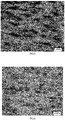
Fig. 4 is a 200-fold metallographic structure of the L1 layer after final forging of the method for producing a magnesium alloy wheel hub according to the present invention; -
Fig. 5 is a 200-fold metallographic structure of the L2 layer after final forging of the method for producing a magnesium alloy wheel hub according to the present invention; -
Fig. 6 is a 200-fold metallographic structure of the L3 layer after final forging of the method for producing a magnesium alloy wheel hub according to the present invention; -
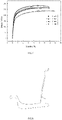
Fig. 7 is a diagram showing the property distribution of material structure in the thickness direction of the method for producing a magnesium alloy wheel hub according to the present invention; -
Fig. 8 is a cross-sectional view of a hub of a method of producing a magnesium alloy hub according to the present invention; -
Fig. 9 is the first schematic diagram of the spoke orientation of the hub of the method of producing a magnesium alloy hub according to the present invention; -
Fig. 10 is the second schematic diagram of the spoke orientation of the hub of the method of producing a magnesium alloy hub of the present invention. - It should be noted that the embodiments of the present invention and the features in the embodiments can be combined with each other if there is no conflict.
- The technical solutions of the present invention will be clearly and completely described below with reference to the drawings and in conjunction with the embodiments. Obviously, the described embodiments are only a part of the embodiments of the present invention, rather than all the embodiments. Based on the embodiments of the present invention, all other embodiments obtained by those ordinary skilled in the art without creative work shall fall within the protection scope of the present invention.
- The method of producing a magnesium alloy wheel hub according to the embodiment of the present invention will be described below with reference to
Figs. 1 to 10 in conjunction with the embodiments. - A method for producing a magnesium alloy wheel hub comprises the following steps:
- Step 1, selecting the most suitable and economical bar length by calculating the material length and material ratio of each magnesium alloy wheel hub in advance, and cutting the magnesium alloy bar to meet the length required by the wheel hub manufacturing; in the heating furnace, heating the magnesium alloy bar to 350~430°C, and keeping the temperature for 20 minutes;
-
Step 2, initially forging the bar under a 6000-ton forging press, the forging speed is 6~15 mm/s, and the initial forged blank is obtained; - Step 3, finally forging the bar under a 6000-ton forging press, and the forging speed is 5~8 mm/s, and the final forged blank is obtained;
-
Step 4, testing the structure and material properties of the final forging blank to obtain the layered material property distribution on the thickness of the blank; - Test the structure of the final forged blank, and analyze the microstructure of the forged material by metallurgical microscope and electron microscope, including particle diameter, grain size, grain orientation, etc.;
- Test the material properties of the final forging blank, and use a tensile testing machine and a hardness tester to test the material properties of the forged material, including tensile strength, yield strength, elongation, hardness, etc.;
- As shown in
Fig. 3 , the final forging blank exhibits three different structure and material mechanical properties distributions in thickness, from bottom to top, they are the bottom layer L1, the middle layer L2, and the top layer L3. Among them, the L1 layer has the best microstructure and mechanical properties, with the yield strength of 185 MPa, the tensile strength of 280 MPa, and the elongation of 12%. The L2 layer has medium structure and mechanical properties, with the yield strength of 170 MPa, the tensile strength reaching 265 MPa, and the elongation of 13%. The L3 layer has the worst structure and mechanical properties, with the yield strength of 155 MPa, a tensile strength of 260 MPa, and an elongation of 15%. Step 5, according to the layered material property distribution on the thickness of the blank obtained instep 4, which is different from the required performance by the design requirements of magnesium alloy wheels, magnesium alloy wheels with different material properties that meet the requirements of use are obtained through design and machining. - As shown in
Fig. 8-10 , the lower part of the hub as shown inFig. 8 is the spokes.Figs. 9 and 10 indicate the design and processing positions of the spokes of the four magnesium alloy hubs: spoke processing orientation of the wheel hub A, spoke processing orientation of the wheel hub B, spoke processing orientation of the wheel hub C, spoke processing orientation of the wheel hub D. - As shown in
Fig. 1 , an embodiment of the present invention provides a method for producing a magnesium alloy wheel hub, which comprises:
Step 1, cutting the magnesium alloy bar, heating it to the required temperature for forging deformation. - In the process of cutting the magnesium alloy bar, the most suitable and economical bar length is selected by calculating the material length and material ratio of each magnesium alloy wheel hub in advance, and the bar is cut by a metal cutting machine; in the process of heating the alloy bar to the required temperature for forging deformation, heating the magnesium alloy bar in a heating furnace to a certain temperature and keeping it for a period of time, wherein the heating furnace may be an electromagnetic heating furnace, etc.; the preset temperature is greater than or equal to 360 °C, but it is not allowed to exceed 430 °C; 400°C is the temperature for magnesium alloy easiest to deform and not easy to break, which ensures that there will be no cracking in the subsequent forging process..
-
Step 2, initially forging and forming to obtain an initial forged blank. The blank shown inFig. 2 is forged and formed, and the forging speed is controlled at 6~15 mm/s. The purpose of initial forging is to locate and ensure that the bar does not crack during the forging process. - Step 3, finally forging and forming to obtain blanks with layered different material properties on the thickness of the blanks, as shown in
Fig. 3 . - The final forging blank can show different structures and different mechanical properties of materials in the thickness direction, as shown in
Fig. 3 ; from the figure, it can be observed that the structure of the bottom layer has fine and uniform grains, showing a completely recrystallized structure, with the yield strength of 185 MPa, the tensile strength of 280 MPa, and the elongation of 12%; the structure of the middle layer has fine grains, some of the grains has grown, showing an incomplete recrystallized structure, with the yield strength of 170 MPa, the tensile strength of 265 MPa, and the elongation of 13%, the structure of the upper layer has fine grains, but it is not uniform, and the degree of recrystallized structure is lower than that of the middle layer. The yield strength reaches 155 MPa, the tensile strength reaches 260 MPa, and the elongation rate reaches 15%. -
Step 4, obtain forged magnesium alloy wheel hubs that meet the needs of use and different material properties through design and machining; the design and machining methods of magnesium alloy wheel hubs fully consider the difference in the layered mechanical properties of the final forged blank, and track the different material properties of different layers, when selecting the design and machine processing of the spokes, different processing directions of the spokes can be selected according to the needs, to obtain magnesium alloy wheel hubs with different properties, to obtain magnesium alloy wheel hubs with different weights, and to achieve the purpose of weight reduction, the premise is to ensure the hub's use performance. In this embodiment, four types of magnesium alloy wheels are designed and processed, which are respectively defined as wheel hub A, wheel hub B, wheel hub C, and wheel hub D. The cross-sectional view of the magnesium alloy wheel hub is shown inFIG. 8 . The design and processing orientation of the wheel hub A is that the spoke direction is along the direction of the L1 layer, and the processing area is included in the L1 layer, as shown inFig. 9 ; the design and processing orientation of the wheel hub B is that the spoke direction is along the direction of the L2 layer, and the processing area is included in the L2 layer, as shown inFig. 9 ; the design and processing orientation of the wheel hub C is that the spoke direction is along the direction of the L3 layer, and the processing area is included in the L3 layer, as shown inFig. 9 ; the design and processing orientation of the wheel hub D is that the spoke direction is from the L1 layer to the L3 layer, and the processing area runs through the L1, L2, and L3 layers, as shown inFig. 10 ; - Various performance tests are carried out on the four types of magnesium alloy motor wheel hubs of embodiment 1. In the test center of CITIC Dicastal Co., Ltd., the above wheels are subjected to 13-degree impact strength, radial fatigue, bending fatigue and other wheel strength and fatigue tests. Tests show that the hub meets the American wheel standards (SAE J175 and SAE J328-2005), that is, 13-degree impact strength, radial fatigue, and bending fatigue performance requirements. It can also meet requirements of the wheel strength and fatigue of the national standards (GB/T 5334-2005 and GB/T 15704-1995).
- In addition, the 13-degree impact limit test is respectively performed on wheel hub A, wheel hub B, wheel hub C, and wheel hub D in accordance with the requirements of the national standard, and impacting continues until cracking. The results show that the impact limit performance of wheel hub A is 840 Kg, and the impact limit performance of wheel hub B is 810 Kg, the impact limit performance of the wheel hub C is 785 Kg, the impact limit performance of the wheel hub D is 755 Kg, the impact resistance indicates wheel hub A > wheel hub B > wheel hub C > wheel hub D, which is consistent with the spoke processing order and performance orientation of the magnesium alloy hub. The microstructure and material properties of the wheel hub D is not uniform, resulting in the worst performance. From this, it can be inferred that if the same usage requirements are met, the weight reduction space of the A hub is larger than that of the B hub, the C hub and the D hub, the weight reduction space of the B hub is larger than that of the C hub, and the weight reduction space of the C hub is larger than that of the D hub.
- The method of producing the magnesium alloy wheel hub of the present invention has the following advantages:
According to the invention, the magnesium alloy bar is heated to a preset temperature, thus the magnesium alloy bar is more easily deformed and is not easy to produce forging cracks; the blank obtained by the forging process through the initial forging and the final forging can obtain different structures and different material mechanical properties in thickness; according to the different properties of the blank, the spoke orientation of the magnesium alloy wheel can be quickly designed according to the needs, and the magnesium alloy wheel that meets the performance can be obtained, which greatly improves the design and processing efficiency. - In addition, the designed and processed wheel hub still has excellent mechanical properties, meeting the American wheel standards (SAE J175 and SAE J328-2005), that is, 13-degree impact strength, radial fatigue, and bending fatigue performance requirements. It can also meet requirements of the wheel strength and fatigue of the national standards (GB/T 5334-2005 and GB/T 15704-1995).
- The above are only the preferred embodiments of the present invention and are not intended to limit the present invention. Any modification, equivalent replacement, improvement, etc. made within the spirit and principle of the present invention shall be included within the protection scope of the present invention.
Claims (10)
- A method of producing a magnesium alloy wheel hub, characterized in that it comprises the following steps:Step 1, heating a magnesium alloy bar to 350~430°C, keeping for 20 minutes;Step 2, initially forging the bar under a forging press, the forging speed is 6~15 mm/s;Step 3, finally forging the bar under a forging press, and the forging speed is 5~8 mm/s;Step 4, testing the microstructure and material properties of the final forged blank to obtain the layered material property distribution on the thickness of the blank;step 5, according to the layered material property distribution on the thickness of the blank obtained in step 4, selecting the part that meets the requirements to make a magnesium alloy wheel hub.
- The method for producing a magnesium alloy wheel hub according to claim 1, characterized in that in step 5, the magnesium alloy wheel hub is manufactured by machining and cutting off the part that does not meet the requirements in the thickness direction.
- The method for producing a magnesium alloy wheel hub according to claim 1, characterized in that in step 1, the magnesium alloy bar is first cut into a certain length by a cutting machine, and then heated.
- The method for producing a magnesium alloy wheel hub according to claim 1, characterized in that the magnesium alloy bar in step 1 is heated by a heating furnace.
- The method for producing a magnesium alloy wheel hub according to claim 4, characterized in that the heating furnace comprises an electromagnetic heating furnace.
- The method for producing a magnesium alloy wheel hub according to claim 1, characterized in that the heating temperature in step 1 is 360~420°C.
- The method for producing a magnesium alloy wheel hub according to claim 6, characterized in that the heating temperature in step 1 is 400°C.
- The method for producing a magnesium alloy wheel hub according to claim 1, characterized in that the forging press comprises a 6000-ton forging press.
- The method for producing a magnesium alloy wheel hub according to claim 1, characterized in that the structural test on the final blank in step 4 comprises analyzing the microstructure of the forged material using a metallurgical microscope and an electron microscope.
- The method for producing a magnesium alloy wheel hub according to claim 1, characterized in that the material property test on the final blank in step 4 comprises using a tensile testing machine and a hardness tester to analyze the material performance of the forged material.
Applications Claiming Priority (1)
| Application Number | Priority Date | Filing Date | Title |
|---|---|---|---|
| CN202110723588.3A CN113560482B (en) | 2021-06-29 | 2021-06-29 | Manufacturing method of magnesium alloy hub |
Publications (1)
| Publication Number | Publication Date |
|---|---|
| EP4112764A1 true EP4112764A1 (en) | 2023-01-04 |
Family
ID=78162908
Family Applications (1)
| Application Number | Title | Priority Date | Filing Date |
|---|---|---|---|
| EP22174529.2A Pending EP4112764A1 (en) | 2021-06-29 | 2022-05-20 | Method of producing a magnesium alloy wheel hub |
Country Status (4)
| Country | Link |
|---|---|
| US (1) | US11745252B2 (en) |
| EP (1) | EP4112764A1 (en) |
| KR (1) | KR102669628B1 (en) |
| CN (1) | CN113560482B (en) |
Cited By (1)
| Publication number | Priority date | Publication date | Assignee | Title |
|---|---|---|---|---|
| EP4144457A1 (en) * | 2021-09-03 | 2023-03-08 | Citic Dicastal Co., Ltd. | Forging process of magnesium alloy wheel hub |
Families Citing this family (2)
| Publication number | Priority date | Publication date | Assignee | Title |
|---|---|---|---|---|
| CN110846654A (en) * | 2019-11-18 | 2020-02-28 | 中信戴卡股份有限公司 | A kind of surface treatment method of magnesium alloy wheel hub |
| CN118650097B (en) * | 2024-08-16 | 2025-03-21 | 中国兵器科学研究院宁波分院 | A method for preparing a high-strength and high-toughness magnesium alloy wheel without heat treatment |
Citations (2)
| Publication number | Priority date | Publication date | Assignee | Title |
|---|---|---|---|---|
| CN107363474A (en) * | 2017-07-12 | 2017-11-21 | 深圳市中创镁工程技术有限公司 | A kind of magnesium alloy hub production technology and system |
| CN206936830U (en) * | 2017-07-12 | 2018-01-30 | 深圳市中创镁工程技术有限公司 | A kind of magnesium alloy hub production system |
Family Cites Families (7)
| Publication number | Priority date | Publication date | Assignee | Title |
|---|---|---|---|---|
| KR101153083B1 (en) * | 2003-08-11 | 2012-06-04 | 와시 고산 가부시키가이샤 | Method of producing wheel and the wheel |
| JP5050199B2 (en) * | 2006-03-30 | 2012-10-17 | 国立大学法人電気通信大学 | Magnesium alloy material manufacturing method and apparatus, and magnesium alloy material |
| CN105014321A (en) * | 2015-07-23 | 2015-11-04 | 秦皇岛燕大现代集成制造技术开发有限公司 | Magnesium alloy wheel forging forming method |
| CN105665610B (en) * | 2016-02-15 | 2017-12-08 | 刘兴军 | Magnesium alloy auto hub forging method |
| EP3737527A4 (en) * | 2018-01-12 | 2021-10-20 | Accuride Corporation | Aluminum alloys for applications such as wheels and methods of manufacture |
| CN110508737B (en) * | 2019-08-26 | 2021-09-21 | 南京理工大学 | Wheel hub extrusion forming method |
| CN111745121B (en) * | 2020-06-29 | 2021-06-22 | 东北大学 | High formability forging method and device for magnesium alloy wheel hub |
-
2021
- 2021-06-29 CN CN202110723588.3A patent/CN113560482B/en active Active
-
2022
- 2022-01-14 US US17/576,220 patent/US11745252B2/en active Active
- 2022-02-10 KR KR1020220017743A patent/KR102669628B1/en active Active
- 2022-05-20 EP EP22174529.2A patent/EP4112764A1/en active Pending
Patent Citations (2)
| Publication number | Priority date | Publication date | Assignee | Title |
|---|---|---|---|---|
| CN107363474A (en) * | 2017-07-12 | 2017-11-21 | 深圳市中创镁工程技术有限公司 | A kind of magnesium alloy hub production technology and system |
| CN206936830U (en) * | 2017-07-12 | 2018-01-30 | 深圳市中创镁工程技术有限公司 | A kind of magnesium alloy hub production system |
Cited By (1)
| Publication number | Priority date | Publication date | Assignee | Title |
|---|---|---|---|---|
| EP4144457A1 (en) * | 2021-09-03 | 2023-03-08 | Citic Dicastal Co., Ltd. | Forging process of magnesium alloy wheel hub |
Also Published As
| Publication number | Publication date |
|---|---|
| KR102669628B1 (en) | 2024-05-28 |
| US20220410252A1 (en) | 2022-12-29 |
| US11745252B2 (en) | 2023-09-05 |
| CN113560482B (en) | 2022-04-01 |
| CN113560482A (en) | 2021-10-29 |
| KR20230002031A (en) | 2023-01-05 |
Similar Documents
| Publication | Publication Date | Title |
|---|---|---|
| EP4112764A1 (en) | Method of producing a magnesium alloy wheel hub | |
| EP4144457B1 (en) | Forging process of magnesium alloy wheel hub | |
| Kleiner et al. | Manufacturing of lightweight components by metal forming | |
| CN101648329A (en) | Manufacturing process of aluminum alloy wheel | |
| JP5085612B2 (en) | Forged billet and wheel | |
| CN104874626B (en) | A kind of radial direction reverse Compound Extrusion shaping magnesium alloy heavy burden wheel disc technique and device | |
| WO2011096178A1 (en) | Forged billet, wheel made from light metal, and processes for production of those products | |
| Qiang et al. | New extrusion process of Mg alloy automobile wheels | |
| CN106735225A (en) | A kind of method for being injected into shape forging aluminium alloy brake disc brake drum | |
| CN103016560A (en) | Synchronizer sleeve and manufacturing method thereof | |
| CN106624638A (en) | Automobile aluminum alloy hub manufacturing technology | |
| CN101318281A (en) | Method for cold pressing aluminum alloy automobile wheel | |
| US12091736B2 (en) | Spinning process of magnesium alloy wheel hub | |
| Khademian et al. | Magnesium alloys and applications in automotive industry | |
| CN116618576B (en) | Forging process and forging press for aluminum alloy wheel hub | |
| Adamović et al. | Application of aluminum and its alloys in the automotive industry with special emphasis PN wheel rims | |
| Gebrehiwet et al. | Business Opportunity of Wheel Rim Manufacturing in Ethiopia | |
| CN205576252U (en) | Tank titanium alloy balance elbow | |
| JP2838593B2 (en) | Light alloy vehicle wheels | |
| Pic et al. | Press hardened steel based laser welded blanks: The ultimate tool for crashworthiness | |
| JP2005014744A (en) | Design method of suspension component for automobile | |
| Zhang et al. | Development of Other Manufacturing Processes | |
| JP2025135314A (en) | Aluminum alloy manufacturing method | |
| Stefanovic et al. | Al− alloys sheet metals− advanced materials for application in car bodies | |
| Akbarzadeh | Nanostructure, texture evolution and mechanical properties of aluminum alloys processed by severe plastic deformation |
Legal Events
| Date | Code | Title | Description |
|---|---|---|---|
| PUAI | Public reference made under article 153(3) epc to a published international application that has entered the european phase |
Free format text: ORIGINAL CODE: 0009012 |
|
| STAA | Information on the status of an ep patent application or granted ep patent |
Free format text: STATUS: REQUEST FOR EXAMINATION WAS MADE |
|
| 17P | Request for examination filed |
Effective date: 20220520 |
|
| AK | Designated contracting states |
Kind code of ref document: A1 Designated state(s): AL AT BE BG CH CY CZ DE DK EE ES FI FR GB GR HR HU IE IS IT LI LT LU LV MC MK MT NL NO PL PT RO RS SE SI SK SM TR |