EP4111663B1 - Delegierung mit paarweise dezentraler kennung - Google Patents
Delegierung mit paarweise dezentraler kennung Download PDFInfo
- Publication number
- EP4111663B1 EP4111663B1 EP21707437.6A EP21707437A EP4111663B1 EP 4111663 B1 EP4111663 B1 EP 4111663B1 EP 21707437 A EP21707437 A EP 21707437A EP 4111663 B1 EP4111663 B1 EP 4111663B1
- Authority
- EP
- European Patent Office
- Prior art keywords
- permission
- computing system
- data
- owner
- scope
- Prior art date
- Legal status (The legal status is an assumption and is not a legal conclusion. Google has not performed a legal analysis and makes no representation as to the accuracy of the status listed.)
- Active
Links
Images




Classifications
-
- G—PHYSICS
- G06—COMPUTING OR CALCULATING; COUNTING
- G06F—ELECTRIC DIGITAL DATA PROCESSING
- G06F21/00—Security arrangements for protecting computers, components thereof, programs or data against unauthorised activity
- G06F21/60—Protecting data
- G06F21/604—Tools and structures for managing or administering access control systems
-
- G—PHYSICS
- G06—COMPUTING OR CALCULATING; COUNTING
- G06F—ELECTRIC DIGITAL DATA PROCESSING
- G06F16/00—Information retrieval; Database structures therefor; File system structures therefor
- G06F16/20—Information retrieval; Database structures therefor; File system structures therefor of structured data, e.g. relational data
- G06F16/23—Updating
- G06F16/2365—Ensuring data consistency and integrity
-
- G—PHYSICS
- G06—COMPUTING OR CALCULATING; COUNTING
- G06F—ELECTRIC DIGITAL DATA PROCESSING
- G06F21/00—Security arrangements for protecting computers, components thereof, programs or data against unauthorised activity
- G06F21/60—Protecting data
- G06F21/62—Protecting access to data via a platform, e.g. using keys or access control rules
-
- G—PHYSICS
- G06—COMPUTING OR CALCULATING; COUNTING
- G06F—ELECTRIC DIGITAL DATA PROCESSING
- G06F21/00—Security arrangements for protecting computers, components thereof, programs or data against unauthorised activity
- G06F21/60—Protecting data
- G06F21/62—Protecting access to data via a platform, e.g. using keys or access control rules
- G06F21/6218—Protecting access to data via a platform, e.g. using keys or access control rules to a system of files or objects, e.g. local or distributed file system or database
-
- H—ELECTRICITY
- H04—ELECTRIC COMMUNICATION TECHNIQUE
- H04L—TRANSMISSION OF DIGITAL INFORMATION, e.g. TELEGRAPHIC COMMUNICATION
- H04L63/00—Network architectures or network communication protocols for network security
- H04L63/08—Network architectures or network communication protocols for network security for authentication of entities
- H04L63/0884—Network architectures or network communication protocols for network security for authentication of entities by delegation of authentication, e.g. a proxy authenticates an entity to be authenticated on behalf of this entity vis-à-vis an authentication entity
-
- H—ELECTRICITY
- H04—ELECTRIC COMMUNICATION TECHNIQUE
- H04L—TRANSMISSION OF DIGITAL INFORMATION, e.g. TELEGRAPHIC COMMUNICATION
- H04L63/00—Network architectures or network communication protocols for network security
- H04L63/10—Network architectures or network communication protocols for network security for controlling access to devices or network resources
-
- H—ELECTRICITY
- H04—ELECTRIC COMMUNICATION TECHNIQUE
- H04L—TRANSMISSION OF DIGITAL INFORMATION, e.g. TELEGRAPHIC COMMUNICATION
- H04L9/00—Cryptographic mechanisms or cryptographic arrangements for secret or secure communications; Network security protocols
- H04L9/30—Public key, i.e. encryption algorithm being computationally infeasible to invert or user's encryption keys not requiring secrecy
-
- H—ELECTRICITY
- H04—ELECTRIC COMMUNICATION TECHNIQUE
- H04L—TRANSMISSION OF DIGITAL INFORMATION, e.g. TELEGRAPHIC COMMUNICATION
- H04L9/00—Cryptographic mechanisms or cryptographic arrangements for secret or secure communications; Network security protocols
- H04L9/32—Cryptographic mechanisms or cryptographic arrangements for secret or secure communications; Network security protocols including means for verifying the identity or authority of a user of the system or for message authentication, e.g. authorization, entity authentication, data integrity or data verification, non-repudiation, key authentication or verification of credentials
- H04L9/3236—Cryptographic mechanisms or cryptographic arrangements for secret or secure communications; Network security protocols including means for verifying the identity or authority of a user of the system or for message authentication, e.g. authorization, entity authentication, data integrity or data verification, non-repudiation, key authentication or verification of credentials using cryptographic hash functions
-
- H—ELECTRICITY
- H04—ELECTRIC COMMUNICATION TECHNIQUE
- H04L—TRANSMISSION OF DIGITAL INFORMATION, e.g. TELEGRAPHIC COMMUNICATION
- H04L9/00—Cryptographic mechanisms or cryptographic arrangements for secret or secure communications; Network security protocols
- H04L9/32—Cryptographic mechanisms or cryptographic arrangements for secret or secure communications; Network security protocols including means for verifying the identity or authority of a user of the system or for message authentication, e.g. authorization, entity authentication, data integrity or data verification, non-repudiation, key authentication or verification of credentials
- H04L9/3236—Cryptographic mechanisms or cryptographic arrangements for secret or secure communications; Network security protocols including means for verifying the identity or authority of a user of the system or for message authentication, e.g. authorization, entity authentication, data integrity or data verification, non-repudiation, key authentication or verification of credentials using cryptographic hash functions
- H04L9/3239—Cryptographic mechanisms or cryptographic arrangements for secret or secure communications; Network security protocols including means for verifying the identity or authority of a user of the system or for message authentication, e.g. authorization, entity authentication, data integrity or data verification, non-repudiation, key authentication or verification of credentials using cryptographic hash functions involving non-keyed hash functions, e.g. modification detection codes [MDCs], MD5, SHA or RIPEMD
-
- H—ELECTRICITY
- H04—ELECTRIC COMMUNICATION TECHNIQUE
- H04L—TRANSMISSION OF DIGITAL INFORMATION, e.g. TELEGRAPHIC COMMUNICATION
- H04L9/00—Cryptographic mechanisms or cryptographic arrangements for secret or secure communications; Network security protocols
- H04L9/32—Cryptographic mechanisms or cryptographic arrangements for secret or secure communications; Network security protocols including means for verifying the identity or authority of a user of the system or for message authentication, e.g. authorization, entity authentication, data integrity or data verification, non-repudiation, key authentication or verification of credentials
- H04L9/3247—Cryptographic mechanisms or cryptographic arrangements for secret or secure communications; Network security protocols including means for verifying the identity or authority of a user of the system or for message authentication, e.g. authorization, entity authentication, data integrity or data verification, non-repudiation, key authentication or verification of credentials involving digital signatures
-
- H—ELECTRICITY
- H04—ELECTRIC COMMUNICATION TECHNIQUE
- H04W—WIRELESS COMMUNICATION NETWORKS
- H04W12/00—Security arrangements; Authentication; Protecting privacy or anonymity
- H04W12/08—Access security
- H04W12/084—Access security using delegated authorisation, e.g. open authorisation [OAuth] protocol
-
- H—ELECTRICITY
- H04—ELECTRIC COMMUNICATION TECHNIQUE
- H04L—TRANSMISSION OF DIGITAL INFORMATION, e.g. TELEGRAPHIC COMMUNICATION
- H04L9/00—Cryptographic mechanisms or cryptographic arrangements for secret or secure communications; Network security protocols
- H04L9/50—Cryptographic mechanisms or cryptographic arrangements for secret or secure communications; Network security protocols using hash chains, e.g. blockchains or hash trees
Definitions
- a centralized identity management system is a centralized information system used for organizations to manage the issued identities, their authentication, authorization, roles, and privileges. Centralized identity management systems have been deemed as secure since they often use professionally maintained hardware and software. Typically, the identity issuing organization sets the terms and requirements for registering people with the organization. Finally, when a party needs to verify another party's identity, the verifying party often needs to go through the centralized identity management system to obtain information verifying and/or authenticating the other party's identity.
- Decentralized Identifiers are a new type of identifier, which are independent of any centralized registry, identity provider, or certificate authority.
- Distributed ledger technology (such as blockchain) provides the opportunity for using fully decentralized identifiers.
- Distributed ledger technology uses globally distributed ledgers to record transactions between two or more parties in a verifiable way. Once a transaction is recorded, the data in the section of the distributed ledger cannot be altered retroactively without the alteration of all subsequent sections of the distributed ledger, which provides a fairly secure platform.
- each owner of DID generally has control over his/her own data using his/her DID.
- the DID owner access the data stored in the personal storage that is associated with the DID via a DID management module, which is a mobile app, a personal computer, a browser, etc.
- US 2019/0228406 A1 describes creating and managing linked decentralized identifiers for an entity.
- a parent decentralized identifier of an entity has an associated parent private key.
- a determination is made that a child decentralized identifier is to be created for the parent decentralized identifier.
- the parent private key is used to generate a child private key, and a child decentralized identifier is created by at least assigning the generated child private key as the private key for the child decentralized identifier.
- Each of the decentralized identifiers may be associated with a permission to another entity.
- the permission associated with the child decentralized identifier may not be broader than the permission granted to the parent decentralized identifier.
- SGF Sovrin Governance Framework
- the audience for this Glossary includes business analysts, product managers, lawyers, policymakers, regulators, CIOs, compliance officers, software architects, software developers, and IT professionals.
- the Glossary includes the level of detail needed to accurately document and administer the Sovrin Governance Framework.
- pairwise decentralized identifiers In the decentralized environment, a DID owner can generate and use many different DIDs to communicate with other DID owners. Pairwise DIDs are referred to as a pair of DIDs that are only used for communications between two entities. For example, a first DID owner owns a first DID, and a second DID owner owns a second DID. When the first DID and the second DID are pairwise DIDs, the first DID and the second DID are used only between the first DID owner and the second DID owner. When the first owner is to communicate with a third DID owner, a third DID will be generated and used. Similarly, when the second DID owner is to communicate with the third DID owner, a fourth DID will be generated.
- pairwise DIDs are only used between two owners, the relationship between the two owners can often be clearly identified, such as parent-child relationship, employer-employee relationship, customer-service relationship, etc.
- one DID owner may want to grant a scope of permission to the other DID owner. For example, a child would likely want to delegate his/her parents a scope of permission to allow the parents to act on behalf of the child.
- a first DID owner delegates a scope of permission to a second DID owner
- the first DID owner is a delegator
- the second DID owner is a delegatee.
- the delegation of a scope of permission from a delegator to a delegatee is likely performed by a computing system that is associated with the delegator (e.g., a management module (e.g., a wallet app), a user agent, and/or an ID hub of the delegator).
- the computing system first determines a relationship between the owners of the pairwise DIDs. Based on the relationship, the computing system then delegates a scope of permission owned by the delegator DID to the delegatee DID.
- the computing system defines the scope of permission, and grants to a public key of the second DID the defined scope of permission.
- the computing system then generates a signature by a private key of the first DID.
- the signature proves the delegation of the defined scope of permission to the public key of the second DID.
- a portion of data related to the delegation is then propagated onto a distributed ledger.
- the computing system further maps a plurality of relationships to a plurality of scope of permissions.
- the mapping data is recorded in a storage that is accessible by the computing system. Based on the mapping data, the computing system determines the scope of permission corresponding to the relationship between the pairwise DID owners.
- the mapping of the plurality of relationship to the plurality of scopes of permission is based on (1) data recorded in DID documents, (2) data propagated onto the distributed ledger, and/or (3) user input(s).
- the computing system receives a user input for generating, updating, or deleting a mapped pair of a particular scope of permission and a particular relationship. Based on the user input, the computing system updates the recorded mapping data in the storage. In some cases, in response to the user indication, the computing system also updates delegation(s) between pairwise DIDs that have a particular relationship that is affected by the user input.
- the plurality of relationships includes, but are not limited to, (1) a child-parent relationship, in which the owner of one pairwise DID is a minor child of the owner of the other pairwise DID; (2) a spousal relationship, in which the owners of the pairwise DIDs are spouses; (3) an employee-employer relationship, in which the owner of one pairwise DID is an employee of the owner of the other pairwise DID; (4) a customer-service relationship, in which an owner of one pairwise DID is a customer of the owner of other pairwise DID; or (5) a contract relationship, in which the owners of the pairwise DIDs are parties to a mutually agreed contract.
- the computing system is caused to automatically update the delegations in response to changes to the relationships.
- the computing system determines whether the particular relationship still exists.
- the computing system periodically checks whether the particular relationship between pairwise DIDs still exists.
- the computing system determines whether the particular relationship still exists.
- the computing system revokes the delegation of the corresponding scope of permission and propagating data related to the revocation of permission to the distributed ledger.
- the defining the scope of permission includes defining one or more restrictions, and the propagating a portion of data related to the delegation includes propagating the one or more restrictions to the distributed ledger.
- the one or more restrictions include, but are not limited to, (1) an expiration time of the delegation, (2) a predetermined number of times that the delegatee is allowed to access a portion of data or service, or (3) a restriction that restricts the access to a portion of data, such as (i) a read permission, (ii) a write permission, (iii) a delete permission, or (iv) a delegation permission.
- the one or more restrictions include one or more conditions, which are required to be satisfied each time the delegatee requests for accessing to the delegated permission.
- the one or more conditions include, but are not limited to, (i) requiring the delegatee DID to pay a predetermined amount of cryptocurrency, (ii) requiring the delegatee DID to provide one or more verifiable claims, or (iii) requiring the delegatee DID to provide particular personal data, such as (a) an email address, (b) a phone number, (c) a location, (d) a name of the delegatee, (e) an IP address, or (f) a device identifier.
- the computing system in response to receiving a request from the second DID owner of the second DID for access to the scope of permission, requests the second DID (i.e., the computing system associated with the second DID, including a management module, a user agent, or an ID hub of the second DID) for proof of delegation of the scope of permission.
- the second DID then generates a proof code and sends the proof code to the computing system.
- the proof code is configured to prove that the second DID has been delegated to the requested scope of permission.
- the computing system receives and validates the proof code. Based on the validation result, the computing system grants or denies the request from the second DID.
- the proof code includes the signature signed by the private key of the first DID.
- the validating the proof code includes decrypting the signature by a public key of the first DID, and retrieving data related to the delegation from the distributed ledger.
- the computing system analyzes the decrypted signature and the data related to the delegation to determine whether the proof code is valid.
- the validating the proof code further includes verifying the requested scope of permission is within the delegated scope of permission. When the scope of permission includes one or more conditions, the computing system also determines whether the one or more conditions are satisfied.
- the principles described herein allow users (i.e., DID owners) to delegate scopes of permissions to each other or revote previous delegations substantially instantly. Once a scope of permission is delegated, the delegatee can also access the delegated data substantially instantly.
- the delegations are created and enforced by computing systems of the DID owners, which is advantageous because the traditional requirement for an intermediary or centralized entity for recording or enforcing delegations is eliminated. Further, since there is no centralized entity to record all the data related to the delegation between DID owners, and each pairwise DID is only used to communicate with another DID, the privacy of the DID owners are further protected.
- Computing systems are now increasingly taking a wide variety of forms.
- Computing systems may, for example, be handheld devices, appliances, laptop computers, desktop computers, mainframes, distributed computing systems, data centers, or even devices that have not conventionally been considered a computing system, such as wearables (e.g., glasses).
- the term "computing system” is defined broadly as including any device or system (or a combination thereof) that includes at least one physical and tangible processor, and a physical and tangible memory capable of having thereon computer-executable instructions that are executed by a processor.
- the memory takes any form and depends on the nature and form of the computing system.
- a computing system is distributed over a network environment and includes multiple constituent computing systems.
- a computing system 100 typically includes at least one hardware processing unit 102 and memory 104.
- the processing unit 102 includes a general-purpose processor and also includes a field-programmable gate array (FPGA), an application-specific integrated circuit (ASIC), or any other specialized circuit.
- the memory 104 is physical system memory, which is volatile, non-volatile, or some combination of the two.
- the term "memory" also be used herein to refer to non-volatile mass storage such as physical storage media. If the computing system is distributed, the processing, memory and/or storage capability is distributed as well.
- the computing system 100 also has thereon multiple structures often referred to as an "executable component".
- memory 104 of the computing system 100 is illustrated as including executable component 106.
- executable component is the name for a structure that is well understood to one of ordinary skill in the art in the field of computing as being a structure that can be software, hardware, or a combination thereof.
- executable component when implemented in software, one of ordinary skill in the art would understand that the structure of an executable component include software objects, routines, methods, and so forth, that is executed on the computing system, whether such an executable component exists in the heap of a computing system, or whether the executable component exists on computer-readable storage media.
- the structure of the executable component exists on a computer-readable medium such that, when interpreted by one or more processors of a computing system (e.g., by a processor thread), the computing system is caused to perform a function.
- a structure is computer-readable directly by the processors (as is the case if the executable component were binary).
- the structure is structured to be interpretable and/or compiled (whether in a single stage or in multiple stages) so as to generate such binary that is directly interpretable by the processors.
- executable component is also well understood by one of ordinary skill as including structures, such as hardcoded or hard-wired logic gates, that are implemented exclusively or near-exclusively in hardware, such as within a field-programmable gate array (FPGA), an application-specific integrated circuit (ASIC), or any other specialized circuit. Accordingly, the term “executable component” is a term for a structure that is well understood by those of ordinary skill in the art of computing, whether implemented in software, hardware, or a combination. In this description, the terms “component”, “agent”, “manager”, “service”, “engine”, “module”, “virtual machine” or the like also be used. As used in this description and in the case, these terms (whether expressed with or without a modifying clause) are also intended to be synonymous with the term “executable component”, and thus also have a structure that is well understood by those of ordinary skill in the art of computing.
- FPGA field-programmable gate array
- ASIC application-specific integrated circuit
- embodiments are described with reference to acts that are performed by one or more computing systems. If such acts are implemented in software, one or more processors (of the associated computing system that performs the act) direct the operation of the computing system in response to having executed computer-executable instructions that constitute an executable component.
- processors of the associated computing system that performs the act
- Such computer-executable instructions are embodied on one or more computer-readable media that form a computer program product.
- An example of such an operation involves the manipulation of data.
- the computer-executable instructions are hardcoded or hard-wired logic gates.
- the computer-executable instructions (and the manipulated data) is stored in the memory 104 of the computing system 100.
- Computing system 100 also contain communication channels 108 that allow the computing system 100 to communicate with other computing systems over, for example, network 110.
- the computing system 100 includes a user interface system 112 for use in interfacing with a user.
- the user interface system 112 includes output mechanisms 112A as well as input mechanisms 112B.
- the principles described herein are not limited to the precise output mechanisms 112A or input mechanisms 112B as such will depend on the nature of the device.
- output mechanisms 112A might include, for instance, speakers, displays, tactile output, holograms and so forth.
- Examples of input mechanisms 112B might include, for instance, microphones, touchscreens, holograms, cameras, keyboards, mouse or other pointer input, sensors of any type, and so forth.
- Embodiments described herein comprise or utilize a special purpose or general-purpose computing system including computer hardware, such as, for example, one or more processors and system memory, as discussed in greater detail below.
- Embodiments described herein also include physical and other computer-readable media for carrying or storing computer-executable instructions and/or data structures.
- Such computer-readable media can be any available media that can be accessed by a general-purpose or special-purpose computing system.
- Computer-readable media that store computer-executable instructions are physical storage media.
- Computer-readable media that carry computer-executable instructions are transmission media.
- embodiments of the invention can comprise at least two distinctly different kinds of computer-readable media: storage media and transmission media.
- Computer-readable storage media includes RAM, ROM, EEPROM, CD-ROM, or other optical disk storage, magnetic disk storage, or other magnetic storage devices, or any other physical and tangible storage medium which can be used to store desired program code means in the form of computer-executable instructions or data structures and which can be accessed by a general-purpose or special-purpose computing system.
- a "network” is defined as one or more data links that enable the transport of electronic data between computing systems and/or modules and/or other electronic devices.
- a network or another communications connection can include a network and/or data links which can be used to carry desired program code means in the form of computer-executable instructions or data structures and which can be accessed by a general-purpose or special-purpose computing system. Combinations of the above should also be included within the scope of computer-readable media.
- program code means in the form of computer-executable instructions or data structures can be transferred automatically from transmission media to storage media (or vice versa).
- computer-executable instructions or data structures received over a network or data link can be buffered in RAM within a network interface module (e.g., a "NIC"), and then eventually transferred to computing system RAM and/or to less volatile storage media at a computing system.
- a network interface module e.g., a "NIC”
- storage media can be included in computing system components that also (or even primarily) utilize transmission media.
- Computer-executable instructions comprise, for example, instructions and data which, when executed at a processor, cause a general-purpose computing system, special purpose computing system, or special purpose processing device to perform a certain function or group of functions. Alternatively, or in addition, the computer-executable instructions configure the computing system to perform a certain function or group of functions.
- the computer executable instructions are, for example, binaries or even instructions that undergo some translation (such as compilation) before direct execution by the processors, such as intermediate format instructions such as assembly language, or even source code.
- the invention is practiced in network computing environments with many types of computing system configurations, including, personal computers, desktop computers, laptop computers, message processors, hand-held devices, multi-processor systems, microprocessor-based or programmable consumer electronics, network PCs, minicomputers, mainframe computers, mobile telephones, PDAs, pagers, routers, switches, data centers, wearables (such as glasses) and the like.
- the invention also is practiced in distributed system environments where local and remote computing systems, which are linked (either by hardwired data links, wireless data links, or by a combination of hardwired and wireless data links) through a network, both perform tasks.
- program modules are located in both local and remote memory storage devices.
- Cloud computing environments are distributed, although this is not required. When distributed, cloud computing environments are distributed internationally within an organization and/or have components possessed across multiple organizations.
- cloud computing is defined as a model for enabling on-demand network access to a shared pool of configurable computing resources (e.g., networks, servers, storage, applications, and services). The definition of “cloud computing” is not limited to any of the other numerous advantages that can be obtained from such a model when properly deployed.
- the remaining figures discuss various computing system which corresponds to the computing system 100 previously described.
- the computing systems of the remaining figures include various components or functional blocks that implement the various embodiments disclosed herein as will be explained.
- the various components or functional blocks are implemented on a local computing system or are implemented on a distributed computing system that includes elements resident in the cloud or that implement aspects of cloud computing.
- the various components or functional blocks are implemented as software, hardware, or a combination of software and hardware.
- the computing systems of the remaining figures include more or less than the components illustrated in the figures and some of the components are combined as circumstances warrant.
- the various components of the computing systems access and/or utilize a processor and memory, such as processor 102 and memory 104, as needed to perform their various functions.
- a DID owner 201 owns or controls a DID 205 that represents an identity of the DID owner 201.
- the DID owner 201 registers a DID using a creation and registration service, which will be explained in more detail below.
- the DID owner 201 is any entity that could benefit from a DID.
- the DID owner 201 is a human being or an organization of human beings. Such organizations might include a company, department, government, agency, or any other organization or group of organizations. Each individual human being might have a DID while the organization(s) to which each belongs might likewise have a DID.
- the DID owner 201 alternatively be a machine, system, or device, or a collection of machine(s), device(s) and/or system(s).
- the DID owner 201 is a subpart of a machine, system or device.
- a device could be a printed circuit board, where the subpart of that circuit board are individual components of the circuit board.
- the machine or device has a DID and each subpart also have a DID.
- a DID owner might also be a software component such as the executable component 106 described above with respect to Figure 1 .
- An example of a complex executable component 106 might be an artificial intelligence.
- An artificial intelligence also owns a DID.
- the DID owner 201 is any reasonable entity, human or non-human, that is capable of creating the DID 205 or at least having the DID 205 created for and associated with them. Although the DID owner 201 is shown as having a single DID 205, this need not be the case as there is any number of DIDs associated with the DID owner 201 as circumstances warrant.
- the DID owner 201 creates and registers the DID 205.
- the DID 205 is any identifier that is associated with the DID owner 201. Preferably, that identifier is unique to that DID owner 201, at least within a scope in which the DID is anticipated to be in use. As an example, the identifier is a locally unique identifier, and perhaps more desirably a globally unique identifier for identity systems anticipated to operate globally.
- the DID 205 is a Uniform Resource Identifier (URI) (such as a Uniform Resource Locator (URL)) or other pointers that relates the DID owner 201 to mechanism to engage in trustable interactions with the DID owner 201.
- URI Uniform Resource Identifier
- URL Uniform Resource Locator
- the DID 205 is "decentralized" because it does not require a centralized, third party management system for generation, management, or use. Accordingly, the DID 205 remains under the control of the DID owner 201. This is different from conventional centralized IDs based trust on centralized authorities and that remain under control of the corporate directory services, certificate authorities, domain name registries, or other centralized authority (referred to collectively as "centralized authorities” herein). Accordingly, the DID 205 is any identifier that is under the control of the DID owner 201 and independent of any centralized authority.
- the structure of the DID 205 is as simple as a username or some other human-understandable term.
- the DID 205 preferably be a random string of numbers and letters for increased security.
- the DID 205 is a string of 128 letters and numbers. Accordingly, the embodiments disclosed herein are not dependent on any specific implementation of the DID 205. In a very simple example, the DID 205 is shown as "123ABC".
- the DID owner 201 has control of a private key 206 and public key 207 pair that are associated with the DID 20. Because the DID 205 is independent of any centralized authority, the private key 206 should at all times be fully in control of the DID owner 201. That is, the private and public keys should be generated in a decentralized manner that ensures that they remain under the control of the DID owner 201.
- the private key 206 and public key 207 pair is generated on a device controlled by the DID owner 201.
- the private key 206 and public key 207 pairs should not be generated on a server controlled by any centralized authority as this causes the private key 206 and public key 207 pairs to not be fully under the control of the DID owner 201 at all times.
- Figure2 and this description have described a private and public key pair, it will also be noted that other types of reasonable cryptographic information and/or mechanism also be used as circumstances warrant.
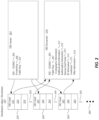
- FIG 2 also illustrates a DID document 210 that is associated with the DID 205.
- the DID document 210 is generated at the time that the DID 205 is created.
- the DID document 210 describes how to use the DID 205.
- the DID document 210 includes a reference to the DID 205, which is the DID that is described by the DID document 210.
- the DID document 210 is implemented according to methods specified by a distributed ledger 220 that will be used to store a representation of the DID 205 as will be explained in more detail to follow.
- the DID document 210 has different methods depending on the specific distributed ledger.
- the DID document 210 also includes the public key 207 created by the DID owner 201 or some other equivalent cryptographic information.
- the public key 207 is used by third-party entities that are given permission by the DID owner 201 to access information and data owned by the DID owner 201.
- the public key 207 also be used by verifying that the DID owner 201, in fact, owns or controls the DID 205.
- the DID document 210 also includes authentication information 211.
- the authentication information 211 specify one or more mechanisms by which the DID owner 201 is able to prove that the DID owner 201 owns the DID 205.
- the mechanisms of authentication information 211 show proof of a binding between the DID 205 (and thus it's DID owner 201) and the DID document 210.
- the authentication information 211 specifies that the public key 207 be used in a signature operation to prove the ownership of the DID 205.
- the authentication information 211 specifies that the public key 207 be used in a biometric operation to prove ownership of the DID 205.
- the authentication information 211 includes any number of mechanisms by which the DID owner 201 is able to prove that the DID owner 201 owns the DID 205.
- the DID document 210 also includes authorization information 212.
- the authorization information 212 allows the DID owner 201 to authorize third party entities the rights to modify the DID document 210 or some part of the document without giving the third party the right to prove ownership of the DID 205.
- the authorization information 212 allows the third party to update any designated set of one or more fields in the DID document 210 using any designated update mechanism.
- the authorization information allows the third party to limit the usages of DID 205 by the DID owner 201 for a specified time period. This is useful when the DID owner 201 is a minor child and the third party is a parent or guardian of the child.
- the authorization information 212 allows the parent or guardian to limit the use of the DID 201 until such time as the child is no longer a minor.
- the authorization information 212 also specifies one or more mechanisms that the third party will need to follow to prove they are authorized to modify the DID document 210. In some embodiments, this mechanism is similar to those discussed previously with respect to the authentication information 211.
- the DID document 210 also includes one or more service endpoints 213.
- a service endpoint includes a network address at which a service operates on behalf of the DID owner 201. Examples of specific services include discovery services, social networks, file storage services such as identity servers or hubs, and verifiable claim repository services. Accordingly, the service endpoints 213 operate as pointers for the services that operate on behalf of the DID owner 201. These pointers are used by the DID owner 201 or by third party entities to access the services that operate on behalf of the DID owner 201. Specific examples of service endpoints 213 will be explained in more detail to follow.
- the ID document 210 further includes identification information 214.
- the identification information 214 includes personally identifiable information such as the name, address, occupation, family members, age, hobbies, interests, or the like of DID owner 201. Accordingly, the identification information 214 listed in the DID document 210 represents a different persona of the DID owner 201 for different purposes.
- a persona is pseudo-anonymous, e.g., the DID owner 201 include a pen name in the DID document when identifying him or her as a writer posting articles on a blog; a persona is fully anonymous, e.g., the DID owner 201 only want to disclose his or her job title or other background data (e.g., a school teacher, an FBI agent, an adult older than 21 years old, etc.) but not his or her name in the DID document; and a persona is specific to who the DID owner 201 is as an individual, e.g., the DID owner 201 includes information identifying him or her as a volunteer for a particular charity organization, an employee of a particular corporation, an award winner of a particular award, etc.
- the DID owner 201 includes information identifying him or her as a volunteer for a particular charity organization, an employee of a particular corporation, an award winner of a particular award, etc.
- the DID document 210 also includes credential information 215, which also be referred to herein as an attestation.
- the credential information 215 is any information that is associated with the DID owner 201's background.
- the credential information 215 is (but not limited to) a qualification, an achievement, a government ID, a government right such as a passport or a driver's license, a digital asset provider or bank account, a university degree or other educational history, employment status and history, or any other information about the DID owner 201's background.
- the DID document 210 also includes various other information 216.
- the other information 216 includes metadata specifying when the DID document 210 was created and/or when it was last modified.
- the other information 216 includes cryptographic proofs of the integrity of the DID document 210.
- the other information 216 includes additional information that is either specified by the specific method implementing the DID document or desired by the DID owner 201.
- Figure 2 also illustrates a distributed ledger or blockchain 220.
- the distributed ledger 220 is any decentralized, distributed network that includes various computing systems that are in communication with each other.
- the distributed ledger 220 includes a first distributed computing system 230, a second distributed computing system 240, a third distributed computing system 250, and any number of additional distributed computing systems as illustrated by the ellipses 260.
- the distributed ledger or blockchain 220 operates according to any known standards or methods for distributed ledgers. Examples of conventional distributed ledgers that correspond to the distributed ledger or blockchain 220 include, but are not limited to, Bitcoin [BTC], Ethereum, and Litecoin.
- the distributed ledger or blockchain 220 is used to store a representation of the DID 205 that points to the DID document 210.
- the DID document 210 is stored on the actually distributed ledger.
- the DID document 210 is stored in a data storage (not illustrated) that is associated with the distributed ledger or blockchain 220.
- a representation of the DID 205 is stored on each distributed computing system of the distributed ledger or blockchain 220.
- this is shown as the DID has 231, DID has 241, and DID has 251, which are ideally identical copies of the same DID.
- the DID hash 231, DID hash 241, and DID hash 251 then point to the location of the DID document 210.
- the distributed ledger or blockchain 220 also store numerous other representations of other DIDs as illustrated by references 232, 233, 234, 242, 243, 244, 252, 253, and 254.
- the DID has 231, DID has 241, and DID hash 251 are written to the distributed ledger or blockchain 220.
- the distributed ledger or blockchain 220 thus records that the DID 205 now exists. Since the distributed ledger or blockchain 220 is decentralized, the DID 205 is not under the control of any entity outside of the DID owner 201.
- the DID hash 231, DID has 241, and DID has 251 includes, in addition to the pointer to the DID document 210, a record or timestamp that specifies when the DID 205 was created.
- the DID has 231, DID has 241, and DID hash 251 further includes a copy of the public key 207 so that the DID 205 is cryptographically bound to the DID document 210.
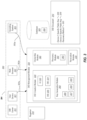
- the environment 300 includes various devices and computing systems that are owned or otherwise under the control of the DID owner 21. These include a user device 301.
- the user device 301 is a mobile device such as a smartphone, a computing device such as a laptop computer, or any device such as a car or an appliance that includes computing abilities.
- the device 301 includes a web browser 302 operating on the device and an operating system 303 operating the device. More broadly speaking, the dashed line 304 represents that all of these devices are owned or otherwise under the control of the DID owner 201.
- the environment 300 also includes a DID lifecycle management module 320.
- the DID lifecycle management module 320 also be referred to as a wallet or an agent. It will be noted that in operation, the DID lifecycle management module 320 reside on and be executed by one or more of user device 301, web browser 302, and the operating system 303 as illustrated by the lines 301a, 302a, and 303a. Accordingly, DID lifecycle management module 320 is shown as being separate for ease of explanation.
- the DID lifecycle management module 320 includes a DID creation module 330.
- the DID creation module 330 is used by the DID owner 201 to create the DID 205 or any number of additional DIDs, such as DID 331.
- the DID creation module includes or otherwise has access to a User Interface (UI) element 335 that guide the DID owner 201 in creating the DID 205.
- the DID creation module 330 has one or more drivers that are configured to work with the particular distributed ledgers such as distributed ledger 220 so that the DID 205 complies with the underlying methods of that distributed ledger.
- UI 335 provides a prompt for the user to enter a username or some other human recognizable name.
- This name is used as a display name for the DID 205 that will be generated.
- the DID 205 is a long string of random numbers and letters and so having a human recognizable name for a display name be advantageous.
- the DID creation module 330 then generates the DID 205.
- the DID 205 is shown in a listing of identities and is associated with the human recognizable name.
- the DID creation module also includes a key generation module 350.
- the key generation module generates the private key 206 and public key 207 pairs previously described.
- the DID creation module 330 then uses the DID 205 and the private and public key pair to generate the DID document 210.
- the DID creation module 330 accesses a registrar 310 that is configured to the specific distributed ledger that will be recording the transactions related to the DID 205.
- the DID creation module 330 uses the registrar 310 to record the DID hash 231, DID hash 241, and DID hash 251 in the distributed ledger in the manner previously described and to store the DID document 210 in the manner previously described. This process uses the public key 207 in the has generation.
- the DID lifecycle management module 320 includes an ownership module 340.
- the ownership module 340 provides mechanisms that ensure that the DID owner 201 is aware that the DID owner 201 is in sole control of the DID 205. In this way, the provider of the DID lifecycle management module 320 is able to ensure that the provider does not control the DID 205, but is only providing the management services.
- the key generation module 350 generates the private key 206 and public key 207 pair and the public key 207 is then recorded in the DID document 210. Accordingly, the public key 207 is used by all devices associated with the DID owner 201 and all third parties that desire to provide services to the DID owner 201. Accordingly, when the DID owner 201 desires to associate a new device with the DID 205, the DID owner 201 executes the DID creation module 330 on the new device. The DID creation module 330 then uses the registrar 310 to update the DID document 210 to reflect that the new device is now associated with the DID 205 and this would be reflected in an updated transaction on the distributed ledger 220 as previously described.
- the key generation module generates additional public keys 208 and 209 when the additional devices execute the DID creation module 330. These additional public keys are associated with private key 206 or in some instances is paired with a new private key.
- the additional public keys 208 and 209 are recorded in the DID document 210 as being associated with those devices. This is shown in Figure 3 . It will be appreciated that the DID documents 210 include the information previously described in relation to Figure 2 in addition to the information shown in Figure 3 . If the DID document 210 existed prior to the device-specific public keys being generated, then the DID document 210 would be updated by the creation module 330 via the registrar 310 and this would be reflected in an updated transaction on the distributed ledger 220.
- the DID owner 201 can keep the association of a device with a public key or even with the DID 205 a secret. Accordingly, the DID creation module 330 causes that such data be secretly shown in the DID document 210.
- the DID 205 has been associated with all the devices under the control of the DID owner 201, even when the devices have their own public keys. However, in some embodiments it is useful for each device or some subset of devices under the control of the DID owner 201 to each have their own DID.
- the DID creation module 330 generates an additional DID, for example, DID 331, for each device. The creation module would then generate private and public key pairs and DID documents for each of the devices and have them recorded on the distributed ledger 220 in the manner previously described.
- Such embodiments are advantageous for devices that change ownership as it is possible to associate the specific device DID to the new owner of the device by granting the new owner authorization rights in the DID document and revoking such rights from the old owner.
- the private key to ensure that it is totally in the control of the DID owner 201, is created on the user device 301, browser 302, or operating system 303 owned or controlled by the DID owner 201 that executed the DID management module 320. In this way, there is little chance that a third party gains control of the private key 206, especially the provider of the DID lifecycle management module 320. However, there is a chance that the device storing the private key 206 is lost by the DID owner 201, which causes the DID owner 201 to lose access to the DID 205.
- the UI 335 includes the option to allow the DID owner 201 to export the private key 206 to an off device secured database 305 that is under the control of the DID owner 201.
- the private key 206 is stored as a QR code that scanned by the DID owner 201.
- the DID lifecycle management module 320 includes a recovery module 360 that is used to recover a lost private key 206.
- the recovery module 360 allows the DID owner 201 to select one or more recovery mechanisms 365 at the time the DID 205 is created that later be used to recover the lost private key.
- the UI 335 allow the DID owner 201 to provide required information that will be needed by the one or more recovery mechanisms 365 when the recovery mechanisms are implemented. The recovery module then be run on any device associated with the DID 205.
- the DID lifecycle management module 320 also includes a revocation module 370 that is used to revoke or sever a device from the DID 205.
- the revocation module uses the UI element 335, which allows the DID owner 201 to indicate a desire to remove a device from being associated with the DID 205.
- the revocation module access the DID document 210 and causes that all references to the device be removed from the DID document. Alternatively, the public key for the device is removed. This change in the DID document 210 then is reflected as an updated transaction on the distributed ledger 220 as previously described.
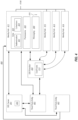
- Figure 4 illustrates an embodiment of an environment 400 in which a DID such as DID 205 is utilized.
- the environment 400 will be used to describe the use of the DID 205 in relation to one or more decentralized personal storages or identity hubs.
- An identity hub is a storage of attributes, including keys and metadata under the control of the holder of the DID. It will be noted that Figure 4 includes references to elements first discussed in relation to figures 2 or 3 and thus use the same reference numeral for ease of explanation.
- the identity hubs 410 are multiple instances of the same identity hub. This is represented by line 410A.
- the various identity hubs 410 include at least some of the same data and services. Accordingly, if any change is made to one of the identity hubs 410, the change is reflected in the remaining identity hubs.
- the first identity hub 411 and second identity hub 412 are implemented in cloud storage and thus is able to hold a large amount of data. Accordingly, a full set of the data is stored in these identity hubs.
- the identity hubs 412 and 413 have less memory space. Accordingly, in these identity hubs a descriptor of the data stored in the first and second identity hubs is included.
- a record of changes made to the data in other identity hubs is included.
- changes in one of the identity hubs 410 are either fully replicated in the other identity hubs or at least a record or descriptor of that data is recorded in the other identity hubs.
- identity hub 411 includes data storage 420.
- the data storage 420 is used to store any type of data that is associated with the DID owner 201.
- the data is a collection 422 of a specific type of data corresponding to a specific protocol.
- collection 422 is medical records data that corresponds to a specific protocol for medical data. In some other cases, collection 422 is any other type of data.
- the stored data have different authentication and privacy settings 421 associated with the stored data.
- a first subset of the data has a setting 421 that allows the data to be publicly exposed, but that does not include any authentication to the DID owner 201. This type of data is for relatively unimportant data such as color schemes and the like.
- a second subset of the data has a setting 421 that allows the data to be publicly exposed and that includes authentication to the DID owner 201.
- a third subset of the data has a setting 421 that encrypts the subset of data with the private key 206 and public key 207 pair (or some other key pair) associated with the DID owner 201.
- This type of data will require a party to have access to the public key 207 or to some other associated public key in order to decrypt the data.
- This process also includes authentication to the DID owner 201.
- a fourth subset of the data has a setting 421 that restricts this data to a subset of third parties. This requires that public keys associated with the subset of third parties be used to decrypt the data.
- the DID owner 201 causes the setting 421 to specify that only public keys associated with friends of the DID owner 201 decrypt this data.
- the identity hub 411 has a permissions module 430 that allows the DID owner 201 to set specific authorization or permissions for third parties such as third parties 401 and 402 to access the identity hub.
- the DID owner 201 provides access permission to his or her spouse to all the data 420.
- the DID owner 201 allows access to his or her doctor for any medical records. It will be appreciated that the DID owner 201 permission to any number of third parties to access a subset of the data 420. This will be explained in more detail to follow.
- the identity hub 411 also has a messaging module 440.
- the messaging module allows the identity hub to receive messages such as requests from parties such as third parties 401 and 402 to access the data and services of the identity hub.
- the messaging module 440 allows the identity hub 411 to respond to the messages from the third parties and to also communicate with a DID resolver 450. This will be explained in more detail to follow.
- the ellipses 416 represent that the identity hub 411 has additional services as circumstances warrant.
- the DID owner 201 wish to authenticate a new device 301 with the identity hub 411 that is already associated with the DID 205 in the manner previously described. Accordingly, the DID owner 201 utilizes the DID management module 320 associated with the new user device 301 to send a message to the identity hub 411 asserting that the new user device is associated with the DID 205 of the DID owner 201.
- the identity hub 411 not initially recognize the new device as being owned by the DID owner 201. Accordingly, the identity hub 411 uses the messaging module 440 to contact the DID resolver 450. The message sent to the DID resolver 450 includes the DID 205.
- the DID resolver 450 is a service, application, or module that is configured in operation to search the distributed ledger 220 for DID documents associated with DIDs. Accordingly, in the embodiment the DID resolver 450 search the distributed ledger 220 using the DID 205, which result in the DID resolver 450 finding the DID document 210. The DID document 210 then be provided to the identity hub 411.
- the DID document 210 includes a public key 208 or 209 that is associated with the new user device 301.
- the identity hub 411 To verify that the new user device is owned by the DID owner 201, the identity hub 411 provides a cryptographic challenge to the new user device 301 using the messaging module 440. This cryptographic challenge will be structured such that only a device having access to the private key 206 will be able to successfully answer the challenge
- the identity hub 411 since the new user device is owned by DID owner 201 and thus has access to the private key 206, the challenge is successfully answered.
- the identity hub 411 then records in the permissions 430 that the new user device 301 is able to access the data and services of the identity hub 411 and also the rest of the identity hubs 210.
- this process of authenticating the new user device 301 was performed without the need for the DID owner 201 to provide any username, password or the like to the provider of the identity hub 411 (i.e., the first cloud storage provider) before the identity hub 411 could be accessed. Rather, the access was determined in a decentralized manner based on the DID 205, the DID document 210, and the associated public and private keys. Since these were at all times in the control of the DID owner 201, the provider of the identity hub 411 was not involved and thus has no knowledge of the transaction or of any personal information of the DID owner 201.
- the DID owner 201 provide the DID 205 to the third party entity 401 so that the third party access data or services stored on the identity hub 411.
- the DID owner 201 is a human who is at a scientific conference who desires to allow the third party 401, who is also a human, access to his or her research data. Accordingly, the DID owner 201 provide the DID 205 to the third party 401.
- the third party 401 Once the third party 401 has access to the DID 205, he or she access the DID resolver 450 to access the DID document 210. As previously discussed, the DID document 210 include an endpoint 213 that is an address or pointer to the identity hub 411. The third party 401 then use the address or pointer to access the identity hub 411.
- the third party 401 send a message to the messaging module 440 asking for permission to access the research data.
- the messaging module 440 then send a message to the DID owner 201 asking if the third party 401 should be given access to the research data. Because the DID owner desires to provide access to this data, the DID owner 201 allow permission to the third party 401 and this permission is recorded in the permissions 430.
- the messaging module 440 then message the third party 401 informing the third party that he or she is able to access the research data.
- the identity hub 411 and the third party 401 then directly communicate so that the third party access the data. It will be noted that in many cases, it will actually be an identity hub associated with the third party 401 that communicates with the identity hub 411. However, it a device of the third party 401 that does the communication.
- the above-described process allows the identity hub 411 and the third party 401 to communicate and to share the data without the need for the third party to access the identity hub 411 in a conventional manner. Rather, the communication is provisioned in a decentralized manner using the DID 205 and the DID document 210. This advantageously allows the DID owner to be in full control of the process.
- the identity hub 411 is hosted in a cloud service.
- the service provider has access to the data stored in each user's identity hub 411. Furthermore, the service provider also has access to certain activities of the DID owner. For example, the entities with whom the DID owner has shared his/her data is stored in the identity hub 411. As another example, a user has multiple DIDs and has shared data amongst the multiple DIDs, alternatively, the user has used different DID management modules to access the same data. Based on the data sharing activities, the service provider of the identity hub 411 correlate the relationships of different DIDs and find out that two DIDs is related or owned by the same owner. Thus, the user's privacy is compromised.
- the principles described herein will solve these potential privacy concerns of DID owners by encrypting the personal data stored in the identity hub 411.
- the encryption/decryption keys are not stored or accessible by the identity hub 411, so that the DID owners not only have great control over their data from other DID owners or users, but also have their privacy protected from the service providers.
- a data object is a file, a folder, or any portion of data stored in the identity hub 411.
- the whole identity hub 411 is encrypted with one encryption/decryption key as one object.
- a different portion of the data stored in the identity hub 411 is encrypted with different encryption/decryption keys.
- verifiable claims are issued and stored at the identity hub 411.
- a verifiable claim that is associated with a DID owner 201 is issued by a claim issuing entity, and the issued verifiable claim is stored at the identity hub 411 that is associated with the DID owner 201.
- the DID owner 201 send the verifiable claim to another entity when the other entity requires to verify the credential of the DID owner.
- the DID owner 201 is a person holding a driver's license
- the claim issuing entity is a DMV that has issued the DID owner's driver's license.
- the DMV issue a verifiable claim that verifies that the DID owner 201 is holding a valid driver's license.
- the DID owner 201 stores the verifiable claim in the identity hub 411. Another entity is a rental car company, which requires the DID owner 201 to show that he/she has a valid driver's license. The DID owner then sends the verifiable claim stored at the identity hub 411 to the rental car company.
- pairwise DIDs can be employed.
- a pair of pairwise DIDs are a pair of DIDs that are used by two DID owners only to communicate with each other.
- Each DID owner can generate many pairwise DIDs, each of which is only used to communicate with another entity. As such, even though the same DID owner is communicating with many different entities, each of these entities does not know the communications involving the same DID owner using other pairwise DIDs. Thus, the DID owner's privacy is further protected.
- FIG. 5 illustrates an example environment 500, in which Alice 510, Bob 520, and a service provider 530 are using pairwise DIDs to communicate with each other.
- Each of Alice 510, Bob 520, and the service provider 530 corresponds to a DID owner 201 of Figure 2 .
- Alice 510 owns multiple pairwise DIDs, including DID A 511, DID B 512, and DID C 513.
- the ellipsis 514 represents that Alice may own any number of pairwise DIDs or any number of non-pairwise DIDs.
- Bob 520 also owns multiple pairwise DIDs, including DID E 521, DID F 522, and DID G 523.
- the ellipsis 524 represents that Bob may own any number of pairwise DIDs or any number of non-pairwise DIDs.
- the service provider 530 also owns multiple pairwise DIDs, including DID H 531, DID F 532, and DID J 533.
- the ellipsis 534 represents that the service provider 530 may own any number of pairwise DIDs or any number of non-pairwise DIDs.
- DID A 511 owned by Alice 510 and DID E 521 owned by Bob 520 are a pair of pairwise DIDs. As such, Alice 510 and Bob 520 use only DID A 511 and DID E 521 to communicate with each other, which is represented by arrow 541.
- DID B 512 owned by Alice 510 and DID H 531 owned by the service provider 530 are a pair of pairwise DIDs.
- Alice 510 and service provider 530 use only DID B 512 and DID H 531 to communicate with each other, which is represented by arrow 542.
- DID F 522 owned by Bob 520 and DID I 532 owned by service provider 530 are a pair of pairwise DIDs, which are only used for communicating between Bob 520 and service provider 530 (represented by arrow 543).
- each pair of the pairwise DIDs is only used to communicate between two DID owners, in many cases, a relationship between the two DID owners can be clearly defined.
- the relationship between a pair of pairwise DIDs are recorded in the management module of the DID owners.
- such relationship data is stored with each pairwise DID (e.g., DID documents) or recorded in a distributed ledger.
- the relationship of each pair of pairwise DIDs are recorded in one data structure (e.g., a table).
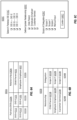
- Figure 6A illustrates an example data structure 600A that records relationships of pairwise DIDs owned by Alice 510.
- Alice's DID A 511 is used to communicate with Bob's DID 521, and the relationship between Alice and Bob is child-parent, i.e., Alice is Bob's child.
- Alice's DID B 512 is used to communicate with service provider 530, and the relationship between Alice 510 and service provider 530 is the employee-employer relationship, i.e., Alice 510 is an employee of the service provider 530.
- the ellipsis 611A, 612A, 533A represent that there may be any number of pairs of pairwise DIDs, whose relationships are recorded in the table 600A.
- Alice's DID management module, user agent, and/or ID hub is configured to determine a scope of permission that is to be delegated from Alice's pairwise DID to the corresponding pairwise DID. In some embodiments, multiple relationships and multiple scopes of permission are mapped to each other.
- the mapping data is recorded in a storage at Alice's DID management module, user agent, and/or ID hub.
- Figure 6B illustrates an example data structure storing mapping data 600B.
- the child-parent relationship 621B is mapped to delegation scope X 631B; the employee-employer relationship 622B is mapped to delegation scope Y 532B; and the customer-service relationship 623B is mapped to delegation scope Z 633B.
- the ellipsis 624B and 634B represent that there may be any number of mapped pairs of relationship and delegation scope.
- the computing system e.g., Alice's management module or wallet app, user agent, or ID hub
- the computing system is configured to compile the data structure 600A and/or 600B automatically based on the data recorded in DID documents or some other Alice's personal data.
- at least a portion of the data structure 600A and/or 600B is generated based on user (e.g., Alice's) input(s).
- Figures 6A and 6B merely illustrate a simple example of how the relationship data and delegation data may be stored.
- the data structures 600A and 600B may be relationally stored.
- the data structures 600A and 600B may be stored in a same data structure.
- FIG. 6C illustrates an example user interface 600C of a management module.
- the user interface 600C includes a selection list 610C that allows a user (e.g., DID owner) to select one or more particular pairs of the pairwise DIDs.
- the user interface 600C also includes a selection list 620C that allows the user to select one or more relationships that apply to the selected pairs of pairwise DIDs.
- the user interface 600C also includes a menu 630C that allows the user to select or manually define a scope of permission that is to be granted to the corresponding DID.
- the computing system is configured to automatically determine a relationship between two DID owners and/or automatically delegate a scope of permission to a pairwise DID. For example, the computing system accesses the relationship data 600A to determine the relationship between a particular pairwise DID (e.g., DID A 511) and its corresponding pairwise DID (e.g., DID E 521 owned by Bob 520). Based on the determined relationship (e.g., child-parent relationship), the computing system then accesses the delegation data 600B to determine a scope of permission (e.g., scope X 631) that is to be delegated to the corresponding pairwise DID (e.g., DID E 521 owned by Bob 520). In response to a determination, the computing system delegates the scope of permission (e.g., scope X 631) to the corresponding pairwise DID (e.g., DID E 521 owned by Bob 520).
- a scope of permission e.g., scope X 631
- FIGS 7 and 8 illustrate some embodiments that can be implemented in delegator's DID owners' management module, user agent, and/or the ID hub.
- the Alice's computing system e.g., Alice's management module, user agent, or ID hub
- a new DID is generated, and delegation of the scope of permission is recorded in the DID document of the new DID. A portion of the data related to the delegation is then propagated onto the distributed ledger.
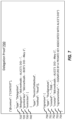
- Figure 7 illustrates an example delegation proof 700 for delegating a scope of permission from Alice 510 to Bob 520.
- the delegation proof 700 includes data 710 that is related to the type of the record.
- the type of record is "delegation” 710.
- the record 700 also includes data related to the delegator 720.
- the delegator is "Alice's DID” 720.
- the record 700 also includes data related to "granted key".
- the granted key is a key associated with Bob's DID.
- the record 700 also needs to define the scope of permission that is granted.
- the definition of the scope of permission includes one or more restrictions.
- the record 700 includes data 740 that is related to one or more restrictions.
- the one or more restrictions include, but are not limited to, (1) an expiration time of the delegation, (2) a predetermined number of times that the delegatee is allowed to access a portion of data or service, or (3) a restriction that restricts the access to a portion of data, such as (i) a read permission, (ii) a write permission, (iii) a delete permission, or (iv) a delegation permission.
- the one or more restrictions include one or more conditions, which are required to be satisfied each time the delegatee requests for accessing to the delegated permission.
- the one or more conditions include, but are not limited to, (i) requiring the delegatee DID to pay a predetermined amount of cryptocurrency, (ii) requiring the delegatee DID to provide one or more verifiable claims, or (iii) requiring the delegatee DID to provide particular personal data, such as (a) an email address, (b) a phone number, (c) a location, (d) a name of the delegatee, (e) an IP address, or (f) a device identifier.
- the one or more restrictions 740 indicate that Bob's DID is restricted to only read a portion of Alice's personal data (i.e., Bob's DID cannot modify Alice's personal data).
- the delegation data 710-740 is signed by a private key 754 associated with Alice's DID.
- the signature 750 includes the type of the signature 751, the time the signature is created 752, the creator 753, and the signature value 754.
- the type of signature is Rsa Signature
- the creator is Alice's DID 753
- the signature 754 is generated by a private key associated with Alice's DID 753.
- the delegation proof is stored with the DID document of Alice DID and/or the DID document of Bob's DID.
- a new DID is generated, and the delegation data is associated and stored with the DID document of the new DID.
- At least a portion of data related to the delegation proof is propagated onto the distributed ledger.
- the complete delegation proof is propagated onto the distributed ledger.
- a transformed record e.g., a hash, a URL, or an identifier of the delegation proof
- FIG 8 further illustrates an example communication pattern 800 that occurs when a delegatee (e.g., Bob 810) requests for access to a delegated scope of permission (e.g., Alice's data).
- Bob's device e.g., Bob's management module, user agent, and/or ID hub
- Alice's device 840 e.g., Alice's management module, user agent, and/or ID hub
- Bob's device 840 requests Bob's device 820 for proving that Bob 810 is delegated the scope of permission for accessing the requested Alice's data, which is represented by arrow 832.
- Bob's device 820 in turn, generates proof data, which is represented by arrow 833.
- the proof data includes at least the signature signed by Alice's private key (e.g., signature 750 of Figure 7 ).
- the proof data is then packaged in a response and sent to Alice's device 840, which is represented by arrow 834.
- Alice's device 840 receives the proof data, Alice's device 840 then validates the response using its key and/or a portion of data related to the delegation proof propagated onto the distributed ledger 860, which is represented by arrow 835. For example, when the signature signed by Alice's private key is received, Alice's device 840 tries to decrypt the signature by a corresponding public key. The decryption result (and/or transformed decryption result) is then used to compare to the data propagated on the distributed ledger 860 to determine whether the proof data is valid. When the scope of permission includes one or more restrictions or conditions, Alice's device 840 will also verify whether the requested scope of permission falls within the one or more restrictions and/or whether the one or more conditions are satisfied.
- the proof data is required to show a proof of payment.
- the proof data is required to include Bob's email address. If the proof data is valid, Alice's device 840 approves the Bob's request, otherwise, Alice's device 840 denies the Bob's request, which is represented by arrow 835.
- Figure 9 illustrates a flowchart of an example method 900 for delegating a scope of permission between two pairwise DIDs.
- the DID that delegates the scope of permission is called a delegator DID or simply delegator, and the DID that receives the delegation is called a delegatee DID or simply delegatee.
- the method 900 is performed by a computing system associated with a delegator DID (e.g., a management module, a user agent, and/or an ID hub).
- the method 900 includes determining a relationship of owners of a pairwise DID (910). Based on the determined relationship, a scope of permission is delegated from the delegator to the delegatee (920).
- the delegation includes defining the scope of permission (921).
- the definition of the scope of permission includes one or more restrictions related to the scope of permission (922).
- the one or more restrictions include, but are not limited to, (1) an expiration time of the delegation, (2) a predetermined number of times that the delegatee is allowed to access a portion of data or service, or (3) a restriction that restricts the access to a portion of data, such as (i) a read permission, (ii) a write permission, (iii) a delete permission, or (iv) a delegation permission.
- the one or more restrictions include one or more conditions, which are required to be satisfied each time the delegatee requests for accessing to the delegated permission.
- the one or more conditions include, but are not limited to, (i) requiring the delegatee DID to pay a predetermined amount of cryptocurrency, (ii) requiring the delegatee DID to provide one or more verifiable claims, or (iii) requiring the delegatee DID to provide particular personal data, such as (a) an email address, (b) a phone number (c) a location, (d) a name of the delegatee, (e) an IP address, or (f) a device identifier.
- the delegation includes granting a delegatee's key the scope of permission (923).
- the delegation also includes generating a signature by a delegator's private key (924) and recording data related to the delegation in a DID document (e.g., the delegator's DID document, the delegatee's DID document, and/or a DID document of a new DID) (925).
- a DID document e.g., the delegator's DID document, the delegatee's DID document, and/or a DID document of a new DID
- the complete delegation proof is propagated onto the distributed ledger.
- a transformed delegation proof such as a hash, a URL of the DID document, or an identifier of the delegation proof, is propagated onto the distributed ledger.
- Figure 10 further illustrates a flowchart of an example method 1000 for determining a relationship between DID owners of a pair of pairwise DIDs, which corresponds to the step 910 of Figure 9 .
- the method 1000 includes accessing mapping data that maps a plurality of relationships to a plurality of scope of permissions for delegation (1010).
- An example of mapping data is illustrated in Figures 6A and 6B above.
- the mapping data is entered by users manually (1030, 1040). In some embodiments, the mapping data is generated based on the delegator's personal data, data recorded in the DID documents and/or data propagated onto the distributed ledger. In some embodiments, the automatically generated mapping data is also allowed to be manually updated by users (e.g., DID owners). For example, in some cases, a user is not only allowed to update the mapping data (1030), the user is also allowed to update the relationship between the owners of the pairwise DIDs (1040). Based on the mapping data (1010) and/or the user's inputs(1030, 1040), the computing system then determines a particular scope of permission corresponding to a particular relationship (1020).
- users e.g., DID owners
- FIG 11 illustrates a flowchart of an example method 1100 for allowing a delegatee to access a delegated scope of permission in response to proving that the delegation is valid.
- the method 1100 is also likely implemented in a computing system that is associated with the delegator's DID.
- the method 1100 includes receiving a request from a delegatee DID for accessing a scope of permission (1110).
- the computing system requests the delegatee for proof of the delegation (1120). Once the proof code from the delegatee is received (1130), the computing system validates the proof code (1140).
- the validation of the proof code when the proof code includes a signature signed by a delegator's private key, the validation of the proof code includes decrypting the signature by a public key of delegator (1141). In some embodiments, the validation of the proof code also includes retrieving data related to the delegation in a distributed ledger (1142). The computing system then analyzes the decrypted signature and the retrieved delegation data from the distributed ledger to determine whether the proof data is valid (1143). The validation of the proof code also includes verifying the requested scope of permission is within the delegated scope (1144).
- the computing system verifies that the requested scope of permission does not fall within the restrictions.
- the restrictions include one or more conditions for accessing the scope of permission
- the validation of the proof code also includes verifying that the one or more conditions are satisfied (1145). For example, when a condition requires the delegatee to pay a predetermined amount of cryptocurrency, the delegatee will need to further show a proof of the payment in the proof code. As another example, when a condition requires the delegatee to provide an email address, the proof code needs to include the email address.
- the computing system grants the delegatee's request; otherwise, the computing system denies the delegatee's request (1150).
Landscapes
- Engineering & Computer Science (AREA)
- Computer Security & Cryptography (AREA)
- Theoretical Computer Science (AREA)
- Computer Networks & Wireless Communication (AREA)
- Signal Processing (AREA)
- General Engineering & Computer Science (AREA)
- Computer Hardware Design (AREA)
- Physics & Mathematics (AREA)
- General Physics & Mathematics (AREA)
- Computing Systems (AREA)
- Health & Medical Sciences (AREA)
- Bioethics (AREA)
- General Health & Medical Sciences (AREA)
- Software Systems (AREA)
- Databases & Information Systems (AREA)
- Data Mining & Analysis (AREA)
- Automation & Control Theory (AREA)
- Storage Device Security (AREA)
Claims (15)
- Rechensystem (100), umfassend:einen oder mehrere Prozessoren (102); undein oder mehrere computerlesbare Medien (104), die darauf gespeicherte computerausführbare Anweisungen (106) aufweisen, die derart strukturiert sind, dass sie bei Ausführung durch den einen oder die mehreren Prozessoren (102) das Rechensystem (100) dazu veranlassen, Folgendes durchzuführen:Bestimmen (910) einer Beziehung (630A) zwischen einem Besitzer (510) einer ersten dezentralen Kennung, DID-Besitzer, einer ersten DID (511) und einem DID-Besitzer (520) einer zweiten DID (521), wobei die erste DID (511) und die zweite DID (521) paarweise DIDs (511, 521) sind; undbasierend auf der Beziehung (630A), Delegieren (920) eines Berechtigungsspielraums (630C), den die erste DID (511) besitzt, an die zweite DID (521), umfassend:Definieren (921) des Berechtigungsspielraums (740);Gewähren (923) des definierten Berechtigungsspielraums (740) für einen öffentlichen Schlüssel (730) der zweiten DID (521);Generieren (924) einer Signatur (750) durch einen privaten Schlüssel (754) der ersten DID (511), wodurch die Delegierung des definierten Berechtigungsspielraums (740) an den öffentlichen Schlüssel (730) der zweiten DID (521) bewiesen wird; undPropagieren (930) eines Teils von Daten, die sich auf die Delegierung (700) beziehen, auf ein verteiltes Register (220, 860).
- Rechensystem nach Anspruch 1, wobei das Rechensystem ferner zu Folgendem veranlasst wird:Zuordnen einer Vielzahl von Beziehungen zu einer Vielzahl von Berechtigungsspielräumen;
Aufzeichnen der zugeordneten Daten in einem Speicher, auf den das Rechensystem zugreifen kann; undbasierend auf den zugeordneten Daten, Bestimmen des Berechtigungsspielraums, welcher der Beziehung zwischen dem ersten DID-Besitzer und dem zweiten DID-Besitzer entspricht. - Rechensystem nach Anspruch 2, wobei das Zuordnen der Vielzahl von Beziehungen zu der Vielzahl von Berechtigungsspielräumen auf mindestens einem des Folgendes basiert:
in (einem) DID-Dokument(en) aufgezeichneten Daten, auf das verteilte Register propagierten Daten oder (einer) Benutzereingabe(n). - Rechensystem nach Anspruch 3, wobei das Rechensystem ferner zu Folgendem veranlasst wird:Empfangen einer Benutzereingabe zum Generieren, Aktualisieren oder Löschen eines zugeordneten Paars eines konkreten Berechtigungsspielraums und einer konkreten Beziehung undbasierend auf der Benutzereingabe, Aktualisieren der aufgezeichneten zugeordneten Daten in dem Speicher.
- Rechensystem nach Anspruch 4, wobei das Rechensystem ferner zu Folgendem veranlasst wird:
als Reaktion auf die Benutzereingabe, Aktualisieren von (einer) Delegierung(en) zwischen paarweisen DIDs, die eine konkrete Beziehung aufweisen, die durch die Benutzereingabe beeinflusst wird. - Rechensystem nach Anspruch 2, wobei die Vielzahl von Beziehungen mindestens eines des Folgenden beinhaltet: eine Kind-Elternteil-Beziehung, eine Partnerschaftsbeziehung, eine Arbeitgeber-Arbeitnehmer-Beziehung, eine Kunde-Dienst-Beziehung oder eine Vertragsbeziehung.
- Rechensystem nach Anspruch 2, wobei das Rechensystem ferner zu Folgendem veranlasst wird:als Reaktion auf eine Anforderung von dem DID-Besitzer der zweiten DID für Zugriff auf einen Berechtigungsspielraum, Bestimmen, ob die konkrete Beziehung noch existiert; undals Reaktion auf eine Bestimmung, dass die konkrete Beziehung nicht mehr existiert, Widerrufen der Delegierung des entsprechenden Berechtigungsspielraums und Propagieren eines Teils von Daten in Bezug auf den Widerruf der Berechtigung an das verteilte Register.
- Rechensystem nach Anspruch 2, wobei das Rechensystem ferner zu Folgendem veranlasst wird:periodisches Überprüfen, ob die konkrete Beziehung noch existiert; undals Reaktion auf eine Bestimmung, dass die konkrete Beziehung nicht mehr existiert, Widerrufen der Delegierung des entsprechenden Berechtigungsspielraums und Propagieren von Daten in Bezug auf den Widerruf der Berechtigung an das verteilte Register.
- Rechensystem nach Anspruch 2, wobei das Rechensystem ferner zu Folgendem veranlasst wird:als Reaktion auf Empfangen einer Benutzereingabe, die Informationen in Bezug auf die erste DID oder Informationen in Bezug auf die zweite DID ändert, Bestimmen, ob die konkrete Beziehung noch existiert; undals Reaktion auf eine Bestimmung, dass die konkrete Beziehung nicht mehr existiert, Widerrufen der Delegierung des entsprechenden Berechtigungsspielraums und Propagieren von Daten in Bezug auf den Widerruf der Berechtigung an das verteilte Register.
- Rechensystem nach Anspruch 1, wobei:das Definieren des Berechtigungsspielraums Definieren einer oder mehrerer Einschränkungen beinhaltet; unddas Propagieren eines Teils von Daten in Bezug auf die Delegierung Propagieren der einen oder der mehreren Einschränkungen an das verteilte Register beinhaltet.
- Rechensystem nach Anspruch 10, wobei die eine oder die mehreren Einschränkungen eine Ablaufzeit der Delegierung beinhalten.
- Rechensystem nach Anspruch 10, wobei die eine oder die mehreren Einschränkungen eine Einschränkung beinhalten, die Zugriff auf einen Teil von Daten oder einen Dienst auf eine vorbestimmte Anzahl einschränkt.
- Rechensystem nach Anspruch 10, wobei die eine oder die mehreren Einschränkungen eine Einschränkung für Zugriff auf einen Teil von Daten beinhalten, wobei die Einschränkung mindestens eines des Folgenden beinhaltet: eine Leseberechtigung, eine Schreibberechtigung, eine Löschberechtigung oder eine Delegierungsberechtigung.
- Rechensystem nach Anspruch 10, wobei die eine oder die mehreren Einschränkungen eine oder mehrere Bedingungen beinhalten und die eine oder die mehreren Bedingungen mindestens eines des Folgenden beinhalten: eine Notwendigkeit, dass die zweite DID einen vorbestimmten Betrag an Kryptowährung bezahlt, eine Notwendigkeit, dass die zweite DID konkrete persönliche Daten bereitstellt, oder eine Notwendigkeit, dass die zweite DID einen oder mehrere verifizierbare Ansprüche bereitstellt,
wobei die konkreten persönlichen Daten mindestens eines des Folgenden beinhalten: eine E-Mail-Adresse, eine Telefonnummer, einen Ort, einen Namen des zweiten DID-Besitzers, eine IP-Adresse oder eine Vorrichtungskennung. - Verfahren (900), das an einem Rechensystem (100) umgesetzt wird, zum Delegieren eines Berechtigungsspielraums, den eine erste dezentrale Kennung, DID, (511) besitzt, an eine zweite DID (521), wobei die erste DID (511) und die zweite DID (521) paarweise DIDs sind, umfassend:Bestimmen (910) einer Beziehung (630A) zwischen der ersten DID (511) und einer zweiten DID (521), wobei die erste DID (511) und die zweite DID (521) paarweise DIDs sind; undbasierend auf der Beziehung (630A), Delegieren eines Berechtigungsspielraums (630C), den die erste DID (511) besitzt, an die zweite DID (521), umfassend:Definieren (921) des Berechtigungsspielraums (740);Gewähren (923) des definierten Berechtigungsspielraums (740) für einen öffentlichen Schlüssel (730) der zweiten DID (521);Generieren (924) einer Signatur (750) durch einen privaten Schlüssel (754) der ersten DID (511), wodurch die Delegierung des definierten Berechtigungsspielraums (740) an den öffentlichen Schlüssel (730) der zweiten DID (521) bewiesen wird; undPropagieren (930) eines Teils von Daten, die sich auf die Delegierung (700) beziehen, auf ein verteiltes Register (220, 860).
Applications Claiming Priority (2)
| Application Number | Priority Date | Filing Date | Title |
|---|---|---|---|
| US16/803,498 US11238170B2 (en) | 2020-02-27 | 2020-02-27 | Delegation using pairwise decentralized identifier |
| PCT/US2021/014064 WO2021173257A1 (en) | 2020-02-27 | 2021-01-20 | Delegation using pairwise decentralized identifier |
Publications (2)
| Publication Number | Publication Date |
|---|---|
| EP4111663A1 EP4111663A1 (de) | 2023-01-04 |
| EP4111663B1 true EP4111663B1 (de) | 2025-06-25 |
Family
ID=74673309
Family Applications (1)
| Application Number | Title | Priority Date | Filing Date |
|---|---|---|---|
| EP21707437.6A Active EP4111663B1 (de) | 2020-02-27 | 2021-01-20 | Delegierung mit paarweise dezentraler kennung |
Country Status (4)
| Country | Link |
|---|---|
| US (1) | US11238170B2 (de) |
| EP (1) | EP4111663B1 (de) |
| CN (1) | CN115176247B (de) |
| WO (1) | WO2021173257A1 (de) |
Families Citing this family (14)
| Publication number | Priority date | Publication date | Assignee | Title |
|---|---|---|---|---|
| US11675854B2 (en) * | 2020-01-20 | 2023-06-13 | International Business Machines Corporation | Conflict-free version control |
| US11403348B2 (en) | 2020-01-20 | 2022-08-02 | International Business Machines Corporation | Conflict-free version control |
| US12158878B2 (en) | 2020-01-20 | 2024-12-03 | International Business Machines Corporation | Conflict-free version control |
| CN111527489A (zh) * | 2020-03-13 | 2020-08-11 | 支付宝(杭州)信息技术有限公司 | 基于去中心化标识的数据授权 |
| US20210314293A1 (en) * | 2020-04-02 | 2021-10-07 | Hewlett Packard Enterprise Development Lp | Method and system for using tunnel extensible authentication protocol (teap) for self-sovereign identity based authentication |
| EP4154491A1 (de) * | 2020-05-19 | 2023-03-29 | Smart Sensors Holdings B.V. | Massenspektrometriedatenverwaltungssystem und -verfahren |
| CN112906064B (zh) * | 2020-07-31 | 2022-05-17 | 支付宝(杭州)信息技术有限公司 | 生成描述信息的方法及装置 |
| CN113012008B (zh) * | 2020-09-15 | 2022-06-03 | 支付宝(杭州)信息技术有限公司 | 一种基于可信硬件的身份管理方法、装置及设备 |
| GB202018919D0 (en) * | 2020-12-01 | 2021-01-13 | Smarter Contracts Ltd | Consent Management |
| JP2025503905A (ja) * | 2022-02-01 | 2025-02-06 | エヌチェーン ライセンシング アーゲー | 許可管理のための方法およびシステム |
| US12463822B2 (en) * | 2022-11-22 | 2025-11-04 | Microsoft Technology Licensing, Llc | Sharing security settings between entities using verifiable credentials |
| GB2626395A (en) * | 2023-01-19 | 2024-07-24 | K4 Security Co Ltd | System for delegation based on decentralized identity and method thereof |
| WO2024194209A1 (en) * | 2023-03-23 | 2024-09-26 | Sony Group Corporation | Methods and apparatuses for exchanging information between a user and a website |
| US20250080516A1 (en) * | 2023-08-30 | 2025-03-06 | American Express Travel Related Services Company, Inc. | Managing verifiable credential linkages to denote relationships |
Family Cites Families (7)
| Publication number | Priority date | Publication date | Assignee | Title |
|---|---|---|---|---|
| KR101637854B1 (ko) * | 2015-10-16 | 2016-07-08 | 주식회사 코인플러그 | 블록체인을 기반으로 하는 공인인증서 발급시스템과 이를 이용한 블록체인을 기반으로 하는 공인인증서 발급방법 및 블록체인을 기반으로 하는 공인인증서 인증시스템과 이를 이용한 블록체인을 기반으로 하는 공인인증서 인증방법 |
| CN107451485B (zh) * | 2017-06-02 | 2020-03-13 | 创新先进技术有限公司 | 一种基于区块链的数据处理方法及设备 |
| US11552795B2 (en) | 2018-01-22 | 2023-01-10 | Microsoft Technology Licensing, Llc | Key recovery |
| EP3906512A1 (de) * | 2019-01-04 | 2021-11-10 | Axuall, Inc. | Systeme und verfahren zum überprüfen und verwalten von digitalen berechtigungsnachweisen |
| CN111066020B (zh) * | 2019-07-02 | 2023-08-04 | 创新先进技术有限公司 | 用于创建去中心化标识的系统和方法 |
| US10728042B2 (en) * | 2019-07-02 | 2020-07-28 | Alibaba Group Holding Limited | System and method for blockchain-based cross-entity authentication |
| SG11202006574PA (en) * | 2019-07-02 | 2020-08-28 | Alibaba Group Holding Ltd | System and method for decentralized-identifier authentication |
-
2020
- 2020-02-27 US US16/803,498 patent/US11238170B2/en active Active
-
2021
- 2021-01-20 CN CN202180017326.3A patent/CN115176247B/zh active Active
- 2021-01-20 WO PCT/US2021/014064 patent/WO2021173257A1/en not_active Ceased
- 2021-01-20 EP EP21707437.6A patent/EP4111663B1/de active Active
Also Published As
| Publication number | Publication date |
|---|---|
| WO2021173257A1 (en) | 2021-09-02 |
| EP4111663A1 (de) | 2023-01-04 |
| US20210271765A1 (en) | 2021-09-02 |
| US11238170B2 (en) | 2022-02-01 |
| CN115176247B (zh) | 2026-01-02 |
| CN115176247A (zh) | 2022-10-11 |
Similar Documents
| Publication | Publication Date | Title |
|---|---|---|
| US11238170B2 (en) | Delegation using pairwise decentralized identifier | |
| US11176282B2 (en) | Encrypting data associated with decentralized identifier | |
| US11222137B2 (en) | Storing and executing an application in a user's personal storage with user granted permission | |
| US20210288974A1 (en) | Access token for a verifiable claim | |
| US11288389B2 (en) | Scoped sharing of DID-associated data using a selector | |
| US11587084B2 (en) | Decentralized identification anchored by decentralized identifiers | |
| US11411736B2 (en) | Automatic renewal of a verifiable claim | |
| US12505424B2 (en) | Digital wallet as a relying party in a decentralized network | |
| EP4026291B1 (de) | Steuerung der delegierten nutzung von daten in bezug auf did | |
| US12401509B2 (en) | Issuing verifiable pairwise claims | |
| US12463822B2 (en) | Sharing security settings between entities using verifiable credentials | |
| US20200382475A1 (en) | Dynamic generation of pseudonymous names | |
| EP4018614B1 (de) | Did-delegierung/-rückruf an ein anderes did |
Legal Events
| Date | Code | Title | Description |
|---|---|---|---|
| STAA | Information on the status of an ep patent application or granted ep patent |
Free format text: STATUS: UNKNOWN |
|
| STAA | Information on the status of an ep patent application or granted ep patent |
Free format text: STATUS: THE INTERNATIONAL PUBLICATION HAS BEEN MADE |
|
| PUAI | Public reference made under article 153(3) epc to a published international application that has entered the european phase |
Free format text: ORIGINAL CODE: 0009012 |
|
| STAA | Information on the status of an ep patent application or granted ep patent |
Free format text: STATUS: REQUEST FOR EXAMINATION WAS MADE |
|
| 17P | Request for examination filed |
Effective date: 20220712 |
|
| AK | Designated contracting states |
Kind code of ref document: A1 Designated state(s): AL AT BE BG CH CY CZ DE DK EE ES FI FR GB GR HR HU IE IS IT LI LT LU LV MC MK MT NL NO PL PT RO RS SE SI SK SM TR |
|
| DAV | Request for validation of the european patent (deleted) | ||
| DAX | Request for extension of the european patent (deleted) | ||
| REG | Reference to a national code |
Ref country code: DE Ref legal event code: R079 Free format text: PREVIOUS MAIN CLASS: H04L0029060000 Ipc: H04L0009400000 Ref country code: DE Ref legal event code: R079 Ref document number: 602021032795 Country of ref document: DE Free format text: PREVIOUS MAIN CLASS: H04L0029060000 Ipc: H04L0009400000 |
|
| GRAP | Despatch of communication of intention to grant a patent |
Free format text: ORIGINAL CODE: EPIDOSNIGR1 |
|
| STAA | Information on the status of an ep patent application or granted ep patent |
Free format text: STATUS: GRANT OF PATENT IS INTENDED |
|
| RIC1 | Information provided on ipc code assigned before grant |
Ipc: H04L 9/00 20220101ALI20250128BHEP Ipc: H04W 12/084 20210101ALI20250128BHEP Ipc: G06F 21/62 20130101ALI20250128BHEP Ipc: H04L 9/32 20060101ALI20250128BHEP Ipc: H04L 9/40 20220101AFI20250128BHEP |
|
| INTG | Intention to grant announced |
Effective date: 20250220 |
|
| P01 | Opt-out of the competence of the unified patent court (upc) registered |
Free format text: CASE NUMBER: APP_14641/2025 Effective date: 20250326 |
|
| GRAS | Grant fee paid |
Free format text: ORIGINAL CODE: EPIDOSNIGR3 |
|
| GRAA | (expected) grant |
Free format text: ORIGINAL CODE: 0009210 |
|
| STAA | Information on the status of an ep patent application or granted ep patent |
Free format text: STATUS: THE PATENT HAS BEEN GRANTED |
|
| AK | Designated contracting states |
Kind code of ref document: B1 Designated state(s): AL AT BE BG CH CY CZ DE DK EE ES FI FR GB GR HR HU IE IS IT LI LT LU LV MC MK MT NL NO PL PT RO RS SE SI SK SM TR |
|
| REG | Reference to a national code |
Ref country code: GB Ref legal event code: FG4D |
|
| REG | Reference to a national code |
Ref country code: CH Ref legal event code: EP |
|
| REG | Reference to a national code |
Ref country code: CH Ref legal event code: EP |
|
| REG | Reference to a national code |
Ref country code: IE Ref legal event code: FG4D |
|
| REG | Reference to a national code |
Ref country code: DE Ref legal event code: R096 Ref document number: 602021032795 Country of ref document: DE |
|
| PG25 | Lapsed in a contracting state [announced via postgrant information from national office to epo] |
Ref country code: FI Free format text: LAPSE BECAUSE OF FAILURE TO SUBMIT A TRANSLATION OF THE DESCRIPTION OR TO PAY THE FEE WITHIN THE PRESCRIBED TIME-LIMIT Effective date: 20250625 |
|
| REG | Reference to a national code |
Ref country code: LT Ref legal event code: MG9D |
|
| PG25 | Lapsed in a contracting state [announced via postgrant information from national office to epo] |
Ref country code: NO Free format text: LAPSE BECAUSE OF FAILURE TO SUBMIT A TRANSLATION OF THE DESCRIPTION OR TO PAY THE FEE WITHIN THE PRESCRIBED TIME-LIMIT Effective date: 20250925 Ref country code: GR Free format text: LAPSE BECAUSE OF FAILURE TO SUBMIT A TRANSLATION OF THE DESCRIPTION OR TO PAY THE FEE WITHIN THE PRESCRIBED TIME-LIMIT Effective date: 20250926 |
|
| PG25 | Lapsed in a contracting state [announced via postgrant information from national office to epo] |
Ref country code: BG Free format text: LAPSE BECAUSE OF FAILURE TO SUBMIT A TRANSLATION OF THE DESCRIPTION OR TO PAY THE FEE WITHIN THE PRESCRIBED TIME-LIMIT Effective date: 20250625 |
|
| PG25 | Lapsed in a contracting state [announced via postgrant information from national office to epo] |
Ref country code: HR Free format text: LAPSE BECAUSE OF FAILURE TO SUBMIT A TRANSLATION OF THE DESCRIPTION OR TO PAY THE FEE WITHIN THE PRESCRIBED TIME-LIMIT Effective date: 20250625 |
|
| PG25 | Lapsed in a contracting state [announced via postgrant information from national office to epo] |
Ref country code: RS Free format text: LAPSE BECAUSE OF FAILURE TO SUBMIT A TRANSLATION OF THE DESCRIPTION OR TO PAY THE FEE WITHIN THE PRESCRIBED TIME-LIMIT Effective date: 20250925 |
|
| PG25 | Lapsed in a contracting state [announced via postgrant information from national office to epo] |
Ref country code: LV Free format text: LAPSE BECAUSE OF FAILURE TO SUBMIT A TRANSLATION OF THE DESCRIPTION OR TO PAY THE FEE WITHIN THE PRESCRIBED TIME-LIMIT Effective date: 20250625 |
|
| REG | Reference to a national code |
Ref country code: NL Ref legal event code: MP Effective date: 20250625 |
|
| PG25 | Lapsed in a contracting state [announced via postgrant information from national office to epo] |
Ref country code: NL Free format text: LAPSE BECAUSE OF FAILURE TO SUBMIT A TRANSLATION OF THE DESCRIPTION OR TO PAY THE FEE WITHIN THE PRESCRIBED TIME-LIMIT Effective date: 20250625 |
|
| PG25 | Lapsed in a contracting state [announced via postgrant information from national office to epo] |
Ref country code: PT Free format text: LAPSE BECAUSE OF FAILURE TO SUBMIT A TRANSLATION OF THE DESCRIPTION OR TO PAY THE FEE WITHIN THE PRESCRIBED TIME-LIMIT Effective date: 20251027 |
|
| REG | Reference to a national code |
Ref country code: AT Ref legal event code: MK05 Ref document number: 1807763 Country of ref document: AT Kind code of ref document: T Effective date: 20250625 |
|
| PG25 | Lapsed in a contracting state [announced via postgrant information from national office to epo] |
Ref country code: IS Free format text: LAPSE BECAUSE OF FAILURE TO SUBMIT A TRANSLATION OF THE DESCRIPTION OR TO PAY THE FEE WITHIN THE PRESCRIBED TIME-LIMIT Effective date: 20251025 |
|
| PGFP | Annual fee paid to national office [announced via postgrant information from national office to epo] |
Ref country code: GB Payment date: 20251220 Year of fee payment: 6 |
|
| PG25 | Lapsed in a contracting state [announced via postgrant information from national office to epo] |
Ref country code: AT Free format text: LAPSE BECAUSE OF FAILURE TO SUBMIT A TRANSLATION OF THE DESCRIPTION OR TO PAY THE FEE WITHIN THE PRESCRIBED TIME-LIMIT Effective date: 20250625 Ref country code: SM Free format text: LAPSE BECAUSE OF FAILURE TO SUBMIT A TRANSLATION OF THE DESCRIPTION OR TO PAY THE FEE WITHIN THE PRESCRIBED TIME-LIMIT Effective date: 20250625 |
|
| PG25 | Lapsed in a contracting state [announced via postgrant information from national office to epo] |
Ref country code: CZ Free format text: LAPSE BECAUSE OF FAILURE TO SUBMIT A TRANSLATION OF THE DESCRIPTION OR TO PAY THE FEE WITHIN THE PRESCRIBED TIME-LIMIT Effective date: 20250625 |
|
| PG25 | Lapsed in a contracting state [announced via postgrant information from national office to epo] |
Ref country code: PL Free format text: LAPSE BECAUSE OF FAILURE TO SUBMIT A TRANSLATION OF THE DESCRIPTION OR TO PAY THE FEE WITHIN THE PRESCRIBED TIME-LIMIT Effective date: 20250625 |
|
| PG25 | Lapsed in a contracting state [announced via postgrant information from national office to epo] |
Ref country code: EE Free format text: LAPSE BECAUSE OF FAILURE TO SUBMIT A TRANSLATION OF THE DESCRIPTION OR TO PAY THE FEE WITHIN THE PRESCRIBED TIME-LIMIT Effective date: 20250625 |
|
| PG25 | Lapsed in a contracting state [announced via postgrant information from national office to epo] |
Ref country code: SK Free format text: LAPSE BECAUSE OF FAILURE TO SUBMIT A TRANSLATION OF THE DESCRIPTION OR TO PAY THE FEE WITHIN THE PRESCRIBED TIME-LIMIT Effective date: 20250625 |
|
| PG25 | Lapsed in a contracting state [announced via postgrant information from national office to epo] |
Ref country code: ES Free format text: LAPSE BECAUSE OF FAILURE TO SUBMIT A TRANSLATION OF THE DESCRIPTION OR TO PAY THE FEE WITHIN THE PRESCRIBED TIME-LIMIT Effective date: 20250625 |
|
| REG | Reference to a national code |
Ref country code: DE Ref legal event code: R097 Ref document number: 602021032795 Country of ref document: DE |
|
| PG25 | Lapsed in a contracting state [announced via postgrant information from national office to epo] |
Ref country code: DK Free format text: LAPSE BECAUSE OF FAILURE TO SUBMIT A TRANSLATION OF THE DESCRIPTION OR TO PAY THE FEE WITHIN THE PRESCRIBED TIME-LIMIT Effective date: 20250625 |
|
| PGFP | Annual fee paid to national office [announced via postgrant information from national office to epo] |
Ref country code: DE Payment date: 20251217 Year of fee payment: 6 |
|
| PG25 | Lapsed in a contracting state [announced via postgrant information from national office to epo] |
Ref country code: IT Free format text: LAPSE BECAUSE OF FAILURE TO SUBMIT A TRANSLATION OF THE DESCRIPTION OR TO PAY THE FEE WITHIN THE PRESCRIBED TIME-LIMIT Effective date: 20250625 |
|
| PLBE | No opposition filed within time limit |
Free format text: ORIGINAL CODE: 0009261 |
|
| STAA | Information on the status of an ep patent application or granted ep patent |
Free format text: STATUS: NO OPPOSITION FILED WITHIN TIME LIMIT |
|
| REG | Reference to a national code |
Ref country code: CH Ref legal event code: L10 Free format text: ST27 STATUS EVENT CODE: U-0-0-L10-L00 (AS PROVIDED BY THE NATIONAL OFFICE) Effective date: 20260507 |
|
| 26N | No opposition filed |
Effective date: 20260326 |
|
| PG25 | Lapsed in a contracting state [announced via postgrant information from national office to epo] |
Ref country code: LT Free format text: LAPSE BECAUSE OF FAILURE TO SUBMIT A TRANSLATION OF THE DESCRIPTION OR TO PAY THE FEE WITHIN THE PRESCRIBED TIME-LIMIT Effective date: 20250625 |
|
| PG25 | Lapsed in a contracting state [announced via postgrant information from national office to epo] |
Ref country code: SE Free format text: LAPSE BECAUSE OF FAILURE TO SUBMIT A TRANSLATION OF THE DESCRIPTION OR TO PAY THE FEE WITHIN THE PRESCRIBED TIME-LIMIT Effective date: 20250625 |