EP4109648B1 - Compact battery for electric bicycles - Google Patents
Compact battery for electric bicycles Download PDFInfo
- Publication number
- EP4109648B1 EP4109648B1 EP21382553.2A EP21382553A EP4109648B1 EP 4109648 B1 EP4109648 B1 EP 4109648B1 EP 21382553 A EP21382553 A EP 21382553A EP 4109648 B1 EP4109648 B1 EP 4109648B1
- Authority
- EP
- European Patent Office
- Prior art keywords
- battery
- block
- cells
- semi
- cell
- Prior art date
- Legal status (The legal status is an assumption and is not a legal conclusion. Google has not performed a legal analysis and makes no representation as to the accuracy of the status listed.)
- Active
Links
Images
Classifications
-
- H—ELECTRICITY
- H01—ELECTRIC ELEMENTS
- H01M—PROCESSES OR MEANS, e.g. BATTERIES, FOR THE DIRECT CONVERSION OF CHEMICAL ENERGY INTO ELECTRICAL ENERGY
- H01M50/00—Constructional details or processes of manufacture of the non-active parts of electrochemical cells other than fuel cells, e.g. hybrid cells
- H01M50/20—Mountings; Secondary casings or frames; Racks, modules or packs; Suspension devices; Shock absorbers; Transport or carrying devices; Holders
- H01M50/204—Racks, modules or packs for multiple batteries or multiple cells
-
- H—ELECTRICITY
- H01—ELECTRIC ELEMENTS
- H01M—PROCESSES OR MEANS, e.g. BATTERIES, FOR THE DIRECT CONVERSION OF CHEMICAL ENERGY INTO ELECTRICAL ENERGY
- H01M50/00—Constructional details or processes of manufacture of the non-active parts of electrochemical cells other than fuel cells, e.g. hybrid cells
- H01M50/20—Mountings; Secondary casings or frames; Racks, modules or packs; Suspension devices; Shock absorbers; Transport or carrying devices; Holders
- H01M50/204—Racks, modules or packs for multiple batteries or multiple cells
- H01M50/207—Racks, modules or packs for multiple batteries or multiple cells characterised by their shape
- H01M50/213—Racks, modules or packs for multiple batteries or multiple cells characterised by their shape adapted for cells having curved cross-section, e.g. round or elliptic
-
- H—ELECTRICITY
- H01—ELECTRIC ELEMENTS
- H01M—PROCESSES OR MEANS, e.g. BATTERIES, FOR THE DIRECT CONVERSION OF CHEMICAL ENERGY INTO ELECTRICAL ENERGY
- H01M50/00—Constructional details or processes of manufacture of the non-active parts of electrochemical cells other than fuel cells, e.g. hybrid cells
- H01M50/20—Mountings; Secondary casings or frames; Racks, modules or packs; Suspension devices; Shock absorbers; Transport or carrying devices; Holders
- H01M50/233—Mountings; Secondary casings or frames; Racks, modules or packs; Suspension devices; Shock absorbers; Transport or carrying devices; Holders characterised by physical properties of casings or racks, e.g. dimensions
-
- H—ELECTRICITY
- H01—ELECTRIC ELEMENTS
- H01M—PROCESSES OR MEANS, e.g. BATTERIES, FOR THE DIRECT CONVERSION OF CHEMICAL ENERGY INTO ELECTRICAL ENERGY
- H01M50/00—Constructional details or processes of manufacture of the non-active parts of electrochemical cells other than fuel cells, e.g. hybrid cells
- H01M50/20—Mountings; Secondary casings or frames; Racks, modules or packs; Suspension devices; Shock absorbers; Transport or carrying devices; Holders
- H01M50/249—Mountings; Secondary casings or frames; Racks, modules or packs; Suspension devices; Shock absorbers; Transport or carrying devices; Holders specially adapted for aircraft or vehicles, e.g. cars or trains
-
- H—ELECTRICITY
- H01—ELECTRIC ELEMENTS
- H01M—PROCESSES OR MEANS, e.g. BATTERIES, FOR THE DIRECT CONVERSION OF CHEMICAL ENERGY INTO ELECTRICAL ENERGY
- H01M50/00—Constructional details or processes of manufacture of the non-active parts of electrochemical cells other than fuel cells, e.g. hybrid cells
- H01M50/20—Mountings; Secondary casings or frames; Racks, modules or packs; Suspension devices; Shock absorbers; Transport or carrying devices; Holders
- H01M50/258—Modular batteries; Casings provided with means for assembling
-
- H—ELECTRICITY
- H01—ELECTRIC ELEMENTS
- H01M—PROCESSES OR MEANS, e.g. BATTERIES, FOR THE DIRECT CONVERSION OF CHEMICAL ENERGY INTO ELECTRICAL ENERGY
- H01M50/00—Constructional details or processes of manufacture of the non-active parts of electrochemical cells other than fuel cells, e.g. hybrid cells
- H01M50/20—Mountings; Secondary casings or frames; Racks, modules or packs; Suspension devices; Shock absorbers; Transport or carrying devices; Holders
- H01M50/284—Mountings; Secondary casings or frames; Racks, modules or packs; Suspension devices; Shock absorbers; Transport or carrying devices; Holders with incorporated circuit boards, e.g. printed circuit boards [PCB]
-
- B—PERFORMING OPERATIONS; TRANSPORTING
- B62—LAND VEHICLES FOR TRAVELLING OTHERWISE THAN ON RAILS
- B62J—CYCLE SADDLES OR SEATS; AUXILIARY DEVICES OR ACCESSORIES SPECIALLY ADAPTED TO CYCLES AND NOT OTHERWISE PROVIDED FOR, e.g. ARTICLE CARRIERS OR CYCLE PROTECTORS
- B62J43/00—Arrangements of batteries
- B62J43/10—Arrangements of batteries for propulsion
- B62J43/13—Arrangements of batteries for propulsion on rider-propelled cycles with additional electric propulsion
-
- B—PERFORMING OPERATIONS; TRANSPORTING
- B62—LAND VEHICLES FOR TRAVELLING OTHERWISE THAN ON RAILS
- B62M—RIDER PROPULSION OF WHEELED VEHICLES OR SLEDGES; POWERED PROPULSION OF SLEDGES OR SINGLE-TRACK CYCLES; TRANSMISSIONS SPECIALLY ADAPTED FOR SUCH VEHICLES
- B62M6/00—Rider propulsion of wheeled vehicles with additional source of power, e.g. combustion engine or electric motor
- B62M6/80—Accessories, e.g. power sources; Arrangements thereof
- B62M6/90—Batteries
-
- H—ELECTRICITY
- H01—ELECTRIC ELEMENTS
- H01M—PROCESSES OR MEANS, e.g. BATTERIES, FOR THE DIRECT CONVERSION OF CHEMICAL ENERGY INTO ELECTRICAL ENERGY
- H01M2220/00—Batteries for particular applications
- H01M2220/20—Batteries in motive systems, e.g. vehicle, ship, plane
-
- Y—GENERAL TAGGING OF NEW TECHNOLOGICAL DEVELOPMENTS; GENERAL TAGGING OF CROSS-SECTIONAL TECHNOLOGIES SPANNING OVER SEVERAL SECTIONS OF THE IPC; TECHNICAL SUBJECTS COVERED BY FORMER USPC CROSS-REFERENCE ART COLLECTIONS [XRACs] AND DIGESTS
- Y02—TECHNOLOGIES OR APPLICATIONS FOR MITIGATION OR ADAPTATION AGAINST CLIMATE CHANGE
- Y02E—REDUCTION OF GREENHOUSE GAS [GHG] EMISSIONS, RELATED TO ENERGY GENERATION, TRANSMISSION OR DISTRIBUTION
- Y02E60/00—Enabling technologies; Technologies with a potential or indirect contribution to GHG emissions mitigation
- Y02E60/10—Energy storage using batteries
Definitions
- the invention falls within the field of electric bicycles, specifically the electric batteries that power the motors of electric bicycles, and a method of optimizing the distribution of the batteries.
- the electric batteries that power the motor of electric bicycles are devices that consist of at least one block of electrochemical cells that can convert stored chemical energy into an electrical current. They also comprise a battery management system, or BMS, and some connectors for connecting to the electrical system.
- BMS battery management system
- each cell consists of a positive electrode, or cathode, a negative electrode, or anode, and electrolytes that allow ions to move between the electrodes, allowing current to flow out of the battery to carry out the function of powering the electrical system.
- the most commonly used cells in electric bicycle batteries are the 18650 cell and the 21700 cell.
- the BMS is an electronic system or protection circuit that controls the rechargeable battery so that it works in balance and prevents the cells from being overcharged, over-discharged or suffering excess consumption.
- the voltage at which the motor works must be known, as this is what defines the voltage of the system.
- V Volt
- another parameter that electric batteries comprise is the capacity or power capacity, which represents the autonomy of the system or the energy storage tank.
- the most suitable intensity to power the motor is defined. The intensity is the current that must be supplied to the motor.
- the 18650 cell has cylindrical dimensions of 18mm in diameter by 65mm high, with an electrical load or nominal capacity of 2 to 3.5Ah and a nominal voltage of 3.6V. Therefore, the 18650 cell has a capacity of 12.6 Wh, while the 21700 cell is an evolution of the previous cell and has cylindrical dimensions of 21mm in diameter by 70mm high, with an electrical load or nominal capacity of 3 to 5 Ah, a nominal voltage of 3.6V and therefore a capacity of 18Wh.
- the most common bicycles on the market include motors that work at 36V or 48V, so on the one hand, to achieve the above voltages with 3.6V cells, the battery requires groupings of 10 and 14 cells in series respectively. On the other hand, to achieve a greater power capacity in the motor, since this is achieved by the intensity, as many series groupings as desired must be placed in parallel. In other words, if you want a battery with a capacity of 360Wh, a very common capacity in electric bicycles, 20 cells are needed to make up the battery, because the capacity of a battery is equal to the multiplication of the volts of a cell by the amp hours of a cell by the number of cells.
- a block is defined as a group of cells that is repeated throughout the battery until completing the total number N of cells needed to complete the electric battery.
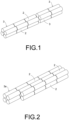
- the first situation occurs when the total number N of cells is a multiple of the number B of cell blocks that are repeated, and therefore the battery is made up of uniform blocks of the same number n of cells as shown in figure 1 .
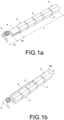
- the second situation occurs when the total number N of cells is not a multiple of the number B of blocks, and in this case the block at the end of the battery is a semi-block of a number n' of cells, i.e., it remains incomplete, as can be seen in Figure 2 .
- a disadvantage of electric bicycles is that depending on the capacity, voltage and/or autonomy required for electric batteries, the total number N of cells and the distribution, and with it the weight, size and form, may vary. Therefore, these types of bicycles present great limitations for designing the batteries, due to the lack of space for the addition of components on the bicycle frame.
- Document US 2014/0196970 A1 discloses another example of an electric system for a bicycle, the system comprising an auxiliary motor integrated into the bicycle frame and an energy storage device for storing energy configured as a battery pack.
- the object of the invention is a battery with an optimized internal cell distribution, and the optimization method thereof for the creation of more compact electric batteries, to facilitate the integration of the electric battery onto the bicycle frame.
- the object of the invention is a battery for electric bicycles with an optimized internal cell distribution and the optimization method for this battery.
- these batteries comprise a total number N of cells distributed in at least one block of a number n of cells and/or a semi-block of a number n' of cells, a battery management system and at least one connector for connecting the electrical system.
- a cell block is defined as a block made up of a group of cells that is repeated along the distribution of the battery, and a semi-block is defined as the block that remains incomplete after the uniform distribution of cells.
- the battery of the invention is characterized in that it comprises at least one additional semi-block created by the separation of at least one cell from the block or semi-block at one end of the battery.
- the separation of the cell from a block or semi-block at the end of the battery from the additional semi-block creates at least two spaces in the battery of the invention. Specifically, it creates a previous space in the block at the end of the battery or increases a previous space in the semi-block at the end of the battery due to the absence of at least one cell and a new space in the additional semi-block created by the absence of at least n-1 cells.
- the battery of the invention is created by separating at least one cell from the last block or semi-block to create an additional semi-block with the cell separated together with the management system and the connectors.
- the interior distribution of cells of the electric battery described above has the advantage of resulting in a battery with a total length, including the management system known as a BMS and the connectors, which is less than the sum of the lengths of the uniform cell distribution, the management system and the connectors separately.
- connection between the different elements inside the battery so that it is better protected.
- connection is protected and in a sealed casing allows the use of better quality connectors, giving greater durability in the electric bicycle battery.
- this optimization in the interior design of the electric battery of the invention makes the battery more compact, providing more possibilities in the design of bicycle frames and meaning that it is possible to reduce them in size.
- the invention relates to a battery (1) for electric bicycles, with an optimized internal distribution.
- the battery can comprise a different distribution according to the shape or size that is required.
- the batteries also comprise a management system (4), commonly known as a BMS, and connectors (5) for electrical connection.
- the invention also relates to a method for optimizing the internal distribution of the battery (1).
- Figures 1 and 2 two different prior art cell (2) distribution situations are shown for a battery of an electric bicycle.
- Figure 1 represents a situation 1, where a battery of the prior art with a total number N of twenty cells (2) is shown, where a distribution of five identical blocks (3) of four cells (2) has been chosen.
- the total number N of cells (2) is a multiple of the number B of identical blocks (3), which form a uniform distribution.
- Figure 2 shows a situation 2, where a battery of the prior art is seen with a total number N of twenty-eight cells (2) distributed in four identical blocks (3) of six cells (2) and a semi -block (3a) of four cells (2), where the number B of blocks (3) and semi-blocks (3a) is five. Therefore, in situation 2, the total number N of cells (2) is not a multiple of the number B of blocks (3).
- the battery (1) of the invention comprises an optimized distribution of cells (2), whose starting point is a distribution where the battery (1) comprises a total number N of cells (2) necessary to power the engine, distributed in a number B of identical blocks (3) comprising a number n of cells (2) and/or in necessary cases at least one semi-block (3a) of a number n' of cells (2).
- the battery (1) of the invention also comprises a management system (4), known as a BMS, and some connectors (5).
- the cell (2) distribution of the battery (1) of the invention is characterized in that it comprises at least one additional semi-block (3b), created by at least one cell (2) separated from the block (3) or from a semi-block (3a) of one end (1a) of the battery (1).
- the battery (1) of the invention begins to comprise at least a number B+1 of blocks (3) and semi-blocks (3a), and at least a number B-2 of identical blocks (3).
- the movement of at least one cell (2) creates an additional semi-block (3b) with at least one cell (2).
- the block (3) at the end (1a) becomes a semi-block (3a) of at least a number n-1 of cells (2), when the total number N of cells (2) is a multiple of the number B of blocks (3), i.e. when the distribution of cells (2) is in the first situation mentioned above.
- the movement of at least one cell (2) creates an additional semi-block (3b) with at least one cell (2) and creates a semi-block (3a) at the end (1a) in a semi-block (3a) of at least a number n'-1 of cells (2), where n' is the number of cells (2) that comprise the semi-block (3a) at the end (1a).
- the total number N of cells (2) of the battery (1) may or may not be a multiple of the number B+1 of blocks (3) and semi-blocks (3a) after the movement of at least one cell (2).
- the battery (1) is also characterized by comprising at least two spaces (6, 7) in the distribution of cells (2) created by the movement of at least one cell (2), where the previous space (6) is created in the block (3) or semi-block (3a) at the end (1a) by the absence of at least one cell (2), while the new space (7) is in the additional semi-block ( 3b) created by the absence of at least a number n-1 of cells (2).
- the battery (1) can include the management system (4) and the connectors (5) in spaces (6, 7), obtaining a more compact battery (1), i.e., with a length (L+l) that is less than the sum of the length (L) of the cells (2) plus the length of the management system (Lg) and the length of the connectors (Lc) separately.
- the battery (1) of the invention increases to a lesser extent than other known batteries when integrating all the components, because the additional length (l) that increases is less than the sum of the component lengths (Lg+Lc).
- the battery (1) makes it possible to improve the known integration solutions represented in Figures 1a, 1b .
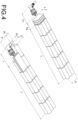
- the battery (1) of the invention increases its dimensions in a minimal proportion, corresponding to the width of the connector (ac) and the height of the connector (hc) when it is integrated into the new space (7). This leave the battery (1) with a total height (h+hc) and a total width (a+ac), which is a minimum increase with respect to the height (h) and the width (a) of the battery (1) with a uniform distribution of cells (2) plus the management system (4) and connectors (5).
- a method of optimizing the distribution of battery cells (2) must be applied.
- the method is applied to a battery for electric bicycles that comprises a total number N of cells (2) distributed in at least one block (3) of a number n of cells (2) and/or at least one semi-block (3a) of a number n' of cells (2).
- the first battery also needs to connect to the cells (2), a management system (4) and at least one connector (5).
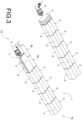
- This method of optimizing the distribution of the battery (1) of the invention is characterized in that it comprises the following steps. Initially, at least one cell (2) is separated from a block (3) or semi-block (3a) at one end (1a) of the battery (1) and at least one cell (2) is placed after the block (3) or semi-block (3a) at the end (1a) creating an additional semi-block (3b), as shown in Figures 3 and 4 .
- the movement of at least one cell (2) creates two spaces (6, 7) in the distribution of cells (2).
- the previous space (6) is created in the block (3) or semi-block (3a) at the end (1a) of the battery (1), where in situation 1, the block (3) is now a semi-block (3a) due to the absence of at least one cell (2) displaced towards an additional semi-block (3b), and in situation 2 the semi-block (3a) increases the previous space (6) due to the absence of at least one cell (2) moved to an additional semi-block (3b).
- the new space (7) is created in the additional semi-block (3b) due to the absence of at least n-1 number of cells (2).
- an additional last step is needed to connect the management system (4) and the connectors (5) in the distribution in an optimal way.
- the management system (4) is placed in the previous space (6), in the semi-block (3a) where previously there was at least one cell (2) that has been displaced and at least part of a connector (5) is connected in the new space (7) created in the additional semi-block (3b) by the absence of at least n-1 cells (2).
- the battery (1) of the invention is achieved, characterized by being more compact, given that the length has decreased to a greater extent than the battery height and width have increased (1).
- the battery (1) meets the following requirements; L + Lg + Lc ⁇ L + I > ac + a ⁇ a ; L + Lg + Lc ⁇ L + I > hc + h ⁇ h
Landscapes
- Chemical & Material Sciences (AREA)
- Chemical Kinetics & Catalysis (AREA)
- Electrochemistry (AREA)
- General Chemical & Material Sciences (AREA)
- Engineering & Computer Science (AREA)
- Combustion & Propulsion (AREA)
- Aviation & Aerospace Engineering (AREA)
- Transportation (AREA)
- Mechanical Engineering (AREA)
- Battery Mounting, Suspending (AREA)
Description
- The invention falls within the field of electric bicycles, specifically the electric batteries that power the motors of electric bicycles, and a method of optimizing the distribution of the batteries.
- Currently, the use of electric bicycles has increased. These types of bicycles are similar to traditional bicycles, but include an electric motor, powered by a rechargeable electric battery, which helps with pedalling at certain times, known as assisted pedalling. In addition, the use of the electric bicycle is simple; when pedalling, the cyclist creates a force in the pedals that in turn generates momentum due to the distance between the pedals and the bottom bracket, and the force in the pedals is produced by a rotational movement, which results in the cyclist's powers. In addition, the motor assists by delivering programmed power that is normally related to the power provided by the cyclist.
- The electric batteries that power the motor of electric bicycles are devices that consist of at least one block of electrochemical cells that can convert stored chemical energy into an electrical current. They also comprise a battery management system, or BMS, and some connectors for connecting to the electrical system. On the one hand, each cell consists of a positive electrode, or cathode, a negative electrode, or anode, and electrolytes that allow ions to move between the electrodes, allowing current to flow out of the battery to carry out the function of powering the electrical system. The most commonly used cells in electric bicycle batteries are the 18650 cell and the 21700 cell. On the other hand, the BMS is an electronic system or protection circuit that controls the rechargeable battery so that it works in balance and prevents the cells from being overcharged, over-discharged or suffering excess consumption.
- To understand the operation and internal cell distribution of an electric bicycle battery better, it is necessary to know the parameters that are involved. Firstly, the voltage at which the motor works must be known, as this is what defines the voltage of the system. Generally, in the electric bicycle sector there are 24, 36 and 48 Volt (V) motors, where voltage represents the pressure with which the motor pushes current through a closed electrical circuit. In addition, another parameter that electric batteries comprise is the capacity or power capacity, which represents the autonomy of the system or the energy storage tank. Depending on the power capacity of the motor, the most suitable intensity to power the motor is defined. The intensity is the current that must be supplied to the motor.
- Having defined the parameters, it is necessary to explain the difference between the 18650 cells and the 21700 cell.. The 18650 cell has cylindrical dimensions of 18mm in diameter by 65mm high, with an electrical load or nominal capacity of 2 to 3.5Ah and a nominal voltage of 3.6V. Therefore, the 18650 cell has a capacity of 12.6 Wh, while the 21700 cell is an evolution of the previous cell and has cylindrical dimensions of 21mm in diameter by 70mm high, with an electrical load or nominal capacity of 3 to 5 Ah, a nominal voltage of 3.6V and therefore a capacity of 18Wh.
- Therefore, to get the motor to work with the desired voltage and intensity, groupings of cells must be made in series and parallel to meet the necessary parameters. Therefore, it must be known that series connections achieve a higher total voltage because the voltages of each cell connected in series are added together. However, parallel connections reach to increase the intensity of the set by dividing the intensity at which each cell works. Both connections can be made together in different combinations and groupings, so that there are infinite possibilities of distribution of the cells.
- In short, in order to achieve the voltage required by the motor, groupings of cells must be made in series, and to achieve the intensity required by the motor or a larger one, the cells must be connected in parallel or at least two groupings of complete cells in series like those mentioned above. As the number of parallel series groupings increases, the intensity at which each cell and each series group works decreases, since the intensity required by the motor is divided among the different series groupings. Therefore, it is necessary to connect in parallel when the intensity can be detrimental to the cell, ensuring that the intensity of each cell is not too high and preventing it from being damaged.
- Taking into consideration all of the above, the most common bicycles on the market include motors that work at 36V or 48V, so on the one hand, to achieve the above voltages with 3.6V cells, the battery requires groupings of 10 and 14 cells in series respectively.. On the other hand, to achieve a greater power capacity in the motor, since this is achieved by the intensity, as many series groupings as desired must be placed in parallel. In other words, if you want a battery with a capacity of 360Wh, a very common capacity in electric bicycles, 20 cells are needed to make up the battery, because the capacity of a battery is equal to the multiplication of the volts of a cell by the amp hours of a cell by the number of cells.
- Knowing the total number N of cells needed in the battery, they have to be distributed, generally in uniform blocks. The distribution of the cells with the location of the BMS and connectors will define the final battery design. A block is defined as a group of cells that is repeated throughout the battery until completing the total number N of cells needed to complete the electric battery. To choose the distribution or the number B of battery blocks or how many cells to place in each block, you must take into account the parameters of length, height, width and shape that you want to give to the battery so that it can be attached to the bicycle frame. Therefore, there can be infinite possibilities of distribution of the cells and battery designs. However, there will only be two possible situations regarding the distribution condition.
- The first situation occurs when the total number N of cells is a multiple of the number B of cell blocks that are repeated, and therefore the battery is made up of uniform blocks of the same number n of cells as shown in
figure 1 . The second situation occurs when the total number N of cells is not a multiple of the number B of blocks, and in this case the block at the end of the battery is a semi-block of a number n' of cells, i.e., it remains incomplete, as can be seen inFigure 2 . - After choosing the distribution of the cells and continuing with the previous example of a 20-cell 360Wh battery, the management system and connector must be added to complete the battery. To do this, the procedure is normally as seen in
Figures 1a and 1b where both solutions increase the battery. - On the one hand, in the first situation, it is observed that a distribution of 5 blocks of cells comprising 4 cells each has been chosen, where 20 is the total number N of cells and is a multiple of 5, which are the times that the blocks repeat identically. Therefore, a uniform distribution of a given length, height, and width is achieved. However, adding the BMS and connectors increases the length, as in case a in
Figure 1a or the width, as in case b inFigure 1b . - on the other hand, in the second situation, the same thing occurs, as shown in
Figure 2 , and it can be seen that in this case, a distribution of four blocks has been chosen with six cells that are repeated identically, leaving four free cells forming a semi-block. In this case, the total number N of cells is not a multiple of the number B of blocks and semi-blocks. Therefore, a non-uniform distribution is obtained, of determined length, height and width. However, despite including a semi-block, by adding the BMS and the connectors, the battery increases in length or width as in the previous case. - For the above reasons, a disadvantage of electric bicycles is that depending on the capacity, voltage and/or autonomy required for electric batteries, the total number N of cells and the distribution, and with it the weight, size and form, may vary. Therefore, these types of bicycles present great limitations for designing the batteries, due to the lack of space for the addition of components on the bicycle frame.
- Document
US 2020/0354017 A1 discloses an electric motor device for pedal assist bicycles, comprising an electric motor and a battery insertable into the frame of the bicycle and configured to actuate the electric motor. - Document
US 2014/0196970 A1 discloses another example of an electric system for a bicycle, the system comprising an auxiliary motor integrated into the bicycle frame and an energy storage device for storing energy configured as a battery pack. - As a result, the object of the invention is a battery with an optimized internal cell distribution, and the optimization method thereof for the creation of more compact electric batteries, to facilitate the integration of the electric battery onto the bicycle frame.
- The object of the invention is a battery for electric bicycles with an optimized internal cell distribution and the optimization method for this battery.
- In general, these batteries comprise a total number N of cells distributed in at least one block of a number n of cells and/or a semi-block of a number n' of cells, a battery management system and at least one connector for connecting the electrical system. A cell block is defined as a block made up of a group of cells that is repeated along the distribution of the battery, and a semi-block is defined as the block that remains incomplete after the uniform distribution of cells.
- The battery of the invention is characterized in that it comprises at least one additional semi-block created by the separation of at least one cell from the block or semi-block at one end of the battery. The separation of the cell from a block or semi-block at the end of the battery from the additional semi-block creates at least two spaces in the battery of the invention. Specifically, it creates a previous space in the block at the end of the battery or increases a previous space in the semi-block at the end of the battery due to the absence of at least one cell and a new space in the additional semi-block created by the absence of at least n-1 cells. In other words, the battery of the invention is created by separating at least one cell from the last block or semi-block to create an additional semi-block with the cell separated together with the management system and the connectors.
- The interior distribution of cells of the electric battery described above has the advantage of resulting in a battery with a total length, including the management system known as a BMS and the connectors, which is less than the sum of the lengths of the uniform cell distribution, the management system and the connectors separately.
- Thanks to the distribution of cells of the invention and the creation of spaces in the cell blocks, it is possible to integrate the connection between the different elements inside the battery so that it is better protected. In addition, the fact that the connection is protected and in a sealed casing allows the use of better quality connectors, giving greater durability in the electric bicycle battery.
- In summary, this optimization in the interior design of the electric battery of the invention makes the battery more compact, providing more possibilities in the design of bicycle frames and meaning that it is possible to reduce them in size.
- The details of the invention can be seen in the accompanying figures, which do not intend to limit the scope of the invention:
-
Figure 1 shows a perspective of an electric battery of the prior art in asituation 1. -
Figure 1a shows a perspective of an electric battery of the prior art in a case a ofsituation 1. -
Figure 1b shows a perspective of an electric battery of the prior art in a case b ofsituation 1. -
Figure 2 shows a perspective of an electric battery of the prior art in asituation 2. -
Figure 3 shows in perspective a battery to which the optimization solution and the battery of the invention have been applied. -
Figure 4 shows the same perspective of the battery of the invention asfigure 3 . - The invention relates to a battery (1) for electric bicycles, with an optimized internal distribution. As explained above, depending on the total number N of cells (2) that are needed, the battery can comprise a different distribution according to the shape or size that is required. In addition, the batteries also comprise a management system (4), commonly known as a BMS, and connectors (5) for electrical connection. Furthermore, the invention also relates to a method for optimizing the internal distribution of the battery (1).
- In
Figures 1 and 2 , two different prior art cell (2) distribution situations are shown for a battery of an electric bicycle. On the one hand,Figure 1 represents asituation 1, where a battery of the prior art with a total number N of twenty cells (2) is shown, where a distribution of five identical blocks (3) of four cells (2) has been chosen. As a result, the total number N of cells (2) is a multiple of the number B of identical blocks (3), which form a uniform distribution. On the other hand,Figure 2 shows asituation 2, where a battery of the prior art is seen with a total number N of twenty-eight cells (2) distributed in four identical blocks (3) of six cells (2) and a semi -block (3a) of four cells (2), where the number B of blocks (3) and semi-blocks (3a) is five. Therefore, insituation 2, the total number N of cells (2) is not a multiple of the number B of blocks (3). - The battery (1) of the invention comprises an optimized distribution of cells (2), whose starting point is a distribution where the battery (1) comprises a total number N of cells (2) necessary to power the engine, distributed in a number B of identical blocks (3) comprising a number n of cells (2) and/or in necessary cases at least one semi-block (3a) of a number n' of cells (2). As can be seen in
Figures 3 and4 , the battery (1) of the invention also comprises a management system (4), known as a BMS, and some connectors (5). - The cell (2) distribution of the battery (1) of the invention is characterized in that it comprises at least one additional semi-block (3b), created by at least one cell (2) separated from the block (3) or from a semi-block (3a) of one end (1a) of the battery (1). As a result, the battery (1) of the invention begins to comprise at least a number B+1 of blocks (3) and semi-blocks (3a), and at least a number B-2 of identical blocks (3). In other words, the movement of at least one cell (2) creates an additional semi-block (3b) with at least one cell (2). This means that the block (3) at the end (1a) becomes a semi-block (3a) of at least a number n-1 of cells (2), when the total number N of cells (2) is a multiple of the number B of blocks (3), i.e. when the distribution of cells (2) is in the first situation mentioned above. In the case of the second situation however, the movement of at least one cell (2) creates an additional semi-block (3b) with at least one cell (2) and creates a semi-block (3a) at the end (1a) in a semi-block (3a) of at least a number n'-1 of cells (2), where n' is the number of cells (2) that comprise the semi-block (3a) at the end (1a). For all the above, the total number N of cells (2) of the battery (1) may or may not be a multiple of the number B+1 of blocks (3) and semi-blocks (3a) after the movement of at least one cell (2).
- In addition, the battery (1) is also characterized by comprising at least two spaces (6, 7) in the distribution of cells (2) created by the movement of at least one cell (2), where the previous space (6) is created in the block (3) or semi-block (3a) at the end (1a) by the absence of at least one cell (2), while the new space (7) is in the additional semi-block ( 3b) created by the absence of at least a number n-1 of cells (2). In this way, as shown in
Figures 3 and4 , the battery (1) can include the management system (4) and the connectors (5) in spaces (6, 7), obtaining a more compact battery (1), i.e., with a length (L+l) that is less than the sum of the length (L) of the cells (2) plus the length of the management system (Lg) and the length of the connectors (Lc) separately.
- In other words, thanks to the distribution of cells (2) mentioned, the battery (1) of the invention increases to a lesser extent than other known batteries when integrating all the components, because the additional length (l) that increases is less than the sum of the component lengths (Lg+Lc).
- Due to all of the above, the battery (1) makes it possible to improve the known integration solutions represented in
Figures 1a, 1b . Specifically, as seen inFigure 4 , the battery (1) of the invention increases its dimensions in a minimal proportion, corresponding to the width of the connector (ac) and the height of the connector (hc) when it is integrated into the new space (7). This leave the battery (1) with a total height (h+hc) and a total width (a+ac), which is a minimum increase with respect to the height (h) and the width (a) of the battery (1) with a uniform distribution of cells (2) plus the management system (4) and connectors (5). - To achieve the battery (1) of the invention, a method of optimizing the distribution of battery cells (2) must be applied. The method is applied to a battery for electric bicycles that comprises a total number N of cells (2) distributed in at least one block (3) of a number n of cells (2) and/or at least one semi-block (3a) of a number n' of cells (2). The first battery also needs to connect to the cells (2), a management system (4) and at least one connector (5).
- This method of optimizing the distribution of the battery (1) of the invention is characterized in that it comprises the following steps. Initially, at least one cell (2) is separated from a block (3) or semi-block (3a) at one end (1a) of the battery (1) and at least one cell (2) is placed after the block (3) or semi-block (3a) at the end (1a) creating an additional semi-block (3b), as shown in
Figures 3 and4 . - Next, it is observed that the movement of at least one cell (2) creates two spaces (6, 7) in the distribution of cells (2). On the one hand, the previous space (6) is created in the block (3) or semi-block (3a) at the end (1a) of the battery (1), where in
situation 1, the block (3) is now a semi-block (3a) due to the absence of at least one cell (2) displaced towards an additional semi-block (3b), and insituation 2 the semi-block (3a) increases the previous space (6) due to the absence of at least one cell (2) moved to an additional semi-block (3b). As a result, the new space (7) is created in the additional semi-block (3b) due to the absence of at least n-1 number of cells (2). - Finally, to complete the battery (1) of the invention, an additional last step is needed to connect the management system (4) and the connectors (5) in the distribution in an optimal way. To do this, the management system (4) is placed in the previous space (6), in the semi-block (3a) where previously there was at least one cell (2) that has been displaced and at least part of a connector (5) is connected in the new space (7) created in the additional semi-block (3b) by the absence of at least n-1 cells (2).
- Thanks to this optimization method of the cell (2) distribution of a battery, the battery (1) of the invention is achieved, characterized by being more compact, given that the length has decreased to a greater extent than the battery height and width have increased (1). In other words, the battery (1) meets the following requirements;

Claims (6)
- Battery (1) for electric bicycles comprising a total number N of cells (2) distributed in a plurality of blocks (3) of a number n of cells (2), a management system (4) for batteries (1) and at least one connector (5), where the blocks (3) are arranged lengthwise one after the other between a first end (1a) of the battery (1) and a second end (1b) of the battery (1), where the battery (1) is characterized by further comprising:- one semi-block (3a) having a number of cells (2) at least one cell (2) fewer than n and one additional semi-block (3b) comprising at least one cell (2), the semi-block (3a) and the additional semi-block (3b) being arranged lengthwise one after the other at the first end (1a) of the battery (1), such that- the battery (1) comprises at least first and second spaces (6, 7), where- the first space (6) is found in the semi-block (3a), and- the second space (7) is in the additional semi-block (3b), and where- the management system (4) and the connector (5) are provided in said spaces (6, 7).
- Battery (1) for electric bicycles according to claim 1, where the management system (4) is integrated into the first space (6) and in part of the second space (7) and where at least one part of the connectors (5) is integrated into the second space (7).
- Battery (1) for electric bicycles according to claim 1, where the additional semi-block (3b) together with the connectors (5) coupled in the first space (7) comprise a length (l) less than the sum of the length of the management system (Lg) and the length of the connectors (Lc) separately.
- Optimization method of a battery (1) for electric bicycles that starts in a battery which comprises a total number N of cells (2) distributed in a plurality of blocks (3) of a number n of cells (2) and optionally a semi-block (3a) of a number n' of cells (2), a battery management system (4) and at least one connector (5), where the blocks (3) and the semi-block (3a) are arranged lengthwise ones after the others between a first end (1a) of the battery (1) and a second end (1b) of the battery (1), where the optimization method of the invention is characterized by comprising the steps of:- separating at least one cell (2) from a block (3) or semi-block (3a) at said first end (1a) of the battery (1),- placing the cell (2) lengthwise after said block (3) or semi-block (3a) at said first end (3a) of the battery (1) so that it creates an additional semi-block (3b),- such that at least first and second spaces (6, 7) are created, where the first space (6) is the space created in the semi-block (3a) at said first end (1a) due to the absence of at least one cell (2) and where the second space (7) is created in the additional semi-block (3b) by the absence of at most n-1 number of cells (2),- providing the management system (4) in the first space (6) and part of the second space (7), and- providing at least one part of the connector (5) in the second space (7).
- Optimisation method according to claim 4, where the number N of cells (2) is a multiple of the number B of blocks (3), where the block (3) at the end (1a) of the battery (1) becomes a semi-block (3a) due to said separating at least one cell (2).
- Optimisation method according to claim 4, where the number N of cells (2) is not a multiple of the number B of blocks (3) and semi-blocks (3a), where the semi-block (3a) initially at the end (1a) of the battery (1) is left with at most n'-1 cells (2).
Priority Applications (3)
| Application Number | Priority Date | Filing Date | Title |
|---|---|---|---|
| EP21382553.2A EP4109648B1 (en) | 2021-06-23 | 2021-06-23 | Compact battery for electric bicycles |
| ES21382553T ES3035612T3 (en) | 2021-06-23 | 2021-06-23 | Compact battery for electric bicycles |
| US17/808,509 US20220411016A1 (en) | 2021-06-23 | 2022-06-23 | Compact battery for electric bicycles |
Applications Claiming Priority (1)
| Application Number | Priority Date | Filing Date | Title |
|---|---|---|---|
| EP21382553.2A EP4109648B1 (en) | 2021-06-23 | 2021-06-23 | Compact battery for electric bicycles |
Publications (2)
| Publication Number | Publication Date |
|---|---|
| EP4109648A1 EP4109648A1 (en) | 2022-12-28 |
| EP4109648B1 true EP4109648B1 (en) | 2025-05-21 |
Family
ID=76999793
Family Applications (1)
| Application Number | Title | Priority Date | Filing Date |
|---|---|---|---|
| EP21382553.2A Active EP4109648B1 (en) | 2021-06-23 | 2021-06-23 | Compact battery for electric bicycles |
Country Status (3)
| Country | Link |
|---|---|
| US (1) | US20220411016A1 (en) |
| EP (1) | EP4109648B1 (en) |
| ES (1) | ES3035612T3 (en) |
Family Cites Families (13)
| Publication number | Priority date | Publication date | Assignee | Title |
|---|---|---|---|---|
| US5496657A (en) * | 1994-03-16 | 1996-03-05 | Dixon, Jr.; Alfred R. | Modular battery system comprising individual interconnected modules |
| JP5497318B2 (en) * | 2009-03-27 | 2014-05-21 | 株式会社日本総合研究所 | Battery package, battery module, and battery pack |
| CN104078630B (en) * | 2009-12-24 | 2017-02-08 | 三洋电机株式会社 | Battery pack |
| JP2011249250A (en) * | 2010-05-29 | 2011-12-08 | Sanyo Electric Co Ltd | Battery pack |
| DE202010010522U1 (en) * | 2010-07-22 | 2010-10-14 | Winora Staiger Gmbh | Bicycle with power supply device |
| US8343643B2 (en) * | 2010-08-20 | 2013-01-01 | Techtronic Power Tools Technology Limited | Battery pack including a support frame |
| DE102011079094A1 (en) * | 2011-01-13 | 2012-07-19 | Johannes Biechele | Frame e.g. hardtail mountain bike frame, for use in electric bicycle for athletes, has bottom bracket housing formed to accommodate bottom bracket motors or mechanical bottom brackets connected with adapter ring |
| EP2672544B1 (en) * | 2012-06-04 | 2020-05-20 | EaglePicher Technologies, LLC | Contoured battery case based on cell shapes |
| GB2522447A (en) * | 2014-01-24 | 2015-07-29 | Black & Decker Inc | Battery pack |
| ES1191458Y (en) * | 2017-08-24 | 2018-01-04 | Ebikemotion Tech S L | ELECTRICAL MOTORIZATION DEVICE IN PEDALEOASISTIDO BICYCLES |
| WO2019167442A1 (en) * | 2018-02-27 | 2019-09-06 | 株式会社村田製作所 | Battery block, battery pack device, power system, and electrically driven vehicle |
| US12476289B2 (en) * | 2020-11-03 | 2025-11-18 | Blue Line Battery, Inc. | Modular battery |
| DE102021103031A1 (en) * | 2021-02-09 | 2022-08-11 | Nicolai Gesellschaft mit beschränkter Haftung | battery |
-
2021
- 2021-06-23 EP EP21382553.2A patent/EP4109648B1/en active Active
- 2021-06-23 ES ES21382553T patent/ES3035612T3/en active Active
-
2022
- 2022-06-23 US US17/808,509 patent/US20220411016A1/en not_active Abandoned
Also Published As
| Publication number | Publication date |
|---|---|
| EP4109648A1 (en) | 2022-12-28 |
| ES3035612T3 (en) | 2025-09-05 |
| US20220411016A1 (en) | 2022-12-29 |
Similar Documents
| Publication | Publication Date | Title |
|---|---|---|
| DE102010024235B4 (en) | Battery cell and battery | |
| KR101841801B1 (en) | Battery pack having bushing for coupling end plate | |
| US6465986B1 (en) | Battery network with compounded interconnections | |
| KR100860002B1 (en) | Alternating Orientation Secondary Battery Pack | |
| EP1928044B1 (en) | Connection cap for a rechargeable battery | |
| JP7062185B2 (en) | Busbar assembly | |
| EP0473745A1 (en) | RECHARGEABLE BATTERY. | |
| US20070029124A1 (en) | Battery powered vehicle overvoltage protection circuitry | |
| KR20100061714A (en) | Assembled battery and battery system | |
| EP2793286A1 (en) | Battery cell for secondary battery and battery pack having the same | |
| KR100786875B1 (en) | Battery module | |
| EP2779296A1 (en) | Secondary battery including multiple electrode assemblies | |
| US20220140407A1 (en) | Modular battery | |
| DE212025000053U1 (en) | Battery cell, battery and power-consuming device | |
| US6265877B1 (en) | Method for determining an end of discharge voltage for a secondary battery | |
| EP4109648B1 (en) | Compact battery for electric bicycles | |
| EP4250406A1 (en) | Electrode assembly and manufacturing method and system, battery cell, battery, and power utilization apparatus | |
| JP2005293977A (en) | Compound battery | |
| EP4654324A1 (en) | Battery-based hybrid energy supply method and apparatus, terminal device, and storage medium | |
| US20070037052A1 (en) | Battery module and method of making the same | |
| CN1286822A (en) | Power supply device, power supply method and electronic equipment | |
| WO2013106748A1 (en) | Lead-acid battery design having versatile form factor | |
| KR102873890B1 (en) | replace batteries in electric forklifts with different types of batteries | |
| EP4362206B1 (en) | Battery module and battery pack and vehicle including the same | |
| JP7806724B2 (en) | Power System |
Legal Events
| Date | Code | Title | Description |
|---|---|---|---|
| PUAI | Public reference made under article 153(3) epc to a published international application that has entered the european phase |
Free format text: ORIGINAL CODE: 0009012 |
|
| STAA | Information on the status of an ep patent application or granted ep patent |
Free format text: STATUS: THE APPLICATION HAS BEEN PUBLISHED |
|
| AK | Designated contracting states |
Kind code of ref document: A1 Designated state(s): AL AT BE BG CH CY CZ DE DK EE ES FI FR GB GR HR HU IE IS IT LI LT LU LV MC MK MT NL NO PL PT RO RS SE SI SK SM TR |
|
| STAA | Information on the status of an ep patent application or granted ep patent |
Free format text: STATUS: REQUEST FOR EXAMINATION WAS MADE |
|
| 17P | Request for examination filed |
Effective date: 20230626 |
|
| RBV | Designated contracting states (corrected) |
Designated state(s): AL AT BE BG CH CY CZ DE DK EE ES FI FR GB GR HR HU IE IS IT LI LT LU LV MC MK MT NL NO PL PT RO RS SE SI SK SM TR |
|
| GRAP | Despatch of communication of intention to grant a patent |
Free format text: ORIGINAL CODE: EPIDOSNIGR1 |
|
| P01 | Opt-out of the competence of the unified patent court (upc) registered |
Free format text: CASE NUMBER: APP_62583/2024 Effective date: 20241125 |
|
| STAA | Information on the status of an ep patent application or granted ep patent |
Free format text: STATUS: GRANT OF PATENT IS INTENDED |
|
| RIC1 | Information provided on ipc code assigned before grant |
Ipc: B62J 43/13 20200101ALN20241209BHEP Ipc: B62M 6/90 20100101ALN20241209BHEP Ipc: H01M 50/213 20210101ALI20241209BHEP Ipc: H01M 50/233 20210101ALI20241209BHEP Ipc: H01M 50/249 20210101ALI20241209BHEP Ipc: H01M 50/258 20210101ALI20241209BHEP Ipc: H01M 50/284 20210101ALI20241209BHEP Ipc: H01M 50/204 20210101AFI20241209BHEP |
|
| INTG | Intention to grant announced |
Effective date: 20250102 |
|
| GRAS | Grant fee paid |
Free format text: ORIGINAL CODE: EPIDOSNIGR3 |
|
| GRAA | (expected) grant |
Free format text: ORIGINAL CODE: 0009210 |
|
| STAA | Information on the status of an ep patent application or granted ep patent |
Free format text: STATUS: THE PATENT HAS BEEN GRANTED |
|
| AK | Designated contracting states |
Kind code of ref document: B1 Designated state(s): AL AT BE BG CH CY CZ DE DK EE ES FI FR GB GR HR HU IE IS IT LI LT LU LV MC MK MT NL NO PL PT RO RS SE SI SK SM TR |
|
| REG | Reference to a national code |
Ref country code: GB Ref legal event code: FG4D |
|
| REG | Reference to a national code |
Ref country code: CH Ref legal event code: EP |
|
| REG | Reference to a national code |
Ref country code: DE Ref legal event code: R096 Ref document number: 602021031072 Country of ref document: DE |
|
| REG | Reference to a national code |
Ref country code: IE Ref legal event code: FG4D |
|
| PGFP | Annual fee paid to national office [announced via postgrant information from national office to epo] |
Ref country code: DE Payment date: 20250627 Year of fee payment: 5 |
|
| PGFP | Annual fee paid to national office [announced via postgrant information from national office to epo] |
Ref country code: GB Payment date: 20250627 Year of fee payment: 5 |
|
| PGFP | Annual fee paid to national office [announced via postgrant information from national office to epo] |
Ref country code: BE Payment date: 20250627 Year of fee payment: 5 |
|
| PGFP | Annual fee paid to national office [announced via postgrant information from national office to epo] |
Ref country code: FR Payment date: 20250625 Year of fee payment: 5 |
|
| PGFP | Annual fee paid to national office [announced via postgrant information from national office to epo] |
Ref country code: AT Payment date: 20250721 Year of fee payment: 5 |
|
| REG | Reference to a national code |
Ref country code: ES Ref legal event code: FG2A Ref document number: 3035612 Country of ref document: ES Kind code of ref document: T3 Effective date: 20250905 |
|
| REG | Reference to a national code |
Ref country code: NL Ref legal event code: MP Effective date: 20250521 |
|
| PG25 | Lapsed in a contracting state [announced via postgrant information from national office to epo] |
Ref country code: PT Free format text: LAPSE BECAUSE OF FAILURE TO SUBMIT A TRANSLATION OF THE DESCRIPTION OR TO PAY THE FEE WITHIN THE PRESCRIBED TIME-LIMIT Effective date: 20250922 Ref country code: FI Free format text: LAPSE BECAUSE OF FAILURE TO SUBMIT A TRANSLATION OF THE DESCRIPTION OR TO PAY THE FEE WITHIN THE PRESCRIBED TIME-LIMIT Effective date: 20250521 |
|
| PGFP | Annual fee paid to national office [announced via postgrant information from national office to epo] |
Ref country code: ES Payment date: 20250701 Year of fee payment: 5 |
|
| REG | Reference to a national code |
Ref country code: LT Ref legal event code: MG9D |
|
| PG25 | Lapsed in a contracting state [announced via postgrant information from national office to epo] |
Ref country code: GR Free format text: LAPSE BECAUSE OF FAILURE TO SUBMIT A TRANSLATION OF THE DESCRIPTION OR TO PAY THE FEE WITHIN THE PRESCRIBED TIME-LIMIT Effective date: 20250822 Ref country code: NO Free format text: LAPSE BECAUSE OF FAILURE TO SUBMIT A TRANSLATION OF THE DESCRIPTION OR TO PAY THE FEE WITHIN THE PRESCRIBED TIME-LIMIT Effective date: 20250821 |
|
| PG25 | Lapsed in a contracting state [announced via postgrant information from national office to epo] |
Ref country code: NL Free format text: LAPSE BECAUSE OF FAILURE TO SUBMIT A TRANSLATION OF THE DESCRIPTION OR TO PAY THE FEE WITHIN THE PRESCRIBED TIME-LIMIT Effective date: 20250521 Ref country code: PL Free format text: LAPSE BECAUSE OF FAILURE TO SUBMIT A TRANSLATION OF THE DESCRIPTION OR TO PAY THE FEE WITHIN THE PRESCRIBED TIME-LIMIT Effective date: 20250521 |
|
| PGFP | Annual fee paid to national office [announced via postgrant information from national office to epo] |
Ref country code: IT Payment date: 20250619 Year of fee payment: 5 |
|
| PG25 | Lapsed in a contracting state [announced via postgrant information from national office to epo] |
Ref country code: BG Free format text: LAPSE BECAUSE OF FAILURE TO SUBMIT A TRANSLATION OF THE DESCRIPTION OR TO PAY THE FEE WITHIN THE PRESCRIBED TIME-LIMIT Effective date: 20250521 |
|
| PG25 | Lapsed in a contracting state [announced via postgrant information from national office to epo] |
Ref country code: HR Free format text: LAPSE BECAUSE OF FAILURE TO SUBMIT A TRANSLATION OF THE DESCRIPTION OR TO PAY THE FEE WITHIN THE PRESCRIBED TIME-LIMIT Effective date: 20250521 |
|
| PG25 | Lapsed in a contracting state [announced via postgrant information from national office to epo] |
Ref country code: RS Free format text: LAPSE BECAUSE OF FAILURE TO SUBMIT A TRANSLATION OF THE DESCRIPTION OR TO PAY THE FEE WITHIN THE PRESCRIBED TIME-LIMIT Effective date: 20250821 |
|
| PG25 | Lapsed in a contracting state [announced via postgrant information from national office to epo] |
Ref country code: IS Free format text: LAPSE BECAUSE OF FAILURE TO SUBMIT A TRANSLATION OF THE DESCRIPTION OR TO PAY THE FEE WITHIN THE PRESCRIBED TIME-LIMIT Effective date: 20250921 |
|
| PG25 | Lapsed in a contracting state [announced via postgrant information from national office to epo] |
Ref country code: LV Free format text: LAPSE BECAUSE OF FAILURE TO SUBMIT A TRANSLATION OF THE DESCRIPTION OR TO PAY THE FEE WITHIN THE PRESCRIBED TIME-LIMIT Effective date: 20250521 |
|
| REG | Reference to a national code |
Ref country code: AT Ref legal event code: MK05 Ref document number: 1797601 Country of ref document: AT Kind code of ref document: T Effective date: 20250521 |
|
| PG25 | Lapsed in a contracting state [announced via postgrant information from national office to epo] |
Ref country code: SM Free format text: LAPSE BECAUSE OF FAILURE TO SUBMIT A TRANSLATION OF THE DESCRIPTION OR TO PAY THE FEE WITHIN THE PRESCRIBED TIME-LIMIT Effective date: 20250521 Ref country code: AT Free format text: LAPSE BECAUSE OF FAILURE TO SUBMIT A TRANSLATION OF THE DESCRIPTION OR TO PAY THE FEE WITHIN THE PRESCRIBED TIME-LIMIT Effective date: 20250521 Ref country code: DK Free format text: LAPSE BECAUSE OF FAILURE TO SUBMIT A TRANSLATION OF THE DESCRIPTION OR TO PAY THE FEE WITHIN THE PRESCRIBED TIME-LIMIT Effective date: 20250521 |
|
| PG25 | Lapsed in a contracting state [announced via postgrant information from national office to epo] |
Ref country code: CZ Free format text: LAPSE BECAUSE OF FAILURE TO SUBMIT A TRANSLATION OF THE DESCRIPTION OR TO PAY THE FEE WITHIN THE PRESCRIBED TIME-LIMIT Effective date: 20250521 |
|
| PG25 | Lapsed in a contracting state [announced via postgrant information from national office to epo] |
Ref country code: EE Free format text: LAPSE BECAUSE OF FAILURE TO SUBMIT A TRANSLATION OF THE DESCRIPTION OR TO PAY THE FEE WITHIN THE PRESCRIBED TIME-LIMIT Effective date: 20250521 |
|
| PG25 | Lapsed in a contracting state [announced via postgrant information from national office to epo] |
Ref country code: SK Free format text: LAPSE BECAUSE OF FAILURE TO SUBMIT A TRANSLATION OF THE DESCRIPTION OR TO PAY THE FEE WITHIN THE PRESCRIBED TIME-LIMIT Effective date: 20250521 |
|
| REG | Reference to a national code |
Ref country code: CH Ref legal event code: H13 Free format text: ST27 STATUS EVENT CODE: U-0-0-H10-H13 (AS PROVIDED BY THE NATIONAL OFFICE) Effective date: 20260127 |
|
| PG25 | Lapsed in a contracting state [announced via postgrant information from national office to epo] |
Ref country code: RO Free format text: LAPSE BECAUSE OF FAILURE TO SUBMIT A TRANSLATION OF THE DESCRIPTION OR TO PAY THE FEE WITHIN THE PRESCRIBED TIME-LIMIT Effective date: 20250521 |
|
| PG25 | Lapsed in a contracting state [announced via postgrant information from national office to epo] |
Ref country code: LU Free format text: LAPSE BECAUSE OF NON-PAYMENT OF DUE FEES Effective date: 20250623 |
|
| PG25 | Lapsed in a contracting state [announced via postgrant information from national office to epo] |
Ref country code: MC Free format text: LAPSE BECAUSE OF FAILURE TO SUBMIT A TRANSLATION OF THE DESCRIPTION OR TO PAY THE FEE WITHIN THE PRESCRIBED TIME-LIMIT Effective date: 20250521 |
|
| REG | Reference to a national code |
Ref country code: DE Ref legal event code: R097 Ref document number: 602021031072 Country of ref document: DE |
|
| PLBE | No opposition filed within time limit |
Free format text: ORIGINAL CODE: 0009261 |
|
| STAA | Information on the status of an ep patent application or granted ep patent |
Free format text: STATUS: NO OPPOSITION FILED WITHIN TIME LIMIT |
|
| REG | Reference to a national code |
Ref country code: CH Ref legal event code: L10 Free format text: ST27 STATUS EVENT CODE: U-0-0-L10-L00 (AS PROVIDED BY THE NATIONAL OFFICE) Effective date: 20260402 |
|
| PG25 | Lapsed in a contracting state [announced via postgrant information from national office to epo] |
Ref country code: IE Free format text: LAPSE BECAUSE OF NON-PAYMENT OF DUE FEES Effective date: 20250623 |
|
| PG25 | Lapsed in a contracting state [announced via postgrant information from national office to epo] |
Ref country code: CH Free format text: LAPSE BECAUSE OF NON-PAYMENT OF DUE FEES Effective date: 20250630 |
|
| 26N | No opposition filed |
Effective date: 20260224 |