EP4108302A1 - Exercise system, exercise device, and exercise method - Google Patents
Exercise system, exercise device, and exercise method Download PDFInfo
- Publication number
- EP4108302A1 EP4108302A1 EP20920167.2A EP20920167A EP4108302A1 EP 4108302 A1 EP4108302 A1 EP 4108302A1 EP 20920167 A EP20920167 A EP 20920167A EP 4108302 A1 EP4108302 A1 EP 4108302A1
- Authority
- EP
- European Patent Office
- Prior art keywords
- user
- exercise
- ions
- ion delivery
- room
- Prior art date
- Legal status (The legal status is an assumption and is not a legal conclusion. Google has not performed a legal analysis and makes no representation as to the accuracy of the status listed.)
- Pending
Links
- 238000000034 method Methods 0.000 title claims description 59
- 150000002500 ions Chemical class 0.000 claims abstract description 282
- 230000000052 comparative effect Effects 0.000 description 64
- 230000008859 change Effects 0.000 description 59
- 230000000694 effects Effects 0.000 description 48
- 230000008569 process Effects 0.000 description 46
- 238000012360 testing method Methods 0.000 description 41
- 238000012549 training Methods 0.000 description 33
- 206010016256 fatigue Diseases 0.000 description 18
- 230000037007 arousal Effects 0.000 description 17
- 230000001976 improved effect Effects 0.000 description 16
- 238000012545 processing Methods 0.000 description 15
- 210000004556 brain Anatomy 0.000 description 14
- 238000010586 diagram Methods 0.000 description 10
- 230000036651 mood Effects 0.000 description 10
- 230000035945 sensitivity Effects 0.000 description 7
- 238000001514 detection method Methods 0.000 description 6
- 230000004044 response Effects 0.000 description 5
- 241000894006 Bacteria Species 0.000 description 3
- 238000002474 experimental method Methods 0.000 description 3
- 239000001301 oxygen Substances 0.000 description 3
- 229910052760 oxygen Inorganic materials 0.000 description 3
- XLYOFNOQVPJJNP-UHFFFAOYSA-N water Substances O XLYOFNOQVPJJNP-UHFFFAOYSA-N 0.000 description 3
- 238000004378 air conditioning Methods 0.000 description 2
- QVGXLLKOCUKJST-UHFFFAOYSA-N atomic oxygen Chemical compound [O] QVGXLLKOCUKJST-UHFFFAOYSA-N 0.000 description 2
- 238000006243 chemical reaction Methods 0.000 description 2
- 238000004891 communication Methods 0.000 description 2
- 239000012141 concentrate Substances 0.000 description 2
- TUJKJAMUKRIRHC-UHFFFAOYSA-N hydroxyl Chemical compound [OH] TUJKJAMUKRIRHC-UHFFFAOYSA-N 0.000 description 2
- YZCKVEUIGOORGS-UHFFFAOYSA-N Hydrogen atom Chemical compound [H] YZCKVEUIGOORGS-UHFFFAOYSA-N 0.000 description 1
- 206010024264 Lethargy Diseases 0.000 description 1
- 230000008901 benefit Effects 0.000 description 1
- 239000000470 constituent Substances 0.000 description 1
- 230000003247 decreasing effect Effects 0.000 description 1
- 230000008451 emotion Effects 0.000 description 1
- 239000000284 extract Substances 0.000 description 1
- 210000001061 forehead Anatomy 0.000 description 1
- 239000000463 material Substances 0.000 description 1
- 239000002184 metal Substances 0.000 description 1
- 238000012986 modification Methods 0.000 description 1
- 230000004048 modification Effects 0.000 description 1
- -1 oxygen ion Chemical class 0.000 description 1
- 238000002360 preparation method Methods 0.000 description 1
Images





Classifications
-
- F—MECHANICAL ENGINEERING; LIGHTING; HEATING; WEAPONS; BLASTING
- F24—HEATING; RANGES; VENTILATING
- F24F—AIR-CONDITIONING; AIR-HUMIDIFICATION; VENTILATION; USE OF AIR CURRENTS FOR SCREENING
- F24F1/00—Room units for air-conditioning, e.g. separate or self-contained units or units receiving primary air from a central station
- F24F1/0007—Indoor units, e.g. fan coil units
- F24F1/0071—Indoor units, e.g. fan coil units with means for purifying supplied air
- F24F1/0076—Indoor units, e.g. fan coil units with means for purifying supplied air by electric means, e.g. ionisers or electrostatic separators
-
- A—HUMAN NECESSITIES
- A61—MEDICAL OR VETERINARY SCIENCE; HYGIENE
- A61L—METHODS OR APPARATUS FOR STERILISING MATERIALS OR OBJECTS IN GENERAL; DISINFECTION, STERILISATION OR DEODORISATION OF AIR; CHEMICAL ASPECTS OF BANDAGES, DRESSINGS, ABSORBENT PADS OR SURGICAL ARTICLES; MATERIALS FOR BANDAGES, DRESSINGS, ABSORBENT PADS OR SURGICAL ARTICLES
- A61L9/00—Disinfection, sterilisation or deodorisation of air
- A61L9/16—Disinfection, sterilisation or deodorisation of air using physical phenomena
- A61L9/22—Ionisation
-
- F—MECHANICAL ENGINEERING; LIGHTING; HEATING; WEAPONS; BLASTING
- F24—HEATING; RANGES; VENTILATING
- F24F—AIR-CONDITIONING; AIR-HUMIDIFICATION; VENTILATION; USE OF AIR CURRENTS FOR SCREENING
- F24F8/00—Treatment, e.g. purification, of air supplied to human living or working spaces otherwise than by heating, cooling, humidifying or drying
- F24F8/30—Treatment, e.g. purification, of air supplied to human living or working spaces otherwise than by heating, cooling, humidifying or drying by ionisation
-
- A—HUMAN NECESSITIES
- A63—SPORTS; GAMES; AMUSEMENTS
- A63B—APPARATUS FOR PHYSICAL TRAINING, GYMNASTICS, SWIMMING, CLIMBING, OR FENCING; BALL GAMES; TRAINING EQUIPMENT
- A63B22/00—Exercising apparatus specially adapted for conditioning the cardio-vascular system, for training agility or co-ordination of movements
- A63B22/02—Exercising apparatus specially adapted for conditioning the cardio-vascular system, for training agility or co-ordination of movements with movable endless bands, e.g. treadmills
- A63B22/0235—Exercising apparatus specially adapted for conditioning the cardio-vascular system, for training agility or co-ordination of movements with movable endless bands, e.g. treadmills driven by a motor
- A63B22/0242—Exercising apparatus specially adapted for conditioning the cardio-vascular system, for training agility or co-ordination of movements with movable endless bands, e.g. treadmills driven by a motor with speed variation
- A63B22/025—Exercising apparatus specially adapted for conditioning the cardio-vascular system, for training agility or co-ordination of movements with movable endless bands, e.g. treadmills driven by a motor with speed variation electrically, e.g. D.C. motors with variable speed control
-
- A—HUMAN NECESSITIES
- A63—SPORTS; GAMES; AMUSEMENTS
- A63B—APPARATUS FOR PHYSICAL TRAINING, GYMNASTICS, SWIMMING, CLIMBING, OR FENCING; BALL GAMES; TRAINING EQUIPMENT
- A63B22/00—Exercising apparatus specially adapted for conditioning the cardio-vascular system, for training agility or co-ordination of movements
- A63B22/06—Exercising apparatus specially adapted for conditioning the cardio-vascular system, for training agility or co-ordination of movements with support elements performing a rotating cycling movement, i.e. a closed path movement
- A63B22/0605—Exercising apparatus specially adapted for conditioning the cardio-vascular system, for training agility or co-ordination of movements with support elements performing a rotating cycling movement, i.e. a closed path movement performing a circular movement, e.g. ergometers
-
- A—HUMAN NECESSITIES
- A63—SPORTS; GAMES; AMUSEMENTS
- A63B—APPARATUS FOR PHYSICAL TRAINING, GYMNASTICS, SWIMMING, CLIMBING, OR FENCING; BALL GAMES; TRAINING EQUIPMENT
- A63B2213/00—Exercising combined with therapy
- A63B2213/005—Exercising combined with therapy with respiratory gas delivering means, e.g. O2
-
- F—MECHANICAL ENGINEERING; LIGHTING; HEATING; WEAPONS; BLASTING
- F24—HEATING; RANGES; VENTILATING
- F24F—AIR-CONDITIONING; AIR-HUMIDIFICATION; VENTILATION; USE OF AIR CURRENTS FOR SCREENING
- F24F2221/00—Details or features not otherwise provided for
- F24F2221/08—Installation or apparatus for use in sport halls, e.g. swimming pools, ice rings
-
- F—MECHANICAL ENGINEERING; LIGHTING; HEATING; WEAPONS; BLASTING
- F24—HEATING; RANGES; VENTILATING
- F24F—AIR-CONDITIONING; AIR-HUMIDIFICATION; VENTILATION; USE OF AIR CURRENTS FOR SCREENING
- F24F2221/00—Details or features not otherwise provided for
- F24F2221/38—Personalised air distribution
Definitions
- the present invention relates to an exercise system, an exercise apparatus, and an exercise method.
- the exercise apparatus described in PTL 1 includes a weight, a handle, and a wire.
- the weight has a predetermined weight.
- the handle is connected to the weight via the wire.
- the wire connects the weight and the handle.
- the weight is pulled up in response to a force exerted by a user via the handle.
- the pulled up weight reaches a predetermined position.
- the weight is then moved from the predetermined position toward the initial position.
- the present invention is directed at providing an exercise system, an exercise apparatus, and an exercise method capable of improving the effects of exercise.
- an exercise system includes a load applying apparatus and an ion delivery apparatus.
- the load applying apparatus is disposed in a room and configured to apply a load to a body of a user.
- the ion delivery apparatus is disposed in the room and configured to deliver ions.
- an exercise apparatus includes a load applying unit and an ion delivery unit.
- the load applying unit is disposed in a room and configured to apply a load to a body of a user.
- the ion delivery unit is disposed in the room and configured to deliver ions.
- an exercise method includes applying and delivering.
- a load is applied to a body of a user by a load applying unit disposed in a room.
- ions are delivered by an ion delivery unit disposed in the room.
- an exercise system an exercise apparatus, and an exercise method of the present invention, the effects of exercise can be improved.
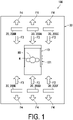
- FIG. 1 is a diagram illustrating the exercise system 1 according to an embodiment of the present invention.
- FIG. 2 is another diagram illustrating the exercise system 1 according to an embodiment of the present invention.
- the exercise system 1 makes a user H exercise.
- Exercise includes aerobic exercise and anaerobic exercise.
- the aerobic exercise refers to performing exercise with light or medium loads while consuming oxygen.
- the anaerobic exercise refers to performing exercise with high loads without consuming oxygen.
- the exercise system 1 includes a load applying apparatus 10 and an ion delivery apparatus 20.
- the exercise system 1 of the present embodiment is disposed in a room 30.
- the load applying apparatus 10 applies a load to the body of the user H. Specifically, the load applying apparatus 10 applies, to the body of the user H, a load that resists the movement of the body of the user H.
- the load refers to a force that opposes the movement of the user H. For example, when the user H runs, a force in the direction opposite to the direction in which the user H kicks the ground is applied to the user H. For example, when the user H moves his/her arm down, the load applying apparatus 10 applies, to the user H, a force in the direction opposite to the direction to lower the arm.
- the load applying apparatus 10 corresponds to an example of a "load applying unit.”
- the load applying apparatus 10 is, for example, an exercise machine.
- exercise machines include a tread mill, an exercise bike, a stepper machine, a weight machine, and an ergometer.
- the ergometer may be a rowing ergometer.
- the rowing ergometer is an exercise apparatus for performing body movements on or under water on land.
- the user H is located on the load applying apparatus 10. Specifically, the user H is located in an exercise space 101 of the load applying apparatus 10. The user H exercises in the exercise space 101.
- the load applying apparatus 10 illustrated in FIGS. 1 and 2 is a tread mill. For example, the user H runs in the exercise space 101 of the tread mill. The user H runs in the exercise space 101, thus rotating the endless belt of the tread mill.
- the load applying apparatus 10 generates a force that opposes the opposite direction to the rotation direction of the endless belt. That is, a load that opposes the movement of the body of the user H can be applied to the body of the user H.
- the ion delivery apparatus 20 is disposed in the room and delivers ions.
- the ion delivery apparatus 20 emits ions to the room 30.
- the ions are emitted from the ion delivery apparatus 20 to the room 30, filling the room 30 with the ions. That is, the concentration of ions in the room 30 is increased.
- the psychological state with regard to exercise is changed before exercising. Accordingly, the user H takes on a psychological state in which the user H can exercise in a positive mood before exercising. As a result, the effects of the exercise performed by the user H can be improved.
- the ion delivery apparatus 20 corresponds to an example of an "ion delivery unit."
- the ion delivery apparatus 20 is, for example, an air purifier with an ion generation function.
- the ion delivery apparatus 20 may be, for example, an air conditioner with an ion generation function or other air conditioning apparatuses with an ion generation function.
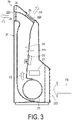
- FIG. 3 is a diagram illustrating the ion delivery apparatus 20 according to the exercise system 1 of the present embodiment.
- the ion delivery apparatus 20 includes a housing 21, a duct 22, an ion generation unit 23, an air sending unit 24, a detection unit 25, and louvers 26, and an adjustment unit 27.
- the housing 21 houses the duct 22, the ion generation unit 23, the air sending unit 24, the detection unit 25, the louvers 26, and the adjustment unit 27.
- the housing 21 is the outer shell of the ion delivery apparatus 20.
- the duct 22 guides air.
- the duct 22 includes a body portion 221, an inlet port 222, a first discharge port 223, and a second discharge port 224.
- the inlet port 222 allows air to flow into the body portion 221. Accordingly, the air flows into the body portion 221 via the inlet port 222 from a first direction F1 side.
- the first direction F1 represents a direction from the outer side to the inner side of the body portion 221.
- the first discharge port 223 discharges the air flowing into the body portion 221 to the atmosphere. Specifically, the first discharge port 223 discharges air in a third direction F3.
- the third direction F3 is a direction different from the direction in which the inlet port 222 is disposed.
- the third direction F3 is, for example, a direction from the second discharge port 224 toward the first discharge port 223.
- the second discharge port 224 discharges the air flowing into the body portion 221 to the atmosphere. Specifically, the second discharge port 224 discharges air in a fourth direction F4.
- the fourth direction F4 discharges air in a direction different from the third direction F3.
- the fourth direction F4 is a direction different from the direction in which the inlet port 222 is disposed.
- the fourth direction F4 is, for example, a direction from the first discharge port 223 toward the second discharge port 224.
- the ion generation unit 23 generates ions.
- the ion generation unit 23 includes a pair of discharge electrodes.
- Each of the pair of discharge electrodes is a needle-like or brush-like electrode.
- the pair of discharge electrodes is each formed of, for example, a metal having electrical conductivity.
- the pair of discharge electrodes discharge. Specifically, the pair of discharge electrodes to which a high voltage is applied discharge and generate active species.
- the active species contain ions.
- the pair of discharge electrodes to which a high voltage is applied generate a corona discharge between the pair of discharge electrodes.
- one of the pair of discharge electrodes emits positive ions via discharge.
- the positive ions are cluster ions (H + (H 2 O) m , where m is any integer of zero or greater) with a plurality of water molecules clustered around a hydrogen ion (H + ).
- the other of the pair of discharge electrodes emits negative ions via discharge.
- the negative ions are cluster ions (O 2 - (H 2 O) n , where n is any integer of zero or greater) with a plurality of water molecules clustered around an oxygen ion (O 2 - ).
- the emitted positive ions and negative ions each take in, for example, molds and general bacteria in the air and undergo a chemical reaction on the surfaces of the molds and the general bacteria.
- the active species hydroxyl radical (•OH) is produced by the chemical reaction. Then, the molds and general bacteria are removed by the hydroxyl radical (•OH).
- the ion generation unit 23 is disposed on the duct 22. Specifically, the ion generation unit 23 is disposed at a position between the inlet port 222 and the first discharge port 223. The ion generation unit 23 may also be disposed at a position between the inlet port 222 and the second discharge port 224.
- the air sending unit 24 generates wind.
- the air sending unit 24 is, for example, a fan.
- the fan is, for example, a sirocco fan.
- the air sending unit 24 generates wind in the direction from the inlet port 222 toward the first discharge port 223.
- the air sending unit 24 generates wind in the direction from the inlet port 222 toward the second discharge port 224.
- the air sending unit 24 is disposed in the inlet port 222.
- the wind generated by the air sending unit 24 contains ions generated by the ion generation unit 23. That is, the wind containing the ions is discharged from the first discharge port 223 and the second discharge port 224. Then, the ions are emitted to the room 30. The ions are emitted from the ion delivery apparatus 20 to the room 30, filling the room 30 with the ions.
- the detection unit 25 detects the user H. Specifically, the detection unit 25 detects a portion where the skin of the user H is exposed. The portion where the skin is exposed may be, for example, the face of the user H.
- the louvers 26 are rotatably attached to the housing 21. Specifically, in FIG. 3 , the louvers 26 are attached to the housing 21 in a manner allowing for rotation about a rotation axis (not illustrated). The rotation axis of the louvers 26 is, for example, substantially parallel to the horizontal direction. Also, the louvers 26 are detachably attached to the housing 21. Also, the louvers 26 are attached to the housing 21 so as to face the first discharge port 223. Also, the louvers 26 are attached to the housing 21 so as to face the second discharge port 224.
- the louvers 26 guide the wind passing through the interior of the duct 22 in a direction corresponding to the rotation angle of the louvers 26. That is, the direction of the wind to be discharged from the first discharge port 223 is a direction corresponding to the rotation angle of the louvers 26.
- the wind passing through the interior of the duct 22 is guided in a direction corresponding to the rotation angle of the louvers 26. That is, the direction of the wind to be discharged from the second discharge port 224 is a direction corresponding to the rotation angle of the louvers 26.
- the adjustment unit 27 adjusts the rotation angle of the louvers 26. Specifically, the adjustment unit 27 adjusts the rotation angle of the louvers 26 attached to the first discharge port 223. Also, the adjustment unit 27 adjusts the rotation angle of the louvers 26 attached to the second discharge port 224. Thus, the angle of the louvers 26 can be adjusted to discharge wind containing ions. As a result, the wind containing the ions can be discharged in the desired direction of the user H.
- the ion delivery apparatus 20 delivers ions toward the load applying apparatus 10. That is, the ion delivery apparatus 20 can deliver ions to the user H using the load applying apparatus 10.
- the ions delivered in the direction of the user H reach the user H.
- the ions that reach the user H change the psychological state (at least one of activity level, arousal level, comfort level, fatigue and concentration) of the user H with regard to exercise.
- the effects of the exercise performed by the user H can be objectively or subjectively improved. For example, the psychological state of the user H with regard to exercise is changed, and the user H can exercise in a positive mood.
- the ions affect the psychological state of the user H with regard to exercise, and the user H can exercise in a psychological state suited to exercise. As a result, the effects of the exercise performed by the user H can be improved.
- the user H exercises in the room 30 filled with the delivered ions.
- the ion delivery apparatus 20 emits ions in the space of the room 30 while also emitting ions in the direction of the user H.
- ions can be further delivered to the user H exercising in the room 30 filled with ions.
- the ions can directly and indirectly affect the user H, allowing the effects of the exercise performed by the user H to be improved.
- the ion delivery apparatus 20 delivers ions in the direction of the user H exercising using the load applying apparatus 10.
- the ions affect the psychological state of the user H with regard to exercise.
- the user H can exercise in a psychological state suited to exercise.
- the user H can concentrate more on the exercise. As a result, the effects of the exercise can be further improved.
- the ion delivery apparatus 20 delivers ions to a specific portion H1 of the user H.
- the specific portion H1 is a portion where the skin of the user H is exposed.
- ions can be delivered to the portion where the skin of the user H is exposed.
- the ions delivered to the skin can act on the body.
- the user H may breathe in the ions delivered from the ion delivery apparatus 20 or breath in air purified by the ions.
- the ions can directly affect the user H.
- the user H exercises in the room 30 filled with the delivered ions.
- the ions filling the room 30 can indirectly affect the user H.
- the ions can directly and indirectly affect the user H, allowing the effects of the exercise performed by the user H to be further improved.
- the ions may disappear at the location of the clothing. That is, the number of ions that reach the user H is decreased.
- the ion delivery apparatus 20 of the present embodiment can deliver ions to a portion where the skin of the user H is exposed. This can reduce a decrease in the number of ions that reach the specific portion H1 of the user H. As a result, the ions delivered from the ion delivery apparatus 20 can act more directly on the user H.
- the portion where the skin of the user H is exposed is, for example, the "face".
- the user H may breathe in the air containing the ions. This results in the ions more directly affecting the user H which in turn facilitates the user H having a psychological state suited to the exercise.
- the adjustment unit 27 adjusts the rotation angle of the louvers 26 on the basis of a detection result of the detection unit 25. Then, the ion generation unit 23 generates ions.
- the air sending unit 24 further generates wind.
- the wind generated by the air sending unit 24 includes ions generated by the ion generation unit 23. The wind containing the ions are released from the first discharge port 223 or the second discharge port 224. Then, the wind is guided by the louver 26 with the rotation angle adjusted by the adjustment unit 27. That is, the ions emitted from the first discharge port 223 are guided in the third direction F3 by the louvers 26 adjusted by the adjustment unit 27. For example, as illustrated in FIG.
- the ions emitted in the third direction F3 reach the user H located in the exercise space 101.
- the specific portion H1 may be a hand or a foot.
- the wind containing ions may be delivered to the hand.
- the wind containing ions may be delivered to the foot.
- the ion delivery apparatus 20 may deliver the ions to the room 30 before the user H uses the load applying apparatus 10. Specifically, the ion delivery apparatus 20 may deliver the ions to the load applying apparatus 10 before the user H uses the load applying apparatus 10.
- the psychological state of the user H can be put in a psychological state suited to exercise. As a result, the effects of the exercise can be further improved.
- the ion delivery apparatus 20 may deliver the ions to the room 30 after the user H uses the load applying apparatus 10. Specifically, the ion delivery apparatus 20 may deliver ions in the direction of the user H after the user H uses the load applying apparatus 10.
- the user H can be put in a psychological state suited to exercise until the user H exits the room 30.
- the effects of the exercise performed by the user H can be improved even when exercise is started again.
- the exercise system 1 may be provided with a plurality of ion delivery apparatuses 20.
- the plurality of ion delivery apparatuses 20 are disposed at different positions from one another. That is, the ions can be delivered from different positions to the load applying apparatus 10 or the user H. This makes it easy to increase the concentration of ions around the load applying apparatus 10 or the user H. As a result, even when the position of the user H moves during exercise, the ions can affect the user H and can put the user H in a psychological state suited to exercise.
- the plurality of ion delivery apparatuses 20 includes a first ion delivery apparatus 200A, a second ion delivery apparatus 200B, a third ion delivery apparatus 200C, a fourth ion delivery apparatus 200D, a fifth ion delivery apparatus 200E, and a sixth ion delivery apparatus 200F.
- the first ion delivery apparatus 200A to the sixth ion delivery apparatus 200F are air purifiers with an ion generation function.
- Each one of the first ion delivery apparatus 200A to the sixth ion delivery apparatus 200F may be, for example, an air conditioner with an ion generation function or other air conditioning apparatuses with an ion generation function.
- the first ion delivery apparatus 200A to the sixth ion delivery apparatus 200F have the same configuration as the ion delivery apparatus 20 described with reference to FIG. 3 . Accordingly, detailed description of the first ion delivery apparatus 200A to the sixth ion delivery apparatus 200F is omitted.
- the second ion delivery apparatus 200B to the sixth ion delivery apparatus 200F also deliver ions to the load applying apparatus 10 or the user H.
- the second ion delivery apparatus 200B to the sixth ion delivery apparatus 200F deliver ions from a position different from the first ion delivery apparatus 200A toward the load applying apparatus 10 or the user H. That is, the first ion delivery apparatus 200A to the sixth ion delivery apparatus 200F deliver ions toward the load applying apparatus 10 or the user H.
- the concentration of ions around the load applying apparatus 10 or the user H is increased. This facilitates the user H having a psychological state suited to the exercise.
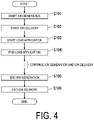
- FIG. 4 is a diagram illustrating the processing executed by the exercise system 1 according to the present embodiment.
- the processing illustrated in FIG. 4 includes step S101 to step S106.
- step S101 the ion generation unit 23 of the ion delivery apparatus 20 starts ion generation. The processing then proceeds to step S102.
- step S102 the air sending unit 24 of the ion delivery apparatus 20 starts wind generation.
- the wind generated by the air sending unit 24 includes ions generated by the ion generation unit 23.
- the processing then proceeds to step S103.
- step S103 the load applying apparatus 10 starts load application to the body of the user H. The processing then proceeds to step S104.
- step S104 the load applying apparatus 10 ends the load application to the body of the user H. The processing then proceeds to step S105.
- step S105 the ion generation unit 23 of the ion delivery apparatus 20 ends the ion generation. The processing then proceeds to step S106.
- step S106 the air sending unit 24 of the ion delivery apparatus 20 ends the wind generation. The processing then ends.
- step S103 may be executed at the same time as step S101 and step S102. Further, in the processing executed by the exercise system 1 according to the present embodiment, step S101 and step S102 may be executed after the end of step S104. In a case where step S101 and step S102 are executed after the end of step S104, step S101 and step S102 correspond to an example of "delivering executed after applying.” Further, in the processing executed by the exercise system 1 according to the present embodiment, step S101 and step S102 may be executed while step S103 is being executed.
- step S103 corresponds to an example of "applying a load to the body of the user H.”
- step S101 and step S102 correspond to an example of "delivering ions.”
- step S101 and step S102 may correspond to an example of "delivering executed before applying.”
- FIGS. 5 to 13 an example using an exercise method according to the present invention will be described together with a comparative example.
- the present invention will be described in detail on the basis of the example, but the present invention is not limited to the following example.
- FIG. 5 is a diagram showing an experimental process using an exercise method according to the present invention.
- the experimental process includes a first process PC1 to an eighth process PC8.
- ten test subject exercise according to the experimental processes listed in FIG. 5 Note that in FIGS. 6 to 13 , the experimental results of the ten test subjects that exercised according to the experimental processes listed in FIG. 5 .
- the first process PC1 refers to a process in which the test subjects wear an electroencephalograph.
- a simple electroencephalograph is used as the electroencephalograph.
- the electrodes of the electroencephalograph are attached to the ear and forehead of the test subject.
- the electroencephalograph acquires ⁇ waves and ⁇ waves every second.
- the electroencephalogram acquired from the simple electroencephalograph is converted to a value indicating the psychological state of the user H by a sensitivity module logger (available from Little Software Co., Ltd.).
- the sensitivity module logger Fourier converts the ⁇ waves and the ⁇ waves, for example.
- the sensitivity module logger extracts the feature points for each frequency and outputs a numerical values obtained by combining the extracted feature points. Further, the sensitivity module logger calculates an indicator indicating the psychological state (emotion) of each test subject on the basis of the numerical value. Note that in the first process PC1, immediately after the test subjects put on the electroencephalograph device, the electroencephalograph measures the brain waves of the test subjects. The test subjects start the second process PC2 two minutes after putting on the electroencephalograph.
- the second process PC2 refers to a process in which the test subjects answer a questionnaire.
- the questionnaire of the second process PC2 is filled out outside of the training room.
- the questionnaire is a two-dimensional mood scale-short term (TDMS-ST) questionnaire.
- the two-dimensional mood scale-short term (TDMS-ST) questionnaire can measure changes in the mood (psychological state) of the user H.
- the third process PC3 refers to a process in which the test subjects move to a first training room or a second training room.
- the ion delivery apparatuses 20 are disposed in the room 30 of the first training room.
- ions are delivered to the user H.
- the exercise space 101 of the room 30 of the first training room is given an ion concentration of 100000 ions per 1 cm 3 .
- the ion delivery apparatuses 20 are disposed in the room of the second training room.
- the ion delivery apparatuses 20 in the second training room are controlled so that no ions are delivered.
- a wind containing no ions is delivered to the user H.
- the temperature of the first training room and the second training room is 24 degrees, and the humidity of the first training room and the second training room is 60% ⁇ 2.0.
- the test subjects in the first training room do not know that the wind being delivered contains ions from the ion delivery apparatus 20.
- the test subjects in the second training room do not know that the wind being delivered contains no ions from the ion delivery apparatus 20.
- the fourth process PC4 refers to a process in which the test subjects exercise.
- the exercise performed by the test subjects in the fourth process PC4 is performed on the load applying apparatus 10, as illustrated in FIG. 2 .
- a swim ergometer available from Concept 2 is used.
- the test subjects performed eight repetitions of 20 seconds of exercise using the swim ergometer (available from Concept 2).
- the test subjects rested for ten seconds between each 20 second repetition of exercise.
- the fifth process PC5 refers to a process in which the test subjects rest.
- the test subjects lay face-up on a mat for ten minutes with their eyes closed.
- the sixth process PC6 refers to a process in which the test subjects exercise.
- a swim ergometer available from Concept 2 is used.
- the exercise of the sixth process PC6 includes only one repetition of 20 seconds of exercise.
- the seventh process PC7 refers to a process in which the test subjects answer a questionnaire.
- a two-dimensional mood scale-short term (TDMS-ST) questionnaire and a rate of perceived exertion (RPE) questionnaire was used.
- RPE rate of perceived exertion
- the person exercising indicates via a numerical value how "hard" the exercise is.
- the test subjects subjectively select numerical values ranging from 1 to 20. Higher numerical values indicate a higher rate of exertion.
- the test subjects answer the questionnaire in regard to the exercise of the fourth process PC4 and in regard to the exercise of the sixth process PC6.
- the eighth process PC8 refers to a process in which the test subjects remove the electroencephalograph.
- the electroencephalograph does not measure the brain waves for the minute before it is removed.
- the example shows results of experiments performed in the first training room.
- the comparative example shows results of experiments performed in the second training room.
- FIG. 6 is a graph showing the average values of the amount of change in the activity level of the user H in the example of the present invention and the comparative example.
- FIG. 6 shows a graph G1.
- the graph G1 shows an experimental result PT1 and an experimental result CP1.
- the experimental result PT1 shows the average value of the amount of change in the activity level calculated on the basis of the questionnaire results of ten test subjects who exercised in the room 30 in which the plurality of ion delivery apparatuses 20 were disposed.
- the experimental result CP1 shows the average value of the amount of change in the activity level calculated on the basis of the questionnaire results of ten test subjects who exercised in a room in which the plurality of ion delivery apparatuses 20 were not disposed.
- the experimental result PT1 and the experimental result CP1 shown in FIG. 6 each indicate the average value of the amount of change in the activity level measured by performing a two-dimensional mood scale-short term (TDMS-ST) questionnaire.
- the activity level is an indicator indicating how much energy the user H feels is in their body. Specifically, the activity level indicates a standard for the psychological state with a positive feeling of exhilaration and a negative feeling of heaviness on either end. For example, when the numerical value indicating the activity level is high, the user H is a state in which they have lots of energy. When the numerical value indicating the activity level is low, the user H is a state in which they feel lethargic and are without energy.
- the experimental result PT1 of the example was a result significantly larger than the experimental result CP1 of the comparative example.
- the average value of the amount of change in the activity level of the example shown in FIG. 6 is "about 4.”
- the average value of the amount of change in the activity level of the comparative example is "about 1.”
- the amount of change in the activity level of the example is larger than the amount of change in the activity level of the comparative example. Larger amounts of change in the activity level indicate that the user H is exercising in an energetic state. That is, it is possible to infer that the user H of the example was exercising with lots of energy compared to the user H of the comparative example.
- FIG. 7 is a graph showing the average values of the amount of change in the arousal level in the example of the present invention and the comparative example.
- FIG. 7 shows a graph G2.
- the graph G2 shows an experimental result PT2 and an experimental result CP2.
- the experimental result PT2 shows the average value of the amount of change in the arousal level calculated on the basis of the questionnaire results of ten test subjects who exercised in the room 30 in which the plurality of ion delivery apparatuses 20 were disposed.
- the experimental result CP2 shows the average value of the amount of change in the arousal level calculated on the basis of the questionnaire results of ten test subjects who exercised in a room in which the plurality of ion delivery apparatuses 20 were not disposed.
- the experimental result PT2 and the experimental result CP2 shown in FIG. 7 each indicate the average value of the amount of change in the arousal level measured by performing a two-dimensional mood scale-short term (TDMS-ST) questionnaire.
- the arousal level is an indicator indicating the arousal level of the user H.
- the experimental result PT2 of the example was a result significantly higher than the experimental result CP2 of the comparative example.
- the average value of the amount of change in the arousal level of Example 1 shown in FIG. 7 is "about 7.”
- the average value of the amount of change in the arousal level of Comparative Example 1 is "about 3.”
- the amount of change in the arousal level of Example 1 is larger than the amount of change in the arousal level of Comparative Example 1. Larger amounts of change in the arousal level indicate that the user H is exercising in an aroused state. Also, larger amounts of change in the arousal level indicate that the user H has a psychological state suited to exercise.
- Example 1 it is possible to infer that the user H of Example 1 exercised, for example, in a psychological state of being exhilarated and invigorated compared to the user H of the comparative example.
- the user H that exercised under the conditions of Example 1 exercised with a psychological state more suited to exercise than the user H that exercised under the conditions of the comparative example it is possible to infer that the user H that exercised under the conditions of Example 1 exercised with a psychological state more suited to exercise than the user H that exercised under the conditions of the comparative example.
- FIG. 8 is a graph showing the average values of the amount of change in the comfort level in the example of the present invention and the comparative example.
- FIG. 8 shows a graph G3.
- the graph G3 shows an experimental result PT3 and an experimental result CP3.
- the experimental result PT3 shows the average value of the amount of change in the comfort level calculated on the basis of the questionnaire results of ten test subjects who exercised in the room 30 in which the plurality of ion delivery apparatuses 20 were disposed.
- the experimental result CP3 shows the average value of the amount of change in the comfort level calculated on the basis of the questionnaire results of ten test subjects who exercised in a room in which the plurality of ion delivery apparatuses 20 were not disposed.
- the experimental result PT3 and the experimental result CP3 shown in FIG. 8 each indicate the average value of the amount of change in the comfort level measured by performing a two-dimensional mood scale-short term (TDMS-ST) questionnaire.
- the comfort level is an indicator indicating how comfortable the user H is feeling.
- the experimental result PT3 of the example was a result significantly larger than the experimental result CP3 of the comparative example.
- the average value of the amount of change in the comfort level of the example shown in FIG. 8 is "about 3.”
- the average value of the amount of change in the comfort level of the comparative example is "about -1.5.”
- the amount of change in the comfort level of the example is larger than the amount of change in the comfort level of the comparative example. Larger amounts of change in the comfort level indicate that the user H is exercising while feeling comfortable. Also, larger amounts of change in the comfort level indicate that the user H has a psychological state suited to exercise. Thus, it is possible to infer that the user H that exercised under the conditions of the example exercised with a psychological state more suited to exercise than the user H that exercised under the conditions of the comparative example.
- the experimental results PT1 to PT3 when exercise is performed using the ion delivery apparatuses 20 are significantly larger in terms of the average value of the amount of change measured by a two-dimensional mood scale-short term (TDMS-ST) questionnaire than the experimental results CP1 to CP3 when exercise is performed without using the ion delivery apparatuses 20. That is, it can be inferred that the effects of exercise can be improved by exercising while ions are delivered by the ion delivery apparatuses 20.
- TDMS-ST two-dimensional mood scale-short term
- FIG. 9 is a graph showing the average values of the amount of change in the activity level in the example of the present invention and the comparative example.
- FIG. 9 shows a graph G4.
- the graph G4 shows an experimental result PT4 and an experimental result CP4.
- the experimental result PT4 shows the average value of the amount of change in the activity level calculated on the basis of the brain waves acquired from ten test subjects who exercised in the room 30 in which the plurality of ion delivery apparatuses 20 were disposed.
- the experimental result CP4 shows the average value of the amount of change in the activity level calculated on the basis of the brain waves acquired from ten test subjects who exercised in a room in which the plurality of ion delivery apparatuses 20 were not disposed.
- FIG. 9 shows the activity level measured from the brain waves of the test subjects using an electroencephalograph.
- the activity level is output using a sensitivity module logger (available from Little Software Co., Ltd.) on the basis of the value output from the electroencephalograph.
- the activity level is a value calculated from a frequency analysis of the brain waves.
- the calculated value is calculated from, for example, a value indicating an LF (Low Frequency) component and a value indicating a HF (Hi Frequency) component using a sensitivity module logger (available from Little Software Co., Ltd.).
- the experimental result PT4 of Example 1 was a result significantly higher than the experimental result CP4 of the comparative example.
- the average value of the amount of change in the activity level of Example 1 shown in FIG. 9 is "about 8.”
- the average value of the amount of change in the activity level of the comparative example is "about 4.”
- the amount of change in the activity level of Example 1 is larger than the amount of change in the activity level of the comparative example. Larger amounts of change in the activity level indicate that the user H is exercising with their brain in an energetic state. Thus, it is possible to infer that the user H that exercised under the conditions of Example 1 exercised with a psychological state more suited to exercise than the user H that exercised under the conditions of the comparative example.
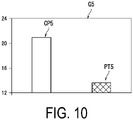
- FIG. 10 is a graph showing the average values of the amount of change in the fatigue level in the example of the present invention and the comparative example.
- FIG. 10 shows a graph G5.
- the graph G5 shows an experimental result PT5 and an experimental result CP5.
- the experimental result PT5 shows the average value of the amount of change in the fatigue level calculated on the basis of the brain waves acquired from ten test subjects who exercised in the room 30 in which the plurality of ion delivery apparatuses 20 were disposed.
- the experimental result CP5 shows the average value of the amount of change in the fatigue level calculated on the basis of the brain waves acquired from ten test subjects who exercised in a room in which the plurality of ion delivery apparatuses 20 were not disposed.
- FIG. 10 shows the fatigue measured from the brain waves of the test subjects using an electroencephalograph.
- the fatigue level is output using a sensitivity module logger (available from Little Software Co., Ltd.) on the basis of the value output from the electroencephalograph.
- the fatigue level is a value calculated from a frequency analysis of the brain waves.
- the fatigue level is an indicator indicating the amount of fatigue the user H has.
- the experimental result CP5 of the comparative example tends to be larger than the experimental result PT5 of Example 1.
- the amount of change in fatigue in Example 1 shown in FIG. 10 is "about 14.”
- the average value of the amount of change in fatigue of the comparative example is "about 21.”
- the amount of change in fatigue of Example 1 is less than the amount of change in fatigue of the comparative example. Less amounts of change in fatigue indicate that the user H is exercising with an unfatigued brain. Thus, it is possible to infer that the user H that exercised under the conditions of Example 1 exercised with a psychological state more suited to exercise than the user H that exercised under the conditions of the comparative example.
- the experimental result PT4 when exercise is performed using the ion delivery apparatuses 20 is significantly higher in terms of the amount of change in the psychological state measured using brain waves than the experimental result CP4 when exercise is performed without using the ion delivery apparatuses 20.
- the experimental result PT5 when exercise is performed using the ion delivery apparatuses 20 tends to be less in terms of the amount of change in the psychological state measured using brain waves than the experimental result CP5 when exercise is performed without using the ion delivery apparatuses 20. That is, it can be inferred that the effects of exercise can be improved by exercising while ions are delivered by the ion delivery apparatuses 20.
- FIG. 11 is a graph showing the average values of the rate of perceived exertion in the example of the present invention and the comparative example.
- FIG. 11 shows a graph G6.
- the graph G6 shows an experimental result PT6 and an experimental result CT6.
- the experimental result PT6 shows the average value of the rate of perceived exertion calculated on the basis of the questionnaire results of ten test subjects who exercised in the room 30 in which the plurality of ion delivery apparatuses 20 were disposed.
- the experimental result CT6 shows the average value of the rate of perceived exertion calculated on the basis of the questionnaire results of ten test subjects who exercised in a room in which the plurality of ion delivery apparatuses 20 were not disposed.
- the questionnaire is regarding the rate of perceived exertion (RPE).
- the experimental result PT6 of Example 1 tends to be higher than the experimental result CT6 of the comparative example.
- the average value of the rate of perceived exertion (RPE) of Example 1 shown in FIG. 11 is "about 17.”
- the average value of the rate of perceived exertion (RPE) of the comparative example is "about 16.”
- the average value of the rate of perceived exertion (RPE) of Example 1 is higher than the average value of the rate of perceived exertion (RPE) of the comparative example.
- the higher rate of perceived exertion (RPE) indicate that the user H is exercising with higher intensity.
- Example 1 It is possible to infer that the user H of Example 1 was exercising with higher intensity than the user H of the comparative example. Thus, it is possible to infer that the user H that exercised under the conditions of Example 1 had improved effects of exercise over the user H that exercised under the conditions of the comparative example.
- FIG. 12 is a graph showing the load amount of exercise in the example of the present invention and the comparative example.
- FIG. 12 shows a graph G7.
- the graph G7 shows an experimental result PT7 and an experimental result CP7.
- the experimental result PT7 shows the average value of the load amount of the exercise performed by ten test subjects in the room 30 in which the plurality of ion delivery apparatuses 20 were disposed.
- the experimental result CP7 shows the average value of the load amount of the exercise performed by ten test subjects in a room in which the plurality of ion delivery apparatuses 20 were not disposed.
- the load amount of the exercise shown in FIG. 12 indicates the average load applied to the user H during exercise.
- the experimental result PT7 of the example tends to be higher than the experimental result CP7 of the comparative example.
- the average value of the load amount of the example shown in FIG. 12 is "about 146.”
- the average value of the load amount of the comparative example is "about 141.”
- the average value of the rate of load amount of the example is higher than the average value of the load amount of the comparative example. That is, compared to exercising in the second training room, the exercise in the first training room is performed at a higher load amount.
- the user H of the example was exercising with a higher load amount than the user H of the comparative example.
- the user H that exercised under the conditions of the example had improved effects of exercise over the user H that exercised under the conditions of the comparative example.
- FIG. 13 is a graph showing the average values of the load amount of exercise of the sixth process PC6 in the example of the present invention and comparative example.
- FIG. 13 shows a graph G8.
- the graph G8 shows an experimental result PT8 and an experimental result CP8.
- the experimental result PT8 shows the average value of the load amount of the exercise of the sixth process PC6 performed by ten test subjects in the room 30 in which the plurality of ion delivery apparatuses 20 were disposed.
- the experimental result CP8 shows the average value of the load amount of the exercise of the sixth process PC6 performed by ten test subjects in a room in which the plurality of ion delivery apparatuses 20 were not disposed.
- the load amount of the exercise shown in FIG. 13 indicates the average load applied to the user H during exercise of the sixth process PC6.
- the experimental result PT8 of the example was a result significantly higher than the experimental result CT8 of the comparative example.
- the average value of the load amount of the example shown in FIG. 13 is "about 193.”
- the average value of the load amount of the comparative example is "about 181.”
- the average value of the rate of load amount of the example is higher than the average value of the load amount of the comparative example. That is, compared to exercising in the second training room, the exercise in the first training room is performed at a higher load amount.
- the user H of the example was exercising with a higher load amount than the user H of the comparative example.
- the user H that exercised under the conditions of the example had improved effects of exercise over the user H that exercised under the conditions of the comparative example.
- the questionnaire result for the rate of perceived exertion (RPE) when exercise is performed using the ion delivery apparatuses 20 tends to be higher than the questionnaire result for the rate of perceived exertion (RPE) when exercise is performed without using the ion delivery apparatuses 20.
- the load amount when exercise is performed using the ion delivery apparatuses 20 tends to be higher than the load amount when exercise is performed without using the ion delivery apparatuses 20.
- the load amount when exercise of the sixth process PC6 is performed using the ion delivery apparatuses 20 is significantly higher than the load amount when exercise of the sixth process PC6 is performed without using the ion delivery apparatuses 20. That is, it can be inferred from the experimental results, PT6, PT7, and PT8 that the effects of exercise on the user H can be improved by exercising while ions are delivered by the ion delivery apparatuses 20.
- the exercise system 1 of a moving body includes the load applying apparatus 10 and the ion delivery apparatus 20.
- the exercise system 1 is disposed in a room 30 of the moving body.
- the moving body is a car, a train, a watercraft, or an aircraft, for example.
- a seat may be disposed in the room 30 of the moving body. The seat is sat on by the user H. The user H operates the moving body.
- the load applying apparatus 10 of a first modified example applies a load to the body of the user H.
- the load applying apparatus 10 applies a load to the user H by making the user H move the moving body.
- the load is, for example, the stress generated by moving the moving body.
- the ion delivery apparatus 20 emits ions.
- the ion delivery apparatus 20 delivers ions toward the load applying apparatus 10. That is, the ion delivery apparatus 20 can deliver ions to the user H using the load applying apparatus 10.
- the ions delivered toward the user H reach the user H.
- the ions that reach the user H change the psychological state (at least one from among activity level, arousal level, comfort level, and fatigue) of the user H with regard to operating.
- the psychological state of the user H with regard to operating is changed, and the user H can concentrate on operating.
- the psychological state of the user H with regard to operating is changed, and the user H can operate with low stress.
- the user H can move the moving body such as the vehicle while concentrating and having low stress.
- the ion delivery apparatus 20 of the exercise system 1 may change the airflow on the basis of the heart rate of the user H.
- the heart beat of the user H can be obtained by a heart rate meter.
- the heart rate or ion delivery apparatus 20 is capable of wired or wireless communication with one another. That is, the heart beat obtained by the heart rate meter is transmitted to the ion delivery apparatus 20.
- the air sending unit 24 of the ion delivery apparatus 20 that acquires the heart beat of the user H changes the airflow on the basis of the acquired heart beat. In other words, the air sending unit 24 changes the airflow according to the acquired heart beat. Specifically, the air sending unit 24 increases the airflow as the acquired heart beat increases.
- the airflow of the air sending unit 24 can be changed in accordance with the heart rate of the user H.
- the airflow can be increased when the heart rate increases due to exercise.
- the air sending unit 24 blows air as the ion generation unit 23 emits ions.
- ions are contained in the wind generated by the air sending unit 24. That is, in response to increasing the airflow, the number of ions delivered can also be increased.
- the wind containing the ions can be delivered to the user H.
- the adjustment unit 27 of the ion delivery apparatus 20 may adjust the rotation angle of the louvers 26.
- the angle of the louvers 26 can be adjusted to discharge wind containing ions.
- wind containing ions with an increase airflow can be discharged in the desired direction of the user H.
- the ion delivery apparatus 20 of the exercise system 1 may change the airflow on the basis of the training time.
- the training time refers to the amount of time during which the load applying apparatus 10 applies a load to the body of the user H.
- the ion delivery apparatus 20 acquires the training time from the load applying apparatus 10.
- the load applying apparatus 10 and the ion delivery apparatus 20 are capable of wired or wireless communication with one another. That is, the training time measured by the load applying apparatus 10 is transmitted to the ion delivery apparatus 20.
- the air sending unit 24 of the ion delivery apparatus 20 that acquires the training time changes the airflow on the basis of the acquired training time. In other words, the air sending unit 24 changes the airflow according to the acquired training time.
- the air sending unit 24 increases the airflow as the acquired training time increases. Accordingly, the airflow of the air sending unit 24 can be changed in accordance with the training time. As a result, the airflow can be increased when the heart rate increases due to exercise.
- the air sending unit 24 blows air as the ion generation unit 23 emits ions.
- ions are contained in the wind generated by the air sending unit 24. That is, in response to increasing the airflow, the number of ions delivered can also be increased.
- the wind containing the ions can be delivered to the user H.
- the adjustment unit 27 of the ion delivery apparatus 20 may adjust the rotation angle of the louvers 26.
- the angle of the louvers 26 can be adjusted to discharge wind containing ions.
- wind containing ions with an increase airflow can be discharged in the desired direction of the user H.
- the adjustment unit 27 of the ion delivery apparatus 20 of the exercise system 1 may change the wind direction on the basis of the type of load applying apparatus 10. For example, when exercising in a standing posture like when exercising on a treadmill, the adjustment unit 27 may adjust the rotation angle of the louvers 26 so that the wind containing the ions is delivered to the user H in the standing posture. For example, when exercising in a sitting posture like when exercising on a rowing ergometer, the adjustment unit 27 may adjust the rotation angle of the louvers 26 so that the wind containing the ions is delivered to the user H in the sitting posture. As a result, depending on the load applying apparatus 10 the user H uses to exercise, the rotation angle of the louvers 26 can be adjusted and the wind containing the ions can be delivered to the user H.
- the present invention has applicability in the field of an exercise system, an exercise apparatus, and an exercise method.
Landscapes
- Engineering & Computer Science (AREA)
- Chemical & Material Sciences (AREA)
- Combustion & Propulsion (AREA)
- Mechanical Engineering (AREA)
- General Engineering & Computer Science (AREA)
- Health & Medical Sciences (AREA)
- Epidemiology (AREA)
- Life Sciences & Earth Sciences (AREA)
- Animal Behavior & Ethology (AREA)
- General Health & Medical Sciences (AREA)
- Public Health (AREA)
- Veterinary Medicine (AREA)
- Disinfection, Sterilisation Or Deodorisation Of Air (AREA)
- Electrotherapy Devices (AREA)
Abstract
Description
- The present invention relates to an exercise system, an exercise apparatus, and an exercise method.
- The exercise apparatus described in
PTL 1 includes a weight, a handle, and a wire. The weight has a predetermined weight. The handle is connected to the weight via the wire. The wire connects the weight and the handle. The weight is pulled up in response to a force exerted by a user via the handle. The pulled up weight reaches a predetermined position. The weight is then moved from the predetermined position toward the initial position. - PTL 1:
JP 2012-170754A - However, the exercise apparatus described in
PTL 1 cannot improve the effects of the exercise depending on the user's psychological state. - In light of the problem described above, the present invention is directed at providing an exercise system, an exercise apparatus, and an exercise method capable of improving the effects of exercise.
- According to an aspect of the present invention, an exercise system includes a load applying apparatus and an ion delivery apparatus. The load applying apparatus is disposed in a room and configured to apply a load to a body of a user. The ion delivery apparatus is disposed in the room and configured to deliver ions.
- According to an aspect of the present invention, an exercise apparatus includes a load applying unit and an ion delivery unit. The load applying unit is disposed in a room and configured to apply a load to a body of a user. The ion delivery unit is disposed in the room and configured to deliver ions.
- According to an aspect of the present invention, an exercise method includes applying and delivering. In the applying, a load is applied to a body of a user by a load applying unit disposed in a room. In the delivering, ions are delivered by an ion delivery unit disposed in the room.
- According to an exercise system, an exercise apparatus, and an exercise method of the present invention, the effects of exercise can be improved.
-
-
FIG. 1 is a diagram illustrating an exercise system according to an embodiment of the present invention. -
FIG. 2 is another diagram illustrating an exercise system according to an embodiment of the present invention. -
FIG. 3 is a diagram illustrating an ion delivery apparatus according to an exercise system of a present embodiment. -
FIG. 4 is a diagram illustrating the processing executed by the exercise system according to the present embodiment. -
FIG. 5 is a diagram illustrating the experimental process of experiments using the exercise system according to the present embodiment. -
FIG. 6 is a graph showing the average values of the amount of change in the activity level in an example of the present invention and a comparative example. -
FIG. 7 is a graph showing the average values of the amount of change in the arousal level in the example of the present invention and the comparative example. -
FIG. 8 is a graph showing the average values of the amount of change in the comfort level in the example of the present invention and the comparative example. -
FIG. 9 is another graph showing the average values of the amount of change in the activity level in the example of the present invention and the comparative example. -
FIG. 10 is a graph showing the average values of the amount of change in the fatigue level in the example of the present invention and the comparative example. -
FIG. 11 is a graph showing the average values of the rate of perceived exertion in the example of the present invention and the comparative example. -
FIG. 12 is a graph showing the average values of the load amount of exercise of a fourth process in the example of the present invention and comparative example. -
FIG. 13 is a graph showing the average values of the load amount of exercise of a sixth process in the example of the present invention and comparative example. - Embodiments of the present invention will be described hereinafter with reference to the drawings. In the drawings, the same or equivalent components are denoted by the same reference signs, and description thereof will not be repeated.
- First, with reference to
FIGS. 1 and2 , anexercise system 1 according to an embodiment of the present invention will be described.FIG. 1 is a diagram illustrating theexercise system 1 according to an embodiment of the present invention.FIG. 2 is another diagram illustrating theexercise system 1 according to an embodiment of the present invention. Theexercise system 1 makes a user H exercise. Exercise includes aerobic exercise and anaerobic exercise. The aerobic exercise refers to performing exercise with light or medium loads while consuming oxygen. The anaerobic exercise refers to performing exercise with high loads without consuming oxygen. Theexercise system 1 includes aload applying apparatus 10 and anion delivery apparatus 20. Theexercise system 1 of the present embodiment is disposed in aroom 30. - The
load applying apparatus 10 applies a load to the body of the user H. Specifically, theload applying apparatus 10 applies, to the body of the user H, a load that resists the movement of the body of the user H. The load refers to a force that opposes the movement of the user H. For example, when the user H runs, a force in the direction opposite to the direction in which the user H kicks the ground is applied to the user H. For example, when the user H moves his/her arm down, theload applying apparatus 10 applies, to the user H, a force in the direction opposite to the direction to lower the arm. Theload applying apparatus 10 corresponds to an example of a "load applying unit." - The
load applying apparatus 10 is, for example, an exercise machine. Examples of exercise machines include a tread mill, an exercise bike, a stepper machine, a weight machine, and an ergometer. The ergometer may be a rowing ergometer. The rowing ergometer is an exercise apparatus for performing body movements on or under water on land. - As illustrated in
FIGS. 1 and2 , the user H is located on theload applying apparatus 10. Specifically, the user H is located in anexercise space 101 of theload applying apparatus 10. The user H exercises in theexercise space 101. Theload applying apparatus 10 illustrated inFIGS. 1 and2 is a tread mill. For example, the user H runs in theexercise space 101 of the tread mill. The user H runs in theexercise space 101, thus rotating the endless belt of the tread mill. Theload applying apparatus 10 generates a force that opposes the opposite direction to the rotation direction of the endless belt. That is, a load that opposes the movement of the body of the user H can be applied to the body of the user H. - The
ion delivery apparatus 20 is disposed in the room and delivers ions. Theion delivery apparatus 20 emits ions to theroom 30. The ions are emitted from theion delivery apparatus 20 to theroom 30, filling theroom 30 with the ions. That is, the concentration of ions in theroom 30 is increased. When the user H enters theroom 30 with an increased concentration of ions, the psychological state with regard to exercise is changed before exercising. Accordingly, the user H takes on a psychological state in which the user H can exercise in a positive mood before exercising. As a result, the effects of the exercise performed by the user H can be improved. Theion delivery apparatus 20 corresponds to an example of an "ion delivery unit." Theion delivery apparatus 20 is, for example, an air purifier with an ion generation function. Theion delivery apparatus 20 may be, for example, an air conditioner with an ion generation function or other air conditioning apparatuses with an ion generation function. - Next, with reference to
FIG. 3 , theion delivery apparatus 20 will be described in detail.FIG. 3 is a diagram illustrating theion delivery apparatus 20 according to theexercise system 1 of the present embodiment. - The
ion delivery apparatus 20 includes ahousing 21, aduct 22, anion generation unit 23, anair sending unit 24, adetection unit 25, andlouvers 26, and an adjustment unit 27. - The
housing 21 houses theduct 22, theion generation unit 23, theair sending unit 24, thedetection unit 25, thelouvers 26, and the adjustment unit 27. Thehousing 21 is the outer shell of theion delivery apparatus 20. - The
duct 22 guides air. Theduct 22 includes abody portion 221, aninlet port 222, afirst discharge port 223, and asecond discharge port 224. - The
inlet port 222 allows air to flow into thebody portion 221. Accordingly, the air flows into thebody portion 221 via theinlet port 222 from a first direction F1 side. The first direction F1 represents a direction from the outer side to the inner side of thebody portion 221. - The
body portion 221 is an air flow path. Thebody portion 221 guides the air flowing from the first direction F1 to a second direction F2. The second direction F2 refers to a direction from theinlet port 222 toward thefirst discharge port 223 or a direction from theinlet port 222 toward asecond discharge port 224. Specifically, thebody portion 221 guides the air flowing from theinlet port 222 to thefirst discharge port 223 and thesecond discharge port 224. - The
first discharge port 223 discharges the air flowing into thebody portion 221 to the atmosphere. Specifically, thefirst discharge port 223 discharges air in a third direction F3. The third direction F3 is a direction different from the direction in which theinlet port 222 is disposed. The third direction F3 is, for example, a direction from thesecond discharge port 224 toward thefirst discharge port 223. - The
second discharge port 224 discharges the air flowing into thebody portion 221 to the atmosphere. Specifically, thesecond discharge port 224 discharges air in a fourth direction F4. The fourth direction F4 discharges air in a direction different from the third direction F3. For example, the fourth direction F4 is a direction different from the direction in which theinlet port 222 is disposed. The fourth direction F4 is, for example, a direction from thefirst discharge port 223 toward thesecond discharge port 224. - The
ion generation unit 23 generates ions. Theion generation unit 23 includes a pair of discharge electrodes. Each of the pair of discharge electrodes is a needle-like or brush-like electrode. The pair of discharge electrodes is each formed of, for example, a metal having electrical conductivity. - The pair of discharge electrodes discharge. Specifically, the pair of discharge electrodes to which a high voltage is applied discharge and generate active species. The active species contain ions. For example, the pair of discharge electrodes to which a high voltage is applied generate a corona discharge between the pair of discharge electrodes. Then, one of the pair of discharge electrodes emits positive ions via discharge. The positive ions are cluster ions (H+(H2O)m, where m is any integer of zero or greater) with a plurality of water molecules clustered around a hydrogen ion (H+). Also, the other of the pair of discharge electrodes emits negative ions via discharge. The negative ions are cluster ions (O2 -(H2O)n, where n is any integer of zero or greater) with a plurality of water molecules clustered around an oxygen ion (O2 -).
- The emitted positive ions and negative ions each take in, for example, molds and general bacteria in the air and undergo a chemical reaction on the surfaces of the molds and the general bacteria. The active species hydroxyl radical (•OH) is produced by the chemical reaction. Then, the molds and general bacteria are removed by the hydroxyl radical (•OH).
- The
ion generation unit 23 is disposed on theduct 22. Specifically, theion generation unit 23 is disposed at a position between theinlet port 222 and thefirst discharge port 223. Theion generation unit 23 may also be disposed at a position between theinlet port 222 and thesecond discharge port 224. - The
air sending unit 24 generates wind. Theair sending unit 24 is, for example, a fan. The fan is, for example, a sirocco fan. Specifically, theair sending unit 24 generates wind in the direction from theinlet port 222 toward thefirst discharge port 223. Also, theair sending unit 24 generates wind in the direction from theinlet port 222 toward thesecond discharge port 224. Theair sending unit 24 is disposed in theinlet port 222. - The wind generated by the
air sending unit 24 contains ions generated by theion generation unit 23. That is, the wind containing the ions is discharged from thefirst discharge port 223 and thesecond discharge port 224. Then, the ions are emitted to theroom 30. The ions are emitted from theion delivery apparatus 20 to theroom 30, filling theroom 30 with the ions. - The
detection unit 25 detects the user H. Specifically, thedetection unit 25 detects a portion where the skin of the user H is exposed. The portion where the skin is exposed may be, for example, the face of the user H. - The
louvers 26 are rotatably attached to thehousing 21. Specifically, inFIG. 3 , thelouvers 26 are attached to thehousing 21 in a manner allowing for rotation about a rotation axis (not illustrated). The rotation axis of thelouvers 26 is, for example, substantially parallel to the horizontal direction. Also, thelouvers 26 are detachably attached to thehousing 21. Also, thelouvers 26 are attached to thehousing 21 so as to face thefirst discharge port 223. Also, thelouvers 26 are attached to thehousing 21 so as to face thesecond discharge port 224. - For example, in the
first discharge port 223, thelouvers 26 guide the wind passing through the interior of theduct 22 in a direction corresponding to the rotation angle of thelouvers 26. That is, the direction of the wind to be discharged from thefirst discharge port 223 is a direction corresponding to the rotation angle of thelouvers 26. Also, for example, in thesecond discharge port 224, the wind passing through the interior of theduct 22 is guided in a direction corresponding to the rotation angle of thelouvers 26. That is, the direction of the wind to be discharged from thesecond discharge port 224 is a direction corresponding to the rotation angle of thelouvers 26. - The adjustment unit 27 adjusts the rotation angle of the
louvers 26. Specifically, the adjustment unit 27 adjusts the rotation angle of thelouvers 26 attached to thefirst discharge port 223. Also, the adjustment unit 27 adjusts the rotation angle of thelouvers 26 attached to thesecond discharge port 224. Thus, the angle of thelouvers 26 can be adjusted to discharge wind containing ions. As a result, the wind containing the ions can be discharged in the desired direction of the user H. - Further, with reference to
FIGS. 2 and3 , theion delivery apparatus 20 will be described in detail. Theion delivery apparatus 20 delivers ions toward theload applying apparatus 10. That is, theion delivery apparatus 20 can deliver ions to the user H using theload applying apparatus 10. The ions delivered in the direction of the user H reach the user H. Thus, the ions that reach the user H change the psychological state (at least one of activity level, arousal level, comfort level, fatigue and concentration) of the user H with regard to exercise. As a result, the effects of the exercise performed by the user H can be objectively or subjectively improved. For example, the psychological state of the user H with regard to exercise is changed, and the user H can exercise in a positive mood. That is, the ions affect the psychological state of the user H with regard to exercise, and the user H can exercise in a psychological state suited to exercise. As a result, the effects of the exercise performed by the user H can be improved. Also, the user H exercises in theroom 30 filled with the delivered ions. In other words, theion delivery apparatus 20 emits ions in the space of theroom 30 while also emitting ions in the direction of the user H. Thus, ions can be further delivered to the user H exercising in theroom 30 filled with ions. As a result, the ions can directly and indirectly affect the user H, allowing the effects of the exercise performed by the user H to be improved. Note that the effects of the exercise can also be improved by exercising in an environment with air purified by the ions delivered from theion delivery apparatus 20. The psychological states (activity level, arousal level, comfort level, and fatigue) of the user H with regard to exercise will be described below using examples with reference toFIGS. 5 to 13 . - In addition, the
ion delivery apparatus 20 according to the present embodiment delivers ions in the direction of the user H exercising using theload applying apparatus 10. The ions affect the psychological state of the user H with regard to exercise. Thus, the user H can exercise in a psychological state suited to exercise. For example, the user H can concentrate more on the exercise. As a result, the effects of the exercise can be further improved. - In addition, the
ion delivery apparatus 20 according to the present embodiment delivers ions to a specific portion H1 of the user H. The specific portion H1 is a portion where the skin of the user H is exposed. Thus, ions can be delivered to the portion where the skin of the user H is exposed. The ions delivered to the skin can act on the body. Also, the user H may breathe in the ions delivered from theion delivery apparatus 20 or breath in air purified by the ions. As a result, the ions can directly affect the user H. Also, the user H exercises in theroom 30 filled with the delivered ions. Thus, the ions filling theroom 30 can indirectly affect the user H. As a result, the ions can directly and indirectly affect the user H, allowing the effects of the exercise performed by the user H to be further improved. - For example, in a case where ions are delivered to clothing worn by the user H, the ions may disappear at the location of the clothing. That is, the number of ions that reach the user H is decreased. However, the
ion delivery apparatus 20 of the present embodiment can deliver ions to a portion where the skin of the user H is exposed. This can reduce a decrease in the number of ions that reach the specific portion H1 of the user H. As a result, the ions delivered from theion delivery apparatus 20 can act more directly on the user H. - Also, the portion where the skin of the user H is exposed is, for example, the "face". By delivering ions to the face, the user H may breathe in the air containing the ions. This results in the ions more directly affecting the user H which in turn facilitates the user H having a psychological state suited to the exercise.
- For example, in a case where ions are delivered to the "face" of the user H, the adjustment unit 27 adjusts the rotation angle of the
louvers 26 on the basis of a detection result of thedetection unit 25. Then, theion generation unit 23 generates ions. Theair sending unit 24 further generates wind. Here, the wind generated by theair sending unit 24 includes ions generated by theion generation unit 23. The wind containing the ions are released from thefirst discharge port 223 or thesecond discharge port 224. Then, the wind is guided by thelouver 26 with the rotation angle adjusted by the adjustment unit 27. That is, the ions emitted from thefirst discharge port 223 are guided in the third direction F3 by thelouvers 26 adjusted by the adjustment unit 27. For example, as illustrated inFIG. 2 , the ions emitted in the third direction F3 reach the user H located in theexercise space 101. This results in the wind containing ions being delivered to the "face" of the user H. Note that the specific portion H1 may be a hand or a foot. For example, in a case where the hand is exposed, the wind containing ions may be delivered to the hand. For example, in a case where the foot is exposed, the wind containing ions may be delivered to the foot. - In addition, the
ion delivery apparatus 20 may deliver the ions to theroom 30 before the user H uses theload applying apparatus 10. Specifically, theion delivery apparatus 20 may deliver the ions to theload applying apparatus 10 before the user H uses theload applying apparatus 10. Thus, before the user H who entered theroom 30 exercises, the psychological state of the user H can be put in a psychological state suited to exercise. As a result, the effects of the exercise can be further improved. - In addition, the
ion delivery apparatus 20 may deliver the ions to theroom 30 after the user H uses theload applying apparatus 10. Specifically, theion delivery apparatus 20 may deliver ions in the direction of the user H after the user H uses theload applying apparatus 10. Thus, the user H can be put in a psychological state suited to exercise until the user H exits theroom 30. As a result, the effects of the exercise performed by the user H can be improved even when exercise is started again. - Next, the
ion delivery apparatus 20 according to the present embodiment will be described in more detail with reference toFIGS. 1 to 3 . As illustrated inFIGS. 1 and2 , theexercise system 1 may be provided with a plurality ofion delivery apparatuses 20. - As illustrated in
FIGS. 1 and2 , the plurality ofion delivery apparatuses 20 are disposed at different positions from one another. That is, the ions can be delivered from different positions to theload applying apparatus 10 or the user H. This makes it easy to increase the concentration of ions around theload applying apparatus 10 or the user H. As a result, even when the position of the user H moves during exercise, the ions can affect the user H and can put the user H in a psychological state suited to exercise. - The plurality of
ion delivery apparatuses 20 includes a first ion delivery apparatus 200A, a second ion delivery apparatus 200B, a third ion delivery apparatus 200C, a fourth ion delivery apparatus 200D, a fifth ion delivery apparatus 200E, and a sixth ion delivery apparatus 200F. The first ion delivery apparatus 200A to the sixth ion delivery apparatus 200F are air purifiers with an ion generation function. Each one of the first ion delivery apparatus 200A to the sixth ion delivery apparatus 200F may be, for example, an air conditioner with an ion generation function or other air conditioning apparatuses with an ion generation function. The first ion delivery apparatus 200A to the sixth ion delivery apparatus 200F have the same configuration as theion delivery apparatus 20 described with reference toFIG. 3 . Accordingly, detailed description of the first ion delivery apparatus 200A to the sixth ion delivery apparatus 200F is omitted. - For example, when the first ion delivery apparatus 200A delivers ions to the
load applying apparatus 10 or the user H, the second ion delivery apparatus 200B to the sixth ion delivery apparatus 200F also deliver ions to theload applying apparatus 10 or the user H. For example, as illustrated inFIG. 2 , the second ion delivery apparatus 200B to the sixth ion delivery apparatus 200F deliver ions from a position different from the first ion delivery apparatus 200A toward theload applying apparatus 10 or the user H. That is, the first ion delivery apparatus 200A to the sixth ion delivery apparatus 200F deliver ions toward theload applying apparatus 10 or the user H. Thus, the concentration of ions around theload applying apparatus 10 or the user H is increased. This facilitates the user H having a psychological state suited to the exercise. - Next, with reference to
FIG. 4 , the processing executed by theexercise system 1 according to the present embodiment will be described.FIG. 4 is a diagram illustrating the processing executed by theexercise system 1 according to the present embodiment. The processing illustrated inFIG. 4 includes step S101 to step S106. - In step S101, the
ion generation unit 23 of theion delivery apparatus 20 starts ion generation. The processing then proceeds to step S102. - In step S102, the
air sending unit 24 of theion delivery apparatus 20 starts wind generation. The wind generated by theair sending unit 24 includes ions generated by theion generation unit 23. The processing then proceeds to step S103. - In step S103, the
load applying apparatus 10 starts load application to the body of the user H. The processing then proceeds to step S104. - In step S104, the
load applying apparatus 10 ends the load application to the body of the user H. The processing then proceeds to step S105. - In step S105, the
ion generation unit 23 of theion delivery apparatus 20 ends the ion generation. The processing then proceeds to step S106. - In step S106, the
air sending unit 24 of theion delivery apparatus 20 ends the wind generation. The processing then ends. - Note that in the processing executed by the
exercise system 1 according to the present embodiment, step S103 may be executed at the same time as step S101 and step S102. Further, in the processing executed by theexercise system 1 according to the present embodiment, step S101 and step S102 may be executed after the end of step S104. In a case where step S101 and step S102 are executed after the end of step S104, step S101 and step S102 correspond to an example of "delivering executed after applying." Further, in the processing executed by theexercise system 1 according to the present embodiment, step S101 and step S102 may be executed while step S103 is being executed. - In the processing executed by the
exercise system 1, step S103 corresponds to an example of "applying a load to the body of the user H." In the processing executed by theexercise system 1, step S101 and step S102 correspond to an example of "delivering ions." Also, step S101 and step S102 may correspond to an example of "delivering executed before applying." - Referring now to
FIGS. 5 to 13 , an example using an exercise method according to the present invention will be described together with a comparative example. The present invention will be described in detail on the basis of the example, but the present invention is not limited to the following example. - First, with reference to
FIG. 5 , an experimental process using an exercise method according to the present invention will be described.FIG. 5 is a diagram showing an experimental process using an exercise method according to the present invention. The experimental process includes a first process PC1 to an eighth process PC8. Also, ten test subject exercise according to the experimental processes listed inFIG. 5 . Note that inFIGS. 6 to 13 , the experimental results of the ten test subjects that exercised according to the experimental processes listed inFIG. 5 . - The first process PC1 refers to a process in which the test subjects wear an electroencephalograph. A simple electroencephalograph is used as the electroencephalograph. The electrodes of the electroencephalograph are attached to the ear and forehead of the test subject. The electroencephalograph acquires α waves and β waves every second. The electroencephalogram acquired from the simple electroencephalograph is converted to a value indicating the psychological state of the user H by a sensitivity module logger (available from Little Software Co., Ltd.).
- The sensitivity module logger Fourier converts the α waves and the β waves, for example. The sensitivity module logger extracts the feature points for each frequency and outputs a numerical values obtained by combining the extracted feature points. Further, the sensitivity module logger calculates an indicator indicating the psychological state (emotion) of each test subject on the basis of the numerical value. Note that in the first process PC1, immediately after the test subjects put on the electroencephalograph device, the electroencephalograph measures the brain waves of the test subjects. The test subjects start the second process PC2 two minutes after putting on the electroencephalograph.
- The second process PC2 refers to a process in which the test subjects answer a questionnaire. The questionnaire of the second process PC2 is filled out outside of the training room. The questionnaire is a two-dimensional mood scale-short term (TDMS-ST) questionnaire. The two-dimensional mood scale-short term (TDMS-ST) questionnaire can measure changes in the mood (psychological state) of the user H.
- The third process PC3 refers to a process in which the test subjects move to a first training room or a second training room. The
ion delivery apparatuses 20 are disposed in theroom 30 of the first training room. In the first training room of the third process PC3, ions are delivered to the user H. Theexercise space 101 of theroom 30 of the first training room is given an ion concentration of 100000 ions per 1 cm3. Theion delivery apparatuses 20 are disposed in the room of the second training room. Theion delivery apparatuses 20 in the second training room are controlled so that no ions are delivered. In the second training room of the third process PC3, a wind containing no ions is delivered to the user H. Also, the temperature of the first training room and the second training room is 24 degrees, and the humidity of the first training room and the second training room is 60% ± 2.0. In addition, the test subjects in the first training room do not know that the wind being delivered contains ions from theion delivery apparatus 20. The test subjects in the second training room do not know that the wind being delivered contains no ions from theion delivery apparatus 20. - The fourth process PC4 refers to a process in which the test subjects exercise. The exercise performed by the test subjects in the fourth process PC4 is performed on the
load applying apparatus 10, as illustrated inFIG. 2 . Specifically, in the exercise in the fourth process PC4, a swim ergometer (available from Concept 2) is used. The test subjects performed eight repetitions of 20 seconds of exercise using the swim ergometer (available from Concept 2). The test subjects rested for ten seconds between each 20 second repetition of exercise. - The fifth process PC5 refers to a process in which the test subjects rest. In the fifth process PC5, the test subjects lay face-up on a mat for ten minutes with their eyes closed.
- The sixth process PC6 refers to a process in which the test subjects exercise. In the sixth process PC6, as in the fourth process PC4, a swim ergometer (available from Concept 2) is used. The exercise of the sixth process PC6 includes only one repetition of 20 seconds of exercise.
- The seventh process PC7 refers to a process in which the test subjects answer a questionnaire. For the questionnaire of the seventh process PC7, a two-dimensional mood scale-short term (TDMS-ST) questionnaire and a rate of perceived exertion (RPE) questionnaire was used. With a rate of perceived exertion (RPE) questionnaire, the person exercising indicates via a numerical value how "hard" the exercise is. In the rate of perceived exertion questionnaire, the test subjects subjectively select numerical values ranging from 1 to 20. Higher numerical values indicate a higher rate of exertion. The test subjects answer the questionnaire in regard to the exercise of the fourth process PC4 and in regard to the exercise of the sixth process PC6.
- The eighth process PC8 refers to a process in which the test subjects remove the electroencephalograph. The electroencephalograph does not measure the brain waves for the minute before it is removed.
- Referring to
FIGS. 6 to 13 , an example of the present invention and a comparative example will be described. The example shows results of experiments performed in the first training room. The comparative example shows results of experiments performed in the second training room. -
FIG. 6 is a graph showing the average values of the amount of change in the activity level of the user H in the example of the present invention and the comparative example.FIG. 6 shows a graph G1. The graph G1 shows an experimental result PT1 and an experimental result CP1. The experimental result PT1 shows the average value of the amount of change in the activity level calculated on the basis of the questionnaire results of ten test subjects who exercised in theroom 30 in which the plurality ofion delivery apparatuses 20 were disposed. The experimental result CP1 shows the average value of the amount of change in the activity level calculated on the basis of the questionnaire results of ten test subjects who exercised in a room in which the plurality ofion delivery apparatuses 20 were not disposed. - The experimental result PT1 and the experimental result CP1 shown in
FIG. 6 each indicate the average value of the amount of change in the activity level measured by performing a two-dimensional mood scale-short term (TDMS-ST) questionnaire. The activity level is an indicator indicating how much energy the user H feels is in their body. Specifically, the activity level indicates a standard for the psychological state with a positive feeling of exhilaration and a negative feeling of heaviness on either end. For example, when the numerical value indicating the activity level is high, the user H is a state in which they have lots of energy. When the numerical value indicating the activity level is low, the user H is a state in which they feel lethargic and are without energy. - As shown in
FIG. 6 , the experimental result PT1 of the example was a result significantly larger than the experimental result CP1 of the comparative example. Specifically, the average value of the amount of change in the activity level of the example shown inFIG. 6 is "about 4." On the other hand, the average value of the amount of change in the activity level of the comparative example is "about 1." As shown inFIG. 6 , the amount of change in the activity level of the example is larger than the amount of change in the activity level of the comparative example. Larger amounts of change in the activity level indicate that the user H is exercising in an energetic state. That is, it is possible to infer that the user H of the example was exercising with lots of energy compared to the user H of the comparative example. Thus, larger amounts of change in the activity level indicate a psychological state suited to exercise. Thus, it is possible to infer that the user H that exercised under the conditions of the example exercised with a psychological state more suited to exercise than the user H that exercised under the conditions of the comparative example. - Referring to
FIG. 7 , an example of the present invention and a comparative example will be described.FIG. 7 is a graph showing the average values of the amount of change in the arousal level in the example of the present invention and the comparative example.FIG. 7 shows a graph G2. The graph G2 shows an experimental result PT2 and an experimental result CP2. The experimental result PT2 shows the average value of the amount of change in the arousal level calculated on the basis of the questionnaire results of ten test subjects who exercised in theroom 30 in which the plurality ofion delivery apparatuses 20 were disposed. The experimental result CP2 shows the average value of the amount of change in the arousal level calculated on the basis of the questionnaire results of ten test subjects who exercised in a room in which the plurality ofion delivery apparatuses 20 were not disposed. - The experimental result PT2 and the experimental result CP2 shown in
FIG. 7 each indicate the average value of the amount of change in the arousal level measured by performing a two-dimensional mood scale-short term (TDMS-ST) questionnaire. The arousal level is an indicator indicating the arousal level of the user H. - As shown in
FIG. 7 , the experimental result PT2 of the example was a result significantly higher than the experimental result CP2 of the comparative example. Specifically, the average value of the amount of change in the arousal level of Example 1 shown inFIG. 7 is "about 7." On the other hand, the average value of the amount of change in the arousal level of Comparative Example 1 is "about 3." As shown inFIG. 7 , the amount of change in the arousal level of Example 1 is larger than the amount of change in the arousal level of Comparative Example 1. Larger amounts of change in the arousal level indicate that the user H is exercising in an aroused state. Also, larger amounts of change in the arousal level indicate that the user H has a psychological state suited to exercise. That is, it is possible to infer that the user H of Example 1 exercised, for example, in a psychological state of being exhilarated and invigorated compared to the user H of the comparative example. Thus, it is possible to infer that the user H that exercised under the conditions of Example 1 exercised with a psychological state more suited to exercise than the user H that exercised under the conditions of the comparative example. - Referring to
FIG. 8 , Example 1 of the present invention and Comparative Example 1 will be described.FIG. 8 is a graph showing the average values of the amount of change in the comfort level in the example of the present invention and the comparative example.FIG. 8 shows a graph G3. The graph G3 shows an experimental result PT3 and an experimental result CP3. The experimental result PT3 shows the average value of the amount of change in the comfort level calculated on the basis of the questionnaire results of ten test subjects who exercised in theroom 30 in which the plurality ofion delivery apparatuses 20 were disposed. The experimental result CP3 shows the average value of the amount of change in the comfort level calculated on the basis of the questionnaire results of ten test subjects who exercised in a room in which the plurality ofion delivery apparatuses 20 were not disposed. - The experimental result PT3 and the experimental result CP3 shown in
FIG. 8 each indicate the average value of the amount of change in the comfort level measured by performing a two-dimensional mood scale-short term (TDMS-ST) questionnaire. The comfort level is an indicator indicating how comfortable the user H is feeling. - As shown in
FIG. 8 , the experimental result PT3 of the example was a result significantly larger than the experimental result CP3 of the comparative example. Specifically, the average value of the amount of change in the comfort level of the example shown inFIG. 8 is "about 3." On the other hand, the average value of the amount of change in the comfort level of the comparative example is "about -1.5." As shown inFIG. 8 , the amount of change in the comfort level of the example is larger than the amount of change in the comfort level of the comparative example. Larger amounts of change in the comfort level indicate that the user H is exercising while feeling comfortable. Also, larger amounts of change in the comfort level indicate that the user H has a psychological state suited to exercise. Thus, it is possible to infer that the user H that exercised under the conditions of the example exercised with a psychological state more suited to exercise than the user H that exercised under the conditions of the comparative example. - As described in the examples, with regard to the activity level, arousal level, and the comfort level, the experimental results PT1 to PT3 when exercise is performed using the
ion delivery apparatuses 20 are significantly larger in terms of the average value of the amount of change measured by a two-dimensional mood scale-short term (TDMS-ST) questionnaire than the experimental results CP1 to CP3 when exercise is performed without using theion delivery apparatuses 20. That is, it can be inferred that the effects of exercise can be improved by exercising while ions are delivered by theion delivery apparatuses 20. - Referring to
FIG. 9 , an example of the present invention and a comparative example will be described.FIG. 9 is a graph showing the average values of the amount of change in the activity level in the example of the present invention and the comparative example.FIG. 9 shows a graph G4. The graph G4 shows an experimental result PT4 and an experimental result CP4. The experimental result PT4 shows the average value of the amount of change in the activity level calculated on the basis of the brain waves acquired from ten test subjects who exercised in theroom 30 in which the plurality ofion delivery apparatuses 20 were disposed. The experimental result CP4 shows the average value of the amount of change in the activity level calculated on the basis of the brain waves acquired from ten test subjects who exercised in a room in which the plurality ofion delivery apparatuses 20 were not disposed. -
FIG. 9 shows the activity level measured from the brain waves of the test subjects using an electroencephalograph. The activity level is output using a sensitivity module logger (available from Little Software Co., Ltd.) on the basis of the value output from the electroencephalograph. The activity level is a value calculated from a frequency analysis of the brain waves. The calculated value is calculated from, for example, a value indicating an LF (Low Frequency) component and a value indicating a HF (Hi Frequency) component using a sensitivity module logger (available from Little Software Co., Ltd.). - As shown in
FIG. 9 , the experimental result PT4 of Example 1 was a result significantly higher than the experimental result CP4 of the comparative example. Specifically, the average value of the amount of change in the activity level of Example 1 shown inFIG. 9 is "about 8." On the other hand, the average value of the amount of change in the activity level of the comparative example is "about 4." As shown inFIG. 9 , the amount of change in the activity level of Example 1 is larger than the amount of change in the activity level of the comparative example. Larger amounts of change in the activity level indicate that the user H is exercising with their brain in an energetic state. Thus, it is possible to infer that the user H that exercised under the conditions of Example 1 exercised with a psychological state more suited to exercise than the user H that exercised under the conditions of the comparative example. - Referring to
FIG. 10 , Example 1 of the present invention and a comparative example will be described.FIG. 10 is a graph showing the average values of the amount of change in the fatigue level in the example of the present invention and the comparative example.FIG. 10 shows a graph G5. The graph G5 shows an experimental result PT5 and an experimental result CP5. The experimental result PT5 shows the average value of the amount of change in the fatigue level calculated on the basis of the brain waves acquired from ten test subjects who exercised in theroom 30 in which the plurality ofion delivery apparatuses 20 were disposed. The experimental result CP5 shows the average value of the amount of change in the fatigue level calculated on the basis of the brain waves acquired from ten test subjects who exercised in a room in which the plurality ofion delivery apparatuses 20 were not disposed. -
FIG. 10 shows the fatigue measured from the brain waves of the test subjects using an electroencephalograph. The fatigue level is output using a sensitivity module logger (available from Little Software Co., Ltd.) on the basis of the value output from the electroencephalograph. The fatigue level is a value calculated from a frequency analysis of the brain waves. The fatigue level is an indicator indicating the amount of fatigue the user H has. - As shown in
FIG. 10 , the experimental result CP5 of the comparative example tends to be larger than the experimental result PT5 of Example 1. Specifically, the amount of change in fatigue in Example 1 shown inFIG. 10 is "about 14." On the other hand, the average value of the amount of change in fatigue of the comparative example is "about 21." As shown inFIG. 10 , the amount of change in fatigue of Example 1 is less than the amount of change in fatigue of the comparative example. Less amounts of change in fatigue indicate that the user H is exercising with an unfatigued brain. Thus, it is possible to infer that the user H that exercised under the conditions of Example 1 exercised with a psychological state more suited to exercise than the user H that exercised under the conditions of the comparative example. - As described with reference to
FIG. 9 , with regard to the activity level, the experimental result PT4 when exercise is performed using theion delivery apparatuses 20 is significantly higher in terms of the amount of change in the psychological state measured using brain waves than the experimental result CP4 when exercise is performed without using theion delivery apparatuses 20. Also, as described with reference toFIG. 10 , with regard to the fatigue level, the experimental result PT5 when exercise is performed using theion delivery apparatuses 20 tends to be less in terms of the amount of change in the psychological state measured using brain waves than the experimental result CP5 when exercise is performed without using theion delivery apparatuses 20. That is, it can be inferred that the effects of exercise can be improved by exercising while ions are delivered by theion delivery apparatuses 20. - Referring to
FIG. 11 , Example 1 of the present invention and a comparative example will be described.FIG. 11 is a graph showing the average values of the rate of perceived exertion in the example of the present invention and the comparative example.FIG. 11 shows a graph G6. The graph G6 shows an experimental result PT6 and an experimental result CT6. The experimental result PT6 shows the average value of the rate of perceived exertion calculated on the basis of the questionnaire results of ten test subjects who exercised in theroom 30 in which the plurality ofion delivery apparatuses 20 were disposed. The experimental result CT6 shows the average value of the rate of perceived exertion calculated on the basis of the questionnaire results of ten test subjects who exercised in a room in which the plurality ofion delivery apparatuses 20 were not disposed. The questionnaire is regarding the rate of perceived exertion (RPE). - As shown in
FIG. 11 , the experimental result PT6 of Example 1 tends to be higher than the experimental result CT6 of the comparative example. Specifically, the average value of the rate of perceived exertion (RPE) of Example 1 shown inFIG. 11 is "about 17." On the other hand, the average value of the rate of perceived exertion (RPE) of the comparative example is "about 16." As shown inFIG. 11 , the average value of the rate of perceived exertion (RPE) of Example 1 is higher than the average value of the rate of perceived exertion (RPE) of the comparative example. The higher rate of perceived exertion (RPE) indicate that the user H is exercising with higher intensity. It is possible to infer that the user H of Example 1 was exercising with higher intensity than the user H of the comparative example. Thus, it is possible to infer that the user H that exercised under the conditions of Example 1 had improved effects of exercise over the user H that exercised under the conditions of the comparative example. - Referring to
FIG. 12 , an example of the present invention and a comparative example will be described.FIG. 12 is a graph showing the load amount of exercise in the example of the present invention and the comparative example.FIG. 12 shows a graph G7. The graph G7 shows an experimental result PT7 and an experimental result CP7. The experimental result PT7 shows the average value of the load amount of the exercise performed by ten test subjects in theroom 30 in which the plurality ofion delivery apparatuses 20 were disposed. The experimental result CP7 shows the average value of the load amount of the exercise performed by ten test subjects in a room in which the plurality ofion delivery apparatuses 20 were not disposed. The load amount of the exercise shown inFIG. 12 indicates the average load applied to the user H during exercise. - As shown in
FIG. 12 , the experimental result PT7 of the example tends to be higher than the experimental result CP7 of the comparative example. Specifically, the average value of the load amount of the example shown inFIG. 12 is "about 146." On the other hand, the average value of the load amount of the comparative example is "about 141." As shown inFIG. 12 , the average value of the rate of load amount of the example is higher than the average value of the load amount of the comparative example. That is, compared to exercising in the second training room, the exercise in the first training room is performed at a higher load amount. Thus, it is possible to infer that the user H of the example was exercising with a higher load amount than the user H of the comparative example. Thus, it is possible to infer that the user H that exercised under the conditions of the example had improved effects of exercise over the user H that exercised under the conditions of the comparative example. - Referring to
FIG. 12 , an example of the present invention and a comparative example will be described.FIG. 13 is a graph showing the average values of the load amount of exercise of the sixth process PC6 in the example of the present invention and comparative example.FIG. 13 shows a graph G8. The graph G8 shows an experimental result PT8 and an experimental result CP8. The experimental result PT8 shows the average value of the load amount of the exercise of the sixth process PC6 performed by ten test subjects in theroom 30 in which the plurality ofion delivery apparatuses 20 were disposed. The experimental result CP8 shows the average value of the load amount of the exercise of the sixth process PC6 performed by ten test subjects in a room in which the plurality ofion delivery apparatuses 20 were not disposed. The load amount of the exercise shown inFIG. 13 indicates the average load applied to the user H during exercise of the sixth process PC6. - As shown in
FIG. 13 , the experimental result PT8 of the example was a result significantly higher than the experimental result CT8 of the comparative example. Specifically, the average value of the load amount of the example shown inFIG. 13 is "about 193." On the other hand, the average value of the load amount of the comparative example is "about 181." As shown inFIG. 13 , the average value of the rate of load amount of the example is higher than the average value of the load amount of the comparative example. That is, compared to exercising in the second training room, the exercise in the first training room is performed at a higher load amount. Thus, it is possible to infer that the user H of the example was exercising with a higher load amount than the user H of the comparative example. Thus, it is possible to infer that the user H that exercised under the conditions of the example had improved effects of exercise over the user H that exercised under the conditions of the comparative example. - As described using
FIG. 11 , the questionnaire result for the rate of perceived exertion (RPE) when exercise is performed using theion delivery apparatuses 20 tends to be higher than the questionnaire result for the rate of perceived exertion (RPE) when exercise is performed without using theion delivery apparatuses 20. Also, as described usingFIG. 12 , the load amount when exercise is performed using theion delivery apparatuses 20 tends to be higher than the load amount when exercise is performed without using theion delivery apparatuses 20. Also, as described usingFIG. 13 , the load amount when exercise of the sixth process PC6 is performed using theion delivery apparatuses 20 is significantly higher than the load amount when exercise of the sixth process PC6 is performed without using theion delivery apparatuses 20. That is, it can be inferred from the experimental results, PT6, PT7, and PT8 that the effects of exercise on the user H can be improved by exercising while ions are delivered by theion delivery apparatuses 20. - An embodiment of the present invention has been described above with reference to the drawings. However, the present invention is not limited to the embodiment described above, and the present invention can be implemented in various modes without departing from the gist thereof. Further, various present inventions can be formed by appropriately combining a plurality of components disclosed in the embodiments described above. For example, several components may be deleted from all of the components described in the embodiments. Furthermore, the components across different embodiments may be appropriately combined. For ease of understanding, the drawings schematically illustrate each component as a main constituent, and the thickness, length, number, spacing, and the like of each component illustrated are different from the actual thickness, length, number, spacing for convenience of drawing preparation. Further, the speed, material, shape, dimensions, and the like of each component illustrated in the embodiments described above are one example and are not particularly limited, and various modifications can be made within a range that does not substantially deviate from the configuration of the present invention.
- (1) In the
exercise system 1 according to the present embodiment, the user H exercises in a training room in which theion delivery apparatus 20 is disposed. However, no such limitation is intended. For example, theroom 30 of theexercise system 1 may be a room in a moving body. In a case where theexercise system 1 is disposed in a moving body, theload applying apparatus 10 corresponds to an operation apparatus of the moving body. - The
exercise system 1 of a moving body includes theload applying apparatus 10 and theion delivery apparatus 20. Theexercise system 1 is disposed in aroom 30 of the moving body. The moving body is a car, a train, a watercraft, or an aircraft, for example. Additionally, a seat may be disposed in theroom 30 of the moving body. The seat is sat on by the user H. The user H operates the moving body. - The
load applying apparatus 10 of a first modified example applies a load to the body of the user H. For example, theload applying apparatus 10 applies a load to the user H by making the user H move the moving body. The load is, for example, the stress generated by moving the moving body. - The
ion delivery apparatus 20 emits ions. Theion delivery apparatus 20 delivers ions toward theload applying apparatus 10. That is, theion delivery apparatus 20 can deliver ions to the user H using theload applying apparatus 10. The ions delivered toward the user H reach the user H. Thus, the ions that reach the user H change the psychological state (at least one from among activity level, arousal level, comfort level, and fatigue) of the user H with regard to operating. For example, the psychological state of the user H with regard to operating is changed, and the user H can concentrate on operating. For example, the psychological state of the user H with regard to operating is changed, and the user H can operate with low stress. As a result, the user H can move the moving body such as the vehicle while concentrating and having low stress. - (2) The
ion delivery apparatus 20 of theexercise system 1 according to the present embodiment may change the airflow on the basis of the heart rate of the user H. The heart beat of the user H can be obtained by a heart rate meter. The heart rate orion delivery apparatus 20 is capable of wired or wireless communication with one another. That is, the heart beat obtained by the heart rate meter is transmitted to theion delivery apparatus 20. Theair sending unit 24 of theion delivery apparatus 20 that acquires the heart beat of the user H changes the airflow on the basis of the acquired heart beat. In other words, theair sending unit 24 changes the airflow according to the acquired heart beat. Specifically, theair sending unit 24 increases the airflow as the acquired heart beat increases. Accordingly, the airflow of theair sending unit 24 can be changed in accordance with the heart rate of the user H. As a result, the airflow can be increased when the heart rate increases due to exercise. Note that theair sending unit 24 blows air as theion generation unit 23 emits ions. Thus, ions are contained in the wind generated by theair sending unit 24. That is, in response to increasing the airflow, the number of ions delivered can also be increased. As a result, when the heart rate increases due to exercise, the wind containing the ions can be delivered to the user H. - Note that, in response to an increase in the heart rate, the adjustment unit 27 of the
ion delivery apparatus 20 may adjust the rotation angle of thelouvers 26. Thus, the angle of thelouvers 26 can be adjusted to discharge wind containing ions. As a result, wind containing ions with an increase airflow can be discharged in the desired direction of the user H. - (3) The
ion delivery apparatus 20 of theexercise system 1 according to the present embodiment may change the airflow on the basis of the training time. The training time refers to the amount of time during which theload applying apparatus 10 applies a load to the body of the user H. Theion delivery apparatus 20 acquires the training time from theload applying apparatus 10. Specifically, theload applying apparatus 10 and theion delivery apparatus 20 are capable of wired or wireless communication with one another. That is, the training time measured by theload applying apparatus 10 is transmitted to theion delivery apparatus 20. Theair sending unit 24 of theion delivery apparatus 20 that acquires the training time changes the airflow on the basis of the acquired training time. In other words, theair sending unit 24 changes the airflow according to the acquired training time. Specifically, theair sending unit 24 increases the airflow as the acquired training time increases. Accordingly, the airflow of theair sending unit 24 can be changed in accordance with the training time. As a result, the airflow can be increased when the heart rate increases due to exercise. Note that theair sending unit 24 blows air as theion generation unit 23 emits ions. Thus, ions are contained in the wind generated by theair sending unit 24. That is, in response to increasing the airflow, the number of ions delivered can also be increased. As a result, when the training time increases, the wind containing the ions can be delivered to the user H. - Note that, in response to an increase in the training time, the adjustment unit 27 of the
ion delivery apparatus 20 may adjust the rotation angle of thelouvers 26. Thus, the angle of thelouvers 26 can be adjusted to discharge wind containing ions. As a result, wind containing ions with an increase airflow can be discharged in the desired direction of the user H. - (4) The adjustment unit 27 of the
ion delivery apparatus 20 of theexercise system 1 according to the present embodiment may change the wind direction on the basis of the type ofload applying apparatus 10. For example, when exercising in a standing posture like when exercising on a treadmill, the adjustment unit 27 may adjust the rotation angle of thelouvers 26 so that the wind containing the ions is delivered to the user H in the standing posture. For example, when exercising in a sitting posture like when exercising on a rowing ergometer, the adjustment unit 27 may adjust the rotation angle of thelouvers 26 so that the wind containing the ions is delivered to the user H in the sitting posture. As a result, depending on theload applying apparatus 10 the user H uses to exercise, the rotation angle of thelouvers 26 can be adjusted and the wind containing the ions can be delivered to the user H. - The present invention has applicability in the field of an exercise system, an exercise apparatus, and an exercise method.
-
- 1 Exercise system
- 10 Load applying apparatus (load applying unit)
- 20 Ion delivery apparatus (ion delivery unit)
- H User
- S101 Step (applying step)
- S102 Step (delivering step)
- S103 Step (delivering step)
Claims (11)
- An exercise system, comprising:a load applying apparatus disposed in a room and configured to apply a load to a body of a user; andan ion delivery apparatus disposed in the room and configured to deliver ions.
- The exercise system according to claim 1,
wherein the ion delivery apparatus delivers ions toward a side of the load applying apparatus. - The exercise system according to claim 1 or 2,
wherein the ion delivery apparatus delivers the ions in a direction of the user exercising using the load applying apparatus. - The exercise system according to any one of claims 1 to 3,wherein the ion delivery apparatus delivers the ions to a specific portion of the user, andthe specific portion refers to a portion where skin of the user is exposed.
- The exercise system according to any one of claims 1 to 4, further comprising:a plurality of the ion delivery apparatuses,wherein the plurality of the ion delivery apparatuses is disposed at different positions and deliver ions from different directions.
- An exercise apparatus, comprising:a load applying unit disposed in a room and configured to apply a load to a body of a user; andan ion delivery unit disposed in the room and configured to deliver ions.
- The exercise apparatus according to claim 6, wherein the ion delivery unit delivers ions in a direction of the user.
- An exercise method, comprising:by a load applying unit disposed in a room, applying a load to a body of a user; andby an ion delivery unit disposed in the room, delivering ions.
- The exercise method according to claim 8,
wherein in the delivering, the ions are delivered in a direction of the user. - The exercise method according to claim 9,
wherein the delivering is executed before the applying. - The exercise method according to claim 9 or 10,
wherein the delivering is executed after the applying.
Applications Claiming Priority (2)
| Application Number | Priority Date | Filing Date | Title |
|---|---|---|---|
| JP2020027223 | 2020-02-20 | ||
| PCT/JP2020/046339 WO2021166390A1 (en) | 2020-02-20 | 2020-12-11 | Exercise system, exercise device, and exercise method |
Publications (2)
| Publication Number | Publication Date |
|---|---|
| EP4108302A1 true EP4108302A1 (en) | 2022-12-28 |
| EP4108302A4 EP4108302A4 (en) | 2023-08-23 |
Family
ID=77391918
Family Applications (1)
| Application Number | Title | Priority Date | Filing Date |
|---|---|---|---|
| EP20920167.2A Pending EP4108302A4 (en) | 2020-02-20 | 2020-12-11 | EXERCISE SYSTEM, EXERCISE DEVICE AND EXERCISE PROCEDURE |
Country Status (5)
| Country | Link |
|---|---|
| EP (1) | EP4108302A4 (en) |
| JP (1) | JPWO2021166390A1 (en) |
| CN (1) | CN115066280B (en) |
| TW (1) | TWI844760B (en) |
| WO (1) | WO2021166390A1 (en) |
Family Cites Families (24)
| Publication number | Priority date | Publication date | Assignee | Title |
|---|---|---|---|---|
| JP4109006B2 (en) * | 2002-04-05 | 2008-06-25 | 九州日立マクセル株式会社 | Negative ion generator |
| KR200298629Y1 (en) * | 2002-09-02 | 2003-01-14 | 장승환 | Running machine having negative ion gernerating and air cleaning function |
| DE10257155A1 (en) * | 2002-12-02 | 2004-06-17 | Volker Spiegel | Lounge and method for adjusting the room atmosphere |
| KR20040095539A (en) * | 2003-05-09 | 2004-11-15 | 이영록 | Capsule Having Excersing Device Within |
| KR20050039337A (en) * | 2003-10-24 | 2005-04-29 | 이광교 | Booth for health training machine that provide a user with fine exercising circumstance |
| KR100608279B1 (en) * | 2003-11-25 | 2006-08-03 | 이정교 | Boots for exercise equipment for doubling exercise |
| US20050282686A1 (en) * | 2004-06-22 | 2005-12-22 | Chin-Shu Lin | Static eliminator for a motorized treadmill |
| US7963887B2 (en) * | 2007-04-25 | 2011-06-21 | Panasonic Electric Works Co., Ltd. | Exercise assist device |
| US20100227542A1 (en) * | 2009-03-09 | 2010-09-09 | Richard Goldmann | Apparatus for cooling an exerciser for use with an exercise machine |
| JP2013061095A (en) * | 2011-09-12 | 2013-04-04 | Sharp Corp | Fine particle diffusion device |
| CN204158948U (en) * | 2014-04-17 | 2015-02-18 | 徐州军霞健身器材有限公司 | The treadmill of configuration anion generator or air cleaner |
| JP6314712B2 (en) * | 2014-07-11 | 2018-04-25 | オムロン株式会社 | ROOM INFORMATION ESTIMATION DEVICE, ROOM INFORMATION ESTIMATION METHOD, AND AIR CONDITIONER |
| NZ730091A (en) * | 2014-08-11 | 2022-09-30 | Stratosphere Atc Llc | Exercise apparatus simulating mild to high altitude environments |
| CN104436539A (en) * | 2014-11-07 | 2015-03-25 | 周洪广 | Method for realizing multimedia real-time dynamic fresh-air running machine |
| CN204601479U (en) * | 2015-02-11 | 2015-09-02 | 广东奥玛健身器材有限公司 | A kind of treadmill with anion generator |
| TWM524735U (en) * | 2016-02-18 | 2016-07-01 | 必艾奇亞洲有限公司 | Treadmill |
| CN205434799U (en) * | 2016-02-22 | 2016-08-10 | 必艾奇亚洲有限公司 | Treadmill |
| WO2018011115A1 (en) * | 2016-07-15 | 2018-01-18 | Koninklijke Philips N.V. | Targeted clean air delivery |
| CN206045269U (en) * | 2016-08-26 | 2017-03-29 | 陈晓晴 | A kind of treadmill |
| CN106352465A (en) * | 2016-11-16 | 2017-01-25 | 李洪均 | Oxygen supply system for aerobic exercise machines in fitness center |
| CN106765791A (en) * | 2017-02-07 | 2017-05-31 | 美的集团股份有限公司 | Air-conditioning system and fume extractor |
| WO2019106852A1 (en) * | 2017-11-28 | 2019-06-06 | シャープ株式会社 | Ion generator, appliance, air-conditioning-space providing method, stress reducing method, degree-of-concentration improving method, and comfort level improving method |
| TWM562375U (en) * | 2018-02-22 | 2018-06-21 | Astek Tech Ltd | Movement device combined with air cleaner |
| CN109520066B (en) * | 2018-12-21 | 2024-03-08 | 清华大学 | An ambient airflow management system with non-cold sources and/or high pollution sources |
-
2020
- 2020-12-11 WO PCT/JP2020/046339 patent/WO2021166390A1/en not_active Ceased
- 2020-12-11 EP EP20920167.2A patent/EP4108302A4/en active Pending
- 2020-12-11 CN CN202080095438.6A patent/CN115066280B/en active Active
- 2020-12-11 JP JP2022501651A patent/JPWO2021166390A1/ja active Pending
-
2021
- 2021-02-09 TW TW110105115A patent/TWI844760B/en active
Also Published As
| Publication number | Publication date |
|---|---|
| WO2021166390A1 (en) | 2021-08-26 |
| EP4108302A4 (en) | 2023-08-23 |
| JPWO2021166390A1 (en) | 2021-08-26 |
| CN115066280B (en) | 2023-08-22 |
| TWI844760B (en) | 2024-06-11 |
| TW202131973A (en) | 2021-09-01 |
| CN115066280A (en) | 2022-09-16 |
Similar Documents
| Publication | Publication Date | Title |
|---|---|---|
| US10610731B2 (en) | Breathing apparatus with means for regulating the inhalation and exhalation resistances | |
| EP3691725B1 (en) | Systems and methods for hypoxic gas delivery for altitude training and athletic conditioning | |
| CN110575596B (en) | Intermittent high and low oxygen training system | |
| Parfitt et al. | Psychological affect at different ratings of perceived exertion in high-and low-active women: a study using a production protocol | |
| EP1413334A1 (en) | An exercise machine | |
| CN101820815A (en) | Device and method for controlling and/or regulating a training and/or rehabilitation unit | |
| EP4108302A1 (en) | Exercise system, exercise device, and exercise method | |
| US20060196502A1 (en) | Oxygen deprivation system | |
| JP2015202393A (en) | therapeutic exercise method and therapeutic exercise device | |
| CN111386639B (en) | Ion generating device, appliance, method for providing air conditioner conditioned space | |
| JP4969796B2 (en) | Breathing pattern improvement device by inhalation synchronized scent stimulation | |
| US6131569A (en) | Oxygen inhaler | |
| JP3961470B2 (en) | Exercise equipment | |
| JP6005494B2 (en) | How to select a fragrance | |
| JP5385958B2 (en) | Facial massager | |
| CN114760970B (en) | Methods and systems for improving cognitive performance | |
| SovijÄrvi et al. | Effect of air ionization on heart rate and perceived exertion during a bicycle exercise test: A double-blind cross-over study | |
| CN112245807A (en) | Auxiliary physiotherapy equipment of treadmill | |
| KR200322834Y1 (en) | Capsule Having Excersing Device Within | |
| WO2024047700A1 (en) | Ion generation device | |
| Adams | Feasibility study of prolonged ozone inhalation exposure via face mask | |
| CN219023166U (en) | An acclimatization device for a variable oxygen environment | |
| KR20040095539A (en) | Capsule Having Excersing Device Within | |
| JP2005218476A (en) | Aerobic exercise equipment | |
| JP2022104851A (en) | Reducing hydrogen gas inhalation combination-type low-pressure chamber |
Legal Events
| Date | Code | Title | Description |
|---|---|---|---|
| STAA | Information on the status of an ep patent application or granted ep patent |
Free format text: STATUS: THE INTERNATIONAL PUBLICATION HAS BEEN MADE |
|
| PUAI | Public reference made under article 153(3) epc to a published international application that has entered the european phase |
Free format text: ORIGINAL CODE: 0009012 |
|
| STAA | Information on the status of an ep patent application or granted ep patent |
Free format text: STATUS: REQUEST FOR EXAMINATION WAS MADE |
|
| 17P | Request for examination filed |
Effective date: 20220912 |
|
| AK | Designated contracting states |
Kind code of ref document: A1 Designated state(s): AL AT BE BG CH CY CZ DE DK EE ES FI FR GB GR HR HU IE IS IT LI LT LU LV MC MK MT NL NO PL PT RO RS SE SI SK SM TR |
|
| DAV | Request for validation of the european patent (deleted) | ||
| DAX | Request for extension of the european patent (deleted) | ||
| REG | Reference to a national code |
Ref country code: DE Ref legal event code: R079 Free format text: PREVIOUS MAIN CLASS: A63B0026000000 Ipc: A61L0009220000 |
|
| A4 | Supplementary search report drawn up and despatched |
Effective date: 20230720 |
|
| RIC1 | Information provided on ipc code assigned before grant |
Ipc: F24F 1/0353 20190101ALI20230714BHEP Ipc: F24F 1/0076 20190101ALI20230714BHEP Ipc: A63B 26/00 20060101ALI20230714BHEP Ipc: A61L 9/22 20060101AFI20230714BHEP |
|
| STAA | Information on the status of an ep patent application or granted ep patent |
Free format text: STATUS: EXAMINATION IS IN PROGRESS |
|
| 17Q | First examination report despatched |
Effective date: 20250304 |