EP4107839B1 - Wireless charging system for medical devices - Google Patents
Wireless charging system for medical devices Download PDFInfo
- Publication number
- EP4107839B1 EP4107839B1 EP21704254.8A EP21704254A EP4107839B1 EP 4107839 B1 EP4107839 B1 EP 4107839B1 EP 21704254 A EP21704254 A EP 21704254A EP 4107839 B1 EP4107839 B1 EP 4107839B1
- Authority
- EP
- European Patent Office
- Prior art keywords
- batteries
- charging station
- battery
- housing
- charging
- Prior art date
- Legal status (The legal status is an assumption and is not a legal conclusion. Google has not performed a legal analysis and makes no representation as to the accuracy of the status listed.)
- Active
Links
Images




Classifications
-
- H—ELECTRICITY
- H02—GENERATION; CONVERSION OR DISTRIBUTION OF ELECTRIC POWER
- H02J—ELECTRIC POWER NETWORKS; CIRCUIT ARRANGEMENTS OR SYSTEMS FOR SUPPLYING OR DISTRIBUTING ELECTRIC POWER; SYSTEMS FOR STORING ELECTRIC ENERGY
- H02J7/00—Circuit arrangements for charging or discharging batteries or for supplying loads from batteries
- H02J7/70—Circuit arrangements for charging or discharging batteries or for supplying loads from batteries characterised by the mechanical construction
- H02J7/751—Circuit arrangements for charging or discharging batteries or for supplying loads from batteries characterised by the mechanical construction concerning the insertion or the connection of the batteries
-
- H—ELECTRICITY
- H01—ELECTRIC ELEMENTS
- H01F—MAGNETS; INDUCTANCES; TRANSFORMERS; SELECTION OF MATERIALS FOR THEIR MAGNETIC PROPERTIES
- H01F27/00—Details of transformers or inductances, in general
- H01F27/34—Special means for preventing or reducing unwanted electric or magnetic effects, e.g. no-load losses, reactive currents, harmonics, oscillations, leakage fields
- H01F27/36—Electric or magnetic shields or screens
- H01F27/366—Electric or magnetic shields or screens made of ferromagnetic material
-
- H—ELECTRICITY
- H02—GENERATION; CONVERSION OR DISTRIBUTION OF ELECTRIC POWER
- H02J—ELECTRIC POWER NETWORKS; CIRCUIT ARRANGEMENTS OR SYSTEMS FOR SUPPLYING OR DISTRIBUTING ELECTRIC POWER; SYSTEMS FOR STORING ELECTRIC ENERGY
- H02J50/00—Circuit arrangements or systems for wireless supply or distribution of electric power
- H02J50/10—Circuit arrangements or systems for wireless supply or distribution of electric power using inductive coupling
-
- H—ELECTRICITY
- H02—GENERATION; CONVERSION OR DISTRIBUTION OF ELECTRIC POWER
- H02J—ELECTRIC POWER NETWORKS; CIRCUIT ARRANGEMENTS OR SYSTEMS FOR SUPPLYING OR DISTRIBUTING ELECTRIC POWER; SYSTEMS FOR STORING ELECTRIC ENERGY
- H02J50/00—Circuit arrangements or systems for wireless supply or distribution of electric power
- H02J50/40—Circuit arrangements or systems for wireless supply or distribution of electric power using two or more transmitting or receiving devices
-
- H—ELECTRICITY
- H02—GENERATION; CONVERSION OR DISTRIBUTION OF ELECTRIC POWER
- H02J—ELECTRIC POWER NETWORKS; CIRCUIT ARRANGEMENTS OR SYSTEMS FOR SUPPLYING OR DISTRIBUTING ELECTRIC POWER; SYSTEMS FOR STORING ELECTRIC ENERGY
- H02J50/00—Circuit arrangements or systems for wireless supply or distribution of electric power
- H02J50/70—Circuit arrangements or systems for wireless supply or distribution of electric power involving the reduction of electric, magnetic or electromagnetic leakage fields
-
- H—ELECTRICITY
- H02—GENERATION; CONVERSION OR DISTRIBUTION OF ELECTRIC POWER
- H02J—ELECTRIC POWER NETWORKS; CIRCUIT ARRANGEMENTS OR SYSTEMS FOR SUPPLYING OR DISTRIBUTING ELECTRIC POWER; SYSTEMS FOR STORING ELECTRIC ENERGY
- H02J7/00—Circuit arrangements for charging or discharging batteries or for supplying loads from batteries
- H02J7/02—Circuit arrangements for charging or discharging batteries or for supplying loads from batteries for charging batteries from AC mains by converters
-
- H—ELECTRICITY
- H02—GENERATION; CONVERSION OR DISTRIBUTION OF ELECTRIC POWER
- H02J—ELECTRIC POWER NETWORKS; CIRCUIT ARRANGEMENTS OR SYSTEMS FOR SUPPLYING OR DISTRIBUTING ELECTRIC POWER; SYSTEMS FOR STORING ELECTRIC ENERGY
- H02J7/00—Circuit arrangements for charging or discharging batteries or for supplying loads from batteries
- H02J7/50—Circuit arrangements for charging or discharging batteries or for supplying loads from batteries acting upon multiple batteries simultaneously or sequentially
-
- H—ELECTRICITY
- H02—GENERATION; CONVERSION OR DISTRIBUTION OF ELECTRIC POWER
- H02J—ELECTRIC POWER NETWORKS; CIRCUIT ARRANGEMENTS OR SYSTEMS FOR SUPPLYING OR DISTRIBUTING ELECTRIC POWER; SYSTEMS FOR STORING ELECTRIC ENERGY
- H02J7/00—Circuit arrangements for charging or discharging batteries or for supplying loads from batteries
- H02J7/70—Circuit arrangements for charging or discharging batteries or for supplying loads from batteries characterised by the mechanical construction
- H02J7/731—Circuit arrangements for charging or discharging batteries or for supplying loads from batteries characterised by the mechanical construction specially adapted for holding portable devices containing batteries
-
- H—ELECTRICITY
- H02—GENERATION; CONVERSION OR DISTRIBUTION OF ELECTRIC POWER
- H02J—ELECTRIC POWER NETWORKS; CIRCUIT ARRANGEMENTS OR SYSTEMS FOR SUPPLYING OR DISTRIBUTING ELECTRIC POWER; SYSTEMS FOR STORING ELECTRIC ENERGY
- H02J7/00—Circuit arrangements for charging or discharging batteries or for supplying loads from batteries
- H02J7/80—Circuit arrangements for charging or discharging batteries or for supplying loads from batteries including monitoring or indicating arrangements
-
- A—HUMAN NECESSITIES
- A61—MEDICAL OR VETERINARY SCIENCE; HYGIENE
- A61B—DIAGNOSIS; SURGERY; IDENTIFICATION
- A61B1/00—Instruments for performing medical examinations of the interior of cavities or tubes of the body by visual or photographical inspection, e.g. endoscopes; Illuminating arrangements therefor
- A61B1/00002—Operational features of endoscopes
- A61B1/00025—Operational features of endoscopes characterised by power management
- A61B1/00027—Operational features of endoscopes characterised by power management characterised by power supply
- A61B1/00029—Operational features of endoscopes characterised by power management characterised by power supply externally powered, e.g. wireless
-
- A—HUMAN NECESSITIES
- A61—MEDICAL OR VETERINARY SCIENCE; HYGIENE
- A61B—DIAGNOSIS; SURGERY; IDENTIFICATION
- A61B1/00—Instruments for performing medical examinations of the interior of cavities or tubes of the body by visual or photographical inspection, e.g. endoscopes; Illuminating arrangements therefor
- A61B1/00002—Operational features of endoscopes
- A61B1/00025—Operational features of endoscopes characterised by power management
- A61B1/00027—Operational features of endoscopes characterised by power management characterised by power supply
- A61B1/00032—Operational features of endoscopes characterised by power management characterised by power supply internally powered
- A61B1/00034—Operational features of endoscopes characterised by power management characterised by power supply internally powered rechargeable
-
- A—HUMAN NECESSITIES
- A61—MEDICAL OR VETERINARY SCIENCE; HYGIENE
- A61B—DIAGNOSIS; SURGERY; IDENTIFICATION
- A61B1/00—Instruments for performing medical examinations of the interior of cavities or tubes of the body by visual or photographical inspection, e.g. endoscopes; Illuminating arrangements therefor
- A61B1/267—Instruments for performing medical examinations of the interior of cavities or tubes of the body by visual or photographical inspection, e.g. endoscopes; Illuminating arrangements therefor for the respiratory tract, e.g. laryngoscopes, bronchoscopes
-
- H—ELECTRICITY
- H02—GENERATION; CONVERSION OR DISTRIBUTION OF ELECTRIC POWER
- H02J—ELECTRIC POWER NETWORKS; CIRCUIT ARRANGEMENTS OR SYSTEMS FOR SUPPLYING OR DISTRIBUTING ELECTRIC POWER; SYSTEMS FOR STORING ELECTRIC ENERGY
- H02J2105/00—Networks for supplying or distributing electric power characterised by their spatial reach or by the load
- H02J2105/40—Networks for supplying or distributing electric power characterised by their spatial reach or by the load characterised by the loads connecting to the networks or being supplied by the networks
- H02J2105/46—Medical devices, medical implants or life supporting devices
Definitions
- the present disclosure relates generally to medical devices and, more particularly, to a battery charging system for wirelessly charging batteries across a sterile barrier in a medical environment.
- US 2017/085103 describes a battery pack device including a housing, a plurality of electrical contacts, a plurality of electrical connectors, a moveable control device, and a battery.
- a battery charging system that includes a battery charging chute that comprises a housing configured to receive a battery via an insertion slot and configured to dispense a battery through a dispensing slot.
- a wireless charging system for recharging batteries in a medical environment includes a charging station.
- the charging station includes a housing that may comprise a rear plate, a slidable front cover, and a base; an inlet for depleted batteries at a top of the housing, wherein the inlet comprises an opening between the rear plate and the slidable front cover an outlet for charged batteries below the inlet, wherein the outlet comprises a slot in the front slidable cover; a vertical channel extending between the inlet and outlet; a wireless power transmitter inside the rear plate, wherein the wireless power transmitter comprises a transmitting antenna; a status light on the housing; and a power supply connected to the housing.
- the wireless charging system also includes at least two rechargeable batteries in different orientations inside the vertical channel, each battery having a wireless power receiver which comprises a receiving antenna, and each battery sealed inside a sterile barrier, wherein the transmitting antenna has a vertical length that is longer than a horizontal width, and wherein the horizontal width increases in a middle section of the transmitting antenna to create a bulged shape, the transmitting antenna sized to charge the at least two rechargeable batteries simultaneously in the different orientations.
- a charging station for recharging batteries in a medical environment includes a housing comprising an inlet for batteries at atop of the housing, an outlet for charged batteries below the inlet, and a vertical channel extending between the inlet and outlet; a wireless power transmitter inside the housing, wherein the wireless power transmitter comprises a transmitting antenna configured to wirelessly charge a plurality of rechargeable batteries simultaneously by transmitting wireless power to a wireless power receiver of each of the plurality of batteries, and wherein the transmitting antenna, in operation, is configured to charge the plurality of batteries independent of orientation in the charging station; a status light on the housing; and a power supply connected to the housing.
- a method for wirelessly recharging batteries inside a sterile barrier includes the steps of receiving a first battery through an inlet at a top of a charging station as claimed herein, the first battery sealed inside a first sterile barrier; receiving a second battery through the inlet and onto the first battery to form a stack of batteries inside the charging station, the second battery sealed inside a second sterile barrier; transmitting power wirelessly to the first battery through the first sterile barrier and simultaneously transmitting power wirelessly to the second battery through the second sterile barrier; providing the first battery in a charged state through an outlet at a bottom of the charging station; and subsequently, providing the second battery in a charged state through the outlet.
- the present disclosure relates generally to medical devices and, more particularly, to a battery charging system for wirelessly charging batteries across a sterile barrier in a medical environment.
- a wireless charging system 100 according to an embodiment is depicted in FIG. 1 .
- the wireless charging system 100 includes a charging station 110 and several rechargeable batteries 112. Each battery is sealed inside a sterile barrier 114. However, the wireless charging system 100 is also capable of charging batteries 112 that are not sealed within a sterile barrier 114.
- the charging station 110 transmits power wirelessly to the batteries 112 across the sterile barrier 114, so that the batteries do not need to be sterilized again after charging.
- the batteries enter the charging station through an inlet 116 at the top and then exit the charging station at an outlet 118 at the bottom in a first-in first-out order, such that the battery that entered first exits first.
- This ordering dispenses batteries 112 in order of the amount of time they have spent inside the charging station 110, to reduce the chance that a battery 112 is removed from the station 110 before it has had time to charge.
- the batteries 112 are oriented generally horizontally inside the charging station, forming a vertical stack of batteries that move from the inlet 116 toward the outlet 118 as batteries at the outlet are taken for use.
- the batteries 112 can receive power wirelessly regardless of their orientation inside the charging station 110; charging a battery 112 inside the charging station 110 is not dependent on any particular orientation (turned, tilted, rotated, etc.) of the battery 112.
- the stacked batteries 112 can all have a same general orientation within the charging station 110, or some or all of the batteries 112 can have different orientations relative to other batteries 112.
- the charging station 101 in operation, charges the batteries independent of their orientation within the charging station 110.
- the charging station 110 can be mounted or arranged in other orientations and charge the batteries 112.
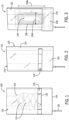
- the charging station 110 is shown in FIG. 2 in an empty or unloaded state without any batteries 112 that are being charged.
- the charging station 110 includes a housing 120 with a rear plate 122, a front cover 124, and a base 126.
- the base 126 includes or is attached to a power supply such as a battery, a power generator, or a power cord 130 (which attaches to an external power supply such as a wall outlet).
- the inlet 116 is an opening formed between the front cover 124 and the rear plate 122.
- the outlet 118 is formed as a horizontal slot in the front cover, below the inlet 116 and above the base 126.
- the top of the base 126 can also serve as a tray 132 on which the batteries rest.
- the housing 120 also includes an indicator light 134, such as a vertical or horizontal light bar or shaped light indicator (e.g., circle, star, triangle), LED light or strip, illuminated surface, or other suitable visible indicator.
- an indicator light 134 such as a vertical or horizontal light bar or shaped light indicator (e.g., circle, star, triangle), LED light or strip, illuminated surface, or other suitable visible indicator.
- the indicator light 134 is a horizontal light bar at the bottom of the base 126.
- FIG. 3 also shows some internal components of the charging station 110.
- a wireless power transmitter 136 is located inside the rear plate 122.
- the wireless power transmitter 136 includes a transmitting antenna formed on a printed circuit board (PCB).
- the charging station 110 also includes a main board 128 in the base 126.
- the main board 128 includes a processor, memory, and other components for operating the charging station 110.
- the power transmitter 136 transmits power wirelessly to the batteries 112 inside the charging station.
- each battery includes a power receiver 140 such as a receiving antenna, that receives the wirelessly-transmitted power and stores it in a battery cell 142.
- the power transmitter 136 is designed to send power wirelessly to multiple batteries 112 at the same time.
- the charging station 110 can charge at least four batteries 112 simultaneously.
- the charging station 110 has a shape that is large enough to contain at least four batteries 112 inside the charging station, and the power transmitter 136 is sized to transmit power to these four batteries simultaneously, so that the four batteries are all receiving power at the same time.
- both the power transmitter 136 and the power receivers 140 are elongated, meaning that they have one dimension longer than the other.
- the power transmitter 136 is oriented inside the rear plate 122 such that the longer dimension 136a is vertical, and the shorter dimension 136b is horizontal.
- This shape and orientation of the power transmitter 136 creates a charging field (such as a magnetic field) inside the charging station, and the batteries 112 pass through the charging field as they pass through the charging station.
- the batteries are oriented such that their longer dimension is generally horizontal (see FIG. 1 ). This enables at least four batteries 112 to fit inside the charging field created by the power transmitter 136. However, the batteries 112 receive charge in any orientation inside the charging field.
- batteries Although four batteries are shown in FIG. 1 , in other embodiments, different numbers of batteries can be charged simultaneously, such as two, three, five, six, seven, eight, nine, ten, or more batteries.
- the power transmitter 136 has a rectangular shape, taller than wide, with a bulge 138 in the middle.
- the shorter dimension 136b of the power transmitter widens in the center, to create the bulge 138.
- This bulged shape compensates for the loss in strength of the charging field along the long dimension of the rectangle.
- the charging field is relatively stronger at the corners of the rectangle (of the power transmitting antenna), and the field is relatively weaker along the longer ends.
- a rectangular charging antenna creates a charging field with an hourglass shape (narrower in the middle).
- the bulge 138 is a reverse hourglass shape, which compensates for the shape of the charging field and creates a more uniform charging field along the length of the charging antenna.
- the transmitting antenna on the power transmitter 136 has a horizontal length 136b that is longer than the longest dimension of the receiving antenna 140 in the battery 112. This shape creates a charging field that is bigger than the battery's receiving antenna, and the battery 112 can receive charge in any orientation inside the charging station.
- the battery 112 can be rotated or turned in any orientation inside the charging station 110 and still effectively receive power to charge the battery.
- the batteries 112 in the stack of batteries are tilted in different directions, away from horizontal, and they are all receiving power simultaneously.
- the batteries 112 do not need to be aligned in a particular way in order to receive charge in the charging station 110. They can face in toward the plate 122 or out toward the cover 124.
- the charging station is sized and shaped to receive the batteries in a generally horizontal orientation so that the batteries rest in a vertical stack inside the charging station and arrive at the outlet in a first-in first-out order. However if a battery moves through the charging station in a different orientation (vertical, or tilted), it will still receive power. The battery can be dropped into the charging station quickly and easily, without needing to be precisely aligned.
- FIGs. 4-6 An example of a wireless charging system 100 in use is shown in FIGs. 4-6 .
- a first battery 112 in a depleted state is deposited into the charging station 110 through the inlet 116 at the top. If the charging station 110 is empty, the first battery 112 passes through the charging station to the base 126, where it rests on the tray 132. If the charging station 110 is turned on and operating, it transmits power wirelessly to the first battery 112.
- additional batteries 212, 312, 412, 512 are inserted into the charging station through the inlet 116, forming a vertical stack of batteries.
- the charging station is large enough to contain at least five batteries, and to simultaneously charge at least four batteries at the same time.
- the first battery 112 is being removed from the charging station through the outlet 118, which is formed a horizontal slot above the base 126.
- the battery 112 entered the charging station first (before batteries 212, 312, 412, and 512) and exits first (ahead of batteries 212, 312, 412, 512).
- the shape of the housing 120 orients the batteries in this order, such that the batteries arrive at the outlet in the same order that they entered the inlet. This means that the battery that has spent the longest time in the charging station, and thus had the longest amount of time to receive charge, is the first one available to be taken for use.
- the housing 120 of the charging station is formed as a cabinet or bin that receives depleted batteries into the housing.
- the housing accepts the batteries through the inlet one at a time and keeps them in that order as they pass through the housing to the outlet.
- FIGs. 7-8 show an embodiment in which the front cover 124 is slidable vertically along the housing 120.
- the front cover 124 slides up to expose the base 126
- the front cover 124 slides down to expose the top of the rear plate 122.
- the front cover 124 includes an open top and an open bottom, so that it can slide in either direction. This sliding motion can be helpful to access either end of the housing 120 (such as the base 126 or the plate 122) for inspection or cleaning.
- the front cover 124 is fully or partially transparent, so that the batteries 112 inside the charging station are visible through the front cover 124.
- the outlet 118 is formed as a cutout edge that creates a horizontal slot in the front cover 124.
- FIG. 9 A top view of the cover 124 and plate 122 is shown in FIG. 9 .
- the cover 124 has a bracket shape with rear wings 140 that hook around the plate 122, to hold the cover 124 in place.
- FIG. 9 also shows the space formed between the rear plate 122 and the front cover 124, to accept the batteries 112 into the charging station.
- the space between the rear plate 112 and the front cover forms a channel 144 through the charging station.
- the channel 144 is sized and shaped to receive the batteries 112 in a horizontal orientation, so that multiple batteries can fit inside the charging station, forming a vertical stack of batteries along the channel 144.
- the channel 144 is a vertical channel that extends along the vertical plate 122.
- the housing 120 includes a contoured surface 142 along the channel 144.
- the contoured surface 142 is the front surface of the rear plate 122.
- the contoured surface 142 widens in the middle, to accommodate the width of the batteries 112.
- the contoured surface 142 includes a recessed center, where the depth of the channel 144 increases.
- the channel comprises has a vertical length, a horizontal width, and a depth perpendicular to the width, and the vertical length is longer than the horizontal width, and the horizontal width is longer than the depth. The depth of the channel increases in the recessed center. As shown in FIG. 9 , this recess helps guide the batteries 112 into the channel 144 in a generally horizontal orientation.
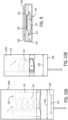
- FIG. 10A shows a first arrangement of a configurable charging station 110 with a first cover 124a that is sized to accommodate the larger sealed batteries 112 within respsetive sterile barriers 114.
- the cover 124a fits over the base 126, which is generally smaller (narrower) than the cover 124a such that the first cover 124a extends beyond the lateral edges of the base 126. That is, a width 145 of the base 126 is less than a width 146 of the cover 124a. Removal of the larger cover 124a and replacement with a smaller cover 124b ( FIG.
- the configurable charging station 110 can be provided as a kit with different covers 124a, 124b to be removed and replaced as desired by the user, depending on whether sterile or nonsterile batteries 112 are generally charged. It should be understood that both sterile and nonsterile batteries 112 fit within the cover 124a of the first arrangement.
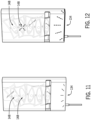
- FIGs. 11-12 show different states of the indicator light 134.
- the indicator light 134 is illuminated in a first state, such as a solid first color.
- This first color can be white, green, blue, or other colors, and the solid state means the color is not blinking.
- This state of the indicator light means the charging station 110 is turned on and operating normally.
- the indicator light 134 has changed to a second color (such as red, orange, yellow, or other colors) and is flashing. This can indicate an error state, to alert users that the charging station 110 is not operating correctly.
- the indicator light 134 is dark (not turned on), then that means that the charging station 110 is not powered on.
- Different combinations of colors, blinking patterns, and visible indications correspond with various system states, to communicate information to the user.
- the batteries 112 also include an indicator light 146.
- a first state of the indicator 146 (color, blinking pattern, brightness, or combinations of visual indications) indicates that the battery is depleted and receiving power.
- a second state (different color, etc.) indicates that the battery is fully charged.
- a third state indicates that the battery is malfunctioning, or not charging correctly.
- a dark state indicates that the battery is not currently charging.
- FIGs. 13-14 show two options for mounting the charging station 110 in a medical environment.
- FIG. 13 shows a wall mount 150 including a bracket 152 that attaches the housing 120 to a wall.
- FIG. 14 shows an upright stand or rack 154 that supports the housing 120 and can be placed on a horizontal surface such as a table or counter.
- a medical environment such as a hospital, operating room, surgery centers, urgent care centers, clinical care centers, and others.
- the charging station 110 may be mounted in other orientations, e.g., angled or horizontally.
- the batteries 112 can be pushed through the channel 144.
- FIG. 15 shows an exploded view of a chargeable battery 112, according to an embodiment.
- the battery 112 is re-chargeable, meaning it can be charged again after is has been depleted.
- the battery 112 includes a power receiver 140 such as a printed circuit board with a power receiving antenna.
- the power receiver 140 is coupled to a battery cell 142, which stores the received power.
- the battery cell 142 is a lithium cell.
- the battery 112 also includes a top case or cover 156, a main printed circuit board 158, a flex circuit 160, and a rear case or cover 162, among other components.
- the indicator light 146 is an LED (light emitting diode) carried by the flex circuit 160 and visible through the front case 156.
- FIG. 16 shows a method for wirelessly charging batteries for a medical device, in this case a video laryngoscope.
- a battery 112 is removed from the outlet of the charging station (also referred to as the power transmitting unit, PTU).
- the battery 112 is removed from the sterile barrier 114, for insertion into a medical device.
- the battery 112 is a battery 112for a video laryngoscope 164.
- the battery 112 is inserted or plugged into the medical device (such as the video laryngoscope 164), and the medical professional (such as a doctor, therapist, nurse, or other practitioner) uses the medical device in a medical procedure (such as an intubation - inserting an endotracheal tube or other airway device into a patient's airway passages such as the trachea).
- the battery 112 is decontaminated after use.
- the battery 112 is cleaned with a cleaning solution or is sterilized.
- the cleaned battery 112 is placed inside a sterile barrier 114 and sealed.
- the depleted battery 112 is placed back into the top of the charging station, where it passes through the charging field in the vertical stack of batteries 112 and receives power from the charging station 110.
- the battery 112 emerges at the outlet in a charged state, back at numeral 1 in FIG. 16 , and the cycle repeats.
- Batteries 112 can be received into the inlet in any state - charged, partially charged, or depleted. Depending on the particular environment where they are used, the batteries 112 may be fully depleted before they are decontaminated and returned to the charging station 110, or they may be only partially depleted. In the example of FIG. 16 , an intubation performed with a video laryngoscope 164 may deplete the battery 112 only partially, and the battery 112 is then moved through steps 4, 5, and 6 and charged back to full in the charging station 110. If a particular video laryngoscopy 164 procedure takes a longer amount of time, for example, the battery 112 in use may be depleted further or fully depleted. The charging station 110 can accept batteries 112 in any of these conditions, for charging back to full.
- the sterile barrier 114 is a plastic or paper pouch that is sealed around the battery 112 such as by vacuum or heat sealing, creating a sterile single or double barrier with the battery inside.
- the barrier 114 is compatible with sterilization methods (such as chemical, temperature, or radiation methods) and does not block the magnetic charging field from the power transmitter 136.
- a method for wirelessly recharging batteries (e.g., batteries 112) inside a sterile barrier (e.g., sterile barrier 114).
- the method includes receiving a first battery in a depleted state through an inlet at a top of a charging station (e.g., charging station 110).
- the first battery is sealed inside a first sterile barrier.
- the method includes receiving a second battery in a depleted state through the inlet and onto the first battery to form a vertical stack of batteries inside the charging station.
- the second battery is sealed inside a second sterile barrier.
- the method includes transmitting power wirelessly to the first battery through the first sterile barrier and simultaneously transmitting power wirelessly to the second battery through the second sterile barrier, such that both batteries are charging at the same time.
- the method includes providing the first battery in a charged state through an outlet at a bottom of the charging station, and subsequently, providing the second battery in a charged state through the outlet.
- the charging station 110 can be mounted as provided herein to a stand, surfaces or walls, or to equipment in a medical environment.
- FIG. 17 shows a charging station system 200 in which the charging station 110 is mounted on (e.g., mounted directly on, coupled to) a medical cabinet 202.
- the charging station 110 may be close to or in direct contact with a metal surface 204 of the medical cabinet 202, and the metal surface 202 can act as a power drain on the charging field generated by the power transmitter 136 ( FIG. 3 ) of the charging station 110.
- FIGS. 18-19 show examples of shielding arrangements for the charging station 110 that prevent or reduce power drains away from charging batteries 112 that may be caused by metallic mounting surfaces positioned close to a power transmitter.
- FIG. 18 is a cross-sectional view of a mounted charging station 110 of the system 200.
- the metal surface 204 is directly coupled to the housing 120 of the charging station 110.
- other mounting arrangements may involve intervening mounting brackets or structures positioned between the housing 120 and the metal surface 204.
- one or more shielding layers are positioned between the power transmitter and the metal surface 204 to form a shielded power transmitter assembly 220.
- the shielding arrangement prevents a drain of the charging field in the direction of the metal surface 204, or a drain in a direction opposite the desired direction of the charging field. Therefore, the charging field is emitted in the direction of the inserted batteries 112.
- the shielded power transmitter assembly 220 includes a non-ferromagnetic layer 224 separated from the power transmitter 136 by a ferrite or ferromagnetic layer 226.
- the non-ferromagnetic layer 224 may be a non-ferromagnetic metal, such as gold, silver, platinum, aluminum, copper, nickel, zinc, titanium, or combinations thereof.
- the non-ferromagnetic layer 224 may be a graphite layer.
- the ferrite or ferromagnetic layer 226 may be a ferrite or ferrous iron, cobalt, or nickel.
- the ferrite or ferromagnetic layer 226 may be in direct contact with a surface of the power transmitter opposing the direction of the charging field.
- FIG. 19 is view of an embodiment of the shielded power transmitter assembly 220 that includes a curved non-ferromagnetic layer 224.
- the assembly 220 also includes a first ferrite or ferromagnetic layer 226a and a second ferrite or ferromagnetic layer 226b separated by an air gap 230.
- the power transmitter 136 is, in the depicted embodiment, adjacent to the second ferrite or ferromagnetic layer 226b.
Landscapes
- Engineering & Computer Science (AREA)
- Power Engineering (AREA)
- Computer Networks & Wireless Communication (AREA)
- Physics & Mathematics (AREA)
- Electromagnetism (AREA)
- Charge And Discharge Circuits For Batteries Or The Like (AREA)
Description
- The present disclosure relates generally to medical devices and, more particularly, to a battery charging system for wirelessly charging batteries across a sterile barrier in a medical environment.
- Medical environments such as hospitals, surgery centers, urgent care centers, clinical care centers, and others utilize batteries to power devices such as scopes, cameras, surgical tools, and various powered tools and accessories. Often these devices need to be cleaned, sanitized, or sterilized prior to use or between uses. Recharging the batteries in these devices presents a challenge in medical environments. The remainder of this disclosure addresses solutions in this field.
US 2017/085103 describes a battery pack device including a housing, a plurality of electrical contacts, a plurality of electrical connectors, a moveable control device, and a battery.US 2008/007211 a battery charging system that includes a battery charging chute that comprises a housing configured to receive a battery via an insertion slot and configured to dispense a battery through a dispensing slot. - Certain embodiments commensurate in scope with the originally claimed subject matter are summarized below. These embodiments are not intended to limit the scope of the disclosure. Indeed, the present disclosure may encompass a variety of forms that may be similar to or different from the embodiments set forth below. Aspects of the invention are in accordance with the appended independent claims. Various optional features are the subject of the dependent claims.
- There is described a wireless charging system for recharging batteries in a medical environment includes a charging station. The charging station includes a housing that may comprise a rear plate, a slidable front cover, and a base; an inlet for depleted batteries at a top of the housing, wherein the inlet comprises an opening between the rear plate and the slidable front cover an outlet for charged batteries below the inlet, wherein the outlet comprises a slot in the front slidable cover; a vertical channel extending between the inlet and outlet; a wireless power transmitter inside the rear plate, wherein the wireless power transmitter comprises a transmitting antenna; a status light on the housing; and a power supply connected to the housing. The wireless charging system also includes at least two rechargeable batteries in different orientations inside the vertical channel, each battery having a wireless power receiver which comprises a receiving antenna, and each battery sealed inside a sterile barrier, wherein the transmitting antenna has a vertical length that is longer than a horizontal width, and wherein the horizontal width increases in a middle section of the transmitting antenna to create a bulged shape, the transmitting antenna sized to charge the at least two rechargeable batteries simultaneously in the different orientations.
- There is described a charging station for recharging batteries in a medical environment includes a housing comprising an inlet for batteries at atop of the housing, an outlet for charged batteries below the inlet, and a vertical channel extending between the inlet and outlet; a wireless power transmitter inside the housing, wherein the wireless power transmitter comprises a transmitting antenna configured to wirelessly charge a plurality of rechargeable batteries simultaneously by transmitting wireless power to a wireless power receiver of each of the plurality of batteries, and wherein the transmitting antenna, in operation, is configured to charge the plurality of batteries independent of orientation in the charging station; a status light on the housing; and a power supply connected to the housing.
- A method for wirelessly recharging batteries inside a sterile barrier includes the steps of receiving a first battery through an inlet at a top of a charging station as claimed herein, the first battery sealed inside a first sterile barrier; receiving a second battery through the inlet and onto the first battery to form a stack of batteries inside the charging station, the second battery sealed inside a second sterile barrier; transmitting power wirelessly to the first battery through the first sterile barrier and simultaneously transmitting power wirelessly to the second battery through the second sterile barrier; providing the first battery in a charged state through an outlet at a bottom of the charging station; and subsequently, providing the second battery in a charged state through the outlet.
- Advantages of the disclosed techniques may become apparent upon reading the following detailed description and upon reference to the drawings in which:
-
FIG. 1 is a front view of a wireless charging system according to an embodiment of the present disclosure. -
FIG. 2 is a perspective view of a charging station according to an embodiment of the present disclosure. -
FIG. 3 is a perspective view of internal components of the charging station ofFIG. 2 . -
FIG. 4 is a perspective view of a battery insertion in the wireless charging system according to an embodiment of the present disclosure. -
FIG. 5 is a perspective view of the wireless charging system with multiple batteries inserted according to an embodiment of the present disclosure. -
FIG. 6 is a perspective view of removal of a battery from the wireless charging system according to an embodiment of the present disclosure. -
FIG. 7 is a perspective view of a wireless charging system with a sliding removable cover, according to an embodiment of the present disclosure. -
FIG. 8 is a perspective view of a wireless charging system with a sliding removable cover, according to an embodiment of the present disclosure. -
FIG. 9 is a top view of the wireless charging system ofFIGs. 7-8 . -
FIG. 10A is a front view of a wireless charging system with a removable cover that is sized to fit batteries sealed in a sterile barrier, according to an embodiment of the present disclosure. -
FIG. 10B is a front view of the wireless charging system with a removable cover that is sized to fit batteries that are not within a sterile barrier, according to an embodiment of the present disclosure. -
FIG. 11 is a perspective view of a wireless charging system with a status indicator, according to an embodiment of the present disclosure. -
FIG. 12 is a perspective view of a wireless charging system with a status indicator, according to an embodiment of the present disclosure. -
FIG. 13 is a rear view of a charging station with a wall mount, according to an embodiment of the present disclosure. -
FIG. 14 is a front perspective view of a charging station with an upright stand, according to an embodiment of the present disclosure. -
FIG. 15 is an exploded view of a rechargeable battery, according to an embodiment of the present disclosure. -
FIG. 16 is a schematic view of a method of wirelessly charging batteries, according to an embodiment of the present disclosure. -
FIG. 17 is a front perspective view of a charging station mounted on a metal cabinet, according to an embodiment of the present disclosure. -
FIG. 18 is a cross-sectional view of components of a shielding arrangement for a charging station, according to an embodiment of the present disclosure. -
FIG. 19 is a cross-sectional view of components of a shielding arrangement for a charging station, according to an embodiment of the present disclosure. - The present disclosure relates generally to medical devices and, more particularly, to a battery charging system for wirelessly charging batteries across a sterile barrier in a medical environment. A
wireless charging system 100 according to an embodiment is depicted inFIG. 1 . Thewireless charging system 100 includes acharging station 110 and severalrechargeable batteries 112. Each battery is sealed inside asterile barrier 114. However, thewireless charging system 100 is also capable of chargingbatteries 112 that are not sealed within asterile barrier 114. Thecharging station 110 transmits power wirelessly to thebatteries 112 across thesterile barrier 114, so that the batteries do not need to be sterilized again after charging. The batteries enter the charging station through aninlet 116 at the top and then exit the charging station at anoutlet 118 at the bottom in a first-in first-out order, such that the battery that entered first exits first. This ordering dispensesbatteries 112 in order of the amount of time they have spent inside thecharging station 110, to reduce the chance that abattery 112 is removed from thestation 110 before it has had time to charge. - As shown in
FIG. 1 , thebatteries 112 are oriented generally horizontally inside the charging station, forming a vertical stack of batteries that move from theinlet 116 toward theoutlet 118 as batteries at the outlet are taken for use. Thebatteries 112 can receive power wirelessly regardless of their orientation inside thecharging station 110; charging abattery 112 inside thecharging station 110 is not dependent on any particular orientation (turned, tilted, rotated, etc.) of thebattery 112. The stackedbatteries 112 can all have a same general orientation within thecharging station 110, or some or all of thebatteries 112 can have different orientations relative toother batteries 112. Regardless, the charging station 101, in operation, charges the batteries independent of their orientation within thecharging station 110. In addition, thecharging station 110 can be mounted or arranged in other orientations and charge thebatteries 112. - The
charging station 110 is shown inFIG. 2 in an empty or unloaded state without anybatteries 112 that are being charged. In an embodiment, thecharging station 110 includes ahousing 120 with arear plate 122, afront cover 124, and abase 126. Thebase 126 includes or is attached to a power supply such as a battery, a power generator, or a power cord 130 (which attaches to an external power supply such as a wall outlet). Theinlet 116 is an opening formed between thefront cover 124 and therear plate 122. Theoutlet 118 is formed as a horizontal slot in the front cover, below theinlet 116 and above thebase 126. The top of thebase 126 can also serve as atray 132 on which the batteries rest. Thehousing 120 also includes anindicator light 134, such as a vertical or horizontal light bar or shaped light indicator (e.g., circle, star, triangle), LED light or strip, illuminated surface, or other suitable visible indicator. InFIGs. 1-3 , theindicator light 134 is a horizontal light bar at the bottom of thebase 126. -
FIG. 3 also shows some internal components of the chargingstation 110. Awireless power transmitter 136 is located inside therear plate 122. In an embodiment, thewireless power transmitter 136 includes a transmitting antenna formed on a printed circuit board (PCB). The chargingstation 110 also includes amain board 128 in thebase 126. Themain board 128 includes a processor, memory, and other components for operating the chargingstation 110. - The
power transmitter 136 transmits power wirelessly to thebatteries 112 inside the charging station. As shown in more detail inFIG. 14 (and described below), each battery includes apower receiver 140 such as a receiving antenna, that receives the wirelessly-transmitted power and stores it in abattery cell 142. Thepower transmitter 136 is designed to send power wirelessly tomultiple batteries 112 at the same time. Referring toFIGs. 1-3 , in an embodiment the chargingstation 110 can charge at least fourbatteries 112 simultaneously. The chargingstation 110 has a shape that is large enough to contain at least fourbatteries 112 inside the charging station, and thepower transmitter 136 is sized to transmit power to these four batteries simultaneously, so that the four batteries are all receiving power at the same time. This is accomplished by the relative sizing and orientation of thepower transmitter 136 and thepower receivers 140. In an embodiment, both thepower transmitter 136 and thepower receivers 140 are elongated, meaning that they have one dimension longer than the other. Thepower transmitter 136 is oriented inside therear plate 122 such that thelonger dimension 136a is vertical, and theshorter dimension 136b is horizontal. This shape and orientation of thepower transmitter 136 creates a charging field (such as a magnetic field) inside the charging station, and thebatteries 112 pass through the charging field as they pass through the charging station. In an embodiment, the batteries are oriented such that their longer dimension is generally horizontal (seeFIG. 1 ). This enables at least fourbatteries 112 to fit inside the charging field created by thepower transmitter 136. However, thebatteries 112 receive charge in any orientation inside the charging field. - Although four batteries are shown in
FIG. 1 , in other embodiments, different numbers of batteries can be charged simultaneously, such as two, three, five, six, seven, eight, nine, ten, or more batteries. - Referring again to
FIG. 3 , thepower transmitter 136 has a rectangular shape, taller than wide, with abulge 138 in the middle. Theshorter dimension 136b of the power transmitter widens in the center, to create thebulge 138. This bulged shape compensates for the loss in strength of the charging field along the long dimension of the rectangle. The charging field is relatively stronger at the corners of the rectangle (of the power transmitting antenna), and the field is relatively weaker along the longer ends. Thus, a rectangular charging antenna creates a charging field with an hourglass shape (narrower in the middle). Thebulge 138 is a reverse hourglass shape, which compensates for the shape of the charging field and creates a more uniform charging field along the length of the charging antenna. - In an embodiment, the transmitting antenna on the
power transmitter 136 has ahorizontal length 136b that is longer than the longest dimension of the receivingantenna 140 in thebattery 112. This shape creates a charging field that is bigger than the battery's receiving antenna, and thebattery 112 can receive charge in any orientation inside the charging station. Thebattery 112 can be rotated or turned in any orientation inside the chargingstation 110 and still effectively receive power to charge the battery. As shown inFIG. 1 , thebatteries 112 in the stack of batteries are tilted in different directions, away from horizontal, and they are all receiving power simultaneously. Thebatteries 112 do not need to be aligned in a particular way in order to receive charge in the chargingstation 110. They can face in toward theplate 122 or out toward thecover 124. In an embodiment, the charging station is sized and shaped to receive the batteries in a generally horizontal orientation so that the batteries rest in a vertical stack inside the charging station and arrive at the outlet in a first-in first-out order. However if a battery moves through the charging station in a different orientation (vertical, or tilted), it will still receive power. The battery can be dropped into the charging station quickly and easily, without needing to be precisely aligned. - An example of a
wireless charging system 100 in use is shown inFIGs. 4-6 . InFIG. 4 , afirst battery 112 in a depleted state is deposited into the chargingstation 110 through theinlet 116 at the top. If the chargingstation 110 is empty, thefirst battery 112 passes through the charging station to thebase 126, where it rests on thetray 132. If the chargingstation 110 is turned on and operating, it transmits power wirelessly to thefirst battery 112. - In
FIG. 5 ,additional batteries inlet 116, forming a vertical stack of batteries. In this example, the charging station is large enough to contain at least five batteries, and to simultaneously charge at least four batteries at the same time. - In
FIG. 6 , thefirst battery 112 is being removed from the charging station through theoutlet 118, which is formed a horizontal slot above thebase 126. Thebattery 112 entered the charging station first (beforebatteries batteries housing 120 orients the batteries in this order, such that the batteries arrive at the outlet in the same order that they entered the inlet. This means that the battery that has spent the longest time in the charging station, and thus had the longest amount of time to receive charge, is the first one available to be taken for use. - In an embodiment, the
housing 120 of the charging station is formed as a cabinet or bin that receives depleted batteries into the housing. The housing accepts the batteries through the inlet one at a time and keeps them in that order as they pass through the housing to the outlet. -
FIGs. 7-8 show an embodiment in which thefront cover 124 is slidable vertically along thehousing 120. InFIG. 7 , thefront cover 124 slides up to expose thebase 126, and inFIG. 8 thefront cover 124 slides down to expose the top of therear plate 122. In this embodiment, thefront cover 124 includes an open top and an open bottom, so that it can slide in either direction. This sliding motion can be helpful to access either end of the housing 120 (such as the base 126 or the plate 122) for inspection or cleaning. In an embodiment, thefront cover 124 is fully or partially transparent, so that thebatteries 112 inside the charging station are visible through thefront cover 124. As shown inFIG. 7 , in an embodiment, theoutlet 118 is formed as a cutout edge that creates a horizontal slot in thefront cover 124. - A top view of the
cover 124 andplate 122 is shown inFIG. 9 . Thecover 124 has a bracket shape withrear wings 140 that hook around theplate 122, to hold thecover 124 in place.FIG. 9 also shows the space formed between therear plate 122 and thefront cover 124, to accept thebatteries 112 into the charging station. The space between therear plate 112 and the front cover forms achannel 144 through the charging station. Thechannel 144 is sized and shaped to receive thebatteries 112 in a horizontal orientation, so that multiple batteries can fit inside the charging station, forming a vertical stack of batteries along thechannel 144. In an embodiment, thechannel 144 is a vertical channel that extends along thevertical plate 122. - In an embodiment, the
housing 120 includes acontoured surface 142 along thechannel 144. In an example, thecontoured surface 142 is the front surface of therear plate 122. In this example, thecontoured surface 142 widens in the middle, to accommodate the width of thebatteries 112. Thecontoured surface 142 includes a recessed center, where the depth of thechannel 144 increases. In an embodiment, the channel comprises has a vertical length, a horizontal width, and a depth perpendicular to the width, and the vertical length is longer than the horizontal width, and the horizontal width is longer than the depth. The depth of the channel increases in the recessed center. As shown inFIG. 9 , this recess helps guide thebatteries 112 into thechannel 144 in a generally horizontal orientation. - The charging
station 110 can be used to chargebatteries 112 that are insterile barrier 114 or that are not sterile and, therefore, have a smaller footprint.FIG. 10A shows a first arrangement of aconfigurable charging station 110 with afirst cover 124a that is sized to accommodate the larger sealedbatteries 112 within respsetivesterile barriers 114. Thecover 124a fits over thebase 126, which is generally smaller (narrower) than thecover 124a such that thefirst cover 124a extends beyond the lateral edges of thebase 126. That is, awidth 145 of thebase 126 is less than awidth 146 of thecover 124a. Removal of thelarger cover 124a and replacement with asmaller cover 124b (FIG. 10B ) transitions the chargingstation 110 to a second arrangement that is sized to better accommodatenonsterile batteries 112 that are not withinsterile barriers 114. In an embodiment, thesecond cover 124b is about as wide as thewidth 145 of thebase 126. Theconfigurable charging station 110 can be provided as a kit withdifferent covers nonsterile batteries 112 are generally charged. It should be understood that both sterile andnonsterile batteries 112 fit within thecover 124a of the first arrangement. -
FIGs. 11-12 show different states of theindicator light 134. InFIG. 11 , theindicator light 134 is illuminated in a first state, such as a solid first color. This first color can be white, green, blue, or other colors, and the solid state means the color is not blinking. This state of the indicator light means the chargingstation 110 is turned on and operating normally. InFIG. 12 , theindicator light 134 has changed to a second color (such as red, orange, yellow, or other colors) and is flashing. This can indicate an error state, to alert users that the chargingstation 110 is not operating correctly. When theindicator light 134 is dark (not turned on), then that means that the chargingstation 110 is not powered on. Different combinations of colors, blinking patterns, and visible indications (brightness, etc.) correspond with various system states, to communicate information to the user. - In an embodiment, the
batteries 112 also include anindicator light 146. This is a visible indicator that shows the state of charging of thebatteries 112. A first state of the indicator 146 (color, blinking pattern, brightness, or combinations of visual indications) indicates that the battery is depleted and receiving power. A second state (different color, etc.) indicates that the battery is fully charged. A third state indicates that the battery is malfunctioning, or not charging correctly. A dark state indicates that the battery is not currently charging. -
FIGs. 13-14 show two options for mounting the chargingstation 110 in a medical environment.FIG. 13 shows awall mount 150 including abracket 152 that attaches thehousing 120 to a wall.FIG. 14 shows an upright stand or rack 154 that supports thehousing 120 and can be placed on a horizontal surface such as a table or counter. These are two options for placing the chargingstation 110 in a medical environment such as a hospital, operating room, surgery centers, urgent care centers, clinical care centers, and others. While disclosed embodiments show a generally vertical mounting arrangement and with thechannel 114 being oriented vertically (perpendicular to the floor), the chargingstation 110 may be mounted in other orientations, e.g., angled or horizontally. For example, in a horizontal mounting arrangement, thebatteries 112 can be pushed through thechannel 144. -
FIG. 15 shows an exploded view of achargeable battery 112, according to an embodiment. In an embodiment, thebattery 112 is re-chargeable, meaning it can be charged again after is has been depleted. Thebattery 112 includes apower receiver 140 such as a printed circuit board with a power receiving antenna. Thepower receiver 140 is coupled to abattery cell 142, which stores the received power. In an embodiment, thebattery cell 142 is a lithium cell. Thebattery 112 also includes a top case or cover 156, a main printedcircuit board 158, aflex circuit 160, and a rear case or cover 162, among other components. In an embodiment, theindicator light 146 is an LED (light emitting diode) carried by theflex circuit 160 and visible through thefront case 156. -
FIG. 16 shows a method for wirelessly charging batteries for a medical device, in this case a video laryngoscope. Atnumber 1, abattery 112 is removed from the outlet of the charging station (also referred to as the power transmitting unit, PTU). Atnumber 2, thebattery 112 is removed from thesterile barrier 114, for insertion into a medical device. In the example ofFIG. 16 , thebattery 112 is a battery 112for avideo laryngoscope 164. Atnumber 3, thebattery 112 is inserted or plugged into the medical device (such as the video laryngoscope 164), and the medical professional (such as a doctor, therapist, nurse, or other practitioner) uses the medical device in a medical procedure (such as an intubation - inserting an endotracheal tube or other airway device into a patient's airway passages such as the trachea). Innumber 4, thebattery 112 is decontaminated after use. In an example, thebattery 112 is cleaned with a cleaning solution or is sterilized. Innumber 5, the cleanedbattery 112 is placed inside asterile barrier 114 and sealed. Innumber 6, the depletedbattery 112 is placed back into the top of the charging station, where it passes through the charging field in the vertical stack ofbatteries 112 and receives power from the chargingstation 110. Thebattery 112 emerges at the outlet in a charged state, back atnumeral 1 inFIG. 16 , and the cycle repeats. -
Batteries 112 can be received into the inlet in any state - charged, partially charged, or depleted. Depending on the particular environment where they are used, thebatteries 112 may be fully depleted before they are decontaminated and returned to the chargingstation 110, or they may be only partially depleted. In the example ofFIG. 16 , an intubation performed with avideo laryngoscope 164 may deplete thebattery 112 only partially, and thebattery 112 is then moved throughsteps station 110. If aparticular video laryngoscopy 164 procedure takes a longer amount of time, for example, thebattery 112 in use may be depleted further or fully depleted. The chargingstation 110 can acceptbatteries 112 in any of these conditions, for charging back to full. - In an embodiment, the
sterile barrier 114 is a plastic or paper pouch that is sealed around thebattery 112 such as by vacuum or heat sealing, creating a sterile single or double barrier with the battery inside. Thebarrier 114 is compatible with sterilization methods (such as chemical, temperature, or radiation methods) and does not block the magnetic charging field from thepower transmitter 136. - According to an embodiment, a method is provided for wirelessly recharging batteries (e.g., batteries 112) inside a sterile barrier (e.g., sterile barrier 114). The method includes receiving a first battery in a depleted state through an inlet at a top of a charging station (e.g., charging station 110). The first battery is sealed inside a first sterile barrier. The method includes receiving a second battery in a depleted state through the inlet and onto the first battery to form a vertical stack of batteries inside the charging station. The second battery is sealed inside a second sterile barrier. The method includes transmitting power wirelessly to the first battery through the first sterile barrier and simultaneously transmitting power wirelessly to the second battery through the second sterile barrier, such that both batteries are charging at the same time. The method includes providing the first battery in a charged state through an outlet at a bottom of the charging station, and subsequently, providing the second battery in a charged state through the outlet.
- The charging
station 110 can be mounted as provided herein to a stand, surfaces or walls, or to equipment in a medical environment.FIG. 17 shows a chargingstation system 200 in which the chargingstation 110 is mounted on (e.g., mounted directly on, coupled to) amedical cabinet 202. The chargingstation 110 may be close to or in direct contact with ametal surface 204 of themedical cabinet 202, and themetal surface 202 can act as a power drain on the charging field generated by the power transmitter 136 (FIG. 3 ) of the chargingstation 110.FIGS. 18-19 show examples of shielding arrangements for the chargingstation 110 that prevent or reduce power drains away from chargingbatteries 112 that may be caused by metallic mounting surfaces positioned close to a power transmitter. -
FIG. 18 is a cross-sectional view of a mountedcharging station 110 of thesystem 200. Themetal surface 204 is directly coupled to thehousing 120 of the chargingstation 110. However, it should be understood that other mounting arrangements may involve intervening mounting brackets or structures positioned between thehousing 120 and themetal surface 204. To facilitate transmission of the charging field of thepower transmitter 136 towards any insertedbatteries 112, shown by the arrows, one or more shielding layers are positioned between the power transmitter and themetal surface 204 to form a shieldedpower transmitter assembly 220. The shielding arrangement prevents a drain of the charging field in the direction of themetal surface 204, or a drain in a direction opposite the desired direction of the charging field. Therefore, the charging field is emitted in the direction of the insertedbatteries 112. - In an embodiment, the shielded
power transmitter assembly 220 includes anon-ferromagnetic layer 224 separated from thepower transmitter 136 by a ferrite orferromagnetic layer 226. Thenon-ferromagnetic layer 224 may be a non-ferromagnetic metal, such as gold, silver, platinum, aluminum, copper, nickel, zinc, titanium, or combinations thereof. Thenon-ferromagnetic layer 224 may be a graphite layer. The ferrite orferromagnetic layer 226 may be a ferrite or ferrous iron, cobalt, or nickel. The ferrite orferromagnetic layer 226 may be in direct contact with a surface of the power transmitter opposing the direction of the charging field. -
FIG. 19 is view of an embodiment of the shieldedpower transmitter assembly 220 that includes a curvednon-ferromagnetic layer 224. Theassembly 220 also includes a first ferrite orferromagnetic layer 226a and a second ferrite orferromagnetic layer 226b separated by anair gap 230. Thepower transmitter 136 is, in the depicted embodiment, adjacent to the second ferrite orferromagnetic layer 226b. - While the disclosure may be susceptible to various modifications and alternative forms, specific embodiments have been shown by way of example in the drawings and have been described in detail herein. However, it should be understood that the embodiments provided herein are not intended to be limited to the particular forms disclosed. Rather, the various embodiments may cover all modifications, equivalents, and alternatives falling within the spirit and scope of the following appended claims.
Claims (15)
- A charging station for recharging batteries in a medical environment, comprising:a housing (120) comprising an inlet (116) for batteries at a top of the housing (120),an outlet (118) for charged batteries below the inlet (116), and a vertical channel (144) extending between the inlet (116) and outlet (118);a wireless power transmitter (136) inside the housing (120), wherein the wireless power transmitter (136) comprises a transmitting antenna configured to wirelessly charge a plurality of rechargeable batteries (112) simultaneously by transmitting wireless power to a wireless power receiver (140) of each of the plurality of batteries (112), wherein the transmitting antenna, in operation, is configured to charge the plurality of batteries (112) independent of orientation in the charging station (110), and wherein the transmitting antenna has a vertical length that is longer than a horizontal width, and wherein the horizontal width increases in a middle section of the transmitting antenna to create a bulged shape, the transmitting antenna sized to charge at least two batteries simultaneously in the different orientations;a status light (134) on the housing (120); anda power supply connected to the housing (120).
- The charging station of claim 1, wherein the housing (120) comprises a removable cover and a plate, and wherein the channel (144) is formed between the removable cover and the plate;
and/or
wherein the removable cover is transparent and is slidable vertically along the plate. - The charging station of claim 2, wherein the removable cover is replaceable with a different removable cover of a different size,
optionally:
wherein the removable cover is sized to accommodate batteries sealed with respective sterile barriers (114), and wherein the different removable is sized to accommodate nonsterile batteries. - The charging station of any preceding claim, wherein the channel (144) comprises a vertical length, a horizontal width, and a depth perpendicular to the width, and wherein the vertical length is longer than the horizontal width, and wherein the horizontal width is longer than the depth,
optionally:
wherein the channel (144) comprises a recessed center where the depth of the channel (144) increases. - The charging station of any preceding claim, wherein the status light (134) comprises an illuminated surface, an illuminated horizontal bar, and/or an illuminated vertical bar.
- The charging station of any preceding claim, wherein the transmitting antenna is oriented vertically along the channel (144).
- The charging station of claim 6,wherein the vertical length of the transmitting antenna is longer than a vertical stack of four horizontally-oriented rechargeable batteries (112) inserted in the charging station (110);
and/orwherein the housing (120) comprises a vertical plate and wherein the transmitting antenna is located inside the vertical plate. - The charging station of claim 1, wherein the housing (120) comprises a rear plate (122), a front slidable cover (124), and a base (126), and wherein the inlet (116) comprises an opening between the rear plate (122) and the front slidable cover (124), and wherein the outlet (118) comprises a slot in the front slidable cover (124).
- The charging station of any preceding claim, wherein the outlet (118) comprises a horizontal slot at a bottom of the channel (144).
- A wireless charging system for recharging batteries in a medical environment, comprising:a charging station (110) according to any of claims 1 to 9, andat least two rechargeable batteries (112) in different orientations inside the vertical channel (144), each battery (112) having a wireless power receiver (140) which comprises a receiving antenna, and each battery (112) sealed inside a sterile barrier (114).
- The wireless charging system of claim 10, wherein the charging station (110) comprises a shielded wireless power transmitter assembly (220) comprising:the wireless power transmitter (136);a non-ferromagnetic layer (224); andat least one ferrite or ferromagnetic layer (226).
- The wireless charging system of claim 11, wherein the wireless power transmitter (136) is positioned between the at least one ferrite or ferromagnetic layer (226) and the at least two rechargeable batteries (112);
and/or
wherein the at least one ferrite or ferromagnetic layer (226) is positioned between the non-ferromagnetic layer (224) and the wireless power transmitter (136);
and/or
wherein the at least one ferrite or ferromagnetic layer (226) of the shielded wireless power transmitter assembly (220) comprises a first ferrite or ferromagnetic layer (226a) separated from a second ferrite or ferromagnetic layer (226b) by an air gap (230). - The wireless charging system of any of claims 10 to 12,
wherein the at least two rechargeable batteries (112) form a vertical stack. - A method for wirelessly recharging batteries inside a sterile barrier (114), comprising:receiving a first battery (112) through the inlet (116) at the top of a charging station (110) according to any of claims 1 to 9, the first battery (112) sealed inside a first sterile barrier (114);receiving a second battery (112) through the inlet (116) and onto the first battery (112) to form a stack of batteries inside the charging station (110), the second battery (112) sealed inside a second sterile barrier (114);transmitting power wirelessly to the first battery (112) through the first sterile barrier (114) and simultaneously transmitting power wirelessly to the second battery (112) through the second sterile barrier (114);providing the first battery (112) in a charged state through the outlet (118) at a bottom of the charging station (110); andsubsequently, providing the second battery (112) in a charged state through the outlet (118).
- The method of claim 14, wherein the first battery (112) is received through the inlet (116) in a depleted state.
Applications Claiming Priority (2)
| Application Number | Priority Date | Filing Date | Title |
|---|---|---|---|
| US202062977517P | 2020-02-17 | 2020-02-17 | |
| PCT/EP2021/052974 WO2021165086A1 (en) | 2020-02-17 | 2021-02-08 | Wireless charging system for medical devices |
Publications (2)
| Publication Number | Publication Date |
|---|---|
| EP4107839A1 EP4107839A1 (en) | 2022-12-28 |
| EP4107839B1 true EP4107839B1 (en) | 2024-12-25 |
Family
ID=74572783
Family Applications (1)
| Application Number | Title | Priority Date | Filing Date |
|---|---|---|---|
| EP21704254.8A Active EP4107839B1 (en) | 2020-02-17 | 2021-02-08 | Wireless charging system for medical devices |
Country Status (4)
| Country | Link |
|---|---|
| US (4) | US11502546B2 (en) |
| EP (1) | EP4107839B1 (en) |
| CN (1) | CN115176396A (en) |
| WO (1) | WO2021165086A1 (en) |
Families Citing this family (8)
| Publication number | Priority date | Publication date | Assignee | Title |
|---|---|---|---|---|
| US11502546B2 (en) * | 2020-02-17 | 2022-11-15 | Covidien Ag | Wireless charging system for medical devices |
| US12316132B2 (en) | 2020-08-28 | 2025-05-27 | Covidien Lp | Medical device wireless charging system |
| US12532069B2 (en) | 2021-10-20 | 2026-01-20 | Covidien Lp | Video laryngoscope wireless hub systems and methods |
| US12557979B2 (en) | 2022-02-07 | 2026-02-24 | Covidien Lp | Video laryngoscope with window for infrared pairing |
| US12341349B2 (en) * | 2022-05-10 | 2025-06-24 | Rapitag Gmbh | Charging apparatus for vending-related devices, system for charging vending-related devices and method for charging a vending-related device using such a system |
| USD1054980S1 (en) * | 2022-07-22 | 2024-12-24 | Covidien Lp | Medical charging cabinet |
| US12431742B2 (en) * | 2022-08-11 | 2025-09-30 | Stryker Corporation | Surgical instrument wireless charging system |
| USD1120318S1 (en) | 2022-10-19 | 2026-03-24 | Covidien Lp | Media module relay for video laryngoscope |
Family Cites Families (19)
| Publication number | Priority date | Publication date | Assignee | Title |
|---|---|---|---|---|
| US5178131A (en) | 1991-04-30 | 1993-01-12 | Upsher Laryngoscope Corporation | Waterproofed laryngoscope handle |
| KR0138556B1 (en) | 1995-06-14 | 1998-06-15 | 김광호 | Water-proof case assembly of battery electronic device |
| WO1998006144A1 (en) | 1996-08-05 | 1998-02-12 | Minnesota Mining And Manufacturing Company | Sterilizable battery enclosure |
| US6890298B2 (en) | 1999-10-14 | 2005-05-10 | Karl Storz Gmbh & Co. Kg | Video laryngoscope with detachable light and image guides |
| US6847190B2 (en) | 2002-02-26 | 2005-01-25 | Linvatec Corporation | Method and apparatus for charging sterilizable rechargeable batteries |
| US7946981B1 (en) | 2003-10-23 | 2011-05-24 | Anthony Cubb | Two-piece video laryngoscope |
| US20070179342A1 (en) | 2006-01-12 | 2007-08-02 | Kb Port Llc | Wireless Laryngoscope with Internal Antennae and One Piece Construction Adapted for Laryngoscopy Training |
| US7723951B2 (en) | 2006-06-30 | 2010-05-25 | Intel Corporation | Battery charging apparatus having a chute and method of recharging a battery |
| CN201000906Y (en) | 2007-01-26 | 2008-01-02 | 深圳迈瑞生物医疗电子股份有限公司 | Battery assembly and its fixing structure |
| WO2011141752A2 (en) | 2010-05-13 | 2011-11-17 | Aircraft Medical Limited | Battery pack and electrical device with demountable battery pack |
| US10660695B2 (en) * | 2010-11-05 | 2020-05-26 | Ethicon Llc | Sterile medical instrument charging device |
| KR102369199B1 (en) | 2013-10-31 | 2022-03-03 | 서울바이오시스 주식회사 | Multi charging and sterilizing apparatus |
| US10084329B2 (en) * | 2014-02-28 | 2018-09-25 | Nrg Energy, Inc. | Power pack vending apparatus, system, and method of use for charging power packs with biased locking arrangement |
| KR20160131274A (en) * | 2015-05-06 | 2016-11-16 | 주식회사 신안정보통신 | Case for electronic device providing function of a wireless charge |
| US10116151B2 (en) | 2015-09-22 | 2018-10-30 | Bseng, Llc | Battery charger rental kiosk system |
| US10250066B2 (en) | 2016-05-11 | 2019-04-02 | Greatbatch Ltd. | Wireless charging autoclavable batteries inside a sterilizable tray |
| WO2019067539A1 (en) | 2017-09-26 | 2019-04-04 | Stryker Corporation | System and method for wirelessly charging a medical device battery |
| WO2019143411A1 (en) * | 2017-12-04 | 2019-07-25 | Peleton Surgical, Llc | Portable device and method of supplying power to a portable device |
| US11502546B2 (en) * | 2020-02-17 | 2022-11-15 | Covidien Ag | Wireless charging system for medical devices |
-
2021
- 2021-02-02 US US17/165,101 patent/US11502546B2/en active Active
- 2021-02-08 CN CN202180014831.2A patent/CN115176396A/en active Pending
- 2021-02-08 WO PCT/EP2021/052974 patent/WO2021165086A1/en not_active Ceased
- 2021-02-08 EP EP21704254.8A patent/EP4107839B1/en active Active
-
2022
- 2022-10-07 US US17/962,230 patent/US11799322B2/en active Active
-
2023
- 2023-09-07 US US18/462,670 patent/US12166359B2/en active Active
-
2024
- 2024-10-30 US US18/932,370 patent/US20250055319A1/en active Pending
Also Published As
| Publication number | Publication date |
|---|---|
| US20230420990A1 (en) | 2023-12-28 |
| EP4107839A1 (en) | 2022-12-28 |
| US20230029630A1 (en) | 2023-02-02 |
| US11799322B2 (en) | 2023-10-24 |
| US20210257856A1 (en) | 2021-08-19 |
| CN115176396A (en) | 2022-10-11 |
| US11502546B2 (en) | 2022-11-15 |
| US20250055319A1 (en) | 2025-02-13 |
| WO2021165086A1 (en) | 2021-08-26 |
| US12166359B2 (en) | 2024-12-10 |
Similar Documents
| Publication | Publication Date | Title |
|---|---|---|
| EP4107839B1 (en) | Wireless charging system for medical devices | |
| US20120112690A1 (en) | Medical Device Packaging with Charging Interface | |
| EP2737870B1 (en) | Smart cart | |
| JP5265713B2 (en) | Charger for electronic cassette | |
| JP5931081B2 (en) | Medical device package with charging interface | |
| US9711765B1 (en) | Rapid replacement battery system | |
| CN101567576A (en) | Battery pack | |
| WO2021022036A1 (en) | Portable power bottle | |
| CN220275208U (en) | Medicine storage cabinet | |
| US20250330049A1 (en) | Medical device wireless charging system | |
| CN107174522A (en) | Watch Smart Pill Box | |
| CN112881372A (en) | Convenient physiological health index detection technology | |
| EP1324710A1 (en) | Cordless surgical handpiece with disposable battery; and method | |
| CN215837848U (en) | Intelligent electronic display medicine basket | |
| CN217521624U (en) | Soft package product supply equipment | |
| CN223695155U (en) | Storage system | |
| CN218704957U (en) | Consumable storage equipment | |
| CN218594892U (en) | Blood pressure monitoring equipment and accomodate charger thereof | |
| CN217706795U (en) | Room card strorage device for hotel management | |
| CN215913823U (en) | Medical intelligent storage cabinet | |
| CN222915683U (en) | Power supply component and portable medical device | |
| CN214594990U (en) | Drawer unit and medicine cabinet | |
| CN218512996U (en) | Sharing retail all-in-one machine | |
| JP6765810B2 (en) | Radiation imaging device containment device and containment system | |
| CN116098395A (en) | Intelligent storage device |
Legal Events
| Date | Code | Title | Description |
|---|---|---|---|
| STAA | Information on the status of an ep patent application or granted ep patent |
Free format text: STATUS: UNKNOWN |
|
| STAA | Information on the status of an ep patent application or granted ep patent |
Free format text: STATUS: THE INTERNATIONAL PUBLICATION HAS BEEN MADE |
|
| PUAI | Public reference made under article 153(3) epc to a published international application that has entered the european phase |
Free format text: ORIGINAL CODE: 0009012 |
|
| STAA | Information on the status of an ep patent application or granted ep patent |
Free format text: STATUS: REQUEST FOR EXAMINATION WAS MADE |
|
| 17P | Request for examination filed |
Effective date: 20220829 |
|
| AK | Designated contracting states |
Kind code of ref document: A1 Designated state(s): AL AT BE BG CH CY CZ DE DK EE ES FI FR GB GR HR HU IE IS IT LI LT LU LV MC MK MT NL NO PL PT RO RS SE SI SK SM TR |
|
| DAV | Request for validation of the european patent (deleted) | ||
| DAX | Request for extension of the european patent (deleted) | ||
| STAA | Information on the status of an ep patent application or granted ep patent |
Free format text: STATUS: EXAMINATION IS IN PROGRESS |
|
| 17Q | First examination report despatched |
Effective date: 20231208 |
|
| GRAP | Despatch of communication of intention to grant a patent |
Free format text: ORIGINAL CODE: EPIDOSNIGR1 |
|
| STAA | Information on the status of an ep patent application or granted ep patent |
Free format text: STATUS: GRANT OF PATENT IS INTENDED |
|
| INTG | Intention to grant announced |
Effective date: 20240729 |
|
| GRAS | Grant fee paid |
Free format text: ORIGINAL CODE: EPIDOSNIGR3 |
|
| GRAA | (expected) grant |
Free format text: ORIGINAL CODE: 0009210 |
|
| STAA | Information on the status of an ep patent application or granted ep patent |
Free format text: STATUS: THE PATENT HAS BEEN GRANTED |
|
| AK | Designated contracting states |
Kind code of ref document: B1 Designated state(s): AL AT BE BG CH CY CZ DE DK EE ES FI FR GB GR HR HU IE IS IT LI LT LU LV MC MK MT NL NO PL PT RO RS SE SI SK SM TR |
|
| REG | Reference to a national code |
Ref country code: GB Ref legal event code: FG4D |
|
| REG | Reference to a national code |
Ref country code: CH Ref legal event code: EP |
|
| REG | Reference to a national code |
Ref country code: DE Ref legal event code: R096 Ref document number: 602021023845 Country of ref document: DE |
|
| REG | Reference to a national code |
Ref country code: IE Ref legal event code: FG4D |
|
| REG | Reference to a national code |
Ref country code: LT Ref legal event code: MG9D |
|
| PG25 | Lapsed in a contracting state [announced via postgrant information from national office to epo] |
Ref country code: HR Free format text: LAPSE BECAUSE OF FAILURE TO SUBMIT A TRANSLATION OF THE DESCRIPTION OR TO PAY THE FEE WITHIN THE PRESCRIBED TIME-LIMIT Effective date: 20241225 |
|
| PG25 | Lapsed in a contracting state [announced via postgrant information from national office to epo] |
Ref country code: FI Free format text: LAPSE BECAUSE OF FAILURE TO SUBMIT A TRANSLATION OF THE DESCRIPTION OR TO PAY THE FEE WITHIN THE PRESCRIBED TIME-LIMIT Effective date: 20241225 |
|
| PG25 | Lapsed in a contracting state [announced via postgrant information from national office to epo] |
Ref country code: BG Free format text: LAPSE BECAUSE OF FAILURE TO SUBMIT A TRANSLATION OF THE DESCRIPTION OR TO PAY THE FEE WITHIN THE PRESCRIBED TIME-LIMIT Effective date: 20241225 |
|
| PG25 | Lapsed in a contracting state [announced via postgrant information from national office to epo] |
Ref country code: NO Free format text: LAPSE BECAUSE OF FAILURE TO SUBMIT A TRANSLATION OF THE DESCRIPTION OR TO PAY THE FEE WITHIN THE PRESCRIBED TIME-LIMIT Effective date: 20250325 |
|
| PG25 | Lapsed in a contracting state [announced via postgrant information from national office to epo] |
Ref country code: GR Free format text: LAPSE BECAUSE OF FAILURE TO SUBMIT A TRANSLATION OF THE DESCRIPTION OR TO PAY THE FEE WITHIN THE PRESCRIBED TIME-LIMIT Effective date: 20250326 Ref country code: LV Free format text: LAPSE BECAUSE OF FAILURE TO SUBMIT A TRANSLATION OF THE DESCRIPTION OR TO PAY THE FEE WITHIN THE PRESCRIBED TIME-LIMIT Effective date: 20241225 |
|
| PGFP | Annual fee paid to national office [announced via postgrant information from national office to epo] |
Ref country code: AT Payment date: 20250417 Year of fee payment: 5 |
|
| PG25 | Lapsed in a contracting state [announced via postgrant information from national office to epo] |
Ref country code: RS Free format text: LAPSE BECAUSE OF FAILURE TO SUBMIT A TRANSLATION OF THE DESCRIPTION OR TO PAY THE FEE WITHIN THE PRESCRIBED TIME-LIMIT Effective date: 20250325 |
|
| REG | Reference to a national code |
Ref country code: NL Ref legal event code: MP Effective date: 20241225 |
|
| PG25 | Lapsed in a contracting state [announced via postgrant information from national office to epo] |
Ref country code: NL Free format text: LAPSE BECAUSE OF FAILURE TO SUBMIT A TRANSLATION OF THE DESCRIPTION OR TO PAY THE FEE WITHIN THE PRESCRIBED TIME-LIMIT Effective date: 20241225 |
|
| REG | Reference to a national code |
Ref country code: AT Ref legal event code: MK05 Ref document number: 1755013 Country of ref document: AT Kind code of ref document: T Effective date: 20241225 |
|
| PG25 | Lapsed in a contracting state [announced via postgrant information from national office to epo] |
Ref country code: SM Free format text: LAPSE BECAUSE OF FAILURE TO SUBMIT A TRANSLATION OF THE DESCRIPTION OR TO PAY THE FEE WITHIN THE PRESCRIBED TIME-LIMIT Effective date: 20241225 |
|
| PG25 | Lapsed in a contracting state [announced via postgrant information from national office to epo] |
Ref country code: PL Free format text: LAPSE BECAUSE OF FAILURE TO SUBMIT A TRANSLATION OF THE DESCRIPTION OR TO PAY THE FEE WITHIN THE PRESCRIBED TIME-LIMIT Effective date: 20241225 |
|
| PG25 | Lapsed in a contracting state [announced via postgrant information from national office to epo] |
Ref country code: ES Free format text: LAPSE BECAUSE OF FAILURE TO SUBMIT A TRANSLATION OF THE DESCRIPTION OR TO PAY THE FEE WITHIN THE PRESCRIBED TIME-LIMIT Effective date: 20241225 |
|
| PG25 | Lapsed in a contracting state [announced via postgrant information from national office to epo] |
Ref country code: IS Free format text: LAPSE BECAUSE OF FAILURE TO SUBMIT A TRANSLATION OF THE DESCRIPTION OR TO PAY THE FEE WITHIN THE PRESCRIBED TIME-LIMIT Effective date: 20250425 |
|
| PG25 | Lapsed in a contracting state [announced via postgrant information from national office to epo] |
Ref country code: PT Free format text: LAPSE BECAUSE OF FAILURE TO SUBMIT A TRANSLATION OF THE DESCRIPTION OR TO PAY THE FEE WITHIN THE PRESCRIBED TIME-LIMIT Effective date: 20250428 |
|
| PG25 | Lapsed in a contracting state [announced via postgrant information from national office to epo] |
Ref country code: EE Free format text: LAPSE BECAUSE OF FAILURE TO SUBMIT A TRANSLATION OF THE DESCRIPTION OR TO PAY THE FEE WITHIN THE PRESCRIBED TIME-LIMIT Effective date: 20241225 |
|
| PG25 | Lapsed in a contracting state [announced via postgrant information from national office to epo] |
Ref country code: RO Free format text: LAPSE BECAUSE OF FAILURE TO SUBMIT A TRANSLATION OF THE DESCRIPTION OR TO PAY THE FEE WITHIN THE PRESCRIBED TIME-LIMIT Effective date: 20241225 Ref country code: AT Free format text: LAPSE BECAUSE OF FAILURE TO SUBMIT A TRANSLATION OF THE DESCRIPTION OR TO PAY THE FEE WITHIN THE PRESCRIBED TIME-LIMIT Effective date: 20241225 |
|
| PG25 | Lapsed in a contracting state [announced via postgrant information from national office to epo] |
Ref country code: SK Free format text: LAPSE BECAUSE OF FAILURE TO SUBMIT A TRANSLATION OF THE DESCRIPTION OR TO PAY THE FEE WITHIN THE PRESCRIBED TIME-LIMIT Effective date: 20241225 |
|
| PG25 | Lapsed in a contracting state [announced via postgrant information from national office to epo] |
Ref country code: CZ Free format text: LAPSE BECAUSE OF FAILURE TO SUBMIT A TRANSLATION OF THE DESCRIPTION OR TO PAY THE FEE WITHIN THE PRESCRIBED TIME-LIMIT Effective date: 20241225 |
|
| PG25 | Lapsed in a contracting state [announced via postgrant information from national office to epo] |
Ref country code: IT Free format text: LAPSE BECAUSE OF FAILURE TO SUBMIT A TRANSLATION OF THE DESCRIPTION OR TO PAY THE FEE WITHIN THE PRESCRIBED TIME-LIMIT Effective date: 20241225 |
|
| PG25 | Lapsed in a contracting state [announced via postgrant information from national office to epo] |
Ref country code: SE Free format text: LAPSE BECAUSE OF FAILURE TO SUBMIT A TRANSLATION OF THE DESCRIPTION OR TO PAY THE FEE WITHIN THE PRESCRIBED TIME-LIMIT Effective date: 20241225 |
|
| PG25 | Lapsed in a contracting state [announced via postgrant information from national office to epo] |
Ref country code: MC Free format text: LAPSE BECAUSE OF FAILURE TO SUBMIT A TRANSLATION OF THE DESCRIPTION OR TO PAY THE FEE WITHIN THE PRESCRIBED TIME-LIMIT Effective date: 20241225 |
|
| REG | Reference to a national code |
Ref country code: DE Ref legal event code: R097 Ref document number: 602021023845 Country of ref document: DE |
|
| REG | Reference to a national code |
Ref country code: CH Ref legal event code: PL |
|
| PG25 | Lapsed in a contracting state [announced via postgrant information from national office to epo] |
Ref country code: DK Free format text: LAPSE BECAUSE OF FAILURE TO SUBMIT A TRANSLATION OF THE DESCRIPTION OR TO PAY THE FEE WITHIN THE PRESCRIBED TIME-LIMIT Effective date: 20241225 |
|
| PG25 | Lapsed in a contracting state [announced via postgrant information from national office to epo] |
Ref country code: LU Free format text: LAPSE BECAUSE OF NON-PAYMENT OF DUE FEES Effective date: 20250208 |
|
| PG25 | Lapsed in a contracting state [announced via postgrant information from national office to epo] |
Ref country code: CH Free format text: LAPSE BECAUSE OF NON-PAYMENT OF DUE FEES Effective date: 20250228 |
|
| PLBE | No opposition filed within time limit |
Free format text: ORIGINAL CODE: 0009261 |
|
| STAA | Information on the status of an ep patent application or granted ep patent |
Free format text: STATUS: NO OPPOSITION FILED WITHIN TIME LIMIT |
|
| 26N | No opposition filed |
Effective date: 20250926 |
|
| REG | Reference to a national code |
Ref country code: BE Ref legal event code: MM Effective date: 20250228 |
|
| PG25 | Lapsed in a contracting state [announced via postgrant information from national office to epo] |
Ref country code: FR Free format text: LAPSE BECAUSE OF NON-PAYMENT OF DUE FEES Effective date: 20250225 |
|
| PG25 | Lapsed in a contracting state [announced via postgrant information from national office to epo] |
Ref country code: BE Free format text: LAPSE BECAUSE OF NON-PAYMENT OF DUE FEES Effective date: 20250228 |
|
| PG25 | Lapsed in a contracting state [announced via postgrant information from national office to epo] |
Ref country code: IE Free format text: LAPSE BECAUSE OF NON-PAYMENT OF DUE FEES Effective date: 20250208 |
|
| PGFP | Annual fee paid to national office [announced via postgrant information from national office to epo] |
Ref country code: GB Payment date: 20260122 Year of fee payment: 6 |
|
| PGFP | Annual fee paid to national office [announced via postgrant information from national office to epo] |
Ref country code: DE Payment date: 20260121 Year of fee payment: 6 |