EP4107805B1 - Verfahren zum betreiben eines brennstoffzellensystems, brennstoffzellensystem - Google Patents
Verfahren zum betreiben eines brennstoffzellensystems, brennstoffzellensystem Download PDFInfo
- Publication number
- EP4107805B1 EP4107805B1 EP21705143.2A EP21705143A EP4107805B1 EP 4107805 B1 EP4107805 B1 EP 4107805B1 EP 21705143 A EP21705143 A EP 21705143A EP 4107805 B1 EP4107805 B1 EP 4107805B1
- Authority
- EP
- European Patent Office
- Prior art keywords
- air
- air path
- exhaust
- cathode
- compression stage
- Prior art date
- Legal status (The legal status is an assumption and is not a legal conclusion. Google has not performed a legal analysis and makes no representation as to the accuracy of the status listed.)
- Active
Links
Images

Classifications
-
- H—ELECTRICITY
- H01—ELECTRIC ELEMENTS
- H01M—PROCESSES OR MEANS, e.g. BATTERIES, FOR THE DIRECT CONVERSION OF CHEMICAL ENERGY INTO ELECTRICAL ENERGY
- H01M8/00—Fuel cells; Manufacture thereof
- H01M8/04—Auxiliary arrangements, e.g. for control of pressure or for circulation of fluids
- H01M8/04082—Arrangements for control of reactant parameters, e.g. pressure or concentration
- H01M8/04089—Arrangements for control of reactant parameters, e.g. pressure or concentration of gaseous reactants
- H01M8/04097—Arrangements for control of reactant parameters, e.g. pressure or concentration of gaseous reactants with recycling of the reactants
-
- H—ELECTRICITY
- H01—ELECTRIC ELEMENTS
- H01M—PROCESSES OR MEANS, e.g. BATTERIES, FOR THE DIRECT CONVERSION OF CHEMICAL ENERGY INTO ELECTRICAL ENERGY
- H01M8/00—Fuel cells; Manufacture thereof
- H01M8/04—Auxiliary arrangements, e.g. for control of pressure or for circulation of fluids
- H01M8/04082—Arrangements for control of reactant parameters, e.g. pressure or concentration
- H01M8/04089—Arrangements for control of reactant parameters, e.g. pressure or concentration of gaseous reactants
- H01M8/04111—Arrangements for control of reactant parameters, e.g. pressure or concentration of gaseous reactants using a compressor turbine assembly
-
- H—ELECTRICITY
- H01—ELECTRIC ELEMENTS
- H01M—PROCESSES OR MEANS, e.g. BATTERIES, FOR THE DIRECT CONVERSION OF CHEMICAL ENERGY INTO ELECTRICAL ENERGY
- H01M8/00—Fuel cells; Manufacture thereof
- H01M8/04—Auxiliary arrangements, e.g. for control of pressure or for circulation of fluids
- H01M8/04298—Processes for controlling fuel cells or fuel cell systems
- H01M8/04313—Processes for controlling fuel cells or fuel cell systems characterised by the detection or assessment of variables; characterised by the detection or assessment of failure or abnormal function
- H01M8/0438—Pressure; Ambient pressure; Flow
- H01M8/04388—Pressure; Ambient pressure; Flow of anode reactants at the inlet or inside the fuel cell
-
- H—ELECTRICITY
- H01—ELECTRIC ELEMENTS
- H01M—PROCESSES OR MEANS, e.g. BATTERIES, FOR THE DIRECT CONVERSION OF CHEMICAL ENERGY INTO ELECTRICAL ENERGY
- H01M8/00—Fuel cells; Manufacture thereof
- H01M8/04—Auxiliary arrangements, e.g. for control of pressure or for circulation of fluids
- H01M8/04298—Processes for controlling fuel cells or fuel cell systems
- H01M8/04313—Processes for controlling fuel cells or fuel cell systems characterised by the detection or assessment of variables; characterised by the detection or assessment of failure or abnormal function
- H01M8/0438—Pressure; Ambient pressure; Flow
- H01M8/04402—Pressure; Ambient pressure; Flow of anode exhausts
-
- Y—GENERAL TAGGING OF NEW TECHNOLOGICAL DEVELOPMENTS; GENERAL TAGGING OF CROSS-SECTIONAL TECHNOLOGIES SPANNING OVER SEVERAL SECTIONS OF THE IPC; TECHNICAL SUBJECTS COVERED BY FORMER USPC CROSS-REFERENCE ART COLLECTIONS [XRACs] AND DIGESTS
- Y02—TECHNOLOGIES OR APPLICATIONS FOR MITIGATION OR ADAPTATION AGAINST CLIMATE CHANGE
- Y02E—REDUCTION OF GREENHOUSE GAS [GHG] EMISSIONS, RELATED TO ENERGY GENERATION, TRANSMISSION OR DISTRIBUTION
- Y02E60/00—Enabling technologies; Technologies with a potential or indirect contribution to GHG emissions mitigation
- Y02E60/30—Hydrogen technology
- Y02E60/50—Fuel cells
Definitions
- the invention relates to a method for operating a fuel cell system having the features of the preamble of claim 1. Furthermore, the invention relates to a fuel cell system which is suitable for carrying out the method according to the invention or can be operated according to the method according to the invention.
- a fuel cell system can convert chemical energy into electrical energy using hydrogen and oxygen.
- the electrical energy generated in this way can be used, for example, to power a vehicle.
- the required hydrogen is carried in a suitable tank on board the vehicle.
- the additional oxygen required is taken from the ambient air.
- a thermal turbomachine which can be single- or multi-stage and/or single- or multi-flow, can be used as the air compression system.
- the air compression system can be coupled to a turbine or an exhaust gas turbocharger, to which the moist air or exhaust air flowing out of the at least one fuel cell is fed.
- another technology can be used to create a compression stage instead of a thermal turbomachine, for example a piston engine, a screw compressor, a Roots compressor, or a scroll compressor.
- patent publications DE 10 2016 003 795 A1 and DE 10 2010 035 727 A2 each disclose a method for operating a fuel cell system and a fuel cell system, wherein a two-stage air compression system is located in the cathode supply air path.
- the present invention is based on the object of optimizing the operation of a fuel cell system with a multi-stage air compression system, in particular making it more efficient.
- the present invention is applicable not only to mobile fuel cell systems, but also to stationary fuel cell systems.
- a method for operating a fuel cell system in which air is drawn in from the environment, compressed using an air compression system comprising a first compression stage and a second compression stage, and supplied to at least one fuel cell via a cathode supply air path. Furthermore, the method includes discharging exhaust air from the fuel cell via a cathode exhaust air path. According to the invention, a partial exhaust air mass flow from the cathode exhaust air path is at least temporarily introduced into the cathode supply air path via a connecting line.
- the cathode exhaust air path carries moist air as exhaust air during operation of the fuel cell system
- humidification of the cathode supply air can be achieved by introducing at least a portion of the moist air into the cathode supply air path.
- An additional humidification device in the cathode supply air path is therefore unnecessary.
- Humidification of the cathode supply air serves the purpose of preventing the proton-conducting membrane of the at least one fuel cell from drying out. In order to conduct protons, the membrane must be sufficiently moist. Since the risk of drying out in the area where the cathode supply air path enters the fuel cell is particularly high, the cathode supply air is generally humidified. The method according to the invention thus contributes to optimizing water management during operation of the fuel cell system.
- the method according to the invention can be used to make the operation of the fuel cell system more efficient.
- a partial exhaust air mass flow from the cathode exhaust air path into the cathode supply air path at least a portion of the exhaust air is recirculated and thus reused.
- the recirculated partial exhaust air mass flow can be used for system operation and/or system design, whereby the system design must take the entire operating range into account.
- the air compression system includes an exhaust gas turbocharger as the compression stage, which includes a turbine impeller arranged on a shaft together with a compressor impeller. Since both impellers must always be operated at the same speed and under different thermodynamic conditions across a wide operating range, the coordination between the two impellers is not always optimal. This is particularly the case when a variable turbine geometry of the exhaust gas turbocharger is omitted for cost reasons. Depending on the system topology, measures that are subject to significant losses must therefore be taken at a variety of operating points, particularly at operating points outside the full load point. For example, a partial exhaust air mass flow can be uselessly diverted via a turbine bypass in order to synchronize the two impellers.
- the turbine power of the exhaust gas turbocharger decreases at full load with the recirculation mass flow. This results in a lower pressure ratio in the second compression stage area.
- the first compression stage must provide a higher pressure ratio or the power of the first compression stage must be increased.
- both effects largely cancel each other out. For a short time, this measure can achieve additional humidification at full load.
- a mass flow that is diverted via the turbine bypass is used for recirculation. This means that no mass flow is lost at the turbine's partial load points.
- the introduction of the exhaust air partial mass flow into the cathode supply air path is controlled by a controllable valve, preferably a regulating valve, particularly in the form of a proportional valve or a timed switching valve.
- a defined amount of moist air or exhaust air can thus be introduced into the cathode supply air path.
- the introduction of exhaust air into the cathode supply air path can be limited in time or carried out at specific times. If a proportional valve is used as the controllable valve, the exhaust air volume or the exhaust air partial mass flow can be adjusted via the valve's opening cross-section. In the case of a timed switching valve, the same effect can be achieved via timing.
- the exhaust air recirculation can also be carried out stationary or continuously.
- a pressure level is preferably set in the cathode exhaust air path that is higher than the pressure level in the cathode supply air path between the two compression stages. This means that only the controllable valve needs to be opened for exhaust air from the cathode exhaust air path to flow via the connecting line into the cathode supply air path.
- the pressure difference can be determined and taken into account when controlling the valve. The valve preferably only opens when a corresponding release is present via the pressure difference.
- the partial exhaust air mass flow is diverted from the cathode exhaust air path via a bypass path to bypass a turbine.
- a compression stage preferably the second compression stage, is formed by an exhaust gas turbocharger with a turbine, which receives the exhaust air flow in the cathode exhaust air path.
- a partial exhaust air mass flow is generally diverted via the turbine bypass path to synchronize the turbine impeller and the compressor impeller arranged in the cathode supply air path.
- This partial exhaust air mass flow, or just a portion of it, can advantageously be recirculated and thus put to use.
- This operating mode also has the advantage that the power of the first compression stage does not need to be increased.
- temporary recirculation operation can be carried out with a recirculation rate that results in the air mass flow of the first compression stage being reduced by the recirculation mass flow.
- This is accompanied by a temporary reduction in the lambda value in the cathode supply air path, since the recirculation mass flow is oxygen-depleted.
- the lambda reduction is therefore limited in time.
- a recirculation rate can be selected which results in the air mass flow of the first compression stage being reduced only to the extent that the oxygen content after the recirculation mass flow is introduced into the cathode supply air path corresponds to the desired Lambda value, which requires that the air mass flow through the second compression stage be increased.
- a further bypass path can be used to bypass the fuel cell, splitting the air mass flow so that a partial mass flow is not fed to the fuel cell via the bypass path, but is discharged into the cathode exhaust air path.
- the recirculation of exhaust air from the cathode exhaust path can be completely suspended by keeping the controllable valve closed.
- the connecting line used for recirculating the exhaust air mass flow be blown dry before shutting down the fuel cell system.
- the air required for blowing dry can be diverted from the cathode supply air path via a bypass.
- a bypass valve is opened in the bypass.
- the controllable valve is operated in a cyclical manner during blowing out, so that adhering water droplets/moisture are reliably removed.
- the fuel cell system further proposed to achieve the object mentioned above comprises at least one fuel cell, which is connected to a cathode supply air path for supplying air and to a cathode exhaust air path for discharging exhaust air.
- An air compression system comprising a first compression stage and a second compression stage is arranged in the cathode supply air path.
- a connecting line opens into the cathode supply air path and is connected directly or indirectly to the cathode exhaust air path via a bypass path for bypassing a turbine, so that a partial exhaust air mass flow from the cathode exhaust air path can be introduced into the cathode supply air path via the connecting line.
- the proposed fuel cell system is therefore particularly suitable for carrying out the above-described method according to the invention or can be operated according to the above-described method according to the invention. Consequently, the same advantages can be achieved with the aid of the proposed fuel cell system.
- the aid of the exhaust air partial mass flow introduced into the cathode supply air path Humidification of the cathode supply air is achieved, eliminating the need for an additional humidification system.
- cooling of the cathode supply air is achieved, which leads to improved intercooling and/or a reduction in the load on a further intercooler.
- a further advantage arises from the fact that exhaust air from the cathode exhaust air path is recirculated and thus reused. This increases the efficiency of the fuel cell system.
- the connecting line required for recirculating the exhaust air partial mass flow between the first compression stage and the second compression stage, preferably between the first compression stage and an intercooler upstream of the second compression stage, opens into the cathode supply air path.
- Particularly effective humidification and cooling of the cathode supply air can be achieved in this area.
- a thorough mixing of moist and dry air is achieved.
- the risk of condensation of water vapor contained in the exhaust air is reduced.
- a controllable valve is preferably arranged in the cathode exhaust air path, in the connecting line, or in the bypass path for bypassing the turbine.
- the controllable valve can be used to control the partial exhaust air mass flow to be recirculated.
- the controllable valve is preferably a control valve, in particular in the form of a proportional valve, or a pulsed switching valve, so that the partial exhaust air mass flow to be recirculated can be controlled via the opening cross-section of the proportional valve or the timing of the pulsed switching valve.
- the first compression stage is designed with multiple flow channels.
- a multi-flow compressor at least two compressor impellers are subjected to parallel flow.
- the compressor can thus have a symmetrical design, reducing the forces acting on the axial bearing.
- the compressor impellers can be made smaller, since with two compressor impellers, each impeller receives only half the mass flow. The rotor's moment of inertia is correspondingly reduced, which in turn has a beneficial effect on dynamics.
- the second compression stage be designed as an exhaust gas turbocharger.
- the advantages of the invention become particularly apparent in this embodiment of a fuel cell system according to the invention, since during operation of the exhaust gas turbocharger—at least at partial load points—a partial exhaust air mass flow is generated that is guided past the turbine and can then be utilized using the method according to the invention.
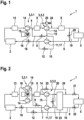
- the Fig. 1 1 shows, by way of example, a fuel cell system 1 according to the invention with a fuel cell 5 that can be supplied with oxygen via a cathode supply air path 4.
- air is sucked in from an environment 2 and fed via an air filter 13 to a first compressor stage 3.1 and a second compressor stage 3.2 of a multi-stage air compression system 3.
- Each compressor stage 3.1, 3.2 has a compressor impeller 14 arranged on a shaft 15.
- the compressor impeller 14 of the first compression stage 3.1 is driven by an electric motor 16, and the compressor impeller 14 of the second compression stage 3.2 is driven by a turbine 11.
- This means that the second compression stage 3.2 is implemented by an exhaust gas turbocharger.
- the turbine 11 has a turbine impeller 17, which is arranged on the shaft 15 together with the compressor impeller 14 of the exhaust gas turbocharger, so that the turbine impeller 17 is subjected to exhaust air flow, which exits from the fuel cell 5 during operation of the fuel cell system 1 and is discharged via a cathode exhaust air path 6.
- a bypass path 10, 24 is provided for each impeller of the exhaust gas turbocharger, via which a partial mass flow can be guided past the respective impeller.
- a bypass valve 12, 25 is arranged in each bypass path 10, 24. Bypasses 24 with bypass valve 25 are optional. According to an alternative embodiment not shown, the bypass 24 and the bypass valve 25 are omitted.
- a pressure control valve 18 for throttling the exhaust air mass flow is arranged in the cathode exhaust air path 6 downstream of the turbine 11.
- the pressure control valve 18 can be omitted if the turbine 11 of the exhaust gas turbocharger has a variable turbine geometry.
- the fuel cell system 1 of the Fig. 1 has two intercoolers 8 in the cathode supply air path 4.
- a first intercooler 8 is arranged between the two compression stages 3.1, 3.2, and a second intercooler 8 is arranged downstream of the second compression stage 3.2.
- the first intercooler 8 is optional.
- the second intercooler 8 can also be replaced by a water injection device (not shown).
- a connecting line 7 opens into the cathode supply air path 4, the other end of which is connected to the cathode exhaust air path 6.
- a controllable valve 9 is also arranged in the connecting line 7.
- a bypass path 19 with a bypass valve 20 is provided to bypass the fuel cell 5. If a partial supply air mass flow is to be diverted from the cathode supply air path 4 into the cathode exhaust air path 6, the bypass valve 20 can be opened. The bypass valve 20 can also be opened to blow the connecting line 7 dry in the event of a shutdown.
- the Fig. 2 A second fuel cell system 1 according to the invention can be seen.
- This has a double-flow compressor as the first compression stage 3.1.
- This means that the compressor has two compressor impellers 14 on a common shaft 15, which are driven by an electric motor 16.
- a heat exchanger 23 is provided, which uses the cooler exhaust air from the cathode exhaust air path 6 to cool the heated cathode supply air.
- the heat exchanger 23 is arranged here between the bypass path 19 for bypassing the fuel cell 5 and the fuel cell 5.
- a first shut-off valve 21 is provided in the cathode supply air path 4 upstream of the fuel cell 5, and a second shut-off valve 22 is provided in the cathode exhaust air path 6 downstream of the fuel cell 5.
- the connecting line 7 for recirculating a partial exhaust air mass flow is connected to the bypass path 10 for bypassing a turbine 11 of an exhaust gas turbocharger forming the second compression stage 3.2.
- the connection to the cathode exhaust air path 6 is thus only indirectly via the bypass path 10.
- FIG. 3 A modification of the fuel cell system 1 of the Fig. 2 is in the Fig. 3 shown.
- the connection of the connecting line 7 to the bypass path 10 is made via the bypass valve 12, which simultaneously forms the controllable valve 9. This eliminates the need for a valve.
- the heat exchanger 23 is also arranged such that the fuel cell 5 can be bypassed via the bypass path 19, but not the heat exchanger 23.
- the invention is not limited to the illustrated embodiments. Further modifications are possible, particularly concerning the arrangement of the various bypass paths, the arrangement and/or provision of a heat exchanger and/or a second intercooler. The topology variation is thus comparatively high.
Landscapes
- Life Sciences & Earth Sciences (AREA)
- Sustainable Development (AREA)
- Engineering & Computer Science (AREA)
- Manufacturing & Machinery (AREA)
- Sustainable Energy (AREA)
- Chemical & Material Sciences (AREA)
- Chemical Kinetics & Catalysis (AREA)
- Electrochemistry (AREA)
- General Chemical & Material Sciences (AREA)
- Fuel Cell (AREA)
Description
- Die Erfindung betrifft ein Verfahren zum Betreiben eines Brennstoffzellensystems mit den Merkmalen des Oberbegriffs des Anspruchs 1. Darüber hinaus betrifft die Erfindung ein Brennstoffzellensystem, das zur Durchführung des erfindungsgemäßen Verfahrens geeignet bzw. nach dem erfindungsgemäßen Verfahren betreibbar ist.
- Mit Hilfe eines Brennstoffzellensystems kann unter Verwendung von Wasserstoff und Sauerstoff chemische in elektrische Energie umgewandelt werden. Die auf diese Weise gewonnene elektrische Energie kann beispielsweise zum Antreiben eines Fahrzeugs genutzt werden. Der benötigte Wasserstoff wird in diesem Fall in einem geeigneten Tank an Bord des Fahrzeugs mitgeführt. Der ferner benötigte Sauerstoff wird der Umgebungsluft entnommen.
- Bevor die Umgebungsluft der mindestens einen Brennstoffzelle zugeführt wird, wird sie zur Erzeugung eines gewissen Luftmassenstroms und Druckniveaus mit Hilfe eines Luftverdichtungssystems verdichtet. Als Luftverdichtungssystem kann insbesondere eine thermische Strömungsmaschine eingesetzt werden, die ein- oder mehrstufig und/oder ein- oder mehrflutig aufgebaut sein kann. Zur Energierückgewinnung kann das Luftverdichtungssystem mit einer Turbine bzw. einem Abgasturbolader gekoppelt werden, der bzw. dem die aus der mindestens einen Brennstoffzelle abströmende feuchte Luft bzw. Abluft zugeführt wird. Sofern das Luftverdichtungssystem mehrstufig ausgeführt ist, kann zur Ausbildung einer Verdichtungsstufe anstelle einer thermischen Strömungsmaschine auch eine andere Technologie verwendet werden, beispielsweise eine Kolbenmaschine, ein Schraubenkompressor, ein Roots-Kompressor oder ein Scrollverdichter.
- Die Patentveröffentlichungen
DE 10 2016 003 795 A1 undDE 10 2010 035 727 A2 offenbaren jeweils ein Verfahren zum Betreiben eines Brennstoffzellensystems und ein Brennstoffzellensystem, wobei sich im Kathoden-Zuluftpfad ein zweistufiges Luftverdichtungssystem befindet. Der vorliegenden Erfindung liegt die Aufgabe zugrunde, den Betrieb eines Brennstoffzellensystems mit einem mehrstufigen Luftverdichtungssystem zu optimieren, insbesondere effizienter zu gestalten. - Zur Lösung der Aufgabe werden das Verfahren mit den Merkmalen des Anspruchs 1 sowie das Brennstoffzellensystem mit den Merkmalen des Anspruchs 7 angegeben. Vorteilhafte Ausführungsformen sind den jeweiligen Unteransprüchen zu entnehmen.
- Die vorliegende Erfindung ist nicht allein auf mobile Brennstoffzellensysteme, sondern auch auf stationäre Brennstoffzellensysteme anwendbar.
- Vorgeschlagen wird ein Verfahren zum Betreiben eines Brennstoffzellensystems, bei dem Luft aus der Umgebung angesaugt, mit Hilfe eines eine erste Verdichtungsstufe und eine zweite Verdichtungsstufe umfassenden Luftverdichtungssystems verdichtet und über einen Kathoden-Zuluftpfad mindestens einer Brennstoffzelle zugeführt wird. Bei dem Verfahren wird ferner aus der Brennstoffzelle austretende Abluft über einen Kathoden-Abluftpfad abgeführt. Erfindungsgemäß wird zumindest temporär ein Abluftteilmassenstrom aus dem Kathoden-Abluftpfad über eine Verbindungsleitung in den Kathoden-Zuluftpfad eingeleitet.
- Da im Betrieb des Brennstoffzellensystems der Kathoden-Abluftpfad feuchte Luft als Abluft führt, kann durch Einleiten zumindest eines Teils der feuchten Luft in den Kathoden-Zuluftpfad eine Befeuchtung der Kathoden-Zuluft bewirkt werden. Eine zusätzliche Befeuchtungseinrichtung im Kathoden-Zuluftpfad ist somit entbehrlich. Die Befeuchtung der Kathoden-Zuluft dient dem Zweck, ein Austrocknen der protonenleitenden Membran der mindestens einen Brennstoffzelle zu verhindern. Denn, um Protonen leiten zu können, muss die Membran ausreichend feucht sein. Da die Gefahr des Austrocknens im Bereich des Eintritts des Kathoden-Zuluftpfads in die Brennstoffzelle besonders hoch ist, wird in der Regel die Kathoden-Zuluft befeuchtet. Das erfindungsgemäße Verfahren trägt somit zu einer Optimierung des Wassermanagements im Betrieb des Brennstoffzellensystems bei.
- Ferner kann mit Hilfe des erfindungsgemäßen Verfahrens der Betrieb des Brennstoffzellensystems effizienter gestaltet werden. Denn mit Einleiten eines Abluftteilmassenstroms aus dem Kathoden-Abluftpfad in den Kathoden-Zuluftpfad wird zumindest ein Teil der Abluft rezirkuliert und damit einer Nutzung zugeführt. Der rezirkulierte Abluftteilmassenstrom kann für den Systembetrieb und/oder zur Systemauslegung genutzt werden, wobei die Systemauslegung den kompletten Betriebsbereich berücksichtigen muss.
- Die vorgeschlagene Nutzung des Abluftteilmassenstroms ist insbesondere von Vorteil, wenn das Luftverdichtungssystem einen Abgasturbolader als Verdichtungsstufe umfasst, der ein gemeinsam mit einem Verdichterlaufrad auf einer Welle angeordnetes Turbinenlaufrad umfasst. Da beide Laufräder immer mit der gleichen Drehzahl und unterschiedlichen thermodynamischen Bedingungen in einem großen Betriebsbereich betrieben werden müssen, ist die Abstimmung zwischen beiden Laufrädern nicht immer optimal. Dies ist insbesondere der Fall, wenn aus Kostengründen auf eine variable Turbinengeometrie des Abgasturboladers verzichtet wird. Je nach Systemtopologie müssen daher in einer Vielzahl von Betriebspunkten, insbesondere in Betriebspunkten außerhalb des Volllastpunktes, Maßnahmen ergriffen werden, die stark verlustbehaftet sind. Beispielsweise kann ein Abluftteilmassenstrom über einen Turbinenbypass nutzlos abgeströmt werden, um die beiden Laufräder zu synchronisieren. Alternativ oder ergänzend kann mit Hilfe eines stromabwärts der Turbine angeordneten Druckregelventils eine signifikante Drosselung bewirkt werden. Derartige verlustbehaftete Maßnahmen sind jedoch entbehrlich, wenn erfindungsgemäß ein Abluftteilmassenstrom aus dem Kathoden-Abluftpfad in den Kathoden-Zuluftpfad abgeführt wird. Auf diese Weise kann mit Hilfe des erfindungsgemäßen Verfahrens insbesondere eine Verbesserung der Energiebilanz in dynamischen Betriebszuständen erzielt werden.
- Vorteilhafterweise wird der Abluftteilmassenstrom zwischen den beiden Verdichtungsstufen des Luftverdichtungssystems, vorzugsweise zwischen der ersten Verdichtungsstufe und einem der zweiten Verdichtungsstufe vorgeschalteten Zwischenkühler, in den Kathoden-Zuluftpfad eingeleitet. In der ersten Verdichtungsstufe wird die aus der Umgebung angesaugte Luft verdichtet, wobei sie sich zugleich erwärmt. Mit Einleiten des Abluftteilmassenstroms stromabwärts der ersten Verdichtungsstufe in den Kathoden-Zuluftpfad wird demnach nicht nur eine Befeuchtung, sondern ferner eine Kühlung der Luft erreicht. Durch Einleiten des Abluftteilmassenstroms stromabwärts der ersten Verdichtungsstufe und stromaufwärts eines Zwischenkühlers wird eine gute Durchmischung von feuchter und trockener Luft erreicht. Zugleich verringert sich die Gefahr, dass in der feuchten Luft enthaltener Wasserdampf kondensiert und zur Entstehung von Wassertröpfchen in der zweiten Verdichtungsstufe beiträgt. Die mittels des rezirkulierten Abluftteilmassenstroms bewirkte Kühlung trägt zur Optimierung der Zwischenkühlung bei. Zugleich wird eine Entlastung des Zwischenkühlers und/oder eines Ladeluftkühlers erreicht.
- Sofern die zweite Verdichtungsstufe durch einen Abgasturbolader realisiert wird und der zu rezirkulierende Abluftteilmassenstrom einem Turbinenbypass entnommen wird, sinkt im Voll-Lastpunkt mit dem Rezirkulationsmassenstrom die Turbinenleistung des Abgasturboladers. Dies hat ein kleineres Druckverhältnis im Bereich der zweiten Verdichtungsstufe zur Folge. Das heißt, dass die erste Verdichtungsstufe ein höheres Druckverhältnis bereitstellen muss bzw. die Leistung der ersten Verdichtungsstufe erhöht werden muss. Da sich jedoch gleichzeitig die Leistung der ersten Verdichtungsstufe durch den Rezirkulationsmassenstrom verringert, heben sich beide Effekte weitestgehend auf. Kurzzeitig kann mit dieser Maßnahme eine zusätzliche Befeuchtung im Voll-Lastpunkt erzielt werden. In den Teil-Lastpunkten wird demgegenüber ein Massenstrom für die Rezirkulation verwendet, der sowieso über den Turbinenbypass abgeleitet wird. Somit geht in den Teil-Lastpunkten der Turbine kein Massenstrom verloren.
- Vorteilhafterweise wird die Einleitung des Abluftteilmassenstroms in den Kathoden-Zuluftpfad mittels eines ansteuerbaren Ventils, vorzugsweise mittels eines Regelventils, insbesondere in Form eines Proportionalventils, oder getakteten Schaltventils, gesteuert. In den Kathoden-Zuluftpfad kann somit eine definierte Menge an feuchter Luft bzw. Abluft eingeleitet werden. Zudem kann die Einleitung von Abluft in den Kathoden-Zuluftpfad zeitlich begrenzt bzw. zu bestimmten Zeiten vorgenommen werden. Sofern ein Proportionalventil als ansteuerbares Ventil verwendet wird, kann die Abluftmenge bzw. der Abluftteilmassenstrom über den Öffnungsquerschnitt des Ventils eingestellt werden. Im Fall eines getakteten Schaltventils kann derselbe Effekt über die Taktung erzielt werden. Wahlweise kann die Rezirkulation von Abluft auch stationär bzw. dauerhaft durchgeführt werden
- Des Weiteren bevorzugt wird im Kathoden-Abluftpfad ein Druckniveau eingestellt, das über dem Druckniveau im Kathoden-Zuluftpfad zwischen den beiden Verdichtungsstufen liegt. Das heißt, dass lediglich das ansteuerbare Ventil geöffnet werden muss, damit Abluft aus dem Kathoden-Abluftpfad über die Verbindungsleitung in den Kathoden-Zuluftpfad strömt. Mittels einer geeigneten Sensorik und/oder mit Hilfe von Modellen kann die Druckdifferenz ermittelt und bei der Ansteuerung des Ventils berücksichtigt werden. Vorzugsweise öffnet das Ventil nur, wenn eine entsprechende Freigabe über die Druckdifferenz vorliegt.
- Gemäß der Erfindung wird der Abluftteilmassenstrom über einen Bypasspfad zur Umgehung einer Turbine vom Kathoden-Abluftpfad abgezweigt. Das heißt, dass eine Verdichtungsstufe, vorzugsweise die zweite Verdichtungsstufe, durch einen Abgasturbolader mit einer Turbine ausgebildet wird, die von der Abluft im Kathoden-Abluftpfad angeströmt wird. Sofern die Turbine keine variable Turbinengeometrie besitzt, wird in der Regel zur Synchronisierung des Turbinenlaufrads und des im Kathoden-Zuluftpfad angeordneten Verdichterlaufrads ein Abluftteilmassenstrom über den Turbinen-Bypasspfad abgeströmt. Dieser Abluftteilmassenstrom oder nur ein Teil davon kann vorteilhafterweise rezirkuliert und damit einer Nutzung zugeführt werden. Dieser Betriebsmodus weist ferner den Vorteil auf, dass die Leistung der ersten Verdichtungsstufe nicht erhöht werden muss.
- Mit Hilfe des vorgeschlagenen Verfahrens können darüber hinaus weitere Betriebsmodi realisiert werden.
- Beispielsweise kann ein temporärer Rezirkulationsbetrieb mit einer Rezirkulationsrate gefahren werden, die dazu führt, dass der Luftmassenstrom der ersten Verdichtungsstufe um den Rezirkulationsmassenstrom reduziert wird. Damit einher geht eine temporäre Absenkung des Lambda-Werts im Kathoden-Zuluftpfad, da der Rezirkulationsmassenstrom sauerstoffverarmt ist. Die Lambda-Absenkung ist daher zeitlich beschränkt.
- In einem weiteren Betriebsmodus kann eine Rezirkulationsrate gewählt werden, die dazu führt, dass der Luftmassenstrom der ersten Verdichtungsstufe nur soweit abgesenkt wird, dass der Sauerstoffgehalt nach dem Einleiten des Rezirkulationsmassenstroms in den Kathoden-Zuluftpfad dem gewünschten Lambda-Wert entspricht, was zur Folge hat, dass der Luftmassenstrom durch die zweite Verdichtungsstufe erhöht werden muss. Zusätzlich kann über einen weiteren Bypasspfad zur Umgehung der Brennstoffzelle eine Aufteilung des Luftmassenstroms bewirkt werden, so dass ein Teilmassenstrom über den Bypasspfad nicht der Brennstoffzelle zugeführt, sondern in den Kathoden-Abluftpfad abgeführt wird.
- Ferner kann die Rezirkulation von Abluft aus dem Kathoden-Abluftpfad gänzlich ausgesetzt werden, indem das ansteuerbare Ventil geschlossen gehalten wird.
- In Weiterbildung der Erfindung wird vorgeschlagen, dass die zur Rezirkulation des Ablutfteilmassenstroms eingesetzte Verbindungsleitung vor dem Abstellen des Brennstoffzellensystems trocken geblasen wird. Auf diese Weise werden Schäden durch Eisdruck bei tiefen Außentemperaturen vermieden. Die zum Trockenblasen erforderliche Luft kann über einen Bypass aus dem Kathoden-Zuluftpfad abgezweigt werden. Hierzu wird im Bypass ein Bypassventil geöffnet. Vorzugsweise wird beim Ausblasen das ansteuerbare Ventil getaktet betrieben, so dass anhaftende Wassertröpfchen/Feuchtigkeit sicher entfernt werden bzw. wird.
- Das zur Lösung der eingangs genannten Aufgabe ferner vorgeschlagene Brennstoffzellensystem umfasst mindestens eine Brennstoffzelle, die zum Zuführen von Luft an einen Kathoden-Zuluftpfad und zum Abführen von Abluft an einen Kathoden-Abluftpfad angeschlossen ist. Im Kathoden-Zuluftpfad ist dabei ein Luftverdichtungssystem angeordnet, das eine erste Verdichtungsstufe und eine zweite Verdichtungsstufe umfasst. Erfindungsgemäß mündet in den Kathoden-Zuluftpfad eine Verbindungsleitung, die unmittelbar oder mittelbar über einen Bypasspfad zur Umgehung einer Turbine mit dem Kathoden-Abluftpfad verbunden ist, so das über die Verbindungsleitung ein Abluftteilmassenstrom aus dem Kathoden-Abluftpfad in den Kathoden-Zuluftpfad einleitbar ist.
- Das vorgeschlagene Brennstoffzellensystem ist demnach insbesondere zur Durchführung des zuvor beschriebenen erfindungsgemäßen Verfahrens geeignet bzw. kann nach dem zuvor beschriebenen erfindungsgemäßen Verfahren betrieben werden. Demzufolge können mit Hilfe des vorgeschlagenen Brennstoffzellensystems die gleichen Vorteile erzielt werden. Insbesondere kann mit Hilfe des in den Kathoden-Zuluftpfad eingeleiteten Abluftteilmassenstroms eine Befeuchtung der Kathoden-Zuluft erreicht werden, so dass eine zusätzliche Befeuchtungseinrichtung verzichtbar ist. Darüber hinaus wird eine Kühlung der Kathoden-Zuluft erzielt, die zu verbesserten Zwischenkühlung und/oder zu einer Entlastung eines ferner vorgesehenen Zwischenkühlers führt. Ein weiterer Vorteil ergibt sich daraus, dass Abluft aus dem Kathoden-Abluftpfad rezirkuliert und somit einer Nutzung zugeführt wird. In der Folge steigt die Effizienz des Brennstoffzellensystems.
- Bevorzugt mündet die zur Rezirkulation des Abluftteilmassenstroms erforderliche Verbindungsleitung zwischen der ersten Verdichtungsstufe und der zweiten Verdichtungsstufe, vorzugsweise zwischen der ersten Verdichtungsstufe und einem der zweiten Verdichtungsstufe vorgeschalteten Zwischenkühler, in den Kathoden-Zuluftpfad. In diesem Bereich kann eine besonders effektive Befeuchtung und Kühlung der Kathoden-Zuluft bewirkt werden. Zugleich wird eine gute Durchmischung von feuchter und trockener Luft erreicht. Ferner wird die Gefahr der Kondensation von in der Abluft enthaltenem Wasserdampf gemindert.
- Des Weiteren bevorzugt ist im Kathoden-Abluftpfad, in der Verbindungsleitung oder im Bypasspfad zur Umgehung der Turbine ein ansteuerbares Ventil angeordnet. Mit Hilfe des ansteuerbaren Ventils kann der zu rezirkulierende Abluftteilmassenstrom gesteuert werden. Das ansteuerbare Ventil ist vorzugsweise ein Regelventil, insbesondere in Form eines Proportionalventils, oder ein getaktetes Schaltventil, so dass der zu rezirkulierende Abluftteilmassenstrom über den Öffnungsquerschnitt des Proportionalventils oder die Taktung des getakteten Schaltventils regelbar ist.
- Gemäß einer bevorzugten Ausführungsform der Erfindung ist die erste Verdichtungsstufe mehrflutig ausgeführt. Bei einem mehrflutigen Verdichter werden mindestens zwei Verdichterlaufräder parallel angeströmt. Der Verdichter kann somit einen symmetrischen Aufbau aufweisen, so dass sich die auf das Axiallager wirkenden Kräfte verringern. Ferner können die Verdichterräder kleiner ausgeführt werden, da bei zwei Verdichterrädern auf jedes Verdichterrad nur noch der halbe Massenstrom kommt. Entsprechend verringert sich das Trägheitsmoment des Rotors, was sich wiederum vorteilhaft auf die Dynamik auswirkt.
- Alternativ oder ergänzend wird vorgeschlagen, dass die zweite Verdichtungsstufe als Abgasturbolader ausgeführt ist. Die Vorteile der Erfindung treten in dieser Ausgestaltung eines erfindungsgemäßen Brennstoffzellensystems besonders deutlich zum Vorschein, da im Betrieb des Abgasturboladers - zumindest in den Teil-Lastpunkten - ein an der Turbine vorbeizuführender Abluftteilmassenstrom anfällt, der mit Hilfe des erfindungsgemäßen Verfahrens nunmehr einer Nutzung zugeführt werden kann.
- Bevorzugte Ausführungsformen der Erfindung werden nachfolgend anhand der beigefügten Zeichnungen näher erläutert. Diese zeigen:
-
Fig. 1 eine schematische Darstellung eines ersten erfindungsgemäßen Brennstoffzellensystems, -
Fig. 2 eine schematische Darstellung eines zweiten erfindungsgemäßen Brennstoffzellensystems und -
Fig. 3 eine schematische Darstellung eines dritten erfindungsgemäßen Brennstoffzellensystems. - Der
Fig. 1 ist beispielhaft ein erfindungsgemäßes Brennstoffzellensystem 1 mit einer Brennstoffzelle 5 zu entnehmen, die über einen Kathoden-Zuluftpfad 4 mit Sauerstoff versorgbar ist. Hierzu wird Luft aus einer Umgebung 2 angesaugt und über einen Luftfilter 13 einer ersten Verdichterstufe 3.1 sowie einer zweiten Verdichterstufe 3.2 eines mehrstufigen Luftverdichtungssystems 3 zugeführt. Jede Verdichterstufe 3.1, 3.2 weist ein auf einer Welle 15 angeordnetes Verdichterlaufrad 14. Das Verdichterlaufrad 14 der ersten Verdichtungsstufe 3.1 wird mit Hilfe eines Elektromotors 16 und das Verdichterlaufrad 14 der zweiten Verdichtungsstufe 3.2 wird mit Hilfe einer Turbine 11 angetrieben. Das heißt, dass die zweite Verdichtungsstufe 3.2 durch einen Abgasturbolader realisiert wird. Die Turbine 11 besitzt ein Turbinenlaufrad 17, das gemeinsam mit dem Verdichterlaufrad 14 des Abgasturboladers auf der Welle 15 angeordnet ist, so dass das Turbinenlaufrad 17 von Abluft angeströmt wird, die im Betrieb des Brennstoffzellensystems 1 aus der Brennstoffzelle 5 austritt und über einen Kathoden-Abluftpfad 6 abgeführt wird. Zur Synchronisierung der beiden Laufräder des Abgasturboladers ist jeweils ein Bypasspfad 10, 24 vorgesehen, über den jeweils ein Teilmassenstrom am jeweiligen Laufrad vorbeigeführt werden kann. In jedem Bypasspfad 10, 24 ist ein Bypassventil 12, 25 angeordnet. Bypass 24 mit Bypassventil 25 sind optional. Gemäß einer alternativen nicht dargestellten Ausführungsform wird auf den Bypass 24 und das Bypassventil 25 verzichtet. Des Weiteren ist im Kathoden-Abluftpfad 6 stromabwärts der Turbine 11 ein Druckregelventil 18 zur Drosselung des Abluftmassenstroms angeordnet. Das Druckregelventil 18 kann ggf. entfallen, wenn die Turbine 11 des Abgasturboladers eine variable Turbinengeometrie aufweist. - Das Brennstoffzellensystem 1 der
Fig. 1 weist im Kathoden-Zuluftpfad 4 zwei Zwischenkühler 8 auf. Ein erster Zwischenkühler 8 ist zwischen den beiden Verdichtungsstufen 3.1, 3.2 ein zweiter Zwischenkühler 8 ist stromabwärts der zweiten Verdichtungsstufe 3.2 angeordnet. Der erste Zwischenkühler 8 ist optional. Der zweite Zwischenkühler 8 kann auch durch eine Vorrichtung zur Wassereinspritzung (nicht dargestellt) ersetzt werden. Stromaufwärts des ersten Zwischenkühlers 8 mündet eine Verbindungsleitung 7 in den Kathoden-Zuluftpfad 4, die andernends an den Kathoden-Abluftpfad 6 angeschlossen ist. In der Verbindungsleitung 7 ist zudem ein ansteuerbares Ventil 9 angeordnet. Wird das Ventil 9 geöffnet, strömt aufgrund der vorherrschenden Druckverhältnisse Abluft bzw. feuchte Luft aus dem Kathoden-Abluftpfad 6 über die Verbindungsleitung 7 in den Kathoden-Zuluftpfad 4. Die Kathoden-Zuluft wird auf diese Weise befeuchtet und gekühlt. Zugleich wird ein Teil der Abluft rezirkuliert und einer Nutzung zugeführt. - Zur Umgehung der Brennstoffzelle 5 ist ein Bypasspfad 19 mit einem Bypassventil 20 vorgesehen. Soll ein Zuluftteilmassenstrom aus dem Kathoden-Zuluftpfad 4 in den Kathoden-Abluftpfad 6 abgeströmt werden, kann das Bypassventil 20 geöffnet werden. Das Bypassventil 20 kann ferner geöffnet werden, um im Abstellfall die Verbindungsleitung 7 trocken zu blasen.
- Der
Fig. 2 ist ein zweites erfindungsgemäßes Brennstoffzellensystem 1 zu entnehmen. Dieses weist einen zweiflutigen Verdichter als erste Verdichtungsstufe 3.1 auf. Das heißt, dass der Verdichter zwei Verdichterlaufräder 14 auf einer gemeinsamen Welle 15 aufweist, die von einem Elektromotor 16 angetrieben werden. Anstelle des zweiten Zwischenkühlers 8 ist zudem ein Wärmetauscher 23 vorgesehen, der die kühlere Abluft des Kathoden-Abluftpfads 6 zum Kühlen der erwärmten Kathoden-Zuluft nutzt. Der Wärmetauscher 23 ist vorliegend zwischen dem Bypasspfad 19 zur Umgehung der Brennstoffzelle 5 und der Brennstoffzelle 5 angeordnet. Darüber hinaus sind im Kathoden-Zuluftpfad 4 stromaufwärts der Brennstoffzelle 5 ein erstes Absperrventil 21 und im Kathoden-Abluftpfad 6 stromabwärts der Brennstoffzelle 5 ein zweites Absperrventil 22 vorgesehen. Durch Schließen der Absperrventile 21, 22 und Öffnen des im Bypasspfad 19 angeordneten Bypassventils 20 kann die Kathoden-Zuluft vollständig an der Brennstoffzelle 5 vorbeigeführt werden. - Bei dem Brennstoffzellensystem 1 der
Fig. 2 ist die Verbindungsleitung 7 zur Rezirkulation eines Abluftteilmassenstroms an den Bypasspfad 10 zur Umgehung einer Turbine 11 eines Abgasturboladers, der die zweite Verdichtungsstufe 3.2 ausbildet, angeschlossen. Die Anbindung an den Kathoden-Abluftpfad 6 besteht somit lediglich mittelbar über den Bypasspfad 10. - Eine Modifikation des Brennstoffzellensystems 1 der
Fig. 2 ist in derFig. 3 dargestellt. Hier erfolgt die Anbindung der Verbindungsleitung 7 an den Bypasspfad 10 über das Bypassventil 12, das zugleich das ansteuerbare Ventil 9 ausbildet. Somit kann ein Ventil eingespart werden. Der Wärmetauscher 23 ist zudem derart angeordnet, dass über den Bypasspfad 19 zwar die Brennstoffzelle 5, nicht aber der Wärmetauscher 23 umgangen werden kann. - Die Erfindung ist nicht auf die dargestellten Ausführungsbeispiele beschränkt. Weitere Abwandlungen sind möglich, die insbesondere die Anordnung der verschiedenen Bypasspfade, die Anordnung und/oder das Vorsehen eines Wärmetauschers und/oder eines zweiten Zwischenkühlers betreffen. Die Topologievarianz ist somit vergleichsweise hoch.
Claims (9)
- Verfahren zum Betreiben eines Brennstoffzellensystems (1), bei dem Luft aus der Umgebung (2) angesaugt, mit Hilfe eines eine erste Verdichtungsstufe (3.1) und eine zweite Verdichtungsstufe (3.2) umfassenden Luftverdichtungssystems (3) verdichtet und über einen Kathoden-Zuluftpfad (4) mindestens einer Brennstoffzelle (5) zugeführt wird und bei dem aus der Brennstoffzelle (5) austretende Abluft über einen Kathoden-Abluftpfad (6) abgeführt wird, wobei zumindest temporär ein Abluftteilmassenstrom aus dem Kathoden-Abluftpfad (6) über eine Verbindungsleitung (7) in den Kathoden-Zuluftpfad (4) eingeleitet wird, dadurch gekennzeichnet, dass der Abluftteilmassenstrom über einen Bypasspfad (10) zur Umgehung einer Turbine (11) vom Kathoden-Abluftpfad (6) abgezweigt wird.
- Verfahren nach Anspruch 1, dadurch gekennzeichnet, dass der Abluftteilmassenstrom zwischen den beiden Verdichtungsstufen (3.1, 3.2), vorzugsweise zwischen der ersten Verdichtungsstufe (3.1) und einem der zweiten Verdichtungsstufe (3.2) vorgeschalteten Zwischenkühler (8), in den Kathoden-Zuluftpfad (4) eingeleitet wird.
- Verfahren nach Anspruch 1 oder 2, dadurch gekennzeichnet, dass die Einleitung des Abluftteilmassenstroms in den Kathoden-Zuluftpfad (4) mittels eines ansteuerbaren Ventils (9), vorzugsweise mittels eines Regelventils, insbesondere in Form eines Proportionalventils, oder getakteten Schaltventils, gesteuert wird.
- Verfahren nach einem der vorhergehenden Ansprüche, dadurch gekennzeichnet, dass im Kathoden-Abluftpfad (6) ein Druckniveau eingestellt wird, das über dem Druckniveau im Kathoden-Zuluftpfad (4) zwischen den beiden Verdichtungsstufen (3.1, 3.2) liegt.
- Verfahren nach einem der vorhergehenden Ansprüche, dadurch gekennzeichnet, dass die Verbindungsleitung (7) vor dem Abstellen des Brennstoffzellensystems (1) trocken geblasen wird, wobei vorzugsweise das ansteuerbare Ventil (9) getaktet betrieben wird.
- Brennstoffzellensystem (1), umfassend mindestens eine Brennstoffzelle (5), die zum Zuführen von Luft an einen Kathoden-Zuluftpfad (4) und zum Abführen von Abluft an einen Kathoden-Abluftpfad (6) angeschlossen ist, wobei im Kathoden-Zuluftpfad (4) ein Luftverdichtungssystem (3) angeordnet ist, das eine erste Verdichtungsstufe (3.1) und eine zweite Verdichtungsstufe (3.2) umfasst, dadurch gekennzeichnet, dass in den Kathoden-Zuluftpfad (4) eine Verbindungsleitung (7) mündet, die unmittelbar oder mittelbar über einen Bypasspfad (10) zur Umgehung einer Turbine (11) mit dem Kathoden-Abluftpfad (6) verbunden ist, so das über die Verbindungsleitung (7) ein Abluftteilmassenstrom aus dem Kathoden-Abluftpfad (6) in den Kathoden-Zuluftpfad (4) einleitbar ist.
- Brennstoffzellensystem (1) nach Anspruch 6, dadurch gekennzeichnet, dass die Verbindungsleitung (7) zwischen der ersten Verdichtungsstufe (3.1) und der zweiten Verdichtungsstufe (3.2), vorzugsweise zwischen der ersten Verdichtungsstufe (3.1) und einem der zweiten Verdichtungsstufe (3.2) vorgeschalteten Zwischenkühler (8), in den Kathoden-Zuluftpfad (4) mündet.
- Brennstoffzellensystem (1) nach Anspruch 6 oder 7,
dadurch gekennzeichnet, dass im Kathoden-Abluftpfad (6), in der Verbindungsleitung (7) oder im Bypasspfad (10) zur Umgehung der Turbine (11) ein ansteuerbares Ventil (9), vorzugsweise ein Regelventil, insbesondere in Form eines Proportionalventils, oder ein getaktetes Schaltventil, angeordnet ist. - Brennstoffzellensystem (1) nach einem der Ansprüche 6 bis 8,
dadurch gekennzeichnet, dass die erste Verdichtungsstufe (3.1) mehrflutig ausgeführt ist und/oder die zweite Verdichtungsstufe (3.2) als Abgasturbolader ausgeführt ist.
Applications Claiming Priority (2)
| Application Number | Priority Date | Filing Date | Title |
|---|---|---|---|
| DE102020202283.6A DE102020202283A1 (de) | 2020-02-21 | 2020-02-21 | Verfahren zum Betreiben eines Brennstoffzellensystems, Brennstoffzellensystem |
| PCT/EP2021/053197 WO2021165117A1 (de) | 2020-02-21 | 2021-02-10 | Verfahren zum betreiben eines brennstoffzellensystems, brennstoffzellensystem |
Publications (2)
| Publication Number | Publication Date |
|---|---|
| EP4107805A1 EP4107805A1 (de) | 2022-12-28 |
| EP4107805B1 true EP4107805B1 (de) | 2025-05-07 |
Family
ID=74595282
Family Applications (1)
| Application Number | Title | Priority Date | Filing Date |
|---|---|---|---|
| EP21705143.2A Active EP4107805B1 (de) | 2020-02-21 | 2021-02-10 | Verfahren zum betreiben eines brennstoffzellensystems, brennstoffzellensystem |
Country Status (3)
| Country | Link |
|---|---|
| EP (1) | EP4107805B1 (de) |
| DE (1) | DE102020202283A1 (de) |
| WO (1) | WO2021165117A1 (de) |
Families Citing this family (12)
| Publication number | Priority date | Publication date | Assignee | Title |
|---|---|---|---|---|
| DE102022210075A1 (de) | 2022-09-23 | 2024-03-28 | Robert Bosch Gesellschaft mit beschränkter Haftung | Brennstoffzellensystem, Kraftfahrzeug, Verfahren |
| DE102022125104A1 (de) | 2022-09-29 | 2024-04-04 | Zf Cv Systems Global Gmbh | Verfahren zum Betrieb eines Fahrzeugs mit einem Brennstoffzellensystem, sowie Brennstoffzellensystem für selbiges |
| DE102023100720A1 (de) | 2023-01-13 | 2024-07-18 | Zf Cv Systems Global Gmbh | Verdichter für eine Verdichteranordnung mit dem Verdichter und einem zweiten Verdichter für ein Brennstoffzellensystem für ein Fahrzeug, Verdichteranordnung, Brennstoffzellensystem, Fahrzeug, Verfahren, Computerprogramm und/oder computerlesbares Medium |
| DE102023206609A1 (de) * | 2023-07-12 | 2025-01-16 | Robert Bosch Gesellschaft mit beschränkter Haftung | Verfahren zum Steuern eines Brennstoffzellensystems und Brennstoffzellensystem |
| DE102023207900A1 (de) | 2023-08-17 | 2025-02-20 | Robert Bosch Gesellschaft mit beschränkter Haftung | Verfahren zum Betreiben eines Luftsystems, Luftsystem sowie Brennstoffzellensystem |
| DE102023209427A1 (de) * | 2023-09-27 | 2025-03-27 | Robert Bosch Gesellschaft mit beschränkter Haftung | Brennstoffzellensystem und Verfahren zum Betreiben eines Brennstoffzellensystems |
| DE102023209734A1 (de) * | 2023-10-05 | 2025-04-10 | Robert Bosch Gesellschaft mit beschränkter Haftung | Verfahren zur Kühlung einer Zuluft für mindestens einen Brennstoffzellenstack eines Brennstoffzellensystems mithilfe einer Abluftrückführung |
| DE102023212416A1 (de) * | 2023-12-08 | 2025-06-12 | Robert Bosch Gesellschaft mit beschränkter Haftung | Verfahren zum Betreiben eines Brennstoffzellensystems |
| DE102024200110A1 (de) | 2024-01-05 | 2025-07-10 | Robert Bosch Gesellschaft mit beschränkter Haftung | Verfahren zum Betreiben eines Brennstoffzellensystems, Brennstoffzellensystem |
| DE102024200139A1 (de) * | 2024-01-08 | 2025-07-10 | Robert Bosch Gesellschaft mit beschränkter Haftung | Brennstoffzellensystem und Verfahren zum Betreiben eines Brennstoffzellensystems |
| DE102024209266A1 (de) * | 2024-09-25 | 2026-03-26 | Robert Bosch Gesellschaft mit beschränkter Haftung | Brennstoffzellensystem und Verfahren zum Betrieb eines Brennstoffzellensystems und Fahrzeug |
| CN120854605B (zh) * | 2025-09-25 | 2026-01-02 | 中船海目科技发展(大连)有限公司 | 一种氢燃料电池气循环装置 |
Family Cites Families (4)
| Publication number | Priority date | Publication date | Assignee | Title |
|---|---|---|---|---|
| DE102010035727A1 (de) * | 2010-08-28 | 2012-03-01 | Daimler Ag | Aufladeeinrichtung für eine Brennstoffzelle, Brennstoffzelleneinrichtung sowie Verfahren zum Betreiben einer solchen Brennstoffzelleneinrichtung |
| DE102015221597A1 (de) * | 2015-11-04 | 2017-05-04 | Volkswagen Ag | Kathodenversorgung für eine Brennstoffzelle |
| DE102016003795A1 (de) * | 2016-03-26 | 2017-09-28 | Daimler Ag | Vorrichtung zur Luftversorgung einer Brennstoffzelle |
| DE102018213713A1 (de) * | 2018-08-15 | 2020-02-20 | Robert Bosch Gmbh | Brennstoffzellensystem und Verfahren zum Abschalten eines Brennstoffzellensystems |
-
2020
- 2020-02-21 DE DE102020202283.6A patent/DE102020202283A1/de active Pending
-
2021
- 2021-02-10 EP EP21705143.2A patent/EP4107805B1/de active Active
- 2021-02-10 WO PCT/EP2021/053197 patent/WO2021165117A1/de not_active Ceased
Also Published As
| Publication number | Publication date |
|---|---|
| WO2021165117A1 (de) | 2021-08-26 |
| DE102020202283A1 (de) | 2021-08-26 |
| EP4107805A1 (de) | 2022-12-28 |
Similar Documents
| Publication | Publication Date | Title |
|---|---|---|
| EP4107805B1 (de) | Verfahren zum betreiben eines brennstoffzellensystems, brennstoffzellensystem | |
| EP1752616B1 (de) | Gasturbinenanlage | |
| DE102004051359B4 (de) | Kompressorsystem sowie damit ausgestattetes Brennstoffzellensystem und Verfahren zur Luftversorgung eines Brennstoffzellensystems | |
| EP1474595B1 (de) | Verfahren zum betrieb einer gasturbogruppe | |
| EP2329555B1 (de) | Luftversorgungseinrichtung für einen brennstoffzellenstapel, brennstoffzellensystem und verfahren zum betreiben einer luftversorgungseinrichtung | |
| DE10216953B4 (de) | Vorrichtung und Verfahren zur Versorgung einer Brennstoffzelle mit Prozessluft und deren Verwendung | |
| DE69511892T2 (de) | Gasturbinenkompressor der zapfluft liefert für industrielle zwecke | |
| DE102021205335A1 (de) | Verfahren zum Betreiben eines Brennstoffzellensystems sowie Brennstoffzellensystem | |
| EP1084327A1 (de) | Gasturbine sowie verfahren zur kühlung einer turbinenstufe | |
| EP2158629B1 (de) | Vorrichtung und verfahren zur versorgung einer brennstoffzelle mit oxidationsmittel | |
| WO2016124575A1 (de) | Brennstoffzellensystem und verfahren zum betrieb eines solchen | |
| WO2021121899A1 (de) | Verfahren zum betreiben eines luftverdichtungssystems für ein brennstoffzellensystem, steuergerät zur durchführung des verfahrens | |
| DE112013005601T5 (de) | Stromerzeugungssystem und Verfahren zum Betrieb eines Stromerzeugungssystems | |
| EP4334989B1 (de) | Luftversorgungsvorrichtung, brennstoffzellensystem und fahrzeug | |
| EP4334988A1 (de) | Verfahren zum betreiben eines brennstoffzellensystems, brennstoffzellensystem | |
| DE102010001221A1 (de) | Verfahren zum Konditionieren eines Eingangsstoffstromes mindestens einer Brennstoffzelle eines Brennstoffzellensystems | |
| WO2024208497A1 (de) | Verfahren zum betreiben eines luftsystems, steuergerät | |
| WO2022263192A1 (de) | Verfahren zum betreiben eines brennstoffzellensystems, brennstoffzellensystem | |
| WO2013045052A2 (de) | Elektrischer turbolader zur luftversorgung einer brennstoffzelle | |
| WO2024041783A1 (de) | Brennstoffzellensystem, verfahren zum betreiben eines brennstoffzellensystems | |
| DE102014018444A1 (de) | Brennstoffzellensystem und Gas/Gas-Befeuchter | |
| DE102024207942A1 (de) | Verfahren zum Betreiben eines Luftsystems, Luftsystem sowie Brennstoffzellensystem | |
| DE102023210821A1 (de) | Verfahren zum Betreiben eines Luftsystems, Steuergerät | |
| DE102024202408A1 (de) | Verfahren zum Betreiben eines Luftsystems, Luftsystem sowie Brennstoffzellensystem | |
| DE102024208742A1 (de) | Verfahren zum Betreiben eines Brennstoffzellensystems, Computerprogrammprodukt, Steuereinheit und Brennstoffzellensystem |
Legal Events
| Date | Code | Title | Description |
|---|---|---|---|
| STAA | Information on the status of an ep patent application or granted ep patent |
Free format text: STATUS: UNKNOWN |
|
| STAA | Information on the status of an ep patent application or granted ep patent |
Free format text: STATUS: THE INTERNATIONAL PUBLICATION HAS BEEN MADE |
|
| PUAI | Public reference made under article 153(3) epc to a published international application that has entered the european phase |
Free format text: ORIGINAL CODE: 0009012 |
|
| STAA | Information on the status of an ep patent application or granted ep patent |
Free format text: STATUS: REQUEST FOR EXAMINATION WAS MADE |
|
| 17P | Request for examination filed |
Effective date: 20220921 |
|
| AK | Designated contracting states |
Kind code of ref document: A1 Designated state(s): AL AT BE BG CH CY CZ DE DK EE ES FI FR GB GR HR HU IE IS IT LI LT LU LV MC MK MT NL NO PL PT RO RS SE SI SK SM TR |
|
| DAV | Request for validation of the european patent (deleted) | ||
| DAX | Request for extension of the european patent (deleted) | ||
| GRAP | Despatch of communication of intention to grant a patent |
Free format text: ORIGINAL CODE: EPIDOSNIGR1 |
|
| STAA | Information on the status of an ep patent application or granted ep patent |
Free format text: STATUS: GRANT OF PATENT IS INTENDED |
|
| INTG | Intention to grant announced |
Effective date: 20250108 |
|
| GRAS | Grant fee paid |
Free format text: ORIGINAL CODE: EPIDOSNIGR3 |
|
| GRAA | (expected) grant |
Free format text: ORIGINAL CODE: 0009210 |
|
| STAA | Information on the status of an ep patent application or granted ep patent |
Free format text: STATUS: THE PATENT HAS BEEN GRANTED |
|
| AK | Designated contracting states |
Kind code of ref document: B1 Designated state(s): AL AT BE BG CH CY CZ DE DK EE ES FI FR GB GR HR HU IE IS IT LI LT LU LV MC MK MT NL NO PL PT RO RS SE SI SK SM TR |
|
| REG | Reference to a national code |
Ref country code: GB Ref legal event code: FG4D Free format text: NOT ENGLISH |
|
| REG | Reference to a national code |
Ref country code: CH Ref legal event code: EP |
|
| REG | Reference to a national code |
Ref country code: DE Ref legal event code: R096 Ref document number: 502021007399 Country of ref document: DE |
|
| REG | Reference to a national code |
Ref country code: IE Ref legal event code: FG4D Free format text: LANGUAGE OF EP DOCUMENT: GERMAN |
|
| REG | Reference to a national code |
Ref country code: NL Ref legal event code: MP Effective date: 20250507 |
|
| PG25 | Lapsed in a contracting state [announced via postgrant information from national office to epo] |
Ref country code: PT Free format text: LAPSE BECAUSE OF FAILURE TO SUBMIT A TRANSLATION OF THE DESCRIPTION OR TO PAY THE FEE WITHIN THE PRESCRIBED TIME-LIMIT Effective date: 20250908 Ref country code: ES Free format text: LAPSE BECAUSE OF FAILURE TO SUBMIT A TRANSLATION OF THE DESCRIPTION OR TO PAY THE FEE WITHIN THE PRESCRIBED TIME-LIMIT Effective date: 20250507 Ref country code: FI Free format text: LAPSE BECAUSE OF FAILURE TO SUBMIT A TRANSLATION OF THE DESCRIPTION OR TO PAY THE FEE WITHIN THE PRESCRIBED TIME-LIMIT Effective date: 20250507 |
|
| REG | Reference to a national code |
Ref country code: LT Ref legal event code: MG9D |
|
| PG25 | Lapsed in a contracting state [announced via postgrant information from national office to epo] |
Ref country code: GR Free format text: LAPSE BECAUSE OF FAILURE TO SUBMIT A TRANSLATION OF THE DESCRIPTION OR TO PAY THE FEE WITHIN THE PRESCRIBED TIME-LIMIT Effective date: 20250808 Ref country code: NO Free format text: LAPSE BECAUSE OF FAILURE TO SUBMIT A TRANSLATION OF THE DESCRIPTION OR TO PAY THE FEE WITHIN THE PRESCRIBED TIME-LIMIT Effective date: 20250807 |
|
| PG25 | Lapsed in a contracting state [announced via postgrant information from national office to epo] |
Ref country code: NL Free format text: LAPSE BECAUSE OF FAILURE TO SUBMIT A TRANSLATION OF THE DESCRIPTION OR TO PAY THE FEE WITHIN THE PRESCRIBED TIME-LIMIT Effective date: 20250507 Ref country code: PL Free format text: LAPSE BECAUSE OF FAILURE TO SUBMIT A TRANSLATION OF THE DESCRIPTION OR TO PAY THE FEE WITHIN THE PRESCRIBED TIME-LIMIT Effective date: 20250507 |
|
| PG25 | Lapsed in a contracting state [announced via postgrant information from national office to epo] |
Ref country code: BG Free format text: LAPSE BECAUSE OF FAILURE TO SUBMIT A TRANSLATION OF THE DESCRIPTION OR TO PAY THE FEE WITHIN THE PRESCRIBED TIME-LIMIT Effective date: 20250507 |
|
| PG25 | Lapsed in a contracting state [announced via postgrant information from national office to epo] |
Ref country code: HR Free format text: LAPSE BECAUSE OF FAILURE TO SUBMIT A TRANSLATION OF THE DESCRIPTION OR TO PAY THE FEE WITHIN THE PRESCRIBED TIME-LIMIT Effective date: 20250507 |
|
| PG25 | Lapsed in a contracting state [announced via postgrant information from national office to epo] |
Ref country code: RS Free format text: LAPSE BECAUSE OF FAILURE TO SUBMIT A TRANSLATION OF THE DESCRIPTION OR TO PAY THE FEE WITHIN THE PRESCRIBED TIME-LIMIT Effective date: 20250807 |
|
| PG25 | Lapsed in a contracting state [announced via postgrant information from national office to epo] |
Ref country code: IS Free format text: LAPSE BECAUSE OF FAILURE TO SUBMIT A TRANSLATION OF THE DESCRIPTION OR TO PAY THE FEE WITHIN THE PRESCRIBED TIME-LIMIT Effective date: 20250907 |
|
| PG25 | Lapsed in a contracting state [announced via postgrant information from national office to epo] |
Ref country code: LV Free format text: LAPSE BECAUSE OF FAILURE TO SUBMIT A TRANSLATION OF THE DESCRIPTION OR TO PAY THE FEE WITHIN THE PRESCRIBED TIME-LIMIT Effective date: 20250507 |
|
| PG25 | Lapsed in a contracting state [announced via postgrant information from national office to epo] |
Ref country code: DK Free format text: LAPSE BECAUSE OF FAILURE TO SUBMIT A TRANSLATION OF THE DESCRIPTION OR TO PAY THE FEE WITHIN THE PRESCRIBED TIME-LIMIT Effective date: 20250507 Ref country code: SM Free format text: LAPSE BECAUSE OF FAILURE TO SUBMIT A TRANSLATION OF THE DESCRIPTION OR TO PAY THE FEE WITHIN THE PRESCRIBED TIME-LIMIT Effective date: 20250507 |
|
| PG25 | Lapsed in a contracting state [announced via postgrant information from national office to epo] |
Ref country code: CZ Free format text: LAPSE BECAUSE OF FAILURE TO SUBMIT A TRANSLATION OF THE DESCRIPTION OR TO PAY THE FEE WITHIN THE PRESCRIBED TIME-LIMIT Effective date: 20250507 |
|
| PG25 | Lapsed in a contracting state [announced via postgrant information from national office to epo] |
Ref country code: EE Free format text: LAPSE BECAUSE OF FAILURE TO SUBMIT A TRANSLATION OF THE DESCRIPTION OR TO PAY THE FEE WITHIN THE PRESCRIBED TIME-LIMIT Effective date: 20250507 |
|
| PG25 | Lapsed in a contracting state [announced via postgrant information from national office to epo] |
Ref country code: SK Free format text: LAPSE BECAUSE OF FAILURE TO SUBMIT A TRANSLATION OF THE DESCRIPTION OR TO PAY THE FEE WITHIN THE PRESCRIBED TIME-LIMIT Effective date: 20250507 |
|
| PG25 | Lapsed in a contracting state [announced via postgrant information from national office to epo] |
Ref country code: IT Free format text: LAPSE BECAUSE OF FAILURE TO SUBMIT A TRANSLATION OF THE DESCRIPTION OR TO PAY THE FEE WITHIN THE PRESCRIBED TIME-LIMIT Effective date: 20250507 |
|
| REG | Reference to a national code |
Ref country code: DE Ref legal event code: R097 Ref document number: 502021007399 Country of ref document: DE |
|
| PLBE | No opposition filed within time limit |
Free format text: ORIGINAL CODE: 0009261 |
|
| STAA | Information on the status of an ep patent application or granted ep patent |
Free format text: STATUS: NO OPPOSITION FILED WITHIN TIME LIMIT |
|
| REG | Reference to a national code |
Ref country code: CH Ref legal event code: L10 Free format text: ST27 STATUS EVENT CODE: U-0-0-L10-L00 (AS PROVIDED BY THE NATIONAL OFFICE) Effective date: 20260318 |
|
| 26N | No opposition filed |
Effective date: 20260210 |
|
| PGFP | Annual fee paid to national office [announced via postgrant information from national office to epo] |
Ref country code: FR Payment date: 20260223 Year of fee payment: 6 |