EP4107656B1 - Quantifizierung des pflanzenbefalls durch schätzung der zahl der insekten auf blättern, durch neuronale faltungsnetzwerke, die trainingsbilder verwenden, die von einem halbüberwachten ansatz aufgenommen werden - Google Patents
Quantifizierung des pflanzenbefalls durch schätzung der zahl der insekten auf blättern, durch neuronale faltungsnetzwerke, die trainingsbilder verwenden, die von einem halbüberwachten ansatz aufgenommen werden Download PDFInfo
- Publication number
- EP4107656B1 EP4107656B1 EP21705986.4A EP21705986A EP4107656B1 EP 4107656 B1 EP4107656 B1 EP 4107656B1 EP 21705986 A EP21705986 A EP 21705986A EP 4107656 B1 EP4107656 B1 EP 4107656B1
- Authority
- EP
- European Patent Office
- Prior art keywords
- leaf
- images
- plant
- image
- computer
- Prior art date
- Legal status (The legal status is an assumption and is not a legal conclusion. Google has not performed a legal analysis and makes no representation as to the accuracy of the status listed.)
- Active
Links
Images





Classifications
-
- G—PHYSICS
- G06—COMPUTING OR CALCULATING; COUNTING
- G06F—ELECTRIC DIGITAL DATA PROCESSING
- G06F18/00—Pattern recognition
- G06F18/20—Analysing
- G06F18/24—Classification techniques
- G06F18/241—Classification techniques relating to the classification model, e.g. parametric or non-parametric approaches
- G06F18/2413—Classification techniques relating to the classification model, e.g. parametric or non-parametric approaches based on distances to training or reference patterns
- G06F18/24133—Distances to prototypes
- G06F18/24137—Distances to cluster centroïds
- G06F18/2414—Smoothing the distance, e.g. radial basis function networks [RBFN]
-
- G—PHYSICS
- G06—COMPUTING OR CALCULATING; COUNTING
- G06N—COMPUTING ARRANGEMENTS BASED ON SPECIFIC COMPUTATIONAL MODELS
- G06N3/00—Computing arrangements based on biological models
- G06N3/02—Neural networks
- G06N3/04—Architecture, e.g. interconnection topology
- G06N3/045—Combinations of networks
-
- G—PHYSICS
- G06—COMPUTING OR CALCULATING; COUNTING
- G06N—COMPUTING ARRANGEMENTS BASED ON SPECIFIC COMPUTATIONAL MODELS
- G06N3/00—Computing arrangements based on biological models
- G06N3/02—Neural networks
- G06N3/04—Architecture, e.g. interconnection topology
- G06N3/045—Combinations of networks
- G06N3/0455—Auto-encoder networks; Encoder-decoder networks
-
- G—PHYSICS
- G06—COMPUTING OR CALCULATING; COUNTING
- G06N—COMPUTING ARRANGEMENTS BASED ON SPECIFIC COMPUTATIONAL MODELS
- G06N3/00—Computing arrangements based on biological models
- G06N3/02—Neural networks
- G06N3/04—Architecture, e.g. interconnection topology
- G06N3/0464—Convolutional networks [CNN, ConvNet]
-
- G—PHYSICS
- G06—COMPUTING OR CALCULATING; COUNTING
- G06N—COMPUTING ARRANGEMENTS BASED ON SPECIFIC COMPUTATIONAL MODELS
- G06N3/00—Computing arrangements based on biological models
- G06N3/02—Neural networks
- G06N3/08—Learning methods
- G06N3/082—Learning methods modifying the architecture, e.g. adding, deleting or silencing nodes or connections
-
- G—PHYSICS
- G06—COMPUTING OR CALCULATING; COUNTING
- G06N—COMPUTING ARRANGEMENTS BASED ON SPECIFIC COMPUTATIONAL MODELS
- G06N3/00—Computing arrangements based on biological models
- G06N3/02—Neural networks
- G06N3/08—Learning methods
- G06N3/09—Supervised learning
-
- G—PHYSICS
- G06—COMPUTING OR CALCULATING; COUNTING
- G06T—IMAGE DATA PROCESSING OR GENERATION, IN GENERAL
- G06T7/00—Image analysis
- G06T7/0002—Inspection of images, e.g. flaw detection
- G06T7/0012—Biomedical image inspection
-
- G—PHYSICS
- G06—COMPUTING OR CALCULATING; COUNTING
- G06T—IMAGE DATA PROCESSING OR GENERATION, IN GENERAL
- G06T7/00—Image analysis
- G06T7/10—Segmentation; Edge detection
- G06T7/11—Region-based segmentation
-
- G—PHYSICS
- G06—COMPUTING OR CALCULATING; COUNTING
- G06V—IMAGE OR VIDEO RECOGNITION OR UNDERSTANDING
- G06V10/00—Arrangements for image or video recognition or understanding
- G06V10/40—Extraction of image or video features
- G06V10/44—Local feature extraction by analysis of parts of the pattern, e.g. by detecting edges, contours, loops, corners, strokes or intersections; Connectivity analysis, e.g. of connected components
- G06V10/443—Local feature extraction by analysis of parts of the pattern, e.g. by detecting edges, contours, loops, corners, strokes or intersections; Connectivity analysis, e.g. of connected components by matching or filtering
- G06V10/449—Biologically inspired filters, e.g. difference of Gaussians [DoG] or Gabor filters
- G06V10/451—Biologically inspired filters, e.g. difference of Gaussians [DoG] or Gabor filters with interaction between the filter responses, e.g. cortical complex cells
- G06V10/454—Integrating the filters into a hierarchical structure, e.g. convolutional neural networks [CNN]
-
- G—PHYSICS
- G06—COMPUTING OR CALCULATING; COUNTING
- G06V—IMAGE OR VIDEO RECOGNITION OR UNDERSTANDING
- G06V10/00—Arrangements for image or video recognition or understanding
- G06V10/40—Extraction of image or video features
- G06V10/56—Extraction of image or video features relating to colour
-
- G—PHYSICS
- G06—COMPUTING OR CALCULATING; COUNTING
- G06V—IMAGE OR VIDEO RECOGNITION OR UNDERSTANDING
- G06V10/00—Arrangements for image or video recognition or understanding
- G06V10/70—Arrangements for image or video recognition or understanding using pattern recognition or machine learning
- G06V10/762—Arrangements for image or video recognition or understanding using pattern recognition or machine learning using clustering, e.g. of similar faces in social networks
-
- G—PHYSICS
- G06—COMPUTING OR CALCULATING; COUNTING
- G06V—IMAGE OR VIDEO RECOGNITION OR UNDERSTANDING
- G06V10/00—Arrangements for image or video recognition or understanding
- G06V10/70—Arrangements for image or video recognition or understanding using pattern recognition or machine learning
- G06V10/764—Arrangements for image or video recognition or understanding using pattern recognition or machine learning using classification, e.g. of video objects
-
- G—PHYSICS
- G06—COMPUTING OR CALCULATING; COUNTING
- G06V—IMAGE OR VIDEO RECOGNITION OR UNDERSTANDING
- G06V10/00—Arrangements for image or video recognition or understanding
- G06V10/70—Arrangements for image or video recognition or understanding using pattern recognition or machine learning
- G06V10/82—Arrangements for image or video recognition or understanding using pattern recognition or machine learning using neural networks
-
- G—PHYSICS
- G06—COMPUTING OR CALCULATING; COUNTING
- G06V—IMAGE OR VIDEO RECOGNITION OR UNDERSTANDING
- G06V20/00—Scenes; Scene-specific elements
- G06V20/10—Terrestrial scenes
-
- G—PHYSICS
- G06—COMPUTING OR CALCULATING; COUNTING
- G06V—IMAGE OR VIDEO RECOGNITION OR UNDERSTANDING
- G06V20/00—Scenes; Scene-specific elements
- G06V20/10—Terrestrial scenes
- G06V20/188—Vegetation
-
- G—PHYSICS
- G06—COMPUTING OR CALCULATING; COUNTING
- G06N—COMPUTING ARRANGEMENTS BASED ON SPECIFIC COMPUTATIONAL MODELS
- G06N20/00—Machine learning
- G06N20/10—Machine learning using kernel methods, e.g. support vector machines [SVM]
-
- G—PHYSICS
- G06—COMPUTING OR CALCULATING; COUNTING
- G06N—COMPUTING ARRANGEMENTS BASED ON SPECIFIC COMPUTATIONAL MODELS
- G06N3/00—Computing arrangements based on biological models
- G06N3/02—Neural networks
- G06N3/04—Architecture, e.g. interconnection topology
- G06N3/048—Activation functions
-
- G—PHYSICS
- G06—COMPUTING OR CALCULATING; COUNTING
- G06T—IMAGE DATA PROCESSING OR GENERATION, IN GENERAL
- G06T2207/00—Indexing scheme for image analysis or image enhancement
- G06T2207/20—Special algorithmic details
- G06T2207/20081—Training; Learning
-
- G—PHYSICS
- G06—COMPUTING OR CALCULATING; COUNTING
- G06T—IMAGE DATA PROCESSING OR GENERATION, IN GENERAL
- G06T2207/00—Indexing scheme for image analysis or image enhancement
- G06T2207/20—Special algorithmic details
- G06T2207/20084—Artificial neural networks [ANN]
-
- G—PHYSICS
- G06—COMPUTING OR CALCULATING; COUNTING
- G06V—IMAGE OR VIDEO RECOGNITION OR UNDERSTANDING
- G06V20/00—Scenes; Scene-specific elements
- G06V20/10—Terrestrial scenes
- G06V20/17—Terrestrial scenes taken from planes or by drones
Definitions
- the disclosure generally relates to image processing by computers, and more in particular relates to techniques for quantifying plant infestation by estimating the number of biological objects such as insects on plant leaves.
- Quantifying the infestations such as by counting insects (on plant leaves) is therefore an important task for pest management.
- Mohanty SP Hughes DP and Salathé M (2016) Using Deep Learning for Image-Based Plant Disease Detection. Front. Plant Sci.7: 1419. doi: 10.3389/fpls.2016.01419 describes neural networks that classify images according to crop-disease pairs that are depicted on the images. More in detail, the paper explains a two-step approach with removing background information from the images by using color re-coding and classifying the pre-processed images by a convolutional neural network.
- annotations identify the location of insects by coordinates. Annotations can also differentiate between insect species and growing stages of the insects.
- the constraints are addressed by a computer system, by computer-implemented methods and by computer program products.
- the computer program products when loaded into a memory of a computer and being executed by at least one processor of the computer - perform the steps of the computer-implemented methods.
- a computer-implemented method for generating a training set with annotated images provide improvements.
- the annotated images are to be used to train a convolutional neural network (CNN) for quantifying plant infestation.
- CNN estimates the number of insects on leaves of plants.
- the computer receives leaf-images showing leaves and showing insects on the leaves.
- the leaf-images are coded in a first color-coding.
- the computer changes the color-coding of the pixels of the leaf-images to a second color-coding.
- the contrast between the pixels for the insects and the pixels for the leaves is higher in the second color-coding than in the first color-coding.
- the computer assigns pixels in the second color-coding to a first binary value or to a second binary value.
- the computer differentiates - in the leaf-images with binary coding - areas with contiguous pixels in the first binary value into into non-insect areas and insect areas by an area size criterion.
- the computer identifies pixel-coordinates of the insect areas, wherein the pixel-coordinates identify rectangular tile-areas with insects in the center.
- the computer annotates the leaf-images in first color-coding by assigning the pixel-coordinates to corresponding tile-areas and thereby obtains the annotated image.
- the computer receives the leaf-images as images that show isolated segmented leaves.
- the computer receives the images with isolated segmented leaves by performing leaf segmentation with a CNN that has been trained by processing leaf-annotated plant images.
- the computer receives the first color-coding as RGB-coding and performs changing the color-coding with a transformation from RGB-coding to XYZ-coding.
- changing the color-coding further comprises to obtain the second color-coding by disregarding the Z-component from the XYZ-coding.
- the computer assigns the binary values by clustering the pixels into color clusters.
- the computer identifies the color clusters by a support-vector machine.
- the computer identifies the pixel-coordinates as squares with 96 x 96 pixels each.
- the computer further classifies the tiles according to insect classes and thereby sorts out false positives.
- a computer-implemented method for quantifying plant infestation by estimating the number of insects on leaves of a plant uses these annotations.
- the computer receives a plant-image taken from a particular plant.
- the plant-image shows at least one of the leaves of the particular plant, the so-called main leaf.
- the computer uses a first convolutional neural network to process the plant-image to derive a leaf-image being a contiguous set of pixels that show a main leaf of the particular plant completely (i.e. as a whole).
- the first convolutional neural network has been trained by a plurality of leaf-annotated plant-images, wherein the plant-images had been annotated to identify main leaves.
- the computer splits the leaf-image into a plurality of tiles.
- the tiles are segments or portions of the plant-image having pre-defined tile dimensions.
- the computer uses a second convolutional neural network to separately process the plurality of tiles to obtain a plurality of density maps having map dimensions that correspond to the tile dimensions.
- insect is a noun (in usual language) that most readers can easily apply for counting. The skilled person reading "one insect” or “two insects” immediately understands.
- insect is also used to represent biological objects that are located on parts of the plant be counted (i.e., on the leaves). A biological object (to be counted) has a physical size that is relatively smaller than the part on that it is located. It is also noted that the objects are located on one part. Since the plant images are processed to images showing one part (such as one leaf, by segmentation), the size relation also transfers to the image.
- the objects can also be spots on the surface of the plant parts (spots that are the result of biological processes, such as fungi interacting with the plant or the like, animal excrements, etc.).
- suitable measures e.g., countermeasures.
- the use of the term "insects” is applicable to phrases such as "insect-annotated” or the like to the meaning "object -annotated”.
- annotated image indicates the availability of such meta-data for an image (or for a sub-region of that image), but there is no need to store the meta-data and the image in the same data-structure.
- drawings illustrate annotations as part of an image, such as by polygon and/or dots, but again: the annotations are meta-data and there is no need to embed them into the data-structure of the image.
- the description refers to hardware components (such as computers, cameras, mobile devices, communication networks) in singular terms.
- implementations can use multiple components.
- the camera taking a plurality of images comprises scenarios in that multiple cameras participate so that some images are taken from a first camera, some image are taken from a second camera and so on.
- the description provides an overview to the application of CNNs in two phases, and thereby introduces pre-processing activities as well as computer-implemented methods.
- the description introduces insects in different development stages to be counted.
- the description investigates details (regarding plants, images, image portions to be processed). With FIG. 13 , the description discusses accuracy.
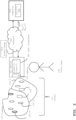
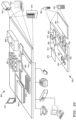
- FIGS. 1-2 illustrate plants 111/112 (with leaves and insects), cameras 311/312 to take plant-images 411/412, and computers 201/202 with CNNs to perform computer-implemented methods 601B/602B/701B/702B.
- the figures also illustrate human users 191/192.
- auxiliary activities Some of the auxiliary activities are pre-processing activities that prepare method executions.
- the pre-processing activities are illustrated by references 601A, 602A, 701A and 702A.
- Method 800 for providing a training set (with annotated image). Method 800 bypasses the human user and generate computer-made annotations (i.e. images 473).
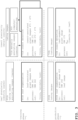
- computer 201 receives the plurality of plant-images in combination with the leaf-annotations (collectively "leaf-annotated plant-images").
- Computer 201 uses a sub-set of the plurality and trains CNN 261 to identify a particular leaf in a plant-image (that is not annotated).
- computer 201 converts un-trained CNN 261 into trained CNN 262.
- CNN 262 is the output of computer 201.
- computer 201 receives the plurality of leaf-annotated plant-images in combination with insect-annotations (collectively "insect-annotated leaf-images").
- Computer 201 trains CNN 271 to count insects on particular leaves. Thereby, computer 201 turns un-trained CNN 271 into trained CNN 272. In other words, CNN 272 is output of computer 201 as well.
- Production phase **2 is illustrated in the second row of FIG. 3 , in reference to FIG. 2 .
- Training phase **1 has two sub-phases.
- the first sub-phase comprises activities such as taking the plurality of plant-images 411, letting expert user 191 provide annotations to plant-images 411 to computer 301.
- Computer 301 receiving annotations results in annotated images 461, 471 that are leaf-annotated images and insect-annotated images ( FIG. 6 ). Receiving annotations can also be considered as the supervised learning part.
- computer 201 uses annotated images 461, 471 to train CNN 261 to identify a main leaf (i.e. a semantic segmentation of the plant image) and to train CNN 271 to identify the insects (i.e., on the main leaf that was identified earlier).
- Persons of skill in the art can apply suitable training settings.
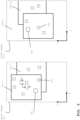
- FIG. 2 it illustrates an overview of a computer-implemented approach by that a computer - illustrated as computer 202 - counts insects 132 on leaves 122 of plants 112 in an exemplary application in an agricultural field. It does not matter if the field is located in open air or located in a green-house.
- Simplified, computer 202 processes plant-image 412 received from mobile device 302 through communication network 342.
- one image 412 is theoretically enough.
- Leaves 122 are so-called "infested leaves” because insects are located on them. Counting can be differentiated for insects of particular class 132(1) (illustrated by plain ovals) and - optionally - of particular class 132(2) (bold ovals). Optionally, counting can consider further classes (cf. FIGS. 4 and 11 ).
- Mobile device 302 can be seen as a combination of an image device (i.e. camera 312), processor and memory. Mobile device 302 is readily available to the farmers, for example as a so-called “smartphone” or as a “tablet”. Of course, mobile device 302 can be regarded as a "computer”. It is noted that mobile device 302 participate in auxiliary activities (cf. FIG. 3 , 602A, 702A) only.
- Mobile device 302 then forwards plant-image 412 via communication network 342 to computer 202.
- communication network 342 suggests, computer 202 can be implemented remotely from mobile device 302.
- Computer 202 returns a result that is displayed to user interface 392 (of mobile device 302).
- N(1) 3 insects of class (1) (i.e., insects 132(1))
- N(2) 2 insects of class (2) (i.e., insects 132(2)) counted.
- the numbers N(1), N(2) (or N in general) are numbers-per-leaf, not numbers per plant (here in the example for main leaf 122-1).
- the numbers correspond to N EST (with N EST being rounded to the nearest integer N).
- field user 192 can identify countermeasures to combat infestation with better expectation of success.
- main leaf does not imply any hierarchy with the leaves on the plant, but simply stands for that particular leaf for that the insects are counted.
- Adjacent leaf 122-2 is an example of a leaf that is located close to main leaf 122-1, but for that insects are not to be counted. Although illustrated in singular, plant 112 has one main leaf but multiple adjacent leaves. It is assumed that plant-image 412 represents the main leaf completely, and represents the adjacent leaves only partially. This is convenient for explanation, but not required.
- main leaf 122-1 is on top of adjacent leaf 122-2 (or leaves). They overlap each other and it is difficult to identify the edges between one from the other.
- counting comprises two major sub-processes: first, differentiating main and adjacent leaves (also called leaf identification, segmentation), and second, counting the insects on the main leaf only.
- identifying the main leaf prior to counting keeps the number of "false negatives" and "false positives” negligible.
- the communication between mobile device 302 and computer 202 via communication network 342 can be implemented by techniques that are available and that are commercially offered by communication providers.
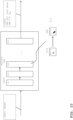
- Computer 202 has CNN 262/272 that performs computer-implemented method 602B and 602B (details in connections with FIGS. 10 ). CNNs 262 and 272 have been trained before (methods 601B and 701B).
- computer 202 has other modules, for example, a well-known REST API (Representational State Transfer, Application Programming Interface) to implement the communication between mobile device 302 and computer 202 can use.
- Computer 202 appears to mobile device 302 as a web-service. The person of skill in the art can apply other settings.
- the time it takes computer 202 with CNNs 262/272 (performing the method) to obtain N EST depends on the resolution of plant-image 412. Performing methods 602B and 702B may take a couple of seconds. The processing time rises with the resolution of the image. (The processing time has been measured in test runs. For plant-image 412 with 4000 x 6000 pixels, the processing time was approximately 9 seconds.)
- the conditions for catching images are not always ideal.
- the illumination e.g., sunny daylight or rainy/cloudy daylight, some leaves may shadow other leaves
- the surface of the plant e.g., dust or rain-drops on the plant etc.
- perspective e.g., taking images from the side or from the top to name two extremes
- focusing e.g., sharp image for non-relevant parts of the plant
- resolution e.g., mobile devices with 24 M pixel cameras, versus devices with less pixels
- the description uses two examples of plant/insect combinations.
- insects Since the infestation is made by the insects, the description focuses on the insects. It is a constraint that insects change appearance in the so-called metamorphosis with a sequence of development stages.
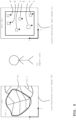
- FIG. 4 illustrates a diagram with development stages (A), (B), (C ) and (D) for insects 131/132 (cf. FIGS. 1-2 ), insect species (i) and (ii), and counting classes (1), (2), (3), (4)
- the development stages occur in a predefined sequence with state transitions: from stage (A) to (B), from (B) to (C), from (C) to (D).
- the arrows are dashed, just to illustrate that other transitions (such as from (B) to (D)) are possible.
- Biologists can associate the stages with semantics relating to the age of the insects, such as "egg", “nymph”, “adult”, “empty pupae” (an insect has left the pupa and only the skin of the pupa is left), with semantics relating to life and death.
- stages are the "n1n2"/ "n3n4" nomenclature, well known in the art.
- insects can develop wings.
- the presence or absence of wings can indicate particular development stage for thrips.
- CNN 271/272 is trained to provide N EST in 4 separate numbers: N EST (i) (A), N EST (i) (B), N EST (i) (C), and N EST (i) (D).
- the impact of the insects to the plant can be different for each development stage. For example, it may be important to determine the number of nymphs (per leaf), the number of empty pupae and so on. Differentiating between young and old nymphs can indicate the time interval that has passed since the arrival of the insects, with the opportunity to fine-tune the countermeasure. For example, adults may lay eggs (and that should be prevented).
- FIG. 5 illustrates insects 431/432 by small squares, there are some of them on leaf 421-1/422-1 and some of them on leaf 421-2/422-2.
- Non-insect object 441/442 is symbolized by a small square with round corners.
- the insects can belong to different classes (cf. FIG. 4 ).
- each insect of a particular class has a particular color.
- This color could be called text-book color, or standard color.
- text-book color or standard color.
- an adult whitefly is white (at least in most parts).
- the image would not properly represent the text-book color. There are at least the following reasons for that: (i) The color of the insect has a natural variability. (ii) The illumination can be different (e.g., cloudy sky, sunny sky, shadow and so on). (iii) Camera 311/312 is not an ideal camera. It does not take such different illumination conditions into account. As a consequence, the images may not properly show the color.
- camouflage Due to the mentioned camouflage, it can be complicated to differentiate insect 131/132 from non-insect object 141/142. This is complicated in nature and even more complicated in images.
- insects can be relatively tiny in comparison to the leaves. For example, an insect can be smaller than one millimeter in length. In contrast to the emphasis in FIGS. 1-2 , a couple of hundred insects may occupy a single leaf easily. The insects are also usually relative tiny things for the human eye to detect. This is in sharp contrast to, for example, a single bee in the petal leaves of a flower.
- CNNs 271/272 use density map estimation (instead of the above-mentioned traditional object detection).
- density maps insects would be represented as areas, and the integral of the pixel values of the area would be approximately 1 (assuming that the pixel values are real numbers, normalized between 0 and 1, and also assuming to have one insect per map). It is noted that for situations in that two insects are located close together and overlapping on the image, there would be a single area, but the sum of the pixel values would be approximately 2.
- the farmer i.e. the user of the mobile device
- the time interval from taking the image to determining the insect-number-per-leaf must be negligible so that the insects do not substantially grow (and/or reproduce, and/or eventually change progress to the next development stage) during that time interval, the insects do no fly away (because the measures are applied to the infested plants).
- the species of the plant is usually known (for example, the farmer knows eggplant) so that the computer has the information (as an attribute of the image). Therefore, the plant species is therefore not further discussed here.
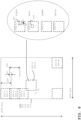
- FIG. 6 illustrates a user interface of computer 301 (cf. FIG. 1 ).
- FIG. 6 also illustrates expert user 191 annotating images.
- FIG. 6 explains some of the pre-processing activities (cf. FIG. 3 , 601A and 701A) in training phase **1.
- FIG. 6 is related to supervised learning.
- user 191 can draw polygon 451 (dashed line) around that part of plant-image 411 that shows the complete leaf (i.e. the main leaf).
- image 411 shows leaf 420-1 as the complete leaf, and shows leaf 420-2 only partially, cf. FIG. 5 .
- Computer 301 can close polygon 451 automatically.
- the person of skill in the art can use other user interfaces, for example picture processing tools to manipulate images, for example, by "erasing" the pixels surrounding the main leaf.
- the insect-annotation (for a particular image 411) is used by computer 201 in training CNN 271, for example, by letting the computer convolute images (i.e., tiles of images) with kernel functions that are centered at the position coordinate (X', Y'). Also, the insect-annotation comprises ground truth data regarding the number of insects (optionally in the granularity of the use cases of FIG. 4 ).
- Reference 429 illustrates portions of leaf-image 421/422 that do not show the main leaf.
- the pixels in portions 429 can be ignored in subsequence processing steps. For example, a processing step by that an image is split into tiles does not have to be performed for portions 429 (because insects are not to be counted according to the insects per leaf definition).
- these portions 429 can be represented by pixels having a particular color or otherwise. In illustrations (or optionally in displaying portions 429 to users), the portions can be for example displayed in black or white or other single-color (e.g., white as in FIG. 7 ).
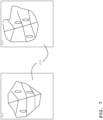
- FIG. 8 illustrates image 401/402 being split into tiles 401-k/402-k (or sub-regions).
- the image can be plant-image 411 (training phase), annotated as image 461 or as image 471, leading to tiles 401-k, or plant-image 412 (production phase), leading to tiles 402-k.
- the number of tiles 401-k/402-k in image 401/402 is given be reference K.
- image 400 can have an image dimension of 4000 x 6000 pixels (annotations do not change the dimension).
- the tiles have tile dimensions that are smaller than the image dimensions.
- the tile dimension is 256 x 256 pixels.
- the tile dimensions correspond to the dimension of the input layer of the CNNs (cf. FIG. 10 ).
- tile 402-k was split from image 412 (production phase), it shows insect 432.
- insect is not necessarily at the same position as in "annotated” tile 401-k above in alpha).
- CNN 272 would arrive at density map 502-k with integral 1.
- expert user 192 can annotate images for different insect species (e.g., (i) and (ii)), development stages (for example (A) to (B), at least for the combinations highlighted in FIG. 4 with the black dots. Therefore, there can be specific tiles 401-k for specific use cases.
- combiner module 281/282 can compose the image (or combined density map) by overlapping likewise. Pixel values at the same particular coordinate (X, Y coordinates for the 4000 x 6000 pixels) are counted only once.
- the modified FCRN type is based on the FCRN type, with modifications.
- auxiliary parameters can be used to deal with technical limitations of the computers.
- computer 201/202 that implements the CNNs may use floating point numbers, with a maximum highest number of 65536.
- CNN 271/272 i.e. the CNN to detect insects
- the loss functions can be defined, for example, by means functions, such as Mean Absolute Error, or Mean Square Error.
- the tile dimensions can be 256 x 256 pixels.
- FIG. 11A focuses on a filter that takes individual pixels into account
- FIG. 11B focuses on a filter that takes sets of adjacent pixels (or tile segments) into account.
- the filter can be applied to properties of individual pixels (in the example: the color, in FIG. 11A ), and the filter can also be applied to properties of pixel pluralities (in the example: a texture made my multiple pixels, in the pixel-group filter of FIG. 11B ).
- the color parameters are obtained by training (the insect classes annotated, as explained above).
- the filter can be part of the processing channel of CNN 271/272 before the layer(s) that creates the density maps. Therefore, the density maps are class specific.
- FIG. 11B repeats the much simplified "3-pixel-insect" from the left edge of FIG. 11A .
- segment #10 can have the pixel values (1, 0, 1, 0, 1, 0, 0, 0) and segment #10' can have pixel values (0.8, 0.1, 0.0, 0.1, 0.2, 0.7, 0.1, 0.7, 0.0).
- FIG. 11B illustrates the pixels in "black” or "white” only, the pixels with values over 0.5 are illustrated "black”.
- CNN 271/272 can then perform subsequent processing steps by using the segment codes (the segment-specific values). This reduces the number of pixels to be processed (simplified, by a factor that corresponds to the number of pixels per segment, with 9 in the illustrative example). In one of the last layers, CNN 271/272 can then apply decoding.
- FIG. 12 illustrates combined density maps that combiner 262 obtains by combining maps 502-1 to 502-K, separately for each branch to density maps 555(1), 555(2), 555(3) and 555(4).
- K 36 tiles combined (into one map 555), this number is just selected for simplicity.
- CNN 272 provides N EST (the estimated number of insects per leaf for particular plant-image 412) as the output.
- N EST the estimated number of insects per leaf for particular plant-image 412
- the combination of CNN 262 and CNN 272 would calculate N EST to be exactly the so-called ground truth number N GT : here the number of insects sitting on the particular main leaf of the plant (from that farmer 192 has taken image 412).
- the difference between N EST and N GT would indicate how accurate camera 312 and CNNs 262/272 are performing.
- N GT are known from the insect-annotations. If for a particular image, N EST is higher than N GT CNNs 262/272 have counted more insects that present in reality.
- FIG. 13 illustrates a simplified graph 503 showing N EST on the ordinate versus ground truth N GT on the abscissa, with a dot identifying an (N EST , N GT ) pair.
- Graph 503 is simplified in illustrating 9 dots only (instead of, for example, 54 or 123).
- Dot 505 stands for an outlier, with much more insects estimated than present.
- N EST and N GT are obtained as the average of the S 3 images.
- the quotations merely point to a simplification.
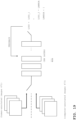
- the leaf pixels 477 and the insect pixels 478 are coded in a particular color-coding.
- the coding uses 3 components (i.e., a "color space").
- the image uses the same color space of FIG. 14 (left side, first color-coding 481).
- the actual components are slightly modified, just to have the example more realistic.
- the subsequent space-to-planar-space reduction is simply performed by disregarding the Z-values.
- the Z-values for the leaf and for the insects are substantially equal.
- the Z-values do not substantially contribute to differentiating (leaf/insect).
- Such a reduction from space (X, Y, Z) to planar space (X, Y) is similar to the space/planar-space reduction of FIG. 14 .
- the color-values (X, Y) can be illustrated in planar color space 479, and the line between both can be taken as threshold 485.
- the coding change enhances the contrast between the leaf and the insect parts and makes it easier to assign pixels to binary values.
- the leaf-insect contrast is higher (than in the first color-coding). In other words, the clusters are differentiated by color contrast.
- FIG. 17 illustrates a sequence of images, starting from image 413-A being a leaf-image, and ending at insect-annotated leaf image 473. By in large, the sequence follows the step of method 800.
- the figure also uses image 413-A to illustrate pixel coordinates (i, j).
- the i, j notation distinguishes pixel coordinates (of the image) from color-coordinate (of the color space, cf. FIGS. 14-16 ).
- Computer 303 now takes over the surrounding pixel from the original image 413-A (in first color-coding with all 3 color channels). (or from image 413-B, with XYZ)
- image 473 the computer-annotated image 473 (having 6 tiles).
- FIG. 17 focuses on insect areas to obtain tiles (with insects), the person of skill in the art is able to obtain non-insect tiles accordingly so that training can use such non-insect tiles as well.
- FIG. 17 So far the approach illustrated by FIG. 17 does not require the interaction with human expert users. Most of the insect-tiles are expected to be tiles that actually show insects (true positives),some of the insect-tiles show something else (false positives). Most of the non-insect tiles show leaf portions without insect (correct negatives), but some of the non-insect tiles show insects indeed (true negatives).
- FIG. 4 differentiates whitefly insects into "insect (1)” and “no-insect”, and in a higher granularity into classes (1) to (4).
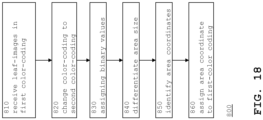
- Computer 303 receives 810 leaf-images 413-A showing leaves 121 and showing insects 131 on the leaves 121.
- Leaf-images 413-A are coded in first color-coding 481.
- Computer 303 annotates 860 leaf-images 414-A (in first color-coding 481) by assigning the pixel-coordinates (i, j) to corresponding tile-areas to obtain the annotated image 473.
- FIG. 8 illustrates an image being split into tiles or sub-regions.
- the tiles are already in a size that is suitable as input to CNN 271.
- the tiles correspond to tiles 401-k (alpha, with insects) and 401-k (gamma, without insects).
- Modifying the size of the tiles is possible, and the person of skill in the art can adapt the size to fit the tiles to the CNN input (i.e., corresponding to the tiles of the human-annotated images 471).
- training a CNN involves the calculation of loss values.
- the description has mentioned to train CNN 271 by using a loss-function that is the mean absolute error (MAE) or that is the mean square error (MSE).
- MAE mean absolute error
- MSE mean square error
- FIG. 19 illustrates a first sub-set ⁇ 471 ⁇ and a second sub-set ⁇ 473 ⁇ , and illustrates that the images go into the network consecutively.
- the network calculates the loss function (described above) and uses the loss function (in a feedback loop, with the overall LOSS) to fine-tune the parameter (or layer-specific values), as explained above.
- the CNN having processed an image from the first sub-set ⁇ 471 ⁇ uses the loss result fully, the CNN having processed an image from the second sub-set ⁇ 473 ⁇ uses the loss result partially (with the lambda factor).
- the high speed controller 908 manages bandwidth-intensive operations for the computing device 900, while the low speed controller 912 manages lower bandwidth-intensive operations.
- the high-speed controller 908 is coupled to memory 904, display 916 (e.g., through a graphics processor or accelerator), and to high-speed expansion ports 910, which may accept various expansion cards (not shown).
- low-speed controller 912 is coupled to storage device 906 and low-speed expansion port 914.
Landscapes
- Engineering & Computer Science (AREA)
- Theoretical Computer Science (AREA)
- Physics & Mathematics (AREA)
- General Physics & Mathematics (AREA)
- Evolutionary Computation (AREA)
- General Health & Medical Sciences (AREA)
- Health & Medical Sciences (AREA)
- Artificial Intelligence (AREA)
- Software Systems (AREA)
- Computing Systems (AREA)
- Multimedia (AREA)
- Life Sciences & Earth Sciences (AREA)
- Computer Vision & Pattern Recognition (AREA)
- Biomedical Technology (AREA)
- Molecular Biology (AREA)
- Data Mining & Analysis (AREA)
- General Engineering & Computer Science (AREA)
- Biophysics (AREA)
- Computational Linguistics (AREA)
- Mathematical Physics (AREA)
- Medical Informatics (AREA)
- Databases & Information Systems (AREA)
- Biodiversity & Conservation Biology (AREA)
- Nuclear Medicine, Radiotherapy & Molecular Imaging (AREA)
- Quality & Reliability (AREA)
- Radiology & Medical Imaging (AREA)
- Bioinformatics & Cheminformatics (AREA)
- Bioinformatics & Computational Biology (AREA)
- Evolutionary Biology (AREA)
- Image Analysis (AREA)
- Catching Or Destruction (AREA)
- Image Processing (AREA)
Claims (16)
- Computerimplementiertes Verfahren (800) zur Erzeugung eines Trainingssatzes mit annotierten Bildern (473), wobei die annotierten Bilder (473) verwendet werden sollen, um ein neuronales Faltungsnetzwerk (CNN) zum Quantifizieren eines Pflanzenbefalls durch Schätzen der Anzahl (NEST) von biologischen Objekten (132) auf Blättern (122) von Pflanzen (112) zu trainieren; wobei das Verfahren Folgendes umfasst:Empfangen (810) von Blattbildern (413-A), die Blätter (121) zeigen und biologische Objekte (131) auf den Blättern (121) zeigen, wobei die Blattbilder (413-A) in einer ersten Farbcodierung (481) codiert sind;Ändern (820) der Farbcodierung der Pixel (477, 478) der Blattbilder in eine zweite Farbcodierung (482), wobei der Kontrast (485) zwischen den Pixeln für die biologischen Objekte (132) und den Pixeln für die Blätter (121) in der zweiten Farbcodierung höher ist als in der ersten Farbcodierung (481);Zuweisen (830) von Pixeln (477, 478), die mit einem ersten Farbcluster (491) in der zweiten Farbcodierung (482) assoziiert sind, zu einem ersten Binärwert und von Pixeln, die mit einem zweiten Farbcluster (492) assoziiert sind, zu einem zweiten Binärwert;Aufteilen (840) - in den Blattbildern mit Binärcodierung (413-D) - von Bereichen mit zusammenhängenden Pixeln im ersten Binärwert in Nicht-Objektbereiche (1, 5) und Objektbereiche (2, 3, 4, 6, 7, 8) nach einem Bereichsgrößenkriterium;Identifizieren (850) von Pixelkoordinaten der Objektbereiche (2, 3, 4, 6, 7, 8), wobei die Pixelkoordinaten rechteckige Kachelbereiche mit biologischen Objekten in der Mitte identifizieren, wobei die Kachelbereiche in einer eingegebenen Abmessung für das CNN sind; undAnnotieren (860) der Blattbilder (414-A) in erster Farbcodierung (481) durch Zuweisen der Pixelkoordinaten (i, j) zu entsprechenden Kachelbereichen, um das annotierte Bild (473) zu erhalten.
- Verfahren nach Anspruch 1, wobei das Empfangen (810) von Blattbildern (413) Empfangen von Bildern umfasst, die isolierte segmentierte Blätter zeigen, wobei das Blattbild (413) das Blatt mit seinem Rand im Wesentlichen vollständig zeigt.
- Verfahren nach Anspruch 2, wobei das Empfangen (810) Erhalten der Bilder mit isolierten segmentierten Blättern durch Durchführen einer Blattsegmentierung mit einem CNN (262) umfasst, das durch Verarbeiten von blattannotierten Pflanzenbildern (461) trainiert wurde, die annotierte Grenzen zwischen Blatt und Hintergrund sowie zwischen Blatt und Blatt zeigen.
- Verfahren nach einem der vorhergehenden Ansprüche, wobei in Schritt Empfangen (810) die erste Farbcodierung (481) eine RGB-Codierung ist und wobei in Schritt Ändern (820) der Farbcodierung eine Transformation von der RGB-Codierung in XYZ-Codierung angewendet wird.
- Verfahren nach Anspruch 4, wobei das Ändern (820) der Farbcodierung ferner Erhalten der zweiten Farbcodierung (482) durch Ignorieren der Z-Komponente aus der XYZ-Codierung umfasst.
- Verfahren nach Anspruch 5, wobei das Zuweisen (830) zu den Binärwerten durch Clustern der Pixel zu Farbclustern durchgeführt wird.
- Verfahren nach Anspruch 6, wobei die Farbcluster durch eine Support-Vektor-Maschine identifiziert werden.
- Verfahren nach Anspruch 6, wobei das Identifizieren (850) von Pixelkoordinaten mit Rechtecken durchgeführt wird, die Quadrate von 96 x 96 Pixeln sind.
- Verfahren nach einem der vorhergehenden Ansprüche mit dem weiteren Schritt des Klassifizierens der Kacheln nach Objektklassen und des Aussortierens von falsch positiven Ergebnissen.
- Verfahren nach einem der vorhergehenden Ansprüche, wobei• die biologischen Objekte Insekten sind,• die Nicht-Objektbereiche Nicht-Insektenbereiche sind und• die Objektbereiche Insektenbereiche sind.
- Verfahren nach einem der vorhergehenden Ansprüche, wobei das Verhältnis der physischen Größe der biologischen Objekte (131) zur physischen Größe der Blätter (121) derart ist, dass die Darstellung der biologischen Objekte auf den Blattbildern (421) derart ist, dass die Darstellung kleiner als die Abmessungen der Kachelbereiche ist.
- Verfahren nach Anspruch 11, wobei die biologischen Objekte (131) aus den folgenden ausgewählt werden: Insekten, Spinnentieren und Weichtieren, oder wobei die biologischen Objekte aus den folgenden ausgewählt werden: Flecken oder Stielen auf der Oberfläche der Pflanzenteile.
- Computervorrichtung (303), die zum Durchführen eines der Verfahren (800) nach Anspruch 1-12 ausgelegt ist.
- Computerprogrammprodukt, das - wenn in einen Speicher eines Computers geladen und von mindestens einem Prozessor des Computers ausgeführt - den Computer veranlasst, die Schritte des computerimplementierten Verfahrens nach einem der Ansprüche 1-12 auszuführen.
- Computerimplementiertes Verfahren (602B/702B) zur Quantifizierung von Pflanzenbefall durch Schätzen der Anzahl (NEST) der biologischen Objekte (132) auf Blättern (122) einer Pflanze (112), wobei das Verfahren (602B/702B) Folgendes umfasst:Empfangen eines Pflanzenbildes (412), das von einer bestimmten Pflanze (112) aufgenommen wurde, wobei das Pflanzenbild (412) mindestens eines der Blätter (122) der bestimmten Pflanze (112) zeigt;Verwenden eines ersten neuronalen Faltungsnetzwerks (262) zum Verarbeiten des Pflanzenbildes (412), um ein Blattbild (422) abzuleiten, das ein zusammenhängender Satz von Pixeln ist, der ein Hauptblatt (422-1) der bestimmten Pflanze (112) vollständig zeigt, wobei das erste neuronale Faltungsnetzwerk (262) mit einer Vielzahl von blattannotierten Pflanzenbildern (461) trainiert wurde, wobei die Pflanzenbilder (411) annotiert sind, um Hauptblätter (421-1) zu identifizieren;Teilen des Blattbildes (422) in eine Vielzahl von Kacheln (402-k), wobei die Kacheln Segmente des Pflanzenbildes (412) mit vordefinierten Kachelabmessungen sind;Verwenden eines zweiten neuronalen Faltungsnetzwerks (272) zum getrennten Verarbeiten der Vielzahl von Kacheln (402), um eine Vielzahl von Dichtekarten (502-k) mit Kartenabmessungen zu erhalten, die den Kachelabmessungen entsprechen, wobei das zweite neuronale Faltungsnetzwerk (272) durch Verarbeiten von objektannotierten Pflanzenbildern (471) trainiert wurde, wobei eine erste Teilmenge von objektannotierten Pflanzenbildern (471) durch Interagieren mit einem fachkundigen Benutzer erhalten wird und eine zweite Teilmenge von objektannotierten Pflanzenbildern (471) durch Durchführen eines Verfahrens nach einem der Ansprüche 1-8 erhalten wird, wobei die Verarbeitung die Berechnung von Faltungen für jedes Pixel basierend auf einer Kernelfunktion umfasst, die zu Dichtekarten (502) mit unterschiedlichen Integralwerten für Kacheln, die biologische Objekte zeigen, und Kacheln führt, die keine biologischen Objekte zeigen; undKombinieren der Vielzahl von Dichtekarten (502) zu einer kombinierten Dichtekarte (555) in der Abmessung des Blattbildes (422) und Integrieren der Pixelwerte der kombinierten Dichtekarte (555) in eine geschätzte Anzahl von biologischen Objekten (NEST) für das Hauptblatt.
- Verfahren nach Anspruch 15, wobei die biologischen Objekte Insekten sind und die objektannotierten Pflanzenbilder insektenannotierte Pflanzenbilder sind.
Applications Claiming Priority (3)
| Application Number | Priority Date | Filing Date | Title |
|---|---|---|---|
| EP19200657.5A EP3798899A1 (de) | 2019-09-30 | 2019-09-30 | Quantifizierung von pflanzenbefall durch schätzung der anzahl der insekten auf blättern durch neuronale faltungsnetze, die dichtekarten bereitstellen |
| EP20158881.1A EP3798901A1 (de) | 2019-09-30 | 2020-02-21 | Quantifizierung des pflanzenbefalls durch schätzung der zahl der insekten auf blättern, durch neuronale faltungsnetzwerke, die trainingsbilder verwenden, die von einem halbüberwachten ansatz aufgenommen werden |
| PCT/EP2021/054233 WO2021165512A2 (en) | 2019-09-30 | 2021-02-19 | Quantifying plant infestation by estimating the number of biological objects on leaves, by convolutional neural networks that use training images obtained by a semi-supervised approach |
Publications (2)
| Publication Number | Publication Date |
|---|---|
| EP4107656A2 EP4107656A2 (de) | 2022-12-28 |
| EP4107656B1 true EP4107656B1 (de) | 2025-04-09 |
Family
ID=68109134
Family Applications (4)
| Application Number | Title | Priority Date | Filing Date |
|---|---|---|---|
| EP19200657.5A Withdrawn EP3798899A1 (de) | 2019-09-30 | 2019-09-30 | Quantifizierung von pflanzenbefall durch schätzung der anzahl der insekten auf blättern durch neuronale faltungsnetze, die dichtekarten bereitstellen |
| EP20158881.1A Ceased EP3798901A1 (de) | 2019-09-30 | 2020-02-21 | Quantifizierung des pflanzenbefalls durch schätzung der zahl der insekten auf blättern, durch neuronale faltungsnetzwerke, die trainingsbilder verwenden, die von einem halbüberwachten ansatz aufgenommen werden |
| EP20781367.6A Active EP4038542B1 (de) | 2019-09-30 | 2020-09-29 | Quantifizierung von pflanzenbefall durch schätzung der anzahl der insekten auf blättern durch neuronale faltungsnetze, die dichtekarten bereitstellen |
| EP21705986.4A Active EP4107656B1 (de) | 2019-09-30 | 2021-02-19 | Quantifizierung des pflanzenbefalls durch schätzung der zahl der insekten auf blättern, durch neuronale faltungsnetzwerke, die trainingsbilder verwenden, die von einem halbüberwachten ansatz aufgenommen werden |
Family Applications Before (3)
| Application Number | Title | Priority Date | Filing Date |
|---|---|---|---|
| EP19200657.5A Withdrawn EP3798899A1 (de) | 2019-09-30 | 2019-09-30 | Quantifizierung von pflanzenbefall durch schätzung der anzahl der insekten auf blättern durch neuronale faltungsnetze, die dichtekarten bereitstellen |
| EP20158881.1A Ceased EP3798901A1 (de) | 2019-09-30 | 2020-02-21 | Quantifizierung des pflanzenbefalls durch schätzung der zahl der insekten auf blättern, durch neuronale faltungsnetzwerke, die trainingsbilder verwenden, die von einem halbüberwachten ansatz aufgenommen werden |
| EP20781367.6A Active EP4038542B1 (de) | 2019-09-30 | 2020-09-29 | Quantifizierung von pflanzenbefall durch schätzung der anzahl der insekten auf blättern durch neuronale faltungsnetze, die dichtekarten bereitstellen |
Country Status (8)
| Country | Link |
|---|---|
| US (2) | US12073327B2 (de) |
| EP (4) | EP3798899A1 (de) |
| CN (2) | CN114467122A (de) |
| AR (1) | AR120119A1 (de) |
| BR (2) | BR112022002456A2 (de) |
| CA (2) | CA3150808A1 (de) |
| ES (2) | ES3010674T3 (de) |
| WO (2) | WO2021063929A1 (de) |
Families Citing this family (22)
| Publication number | Priority date | Publication date | Assignee | Title |
|---|---|---|---|---|
| EP3798899A1 (de) * | 2019-09-30 | 2021-03-31 | Basf Se | Quantifizierung von pflanzenbefall durch schätzung der anzahl der insekten auf blättern durch neuronale faltungsnetze, die dichtekarten bereitstellen |
| TWI798655B (zh) * | 2020-03-09 | 2023-04-11 | 美商奈米創尼克影像公司 | 缺陷偵測系統 |
| CA3171844A1 (en) * | 2020-03-16 | 2021-09-23 | Basf Se | Quantifying biotic damage on plant leaves, by convolutional neural networks |
| US12423659B2 (en) * | 2020-05-05 | 2025-09-23 | Planttagg, Inc. | System and method for horticulture viability prediction and display |
| US11748984B2 (en) * | 2020-05-05 | 2023-09-05 | Planttagg, Inc. | System and method for horticulture viability prediction and display |
| CN113096100B (zh) * | 2021-04-15 | 2023-08-22 | 杭州睿胜软件有限公司 | 用于植物病症诊断的方法和植物病症诊断系统 |
| CN113221740B (zh) * | 2021-05-12 | 2023-03-24 | 浙江大学 | 一种农田边界识别方法及系统 |
| CN113256578B (zh) * | 2021-05-18 | 2025-01-21 | 河北农业大学 | 一种入侵植物危害检测方法 |
| US11838067B2 (en) * | 2021-12-23 | 2023-12-05 | Dish Network L.L.C. | Signal interference prediction systems and methods |
| WO2023170975A1 (ja) * | 2022-03-11 | 2023-09-14 | オムロン株式会社 | 学習方法、葉状態識別装置、およびプログラム |
| CN116958013B (zh) * | 2022-04-12 | 2025-09-16 | 腾讯科技(深圳)有限公司 | 图像中对象数量的估计方法、装置、介质、设备及产品 |
| CN115035131B (zh) * | 2022-04-24 | 2025-08-22 | 南京农业大学 | U型自适应est的无人机遥感图像分割方法及系统 |
| CN115126686B (zh) * | 2022-08-31 | 2022-11-11 | 山东中聚电器有限公司 | 用于植保无人机载隔膜泵控制系统 |
| CN116934143A (zh) * | 2023-07-14 | 2023-10-24 | 杭州睿胜软件有限公司 | 植物的健康状态评估方法、装置及计算机可读存储介质 |
| US20250102360A1 (en) * | 2023-09-26 | 2025-03-27 | Arizona Board Of Regents On Behalf Of Arizona State University | Terrestrial observing network for digital twins: real-time 3d mapping of metric, semantic, topological, and physicochemical properties for optimal environmental monitoring |
| CN117372881B (zh) * | 2023-12-08 | 2024-04-05 | 中国农业科学院烟草研究所(中国烟草总公司青州烟草研究所) | 一种烟叶病虫害智能识别方法、介质及系统 |
| CN118037821B (zh) * | 2024-03-14 | 2024-12-13 | 湖北麦麦农业科技有限公司 | 一种生菜叶片面积检测方法及系统 |
| CN118537608B (zh) * | 2024-06-06 | 2025-02-28 | 广东省农业科学院植物保护研究所 | 基于深度学习的荔枝蒂蛀虫为害叶片检测方法及系统 |
| CN118840738B (zh) * | 2024-07-31 | 2025-03-25 | 博罗罗浮山润心食品有限公司 | 一种豆制品生产过程智能管理方法及其系统 |
| WO2026046813A1 (en) | 2024-08-26 | 2026-03-05 | Bayer Aktiengesellschaft | Locating and classifying arthropods in images |
| EP4703918A1 (de) * | 2024-08-26 | 2026-03-04 | Bayer Aktiengesellschaft | Lokalisierung und klassifizierung von arthropoden in bildern |
| CN118781218B (zh) * | 2024-09-13 | 2024-12-20 | 安徽医科大学第一附属医院 | 基于半监督学习的胃肠影像重建方法、装置及电子设备 |
Family Cites Families (20)
| Publication number | Priority date | Publication date | Assignee | Title |
|---|---|---|---|---|
| US7496228B2 (en) * | 2003-06-13 | 2009-02-24 | Landwehr Val R | Method and system for detecting and classifying objects in images, such as insects and other arthropods |
| KR101109337B1 (ko) * | 2009-03-24 | 2012-01-31 | 부산대학교 산학협력단 | 자동 해충 인지 및 방제 시스템 및 방법 |
| CN104598908B (zh) * | 2014-09-26 | 2017-11-28 | 浙江理工大学 | 一种农作物叶部病害识别方法 |
| US10349584B2 (en) * | 2014-11-24 | 2019-07-16 | Prospera Technologies, Ltd. | System and method for plant monitoring |
| CN104992439B (zh) * | 2015-06-26 | 2020-02-11 | 广州铁路职业技术学院 | 农作物叶子虫害检测装置及其检测方法 |
| JP6921095B2 (ja) * | 2015-11-08 | 2021-08-25 | エーグロウイング リミテッド | 航空画像を収集及び分析するための方法 |
| CN107292314A (zh) * | 2016-03-30 | 2017-10-24 | 浙江工商大学 | 一种基于cnn的鳞翅目昆虫种类自动鉴别方法 |
| EP3287007A1 (de) * | 2016-08-24 | 2018-02-28 | Bayer CropScience AG | Bekämpfung von schadorganismen auf basis der vorhersage von befallsrisiken |
| CN106504258B (zh) * | 2016-08-31 | 2019-04-02 | 北京农业信息技术研究中心 | 一种植物叶片图像提取方法及装置 |
| US10339380B2 (en) * | 2016-09-21 | 2019-07-02 | Iunu, Inc. | Hi-fidelity computer object recognition based horticultural feedback loop |
| ES2956102T3 (es) * | 2016-10-28 | 2023-12-13 | Verily Life Sciences Llc | Modelos predictivos para clasificar visualmente insectos |
| US10796161B2 (en) | 2017-07-14 | 2020-10-06 | Illumitex, Inc. | System and method for identifying a number of insects in a horticultural area |
| US11263707B2 (en) * | 2017-08-08 | 2022-03-01 | Indigo Ag, Inc. | Machine learning in agricultural planting, growing, and harvesting contexts |
| US10455826B2 (en) * | 2018-02-05 | 2019-10-29 | FarmWise Labs, Inc. | Method for autonomously weeding crops in an agricultural field |
| CN108960310A (zh) * | 2018-06-25 | 2018-12-07 | 北京普惠三农科技有限公司 | 一种基于人工智能的农业病虫害识别方法 |
| CN108921849A (zh) | 2018-09-30 | 2018-11-30 | 靖西海越农业有限公司 | 用于防治沃柑病虫害的智慧农业监控预警系统 |
| CN110363103B (zh) * | 2019-06-24 | 2021-08-13 | 仲恺农业工程学院 | 虫害识别方法、装置、计算机设备及存储介质 |
| SE545381C2 (en) * | 2019-09-05 | 2023-07-25 | Beescanning Global Ab | Method for calculating the deviation relation of a population registered on image for calculating pest infestation on a bee population |
| EP3798899A1 (de) * | 2019-09-30 | 2021-03-31 | Basf Se | Quantifizierung von pflanzenbefall durch schätzung der anzahl der insekten auf blättern durch neuronale faltungsnetze, die dichtekarten bereitstellen |
| US11425852B2 (en) * | 2020-10-16 | 2022-08-30 | Verdant Robotics, Inc. | Autonomous detection and control of vegetation |
-
2019
- 2019-09-30 EP EP19200657.5A patent/EP3798899A1/de not_active Withdrawn
-
2020
- 2020-02-21 EP EP20158881.1A patent/EP3798901A1/de not_active Ceased
- 2020-09-29 AR ARP200102707A patent/AR120119A1/es active IP Right Grant
- 2020-09-29 EP EP20781367.6A patent/EP4038542B1/de active Active
- 2020-09-29 CN CN202080068396.7A patent/CN114467122A/zh active Pending
- 2020-09-29 ES ES20781367T patent/ES3010674T3/es active Active
- 2020-09-29 BR BR112022002456A patent/BR112022002456A2/pt unknown
- 2020-09-29 CA CA3150808A patent/CA3150808A1/en active Pending
- 2020-09-29 US US17/761,849 patent/US12073327B2/en active Active
- 2020-09-29 WO PCT/EP2020/077197 patent/WO2021063929A1/en not_active Ceased
-
2021
- 2021-02-19 ES ES21705986T patent/ES3032897T3/es active Active
- 2021-02-19 CN CN202180014801.1A patent/CN115104133A/zh active Pending
- 2021-02-19 CA CA3172345A patent/CA3172345A1/en active Pending
- 2021-02-19 WO PCT/EP2021/054233 patent/WO2021165512A2/en not_active Ceased
- 2021-02-19 EP EP21705986.4A patent/EP4107656B1/de active Active
- 2021-02-19 US US17/799,829 patent/US12566959B2/en active Active
- 2021-02-19 BR BR112022016566A patent/BR112022016566A2/pt unknown
Also Published As
| Publication number | Publication date |
|---|---|
| US20230071265A1 (en) | 2023-03-09 |
| US20230351743A1 (en) | 2023-11-02 |
| EP4107656A2 (de) | 2022-12-28 |
| EP4038542A1 (de) | 2022-08-10 |
| US12566959B2 (en) | 2026-03-03 |
| BR112022002456A2 (pt) | 2022-05-03 |
| US12073327B2 (en) | 2024-08-27 |
| ES3010674T3 (en) | 2025-04-04 |
| WO2021063929A1 (en) | 2021-04-08 |
| BR112022016566A2 (pt) | 2022-12-20 |
| WO2021165512A2 (en) | 2021-08-26 |
| AR120119A1 (es) | 2022-02-02 |
| ES3032897T3 (en) | 2025-07-28 |
| CN115104133A (zh) | 2022-09-23 |
| EP3798899A1 (de) | 2021-03-31 |
| WO2021165512A3 (en) | 2021-10-14 |
| CA3172345A1 (en) | 2021-08-26 |
| CN114467122A (zh) | 2022-05-10 |
| EP3798901A1 (de) | 2021-03-31 |
| EP4038542B1 (de) | 2024-11-06 |
| CA3150808A1 (en) | 2021-04-08 |
Similar Documents
| Publication | Publication Date | Title |
|---|---|---|
| EP4107656B1 (de) | Quantifizierung des pflanzenbefalls durch schätzung der zahl der insekten auf blättern, durch neuronale faltungsnetzwerke, die trainingsbilder verwenden, die von einem halbüberwachten ansatz aufgenommen werden | |
| Gao et al. | Cross-domain transfer learning for weed segmentation and mapping in precision farming using ground and UAV images | |
| US11636701B2 (en) | Method for calculating deviation relations of a population | |
| Koirala et al. | Deep learning–Method overview and review of use for fruit detection and yield estimation | |
| Yang et al. | A detection method for dead caged hens based on improved YOLOv7 | |
| EP4256465B1 (de) | System und verfahren zur bestimmung der schädigung von pflanzen nach herbizidanwendung | |
| Venegas et al. | Automatic ladybird beetle detection using deep-learning models | |
| Yuan et al. | Sensitivity examination of YOLOv4 regarding test image distortion and training dataset attribute for apple flower bud classification | |
| Duraiswami et al. | Cattle breed detection and categorization using image processing and machine learning | |
| Ananthajothi et al. | Hybrid heuristic optimization of deep learning models for robust plant disease detection | |
| Scott et al. | Systematic literature review of vision-based approaches to outdoor livestock monitoring with lessons from wildlife studies | |
| Mahenthiran et al. | Smart pest management: an augmented reality-based approach for an organic cultivation | |
| Gao et al. | Transferring learned patterns from ground-based field imagery to predict UAV-based imagery for crop and weed semantic segmentation in precision crop farming | |
| Choudhury | Segmentation techniques and challenges in plant phenotyping | |
| CN117321570A (zh) | 基于从图像中提取的解剖组成部分的掩模而对蚊虫幼虫进行分类的系统和方法 | |
| Sundaram et al. | Detection and Providing Suggestion for Removal of Weeds Using Machine Learning Techniques | |
| Mumtaz et al. | Robust Machine Learning Approach to Plant Species Classification for Sustainable Agriculture | |
| Oppenheim et al. | Object recognition for agricultural applications using deep convolutional neural networks | |
| Conrady | Automated detection and classification of red roman in unconstrained underwater environments using Mask R-CNN | |
| Nebot | Automated identification and tracking of Nephrops norvegicus (L.) using infrared and monochromatic blue light | |
| Jayachandran | Detection and Providing Suggestion for Removal of Weeds Using Machine Learning Techniques | |
| Minakshi | Automating the Classification of Mosquito Specimens Using Image Processing Techniques | |
| Vijesh Kumar Patel et al. | A unified framework with U-Net++ and CNN-RNN-BiGRU architectures for automated weed detection in precision agriculture using AI | |
| Magesh et al. | Analysis of Crop Disease Using Deep Learning based Convolutional Neural Network | |
| He | Deep learning applications to automate phenotypic measurements on biodiversity datasets |
Legal Events
| Date | Code | Title | Description |
|---|---|---|---|
| STAA | Information on the status of an ep patent application or granted ep patent |
Free format text: STATUS: UNKNOWN |
|
| STAA | Information on the status of an ep patent application or granted ep patent |
Free format text: STATUS: THE INTERNATIONAL PUBLICATION HAS BEEN MADE |
|
| PUAI | Public reference made under article 153(3) epc to a published international application that has entered the european phase |
Free format text: ORIGINAL CODE: 0009012 |
|
| STAA | Information on the status of an ep patent application or granted ep patent |
Free format text: STATUS: REQUEST FOR EXAMINATION WAS MADE |
|
| 17P | Request for examination filed |
Effective date: 20220921 |
|
| AK | Designated contracting states |
Kind code of ref document: A2 Designated state(s): AL AT BE BG CH CY CZ DE DK EE ES FI FR GB GR HR HU IE IS IT LI LT LU LV MC MK MT NL NO PL PT RO RS SE SI SK SM TR |
|
| DAV | Request for validation of the european patent (deleted) | ||
| DAX | Request for extension of the european patent (deleted) | ||
| REG | Reference to a national code |
Ref country code: DE Ref legal event code: R079 Free format text: PREVIOUS MAIN CLASS: G06K0009000000 Ipc: G06V0010440000 Ref document number: 602021028858 Country of ref document: DE |
|
| GRAP | Despatch of communication of intention to grant a patent |
Free format text: ORIGINAL CODE: EPIDOSNIGR1 |
|
| STAA | Information on the status of an ep patent application or granted ep patent |
Free format text: STATUS: GRANT OF PATENT IS INTENDED |
|
| RIC1 | Information provided on ipc code assigned before grant |
Ipc: G06N 3/045 20230101ALI20241004BHEP Ipc: G06N 3/082 20230101ALI20241004BHEP Ipc: G06V 20/10 20220101ALI20241004BHEP Ipc: G06V 10/764 20220101ALI20241004BHEP Ipc: G06V 10/82 20220101ALI20241004BHEP Ipc: G06V 10/56 20220101ALI20241004BHEP Ipc: G06V 10/44 20220101AFI20241004BHEP |
|
| INTG | Intention to grant announced |
Effective date: 20241016 |
|
| GRAS | Grant fee paid |
Free format text: ORIGINAL CODE: EPIDOSNIGR3 |
|
| P01 | Opt-out of the competence of the unified patent court (upc) registered |
Free format text: CASE NUMBER: APP_67201/2024 Effective date: 20241219 |
|
| GRAA | (expected) grant |
Free format text: ORIGINAL CODE: 0009210 |
|
| STAA | Information on the status of an ep patent application or granted ep patent |
Free format text: STATUS: THE PATENT HAS BEEN GRANTED |
|
| AK | Designated contracting states |
Kind code of ref document: B1 Designated state(s): AL AT BE BG CH CY CZ DE DK EE ES FI FR GB GR HR HU IE IS IT LI LT LU LV MC MK MT NL NO PL PT RO RS SE SI SK SM TR |
|
| REG | Reference to a national code |
Ref country code: GB Ref legal event code: FG4D |
|
| REG | Reference to a national code |
Ref country code: CH Ref legal event code: EP |
|
| REG | Reference to a national code |
Ref country code: DE Ref legal event code: R096 Ref document number: 602021028858 Country of ref document: DE |
|
| REG | Reference to a national code |
Ref country code: IE Ref legal event code: FG4D |
|
| REG | Reference to a national code |
Ref country code: ES Ref legal event code: FG2A Ref document number: 3032897 Country of ref document: ES Kind code of ref document: T3 Effective date: 20250728 |
|
| REG | Reference to a national code |
Ref country code: NL Ref legal event code: MP Effective date: 20250409 |
|
| PG25 | Lapsed in a contracting state [announced via postgrant information from national office to epo] |
Ref country code: NL Free format text: LAPSE BECAUSE OF FAILURE TO SUBMIT A TRANSLATION OF THE DESCRIPTION OR TO PAY THE FEE WITHIN THE PRESCRIBED TIME-LIMIT Effective date: 20250409 |
|
| REG | Reference to a national code |
Ref country code: AT Ref legal event code: MK05 Ref document number: 1784240 Country of ref document: AT Kind code of ref document: T Effective date: 20250409 |
|
| PG25 | Lapsed in a contracting state [announced via postgrant information from national office to epo] |
Ref country code: FI Free format text: LAPSE BECAUSE OF FAILURE TO SUBMIT A TRANSLATION OF THE DESCRIPTION OR TO PAY THE FEE WITHIN THE PRESCRIBED TIME-LIMIT Effective date: 20250409 Ref country code: PT Free format text: LAPSE BECAUSE OF FAILURE TO SUBMIT A TRANSLATION OF THE DESCRIPTION OR TO PAY THE FEE WITHIN THE PRESCRIBED TIME-LIMIT Effective date: 20250811 |
|
| REG | Reference to a national code |
Ref country code: LT Ref legal event code: MG9D |
|
| PG25 | Lapsed in a contracting state [announced via postgrant information from national office to epo] |
Ref country code: GR Free format text: LAPSE BECAUSE OF FAILURE TO SUBMIT A TRANSLATION OF THE DESCRIPTION OR TO PAY THE FEE WITHIN THE PRESCRIBED TIME-LIMIT Effective date: 20250710 Ref country code: NO Free format text: LAPSE BECAUSE OF FAILURE TO SUBMIT A TRANSLATION OF THE DESCRIPTION OR TO PAY THE FEE WITHIN THE PRESCRIBED TIME-LIMIT Effective date: 20250709 |
|
| PG25 | Lapsed in a contracting state [announced via postgrant information from national office to epo] |
Ref country code: PL Free format text: LAPSE BECAUSE OF FAILURE TO SUBMIT A TRANSLATION OF THE DESCRIPTION OR TO PAY THE FEE WITHIN THE PRESCRIBED TIME-LIMIT Effective date: 20250409 |
|
| PG25 | Lapsed in a contracting state [announced via postgrant information from national office to epo] |
Ref country code: BG Free format text: LAPSE BECAUSE OF FAILURE TO SUBMIT A TRANSLATION OF THE DESCRIPTION OR TO PAY THE FEE WITHIN THE PRESCRIBED TIME-LIMIT Effective date: 20250409 |
|
| PG25 | Lapsed in a contracting state [announced via postgrant information from national office to epo] |
Ref country code: HR Free format text: LAPSE BECAUSE OF FAILURE TO SUBMIT A TRANSLATION OF THE DESCRIPTION OR TO PAY THE FEE WITHIN THE PRESCRIBED TIME-LIMIT Effective date: 20250409 |
|
| PG25 | Lapsed in a contracting state [announced via postgrant information from national office to epo] |
Ref country code: AT Free format text: LAPSE BECAUSE OF FAILURE TO SUBMIT A TRANSLATION OF THE DESCRIPTION OR TO PAY THE FEE WITHIN THE PRESCRIBED TIME-LIMIT Effective date: 20250409 |
|
| PG25 | Lapsed in a contracting state [announced via postgrant information from national office to epo] |
Ref country code: RS Free format text: LAPSE BECAUSE OF FAILURE TO SUBMIT A TRANSLATION OF THE DESCRIPTION OR TO PAY THE FEE WITHIN THE PRESCRIBED TIME-LIMIT Effective date: 20250709 |
|
| PG25 | Lapsed in a contracting state [announced via postgrant information from national office to epo] |
Ref country code: IS Free format text: LAPSE BECAUSE OF FAILURE TO SUBMIT A TRANSLATION OF THE DESCRIPTION OR TO PAY THE FEE WITHIN THE PRESCRIBED TIME-LIMIT Effective date: 20250809 |
|
| PG25 | Lapsed in a contracting state [announced via postgrant information from national office to epo] |
Ref country code: LV Free format text: LAPSE BECAUSE OF FAILURE TO SUBMIT A TRANSLATION OF THE DESCRIPTION OR TO PAY THE FEE WITHIN THE PRESCRIBED TIME-LIMIT Effective date: 20250409 |
|
| REG | Reference to a national code |
Ref country code: DE Ref legal event code: R097 Ref document number: 602021028858 Country of ref document: DE |
|
| PG25 | Lapsed in a contracting state [announced via postgrant information from national office to epo] |
Ref country code: SM Free format text: LAPSE BECAUSE OF FAILURE TO SUBMIT A TRANSLATION OF THE DESCRIPTION OR TO PAY THE FEE WITHIN THE PRESCRIBED TIME-LIMIT Effective date: 20250409 Ref country code: DK Free format text: LAPSE BECAUSE OF FAILURE TO SUBMIT A TRANSLATION OF THE DESCRIPTION OR TO PAY THE FEE WITHIN THE PRESCRIBED TIME-LIMIT Effective date: 20250409 |
|
| PG25 | Lapsed in a contracting state [announced via postgrant information from national office to epo] |
Ref country code: CZ Free format text: LAPSE BECAUSE OF FAILURE TO SUBMIT A TRANSLATION OF THE DESCRIPTION OR TO PAY THE FEE WITHIN THE PRESCRIBED TIME-LIMIT Effective date: 20250409 |
|
| PG25 | Lapsed in a contracting state [announced via postgrant information from national office to epo] |
Ref country code: EE Free format text: LAPSE BECAUSE OF FAILURE TO SUBMIT A TRANSLATION OF THE DESCRIPTION OR TO PAY THE FEE WITHIN THE PRESCRIBED TIME-LIMIT Effective date: 20250409 |
|
| PG25 | Lapsed in a contracting state [announced via postgrant information from national office to epo] |
Ref country code: SK Free format text: LAPSE BECAUSE OF FAILURE TO SUBMIT A TRANSLATION OF THE DESCRIPTION OR TO PAY THE FEE WITHIN THE PRESCRIBED TIME-LIMIT Effective date: 20250409 |
|
| PLBE | No opposition filed within time limit |
Free format text: ORIGINAL CODE: 0009261 |
|
| STAA | Information on the status of an ep patent application or granted ep patent |
Free format text: STATUS: NO OPPOSITION FILED WITHIN TIME LIMIT |
|
| REG | Reference to a national code |
Ref country code: CH Ref legal event code: L10 Free format text: ST27 STATUS EVENT CODE: U-0-0-L10-L00 (AS PROVIDED BY THE NATIONAL OFFICE) Effective date: 20260218 |
|
| 26N | No opposition filed |
Effective date: 20260112 |
|
| PGFP | Annual fee paid to national office [announced via postgrant information from national office to epo] |
Ref country code: ES Payment date: 20260317 Year of fee payment: 6 |
|
| PGFP | Annual fee paid to national office [announced via postgrant information from national office to epo] |
Ref country code: DE Payment date: 20260220 Year of fee payment: 6 |
|
| PGFP | Annual fee paid to national office [announced via postgrant information from national office to epo] |
Ref country code: IT Payment date: 20260220 Year of fee payment: 6 |
|
| PGFP | Annual fee paid to national office [announced via postgrant information from national office to epo] |
Ref country code: FR Payment date: 20260227 Year of fee payment: 6 |