EP4107643B1 - Verfahren, modul und blockchain für verteilten öffentlichen schlüsselspeicher - Google Patents
Verfahren, modul und blockchain für verteilten öffentlichen schlüsselspeicher Download PDFInfo
- Publication number
- EP4107643B1 EP4107643B1 EP22708838.2A EP22708838A EP4107643B1 EP 4107643 B1 EP4107643 B1 EP 4107643B1 EP 22708838 A EP22708838 A EP 22708838A EP 4107643 B1 EP4107643 B1 EP 4107643B1
- Authority
- EP
- European Patent Office
- Prior art keywords
- module
- dpk
- blockchain
- information
- user
- Prior art date
- Legal status (The legal status is an assumption and is not a legal conclusion. Google has not performed a legal analysis and makes no representation as to the accuracy of the status listed.)
- Active
Links
Images




Classifications
-
- G—PHYSICS
- G06—COMPUTING OR CALCULATING; COUNTING
- G06Q—INFORMATION AND COMMUNICATION TECHNOLOGY [ICT] SPECIALLY ADAPTED FOR ADMINISTRATIVE, COMMERCIAL, FINANCIAL, MANAGERIAL OR SUPERVISORY PURPOSES; SYSTEMS OR METHODS SPECIALLY ADAPTED FOR ADMINISTRATIVE, COMMERCIAL, FINANCIAL, MANAGERIAL OR SUPERVISORY PURPOSES, NOT OTHERWISE PROVIDED FOR
- G06Q20/00—Payment architectures, schemes or protocols
- G06Q20/38—Payment protocols; Details thereof
- G06Q20/382—Payment protocols; Details thereof insuring higher security of transaction
- G06Q20/3829—Payment protocols; Details thereof insuring higher security of transaction involving key management
-
- H—ELECTRICITY
- H04—ELECTRIC COMMUNICATION TECHNIQUE
- H04L—TRANSMISSION OF DIGITAL INFORMATION, e.g. TELEGRAPHIC COMMUNICATION
- H04L9/00—Cryptographic mechanisms or cryptographic arrangements for secret or secure communications; Network security protocols
- H04L9/32—Cryptographic mechanisms or cryptographic arrangements for secret or secure communications; Network security protocols including means for verifying the identity or authority of a user of the system or for message authentication, e.g. authorization, entity authentication, data integrity or data verification, non-repudiation, key authentication or verification of credentials
-
- G—PHYSICS
- G06—COMPUTING OR CALCULATING; COUNTING
- G06F—ELECTRIC DIGITAL DATA PROCESSING
- G06F21/00—Security arrangements for protecting computers, components thereof, programs or data against unauthorised activity
- G06F21/60—Protecting data
- G06F21/62—Protecting access to data via a platform, e.g. using keys or access control rules
- G06F21/6218—Protecting access to data via a platform, e.g. using keys or access control rules to a system of files or objects, e.g. local or distributed file system or database
-
- G—PHYSICS
- G06—COMPUTING OR CALCULATING; COUNTING
- G06F—ELECTRIC DIGITAL DATA PROCESSING
- G06F21/00—Security arrangements for protecting computers, components thereof, programs or data against unauthorised activity
- G06F21/30—Authentication, i.e. establishing the identity or authorisation of security principals
- G06F21/44—Program or device authentication
-
- G—PHYSICS
- G06—COMPUTING OR CALCULATING; COUNTING
- G06Q—INFORMATION AND COMMUNICATION TECHNOLOGY [ICT] SPECIALLY ADAPTED FOR ADMINISTRATIVE, COMMERCIAL, FINANCIAL, MANAGERIAL OR SUPERVISORY PURPOSES; SYSTEMS OR METHODS SPECIALLY ADAPTED FOR ADMINISTRATIVE, COMMERCIAL, FINANCIAL, MANAGERIAL OR SUPERVISORY PURPOSES, NOT OTHERWISE PROVIDED FOR
- G06Q20/00—Payment architectures, schemes or protocols
- G06Q20/04—Payment circuits
- G06Q20/06—Private payment circuits, e.g. involving electronic currency used among participants of a common payment scheme
- G06Q20/065—Private payment circuits, e.g. involving electronic currency used among participants of a common payment scheme using e-cash
-
- G—PHYSICS
- G06—COMPUTING OR CALCULATING; COUNTING
- G06Q—INFORMATION AND COMMUNICATION TECHNOLOGY [ICT] SPECIALLY ADAPTED FOR ADMINISTRATIVE, COMMERCIAL, FINANCIAL, MANAGERIAL OR SUPERVISORY PURPOSES; SYSTEMS OR METHODS SPECIALLY ADAPTED FOR ADMINISTRATIVE, COMMERCIAL, FINANCIAL, MANAGERIAL OR SUPERVISORY PURPOSES, NOT OTHERWISE PROVIDED FOR
- G06Q20/00—Payment architectures, schemes or protocols
- G06Q20/38—Payment protocols; Details thereof
- G06Q20/40—Authorisation, e.g. identification of payer or payee, verification of customer or shop credentials; Review and approval of payers, e.g. check credit lines or negative lists
- G06Q20/401—Transaction verification
- G06Q20/4014—Identity check for transactions
-
- H—ELECTRICITY
- H04—ELECTRIC COMMUNICATION TECHNIQUE
- H04L—TRANSMISSION OF DIGITAL INFORMATION, e.g. TELEGRAPHIC COMMUNICATION
- H04L63/00—Network architectures or network communication protocols for network security
- H04L63/12—Applying verification of the received information
-
- H—ELECTRICITY
- H04—ELECTRIC COMMUNICATION TECHNIQUE
- H04L—TRANSMISSION OF DIGITAL INFORMATION, e.g. TELEGRAPHIC COMMUNICATION
- H04L9/00—Cryptographic mechanisms or cryptographic arrangements for secret or secure communications; Network security protocols
- H04L9/50—Cryptographic mechanisms or cryptographic arrangements for secret or secure communications; Network security protocols using hash chains, e.g. blockchains or hash trees
Definitions
- the present disclosure relates generally to methods, module and blockchain for distributed public keystore.
- the present disclosure further relates to computer programs corresponding to the above methods, modules and blockchain.
- UE user equipment
- VoIP Voice over Internet Protocol
- VoIP Voice over Long-Term Evolution
- APPs communication applications
- CA Certificate Authority
- the applications store the user public keys/certificates to the CA, the storage transactions must be approved, otherwise a malicious user can also get access to the infrastructure and perform write/rewrite operation on the stored user public keys/certificates.
- a method performed by a Distributed Public Keystore module operated on a user equipment comprising: transmitting a Token of the DPK module to an external device having cryptocurrency so the external device can approve the DPK module and obtaining cryptocurrency from the external device to a wallet of the DPK module, in response to an approval of the Token by the external device.
- the method further comprises obtaining one or more user public keys generated by one or more Applications on the user equipment and transmitting the cryptocurrency in the wallet of the DPK module to a blockchain.
- the method further comprises sending a storage transaction requirement to the blockchain relating to the cryptocurrency and receiving a first information from a user of the user equipment, the first information originating from a message received from the blockchain, the message being received via the communication network to the user equipment, the first information being related to approval by the blockchain of the storage transaction requirement.
- the method further comprises sending a second information to the blockchain for approval and receiving from the blockchain, a public key storage allowance, relating to an approval by the blockchain for the sent storage transaction requirement based on the sent second information.
- the method further comprises sending the one or more user public keys to the blockchain for storage in the blockchain, based on the public key storage allowance.
- the method further comprises retrieving the one or more stored public key from the blockchain when the one or more public key is needed by the DPK module.
- a method performed by a blockchain connected to a user equipment comprising: receiving cryptocurrency from a wallet in a Distributed Public Keystore module operated on the user equipment and receiving a storage transaction requirement from the DPK module relating to the cryptocurrency.
- the method further comprises sending a message for approving the DPK module via a communication network to the user equipment, the message comprising a first information being sent to the DPK module via the user equipment.
- the method further comprises receiving a second information from the DPK module, the second information is based on the first information.
- the method further comprises approving the DPK module using the received second information.
- the method further comprises sending a public key storage allowance to the DPK module, based on the approving.
- the method further comprises receiving one or more user public key from the DPK module and storing the received one or more user public key.
- the method further comprises transmitting the stored one or more public key to the DPK module in response to a retrieving requirement from the DPK module.
- a universal plug-in Distributed Public Keystore (DPK) module is provided on a user equipment.
- the DPK module approves its identifier with a Public Key Manager (PKM) and obtains cryptocurrency from the PKM.
- PKM Public Key Manager
- the APPs on the user equipment generate and transmit user public keys/user information to the DPK module.
- the DPK module generated its own user public key as well.
- the DPK module sends received user public keys/user information to the blockchain so that the user public keys/user information are stored in the blockchain.
- the user public keys/user information are never stored outside the blockchain or in a third part server.
- the stored user public keys/user information are retrieved to the DPK module when necessary, e.g., when a P2P communication is performed by any of the APPs.
- Fig. 1 shows a system comprising a DPK module 106 and a blockchain 114 that is arranged to communicate with a communication device aka user equipment 102 on which the DPK module 106 is arranged.
- a blockchain 114 is a distributed data where copies are stored on multiple nodes simultaneously. There is no single controlling computer in charge of maintaining the data, or what is referred to as the ledger.
- Blockchain is more than just a decentralized digital ledger; It may also contain data and transaction records. The use of the blockchain technology deals with confirming the integrity of data associated with the transaction. This feature is key for securing the integrity of networked devices. Examples of blockchain 114 are public blockchains like Bitcoin and Ethereum TM , private blockchains like Hyperledger TM and R3 Corda TM and hybrid blockchains like Dragonchain TM .
- the user equipment 102 may be any type of device capable of communicating with the blockchain 114, mobile network and Internet.
- the user equipment 102 may be a machine type UE or a UE capable of machine to machine (M2M) communication, a sensor, a tablet, a mobile terminal, a smart phone, a laptop embedded equipped (LEE), a laptop mounted equipment (LME), a USB dongle, a Customer Premises Equipment (CPE) etc.
- M2M machine to machine
- a user equipment 102 is communicatively connected to a blockchain 114 so that a two-way communication can be performed between the user equipment 102 and the blockchain 114.
- the blockchain 114 here is an Ethereum as an example.
- the user equipment 102 is also communicatively connected to a PKM 128 in the same way.
- the user equipment 102 includes one or more APP 104.
- the APP 104 can be common applications that the user of the user equipment 102 downloads from an application market, e.g. Apple APP Store TM , Google Play TM .
- the APP 104 can be e.g., real-time communication APPs.
- a DPK module 106 is also downloaded from an application market by the user.
- a DPK module 106 can be downloaded independently or as a module part of other APP.
- the DPK module 106 is a general plug-in module that can be embedded into any type of client devices aka user equipment (IoT sensors, mobile devices, SIM, SD card, eSIM, etc...), web-browser, and servers.
- the DPK module 106 can interact with the APP 104 and the blockchain 114 via different interfaces.
- the APP 104 generate user public keys/user information
- the user public keys/user information are transmitted to the DPK module 106 for further processing.
- the DPK module 106 itself generates its own user public key.
- the DPK module 106 includes a Token 108, a wallet 110 and a blockchain protocol client, in this case a Light Ethereum Subprotocol (LES) Client 112.
- the Token 108 operates as an identifier of the DPK module 106 when the DPK module 106 is approved by the PKM 128.
- the wallet 110 is empty.
- the DPK module 106 obtains cryptocurrency e.g., Ether from the PKM 128 and stores into its wallet 110.
- the PKM 128 is not the only type of device that the DPK module 106 can get cryptocurrency from.
- the DPK module 106 can obtain cryptocurrency from all kinds of external devices which provide cryptocurrency as long as the Token 108 of the DPK module 106 can be approved by the external device and the cryptocurrency transmission is secure.
- the external device can be any server/equipment accessible via network and providing cryptocurrency.
- the LES client 112 is a blockchain client installed on all type of UEs (smart phones, IoT devices, laptops, etc) which has a smaller size and needs less space than ordinary blockchain client.
- a PKM 128 or any other external cryptocurrency providing device may also be included in the whole system.
- the PKM 128 receives a Token 108 of the DPK module.
- the Token 108 acts as an identifier of the DPK module 106.
- the PKM 128 tries to approve the Token 108.
- the PKM 128 transfers cryptocurrency, e.g., Ether to the wallet 110 so that the cryptocurrency can be sent to the blockchain 114 as payment in further interactions.
- This step is the 1.1 Approve step illustrated in Fig. 1 .
- a blockchain 114 includes multiple smart contracts 116 which perform different functions, and a secure interface 118.
- a smart contract is defined as a computer code running over blockchain, capable of exchanging any value (money, property, etc.) without the need of a third party.
- the smart contracts offer the following advantages over the existing computer programs:
- the blockchain 114 interacts with the DPK module 106 via interfaces of the blockchain 114.
- the DPK module 106 obtains user public keys from the APPs 104 or from itself.
- the DPK module 106 can obtain not only user public keys, but also other crucial data that are related to the user public keys, e.g., APP identifications and user information related to an application, etc.
- the user information related to the applications is, e.g., information of the user to be transferred between the user equipment and other device using the application. These data can also be stored in the blockchain.
- the DPK module 106 transmits cryptocurrency to the blockchain 114 so that further interactions with the blockchain 114 are "paid". Then the DPK module 106 sends a storage transaction requirement to the blockchain 114, the storage transaction requirement is related to the cryptocurrency which has been "paid" before.
- one of the multiple smart contracts 116 sends a Hypertext Transfer Protocol (HTTP) request to the secure interface 118 of the blockchain 114.
- HTTP Hypertext Transfer Protocol
- the secure interface 118 offers a secure connection between the smart contracts and external web application programming interfaces (APIs).
- the secure interface 118 is an Oraclize contract.
- the Oraclize contract is a smart contract situated between the Blockchain network and the public Internet. It helps smart contracts issue requests to the Internet via HTTP(S) POST and GET methods to gather information or post data.
- the main challenge with oracles is trust. Fortunately, recent substantial research attempts succeeded in solving these trust issues by providing different trusted computing techniques.
- TRNG True Random Number Generator
- PIN Personal Identification Number
- TLSNotary Transport Layer Security Notary
- Oraclize for instance, provides an enhanced oracle network that uses the TLSNotary proof, which returns a cryptographic proof for the user showing that a certain HTTP request returned data from the right server at a specific time. Hence, Oraclize refers to their service as" provably-honest".
- TEE Trusted Execution Environments
- SGX Intel Software Guard Extensions
- Other hardware-based techniques include Qualcomm TEE, Android safetyNet, Ledger Nano S attestation, Samsung Knox TM etc.
- the smart contract 116 When the PIN code is sent back to the smart contract 116, the smart contract 116 again connects via the secure interface 118 to a Short Message Service (SMS) Gateway 124 and sends the PIN code to the SMS gateway.
- SMS Gateway sends an SMS to the user equipment 102 containing the PIN as a payload via a Mobile Network Operator 126.
- the PIN can be included in the message directly or indirectly.
- a user of the user equipment 102 reads the SMS including the PIN code and inputs the PIN code to the DPK module 106 via a user interface, of the UE 102.
- the PIN is contained in the message indirectly, e.g., only an information related to the PIN is contained in the message, the user uses the information to generate the PIN. For example, the user uses a hardware "Authorization Token" to generate a PIN based on the information. Then the user inputs the PIN code to the DPK module 106. Instructions to the user to input a PIN code can be displayed on the user equipment 102.
- the DPK module 106 then transmits the inputted PIN code to the blockchain 114.
- the blockchain 114 compares if the received PIN code from the DPK module 106 is consistent with the PIN code originating from the TRNG server 122. If so, the storage transaction requirement from the DPK module 106 is approved by the blockchain 114 and a public key storage allowance is sent to the DPK module 106.
- the whole process of storage transaction approvement is illustrated as step 1.2 in Fig. 1 .
- the blockchain 114 keeps two tables, each table having entries containing user public key connected to user equipment and wallet addresses, one table is PendingList, the other table is ApprovedList. Once the storage transaction requirement from the DPK module 106 is approved by the blockchain114, the correspondent entry in the PendingList is entered into the ApprovedList.
- An example of the PendingList and the ApprovedList is shown in Table 1.
- the user equipment 102 is a mobile phone.
- the DPK module 106 After receiving the public key storage allowance, the DPK module 106 sends the user public keys from the APPs 104 or its own user public key to the blockchain 114 for storage. Because the user public keys of the APPs 104 or DPK module 106 are stored in the blockchain 114, and not in a centralized infrastructure, the security of the storage is improved. The user public keys are never stored outside the blockchain or in a third part server. Furthermore, since the storage transaction requirements are approved by the blockchain 114, the stored user public keys cannot be overwritten by other malicious users. This storing step is illustrated step 1.3 in Fig. 1 .
- the DPK module retrieves 1.4 the stored public key from the blockchain 114.
- the wallet address of the wallet 110 is the unique identifier of the DPK module 106 for the blockchain 114.
- the MSISDN number of the mobile phone is connected with the wallet address of the wallet 110. This will block any malicious user with a new wallet address to change the transaction data for a spoofed phone number.
- Fig. 2 the layout of the whole system is similar to Fig. 1 .
- the blocks 202, 204, 206, 208, 210, 212, 214, 216, 218, 222 and 228 have the same functions as the correspondent blocks 102, 104, 106, 108, 110, 112, 114, 116, 118, 122 and 128 in Fig. 1 .
- the differences are instead of SMS gateway 124 and Mobile Network Operator 126, the solution in Fig. 2 uses Application Server 224 and Cloud Messaging 226.
- An example of cloud messaging is Google FCM.
- the smart contract 216 When the smart contract 216 receives the PIN code from the TRNG 222 via the secure interface 218, the smart contract 216 sends a push notification including the PIN code to the Application Server 224.
- the PIN code is included in the push notification directly or indirectly.
- the Application Server 224 transmits the push notification to the user equipment 202 via the Cloud Messaging 226.
- the user of the user equipment 202 receives the push notification.
- the following steps in the solution of Fig. 2 is the same as in the solution of Fig. 1 .
- FIG. 3 it illustrates another embodiment of the invention.
- the layout of the whole system is similar to Fig. 2 .
- the blocks 302, 304, 306, 308, 310, 312, 314, 316, 318, 324, 326 and 328 have the same functions as the correspondent blocks 202, 204, 206, 208, 210, 212, 214, 216, 218, 224, 226 and 228 in Fig. 2 .
- the steps of "2.1 Approve”, "2.3 Store Public Keys” and “2.4 Retrieve Public Keys” are similarly performed in this embodiment as performed in the embodiment of Fig. 2 , and will not be described in details here. Only the step “2.2 Approve Storage Transaction" is described here in details.
- one of the smart contracts 316 of the blockchain 314 contacts with the secure interface 318 of the blockchain 314.
- the secure interface 318 generates a random number N1 and sends out a message comprising the random number N1 via an external communication network to an Application Server 324.
- the message is transmitted through the Application Server 324 and a Cloud Messaging service or network 326 to the user equipment 302.
- the random number N1 is also stored in the blockchain 314.
- the user equipment 302 transfers the random number N1 of the message to the DPK module 306.
- the DPK module 306 When receiving the random number N1, the DPK module 306 generates another random number N2 itself, then calculates a function H (N1, N2) with the random numbers N1 and N2 as inputs.
- the function H is preinstalled in the DPK module 306 and can be any function that can be used for approvement, e.g., a Hash function.
- the DPK module 306 transmits the random number N2 and the function H (N1, N2) to the blockchain 314 simultaneously.
- the random number N2 and the function H (N1, N2) are transmitted to the blockchain 314 via different routes.
- the random number N2 is transmitted via an external communication network, that is, via the cloud messaging service/network 326 and the application server 324, then received by the blockchain 314 via the secure interface 318.
- the function H (N1, N2) is transmitted to the blockchain 314 directly via the interfaces between the DPK module 306 and the blockchain 314.
- the blockchain 314 After receiving the random number N2 and the function H (N1, N2), the blockchain 314 calculates a function H' (N1, N2) with the inputs N1 and N2. The function H' is preinstalled in the blockchain 314 and consistent with the function H in the DPK module 306. After calculation, the blockchain 314 compares if the received H (N1, N2) is consistent with the calculated H' (N1, N2). If consistent, the storage transaction requirement is approved by the blockchain 314, and a public key storage allowance is sent to the DPK module 306. The whole process of "2.2 Approve storage Transaction" in this embodiment is accomplished.
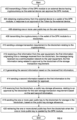
- Fig. 4 is a flow chart illustrating a procedure performed by a DPK module, according to further possible embodiments.
- the DPK module is operated on a user equipment.
- the steps can be understood in conjunction with Fig. 1 , Fig. 2 , Fig. 3 and Fig. 6 .
- the method comprising:
- Step 402 transmitting a Token of the DPK module 106, 206, 306, 606 to an external device 128, 228, 328 having cryptocurrency so the external device 128, 228, 328 can approve the DPK module 106, 206, 306, 606.
- the token is a unique identifier for the DPK module 106, 206, 306, 606 in the external device 128, 228, 328.
- the cryptocurrency is Ether.
- the external device 128, 228, 328 is a Public Key Manager (PKM).
- PPM Public Key Manager
- Step 404 obtaining cryptocurrency from the external device 128, 228, 328 to a wallet 110, 210, 310 of the DPK module 106, 206, 306, 606, in response to an approval of the Token by the external device 128, 228, 328.
- Step 406 obtaining one or more user public key on the user equipment 102, 202, 302.
- the user public keys are obtained by the DPK module 106, 206, 306, 606 from one or more Applications 104, 204, 304.
- the user public keys are obtained from the DPK module 106, 206, 306, 606 itself. That is, the user public keys are generated by the DPK module 106, 206, 306, 606.
- user information related to an application 104, 204, 304 is also obtained.
- the user information related to an application 104, 204, 304 is for example information of the user to be transferred between the user equipment 102, 202, 302 and other device using the application 104, 204, 304.
- Step 408 transmitting the cryptocurrency in the wallet 110, 210,310 of the DPK module 106, 206, 306, 506 to a blockchain 114, 214, 314, 614.
- the blockchain 114, 214, 314, 614 is Ethereum.
- the wallet 110, 210, 310 in the DPK module 106, 206, 306, 606 includes a wallet address, the wallet address is a unique identifier for the DPK module 106, 206, 306, 606 relating to the transmission of the cryptocurrency from the wallet 110, 210, 310 to the blockchain 114, 214, 314, 614.
- Step 410 sending a storage transaction requirement to the blockchain 114, 214, 314, 614 relating to the cryptocurrency.
- Step 412 receiving a first information from the user equipment 102, 202, 302, the first information originating from a message received from the blockchain 114, 214, 314, 614, the message being received via a communication network to the user equipment 102, 202, 302, the first information being related to approval by the blockchain 114, 214, 314, 614 of the storage transaction requirement.
- the first information can be a PIN or other unique password.
- the PIN/password can be explicitly included the message.
- actual PIN/password cannot be obtained directly from the message. Instead, the user gets the actual PIN/password by using the information comprised in the message. For example, the user inputs the information comprised in the message into a hardware "Authorization Token” and the "Authorization Token” generates the actual PIN/password for the user.
- the user reads the message and is instructed to input the PIN/password into the DPK module 106, 206, 306, 606.
- the instructions can be displayed on the user equipment 102, 202, 303 from the DPK module 106, 206, 306, 606 or from the received message.
- the message sent from the blockchain 114, 214, 314, 614 is sent as/via SMS or cloud messaging 226.
- the user of the user equipment 102, 202, 302 reads the SMS/cloud messaging and inputs the PIN/password to the DPK module 106, 206, 306, 606.
- the first information is a random number N1.
- the random number N1 is comprised in a message sent from the blockchain 114, 214, 314, 614.
- the user equipment 102, 202, 302 obtains the random number N1 from the received message and sends the random number N1 to the DPK module 106, 206, 306, 606.
- the message sent from the blockchain 114, 214, 314, 614 is sent as/via SMS or cloud messaging 326.
- Step 414 sending a second information based on the first information to the blockchain 114, 214, 314, 614 for approval.
- the second information is also the PIN/password.
- a step 413 is performed by the DPK module 106, 206, 306, 606 prior to the step 414.
- the step 413 generates the second information based on the received first information.
- the first information is the random number N1.
- the DPK module 106, 206, 306 By receiving the random number N1, the DPK module 106, 206, 306 generates another random number N2 itself, then calculates a function H (N1, N2) having the random numbers N1 and N2 as inputs.
- the function H is preinstalled in the DPK module 306 and can be any function that used for approvement, e.g., Hash function.
- the second information is the random number N2 and the function H (N1, N2).
- the random number N2 and the function H (N1, N2) are sent via different routes.
- the random number N2 is sent via a communication network, e.g., cloud messaging, application server etc.
- the function H (N1, N2) is sent directly via the interfaces between the DPK module 106, 206, 306, 606 and the blockchain 114, 214, 314, 614.
- Step 416 receiving from the blockchain 114, 214, 314, 614, a public key storage allowance, relating to an approval by the blockchain for the sent storage transaction requirement based on the sent second information.
- Step 418 sending the one or more user public key to the blockchain 114, 214, 314, 614 for storage in the blockchain 114, 214, 314, 614, based on the public key storage allowance.
- the sending 418 of the one or more user public key to the blockchain also includes sending user information related to an application 104, 204, 304 on the user equipment 102, 202, 302, the user information related to an application 104, 204, 304 being for example information of the user to be transferred between the user equipment 102, 202, 302 and other device using the application 104, 204, 304.
- Step 420 retrieving the one or more stored user public key from the blockchain 114, 214, 314, 614, when the public key is needed by the DPK module 106, 206, 306, 606.
- the stored user information related to an application 104, 204, 304 on the user equipment 102, 202, 302 is also retrieved.
- Fig. 5 is a flow chart illustrating a procedure in a blockchain, according to further possible embodiments.
- the blockchain is communicatively connected to the DPK module.
- the blockchain is Ethereum. The method comprising:
- Step 502 receiving cryptocurrency from a wallet 110, 210, 310 in a D istributed P ublic K eystore module 106, 206, 306, 606 operated on the user equipment 102, 202, 302.
- the cryptocurrency is Ether.
- Step 504 receiving a storage transaction requirement from the DPK module 106, 206, 306, 606 relating to the cryptocurrency.
- Step 506 sending a message for approving the DPK module 106, 206, 506 via a communication network to the user equipment 102, 202, the message comprising a first information being sent to the DPK module 106, 206, 306, 606 via the user equipment 102, 202, 302.
- the first information can be a PIN or other unique password.
- the PIN/password can be explicitly included the message.
- actual PIN/password cannot be obtained directly from the message. Instead, the actual PIN/password can be obtained by using the information comprised in the message.
- the user inputs the information comprised in the message into a hardware "Authorization Token" and the "Authorization Token” generates the actual PIN/password for the user.
- the message is sent as/via SMS or cloud messaging.
- the message is sent from the blockchain 114, 214, 314, 614 via a secure interface 118, 218, 318 and a communication network to the user equipment 102, 202, 302.
- the secure interface 118, 218, 318 provides a secure connection to an external network.
- the secure interface 118, 218, 318 is an Oraclize contract.
- the first information is a random number N1.
- the random number N1 is generated by the blockchain 114, 214, 314, 614 and comprised in a message.
- the message is sent by the blockchain 114, 214, 314, 614 to the user equipment 102, 202, 302, preferably via cloud messaging and application server or via SMS.
- the random number is generated by the secure interface 118, 218, 318, e.g., Oraclize contract.
- Step 508 receiving a second information from the DPK module 106, 206, 306, 606, the second information is based on the first information.
- the second information is also a PIN/password which is exactly the same as the first information.
- the first information is the random number N1
- the second information is the random number N2 and the function H (N1, N2), preferably sent via different routes.
- Step 510 approving the DPK module 106, 206, 306, 606 using the received second information.
- the second information is a PIN/password
- the blockchain 114, 214, 314, 614 compares whether the received PIN/password is consistent with the sent PIN/password. If so, the DPK module 106, 206, 306, 606 is approved.
- the second information is a random number N2 and a function H (N1, N2)
- the blockchain 114, 214, 314, 614 generates an own function H' (N1, N2) based on the N1 generated earlier and the received N2.
- the function H' is preinstalled in the blockchain 114, 214, 314, 614 and is the same as the function H on the DPK module 106, 206, 306, 606. If the result of the H' (N1, N2) is consistent with the received H (N1, N2), the DPK module 106, 206, 306, 606 is approved.
- Step 512 sending a public key storage allowance to the DPK module 106, 206, 306, 606, based on the approving.
- Step 514 receiving one or more user public key from the DPK module 106, 206, 306, 606.
- Step 516 storing the received one or more user public key.
- Step 518 transmitting the stored one or more public key to the DPK module 106, 206, 306, 606 in response to a retrieving requirement from the DPK module 106, 206, 306, 606.
- Fig. 6a and 6b are block diagrams illustrating a DPK module and a blockchain, respectively, in more detail, according to further possible embodiments.
- the DPK module 106, 206,306, 606 is operable on the user equipment 102, 202, 302 and configured for two-way communication with a blockchain 114, 214, 314, 614.
- the DPK module 106, 206, 306, 606 may comprises a processing unit 630 and a memory 632.
- the memory 632 contains instructions executable by the processing unit 630, whereby the DPK module 106, 206, 306, 606 is operative for performing any of the steps mentioned in relation to Fig. 4 .
- the instructions executable by said processing unit 630 may be arranged as a computer program stored e.g., in said memory 632.
- the processing unit 630 and the memory 632 may be arranged in a sub-arrangement.
- the sub-arrangement may be a micro-processor and adequate software and storage therefore, a Programmable Logic Device, PLD, or other electronic component(s)/processing circuit(s) configured to perform the methods mentioned above.
- the processing unit 630 may comprise one or more programmable processor, application-specific integrated circuits, field programmable gate arrays or combinations of these adapted to execute instructions.
- the computer program in the memory 632 may be arranged such that when its instructions are run in the processing unit 630, they cause the DPK module 106, 206, 306, 606 to perform the steps described in any of the described embodiments of the DPK module 106, 206, 306, 606 and its method.
- the computer program may be carried by a computer program product connectable to the processing unit 630.
- the computer program product may be the memory 632, or at least arranged in the memory.
- the memory 632 may be realized as for example a RAM (Random-access memory), ROM (Read-Only Memory) or an EEPROM (Electrical Erasable Programmable ROM).
- a carrier may contain the computer program.
- the carrier may be one of an electronic signal, an optical signal, an electromagnetic signal, a magnetic signal, an electric signal, a radio signal, a microwave signal, or computer readable storage medium.
- the computer-readable storage medium may be e.g., a CD, DVD or flash memory, from which the program could be downloaded into the memory 632.
- the computer program may be stored on a server or any other entity to which the DPK module 106, 206, 306, 606 has access via a communication interface. The computer program may then be downloaded from the server into the memory 632.
- a blockchain 114, 214, 314, 614 is configured for two-way communication with a number of user equipment 102, 202, 302 and communication networks, the blockchain 114, 214, 314, 614 comprising a processing unit 634 and a memory 636, the memory 636 containing instructions executable by said processing unit 634, whereby the blockchain 114, 214, 314, 614 is operative for performing any of the steps mentioned in relation to Fig. 5 .
- the computer program in the memory 636 may be arranged such that when its instructions are run in the processing unit 634, they cause the blockchain 114, 214, 314, 614 to perform the steps described in any of the described embodiments of the blockchain 114, 214, 314, 614 and its method.
- the instructions executable by said processing unit 634 may be arranged as a computer program stored e.g., in said memory 636.
- the processing unit 634 and the memory 636 may be arranged in a sub-arrangement.
- the sub-arrangement may be a micro-processor and adequate software and storage therefore, a Programmable Logic Device, PLD, or other electronic component(s)/processing circuit(s) configured to perform the methods mentioned above.
- the processing unit 634 may comprise one or more programmable processor, application-specific integrated circuits, field programmable gate arrays or combinations of these adapted to execute instructions.
- the computer program in the memory 636 may be arranged such that when its instructions are run in the processing unit 634, they cause the blockchain 114, 214, 314, 614 to perform the steps described in any of the described embodiments of the blockchain 114, 214, 314, 614 and its method.
- the computer program may be carried by a computer program product connectable to the processing unit 634.
- the computer program product may be the memory 636, or at least arranged in the memory.
- the memory 636 may be realized as for example a RAM (Random-access memory), ROM (Read-Only Memory) or an EEPROM (Electrical Erasable Programmable ROM).
- a carrier may contain the computer program.
- the carrier may be one of an electronic signal, an optical signal, an electromagnetic signal, a magnetic signal, an electric signal, a radio signal, a microwave signal, or computer readable storage medium.
- the computer-readable storage medium may be e.g., a CD, DVD or flash memory, from which the program could be downloaded into the memory 636.
- the computer program may be stored on a server or any other entity to which the blockchain 114, 214, 314, 614 has access via a communication interface. The computer program may then be downloaded from the server into the memory 636.
- Fig. 7 is a signaling diagram illustrating an example of a procedure when the solution is performed, according to further possible embodiments.
- a Token 7.1 of the DPK module 706 is sent by the DPK module 706 to the PKM 728.
- cryptocurrency 7.2 is sent by the PKM 728 to the DPK module 706.
- the DPK module 706 generates or obtains user public keys 7.3 from one or more applications.
- the DPK module 706 transmits the cryptocurrency 7.4 to the blockchain 714.
- the cryptocurrency is related to the storage transaction requirement 7.5 which is sent from the DPK module 706 to the blockchain 714.
- the blockchain 714 sends a message 7.6 to the user equipment 702.
- the message 7.6 relates to a future approval of the storage transaction requirement.
- the user equipment 702 On receiving the message 7.6, the user equipment 702 obtains a first information from the message and transmits the first information 7.7 to the DPK module 706.
- the DPK module 706 transmits a second information 7.8 to the blockchain 714.
- the second information is based on the first information.
- a Public Key Storage Allowance 7.9 is transmitted to the DPK module 706.
- the User Public Keys 7.10 are sent to the blockchain 714 for storing.
- the User Public Keys 7.11 are retrieved by the DPK module 706 when needed.
Landscapes
- Engineering & Computer Science (AREA)
- Business, Economics & Management (AREA)
- Computer Security & Cryptography (AREA)
- Accounting & Taxation (AREA)
- Theoretical Computer Science (AREA)
- General Physics & Mathematics (AREA)
- Physics & Mathematics (AREA)
- Finance (AREA)
- General Business, Economics & Management (AREA)
- Strategic Management (AREA)
- General Engineering & Computer Science (AREA)
- Computer Hardware Design (AREA)
- Computer Networks & Wireless Communication (AREA)
- Signal Processing (AREA)
- Software Systems (AREA)
- General Health & Medical Sciences (AREA)
- Databases & Information Systems (AREA)
- Health & Medical Sciences (AREA)
- Bioethics (AREA)
- Computing Systems (AREA)
- Financial Or Insurance-Related Operations Such As Payment And Settlement (AREA)
- Information Transfer Between Computers (AREA)
- Medicines That Contain Protein Lipid Enzymes And Other Medicines (AREA)
Claims (15)
- Verfahren, das von einem verteilten öffentlichen Schlüsselspeichermodul (Distributed Public Keystore Modul) (106, 206, 306, 606) durchgeführt wird, das auf einer Benutzerausrüstung (102, 202, 302) betrieben wird, die mit einem Kommunikationsnetzwerk verbunden ist, wobei das Verfahren umfasst:Übertragen (402) eines Tokens des DPK-Moduls (106, 206, 306, 606) an eine externe Vorrichtung (128, 228, 328), die Kryptowährung aufweist, so dass die externe Vorrichtung (128, 228, 328) das DPK-Modul (106, 206, 306, 606) genehmigen kann;Erhalten (404) von Kryptowährung von der externen Vorrichtung (128, 228, 328) an einer Brieftasche (110, 210, 310) des DPK-Moduls (106, 206, 306, 606) als Antwort auf eine Genehmigung des Tokens (108, 208, 308) durch die externe Vorrichtung (128, 228, 328);Erhalten (406) eines oder mehrerer öffentlicher Benutzerschlüssel auf der Benutzerausrüstung (102, 202, 302);Übertragen (408) der Kryptowährung in der Brieftasche (110, 210, 310) des DPK-Moduls (106, 206, 306, 606) an eine Blockchain (114, 214, 314, 614);Senden (410) einer Speichertransaktionsanforderung an die Blockchain (114, 214, 314, 614) in Bezug auf die Kryptowährung;Empfangen (412) erster Informationen von der Benutzerausrüstung (102, 202, 302), wobei die ersten Informationen aus einer von der Blockchain (114, 214, 314, 614) empfangenen Nachricht stammen, wobei die Nachricht über das Kommunikationsnetzwerk an der Benutzerausrüstung (102, 202, 302) empfangen wird, wobei sich die ersten Informationen auf die Genehmigung der Speichertransaktionsanforderung durch die Blockchain (114, 214, 314, 614) beziehen;Senden (414) zweiter Informationen basierend auf den ersten Informationen zur Genehmigung an die Blockchain (114, 214, 314, 614);Empfangen (416), von der Blockchain (114, 214, 314, 614), einer Speicherbewilligung für öffentliche Schlüssel in Bezug auf die Genehmigung der gesendeten Speichertransaktionsanforderung durch die Blockchain (114, 214, 314, 614) basierend auf den gesendeten zweiten Informationen;Senden (418) des einen oder der mehreren öffentlichen Benutzerschlüssel an die Blockchain (114, 214, 314, 614) zur Speicherung in der Blockchain (114, 214, 314, 614), basierend auf der Speicherbewilligung für öffentliche Schlüssel;Abrufen (420) des einen oder der mehreren gespeicherten öffentlichen Schlüssel aus der Blockchain (114, 214, 314, 614), wenn der eine oder die mehreren öffentlichen Schlüssel vom DPK-Modul (106, 206, 306, 606) benötigt werden.
- Verfahren nach Anspruch 1, wobei die von der Blockchain (114, 214, 314, 614) über das Kommunikationsnetzwerk empfangene Nachricht als eine SMS empfangen wird.
- Verfahren nach Anspruch 1, wobei die von der Blockchain (114, 214, 314, 614) über das Kommunikationsnetzwerk empfangene Nachricht als/über Cloud-Messaging empfangen wird.
- Verfahren nach Anspruch 1, wobei das Verfahren weiter das Erzeugen (413) der zweiten Informationen basierend auf den empfangenen ersten Informationen enthält.
- Verfahren nach Anspruch 4, wobei die ersten Informationen eine in der Nachricht enthaltene Zufallszahl N1 ist und die erzeugten zweiten Informationen eine Zufallszahl N2 und eine mit der Eingabe N1 und N2 berechnete Funktion H enthalten, wobei die Zufallszahl N2 von dem DPK-Modul (106, 206, 306, 606) erzeugt wird.
- Verfahren nach einem der Ansprüche 1-5, wobei die Brieftasche (110, 210, 310) im DPK-Modul (106, 206, 306, 606) eine Brieftaschenadresse enthält, wobei die Brieftaschenadresse eine eindeutige Kennung für das DPK-Modul (106, 206, 306, 606) in Bezug auf die Übertragung (408) der Kryptowährung von der Brieftasche (110, 210, 310) an die Blockchain (114,214,314,614) ist.
- Verfahren nach einem der Ansprüche 1-6, wobei das Erhalten (406), Senden (418) und Abrufen (420) des einen oder der mehreren öffentlichen Benutzerschlüssel auch das Erhalten, Senden und Abrufen von Benutzerinformationen in Bezug auf eine Anwendung (104, 204, 304) auf der Benutzerausrüstung (102, 202, 302) enthält, wobei die Benutzerinformationen bezüglich einer Anwendung (104, 204, 304) beispielsweise Informationen des Benutzers sind, die zwischen der Benutzerausrüstung und einer anderen Vorrichtung unter Verwendung der Anwendung (104, 204, 304) zu übermitteln sind.
- Verfahren, das von einer Blockchain (114, 214, 314, 614) eines Kommunikationsnetzwerks durchgeführt wird, wobei die Blockchain (114, 214, 314, 614) mit einer Benutzerausrüstung (102, 202, 302) verbunden ist, wobei das Verfahren umfasst:Empfangen (502) von Kryptowährung von einem verteilten öffentlichen Schlüsselspeichermodul (Distributed Public Keystore Modul) (106, 206, 306, 606), das auf der Benutzerausrüstung (102, 202, 302) betrieben wird;Empfangen (504) einer Speichertransaktionsanforderung von dem DPK-Modul (106, 206, 306, 606) in Bezug auf die Kryptowährung;Senden (506) einer Nachricht zum Genehmigen des DPK-Moduls (106, 206, 306, 606) über ein Kommunikationsnetzwerk an die Benutzerausrüstung (102, 202, 302), wobei die Nachricht erste Informationen umfasst, die über die Benutzerausrüstung (102, 202, 302) an das DPK-Modul (106, 206, 306, 606) gesendet werden;Empfangen (508) zweiter Informationen von dem DPK-Modul (106, 206, 306, 606), wobei die zweiten Informationen auf den ersten Informationen basieren;Genehmigen (510) des DPK-Moduls (106, 206, 306, 606) unter Verwendung der empfangenen zweiten Informationen;Senden (512) einer Speicherbewilligung für öffentliche Schlüssel an das DPK-Modul, basierend auf der Genehmigung;Empfangen (514) eines oder mehrerer öffentlicher Benutzerschlüssel von dem DPK-Modul (106, 206, 306, 606);Speichern (516) des/der empfangenen einen oder mehreren öffentlichen Benutzerschlüssel(s);Übertragen (518) des/der gespeicherten einen oder mehreren öffentlichen Benutzerschlüssel(s) an das DPK-Modul (106, 206, 306, 606) als Antwort auf eine Abrufanforderung von dem DPK-Modul (106, 206, 306, 606).
- Verfahren nach Anspruch 8, wobei die über das Kommunikationsnetzwerk gesendete (506) Nachricht zum Genehmigen des DPK-Moduls (106, 206, 306, 606) auch über eine sichere Schnittstelle (118, 218, 318) an die Benutzerausrüstung (102, 202, 302) gesendet wird, wobei die sichere Schnittstelle (118, 218, 318) ein Oraclize-Contract ist, der eine Schnittstelle zu externen Netzwerken der Blockchain (114, 214, 314, 614) bildet.
- Verfahren nach einem der Ansprüche 8 oder 9, wobei die Nachricht zum Genehmigen des DPK-Moduls (106, 206, 306, 606) als eine SMS gesendet wird.
- Verfahren nach einem der Ansprüche 8 oder 9, wobei die Nachricht zum Genehmigen des DPK-Moduls (106, 206, 306, 606) als/über Cloud-Messaging gesendet wird.
- Verfahren nach einem der Ansprüche 8-11, wobei die ersten Informationen eine Zufallszahl N1 ist, die in der gesendeten Nachricht umfasst ist, und die empfangenen zweiten Informationen eine Zufallszahl N2 und eine mit der Eingabe N1 und N2 berechnete Funktion H enthalten, wobei die Zufallszahl N2 von dem DPK-Modul (106, 206, 306, 606) erzeugt wird und die Funktion H von dem DPK-Modul (106, 206, 306, 606) berechnet wird, wobei Genehmigen (510) des DPK-Moduls (106, 206, 306, 606) unter Verwendung der empfangenen zweiten Informationen Berechnen einer Funktion H' mit der Eingabe N1 und N2 und Vergleichen der Funktion H' mit dem empfangenen H umfasst, wobei die Funktion H' in der Blockchain (114, 214, 314, 614) vorinstalliert ist und die gleiche wie die Funktion H im DPK-Modul (106, 206, 306, 606) ist.
- Verfahren nach einem der Ansprüche 8-12, wobei das Empfangen (514), Speichern (516) und Übertragen (518) eines oder mehrerer öffentlicher Benutzerschlüssel auch das Empfangen, Speichern und Übertragen von Benutzerinformationen in Bezug auf eine Anwendung (104, 204, 304) auf der Benutzerausrüstung (102, 202, 302) enthält, wobei die Benutzerinformationen in Bezug auf eine Anwendung (104, 204, 304) beispielsweise Informationen des Benutzers sind, die zwischen der Benutzerausrüstung und einer anderen Vorrichtung unter Verwendung der Anwendung (104, 204, 304) zu übermitteln sind.
- Computerprogramm mit Anweisungen, die, wenn sie von mindestens einer Verarbeitungseinheit (630) eines verteilten öffentlichen Schlüsselspeichermoduls (Distributed Public Keystore Modul) (106, 206, 306, 606) ausgeführt werden, das DPK-Modul (106, 206, 306, 606) veranlassen, das Verfahren nach einem der Ansprüche 1-7 durchzuführen.
- Computerprogramm, umfassend Anweisungen, die, wenn sie von mindestens einer Verarbeitungseinheit (634) einer Blockchain (114, 214, 314, 614) ausgeführt werden, die Blockchain (114, 214, 314, 614) veranlassen, das Verfahren nach einem der Ansprüche 8-13 durchzuführen.
Applications Claiming Priority (2)
| Application Number | Priority Date | Filing Date | Title |
|---|---|---|---|
| SE2150151A SE545490C2 (en) | 2021-02-11 | 2021-02-11 | Methods, module and blockchain for distributed public keystore |
| PCT/EP2022/053305 WO2022171770A1 (en) | 2021-02-11 | 2022-02-10 | Methods, module and blockchain for distributed public keystore |
Publications (3)
| Publication Number | Publication Date |
|---|---|
| EP4107643A1 EP4107643A1 (de) | 2022-12-28 |
| EP4107643B1 true EP4107643B1 (de) | 2023-07-12 |
| EP4107643C0 EP4107643C0 (de) | 2023-07-12 |
Family
ID=80684032
Family Applications (1)
| Application Number | Title | Priority Date | Filing Date |
|---|---|---|---|
| EP22708838.2A Active EP4107643B1 (de) | 2021-02-11 | 2022-02-10 | Verfahren, modul und blockchain für verteilten öffentlichen schlüsselspeicher |
Country Status (4)
| Country | Link |
|---|---|
| US (1) | US12093943B2 (de) |
| EP (1) | EP4107643B1 (de) |
| SE (1) | SE545490C2 (de) |
| WO (1) | WO2022171770A1 (de) |
Families Citing this family (1)
| Publication number | Priority date | Publication date | Assignee | Title |
|---|---|---|---|---|
| WO2025003757A1 (en) * | 2023-06-30 | 2025-01-02 | Phi Holdings Limited | Non-custodial, autonomous and secure digital service provisioning methodology |
Family Cites Families (9)
| Publication number | Priority date | Publication date | Assignee | Title |
|---|---|---|---|---|
| US10749684B2 (en) * | 2016-09-30 | 2020-08-18 | Entrust, Inc. | Methods and apparatus for providing blockchain participant identity binding |
| US10382485B2 (en) * | 2016-12-23 | 2019-08-13 | Vmware, Inc. | Blockchain-assisted public key infrastructure for internet of things applications |
| US10476879B2 (en) * | 2017-07-26 | 2019-11-12 | International Business Machines Corporation | Blockchain authentication via hard/soft token verification |
| GB2569278A (en) * | 2017-10-23 | 2019-06-19 | Cygnetise Ltd | Methods and apparatus for verifying a user transaction |
| US11288740B2 (en) * | 2017-12-29 | 2022-03-29 | Intel Corporation | Securing distributed electronic wallet shares |
| WO2020018549A1 (en) * | 2018-07-16 | 2020-01-23 | Sidewalk Labs LLC | Secure methods, systems, and media for generating and verifying user credentials |
| WO2020028277A1 (en) * | 2018-07-28 | 2020-02-06 | Lan Wang | Blockchain-based decentralized public key management system |
| GB2583767A (en) * | 2019-05-10 | 2020-11-11 | Nchain Holdings Ltd | Methods and devices for public key management using a blockchain |
| US11887072B2 (en) * | 2019-12-11 | 2024-01-30 | Bitt Inc. | Digital currency minting in a system of network nodes implementing a distributed ledger |
-
2021
- 2021-02-11 SE SE2150151A patent/SE545490C2/en unknown
-
2022
- 2022-02-10 WO PCT/EP2022/053305 patent/WO2022171770A1/en not_active Ceased
- 2022-02-10 US US17/915,287 patent/US12093943B2/en active Active
- 2022-02-10 EP EP22708838.2A patent/EP4107643B1/de active Active
Also Published As
| Publication number | Publication date |
|---|---|
| SE2150151A1 (en) | 2022-08-12 |
| EP4107643A1 (de) | 2022-12-28 |
| SE545490C2 (en) | 2023-09-26 |
| WO2022171770A1 (en) | 2022-08-18 |
| EP4107643C0 (de) | 2023-07-12 |
| US20230146338A1 (en) | 2023-05-11 |
| US12093943B2 (en) | 2024-09-17 |
Similar Documents
| Publication | Publication Date | Title |
|---|---|---|
| US12282956B2 (en) | Securing distributed electronic wallet shares | |
| US11470086B2 (en) | Systems and methods for organizing devices in a policy hierarchy | |
| CN111742531B (zh) | 简档信息共享 | |
| US20190034936A1 (en) | Approving Transactions from Electronic Wallet Shares | |
| US11910194B2 (en) | Secondary device authentication proxied from authenticated primary device | |
| US10757089B1 (en) | Mobile phone client application authentication through media access gateway (MAG) | |
| US10868808B1 (en) | Server application access authentication based on SIM | |
| CN114586314A (zh) | 基于私钥管理的区块链事务控制 | |
| CN112583593B (zh) | 用户间的隐私通信方法和装置 | |
| US12039524B2 (en) | Transfer via transaction app | |
| EP3598333A1 (de) | Verwaltung der aktualisierung elektronischer vorrichtungen | |
| CN111937013B (zh) | 电子设备管理 | |
| KR102228744B1 (ko) | 난수에 기초한 데이터 메시지 인증 | |
| EP4107643B1 (de) | Verfahren, modul und blockchain für verteilten öffentlichen schlüsselspeicher | |
| CN113141404B (zh) | 智能网关、及数据共享系统 | |
| Urien | Cloud of secure elements perspectives for mobile and cloud applications security | |
| JP6939313B2 (ja) | 分散認証システム | |
| NL2027091B1 (en) | Orchestrated quantum key distribution | |
| CN116561820B (zh) | 可信数据处理方法及相关装置 | |
| US20250062923A1 (en) | Distributed ledger for internet of things | |
| Altun et al. | Blockchain based confidential communication and authorization model for IoT devices | |
| Paavolainen et al. | Decentralized beacons: Attesting the ground truth of blockchain state for constrained IoT devices | |
| US20250373588A1 (en) | Derivation of a secure session key in resource constrained environments | |
| CN114866409B (zh) | 基于密码加速硬件的密码加速方法及装置 | |
| TWI908919B (zh) | 由設備執行的方法、分布式帳本系統以及電子設備 |
Legal Events
| Date | Code | Title | Description |
|---|---|---|---|
| STAA | Information on the status of an ep patent application or granted ep patent |
Free format text: STATUS: UNKNOWN |
|
| STAA | Information on the status of an ep patent application or granted ep patent |
Free format text: STATUS: THE INTERNATIONAL PUBLICATION HAS BEEN MADE |
|
| PUAI | Public reference made under article 153(3) epc to a published international application that has entered the european phase |
Free format text: ORIGINAL CODE: 0009012 |
|
| STAA | Information on the status of an ep patent application or granted ep patent |
Free format text: STATUS: REQUEST FOR EXAMINATION WAS MADE |
|
| 17P | Request for examination filed |
Effective date: 20220922 |
|
| AK | Designated contracting states |
Kind code of ref document: A1 Designated state(s): AL AT BE BG CH CY CZ DE DK EE ES FI FR GB GR HR HU IE IS IT LI LT LU LV MC MK MT NL NO PL PT RO RS SE SI SK SM TR |
|
| GRAJ | Information related to disapproval of communication of intention to grant by the applicant or resumption of examination proceedings by the epo deleted |
Free format text: ORIGINAL CODE: EPIDOSDIGR1 |
|
| STAA | Information on the status of an ep patent application or granted ep patent |
Free format text: STATUS: GRANT OF PATENT IS INTENDED |
|
| GRAP | Despatch of communication of intention to grant a patent |
Free format text: ORIGINAL CODE: EPIDOSNIGR1 |
|
| DAV | Request for validation of the european patent (deleted) | ||
| DAX | Request for extension of the european patent (deleted) | ||
| INTG | Intention to grant announced |
Effective date: 20230315 |
|
| GRAS | Grant fee paid |
Free format text: ORIGINAL CODE: EPIDOSNIGR3 |
|
| GRAA | (expected) grant |
Free format text: ORIGINAL CODE: 0009210 |
|
| STAA | Information on the status of an ep patent application or granted ep patent |
Free format text: STATUS: THE PATENT HAS BEEN GRANTED |
|
| AK | Designated contracting states |
Kind code of ref document: B1 Designated state(s): AL AT BE BG CH CY CZ DE DK EE ES FI FR GB GR HR HU IE IS IT LI LT LU LV MC MK MT NL NO PL PT RO RS SE SI SK SM TR |
|
| REG | Reference to a national code |
Ref country code: CH Ref legal event code: EP |
|
| REG | Reference to a national code |
Ref country code: IE Ref legal event code: FG4D |
|
| REG | Reference to a national code |
Ref country code: DE Ref legal event code: R096 Ref document number: 602022000207 Country of ref document: DE |
|
| U01 | Request for unitary effect filed |
Effective date: 20230808 |
|
| U07 | Unitary effect registered |
Designated state(s): AT BE BG DE DK EE FI FR IT LT LU LV MT NL PT SE SI Effective date: 20230817 |
|
| REG | Reference to a national code |
Ref country code: LT Ref legal event code: MG9D |
|
| PG25 | Lapsed in a contracting state [announced via postgrant information from national office to epo] |
Ref country code: GR Free format text: LAPSE BECAUSE OF FAILURE TO SUBMIT A TRANSLATION OF THE DESCRIPTION OR TO PAY THE FEE WITHIN THE PRESCRIBED TIME-LIMIT Effective date: 20231013 |
|
| PG25 | Lapsed in a contracting state [announced via postgrant information from national office to epo] |
Ref country code: ES Free format text: LAPSE BECAUSE OF FAILURE TO SUBMIT A TRANSLATION OF THE DESCRIPTION OR TO PAY THE FEE WITHIN THE PRESCRIBED TIME-LIMIT Effective date: 20230712 |
|
| PG25 | Lapsed in a contracting state [announced via postgrant information from national office to epo] |
Ref country code: IS Free format text: LAPSE BECAUSE OF FAILURE TO SUBMIT A TRANSLATION OF THE DESCRIPTION OR TO PAY THE FEE WITHIN THE PRESCRIBED TIME-LIMIT Effective date: 20231112 |
|
| PG25 | Lapsed in a contracting state [announced via postgrant information from national office to epo] |
Ref country code: RS Free format text: LAPSE BECAUSE OF FAILURE TO SUBMIT A TRANSLATION OF THE DESCRIPTION OR TO PAY THE FEE WITHIN THE PRESCRIBED TIME-LIMIT Effective date: 20230712 Ref country code: NO Free format text: LAPSE BECAUSE OF FAILURE TO SUBMIT A TRANSLATION OF THE DESCRIPTION OR TO PAY THE FEE WITHIN THE PRESCRIBED TIME-LIMIT Effective date: 20231012 Ref country code: IS Free format text: LAPSE BECAUSE OF FAILURE TO SUBMIT A TRANSLATION OF THE DESCRIPTION OR TO PAY THE FEE WITHIN THE PRESCRIBED TIME-LIMIT Effective date: 20231112 Ref country code: HR Free format text: LAPSE BECAUSE OF FAILURE TO SUBMIT A TRANSLATION OF THE DESCRIPTION OR TO PAY THE FEE WITHIN THE PRESCRIBED TIME-LIMIT Effective date: 20230712 Ref country code: GR Free format text: LAPSE BECAUSE OF FAILURE TO SUBMIT A TRANSLATION OF THE DESCRIPTION OR TO PAY THE FEE WITHIN THE PRESCRIBED TIME-LIMIT Effective date: 20231013 Ref country code: ES Free format text: LAPSE BECAUSE OF FAILURE TO SUBMIT A TRANSLATION OF THE DESCRIPTION OR TO PAY THE FEE WITHIN THE PRESCRIBED TIME-LIMIT Effective date: 20230712 |
|
| PG25 | Lapsed in a contracting state [announced via postgrant information from national office to epo] |
Ref country code: PL Free format text: LAPSE BECAUSE OF FAILURE TO SUBMIT A TRANSLATION OF THE DESCRIPTION OR TO PAY THE FEE WITHIN THE PRESCRIBED TIME-LIMIT Effective date: 20230712 |
|
| U20 | Renewal fee for the european patent with unitary effect paid |
Year of fee payment: 3 Effective date: 20240215 |
|
| REG | Reference to a national code |
Ref country code: DE Ref legal event code: R097 Ref document number: 602022000207 Country of ref document: DE |
|
| PG25 | Lapsed in a contracting state [announced via postgrant information from national office to epo] |
Ref country code: SM Free format text: LAPSE BECAUSE OF FAILURE TO SUBMIT A TRANSLATION OF THE DESCRIPTION OR TO PAY THE FEE WITHIN THE PRESCRIBED TIME-LIMIT Effective date: 20230712 Ref country code: RO Free format text: LAPSE BECAUSE OF FAILURE TO SUBMIT A TRANSLATION OF THE DESCRIPTION OR TO PAY THE FEE WITHIN THE PRESCRIBED TIME-LIMIT Effective date: 20230712 Ref country code: CZ Free format text: LAPSE BECAUSE OF FAILURE TO SUBMIT A TRANSLATION OF THE DESCRIPTION OR TO PAY THE FEE WITHIN THE PRESCRIBED TIME-LIMIT Effective date: 20230712 Ref country code: SK Free format text: LAPSE BECAUSE OF FAILURE TO SUBMIT A TRANSLATION OF THE DESCRIPTION OR TO PAY THE FEE WITHIN THE PRESCRIBED TIME-LIMIT Effective date: 20230712 |
|
| PLBE | No opposition filed within time limit |
Free format text: ORIGINAL CODE: 0009261 |
|
| STAA | Information on the status of an ep patent application or granted ep patent |
Free format text: STATUS: NO OPPOSITION FILED WITHIN TIME LIMIT |
|
| 26N | No opposition filed |
Effective date: 20240415 |
|
| PG25 | Lapsed in a contracting state [announced via postgrant information from national office to epo] |
Ref country code: MC Free format text: LAPSE BECAUSE OF FAILURE TO SUBMIT A TRANSLATION OF THE DESCRIPTION OR TO PAY THE FEE WITHIN THE PRESCRIBED TIME-LIMIT Effective date: 20230712 |
|
| PG25 | Lapsed in a contracting state [announced via postgrant information from national office to epo] |
Ref country code: IE Free format text: LAPSE BECAUSE OF NON-PAYMENT OF DUE FEES Effective date: 20240210 |
|
| PG25 | Lapsed in a contracting state [announced via postgrant information from national office to epo] |
Ref country code: IE Free format text: LAPSE BECAUSE OF NON-PAYMENT OF DUE FEES Effective date: 20240210 |
|
| U20 | Renewal fee for the european patent with unitary effect paid |
Year of fee payment: 4 Effective date: 20250218 |
|
| PGFP | Annual fee paid to national office [announced via postgrant information from national office to epo] |
Ref country code: CH Payment date: 20250301 Year of fee payment: 4 |
|
| PG25 | Lapsed in a contracting state [announced via postgrant information from national office to epo] |
Ref country code: CY Free format text: LAPSE BECAUSE OF FAILURE TO SUBMIT A TRANSLATION OF THE DESCRIPTION OR TO PAY THE FEE WITHIN THE PRESCRIBED TIME-LIMIT; INVALID AB INITIO Effective date: 20220210 |
|
| U1N | Appointed representative for the unitary patent procedure changed after the registration of the unitary effect |
Representative=s name: FABIANO, PIERO; CH |
|
| PG25 | Lapsed in a contracting state [announced via postgrant information from national office to epo] |
Ref country code: TR Free format text: LAPSE BECAUSE OF FAILURE TO SUBMIT A TRANSLATION OF THE DESCRIPTION OR TO PAY THE FEE WITHIN THE PRESCRIBED TIME-LIMIT Effective date: 20230712 |
|
| REG | Reference to a national code |
Ref country code: CH Ref legal event code: R17 Free format text: ST27 STATUS EVENT CODE: U-0-0-R10-R17 (AS PROVIDED BY THE NATIONAL OFFICE) Effective date: 20260209 Ref country code: CH Ref legal event code: R18 Free format text: ST27 STATUS EVENT CODE: U-0-0-R10-R18 (AS PROVIDED BY THE NATIONAL OFFICE) Effective date: 20260209 |