EP4103425B1 - Disconnection assembly for tethered electric vehicle - Google Patents
Disconnection assembly for tethered electric vehicle Download PDFInfo
- Publication number
- EP4103425B1 EP4103425B1 EP21704396.7A EP21704396A EP4103425B1 EP 4103425 B1 EP4103425 B1 EP 4103425B1 EP 21704396 A EP21704396 A EP 21704396A EP 4103425 B1 EP4103425 B1 EP 4103425B1
- Authority
- EP
- European Patent Office
- Prior art keywords
- cable
- mount
- anchor
- vehicle
- detachment
- Prior art date
- Legal status (The legal status is an assumption and is not a legal conclusion. Google has not performed a legal analysis and makes no representation as to the accuracy of the status listed.)
- Active
Links
Images
Classifications
-
- B—PERFORMING OPERATIONS; TRANSPORTING
- B60—VEHICLES IN GENERAL
- B60L—PROPULSION OF ELECTRICALLY-PROPELLED VEHICLES; SUPPLYING ELECTRIC POWER FOR AUXILIARY EQUIPMENT OF ELECTRICALLY-PROPELLED VEHICLES; ELECTRODYNAMIC BRAKE SYSTEMS FOR VEHICLES IN GENERAL; MAGNETIC SUSPENSION OR LEVITATION FOR VEHICLES; MONITORING OPERATING VARIABLES OF ELECTRICALLY-PROPELLED VEHICLES; ELECTRIC SAFETY DEVICES FOR ELECTRICALLY-PROPELLED VEHICLES
- B60L9/00—Electric propulsion with power supply external to the vehicle
-
- B—PERFORMING OPERATIONS; TRANSPORTING
- B60—VEHICLES IN GENERAL
- B60L—PROPULSION OF ELECTRICALLY-PROPELLED VEHICLES; SUPPLYING ELECTRIC POWER FOR AUXILIARY EQUIPMENT OF ELECTRICALLY-PROPELLED VEHICLES; ELECTRODYNAMIC BRAKE SYSTEMS FOR VEHICLES IN GENERAL; MAGNETIC SUSPENSION OR LEVITATION FOR VEHICLES; MONITORING OPERATING VARIABLES OF ELECTRICALLY-PROPELLED VEHICLES; ELECTRIC SAFETY DEVICES FOR ELECTRICALLY-PROPELLED VEHICLES
- B60L50/00—Electric propulsion with power supplied within the vehicle
- B60L50/50—Electric propulsion with power supplied within the vehicle using propulsion power supplied by batteries or fuel cells
- B60L50/53—Electric propulsion with power supplied within the vehicle using propulsion power supplied by batteries or fuel cells in combination with an external power supply, e.g. from overhead contact lines
-
- B—PERFORMING OPERATIONS; TRANSPORTING
- B60—VEHICLES IN GENERAL
- B60L—PROPULSION OF ELECTRICALLY-PROPELLED VEHICLES; SUPPLYING ELECTRIC POWER FOR AUXILIARY EQUIPMENT OF ELECTRICALLY-PROPELLED VEHICLES; ELECTRODYNAMIC BRAKE SYSTEMS FOR VEHICLES IN GENERAL; MAGNETIC SUSPENSION OR LEVITATION FOR VEHICLES; MONITORING OPERATING VARIABLES OF ELECTRICALLY-PROPELLED VEHICLES; ELECTRIC SAFETY DEVICES FOR ELECTRICALLY-PROPELLED VEHICLES
- B60L53/00—Methods of charging batteries, specially adapted for electric vehicles; Charging stations or on-board charging equipment therefor; Exchange of energy storage elements in electric vehicles
- B60L53/10—Methods of charging batteries, specially adapted for electric vehicles; Charging stations or on-board charging equipment therefor; Exchange of energy storage elements in electric vehicles characterised by the energy transfer between the charging station and the vehicle
- B60L53/14—Conductive energy transfer
- B60L53/18—Cables specially adapted for charging electric vehicles
-
- H—ELECTRICITY
- H01—ELECTRIC ELEMENTS
- H01H—ELECTRIC SWITCHES; RELAYS; SELECTORS; EMERGENCY PROTECTIVE DEVICES
- H01H27/00—Switches operated by a removable member, e.g. key, plug or plate; Switches operated by setting members according to a single predetermined combination out of several possible settings
-
- H—ELECTRICITY
- H01—ELECTRIC ELEMENTS
- H01H—ELECTRIC SWITCHES; RELAYS; SELECTORS; EMERGENCY PROTECTIVE DEVICES
- H01H3/00—Mechanisms for operating contacts
- H01H3/02—Operating parts, i.e. for operating driving mechanism by a mechanical force external to the switch
- H01H3/022—Emergency operating parts, e.g. for stop-switch in dangerous conditions
- H01H3/0226—Emergency operating parts, e.g. for stop-switch in dangerous conditions operated by a pull cord
-
- H—ELECTRICITY
- H01—ELECTRIC ELEMENTS
- H01H—ELECTRIC SWITCHES; RELAYS; SELECTORS; EMERGENCY PROTECTIVE DEVICES
- H01H3/00—Mechanisms for operating contacts
- H01H3/02—Operating parts, i.e. for operating driving mechanism by a mechanical force external to the switch
- H01H3/16—Operating parts, i.e. for operating driving mechanism by a mechanical force external to the switch adapted for actuation at a limit or other predetermined position in the path of a body, the relative movement of switch and body being primarily for a purpose other than the actuation of the switch, e.g. for a door switch, a limit switch, a floor-levelling switch of a lift
-
- H—ELECTRICITY
- H01—ELECTRIC ELEMENTS
- H01H—ELECTRIC SWITCHES; RELAYS; SELECTORS; EMERGENCY PROTECTIVE DEVICES
- H01H9/00—Details of switching devices, not covered by groups H01H1/00 - H01H7/00
- H01H9/20—Interlocking, locking, or latching mechanisms
- H01H9/28—Interlocking, locking, or latching mechanisms for locking switch parts by a key or equivalent removable member
-
- B—PERFORMING OPERATIONS; TRANSPORTING
- B60—VEHICLES IN GENERAL
- B60L—PROPULSION OF ELECTRICALLY-PROPELLED VEHICLES; SUPPLYING ELECTRIC POWER FOR AUXILIARY EQUIPMENT OF ELECTRICALLY-PROPELLED VEHICLES; ELECTRODYNAMIC BRAKE SYSTEMS FOR VEHICLES IN GENERAL; MAGNETIC SUSPENSION OR LEVITATION FOR VEHICLES; MONITORING OPERATING VARIABLES OF ELECTRICALLY-PROPELLED VEHICLES; ELECTRIC SAFETY DEVICES FOR ELECTRICALLY-PROPELLED VEHICLES
- B60L2200/00—Type of vehicles
- B60L2200/40—Working vehicles
-
- H—ELECTRICITY
- H02—GENERATION; CONVERSION OR DISTRIBUTION OF ELECTRIC POWER
- H02J—ELECTRIC POWER NETWORKS; CIRCUIT ARRANGEMENTS OR SYSTEMS FOR SUPPLYING OR DISTRIBUTING ELECTRIC POWER; SYSTEMS FOR STORING ELECTRIC ENERGY
- H02J2105/00—Networks for supplying or distributing electric power characterised by their spatial reach or by the load
- H02J2105/30—Networks for supplying or distributing electric power characterised by their spatial reach or by the load the load networks being external to vehicles, i.e. exchanging power with vehicles
- H02J2105/33—Networks for supplying or distributing electric power characterised by their spatial reach or by the load the load networks being external to vehicles, i.e. exchanging power with vehicles exchanging power with road vehicles
- H02J2105/37—Networks for supplying or distributing electric power characterised by their spatial reach or by the load the load networks being external to vehicles, i.e. exchanging power with vehicles exchanging power with road vehicles exchanging power with electric vehicles [EV] or with hybrid electric vehicles [HEV]
-
- Y—GENERAL TAGGING OF NEW TECHNOLOGICAL DEVELOPMENTS; GENERAL TAGGING OF CROSS-SECTIONAL TECHNOLOGIES SPANNING OVER SEVERAL SECTIONS OF THE IPC; TECHNICAL SUBJECTS COVERED BY FORMER USPC CROSS-REFERENCE ART COLLECTIONS [XRACs] AND DIGESTS
- Y02—TECHNOLOGIES OR APPLICATIONS FOR MITIGATION OR ADAPTATION AGAINST CLIMATE CHANGE
- Y02T—CLIMATE CHANGE MITIGATION TECHNOLOGIES RELATED TO TRANSPORTATION
- Y02T10/00—Road transport of goods or passengers
- Y02T10/60—Other road transportation technologies with climate change mitigation effect
- Y02T10/70—Energy storage systems for electromobility, e.g. batteries
-
- Y—GENERAL TAGGING OF NEW TECHNOLOGICAL DEVELOPMENTS; GENERAL TAGGING OF CROSS-SECTIONAL TECHNOLOGIES SPANNING OVER SEVERAL SECTIONS OF THE IPC; TECHNICAL SUBJECTS COVERED BY FORMER USPC CROSS-REFERENCE ART COLLECTIONS [XRACs] AND DIGESTS
- Y02—TECHNOLOGIES OR APPLICATIONS FOR MITIGATION OR ADAPTATION AGAINST CLIMATE CHANGE
- Y02T—CLIMATE CHANGE MITIGATION TECHNOLOGIES RELATED TO TRANSPORTATION
- Y02T10/00—Road transport of goods or passengers
- Y02T10/60—Other road transportation technologies with climate change mitigation effect
- Y02T10/7072—Electromobility specific charging systems or methods for batteries, ultracapacitors, supercapacitors or double-layer capacitors
-
- Y—GENERAL TAGGING OF NEW TECHNOLOGICAL DEVELOPMENTS; GENERAL TAGGING OF CROSS-SECTIONAL TECHNOLOGIES SPANNING OVER SEVERAL SECTIONS OF THE IPC; TECHNICAL SUBJECTS COVERED BY FORMER USPC CROSS-REFERENCE ART COLLECTIONS [XRACs] AND DIGESTS
- Y02—TECHNOLOGIES OR APPLICATIONS FOR MITIGATION OR ADAPTATION AGAINST CLIMATE CHANGE
- Y02T—CLIMATE CHANGE MITIGATION TECHNOLOGIES RELATED TO TRANSPORTATION
- Y02T90/00—Enabling technologies or technologies with a potential or indirect contribution to GHG emissions mitigation
- Y02T90/10—Technologies relating to charging of electric vehicles
- Y02T90/14—Plug-in electric vehicles
Definitions
- This disclosure relates to vehicles which are powered in normal operation from an external electrical supply point via a power cable, which attaches the machine to the supply point.
- This arrangement is used for example to supply power to excavators and other work machines.
- the cable or tether may be placed under tension if the machine moves too far from the power supply point or if the cable becomes tangled in moving parts of the machine.
- CN 106480925A discloses an electric excavator with a swivelling tether support arm.
- a power cable is plugged into a socket on the arm, and supported at a short distance from the arm by an elastic strain reliever attached to the arm.
- a slack portion of the cable extends alongside the elastic strain reliever, which relieves the plug and socket connection from tension in the cable.
- a tension sensor is arranged to monitor the connection by sensing tension in the elastic strain reliever.
- CN 106364334A discloses a power supply vehicle which supplies power to a moving machine via a retractable cable.
- the cable is connected to a cable disconnection device mounted on a swivelling arm attached to the machine.
- the cable disconnection device disconnects the cable when a tension sensor detects excessive tension in the cable.
- the cable may terminate at a plug which is received in a socket on the rotating arm and retained by a brittle pin which allows the plug to detach from the socket under excessive tension.
- the power supply vehicle automatically turns off the power supply to the cable when the cable is disconnected from the machine
- US 3 760 134 describes a safety apparatus and method for preventing accidental damage to trailing cable power conductors connected between a power source and an electrically driven vehicle such as mining equipment or the like.
- the power supply is not interrupted by nuisance operation of the safety mechanism.
- the cable forms an elastic system, and its weight may cause intermittent operation of the safety mechanism if set in oscillation by a sudden movement of the machine.
- a plug and socket connection may be configured to detach under excess load while resisting nuisance operation.
- damaging arcing may occur at the contacts on detachment of the plug, while the detached plug could be hazardous, for example, if it falls into water while the conductor is live.
- connective parts that are configured to pass high currents require a substantial mechanical joint which may resist disconnection, especially if the disconnection force is not exactly aligned with the connection axis. In such situations, a suddenly applied tension force could damage the cable before disconnection occurs.
- the invention is as defined in independent assembly claim 1 and independent method claim 10.
- the disclosure provides an assembly for supplying power to a vehicle.
- the assembly includes a power cable having a first end connectable to an electric power supply, and a second end connectable to a vehicle to supply electric power from the power supply to the vehicle; and a disconnection switch, operable to interrupt the supply of electric power from the cable to the vehicle.
- the assembly further includes an anchor, connected to the cable between its first and second ends, to define a first portion of the cable extending between the anchor and the first end of the cable, and a second portion of the cable extending between the anchor and the second end of the cable; and a mount configured to be supported on the vehicle in a use position.
- the anchor In the use position of the mount, when the second end of the cable is connected to the vehicle, the anchor is detachably attachable and re-attachable to the mount, to support the cable on the mount with the second portion of the cable in a slack condition.
- the anchor is detachable from the mount by application of a threshold detachment force by tension in the first portion of the cable, and the disconnection switch is operable by detachment of the anchor from the mount to interrupt the supply of electric power.
- the disclosure provides a vehicle including the assembly, wherein the second end of the cable is connected to the vehicle and the mount is supported on the vehicle in the use position.
- the disclosure provides a method of supplying electric power to a vehicle, including: providing a power cable; arranging a first end of the cable to be connectable to an electric power supply, and a second end of the cable to be connectable to the vehicle to supply electric power from the power supply to the vehicle; and arranging a disconnection switch to be operable to interrupt the supply of electric power from the cable to the vehicle.
- the method further includes: connecting an anchor to the cable between its first and second ends, to define a first portion of the cable extending between the anchor and the first end of the cable, and a second portion of the cable extending between the anchor and the second end of the cable; and supporting a mount on the vehicle in a use position, wherein the anchor is detachably attachable and re-attachable to the mount, to support the cable on the mount with the second portion of the cable in a slack condition.
- the method further includes: arranging the anchor to be detachable from the mount by application of a threshold detachment force by tension in the first portion of the cable; and arranging the disconnection switch to be operable by detachment of the anchor from the mount to interrupt the supply of electric power.
- the assembly includes a power cable 10 having a first end 11 which is connectable to an electric power supply 1, and a second end 14 which is connectable to a vehicle 2 to supply electric power from the power supply 1 to the vehicle 2.
- the power supply 1 may be a fixed power supply, and the first end 11 of the cable or tether 10 may be provided with a plug 13 for connection to the fixed power supply 1, as shown in Figs. 4 - 6 .
- the power supply 1 may be, for example, a three-phase, 415V power supply.
- the second end 14 of the cable 10 may be provided with another electrical connector (e.g. a plug 16 as shown) for connection to a power intake socket 3 of the vehicle.
- the vehicle 2 is a work machine (work vehicle), which is to say, a vehicle that is equipped with a tool mounted on the vehicle and manipulable by the operator.
- the illustrated work vehicle is a small excavator, with a bucket mounted on a stick and boom, but the assembly could equally be used on other vehicles, including wheeled or tracked work vehicles.
- An anchor 20 is connected to the cable 10 between its first and second ends 11, 14, to define a first portion 12 of the cable extending between the anchor 20 and the first end 11 of the cable, and a second portion 15 of the cable extending between the anchor 20 and the second end 14 of the cable.
- anchor is used to mean a part that mechanically supports the cable.
- the assembly further includes a disconnection switch 30 (shown in Figs. 9 , 10 and 11 ), which is operable to interrupt the supply of electric power from the cable 10 to the vehicle 2.
- the disconnection switch 30 may be incorporated into the mount 40, as exemplified by the illustrated embodiment and further described below, and may be electrically connected in-between the second end 14 of the cable and the powered systems 4 of the vehicle 2, in which case it will carry the full power of the cable 10.
- the disconnection switch may be arranged to control a circuit breaker which is electrically connected in-between the second end 14 of the cable and the powered systems 4 of the vehicle, in which case it may only carry a small current to control the circuit breaker, as further described below.
- the disconnection switch could be incorporated into the anchor 20.
- the disconnection switch could be electrically connected in-between the first and second portions 12, 15 of the cable 10 to carry the full power of the cable.
- it could be electrically connected (e.g. via a control cable running along the second portion 15 of the power cable 10) to a circuit breaker which is controlled by the disconnection switch and is electrically connected in-between the second end 14 of the cable and the powered systems 4 of the vehicle.
- the first and second portions 12, 15 of the cable 10 may be portions of a single, unbroken length of cable 10, in which case, the anchor 20 may be clamped onto the cable, e.g. by screwing together two parts 21, 22 of the anchor 20 as shown in Fig. 7 to secure the cable in-between them.
- the first and second portions 12, 15 of the cable 10 may be two separate lengths of the cable, of similar or different construction, which are electrically connected together at the anchor, optionally with the disconnection switch being electrically interposed between them.
- the assembly further includes a mount 40, which is configured to be supported on the vehicle 2 in a use position, as shown in Figs. 1 and 4 and in Figs. 5 and 6 .
- the anchor 20 in the use position of the mount 40, when the second end 14 of the cable 10 is connected to the vehicle 2, the anchor 20 is attachable to the mount 40, and is also detachable from the mount 40 and re-attachable to the mount after detachment.
- the anchor 20 supports the cable 10 on the mount 40 - which is to say, the cable 10 is supported by the anchor 20, and the anchor 20 is supported by the mount 40 - with the second portion 15 of the cable in a slack condition, as shown in Fig. 5 .
- the slack, second portion 15 of the cable may hang in a loop, as shown.
- the cable 10 may be suspended in use from the anchor 20.
- the anchor 20 is detachable from the mount 40 by application of a threshold detachment force Fd by tension in the first portion 12 of the cable 10, without mechanically disconnecting the second end 14 of the cable from the vehicle 2.
- detachment of the anchor 20 means that the anchor is physically separated from the mount 40, i.e. moved away from the mount 40; after detachment, the anchor remains mechanically connected to the vehicle 2 by the second portion 15 of the cable.
- the disconnection switch 30 is operable, by detachment of the anchor 20 from the mount 40, to interrupt the supply of electric power from the cable 10 to the vehicle 2.
- the disconnection switch 30 may be manually operable to re-establish the supply of electric power by re-attachment of the anchor 20 to the mount 40. Thus, the switch may re-establish the supply of power, only when the anchor 20 is replaced in its attached position on the mount 40.
- the switch 30 may be a momentary switch, resiliently biased to a rest position, and may be operable by abutment against the anchor 20 as the anchor 20 moves from a detached position ( Fig. 9 ) to an attached position ( Fig. 10 ), as exemplified by the illustrated embodiment.
- the switch 30 is normally-open, but it could alternatively be normally-closed, depending on how the circuit is arranged.
- the switch could be any suitable switch or other sensor configured to interrupt the power supply (either directly or indirectly) and operable by contact or by proximity of the anchor, e.g. by a magnetic field of the anchor.
- the disconnection switch 30 is arranged to control a circuit breaker 31.
- the circuit breaker 31 is arranged electrically in-between the second end 14 of the cable 10 and the powered systems 4 of the vehicle 2 to interrupt the supply of power from the cable to the vehicle.
- the powered systems 4 of the vehicle may include, for example, one or more drive motors for driving the wheels or tracks to move the vehicle 2 over the ground, and/or one or more actuators for controlling the boom, stick, and/or bucket or other tool.
- the vehicle may include a control system 32 including a reset control 33 which is operable by a user separately from the disconnection switch 30.
- the control system 32 is arranged to maintain the vehicle 2 in a disabled condition, after re-establishment of the supply of electric power, until a user input is received via the reset control 33. Once the user input is received, the control system 32 re-enables operation of the vehicle 2.
- control system 32 may include an electronic control unit 34 that operates another circuit breaker 35 to interrupt the power supply, or may be any other, e.g. electrical or mechanical arrangement, effective to disable operation of the vehicle as generally known in the art.
- control system 32 may be configured to maintain the vehicle 2 in an inactive condition responsive to power loss, and to require a reset command from the operator in order to restore the vehicle 2 to an active condition after power is restored.
- the assembly may include a support structure 50.
- the support structure 50 includes a swivel assembly 51 and an arm 52 supported on the swivel assembly 51.
- the swivel assembly 51 is configured to be supported on the vehicle 2, as shown in Fig. 4 , and defines a swivel axis Xs acollinear with the arm 52 (which is to say, not collinear with the arm - i.e. the arm 52 extends laterally away from the swivel axis Xs).
- the mount 40 is supported in the use position at a distal end of the arm 52 and is pivotable about the swivel axis Xs by movement of the arm 52.
- the arm 52 may be configured to be releasably locked in an outwardly extending position so as to hold the cable 10 clear of the vehicle 2, for example, by manual operation of a lock 53.
- the lock 53 may be configured to engage a static upright post 54 of the support structure while the arm 52 swivels around the post 54 on an internal joint, as shown.
- the arm 52 may be configured to support the cable in a coil on the arm when the vehicle is not in use.
- the second end 14 of the cable 10 may be releasably coupled to a power connector, such as an intake socket 3 as shown, which is mounted on the support structure 50.
- a power connector such as an intake socket 3 as shown
- another mechanical support may be provided at the second end 14 of the cable to relieve the power connection, e.g. plug 16 and intake socket 3, from tension in the second portion 15 of the cable when the anchor 20 is detached from the mount.
- the anchor 20 may be detachable from the mount 40 in its use position by movement of the anchor 20 along a detachment axis Xd of the mount.
- the anchor 20 and mount 40 may define co-operating abutment surfaces 23, 43 which are configured to convert a tension force Ft applied by the first portion 12 of the cable in a direction not aligned with the detachment axis Xd, to generate a force component (represented in Fig. 9 by the detachment force Fd) acting along the detachment axis Xd.
- the tension force Ft may be applied in different directions to the mount 40 (which reacts the tension force applied by the cable 10 to the anchor 20), depending on how the vehicle 2 moves over the ground relative to the fixed location of the power supply 1.
- the abutment surfaces 23, 43 may be configured to generate a force component (Fd) acting along the detachment axis Xd when the tension force Ft acts in a direction normal to the detachment axis Xd, illustrated by the uppermost position of the cable 10 as shown in broken lines in Fig. 1 .
- the force component Fd may be generated by selecting a suitable contact angle between the abutment surfaces, relative to their coefficient of friction, to generate sliding or pivotal motion between them as known in the art.
- the mount 40 may define a shallow, inwardly tapering recess which receives the anchor. The recess may be downwardly facing to further ensure reliable detachment, as further discussed below.
- the abutment surfaces 23, 43 may be configured to generate a force component (Fd) acting along the detachment axis Xd when the tension force Ft acts in either of two opposite directions normal to the detachment axis Xd, represented by the two opposite directions of the cable 10 as shown in broken lines in Fig. 2 .
- Fd force component
- the co-operating abutment surfaces 23, 43 may be surfaces of rotation, e.g. frustoconical surfaces, to ensure reliable detachment under a tension force Ft applied through a wide angular range.
- a curved or radiused profile may alternatively be used.
- the anchor 20 may be magnetically attachable to the mount 40, for example, by arranging a magnet 24 (or two or more magnets) in the anchor 20 to be attracted to a magnet-responsive material (e.g. another magnet, or an iron or steel body 44) in the mount 40.
- a magnet-responsive material e.g. another magnet, or an iron or steel body 44
- the mount may include a magnet or magnets that attract the anchor.
- the magnets may be configured to exert an attraction force that declines rapidly with increasing distance between the anchor 20 and the mount 40, and so may define a relatively short threshold distance Dt ( Fig. 9 ) as discussed below.
- a mechanical catch (not shown) could be arranged to release the anchor at the threshold detachment force.
- the catch could be urged into engagement with the anchor (or with the mount) by a resilient bias element, until it is released when the threshold detachment force overcomes the restoring force of the resilient bias element.
- the anchor 20 may be attachable to a downwardly facing portion 45 of the mount 40 in its use position.
- the downwardly facing portion 45 of the mount may define a downwardly open recess 46, with the anchor 20 being received in the recess 46 when attached to the mount 40.
- the recess 46 helps to locate the anchor 20 on the mount.
- the anchor 20 could include a recess which receives a downwardly facing protuberance of the mount.
- the anchor 20 may include a handgrip 25, which is arranged on a downwardly facing side of the anchor 20 when the anchor 20 is attached to the mount 40 in the use position of the mount, as shown in Figs. 1 and 4 .
- the anchor 20 may comprise a moulded body (e.g. of plastics or aluminium) on which the handgrip is integrally formed.
- the anchor 20 and the mount 40 may co-operate to apply an attraction force to the anchor, acting along the detachment axis Xd and of a magnitude greater than said net separating force, to urge the anchor 20 towards the mount 40.
- the attraction force acts in the opposite direction to the detachment force Fd as shown in Fig. 9 , and assists the user in re-attaching the anchor 20 against its own weight and the weight of the suspended cable 10.
- a magnet 24 or magnets may exert an attraction force to urge the anchor 20 into its mounted position as it approaches very close to the mount 40 at less than one half of the threshold distance Dt - for example, within the last 10mm or 5mm of movement.
- a resilient (e.g. spring biased) catch mechanism (not shown) to retain the anchor to the mount, the catch may pass, reversibly, through a metastable or over-centre position as the anchor approaches very close to the mount, e.g. within the last 10mm or 5mm of movement, after which the bias spring acts on the catch to urge the anchor towards the mount.
- the attraction force may overcome the resilient bias to move the disconnection switch 30 to the connected state to re-establish the power supply, as shown in Fig. 10 .
- the effective length of the cable 10 is immediately increased by the additional length provided by the slack, second portion 15 of the cable, as shown in Fig. 6 . This immediately reduces tension in the cable 10, while accommodating a small range of further movement of the vehicle 2 as the vehicle comes to rest after power is lost, preventing damage to the cable.
- the anchor 20 After detachment, the anchor 20 remains mechanically connected to the vehicle 2 by the second portion 15 of the cable. This ensures that the second end 14 of the cable does not present an electrical hazard if the cable 10 remains live after disconnection, and further assists the operator to re-attach the anchor 20 to the mount 40.
- the length of the slack, second portion 15 of the cable may be selected to increase the effective length of the cable 10 by an additional length greater than a maximum range of residual movement of the vehicle 2 as the vehicle comes to rest following a loss of power.
- the maximum residual movement may be greatest at a distal extremity of a work tool mounted on the vehicle, e.g. at the tip of the bucket.
- the disconnection switch 30 may be configured to reset to the functional condition only when the anchor 20 is replaced in its attached position on the mount 40. Since it is difficult to replace the anchor 20 without sorting out the problem with the cable, this effectively precludes reconnection in an unsafe condition of the cable.
- the switch 30 may be a momentary switch, as exemplified by the illustrated embodiment.
- the automatic reset of the disconnection switch 30 and the inhibitory operation of the control system 32 provide a simple, two-step procedure to resume operation of the vehicle after the power supply is disconnected, while ensuring that the vehicle 2 cannot be re-started until the operator is ready to resume control.
- the threshold distance Dt represents the inverse relationship between the force required to move the anchor 20 further away from the mount 40, and the distance of the anchor from the mount.
- the net separating force is the total force acting on the anchor along the detachment axis Xd. For example, if the detachment axis Xd is vertical as shown, and the anchor 20 together with the second portion 15 of the cable weighs 1kg, then a net separating force of 1kgf acting vertically downwardly will move the anchor 20 further away from the mount 40 when the anchor 20 is at or beyond the threshold distance Dt from the mount 40.
- the threshold distance Dt can be determined experimentally by removing the anchor 20 from the cable 10 and supporting the anchor 20, with a weight representing the mass of the second portion 15 of the cable, at the threshold distance from the mount 40 along the detachment axis Xd.
- the anchor 20 will also support the weight of the first portion 12 of the cable, which will vary depending on its suspended length and diameter, and so the net separating force and the attraction force (if provided) can be selected accordingly to suit the intended operating conditions of the vehicle 2. It is conceivable also that the net separating force and/or the attraction force may be adjustable to suit different operating conditions. This could be achieved for example in a magnetic coupling system by positioning an adjustable spacer, e.g. a shim set of variable thickness, between the anchor 20 and the mount 40, or in a system based on a spring catch mechanism, by adjusting the strength (e.g. compression) of the retaining spring that energises the catch that engages the anchor to retain the anchor to the mount.
- an adjustable spacer e.g. a shim set of variable thickness
- a short threshold distance Dt means a more sudden, bistable action, and a reduced window for metastable operation - which is to say, it makes it more difficult for the user to operate the vehicle 2 with the cable 10 at maximum tension.
- the anchor 20 will detach suddenly and then fall away from the downwardly facing mount 40 under its own weight and the weight of the first and second portions of the cable 10.
- the threshold distance may be reduced to less than 15mm, less than 10mm, or even less than 5mm.
- the magnitude of the attraction force may be more than two times the net separating force, or even more the four times the net separating force.
- the threshold detachment force may at least five times the net separating force, optionally at least ten times the net separating force, or even at least fifteen times the net separating force.
- the threshold detachment force could be at least 5kgf, at least 10kgf, or even at least 15kgf.
- an electric vehicle 2 is supplied with power from a power supply 1 via a cable 10 supported by an anchor 20.
- the anchor 20 is attached to a mount 40 on the vehicle and detachable from the mount 40 by tension in a first portion 12 of the cable between the anchor 20 and the power supply 1.
- a second portion 15 of the cable between the anchor 20 and the vehicle 2 remains slack in the attached position of the anchor 20, and extends on detachment of the anchor to relieve tension in the first portion 12 of the cable 10.
- a disconnection switch 30 is operable by detachment of the anchor 20 to interrupt the power supply from the cable 10 to the vehicle 2.
- the vehicle 2 may be supplied with electric power by providing a power cable 10 and arranging a first end 11 of the cable to be connectable to an electric power supply 1, and a second end 14 of the cable to be connectable to the vehicle to supply electric power from the power supply 1 to the vehicle 2.
- the method further includes arranging a disconnection switch 30 to be operable to interrupt the supply of electric power from the cable 10 to the vehicle 2, and connecting an anchor 20 to the cable between its first and second ends 11, 14, to define a first portion 12 of the cable extending between the anchor 20 and the first end 11 of the cable, and a second portion 15 of the cable extending between the anchor 20 and the second end 14 of the cable.
- the method further includes supporting a mount 40 on the vehicle 2 in a use position, wherein the anchor 20 is detachably attachable and re-attachable to the mount 40, to support the cable 10 on the mount 40 with the second portion 15 of the cable in a slack condition.
- the method further includes arranging the anchor 20 to be detachable from the mount 40 by application of a threshold detachment force Fd by tension in the first portion 12 of the cable, and arranging the disconnection switch 30 to be operable by detachment of the anchor 20 from the mount 40 to interrupt the supply of electric power from the cable 10 to the vehicle 2.
Landscapes
- Engineering & Computer Science (AREA)
- Power Engineering (AREA)
- Transportation (AREA)
- Mechanical Engineering (AREA)
- Life Sciences & Earth Sciences (AREA)
- Sustainable Development (AREA)
- Sustainable Energy (AREA)
- Details Of Connecting Devices For Male And Female Coupling (AREA)
Description
- This disclosure relates to vehicles which are powered in normal operation from an external electrical supply point via a power cable, which attaches the machine to the supply point.
- This arrangement is used for example to supply power to excavators and other work machines. In operation, the cable or tether may be placed under tension if the machine moves too far from the power supply point or if the cable becomes tangled in moving parts of the machine.
- To address this problem it is known to monitor the tension in the cable, or to disconnect the power supply so that the machine is brought to a stop when the cable is stretched.
- For example,
CN 106480925A discloses an electric excavator with a swivelling tether support arm. A power cable is plugged into a socket on the arm, and supported at a short distance from the arm by an elastic strain reliever attached to the arm. A slack portion of the cable extends alongside the elastic strain reliever, which relieves the plug and socket connection from tension in the cable. A tension sensor is arranged to monitor the connection by sensing tension in the elastic strain reliever. -
CN 106364334A discloses a power supply vehicle which supplies power to a moving machine via a retractable cable. The cable is connected to a cable disconnection device mounted on a swivelling arm attached to the machine. The cable disconnection device disconnects the cable when a tension sensor detects excessive tension in the cable. The cable may terminate at a plug which is received in a socket on the rotating arm and retained by a brittle pin which allows the plug to detach from the socket under excessive tension. The power supply vehicle automatically turns off the power supply to the cable when the cable is disconnected from the machineUS 3 760 134 describes a safety apparatus and method for preventing accidental damage to trailing cable power conductors connected between a power source and an electrically driven vehicle such as mining equipment or the like. - In any practical system, it is desirable to ensure that the power supply is not interrupted by nuisance operation of the safety mechanism. For example, where a considerable length of power cable is suspended to form a catenary curve, the cable forms an elastic system, and its weight may cause intermittent operation of the safety mechanism if set in oscillation by a sudden movement of the machine.
- With practice, an operator may choose to operate the machine in such conditions close to the limit of the cable. It would be useful to discourage such operator behaviour in order to avoid fatiguing the cable and power connectors.
- A plug and socket connection may be configured to detach under excess load while resisting nuisance operation. However, damaging arcing may occur at the contacts on detachment of the plug, while the detached plug could be hazardous, for example, if it falls into water while the conductor is live. Moreover, connective parts that are configured to pass high currents require a substantial mechanical joint which may resist disconnection, especially if the disconnection force is not exactly aligned with the connection axis. In such situations, a suddenly applied tension force could damage the cable before disconnection occurs.
- Once the power supply is interrupted the machine will undergo some residual motion before it comes to rest. It would be desirable to ensure that the residual motion of the machine cannot further strain the cable to breaking point, in the event that the cable should become entangled in parts that undergo substantial residual motion due to a large momentum - for example, if the machine happens to be operating with a fully loaded bucket at the end of a fully extended boom and stick.
- The invention is as defined in
independent assembly claim 1 andindependent method claim 10. - In a first aspect, the disclosure provides an assembly for supplying power to a vehicle.
- The assembly includes a power cable having a first end connectable to an electric power supply, and a second end connectable to a vehicle to supply electric power from the power supply to the vehicle; and a disconnection switch, operable to interrupt the supply of electric power from the cable to the vehicle.
- The assembly further includes an anchor, connected to the cable between its first and second ends, to define a first portion of the cable extending between the anchor and the first end of the cable, and a second portion of the cable extending between the anchor and the second end of the cable; and a mount configured to be supported on the vehicle in a use position.
- In the use position of the mount, when the second end of the cable is connected to the vehicle, the anchor is detachably attachable and re-attachable to the mount, to support the cable on the mount with the second portion of the cable in a slack condition.
- The anchor is detachable from the mount by application of a threshold detachment force by tension in the first portion of the cable, and the disconnection switch is operable by detachment of the anchor from the mount to interrupt the supply of electric power.
- In a related aspect, the disclosure provides a vehicle including the assembly, wherein the second end of the cable is connected to the vehicle and the mount is supported on the vehicle in the use position.
- In another aspect, the disclosure provides a method of supplying electric power to a vehicle, including: providing a power cable; arranging a first end of the cable to be connectable to an electric power supply, and a second end of the cable to be connectable to the vehicle to supply electric power from the power supply to the vehicle; and arranging a disconnection switch to be operable to interrupt the supply of electric power from the cable to the vehicle.
- The method further includes: connecting an anchor to the cable between its first and second ends, to define a first portion of the cable extending between the anchor and the first end of the cable, and a second portion of the cable extending between the anchor and the second end of the cable; and supporting a mount on the vehicle in a use position, wherein the anchor is detachably attachable and re-attachable to the mount, to support the cable on the mount with the second portion of the cable in a slack condition.
- The method further includes: arranging the anchor to be detachable from the mount by application of a threshold detachment force by tension in the first portion of the cable; and arranging the disconnection switch to be operable by detachment of the anchor from the mount to interrupt the supply of electric power.
- Further features and advantages will be evident from the following illustrative embodiment which will now be described, purely by way of example and without limitation to the scope of the claims, and with reference to the accompanying drawings, in which:
-
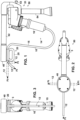
Fig. 1 shows an assembly in accordance with a first embodiment of the disclosure, including a mount supported in its use position on a support structure, and an anchor attached to the mount. -
Fig. 2 is a top view of the assembly. -
Fig. 3 is a front view of the assembly. -
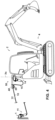
Fig. 4 shows the assembly mounted on an excavator with the cable in tension. -
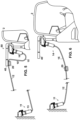
Fig. 5 is an enlarged view of the assembly as shown inFig. 4 , with the cable in tension. -
Fig. 6 shows the assembly after detachment of the anchor from the mount. -
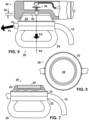
Fig. 7 is a side view of the anchor, partially cut away to show the magnet. -
Fig. 8 is a top view of the anchor. -
Fig. 9 shows the anchor during detachment from the mount. -
Fig. 10 shows the anchor attached to the mount. -
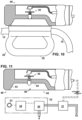
Fig. 11 shows the mount after detachment of the anchor, together with a control system of the excavator. - Referring to
Figs. 1 - 6 , the assembly includes apower cable 10 having afirst end 11 which is connectable to anelectric power supply 1, and asecond end 14 which is connectable to avehicle 2 to supply electric power from thepower supply 1 to thevehicle 2. - The
power supply 1 may be a fixed power supply, and thefirst end 11 of the cable ortether 10 may be provided with aplug 13 for connection to thefixed power supply 1, as shown inFigs. 4 - 6 . Thepower supply 1 may be, for example, a three-phase, 415V power supply. Thesecond end 14 of thecable 10 may be provided with another electrical connector (e.g. aplug 16 as shown) for connection to apower intake socket 3 of the vehicle. - In the illustrated embodiment, the
vehicle 2 is a work machine (work vehicle), which is to say, a vehicle that is equipped with a tool mounted on the vehicle and manipulable by the operator. The illustrated work vehicle is a small excavator, with a bucket mounted on a stick and boom, but the assembly could equally be used on other vehicles, including wheeled or tracked work vehicles. - An
anchor 20 is connected to thecable 10 between its first andsecond ends first portion 12 of the cable extending between theanchor 20 and thefirst end 11 of the cable, and asecond portion 15 of the cable extending between theanchor 20 and thesecond end 14 of the cable. In this specification, the term "anchor" is used to mean a part that mechanically supports the cable. - The assembly further includes a disconnection switch 30 (shown in
Figs. 9 ,10 and 11 ), which is operable to interrupt the supply of electric power from thecable 10 to thevehicle 2. - The
disconnection switch 30 may be incorporated into themount 40, as exemplified by the illustrated embodiment and further described below, and may be electrically connected in-between thesecond end 14 of the cable and the poweredsystems 4 of thevehicle 2, in which case it will carry the full power of thecable 10. Alternatively, the disconnection switch may be arranged to control a circuit breaker which is electrically connected in-between thesecond end 14 of the cable and the poweredsystems 4 of the vehicle, in which case it may only carry a small current to control the circuit breaker, as further described below. - Alternatively the disconnection switch could be incorporated into the
anchor 20. In such arrangements (not shown) the disconnection switch could be electrically connected in-between the first andsecond portions cable 10 to carry the full power of the cable. Alternatively, it could be electrically connected (e.g. via a control cable running along thesecond portion 15 of the power cable 10) to a circuit breaker which is controlled by the disconnection switch and is electrically connected in-between thesecond end 14 of the cable and the poweredsystems 4 of the vehicle. - The first and
second portions cable 10 may be portions of a single, unbroken length ofcable 10, in which case, theanchor 20 may be clamped onto the cable, e.g. by screwing together twoparts anchor 20 as shown inFig. 7 to secure the cable in-between them. Alternatively, the first andsecond portions cable 10 may be two separate lengths of the cable, of similar or different construction, which are electrically connected together at the anchor, optionally with the disconnection switch being electrically interposed between them. - The assembly further includes a
mount 40, which is configured to be supported on thevehicle 2 in a use position, as shown inFigs. 1 and4 and inFigs. 5 and 6 . - Referring now to
Figs. 5 and 6 , in the use position of themount 40, when thesecond end 14 of thecable 10 is connected to thevehicle 2, theanchor 20 is attachable to themount 40, and is also detachable from themount 40 and re-attachable to the mount after detachment. When attached to themount 40, theanchor 20 supports thecable 10 on the mount 40 - which is to say, thecable 10 is supported by theanchor 20, and theanchor 20 is supported by the mount 40 - with thesecond portion 15 of the cable in a slack condition, as shown inFig. 5 . The slack,second portion 15 of the cable may hang in a loop, as shown. Thecable 10 may be suspended in use from theanchor 20. - The
anchor 20 is detachable from themount 40 by application of a threshold detachment force Fd by tension in thefirst portion 12 of thecable 10, without mechanically disconnecting thesecond end 14 of the cable from thevehicle 2. In this context, detachment of theanchor 20 means that the anchor is physically separated from themount 40, i.e. moved away from themount 40; after detachment, the anchor remains mechanically connected to thevehicle 2 by thesecond portion 15 of the cable. - Referring now to
Figs. 9 - 11 , thedisconnection switch 30 is operable, by detachment of theanchor 20 from themount 40, to interrupt the supply of electric power from thecable 10 to thevehicle 2. - The
disconnection switch 30 may be manually operable to re-establish the supply of electric power by re-attachment of theanchor 20 to themount 40. Thus, the switch may re-establish the supply of power, only when theanchor 20 is replaced in its attached position on themount 40. - The
switch 30 may be a momentary switch, resiliently biased to a rest position, and may be operable by abutment against theanchor 20 as theanchor 20 moves from a detached position (Fig. 9 ) to an attached position (Fig. 10 ), as exemplified by the illustrated embodiment. In the example shown, theswitch 30 is normally-open, but it could alternatively be normally-closed, depending on how the circuit is arranged. - Other switching arrangements are possible; for example, the switch could be any suitable switch or other sensor configured to interrupt the power supply (either directly or indirectly) and operable by contact or by proximity of the anchor, e.g. by a magnetic field of the anchor.
- In the illustrated embodiment, the
disconnection switch 30 is arranged to control acircuit breaker 31. Thecircuit breaker 31 is arranged electrically in-between thesecond end 14 of thecable 10 and thepowered systems 4 of thevehicle 2 to interrupt the supply of power from the cable to the vehicle. Thepowered systems 4 of the vehicle may include, for example, one or more drive motors for driving the wheels or tracks to move thevehicle 2 over the ground, and/or one or more actuators for controlling the boom, stick, and/or bucket or other tool. - In order to prevent unintended motion of the
vehicle 2 responsive to replacing the anchor on the mount, the vehicle may include acontrol system 32 including areset control 33 which is operable by a user separately from thedisconnection switch 30. Thecontrol system 32 is arranged to maintain thevehicle 2 in a disabled condition, after re-establishment of the supply of electric power, until a user input is received via thereset control 33. Once the user input is received, thecontrol system 32 re-enables operation of thevehicle 2. - As shown in
Fig. 11 , thecontrol system 32 may include anelectronic control unit 34 that operates anothercircuit breaker 35 to interrupt the power supply, or may be any other, e.g. electrical or mechanical arrangement, effective to disable operation of the vehicle as generally known in the art. - In this way the
control system 32 may be configured to maintain thevehicle 2 in an inactive condition responsive to power loss, and to require a reset command from the operator in order to restore thevehicle 2 to an active condition after power is restored. - Referring again to
Figs. 1 - 3 , the assembly may include asupport structure 50. Thesupport structure 50 includes aswivel assembly 51 and anarm 52 supported on theswivel assembly 51. Theswivel assembly 51 is configured to be supported on thevehicle 2, as shown inFig. 4 , and defines a swivel axis Xs acollinear with the arm 52 (which is to say, not collinear with the arm - i.e. thearm 52 extends laterally away from the swivel axis Xs). Themount 40 is supported in the use position at a distal end of thearm 52 and is pivotable about the swivel axis Xs by movement of thearm 52. - The
arm 52 may be configured to be releasably locked in an outwardly extending position so as to hold thecable 10 clear of thevehicle 2, for example, by manual operation of alock 53. Thelock 53 may be configured to engage a staticupright post 54 of the support structure while thearm 52 swivels around thepost 54 on an internal joint, as shown. Conveniently, thearm 52 may be configured to support the cable in a coil on the arm when the vehicle is not in use. - The
second end 14 of thecable 10 may be releasably coupled to a power connector, such as anintake socket 3 as shown, which is mounted on thesupport structure 50. Optionally, another mechanical support (not shown) may be provided at thesecond end 14 of the cable to relieve the power connection, e.g. plug 16 andintake socket 3, from tension in thesecond portion 15 of the cable when theanchor 20 is detached from the mount. - Referring to
Fig. 9 , theanchor 20 may be detachable from themount 40 in its use position by movement of theanchor 20 along a detachment axis Xd of the mount. Theanchor 20 and mount 40 may define co-operating abutment surfaces 23, 43 which are configured to convert a tension force Ft applied by thefirst portion 12 of the cable in a direction not aligned with the detachment axis Xd, to generate a force component (represented inFig. 9 by the detachment force Fd) acting along the detachment axis Xd. - As shown in
Fig. 1 , the tension force Ft may be applied in different directions to the mount 40 (which reacts the tension force applied by thecable 10 to the anchor 20), depending on how thevehicle 2 moves over the ground relative to the fixed location of thepower supply 1. In order to ensure reliable detachment when the cable is tensioned, irrespective of its orientation, the abutment surfaces 23, 43 may be configured to generate a force component (Fd) acting along the detachment axis Xd when the tension force Ft acts in a direction normal to the detachment axis Xd, illustrated by the uppermost position of thecable 10 as shown in broken lines inFig. 1 . The force component Fd may be generated by selecting a suitable contact angle between the abutment surfaces, relative to their coefficient of friction, to generate sliding or pivotal motion between them as known in the art. For this purpose themount 40 may define a shallow, inwardly tapering recess which receives the anchor. The recess may be downwardly facing to further ensure reliable detachment, as further discussed below. - As illustrated in
Fig. 2 , the abutment surfaces 23, 43 may be configured to generate a force component (Fd) acting along the detachment axis Xd when the tension force Ft acts in either of two opposite directions normal to the detachment axis Xd, represented by the two opposite directions of thecable 10 as shown in broken lines inFig. 2 . This ensures detachment when thevehicle 2 is oriented anywhere in a wide angular range relative to the direction of thecable 10, and especially when thearm 52 is locked so that it cannot swivel. - As best seen in
Figs. 7 - 11 , the co-operating abutment surfaces 23, 43 may be surfaces of rotation, e.g. frustoconical surfaces, to ensure reliable detachment under a tension force Ft applied through a wide angular range. A curved or radiused profile may alternatively be used. - The
anchor 20 may be magnetically attachable to themount 40, for example, by arranging a magnet 24 (or two or more magnets) in theanchor 20 to be attracted to a magnet-responsive material (e.g. another magnet, or an iron or steel body 44) in themount 40. Alternatively the mount may include a magnet or magnets that attract the anchor. The magnets may be configured to exert an attraction force that declines rapidly with increasing distance between theanchor 20 and themount 40, and so may define a relatively short threshold distance Dt (Fig. 9 ) as discussed below. - Alternatively, a mechanical catch (not shown) could be arranged to release the anchor at the threshold detachment force. For example, the catch could be urged into engagement with the anchor (or with the mount) by a resilient bias element, until it is released when the threshold detachment force overcomes the restoring force of the resilient bias element.
- As exemplified by the illustrated embodiment, the
anchor 20 may be attachable to a downwardly facingportion 45 of themount 40 in its use position. The downwardly facingportion 45 of the mount may define a downwardlyopen recess 46, with theanchor 20 being received in therecess 46 when attached to themount 40. Therecess 46 helps to locate theanchor 20 on the mount. Alternatively, theanchor 20 could include a recess which receives a downwardly facing protuberance of the mount. - Further as exemplified by the illustrated embodiment, the
anchor 20 may include ahandgrip 25, which is arranged on a downwardly facing side of theanchor 20 when theanchor 20 is attached to themount 40 in the use position of the mount, as shown inFigs. 1 and4 . Theanchor 20 may comprise a moulded body (e.g. of plastics or aluminium) on which the handgrip is integrally formed. - Referring to
Fig. 9 , the assembly may be arranged so that, in the downwardly facing, use position of themount 40, when theanchor 20 is separated from themount 40 by a threshold distance Dt along the detachment axis Xd of the mount, theanchor 20 is further separable from the mount by a net separating force (represented inFig. 9 by the detachment force Fd) acting along the detachment axis Xd and equivalent to the self weight of theanchor 20 and thesecond portion 15 of the cable. The threshold distance Dt may be not more than 20mm. - In addition, in the use position of the
mount 40, when theanchor 20 is separated from themount 40 by half of the threshold distance Dt along the detachment axis Xd, theanchor 20 and themount 40 may co-operate to apply an attraction force to the anchor, acting along the detachment axis Xd and of a magnitude greater than said net separating force, to urge theanchor 20 towards themount 40. The attraction force acts in the opposite direction to the detachment force Fd as shown inFig. 9 , and assists the user in re-attaching theanchor 20 against its own weight and the weight of the suspendedcable 10. - For example, a
magnet 24 or magnets may exert an attraction force to urge theanchor 20 into its mounted position as it approaches very close to themount 40 at less than one half of the threshold distance Dt - for example, within the last 10mm or 5mm of movement. Alternatively, if the assembly includes instead of a magnet, a resilient (e.g. spring biased) catch mechanism (not shown) to retain the anchor to the mount, the catch may pass, reversibly, through a metastable or over-centre position as the anchor approaches very close to the mount, e.g. within the last 10mm or 5mm of movement, after which the bias spring acts on the catch to urge the anchor towards the mount. - Where the
disconnection switch 30 is resiliently biased to the disconnected state (i.e. to the position in which it acts to interrupt the power supply), the attraction force may overcome the resilient bias to move thedisconnection switch 30 to the connected state to re-establish the power supply, as shown inFig. 10 . - After detachment of the
anchor 20 from themount 40, the effective length of thecable 10 is immediately increased by the additional length provided by the slack,second portion 15 of the cable, as shown inFig. 6 . This immediately reduces tension in thecable 10, while accommodating a small range of further movement of thevehicle 2 as the vehicle comes to rest after power is lost, preventing damage to the cable. - After detachment, the
anchor 20 remains mechanically connected to thevehicle 2 by thesecond portion 15 of the cable. This ensures that thesecond end 14 of the cable does not present an electrical hazard if thecable 10 remains live after disconnection, and further assists the operator to re-attach theanchor 20 to themount 40. - The length of the slack,
second portion 15 of the cable may be selected to increase the effective length of thecable 10 by an additional length greater than a maximum range of residual movement of thevehicle 2 as the vehicle comes to rest following a loss of power. The maximum residual movement may be greatest at a distal extremity of a work tool mounted on the vehicle, e.g. at the tip of the bucket. - Typically, it will be difficult for the user to replace the
anchor 20 in its attached position without relieving tension in thecable 10. So, in order to replace theanchor 20, the operator must disentangle thecable 10 if it is entangled, or, if it is overextended but not entangled, must provide alonger cable 10. - The
disconnection switch 30 may be configured to reset to the functional condition only when theanchor 20 is replaced in its attached position on themount 40. Since it is difficult to replace theanchor 20 without sorting out the problem with the cable, this effectively precludes reconnection in an unsafe condition of the cable. For example, theswitch 30 may be a momentary switch, as exemplified by the illustrated embodiment. - Moreover, since the operator is required to go to the
anchor 20 to manually replace the anchor in its attached position, this prevents the operator from resetting the power supply to thevehicle 2 without a proper inspection of thecable 10 where it connects to the vehicle. The necessity of attending theanchor 20 to reset the system also discourages the operator from operating the machine close to the maximum stretched limit of the cable. - In combination, the automatic reset of the
disconnection switch 30 and the inhibitory operation of thecontrol system 32 provide a simple, two-step procedure to resume operation of the vehicle after the power supply is disconnected, while ensuring that thevehicle 2 cannot be re-started until the operator is ready to resume control. - The threshold distance Dt represents the inverse relationship between the force required to move the
anchor 20 further away from themount 40, and the distance of the anchor from the mount. The net separating force is the total force acting on the anchor along the detachment axis Xd. For example, if the detachment axis Xd is vertical as shown, and theanchor 20 together with thesecond portion 15 of the cable weighs 1kg, then a net separating force of 1kgf acting vertically downwardly will move theanchor 20 further away from themount 40 when theanchor 20 is at or beyond the threshold distance Dt from themount 40. The threshold distance Dt can be determined experimentally by removing theanchor 20 from thecable 10 and supporting theanchor 20, with a weight representing the mass of thesecond portion 15 of the cable, at the threshold distance from themount 40 along the detachment axis Xd. - Of course, in use, the
anchor 20 will also support the weight of thefirst portion 12 of the cable, which will vary depending on its suspended length and diameter, and so the net separating force and the attraction force (if provided) can be selected accordingly to suit the intended operating conditions of thevehicle 2. It is conceivable also that the net separating force and/or the attraction force may be adjustable to suit different operating conditions. This could be achieved for example in a magnetic coupling system by positioning an adjustable spacer, e.g. a shim set of variable thickness, between theanchor 20 and themount 40, or in a system based on a spring catch mechanism, by adjusting the strength (e.g. compression) of the retaining spring that energises the catch that engages the anchor to retain the anchor to the mount. - It will be understood that a short threshold distance Dt means a more sudden, bistable action, and a reduced window for metastable operation - which is to say, it makes it more difficult for the user to operate the
vehicle 2 with thecable 10 at maximum tension. As soon as the tension in thecable 10 rises to a level sufficient to apply the threshold detachment force Fd, theanchor 20 will detach suddenly and then fall away from the downwardly facingmount 40 under its own weight and the weight of the first and second portions of thecable 10. - In order to further accentuate this bistable action, the threshold distance may be reduced to less than 15mm, less than 10mm, or even less than 5mm.
- In order to further assist the user in re-attaching the
anchor 20, the magnitude of the attraction force may be more than two times the net separating force, or even more the four times the net separating force. - In order to avoid nuisance operation when supporting a long and
heavy cable 10, the threshold detachment force may at least five times the net separating force, optionally at least ten times the net separating force, or even at least fifteen times the net separating force. - For example, the threshold detachment force could be at least 5kgf, at least 10kgf, or even at least 15kgf.
- In summary, an
electric vehicle 2 is supplied with power from apower supply 1 via acable 10 supported by ananchor 20. Theanchor 20 is attached to amount 40 on the vehicle and detachable from themount 40 by tension in afirst portion 12 of the cable between theanchor 20 and thepower supply 1. Asecond portion 15 of the cable between theanchor 20 and thevehicle 2 remains slack in the attached position of theanchor 20, and extends on detachment of the anchor to relieve tension in thefirst portion 12 of thecable 10. Adisconnection switch 30 is operable by detachment of theanchor 20 to interrupt the power supply from thecable 10 to thevehicle 2. - In use, the
vehicle 2 may be supplied with electric power by providing apower cable 10 and arranging afirst end 11 of the cable to be connectable to anelectric power supply 1, and asecond end 14 of the cable to be connectable to the vehicle to supply electric power from thepower supply 1 to thevehicle 2. - The method further includes arranging a
disconnection switch 30 to be operable to interrupt the supply of electric power from thecable 10 to thevehicle 2, and connecting ananchor 20 to the cable between its first and second ends 11, 14, to define afirst portion 12 of the cable extending between theanchor 20 and thefirst end 11 of the cable, and asecond portion 15 of the cable extending between theanchor 20 and thesecond end 14 of the cable. - The method further includes supporting a
mount 40 on thevehicle 2 in a use position, wherein theanchor 20 is detachably attachable and re-attachable to themount 40, to support thecable 10 on themount 40 with thesecond portion 15 of the cable in a slack condition. - The method further includes arranging the
anchor 20 to be detachable from themount 40 by application of a threshold detachment force Fd by tension in thefirst portion 12 of the cable, and arranging thedisconnection switch 30 to be operable by detachment of theanchor 20 from themount 40 to interrupt the supply of electric power from thecable 10 to thevehicle 2. - Many further adaptations are possible within the scope of the claims.
- In the claims, reference numerals and characters are provided in parentheses, purely for ease of reference, and should not be construed as limiting features.
Claims (10)
- An apparatus for supplying power to a vehicle (2), including:a power cable (10) having a first end (11) connectable to an electric power supply (1) and a second end (14) connectable to a vehicle (2) to supply electric power from the power supply (1) to the vehicle (2);a disconnection switch (30), operable to interrupt the supply of electric power via the cable (10) to the vehicle (2);an anchor (20), connected to the cable (10) between its first and second ends (11, 14), to define a first portion (12) of the cable (10) extending between the anchor (20) and the first end (11) of the cable, and a second portion (15) of the cable (10) extending between the anchor (20) and the second end (14) of the cable; anda mount (40) configured to be supported in a use position; wherein,in the use position of the mount (40), when the second end (14) of the cable (10) is connected to the vehicle (2), the anchor (20) is detachably attachable and re-attachable to the mount (40), to support the cable (10) on the mount (40) with a respective said portion of the cable (10) in a slack condition; and whereinthe anchor (20) is detachable from the mount (40) by application of a threshold detachment force (Fd) by tension in a respective said portion of the cable (10); andthe disconnection switch (30) is operable by detachment of the anchor (20) from the mount (40) to interrupt the supply of electric power;characterised in thatthe mount (40) is configured to be supported on the vehicle (2) in the use position, andthe disconnection switch (30) is operable to interrupt the supply of electric power from the cable (10) to the vehicle (2); andin the use position of the mount (40), when the second end (14) of the cable (10) is connected to the vehicle (2), the anchor (20) is detachably attachable and re-attachable to the mount (40), to support the cable (10) on the mount (40) with the second portion (15) of the cable (10) in said slack condition; andthe anchor (20) is detachable from the mount (40) by application of the threshold detachment force (Fd) by tension in the first portion (12) of the cable (10).
- An apparatus according to claim 1, wherein the disconnection switch (30) is operable to re-establish the supply of electric power by re-attachment of the anchor (20) to the mount (40).
- A system including the apparatus according to claim 2, further including a vehicle (2);the mount (40) being supported in the use position on the vehicle (2), the vehicle (2) further including a control system (32), the control system (32) including a reset control (33), the reset control (33) being operable by a user separately from the disconnection switch (30);the control system (32) being arranged in use, after re-establishment of the supply of electric power, to maintain the vehicle (2) in a disabled condition until a user input is received via the reset control (33).
- An apparatus according to claim 1, including a support structure (50), the support structure including a swivel assembly (51) and an arm (52) supported on the swivel assembly (51), the swivel assembly (51) configured to be supported on the vehicle and defining a swivel axis (Xs) acollinear with the arm (52); the mount (40) being supported in the use position at a distal end of the arm (52) and pivotable about the swivel axis (Xs) by movement of the arm (52).
- An apparatus according to claim 1, wherein in the use position of the mount (40), the anchor (20) is detachable from the mount (40) by movement of the anchor (20) along a detachment axis (Xd) of the mount (40); and the anchor (20) and mount (40) define co-operating abutment surfaces (23, 43) configured to convert a tension force (Ft) applied by the first portion (12) of the cable (10) in a direction not aligned with the detachment axis (Xd), to generate a force component (Fd) acting along the detachment axis (Xd).
- An apparatus according to claim 1, wherein the anchor (20) is magnetically attachable to the mount (40).
- An apparatus according to claim 1, wherein in the use position of the mount (40), the anchor (20) is attachable to a downwardly facing portion (45) of the mount (40).
- A system including the apparatus according to claim 7, wherein the downwardly facing portion (45) of the mount (40) defines a downwardly open recess (46), and the anchor (20) is received in the recess (46) when attached to the mount (40).
- An apparatus according to claim 1, further including a vehicle (2);
wherein the second end (14) of the cable (10) is connected to the vehicle (2) and the mount (40) is supported on the vehicle (2) in the use position. - A method of supplying electric power to a vehicle (2), including:providing a power cable (10);arranging a first end (11) of the cable (10) to be connectable to an electric power supply (1), and a second end (14) of the cable (10) to be connectable to the vehicle (2) to supply electric power from the power supply (1) to the vehicle (2);arranging a disconnection switch (30) to be operable to interrupt the supply of electric power via the cable (10) to the vehicle (2);connecting an anchor (20) to the cable (10) between its first and second ends (11, 14), to define a first portion (12) of the cable (10) extending between the anchor (20) and the first end (11) of the cable, and a second portion (15) of the cable (10) extending between the anchor (20) and the second end (14) of the cable; andsupporting a mount (40) in a use position wherein, when the second end (14) of the cable (10) is connected to the vehicle (2), the anchor (20) is detachably attachable to the mount (40), and re-attachable to the mount (40) after detachment from the mount (40), to support the cable (10) on the mount (40) with a respective said portion of the cable in a slack condition; and further including:arranging the anchor (20) to be detachable from the mount (40) by application of a threshold detachment force (Fd) by tension in a respective said portion of the cable (10); andarranging the disconnection switch (30) to be operable to interrupt the supply of electric power by detachment of the anchor (20) from the mount (40);characterised byarranging the disconnection switch (30) to be operable to interrupt the supply of electric power from the cable (10) to the vehicle (2); andsupporting the mount (40) on the vehicle (2) in the use position wherein, when the second end (14) of the cable (10) is connected to the vehicle (2), the anchor (20) is detachably attachable to the mount (40), and re-attachable to the mount (40) after detachment from the mount (40), to support the cable (10) on the mount (40) with the second portion (15) of the cable in said slack condition; andarranging the anchor (20) to be detachable from the mount (40) by application of the threshold detachment force (Fd) by tension in the first portion (12) of the cable (10).
Applications Claiming Priority (2)
| Application Number | Priority Date | Filing Date | Title |
|---|---|---|---|
| GB2001935.2A GB2592031B (en) | 2020-02-12 | 2020-02-12 | Disconnection assembly for tethered electric vehicle |
| PCT/EP2021/025037 WO2021160341A1 (en) | 2020-02-12 | 2021-01-29 | Disconnection assembly for tethered electric vehicle |
Publications (2)
| Publication Number | Publication Date |
|---|---|
| EP4103425A1 EP4103425A1 (en) | 2022-12-21 |
| EP4103425B1 true EP4103425B1 (en) | 2025-06-25 |
Family
ID=69897022
Family Applications (1)
| Application Number | Title | Priority Date | Filing Date |
|---|---|---|---|
| EP21704396.7A Active EP4103425B1 (en) | 2020-02-12 | 2021-01-29 | Disconnection assembly for tethered electric vehicle |
Country Status (5)
| Country | Link |
|---|---|
| US (1) | US12558974B2 (en) |
| EP (1) | EP4103425B1 (en) |
| CN (1) | CN115066349B (en) |
| GB (1) | GB2592031B (en) |
| WO (1) | WO2021160341A1 (en) |
Families Citing this family (2)
| Publication number | Priority date | Publication date | Assignee | Title |
|---|---|---|---|---|
| KR102790811B1 (en) * | 2021-11-22 | 2025-04-04 | 에피록 로크 드릴스 악티에볼라그 | Cable handling system |
| DE102022121846A1 (en) | 2022-08-30 | 2024-02-29 | Dr. Ing. H.C. F. Porsche Aktiengesellschaft | Charging device for charging a traction battery of an electric vehicle |
Citations (1)
| Publication number | Priority date | Publication date | Assignee | Title |
|---|---|---|---|---|
| US3760134A (en) * | 1972-08-03 | 1973-09-18 | Pemco Corp | Cable and switch apparatus and method for preventing damage to trailing cable power system |
Family Cites Families (22)
| Publication number | Priority date | Publication date | Assignee | Title |
|---|---|---|---|---|
| US3060763A (en) | 1960-11-14 | 1962-10-30 | Henry J Neufeld | Maximum-stress control lever |
| US3632906A (en) | 1970-09-14 | 1972-01-04 | Caterpillar Mitsubishi Ltd | Cable winder on tractor |
| US4052695A (en) * | 1976-02-17 | 1977-10-04 | Warner Electric Brake & Clutch Company | Breakaway protection for electrically controlled trailer brakes |
| DE3312221A1 (en) * | 1983-04-05 | 1984-10-11 | Wolfgang 8990 Lindau Rausch | Device for preventing a cable from overrunning |
| US5319292A (en) * | 1992-06-26 | 1994-06-07 | Harnischfeger Corporation | Method and apparatus for preventing motoring while braking |
| US7022930B2 (en) * | 2003-12-04 | 2006-04-04 | Honeywell International Inc. | Single directional cable actuated emergency stop device |
| FI117359B (en) | 2004-01-16 | 2006-09-15 | Sandvik Tamrock Oy | Arrangement for data transmission in mine and cable drum |
| KR200429497Y1 (en) * | 2006-08-04 | 2006-10-23 | 대영산전 주식회사 | Power supply of mobile device powered by electricity |
| GB2442700A (en) * | 2006-10-11 | 2008-04-16 | James Fox | Safety device for power take off shaft |
| JP2008190231A (en) * | 2007-02-06 | 2008-08-21 | Shin Caterpillar Mitsubishi Ltd | Feeder system for electric working machine |
| US8168923B2 (en) | 2008-10-14 | 2012-05-01 | Chon Meng Wong | System for heated food delivery and serving |
| JP5737402B2 (en) | 2011-07-14 | 2015-06-17 | トヨタ自動車株式会社 | Charging cable storage device |
| GB2532678B (en) | 2012-01-31 | 2016-08-10 | Joy Mm Delaware Inc | Overhead power grid for mobile mining machines |
| CN102897053B (en) | 2012-11-01 | 2015-06-24 | 徐万洪 | Power supply system and power supply method |
| CA2898920C (en) * | 2013-02-27 | 2021-01-12 | Ipalco Bv | A device for automatically connecting a vehicle to an electric power supply |
| ITMI20150686A1 (en) * | 2015-05-15 | 2016-11-15 | Windfin Bv | TRACKED VEHICLE; FEEDING EQUIPMENT FOR POWERING THE TRACKED VEHICLE AND HANDLING SYSTEM IN A WORKING AREA INCLUDING THE TRACKED VEHICLE AND THE FEEDING EQUIPMENT |
| JP2017014687A (en) | 2015-06-26 | 2017-01-19 | 日立建機株式会社 | Electric work auxiliary system |
| CN105858364B (en) | 2016-06-28 | 2018-01-23 | 杭州蓝力电动科技有限公司 | Movable equipment cable reel installation |
| JP6554446B2 (en) * | 2016-07-27 | 2019-07-31 | 日立建機株式会社 | System for moving electrically driven work machines |
| CN106364334B (en) | 2016-09-30 | 2019-03-26 | 杭州蓝力电动科技有限公司 | The mobile power supply system of the tracking of non-rice habitats machinery |
| CN106480925A (en) | 2016-11-16 | 2017-03-08 | 杭州蓝力电动科技有限公司 | A kind of electric excavator forward type current-collecting device |
| JP6769918B2 (en) * | 2017-04-26 | 2020-10-14 | 日立建機株式会社 | Cable bracket for electrically driven work machines |
-
2020
- 2020-02-12 GB GB2001935.2A patent/GB2592031B/en active Active
-
2021
- 2021-01-29 WO PCT/EP2021/025037 patent/WO2021160341A1/en not_active Ceased
- 2021-01-29 EP EP21704396.7A patent/EP4103425B1/en active Active
- 2021-01-29 CN CN202180012698.7A patent/CN115066349B/en active Active
- 2021-01-29 US US17/799,482 patent/US12558974B2/en active Active
Patent Citations (1)
| Publication number | Priority date | Publication date | Assignee | Title |
|---|---|---|---|---|
| US3760134A (en) * | 1972-08-03 | 1973-09-18 | Pemco Corp | Cable and switch apparatus and method for preventing damage to trailing cable power system |
Also Published As
| Publication number | Publication date |
|---|---|
| CN115066349B (en) | 2025-09-30 |
| WO2021160341A1 (en) | 2021-08-19 |
| CN115066349A (en) | 2022-09-16 |
| EP4103425A1 (en) | 2022-12-21 |
| GB2592031B (en) | 2022-02-16 |
| US20230074416A1 (en) | 2023-03-09 |
| GB2592031A (en) | 2021-08-18 |
| US12558974B2 (en) | 2026-02-24 |
| GB202001935D0 (en) | 2020-03-25 |
Similar Documents
| Publication | Publication Date | Title |
|---|---|---|
| EP4103425B1 (en) | Disconnection assembly for tethered electric vehicle | |
| KR102004623B1 (en) | Shock absorbing and self realigning robotic fingers | |
| US5427538A (en) | Electrical connecting system | |
| KR100325408B1 (en) | Contact point closing/open apparatus for circuit breaker | |
| JP2004307188A (en) | Crane overturning preventive device | |
| CA2945814C (en) | Kill switch | |
| CN105337254A (en) | Leakage protector with automatic power supply and power failure functions | |
| CN107610987B (en) | Small-sized circuit breaker | |
| EP2918452B1 (en) | Safety system for an electric power line for interconnecting a tractor and a respective trailer | |
| CN114078667A (en) | A new type of maintenance leakage protector | |
| US4447043A (en) | Automatic cable stop for towing winch | |
| KR102582143B1 (en) | Equipment for Overhead Power Distribution | |
| KR101506540B1 (en) | Magnetic Connector | |
| EP2308791A1 (en) | Lifting device with means for holding and releasing an object | |
| KR101388751B1 (en) | Electric working machine | |
| KR101503781B1 (en) | Underground distributor safely combined with distributing cable line | |
| KR102459033B1 (en) | A clamping device for fixing overhead distribution lines for stable support of overhead distribution lines | |
| CN114758936B (en) | A rotary maintenance type leakage protector | |
| US5099223A (en) | Safety device, in particular a safety gate, which can be activated by a moving body | |
| CN210378847U (en) | Electromagnetic pull-cord switch device | |
| US9160107B2 (en) | Connector | |
| KR102802913B1 (en) | Electromagnetic force locking device for uninterruptible equipment | |
| CN118783175B (en) | Cable access device | |
| WO2000039896A1 (en) | Grounding and shorting pliers device for bare cable conductors of overhead electric lines | |
| US12176164B2 (en) | Plug interlock apparatus for vacuum circuit breaker |
Legal Events
| Date | Code | Title | Description |
|---|---|---|---|
| STAA | Information on the status of an ep patent application or granted ep patent |
Free format text: STATUS: UNKNOWN |
|
| STAA | Information on the status of an ep patent application or granted ep patent |
Free format text: STATUS: THE INTERNATIONAL PUBLICATION HAS BEEN MADE |
|
| PUAI | Public reference made under article 153(3) epc to a published international application that has entered the european phase |
Free format text: ORIGINAL CODE: 0009012 |
|
| STAA | Information on the status of an ep patent application or granted ep patent |
Free format text: STATUS: REQUEST FOR EXAMINATION WAS MADE |
|
| 17P | Request for examination filed |
Effective date: 20220824 |
|
| AK | Designated contracting states |
Kind code of ref document: A1 Designated state(s): AL AT BE BG CH CY CZ DE DK EE ES FI FR GB GR HR HU IE IS IT LI LT LU LV MC MK MT NL NO PL PT RO RS SE SI SK SM TR |
|
| DAV | Request for validation of the european patent (deleted) | ||
| DAX | Request for extension of the european patent (deleted) | ||
| STAA | Information on the status of an ep patent application or granted ep patent |
Free format text: STATUS: EXAMINATION IS IN PROGRESS |
|
| 17Q | First examination report despatched |
Effective date: 20240611 |
|
| GRAP | Despatch of communication of intention to grant a patent |
Free format text: ORIGINAL CODE: EPIDOSNIGR1 |
|
| STAA | Information on the status of an ep patent application or granted ep patent |
Free format text: STATUS: GRANT OF PATENT IS INTENDED |
|
| RIN1 | Information on inventor provided before grant (corrected) |
Inventor name: CONWAY, SIMON Inventor name: STRONG, RICHARD Inventor name: RUFFELS, MAXIM R. |
|
| INTG | Intention to grant announced |
Effective date: 20250131 |
|
| GRAS | Grant fee paid |
Free format text: ORIGINAL CODE: EPIDOSNIGR3 |
|
| GRAA | (expected) grant |
Free format text: ORIGINAL CODE: 0009210 |
|
| STAA | Information on the status of an ep patent application or granted ep patent |
Free format text: STATUS: THE PATENT HAS BEEN GRANTED |
|
| P01 | Opt-out of the competence of the unified patent court (upc) registered |
Free format text: CASE NUMBER: APP_21625/2025 Effective date: 20250507 |
|
| AK | Designated contracting states |
Kind code of ref document: B1 Designated state(s): AL AT BE BG CH CY CZ DE DK EE ES FI FR GB GR HR HU IE IS IT LI LT LU LV MC MK MT NL NO PL PT RO RS SE SI SK SM TR |
|
| REG | Reference to a national code |
Ref country code: GB Ref legal event code: FG4D |
|
| REG | Reference to a national code |
Ref country code: CH Ref legal event code: EP |
|
| REG | Reference to a national code |
Ref country code: CH Ref legal event code: EP |
|
| REG | Reference to a national code |
Ref country code: IE Ref legal event code: FG4D |
|
| REG | Reference to a national code |
Ref country code: DE Ref legal event code: R096 Ref document number: 602021032783 Country of ref document: DE |
|
| REG | Reference to a national code |
Ref country code: SE Ref legal event code: TRGR |
|
| PG25 | Lapsed in a contracting state [announced via postgrant information from national office to epo] |
Ref country code: FI Free format text: LAPSE BECAUSE OF FAILURE TO SUBMIT A TRANSLATION OF THE DESCRIPTION OR TO PAY THE FEE WITHIN THE PRESCRIBED TIME-LIMIT Effective date: 20250625 |
|
| REG | Reference to a national code |
Ref country code: LT Ref legal event code: MG9D |
|
| PG25 | Lapsed in a contracting state [announced via postgrant information from national office to epo] |
Ref country code: NO Free format text: LAPSE BECAUSE OF FAILURE TO SUBMIT A TRANSLATION OF THE DESCRIPTION OR TO PAY THE FEE WITHIN THE PRESCRIBED TIME-LIMIT Effective date: 20250925 Ref country code: GR Free format text: LAPSE BECAUSE OF FAILURE TO SUBMIT A TRANSLATION OF THE DESCRIPTION OR TO PAY THE FEE WITHIN THE PRESCRIBED TIME-LIMIT Effective date: 20250926 |
|
| PG25 | Lapsed in a contracting state [announced via postgrant information from national office to epo] |
Ref country code: BG Free format text: LAPSE BECAUSE OF FAILURE TO SUBMIT A TRANSLATION OF THE DESCRIPTION OR TO PAY THE FEE WITHIN THE PRESCRIBED TIME-LIMIT Effective date: 20250625 |
|
| PG25 | Lapsed in a contracting state [announced via postgrant information from national office to epo] |
Ref country code: HR Free format text: LAPSE BECAUSE OF FAILURE TO SUBMIT A TRANSLATION OF THE DESCRIPTION OR TO PAY THE FEE WITHIN THE PRESCRIBED TIME-LIMIT Effective date: 20250625 |
|
| PG25 | Lapsed in a contracting state [announced via postgrant information from national office to epo] |
Ref country code: RS Free format text: LAPSE BECAUSE OF FAILURE TO SUBMIT A TRANSLATION OF THE DESCRIPTION OR TO PAY THE FEE WITHIN THE PRESCRIBED TIME-LIMIT Effective date: 20250925 |
|
| PG25 | Lapsed in a contracting state [announced via postgrant information from national office to epo] |
Ref country code: LV Free format text: LAPSE BECAUSE OF FAILURE TO SUBMIT A TRANSLATION OF THE DESCRIPTION OR TO PAY THE FEE WITHIN THE PRESCRIBED TIME-LIMIT Effective date: 20250625 |
|
| REG | Reference to a national code |
Ref country code: NL Ref legal event code: MP Effective date: 20250625 |
|
| PG25 | Lapsed in a contracting state [announced via postgrant information from national office to epo] |
Ref country code: NL Free format text: LAPSE BECAUSE OF FAILURE TO SUBMIT A TRANSLATION OF THE DESCRIPTION OR TO PAY THE FEE WITHIN THE PRESCRIBED TIME-LIMIT Effective date: 20250625 |
|
| PG25 | Lapsed in a contracting state [announced via postgrant information from national office to epo] |
Ref country code: PT Free format text: LAPSE BECAUSE OF FAILURE TO SUBMIT A TRANSLATION OF THE DESCRIPTION OR TO PAY THE FEE WITHIN THE PRESCRIBED TIME-LIMIT Effective date: 20251027 |
|
| REG | Reference to a national code |
Ref country code: AT Ref legal event code: MK05 Ref document number: 1806155 Country of ref document: AT Kind code of ref document: T Effective date: 20250625 |
|
| PG25 | Lapsed in a contracting state [announced via postgrant information from national office to epo] |
Ref country code: IS Free format text: LAPSE BECAUSE OF FAILURE TO SUBMIT A TRANSLATION OF THE DESCRIPTION OR TO PAY THE FEE WITHIN THE PRESCRIBED TIME-LIMIT Effective date: 20251025 |
|
| PGFP | Annual fee paid to national office [announced via postgrant information from national office to epo] |
Ref country code: GB Payment date: 20251220 Year of fee payment: 6 |
|
| PG25 | Lapsed in a contracting state [announced via postgrant information from national office to epo] |
Ref country code: AT Free format text: LAPSE BECAUSE OF FAILURE TO SUBMIT A TRANSLATION OF THE DESCRIPTION OR TO PAY THE FEE WITHIN THE PRESCRIBED TIME-LIMIT Effective date: 20250625 Ref country code: SM Free format text: LAPSE BECAUSE OF FAILURE TO SUBMIT A TRANSLATION OF THE DESCRIPTION OR TO PAY THE FEE WITHIN THE PRESCRIBED TIME-LIMIT Effective date: 20250625 |
|
| PGFP | Annual fee paid to national office [announced via postgrant information from national office to epo] |
Ref country code: SE Payment date: 20251217 Year of fee payment: 6 |
|
| PG25 | Lapsed in a contracting state [announced via postgrant information from national office to epo] |
Ref country code: CZ Free format text: LAPSE BECAUSE OF FAILURE TO SUBMIT A TRANSLATION OF THE DESCRIPTION OR TO PAY THE FEE WITHIN THE PRESCRIBED TIME-LIMIT Effective date: 20250625 |
|
| PG25 | Lapsed in a contracting state [announced via postgrant information from national office to epo] |
Ref country code: PL Free format text: LAPSE BECAUSE OF FAILURE TO SUBMIT A TRANSLATION OF THE DESCRIPTION OR TO PAY THE FEE WITHIN THE PRESCRIBED TIME-LIMIT Effective date: 20250625 |
|
| PG25 | Lapsed in a contracting state [announced via postgrant information from national office to epo] |
Ref country code: EE Free format text: LAPSE BECAUSE OF FAILURE TO SUBMIT A TRANSLATION OF THE DESCRIPTION OR TO PAY THE FEE WITHIN THE PRESCRIBED TIME-LIMIT Effective date: 20250625 |
|
| PG25 | Lapsed in a contracting state [announced via postgrant information from national office to epo] |
Ref country code: SK Free format text: LAPSE BECAUSE OF FAILURE TO SUBMIT A TRANSLATION OF THE DESCRIPTION OR TO PAY THE FEE WITHIN THE PRESCRIBED TIME-LIMIT Effective date: 20250625 |
|
| PG25 | Lapsed in a contracting state [announced via postgrant information from national office to epo] |
Ref country code: ES Free format text: LAPSE BECAUSE OF FAILURE TO SUBMIT A TRANSLATION OF THE DESCRIPTION OR TO PAY THE FEE WITHIN THE PRESCRIBED TIME-LIMIT Effective date: 20250625 |
|
| PG25 | Lapsed in a contracting state [announced via postgrant information from national office to epo] |
Ref country code: DK Free format text: LAPSE BECAUSE OF FAILURE TO SUBMIT A TRANSLATION OF THE DESCRIPTION OR TO PAY THE FEE WITHIN THE PRESCRIBED TIME-LIMIT Effective date: 20250625 |
|
| PGFP | Annual fee paid to national office [announced via postgrant information from national office to epo] |
Ref country code: DE Payment date: 20251217 Year of fee payment: 6 |
|
| PGFP | Annual fee paid to national office [announced via postgrant information from national office to epo] |
Ref country code: IT Payment date: 20260107 Year of fee payment: 6 |
|
| PLBE | No opposition filed within time limit |
Free format text: ORIGINAL CODE: 0009261 |
|
| STAA | Information on the status of an ep patent application or granted ep patent |
Free format text: STATUS: NO OPPOSITION FILED WITHIN TIME LIMIT |