EP4100924B1 - Räumliche partitionierung in einer mandantenfähigen grafikverarbeitungseinheit - Google Patents
Räumliche partitionierung in einer mandantenfähigen grafikverarbeitungseinheit Download PDFInfo
- Publication number
- EP4100924B1 EP4100924B1 EP21751077.5A EP21751077A EP4100924B1 EP 4100924 B1 EP4100924 B1 EP 4100924B1 EP 21751077 A EP21751077 A EP 21751077A EP 4100924 B1 EP4100924 B1 EP 4100924B1
- Authority
- EP
- European Patent Office
- Prior art keywords
- circuit
- subset
- mode
- execution
- complexity
- Prior art date
- Legal status (The legal status is an assumption and is not a legal conclusion. Google has not performed a legal analysis and makes no representation as to the accuracy of the status listed.)
- Active
Links
Images


Classifications
-
- G—PHYSICS
- G06—COMPUTING OR CALCULATING; COUNTING
- G06T—IMAGE DATA PROCESSING OR GENERATION, IN GENERAL
- G06T15/00—3D [Three Dimensional] image rendering
- G06T15/005—General purpose rendering architectures
-
- G—PHYSICS
- G06—COMPUTING OR CALCULATING; COUNTING
- G06F—ELECTRIC DIGITAL DATA PROCESSING
- G06F9/00—Arrangements for program control, e.g. control units
- G06F9/06—Arrangements for program control, e.g. control units using stored programs, i.e. using an internal store of processing equipment to receive or retain programs
- G06F9/46—Multiprogramming arrangements
- G06F9/48—Program initiating; Program switching, e.g. by interrupt
- G06F9/4806—Task transfer initiation or dispatching
- G06F9/4843—Task transfer initiation or dispatching by program, e.g. task dispatcher, supervisor, operating system
- G06F9/4881—Scheduling strategies for dispatcher, e.g. round robin, multi-level priority queues
-
- G—PHYSICS
- G06—COMPUTING OR CALCULATING; COUNTING
- G06F—ELECTRIC DIGITAL DATA PROCESSING
- G06F9/00—Arrangements for program control, e.g. control units
- G06F9/06—Arrangements for program control, e.g. control units using stored programs, i.e. using an internal store of processing equipment to receive or retain programs
- G06F9/46—Multiprogramming arrangements
- G06F9/50—Allocation of resources, e.g. of the central processing unit [CPU]
- G06F9/5005—Allocation of resources, e.g. of the central processing unit [CPU] to service a request
- G06F9/5027—Allocation of resources, e.g. of the central processing unit [CPU] to service a request the resource being a machine, e.g. CPUs, Servers, Terminals
- G06F9/505—Allocation of resources, e.g. of the central processing unit [CPU] to service a request the resource being a machine, e.g. CPUs, Servers, Terminals considering the load
-
- G—PHYSICS
- G06—COMPUTING OR CALCULATING; COUNTING
- G06T—IMAGE DATA PROCESSING OR GENERATION, IN GENERAL
- G06T1/00—General purpose image data processing
- G06T1/20—Processor architectures; Processor configuration, e.g. pipelining
-
- G—PHYSICS
- G06—COMPUTING OR CALCULATING; COUNTING
- G06T—IMAGE DATA PROCESSING OR GENERATION, IN GENERAL
- G06T2200/00—Indexing scheme for image data processing or generation, in general
- G06T2200/28—Indexing scheme for image data processing or generation, in general involving image processing hardware
Definitions
- Conventional processing systems include processing units such as a central processing unit (CPU) and a graphics processing unit (GPU) that implement audio, video, and multimedia applications, as well as general purpose computing in some cases.
- the physical resources of a GPU include shader engines and fixed function hardware units that are used to implement user-defined reconfigurable virtual pipelines.
- a conventional graphics pipeline for processing three-dimensional (3-D) graphics is formed of a sequence of fixed-function hardware block arrangements supported by programmable shaders. These arrangements are usually specified by a graphics application programming interface (API) such as the Microsoft DX 11/12 specifications or Khronos Group OpenGL/Vulkan APIs.
- API graphics application programming interface
- a graphics processing unit including a plurality of programmable processing cores configured to process graphics primitives and corresponding data and a plurality of fixed-function hardware units.
- the plurality of processing cores and the plurality of fixed-function hardware units are configured to implement a configurable number of virtual pipelines to concurrently process different command flows.
- Each virtual pipeline includes a configurable number of fragments and an operational state of each virtual pipeline is specified by a different context.
- the configurable number of virtual pipelines can be modified from a first number to a second number that is different than the first number.
- An emulation of a fixed-function hardware unit can be instantiated on one or more of the graphics processing cores in response to detection of a bottleneck in a fixed-function hardware unit.
- One or more of the virtual pipelines can then be reconfigured to utilize the emulation instead of the fixed-function hardware unit.
- US 2013/293546 (Lee et al.) , Dynamic Load Balancing Apparatus and Method for Graphic Processing Unit (GPU), discloses a GPU including at least one shader processor which may assign a vertex shader task and a pixel shader task to the at least one shader processor.
- a draw call is a command that is generated by the CPU and transmitted to the GPU to instruct the GPU to render an object (or a portion of an object) in a frame.
- the draw call includes information defining textures, states, shaders, rendering objects, buffers, and the like that are used by the GPU to render the object or portion thereof.
- the GPU renders the object to produce values of pixels that are provided to a display, which uses the pixel values to display an image that represents the rendered object.
- the object is represented by primitives such as triangles, patches, or other polygons that include multiple vertices connected by corresponding edges.
- An input assembler fetches the vertices based on topological information indicated in the draw call.
- the vertices are provided to a graphics pipeline for shading according to corresponding commands that are stored in a command buffer prior to execution by the GPU.
- the commands in the command buffer are written to a queue (or ring buffer) and a scheduler schedules the command buffer at the head of the queue for execution on the GPU.
- the hardware used to implement the GPU is typically configured based on the characteristics of an expected workload. For example, if the workload processed by the GPU is expected to produce graphics at 8K resolution, the GPU processes up to eight primitives per clock cycle to guarantee a target quality of service and level of utilization. For another example, if the workload processed by the GPU is expected to produce graphics at a much lower 1080p resolution, the GPU guarantees a target quality of service and level of utilization when processing workloads at the lower 1080p resolution.
- conventional GPUs are optimized for a predetermined type of workload, many GPUs are required to process workloads that have varying degrees of complexity and output resolution.
- a flexible cloud gaming architecture includes servers that implement sets of GPUs for concurrently executing a variety of games at different levels of user experience that potentially range from 1080p resolution all the way up to 8K resolution depending on the gaming application and the level of experience requested by the user.
- a lower-complexity or lower-resolution game can execute on a GPU that is optimized for higher complexity or resolution, a difference between the expected complexity or resolution of an optimized GPU and the actual complexity or resolution required by the application often leads to underutilization of the resources of the higher performance GPU.
- serial dependencies between commands in a lower complexity/resolution game executing on a higher performance GPU reduce the amount of pixel shading that is performed in parallel, which results in underutilization of the resources of the GPU.
- FIGs. 1-9 disclose embodiments of a reconfigurable graphics processing unit (GPU) that includes front end (FE) circuitry and shader engines that are spatially partitioned to execute multiple concurrent graphics streams having different characteristics.
- the FE circuitry fetches primitives for geometry workloads, performs scheduling of the geometry workloads for execution on the shader engines and, in some cases, handles serial synchronization, state updates, draw calls, cache activities, and tessellation of primitives.
- the shader engines shade the vertices of the primitives (as scheduled by the FE circuitry) and shade the pixels generated based on the shaded primitives.
- the FE circuitry includes multiple FE circuits that selectively schedule the geometry workloads for concurrent execution on corresponding subsets of the shader engines. Using different FE circuits to schedule workloads for execution on different subsets of the shader engines is referred to herein as "spatial partitioning" of the shader engines.
- the amount of spatial partitioning that is available in a reconfigurable GPU depends on the number of independent FE circuits implemented in the FE circuitry. For example, if the FE circuitry includes two FE circuits, a first FE circuit schedules the geometry workloads for all the shader engines in a first operational mode. In a second (partitioned) operational mode, the first FE circuit schedules the geometry workloads for execution on a first subset of the shader engines and a second FE circuit schedules the geometry workloads for execution on a second subset of the shader engines concurrently with execution of the geometry workloads on the first subset. In some embodiments, the multiple FE circuits are configured based on different levels of user experience corresponding to different complexities or graphics resolutions.
- a GPU including four shader engines include a first FE circuit that is optimized for high complexity/resolution, two second FE circuits that are optimized for medium complexity/resolution, and a third FE circuit that is optimized for low complexity/resolution.
- the GPU is therefore reconfigurable to support one high complexity/resolution application (such as a game that provides 8K resolution) using the first FE circuit, two medium complexity/resolution applications (such as games that provide 4K resolution) using the two second FE circuits, or four low complexity/resolution applications (such as games that provide 1080p resolution) using the first, second, and third FE circuits.
- one or more of the multiple FE circuits support multiple concurrent threads using time division multiplexing.
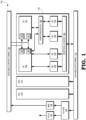
- FIG. 1 is a block diagram of a processing system 100 that implements spatial partitioning in a multi-tenancy graphics processing unit (GPU) 105 according to some embodiments.
- the processing system 100 includes one or more central processing units (CPUs) 110, 111. Although two CPUs 110, 111 are shown in FIG. 1 , some embodiments of the processing system 100 include more or fewer CPUs.
- a scalable data fabric (SDF) 115 supports data flows between endpoints within the processing system 100. Some embodiments of the SDF 115 support data flows between connecting points such as peripheral component interface (PCI) physical layers, memory controllers, universal serial bus (USB) hubs, computing and execution units including the GPU 105 and the CPUs 110, 111, as well as other endpoints.
- PCI peripheral component interface
- USB universal serial bus
- the SDF 115 is connected to an input/output (I/O) hub 120, which is in turn connected to a PCI express (PCI-E) bus 125 and an NBIF 130.
- the processing system 100 also includes a scalable control fabric (SCF) 135 is a control communication plane that conveys system control signals within the processing system 100. Examples of system control signals are control signals used to support thermal and power management, tests, security, and the like.
- SCF scalable control fabric
- the GPU 105 includes a set of shader engines (SE) 140, 141, 142, 143 (collectively referred to herein as "the SE 140-143") that are used to execute commands concurrently or in parallel.
- SE 140-143 Some embodiments of the SE 140-143 are configured using information in draw calls received from one of the CPUs 110, 111 to shade vertices of primitives that represent a model of a scene.
- the SE 140-143 also shade the pixels generated based on the shaded primitives and provide the shaded pixels to a display for presentation for user, e.g., via the I/O hub 120.
- four shader engines are shown in FIG. 1 , some embodiments of the GPU 105 include more or fewer shader engines.
- the SE 140-143 are connected to a graphics L2 cache 145 that stores frequently used data and instructions.
- the L2 cache 145 is connected to one or more L1 caches that are implemented in the SE 140-143 and one or more L3 caches (or other last level caches) implemented in the processing system 100.
- the caches form a cache hierarchy that includes the L2 cache 145. The other caches in the cache hierarchy are not shown in FIG. 1 in the interest of clarity.
- Front end (FE) circuitry in the GPU 105 fetches primitives for geometry workloads, performs scheduling of the geometry workloads for execution on the shader engines and, in some cases, handles serial synchronization, state updates, draw calls, cache activities, and tessellation of primitives.
- the FE circuitry in the GPU 105 includes FE circuits 150, 151, although some embodiments of the FE circuitry are partitioned to include additional FE circuits, as discussed herein.
- the FE circuits 150, 151 include command processors 155, 156 that receives command buffers for execution on the SE 140-143.
- the FE circuits 150, 151 also include graphics register bus managers (GRBMs) 160, 161 that act as hubs for register read and write operations that support multiple masters and multiple slaves.
- GRBMs graphics register bus managers
- the GPU 105 operates in either a first mode or a second, spatially partitioned mode.
- the FE circuit 150 schedules geometry workloads for the SE 140-143.
- the FE circuit 150 schedules geometry workloads for a first subset of the SE 140-143 and the FE circuit 150 schedules geometry workloads for a second subset of the SE 140-143.
- the first subset includes the SE 140, 141 and the second subset includes the SE 142, 143, although other groupings of the SE 140-143 into subsets are used in some embodiments.
- the GPU 105 includes a partition switch 165 that selectively connects the FE circuits 150, 151 to the first and second subsets of the SE 140-143 depending on whether the GPU 105 is operating in the first mode or the second mode.
- the partition switch 165 determines the operational status of the GPU 105. If the GPU 105 is operating in the first mode, the partition switch 165 connects the FE circuit 150 to the SE 142, 143 so that the FE circuit 150 schedules operations to all the SE 140-143.
- the partition switch 165 connects the FE circuit 151 to the SE 142, 143 so that the FE circuit 150 schedules operations to the SE 140, 141 and the FE circuit 151 schedules operations to the SE 142, 143.
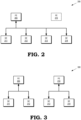
- FIG. 2 is a block diagram of a mapping 200 of FE circuits 205, 210 to a set of SE 211, 212, 213, 214 for a GPU operating in a first mode according to some embodiments.
- the mapping 200 indicates a mapping of some embodiments of the FE circuits 150, 151 to the SE 140-143 in the GPU 105 shown in FIG. 1 .
- the GPU is operating in the first mode and the FE circuit 205 is mapped to all the SE 211-214.
- the FE circuit 205 therefore schedules commands for concurrent execution on the SE 211-214.
- the FE circuit 210 is not mapped to any of the SE 211-214 and therefore does not schedule commands for execution on any of the SE 211-214, as indicated by the dashed outline of the box representing the FE circuit 210.
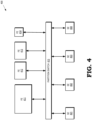
- FIG. 3 is a block diagram of a mapping 300 of FE circuits 305, 310 to a set of SE 311, 312, 313, 314 for a GPU operating in a second mode according to some embodiments.
- the mapping 300 indicates a mapping of some embodiments of the FE circuits 150, 151 to the SE 140-143 in the GPU 105 shown in FIG. 1 .
- the GPU is operating in the second mode and the FE circuit 305 is mapped to a first subset of the SE 311-314 that includes the SE 311, 312.
- the FE circuit 305 therefore schedules commands for execution on the SE 311, 312.
- the FE circuit 310 is mapped to a second subset of the SE 311-314 that includes the SE 313, 314.
- the FE circuit 310 therefore schedules commands for execution on the SE 313, 314.
- the FE circuit 305, 310 schedule commands for concurrent execution on their corresponding first and second subsets of the SE 311-314.
- FIG. 4 is a block diagram of a GPU 400 that includes a set of FE circuits that are configured based on different characteristics of applications that provide instructions for execution by the GPU according to some embodiments.
- the GPU 400 includes a set of SE 401, 402, 403, 404, which are collectively referred to herein a "the SE 401-404" and execute instructions concurrently or in parallel.
- the GPU 400 also includes FE circuits 411, 412, 413, 414, which are collectively referred to herein as "the FE circuits 411-414.”
- the FE circuits 411-414 are configured based on different levels of user experience corresponding to different complexities or graphics resolutions.
- the FE circuit 411 is configured based upon the requirements of applications that have a high complexity or graphics resolution, such as a game that implements a sophisticated physics engine or provides 8K resolution.
- the FE circuits 412, 413 are configured based upon the requirements of applications that have a medium complexity or graphics resolution, such as games that provide 4K resolution.
- the FE circuit 414 is configured based upon the requirements of applications that have low complexity or graphics solution resolution, such as games that provide 1080p resolution.
- a partition switch 415 selectively maps subsets of the FE circuits 411-414 to corresponding subsets of the SE 401-404.
- the map indicates connections between the FE circuits 411-414 and the SE 401-404, as well as indicating which of the FE circuits 411-414 is responsible for scheduling commands to one or more of the SE 401-404.
- Some embodiments of the partition switch 415 selectively map the subsets of the FE circuits 411-414 to the corresponding subsets of the SE 401-404 based on characteristics of applications that provide commands for execution on the SE 401-404.
- the GPU 400 can operate in one of a plurality of modes depending on the characteristics of the applications.
- the partition switch 415 determines the current operation mode based on either signaling associated with the GPU 400 or using other indications of the characteristics of the application. The partition switch 415 then selectively determines a mapping between the SE 401-404 and the FE circuits 411-414 based on the operating mode.
- FIG. 5 is a block diagram of a mapping 500 of FE circuits 501, 502, 503, 504 to a set of SE 511, 512, 513, 514 for a GPU operating at a high level of user experience according to some embodiments.
- the mapping 500 indicates a mapping of some embodiments of the FE circuits 411-414 to the SE 401-404 in the GPU 400 shown in FIG. 4 .
- the GPU is executing commands provided by an application that requires a relatively high level of user experience, e.g., a high level of complexity or graphics resolution.
- the FE circuit 501 supports high levels of user experience and therefore the FE circuit 501 is mapped to the SE 511-514.
- the FE circuit 501 schedules commands for concurrent execution on the SE 511-514.
- the FE circuits 502-504 are not mapped to the SE 511-514 and therefore do not schedule commands for execution on the SE 511-514, as indicated by the dashed boxes that represent the FE circuits 502-504.
- FIG. 6 is a block diagram of a mapping 600 of FE circuits 601, 602, 603, 604 to a set of SE 611, 612, 613, 614 for a GPU operating at a medium level of user experience according to some embodiments.
- the mapping 600 indicates a mapping of some embodiments of the FE circuits 411-414 to the SE 401-404 in the GPU 400 shown in FIG. 4 .
- the GPU is executing commands provided by an application that requires a medium level of user experience, e.g., a medium level of complexity or graphics resolution.
- the FE circuits 602, 603 supports medium levels of user experience.
- the FE circuit 602 is mapped to the SE 611, 612 and the FE circuit 603 is mapped to the SE 613, 614.
- the FE circuits 602, 603 therefore schedule commands for concurrent execution on the corresponding subsets of the SE 611-614.
- the FE circuits 601, 604 are not mapped to the SE 611-614 and therefore do not schedule commands for execution on the SE 611-614, as indicated by the dashed boxes that represent the FE circuits 601, 604.
- the FE circuit 601 is mapped to a subset of the SE 611-614 because the FE circuit 601 is capable of scheduling commands for applications requiring a medium level of user experience.
- FIG. 7 is a block diagram of a mapping 700 of FE circuits 701, 702, 703, 704 to a set of SE 711, 712, 713, 714 for a GPU operating at a low level of user experience according to some embodiments.
- the mapping 700 indicates a mapping of some embodiments of the FE circuits 411-414 to the SE 401-404 in the GPU 400 shown in FIG. 4 .
- the GPU is executing commands provided by an application that requires a low level of user experience, e.g., a low level of complexity or graphic resolution. All the FE circuits 701-704 are capable of scheduling commands to the SE 711-714 from applications that require a low level of user experience. The FE circuits 701-704 are therefore mapped to corresponding SE 711-714.
- the FE circuit 701 is mapped to (and schedules commands for) the SE 711
- the FE circuit 702 is mapped to (and schedules commands for) the SE 712
- the FE circuit 703 is mapped to (and schedules commands for) the SE 713
- the FE circuit 704 is mapped to (and schedules commands for) the SE 714.
- the FE circuits 701-704 schedule commands for concurrent execution on the corresponding SE 711-714.
- FIG. 8 is a block diagram of a GPU 800 that includes a set of FE circuits that schedule instructions in time division multiplexed threads for execution by a set of SE in the GPU according to some embodiments.
- the GPU 800 represents some embodiments of the GPU 105 shown in FIG. 1 .
- the set of FE circuits includes a first FE circuit 805 and a second FE circuit 810, although some embodiments of the GPU 800 include more FE circuits in the set.
- the first FE circuit 805 schedules commands for execution on one or more corresponding SE including the first SE 815. In the illustrated embodiment, the first FE circuit 805 schedules commands for a first thread 817 during a first time interval and a third time interval.
- the first FE circuit 805 also schedules commands or a second thread 818 during a second time interval that is time division multiplexed with the first and third time intervals.
- the second FE circuit 810 schedules commands for execution on one or more corresponding SE including the second SE 820.
- the second FE circuit 810 schedules commands for a third thread 822 during fourth time interval and a fifth time interval.
- the second FE unit 810 also schedules commands for a fourth thread 823 during a sixth time interval that is time division multiplexed with the fourth and fifth time intervals.
- the FE circuits 805, 810 schedule commands in the threads 817, 818, 822, 823 for concurrent execution on the SE 815, 820.
- FIG. 9 is a flow diagram of a method 900 of selectively allocating FE circuits to schedule commands for concurrent execution on a set of SE according to some embodiments.
- the method 900 is implemented in some embodiments of the GPU 800 shown in FIG. 1 .
- the GPU determines characteristics of one or workloads (or threads) that are provided for execution on the GPU.
- the characteristics include, but are not limited to, complexity of the workloads or graphics resolutions required (or specified or preferred) by the workloads. The characteristics are determined based on information provided in the workload (or thread) or using other information that configures the GPU for execution of the workload (or thread).
- the GPU determines whether one or more workloads (or threads) are to be executed concurrently. Examples of workloads that are executed concurrently include workloads having a complexity or graphics resolution that is less than or equal to a complexity or graphics resolution that is used to configure multiple FE circuitry implemented in the GPU, as discussed herein. If only a single workload is to be executed by the GPU, the method 900 flows to block 915. If multiple workloads are to be scheduled concurrently, the method 900 flows to block 920.
- one FE circuit is allocated to schedule commands for concurrent execution on the set of SE.
- the other FE circuits that are available in the GPU are not allocated to schedule commands for execution on any of the set of SE.
- a set of FE circuits are allocated to schedule commands for concurrent execution by corresponding subsets of the set of SE.
- the set of FE circuits schedule commands for concurrent execution by the corresponding subsets. For example, if two FE circuits are allocated, a first FE circuit schedules commands for execution on a first subset of the set of SE and a second FE circuit schedules commands for execution on a second subset of the set of SE. The first and second subsets execute the scheduled commands concurrently.
- a computer readable storage medium includes any non-transitory storage medium, or combination of non-transitory storage media, accessible by a computer system during use to provide instructions and/or data to the computer system.
- Such storage media can include, but is not limited to, optical media (e.g., compact disc (CD), digital versatile disc (DVD), Blu-Ray disc), magnetic media (e.g., floppy disc, magnetic tape, or magnetic hard drive), volatile memory (e.g., random access memory (RAM) or cache), non-volatile memory (e.g., read-only memory (ROM) or Flash memory), or microelectromechanical systems (MEMS)-based storage media.
- optical media e.g., compact disc (CD), digital versatile disc (DVD), Blu-Ray disc
- magnetic media e.g., floppy disc, magnetic tape, or magnetic hard drive
- volatile memory e.g., random access memory (RAM) or cache
- non-volatile memory e.g., read-only memory (ROM) or Flash memory
- the computer readable storage medium can be embedded in the computing system (e.g., system RAM or ROM), fixedly attached to the computing system (e.g., a magnetic hard drive), removably attached to the computing system (e.g., an optical disc or Universal Serial Bus (USB)-based Flash memory), or coupled to the computer system via a wired or wireless network (e.g., network accessible storage (NAS)).
- system RAM or ROM system RAM or ROM
- USB Universal Serial Bus
- NAS network accessible storage
- certain aspects of the techniques described above can implemented by one or more processors of a processing system executing software.
- the software includes one or more sets of executable instructions stored or otherwise tangibly embodied on a non-transitory computer readable storage medium.
- the software can include the instructions and certain data that, when executed by the one or more processors, manipulate the one or more processors to perform one or more aspects of the techniques described above.
- the non-transitory computer readable storage medium can include, for example, a magnetic or optical disk storage device, solid state storage devices such as Flash memory, a cache, random access memory (RAM) or other non-volatile memory device or devices, and the like.
- the executable instructions stored on the non-transitory computer readable storage medium may be in source code, assembly language code, object code, or other instruction format that is interpreted or otherwise executable by one or more processors.
Landscapes
- Engineering & Computer Science (AREA)
- Theoretical Computer Science (AREA)
- Physics & Mathematics (AREA)
- General Physics & Mathematics (AREA)
- Software Systems (AREA)
- General Engineering & Computer Science (AREA)
- Computer Graphics (AREA)
- Image Generation (AREA)
Claims (15)
- Einrichtung, umfassend:eine Vielzahl von Shader-Engines (140-143); undeine erste Front-End-Schaltung, FE-Schaltung, (150) und mindestens eine zweite FE-Schaltung (151), wobei die erste FE-Schaltung konfiguriert ist, um Geometriearbeitslasten für die Vielzahl von Shader-Engines (140-143) in einem ersten Modus zu planen, und wobei die erste FE-Schaltung konfiguriert ist, um Geometriearbeitslasten für eine erste Teilmenge der Vielzahl von Shader-Engines zu planen, und die mindestens eine zweite FE-Schaltung konfiguriert ist, um Geometriearbeitslasten für eine zweite Teilmenge der Vielzahl von Shader-Engines in einem zweiten Modus zu planen, wobei die erste Teilmenge von der zweiten Teilmenge disjunkt ist.
- Einrichtung nach Anspruch 1, ferner umfassend:
einen Partitionsschalter (165), der konfiguriert ist, um die erste FE-Schaltung (150) oder die mindestens eine zweite FE-Schaltung (151) mit der zweiten Teilmenge der Vielzahl von Shader-Engines selektiv zu verbinden, abhängig davon, ob sich die Einrichtung in dem ersten Modus oder in dem zweiten Modus befindet. - Vorrichtung nach Anspruch 1 oder 2, wobei die erste FE-Schaltung (150) konfiguriert ist, um Geometriearbeitslasten für eine gleichzeitige Ausführung durch die Vielzahl von Shader-Engines (140-143) in dem ersten Modus zu planen, und wobei die erste FE-Schaltung in dem zweiten Modus konfiguriert ist, um Geometriearbeitslasten für die Ausführung durch die erste Teilmenge gleichzeitig mit der Ausführung von Geometriearbeitslasten zu planen, die durch die mindestens eine zweite FE-Schaltung (151) für die Ausführung an der zweiten Teilmenge geplant sind.
- Vorrichtung nach Anspruch 1 oder 2, wobei die erste FE-Schaltung (150) und die mindestens eine zweite FE-Schaltung (151) basierend auf unterschiedlichen Benutzererfahrungsstufen konfiguriert sind, die mindestens einem von Komplexitäten oder Grafikauflösungen entsprechen.
- Vorrichtung nach Anspruch 4, wobei die erste FE-Schaltung (150) basierend auf einer ersten Benutzererfahrungsstufe konfiguriert ist, die mindestens einem von einer ersten Komplexität oder einer ersten Grafikauflösung entspricht, und wobei die mindestens eine zweite FE-Schaltung (151) basierend auf mindestens einer zweiten Benutzererfahrungsstufe konfiguriert ist, die mindestens einem von einer zweiten Komplexität oder einer zweiten Grafikauflösung entspricht, wobei das mindestens eine der ersten Komplexität oder der ersten Grafikauflösung höher als das mindestens eine der zweiten Komplexität oder der zweiten Grafikauflösung ist.
- Vorrichtung nach Anspruch 5, wobei die mindestens eine zweite FE-Schaltung (151) mindestens eine dritte FE-Schaltung umfasst, die basierend auf mindestens einer dritten Komplexität oder einer dritten Grafikauflösung konfiguriert ist, die niedriger als mindestens eines der ersten Komplexität oder der ersten Grafikauflösung sind und wobei die mindestens eine zweite FE-Schaltung mindestens eine vierte FE-Schaltung umfasst, die basierend auf mindestens einer vierten Komplexität oder einer vierten Grafikauflösung konfiguriert ist, die niedriger als die mindestens eine dritte Komplexität oder dritte Grafikauflösung ist.
- Vorrichtung nach Anspruch 6, wobei die erste FE-Schaltung (150) konfiguriert ist, um Geometriearbeitslasten für die Vielzahl von Shader-Engines (140-143) in dem ersten Modus für eine erste Anwendung zu planen, die mindestens eines der ersten Komplexität oder der ersten Grafikauflösung erfordert.
- Vorrichtung nach Anspruch 7, wobei die erste FE-Schaltung (150) und die mindestens eine dritte FE-Schaltung konfiguriert sind, um Geometriearbeitslasten für entsprechende Teilmengen der Vielzahl von Shader-Engines (140-143) für eine zweite Anwendung zu planen, die mindestens eines der dritten Komplexität oder der dritten Grafikauflösung erfordert.
- Vorrichtung nach Anspruch 8, wobei die erste FE-Schaltung (150), die mindestens eine dritte FE-Schaltung und die vierte FE-Schaltung konfiguriert sind, um Geometriearbeitslasten für entsprechende Teilmengen der Vielzahl von Shader-Engines (140-143) für eine dritte Anwendung zu planen, die mindestens eines der vierten Komplexität oder der vierten Grafikauflösung erfordert.
- Vorrichtung nach einem der vorstehenden Ansprüche, wobei mindestens eine der ersten FE-Schaltung (150) oder der mindestens einen zweiten FE-Schaltung (151) konfiguriert ist, um mehrere gleichzeitige Threads unter Verwendung von Zeitmultiplex zu unterstützen.
- Verfahren, umfassend:Abrufen, an einer ersten Front-End-Schaltung, FE-Schaltung, (150) und mindestens einer zweiten FE-Schaltung (151), von Geometriearbeitslasten für eine Vielzahl von Shader-Engines (140-143);in einem ersten Modus, Planen der Geometriearbeitslasten auf der ersten FE-Schaltung (150), wobei die erste FE-Schaltung die Geometriearbeitslasten für die Ausführung auf der Vielzahl von Shader-Engines (140-143) plant; undin einem zweiten Modus, Planen der Geometriearbeitslasten auf der ersten FE-Schaltung und der mindestens einen zweiten FE-Schaltung, wobei die erste FE-Schaltung die Geometriearbeitslasten für die Ausführung auf einer ersten Teilmenge der Vielzahl von Shader-Engines plant und die mindestens eine zweite FE-Schaltung die Geometriearbeitslasten für eine zweite Teilmenge der Vielzahl von Shader-Engines plant, wobei die erste Teilmenge von der zweiten Teilmenge getrennt ist.
- Verfahren nach Anspruch 11, ferner umfassend:
selektives Verbinden der ersten FE-Schaltung (150) mit der zweiten Teilmenge der Vielzahl von Shader-Engines in dem ersten Modus oder der mindestens einen zweiten FE-Schaltung (151) mit der zweiten Teilmenge der Vielzahl von Shader-Engines in dem zweiten Modus. - Verfahren nach Anspruch 12, wobei das Planen der Geometriearbeitslasten für die Ausführung auf der Vielzahl von Shader-Engines (140-143) in dem ersten Modus das Planen der Geometriearbeitslasten für die gleichzeitige Ausführung durch die Vielzahl von Shader-Engines umfasst, und wobei das Planen der Geometriearbeitslasten für die Ausführung auf der ersten Teilmenge und der zweiten Teilmenge in dem zweiten Modus das Planen der Geometriearbeitslasten für die gleichzeitige Ausführung auf der ersten Teilmenge und der zweiten Teilmenge in dem zweiten Modus umfasst.
- Verfahren nach Anspruch 13, ferner umfassend:
selektives Planen der Geometriearbeitslasten in dem ersten Modus oder in dem zweiten Modus basierend auf mindestens einem von einer Komplexität oder einer Grafikauflösung von mindestens einer Anwendung, die die Geometriearbeitslasten erzeugt. - Verfahren nach Anspruch 14, wobei das Planen der Geometriearbeitslasten für die Ausführung auf der Vielzahl von Shader-Engines (140-143) in dem ersten Modus das Planen der Geometriearbeitslasten für die Ausführung auf der Vielzahl von Shader-Engines in dem ersten Modus für eine erste Anwendung umfasst, die mindestens eines von einer ersten Komplexität oder einer ersten Grafikauflösung erfordert.
Applications Claiming Priority (3)
| Application Number | Priority Date | Filing Date | Title |
|---|---|---|---|
| US202062970028P | 2020-02-04 | 2020-02-04 | |
| US17/091,957 US11295507B2 (en) | 2020-02-04 | 2020-11-06 | Spatial partitioning in a multi-tenancy graphics processing unit |
| PCT/US2021/016440 WO2021158680A1 (en) | 2020-02-04 | 2021-02-03 | Spatial partitioning in a multi-tenancy graphics processing unit |
Publications (3)
| Publication Number | Publication Date |
|---|---|
| EP4100924A1 EP4100924A1 (de) | 2022-12-14 |
| EP4100924A4 EP4100924A4 (de) | 2024-03-06 |
| EP4100924B1 true EP4100924B1 (de) | 2025-05-21 |
Family
ID=77062558
Family Applications (1)
| Application Number | Title | Priority Date | Filing Date |
|---|---|---|---|
| EP21751077.5A Active EP4100924B1 (de) | 2020-02-04 | 2021-02-03 | Räumliche partitionierung in einer mandantenfähigen grafikverarbeitungseinheit |
Country Status (6)
| Country | Link |
|---|---|
| US (2) | US11295507B2 (de) |
| EP (1) | EP4100924B1 (de) |
| JP (1) | JP7796650B2 (de) |
| KR (1) | KR102773526B1 (de) |
| CN (2) | CN118365504A (de) |
| WO (1) | WO2021158680A1 (de) |
Families Citing this family (3)
| Publication number | Priority date | Publication date | Assignee | Title |
|---|---|---|---|---|
| US11295507B2 (en) * | 2020-02-04 | 2022-04-05 | Advanced Micro Devices, Inc. | Spatial partitioning in a multi-tenancy graphics processing unit |
| US12361628B2 (en) | 2022-12-08 | 2025-07-15 | Advanced Micro Devices, Inc. | Configurable multiple-die graphics processing unit |
| US20260003668A1 (en) * | 2024-06-30 | 2026-01-01 | Advanced Micro Devices, Inc. | Workload management on an acceleration processor |
Family Cites Families (25)
| Publication number | Priority date | Publication date | Assignee | Title |
|---|---|---|---|---|
| US5884090A (en) * | 1997-07-17 | 1999-03-16 | International Business Machines Corporation | Method and apparatus for partitioning an interconnection medium in a partitioned multiprocessor computer system |
| EP2179821B1 (de) | 2005-04-11 | 2015-07-29 | Makita Corporation | Elektrohammer |
| US8144149B2 (en) * | 2005-10-14 | 2012-03-27 | Via Technologies, Inc. | System and method for dynamically load balancing multiple shader stages in a shared pool of processing units |
| US8581912B2 (en) | 2008-06-27 | 2013-11-12 | Microsoft Corporation | Dynamic subroutine linkage optimizing shader performance |
| US20100123717A1 (en) | 2008-11-20 | 2010-05-20 | Via Technologies, Inc. | Dynamic Scheduling in a Graphics Processor |
| US9142057B2 (en) * | 2009-09-03 | 2015-09-22 | Advanced Micro Devices, Inc. | Processing unit with a plurality of shader engines |
| US8619087B2 (en) | 2009-10-06 | 2013-12-31 | Nvidia Corporation | Inter-shader attribute buffer optimization |
| US20110216078A1 (en) * | 2010-03-04 | 2011-09-08 | Paul Blinzer | Method, System, and Apparatus for Processing Video and/or Graphics Data Using Multiple Processors Without Losing State Information |
| US9176794B2 (en) | 2010-12-13 | 2015-11-03 | Advanced Micro Devices, Inc. | Graphics compute process scheduling |
| US8555281B1 (en) * | 2011-02-16 | 2013-10-08 | Google Inc. | Scheduling of tasks based upon historical execution times |
| KR20130123645A (ko) * | 2012-05-03 | 2013-11-13 | 삼성전자주식회사 | 그래픽 처리 장치를 위한 동적 로드 밸런싱 장치 및 방법 |
| US9293109B2 (en) * | 2012-12-20 | 2016-03-22 | Nvidia Corporation | Technique for storing shared vertices |
| US9710874B2 (en) * | 2012-12-27 | 2017-07-18 | Nvidia Corporation | Mid-primitive graphics execution preemption |
| US9525586B2 (en) * | 2013-03-15 | 2016-12-20 | Intel Corporation | QoS based binary translation and application streaming |
| WO2015080719A1 (en) * | 2013-11-27 | 2015-06-04 | Intel Corporation | Apparatus and method for scheduling graphics processing unit workloads from virtual machines |
| US10713059B2 (en) * | 2014-09-18 | 2020-07-14 | Advanced Micro Devices, Inc. | Heterogeneous graphics processing unit for scheduling thread groups for execution on variable width SIMD units |
| US10068306B2 (en) | 2014-12-18 | 2018-09-04 | Intel Corporation | Facilitating dynamic pipelining of workload executions on graphics processing units on computing devices |
| US10410311B2 (en) * | 2016-03-07 | 2019-09-10 | Intel Corporation | Method and apparatus for efficient submission of workload to a high performance graphics sub-system |
| US10664942B2 (en) * | 2016-10-21 | 2020-05-26 | Advanced Micro Devices, Inc. | Reconfigurable virtual graphics and compute processor pipeline |
| US20180329465A1 (en) * | 2017-05-11 | 2018-11-15 | Qualcomm Incorporated | System and method for intelligent adjustment of an immersive multimedia workload in a portable computing device |
| US10593094B1 (en) * | 2018-09-26 | 2020-03-17 | Apple Inc. | Distributed compute work parser circuitry using communications fabric |
| US10901777B1 (en) * | 2018-09-26 | 2021-01-26 | Apple Inc. | Techniques for context switching using distributed compute workload parsers |
| RU2714373C1 (ru) * | 2018-12-13 | 2020-02-14 | Общество С Ограниченной Ответственностью "Яндекс" | Способ и система для планирования выполнения операций ввода/вывода |
| US11074109B2 (en) * | 2019-03-27 | 2021-07-27 | Intel Corporation | Dynamic load balancing of compute assets among different compute contexts |
| US11295507B2 (en) * | 2020-02-04 | 2022-04-05 | Advanced Micro Devices, Inc. | Spatial partitioning in a multi-tenancy graphics processing unit |
-
2020
- 2020-11-06 US US17/091,957 patent/US11295507B2/en active Active
-
2021
- 2021-02-03 KR KR1020227030057A patent/KR102773526B1/ko active Active
- 2021-02-03 JP JP2022543706A patent/JP7796650B2/ja active Active
- 2021-02-03 CN CN202410326288.5A patent/CN118365504A/zh active Pending
- 2021-02-03 EP EP21751077.5A patent/EP4100924B1/de active Active
- 2021-02-03 WO PCT/US2021/016440 patent/WO2021158680A1/en not_active Ceased
- 2021-02-03 CN CN202180010199.4A patent/CN115088009B/zh active Active
-
2022
- 2022-03-29 US US17/706,811 patent/US12205218B2/en active Active
Also Published As
| Publication number | Publication date |
|---|---|
| US11295507B2 (en) | 2022-04-05 |
| JP7796650B2 (ja) | 2026-01-09 |
| WO2021158680A1 (en) | 2021-08-12 |
| US20220237851A1 (en) | 2022-07-28 |
| JP2023512179A (ja) | 2023-03-24 |
| EP4100924A4 (de) | 2024-03-06 |
| EP4100924A1 (de) | 2022-12-14 |
| US12205218B2 (en) | 2025-01-21 |
| KR102773526B1 (ko) | 2025-02-27 |
| CN115088009A (zh) | 2022-09-20 |
| CN115088009B (zh) | 2024-04-12 |
| CN118365504A (zh) | 2024-07-19 |
| KR20220137929A (ko) | 2022-10-12 |
| US20210241516A1 (en) | 2021-08-05 |
Similar Documents
| Publication | Publication Date | Title |
|---|---|---|
| US12205218B2 (en) | Spatial partitioning in a multi-tenancy graphics processing unit | |
| US9418616B2 (en) | Technique for storing shared vertices | |
| US20140176588A1 (en) | Technique for storing shared vertices | |
| EP4058973B1 (de) | Tessellierungsfaktoren mit reduzierter bandbreite | |
| US11609791B2 (en) | Precise suspend and resume of workloads in a processing unit | |
| EP3701376B1 (de) | Wellenerzeugungssteuerung mit dynamischer ressourcenzuweisung | |
| KR102773527B1 (ko) | 멀티-테넌트 그래픽 처리 유닛의 동적 투명 재구성 | |
| US20190164328A1 (en) | Primitive level preemption using discrete non-real-time and real time pipelines | |
| US20250384611A1 (en) | Configurable multiple-die graphics processing unit | |
| US12051144B2 (en) | Fully utilized hardware in a multi-tenancy graphics processing unit |
Legal Events
| Date | Code | Title | Description |
|---|---|---|---|
| STAA | Information on the status of an ep patent application or granted ep patent |
Free format text: STATUS: THE INTERNATIONAL PUBLICATION HAS BEEN MADE |
|
| PUAI | Public reference made under article 153(3) epc to a published international application that has entered the european phase |
Free format text: ORIGINAL CODE: 0009012 |
|
| STAA | Information on the status of an ep patent application or granted ep patent |
Free format text: STATUS: REQUEST FOR EXAMINATION WAS MADE |
|
| 17P | Request for examination filed |
Effective date: 20220802 |
|
| AK | Designated contracting states |
Kind code of ref document: A1 Designated state(s): AL AT BE BG CH CY CZ DE DK EE ES FI FR GB GR HR HU IE IS IT LI LT LU LV MC MK MT NL NO PL PT RO RS SE SI SK SM TR |
|
| DAV | Request for validation of the european patent (deleted) | ||
| DAX | Request for extension of the european patent (deleted) | ||
| A4 | Supplementary search report drawn up and despatched |
Effective date: 20240202 |
|
| RIC1 | Information provided on ipc code assigned before grant |
Ipc: G06T 15/80 20110101ALI20240129BHEP Ipc: G06T 1/20 20060101ALI20240129BHEP Ipc: G06T 15/00 20110101AFI20240129BHEP |
|
| GRAP | Despatch of communication of intention to grant a patent |
Free format text: ORIGINAL CODE: EPIDOSNIGR1 |
|
| STAA | Information on the status of an ep patent application or granted ep patent |
Free format text: STATUS: GRANT OF PATENT IS INTENDED |
|
| INTG | Intention to grant announced |
Effective date: 20241219 |
|
| GRAS | Grant fee paid |
Free format text: ORIGINAL CODE: EPIDOSNIGR3 |
|
| GRAA | (expected) grant |
Free format text: ORIGINAL CODE: 0009210 |
|
| STAA | Information on the status of an ep patent application or granted ep patent |
Free format text: STATUS: THE PATENT HAS BEEN GRANTED |
|
| AK | Designated contracting states |
Kind code of ref document: B1 Designated state(s): AL AT BE BG CH CY CZ DE DK EE ES FI FR GB GR HR HU IE IS IT LI LT LU LV MC MK MT NL NO PL PT RO RS SE SI SK SM TR |
|
| REG | Reference to a national code |
Ref country code: GB Ref legal event code: FG4D |
|
| REG | Reference to a national code |
Ref country code: CH Ref legal event code: EP |
|
| REG | Reference to a national code |
Ref country code: DE Ref legal event code: R096 Ref document number: 602021031151 Country of ref document: DE |
|
| REG | Reference to a national code |
Ref country code: IE Ref legal event code: FG4D |
|
| P01 | Opt-out of the competence of the unified patent court (upc) registered |
Free format text: CASE NUMBER: APP_23834/2025 Effective date: 20250519 |
|
| REG | Reference to a national code |
Ref country code: NL Ref legal event code: MP Effective date: 20250521 |
|
| PG25 | Lapsed in a contracting state [announced via postgrant information from national office to epo] |
Ref country code: PT Free format text: LAPSE BECAUSE OF FAILURE TO SUBMIT A TRANSLATION OF THE DESCRIPTION OR TO PAY THE FEE WITHIN THE PRESCRIBED TIME-LIMIT Effective date: 20250922 Ref country code: FI Free format text: LAPSE BECAUSE OF FAILURE TO SUBMIT A TRANSLATION OF THE DESCRIPTION OR TO PAY THE FEE WITHIN THE PRESCRIBED TIME-LIMIT Effective date: 20250521 Ref country code: ES Free format text: LAPSE BECAUSE OF FAILURE TO SUBMIT A TRANSLATION OF THE DESCRIPTION OR TO PAY THE FEE WITHIN THE PRESCRIBED TIME-LIMIT Effective date: 20250521 |
|
| REG | Reference to a national code |
Ref country code: LT Ref legal event code: MG9D |
|
| PG25 | Lapsed in a contracting state [announced via postgrant information from national office to epo] |
Ref country code: GR Free format text: LAPSE BECAUSE OF FAILURE TO SUBMIT A TRANSLATION OF THE DESCRIPTION OR TO PAY THE FEE WITHIN THE PRESCRIBED TIME-LIMIT Effective date: 20250822 Ref country code: NO Free format text: LAPSE BECAUSE OF FAILURE TO SUBMIT A TRANSLATION OF THE DESCRIPTION OR TO PAY THE FEE WITHIN THE PRESCRIBED TIME-LIMIT Effective date: 20250821 |
|
| PG25 | Lapsed in a contracting state [announced via postgrant information from national office to epo] |
Ref country code: PL Free format text: LAPSE BECAUSE OF FAILURE TO SUBMIT A TRANSLATION OF THE DESCRIPTION OR TO PAY THE FEE WITHIN THE PRESCRIBED TIME-LIMIT Effective date: 20250521 Ref country code: NL Free format text: LAPSE BECAUSE OF FAILURE TO SUBMIT A TRANSLATION OF THE DESCRIPTION OR TO PAY THE FEE WITHIN THE PRESCRIBED TIME-LIMIT Effective date: 20250521 |
|
| PG25 | Lapsed in a contracting state [announced via postgrant information from national office to epo] |
Ref country code: BG Free format text: LAPSE BECAUSE OF FAILURE TO SUBMIT A TRANSLATION OF THE DESCRIPTION OR TO PAY THE FEE WITHIN THE PRESCRIBED TIME-LIMIT Effective date: 20250521 |
|
| PG25 | Lapsed in a contracting state [announced via postgrant information from national office to epo] |
Ref country code: HR Free format text: LAPSE BECAUSE OF FAILURE TO SUBMIT A TRANSLATION OF THE DESCRIPTION OR TO PAY THE FEE WITHIN THE PRESCRIBED TIME-LIMIT Effective date: 20250521 |
|
| PG25 | Lapsed in a contracting state [announced via postgrant information from national office to epo] |
Ref country code: RS Free format text: LAPSE BECAUSE OF FAILURE TO SUBMIT A TRANSLATION OF THE DESCRIPTION OR TO PAY THE FEE WITHIN THE PRESCRIBED TIME-LIMIT Effective date: 20250821 |
|
| PG25 | Lapsed in a contracting state [announced via postgrant information from national office to epo] |
Ref country code: IS Free format text: LAPSE BECAUSE OF FAILURE TO SUBMIT A TRANSLATION OF THE DESCRIPTION OR TO PAY THE FEE WITHIN THE PRESCRIBED TIME-LIMIT Effective date: 20250921 |
|
| PG25 | Lapsed in a contracting state [announced via postgrant information from national office to epo] |
Ref country code: LV Free format text: LAPSE BECAUSE OF FAILURE TO SUBMIT A TRANSLATION OF THE DESCRIPTION OR TO PAY THE FEE WITHIN THE PRESCRIBED TIME-LIMIT Effective date: 20250521 |
|
| REG | Reference to a national code |
Ref country code: AT Ref legal event code: MK05 Ref document number: 1797458 Country of ref document: AT Kind code of ref document: T Effective date: 20250521 |
|
| PG25 | Lapsed in a contracting state [announced via postgrant information from national office to epo] |
Ref country code: AT Free format text: LAPSE BECAUSE OF FAILURE TO SUBMIT A TRANSLATION OF THE DESCRIPTION OR TO PAY THE FEE WITHIN THE PRESCRIBED TIME-LIMIT Effective date: 20250521 Ref country code: SM Free format text: LAPSE BECAUSE OF FAILURE TO SUBMIT A TRANSLATION OF THE DESCRIPTION OR TO PAY THE FEE WITHIN THE PRESCRIBED TIME-LIMIT Effective date: 20250521 Ref country code: DK Free format text: LAPSE BECAUSE OF FAILURE TO SUBMIT A TRANSLATION OF THE DESCRIPTION OR TO PAY THE FEE WITHIN THE PRESCRIBED TIME-LIMIT Effective date: 20250521 |
|
| PG25 | Lapsed in a contracting state [announced via postgrant information from national office to epo] |
Ref country code: CZ Free format text: LAPSE BECAUSE OF FAILURE TO SUBMIT A TRANSLATION OF THE DESCRIPTION OR TO PAY THE FEE WITHIN THE PRESCRIBED TIME-LIMIT Effective date: 20250521 |
|
| PG25 | Lapsed in a contracting state [announced via postgrant information from national office to epo] |
Ref country code: EE Free format text: LAPSE BECAUSE OF FAILURE TO SUBMIT A TRANSLATION OF THE DESCRIPTION OR TO PAY THE FEE WITHIN THE PRESCRIBED TIME-LIMIT Effective date: 20250521 |
|
| PG25 | Lapsed in a contracting state [announced via postgrant information from national office to epo] |
Ref country code: SK Free format text: LAPSE BECAUSE OF FAILURE TO SUBMIT A TRANSLATION OF THE DESCRIPTION OR TO PAY THE FEE WITHIN THE PRESCRIBED TIME-LIMIT Effective date: 20250521 |
|
| PG25 | Lapsed in a contracting state [announced via postgrant information from national office to epo] |
Ref country code: IT Free format text: LAPSE BECAUSE OF FAILURE TO SUBMIT A TRANSLATION OF THE DESCRIPTION OR TO PAY THE FEE WITHIN THE PRESCRIBED TIME-LIMIT Effective date: 20250521 |