EP4100850B1 - System und verfahren zur dynamischen webseitendarstellung ohne flimmern oder blinken des ursprünglichen inhalts - Google Patents
System und verfahren zur dynamischen webseitendarstellung ohne flimmern oder blinken des ursprünglichen inhalts Download PDFInfo
- Publication number
- EP4100850B1 EP4100850B1 EP21709880.5A EP21709880A EP4100850B1 EP 4100850 B1 EP4100850 B1 EP 4100850B1 EP 21709880 A EP21709880 A EP 21709880A EP 4100850 B1 EP4100850 B1 EP 4100850B1
- Authority
- EP
- European Patent Office
- Prior art keywords
- content
- webpage
- rendering
- modification rules
- rules
- Prior art date
- Legal status (The legal status is an assumption and is not a legal conclusion. Google has not performed a legal analysis and makes no representation as to the accuracy of the status listed.)
- Active
Links
Images




Classifications
-
- G—PHYSICS
- G06—COMPUTING OR CALCULATING; COUNTING
- G06F—ELECTRIC DIGITAL DATA PROCESSING
- G06F16/00—Information retrieval; Database structures therefor; File system structures therefor
- G06F16/90—Details of database functions independent of the retrieved data types
- G06F16/95—Retrieval from the web
- G06F16/958—Organisation or management of web site content, e.g. publishing, maintaining pages or automatic linking
- G06F16/972—Access to data in other repository systems, e.g. legacy data or dynamic Web page generation
-
- G—PHYSICS
- G06—COMPUTING OR CALCULATING; COUNTING
- G06F—ELECTRIC DIGITAL DATA PROCESSING
- G06F40/00—Handling natural language data
- G06F40/10—Text processing
- G06F40/12—Use of codes for handling textual entities
- G06F40/14—Tree-structured documents
- G06F40/143—Markup, e.g. Standard Generalized Markup Language [SGML] or Document Type Definition [DTD]
-
- G—PHYSICS
- G06—COMPUTING OR CALCULATING; COUNTING
- G06F—ELECTRIC DIGITAL DATA PROCESSING
- G06F16/00—Information retrieval; Database structures therefor; File system structures therefor
- G06F16/90—Details of database functions independent of the retrieved data types
- G06F16/95—Retrieval from the web
- G06F16/957—Browsing optimisation, e.g. caching or content distillation
- G06F16/9574—Browsing optimisation, e.g. caching or content distillation of access to content, e.g. by caching
-
- G—PHYSICS
- G06—COMPUTING OR CALCULATING; COUNTING
- G06F—ELECTRIC DIGITAL DATA PROCESSING
- G06F40/00—Handling natural language data
- G06F40/10—Text processing
- G06F40/12—Use of codes for handling textual entities
- G06F40/151—Transformation
-
- H—ELECTRICITY
- H04—ELECTRIC COMMUNICATION TECHNIQUE
- H04L—TRANSMISSION OF DIGITAL INFORMATION, e.g. TELEGRAPHIC COMMUNICATION
- H04L12/00—Data switching networks
- H04L12/66—Arrangements for connecting between networks having differing types of switching systems, e.g. gateways
-
- H—ELECTRICITY
- H04—ELECTRIC COMMUNICATION TECHNIQUE
- H04L—TRANSMISSION OF DIGITAL INFORMATION, e.g. TELEGRAPHIC COMMUNICATION
- H04L67/00—Network arrangements or protocols for supporting network services or applications
- H04L67/01—Protocols
- H04L67/02—Protocols based on web technology, e.g. hypertext transfer protocol [HTTP]
-
- H—ELECTRICITY
- H04—ELECTRIC COMMUNICATION TECHNIQUE
- H04L—TRANSMISSION OF DIGITAL INFORMATION, e.g. TELEGRAPHIC COMMUNICATION
- H04L67/00—Network arrangements or protocols for supporting network services or applications
- H04L67/50—Network services
- H04L67/53—Network services using third party service providers
-
- H—ELECTRICITY
- H04—ELECTRIC COMMUNICATION TECHNIQUE
- H04L—TRANSMISSION OF DIGITAL INFORMATION, e.g. TELEGRAPHIC COMMUNICATION
- H04L67/00—Network arrangements or protocols for supporting network services or applications
- H04L67/50—Network services
- H04L67/56—Provisioning of proxy services
- H04L67/568—Storing data temporarily at an intermediate stage, e.g. caching
Definitions
- the disclosure relates to the field of dynamic webpage content display, more specifically to the field of rendering webpages without flicker or flash of original content.
- HTML Hyper Text Markup Language
- CSS Cascade Style Sheets
- JS Javascript
- Some web pages are static and unchanging, making no calls to databases or applications or running any logic but merely providing the proper formatting for the same content every time a user views the page, while some contain dynamic elements, utilizing programming logic, applications, database calls and functionality, on-page interaction such as buttons, or any combination of these or other such features.
- US2015/0212992A1 discloses a tag management system that can implement a combined synchronous and asynchronous tag-loading scheme.
- a synchronous tag may be included at the top of or near the top of a content page.
- This synchronous tag can hide one or more page elements that are to be modified by a subsequent asynchronous personalization tag.
- the asynchronous personalization tag can update the page element and then cause the page element to be displayed. As a result, flicker between the old and new page elements can be reduced or avoided.
- WO2015/041711A1 discloses methods and systems for delivering an item of web content requested by a client.
- An intermediary between a client and a server may intercept a request from the client to the server for an item of web content.
- the intermediary may split the item of web content into a plurality of fragments.
- the intermediary may identify, responsive to the request, a first fragment of the plurality of fragments to transmit to the client.
- the intermediary may inject executable code into the first fragment of the plurality of fragments.
- the executable code may be configured to conditionally incorporate additional fragments from the plurality of fragments into the first fragment at the client.
- a system for rendering of dynamic webpage content with no flicker or flash of original content comprising: a web browser script operating on a web browser comprising a first plurality of programming instructions stored in a memory of, and operating on a processor of, a first networked computer, wherein the first plurality of programming instructions, when operating on the processor of the first networked computer, cause the first networked computer to: receive annotated content and resources for rendering of a webpage from a first party content provider; request complete modification rules for rendering dynamically modifiable elements of the annotated content from a third party content provider; receive incomplete modification rules for rendering of the dynamically modifiable elements of the annotated content from the third party content provider; render the webpage using the incomplete modification rules; request and receive asynchronous transmission of the complete modification rules from the third party content provider; and render the webpage using the complete modification rules; and a gateway comprising a second plurality of programming instructions stored in a memory of, and operating on a processor of, a second networke
- a system for rendering of dynamic webpage content with no flicker or flash of original content comprising: a web browser script operating on a web browser comprising a first plurality of programming instructions stored in a memory of, and operating on a processor of, a networked computer, wherein the first plurality of programming instructions, when operating on the processor of the first networked computer, cause the networked computer to: receive annotated content and resources for rendering of a webpage from a first party content provider; request complete modification rules for rendering dynamically modifiable elements of the annotated content from a third party content provider; receive incomplete modification rules for rendering of the dynamically modifiable elements of the annotated content from a service worker; render the webpage using the incomplete modification rules; request and receive asynchronous transmission of the complete modification rules from the third party content provider; render the webpage using the complete modification rules; and a service worker comprising a second plurality of programming instructions stored in the memory of, and operating on the processor of, the networked computer, wherein the second plurality of programming instructions, when operating on
- a method for rendering of dynamic webpage content with no flicker or flash of original content comprising: receiving annotated content and resources for rendering of a webpage from a first party content provider; requesting complete modification rules for rendering dynamically modifiable elements of the annotated content from a third party content provider; detecting the request for complete modification rules; initiating a timer with a limit; when the timer reaches the limit, using incomplete modification rules to render the dynamically modifiable elements of the annotated content; requesting and receiving asynchronous transmission of the complete modification rules from the third party content provider; rendering the webpage using the complete modification rules.
- fallback content is received by the third party content provider along with the incomplete rules and the incomplete rules comprise instructions for applying the fallback content during the rendering of the webpage.
- the incomplete rules comprise a set of empty rules to unblock rendering of the webpage.
- the incomplete rules are accompanied by cached content for rendering of the webpage.
- fallback content for rendering of the webpage is generated when the timer reached the limit.
- the inventor has conceived, and reduced to practice, a system and method for rendering of dynamic webpage content with no flicker or flash of original content that allows for a guaranteed page rendering time, even where some dynamic content on the page has not been fully updated prior to the initial rendering of the webpage.
- Devices that are in communication with each other need not be in continuous communication with each other, unless expressly specified otherwise.
- devices that are in communication with each other may communicate directly or indirectly through one or more communication means or intermediaries, logical or physical.
- steps may be performed simultaneously despite being described or implied as occurring non-simultaneously (e.g., because one step is described after the other step).
- the illustration of a process by its depiction in a drawing does not imply that the illustrated process is exclusive of other variations and modifications thereto, does not imply that the illustrated process or any of its steps are necessary to one or more of the aspects, and does not imply that the illustrated process is preferred.
- steps are generally described once per aspect, but this does not mean they must occur once, or that they may only occur once each time a process, method, or algorithm is carried out or executed. Some steps may be omitted in some aspects or some occurrences, or some steps may be executed more than once in a given aspect or occurrence.
- Annotated content as used herein means the content of a webpage annotated by any markup language to indicate the style, formatting, and content of a webpage.
- Content as used herein means the content of any webpage.
- Element as used herein means a discrete item or portion of any webpage content.
- flicker as used herein means a visually perceptible change in the size, formatting, or layout of a webpage as dynamic webpage content is updated on the webpage after the initial render of the page in a web browser.
- An example of flicker is when a webpage is initially rendered without images, and some of the initially-rendered content of the webpage shifts downward as images are dynamically inserted during an update.
- Flash of original content means visually perceptible display of a first content of one or more elements of a webpage which then changes to a display of a different content as dynamic webpage content is updated on the webpage after the initial render of the page in a web browser.
- An example of flash of original content is when a webpage element is initially rendered in one color, and the color of that element changes as the webpage element is dynamically updated. Flash of original content often occurs during A/B testing, wherein the owner of a webpage wants to test the impact of two different versions of a website by showing one set of customers the A version and another set of customers the B version, and measuring the customer response rate for each.
- Markup language as used herein means any annotation standard for annotating webpage content including, but not limited to, HyperText Markup Language (HTML), Standard Generalized Markup Language (SGML), Extensible Markup Language (XML), and all prior, current, and future versions thereof.
- HTML HyperText Markup Language
- SGML Standard Generalized Markup Language
- XML Extensible Markup Language
- Script as used herein means a set of instructions for automating a task on a computer. While there are many types of scripts (e.g., shell scripts, macros, browser scripts, etc.) an important category of scripts are those which enable dynamic functionality in rendering of webpages (e.g., JavaScript). Scripts may be embedded in annotated content.
- types of scripts e.g., shell scripts, macros, browser scripts, etc.
- an important category of scripts are those which enable dynamic functionality in rendering of webpages (e.g., JavaScript). Scripts may be embedded in annotated content.
- Fig. 1 is a block diagram showing an exemplary system architecture of a system for rendering of dynamic webpage content with no flicker or flash of original content and a guaranteed rendering time.
- a first party content server 110 containing first party webpage content is connected over a network 130, which in most cases will be the Internet.
- a user computer 140 runs a web browser 141, which is an application designed to fetch and render webpages, in this example from the first party content server 110.
- the web browser 141 comprises a service worker 142, which is a small program running separately from the main web browser thread that both acts as an interface to the third party content server 120 and adds functionality to the web browser 141 such as timing of requests for, and receipt of, webpage content from the first party content server 110 or modification rules from the third party content server 120, and the ability to unblock rendering of the webpage and/or provide incomplete content for rendering in the event of delays or timeouts.
- the system is configured such that all browser communications associated with the webpage at issue pass through the service worker 142, which may then determine what actions to take, if any.
- the web browser 141 further comprises a browser window which displays the rendered webpage 147, and may have one or more browser scripts 144, which direct the updating of dynamically-modifiable content on the webpage.
- One action that may browser script 144 perform is registration of mutation observer 145, which notices any change in the DOM (Document Object Model) of browser window 143, and performs any change as prescribed by modification rules provided by browser script 144.
- the browser script 144 may modify any content on the page according to the modification rules received, including but not limited to page styles 146 such as fonts, colors, and formatting.
- a third party content server 120 also connected via the network 130, contains a database of third party webpage content modification rules, which are the rules by which the first party webpage content may be dynamically modified.
- the third party content server 120 further comprises a content generator 122, whose purpose is to receive requests for modification rules from a web browser 141, retrieve the appropriate rules from the third party webpage content modification rules database 121, and generate a list of applicable rules to be applied to modify the content received by the web browser 141 from the first party content server 110.
- the gateway 123 is a server-side component corresponding to the service worker 142 in the web browser 141.
- the gateway is responsible for acting as an interface to the web browser 142 and adds functionality such as timing of requests for, and delivery of, webpage content from the first party content server 110 or modification rules from the third party content server 120, and the ability to unblock rendering of the webpage and/or provide incomplete modification rules for rendering in the event of delays or timeouts.
- the system is configured such that all third party content server 120 communications associated with the webpage at issue pass through the gateway 123, which may then determine what actions to take, if any.
- content generator may take over some or all functions of gateway 123, allowing third-party content generator 120 to be implemented without gateway.
- Fig. 2 is a message flow diagram illustrating a problem with the current methodology for web page rendering which causes a flash of original content.
- the web browser 202 of the user computer requests the annotated content 204 for the webpage from the first party content server 201, which responds by providing the annotated content 205.
- the annotated content is parsed 210 to determine what resources are needed for rendering of the page, and the web browser 202 sends a request for those resources 215 to the first party content server 201.
- the resources may include any information necessary to render the webpage including, but not limited to, image files, JavaScript (JS) instructions, cascading style sheet (CSS) descriptions, etc., and may also contain original and alternate content such as different versions of an element of content for use in A/B testing.
- the web browser 202 following instructions in a script contained in the header of the annotated content, requests that modification rules for dynamically-modifiable content be sent 220 from the third party content server 203 asynchronously.
- the web browser may then perform the initial rendering of the webpage 235.
- this initial rendering 235 may be performed prior to receiving the modification rules from the third party content server 203, thus showing incomplete content or non-updated original content.
- the third party content server 203 After request for modification rules 220, the third party content server 203 generates the modification rules for dynamically-modifiable content on the webpage 225, and sends the modification rules 240 to the web browser 202 asynchronously. If these modification rules are received by the web browser 202 after the initial rendering of the webpage 235, the user may first see flicker or flash of original content as the dynamically-modifiable elements of webpage content are updated pursuant to the modification rules 245.
- Fig. 3 is a message flow diagram illustrating a problem with the current methodology of avoiding flashes of original content which delays the rendering of the web page.
- the web browser 302 of the user computer requests the annotated content 304 for the webpage from the first party content server 301, which responds by providing the annotated content 305.
- the annotated content is parsed 310 to determine what resources are needed for rendering of the page, and the web browser 302 sends a request for those resources 315 to the first party content server 301.
- the resources may include any information necessary to render the webpage including, but not limited to, image files, JavaScript (JS) instructions, cascading style sheet (CSS) descriptions, etc., and may also contain original and alternate content such as different versions of an element of content for use in A/B testing.
- the web browser 302 following instructions in a script contained in the header of the annotated content, requests that modification rules for dynamically-modifiable content be sent 320 from the third party content server 203. This time, however, the request 320 is made for the modification rules to be sent synchronously, causing rendering of the webpage to be blocked 335 until the modification rules are received from the third party content server 303.
- the web browser When the requested resources are sent 330 by the first party content server, the web browser is blocked from rendering of the webpage 335 which is waiting for third party content server 303 to generate the modification rules for dynamically-modifiable content on the webpage 325, and to send the modification rules 340 to the web browser 302 synchronously.
- the modification rules are received by the web browser 302
- the rendering of the webpage is unblocked and the initial rendering of the webpage occurs inclusive of changes to dynamically-modifiable elements of content based on the modification rules 345.
- This method prevents flicker or flash of original content, but often causes uncontrolled and unacceptable delays in rendering content or even timeouts and failures to render the webpage. For example, if the third party content server 303 is slow to respond, rendering of the content may be delayed for several seconds or, if the connection with the third party content server 303 is lost, a timeout may occur and the webpage will fail to render at all.
- Fig. 4 is a message flow diagram illustrating an implementation of the operation of an exemplary embodiment of a system for rendering of dynamic webpage content with no flicker or flash of original content in which the gateway operates a timer guaranteeing a webpage rendering time.
- the browser window 143 of the web browser 141 of the user computer 140 requests the annotated content 405 for the webpage from the first party content server 110, which responds by providing the annotated content 410.
- the annotated content is parsed 415 to determine what resources are needed for rendering of the page, and the browser window 143 sends a request for those resources 420 to the first party content server 110.
- the resources may include any information necessary to render the webpage including, but not limited to, image files, JavaScript (JS) instructions, cascading style sheet (CSS) descriptions, etc., and may also contain original and alternate content such as different versions of an element of content for use in A/B testing.
- the browser window 143 following instructions in a script contained in the header of the annotated content, requests that modification rules for dynamically-modifiable content be sent 430 from the third party content server 120. This request passes through the gateway 123, which immediately starts a timer 435, and is received by the content generator 122, which starts to generate the modification rules 440.
- resources may be sent 425 by the first party content server 110 for rendering the webpage, but are not rendered until either the timer runs out 435 or the modification rules are generated 440, whichever occurs first. If the modification rules are generated 440 prior to the expiration of the timer, they are sent to the browser window, and the entire webpage is rendered inclusive of changes to dynamically-modifiable elements of content based on the modification rules (not shown).
- the gateway prompts the content generator 122 to immediately send incomplete modification rules 445 comprising the modification rules that have been generated up until the moment the timer 435 expired, plus fallback content to be rendered for dynamically-modifiable elements of webpage content where the modification rules for those elements have not yet been generated.
- the incomplete rules may comprise empty content, incomplete rules and fallback content received from the content generator (as in the prior example), or locally-cached content from prior renderings of this webpage or related webpages, or any combination of the above.
- the browser window renders the webpage content inclusive of incomplete modification rules and fallback content 450.
- the fallback content is created and stored in advance in the third party webpage content modification rules database 121, and designed such that the fallback content will for instance create placeholders for dynamically-modifiable content such that there is no flicker and little or no visually perceptible flash of original content.
- a dynamically modifiable element of webpage content is an image
- a placeholder for that image of the same size as the final, modified image may be rendered, with the color of the placeholder image matching the background color of the webpage.
- flicker will be prevented by including an image placeholder in the initial render which is the same size as the known size of the final image.
- Flash of original content is prevented from the resources received 425 because the original content received as a resource 425 for that image from the first party content server 110 is not displayed (preventing, for example, an incorrect color from being inadvertently rendered).
- the placeholder may be visually perceptible to the user (for example, if the image is grayscale illustration evoking in user perception of the content which is yet to be displayed unobtrusively), but in other cases the placeholder will not be visually perceptible to the user (for example, if it matches the background color of the webpage).
- a client may determine that the maximum acceptable delay for rendering a webpage is 500 milliseconds (ms). If the modification rules are generated 440 and sent within 500 ms from the request for modification rules 430, the webpage renders with the complete content. If, however, more than 500 ms elapses between the request for modification rules 430 and the generation and sending of the modification rules 440 (meaning that the gateway timer 435 has expired), the process for rendering with incomplete rules and fallback content occurs.
- separate timers may be applied to modification rules for individual elements of webpage content or to groups of elements of webpage content instead of to the modification rules for the entire webpage.
- Fig. 5 is a message flow diagram illustrating another implementation of the operation of an exemplary embodiment of a system for rendering of dynamic webpage content with no flicker or flash of original content in which the service worker operates a timer guaranteeing a webpage rendering time.
- the browser window 143 of the web browser 141 of the user computer 140 requests the annotated content 505 for the webpage from the first party content server 110, which responds by providing the annotated content 510.
- the annotated content is parsed 515 to determine what resources are needed for rendering of the page, and the browser window 143 sends a request for those resources 520 to the first party content server 110.
- the resources may include any information necessary to render the webpage including, but not limited to, image files, JavaScript (JS) instructions, cascading style sheet (CSS) descriptions, etc., and may also contain original and alternate content such as different versions of an element of content for use in A/B testing.
- the browser window 143 following instructions in a script contained in the header of the annotated content, requests that modification rules for dynamically-modifiable content be sent 530 from the third party content server 120. This request passes through the service worker 142, which immediately starts a timer 535. The request is received by the content generator 122, which starts to generate the modification rules 540.
- resources may be sent 525 by the first party content server 110 for rendering the webpage, but are not rendered until either the timer runs out 535 or the modification rules are generated 540, whichever occurs first. If the modification rules are generated 540 prior to the expiration of the timer, they are sent to the browser window 143, and the entire webpage is rendered inclusive of changes to dynamically-modifiable elements of content based on the modification rules (not shown). If, however, the timer 535 runs out before the modification rules are generated 540, the service worker 142 immediately sends incomplete rules 543 to the browser window 143 to unblock rendering.
- the incomplete rules may comprise empty content, incomplete rules and fallback content received from the content generator (as in the prior example), or locally-cached content from prior renderings of this webpage or related webpages, or any combination of the above.
- the service worker 142 may generate its own fallback content based on the annotated content and resources 510, 525 received from the first party content server or any information obtained from prior communication with third-party content server 120 which has been cached or any combination of aforementioned.
- the service worker 142 may generate fallback content (i.e., a placeholder) for that image by creating a gray image of the same size as the image resource for the browser window to render instead of the image resource.
- fallback content i.e., a placeholder
- the webpage rendering with incomplete rules may be visually perceptible to the user (for example, if a placeholder image is gray instead of the color of the webpage background), but in other cases the webpage rendering with incomplete rules will not be visually perceptible to the user (for example, if it matches the background color of the webpage).
- the browser window 143 sends a request for the complete rules to be sent asynchronously 560, and the service worker 143 responds by sending the completed rules 565.
- the browser window 143 then renders the webpage with the complete content including the complete rules for changing dynamically-modifiable content 570.
- the sequence of events may differ. For example, the request to send completed rules asynchronously 560 may occur immediately upon receipt of the incomplete rules 543, or the service worker 142 may send the request for complete rules instead of the browser window.
- a client may determine that the maximum acceptable delay for rendering a webpage is 500 milliseconds (ms). If the modification rules are generated 540 and sent within 500 ms from the request for modification rules 530, the webpage renders with the complete content. If, however, more than 500 ms elapses between the request for modification rules 530 and the generation and sending of the modification rules 540 (meaning that the service worker timer 535 has expired), the process for rendering with incomplete rules occurs. In some embodiments, separate timers may be applied to modification rules for individual elements of webpage content or to groups of elements of webpage content instead of to the modification rules for the entire webpage.
- ms milliseconds
- the exemplary aspects shown in Figs. 5 and 6 are not mutually exclusive, and are not the only possible implementations.
- the gateway 123 and the service worker 142 may both run timers (single or multiple) and to take actions independently whenever a timer operated by one of them expires.
- the gateway 123 and service worker 142 may be configured to coordinate with each other on the action to be taken at the expiration of a given timer, for example, the service worker 142 may determine that sufficient locally-cached information exists to render portions of the webpage, and request rules only for the un-cached portions from the gateway 123.
- Fig. 6 is a message flow diagram illustrating another implementation of the operation of an exemplary embodiment of a system for rendering of dynamic webpage content with no flicker or flash of original content in which a mutation observer 145 script mutates the content of the page dynamically even after the initial rendering happens by reacting to any dynamic changes of the content.
- the browser window 143 of the web browser 141 of the user computer 140 requests the annotated content 605 for the webpage from the first party content server 110, which responds by providing the annotated content 610.
- the annotated content is parsed 615 to determine what resources are needed for rendering of the page, and the browser window 143 sends a request for those resources 620 to the first party content server 110.
- the resources may include any information necessary to render the webpage including, but not limited to, image files, JavaScript (JS) instructions, cascading style sheet (CSS) descriptions, etc., and may also contain original and alternate content such as different versions of an element of content for use in A/B testing.
- the browser window 143 following instructions in a script contained in the header of the annotated content, requests that modification rules for dynamically-modifiable content be sent 630 from the third party content server 120.
- the resources are sent 625 by the first party content server 110 for rendering the webpage, but are not rendered until the modification rules are generated 635.
- the content generator 122 sends a mutation observer script 640.
- the browser window After receiving of the modification rules, the browser window first render style-based modifications 645 which apply to any element matching the style selector of the rule. Then the browser window renders received modifications based on script 650, which may perform any one-off manipulations with the browser window, for instance it may modify inner content of any of the page elements.
- script 650 may perform any one-off manipulations with the browser window, for instance it may modify inner content of any of the page elements.
- mutation observer script is registered in the browser window, which then track any changes to the DOM element, and if any of the changes of the DOM matches the modification rules based on scripting 650, it reapplies them 655. This way the changes based on scripting 650 are not applied only immediately after the modification rules are received, but also for any further changes of the DOM that matches configured rules 655.
- first-party content server content 610 and resources 625 implements a dynamic application which renders the page dynamically based on user interaction - in this case user may interact with the page in a way it renders the content after the rendering modifications based on scripting 650 which wouldn't be without use of mutation observer applied on such dynamic content.
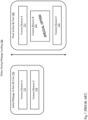
- Fig. 7 is an example of flicker caused by modification of dynamically-modifiable elements of webpage content after the initial webpage rendering 700.
- a simplified representation of the initial rendering of a webpage shown in 710 two elements of content have been rendered, content element A 711 and content element C 712.
- content element B 721 an image, not to be rendered at the same time as content elements A and C 711, 712.
- content element B 721 is finally rendered as shown in 720, the user perceives flickering of the page due to the insertion of content element B 721 and the shifting of content element C 712 further down the page.
- Fig. 8 shows an aspect of a solution for flicker caused by modification of dynamically-modifiable elements of webpage content after the initial webpage rendering 800.
- Prevention of flickering may involve inserting a placeholder for any content that may not be properly rendered in the initial rendering of a webpage.
- a simplified representation of the initial rendering of a webpage shown in 810 two elements of content have been rendered, content element A 811 and content element C 813.
- a delay in receiving modification rules has caused content element B 821, an image, not to be rendered at the same time as content elements A and C 811, 813.
- a placeholder for content element B 812 has been inserted of the same size as content element B 821.
- content element B 821 is finally rendered as shown in 820, there is no flickering of the page because content element B 821 simply replaces the placeholder for content element B 812.
- Fig. 9 is an example of flash of original content caused by modification of dynamically-modifiable elements of webpage content after the initial webpage rendering 900.
- content element A 911 the "A" version of a dynamically-modifiable content element that is for instance being subjected to A/B testing, which is displayed in red color.
- the "B" version of content element B 921 is rendered as shown in 920, the user sees a change in color from red to blue that was not intended by, and may be detrimental to, the content provider. At the very least, this flash of original content will corrupt any data obtained from the A/B testing.
- Fig. 10 shows an aspect of a solution for flash of original content caused by modification of dynamically-modifiable elements of webpage content after the initial webpage rendering 1000.
- Prevention of flash of original content may involve inserting a placeholder for any content that may not be properly rendered in the initial rendering of a webpage.
- a simplified representation of the initial rendering of a webpage shown in 1010 three elements of content have been rendered, content element A 1011, a placeholder for content element B 1012, and content element C 1013.
- the "A" version of a dynamically-modifiable content element that is being subjected to A/B testing is no longer shown, and the placeholder for content element 2 1012 is shown, instead.
- the placeholder for content element 2 1012 may be shown in a way that is either imperceptible to the user or is unobtrusive, such as being transparent, or shown with a color matching the background color, or shown with an unobtrusive gray color (indicating that it is a placeholder, for example), etc.
- the "B" version of content element B 1021 is rendered as shown in 1020, the user either does not see a change in color or sees only a minimal change because the placeholder for content element B 1012 was rendered instead of the "A" version of content element B (not shown).
- the techniques disclosed herein may be implemented on hardware or a combination of software and hardware. For example, they may be implemented in an operating system kernel, in a separate user process, in a library package bound into network applications, on a specially constructed machine, on an application-specific integrated circuit (ASIC), or on a network interface card.
- ASIC application-specific integrated circuit
- Software/hardware hybrid implementations of at least some of the aspects disclosed herein may be implemented on a programmable network-resident machine (which should be understood to include intermittently connected network-aware machines) selectively activated or reconfigured by a computer program stored in memory.
- a programmable network-resident machine which should be understood to include intermittently connected network-aware machines
- Such network devices may have multiple network interfaces that may be configured or designed to utilize different types of network communication protocols.
- a general architecture for some of these machines may be described herein in order to illustrate one or more exemplary means by which a given unit of functionality may be implemented.
- At least some of the features or functionalities of the various aspects disclosed herein may be implemented on one or more general-purpose computers associated with one or more networks, such as for example an end-user computer system, a client computer, a network server or other server system, a mobile computing device (e.g., tablet computing device, mobile phone, smartphone, laptop, or other appropriate computing device), a consumer electronic device, a music player, or any other suitable electronic device, router, switch, or other suitable device, or any combination thereof.
- at least some of the features or functionalities of the various aspects disclosed herein may be implemented in one or more virtualized computing environments (e.g., network computing clouds, virtual machines hosted on one or more physical computing machines, or other appropriate virtual environments).
- FIG. 11 there is shown a block diagram depicting an exemplary computing device 10 suitable for implementing at least a portion of the features or functionalities disclosed herein.
- Computing device 10 may be, for example, any one of the computing machines listed in the previous paragraph, or indeed any other electronic device capable of executing software- or hardware-based instructions according to one or more programs stored in memory.
- Computing device 10 may be configured to communicate with a plurality of other computing devices, such as clients or servers, over communications networks such as a wide area network a metropolitan area network, a local area network, a wireless network, the Internet, or any other network, using known protocols for such communication, whether wireless or wired.
- communications networks such as a wide area network a metropolitan area network, a local area network, a wireless network, the Internet, or any other network, using known protocols for such communication, whether wireless or wired.
- computing device 10 includes one or more central processing units (CPU) 12, one or more interfaces 15, and one or more busses 14 (such as a peripheral component interconnect (PCI) bus).
- CPU 12 may be responsible for implementing specific functions associated with the functions of a specifically configured computing device or machine.
- a computing device 10 may be configured or designed to function as a server system utilizing CPU 12, local memory 11 and/or remote memory 16, and interface(s) 15.
- CPU 12 may be caused to perform one or more of the different types of functions and/or operations under the control of software modules or components, which for example, may include an operating system and any appropriate applications software, drivers, and the like.
- CPU 12 may include one or more processors 13 such as, for example, a processor from one of the Intel, ARM, Qualcomm, and AMD families of microprocessors.
- processors 13 may include specially designed hardware such as application-specific integrated circuits (ASICs), electrically erasable programmable read-only memories (EEPROMs), field-programmable gate arrays (FPGAs), and so forth, for controlling operations of computing device 10.
- ASICs application-specific integrated circuits
- EEPROMs electrically erasable programmable read-only memories
- FPGAs field-programmable gate arrays
- a local memory 11 such as non-volatile random access memory (RAM) and/or read-only memory (ROM), including for example one or more levels of cached memory
- RAM non-volatile random access memory
- ROM read-only memory
- Memory 11 may be used for a variety of purposes such as, for example, caching and/or storing data, programming instructions, and the like. It should be further appreciated that CPU 12 may be one of a variety of system-on-a-chip (SOC) type hardware that may include additional hardware such as memory or graphics processing chips, such as a QUALCOMM SNAPDRAGON TM or SAMSUNG EXYNOS TM CPU as are becoming increasingly common in the art, such as for use in mobile devices or integrated devices.
- SOC system-on-a-chip
- processor is not limited merely to those integrated circuits referred to in the art as a processor, a mobile processor, or a microprocessor, but broadly refers to a microcontroller, a microcomputer, a programmable logic controller, an application-specific integrated circuit, and any other programmable circuit.
- interfaces 15 are provided as network interface cards (NICs).
- NICs control the sending and receiving of data packets over a computer network; other types of interfaces 15 may for example support other peripherals used with computing device 10.
- interfaces that may be provided are Ethernet interfaces, frame relay interfaces, cable interfaces, DSL interfaces, token ring interfaces, graphics interfaces, and the like.
- interfaces may be provided such as, for example, universal serial bus (USB), Serial, Ethernet, FIREWIRE TM , THUNDERBOLT TM , PCI, parallel, radio frequency (RF), BLUETOOTH TM , near-field communications (e.g., using near-field magnetics), 802.11 (WiFi), frame relay, TCP/IP, ISDN, fast Ethernet interfaces, Gigabit Ethernet interfaces, Serial ATA (SATA) or external SATA (ESATA) interfaces, high-definition multimedia interface (HDMI), digital visual interface (DVI), analog or digital audio interfaces, asynchronous transfer mode (ATM) interfaces, high-speed serial interface (HSSI) interfaces, Point of Sale (POS) interfaces, fiber data distributed interfaces (FDDIs), and the like.
- Such interfaces 15 may include physical ports appropriate for communication with appropriate media. In some cases, they may also include an independent processor (such as a dedicated audio or video processor, as is common in the art for high-fidelity A/V hardware interfaces) and, in some instances, volatile and/or non-volatile memory (e.g., RAM).
- an independent processor such as a dedicated audio or video processor, as is common in the art for high-fidelity A/V hardware interfaces
- volatile and/or non-volatile memory e.g., RAM
- FIG. 11 illustrates one specific architecture for a computing device 10 for implementing one or more of the aspects described herein, it is by no means the only device architecture on which at least a portion of the features and techniques described herein may be implemented.
- architectures having one or any number of processors 13 may be used, and such processors 13 may be present in a single device or distributed among any number of devices.
- a single processor 13 handles communications as well as routing computations, while in other aspects a separate dedicated communications processor may be provided.
- different types of features or functionalities may be implemented in a system according to the aspect that includes a client device (such as a tablet device or smartphone running client software) and server systems (such as a server system described in more detail below).
- the system of an aspect may employ one or more memories or memory modules (such as, for example, remote memory block 16 and local memory 11 ) configured to store data, program instructions for the general-purpose network operations, or other information relating to the functionality of the aspects described herein (or any combinations of the above).
- Program instructions may control execution of or comprise an operating system and/or one or more applications, for example.
- Memory 16 or memories 11, 16 may also be configured to store data structures, configuration data, encryption data, historical system operations information, or any other specific or generic non-program information described herein.
- At least some network device aspects may include nontransitory machine-readable storage media, which, for example, may be configured or designed to store program instructions, state information, and the like for performing various operations described herein.
- nontransitory machine- readable storage media include, but are not limited to, magnetic media such as hard disks, floppy disks, and magnetic tape; optical media such as CD-ROM disks; magneto-optical media such as optical disks, and hardware devices that are specially configured to store and perform program instructions, such as read-only memory devices (ROM), flash memory (as is common in mobile devices and integrated systems), solid state drives (SSD) and "hybrid SSD” storage drives that may combine physical components of solid state and hard disk drives in a single hardware device (as are becoming increasingly common in the art with regard to personal computers), memristor memory, random access memory (RAM), and the like.
- ROM read-only memory
- flash memory as is common in mobile devices and integrated systems
- SSD solid state drives
- hybrid SSD hybrid SSD
- such storage means may be integral and non-removable (such as RAM hardware modules that may be soldered onto a motherboard or otherwise integrated into an electronic device), or they may be removable such as swappable flash memory modules (such as “thumb drives” or other removable media designed for rapidly exchanging physical storage devices), "hot-swappable” hard disk drives or solid state drives, removable optical storage discs, or other such removable media, and that such integral and removable storage media may be utilized interchangeably.
- program instructions include both object code, such as may be produced by a compiler, machine code, such as may be produced by an assembler or a linker, byte code, such as may be generated by for example a JAVA TM compiler and may be executed using a Java virtual machine or equivalent, or files containing higher level code that may be executed by the computer using an interpreter (for example, scripts written in Python, Perl, Ruby, Groovy, or any other scripting language).
- interpreter for example, scripts written in Python, Perl, Ruby, Groovy, or any other scripting language.
- Fig. 12 there is shown a block diagram depicting a typical exemplary architecture of one or more aspects or components thereof on a standalone computing system.
- Computing device 20 includes processors 21 that may run software that carry out one or more functions or applications of aspects, such as for example a client application 24.
- Processors 21 may carry out computing instructions under control of an operating system 22 such as, for example, a version of MICROSOFT WINDOWS TM operating system, APPLE macOS TM or iOS TM operating systems, some variety of the Linux operating system, ANDROID TM operating system, or the like.
- an operating system 22 such as, for example, a version of MICROSOFT WINDOWS TM operating system, APPLE macOS TM or iOS TM operating systems, some variety of the Linux operating system, ANDROID TM operating system, or the like.
- one or more shared services 23 may be operable in system 20, and may be useful for providing common services to client applications 24.
- Services 23 may for example be WINDOWS TM services, user-space common services in a Linux environment, or any other type of common service architecture used with operating system 21.
- Input devices 28 may be of any type suitable for receiving user input, including for example a keyboard, touchscreen, microphone (for example, for voice input), mouse, touchpad, trackball, or any combination thereof.
- Output devices 27 may be of any type suitable for providing output to one or more users, whether remote or local to system 20, and may include for example one or more screens for visual output, speakers, printers, or any combination thereof.
- Memory 25 may be random-access memory having any structure and architecture known in the art, for use by processors 21, for example to run software.
- Storage devices 26 may be any magnetic, optical, mechanical, memristor, or electrical storage device for storage of data in digital form (such as those described above, referring to Fig. 11 ). Examples of storage devices 26 include flash memory, magnetic hard drive, CD-ROM, and/or the like.
- systems may be implemented on a distributed computing network, such as one having any number of clients and/or servers.
- a distributed computing network such as one having any number of clients and/or servers.
- FIG. 13 there is shown a block diagram depicting an exemplary architecture 30 for implementing at least a portion of a system according to one aspect on a distributed computing network.
- any number of clients 33 may be provided.
- Each client 33 may run software for implementing client-side portions of a system; clients may comprise a system 20 such as that illustrated in Fig. 12 .
- any number of servers 32 may be provided for handling requests received from one or more clients 33.
- Clients 33 and servers 32 may communicate with one another via one or more electronic networks 31, which may be in various aspects any of the Internet, a wide area network, a mobile telephony network (such as CDMA or GSM cellular networks), a wireless network (such as WiFi, WiMAX, LTE, and so forth), or a local area network (or indeed any network topology known in the art; the aspect does not prefer any one network topology over any other).
- Networks 31 may be implemented using any known network protocols, including for example wired and/or wireless protocols.
- servers 32 may call external services 37 when needed to obtain additional information, or to refer to additional data concerning a particular call. Communications with external services 37 may take place, for example, via one or more networks 31.
- external services 37 may comprise web-enabled services or functionality related to or installed on the hardware device itself.
- client applications 24 may obtain information stored in a server system 32 in the cloud or on an external service 37 deployed on one or more of a particular enterprise's or user's premises.
- remote storage 38 may be accessible through the network(s) 31.
- clients 33 or servers 32 may make use of one or more specialized services or appliances that may be deployed locally or remotely across one or more networks 31.
- one or more databases 34 in either local or remote storage 38 may be used or referred to by one or more aspects. It should be understood by one having ordinary skill in the art that databases in storage 34 may be arranged in a wide variety of architectures and using a wide variety of data access and manipulation means.
- one or more databases in storage 34 may comprise a relational database system using a structured query language (SQL), while others may comprise an alternative data storage technology such as those referred to in the art as "NoSQL” (for example, HADOOP CASSANDRA TM , GOOGLE BIGTABLE TM , and so forth).
- SQL structured query language
- variant database architectures such as column-oriented databases, in-memory databases, clustered databases, distributed databases, or even flat file data repositories may be used according to the aspect. It will be appreciated by one having ordinary skill in the art that any combination of known or future database technologies may be used as appropriate, unless a specific database technology or a specific arrangement of components is specified for a particular aspect described herein.
- database may refer to a physical database machine, a cluster of machines acting as a single database system, or a logical database within an overall database management system. Unless a specific meaning is specified for a given use of the term “database”, it should be construed to mean any of these senses of the word, all of which are understood as a plain meaning of the term “database” by those having ordinary skill in the art.
- security systems 36 and configuration systems 35 may make use of one or more security systems 36 and configuration systems 35.
- Security and configuration management are common information technology (IT) and web functions, and some amount of each are generally associated with any IT or web systems. It should be understood by one having ordinary skill in the art that any configuration or security subsystems known in the art now or in the future may be used in conjunction with aspects without limitation, unless a specific security 36 or configuration system 35 or approach is specifically required by the description of any specific aspect.
- Fig. 14 shows an exemplary overview of a computer system 40 as may be used in any of the various locations throughout the system. It is exemplary of any computer that may execute code to process data. Various modifications and changes may be made to computer system 40 without departing from the broader scope of the system and method disclosed herein.
- Central processor unit (CPU) 41 is connected to bus 42, to which bus is also connected memory 43, nonvolatile memory 44, display 47, input/output (I/O) unit 48, and network interface card (NIC) 53.
- I/O unit 48 may, typically, be connected to peripherals such as a keyboard 49, pointing device 50, hard disk 52, real-time clock 51, a camera 57, and other peripheral devices.
- NIC 53 connects to network 54, which may be the Internet or a local network, which local network may or may not have connections to the Internet.
- the system may be connected to other computing devices through the network via a router 55, wireless local area network 56, or any other network connection.
- power supply unit 45 connected, in this example, to a main alternating current (AC) supply 46.
- AC main alternating current
- functionality for implementing systems or methods of various aspects may be distributed among any number of client and/or server components.
- various software modules may be implemented for performing various functions in connection with the system of any particular aspect, and such modules may be variously implemented to run on server and/or client components.
Landscapes
- Engineering & Computer Science (AREA)
- Theoretical Computer Science (AREA)
- General Physics & Mathematics (AREA)
- Computer Networks & Wireless Communication (AREA)
- Signal Processing (AREA)
- Physics & Mathematics (AREA)
- General Engineering & Computer Science (AREA)
- Databases & Information Systems (AREA)
- Health & Medical Sciences (AREA)
- Artificial Intelligence (AREA)
- Audiology, Speech & Language Pathology (AREA)
- Computational Linguistics (AREA)
- General Health & Medical Sciences (AREA)
- Data Mining & Analysis (AREA)
- Information Transfer Between Computers (AREA)
Claims (15)
- System zum Rendern eines dynamischen Webseiteninhalts, das Folgendes umfasst:ein auf einem Webbrowser (141) ablaufendes Webbrowser-Skript (144), das eine erste Vielzahl von Programmieranweisungen, die in einem Speicher eines ersten vernetzten Computers (140) gespeichert sind und auf einem Prozessor davon ablaufen, umfasst, wobei die erste Vielzahl von Programmieranweisungen, wenn sie auf dem Prozessor des ersten vernetzten Computers (140) ablaufen, bewirkt, dass der erste vernetzte Computer (140):einen annotierten Inhalt (410) und Ressourcen (425) zum Rendern einer Webseite (147) von einem Erstinhaltsanbieter (110) empfängt;vollständige Modifikationsregeln (121) zum Rendern von dynamisch modifizierbaren Elementen des annotierten Inhalts von einem Drittinhaltsanbieter (120) anfordert (430);unvollständige Modifikationsregeln (121) zum Rendern des annotierten Inhalts von dem Drittinhaltsanbieter empfängt (445);die Webseite (147) unter Nutzung der unvollständigen Modifikationsregeln (121) rendert (450);eine asynchrone Übertragung der vollständigen Modifikationsregeln (121) von dem Drittinhaltsanbieter (120) anfordert (465) und empfängt (470); unddie Webseite (147) unter Nutzung der vollständigen Modifikationsregeln (121) rendert (475); undein Gateway (123), das eine zweite Vielzahl von Programmieranweisungen, die in einem Speicher eines zweiten vernetzten Computers gespeichert sind und auf einem Prozessor davon ablaufen, umfasst, wobei die zweite Vielzahl von Programmieranweisungen, wenn sie auf dem Prozessor des zweiten vernetzten Computers ablaufen, bewirkt, dass der zweite vernetzte Computer:die Anforderung (430) vollständiger Modifikationsregeln (121) von dem das Webbrowser-Skript (144) ablaufen lassenden Webbrowser (141) an den Drittinhaltsanbieter (120) detektiert;einen Timer mit einem Grenzwert startet;wenn der Timer den Grenzwert erreicht, unvollständige Modifikationsregeln (121) von dem Drittinhaltsanbieter anfordert, wobei die unvollständigen Modifikationsregeln (121) einen generierten Teil der vollständigen Modifikationsregeln (121) umfassen;die unvollständigen Modifikationsregeln (121) an den das Webbrowser-Skript (144) ablaufen lassenden Webbrowser (141) überträgt (445).
- System nach Anspruch 1, wobei ein Ersatzinhalt (445) durch das Gateway (123) zusammen mit den unvollständigen Regeln übertragen wird und die unvollständigen Regeln Anweisungen zum Anwenden des Ersatzinhalts während des Renderns (450) der Webseite (147) umfassen.
- System nach Anspruch 1, wobei die durch das Gateway (123) bereitgestellten unvollständigen Modifikationsregeln (121) einen Satz leerer Regeln zum Aufheben einer Blockierung des Renderns (450) der Webseite (147) umfassen.
- System nach Anspruch 1, wobei das Gateway (123) einen gecachten Inhalt zum Rendern (450) der Webseite (147) bereitstellt.
- System nach Anspruch 1, wobei das Gateway (123) einen Ersatzinhalt zum Rendern der Webseite (147) generiert.
- System zum Rendern eines dynamischen Webseiteninhalts, das Folgendes umfasst:ein auf einem Webbrowser (141) ablaufendes Webbrowser-Skript (144), das eine erste Vielzahl von Programmieranweisungen, die in einem Speicher eines vernetzten Computers (140) gespeichert sind und auf einem Prozessor davon ablaufen, umfasst, wobei die erste Vielzahl von Programmieranweisungen, wenn sie auf dem Prozessor des vernetzten Computers (140) ablaufen, bewirkt, dass der vernetzte Computer (140):einen annotierten Inhalt (510) und Ressourcen (525) zum Rendern einer Webseite (147) von einem Erstinhaltsanbieter (110) empfängt;vollständige Modifikationsregeln (121) zum Rendern von dynamisch modifizierbaren Elementen des annotierten Inhalts von einem Drittinhaltsanbieter (120) anfordert (530);unvollständige Modifikationsregeln (121) zum Rendern der dynamisch modifizierbaren Elemente des annotierten Inhalts empfängt (543);die Webseite (147) unter Nutzung der unvollständigen Modifikationsregeln (121) rendert (545);eine asynchrone Übertragung der vollständigen Modifikationsregeln (121) von dem Drittinhaltsanbieter (120) anfordert (560) und empfängt (565); unddie Webseite (147) unter Nutzung der vollständigen Modifikationsregeln (121) rendert (570); undeinen Service Worker (142), der eine zweite Vielzahl von Programmieranweisungen, die in dem Speicher des vernetzten Computers (140) gespeichert sind und auf dem Prozessor davon ablaufen, umfasst, wobei die zweite Vielzahl von Programmieranweisungen, wenn sie auf dem Prozessor des vernetzten Computers (140) ablaufen, bewirkt, dass der vernetzte Computer (140):die Anforderung (530) vollständiger Modifikationsregeln (121) von dem das Webbrowser-Skript (144) ablaufen lassenden Webbrowser (141) an den Drittinhaltsanbieter (120) detektiert;einen Timer mit einem Grenzwert startet;wenn der Timer den Grenzwert erreicht, unvollständige Modifikationsregeln (121) zum Rendern (545) der dynamisch modifizierbaren Elemente des annotierten Inhalts an den Webbrowser (141) sendet.
- System nach Anspruch 6, wobei ein Ersatzinhalt von dem Drittinhaltsanbieter (120) zusammen mit den unvollständigen Modifikationsregeln (121) empfangen wird und die unvollständigen Modifikationsregeln (121) Anweisungen zum Anwenden des Ersatzinhalts während des Renderns (545) der Webseite umfassen.
- System nach Anspruch 6, wobei die durch den Service Worker (142) bereitgestellten unvollständigen Modifikationsregeln (121) einen Satz leerer Regeln zum Aufheben einer Blockierung des Renderns (545) der Webseite (147) umfassen.
- System nach Anspruch 6, wobei der Service Worker (142) einen gecachten Inhalt zum Rendern (545) der Webseite (147) bereitstellt.
- System nach Anspruch 6, wobei der Service Worker (142) einen Ersatzinhalt zum Rendern (545) der Webseite (147) generiert.
- Computerimplementiertes Verfahren zum Rendern eines dynamischen Webseiteninhalts, das Folgendes umfasst:Empfangen eines annotierten Inhalts (410; 510) und von Ressourcen (425; 525) zum Rendern einer Webseite (147) von einem Erstinhaltsanbieter (110);Anfordern vollständiger Modifikationsregeln (121) zum Rendern von dynamisch modifizierbaren Elementen des annotierten Inhalts von einem Drittinhaltsanbieter (120);Detektieren der Anforderung (430; 530) vollständiger Modifikationsregeln (121);Starten eines Zeitgebers mit einem Grenzwert;wenn der Timer den Grenzwert erreicht, Nutzen unvollständiger Modifikationsregeln (121) zum Rendern (450; 545) der dynamisch modifizierbaren Elemente des annotierten Inhalts;Anfordern (465; 560) und Empfangen (470; 565) einer asynchronen Übertragung der vollständigen Modifikationsregeln (121) von dem Drittinhaltsanbieter (120);Rendern (475; 570) der Webseite unter Nutzung der vollständigen Modifikationsregeln (121).
- Computerimplementiertes Verfahren nach Anspruch 11, wobei ein Ersatzinhalt von dem Drittinhaltsanbieter (120) zusammen mit den unvollständigen Modifikationsregeln (121) empfangen wird (445) und die unvollständigen Modifikationsregeln (121) Anweisungen zum Anwenden des Ersatzinhalts während des Renderns (450; 545) der Webseite (147) umfassen.
- Computerimplementiertes Verfahren nach Anspruch 11, wobei die unvollständigen Modifikationsregeln (121) einen leeren Satz Regeln zum Aufheben einer Blockierung des Renderns (450; 545) der Webseite (147) umfassen.
- Computerimplementiertes Verfahren nach Anspruch 11, wobei die unvollständigen Modifikationsregeln (121) von einem gecachten Inhalt zum Rendern (450; 545) der Webseite (147) begleitet werden.
- Computerimplementiertes Verfahren nach Anspruch 11, wobei ein Ersatzinhalt zum Rendern (450; 545) der Webseite (147) generiert wird, wenn der Timer den Grenzwert erreicht hat.
Applications Claiming Priority (2)
| Application Number | Priority Date | Filing Date | Title |
|---|---|---|---|
| US16/783,081 US11182536B2 (en) | 2020-02-05 | 2020-02-05 | System and method for dynamic webpage rendering with no flicker or flash of original content |
| PCT/CZ2021/050014 WO2021155873A1 (en) | 2020-02-05 | 2021-02-04 | System and method for dynamic webpage rendering with no flicker or flash of original content |
Publications (3)
| Publication Number | Publication Date |
|---|---|
| EP4100850A1 EP4100850A1 (de) | 2022-12-14 |
| EP4100850C0 EP4100850C0 (de) | 2025-04-02 |
| EP4100850B1 true EP4100850B1 (de) | 2025-04-02 |
Family
ID=74858166
Family Applications (1)
| Application Number | Title | Priority Date | Filing Date |
|---|---|---|---|
| EP21709880.5A Active EP4100850B1 (de) | 2020-02-05 | 2021-02-04 | System und verfahren zur dynamischen webseitendarstellung ohne flimmern oder blinken des ursprünglichen inhalts |
Country Status (3)
| Country | Link |
|---|---|
| US (1) | US11182536B2 (de) |
| EP (1) | EP4100850B1 (de) |
| WO (1) | WO2021155873A1 (de) |
Families Citing this family (10)
| Publication number | Priority date | Publication date | Assignee | Title |
|---|---|---|---|---|
| US11301539B2 (en) * | 2019-02-21 | 2022-04-12 | Bank Of America Corporation | Just-in-time front end template generation using logical document object models |
| CN114265998B (zh) * | 2020-09-17 | 2025-07-15 | 抖音视界有限公司 | 标记信息处理方法、设备及存储介质 |
| US20220236968A1 (en) * | 2021-01-27 | 2022-07-28 | Salesforce.Com, Inc. | Optimized data resolution for web components |
| US11467859B2 (en) | 2021-01-27 | 2022-10-11 | Salesforce.Com, Inc. | Optimized data resolution for web components |
| US11467860B2 (en) | 2021-01-27 | 2022-10-11 | Salesforce.Com, Inc. | Optimized data resolution for web components |
| CN113505362B (zh) * | 2021-07-16 | 2023-09-22 | 长鑫存储技术有限公司 | 系统权限管控方法、数据中心、管控装置和存储介质 |
| US20240028661A1 (en) * | 2022-07-21 | 2024-01-25 | Google Llc | Augmented ui generated through natural language query and semantic data connections |
| CN115168774B (zh) * | 2022-07-28 | 2025-08-19 | 济南浪潮数据技术有限公司 | 网页渲染方法、系统、电子设备及计算机可读存储介质 |
| CN115328597A (zh) * | 2022-08-11 | 2022-11-11 | 北京百度网讯科技有限公司 | 小程序的页面渲染方法、装置、电子设备和存储介质 |
| US20250077610A1 (en) * | 2023-08-29 | 2025-03-06 | Capital One Services, Llc | Reducing website overhead using registries |
Family Cites Families (14)
| Publication number | Priority date | Publication date | Assignee | Title |
|---|---|---|---|---|
| US7861174B2 (en) * | 2000-09-08 | 2010-12-28 | Oracle International Corporation | Method and system for assembling concurrently-generated content |
| US9137324B2 (en) * | 2002-04-10 | 2015-09-15 | International Business Machines Corporation | Capacity on-demand in distributed computing environments |
| US7975019B1 (en) * | 2005-07-15 | 2011-07-05 | Amazon Technologies, Inc. | Dynamic supplementation of rendered web pages with content supplied by a separate source |
| US8239491B1 (en) * | 2006-10-30 | 2012-08-07 | Google Inc. | Content request optimization |
| US9767212B2 (en) * | 2010-04-07 | 2017-09-19 | Liveperson, Inc. | System and method for dynamically enabling customized web content and applications |
| US8732569B2 (en) * | 2011-05-04 | 2014-05-20 | Google Inc. | Predicting user navigation events |
| US10157236B2 (en) | 2011-05-23 | 2018-12-18 | Radware, Ltd. | Optimized rendering of dynamic content |
| US20140258843A1 (en) * | 2013-03-11 | 2014-09-11 | Minds and Machines, LLC | Method and system for inter-widget communication |
| US11233841B2 (en) * | 2013-03-15 | 2022-01-25 | Yottaa, Inc. | Systems and methods for configuration-based optimization by an intermediary |
| US20150066587A1 (en) * | 2013-08-30 | 2015-03-05 | Tealium Inc. | Content site visitor processing system |
| WO2015041711A1 (en) * | 2013-09-20 | 2015-03-26 | Yottaa, Inc. | Systems and methods for managing loading priority or sequencing of fragments of a web object |
| US20150149888A1 (en) * | 2013-11-27 | 2015-05-28 | Moboom Ltd. | Systems and methods for executing aspects of a document |
| US9753904B2 (en) | 2014-07-25 | 2017-09-05 | Qualcomm Incorporated | Fast rendering of websites containing dynamic content and stale content |
| US9813440B1 (en) | 2015-05-15 | 2017-11-07 | Shape Security, Inc. | Polymorphic treatment of annotated content |
-
2020
- 2020-02-05 US US16/783,081 patent/US11182536B2/en active Active
-
2021
- 2021-02-04 EP EP21709880.5A patent/EP4100850B1/de active Active
- 2021-02-04 WO PCT/CZ2021/050014 patent/WO2021155873A1/en not_active Ceased
Also Published As
| Publication number | Publication date |
|---|---|
| US11182536B2 (en) | 2021-11-23 |
| EP4100850C0 (de) | 2025-04-02 |
| EP4100850A1 (de) | 2022-12-14 |
| US20210240914A1 (en) | 2021-08-05 |
| WO2021155873A1 (en) | 2021-08-12 |
Similar Documents
| Publication | Publication Date | Title |
|---|---|---|
| EP4100850B1 (de) | System und verfahren zur dynamischen webseitendarstellung ohne flimmern oder blinken des ursprünglichen inhalts | |
| US10013497B1 (en) | Background reloading of currently displayed content | |
| US8245125B1 (en) | Hybrid rendering for webpages | |
| US8527862B2 (en) | Methods for making ajax web applications bookmarkable and crawlable and devices thereof | |
| US20180343174A1 (en) | Rule based page processing and network request processing in browsers | |
| CN113536168B (zh) | 组件处理方法及设备 | |
| US10902508B2 (en) | Methods for extracting and adapting information to generate custom widgets and devices thereof | |
| US8639770B1 (en) | Separation of mutable and immutable data in a memory cache for improvement of data updates | |
| BRPI0911981B1 (pt) | Sistema baseado em computador e método implementado em computador para instanciação de uma área de conteúdo de um navegador | |
| US20200184035A1 (en) | Managing content delivery to client devices | |
| US10735281B1 (en) | Application focused provisioning system | |
| US8516041B1 (en) | Pre-fetching asynchronously requested content | |
| CN110765208B (zh) | 一种数据同步方法、装置、电子设备及存储介质 | |
| JP2017123188A (ja) | テナント移行にわたるテナント・データのリカバリ | |
| CN104094234A (zh) | 用于嵌入过程通信的虚拟通道 | |
| CN109582890B (zh) | 页面加载方法、装置、计算机设备及存储介质 | |
| US11089081B1 (en) | Inter-process rendering pipeline for shared process remote web content rendering | |
| US12411676B1 (en) | Resource aware patching service | |
| CN111046311A (zh) | 实现pc端无痕迭代版本的方法、装置、计算机设备及存储介质 | |
| US20150149888A1 (en) | Systems and methods for executing aspects of a document | |
| CN114189559B (zh) | 基于Axios的接口重复请求处理方法及系统 | |
| CN115544407A (zh) | 页面离线渲染方法、系统、终端设备及存储介质 | |
| AU2019446557A1 (en) | Secure web application delivery platform | |
| CN108574709A (zh) | 跨域操作的实现方法和装置 | |
| US10095545B1 (en) | Automated and configurable fleet refresh |
Legal Events
| Date | Code | Title | Description |
|---|---|---|---|
| STAA | Information on the status of an ep patent application or granted ep patent |
Free format text: STATUS: UNKNOWN |
|
| STAA | Information on the status of an ep patent application or granted ep patent |
Free format text: STATUS: THE INTERNATIONAL PUBLICATION HAS BEEN MADE |
|
| PUAI | Public reference made under article 153(3) epc to a published international application that has entered the european phase |
Free format text: ORIGINAL CODE: 0009012 |
|
| STAA | Information on the status of an ep patent application or granted ep patent |
Free format text: STATUS: REQUEST FOR EXAMINATION WAS MADE |
|
| 17P | Request for examination filed |
Effective date: 20220825 |
|
| AK | Designated contracting states |
Kind code of ref document: A1 Designated state(s): AL AT BE BG CH CY CZ DE DK EE ES FI FR GB GR HR HU IE IS IT LI LT LU LV MC MK MT NL NO PL PT RO RS SE SI SK SM TR |
|
| DAV | Request for validation of the european patent (deleted) | ||
| DAX | Request for extension of the european patent (deleted) | ||
| GRAP | Despatch of communication of intention to grant a patent |
Free format text: ORIGINAL CODE: EPIDOSNIGR1 |
|
| STAA | Information on the status of an ep patent application or granted ep patent |
Free format text: STATUS: GRANT OF PATENT IS INTENDED |
|
| INTG | Intention to grant announced |
Effective date: 20241028 |
|
| GRAS | Grant fee paid |
Free format text: ORIGINAL CODE: EPIDOSNIGR3 |
|
| GRAA | (expected) grant |
Free format text: ORIGINAL CODE: 0009210 |
|
| STAA | Information on the status of an ep patent application or granted ep patent |
Free format text: STATUS: THE PATENT HAS BEEN GRANTED |
|
| AK | Designated contracting states |
Kind code of ref document: B1 Designated state(s): AL AT BE BG CH CY CZ DE DK EE ES FI FR GB GR HR HU IE IS IT LI LT LU LV MC MK MT NL NO PL PT RO RS SE SI SK SM TR |
|
| REG | Reference to a national code |
Ref country code: GB Ref legal event code: FG4D |
|
| REG | Reference to a national code |
Ref country code: CH Ref legal event code: EP |
|
| REG | Reference to a national code |
Ref country code: IE Ref legal event code: FG4D |
|
| U01 | Request for unitary effect filed |
Effective date: 20250402 |
|
| U07 | Unitary effect registered |
Designated state(s): AT BE BG DE DK EE FI FR IT LT LU LV MT NL PT RO SE SI Effective date: 20250408 |
|
| PG25 | Lapsed in a contracting state [announced via postgrant information from national office to epo] |
Ref country code: ES Free format text: LAPSE BECAUSE OF FAILURE TO SUBMIT A TRANSLATION OF THE DESCRIPTION OR TO PAY THE FEE WITHIN THE PRESCRIBED TIME-LIMIT Effective date: 20250402 |
|
| PG25 | Lapsed in a contracting state [announced via postgrant information from national office to epo] |
Ref country code: GR Free format text: LAPSE BECAUSE OF FAILURE TO SUBMIT A TRANSLATION OF THE DESCRIPTION OR TO PAY THE FEE WITHIN THE PRESCRIBED TIME-LIMIT Effective date: 20250703 Ref country code: NO Free format text: LAPSE BECAUSE OF FAILURE TO SUBMIT A TRANSLATION OF THE DESCRIPTION OR TO PAY THE FEE WITHIN THE PRESCRIBED TIME-LIMIT Effective date: 20250702 |
|
| PG25 | Lapsed in a contracting state [announced via postgrant information from national office to epo] |
Ref country code: PL Free format text: LAPSE BECAUSE OF FAILURE TO SUBMIT A TRANSLATION OF THE DESCRIPTION OR TO PAY THE FEE WITHIN THE PRESCRIBED TIME-LIMIT Effective date: 20250402 |
|
| PG25 | Lapsed in a contracting state [announced via postgrant information from national office to epo] |
Ref country code: HR Free format text: LAPSE BECAUSE OF FAILURE TO SUBMIT A TRANSLATION OF THE DESCRIPTION OR TO PAY THE FEE WITHIN THE PRESCRIBED TIME-LIMIT Effective date: 20250402 |
|
| PG25 | Lapsed in a contracting state [announced via postgrant information from national office to epo] |
Ref country code: RS Free format text: LAPSE BECAUSE OF FAILURE TO SUBMIT A TRANSLATION OF THE DESCRIPTION OR TO PAY THE FEE WITHIN THE PRESCRIBED TIME-LIMIT Effective date: 20250702 |
|
| PG25 | Lapsed in a contracting state [announced via postgrant information from national office to epo] |
Ref country code: IS Free format text: LAPSE BECAUSE OF FAILURE TO SUBMIT A TRANSLATION OF THE DESCRIPTION OR TO PAY THE FEE WITHIN THE PRESCRIBED TIME-LIMIT Effective date: 20250802 |
|
| PG25 | Lapsed in a contracting state [announced via postgrant information from national office to epo] |
Ref country code: SM Free format text: LAPSE BECAUSE OF FAILURE TO SUBMIT A TRANSLATION OF THE DESCRIPTION OR TO PAY THE FEE WITHIN THE PRESCRIBED TIME-LIMIT Effective date: 20250402 |
|
| PG25 | Lapsed in a contracting state [announced via postgrant information from national office to epo] |
Ref country code: CZ Free format text: LAPSE BECAUSE OF FAILURE TO SUBMIT A TRANSLATION OF THE DESCRIPTION OR TO PAY THE FEE WITHIN THE PRESCRIBED TIME-LIMIT Effective date: 20250402 |
|
| PG25 | Lapsed in a contracting state [announced via postgrant information from national office to epo] |
Ref country code: SK Free format text: LAPSE BECAUSE OF FAILURE TO SUBMIT A TRANSLATION OF THE DESCRIPTION OR TO PAY THE FEE WITHIN THE PRESCRIBED TIME-LIMIT Effective date: 20250402 |
|
| PLBE | No opposition filed within time limit |
Free format text: ORIGINAL CODE: 0009261 |
|
| STAA | Information on the status of an ep patent application or granted ep patent |
Free format text: STATUS: NO OPPOSITION FILED WITHIN TIME LIMIT |
|
| REG | Reference to a national code |
Ref country code: CH Ref legal event code: L10 Free format text: ST27 STATUS EVENT CODE: U-0-0-L10-L00 (AS PROVIDED BY THE NATIONAL OFFICE) Effective date: 20260211 |