EP4100323B1 - Détection et récupération d'id d'enregistrement dupliqué de communication de système aérien sans pilote - Google Patents
Détection et récupération d'id d'enregistrement dupliqué de communication de système aérien sans pilote Download PDFInfo
- Publication number
- EP4100323B1 EP4100323B1 EP21901210.1A EP21901210A EP4100323B1 EP 4100323 B1 EP4100323 B1 EP 4100323B1 EP 21901210 A EP21901210 A EP 21901210A EP 4100323 B1 EP4100323 B1 EP 4100323B1
- Authority
- EP
- European Patent Office
- Prior art keywords
- rid
- uas
- uss
- uav
- unmanned aerial
- Prior art date
- Legal status (The legal status is an assumption and is not a legal conclusion. Google has not performed a legal analysis and makes no representation as to the accuracy of the status listed.)
- Active
Links
Images

Classifications
-
- H—ELECTRICITY
- H04—ELECTRIC COMMUNICATION TECHNIQUE
- H04B—TRANSMISSION
- H04B7/00—Radio transmission systems, i.e. using radiation field
- H04B7/14—Relay systems
- H04B7/15—Active relay systems
- H04B7/185—Space-based or airborne stations; Stations for satellite systems
- H04B7/18502—Airborne stations
- H04B7/18504—Aircraft used as relay or high altitude atmospheric platform
-
- H—ELECTRICITY
- H04—ELECTRIC COMMUNICATION TECHNIQUE
- H04W—WIRELESS COMMUNICATION NETWORKS
- H04W12/00—Security arrangements; Authentication; Protecting privacy or anonymity
- H04W12/60—Context-dependent security
- H04W12/69—Identity-dependent
- H04W12/71—Hardware identity
-
- B—PERFORMING OPERATIONS; TRANSPORTING
- B64—AIRCRAFT; AVIATION; COSMONAUTICS
- B64C—AEROPLANES; HELICOPTERS
- B64C39/00—Aircraft not otherwise provided for
- B64C39/02—Aircraft not otherwise provided for characterised by special use
- B64C39/024—Aircraft not otherwise provided for characterised by special use of the remote controlled vehicle type, i.e. RPV
-
- G—PHYSICS
- G08—SIGNALLING
- G08G—TRAFFIC CONTROL SYSTEMS
- G08G5/00—Traffic control systems for aircraft
- G08G5/20—Arrangements for acquiring, generating, sharing or displaying traffic information
- G08G5/22—Arrangements for acquiring, generating, sharing or displaying traffic information located on the ground
-
- G—PHYSICS
- G08—SIGNALLING
- G08G—TRAFFIC CONTROL SYSTEMS
- G08G5/00—Traffic control systems for aircraft
- G08G5/50—Navigation or guidance aids
- G08G5/55—Navigation or guidance aids for a single aircraft
-
- H—ELECTRICITY
- H04—ELECTRIC COMMUNICATION TECHNIQUE
- H04B—TRANSMISSION
- H04B7/00—Radio transmission systems, i.e. using radiation field
- H04B7/14—Relay systems
- H04B7/15—Active relay systems
- H04B7/185—Space-based or airborne stations; Stations for satellite systems
- H04B7/1853—Satellite systems for providing telephony service to a mobile station, i.e. mobile satellite service
- H04B7/18532—Arrangements for managing transmission, i.e. for transporting data or a signalling message
-
- H—ELECTRICITY
- H04—ELECTRIC COMMUNICATION TECHNIQUE
- H04B—TRANSMISSION
- H04B7/00—Radio transmission systems, i.e. using radiation field
- H04B7/14—Relay systems
- H04B7/15—Active relay systems
- H04B7/185—Space-based or airborne stations; Stations for satellite systems
- H04B7/1853—Satellite systems for providing telephony service to a mobile station, i.e. mobile satellite service
- H04B7/18545—Arrangements for managing station mobility, i.e. for station registration or localisation
-
- H—ELECTRICITY
- H04—ELECTRIC COMMUNICATION TECHNIQUE
- H04W—WIRELESS COMMUNICATION NETWORKS
- H04W12/00—Security arrangements; Authentication; Protecting privacy or anonymity
- H04W12/03—Protecting confidentiality, e.g. by encryption
-
- H—ELECTRICITY
- H04—ELECTRIC COMMUNICATION TECHNIQUE
- H04W—WIRELESS COMMUNICATION NETWORKS
- H04W12/00—Security arrangements; Authentication; Protecting privacy or anonymity
- H04W12/40—Security arrangements using identity modules
-
- H—ELECTRICITY
- H04—ELECTRIC COMMUNICATION TECHNIQUE
- H04W—WIRELESS COMMUNICATION NETWORKS
- H04W4/00—Services specially adapted for wireless communication networks; Facilities therefor
- H04W4/30—Services specially adapted for particular environments, situations or purposes
- H04W4/40—Services specially adapted for particular environments, situations or purposes for vehicles, e.g. vehicle-to-pedestrians [V2P]
- H04W4/44—Services specially adapted for particular environments, situations or purposes for vehicles, e.g. vehicle-to-pedestrians [V2P] for communication between vehicles and infrastructures, e.g. vehicle-to-cloud [V2C] or vehicle-to-home [V2H]
-
- H—ELECTRICITY
- H04—ELECTRIC COMMUNICATION TECHNIQUE
- H04W—WIRELESS COMMUNICATION NETWORKS
- H04W60/00—Affiliation to network, e.g. registration; Terminating affiliation with the network, e.g. de-registration
-
- H—ELECTRICITY
- H04—ELECTRIC COMMUNICATION TECHNIQUE
- H04W—WIRELESS COMMUNICATION NETWORKS
- H04W84/00—Network topologies
- H04W84/02—Hierarchically pre-organised networks, e.g. paging networks, cellular networks, WLAN [Wireless Local Area Network] or WLL [Wireless Local Loop]
- H04W84/04—Large scale networks; Deep hierarchical networks
- H04W84/06—Airborne or Satellite Networks
-
- B—PERFORMING OPERATIONS; TRANSPORTING
- B64—AIRCRAFT; AVIATION; COSMONAUTICS
- B64U—UNMANNED AERIAL VEHICLES [UAV]; EQUIPMENT THEREFOR
- B64U10/00—Type of UAV
- B64U10/10—Rotorcrafts
- B64U10/13—Flying platforms
- B64U10/14—Flying platforms with four distinct rotor axes, e.g. quadcopters
-
- B—PERFORMING OPERATIONS; TRANSPORTING
- B64—AIRCRAFT; AVIATION; COSMONAUTICS
- B64U—UNMANNED AERIAL VEHICLES [UAV]; EQUIPMENT THEREFOR
- B64U2101/00—UAVs specially adapted for particular uses or applications
- B64U2101/20—UAVs specially adapted for particular uses or applications for use as communications relays, e.g. high-altitude platforms
-
- B—PERFORMING OPERATIONS; TRANSPORTING
- B64—AIRCRAFT; AVIATION; COSMONAUTICS
- B64U—UNMANNED AERIAL VEHICLES [UAV]; EQUIPMENT THEREFOR
- B64U2101/00—UAVs specially adapted for particular uses or applications
- B64U2101/30—UAVs specially adapted for particular uses or applications for imaging, photography or videography
-
- B—PERFORMING OPERATIONS; TRANSPORTING
- B64—AIRCRAFT; AVIATION; COSMONAUTICS
- B64U—UNMANNED AERIAL VEHICLES [UAV]; EQUIPMENT THEREFOR
- B64U2201/00—UAVs characterised by their flight controls
- B64U2201/10—UAVs characterised by their flight controls autonomous, i.e. by navigating independently from ground or air stations, e.g. by using inertial navigation systems [INS]
-
- B—PERFORMING OPERATIONS; TRANSPORTING
- B64—AIRCRAFT; AVIATION; COSMONAUTICS
- B64U—UNMANNED AERIAL VEHICLES [UAV]; EQUIPMENT THEREFOR
- B64U2201/00—UAVs characterised by their flight controls
- B64U2201/20—Remote controls
-
- G—PHYSICS
- G08—SIGNALLING
- G08G—TRAFFIC CONTROL SYSTEMS
- G08G5/00—Traffic control systems for aircraft
- G08G5/20—Arrangements for acquiring, generating, sharing or displaying traffic information
- G08G5/26—Transmission of traffic-related information between aircraft and ground stations
-
- G—PHYSICS
- G08—SIGNALLING
- G08G—TRAFFIC CONTROL SYSTEMS
- G08G5/00—Traffic control systems for aircraft
- G08G5/50—Navigation or guidance aids
- G08G5/57—Navigation or guidance aids for unmanned aircraft
Definitions
- Embodiments of the present disclosure relate to design and operation of unmanned aerial systems, and more specifically, monitoring and allocation of unmanned aerial vehicle media sessions and managing network resources.
- An unmanned aerial vehicle may have an identification (ID) associated with it. Indeed, some UAVs are mandated to have an ID before becoming airborne. For example, in North America, the Federal Aviation Administration (FAA) is making regulations to make sure all UAVs have some sort of identification to be legal to fly, and such identification is called a remote identification (RID) for a drone or UAV.
- ID identification
- FAA Federal Aviation Administration
- RID remote identification
- RIDs may be duplicated for two or more unmanned aerial systems (UASes). This can result in a registration failure when these UASes attempt to register with a UAS Service Supplier (USS), which may prevent take-off for a UAV with a duplicate RID.
- UAS Service Supplier USS
- Relevant prior art is disclosed in US2018/350246 A1 , WO2020/163760 A2 and US10733894 B1 .
- a method performed by at least one processor included in an unmanned aerial system includes: transmitting, to a UAS Service Supplier (USS) implemented on at least one server, a first registration request to register a first remote identification (RID) corresponding to the UAS with the USS; receiving, from the USS, an indication that the first RID is a duplicate RID that is registered with the USS; determining, based on the first RID, a second RID corresponding to the UAS; and transmitting, to the USS, a second registration request to register the second RID.
- USS UAS Service Supplier
- RID remote identification
- a device included in an unmanned aerial system includes: at least one memory configured to store program code; and at least one processor configured to read the program code and operate as instructed by the program code.
- the program code includes: first transmitting code configured to cause the at least one processor to transmit, to a UAS Service Supplier (USS) implemented on at least one server, a first registration request to register a first remote identification (RID) corresponding to the UAS with the USS; first receiving code configured to cause the at least one processor to receive, from the USS, an indication that the first RID is a duplicate RID that is registered with the USS; determining code configured to cause the at least one processor to determine, based on the first RID, a second RID corresponding to the UAS; and second transmitting code configured to cause the at least one processor to transmit, to the USS, a second registration request to register the second RID.
- USS UAS Service Supplier
- RID remote identification
- a non-transitory computer-readable medium storing instructions is provided according to claim 11.
- the instructions are configured to, when executed by at least one processor of a device included in an unmanned aerial system (UAS), cause the at least one processor to: transmit, to a UAS Service Supplier (USS) implemented on at least one server, a first registration request to register a first remote identification (RID) corresponding to the UAS with the USS; receive, from the USS, an indication that the first RID is a duplicate RID that is registered with the USS; determine, based on the first RID, a second RID corresponding to the UAS; and transmit, to the USS, a second registration request to register the second RID.
- UAS unmanned aerial system
- an unmanned aerial system (UAS) can include an unmanned aerial vehicle (UAV) (101) and a controller (102).
- the controller (102) can use a data link (103) to communicate control commands from the controller (102) to the UAV (101).
- the controller (102) may include at least one communication circuit that is configured to provide communication including the data link (103), via very high frequency (VHF), ultra-high frequency (UHF), or other wireless technology that is analog or digital radio conveying.
- the controller (102) via the data link (103) may control power levels of the engines (114) of the UAV (101) or control surfaces of the UAV (101). More abstract commands like pitch, yaw, and roll, similar to those of helicopters or aircraft, can also be used.
- An experienced pilot can operate some UAVs with those basic controls, not relying on any advanced onboard processing of control signals inside a UAV.
- UAVs have been available in many forms, including as helicopters and aircraft.
- UAVs include sensor(s) (104) that indicate to an onboard controller (105) of the UAV (101) characteristics of the UAV (101) such as, for example, the attitude and the acceleration of the UAV (101).
- the onboard controller (105) can be a computer system with a scaled-down or non-existent user interface.
- the information obtained by the sensor(s) (104), in addition to the control inputs received from the data link (103) from the controller (102), may allow the UAV (101) to remain stable unless positive control input is obtained from the controller (102).
- UAVs can include a receiver (106) configured to receive communication from one of the Global Navigation Satellite Systems (GNSS), such as the Global Positioning System (GPS) operated by the United States.
- GNSS Global Navigation Satellite Systems
- GPS Global Positioning System
- FIG. 1 illustrates a single satellite (108) that provides a signal (107) as such communication, to represent a GNSS.
- the receiver (106) of the UAV (101) may receive communication from a GNSS that includes three or more, and typically four or more, line-of-sight satellites to triangulate the position of the UAV (101) in space.
- the receiver (106) which may be a GNSS receiver, may determine with fair accuracy the position of the UAV (101) in space and time.
- a GNSS can be augmented by additional sensors (such as an ultrasonic or LIDAR sensor) of the UAV (101) on the vertical (Z-) axis to enable soft landings (not depicted).
- the UAV (101) may be configured to perform features such as "fly home” and "auto-land” based on GNSS capabilities, where the UAV (101) flies to a location that was defined as its home location. Such features may be performed by the UAV (101) based upon a simple command from the controller (102) (like: the push of a single button) or in case of a loss of the data link (103) from the controller (102) or other timeout of meaningful control input.
- the UAV (101) may also include one or more cameras (109).
- the UAV (101) may include a gimbal-mounted camera as one of the cameras (109) and can be used to record pictures and video of a quality sufficient for the UAV's users-today, often in High Definition TV resolution.
- the UAV (101) may include other cameras (110), often covering some or all axes of movement, and the UAV (101) may be configured to perform onboard signal processing based on signals from the cameras (110) for collision avoidance with both fixed and moving objects.
- the UAV (101) may include a "main" camera as one of the cameras (109) and its camera signal can be communicated by a communication interface (e.g. communication circuit) of the UAV (101) via a data link (111) in real-time towards the human user, and displayed on a display device (112) included in, attached to, or separate from the controller (102).
- the data link (111) may be the same as or different from the data link (103). Accordingly, UAVs may be successfully flown out of line-of-sight of a human pilot, using a technique known as "First Person View" (FPV).
- FMV First Person View
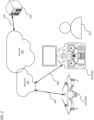
- a UAS (200) may include a UAV (201) and a controller (202).
- the UAV (201) and the controller (202) may be the same or similar to the UAV (101) and the controller (102) illustrated in FIG. 1 , respectively.
- the UAS (200) potentially operated by a UAS operator (203) such as a human pilot, may be configured to inform one or more UAS Service Suppliers (USSs) (204) about the position of the UAV (201) in real-time.
- the USS may be implemented on or using, for example, a server.
- the reporting can be conducted using the Internet (205).
- the UAV (201) and the controller (202) of the UAS (200) may configured to have a connection (206) over a wireless network such as a network (207) (e.g. a cellular network) to the Internet (205), and the USS (204) also may have a connection (208) to the Internet (205).
- a wireless network such as a network (207) (e.g. a cellular network) to the Internet (205), and the USS (204) also may have a connection (208) to the Internet (205).
- a wireless network such as a network (207) (e.g. a cellular network) to the Internet (205)
- the USS (204) also may have a connection (208) to the Internet (205).
- Networks other than the Internet (205) may also be used.
- a closed wireless network that is not the Internet could be used to communicate between the UAS (200) and the USS (204). Closed wireless networks may be used for certain military UAVs.
- Internet henceforth, such networks are meant to be included.
- connections (206) e.g. wireless connections
- networks (207) e.g. wireless networks
- connections (206) e.g. wireless connections
- networks (207) e.g. wireless networks
- mobile networks may be used such as, for example, 5 th Generation or "5G" networks.
- 5G 5 th Generation
- Other physical network technologies can equally be employed, including for example, 3G, 3.5G, 4G, LTE mobile networks, wireless LAN in infrastructure or ad hoc mode, zig-bee, and so on.
- a mobile network carrying the Internet can offer bi-directional communication, such as, for example, between the UAS (200) and the USS (204).
- the Quality of Service in each direction may differ however.
- the UAV (201), the controller (202), and/or the USS (204) may include communication interfaces (including for example, a transmitter and/or a receiver) and at least one processor with memory that implements one or more of the physical wireless network technologies, so as to be configured to communicate via one or more of the network types of the present disclosure.
- the connections (206) between the Internet (205) through a network (207) (e.g. a cellular network) to the UAV (201) and/or the controller (202) can be bi-directional.
- Internet protocols such as Internet Protocol (IP), Transmission Control Protocol (TCP), User Datagram Protocol (UDP), Hypertext Transfer Protocol (HTTP), Quick UDP Internet Connections (QUIC), and similar, for the communication between the UAS (200) and the USS (204), then by the nature of such protocols, a bi-directional link may be required for those protocols to work.
- a UAV for example UAV (101) or UAV (201), may have an identification (ID) associated with it.
- ID an identification
- some UAVs are mandated to have an ID before becoming airborne.
- FAA Federal Aviation Administration
- RID remote identification
- a few RID types have been identified by the Civil Aviation Authority (CAA) and all RID must be registered to a USS, for example USS (204).
- the USS maintains all direct communications with a UAS and forwards appropriate information to UTM.
- UTM may have other sources of information on UAS and may query the USS for more information on a UAS, for example UAS 200.
- the RID must be registered to a USS (204). In order for the UAS (200) to register with the USS, the UAS (200) must present a unique RID to the USS (204).
- ANSI/CTA-2063-A Serial Number and CAA-level Assigned Registration Number may be statically assigned, for example to the UAS (200, or to the UAV (201), and may be used by the UAS (200) for registration.
- RIDs of these RID types can be duplicated for two or more UASes (200). This can result in a registration failure when these UASes (200) attempts to register with a USS (204), which prevents take-off for the UAV (201) being controlled. Since these registration types are statically assigned, there is no way for the UAS to recover from this condition.
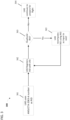
- FIG. 3 shows an example process 300 for registering a UAS, for example UAS (200), using an ANSI/CTA-2063-A serial number.
- a UAS (200) may determine the ANSI/CTA-2063-A serial number it will use as a RID at block 301.
- the UAS may determine an ANSI/CTA-2063-A serial number that is hard coded into hardware of UAV (201).
- UAS (200) attempts to register this RID with a USS (204).
- the UAS (200) may continue to prepare for flight of UAV (201) at block 304.
- the UAS (200) may use the current RID as input to compute a 64-bit Overlay Routable Cryptographic Hash Identifiers (ORCHID) hash, and then use this hashed valued to construct a HHIT at block 305. Then, UAS (200) may attempt to register with the USS (204) using this HHIT as the RID at block 302.
- ORCHID Overlay Routable Cryptographic Hash Identifiers
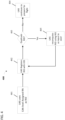
- FIG. 4 shows an example process 400 for registering a UAS, for example UAS (200), using CAA-level assigned registration number.
- a UAS (200) may determine the CAA-level assigned registration number it will use as a RID at block 401, and may attempt to register this RID with a USS (204) at block 402.
- the UAS (200) may continue to prepare for flight at block 404.
- the UAS (200) may use the current RID as input to compute a 64-bit ORCHID hash, and then use this hashed valued to construct a HHIT at block 405. Then, UAS (200) may attempt to register with the USS (204) using this HHIT as the RID at block 402.
- a HHIT RID may be used because HHIT RIDs use a 64-bit hash size, so have a 0.01% probability of collision given a population of 66 million HHIT RIDs.
- embodiments may provide a method of allowing a UAS to recover from registration failures due to duplicate Registration IDs of the ANSI/CTA-2063-A Serial Number type by attempting registration with a Registration Number created by hashing the duplicate Registration Number using the IETF HHIT algorithm, with the ANSI/CTA-2063-A Serial Number used as input.
- embodiments may provide a method of allowing a UAS to recover from registration failures due to duplicate Registration IDs of the CAA-level Assigned Registration Number type by attempting registration with a Registration Number created by hashing the duplicate Registration Number using the IETF HHIT algorithm, with the CAA-level Assigned Registration Number used as input.
- the ANSI/CTA-2063-A Serial Number, CAA-level Assigned Registration Number, and Universally Unique IDentifier may be serial numbers or registration numbers which may be assigned to or associated with any one of UAS (100), UAV (101), controller (102), UAS (200), UAV (201), controller (202), or any associated hardware or software, and may be assigned or associated by any one of a manufacturer, a local or international CAA, or any other serial number or registration number authority as desired.
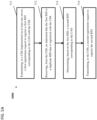
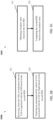
- FIGS. 5A-5C are flowcharts illustrating example processes 500A-500C for managing a UAS, for example during a UAS registration process.
- FIGS. 5A-5C may be described with the aid of FIGS. 1-4 .
- one or more blocks of processes 500A-500C may be combined in any order.
- process 500A may include transmitting, to a USS implemented on at least one server, a first registration request to register a first RID corresponding to the UAS with the USS (block 511).
- the UAS may correspond to UAS (100) and/or UAS (200), and the USS may correspond to USS (204).
- the first registration request may correspond to blocks 301-302 or blocks 401-402 discussed above, and the first RID may correspond to or include the ANSI/CTA-2063-A serial number, the CAA-level assigned registration number or any other identifier discussed above.
- process 500A may include receiving, from the USS, an indication that the first RID is a duplicate RID that is registered with the USS (block 512).
- process 500A may include determining, based on the first RID, a second RID corresponding to the UAS (block 513).
- process 500A may include transmitting, to the USS, a second registration request to register the second RID (block 514).
- the second registration request may correspond to blocks 305-302 or blocks 405-402 discussed above, and the second RID may correspond to or include the ANSI/CTA-2063-A serial number, the CAA-level assigned registration number or any other identifier discussed above.
- the first RID may include an ANSI/CTA-2063-A serial number.
- the ANSI-CTA-2063-A serial number may be coded into hardware of UAV associated with the UAS.
- the UAV may correspond to UAV (101) and/or UAV (201)
- the first RID may include a Civil Aviation Authority (CAA) assigned registration number.
- CAA Civil Aviation Authority
- process 500B illustrated in FIG. 5B may be combined with process 500A.
- blocks of process 500B may be performed after block 514 of process 500A.
- process 500B may include receiving, from the USS, an indication that the UAS is registered with the USS based on the second RID (block 521).
- process 500B may include preparing an unmanned aerial vehicle (UAV) associated with the UAS for flight based on the second RID (block 522).
- UAV unmanned aerial vehicle
- process 500C illustrated in FIG. 5C may be combined with process 500A.
- blocks of process 500C may be performed in combination with block 513 of process 500A.
- blocks of process 500C may be sub-blocks of block 513 of process 500A.
- process 500C may include obtaining a hashed value based on the first RID (block 531).
- process 500A may include computing the second RID based on the hashed value (block 532).
- the hashed value may be a 64-bit hashed value.
- the hashed value may be an Overlay Routable Cryptographic Hash Identifiers (ORCHID) hashed value.
- ORCHID Overlay Routable Cryptographic Hash Identifiers
- the second RID may include an Internet Engineering Task Force (IETF) Hierarchical Host Identity Tag (HHIT) constructed based on the hashed value.
- IETF Internet Engineering Task Force
- HHIT Hierarchical Host Identity Tag
- FIGS. 5A-5C provide only illustrations of implementations, and do not imply any limitations with regard to how different embodiments may be implemented. Many modifications to the depicted environments may be made based on design and implementation requirements.
- processes 500A-500C may include additional blocks, fewer blocks, different blocks, or differently arranged blocks than those depicted in FIGS. 5A-5C .
- any one or more of the blocks included in processes 500A-500C may be performed in place of, or in combination with, any other one or more blocks included in processes 500A-500C, in any order.
- two or more of the blocks of processes 500A-500C may be performed in parallel.
- the proposed methods may be implemented by processing circuitry (e.g., one or more processors or one or more integrated circuits).
- the one or more processors execute a program that is stored in a non-transitory computer-readable medium to perform one or more of the proposed methods.
- Systems of the present disclosure may comprise at least one processor and memory storing computer code.
- the computer code when executed by the at least one processor, may be configured to cause the at least one processor to perform the functions of the embodiments of the present disclosure.
- the UASs, UAVs, and USSs of the present disclosure may each include a respective at least one processor and memory storing computer code configured to cause the UASs, UAVs, and USSs to perform their respective functions.
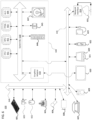
- FIG. 6 shows a computer system 600 suitable for implementing certain embodiments of the disclosed subject matter.
- FIG. 6 a computer system (600) suitable for implementing certain embodiments of the disclosed subject matter is illustrated.
- the computer software can be coded using any suitable machine code or computer language, that may be subject to assembly, compilation, linking, or like mechanisms to create code including instructions that can be executed directly, or through interpretation, micro-code execution, and the like, by computer central processing units (CPUs), Graphics Processing Units (GPUs), and the like.
- CPUs computer central processing units
- GPUs Graphics Processing Units
- the instructions can be executed on various types of computers or components thereof, including, for example, personal computers, tablet computers, servers, smartphones, gaming devices, internet of things devices, and the like.
- FIG. 6 The components shown in FIG. 6 for computer system (600) are exemplary in nature and are not intended to suggest any limitation as to the scope of use or functionality of the computer software implementing embodiments of the present disclosure. Neither should the configuration of components be interpreted as having any dependency or requirement relating to any one or combination of components illustrated in the exemplary embodiment of a computer system (600).
- Computer system (600) may include certain human interface input devices.
- a human interface input device may be responsive to input by one or more human users through, for example, tactile input (such as: keystrokes, swipes, data glove movements), audio input (such as: voice, clapping), visual input (such as: gestures), olfactory input (not depicted).
- the human interface devices can also be used to capture certain media not necessarily directly related to conscious input by a human, such as audio (such as: speech, music, ambient sound), images (such as: scanned images, photographic images obtain from a still image camera), video (such as two-dimensional video, three-dimensional video including stereoscopic video).
- Input human interface devices may include one or more of (only one of each depicted): keyboard (601), mouse (602), trackpad (603), touch-screen (610), joystick (605), microphone (606), scanner (607), and camera (608).
- Computer system (600) may also include certain human interface output devices.
- Such human interface output devices may be stimulating the senses of one or more human users through, for example, tactile output, sound, light, and smell/taste.
- Such human interface output devices may include tactile output devices (for example tactile feedback by the touch-screen (610), data-glove, or joystick (605), but there can also be tactile feedback devices that do not serve as input devices.
- such devices may be audio output devices (such as: speakers (609), headphones (not depicted)), visual output devices (such as screens 610 to include CRT screens, LCD screens, plasma screens, OLED screens, each with or without touch-screen input capability, each with or without tactile feedback capability-some of which may be capable to output two dimensional visual output or more than three dimensional output through means such as stereographic output; virtual-reality glasses (not depicted), holographic displays and smoke tanks (not depicted)), and printers (not depicted).
- audio output devices such as: speakers (609), headphones (not depicted)
- visual output devices such as screens 610 to include CRT screens, LCD screens, plasma screens, OLED screens, each with or without touch-screen input capability, each with or without tactile feedback capability-some of which may be capable to output two dimensional visual output or more than three dimensional output through means such as stereographic output; virtual-reality glasses (not depicted), holographic displays and smoke tanks (not depicted)), and printers (not depicted).
- Computer system (600) can also include human accessible storage devices and their associated media such as optical media including CD/DVD ROM/RW (620) with CD/DVD or the like media (621), thumb-drive (622), removable hard drive or solid state drive (623), legacy magnetic media such as tape and floppy disc (not depicted), specialized ROM/ASIC/PLD based devices such as security dongles (not depicted), and the like.
- optical media including CD/DVD ROM/RW (620) with CD/DVD or the like media (621), thumb-drive (622), removable hard drive or solid state drive (623), legacy magnetic media such as tape and floppy disc (not depicted), specialized ROM/ASIC/PLD based devices such as security dongles (not depicted), and the like.
- Computer system (600) can also include interface to one or more communication networks.
- Networks can for example be wireless, wireline, optical.
- Networks can further be local, wide-area, metropolitan, vehicular and industrial, real-time, delay-tolerant, and so on.
- Examples of networks include local area networks such as Ethernet, wireless LANs, cellular networks to include GSM, 3G, 4G, 5G, LTE and the like, TV wireline or wireless wide area digital networks to include cable TV, satellite TV, and terrestrial broadcast TV, vehicular and industrial to include CANBus, and so forth.
- Certain networks commonly require external network interface adapters that attached to certain general purpose data ports or peripheral buses (649) (such as, for example USB ports of the computer system (600); others are commonly integrated into the core of the computer system (600) by attachment to a system bus as described below (for example Ethernet interface into a PC computer system or cellular network interface into a smartphone computer system).
- computer system (600) can communicate with other entities.
- Such communication can be uni-directional, receive only (for example, broadcast TV), uni-directional send-only (for example CANbus to certain CANbus devices), or bi-directional, for example to other computer systems using local or wide area digital networks.
- Such communication can include communication to a cloud computing environment (655).
- Certain protocols and protocol stacks can be used on each of those networks and network interfaces as described above.
- Aforementioned human interface devices, human-accessible storage devices, and network interfaces (654) can be attached to a core (640) of the computer system (600).
- the core (640) can include one or more Central Processing Units (CPU) (641), Graphics Processing Units (GPU) (642), specialized programmable processing units in the form of Field Programmable Gate Areas (FPGA) (643), hardware accelerators (644) for certain tasks, and so forth. These devices, along with Read-only memory (ROM) (645), Random-access memory (RAM) (646), internal mass storage such as internal non-user accessible hard drives, SSDs, and the like, may be connected through a system bus (648). In some computer systems, the system bus (648) can be accessible in the form of one or more physical plugs to enable extensions by additional CPUs, GPU, and the like.
- the peripheral devices can be attached either directly to the core's system bus (648), or through a peripheral bus (649). Architectures for a peripheral bus include PCI, USB, and the like.
- a graphics adapter (650) may be included in the core (640).
- CPUs (641), GPUs (642), FPGAs (643), and accelerators (644) can execute certain instructions that, in combination, can make up the aforementioned computer code. That computer code can be stored in ROM (645) or RAM (646). Transitional data can be also be stored in RAM (646), whereas permanent data can be stored for example, in the mass storage (647) that is internal. Fast storage and retrieve to any of the memory devices can be enabled through the use of cache memory, that can be closely associated with one or more CPU (641), GPU (642), mass storage (647), ROM (645), RAM (646), and the like.
- the computer readable media can have computer code thereon for performing various computer-implemented operations.
- the media and computer code can be those specially designed and constructed for the purposes of the present disclosure, or they can be of the kind well known and available to those having skill in the computer software arts.
- the computer system (600) having architecture , and specifically the core (640) can provide functionality as a result of processor(s) (including CPUs, GPUs, FPGA, accelerators, and the like) executing software embodied in one or more tangible, computer-readable media.
- processor(s) including CPUs, GPUs, FPGA, accelerators, and the like
- Such computer-readable media can be media associated with user-accessible mass storage as introduced above, as well as certain storage of the core (640) that are of non-transitory nature, such as core-internal mass storage (647) or ROM (645).
- the software implementing various embodiments of the present disclosure can be stored in such devices and executed by core (640).
- a computer-readable medium can include one or more memory devices or chips, according to particular needs.
- the software can cause the core (640) and specifically the processors therein (including CPU, GPU, FPGA, and the like) to execute particular processes or particular parts of particular processes described herein, including defining data structures stored in RAM (646) and modifying such data structures according to the processes defined by the software.
- the computer system can provide functionality as a result of logic hardwired or otherwise embodied in a circuit (for example: accelerator (644)), which can operate in place of or together with software to execute particular processes or particular parts of particular processes described herein.
- Reference to software can encompass logic, and vice versa, where appropriate.
- Reference to a computer-readable media can encompass a circuit (such as an integrated circuit (IC)) storing software for execution, a circuit embodying logic for execution, or both, where appropriate.
- the present disclosure encompasses any suitable combination of hardware and software.
Landscapes
- Engineering & Computer Science (AREA)
- Computer Networks & Wireless Communication (AREA)
- Signal Processing (AREA)
- Aviation & Aerospace Engineering (AREA)
- Physics & Mathematics (AREA)
- General Physics & Mathematics (AREA)
- Computer Security & Cryptography (AREA)
- Astronomy & Astrophysics (AREA)
- Mobile Radio Communication Systems (AREA)
- Traffic Control Systems (AREA)
Claims (11)
- Procédé effectué par au moins un processeur inclus dans un système aérien sans équipage à bord, UAS, le procédé comprenant :
la transmission (511), à un fournisseur de services d'UAS, USS, mis en oeuvre sur au moins un serveur, d'une première requête d'enregistrement destinée à enregistrer une première identification à distance, RID, correspondant à l'UAS auprès de l'USS ; et caractérisé en ce qu'il comprend en outre :la réception (512), en provenance de l'USS, d'une indication selon laquelle la première RID est une RID dupliquée qui est enregistrée auprès de l'USS ;la détermination (513), sur la base de la première RID, d'une seconde RID correspondant à l'UAS ; etla transmission (514), à l'USS, d'une seconde requête d'enregistrement destinée à enregistrer la seconde RID. - Procédé selon la revendication 1, comprenant en outre :la réception (521), à partir de l'USS, d'une indication selon laquelle l'UAS est enregistré auprès de l'USS sur la base de la seconde RID ; etla préparation (522) d'un véhicule aérien sans équipage à bord, UAV, associé à l'UAS pour un vol sur la base de la seconde RID.
- Procédé selon la revendication 1, la première RIO comprenant un numéro de série -2063-A de l'American National Standards Institute/Consumer Technology Association, ANSI/CTA.
- Procédé selon la revendication 3, le numéro de série ANSI-CTA-2063-A étant codé en matériel d'un véhicule aérien sans équipage à bord, UAV, associé à l'UAS.
- Procédé selon la revendication 1, la première RIO comprenant un numéro d'enregistrement attribué par l'autorité d'aviation civile, CAA.
- Procédé selon la revendication 1, la détermination comprenant en outre:l'obtention (531) d'une valeur hachée sur la base de la première RID; etle calcul (532) de la seconde RID sur la base de la valeur hachée.
- Procédé selon la revendication 6, la valeur hachée étant une valeur hachée de 64 bits.
- Procédé selon la revendication 6, la valeur hachée étant une valeur d'identifiant de hachage cryptographique à recouvrement d'acheminement, ORCHID.
- Procédé selon la revendication 6, la seconde RID comprenant une étiquette d'identité d'hôte hiérarchique, HHIT, d'un groupe de travail IETF, construite sur la base de la valeur hachée.
- Dispositif inclus dans un système aérien sans équipage à bord, UAS, le dispositif comprenant :au moins une mémoire configurée pour stocker un code de programme ; etau moins un processeur configuré pour lire le code de programme et pour fonctionner comme instruit par le code de programme afin d'effectuer le procédé selon l'une quelconque des revendications 1 à 9.
- Support non transitoire lisible par ordinateur stockant des instructions, les instructions comprenant : une ou plusieurs instructions qui, lorsqu'elles sont exécutées par au moins un processeur d'un dispositif inclus dans un système aérien sans équipage à bord, UAS, amènent ledit au moins un processeur à effectuer le procédé selon l'une quelconque des revendications 1 à 9.
Applications Claiming Priority (3)
| Application Number | Priority Date | Filing Date | Title |
|---|---|---|---|
| US202063121834P | 2020-12-04 | 2020-12-04 | |
| US17/489,016 US11711136B2 (en) | 2020-12-04 | 2021-09-29 | Unmanned aerial system communication duplicate registration ID detection and recovery |
| PCT/US2021/053094 WO2022119628A1 (fr) | 2020-12-04 | 2021-10-01 | Détection et récupération d'id d'enregistrement dupliqué de communication de système aérien sans pilote |
Publications (3)
| Publication Number | Publication Date |
|---|---|
| EP4100323A1 EP4100323A1 (fr) | 2022-12-14 |
| EP4100323A4 EP4100323A4 (fr) | 2023-11-01 |
| EP4100323B1 true EP4100323B1 (fr) | 2024-12-04 |
Family
ID=81848455
Family Applications (1)
| Application Number | Title | Priority Date | Filing Date |
|---|---|---|---|
| EP21901210.1A Active EP4100323B1 (fr) | 2020-12-04 | 2021-10-01 | Détection et récupération d'id d'enregistrement dupliqué de communication de système aérien sans pilote |
Country Status (6)
| Country | Link |
|---|---|
| US (1) | US11711136B2 (fr) |
| EP (1) | EP4100323B1 (fr) |
| JP (1) | JP7520993B2 (fr) |
| KR (1) | KR102706765B1 (fr) |
| CN (1) | CN115605398B (fr) |
| WO (1) | WO2022119628A1 (fr) |
Families Citing this family (1)
| Publication number | Priority date | Publication date | Assignee | Title |
|---|---|---|---|---|
| KR102765500B1 (ko) * | 2024-04-04 | 2025-02-11 | 임동현 | 무인항공기 전용 WiFi 무선통신장치의 원격 재부팅장치 및 그 제어방법 |
Family Cites Families (12)
| Publication number | Priority date | Publication date | Assignee | Title |
|---|---|---|---|---|
| WO2016164892A1 (fr) * | 2015-04-10 | 2016-10-13 | The Board Of Regents Of The Nevada System Of Higher Education On Behalf Of The University Of Nevada, Las Vegas | Procédés et systèmes pour gestion de trafic de système d'aéronef sans pilote (uas) |
| WO2019032162A2 (fr) * | 2017-05-13 | 2019-02-14 | Airspace Systems Inc. | Système de lecteur et de balise sécurisé pour identification de pilote et de drone à distance |
| US10733894B1 (en) * | 2015-08-24 | 2020-08-04 | uAvionix Corporation | Direct-broadcast remote identification (RID) device for unmanned aircraft systems (UAS) |
| HRP20231656T1 (hr) * | 2016-04-14 | 2024-03-15 | Rhombus Systems Group, Inc. | Sustav za provjeru cjelovitosti bespilotnih letjelica |
| KR20190113986A (ko) * | 2017-03-21 | 2019-10-08 | 에스지 디제이아이 테크놀러지 코., 엘티디 | 모니터링 방법 및 시스템 |
| US20180350246A1 (en) * | 2017-06-05 | 2018-12-06 | X Development Llc | Methods and Systems for Sharing an Airspace Wide Unmanned Aircraft System Database Across a Plurality of Service Suppliers |
| EP3663886B1 (fr) * | 2017-08-03 | 2025-10-01 | Beijing Xiaomi Mobile Software Co., Ltd. | Procédé et dispositif de commande de véhicule aérien sans pilote, véhicule aérien sans pilote et dispositif de commande à distance |
| AU2018317753A1 (en) * | 2017-08-15 | 2020-03-19 | Flarm Technology Ag | Remote aircraft identification for UAV |
| JP6832014B2 (ja) * | 2017-12-05 | 2021-02-24 | 株式会社A.L.I.Technologies | 飛行体の識別方法及び識別システム |
| US11867529B2 (en) * | 2018-06-01 | 2024-01-09 | Rumfert, Llc | Altitude initialization and monitoring system and method for remote identification systems (remote Id) monitoring and tracking unmanned aircraft systems (UAS) in the national airspace system (NAS) |
| JP7269356B2 (ja) | 2019-02-07 | 2023-05-08 | アップル インコーポレイテッド | 3gppシステムにおける識別及び動作のためのuasサービスの有効化 |
| US11172019B1 (en) * | 2020-08-28 | 2021-11-09 | Tencent America LLC | Systems and methods for unmanned aerial system communication |
-
2021
- 2021-09-29 US US17/489,016 patent/US11711136B2/en active Active
- 2021-10-01 WO PCT/US2021/053094 patent/WO2022119628A1/fr not_active Ceased
- 2021-10-01 EP EP21901210.1A patent/EP4100323B1/fr active Active
- 2021-10-01 CN CN202180022069.2A patent/CN115605398B/zh active Active
- 2021-10-01 KR KR1020227038957A patent/KR102706765B1/ko active Active
- 2021-10-01 JP JP2022555768A patent/JP7520993B2/ja active Active
Also Published As
| Publication number | Publication date |
|---|---|
| CN115605398A (zh) | 2023-01-13 |
| JP2023518237A (ja) | 2023-04-28 |
| US11711136B2 (en) | 2023-07-25 |
| KR20220165758A (ko) | 2022-12-15 |
| EP4100323A1 (fr) | 2022-12-14 |
| CN115605398B (zh) | 2025-07-22 |
| WO2022119628A1 (fr) | 2022-06-09 |
| US20220182131A1 (en) | 2022-06-09 |
| JP7520993B2 (ja) | 2024-07-23 |
| KR102706765B1 (ko) | 2024-09-19 |
| EP4100323A4 (fr) | 2023-11-01 |
Similar Documents
| Publication | Publication Date | Title |
|---|---|---|
| JP7317234B2 (ja) | 無人航空システム通信のためのシステムおよび方法 | |
| EP4126668B1 (fr) | Procédé et appareil de surveillance de connexion d'uav en temps réel et d'établissement de rapport d'emplacement | |
| US12107663B2 (en) | Unmanned aerial system communication | |
| EP4028325A1 (fr) | Communication de système aérien sans pilote | |
| US20210304622A1 (en) | Systems and methods for unmanned aerial system communication | |
| EP4100323B1 (fr) | Détection et récupération d'id d'enregistrement dupliqué de communication de système aérien sans pilote | |
| US20210300551A1 (en) | Systems and methods for unmanned aerial system communication | |
| US12499774B2 (en) | Method and apparatus for UAV and UAV controller group membership update | |
| HK40079747A (en) | Communication method performed by unmanned aerial system and apparatus | |
| HK40080073A (zh) | 用於uav和uav控制器组成员更新的方法及装置 |
Legal Events
| Date | Code | Title | Description |
|---|---|---|---|
| STAA | Information on the status of an ep patent application or granted ep patent |
Free format text: STATUS: THE INTERNATIONAL PUBLICATION HAS BEEN MADE |
|
| PUAI | Public reference made under article 153(3) epc to a published international application that has entered the european phase |
Free format text: ORIGINAL CODE: 0009012 |
|
| STAA | Information on the status of an ep patent application or granted ep patent |
Free format text: STATUS: THE APPLICATION HAS BEEN PUBLISHED |
|
| AK | Designated contracting states |
Kind code of ref document: A1 Designated state(s): AL AT BE BG CH CY CZ DE DK EE ES FI FR GB GR HR HU IE IS IT LI LT LU LV MC MK MT NL NO PL PT RO RS SE SI SK SM TR |
|
| STAA | Information on the status of an ep patent application or granted ep patent |
Free format text: STATUS: REQUEST FOR EXAMINATION WAS MADE |
|
| 17P | Request for examination filed |
Effective date: 20221209 |
|
| RBV | Designated contracting states (corrected) |
Designated state(s): AL AT BE BG CH CY CZ DE DK EE ES FI FR GB GR HR HU IE IS IT LI LT LU LV MC MK MT NL NO PL PT RO RS SE SI SK SM TR |
|
| A4 | Supplementary search report drawn up and despatched |
Effective date: 20230929 |
|
| RIC1 | Information provided on ipc code assigned before grant |
Ipc: H04W 4/44 20180101ALI20230925BHEP Ipc: G08G 5/00 20060101ALI20230925BHEP Ipc: B64C 39/02 20060101ALI20230925BHEP Ipc: B64C 39/00 20060101AFI20230925BHEP |
|
| DAV | Request for validation of the european patent (deleted) | ||
| DAX | Request for extension of the european patent (deleted) | ||
| REG | Reference to a national code |
Ref country code: DE Free format text: PREVIOUS MAIN CLASS: B64C0039000000 Ipc: B64U0101200000 Ref legal event code: R079 Ref document number: 602021023072 Country of ref document: DE |
|
| RIC1 | Information provided on ipc code assigned before grant |
Ipc: H04W 4/44 20180101ALI20240415BHEP Ipc: G08G 5/00 20060101ALI20240415BHEP Ipc: B64U 101/20 20230101AFI20240415BHEP |
|
| GRAP | Despatch of communication of intention to grant a patent |
Free format text: ORIGINAL CODE: EPIDOSNIGR1 |
|
| STAA | Information on the status of an ep patent application or granted ep patent |
Free format text: STATUS: GRANT OF PATENT IS INTENDED |
|
| INTG | Intention to grant announced |
Effective date: 20240709 |
|
| GRAS | Grant fee paid |
Free format text: ORIGINAL CODE: EPIDOSNIGR3 |
|
| GRAA | (expected) grant |
Free format text: ORIGINAL CODE: 0009210 |
|
| STAA | Information on the status of an ep patent application or granted ep patent |
Free format text: STATUS: THE PATENT HAS BEEN GRANTED |
|
| AK | Designated contracting states |
Kind code of ref document: B1 Designated state(s): AL AT BE BG CH CY CZ DE DK EE ES FI FR GB GR HR HU IE IS IT LI LT LU LV MC MK MT NL NO PL PT RO RS SE SI SK SM TR |
|
| REG | Reference to a national code |
Ref country code: CH Ref legal event code: EP |
|
| REG | Reference to a national code |
Ref country code: DE Ref legal event code: R096 Ref document number: 602021023072 Country of ref document: DE |
|
| REG | Reference to a national code |
Ref country code: IE Ref legal event code: FG4D |
|
| REG | Reference to a national code |
Ref country code: NL Ref legal event code: FP |
|
| REG | Reference to a national code |
Ref country code: LT Ref legal event code: MG9D |
|
| PG25 | Lapsed in a contracting state [announced via postgrant information from national office to epo] |
Ref country code: HR Free format text: LAPSE BECAUSE OF FAILURE TO SUBMIT A TRANSLATION OF THE DESCRIPTION OR TO PAY THE FEE WITHIN THE PRESCRIBED TIME-LIMIT Effective date: 20241204 |
|
| PG25 | Lapsed in a contracting state [announced via postgrant information from national office to epo] |
Ref country code: FI Free format text: LAPSE BECAUSE OF FAILURE TO SUBMIT A TRANSLATION OF THE DESCRIPTION OR TO PAY THE FEE WITHIN THE PRESCRIBED TIME-LIMIT Effective date: 20241204 |
|
| PG25 | Lapsed in a contracting state [announced via postgrant information from national office to epo] |
Ref country code: BG Free format text: LAPSE BECAUSE OF FAILURE TO SUBMIT A TRANSLATION OF THE DESCRIPTION OR TO PAY THE FEE WITHIN THE PRESCRIBED TIME-LIMIT Effective date: 20241204 |
|
| PG25 | Lapsed in a contracting state [announced via postgrant information from national office to epo] |
Ref country code: ES Free format text: LAPSE BECAUSE OF FAILURE TO SUBMIT A TRANSLATION OF THE DESCRIPTION OR TO PAY THE FEE WITHIN THE PRESCRIBED TIME-LIMIT Effective date: 20241204 |
|
| PG25 | Lapsed in a contracting state [announced via postgrant information from national office to epo] |
Ref country code: NO Free format text: LAPSE BECAUSE OF FAILURE TO SUBMIT A TRANSLATION OF THE DESCRIPTION OR TO PAY THE FEE WITHIN THE PRESCRIBED TIME-LIMIT Effective date: 20250304 |
|
| PG25 | Lapsed in a contracting state [announced via postgrant information from national office to epo] |
Ref country code: GR Free format text: LAPSE BECAUSE OF FAILURE TO SUBMIT A TRANSLATION OF THE DESCRIPTION OR TO PAY THE FEE WITHIN THE PRESCRIBED TIME-LIMIT Effective date: 20250305 Ref country code: LV Free format text: LAPSE BECAUSE OF FAILURE TO SUBMIT A TRANSLATION OF THE DESCRIPTION OR TO PAY THE FEE WITHIN THE PRESCRIBED TIME-LIMIT Effective date: 20241204 |
|
| PG25 | Lapsed in a contracting state [announced via postgrant information from national office to epo] |
Ref country code: RS Free format text: LAPSE BECAUSE OF FAILURE TO SUBMIT A TRANSLATION OF THE DESCRIPTION OR TO PAY THE FEE WITHIN THE PRESCRIBED TIME-LIMIT Effective date: 20250304 |
|
| REG | Reference to a national code |
Ref country code: AT Ref legal event code: MK05 Ref document number: 1747946 Country of ref document: AT Kind code of ref document: T Effective date: 20241204 |
|
| PG25 | Lapsed in a contracting state [announced via postgrant information from national office to epo] |
Ref country code: SM Free format text: LAPSE BECAUSE OF FAILURE TO SUBMIT A TRANSLATION OF THE DESCRIPTION OR TO PAY THE FEE WITHIN THE PRESCRIBED TIME-LIMIT Effective date: 20241204 |
|
| PG25 | Lapsed in a contracting state [announced via postgrant information from national office to epo] |
Ref country code: PL Free format text: LAPSE BECAUSE OF FAILURE TO SUBMIT A TRANSLATION OF THE DESCRIPTION OR TO PAY THE FEE WITHIN THE PRESCRIBED TIME-LIMIT Effective date: 20241204 |
|
| PG25 | Lapsed in a contracting state [announced via postgrant information from national office to epo] |
Ref country code: IS Free format text: LAPSE BECAUSE OF FAILURE TO SUBMIT A TRANSLATION OF THE DESCRIPTION OR TO PAY THE FEE WITHIN THE PRESCRIBED TIME-LIMIT Effective date: 20250404 |
|
| PG25 | Lapsed in a contracting state [announced via postgrant information from national office to epo] |
Ref country code: PT Free format text: LAPSE BECAUSE OF FAILURE TO SUBMIT A TRANSLATION OF THE DESCRIPTION OR TO PAY THE FEE WITHIN THE PRESCRIBED TIME-LIMIT Effective date: 20250404 |
|
| PG25 | Lapsed in a contracting state [announced via postgrant information from national office to epo] |
Ref country code: EE Free format text: LAPSE BECAUSE OF FAILURE TO SUBMIT A TRANSLATION OF THE DESCRIPTION OR TO PAY THE FEE WITHIN THE PRESCRIBED TIME-LIMIT Effective date: 20241204 |
|
| PG25 | Lapsed in a contracting state [announced via postgrant information from national office to epo] |
Ref country code: RO Free format text: LAPSE BECAUSE OF FAILURE TO SUBMIT A TRANSLATION OF THE DESCRIPTION OR TO PAY THE FEE WITHIN THE PRESCRIBED TIME-LIMIT Effective date: 20241204 Ref country code: AT Free format text: LAPSE BECAUSE OF FAILURE TO SUBMIT A TRANSLATION OF THE DESCRIPTION OR TO PAY THE FEE WITHIN THE PRESCRIBED TIME-LIMIT Effective date: 20241204 |
|
| PG25 | Lapsed in a contracting state [announced via postgrant information from national office to epo] |
Ref country code: SK Free format text: LAPSE BECAUSE OF FAILURE TO SUBMIT A TRANSLATION OF THE DESCRIPTION OR TO PAY THE FEE WITHIN THE PRESCRIBED TIME-LIMIT Effective date: 20241204 |
|
| PG25 | Lapsed in a contracting state [announced via postgrant information from national office to epo] |
Ref country code: CZ Free format text: LAPSE BECAUSE OF FAILURE TO SUBMIT A TRANSLATION OF THE DESCRIPTION OR TO PAY THE FEE WITHIN THE PRESCRIBED TIME-LIMIT Effective date: 20241204 |
|
| PG25 | Lapsed in a contracting state [announced via postgrant information from national office to epo] |
Ref country code: IT Free format text: LAPSE BECAUSE OF FAILURE TO SUBMIT A TRANSLATION OF THE DESCRIPTION OR TO PAY THE FEE WITHIN THE PRESCRIBED TIME-LIMIT Effective date: 20241204 |
|
| REG | Reference to a national code |
Ref country code: DE Ref legal event code: R097 Ref document number: 602021023072 Country of ref document: DE |
|
| PG25 | Lapsed in a contracting state [announced via postgrant information from national office to epo] |
Ref country code: SE Free format text: LAPSE BECAUSE OF FAILURE TO SUBMIT A TRANSLATION OF THE DESCRIPTION OR TO PAY THE FEE WITHIN THE PRESCRIBED TIME-LIMIT Effective date: 20241204 |
|
| PG25 | Lapsed in a contracting state [announced via postgrant information from national office to epo] |
Ref country code: DK Free format text: LAPSE BECAUSE OF FAILURE TO SUBMIT A TRANSLATION OF THE DESCRIPTION OR TO PAY THE FEE WITHIN THE PRESCRIBED TIME-LIMIT Effective date: 20241204 |
|
| PLBE | No opposition filed within time limit |
Free format text: ORIGINAL CODE: 0009261 |
|
| STAA | Information on the status of an ep patent application or granted ep patent |
Free format text: STATUS: NO OPPOSITION FILED WITHIN TIME LIMIT |
|
| 26N | No opposition filed |
Effective date: 20250905 |
|
| PGFP | Annual fee paid to national office [announced via postgrant information from national office to epo] |
Ref country code: NL Payment date: 20251023 Year of fee payment: 5 |