EP4100162B1 - Functionalized blood sampling device and method for peth measurement - Google Patents
Functionalized blood sampling device and method for peth measurement Download PDFInfo
- Publication number
- EP4100162B1 EP4100162B1 EP21745253.1A EP21745253A EP4100162B1 EP 4100162 B1 EP4100162 B1 EP 4100162B1 EP 21745253 A EP21745253 A EP 21745253A EP 4100162 B1 EP4100162 B1 EP 4100162B1
- Authority
- EP
- European Patent Office
- Prior art keywords
- peth
- test tube
- pld
- inhibitor
- blood
- Prior art date
- Legal status (The legal status is an assumption and is not a legal conclusion. Google has not performed a legal analysis and makes no representation as to the accuracy of the status listed.)
- Active
Links
Images
Classifications
-
- B—PERFORMING OPERATIONS; TRANSPORTING
- B01—PHYSICAL OR CHEMICAL PROCESSES OR APPARATUS IN GENERAL
- B01L—CHEMICAL OR PHYSICAL LABORATORY APPARATUS FOR GENERAL USE
- B01L3/00—Containers or dishes for laboratory use, e.g. laboratory glassware; Droppers
- B01L3/50—Containers for the purpose of retaining a material to be analysed, e.g. test tubes
- B01L3/508—Containers for the purpose of retaining a material to be analysed, e.g. test tubes rigid containers not provided for above
- B01L3/5082—Test tubes per se
-
- G—PHYSICS
- G01—MEASURING; TESTING
- G01N—INVESTIGATING OR ANALYSING MATERIALS BY DETERMINING THEIR CHEMICAL OR PHYSICAL PROPERTIES
- G01N1/00—Sampling; Preparing specimens for investigation
- G01N1/28—Preparing specimens for investigation including physical details of (bio-)chemical methods covered elsewhere, e.g. G01N33/50, C12Q
- G01N1/38—Diluting, dispersing or mixing samples
-
- B—PERFORMING OPERATIONS; TRANSPORTING
- B01—PHYSICAL OR CHEMICAL PROCESSES OR APPARATUS IN GENERAL
- B01L—CHEMICAL OR PHYSICAL LABORATORY APPARATUS FOR GENERAL USE
- B01L3/00—Containers or dishes for laboratory use, e.g. laboratory glassware; Droppers
- B01L3/50—Containers for the purpose of retaining a material to be analysed, e.g. test tubes
- B01L3/508—Containers for the purpose of retaining a material to be analysed, e.g. test tubes rigid containers not provided for above
- B01L3/5082—Test tubes per se
- B01L3/50825—Closing or opening means, corks, bungs
-
- C—CHEMISTRY; METALLURGY
- C12—BIOCHEMISTRY; BEER; SPIRITS; WINE; VINEGAR; MICROBIOLOGY; ENZYMOLOGY; MUTATION OR GENETIC ENGINEERING
- C12Y—ENZYMES
- C12Y301/00—Hydrolases acting on ester bonds (3.1)
- C12Y301/01—Carboxylic ester hydrolases (3.1.1)
-
- G—PHYSICS
- G01—MEASURING; TESTING
- G01N—INVESTIGATING OR ANALYSING MATERIALS BY DETERMINING THEIR CHEMICAL OR PHYSICAL PROPERTIES
- G01N33/00—Investigating or analysing materials by specific methods not covered by groups G01N1/00 - G01N31/00
- G01N33/48—Biological material, e.g. blood, urine; Haemocytometers
- G01N33/50—Chemical analysis of biological material, e.g. blood, urine; Testing involving biospecific ligand binding methods; Immunological testing
- G01N33/98—Chemical analysis of biological material, e.g. blood, urine; Testing involving biospecific ligand binding methods; Immunological testing involving alcohol, e.g. ethanol in breath
-
- B—PERFORMING OPERATIONS; TRANSPORTING
- B01—PHYSICAL OR CHEMICAL PROCESSES OR APPARATUS IN GENERAL
- B01L—CHEMICAL OR PHYSICAL LABORATORY APPARATUS FOR GENERAL USE
- B01L2200/00—Solutions for specific problems relating to chemical or physical laboratory apparatus
- B01L2200/16—Reagents, handling or storing thereof
-
- B—PERFORMING OPERATIONS; TRANSPORTING
- B01—PHYSICAL OR CHEMICAL PROCESSES OR APPARATUS IN GENERAL
- B01L—CHEMICAL OR PHYSICAL LABORATORY APPARATUS FOR GENERAL USE
- B01L2300/00—Additional constructional details
- B01L2300/08—Geometry, shape and general structure
- B01L2300/0809—Geometry, shape and general structure rectangular shaped
- B01L2300/0825—Test strips
-
- G—PHYSICS
- G01—MEASURING; TESTING
- G01N—INVESTIGATING OR ANALYSING MATERIALS BY DETERMINING THEIR CHEMICAL OR PHYSICAL PROPERTIES
- G01N1/00—Sampling; Preparing specimens for investigation
- G01N1/28—Preparing specimens for investigation including physical details of (bio-)chemical methods covered elsewhere, e.g. G01N33/50, C12Q
- G01N1/38—Diluting, dispersing or mixing samples
- G01N2001/386—Other diluting or mixing processes
Definitions
- the present invention relates to improvements in sampling of blood to determine the alcohol biomarker phosphatidylethanol (PEth). More specifically, the invention relates to a device and method for collection and subsequent testing for PEth of a blood sample.
- PEth alcohol biomarker phosphatidylethanol
- Phosphatidylethanol is a substance that forms from cell membrane phospholipids during exposure to ethanol (i.e. alcohol drinking).
- Phospholipase D Phospholipase D
- PA phosphatidic
- PCs phosphatidylcholines
- Sampled blood is an active biofluid that retains many biological activities after sampling.
- One such activity is the enzyme Phospholipase D (PLD), which is involved in regulation of the lipid content of the cell membrane.
- PLD has the unique feature to have activity also after cooling and freezing. Accordingly, PEth can be formed in vitro post sampling if ethanol is present in the blood at the time of sampling, which is not uncommon in real practice.
- a Schröck et al in Alcohol, 2018, Vol. 73, pages 1-7 discloses the development of standardized tests for measuring individual formation of PEth following alcohol consumption.
- the authors were aware of the problem with post-sampling formation of PEth and introduced the well-known PLD inhibitors halopemide and FIPI (5-fluoro-2-indolyl-deschlorohalopemide) to improve the quality of the PEth analysis in order to prevent in vitro formation of PEth in alcohol positive blood samples after blood sampling.
- halopemide and FIPI were considered unsuitable for clinical use due to low potency and high costs. For this reason, the problem with post-sampling PLD needs to be solved before feasible routine assays of PEth can be established.
- CAMPBELL D. M. ET AL "Colorimetric determination of glucose in 20 I. of blood",JOURNAL OF CLINICAL PATHOLOGY, vol. 16, no. 2, 1 March 1963 (1963-03-01), pages 173-174 describes a method for reducing ultra micro copper by using a method wherein sodium tungstate is used with copper sulphate to precipitate proteins from blood samples.
- the present invention therefore meets need of finding better strategies to develop a reliable, economic and convenient assay of PEth.
- An object of the present invention is thus to provide a simple solution to a reliable, economical and convenient assay of PEth that avoids the problems with post-sampling formation of PEth.
- the invention is set out in the appended claims.
- a device configured for collection and subsequent testing for phosphatidylethanol (PEth) of a blood sample of less than 10 ml.
- the device is a test tube and includes at least one inhibitor of the enzyme phospholipase D (PLD) selected from at least one of a salt comprising a vanadium oxyanion and a salt comprising a tungsten oxyanion.
- PLD phospholipase D
- the inhibitor of the enzyme phospholipase D may be selected from at least one of NaVOs (sodium metavanadate) and Na 2 WO 4 (sodium tungstate).
- the at least one salt of inhibitor of the enzyme phospholipase D may have a mass of less than 10 mg.
- the at least one salt is present in amount that admits concentration of less than 1 mM in the blood sample.
- the PLD inhibitor may be present in a gel attached to the walls of the test tube.
- the walls of the test tube may be impregnated with the PLD inhibitor.
- the walls of the test tube may have a coating, e.g. of less than 100 micrometers, comprising the at least one inhibitor of the enzyme phospholipase D.
- the inner coating may be sprayed on the on the bottom and/or on the lid of the test tube.
- a method for preparing a sample for analysis of phosphatidylethanol (PEth) the method comprising adding a blood sample from a patient with a volume of less than 10 ml to a test tube (102), wherein the test tube includes at least one inhibitor of the enzyme phospholipase D (PLD) selected from at least one of a salt comprising a vanadium oxyanion and a salt comprising a tungsten oxyanion; contacting the blood sample with the PLD inhibotor; and admitting inhibition of the PLD in the blood sample with the at least one PLD inhibitor so formation of PEth is blocked.
- PLD phospholipase D
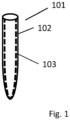
- Fig.1 shows a test tube device according to the invention.
- Fig. 1 shows a device 101 according to the present invention, comprising a blood collection test tube 102 that contains an PLD inhibitor enzyme.
- the blood collection test tube can be a conventional blood test tube made of glass or suitable polymers, such as Vacutainer ® , specially labelled for PEth analysis. Similar to the blood collection test tubes with added components such as EDTA, heparin, etc. that are already known in the art, the test tube comprises an immobilized PLD inhibitor, as an added component.
- the PLD inhibitor enzyme may be present in a gel attached to the walls of the test tube.
- Other means of immobilizing the PLD inhibitor enzyme are also contemplated.
- the salts of a transition metal belonging to column 5 or 6 of the periodic table are effective inhibitors of the enzyme phospholipase D.
- the PLD inhibitor is selected from at least one of a salt comprising a vanadium oxyanion and a salt comprising a tungsten oxyanion, preferably NaVOs (sodium metavanadate) or Na 2 WO 4 (sodium tungstate).
- agents that may also be used as inhibitors of the enzyme D may include certain anti-cancer drugs, such as 5-fluoro-2-indolyldes-chlorohalopemide (FIPI), or agents with certain ionic properties, such as phosphate analogues.
- FIPI 5-fluoro-2-indolyldes-chlorohalopemide
- agents with certain ionic properties such as phosphate analogues.
- the walls of the test tube may have been impregnated with a PLD inhibitor, or the walls of the test tube may have a coating comprising the PLD inhibitor.
- the PLD inhibiting agents can be included in thin film coatings of the container (see for example US 6428527 ) or added by other conventional ways to supply blood test tubes with additives.
- An exemplary method of applying a coating of at least one inhibitor of the enzyme phospholipase D to a test tube comprises the steps of stabilizing the test in a substantially vertical position; inserting a spray nozzle inside the test tube, the spray nozzle being in fluid connection to a container holding a solution comprising at least one inhibitor of the enzyme phospholipase D; spraying the solution comprising at least one inhibitor of the enzyme phospholipase D inside the test tube; and allowing the solution comprising at least one inhibitor of the enzyme phospholipase D to dry.
- test tube may further include other conventional additives such as anticoagulants.
- test tube is used for blood collection. Approximately 5 -10 ml of blood is added to the test tube. The test tube is then sealed/closed with a test tube cap and the now sealed test tub is gently rocked for approximately 5 minutes. Thereafter, the sealed test tube containing the blood sample is stored at either room temperature or +4°C pending further analysis.
- the blood specimens used for the present investigation were deidentified surplus volumes of venous whole blood selected among those sent to the Department of Clinical Pharmacology, Karolinska University Laboratory (Stockholm) for routine analysis of PEth as an alcohol biomarker.
- PEth 16:0/18:1 Routine analysis of PEth 16:0/18:1 in whole blood specimens was done essentially as previously described. 100 ⁇ L whole blood was mixed with 50 ⁇ L IS solution (PEth-d31; Avanti Polar Lipids, Alabaster, AL, USA), 75 ⁇ L acetonitrile, and 150 ⁇ L acetone. The mixture was gently shaken (40 rpm) for 20 min at room temperature and then centrifuged at 4000g for 20 min. The supernatant was transferred to a new vial and centrifuged again for another 10 min. LC-MS/MS quantification of PEth 16:0/18:1 was done by comparison with a calibration curve covering 0-14.2 ⁇ mol/L prepared similarly in blank (i.e.
- Two quality control samples (low and high PEth level) were prepared in the same way.
- the detection limit (LOD) and lower quantification limit (LLOQ) of the method were 0.01 ⁇ mol/L and 0.03 ⁇ mol/L, respectively.
- DBS samples were prepared by pipetting 45 ⁇ L of the venous blood specimen onto the filter paper (Whatman 903 Protein Saver Card; GE Healthcare Ltd., Cambridge, UK), which was then allowed to dry at room temperature for at least 3 hours in horizontal position with air on both sides.
- 3 filter paper punches (4.7 mm diameter) were taken from each DBS and placed in a test tube and added with 10 ⁇ L IS solution and 125 ⁇ L methanol. The tube was covered and gently shaken (40 rpm) for 1 hour, followed by centrifugation at 4000 g for 10 min. The liquid phase was transferred to an autosampler vial and centrifuged for another 10 min, prior to analysis.
- LC-MS/MS quantification of PEth 16:0/18/1 in the sample was done by comparison with a DBS calibration curve prepared as described for venous blood.
- volumetric DBS measurement of PEth was examined using a disposable prototype DBS device (provided by Capitainer AB, Sweden) [25] constructed with an inlet cavity for applying 30-50 ⁇ L (i.e. about one drop) of blood. After the application of blood, a capillary channel is automatically filled with 14 ⁇ L of the sample which is eventually emptied onto a Whatman 903 filter paper disc (6.0 mm diameter). The paper disc is impregnated with, for example, 1 mg of salt. For this study, 50 ⁇ L venous whole blood was applied to the inlet cavity using a pipette.
- the volumetric filter disc was transferred to a glass test tube and extracted with 200 ⁇ L isopropanol containing IS (0.035 ⁇ mol/L PEth-d5; Chiron AS, Trondheim, Norway). The test tube was gently shaken (40 rpm) for 60 min at room temperature and 150 ⁇ L of the liquid phase transferred to an autosampler vial. A 2- ⁇ L aliquot was injected on the column and the PEth 16:0/18:1 concentration was measured by LC-MS/MS as described above. The standards were prepared by fortifying DBS spots from blank blood with reference PEth 16:0/18:1 in isopropanol. The method was calibrated between 0.025 and 5.00 ⁇ mol/L PEth 16:0/18:1. Uncertainty in quantification was documented both for intra- and interassay imprecision and accuracy, using authentic blood quality controls with assigned PEth concentrations.
- rock salts NaVOs and NA 2 WO 4 are simple, easy to work with and safe. They withstand the temperature during production.
Landscapes
- Health & Medical Sciences (AREA)
- Chemical & Material Sciences (AREA)
- Life Sciences & Earth Sciences (AREA)
- Engineering & Computer Science (AREA)
- Hematology (AREA)
- General Health & Medical Sciences (AREA)
- Immunology (AREA)
- Analytical Chemistry (AREA)
- Biomedical Technology (AREA)
- Molecular Biology (AREA)
- Urology & Nephrology (AREA)
- Biochemistry (AREA)
- Physics & Mathematics (AREA)
- General Physics & Mathematics (AREA)
- Pathology (AREA)
- Food Science & Technology (AREA)
- Microbiology (AREA)
- Cell Biology (AREA)
- Biotechnology (AREA)
- Chemical Kinetics & Catalysis (AREA)
- Medicinal Chemistry (AREA)
- Clinical Laboratory Science (AREA)
- Organic Chemistry (AREA)
- General Engineering & Computer Science (AREA)
- Wood Science & Technology (AREA)
- Zoology (AREA)
- Genetics & Genomics (AREA)
- Bioinformatics & Cheminformatics (AREA)
- Investigating Or Analysing Biological Materials (AREA)
Description
- The present invention relates to improvements in sampling of blood to determine the alcohol biomarker phosphatidylethanol (PEth). More specifically, the invention relates to a device and method for collection and subsequent testing for PEth of a blood sample.
- Phosphatidylethanol is a substance that forms from cell membrane phospholipids during exposure to ethanol (i.e. alcohol drinking). Phospholipase D (PLD) is the enzyme responsible for the reaction and is caused by the feature of the enzyme to prefer ethanol as substrate over water when acting to form phosphatidic (PA) acid from phosphatidylcholines (PCs) as part of a regulatory system. When formed, PEth will be incorporated into the cell membrane and becomes accumulated over time. Repeated alcohol drinking will lead to elevated blood levels of PEth and it has been suggested as biomarker to detect riskful alcohol consumption from risk concluding limits. For this purpose, several assays have been suggested in for example
US 5,066,583 ;WO 2009/054784 ;US 8,795,980 andUS 2019/0293668 . - Sampled blood is an active biofluid that retains many biological activities after sampling. One such activity is the enzyme Phospholipase D (PLD), which is involved in regulation of the lipid content of the cell membrane. PLD has the unique feature to have activity also after cooling and freezing. Accordingly, PEth can be formed in vitro post sampling if ethanol is present in the blood at the time of sampling, which is not uncommon in real practice.
- O Beck et al in Clinica Chimica Acta, 2018, Vol. 479, pages 28-42 discloses using dried blood spot (DBS) samples collected on filter paper by means of a volumetric DBS device for PEth measurement.
- A Schröck et al in Alcohol, 2018, Vol. 73, pages 1-7 discloses the development of standardized tests for measuring individual formation of PEth following alcohol consumption. The authors were aware of the problem with post-sampling formation of PEth and introduced the well-known PLD inhibitors halopemide and FIPI (5-fluoro-2-indolyl-deschlorohalopemide) to improve the quality of the PEth analysis in order to prevent in vitro formation of PEth in alcohol positive blood samples after blood sampling. However, halopemide and FIPI were considered unsuitable for clinical use due to low potency and high costs. For this reason, the problem with post-sampling PLD needs to be solved before feasible routine assays of PEth can be established.
- UGWUANYI DANIEL C ET AL: "Biochemical, histopathological and morphological alterations in the kidneys of wistar rats following exposure to X-ray film developer solutions", EUROPEAN JOURNAL OF EXPERIMENTAL BIOLOGY, vol. 6, 1 January 2016 (2016-01-01), pages 43-52 discloses assessing the alterations in serum urea and serum creatinine levels from a centrifuged mixture of serum, distilled water, NH2SO4 and a 10% solution of sodium tungstate.
- CAMPBELL D. M. ET AL: "Colorimetric determination of glucose in 20 I. of blood",JOURNAL OF CLINICAL PATHOLOGY, vol. 16, no. 2, 1 March 1963 (1963-03-01), pages 173-174 describes a method for reducing ultra micro copper by using a method wherein sodium tungstate is used with copper sulphate to precipitate proteins from blood samples.
- In addition, it is desirable to conform routine PEth assay to the economic and rapid screening technology admitted by DBS (Dried Blood Spot Sampling) where blood samples are conveniently collected and dried, as represented by the device disclosed by
US2015/0037903 . Although, it was estimated that dried blood spots may solve the problems with post-sampling formation of PEth, it was found that PLD remains active and that PEth forms also during the drying process and possibly also in the dried blood. There is an obvious need to find a solution to the possibility of post-sampling formation of PEth as it may lead to erroneous measurements and false interpretations. - The present invention therefore meets need of finding better strategies to develop a reliable, economic and convenient assay of PEth.
- An object of the present invention is thus to provide a simple solution to a reliable, economical and convenient assay of PEth that avoids the problems with post-sampling formation of PEth. The invention is set out in the appended claims.
- In one aspect of the invention, there is provided a device configured for collection and subsequent testing for phosphatidylethanol (PEth) of a blood sample of less than 10 ml. The device is a test tube and includes at least one inhibitor of the enzyme phospholipase D (PLD) selected from at least one of a salt comprising a vanadium oxyanion and a salt comprising a tungsten oxyanion. The PLD inhibitor is immobilized in the test tube.
- The inhibitor of the enzyme phospholipase D may be selected from at least one of NaVOs (sodium metavanadate) and Na2WO4 (sodium tungstate).
- The at least one salt of inhibitor of the enzyme phospholipase D may have a mass of less than 10 mg.
- The at least one salt is present in amount that admits concentration of less than 1 mM in the blood sample.
- The PLD inhibitor may be present in a gel attached to the walls of the test tube.
- The walls of the test tube may be impregnated with the PLD inhibitor.
- The walls of the test tube may have a coating, e.g. of less than 100 micrometers, comprising the at least one inhibitor of the enzyme phospholipase D.
- The inner coating may be sprayed on the on the bottom and/or on the lid of the test tube.
- In another aspect of the invention, a method is disclosed for preparing a sample for analysis of phosphatidylethanol (PEth) the method comprising adding a blood sample from a patient with a volume of less than 10 ml to a test tube (102), wherein the test tube includes at least one inhibitor of the enzyme phospholipase D (PLD) selected from at least one of a salt comprising a vanadium oxyanion and a salt comprising a tungsten oxyanion; contacting the blood sample with the PLD inhibotor; and admitting inhibition of the PLD in the blood sample with the at least one PLD inhibitor so formation of PEth is blocked.
- The invention is now described, by way of example, with reference to the accompanying drawing, in which:
Fig.1 shows a test tube device according to the invention. - In the following, a detailed description of embodiments of the invention is disclosed.
-
Fig. 1 shows adevice 101 according to the present invention, comprising a bloodcollection test tube 102 that contains an PLD inhibitor enzyme. The blood collection test tube can be a conventional blood test tube made of glass or suitable polymers, such as Vacutainer®, specially labelled for PEth analysis. Similar to the blood collection test tubes with added components such as EDTA, heparin, etc. that are already known in the art, the test tube comprises an immobilized PLD inhibitor, as an added component. - In one alternative, the PLD inhibitor enzyme may be present in a gel attached to the walls of the test tube. Other means of immobilizing the PLD inhibitor enzyme are also contemplated.
- It has been found that the salts of a transition metal belonging to column 5 or 6 of the periodic table, in particular, the salts of vanadium and tungsten are effective inhibitors of the enzyme phospholipase D. The PLD inhibitor is selected from at least one of a salt comprising a vanadium oxyanion and a salt comprising a tungsten oxyanion, preferably NaVOs (sodium metavanadate) or Na2WO4 (sodium tungstate).
- Other agents that may also be used as inhibitors of the enzyme D may include certain anti-cancer drugs, such as 5-fluoro-2-indolyldes-chlorohalopemide (FIPI), or agents with certain ionic properties, such as phosphate analogues.
- In further embodiments, the walls of the test tube may have been impregnated with a PLD inhibitor, or the walls of the test tube may have a coating comprising the PLD inhibitor. The PLD inhibiting agents can be included in thin film coatings of the container (see for example
US 6428527 ) or added by other conventional ways to supply blood test tubes with additives. - An exemplary method of applying a coating of at least one inhibitor of the enzyme phospholipase D to a test tube is disclosed. The method comprises the steps of stabilizing the test in a substantially vertical position; inserting a spray nozzle inside the test tube, the spray nozzle being in fluid connection to a container holding a solution comprising at least one inhibitor of the enzyme phospholipase D; spraying the solution comprising at least one inhibitor of the enzyme phospholipase D inside the test tube; and allowing the solution comprising at least one inhibitor of the enzyme phospholipase D to dry.
- In addition to the PLD inhibitor, the test tube may further include other conventional additives such as anticoagulants.
- The test tube is used for blood collection. Approximately 5 -10 ml of blood is added to the test tube. The test tube is then sealed/closed with a test tube cap and the now sealed test tub is gently rocked for approximately 5 minutes. Thereafter, the sealed test tube containing the blood sample is stored at either room temperature or +4°C pending further analysis.
- The blood specimens used for the present investigation were deidentified surplus volumes of venous whole blood selected among those sent to the Department of Clinical Pharmacology, Karolinska University Laboratory (Stockholm) for routine analysis of PEth as an alcohol biomarker.
- Additional blank specimens were collected from non-drinking healthy volunteers at the laboratory. The blood was collected in EDTA tubes and stored at 4 °C where PEth is reported to be stable for at least 3 weeks. Ethanol was not tested for. The procedures followed were approved by the ethics committee at the Karolinska University Hospital (No. 2013/341-31/4).
- Routine analysis of PEth 16:0/18:1 in whole blood specimens was done essentially as previously described. 100 µL whole blood was mixed with 50 µL IS solution (PEth-d31; Avanti Polar Lipids, Alabaster, AL, USA), 75 µL acetonitrile, and 150 µL acetone. The mixture was gently shaken (40 rpm) for 20 min at room temperature and then centrifuged at 4000g for 20 min. The supernatant was transferred to a new vial and centrifuged again for another 10 min. LC-MS/MS quantification of PEth 16:0/18:1 was done by comparison with a calibration curve covering 0-14.2 µmol/L prepared similarly in blank (i.e. PEth negative) blood specimens spiked with known amounts of PEth 16:0/18:1 (Avanti Polar Lipids) [14]. Two quality control samples (low and high PEth level) were prepared in the same way. The detection limit (LOD) and lower quantification limit (LLOQ) of the method were 0.01 µmol/L and 0.03 µmol/L, respectively.
- For method evaluation and validation, DBS samples were prepared by pipetting 45 µL of the venous blood specimen onto the filter paper (Whatman 903 Protein Saver Card; GE Healthcare Ltd., Cardiff, UK), which was then allowed to dry at room temperature for at least 3 hours in horizontal position with air on both sides. For the analysis, 3 filter paper punches (4.7 mm diameter) were taken from each DBS and placed in a test tube and added with 10 µL IS solution and 125 µL methanol. The tube was covered and gently shaken (40 rpm) for 1 hour, followed by centrifugation at 4000 g for 10 min. The liquid phase was transferred to an autosampler vial and centrifuged for another 10 min, prior to analysis. LC-MS/MS quantification of PEth 16:0/18/1 in the sample was done by comparison with a DBS calibration curve prepared as described for venous blood.
- The value of volumetric DBS measurement of PEth was examined using a disposable prototype DBS device (provided by Capitainer AB, Stockholm, Sweden) [25] constructed with an inlet cavity for applying 30-50 µL (i.e. about one drop) of blood. After the application of blood, a capillary channel is automatically filled with 14 µL of the sample which is eventually emptied onto a Whatman 903 filter paper disc (6.0 mm diameter). The paper disc is impregnated with, for example, 1 mg of salt. For this study, 50 µL venous whole blood was applied to the inlet cavity using a pipette.
- After drying at room temperature for at least 2 hours, the volumetric filter disc was transferred to a glass test tube and extracted with 200 µL isopropanol containing IS (0.035 µmol/L PEth-d5; Chiron AS, Trondheim, Norway). The test tube was gently shaken (40 rpm) for 60 min at room temperature and 150 µL of the liquid phase transferred to an autosampler vial. A 2-µL aliquot was injected on the column and the PEth 16:0/18:1 concentration was measured by LC-MS/MS as described above. The standards were prepared by fortifying DBS spots from blank blood with reference PEth 16:0/18:1 in isopropanol. The method was calibrated between 0.025 and 5.00 µmol/L PEth 16:0/18:1. Uncertainty in quantification was documented both for intra- and interassay imprecision and accuracy, using authentic blood quality controls with assigned PEth concentrations.
-
Table I Experiment with PEth formation during drying on DBS filter paper Blank blood + 2 per mille ethanol PEth response native PEth response with salt Sample 1 33 Not detected Sample 1 29 Not detected Sample 2 33 Not detected Sample 2 39 Not detected Sample 3 30 Not detected Sample 3 24 Not detected - The results demonstrate that with the inhibitor present during drying additional artificial formation of PEth does not take place.
- Thus, the use of the rock salts NaVOs and NA2WO4 is simple, easy to work with and safe. They withstand the temperature during production.
Claims (10)
- A device (101) configured for collection and subsequent testing for phosphatidylethanol (PEth) of a blood sample of less than 10 ml, wherein the device is a test tube (102) and includes at least one inhibitor of the enzyme phospholipase D (PLD) selected from at least one of a salt comprising a vanadium oxyanion and a salt comprising a tungsten oxyanion, characterized in that the PLD inhibitor is immobilized in the test tube.
- The device according to claim 1, wherein the PLD inhibitor is selected from at least one of NaVOs (sodium metavanadate) and Na2WO4 (sodium tungstate).
- The device according to claim 1 or 2, wherein the at least one salt has a mass of less than 10 mg.
- The device according to any one of the preceding claims, wherein the at least one salt is present in amount that admits concentration of less than 1 mM in the blood sample.
- The device according to any one of the preceding claims, wherein the at least one PLD inhibitor is present in a gel attached to the walls of the test tube.
- The device according to any one of claims 1-4, wherein the walls of the test tube are impregnated with the at least one PLD inhibitor.
- The device according to any one of claims 1-4, wherein the walls of the test tube have a coating comprising the at least one PLD inhibitor.
- The device according to any one of claims 1-4, comprising a bottom, a lid and an inner coating of less than 100 micrometers comprising the at least one PLD inhibitor.
- The device according to claim 8, wherein the inner coating is sprayed on the bottom and/or on the lid of the test tube.
- A method of preparing a sample for analysis of phosphatidylethanol (PEth) comprising:adding a blood sample from a patient with a volume of less than 10 ml to a test tube (102), wherein the test tube includes at least one inhibitor of the enzyme phospholipase D (PLD) selected from at least one of a salt comprising a vanadium oxyanion and a salt comprising a tungsten oxyanion, wherein the PLD inhibitor is immobilized in the test tube;contacting the blood sample with the PLD inhibitor; andadmitting inhibition of the PLD in the blood sample with the at least one PLD inhibitor so formation of PEth is blocked.
Applications Claiming Priority (2)
| Application Number | Priority Date | Filing Date | Title |
|---|---|---|---|
| SE2050826A SE2050826A1 (en) | 2020-07-02 | 2020-07-02 | Functionalized blood sampling device and method for peth measurement |
| PCT/EP2021/068383 WO2022003177A1 (en) | 2020-07-02 | 2021-07-02 | Functionalized blood sampling device and method for peth measurement |
Publications (3)
| Publication Number | Publication Date |
|---|---|
| EP4100162A1 EP4100162A1 (en) | 2022-12-14 |
| EP4100162B1 true EP4100162B1 (en) | 2024-10-30 |
| EP4100162C0 EP4100162C0 (en) | 2024-10-30 |
Family
ID=77021307
Family Applications (1)
| Application Number | Title | Priority Date | Filing Date |
|---|---|---|---|
| EP21745253.1A Active EP4100162B1 (en) | 2020-07-02 | 2021-07-02 | Functionalized blood sampling device and method for peth measurement |
Country Status (4)
| Country | Link |
|---|---|
| US (1) | US20230228656A1 (en) |
| EP (1) | EP4100162B1 (en) |
| SE (1) | SE2050826A1 (en) |
| WO (1) | WO2022003177A1 (en) |
Family Cites Families (10)
| Publication number | Priority date | Publication date | Assignee | Title |
|---|---|---|---|---|
| US5066583A (en) | 1988-12-21 | 1991-11-19 | Wisconsin Alumni Research Foundation | Method for distinguishing alcoholics from non-alcoholics |
| US5906744A (en) * | 1997-04-30 | 1999-05-25 | Becton Dickinson And Company | Tube for preparing a plasma specimen for diagnostic assays and method of making thereof |
| US6428527B1 (en) * | 1998-11-10 | 2002-08-06 | Becton, Dickinson And Company | Method for coating a blood collection device |
| WO2006078282A2 (en) * | 2004-04-28 | 2006-07-27 | Angiotech Biomaterials Corporation | Compositions and systems for forming crosslinked biomaterials and associated methods of preparation and use |
| DE102006053071A1 (en) * | 2006-11-10 | 2008-05-15 | Ab Enzymes Gmbh | Protein-containing substance with increased temperature stability |
| SE531588C2 (en) | 2007-10-23 | 2009-06-02 | Anaxcess Ab | Ways to detect previous ethanol intake |
| WO2011014622A1 (en) * | 2009-07-31 | 2011-02-03 | The Trustees Of Columbia University In The City Of New York | Modulation of phospholipase d for the treatment of the acute and chronic effects of ethanol |
| WO2012005680A1 (en) * | 2010-07-09 | 2012-01-12 | Innovator Skåne Ab | Methods for determination of ethanol consumption |
| EP2830768B1 (en) | 2012-03-31 | 2016-08-03 | DBS System SA | Device and method for dried fluid spot analysis |
| US11085939B2 (en) | 2018-03-22 | 2021-08-10 | Loyola University Of Chicago | Quantifying phosphatidylethanol from blood samples |
-
2020
- 2020-07-02 SE SE2050826A patent/SE2050826A1/en not_active Application Discontinuation
-
2021
- 2021-07-02 WO PCT/EP2021/068383 patent/WO2022003177A1/en not_active Ceased
- 2021-07-02 EP EP21745253.1A patent/EP4100162B1/en active Active
- 2021-07-02 US US18/002,526 patent/US20230228656A1/en active Pending
Non-Patent Citations (2)
| Title |
|---|
| CAMPBELL D. M. ET AL: "Colorimetric determination of glucose in 20 l. of blood", JOURNAL OF CLINICAL PATHOLOGY, vol. 16, no. 2, 1 March 1963 (1963-03-01), GB, pages 173 - 174, XP093093737, ISSN: 0021-9746, Retrieved from the Internet <URL:https://jcp.bmj.com/content/jclinpath/16/2/173.full.pdf> DOI: 10.1136/jcp.16.2.173 * |
| UGWUANYI DANIEL C ET AL: "Biochemical, histopathological and morphological alterations in the kidneys of wistar rats following exposure to X-ray film developer solutions", EUROPEAN JOURNAL OF EXPERIMENTAL BIOLOGY, vol. 6, 1 January 2016 (2016-01-01), pages 43 - 52, XP093061215 * |
Also Published As
| Publication number | Publication date |
|---|---|
| US20230228656A1 (en) | 2023-07-20 |
| WO2022003177A1 (en) | 2022-01-06 |
| EP4100162A1 (en) | 2022-12-14 |
| SE2050826A1 (en) | 2022-01-03 |
| EP4100162C0 (en) | 2024-10-30 |
Similar Documents
| Publication | Publication Date | Title |
|---|---|---|
| US7390663B2 (en) | Process, composition and kit for providing a stable whole blood calibrator/control | |
| CA2115276C (en) | Reagent compositions for analytical testing | |
| AU610412B2 (en) | Composition and method of assaying liquids for specific gravity | |
| EP1381869A2 (en) | Haemoglobin assay | |
| AU2002244858A1 (en) | Haemoglobin assay | |
| Uchida et al. | A new method of inhibiting glycolysis in blood samples | |
| EP3189155B1 (en) | Methods relating to testing for lysosomal storage disorders | |
| JP2011112451A (en) | Method for analyzing biological sample component | |
| CN111983244A (en) | A kind of detection method and detection kit of four vitamins in dried blood spot | |
| CN111304283A (en) | Kit for determining HCY based on cyclic enzyme rate method and preparation and use methods thereof | |
| EP4100162B1 (en) | Functionalized blood sampling device and method for peth measurement | |
| EP0525550A1 (en) | Method of measuring analyte using dry analytical element | |
| CA2164167A1 (en) | Assay normalization method | |
| Van Duijn | Prospects for microscopical cytochemistry | |
| CH674087A5 (en) | ||
| CN109444402B (en) | Noradrenaline luminescent immunoassay kit | |
| US20230228654A1 (en) | Blood Sampling Device and Method for PEth Measurement | |
| GIACOBINI | Determination of ‘Cholinesterme in the Cellular Components of Neurones | |
| US20060188995A1 (en) | Process, composition and kit for providing a stable whole blood calibrator/control | |
| RU2380707C1 (en) | Method and set for immunoenzyme assay of functional activity of component c3 of human complement by alternative pathway of activation | |
| CN109444436B (en) | Epinephrine luminescence immunoassay kit | |
| CN106596524A (en) | Chemiluminescence immunoassay kit for insulin antibodies and preparation method of kit | |
| AU2393499A (en) | Dry analytical elements for the determination of protein | |
| CN111579690A (en) | Mass spectrum detection reagent for determining mycophenolic acid content in biological sample by using mycophenolic acid-D3 as internal standard substance and using method thereof | |
| Saifer et al. | Rapid system of microchemical analysis for the clinical laboratory |
Legal Events
| Date | Code | Title | Description |
|---|---|---|---|
| STAA | Information on the status of an ep patent application or granted ep patent |
Free format text: STATUS: UNKNOWN |
|
| STAA | Information on the status of an ep patent application or granted ep patent |
Free format text: STATUS: THE INTERNATIONAL PUBLICATION HAS BEEN MADE |
|
| PUAI | Public reference made under article 153(3) epc to a published international application that has entered the european phase |
Free format text: ORIGINAL CODE: 0009012 |
|
| STAA | Information on the status of an ep patent application or granted ep patent |
Free format text: STATUS: REQUEST FOR EXAMINATION WAS MADE |
|
| 17P | Request for examination filed |
Effective date: 20220907 |
|
| AK | Designated contracting states |
Kind code of ref document: A1 Designated state(s): AL AT BE BG CH CY CZ DE DK EE ES FI FR GB GR HR HU IE IS IT LI LT LU LV MC MK MT NL NO PL PT RO RS SE SI SK SM TR |
|
| STAA | Information on the status of an ep patent application or granted ep patent |
Free format text: STATUS: EXAMINATION IS IN PROGRESS |
|
| 17Q | First examination report despatched |
Effective date: 20230118 |
|
| DAV | Request for validation of the european patent (deleted) | ||
| DAX | Request for extension of the european patent (deleted) | ||
| GRAP | Despatch of communication of intention to grant a patent |
Free format text: ORIGINAL CODE: EPIDOSNIGR1 |
|
| STAA | Information on the status of an ep patent application or granted ep patent |
Free format text: STATUS: GRANT OF PATENT IS INTENDED |
|
| INTG | Intention to grant announced |
Effective date: 20240712 |
|
| GRAS | Grant fee paid |
Free format text: ORIGINAL CODE: EPIDOSNIGR3 |
|
| GRAA | (expected) grant |
Free format text: ORIGINAL CODE: 0009210 |
|
| STAA | Information on the status of an ep patent application or granted ep patent |
Free format text: STATUS: THE PATENT HAS BEEN GRANTED |
|
| AK | Designated contracting states |
Kind code of ref document: B1 Designated state(s): AL AT BE BG CH CY CZ DE DK EE ES FI FR GB GR HR HU IE IS IT LI LT LU LV MC MK MT NL NO PL PT RO RS SE SI SK SM TR |
|
| REG | Reference to a national code |
Ref country code: GB Ref legal event code: FG4D |
|
| REG | Reference to a national code |
Ref country code: CH Ref legal event code: EP |
|
| REG | Reference to a national code |
Ref country code: IE Ref legal event code: FG4D |
|
| REG | Reference to a national code |
Ref country code: DE Ref legal event code: R096 Ref document number: 602021021046 Country of ref document: DE |
|
| U01 | Request for unitary effect filed |
Effective date: 20241106 |
|
| U07 | Unitary effect registered |
Designated state(s): AT BE BG DE DK EE FI FR IT LT LU LV MT NL PT RO SE SI Effective date: 20241114 |
|
| PG25 | Lapsed in a contracting state [announced via postgrant information from national office to epo] |
Ref country code: IS Free format text: LAPSE BECAUSE OF FAILURE TO SUBMIT A TRANSLATION OF THE DESCRIPTION OR TO PAY THE FEE WITHIN THE PRESCRIBED TIME-LIMIT Effective date: 20250228 Ref country code: HR Free format text: LAPSE BECAUSE OF FAILURE TO SUBMIT A TRANSLATION OF THE DESCRIPTION OR TO PAY THE FEE WITHIN THE PRESCRIBED TIME-LIMIT Effective date: 20241030 |
|
| PG25 | Lapsed in a contracting state [announced via postgrant information from national office to epo] |
Ref country code: ES Free format text: LAPSE BECAUSE OF FAILURE TO SUBMIT A TRANSLATION OF THE DESCRIPTION OR TO PAY THE FEE WITHIN THE PRESCRIBED TIME-LIMIT Effective date: 20241030 |
|
| PG25 | Lapsed in a contracting state [announced via postgrant information from national office to epo] |
Ref country code: NO Free format text: LAPSE BECAUSE OF FAILURE TO SUBMIT A TRANSLATION OF THE DESCRIPTION OR TO PAY THE FEE WITHIN THE PRESCRIBED TIME-LIMIT Effective date: 20250130 |
|
| PG25 | Lapsed in a contracting state [announced via postgrant information from national office to epo] |
Ref country code: GR Free format text: LAPSE BECAUSE OF FAILURE TO SUBMIT A TRANSLATION OF THE DESCRIPTION OR TO PAY THE FEE WITHIN THE PRESCRIBED TIME-LIMIT Effective date: 20250131 |
|
| PG25 | Lapsed in a contracting state [announced via postgrant information from national office to epo] |
Ref country code: PL Free format text: LAPSE BECAUSE OF FAILURE TO SUBMIT A TRANSLATION OF THE DESCRIPTION OR TO PAY THE FEE WITHIN THE PRESCRIBED TIME-LIMIT Effective date: 20241030 |
|
| PG25 | Lapsed in a contracting state [announced via postgrant information from national office to epo] |
Ref country code: RS Free format text: LAPSE BECAUSE OF FAILURE TO SUBMIT A TRANSLATION OF THE DESCRIPTION OR TO PAY THE FEE WITHIN THE PRESCRIBED TIME-LIMIT Effective date: 20250130 |
|
| PG25 | Lapsed in a contracting state [announced via postgrant information from national office to epo] |
Ref country code: SM Free format text: LAPSE BECAUSE OF FAILURE TO SUBMIT A TRANSLATION OF THE DESCRIPTION OR TO PAY THE FEE WITHIN THE PRESCRIBED TIME-LIMIT Effective date: 20241030 |
|
| PG25 | Lapsed in a contracting state [announced via postgrant information from national office to epo] |
Ref country code: SK Free format text: LAPSE BECAUSE OF FAILURE TO SUBMIT A TRANSLATION OF THE DESCRIPTION OR TO PAY THE FEE WITHIN THE PRESCRIBED TIME-LIMIT Effective date: 20241030 |
|
| PG25 | Lapsed in a contracting state [announced via postgrant information from national office to epo] |
Ref country code: CZ Free format text: LAPSE BECAUSE OF FAILURE TO SUBMIT A TRANSLATION OF THE DESCRIPTION OR TO PAY THE FEE WITHIN THE PRESCRIBED TIME-LIMIT Effective date: 20241030 |
|
| U20 | Renewal fee for the european patent with unitary effect paid |
Year of fee payment: 5 Effective date: 20250715 |
|
| PLBE | No opposition filed within time limit |
Free format text: ORIGINAL CODE: 0009261 |
|
| STAA | Information on the status of an ep patent application or granted ep patent |
Free format text: STATUS: NO OPPOSITION FILED WITHIN TIME LIMIT |
|
| 26N | No opposition filed |
Effective date: 20250731 |
|
| PGFP | Annual fee paid to national office [announced via postgrant information from national office to epo] |
Ref country code: GB Payment date: 20250721 Year of fee payment: 5 |