EP4099733B1 - Verfahren und vorrichtung zur sicherheitsauthentifizierung und elektronische vorrichtung - Google Patents
Verfahren und vorrichtung zur sicherheitsauthentifizierung und elektronische vorrichtung Download PDFInfo
- Publication number
- EP4099733B1 EP4099733B1 EP21761102.9A EP21761102A EP4099733B1 EP 4099733 B1 EP4099733 B1 EP 4099733B1 EP 21761102 A EP21761102 A EP 21761102A EP 4099733 B1 EP4099733 B1 EP 4099733B1
- Authority
- EP
- European Patent Office
- Prior art keywords
- data
- verification
- preset
- key
- request
- Prior art date
- Legal status (The legal status is an assumption and is not a legal conclusion. Google has not performed a legal analysis and makes no representation as to the accuracy of the status listed.)
- Active
Links
Images

Classifications
-
- H—ELECTRICITY
- H04—ELECTRIC COMMUNICATION TECHNIQUE
- H04W—WIRELESS COMMUNICATION NETWORKS
- H04W12/00—Security arrangements; Authentication; Protecting privacy or anonymity
- H04W12/06—Authentication
-
- H—ELECTRICITY
- H04—ELECTRIC COMMUNICATION TECHNIQUE
- H04W—WIRELESS COMMUNICATION NETWORKS
- H04W4/00—Services specially adapted for wireless communication networks; Facilities therefor
- H04W4/30—Services specially adapted for particular environments, situations or purposes
- H04W4/40—Services specially adapted for particular environments, situations or purposes for vehicles, e.g. vehicle-to-pedestrians [V2P]
-
- H—ELECTRICITY
- H04—ELECTRIC COMMUNICATION TECHNIQUE
- H04L—TRANSMISSION OF DIGITAL INFORMATION, e.g. TELEGRAPHIC COMMUNICATION
- H04L63/00—Network architectures or network communication protocols for network security
- H04L63/04—Network architectures or network communication protocols for network security for providing a confidential data exchange among entities communicating through data packet networks
- H04L63/0428—Network architectures or network communication protocols for network security for providing a confidential data exchange among entities communicating through data packet networks wherein the data content is protected, e.g. by encrypting or encapsulating the payload
-
- H—ELECTRICITY
- H04—ELECTRIC COMMUNICATION TECHNIQUE
- H04W—WIRELESS COMMUNICATION NETWORKS
- H04W12/00—Security arrangements; Authentication; Protecting privacy or anonymity
- H04W12/009—Security arrangements; Authentication; Protecting privacy or anonymity specially adapted for networks, e.g. wireless sensor networks, ad-hoc networks, RFID networks or cloud networks
-
- H—ELECTRICITY
- H04—ELECTRIC COMMUNICATION TECHNIQUE
- H04W—WIRELESS COMMUNICATION NETWORKS
- H04W12/00—Security arrangements; Authentication; Protecting privacy or anonymity
- H04W12/03—Protecting confidentiality, e.g. by encryption
-
- H—ELECTRICITY
- H04—ELECTRIC COMMUNICATION TECHNIQUE
- H04W—WIRELESS COMMUNICATION NETWORKS
- H04W12/00—Security arrangements; Authentication; Protecting privacy or anonymity
- H04W12/03—Protecting confidentiality, e.g. by encryption
- H04W12/033—Protecting confidentiality, e.g. by encryption of the user plane, e.g. user's traffic
-
- H—ELECTRICITY
- H04—ELECTRIC COMMUNICATION TECHNIQUE
- H04W—WIRELESS COMMUNICATION NETWORKS
- H04W12/00—Security arrangements; Authentication; Protecting privacy or anonymity
- H04W12/04—Key management, e.g. using generic bootstrapping architecture [GBA]
- H04W12/041—Key generation or derivation
-
- H—ELECTRICITY
- H04—ELECTRIC COMMUNICATION TECHNIQUE
- H04W—WIRELESS COMMUNICATION NETWORKS
- H04W12/00—Security arrangements; Authentication; Protecting privacy or anonymity
- H04W12/06—Authentication
- H04W12/069—Authentication using certificates or pre-shared keys
-
- H—ELECTRICITY
- H04—ELECTRIC COMMUNICATION TECHNIQUE
- H04W—WIRELESS COMMUNICATION NETWORKS
- H04W12/00—Security arrangements; Authentication; Protecting privacy or anonymity
- H04W12/10—Integrity
- H04W12/108—Source integrity
-
- H—ELECTRICITY
- H04—ELECTRIC COMMUNICATION TECHNIQUE
- H04W—WIRELESS COMMUNICATION NETWORKS
- H04W12/00—Security arrangements; Authentication; Protecting privacy or anonymity
- H04W12/12—Detection or prevention of fraud
- H04W12/121—Wireless intrusion detection systems [WIDS]; Wireless intrusion prevention systems [WIPS]
- H04W12/122—Counter-measures against attacks; Protection against rogue devices
-
- H—ELECTRICITY
- H04—ELECTRIC COMMUNICATION TECHNIQUE
- H04W—WIRELESS COMMUNICATION NETWORKS
- H04W12/00—Security arrangements; Authentication; Protecting privacy or anonymity
- H04W12/40—Security arrangements using identity modules
- H04W12/47—Security arrangements using identity modules using near field communication [NFC] or radio frequency identification [RFID] modules
-
- H—ELECTRICITY
- H04—ELECTRIC COMMUNICATION TECHNIQUE
- H04W—WIRELESS COMMUNICATION NETWORKS
- H04W4/00—Services specially adapted for wireless communication networks; Facilities therefor
- H04W4/80—Services using short range communication, e.g. near-field communication [NFC], radio-frequency identification [RFID] or low energy communication
-
- Y—GENERAL TAGGING OF NEW TECHNOLOGICAL DEVELOPMENTS; GENERAL TAGGING OF CROSS-SECTIONAL TECHNOLOGIES SPANNING OVER SEVERAL SECTIONS OF THE IPC; TECHNICAL SUBJECTS COVERED BY FORMER USPC CROSS-REFERENCE ART COLLECTIONS [XRACs] AND DIGESTS
- Y02—TECHNOLOGIES OR APPLICATIONS FOR MITIGATION OR ADAPTATION AGAINST CLIMATE CHANGE
- Y02D—CLIMATE CHANGE MITIGATION TECHNOLOGIES IN INFORMATION AND COMMUNICATION TECHNOLOGIES [ICT], I.E. INFORMATION AND COMMUNICATION TECHNOLOGIES AIMING AT THE REDUCTION OF THEIR OWN ENERGY USE
- Y02D30/00—Reducing energy consumption in communication networks
- Y02D30/70—Reducing energy consumption in communication networks in wireless communication networks
-
- Y—GENERAL TAGGING OF NEW TECHNOLOGICAL DEVELOPMENTS; GENERAL TAGGING OF CROSS-SECTIONAL TECHNOLOGIES SPANNING OVER SEVERAL SECTIONS OF THE IPC; TECHNICAL SUBJECTS COVERED BY FORMER USPC CROSS-REFERENCE ART COLLECTIONS [XRACs] AND DIGESTS
- Y04—INFORMATION OR COMMUNICATION TECHNOLOGIES HAVING AN IMPACT ON OTHER TECHNOLOGY AREAS
- Y04S—SYSTEMS INTEGRATING TECHNOLOGIES RELATED TO POWER NETWORK OPERATION, COMMUNICATION OR INFORMATION TECHNOLOGIES FOR IMPROVING THE ELECTRICAL POWER GENERATION, TRANSMISSION, DISTRIBUTION, MANAGEMENT OR USAGE, i.e. SMART GRIDS
- Y04S40/00—Systems for electrical power generation, transmission, distribution or end-user application management characterised by the use of communication or information technologies, or communication or information technology specific aspects supporting them
- Y04S40/20—Information technology specific aspects, e.g. CAD, simulation, modelling, system security
Definitions
- the present invention relates to the technical field of security authentication, and in particular to a security authentication method and an apparatus thereof, and an electronic device.
- a near field communication (NFC) key is a basic application of the Internet of vehicles, and is responsible for key functions such as vehicle door opening and closing and engine starting.
- a request end security authentication usually requires participation of four types of assemblies, namely, a request end (denoted as an NFC-Key), a vehicle end NFC card reader (denoted as an NFC-Reader), a vehicle end NFC controller (denoted as an NFC-Controller), and a vehicle body controller (denoted as a Central-Controller).
- US 2017/236343 A1 discloses a system and method of regulating access to a vehicle from a Wireless device communicating using short-range Wireless communications.
- HAMADAQA EMAD ET AL "Clone-resistant vehicular RKE by deploying SUC”, 2017 SEVENTH INTERNATIONAL CONFERENCE ON EMERGING SECURITY TECHNOLOGIES (EST), IEEE, 6 September 2017 (2017-09-06), discloses a protocol exhibiting mutual authentication properties to manage a complete RKE system.
- XlAO Nl ET AL "AES Security Protocol Implementation for Automobile Remote Keyless System", EEEVTS VEHICULAR TECHNOLOGY CONFERENCE PROCEEDINGS, IEEE, US, 1 April 2007 , discloses a new approach in which encryption of the operation commands is realized by a model of AES algorithm computed with a fixed key and a variable key.
- US 2014/181955 A1 discloses a method and apparatus for communications using short range communications such as Near Field Communications (NFC).
- NFC Near Field Communications
- the automobile controlling method includes the following steps that a user terminal is used for determining a target NFC automobile key and enters into an NFC recognition mode according to a selection instruction when receiving the key selection instruction sent by an NFC sensor; an associated key sent by the user terminal is received by an NFC secure module in an automobile; the first verification is successful if the associated key is in a preset white list, and the second verification is successful if Token information corresponding to the associated key is effective; when the first verification and the second verification are successful, a service key of the NFC automobile key is computed and generated by adopting the associated key; the third verification to the user terminal is conducted according to the service key of the NFC automobile key; and when the third verification is successful, corresponding control over the automobile is conducted.
- the NFC-Key and the NFC-Reader exchange information, and the NFC-Controller is responsible for mutual security authentication with the NFC-Key. Finally, the NFC-Controller transmits the sensitive information of the request end to the Central-Controller to determine whether to unlock the vehicle.
- the existing security authentication mechanism requires multiple bidirectional interactive negotiation keys, has a high requirement on the bus data transmission rate of the NFC-Reader and the NFC-Controller, and is difficult to be compatible with the communication scenarios of an LIN bus and a CAN bus.
- the present invention provides a security authentication method, defined by the claims.
- the present invention provides an electronic device, the electronic device including a processor and a memory, where the memory stores at least one instruction, at least one program, and a code set or an instruction set, where the at least one instruction, the at least one program, and the code set or the instruction set are loaded and executed by the processor to implement the security authentication methods described above.
- the present invention provides a computer-readable storage medium, the storage medium storing at least one instruction, at least one program, and a code set or an instruction set, where the at least one instruction, the at least one program, and the code set or the instruction set are loaded and executed by a processor to implement the security authentication methods described above.
- the present invention provides a vehicle, the vehicle being provided with a close range wireless communication system, where the close range wireless communication system includes the apparatus of the security authentication method described above.
- 710-first sending module 720-first receiving module, 730-key generating module, 740-first encrypted data generating module, and 750-second sending module; and 1010-response module, 1020-first verification data determining module, 1030-third sending module, 1040-second receiving module, and 1050-fourth sending module.
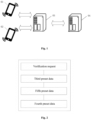
- FIG. 1 is a schematic diagram of a system provided by an embodiment of the present application. As shown in FIG. 1 , the system may at least include a first terminal 01, a second terminal 02, a server 03, and an execution terminal 04.
- the first terminal 01 and the second terminal 02 may each include an entity device having an NFC function, such as a smart phone, a tablet computer, a notebook computer, a digital assistant, an intelligent wearable device, and a vehicle terminal, and may also include a software having the NFC function and running in the entity device, such as an NFC entity card key, a mobile phone NFC application key, and a bracelet NFC key.
- entity device having an NFC function such as a smart phone, a tablet computer, a notebook computer, a digital assistant, an intelligent wearable device, and a vehicle terminal
- a software having the NFC function and running in the entity device such as an NFC entity card key, a mobile phone NFC application key, and a bracelet NFC key.
- the server 03 may include an independently running server, or a distributed server, or a server cluster composed of a plurality of servers.
- the server 03 may include a network communication unit, a processor, a memory, etc.
- the server 03 may provide background services for the first terminal 01 and the second terminal 02.
- the execution terminal 04 may include an entity device, such as a smart phone, a tablet computer, a notebook computer, a digital assistant, an intelligent wearable device, and a vehicle terminal, and may also include a software running in the entity device; and in some scenarios, the execution terminal 04 may be a device for controlling opening of a door, a device for controlling ignition of an engine, etc.
- entity device such as a smart phone, a tablet computer, a notebook computer, a digital assistant, an intelligent wearable device, and a vehicle terminal
- the execution terminal 04 may be a device for controlling opening of a door, a device for controlling ignition of an engine, etc.
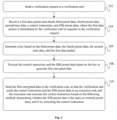
- FIG. 2 is a schematic structural diagram of the request end provided by an embodiment of the present invention
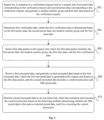
- FIG. 3 is a flowchart of the security authentication method provided by an embodiment of the present invention
- the NFC-Controller may correspond to a plurality of different request ends, and the communication connection may be a connection between the request end and a card reader of a verification end.
- the embodiment of the specification uses a single request end to set forth the method, the method including: S102: a verification request is sent to a verification end.
- the request end sends the verification request to the verification end, where the verification request may be an NFC_Card ID, and the verification end may be the NFC-Controller.
- each request end may include the following four information or instructions:
- Each key entity (e.g., a card, a mobile phone, a bracelet, etc.) may have a plurality of different request ends under the same NFC_Card_ID, which are responsible for opening different vehicles, and correspondingly, the key entity may also have a plurality of different Key_IDs.
- Each vehicle may have a plurality of different NFC_Card_IDs, which is equivalent to that each vehicle may have a plurality of different request ends.
- Each NFC_Card_ID on each vehicle can only correspond to a unique Key_ID, which is equivalent to that each key entity only has a unique request end on each vehicle.
- an In_Vehicle_NFC_Message_Key as a symmetric key for mutual encrypted communication between the vehicle end NFC-Controller and the Central-Controller, is preset by the automobile manufacturer at the vehicle end NFC-Controller and the Central-Controller.
- S104 a first data packet is received and third preset data, fourth preset data, second time data, a control instruction, and fifth preset data are obtained, where the first data packet is determined by the verification end in response to the verification request.
- the third preset data may be a Key_ID
- the fourth preset data may be a Communication_Key
- the second time data may be time information sent by the NFC-Controller after the request end is in communication connection with the NFC-Controller in the last cycle
- the control instruction may be used to execute the opening of a vehicle door or the ignition of an engine and so on
- the fifth preset data may be the Sensitive _Information.
- the first data packet may include first preset data KEY_ID, a random number group Random _Number, first time data, and first verification data. It should be noted that the last cycle represents the last session or an information exchange process between the request end and the NFC-Controller at the last time.
- S106 a key is generated based on the third preset data, the fourth preset data, the second time data, and the first data packet.
- the step that a key is generated based on the third preset data, the fourth preset data, the second time data, and the first data packet includes:
- both the first verification data and the second verification data may be an MAC, where the MAC may be calculated by an MAC_Generation_Algorithm.
- MAC MAC_Generation_Algorithm Communication_Key , Key_ID ⁇ Timestamp_or_Counter ⁇ Random_Number
- a Timestamp_or_Counter may choose either a Timestamp form or a Counter form.
- the Timestamp form may be directly selected; and in a scenario of a card NFC-Key, the Counter form may be selected.
- the request end may calculate the MAC by using the MAC_Generation_Algorithm, and compare whether the MAC is consistent with an MAC value in the first data packet received. If not, a session is ended. If so, it is verified whether the difference between the first time data and the second time data is greater than the preset time threshold. When the difference between the first time data and the second time data is greater than the preset time threshold, a current session key (Session_Key) is generated by using the Communication _Key in combination with the first data packet; and when the difference between the first time data and the second time data is less than the preset time threshold, the current session is ended.
- Session_Key a current session key
- Session key Session _ Key Key _ Generation _ Algorithm Communication _ Key , Key _ ID ⁇ TS _ or _ Counter ⁇ Random _ Number ⁇ MAC .
- control instruction and the fifth preset data are encrypted based on the key to generate first encrypted data.
- NFC-Key may use the Session _Key to encrypt ⁇ Command ⁇ control instruction, Sensitive_Infomation fifth preset data ⁇ to generate the first encrypted data.
- the first encrypted data Action _ Cipher Symmetric _ Algorithm _ Encrypt Session _ Key , Command ⁇ Sensitive _ Information .
- the request end may transmit the first encrypted data Action _Cipher to an NFC-Controller verification end, where Command is an instruction to be executed, i.e., a control instruction.
- the verification end may use the Session _Key to decrypt the first encrypted data to obtain the Command control instruction and the Sensitive_Infomation fifth preset data.
- the Command control instruction and the Sensitive_Infomation fifth preset data are encrypted by encrypting ⁇ Command, Sensitive_Infomation ⁇ information by using In_Vehicle_NFC_Message_Key to generate second encrypted data, the second encrypted data is transmitted to a Central-Controller execution end, and the execution end executes the control instruction based on the following method: determining whether the fifth preset data is the same as internal preset data; if so, executing the control instruction; and if not, the current session is ended.
- a vehicle end provides the related information required for generating a session key while providing Key_ID information to the NFC-Key, thereby reducing an interaction process and improving time delay experience.
- the method before sending the verification request to the verification end, the method further includes: establishing a near-field communication connection with the verification end.
- the vehicle end provides a message authentication code (MAC) while providing the Key_ID information to the NFC-Key.
- the NFC-Key may verify, based on the MAC, whether the information is from the bound vehicle, so as to reduce a risk of malicious power consumption due to NFC-Key encryption and decryption behaviors triggered by fake messages of a card reader.
- the vehicle end is responsible for providing related information required for each session key (Session_Key), and the NFC-Key directly calculates the session key (Session_Key) based on the related information provided by the vehicle end in one-way.
- Session_Key the NFC-Key directly calculates the session key (Session_Key) based on the related information provided by the vehicle end in one-way.
- a vehicle and a key do not need a three-way handshake negotiation for the session key.
- FIG. 4 of the specification a flowchart of the another security authentication method provided by an embodiment of the present invention is shown; and on the premise that a near-field communication is established between the request end and the verification end NFC-Controller, the verification end NFC-Controller may correspond to a plurality of different request ends, and the embodiment of the specification uses a single request end to set forth the method, the method including: S402: in response to a verification request sent by a request end, first preset data corresponding to the verification request and second preset data corresponding to the verification request are searched for, and a random number group and first time data are generated based on the verification request.
- the verification end NFC-Controller reads the first preset data corresponding to the verification request and stored in the verification end NFC-Controller, and the second preset data corresponding to the verification request in response to the verification request, where the first preset data may be Key_ID, the second preset data may be Communication_Key; and a random number group Random_Number of the current session is generated, and first time data Timestamp_or_ Counter is updated.
- the first time data may be the current time, and the length and precise digits of the time are not specifically limited in this specification.
- first verification data is determined, where the first verification data is determined based on the first preset data, the second preset data, the random number group and the first time data.
- the NFC-Controller generates a random number group Random_Number, updates Timestamp_or Counter, combines Key_ID as input, and uses Communication _Key to calculate a message verification code (MAC).
- MAC MAC _ Generation _ Algorithm Communication _ Key , Key _ ID ⁇ Timestamp _ or _ Counter ⁇ Random _ Number
- the Timestamp_or_Counter may choose either a Timestamp form or a Counter form.
- the Timestamp form may be directly selected; and in a scenario of a card NFC-Key, the Counter form may be selected.
- ⁇ means concatenation.
- a first data packet is sent to the request end, where the first data packet includes: the first preset data, the random number group, the first time data, and the first verification data.
- the verification end NFC-Controller sends the first data packet ⁇ Key_ID, Timestamp _or Counter, Random _Number, MAC ⁇ to a request end NFC-Key.
- S408 first encrypted data is received, and second encrypted data is generated based on the first encrypted data, where the first encrypted data is generated at the request end based on the first data packet, and the second encrypted data includes: a control instruction and fifth preset data.
- the verification end NFC-Controller may receive and decrypt the first encrypted data sent by the request end to generate the second encrypted data, where the first encrypted data is generated at the request end based on the first data packet.
- the step that in response to a verification request sent by a request end, first preset data corresponding to the verification request and second preset data corresponding to the verification request are searched for, and a random number group and first time data are generated based on the verification request includes:
- the step that second encrypted data is generated based on the first encrypted data includes:
- the verification end NFC-Controller may generate the key based on the second preset data and the first data packet, and use the key to decrypt the first encrypted data to generate the fifth preset data and the control instruction sent by the request end, and use In_Vehicle_NFC_Message_Key to perform secondary encryption on the control instruction and the fifth preset data to generate the second encrypted data.
- S410 the second encrypted data is sent to an execution end, where the execution end executes the control instruction based on the following method: determining whether the fifth preset data is the same as internal preset data, and if so, executing the control instruction.
- the second encrypted data is transmitted to an execution end Central-Controller, where the execution end executes the control instruction based on the following method: determining whether the fifth preset data is the same as the internal preset data, and if so, executing the control instruction; if not, the current session is ended.
- the method further includes: deleting temporary data, where the temporary data includes: the random number group, the first time data, the first verification data, the key, the first encrypted data, the control instruction, the fifth preset data, and the second encrypted data.
- the verification end NFC-Controller may delete all the temporary data, where the temporary data may include, but are not limited to: the random number group, the first time data, the first verification data, the key, the first encrypted data, the control instruction, the fifth preset data, and the second encrypted data.
- the verification end NFC-Controller may correspond to a plurality of different request ends, and an embodiment of the specification uses a single request end to set forth the method, the method including:
- Timestamp_or Counter value is greater than the Timestamp _or Counter value of the last session. If the Timestamp_or_Counter value is less than or equal to the Times-tamp_or_Counter value of the last session, the current session is ended.
- the NFC-Key uses Communication _Key in combination with ⁇ Key_ID, TS_or_Counter, Random_Number, MAC ⁇ to generate the current session key (Session _Key).
- Session_Key Key_Generation _Algorithm (Communication_Key, Key ID ⁇ TS_or_Counter ⁇ Random_Number ⁇ MAC)
- the NFC-Controller uses the same method to generate the current session key (Session _Key). At this time, the NFC-Key and the NFC-Controller each generate the same Session _Key independently.
- the request end receives the first data packet and obtains the third preset data, the fourth preset data, the second time data, the control instruction and the fifth preset data; the second verification data is determined based on the third preset data, the fourth preset data, the first time data, and the random number group; it is determined whether the first verification data is the same as the second verification data; if the first verification data is the same as the second verification data, it is determined whether a difference between the first time data and the second time data is greater than a preset time threshold; if the difference between the first time data and the second time data is greater than the preset time threshold, a key parameter is generated based on the second preset data and the first data packet.
- the Key_Generation_Algorithm may use common key generation algorithms such as HMAC-SHA256, the MAC _Generation _Algorithm may use common message verification code algorithms such as AES-CMAC, and the Symmetric_Algorithm_Encrypt/ Symmetric_Algorithm_Decrypt may use common symmetric key algorithms such as AES-GCM and AES-CBC.
- FIG. 5 is a block diagram of a security authentication apparatus of a request end provided by an embodiment of the present invention.
- the present invention provides an apparatus of the security authentication method, the apparatus including:
- the first data packet includes: first preset data, a random number group, first time data, and first verification data
- the key generating module includes:
- FIG. 6 is a block diagram of a security authentication apparatus of a verification end provided by an embodiment of the present invention.
- the present invention provides an apparatus of the security authentication method, the apparatus including:
- the response module includes:
- the second receiving module includes:
- the apparatus further includes: a deleting module, configured to delete temporary data, where the temporary data includes: the random number group, the first time data, the first verification data, the key, the first encrypted data, the control instruction, the fifth preset data, and the second encrypted data.
- a deleting module configured to delete temporary data, where the temporary data includes: the random number group, the first time data, the first verification data, the key, the first encrypted data, the control instruction, the fifth preset data, and the second encrypted data.
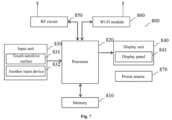
- FIG. 7 is a structural schematic diagram of an electronic device provided by an embodiment of the present invention.
- the present invention provides an electronic device, the electronic device including a processor and a memory, where the memory stores at least one instruction, at least one program, and a code set or an instruction set, where the at least one instruction, the at least one program, and the code set or the instruction set are loaded and executed by the processor to implement any one of the security authentication methods described above.
- the present invention further provides a vehicle, the vehicle being provided with a close range wireless communication system, where the close range wireless communication system includes the apparatus of the security authentication method described above.
- each block in the flowcharts or block diagrams may represent a module, program segment, or part of a code, and the module, program segment, or part of the code includes one or more executable instructions for implementing the specified logical functions.
- each block in the block diagrams and/or flow charts, and a combination of the blocks in the block diagrams and/or flow charts may be implemented by a dedicated hardware-based system that performs the specified functions or actions, or may be implemented by a combination of dedicated hardware and computer instructions.
- the functions may be stored in a computer-readable storage medium.
- the technical solution of the present invention essentially or a part that contributes to the prior art, or part of the technical solution may be embodied in a form of a software product; and the computer software product is stored in a storage medium and includes a plurality of instructions which are used to enable a computer device (which may be a personal computer, a server, or a network device, etc.) to execute all or part of the steps of the methods described in the various embodiments of the present invention.
- the storage medium includes: various media that can store program codes such as a USB flash disk, a mobile hard disk, a read-only memory (ROM), a random access memory (RAM), a magnetic disk or an optical disk.
- the electronic device 800 may include a memory 810 of one or more computer-readable storage media, a processor 820 of one or more processing cores, an input unit 830, a display unit 840, a radio frequency (RF) circuit 850, a wireless fidelity (Wi-Fi) module 860 and a power source 870 and other components.
- RF radio frequency
- Wi-Fi wireless fidelity
- the memory 810 may be configured to store software programs and modules, and the processor 820 executes various functional applications and data processing by running or executing the software programs and modules stored in the memory 810 and calling data stored in the memory 810.
- the memory 810 may mainly include a program storage area and a data storage area, where the program storage area may store an operating system, at least one application program required by a function, etc.; and the data storage area may store data created based on usage of the electronic device, etc.
- the memory 810 may include a high-speed random access memory, and may further include a non-volatile memory, such as a hard disk, an internal memory, a plug-in hard disk, a smart media card (SMC), a secure digital (SD) card, a flash card, at least one magnetic disk memory, a flash memory, or another volatile solid-state memory.
- the memory 810 may further include a memory controller to provide the processor 820 with access to the memory 810.
- the processor 820 is a control center of the electronic device 800, uses various interfaces and lines to connect various parts of the entire electronic device, and executes various functions of the electronic device 800 and the data processing by running or executing the software programs and/or modules stored in the memory 810 and by calling the data stored in the memory 810, so as to monitor the electronic device 800 as a whole.
- the processor 820 may be a central processing unit (CPU), or be a general-purpose processor, a digital signal processor (DSP), an application specific integrated circuit (ASIC), a field-programmable gate array (FPGA) or another programmable logic device, a discrete gate or a transistor logic device, a discrete hardware component, etc.
- the general-purpose processor may be a microprocessor, or the processor may be any conventional processor or the like.
- the input unit 830 may be used to receive input digital or character information, and generate a keyboard, a mouse, a joy stick, an optical or trackball signal input related to user settings and function control.
- the input unit 830 may include an image input device 831 and another input device 832.
- the image input device 831 may be a camera or a photoelectric scanning device.
- the input unit 830 may further include another input device 832.
- another input device 832 may include, but is not limited to, one or more of a physical keyboard, a function key (such as a volume control key, a switch key, etc.), a trackball, a mouse, a joy stick, etc.
- the display unit 840 may be configured to display information input by a user or information provided to the user, and various graphical user interfaces of the electronic device.
- the graphical user interfaces may be composed of graphics, text, icons, videos, and any combination thereof.
- the display unit 840 may include a display panel 841.
- the display panel 841 may be configured by using a liquid crystal display (LCD), an organic light-emitting diode (OLED), etc.
- LCD liquid crystal display
- OLED organic light-emitting diode
- the RF circuit 850 may be configured to receive and send signals during information receiving and transmitting or during a call. Particularly, when a downlink information of a base station is received, the downlink information is sent to and processed by one or more processors 820; and in addition, data related to uplink is sent to the base station.
- the RF circuit 850 includes, but is not limited to an antenna, at least one amplifier, a tuner, one or more oscillators, a subscriber identity module (SIM) card, a transceiver, a coupler, a low noise amplifier (LNA), a duplexer, etc.
- SIM subscriber identity module
- LNA low noise amplifier
- the RF circuit 850 may further communicate with the network and other devices by means of wireless communication.
- the wireless communication may use any communication standard or protocol, including but not limited to a global system of mobile communication (GSM), a general packet radio service (GPRS), a code division multiple access (CDMA), a wideband code division multiple access (WCDMA), a long term evolution (LTE), an email, a short messaging service (SMS), etc.
- GSM global system of mobile communication
- GPRS general packet radio service
- CDMA code division multiple access
- WCDMA wideband code division multiple access
- LTE long term evolution
- SMS short messaging service
- Wi-Fi belongs to a short-distance wireless transmission technology
- the electronic device 800 may help, by means of the Wi-Fi module 860, the user receive and send the email, browse web pages, access streaming media, etc., and provides the user with wireless broadband Internet access.
- FIG. 7 shows the Wi-Fi module 860, it may be understood that the Wi-Fi module 860 is not a necessary component of the electronic device 800, and may be omitted as needed without changing the essence of the invention.
- the electronic device 800 further includes the power source 870 (such as a battery) for supplying power to various components.
- the power source may be logically connected to the processor 820 via a power source management system, so as to implement functions such as charging, discharging, and power consumption management by means of the power source management system.
- the power source 870 may further include any component such as one or more direct current or alternating current power sources, a recharging system, a power source failure detection circuit, a power source converter or inverter, and a power source status indicator.
- the electronic device 800 may further include a bluetooth module, etc., and details are not described herein.
- the embodiments of the present invention further provide a storage medium, where the storage medium stores at least one instruction, at least one program, and a code set or an instruction set, where the at least one instruction, the at least one program, and the code set or the instruction set are executed by a processor of an electronic device to implement any one of the security authentication methods.
- the storage medium may include, but is not limited to: various media that can store program codes such as a USB flash disk, a read-only memory (ROM), a random access memory (RAM), a mobile hard disk, a magnetic disk, or an optical disk.
- various media that can store program codes such as a USB flash disk, a read-only memory (ROM), a random access memory (RAM), a mobile hard disk, a magnetic disk, or an optical disk.
- Embodiments in the specification are described in a progressive way, same and similar parts among the embodiments can refer to one another, and each embodiment focuses on differences from the other embodiments.
- the descriptions are relatively simple, and where relevant, reference can be made to partial descriptions of the method embodiments.
- the memory 810 may include a high-speed random access memory, and may further include a non-volatile memory, such as a hard disk, an internal memory, a plug-in hard disk, a smart media card (SMC), a secure digital (SD) card, a flash card, at least one magnetic disk memory, a flash memory, or another volatile solid-state memory.
- the memory 810 may further include a memory controller to provide the processor 820 with access to the memory 810.
- the processor 820 is a control center of the electronic device 800, uses various interfaces and lines to connect various parts of the entire electronic device, and executes various functions of the electronic device 800 and the data processing by running or executing the software programs and/or modules stored in the memory 810 and by calling the data stored in the memory 810, so as to monitor the electronic device 800 as a whole.
- the processor 820 may be a central processing unit (CPU), or be a general-purpose processor, a digital signal processor (DSP), an application specific integrated circuit (ASIC), a field-programmable gate array (FPGA) or another programmable logic device, a discrete gate or a transistor logic device, a discrete hardware component, etc.
- the general-purpose processor may be a microprocessor, or the processor may be any conventional processor or the like.
- the input unit 830 may be used to receive input digital or character information, and generate a keyboard, a mouse, a joy stick, an optical or trackball signal input related to user settings and function control.
- the input unit 830 may include an image input device 831 and another input device 832.
- the image input device 831 may be a camera or a photoelectric scanning device.
- the input unit 830 may further include another input device 832.
- another input device 832 may include, but is not limited to, one or more of a physical keyboard, a function key (such as a volume control key, a switch key, etc.), a trackball, a mouse, a joy stick, etc.
- the display unit 840 may be configured to display information input by a user or information provided to the user, and various graphical user interfaces of the electronic device.
- the graphical user interfaces may be composed of graphics, text, icons, videos, and any combination thereof.
- the display unit 840 may include a display panel 841.
- the display panel 841 may be configured by using a liquid crystal display (LCD), an organic light-emitting diode (OLED), etc.
- LCD liquid crystal display
- OLED organic light-emitting diode
- the RF circuit 850 may be configured to receive and send signals during information receiving and transmitting or during a call. Particularly, when a downlink information of a base station is received, the downlink information is sent to and processed by one or more processors 820; and in addition, data related to uplink is sent to the base station.
- the RF circuit 850 includes, but is not limited to an antenna, at least one amplifier, a tuner, one or more oscillators, a subscriber identity module (SIM) card, a transceiver, a coupler, a low noise amplifier (LNA), a duplexer, etc.
- SIM subscriber identity module
- LNA low noise amplifier
- the RF circuit 850 may further communicate with the network and other devices by means of wireless communication.
- the wireless communication may use any communication standard or protocol, including but not limited to a global system of mobile communication (GSM), a general packet radio service (GPRS), a code division multiple access (CDMA), a wideband code division multiple access (WCDMA), a long term evolution (LTE), an email, a short messaging service (SMS), etc.
- GSM global system of mobile communication
- GPRS general packet radio service
- CDMA code division multiple access
- WCDMA wideband code division multiple access
- LTE long term evolution
- SMS short messaging service
- Wi-Fi belongs to a short-distance wireless transmission technology
- the electronic device 800 may help, by means of the Wi-Fi module 860, the user receive and send the email, browse web pages, access streaming media, etc., and provides the user with wireless broadband Internet access.
- FIG. 7 shows the Wi-Fi module 860, it may be understood that the Wi-Fi module 860 is not a necessary component of the electronic device 800, and may be omitted as needed without changing the essence of the invention.
- the electronic device 800 further includes the power source 870 (such as a battery) for supplying power to various components.
- the power source may be logically connected to the processor 820 via a power source management system, so as to implement functions such as charging, discharging, and power consumption management by means of the power source management system.
- the power source 870 may further include any component such as one or more direct current or alternating current power sources, a recharging system, a power source failure detection circuit, a power source converter or inverter, and a power source status indicator.
- the electronic device 800 may further include a bluetooth module, etc., and details are not described herein.
- the embodiments of the present invention further provide a storage medium, where the storage medium stores at least one instruction, at least one program, and a code set or an instruction set, where the at least one instruction, the at least one program, and the code set or the instruction set are executed by a processor of an electronic device to implement any one of the security authentication methods.
- the storage medium may include, but is not limited to: various media that can store program codes such as a USB flash disk, a read-only memory (ROM), a random access memory (RAM), a mobile hard disk, a magnetic disk, or an optical disk.
- various media that can store program codes such as a USB flash disk, a read-only memory (ROM), a random access memory (RAM), a mobile hard disk, a magnetic disk, or an optical disk.
- Embodiments in the specification are described in a progressive way, same and similar parts among the embodiments can refer to one another, and each embodiment focuses on differences from the other embodiments.
- the descriptions are relatively simple, and where relevant, reference can be made to partial descriptions of the method embodiments.
Landscapes
- Engineering & Computer Science (AREA)
- Computer Security & Cryptography (AREA)
- Computer Networks & Wireless Communication (AREA)
- Signal Processing (AREA)
- Computer Hardware Design (AREA)
- Computing Systems (AREA)
- General Engineering & Computer Science (AREA)
- Mobile Radio Communication Systems (AREA)
- Lock And Its Accessories (AREA)
Claims (11)
- Sicherheitsauthentifizierungsverfahren, das durch ein Anforderungsende, das ein an einem Endgerät angebrachter NFC-Schlüssel ist, implementiert wird, wobei sich das Anforderungsende in Nahfeldkommunikation mit einem Verifizierungssende befindet, die eine an einem Fahrzeug angebrachte NFC-Steuereinheit ist, wobei das Verfahren Folgendes umfasst:Senden einer Verifizierungsanforderung an das Verifizierungssende, wobei die Verifizierungsanforderung einen eindeutigen Identifikator einer auf dem Endgerät laufenden NFC-Anwendung ist (S102);Empfangen eines ersten Datenpakets und Erfassen von dritten voreingestellten Daten, vierten voreingestellten Daten, zweiten Zeitdaten, einer Steueranweisung und fünften voreingestellten Daten, wobei das erste Datenpaket von dem Verifizierungssende in Reaktion auf die Verifizierungsanforderung bestimmt wird und erste voreingestellte Daten, eine Zufallszahlengruppe, erste Zeitdaten und erste Verifizierungsdaten umfasst, wobei die ersten voreingestellten Daten ein eindeutiger Identifikator des Anforderungsendes sind, die dritten voreingestellten Daten der eindeutige Identifikator des Anforderungsendes sind, die vierten voreingestellten Daten ein symmetrischer Schlüssel für die gegenseitige verschlüsselte Kommunikation zwischen dem Verifizierungsende und dem Anforderungsende sind, und die fünften voreingestellten Daten sensible Informationen sind, durch die ein Ausführungsende bestimmt, ob das Entsperren zugelassen werden soll (S104);Erzeugen eines Schlüssels auf der Grundlage der dritten voreingestellten Daten, der vierten voreingestellten Daten, der zweiten Zeitdaten und des ersten Datenpakets (S106);Verschlüsseln der Steueranweisung und der fünften voreingestellten Daten auf der Grundlage des Schlüssels, um erste verschlüsselte Daten zu erzeugen (S 108); undSenden der ersten verschlüsselten Daten an das Verifizierungssende, so dass das Verifizierungssende die Steueranweisung und die fünften voreingestellten Daten an das Ausführungsende sendet, wobei das Ausführungsende die Steueranweisung auf der Grundlage des folgenden Verfahrens ausführt: Bestimmen, ob die fünften voreingestellten Daten mit den internen voreingestellten Daten identisch sind; und wenn ja, Ausführen der Steueranweisung (S110);wobei das Erzeugen eines Schlüssels auf der Grundlage der dritten voreingestellten Daten, der vierten voreingestellten Daten, der zweiten Zeitdaten und des ersten Datenpakets (S106) umfasst:Bestimmen zweiter Verifizierungsdaten auf der Grundlage der dritten voreingestellten Daten, der vierten voreingestellten Daten, der ersten Zeitdaten und der Zufallszahlengruppe;Bestimmen, ob die ersten Verifizierungsdaten mit den zweiten Verifizierungsdaten identisch sind;wenn die ersten Verifizierungsdaten mit den zweiten Verifizierungsdaten identisch sind, Bestimmen, ob eine Differenz zwischen den ersten Zeitdaten und den zweiten Zeitdaten größer als ein voreingestellter Zeitschwellenwert ist; undwenn die Differenz zwischen den ersten Zeitdaten und den zweiten Zeitdaten größer als der voreingestellte Zeitschwellenwert ist, Erzeugen des Schlüssels auf der Grundlage der vierten voreingestellten Daten und des ersten Datenpakets.
- Verfahren nach Anspruch 1, wobei das Verfahren vor dem Senden der Verifizierungsanforderung an das Verifizierungssende ferner umfasst: Herstellen einer Nahfeldkommunikationsverbindung mit dem Verifizierungssende.
- Sicherheitsauthentifizierungsverfahren, das durch ein Verifizierungssende, das ein an einem Fahrzeug angebrachter NFC-Steuereinheit ist, implementiert wird, wobei sich das Verifizierungssende in Nahfeldkommunikation mit einem Anforderungsende befindet, die eine an einem Endgerät angebrachte NFC-Steuereinheit ist, wobei das Verfahren Folgendes umfasst:Suchen nach ersten voreingestellten Daten, die der Verifizierungsanforderung entsprechen, und zweiten voreingestellten Daten, die der Verifizierungsanforderung entsprechen, als Reaktion auf eine Verifizierungsanforderung, die von dem Anforderungsende gesendet wird, und Erzeugen einer Zufallszahlengruppe und erster Zeitdaten auf der Grundlage der Verifizierungsanforderung, wobei die Verifizierungsanforderung ein eindeutiger Identifikator einer NFC-Anwendung ist, die auf dem Endgerät läuft, wobei die ersten voreingestellten Daten ein eindeutiger Identifikator des Anforderungsendes sind und die zweiten voreingestellten Daten ein symmetrischer Schlüssel für die gegenseitig verschlüsselte Kommunikation zwischen dem Verifizierungssende und dem Anforderungsende sind (S402);Bestimmen erster Verifizierungsdaten, wobei die ersten Verifizierungsdaten auf der Grundlage der ersten voreingestellten Daten, der zweiten voreingestellten Daten, der Zufallszahlengruppe und der ersten Zeitdaten bestimmt werden (S404);Senden eines ersten Datenpakets an dem Anforderungsende, wobei das erste Datenpaket die ersten voreingestellten Daten, die Zufallszahlengruppe, die ersten Zeitdaten und die ersten Verifizierungsdaten umfasst (S406);Empfangen erster verschlüsselter Daten und Erzeugen zweiter verschlüsselter Daten auf der Grundlage der ersten verschlüsselten Daten, wobei die ersten verschlüsselten Daten von dem Anforderungsende auf der Grundlage des ersten Datenpakets erzeugt werden und die zweiten verschlüsselten Daten eine Steueranweisung und fünfte voreingestellte Daten umfassen, wobei die fünften voreingestellten Daten empfindliche Informationen sind, durch die ein Anforderungsende bestimmt, ob ein Entsperren zugelassen werden soll (S408); undSenden der zweiten verschlüsselten Daten an das Ausführungsende, wobei das Ausführungsende die Steueranweisung basierend auf dem folgenden Verfahren ausführt: Bestimmen, ob die fünften voreingestellten Daten mit den internen voreingestellten Daten identisch sind; und wenn ja, Ausführen der Steueranweisung (S410);wobei das Erzeugen zweiter verschlüsselter Daten auf der Grundlage der ersten verschlüsselten Daten Folgendes umfasst:Erzeugen eines Schlüssels auf der Grundlage der zweiten voreingestellten Daten und des ersten Datenpakets;Erhalten der Steueranweisung und der fünften voreingestellten Daten durch Verwendung des Schlüssels zum Entschlüsseln der ersten verschlüsselten Daten; undErzeugen der zweiten verschlüsselten Daten durch Verschlüsselung der Steueranweisung und der fünften voreingestellten Daten.
- Verfahren nach Anspruch 3, wobei das Suchen nach ersten voreingestellten Daten, die der Verifizierungsanforderung entsprechen, und zweiten voreingestellten Daten, die der Verifizierungsanforderung entsprechen, als Reaktion auf eine Verifizierungsanforderung, die von einem Anforderungsende gesendet wird, und das Erzeugen einer Zufallszahlengruppe und erster Zeitdaten auf der Grundlage der Verifizierungsanforderung umfasst:Überprüfen, ob die Verifizierungsanforderung mit einer internen voreingestellten Verifizierungsanforderung übereinstimmt; undwenn die Verifizierungsanforderung mit der internen voreingestellten Verifizierungsanforderung übereinstimmt, Suche nach den ersten voreingestellten Daten, die der Verifizierungsanforderung entsprechen, und den zweiten voreingestellten Daten, die der Verifizierungsanforderung entsprechen, und Erzeugen der Zufallszahlengruppe und der ersten Zeitdaten auf der Grundlage der Verifizierungsanforderung.
- Verfahren nach Anspruch 3 oder 4, umfassend ferner:
Löschen von temporären Daten, wobei die temporären Daten umfassen: die Zufallszahlengruppe, die ersten Zeitdaten, die ersten Verifizierungsdaten, den Schlüssel, die ersten verschlüsselten Daten, die Steueranweisung, die fünften voreingestellten Daten und die zweiten verschlüsselten Daten. - Vorrichtung eines Sicherheitsauthentifizierungsverfahrens, wobei die Vorrichtung ein NFC-Schlüssel ist, der an einem Endgerät angebracht ist, umfassend:ein erstes Sendemodul (710), das so konfiguriert ist, dass es eine Verifizierungsanforderung an ein Verifizierungsende sendet, wobei die Verifizierungsanforderung einen eindeutigen Identifikator einer NFC-Anwendung ist, die auf dem Endgerät läuft, und wobei das Verifizierungsende eine NFC-Steuereinheit ist, das an einem Fahrzeug angebracht ist und in Nahfeldkommunikation mit dem NFC-Schlüssel steht;ein erstes Empfangsmodul (720), das so konfiguriert ist, dass es ein erstes Datenpaket empfängt und dritte voreingestellte Daten, vierte voreingestellte Daten, zweite Zeitdaten, eine Steueranweisung und fünfte voreingestellte Daten erhält, wobei das erste Datenpaket von dem Verifizierungssende in Reaktion auf die Verifizierungsanforderung bestimmt wird und erste voreingestellte Daten, eine Zufallszahlengruppe, erste Zeitdaten und erste Verifizierungsdaten umfasst, wobei die ersten voreingestellten Daten ein eindeutiger Identifikator des NFC-Schlüssels sind, die dritten voreingestellten Daten der eindeutige Identifikator des NFC-Schlüssels sind, die vierten voreingestellten Daten ein symmetrischer Schlüssel für die gegenseitige verschlüsselte Kommunikation zwischen dem Verifizierungssende und dem NFC-Schlüssel sind, und die fünften voreingestellten Daten sensible Informationen für ein Ausführungsende in Kommunikation mit dem Verifizierungssende sind, um zu bestimmen, ob das Entsperren zugelassen werden soll;ein Schlüsselerzeugungsmodul (730), das so konfiguriert ist, dass es einen Schlüssel auf der Grundlage der dritten voreingestellten Daten, der vierten voreingestellten Daten, der zweiten Zeitdaten und des ersten Datenpakets erzeugt;ein Modul (740) zur Erzeugung erster verschlüsselter Daten, das so konfiguriert ist, dass es die Steueranweisung und die fünften voreingestellten Daten auf der Grundlage des Schlüssels verschlüsselt, um erste verschlüsselte Daten zu erzeugen; undein zweites Sendemodul (750), das so konfiguriert ist, dass es die ersten verschlüsselten Daten an das Verifizierungssende sendet, wobei das Schlüsselerzeugungsmodul (730) umfasst:eine zweite Verifizierungsdaten-Bestimmungseinheit, die konfiguriert ist, um zweite Verifizierungsdaten auf der Grundlage der dritten voreingestellten Daten, der vierten voreingestellten Daten, der ersten Zeitdaten und der Zufallszahlengruppe zu bestimmen;eine erste Bestimmungseinheit, die so konfiguriert ist, dass sie bestimmt, ob die ersten Verifizierungsdaten mit den zweiten Verifizierungsdaten übereinstimmen;eine zweite Bestimmungseinheit, die so konfiguriert ist, dass sie, wenn die ersten Verifizierungsdaten mit den zweiten Verifizierungsdaten identisch sind, bestimmt, ob eine Differenz zwischen den ersten Zeitdaten und den zweiten Zeitdaten größer als ein voreingestellter Zeitschwellenwert ist; undeine erste Schlüsselerzeugungseinheit, die so konfiguriert ist, dass sie, wenn die Differenz zwischen den ersten Zeitdaten und den zweiten Zeitdaten größer als der voreingestellte Zeitschwellenwert ist, den Schlüssel auf der Grundlage der vierten voreingestellten Daten und des ersten Datenpakets erzeugt.
- Vorrichtung eines Sicherheitsauthentifizierungsverfahrens, wobei die Vorrichtung eine NFC-Steuereinheit ist, der an einem Fahrzeug angebracht ist, umfassend:ein Antwortmodul (1010), das so konfiguriert ist, dass es als Reaktion auf eine von einem Anforderungsende gesendete Verifizierungsanforderung nach ersten voreingestellten Daten, die der Verifizierungsanforderung entsprechen, und zweiten voreingestellten Daten, die der Verifizierungsanforderung entsprechen, sucht und eine Zufallszahlengruppe und erste Zeitdaten auf der Grundlage der Verifizierungsanforderung erzeugt, wobei das Anforderungsende ein NFC-Schlüssel ist, der auf einem Endgerät angebracht ist und sich in Nahfeldkommunikation mit der NFC-Steuereinheit befindet, wobei die Verifizierungsanforderung einen eindeutigen Identifikator einer auf dem Endgerät laufenden NFC-Anwendung ist, wobei die ersten voreingestellten Daten einen eindeutigen Identifikator des Anforderungsendes sind und die zweiten voreingestellten Daten ein symmetrischer Schlüssel für die gegenseitige verschlüsselte Kommunikation zwischen der NFC-Steuereinheit und dem Anforderungsende sind;ein erstes Verifizierungsdaten-Bestimmungsmodul (1020), das konfiguriert ist, um erste Verifizierungsdaten zu bestimmen, wobei die ersten Verifizierungsdaten basierend auf den ersten voreingestellten Daten, den zweiten voreingestellten Daten, der Zufallszahlengruppe und den ersten Zeitdaten bestimmt werden;ein drittes Sendemodul (1030), das so konfiguriert ist, dass es ein erstes Datenpaket an das Anforderungsende sendet, wobei das erste Datenpaket Folgendes umfasst: die ersten voreingestellten Daten, die Zufallszahlengruppe, die ersten Zeitdaten und die ersten Verifizierungsdaten,ein zweites Empfangsmodul (1040), das so konfiguriert ist, dass es erste verschlüsselte Daten empfängt und zweite verschlüsselte Daten auf der Grundlage der ersten verschlüsselten Daten erzeugt, wobei die ersten verschlüsselten Daten von dem Anforderungsende auf der Grundlage des ersten Datenpakets erzeugt werden und die zweiten verschlüsselten Daten eine Steueranweisung und fünfte voreingestellte Daten umfassen, wobei die fünften voreingestellten Daten sensible Informationen für ein Anforderungsende in Kommunikation mit der NFC-Steuereinheit sind, um zu bestimmen, ob ein Entsperren zugelassen werden soll; undein viertes Sendemodul (1050), das so konfiguriert ist, dass es die zweiten verschlüsselten Daten an das Ausführungsende sendet;wobei das zweite Empfangsmodul umfasst:eine zweite Schlüsselerzeugungseinheit, die so konfiguriert ist, dass sie einen Schlüssel auf der Grundlage der zweiten voreingestellten Daten und des ersten Datenpakets erzeugt;eine Entschlüsselungseinheit, die so konfiguriert ist, dass sie die Steueranweisung und die fünften voreingestellten Daten durch Verwendung des Schlüssels zum Entschlüsseln der ersten verschlüsselten Daten erhält; undeine zweite Einheit zur Erzeugung verschlüsselter Daten, die so konfiguriert ist, dass sie die zweiten verschlüsselten Daten durch Verschlüsselung der Steueranweisung und der fünften voreingestellten Daten erzeugt.
- Vorrichtung eines Sicherheitsauthentifizierungsverfahrens nach Anspruch 7, wobei das Antwortmodul umfasst:eine Verifizierungseinheit, die so konfiguriert ist, dass sie verifiziert, ob die Verifizierungsanforderung mit einer internen voreingestellten Verifizierungsanforderung übereinstimmt; undeine Zufallszahlengruppen-Erzeugungseinheit, die so konfiguriert ist, dass sie, wenn die Verifizierungsanforderung mit der internen voreingestellten Verifizierungsanforderung übereinstimmt, nach den ersten voreingestellten Daten, die der Verifizierungsanforderung entsprechen, und den zweiten voreingestellten Daten, die der Verifizierungsanforderung entsprechen, sucht und die Zufallszahlengruppe und die ersten Zeitdaten auf der Grundlage der Verifizierungsanforderung erzeugt.
- Vorrichtung eines Sicherheitsauthentifizierungsverfahrens nach Anspruch 7 oder 8, wobei die Vorrichtung weiterhin umfasst:
ein Löschmodul, das so konfiguriert ist, dass es temporäre Daten löscht, wobei die temporären Daten umfassen: die Zufallszahlengruppe, die ersten Zeitdaten, die ersten Verifizierungsdaten, den Schlüssel, die ersten verschlüsselten Daten, die Steueranweisung, die fünften voreingestellten Daten und die zweiten verschlüsselten Daten. - Computerlesbares Speichermedium, wobei das Speichermedium Anweisungen speichert, die, wenn sie geladen und von einem Prozessor ausgeführt werden, das in einem der Ansprüche 1 bis 2 oder 3 bis 5 beschriebene Sicherheitsauthentifizierungsverfahren implementieren.
- Fahrzeug, das mit einem drahtlosen Nahbereichskommunikationssystem ausgestattet ist, wobei das drahtlose Nahbereichskommunikationssystem die Vorrichtung nach einem der Ansprüche 7 bis 9 umfasst.
Applications Claiming Priority (2)
| Application Number | Priority Date | Filing Date | Title |
|---|---|---|---|
| CN202010111071.4A CN111432373B (zh) | 2020-02-24 | 2020-02-24 | 一种安全认证方法、装置及电子设备 |
| PCT/CN2021/077099 WO2021169880A1 (zh) | 2020-02-24 | 2021-02-20 | 一种安全认证方法、装置及电子设备 |
Publications (3)
| Publication Number | Publication Date |
|---|---|
| EP4099733A1 EP4099733A1 (de) | 2022-12-07 |
| EP4099733A4 EP4099733A4 (de) | 2023-06-21 |
| EP4099733B1 true EP4099733B1 (de) | 2024-04-10 |
Family
ID=71547035
Family Applications (1)
| Application Number | Title | Priority Date | Filing Date |
|---|---|---|---|
| EP21761102.9A Active EP4099733B1 (de) | 2020-02-24 | 2021-02-20 | Verfahren und vorrichtung zur sicherheitsauthentifizierung und elektronische vorrichtung |
Country Status (4)
| Country | Link |
|---|---|
| US (1) | US11924635B2 (de) |
| EP (1) | EP4099733B1 (de) |
| CN (1) | CN111432373B (de) |
| WO (1) | WO2021169880A1 (de) |
Families Citing this family (8)
| Publication number | Priority date | Publication date | Assignee | Title |
|---|---|---|---|---|
| CN111432373B (zh) * | 2020-02-24 | 2022-08-30 | 吉利汽车研究院(宁波)有限公司 | 一种安全认证方法、装置及电子设备 |
| KR102761719B1 (ko) * | 2021-10-18 | 2025-02-05 | 주식회사 페스카로 | 보안 이벤트 발생 시간 추정 방법 및 시스템 |
| CN113920625B (zh) * | 2021-10-18 | 2022-10-28 | 安徽江淮汽车集团股份有限公司 | 车辆nfc钥匙认证方法 |
| CN113890658B (zh) * | 2021-10-20 | 2023-05-05 | 四川启睿克科技有限公司 | 基于安卓车机系统的安全广播方法及系统 |
| CN115086062B (zh) * | 2022-06-30 | 2023-08-11 | 三一电动车科技有限公司 | 远程安全控制方法及系统、装置、车辆 |
| CN115361168B (zh) * | 2022-07-15 | 2023-05-23 | 北京海泰方圆科技股份有限公司 | 一种数据加密方法、装置、设备及介质 |
| CN117475533A (zh) * | 2022-07-21 | 2024-01-30 | 广州汽车集团股份有限公司 | 数据传输方法及装置、设备、计算机可读存储介质 |
| CN115909550A (zh) * | 2022-10-20 | 2023-04-04 | 远峰科技股份有限公司 | Nfc钥匙验证方法、装置、系统及计算机可读存储介质 |
Family Cites Families (40)
| Publication number | Priority date | Publication date | Assignee | Title |
|---|---|---|---|---|
| US20040203595A1 (en) * | 2002-08-12 | 2004-10-14 | Singhal Tara Chand | Method and apparatus for user authentication using a cellular telephone and a transient pass code |
| US20040177369A1 (en) * | 2003-03-06 | 2004-09-09 | Akins Glendon L. | Conditional access personal video recorder |
| US7434050B2 (en) | 2003-12-11 | 2008-10-07 | International Business Machines Corporation | Efficient method for providing secure remote access |
| WO2005059727A1 (en) * | 2003-12-17 | 2005-06-30 | Matsushita Electric Industrial Co., Ltd. | Methods and apparatuses for distributing system secret parameter group and encrypted intermediate key group for generating content encryption and decryption deys |
| CN102638794B (zh) | 2007-03-22 | 2016-03-30 | 华为技术有限公司 | 鉴权和密钥协商方法、认证方法、系统及设备 |
| CN101911581A (zh) * | 2007-11-30 | 2010-12-08 | 三星电子株式会社 | 近场通信网络中用于安全通信的方法和系统 |
| US20110291803A1 (en) * | 2010-05-27 | 2011-12-01 | Zeljko Bajic | Rfid security and mobility architecture |
| KR20120094673A (ko) | 2011-02-17 | 2012-08-27 | 현대모비스 주식회사 | 휴대 단말기와 차량 단말기 및 인증 코드 등록 방법 |
| US9594896B2 (en) * | 2012-12-21 | 2017-03-14 | Blackberry Limited | Two factor authentication using near field communications |
| GB2512595A (en) * | 2013-04-02 | 2014-10-08 | Mastercard International Inc | Integrated contactless mpos implementation |
| US9088409B2 (en) * | 2013-06-25 | 2015-07-21 | International Business Machines Corporation | Accessing local applications when roaming using a NFC mobile device |
| CN103391197B (zh) * | 2013-07-19 | 2016-06-08 | 武汉大学 | 一种基于手机令牌和NFC技术的Web身份认证方法 |
| US20150295919A1 (en) * | 2014-04-09 | 2015-10-15 | De Sonneville International Ltd. | Self-authenticating card |
| TWI551074B (zh) * | 2014-10-01 | 2016-09-21 | 動信科技股份有限公司 | 用於近場通訊之通訊系統及方法 |
| CN104537298B (zh) * | 2014-12-04 | 2016-08-31 | 腾讯科技(深圳)有限公司 | 基于微处理器卡进行授权的方法和装置 |
| FR3030828A1 (fr) * | 2014-12-22 | 2016-06-24 | Orange | Procede de securisation de transactions sans contact |
| WO2016135019A1 (de) * | 2015-02-23 | 2016-09-01 | Bayerische Motoren Werke Aktiengesellschaft | System zur verwendung mobiler endgeräte als schlüssel für fahrzeuge |
| US10249123B2 (en) * | 2015-04-09 | 2019-04-02 | Ford Global Technologies, Llc | Systems and methods for mobile phone key fob management |
| US9674705B2 (en) * | 2015-04-22 | 2017-06-06 | Kenneth Hugh Rose | Method and system for secure peer-to-peer mobile communications |
| US9786108B2 (en) * | 2015-06-03 | 2017-10-10 | Nxp B.V. | NFC based secure car key |
| KR102404543B1 (ko) * | 2015-10-07 | 2022-06-02 | 현대모비스 주식회사 | 사용자 단말을 이용한 차량 제어 장치 및 방법 |
| CN106682905B (zh) | 2015-11-09 | 2020-04-17 | 北京速通科技有限公司 | 一种应用解锁方法 |
| US20170163607A1 (en) * | 2015-12-03 | 2017-06-08 | Microsoft Technology Licensing, Llc | Establishing a Communication Event Using Secure Signalling |
| WO2017099641A1 (en) * | 2015-12-07 | 2017-06-15 | Telefonaktiebolaget Lm Ericsson (Publ) | Methods and arrangements for authenticating a communication device |
| NO20160065A1 (en) * | 2016-01-13 | 2017-04-10 | Hiddn Security As | 2-factor authentication for network connected storage device |
| CN108496193A (zh) * | 2016-01-25 | 2018-09-04 | 苹果公司 | 使用具有非本地凭据的电子设备进行交易 |
| US9990783B2 (en) * | 2016-02-16 | 2018-06-05 | GM Global Technology Operations LLC | Regulating vehicle access using cryptographic methods |
| US10574692B2 (en) * | 2016-05-30 | 2020-02-25 | Christopher Nathan Tyrwhitt Drake | Mutual authentication security system with detection and mitigation of active man-in-the-middle browser attacks, phishing, and malware and other security improvements |
| US10373167B2 (en) * | 2016-06-30 | 2019-08-06 | Square, Inc. | Logical validation of devices against fraud |
| CN106712932B (zh) * | 2016-07-20 | 2019-03-19 | 腾讯科技(深圳)有限公司 | 密钥管理方法、装置及系统 |
| KR102570787B1 (ko) * | 2016-10-27 | 2023-08-24 | 삼성전자주식회사 | Nfc 태그 인식 장치 및 이를 포함하는 nfc 태그 인식 시스템 |
| US10127409B1 (en) * | 2016-12-16 | 2018-11-13 | Square, Inc. | Tamper detection system |
| US10387689B2 (en) * | 2017-09-22 | 2019-08-20 | Tocreo Labs, L.L.C. | NFC cryptographic security module |
| CN108973934A (zh) | 2018-07-12 | 2018-12-11 | 宁波华科汽车零部件有限公司 | 一种无钥匙进入系统及方法 |
| CN110110568A (zh) | 2019-05-16 | 2019-08-09 | 深圳航天科技创新研究院 | 一种基于随机密钥的nfc电子锁读卡器及读卡方法 |
| CN110065470B (zh) * | 2019-05-16 | 2020-05-08 | 广州小鹏汽车科技有限公司 | 基于nfc车钥匙的汽车控制方法、装置、汽车和存储介质 |
| CN111432373B (zh) | 2020-02-24 | 2022-08-30 | 吉利汽车研究院(宁波)有限公司 | 一种安全认证方法、装置及电子设备 |
| CN111541696B (zh) * | 2020-04-24 | 2021-10-01 | 清华大学 | 随机认证嵌入的快速源和路径验证方法 |
| JP2023538809A (ja) * | 2020-08-31 | 2023-09-12 | アボット ダイアベティス ケア インコーポレイテッド | 医療用モニタリングシステムにおけるセキュア通信 |
| US12045355B2 (en) * | 2020-10-02 | 2024-07-23 | Blockframe, Inc. | Cryptographic trust enabled devices of cybersecurity systems |
-
2020
- 2020-02-24 CN CN202010111071.4A patent/CN111432373B/zh active Active
-
2021
- 2021-02-20 WO PCT/CN2021/077099 patent/WO2021169880A1/zh not_active Ceased
- 2021-02-20 US US17/801,690 patent/US11924635B2/en active Active
- 2021-02-20 EP EP21761102.9A patent/EP4099733B1/de active Active
Also Published As
| Publication number | Publication date |
|---|---|
| WO2021169880A1 (zh) | 2021-09-02 |
| US20230123241A1 (en) | 2023-04-20 |
| US11924635B2 (en) | 2024-03-05 |
| EP4099733A4 (de) | 2023-06-21 |
| CN111432373B (zh) | 2022-08-30 |
| CN111432373A (zh) | 2020-07-17 |
| EP4099733A1 (de) | 2022-12-07 |
Similar Documents
| Publication | Publication Date | Title |
|---|---|---|
| EP4099733B1 (de) | Verfahren und vorrichtung zur sicherheitsauthentifizierung und elektronische vorrichtung | |
| EP1972125B1 (de) | Vorrichtung und verfahren zum schutz von verwaltungsrahmen | |
| US10231123B2 (en) | Bluetooth low energy (BLE) communication between a mobile device and a vehicle | |
| EP2667326B1 (de) | Verfahren zur dynamischen authentifizierung zwischen leser und etikett sowie vorrichtung dafür | |
| US20050266798A1 (en) | Linking security association to entries in a contact directory of a wireless device | |
| EP2732651B1 (de) | Datenintegrität für die nähebasierte kommunikation | |
| US12430973B2 (en) | Vehicle control method, communications apparatus, and computer-readable storage medium | |
| CN102238201B (zh) | 物联网应用模块及物联网应用与物联网终端的通信方法 | |
| US20130007457A1 (en) | Exchange of key material | |
| US12368701B2 (en) | Subscription data management method and apparatus | |
| CN113556227B (zh) | 网络连接管理方法、装置、计算机可读介质及电子设备 | |
| US9271151B2 (en) | Fingerprinting a mobile device through near field communication | |
| EP4436230A1 (de) | Endgerätevorrichtung und verfahren zur verarbeitung von daten für endgerätevorrichtung | |
| CN112566119A (zh) | 终端认证方法、装置、计算机设备及存储介质 | |
| US9143321B2 (en) | Communication protocol for secure communications systems | |
| CN113613197A (zh) | 车辆与数字钥匙的配对方法及装置 | |
| CN115868189A (zh) | 建立车辆安全通信的方法、车辆、终端及系统 | |
| CN118696525A (zh) | 一种安全实现方法及装置、终端设备、网元 | |
| CN106101983A (zh) | 一种通信装置、通信方法及通信系统 | |
| US20230328532A1 (en) | Communication method and apparatus for trusted or untrusted relay, terminal, and network side device | |
| EP4664955A1 (de) | Sicherheitsverarbeitungsverfahren und -vorrichtung für relaiskommunikation | |
| WO2025098294A1 (en) | Task-level homomorphic encryption management method and apparatus | |
| EP4546838A1 (de) | Schlüsselerzeugungsverfahren und -vorrichtung, kommunikationsvorrichtung und speichermedium | |
| CN114071440B (zh) | 一种增强定向连接蓝牙地址安全性的方法及装置 | |
| CN113098688B (zh) | 一种aka方法及装置 |
Legal Events
| Date | Code | Title | Description |
|---|---|---|---|
| STAA | Information on the status of an ep patent application or granted ep patent |
Free format text: STATUS: THE INTERNATIONAL PUBLICATION HAS BEEN MADE |
|
| PUAI | Public reference made under article 153(3) epc to a published international application that has entered the european phase |
Free format text: ORIGINAL CODE: 0009012 |
|
| STAA | Information on the status of an ep patent application or granted ep patent |
Free format text: STATUS: REQUEST FOR EXAMINATION WAS MADE |
|
| 17P | Request for examination filed |
Effective date: 20220830 |
|
| AK | Designated contracting states |
Kind code of ref document: A1 Designated state(s): AL AT BE BG CH CY CZ DE DK EE ES FI FR GB GR HR HU IE IS IT LI LT LU LV MC MK MT NL NO PL PT RO RS SE SI SK SM TR |
|
| DAV | Request for validation of the european patent (deleted) | ||
| DAX | Request for extension of the european patent (deleted) | ||
| STAA | Information on the status of an ep patent application or granted ep patent |
Free format text: STATUS: EXAMINATION IS IN PROGRESS |
|
| A4 | Supplementary search report drawn up and despatched |
Effective date: 20230524 |
|
| RIC1 | Information provided on ipc code assigned before grant |
Ipc: H04W 4/80 20180101ALI20230517BHEP Ipc: H04W 12/47 20210101ALI20230517BHEP Ipc: H04W 12/06 20210101ALI20230517BHEP Ipc: H04W 12/041 20210101ALI20230517BHEP Ipc: H04W 12/03 20210101ALI20230517BHEP Ipc: H04W 12/00 20210101ALI20230517BHEP Ipc: H04W 12/033 20210101ALI20230517BHEP Ipc: H04W 12/069 20210101ALI20230517BHEP Ipc: H04W 12/108 20210101ALI20230517BHEP Ipc: H04W 12/122 20210101ALI20230517BHEP Ipc: H04W 4/40 20180101AFI20230517BHEP |
|
| 17Q | First examination report despatched |
Effective date: 20230609 |
|
| GRAP | Despatch of communication of intention to grant a patent |
Free format text: ORIGINAL CODE: EPIDOSNIGR1 |
|
| STAA | Information on the status of an ep patent application or granted ep patent |
Free format text: STATUS: GRANT OF PATENT IS INTENDED |
|
| INTG | Intention to grant announced |
Effective date: 20231107 |
|
| GRAS | Grant fee paid |
Free format text: ORIGINAL CODE: EPIDOSNIGR3 |
|
| GRAA | (expected) grant |
Free format text: ORIGINAL CODE: 0009210 |
|
| STAA | Information on the status of an ep patent application or granted ep patent |
Free format text: STATUS: THE PATENT HAS BEEN GRANTED |
|
| AK | Designated contracting states |
Kind code of ref document: B1 Designated state(s): AL AT BE BG CH CY CZ DE DK EE ES FI FR GB GR HR HU IE IS IT LI LT LU LV MC MK MT NL NO PL PT RO RS SE SI SK SM TR |
|
| REG | Reference to a national code |
Ref country code: GB Ref legal event code: FG4D |
|
| REG | Reference to a national code |
Ref country code: CH Ref legal event code: EP |
|
| REG | Reference to a national code |
Ref country code: DE Ref legal event code: R096 Ref document number: 602021011715 Country of ref document: DE |
|
| REG | Reference to a national code |
Ref country code: IE Ref legal event code: FG4D |
|
| REG | Reference to a national code |
Ref country code: SE Ref legal event code: TRGR |
|
| REG | Reference to a national code |
Ref country code: LT Ref legal event code: MG9D |
|
| REG | Reference to a national code |
Ref country code: NL Ref legal event code: MP Effective date: 20240410 |
|
| REG | Reference to a national code |
Ref country code: AT Ref legal event code: MK05 Ref document number: 1676136 Country of ref document: AT Kind code of ref document: T Effective date: 20240410 |
|
| PG25 | Lapsed in a contracting state [announced via postgrant information from national office to epo] |
Ref country code: NL Free format text: LAPSE BECAUSE OF FAILURE TO SUBMIT A TRANSLATION OF THE DESCRIPTION OR TO PAY THE FEE WITHIN THE PRESCRIBED TIME-LIMIT Effective date: 20240410 |
|
| PG25 | Lapsed in a contracting state [announced via postgrant information from national office to epo] |
Ref country code: NL Free format text: LAPSE BECAUSE OF FAILURE TO SUBMIT A TRANSLATION OF THE DESCRIPTION OR TO PAY THE FEE WITHIN THE PRESCRIBED TIME-LIMIT Effective date: 20240410 |
|
| PG25 | Lapsed in a contracting state [announced via postgrant information from national office to epo] |
Ref country code: IS Free format text: LAPSE BECAUSE OF FAILURE TO SUBMIT A TRANSLATION OF THE DESCRIPTION OR TO PAY THE FEE WITHIN THE PRESCRIBED TIME-LIMIT Effective date: 20240810 |
|
| PG25 | Lapsed in a contracting state [announced via postgrant information from national office to epo] |
Ref country code: BG Free format text: LAPSE BECAUSE OF FAILURE TO SUBMIT A TRANSLATION OF THE DESCRIPTION OR TO PAY THE FEE WITHIN THE PRESCRIBED TIME-LIMIT Effective date: 20240410 |
|
| PG25 | Lapsed in a contracting state [announced via postgrant information from national office to epo] |
Ref country code: FI Free format text: LAPSE BECAUSE OF FAILURE TO SUBMIT A TRANSLATION OF THE DESCRIPTION OR TO PAY THE FEE WITHIN THE PRESCRIBED TIME-LIMIT Effective date: 20240410 Ref country code: HR Free format text: LAPSE BECAUSE OF FAILURE TO SUBMIT A TRANSLATION OF THE DESCRIPTION OR TO PAY THE FEE WITHIN THE PRESCRIBED TIME-LIMIT Effective date: 20240410 |
|
| PG25 | Lapsed in a contracting state [announced via postgrant information from national office to epo] |
Ref country code: GR Free format text: LAPSE BECAUSE OF FAILURE TO SUBMIT A TRANSLATION OF THE DESCRIPTION OR TO PAY THE FEE WITHIN THE PRESCRIBED TIME-LIMIT Effective date: 20240711 |
|
| PG25 | Lapsed in a contracting state [announced via postgrant information from national office to epo] |
Ref country code: PT Free format text: LAPSE BECAUSE OF FAILURE TO SUBMIT A TRANSLATION OF THE DESCRIPTION OR TO PAY THE FEE WITHIN THE PRESCRIBED TIME-LIMIT Effective date: 20240812 |
|
| PG25 | Lapsed in a contracting state [announced via postgrant information from national office to epo] |
Ref country code: ES Free format text: LAPSE BECAUSE OF FAILURE TO SUBMIT A TRANSLATION OF THE DESCRIPTION OR TO PAY THE FEE WITHIN THE PRESCRIBED TIME-LIMIT Effective date: 20240410 |
|
| PG25 | Lapsed in a contracting state [announced via postgrant information from national office to epo] |
Ref country code: AT Free format text: LAPSE BECAUSE OF FAILURE TO SUBMIT A TRANSLATION OF THE DESCRIPTION OR TO PAY THE FEE WITHIN THE PRESCRIBED TIME-LIMIT Effective date: 20240410 |
|
| PG25 | Lapsed in a contracting state [announced via postgrant information from national office to epo] |
Ref country code: PL Free format text: LAPSE BECAUSE OF FAILURE TO SUBMIT A TRANSLATION OF THE DESCRIPTION OR TO PAY THE FEE WITHIN THE PRESCRIBED TIME-LIMIT Effective date: 20240410 |
|
| PG25 | Lapsed in a contracting state [announced via postgrant information from national office to epo] |
Ref country code: LV Free format text: LAPSE BECAUSE OF FAILURE TO SUBMIT A TRANSLATION OF THE DESCRIPTION OR TO PAY THE FEE WITHIN THE PRESCRIBED TIME-LIMIT Effective date: 20240410 |
|
| PG25 | Lapsed in a contracting state [announced via postgrant information from national office to epo] |
Ref country code: PT Free format text: LAPSE BECAUSE OF FAILURE TO SUBMIT A TRANSLATION OF THE DESCRIPTION OR TO PAY THE FEE WITHIN THE PRESCRIBED TIME-LIMIT Effective date: 20240812 Ref country code: PL Free format text: LAPSE BECAUSE OF FAILURE TO SUBMIT A TRANSLATION OF THE DESCRIPTION OR TO PAY THE FEE WITHIN THE PRESCRIBED TIME-LIMIT Effective date: 20240410 Ref country code: NO Free format text: LAPSE BECAUSE OF FAILURE TO SUBMIT A TRANSLATION OF THE DESCRIPTION OR TO PAY THE FEE WITHIN THE PRESCRIBED TIME-LIMIT Effective date: 20240710 Ref country code: LV Free format text: LAPSE BECAUSE OF FAILURE TO SUBMIT A TRANSLATION OF THE DESCRIPTION OR TO PAY THE FEE WITHIN THE PRESCRIBED TIME-LIMIT Effective date: 20240410 Ref country code: IS Free format text: LAPSE BECAUSE OF FAILURE TO SUBMIT A TRANSLATION OF THE DESCRIPTION OR TO PAY THE FEE WITHIN THE PRESCRIBED TIME-LIMIT Effective date: 20240810 Ref country code: HR Free format text: LAPSE BECAUSE OF FAILURE TO SUBMIT A TRANSLATION OF THE DESCRIPTION OR TO PAY THE FEE WITHIN THE PRESCRIBED TIME-LIMIT Effective date: 20240410 Ref country code: GR Free format text: LAPSE BECAUSE OF FAILURE TO SUBMIT A TRANSLATION OF THE DESCRIPTION OR TO PAY THE FEE WITHIN THE PRESCRIBED TIME-LIMIT Effective date: 20240711 Ref country code: FI Free format text: LAPSE BECAUSE OF FAILURE TO SUBMIT A TRANSLATION OF THE DESCRIPTION OR TO PAY THE FEE WITHIN THE PRESCRIBED TIME-LIMIT Effective date: 20240410 Ref country code: ES Free format text: LAPSE BECAUSE OF FAILURE TO SUBMIT A TRANSLATION OF THE DESCRIPTION OR TO PAY THE FEE WITHIN THE PRESCRIBED TIME-LIMIT Effective date: 20240410 Ref country code: BG Free format text: LAPSE BECAUSE OF FAILURE TO SUBMIT A TRANSLATION OF THE DESCRIPTION OR TO PAY THE FEE WITHIN THE PRESCRIBED TIME-LIMIT Effective date: 20240410 Ref country code: AT Free format text: LAPSE BECAUSE OF FAILURE TO SUBMIT A TRANSLATION OF THE DESCRIPTION OR TO PAY THE FEE WITHIN THE PRESCRIBED TIME-LIMIT Effective date: 20240410 Ref country code: RS Free format text: LAPSE BECAUSE OF FAILURE TO SUBMIT A TRANSLATION OF THE DESCRIPTION OR TO PAY THE FEE WITHIN THE PRESCRIBED TIME-LIMIT Effective date: 20240710 |
|
| REG | Reference to a national code |
Ref country code: DE Ref legal event code: R097 Ref document number: 602021011715 Country of ref document: DE |
|
| PG25 | Lapsed in a contracting state [announced via postgrant information from national office to epo] |
Ref country code: DK Free format text: LAPSE BECAUSE OF FAILURE TO SUBMIT A TRANSLATION OF THE DESCRIPTION OR TO PAY THE FEE WITHIN THE PRESCRIBED TIME-LIMIT Effective date: 20240410 |
|
| PGFP | Annual fee paid to national office [announced via postgrant information from national office to epo] |
Ref country code: FR Payment date: 20241211 Year of fee payment: 5 |
|
| PG25 | Lapsed in a contracting state [announced via postgrant information from national office to epo] |
Ref country code: EE Free format text: LAPSE BECAUSE OF FAILURE TO SUBMIT A TRANSLATION OF THE DESCRIPTION OR TO PAY THE FEE WITHIN THE PRESCRIBED TIME-LIMIT Effective date: 20240410 |
|
| PG25 | Lapsed in a contracting state [announced via postgrant information from national office to epo] |
Ref country code: CZ Free format text: LAPSE BECAUSE OF FAILURE TO SUBMIT A TRANSLATION OF THE DESCRIPTION OR TO PAY THE FEE WITHIN THE PRESCRIBED TIME-LIMIT Effective date: 20240410 |
|
| PG25 | Lapsed in a contracting state [announced via postgrant information from national office to epo] |
Ref country code: RO Free format text: LAPSE BECAUSE OF FAILURE TO SUBMIT A TRANSLATION OF THE DESCRIPTION OR TO PAY THE FEE WITHIN THE PRESCRIBED TIME-LIMIT Effective date: 20240410 Ref country code: SK Free format text: LAPSE BECAUSE OF FAILURE TO SUBMIT A TRANSLATION OF THE DESCRIPTION OR TO PAY THE FEE WITHIN THE PRESCRIBED TIME-LIMIT Effective date: 20240410 |
|
| PG25 | Lapsed in a contracting state [announced via postgrant information from national office to epo] |
Ref country code: SM Free format text: LAPSE BECAUSE OF FAILURE TO SUBMIT A TRANSLATION OF THE DESCRIPTION OR TO PAY THE FEE WITHIN THE PRESCRIBED TIME-LIMIT Effective date: 20240410 |
|
| PG25 | Lapsed in a contracting state [announced via postgrant information from national office to epo] |
Ref country code: SM Free format text: LAPSE BECAUSE OF FAILURE TO SUBMIT A TRANSLATION OF THE DESCRIPTION OR TO PAY THE FEE WITHIN THE PRESCRIBED TIME-LIMIT Effective date: 20240410 Ref country code: SK Free format text: LAPSE BECAUSE OF FAILURE TO SUBMIT A TRANSLATION OF THE DESCRIPTION OR TO PAY THE FEE WITHIN THE PRESCRIBED TIME-LIMIT Effective date: 20240410 Ref country code: RO Free format text: LAPSE BECAUSE OF FAILURE TO SUBMIT A TRANSLATION OF THE DESCRIPTION OR TO PAY THE FEE WITHIN THE PRESCRIBED TIME-LIMIT Effective date: 20240410 Ref country code: EE Free format text: LAPSE BECAUSE OF FAILURE TO SUBMIT A TRANSLATION OF THE DESCRIPTION OR TO PAY THE FEE WITHIN THE PRESCRIBED TIME-LIMIT Effective date: 20240410 Ref country code: DK Free format text: LAPSE BECAUSE OF FAILURE TO SUBMIT A TRANSLATION OF THE DESCRIPTION OR TO PAY THE FEE WITHIN THE PRESCRIBED TIME-LIMIT Effective date: 20240410 Ref country code: CZ Free format text: LAPSE BECAUSE OF FAILURE TO SUBMIT A TRANSLATION OF THE DESCRIPTION OR TO PAY THE FEE WITHIN THE PRESCRIBED TIME-LIMIT Effective date: 20240410 |
|
| PG25 | Lapsed in a contracting state [announced via postgrant information from national office to epo] |
Ref country code: IT Free format text: LAPSE BECAUSE OF FAILURE TO SUBMIT A TRANSLATION OF THE DESCRIPTION OR TO PAY THE FEE WITHIN THE PRESCRIBED TIME-LIMIT Effective date: 20240410 |
|
| PLBE | No opposition filed within time limit |
Free format text: ORIGINAL CODE: 0009261 |
|
| STAA | Information on the status of an ep patent application or granted ep patent |
Free format text: STATUS: NO OPPOSITION FILED WITHIN TIME LIMIT |
|
| 26N | No opposition filed |
Effective date: 20250113 |
|
| PGFP | Annual fee paid to national office [announced via postgrant information from national office to epo] |
Ref country code: DE Payment date: 20250218 Year of fee payment: 5 |
|
| PGFP | Annual fee paid to national office [announced via postgrant information from national office to epo] |
Ref country code: SE Payment date: 20250117 Year of fee payment: 5 |
|
| PG25 | Lapsed in a contracting state [announced via postgrant information from national office to epo] |
Ref country code: SI Free format text: LAPSE BECAUSE OF FAILURE TO SUBMIT A TRANSLATION OF THE DESCRIPTION OR TO PAY THE FEE WITHIN THE PRESCRIBED TIME-LIMIT Effective date: 20240410 |
|
| PGFP | Annual fee paid to national office [announced via postgrant information from national office to epo] |
Ref country code: GB Payment date: 20250110 Year of fee payment: 5 |
|
| PG25 | Lapsed in a contracting state [announced via postgrant information from national office to epo] |
Ref country code: MC Free format text: LAPSE BECAUSE OF FAILURE TO SUBMIT A TRANSLATION OF THE DESCRIPTION OR TO PAY THE FEE WITHIN THE PRESCRIBED TIME-LIMIT Effective date: 20240410 |
|
| REG | Reference to a national code |
Ref country code: CH Ref legal event code: PL |
|
| PG25 | Lapsed in a contracting state [announced via postgrant information from national office to epo] |
Ref country code: LU Free format text: LAPSE BECAUSE OF NON-PAYMENT OF DUE FEES Effective date: 20250220 |
|
| PG25 | Lapsed in a contracting state [announced via postgrant information from national office to epo] |
Ref country code: CH Free format text: LAPSE BECAUSE OF NON-PAYMENT OF DUE FEES Effective date: 20250228 |
|
| REG | Reference to a national code |
Ref country code: BE Ref legal event code: MM Effective date: 20250228 |