EP4099501A1 - Antenne und radar - Google Patents
Antenne und radar Download PDFInfo
- Publication number
- EP4099501A1 EP4099501A1 EP21761311.6A EP21761311A EP4099501A1 EP 4099501 A1 EP4099501 A1 EP 4099501A1 EP 21761311 A EP21761311 A EP 21761311A EP 4099501 A1 EP4099501 A1 EP 4099501A1
- Authority
- EP
- European Patent Office
- Prior art keywords
- feed line
- radiating element
- antenna
- line segment
- dielectric substrate
- Prior art date
- Legal status (The legal status is an assumption and is not a legal conclusion. Google has not performed a legal analysis and makes no representation as to the accuracy of the status listed.)
- Granted
Links
Images



Classifications
-
- H—ELECTRICITY
- H01—ELECTRIC ELEMENTS
- H01Q—ANTENNAS, i.e. RADIO AERIALS
- H01Q1/00—Details of, or arrangements associated with, antennas
- H01Q1/36—Structural form of radiating elements, e.g. cone, spiral, umbrella; Particular materials used therewith
- H01Q1/38—Structural form of radiating elements, e.g. cone, spiral, umbrella; Particular materials used therewith formed by a conductive layer on an insulating support
-
- G—PHYSICS
- G01—MEASURING; TESTING
- G01S—RADIO DIRECTION-FINDING; RADIO NAVIGATION; DETERMINING DISTANCE OR VELOCITY BY USE OF RADIO WAVES; LOCATING OR PRESENCE-DETECTING BY USE OF THE REFLECTION OR RERADIATION OF RADIO WAVES; ANALOGOUS ARRANGEMENTS USING OTHER WAVES
- G01S13/00—Systems using the reflection or reradiation of radio waves, e.g. radar systems; Analogous systems using reflection or reradiation of waves whose nature or wavelength is irrelevant or unspecified
- G01S13/02—Systems using reflection of radio waves, e.g. primary radar systems; Analogous systems
-
- G—PHYSICS
- G01—MEASURING; TESTING
- G01S—RADIO DIRECTION-FINDING; RADIO NAVIGATION; DETERMINING DISTANCE OR VELOCITY BY USE OF RADIO WAVES; LOCATING OR PRESENCE-DETECTING BY USE OF THE REFLECTION OR RERADIATION OF RADIO WAVES; ANALOGOUS ARRANGEMENTS USING OTHER WAVES
- G01S7/00—Details of systems according to groups G01S13/00, G01S15/00, G01S17/00
- G01S7/02—Details of systems according to groups G01S13/00, G01S15/00, G01S17/00 of systems according to group G01S13/00
- G01S7/03—Details of HF subsystems specially adapted therefor, e.g. common to transmitter and receiver
-
- G—PHYSICS
- G01—MEASURING; TESTING
- G01S—RADIO DIRECTION-FINDING; RADIO NAVIGATION; DETERMINING DISTANCE OR VELOCITY BY USE OF RADIO WAVES; LOCATING OR PRESENCE-DETECTING BY USE OF THE REFLECTION OR RERADIATION OF RADIO WAVES; ANALOGOUS ARRANGEMENTS USING OTHER WAVES
- G01S7/00—Details of systems according to groups G01S13/00, G01S15/00, G01S17/00
- G01S7/02—Details of systems according to groups G01S13/00, G01S15/00, G01S17/00 of systems according to group G01S13/00
- G01S7/35—Details of non-pulse systems
-
- G—PHYSICS
- G01—MEASURING; TESTING
- G01S—RADIO DIRECTION-FINDING; RADIO NAVIGATION; DETERMINING DISTANCE OR VELOCITY BY USE OF RADIO WAVES; LOCATING OR PRESENCE-DETECTING BY USE OF THE REFLECTION OR RERADIATION OF RADIO WAVES; ANALOGOUS ARRANGEMENTS USING OTHER WAVES
- G01S7/00—Details of systems according to groups G01S13/00, G01S15/00, G01S17/00
- G01S7/02—Details of systems according to groups G01S13/00, G01S15/00, G01S17/00 of systems according to group G01S13/00
- G01S7/35—Details of non-pulse systems
- G01S7/352—Receivers
-
- G—PHYSICS
- G01—MEASURING; TESTING
- G01S—RADIO DIRECTION-FINDING; RADIO NAVIGATION; DETERMINING DISTANCE OR VELOCITY BY USE OF RADIO WAVES; LOCATING OR PRESENCE-DETECTING BY USE OF THE REFLECTION OR RERADIATION OF RADIO WAVES; ANALOGOUS ARRANGEMENTS USING OTHER WAVES
- G01S7/00—Details of systems according to groups G01S13/00, G01S15/00, G01S17/00
- G01S7/02—Details of systems according to groups G01S13/00, G01S15/00, G01S17/00 of systems according to group G01S13/00
- G01S7/41—Details of systems according to groups G01S13/00, G01S15/00, G01S17/00 of systems according to group G01S13/00 using analysis of echo signal for target characterisation; Target signature; Target cross-section
-
- H—ELECTRICITY
- H01—ELECTRIC ELEMENTS
- H01Q—ANTENNAS, i.e. RADIO AERIALS
- H01Q1/00—Details of, or arrangements associated with, antennas
- H01Q1/27—Adaptation for use in or on movable bodies
- H01Q1/32—Adaptation for use in or on road or rail vehicles
- H01Q1/3208—Adaptation for use in or on road or rail vehicles characterised by the application wherein the antenna is used
- H01Q1/3233—Adaptation for use in or on road or rail vehicles characterised by the application wherein the antenna is used particular used as part of a sensor or in a security system, e.g. for automotive radar, navigation systems
-
- H—ELECTRICITY
- H01—ELECTRIC ELEMENTS
- H01Q—ANTENNAS, i.e. RADIO AERIALS
- H01Q1/00—Details of, or arrangements associated with, antennas
- H01Q1/50—Structural association of antennas with earthing switches, lead-in devices or lightning protectors
-
- H—ELECTRICITY
- H01—ELECTRIC ELEMENTS
- H01Q—ANTENNAS, i.e. RADIO AERIALS
- H01Q13/00—Waveguide horns or mouths; Slot antennas; Leaky-waveguide antennas; Equivalent structures causing radiation along the transmission path of a guided wave
- H01Q13/08—Radiating ends of two-conductor microwave transmission lines, e.g. of coaxial lines, of microstrip lines
-
- H—ELECTRICITY
- H01—ELECTRIC ELEMENTS
- H01Q—ANTENNAS, i.e. RADIO AERIALS
- H01Q21/00—Antenna arrays or systems
- H01Q21/0006—Particular feeding systems
- H01Q21/0075—Stripline fed arrays
-
- H—ELECTRICITY
- H01—ELECTRIC ELEMENTS
- H01Q—ANTENNAS, i.e. RADIO AERIALS
- H01Q21/00—Antenna arrays or systems
- H01Q21/06—Arrays of individually energised antenna units similarly polarised and spaced apart
- H01Q21/08—Arrays of individually energised antenna units similarly polarised and spaced apart the units being spaced along or adjacent to a rectilinear path
-
- H—ELECTRICITY
- H01—ELECTRIC ELEMENTS
- H01Q—ANTENNAS, i.e. RADIO AERIALS
- H01Q9/00—Electrically-short antennas having dimensions not more than twice the operating wavelength and consisting of conductive active radiating elements
- H01Q9/04—Resonant antennas
- H01Q9/0407—Substantially flat resonant element parallel to ground plane, e.g. patch antenna
- H01Q9/045—Substantially flat resonant element parallel to ground plane, e.g. patch antenna with particular feeding means
-
- G—PHYSICS
- G01—MEASURING; TESTING
- G01S—RADIO DIRECTION-FINDING; RADIO NAVIGATION; DETERMINING DISTANCE OR VELOCITY BY USE OF RADIO WAVES; LOCATING OR PRESENCE-DETECTING BY USE OF THE REFLECTION OR RERADIATION OF RADIO WAVES; ANALOGOUS ARRANGEMENTS USING OTHER WAVES
- G01S13/00—Systems using the reflection or reradiation of radio waves, e.g. radar systems; Analogous systems using reflection or reradiation of waves whose nature or wavelength is irrelevant or unspecified
- G01S13/88—Radar or analogous systems specially adapted for specific applications
- G01S13/93—Radar or analogous systems specially adapted for specific applications for anti-collision purposes
- G01S13/931—Radar or analogous systems specially adapted for specific applications for anti-collision purposes of land vehicles
Definitions
- This application relates to the detection field, and in particular, to an antenna and a radar.
- an automotive radar has an obvious effect in reducing the traffic accidents.
- an antenna significantly affects performance indicators of an entire radar system, and is especially widely applied to the field of automatic driving.
- a feed network of array antennas may generally employ microstrips, waveguides, or substrate-integrated waveguides.
- the microstrip feed network may meet an equal-amplitude in-phase requirement through a design of a parallel-fed structure.
- an antenna array of a multilayer parallel-fed form is used, a bottom layer of the antenna array is a feed network, and an antenna unit is fed in a parallel-fed manner. Therefore, antennas of the antenna array have a wide bandwidth.
- the antennas in the foregoing design use a multilayer structure, processing difficulty and processing costs of the antenna array are very high.
- Embodiments of this application provide an antenna and a radar, to reduce antenna processing difficulty and costs.
- this application provides an antenna, including a first radiating element and a first feed line.
- a first end of the first feed line is connected to the first radiating element.
- the first radiating element and the first feed line are arranged on a same surface of a dielectric substrate.
- the first feed line includes a first feed line segment, and an acute angle between the first feed line segment and a current direction of the first radiating element is greater than or equal to 20 degrees, and is less than or equal to 70 degrees.
- a feeding manner of the antenna is parallel feeding.
- the first radiating element may include a feed point, and the feed point is a feed connection point between a feed network and the first radiating element.
- a perpendicular line of the first radiating element on a tangent plane of the feed point may be understood as the current direction of the first radiating element in this embodiment.
- a current on the first radiating element may include a plurality of current directions, and there may be a slight difference between the plurality of current directions.
- the current direction on the first radiating element may represent current directions of most currents on the first radiating element.
- impact of radiation of the feed line segment on cross polarization of the radiating element is less than impact of radiation of the feed line on the cross polarization of the radiating element when the feed line is parallel to the current direction of the radiating element.
- impact of the radiation of the at least one feed line segment on co-polarization of the radiating element is less than impact of the radiation of the feed line on the co-polarization of the radiating element when the feed line is perpendicular to the current direction of the radiating element.
- a difference between a length of the first feed line segment and a preset wavelength is less than a preset value, and the preset wavelength is one half of a dielectric wavelength of the dielectric substrate.
- phases of feed line segments of a half-wavelength (one half of the dielectric wavelength) or close to the half-wavelength are opposite in a far field, so that some radiant energy counteracts each other. This reduces impact of the radiation of the feed line on co-polarization and cross polarization of an antenna pattern.
- the first feed line further includes a second feed line segment.
- a first end of the first feed line segment is connected to a first end of the second feed line segment, and an included angle between the first feed line segment and the second feed line segment is greater than or equal to 70 degrees, and is less than or equal to 135 degrees.
- the included angle between the feed line and the current direction of the radiating element is greater than or equal to 20 degrees and less than or equal to 70 degrees (for example, the included angle is 45 degrees)
- the feed line is a bent line
- the included angle between the first feed line segment 203 and the second feed line segment 204 is greater than or equal to 70 degrees and less than or equal to 135 degrees, for example, 90 degrees
- a phase of the first feed line segment 203 and a phase of the second feed line segment 204 are opposite in the far field, so that some radiant energy counteracts each other.
- the impact of the radiation of the feed line on the co-polarization and the cross polarization of the antenna pattern is further reduced.
- a second end of the first feed line segment is connected to the first radiating element.
- the antenna further includes: a first power splitter, a second radiating element, and a second feed line, where the first end of the second feed line is connected to the second radiating element, and is configured to feed the second radiating element.
- the first power splitter, the second radiating element, the second feed line, and the first radiating element are arranged on a same surface of the dielectric substrate.
- a first end of the first power splitter is separately connected to a second end of the first feed line and a second end of the second feed line.
- the second radiating element and the first radiating element are symmetrically arranged on the dielectric substrate relative to the first power splitter.
- the second feed line and the first feed line are symmetrically arranged on the dielectric substrate relative to the first power splitter.
- the antenna further includes a second power splitter and a third feed line.
- the second power splitter, the third feed line, and the first radiating element are arranged on a same surface of the dielectric substrate.
- the second power splitter and the first power splitter are centrosymmetric on the dielectric substrate relative to a center point of the second radiating element, and the other end of the first power splitter is connected to an end of the second power splitter through the third feed line.
- the third feed line includes at least one third feed line segment, and an acute angle between each third feed line segment and the current direction of the first radiating element is greater than or equal to 20 degrees, and is less than or equal to 70 degrees. According to the foregoing design, space occupation of an antenna array can be reduced, and space utilization of the antenna array is improved.
- a difference between a length of each third feed line segment and the preset wavelength is less than the preset value, and the preset wavelength is one half of the dielectric wavelength of the dielectric substrate.
- the first end of the first power splitter and a second end of the second power splitter are in a same direction, and a second end of the first power splitter and a first end of the second power splitter are in a same direction. According to the foregoing design, space occupation of an antenna array can be reduced, and space utilization of the antenna array is improved.
- an interval between the first radiating element and the second radiating element is greater than or equal to one half of the dielectric wavelength of the dielectric substrate, and is less than or equal to the dielectric wavelength of the dielectric substrate.
- an operating frequency of the antenna is greater than 60 GHZ.
- the dielectric substrate is relatively thick relative to the dielectric wavelength of the dielectric substrate, when a parallel-fed network and the radiating element are disposed at a same layer, greater impact is caused on a pattern of the radiating element.
- impact caused by the parallel-fed network on the pattern of the radiating element can be greatly reduced.
- a ratio of the dielectric wavelength to a thickness of the dielectric substrate is less than 20.
- the antenna further includes: a reflection panel, where the reflection panel and the feed line are disposed on opposite surfaces of the dielectric substrate.
- this application provides a radar, including the antenna according to any one of the first aspect or the optional designs of the first aspect.
- the radar receives and sends a signal through the antenna.
- the radar is a vehicle-mounted radar.
- Embodiments of this application provide an antenna, including a first radiating element and a first feed line.
- a first end of the first feed line is connected to the first radiating element.
- the first radiating element and the first feed line are arranged on a same surface of a dielectric substrate.
- the first feed line includes a first feed line segment, and an acute angle between the first feed line segment and a current direction of the first radiating element is greater than or equal to 20 degrees, and is less than or equal to 70 degrees.
- a feeding manner of the antenna is parallel feeding. In this application, when impact of the feed line on a pattern of the radiating element is reduced, a feed network and the radiating element are disposed at a same layer of the dielectric substrate. This reduces processing difficulty and costs of a microstrip antenna.
- Embodiments of this application provide a microstrip antenna, to reduce processing difficulty and costs of the microstrip antenna.
- an automotive radar has an obvious effect in reducing the traffic accidents.
- an antenna significantly affects a performance indicator of an entire radar system.
- an antenna array of a multilayer parallel-fed form is used, a bottom layer of the antenna array is a feed network, and an antenna unit is fed in a parallel-fed manner. Therefore, antennas of the antenna array have a wide bandwidth.
- the antennas in the foregoing design use a multilayer structure, processing difficulty and processing costs of the antenna array are very high.
- an antenna array of a single-layer pure parallel-fed form is difficult to implement in a millimeter wave due to a radiation problem of a feed line. Therefore, the antenna array of the pure parallel-fed form uses a multilayer form, that is, the feed network and the antenna unit are separately located at an upper layer and a lower layer. However, this increases the processing difficulty and costs.
- a feed line of a microstrip antenna transmits an electromagnetic wave
- a part of the electromagnetic wave is in air
- a part of the electromagnetic wave is in a dielectric substrate.
- a ratio of a thickness of a commonly used dielectric to a wavelength is about 1/20 to 1/50.
- most of the electromagnetic wave is bound between the feed line and conductor ground, and energy of the electromagnetic wave radiated to free space is low.
- a ratio of a thickness of the dielectric substrate to the wavelength is approximately greater than 1/20.
- a small part of the electromagnetic wave is radiated to free space through the feed line, and the small part of the electromagnetic wave radiated to the free space greatly affects a pattern of a radiating element.
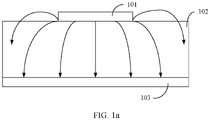
- FIG. 1a is a schematic diagram of radiation of a feed line.
- the feed line 101 is disposed on one side of a dielectric substrate, and a reflection panel 103 is disposed on the other side of the dielectric substrate 102.
- electromagnetic wave radiation of the feed line may reach the reflection panel 103 through the dielectric substrate 102.
- a ratio of a thickness of the dielectric substrate 102 to a wavelength is approximately greater than 1/20.
- a small part of the electromagnetic wave is radiated to free space through the feed line 101, and the small part of the electromagnetic wave radiated to the free space greatly affects a pattern of a radiating element.
- this application provides a microstrip antenna.
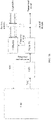
- FIG. 1b is a schematic diagram of an architecture of a scenario according to an embodiment of this application.
- this embodiment of this application may be applied to a vehicle-mounted radar system.
- an analog-to-digital converter analog-to-digital converter (analog-to-digital converter, DAC) wave generated by a chip is sent to a voltage-controlled oscillator (voltage-controlled oscillator, VCO) to generate a linear frequency-modulated continuous wave.
- a signal (for example, 77 GHz) generated through frequency multiplication is transmitted through a microstrip antenna (a transmit antenna).
- a target echo is received through a microstrip antenna (a receive antenna) and frequency mixing is performed on the target echo and a transmit signal to generate an intermediate frequency signal.
- the intermediate frequency signal is sampled and processed through the chip.
- This application may be applied to the vehicle-mounted radar system, and the vehicle-mounted radar system may be used for, but is not limited to, anti-collision, imaging, adaptive cruise control, blind spot monitoring, and the like.
- FIG. 2 is a schematic diagram of an embodiment of an antenna according to an embodiment of this application.
- the antenna provided in this embodiment of this application includes a first radiating element 202 and a first feed line.
- a first end of the first feed line is connected to the first radiating element.
- the first radiating element 202 and the first feed line are arranged on a same surface of a dielectric substrate 201.
- the first feed line includes a first feed line segment, and an acute angle between the first feed line segment and a current direction of the first radiating element 202 is greater than or equal to 20 degrees, and is less than or equal to 70 degrees.
- the first radiating element may alternatively include the radiating element itself and a small segment of a lead (for example, a small vertical downward segment of a feed lead that is directly connected to the first radiating element 202 and that is shown in FIG. 2 ) connected to the first radiating element. That the first feed line is connected to the first radiating element may mean that the first feed line is connected to the lead directly connected to the first radiating element.
- the first radiating element 202 is one of a plurality of radiating elements included in the antenna.
- a feed network includes the first feed line (including the first feed line segment 203).
- the first feed line is a segment of a feed line included in the feed network.
- a first end of the first feed line 203 is connected to the first radiating element 202, and is configured to feed the first radiating element 202.
- the first feed line 203 is a feed line segment directly connected to the first radiating element 202.
- FIG. 3a is a schematic diagram of a structure of a microstrip antenna according to an embodiment of this application.
- the microstrip antenna includes the dielectric substrate 201, and the dielectric substrate includes two opposite surfaces. 211 (the feed network and the radiating element) is disposed on one surface, and an antenna formed by a reflection panel 212 may be disposed on the other surface.
- the reflection panel 212 may also be expressed as conductor ground or a metal floor.
- the reflection panel 212 is a conductor ground plane (English: ground plane), and the dielectric substrate 201 enables an open circuit between the radiating element and the reflection panel 212.
- the first feed line includes a first feed line segment, and an acute angle between the first feed line segment and a current direction of the first radiating element is greater than or equal to 20 degrees, and is less than or equal to 70 degrees.
- the first feed line includes at least one feed line segment, the first feed line segment is one of the at least one feed line segment, and the acute angle between each of the at least one feed line segment and the current direction of the first radiating element is greater than or equal to 20 degrees, and is less than or equal to 70 degrees.
- the first feed line includes at least one feed line segment, and the acute angle between the first feed line segment and the current direction of the first radiating element is greater than or equal to 20 degrees and less than or equal to 70 degrees. In other words, the included angle between the at least one feed line segment and the current direction of the radiating element is around 45 degrees.
- the impact of the radiation on the radiating element may be decomposed into two directions: cross polarization and co-polarization. In this embodiment of this application, the impact of the radiation of the at least one feed line segment on the cross polarization of the radiating element is less than the impact of the radiation of the feed line on the cross polarization of the radiating element when the feed line is parallel to the current direction of the radiating element.
- the impact of the radiation of the at least one feed line segment on the co-polarization of the radiating element is less than the impact of the radiation of the feed line on the co-polarization of the radiating element when the feed line is perpendicular to the current direction of the radiating element.
- the feed line and the radiating element are located at a same layer, impact of radiation of the feed line on the radiating element is reduced.
- the feed line and the radiating element are disposed at a same layer. This reduces material costs and processing difficulty.
- the first radiating element may include a feed point, and the feed point is a feed connection point between a feed network and the first radiating element.
- a perpendicular line of the first radiating element on a tangent plane of the feed point may be understood as the current direction of the first radiating element in this embodiment.
- a current on the first radiating element may include a plurality of current directions, and there may be a slight difference between the plurality of current directions.
- the current direction on the first radiating element may represent an approximate current direction on the first radiating element.
- FIG. 3b is a schematic diagram of a structure of a radiating element. As shown in FIG. 3b , during operation, direction distribution of currents on the first radiating element 202 may be as shown in FIG. 3b . Although the directions of the currents on the first radiating elements are not strictly the same, there is a direction 301 that can roughly represent overall current distribution. It should be noted that the current direction 301 on the first radiating element shown in FIG. 3b is merely an example. In actual application, a direction different from the current direction 301 shown in FIG. 3b may be selected. This is not limited herein.
- FIG. 3c is a schematic diagram of a structure of a radiating element.
- the first radiating element 202 may include a feed point 303, and a direction of a perpendicular line of the first radiating element 202 on a tangent plane 302 of the feed point 303 may be considered as the current direction 301 of the first radiating element.
- a current direction of the radiating element may differ greatly from the current direction of the first radiating element.
- the foregoing special case is not considered in this embodiment, and only the approximate current direction of the first radiating element when the first radiating element works may be indicated.
- the antenna in this embodiment of this application may be a microstrip antenna.
- a feeding manner of the microstrip antenna is parallel feeding.
- the microstrip antenna may include a plurality of radiating elements that are arranged along an array.
- a quantity of the radiating elements of the microstrip antenna may be 2N, where N is greater than or equal to 2.
- the radiating element is an apparatus for receiving and sending an electromagnetic signal, and is configured to receive a high-frequency electromagnetic wave from space or transmit a high-frequency electromagnetic wave from a chip.
- the microstrip antenna further includes a feed network.
- the feed network is connected to a plurality of radiating arrays included in the microstrip antenna, and is configured to feed the plurality of radiating elements. It should be noted that in this embodiment of this application, feeding may also be understood as signal transmission.
- the feed network includes a feed line and a power splitter. One end of the feed network is connected to a chip, and the other end includes a plurality of feed line branches. Each feed line branch is connected to one radiating element.
- the feed network performs power allocation on an input signal of the chip through the power splitter, and transmits a signal to the plurality of radiating elements in parallel through the plurality of feed line branches, so as to allocate received energy to the radiating elements in an equal-amplitude same-phase mode, or combine signals received by the plurality of radiating elements, and transmit the signals to the chip through the feed line.
- the radiating elements are basic structural units of the microstrip antenna, and can effectively radiate or receive electromagnetic waves.
- the feed line is a transmission line (English: transmission line) that connects the radiating element and a radio transceiver (for example, the chip).
- the microstrip antenna shown in FIG. 2 is an antenna array including four radiating elements, including four radiating elements that are arranged at equal intervals along a straight line, three T-type power splitters, and a feed line.
- the three T-type power splitters are located between two adjacent radiating elements of the four radiating elements.
- the T-type power splitter at the center is placed in a forward direction, and the T-type power splitters on left and right sides are placed in a reverse direction.
- the T-type power splitters and the feed line form a feed network.
- One end of the feed network is connected to four radiating elements, and the other end is a general input port, and is connected to a signal transceiver unit such as the chip, to form an entire antenna array.
- the at least one feed line segment may be one or more feed line segments.
- the acute angles between the feed line segments and the current direction of the first radiating element may be the same or different.
- the acute angle may be designed based on an arrangement of the antenna array. This is not limited herein.
- a difference between a length of each feed line segment and a preset wavelength is less than a preset value.
- the preset wavelength is one half of a dielectric wavelength of the dielectric substrate, and the preset value may be but is not limited to a quarter of the dielectric wavelength.
- phases of feed line segments of a half-wavelength (one half of the dielectric wavelength) or close to the half-wavelength are opposite in a far field, so that some radiant energy counteracts each other. This reduces impact of the radiation of the feed line on co-polarization and cross polarization of an antenna pattern.
- the at least one feed line segment includes the first feed line segment 203 and a second feed line segment 204.
- a first end of the first feed line segment 203 is connected to a first end of the second feed line segment 204.
- An included angle between the first feed line segment 203 and the second feed line segment 204 is greater than or equal to 70 degrees, and is less than or equal to 135 degrees.
- the radiation of the feed line and the cross polarization of the radiating element superimpose each other in the far field. This causes an elevation of a side lobe of the antenna pattern.
- the radiation of the feed line and the co-polarization of the radiating element superimpose and affect each other in the far field. This causes a distortion of the antenna pattern.
- the included angle between the feed line and the current direction of the radiating element is greater than or equal to 20 degrees and less than or equal to 70 degrees (for example, the included angle is 45 degrees)
- the feed line is a bent line
- the included angle between the first feed line segment 203 and the second feed line segment 204 is greater than or equal to 70 degrees and less than or equal to 135 degrees, for example, 90 degrees
- a phase of the first feed line segment 203 and a phase of the second feed line segment 204 are opposite in the far field, so that some radiant energy counteracts each other.
- the impact of the radiation of the feed line on the co-polarization and the cross polarization of the antenna pattern is further reduced.
- a structure of the at least one feed line segment may be the same as that shown in FIG. 2 .
- the feed line connected to the first radiating element 202 includes feed line segments (the first feed line segment 203 and the second feed line segment 204) connected to each other, and the included angle between the feed line segments may be greater than or equal to 70 degrees and less than or equal to 135 degrees.
- a structure of the at least one feed line segment may be the same as that shown in FIG. 4 .
- An included angle between the first feed line segment 203 connected to the first radiating element 202 and a current direction of the radiating element 202 is greater than or equal to 20 degrees, and is less than or equal to 70 degrees (for example, an included angle of 45 degrees). According to the foregoing design, space occupation of an antenna array can be reduced, and space utilization of the antenna array is improved.
- a structure of the at least one feed line segment may be the same as that shown in FIG. 5 .
- An included angle between the feed line connected to the first radiating element 202 and a current direction of a radiating element is equal to 90 degrees, and the first feed line segment 203 whose included angle with the current direction of the radiating element is greater than or equal to 20 degrees and less than or equal to 70 degrees is not directly connected to the radiating element.
- a structure of the at least one feed line segment may be the same as that shown in FIG. 6 .
- An included angle between the first feed line segment 203 connected to the first radiating element 202 and a current direction of the radiating element 202 is greater than or equal to 20 degrees, and is less than or equal to 70 degrees.
- the at least one feed line segment includes the first feed line segment 203 and the second feed line segment 204.
- the first feed line segment 203 and the second feed line segment 204 are included.
- a first end of the first feed line segment 203 is connected to a first end of the second feed line segment 204.
- a second end of the first feed line segment 203 is connected to the first radiating element 202, and is configured to feed the first radiating element 202.
- the first end of the first feed line 203 in this embodiment is equivalent to the second end of the first feed line segment 203.
- the microstrip antenna further includes: a first power splitter 205, a second radiating element 209, and a second feed line 207.
- the first end of the second feed line 207 is connected to the second radiating element 209, and is configured to feed the second radiating element 209.
- the first power splitter 202, the second radiating element 209, the second feed line 207, and the first radiating element 202 are arranged on a same surface of the dielectric substrate 201.
- a first end of the first power splitter 205 is separately connected to a second end of the first feed line and a second end of the second feed line 207, the second radiating element 209 and the first radiating element 202 are symmetrically arranged on the dielectric substrate 201 relative to the first power splitter 205, and the second feed line 207 and the first feed line are symmetrically arranged on the dielectric substrate 201 relative to the first power splitter 205.
- the microstrip antenna further includes a second power splitter 209 and a third feed line (206, 208).
- the second power splitter 210, the third feed line (206, 208), and the first radiating element 202 are arranged on a same surface of the dielectric substrate 201.
- the second power splitter 210 on the dielectric substrate 201 and the first power splitter 205 are centrosymmetric relative to a center point of the second radiating element 209, and the other end of the first power splitter 205 is connected to an end of the second power splitter 210 through the third feed line (206, 208).
- the third feed line includes at least one third feed line segment, and an acute angle between each third feed line segment and the current direction of the first radiating element is greater than or equal to 20 degrees, and is less than or equal to 70 degrees.
- a difference between a length of each third feed line segment and a preset wavelength is less than a preset value, and the preset wavelength is one half of the dielectric wavelength of the dielectric substrate.
- the third feed line segment may be the feed line segment 206 and/or the feed line segment 208 shown in FIG. 2 . According to the foregoing design, space occupation of an antenna array can be reduced, and space utilization of the antenna array is improved.
- the first end of the first power splitter 205 and a second end of the second power splitter 210 are in a same direction, and a second end of the first power splitter 205 and a first end of the second power splitter 210 are in a same direction.
- the antenna array may be further miniaturized.
- an interval between the first radiating element 202 and the second radiating element 209 is greater than or equal to one half of the dielectric wavelength of the dielectric substrate, and is less than or equal to the dielectric wavelength of the dielectric substrate.
- an operating frequency of the antenna is greater than 60 GHZ.
- a ratio of the dielectric wavelength to a thickness of the dielectric substrate is less than 20.
- the dielectric substrate is relatively thick relative to the dielectric wavelength of the dielectric substrate, when the parallel-fed network and the radiating element are disposed at the same layer, greater impact is caused on the pattern of the radiating element.
- the interval between the first radiating element 202 and the second radiating element 209 is greater than or equal to one half of the dielectric wavelength of the dielectric substrate, and is less than or equal to the dielectric wavelength of the dielectric substrate.
- Embodiments of this application provide an antenna, including a first radiating element and a first feed line.
- a first end of the first feed line is connected to the first radiating element.
- the first radiating element and the first feed line are arranged on a same surface of a dielectric substrate.
- the first feed line includes a first feed line segment, and an acute angle between the first feed line segment and a current direction of the first radiating element is greater than or equal to 20 degrees, and is less than or equal to 70 degrees.
- a feeding manner of the antenna is parallel feeding. In this application, when impact of the feed line on a pattern of the radiating element is reduced, a feed network and the radiating element are disposed at a same layer of the dielectric substrate. This reduces processing difficulty and costs of a microstrip antenna.
- FIG. 7 is a schematic diagram of a structure of a microstrip antenna according to an embodiment of this application.
- the microstrip antenna in FIG. 7 has different specifications, and is an antenna array including eight radiating elements.
- a feed line directly connected to the radiating element or a feed line connected to a power splitter may include a feed line segment that forms an included angle with the radiating element.
- the microstrip antenna may further include 2N radiating elements. This is not limited in this application.
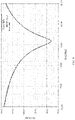
- FIG. 8 is a schematic diagram of a simulation effect of a microstrip antenna according to an embodiment of this application. As shown in FIG. 8 , in a high frequency band (a frequency band between 76 GHz and 81 GHz), this application corresponds to a noise below -10 dB. Therefore, a feed line has little impact on a pattern of a radiating element.
- a high frequency band a frequency band between 76 GHz and 81 GHz
- this application corresponds to a noise below -10 dB. Therefore, a feed line has little impact on a pattern of a radiating element.
- the communication system 900 includes a base station 910 and an antenna.
- the base station 910 may receive and send a signal through the antenna.
- the antenna may be integrated into the base station 910, or may be separately disposed from the base station 910.
- the antenna may be the antenna shown in FIG. 2 to FIG. 7 . Because the antenna has been described in detail in the foregoing embodiments, details are not described herein again.
- the base station 910 may refer to a radio transceiver, such as a cellsite (cellsite) in a cellular network, a wireless access point (wireless access point, WAP) in a wireless local area network (wireless local area network, WLAN).
- a radio transceiver such as a cellsite (cellsite) in a cellular network, a wireless access point (wireless access point, WAP) in a wireless local area network (wireless local area network, WLAN).
- Embodiments of this application further provide a radar.
- the radar may be applied to a vehicle, and the radar may receive and send a signal through an antenna.
- the antenna may be integrated into the radar or may be separately disposed from the radar.
- the antenna may be the antenna shown in FIG. 2 to FIG. 7 . Because the antenna has been described in detail in the foregoing embodiments, details are not described herein again.
- connection relationships between modules indicate that the modules have communication connections with each other, which may be specifically implemented as one or more communication buses or signal cables.
- this application may be implemented by software in addition to necessary universal hardware, or by dedicated hardware, including a dedicated integrated circuit, a dedicated CPU, a dedicated memory, a dedicated component, and the like.
- any functions that can be performed by a computer program can be easily implemented by using corresponding hardware.
- a specific hardware structure used to achieve a same function may be of various forms, for example, in a form of an analog circuit, a digital circuit, or a dedicated circuit.
- software program implementation is a better implementation in most cases.
- the technical solutions of this application essentially or the part contributing to the conventional technology may be implemented in a form of a software product.
- the computer software product is stored in a readable storage medium, such as a floppy disk, a USB flash drive, a removable hard disk, a ROM, a RAM, a magnetic disk, or an optical disc of a computer, and includes several instructions for instructing a computer device (which may be a personal computer, a training device, or a network device) to perform the methods described in embodiments of this application.
- All or some of the foregoing embodiments may be implemented by software, hardware, firmware, or any combination thereof.
- software is used to implement the embodiments, all or some of the embodiments may be implemented in a form of a computer program product.
- the computer program product includes one or more computer instructions. When the computer program instructions are loaded and executed on the computer, all or some of the procedures or functions according to the embodiments of this application are generated.
- the computer may be a general purpose computer, a dedicated computer, a computer network, or another programmable apparatus.
- the computer instructions may be stored in a computer-readable storage medium or may be transmitted from a computer-readable storage medium to another computer-readable storage medium.
- the computer instructions may be transmitted from a website, computer, training device, or data center to another website, computer, training device, or data center in a wired (for example, a coaxial cable, an optical fiber, or a digital subscriber line (DSL)) or wireless (for example, infrared, radio, or microwave) manner.
- a wired for example, a coaxial cable, an optical fiber, or a digital subscriber line (DSL)
- wireless for example, infrared, radio, or microwave
- the computer-readable storage medium may be any usable medium accessible by a computer, or a data storage device, for example, a training device or a data center, integrating one or more usable media.
- the usable medium may be a magnetic medium (for example, a floppy disk, a hard disk, or a magnetic tape), an optical medium (for example, a DVD), a semiconductor medium (for example, a solid-state disk (solid-state disk, SSD)), or the like.
Landscapes
- Engineering & Computer Science (AREA)
- Radar, Positioning & Navigation (AREA)
- Remote Sensing (AREA)
- Computer Networks & Wireless Communication (AREA)
- Physics & Mathematics (AREA)
- General Physics & Mathematics (AREA)
- Computer Security & Cryptography (AREA)
- Waveguide Aerials (AREA)
- Variable-Direction Aerials And Aerial Arrays (AREA)
Applications Claiming Priority (2)
| Application Number | Priority Date | Filing Date | Title |
|---|---|---|---|
| CN202010115641.7A CN113381174B (zh) | 2020-02-25 | 2020-02-25 | 一种天线及雷达 |
| PCT/CN2021/077339 WO2021169928A1 (zh) | 2020-02-25 | 2021-02-23 | 一种天线及雷达 |
Publications (3)
| Publication Number | Publication Date |
|---|---|
| EP4099501A1 true EP4099501A1 (de) | 2022-12-07 |
| EP4099501A4 EP4099501A4 (de) | 2023-07-05 |
| EP4099501B1 EP4099501B1 (de) | 2025-09-17 |
Family
ID=77490240
Family Applications (1)
| Application Number | Title | Priority Date | Filing Date |
|---|---|---|---|
| EP21761311.6A Active EP4099501B1 (de) | 2020-02-25 | 2021-02-23 | Antenne und radar |
Country Status (4)
| Country | Link |
|---|---|
| US (1) | US12444845B2 (de) |
| EP (1) | EP4099501B1 (de) |
| CN (1) | CN113381174B (de) |
| WO (1) | WO2021169928A1 (de) |
Families Citing this family (2)
| Publication number | Priority date | Publication date | Assignee | Title |
|---|---|---|---|---|
| CN116111343A (zh) * | 2021-11-11 | 2023-05-12 | 华为技术有限公司 | 馈电网络、天线装置及通信设备 |
| CN116845557B (zh) * | 2023-08-10 | 2024-01-26 | 北京瑞霖鑫达毫米波科技有限公司 | 一种射频天线与siw耦合器收发匹配的天线系统 |
Family Cites Families (21)
| Publication number | Priority date | Publication date | Assignee | Title |
|---|---|---|---|---|
| WO2002014898A2 (en) * | 2000-08-16 | 2002-02-21 | Raytheon Company | Near object detection system |
| CN101208831A (zh) * | 2005-06-06 | 2008-06-25 | 松下电器产业株式会社 | 平面天线装置以及使用该平面天线装置的无线通信装置 |
| US7675466B2 (en) * | 2007-07-02 | 2010-03-09 | International Business Machines Corporation | Antenna array feed line structures for millimeter wave applications |
| KR20100113347A (ko) * | 2009-04-13 | 2010-10-21 | 한국과학기술원 | 초고주파수 대역 레이더를 위한 직렬 급전 배열 안테나 |
| CN201590486U (zh) * | 2010-01-22 | 2010-09-22 | 中国计量学院 | 紧凑型高增益微带阵列天线 |
| CN203674388U (zh) * | 2013-12-20 | 2014-06-25 | 李嘉健 | 平板天线 |
| JP5995889B2 (ja) * | 2014-02-28 | 2016-09-21 | 日本ピラー工業株式会社 | 平面アンテナ |
| CN204793183U (zh) * | 2015-07-13 | 2015-11-18 | 中国人民解放军理工大学 | 一种顶端加载的单馈双频双极化单极子微带天线 |
| DE102016118419A1 (de) | 2016-09-29 | 2018-03-29 | Thyssenkrupp Ag | Verfahren und Vorrichtung zum Herstellen von Bauteilen mit angepasstem Bodenbereich |
| CN106972244B (zh) | 2017-02-28 | 2020-03-27 | 惠州硕贝德无线科技股份有限公司 | 一种车载雷达阵列天线 |
| CN107026322A (zh) * | 2017-03-27 | 2017-08-08 | 杭州电子科技大学 | 短距车载雷达天线 |
| CN206574843U (zh) | 2017-03-28 | 2017-10-20 | 南京大学(苏州)高新技术研究院 | 一种77GHz毫米波汽车防撞雷达天线 |
| CN107196049B (zh) | 2017-06-15 | 2023-03-17 | 东南大学 | 一种阵列天线 |
| CN109428175B (zh) | 2017-08-21 | 2021-04-20 | 比亚迪股份有限公司 | 天线部件、车载雷达和汽车 |
| CN207705389U (zh) * | 2017-11-30 | 2018-08-07 | 成都聚利中宇科技有限公司 | 一种基于串并馈网络的紧凑型天线阵列 |
| CN108075225A (zh) * | 2018-01-11 | 2018-05-25 | 广东工业大学 | 一种微带圆极化天线及无线设备 |
| CN208062245U (zh) * | 2018-03-30 | 2018-11-06 | 南京信息工程大学 | 一种汽车防撞雷达天线 |
| CN208596784U (zh) | 2018-07-30 | 2019-03-12 | 上海微波设备研究所(中国电子科技集团公司第五十一研究所) | 毫米波车载雷达天线以及车载雷达 |
| CN108847865A (zh) * | 2018-08-24 | 2018-11-20 | 南京濠暻通讯科技有限公司 | 一种用于第五代移动通信mimo系统的天线模块 |
| CN109244681A (zh) | 2018-10-11 | 2019-01-18 | 上海莫吉娜智能信息科技有限公司 | 基于77GHz毫米波雷达的微带阵列天线系统 |
| CN117080736A (zh) * | 2022-05-09 | 2023-11-17 | 台达电子工业股份有限公司 | 天线结构以及无线通信装置 |
-
2020
- 2020-02-25 CN CN202010115641.7A patent/CN113381174B/zh active Active
-
2021
- 2021-02-23 WO PCT/CN2021/077339 patent/WO2021169928A1/zh not_active Ceased
- 2021-02-23 EP EP21761311.6A patent/EP4099501B1/de active Active
-
2022
- 2022-08-24 US US17/894,399 patent/US12444845B2/en active Active
Also Published As
| Publication number | Publication date |
|---|---|
| US20220416431A1 (en) | 2022-12-29 |
| EP4099501A4 (de) | 2023-07-05 |
| WO2021169928A1 (zh) | 2021-09-02 |
| US12444845B2 (en) | 2025-10-14 |
| EP4099501B1 (de) | 2025-09-17 |
| CN113381174A (zh) | 2021-09-10 |
| CN113381174B (zh) | 2024-06-18 |
Similar Documents
| Publication | Publication Date | Title |
|---|---|---|
| EP3125368B1 (de) | In multipolarisationssubstrat integrierte wellenleiterantenne | |
| US9450281B2 (en) | Transit structure of waveguide and SIW | |
| EP2684225B1 (de) | Antennenanordnung für ultrabreitband-radaranwendungen | |
| US11223112B2 (en) | Inverted microstrip travelling wave patch array antenna system | |
| US12444845B2 (en) | Antenna and radar | |
| US20180301814A1 (en) | Planar-shaped antenna devices, antenna arrays, and fabrication | |
| CN110635235B (zh) | 一种毫米波mimo雷达天线及其控制方法 | |
| CN110311211B (zh) | 一种微带接收天线、发射天线及车载相控阵天线 | |
| CN101673871A (zh) | 立体双频天线装置 | |
| CN217281205U (zh) | 天线组件和车辆雷达 | |
| CN115764256A (zh) | 毫米波雷达天线和车辆 | |
| CN117525832A (zh) | 一种天线、感知模块、传感器和电子设备 | |
| CN109768394A (zh) | 微带天线结构及辐射电磁信号的方法 | |
| CN210516980U (zh) | 一种微带接收天线、发射天线及车载相控阵天线 | |
| CN110429376B (zh) | 天线单元、天线阵列和天线 | |
| US7262741B2 (en) | Ultra wideband antenna | |
| CN210245718U (zh) | 一种k波段的mimo天线 | |
| CN108400436B (zh) | 天线模块 | |
| US12537315B2 (en) | Antenna structure | |
| Ye et al. | A Series-Fed Patch Antenna Array for Biomedical Radar Applications | |
| WO2020216372A1 (zh) | 一种准八木天线阵列及毫米波基站设备 | |
| US20260066547A1 (en) | Antenna structure and communication device | |
| CN217387537U (zh) | 一种波导喇叭天线 | |
| CN113708057B (zh) | 机载共形天线以及飞行器 | |
| CN109037948A (zh) | 一种宽带开口波导天线、制造方法及该天线构成的天线阵 |
Legal Events
| Date | Code | Title | Description |
|---|---|---|---|
| STAA | Information on the status of an ep patent application or granted ep patent |
Free format text: STATUS: THE INTERNATIONAL PUBLICATION HAS BEEN MADE |
|
| PUAI | Public reference made under article 153(3) epc to a published international application that has entered the european phase |
Free format text: ORIGINAL CODE: 0009012 |
|
| STAA | Information on the status of an ep patent application or granted ep patent |
Free format text: STATUS: REQUEST FOR EXAMINATION WAS MADE |
|
| 17P | Request for examination filed |
Effective date: 20220901 |
|
| AK | Designated contracting states |
Kind code of ref document: A1 Designated state(s): AL AT BE BG CH CY CZ DE DK EE ES FI FR GB GR HR HU IE IS IT LI LT LU LV MC MK MT NL NO PL PT RO RS SE SI SK SM TR |
|
| DAV | Request for validation of the european patent (deleted) | ||
| DAX | Request for extension of the european patent (deleted) | ||
| A4 | Supplementary search report drawn up and despatched |
Effective date: 20230605 |
|
| RIC1 | Information provided on ipc code assigned before grant |
Ipc: G01S 13/931 20200101ALN20230530BHEP Ipc: H01Q 9/04 20060101ALI20230530BHEP Ipc: H01Q 1/32 20060101ALI20230530BHEP Ipc: G01S 7/03 20060101ALI20230530BHEP Ipc: H01Q 21/08 20060101ALI20230530BHEP Ipc: H01Q 21/00 20060101ALI20230530BHEP Ipc: H01Q 1/38 20060101AFI20230530BHEP |
|
| RAP1 | Party data changed (applicant data changed or rights of an application transferred) |
Owner name: SHENZHEN YINWANG INTELLIGENTTECHNOLOGIES CO., LTD. |
|
| REG | Reference to a national code |
Ref country code: DE Ref legal event code: R079 Free format text: PREVIOUS MAIN CLASS: H01Q0001380000 Ipc: H01Q0021000000 Ref document number: 602021038803 Country of ref document: DE |
|
| RIC1 | Information provided on ipc code assigned before grant |
Ipc: G01S 13/931 20200101ALN20250214BHEP Ipc: H01Q 9/04 20060101ALI20250214BHEP Ipc: H01Q 1/32 20060101ALI20250214BHEP Ipc: G01S 7/03 20060101ALI20250214BHEP Ipc: H01Q 21/08 20060101ALI20250214BHEP Ipc: H01Q 21/00 20060101ALI20250214BHEP Ipc: H01Q 1/38 20060101AFI20250214BHEP |
|
| GRAP | Despatch of communication of intention to grant a patent |
Free format text: ORIGINAL CODE: EPIDOSNIGR1 |
|
| STAA | Information on the status of an ep patent application or granted ep patent |
Free format text: STATUS: GRANT OF PATENT IS INTENDED |
|
| RIC1 | Information provided on ipc code assigned before grant |
Ipc: G01S 13/931 20200101ALN20250310BHEP Ipc: H01Q 9/04 20060101ALI20250310BHEP Ipc: H01Q 1/32 20060101ALI20250310BHEP Ipc: G01S 7/03 20060101ALI20250310BHEP Ipc: H01Q 21/08 20060101ALI20250310BHEP Ipc: H01Q 21/00 20060101AFI20250310BHEP |
|
| INTG | Intention to grant announced |
Effective date: 20250409 |
|
| P01 | Opt-out of the competence of the unified patent court (upc) registered |
Free format text: CASE NUMBER: APP_30877/2025 Effective date: 20250626 |
|
| GRAS | Grant fee paid |
Free format text: ORIGINAL CODE: EPIDOSNIGR3 |
|
| GRAA | (expected) grant |
Free format text: ORIGINAL CODE: 0009210 |
|
| STAA | Information on the status of an ep patent application or granted ep patent |
Free format text: STATUS: THE PATENT HAS BEEN GRANTED |
|
| REG | Reference to a national code |
Ref country code: DE Ref legal event code: R081 Ref document number: 602021038803 Country of ref document: DE Owner name: SHENZHEN YINWANG INTELLIGENT TECHNOLOGIES CO.,, CN Free format text: FORMER OWNER: YAMAHA CORPORATION, HAMAMATSU-SHI, SHIZUOKA-KEN, JP |
|
| AK | Designated contracting states |
Kind code of ref document: B1 Designated state(s): AL AT BE BG CH CY CZ DE DK EE ES FI FR GB GR HR HU IE IS IT LI LT LU LV MC MK MT NL NO PL PT RO RS SE SI SK SM TR |
|
| REG | Reference to a national code |
Ref country code: GB Ref legal event code: FG4D |
|
| REG | Reference to a national code |
Ref country code: CH Ref legal event code: EP |
|
| REG | Reference to a national code |
Ref country code: IE Ref legal event code: FG4D |
|
| REG | Reference to a national code |
Ref country code: DE Ref legal event code: R096 Ref document number: 602021038803 Country of ref document: DE |
|
| PG25 | Lapsed in a contracting state [announced via postgrant information from national office to epo] |
Ref country code: NO Free format text: LAPSE BECAUSE OF FAILURE TO SUBMIT A TRANSLATION OF THE DESCRIPTION OR TO PAY THE FEE WITHIN THE PRESCRIBED TIME-LIMIT Effective date: 20251217 |
|
| REG | Reference to a national code |
Ref country code: LT Ref legal event code: MG9D |
|
| PG25 | Lapsed in a contracting state [announced via postgrant information from national office to epo] |
Ref country code: FI Free format text: LAPSE BECAUSE OF FAILURE TO SUBMIT A TRANSLATION OF THE DESCRIPTION OR TO PAY THE FEE WITHIN THE PRESCRIBED TIME-LIMIT Effective date: 20250917 |
|
| PG25 | Lapsed in a contracting state [announced via postgrant information from national office to epo] |
Ref country code: HR Free format text: LAPSE BECAUSE OF FAILURE TO SUBMIT A TRANSLATION OF THE DESCRIPTION OR TO PAY THE FEE WITHIN THE PRESCRIBED TIME-LIMIT Effective date: 20250917 |
|
| PGFP | Annual fee paid to national office [announced via postgrant information from national office to epo] |
Ref country code: FR Payment date: 20251231 Year of fee payment: 6 |
|
| PG25 | Lapsed in a contracting state [announced via postgrant information from national office to epo] |
Ref country code: GR Free format text: LAPSE BECAUSE OF FAILURE TO SUBMIT A TRANSLATION OF THE DESCRIPTION OR TO PAY THE FEE WITHIN THE PRESCRIBED TIME-LIMIT Effective date: 20251218 |
|
| PG25 | Lapsed in a contracting state [announced via postgrant information from national office to epo] |
Ref country code: SE Free format text: LAPSE BECAUSE OF FAILURE TO SUBMIT A TRANSLATION OF THE DESCRIPTION OR TO PAY THE FEE WITHIN THE PRESCRIBED TIME-LIMIT Effective date: 20250917 |
|
| REG | Reference to a national code |
Ref country code: NL Ref legal event code: MP Effective date: 20250917 |
|
| PG25 | Lapsed in a contracting state [announced via postgrant information from national office to epo] |
Ref country code: LV Free format text: LAPSE BECAUSE OF FAILURE TO SUBMIT A TRANSLATION OF THE DESCRIPTION OR TO PAY THE FEE WITHIN THE PRESCRIBED TIME-LIMIT Effective date: 20250917 |
|
| PG25 | Lapsed in a contracting state [announced via postgrant information from national office to epo] |
Ref country code: BG Free format text: LAPSE BECAUSE OF FAILURE TO SUBMIT A TRANSLATION OF THE DESCRIPTION OR TO PAY THE FEE WITHIN THE PRESCRIBED TIME-LIMIT Effective date: 20250917 |
|
| PG25 | Lapsed in a contracting state [announced via postgrant information from national office to epo] |
Ref country code: RS Free format text: LAPSE BECAUSE OF FAILURE TO SUBMIT A TRANSLATION OF THE DESCRIPTION OR TO PAY THE FEE WITHIN THE PRESCRIBED TIME-LIMIT Effective date: 20251217 |
|
| PG25 | Lapsed in a contracting state [announced via postgrant information from national office to epo] |
Ref country code: NL Free format text: LAPSE BECAUSE OF FAILURE TO SUBMIT A TRANSLATION OF THE DESCRIPTION OR TO PAY THE FEE WITHIN THE PRESCRIBED TIME-LIMIT Effective date: 20250917 |
|
| REG | Reference to a national code |
Ref country code: AT Ref legal event code: MK05 Ref document number: 1839183 Country of ref document: AT Kind code of ref document: T Effective date: 20250917 |
|
| PG25 | Lapsed in a contracting state [announced via postgrant information from national office to epo] |
Ref country code: SM Free format text: LAPSE BECAUSE OF FAILURE TO SUBMIT A TRANSLATION OF THE DESCRIPTION OR TO PAY THE FEE WITHIN THE PRESCRIBED TIME-LIMIT Effective date: 20250917 |
|
| PG25 | Lapsed in a contracting state [announced via postgrant information from national office to epo] |
Ref country code: ES Free format text: LAPSE BECAUSE OF FAILURE TO SUBMIT A TRANSLATION OF THE DESCRIPTION OR TO PAY THE FEE WITHIN THE PRESCRIBED TIME-LIMIT Effective date: 20250917 |
|
| PGFP | Annual fee paid to national office [announced via postgrant information from national office to epo] |
Ref country code: DE Payment date: 20260102 Year of fee payment: 6 |
|
| PG25 | Lapsed in a contracting state [announced via postgrant information from national office to epo] |
Ref country code: AT Free format text: LAPSE BECAUSE OF FAILURE TO SUBMIT A TRANSLATION OF THE DESCRIPTION OR TO PAY THE FEE WITHIN THE PRESCRIBED TIME-LIMIT Effective date: 20250917 |
|
| PGFP | Annual fee paid to national office [announced via postgrant information from national office to epo] |
Ref country code: IT Payment date: 20260122 Year of fee payment: 6 |
|
| PG25 | Lapsed in a contracting state [announced via postgrant information from national office to epo] |
Ref country code: IS Free format text: LAPSE BECAUSE OF FAILURE TO SUBMIT A TRANSLATION OF THE DESCRIPTION OR TO PAY THE FEE WITHIN THE PRESCRIBED TIME-LIMIT Effective date: 20260117 |