EP4097667B1 - Verfahren, system, vorrichtungen und computerprogrammprodukte zur handhabung von digitalen zahlungen zwischen zahlern und zahlungsempfängern in physischer nähe zueinander - Google Patents
Verfahren, system, vorrichtungen und computerprogrammprodukte zur handhabung von digitalen zahlungen zwischen zahlern und zahlungsempfängern in physischer nähe zueinander Download PDFInfo
- Publication number
- EP4097667B1 EP4097667B1 EP20916267.6A EP20916267A EP4097667B1 EP 4097667 B1 EP4097667 B1 EP 4097667B1 EP 20916267 A EP20916267 A EP 20916267A EP 4097667 B1 EP4097667 B1 EP 4097667B1
- Authority
- EP
- European Patent Office
- Prior art keywords
- communication device
- digital
- payment
- payer
- payee
- Prior art date
- Legal status (The legal status is an assumption and is not a legal conclusion. Google has not performed a legal analysis and makes no representation as to the accuracy of the status listed.)
- Active
Links
Images






Classifications
-
- G—PHYSICS
- G06—COMPUTING OR CALCULATING; COUNTING
- G06Q—INFORMATION AND COMMUNICATION TECHNOLOGY [ICT] SPECIALLY ADAPTED FOR ADMINISTRATIVE, COMMERCIAL, FINANCIAL, MANAGERIAL OR SUPERVISORY PURPOSES; SYSTEMS OR METHODS SPECIALLY ADAPTED FOR ADMINISTRATIVE, COMMERCIAL, FINANCIAL, MANAGERIAL OR SUPERVISORY PURPOSES, NOT OTHERWISE PROVIDED FOR
- G06Q20/00—Payment architectures, schemes or protocols
- G06Q20/30—Payment architectures, schemes or protocols characterised by the use of specific devices or networks
- G06Q20/32—Payment architectures, schemes or protocols characterised by the use of specific devices or networks using wireless devices
- G06Q20/327—Short range or proximity payments by means of M-devices
- G06Q20/3278—RFID or NFC payments by means of M-devices
-
- G—PHYSICS
- G06—COMPUTING OR CALCULATING; COUNTING
- G06Q—INFORMATION AND COMMUNICATION TECHNOLOGY [ICT] SPECIALLY ADAPTED FOR ADMINISTRATIVE, COMMERCIAL, FINANCIAL, MANAGERIAL OR SUPERVISORY PURPOSES; SYSTEMS OR METHODS SPECIALLY ADAPTED FOR ADMINISTRATIVE, COMMERCIAL, FINANCIAL, MANAGERIAL OR SUPERVISORY PURPOSES, NOT OTHERWISE PROVIDED FOR
- G06Q20/00—Payment architectures, schemes or protocols
- G06Q20/08—Payment architectures
- G06Q20/10—Payment architectures specially adapted for electronic funds transfer [EFT] systems; specially adapted for home banking systems
-
- G—PHYSICS
- G06—COMPUTING OR CALCULATING; COUNTING
- G06Q—INFORMATION AND COMMUNICATION TECHNOLOGY [ICT] SPECIALLY ADAPTED FOR ADMINISTRATIVE, COMMERCIAL, FINANCIAL, MANAGERIAL OR SUPERVISORY PURPOSES; SYSTEMS OR METHODS SPECIALLY ADAPTED FOR ADMINISTRATIVE, COMMERCIAL, FINANCIAL, MANAGERIAL OR SUPERVISORY PURPOSES, NOT OTHERWISE PROVIDED FOR
- G06Q20/00—Payment architectures, schemes or protocols
- G06Q20/08—Payment architectures
- G06Q20/10—Payment architectures specially adapted for electronic funds transfer [EFT] systems; specially adapted for home banking systems
- G06Q20/108—Remote banking, e.g. home banking
-
- G—PHYSICS
- G06—COMPUTING OR CALCULATING; COUNTING
- G06Q—INFORMATION AND COMMUNICATION TECHNOLOGY [ICT] SPECIALLY ADAPTED FOR ADMINISTRATIVE, COMMERCIAL, FINANCIAL, MANAGERIAL OR SUPERVISORY PURPOSES; SYSTEMS OR METHODS SPECIALLY ADAPTED FOR ADMINISTRATIVE, COMMERCIAL, FINANCIAL, MANAGERIAL OR SUPERVISORY PURPOSES, NOT OTHERWISE PROVIDED FOR
- G06Q20/00—Payment architectures, schemes or protocols
- G06Q20/22—Payment schemes or models
-
- G—PHYSICS
- G06—COMPUTING OR CALCULATING; COUNTING
- G06Q—INFORMATION AND COMMUNICATION TECHNOLOGY [ICT] SPECIALLY ADAPTED FOR ADMINISTRATIVE, COMMERCIAL, FINANCIAL, MANAGERIAL OR SUPERVISORY PURPOSES; SYSTEMS OR METHODS SPECIALLY ADAPTED FOR ADMINISTRATIVE, COMMERCIAL, FINANCIAL, MANAGERIAL OR SUPERVISORY PURPOSES, NOT OTHERWISE PROVIDED FOR
- G06Q20/00—Payment architectures, schemes or protocols
- G06Q20/30—Payment architectures, schemes or protocols characterised by the use of specific devices or networks
- G06Q20/32—Payment architectures, schemes or protocols characterised by the use of specific devices or networks using wireless devices
- G06Q20/327—Short range or proximity payments by means of M-devices
-
- G—PHYSICS
- G06—COMPUTING OR CALCULATING; COUNTING
- G06Q—INFORMATION AND COMMUNICATION TECHNOLOGY [ICT] SPECIALLY ADAPTED FOR ADMINISTRATIVE, COMMERCIAL, FINANCIAL, MANAGERIAL OR SUPERVISORY PURPOSES; SYSTEMS OR METHODS SPECIALLY ADAPTED FOR ADMINISTRATIVE, COMMERCIAL, FINANCIAL, MANAGERIAL OR SUPERVISORY PURPOSES, NOT OTHERWISE PROVIDED FOR
- G06Q20/00—Payment architectures, schemes or protocols
- G06Q20/30—Payment architectures, schemes or protocols characterised by the use of specific devices or networks
- G06Q20/36—Payment architectures, schemes or protocols characterised by the use of specific devices or networks using electronic wallets or electronic money safes
-
- G—PHYSICS
- G06—COMPUTING OR CALCULATING; COUNTING
- G06Q—INFORMATION AND COMMUNICATION TECHNOLOGY [ICT] SPECIALLY ADAPTED FOR ADMINISTRATIVE, COMMERCIAL, FINANCIAL, MANAGERIAL OR SUPERVISORY PURPOSES; SYSTEMS OR METHODS SPECIALLY ADAPTED FOR ADMINISTRATIVE, COMMERCIAL, FINANCIAL, MANAGERIAL OR SUPERVISORY PURPOSES, NOT OTHERWISE PROVIDED FOR
- G06Q20/00—Payment architectures, schemes or protocols
- G06Q20/30—Payment architectures, schemes or protocols characterised by the use of specific devices or networks
- G06Q20/36—Payment architectures, schemes or protocols characterised by the use of specific devices or networks using electronic wallets or electronic money safes
- G06Q20/367—Payment architectures, schemes or protocols characterised by the use of specific devices or networks using electronic wallets or electronic money safes involving electronic purses or money safes
- G06Q20/3678—Payment architectures, schemes or protocols characterised by the use of specific devices or networks using electronic wallets or electronic money safes involving electronic purses or money safes e-cash details, e.g. blinded, divisible or detecting double spending
-
- G—PHYSICS
- G06—COMPUTING OR CALCULATING; COUNTING
- G06Q—INFORMATION AND COMMUNICATION TECHNOLOGY [ICT] SPECIALLY ADAPTED FOR ADMINISTRATIVE, COMMERCIAL, FINANCIAL, MANAGERIAL OR SUPERVISORY PURPOSES; SYSTEMS OR METHODS SPECIALLY ADAPTED FOR ADMINISTRATIVE, COMMERCIAL, FINANCIAL, MANAGERIAL OR SUPERVISORY PURPOSES, NOT OTHERWISE PROVIDED FOR
- G06Q20/00—Payment architectures, schemes or protocols
- G06Q20/38—Payment protocols; Details thereof
- G06Q20/382—Payment protocols; Details thereof insuring higher security of transaction
- G06Q20/3823—Payment protocols; Details thereof insuring higher security of transaction combining multiple encryption tools for a transaction
-
- G—PHYSICS
- G06—COMPUTING OR CALCULATING; COUNTING
- G06Q—INFORMATION AND COMMUNICATION TECHNOLOGY [ICT] SPECIALLY ADAPTED FOR ADMINISTRATIVE, COMMERCIAL, FINANCIAL, MANAGERIAL OR SUPERVISORY PURPOSES; SYSTEMS OR METHODS SPECIALLY ADAPTED FOR ADMINISTRATIVE, COMMERCIAL, FINANCIAL, MANAGERIAL OR SUPERVISORY PURPOSES, NOT OTHERWISE PROVIDED FOR
- G06Q20/00—Payment architectures, schemes or protocols
- G06Q20/38—Payment protocols; Details thereof
- G06Q20/389—Keeping log of transactions for guaranteeing non-repudiation of a transaction
-
- G—PHYSICS
- G06—COMPUTING OR CALCULATING; COUNTING
- G06Q—INFORMATION AND COMMUNICATION TECHNOLOGY [ICT] SPECIALLY ADAPTED FOR ADMINISTRATIVE, COMMERCIAL, FINANCIAL, MANAGERIAL OR SUPERVISORY PURPOSES; SYSTEMS OR METHODS SPECIALLY ADAPTED FOR ADMINISTRATIVE, COMMERCIAL, FINANCIAL, MANAGERIAL OR SUPERVISORY PURPOSES, NOT OTHERWISE PROVIDED FOR
- G06Q20/00—Payment architectures, schemes or protocols
- G06Q20/38—Payment protocols; Details thereof
- G06Q20/40—Authorisation, e.g. identification of payer or payee, verification of customer or shop credentials; Review and approval of payers, e.g. check credit lines or negative lists
- G06Q20/401—Transaction verification
-
- H—ELECTRICITY
- H04—ELECTRIC COMMUNICATION TECHNIQUE
- H04L—TRANSMISSION OF DIGITAL INFORMATION, e.g. TELEGRAPHIC COMMUNICATION
- H04L9/00—Cryptographic mechanisms or cryptographic arrangements for secret or secure communications; Network security protocols
- H04L9/08—Key distribution or management, e.g. generation, sharing or updating, of cryptographic keys or passwords
- H04L9/0816—Key establishment, i.e. cryptographic processes or cryptographic protocols whereby a shared secret becomes available to two or more parties, for subsequent use
- H04L9/0819—Key transport or distribution, i.e. key establishment techniques where one party creates or otherwise obtains a secret value, and securely transfers it to the other(s)
- H04L9/0825—Key transport or distribution, i.e. key establishment techniques where one party creates or otherwise obtains a secret value, and securely transfers it to the other(s) using asymmetric-key encryption or public key infrastructure [PKI], e.g. key signature or public key certificates
-
- H—ELECTRICITY
- H04—ELECTRIC COMMUNICATION TECHNIQUE
- H04L—TRANSMISSION OF DIGITAL INFORMATION, e.g. TELEGRAPHIC COMMUNICATION
- H04L9/00—Cryptographic mechanisms or cryptographic arrangements for secret or secure communications; Network security protocols
- H04L9/08—Key distribution or management, e.g. generation, sharing or updating, of cryptographic keys or passwords
- H04L9/0894—Escrow, recovery or storing of secret information, e.g. secret key escrow or cryptographic key storage
- H04L9/0897—Escrow, recovery or storing of secret information, e.g. secret key escrow or cryptographic key storage involving additional devices, e.g. trusted platform module [TPM], smartcard or USB
-
- H—ELECTRICITY
- H04—ELECTRIC COMMUNICATION TECHNIQUE
- H04L—TRANSMISSION OF DIGITAL INFORMATION, e.g. TELEGRAPHIC COMMUNICATION
- H04L9/00—Cryptographic mechanisms or cryptographic arrangements for secret or secure communications; Network security protocols
- H04L9/32—Cryptographic mechanisms or cryptographic arrangements for secret or secure communications; Network security protocols including means for verifying the identity or authority of a user of the system or for message authentication, e.g. authorization, entity authentication, data integrity or data verification, non-repudiation, key authentication or verification of credentials
- H04L9/3247—Cryptographic mechanisms or cryptographic arrangements for secret or secure communications; Network security protocols including means for verifying the identity or authority of a user of the system or for message authentication, e.g. authorization, entity authentication, data integrity or data verification, non-repudiation, key authentication or verification of credentials involving digital signatures
-
- H—ELECTRICITY
- H04—ELECTRIC COMMUNICATION TECHNIQUE
- H04L—TRANSMISSION OF DIGITAL INFORMATION, e.g. TELEGRAPHIC COMMUNICATION
- H04L9/00—Cryptographic mechanisms or cryptographic arrangements for secret or secure communications; Network security protocols
- H04L9/32—Cryptographic mechanisms or cryptographic arrangements for secret or secure communications; Network security protocols including means for verifying the identity or authority of a user of the system or for message authentication, e.g. authorization, entity authentication, data integrity or data verification, non-repudiation, key authentication or verification of credentials
- H04L9/3263—Cryptographic mechanisms or cryptographic arrangements for secret or secure communications; Network security protocols including means for verifying the identity or authority of a user of the system or for message authentication, e.g. authorization, entity authentication, data integrity or data verification, non-repudiation, key authentication or verification of credentials involving certificates, e.g. public key certificate [PKC] or attribute certificate [AC]; Public key infrastructure [PKI] arrangements
-
- H—ELECTRICITY
- H04—ELECTRIC COMMUNICATION TECHNIQUE
- H04W—WIRELESS COMMUNICATION NETWORKS
- H04W12/00—Security arrangements; Authentication; Protecting privacy or anonymity
- H04W12/06—Authentication
- H04W12/069—Authentication using certificates or pre-shared keys
-
- H—ELECTRICITY
- H04—ELECTRIC COMMUNICATION TECHNIQUE
- H04W—WIRELESS COMMUNICATION NETWORKS
- H04W12/00—Security arrangements; Authentication; Protecting privacy or anonymity
- H04W12/60—Context-dependent security
- H04W12/63—Location-dependent; Proximity-dependent
-
- H—ELECTRICITY
- H04—ELECTRIC COMMUNICATION TECHNIQUE
- H04L—TRANSMISSION OF DIGITAL INFORMATION, e.g. TELEGRAPHIC COMMUNICATION
- H04L2209/00—Additional information or applications relating to cryptographic mechanisms or cryptographic arrangements for secret or secure communication H04L9/00
- H04L2209/42—Anonymization, e.g. involving pseudonyms
-
- H—ELECTRICITY
- H04—ELECTRIC COMMUNICATION TECHNIQUE
- H04L—TRANSMISSION OF DIGITAL INFORMATION, e.g. TELEGRAPHIC COMMUNICATION
- H04L2209/00—Additional information or applications relating to cryptographic mechanisms or cryptographic arrangements for secret or secure communication H04L9/00
- H04L2209/56—Financial cryptography, e.g. electronic payment or e-cash
Definitions
- the present invention generally relates to the field of digital payments. More particularly, the present invention relates to technical improvements for digital payments between payers and payees that are physically proximate to each other, e.g. that appear or meet at a physical place such as, for instance, a shop, restaurant, theatre, sport arena, workshop, or basically any place where humans can meet to perform a digital payment. Even more particularly, the present invention relates to a method and a communication system for handling a digital payment between a payer and a payee by the provision of a payer communication device, used by the payer, and a payee communication device, used by the payee, when the devices are in proximity to each other, and to a communication system for performing the method. Moreover, the invention relates to associated communication devices, computer program products and computer readable media.
- mobile communication devices such as smart phones and tablets at least during the last decade. Long gone are the days when mobile communication devices were primarily used for voice calls.
- mobile communication devices are enabled for wide-area network, WAN, communication (broadband RF communication) with remote entities, for instance via cellular radio systems like 5G, UMTS or GSM, or via wireless local area network, WLAN, access for routing IP traffic to and from such remote entities.
- mobile communication devices are often enabled for short-range wireless data communication, such as Bluetooth, with other devices nearby.
- a nearby device may for instance be an accessory or peripheral device, like a wireless headset or wireless speakers.
- a very popular type of such digital services is digital payments.
- a special kind of digital payments is the digital proximity payment that allows a user of a mobile communication device to make a digital payment when being physically proximate to another entity at a physical place such as, for instance, a shop, restaurant, theatre, sport arena, workshop, or basically any place where a human may want to perform a digital payment.
- the other entity may be another communication device which is controlled by a human user (such as a smart phone, tablet, payment terminal, checkout counter, etc.), or another communication device that operates more autonomously (such as a service terminal, vending machine, ticket machine, access control system, etc.).
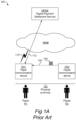
- FIG. 1A A communication system 100 for performing real-time digital proximity payments according to the prior art is presented in Figure 1A . More specifically, Figure 1A illustrates the performance of a type of digital proximity payment which is often referred to as a push transaction.
- the communication system 100 comprises a payer communication device PD1, a payee communication device PD2, and cloud-based digital payment settlement service DPSS which is accessible by WAN communication.
- a payer P1 wishes to make a digital payment to a payee P2, for instance in order to buy a product, enjoy a service, settle a debt, or gain access to something controlled by the payee P2.
- the payer P1 brings or has brought the payer communication device PD1 in proximity to the payee communication device PD2, or alternatively the other way around.
- the payer communication device PD1 and the payee communication device PD2 can, for instance, be of any of the exemplary types mentioned above.
- the digital payment settlement service DPSS assists in performing a digital payment transaction to transfer an economic value from an account associated with the payer P1 (or with another entity represented by the payer P1) to an account associated with the payee P2 (or with another entity represented by the payee P2, such as a merchant, shop owner, service provider, etc.).
- the accounts can be managed by the digital payment settlement service DPSS itself or alternatively by other entities, such as banks or other financial institutes.
- the payee communication device PD2 makes payment details available to the payer communication device PD1. This may involve generating a QR (Quick Response) code 104 and presenting it on a display, so that the QR code 104 can be scanned 103 by the payer communication device PD1. Alternatively, the payment details may be provided by the payee communication device PD2 to the payer communication device PD1 by other means of communication, including short-range wireless communication such as NFC.
- QR Quick Response
- the payment details will typically comprise an amount to be paid, a transaction identifier and/or an identifier associated with the payee communication device PD2 (or payee user P2).
- the payer communication device PD1 extracts the payment details from the QR code 104 (or the received NFC data, etc.). As seen at 112, the payer communication device PD1 then communicates with the digital payment settlement service DPSS by wide-area network, WAN, communication 110 to authorize the digital payment and cause settlement of the digital payment.
- the authorization may typically involve electronic authentication (identification) of the payer communication device PD1 or the payer P1. Authorization and settlement of the digital payment take place momentarily, and the digital payment is therefore a real-time payment.
- the digital payment settlement service DPSS may be constituted by different parts or entities, such as a payment service front-end towards the payer communication device PD1 and a payment settlement back-end that is operative to settle the digital payment transaction, if needed by communication with external entities for clearing (such as banks). If, for some reason, the authorization and settlement communication 112 with the digital payment settlement service DPSS is not possible because of a momentary failure in WAN access 110, or if an entity in the digital payment settlement service DPSS or a related entity such as an online bank or clearing service is momentarily unavailable, the real-time digital proximity payment will not be performed or completed successfully.
- a payment service front-end towards the payer communication device PD1 and a payment settlement back-end that is operative to settle the digital payment transaction, if needed by communication with external entities for clearing (such as banks). If, for some reason, the authorization and settlement communication 112 with the digital payment settlement service DPSS is not possible because of a momentary failure in WAN access 110, or if an entity in the digital payment settlement
- the communication system 100' in Figure 1B comprises a payer communication device PD1, a payee communication device PD2, and cloud-based digital payment settlement service DPSS which is accessible by WAN communication.
- the payer communication device PD1 makes payment details available to the payee communication device PD2. This may involve generating a QR code 104' and presenting it on a display, so that it can be scanned 103' by the payee communication device PD2. Alternatively, it can be made by means of NFC communication or other short-range wireless communication, or by presenting a smart card having an electronically memory which is readable by the payee communication device PD2.
- the cloud-based digital payment settlement service DPSS may typically be an EMV card rail (Europay, Mastercard and VISA), and the payer communication device PD1 may typically run digital payment OEM software such as Apple Pay, Google Pay or Samsung Pay, or alternatively software based on HCE (Host Card Emulation).
- the payment details thus contains information which will enable the digital payment settlement service DPSS to derive the payer account.
- the payee communication device PD2 obtains the payment details from the QR code 104' (or the received NFC data, etc.). The payee communication device PD2 then communicates 122 with the digital payment settlement service DPSS by WAN communication 120 to verify that the digital payment is allowable (e.g. by checking that a payer account as derived from the payment details has a sufficient balance to cover the payment amount), and cause settlement of the digital payment.
- the digital proximity payment will not be performed or completed successfully.
- a limited exception to this is when the payee communication device PD2 has been granted a certain floor limit by the acquirer that allows it to buffer a few digital proximity payments offline in the device PD2 (for instance when the payments cannot be settled immediately), and then send the buffered digital proximity payments for settlement by the digital payment settlement service DPSS when the opportunity arises.
- the functionality for performing digital proximity payments like, for instance, in Figure 1A or 1B , generally relies on the cloud-based digital payment settlement service DPSS (including any related entities in the cloud, such as online bank or clearing services) being operational and accessible at the moment the digital proximity payment is to be performed between the payer P1 and payee P2.
- DPSS cloud-based digital payment settlement service
- WAN communication between the payer communication device PD1 and the digital payment settlement service DPSS, or between the payee communication device PD2 and the digital payment settlement service DPSS, respectively.
- WAN communication for mobile communication devices is far from always reliable and may be subject to variations in accessibility due to cellular network capacity or coverage, radio signal interference and fading, etc.
- the cloud-based digital payment service functionality as such may be fully or partly inoperative from time to time. This may pose quite undesired limitations on the usability and credibility of digital proximity payments according to the prior art.
- the present invention enables offline frictionless mobile payments. This is a huge breakthrough and has strong potential to change the global payment eco-system.
- the innovation makes digital proximity payment services far more robust, as the moment of payment between payer and payee will function in the same way, regardless of whether the payer and/or the payee is offline and furthermore regardless of whether or not cloud-based resources for handling the digital payment are fully operational and accessible at the moment of performing the payment between payer and payee.
- a novel and inventive technical design of a communication system and method for performing digital proximity payments will circumvent technical problems in the prior art. Such problems may pertain to temporary inoperability of cloud-based digital resources for payment authorization, verification and settlement.
- Such problems may also pertain to unstable WAN connectivity, insufficient or varying bandwidth for broadband communication, WAN load balancing issues, network communication timeout issues, etc.
- the problems in the prior art may jeopardize the robustness of conventional digital proximity payments or even make such payments impossible to perform in some environments or situations.
- Digital payments are therefore potentially unreliable with prior art solutions.
- Many users have negative experience from not being able to complete a payment transaction. As explained above, this can be due to poor internet access, no mobile coverage, or that the whole payment service or any part thereof is down. In countries with less developed IT infrastructure this is an even greater issue standing in the way of full digitalization of payments.
- the present inventors tackle this by offering offline frictionless mobile payments.
- the transaction works even if neither the payer nor the payee have access to the internet, do not have mobile network coverage or are not connected to the payment services backend.
- the invention makes this possible by differentiating between an offline payment settlement at the moment of payment, and a subsequent online payment settlement involving the transfer of money in the cloud.
- the users can reserve money in for instance their bank or card accounts for offline use, or arrange credit for offline payments. This can be seen as the digital equivalent of withdrawing money at an automated teller machine, ATM, and carrying physical cash around in a wallet.
- the digital money may be placed in a mobile (digital) wallet and can be used in the same way as physical cash.
- Embodiments of the invention have the potential to support national central banks' plans for a value-based e-currency.
- the offline payment works just as well for a peer-to-peer case, where the mobile transaction is done straight to an app on the payee's mobile communication device, as it does for a business-to-consumer, B2C, case, where the mobile transaction goes from a customer via, for instance, a payment terminal to a physical cash register operated by a merchant in store.
- the transaction is digitally signed by the payer and transmitted locally to the payee, so the payee has a digitally signed commitment which can be seen as a digital equivalent of a banker's cheque as it is guaranteed.
- both parties are offline at the moment of payment, the transfer of money between accounts will take place later when one of the parties has internet connection and access to the payment service's back-end in the cloud.
- Transactions are logged locally by both the payer and the payee in respective communication devices.
- An offline digital balance is updated locally in the payer's communication device.
- a local offline digital balance is updated also in the payee's communication device.
- the transfer of money may, in alternative embodiments, take place at the moment of payment, but preferably still as a subsequent online settlement stage.
- QR codes can also be used for pull-type real-time payments.
- QR codes the communication is always one-way towards the device scanning the QR code.
- the QR code is simply an image and cannot receive any information, in contrast to a bidirectional short range RF data communication link, such as Bluetooth.
- Embodiments of the present invention are, in an advantageous but non-limiting sense, based on the use of dynamic QR codes. This creates huge advantages and enormous possibilities, especially for areas where internet connection and sometimes even mobile coverage is a problem. Since QR codes only make one-way local communication possible, internet connection and communication via the payment service in the cloud is needed for both the payer and receiver in order for them to digitally register the payment. The breakthrough made by the present inventions complements the eco system for QR codes, since payments will be able to be made, even if one or both of the parties are offline. This will still be perceived as a real-time payment to the payer and payee, even though the communication with the cloud-based payment service takes place later.
- a first aspect of the present invention is a method for handling a digital payment between a payer and a payee, the method involving:
- a key feature of the present invention and its advantageous embodiments is the ingenious idea of splitting the digital payment process in two subsequent stages.
- This inventive approach takes away any and all online issues, including connectivity problems and payment service time-outs.
- short-range data communication includes any form of proximity-based device-to-device communication, unidirectional or bidirectional.
- This includes radio-based short-range wireless data communication such as, for instance, Bluetooth, BLE (Bluetooth Low Energy), RFID, WLAN, WiFi, mesh communication or LTE Direct, without limitation.
- It also includes non-radio-based short-range wireless data communication such as, for instance, magnetic communication (such as NFC), audio communication, ultrasound communication, or optical communication (such as QR, barcode, IrDA).
- wide-area network communication includes any form of data network communication with a party which may be remote (e.g. cloud-based), including cellular radio communication like W-CDMA, GSM, UTRAN, HSPA, LTE, LTE Advanced or 5G, possibly communicated as TCP/IP traffic, or via a WLAN (WiFi) access point, without limitation.
- WAN communication wide-area network communication
- long-range data communication and “broadband data communication” are considered as synonyms of "wide-area network communication”.
- the term "communication device” includes a mobile communication device, a mobile phone, a smart phone, a tablet computer, a personal digital assistant, a portable computer, smart glasses, a smart wearable (e.g. smart watch or smart bracelet), a smart card, a payment terminal, a service terminal, a point-of-sales terminal, a checkout counter, a delivery pickup point, a vending machine, a ticket machine, a dispensing machine and an access control system, without limitation.
- a mobile communication device includes a mobile communication device, a mobile phone, a smart phone, a tablet computer, a personal digital assistant, a portable computer, smart glasses, a smart wearable (e.g. smart watch or smart bracelet), a smart card, a payment terminal, a service terminal, a point-of-sales terminal, a checkout counter, a delivery pickup point, a vending machine, a ticket machine, a dispensing machine and an access control system, without limitation.
- FIG 2A illustrates a communication system 200 for handling digital proximity payments generally according to the present invention.
- the communication system 200 comprises a payee communication device PD1, a payer communication device PD2 and a cloud-based digital payment settlement service DPSS which is accessible by wide-area network, WAN, communication.
- a payer P1 wishes to make a digital payment to a payee P2, for instance in order to buy a product, enjoy a service, settle a debt, or gain access to something controlled by the payee P2.
- the payer P1 brings the payer communication device PD1 in proximity 202 of the payee communication device PD2 (or alternatively the other way around).
- the payer communication device PD1 can, for instance, be of any of the following exemplary types: a mobile communication device, a mobile phone, a smart phone, a tablet computer, a personal digital assistant, a portable computer, smart glasses, a smart card or a smart wearable (e.g. smart watch or smart bracelet).
- the payee communication device PD2 can, for instance, be of any of the exemplary types as referred to for the payer communication device PD1, or a payment terminal, a service terminal, a point-of-sales terminal, a checkout counter, a delivery pickup point, a vending machine, a ticket machine, a dispensing machine, or an access control system.
- the digital payment DP can be performed irrespective of whether the payer communication device PD1 and the payee communication device PD2 lack momentary access to the digital payment settlement service DPSS by wide-area network communication in the first stage of the handling of the digital payment. It is recalled that such lack of access to the cloud-based digital payment settlement service DPSS can be due to the cloud-based digital payment settlement service DPSS being momentarily inoperative (this includes any of its constituent entities as well as any related entities in the cloud, such as online bank or clearing services), or because there is technical problem with the WAN communication as such.
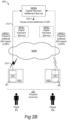
- the second stage is illustrated in Figures 2B and 2C and serves to cause final online settlement of a digital payment transaction which transfers an economic value from an account associated with the payer user P1 (or with another entity represented by the payer user P1) to an account associated with the payee user P2 (or with another entity represented by the payee user P2, such as a merchant, shop owner, service provider, etc.).
- the accounts can be managed by the digital payment settlement service DPSS itself or alternatively by other entities, such as banks or other financial institutes.
- the communication system 200 offers a robust solution that allows digital proximity payments to be performed also in situations that were not possible with the push or pull approaches in the prior art systems 100, 100' in Figures 1A and 1B .
- those prior art approaches are based on the paradigm that one, and only one, of the payer (push) or payee (pull) shall handle the buffering and sending of digital payment transactions to the cloud for online settlement.
- the inventive approach on the other hand, with its two stages of offline and online settlement, both the payer and the payee are capable of buffering and sending digital payment transactions to the cloud for online settlement. Firstly, this will be beneficial to both parties since, as mentioned, digital proximity payments can be performed without requiring momentary online capabilities.
- the payee may benefit from being able to cause subsequent online settlement, since it will not have to wait for the payer side to do it and can therefore enjoy the online settlement quicker. Online settlement may thus advantageously be caused on the payee side when the payee communication device regains online capacity.
- the ability to cause online settlement may be beneficial because it is the prevailing norm to settle push transactions online. It may also allow the payer's bank to verify the digital payments and, as a consequence, build trust and allow the payer to make a top-up of a local digital wallet in the payer communication device (a further description of the local digital wallet will follow below). Online settlement may be caused on the payer side when it regains online capacity, upon request from the payer's bank, according to a schedule, when a top-up is made of the local digital wallet, etc.
- the communication system 200 in Figures 2A-2C is configured to perform a method 600 for handling a digital payment DP between the payer P1 and the payee P2.
- the method 600 is divided into two stages, offline and online.
- the offline stage involves the following.
- the payer communication device PD1, used by the payer P1, and the payee communication device PD2, used by the payee P2, use short-range data communication SRDC at 203 when the devices PD1 and PD2 are in physical proximity (see 202 in Figure 2A ) of each other to agree upon a digital payment DP without requiring long-range (WAN, broadband) data communication with the remote digital payment settlement service DPSS during the offline stage.
- WAN wide-range
- step 610 causes an offline settlement of the digital payment DP between the payer P1 and payee P2.
- the payer communication device PD1 and the payee communication device PD2 both buffer digital payment information DPI pertaining to the digital payment DP locally in the respective device PD1, PD2. See Figure 2A , buffer B1 in the payer communication device PD1 and buffer B2 in the payee communication device PD2.
- the online stage will commence at some later moment in time.
- the online stage is illustrated in Figures 2B and 2C and involves the following functionality in the method 600 in Figure 6 .
- the payer communication device PD1 or the payee communication device PD2 independently of the other device, communicates the buffered digital payment information DPI to the remote digital payment settlement service DPSS by long-range (WAN, broadband) data communication LRDC1, LRDC2.
- WAN wide-range
- the remote digital payment settlement service DPSS causes settlement 230 of the digital payment DP, as indicated by the digital payment information DPI received by the long-range data communication LRDC1, LRDC2 from one of the payer communication device and the payee communication device PD1, PD2, without having to wait for digital payment information to be received from the other one of the payer communication device and the payee communication device PD1, PD2.
- the online settlement may involve a digital payment service DPS1, being a bank or other financial institute having the payer P1 as a client, and a digital payment service DPS2, being a bank or other financial institute having the payee P2 as a client.
- the digital payment settlement service DPSS also incorporates or implements the digital payment services DSP1, DPS2 or the single common digital payment service, as the case may be.
- Figure 2B illustrates a situation where the payer communication device PD 1 communicates 212 its buffered digital payment information DPI, as stored in the local buffer B1, to the remote digital payment settlement service DPSS by long-range data communication 210, LRDC1.
- the digital payment settlement service DPSS does not have to wait for the digital payment information DPI to be received from the payee communication device PD2 but can proceed directly with the settlement 230 of the digital payment DP.
- Figure 2C illustrates the opposite situation. Note that proximity 202 between the payer communication device PD1 and payee communication device PD2 is no longer required in the online stage of Figure 2B or 2C , as indicated by hatched lines.
- the method 600 further involves that the payer communication device PD1 retrieves a credit amount from the digital payment service DPS1 by long-range data communication.
- the payer communication device PD1 enters the credit amount in a local digital wallet maintained by the payer communication device PD1.
- the payer communication device PD1 Prior to agreeing 610 upon the digital payment DP with the payee communication device PD2, the payer communication device PD1 checks whether the local digital wallet has sufficient balance for the digital payment DP. Sufficient balance will typically mean that a current balance of the local digital wallet is at least as large as the amount of the digital payment. Only when the local digital wallet has sufficient balance for the digital payment DP will an amount of the digital payment DP be deduced from the local digital wallet, thus agreeing 610 upon the digital payment DP and proceeding with the remaining steps of the method 600.
- local digital wallet implies no restriction to any particular implementation.
- the term is to be construed broadly to mean a local digital balance, or local credit, expressed in any unit of value (such as, without limitation, a monetary state currency or digital currency), and managed locally by the payer communication device PD1 for the purpose of allowing the user P1 thereof to perform a digital payment as referred to in this document in an amount which does not exceed the current digital balance, and from which the payment amount is deducted so that the current digital balance is reduced accordingly.
- the user P1 of the payment communication device PD1 can set a desired credit level for the local digital wallet (local digital balance, local credit).
- the payment communication device PD1 may be configured, when it has WAN access, to automatically request a replenishment credit amount from the digital payment service DPS1 by long-range data communication, wherein the replenishment credit amount will correspond to a difference between the desired credit level and the current balance of the local digital wallet, so that the balance of the local digital wallet is topped up to the desired credit level.
- the excess amount may be transferred from the local digital wallet to the digital payment service DPS1, such that the local digital wallet is kept at the desired credit level.
- a local digital wallet in the payer communication device PD1 may be used by the payer P1 also to make a payment to a payment receiver (payee) who is not proximate to the payer P1, e.g. by making a cloud-based payment transaction by long-range data communication with the remote digital payment settlement service DPSS (or a digital payment service DPS1, DPS2 as is seen in Figures 2B and 2C ), for an amount covered by the current balance of the local digital wallet.
- DPSS remote digital payment settlement service
- DPS1, DPS2 digital payment service
- Some embodiments involve the payee device communication PD2 using the buffered digital payment information DPI to allow the payee P2 of the payee communication device PD2 to act as a payment sender (i.e., payer) of another payment to another payment receiver (i.e. payee) by transferring the buffered digital payment information DPI to another communication device used by said another payment receiver.
- a payment sender i.e., payer
- another payment receiver i.e. payee
- the payment may be handled in the same way as has been described for the method 600 above.
- the payment may be handled by the payee communication device P2 making a conventional cloud-based payment transaction by long-range data communication with the remote digital payment settlement service DPSS or a digital payment service DPS1, DPS2.
- One such interesting feature is the ability to generate a digital payment which during the offline stage is perceived by the payee PD2 as a guaranteed or safe payment transaction. In turn, this will allow the payee PD2 to trust that he or she can perform goods or services, even though the digital payment has not yet been settled online by the remote digital payment settlement service DPSS in the cloud.
- the communication device PD1 and the payee communication device PD2 may arrive at the aforementioned agreement 610 upon the digital payment DP (i.e., offline settlement) by performing the following short-range data communication-based activity.
- the payee communication device PD2 transmits payment details for the digital payment DP to the payer communication device PD2 by short-range data communication SRDC. See for instance 334 in the embodiment of Figure 3A ; other embodiments are also possible.
- the payer communication device PD1 uses the payment details and a digital signature of the payer P1 to digitally sign (see 342 in Figure 3A ) the digital payment DP and generate a payment token (see S in Figure 3A ).
- the payer communication device PD1 then transmits 348 the payment token S to the payee communication device PD2 by short-range data communication SRDC, and the payee communication device PD2 buffers 352 the received payment token S in or as said digital payment information DPI locally in the payee communication device PD2.
- each of the payer communication device PD1 and the payee communication device PD2 may buffer also digital payment information for previous digital payments that they have agreed upon in the corresponding manner as described above for the handling of a present digital payment DP, with each other or with other payees and payers, respectively.
- the digital payment information for such previous digital payments may also be stored in the buffers B1 and B2, respectively.
- each of the payer communication device PD1 and the payee communication device PD2 will communicate a batch of such buffered digital payment information to the remote digital payment settlement service DPSS by long-range data communication LRDC1, LRDC2, wherein the batch includes the present digital payment DP as well as the previously buffered digital payments.
- Such communication of buffered digital payment information can be seen at 212 in Figure 2B , at 222 in Figure 2C , at 360 and 370 in Figure 3B , and at 560 and 570 in Figure 5B .
- the remote digital payment settlement service DPSS will then receive the batch of buffered digital payment information as sent by the payer communication device PD1 or the payee communication device PD2 (whichever occurs first), and process each digital payment contained in the batch to cause settlement thereof, unless not already settled by another entity.
- the payment settlement caused by the digital payment settlement service DPSS may involve instructing a digital payment service DPS 1 associated with the payer P1 to transfer funds from an account held by the payer P1 to a digital payment service DPS2 associated with the payee P2, to be credited to an account held by the payee P2.
- the payment settlement caused by the digital payment settlement service DPSS may involve instructing a digital payment service DPS2 associated with the payee P2 to collect funds from an account held by the payer P1 at a digital payment service DPS1 associated with the payer P1.
- the digital payment service DPS1 may be the same as the payment service DPS2 in some embodiments.
- the payment settlement caused by the digital payment settlement service DPSS does not involve a separate digital payment service DPS1 and/or DPS2 (i.e., the digital payment settlement service DPSS itself controls the account of the payer P1 and/or of the payee P2).
- the present invention performs digital payments in a two-stage procedure as outlined above in Figure 2A (first stage, local offline payment involving only short-range data communication SRDC) and in Figures 2B / 2C (second stage, subsequent online payment settlement involving long-range data communication LRDC1/LRDC2).
- first stage local offline payment involving only short-range data communication SRDC
- second stage subsequent online payment settlement involving long-range data communication LRDC1/LRDC2
- An additional advantage is the elimination or at least reduction of the need for long-range data communication with cloud-based resources to check that the payer has sufficient coverage for the payment amount at the moment when the payment is to be agreed upon between payer and payee (cf. step 610 in the first stage of the present invention).
- the offline payment functionality provided by the present invention may be applied irrespective of whether the payer and payee communication devices PD1, PD2 are offline or online at the time when the digital payment is agreed upon.
- the time between performing the first stage and performing the second stage may be quite short, or even very short, if at least one of the devices PD1, PD2 already had WAN access (i.e. was not offline) when the digital payment was agreed upon at 610 in the first stage of the payment procedure.
- it may be beneficial to always apply the two-stage payment procedure as provided by the present invention for instance in order to obtain any of the advantages referred to previously in this document.
- the present invention will represent a full-service payment solution which may remove the need for existing, conventional online payment solutions for digital payments between proximate payers and payees.
- online communication may be used either to perform a conventional push or pull transaction, or to make a top-up of the local digital wallet.
- the use of the two-stage procedure may be limited to situations where at least one of the payer P1/payer communication device PD1 and the payee P2/payee communication device PD2 is offline at the time when the digital payment is agreed upon. If one or both of the devices PD1 and PD2 do have online access to the digital payment settlement service DPSS by WAN communication at the time when the digital payment is agreed upon, a conventional online payment may be performed by one or both of the devices PD1, PD2 directly communicating with the digital payment settlement service DPSS (or alternatively the digital payment service DPS1, DPS2) by long-range data communication LRDC1, LRDC2.
- the first and second-stage functionality will not be performed, and instead conventional online payment may be applied.
- This alternative approach will be beneficial in that the offline payment functionality provided by the present invention may be implemented as an add-on to existing functionality for conventional online digital payments between proximate payers and payees.
- the payer P1 digitally signs the digital payment DP during the first stage of the payment procedure, i.e. when the payer communication device PD1 and the payee communication device PD2 agree upon the digital payment DP by short-range data communication SRDC without requiring long-range data communication with the remote digital payment settlement service DPSS at that stage.
- this does not mean that the identity of the payer P1 will have to be revealed to the payee P2, nor to the payee's bank.
- the identity of the payee P2 will not have to be revealed to the payer P1, nor to the payer's bank.
- applying a digital signature may allow the remote digital payment settlement service DPSS to verify the authenticity of the digital payment DP and identify it as being made by the payer P1.
- the identity of the payer P1 is known only to the digital payment settlement service DPSS but not to the digital payment service DPS2 (the payee's bank) that manages the account that receives the payment amount at the online settlement.
- the payee P2 nor the payee's bank can or has to be able to determine the identity of the payer P1.
- Sufficient trust can be built into the system thanks to the use of peer certificates for the payer P1 and payee P2 (cf.
- the payee may use the digital payment, being digitally signed by and received from the payer P1, as anonymous digital currency.
- the payee's possession of the digitally signed digital currency will as such be sufficient for him or her to use as a value object in a further electronic transaction. This is beneficial since it will allow digital payments pursuant to the present invention to be used much like traditional cash money which does not carry an indication of the identity of the present owner (i.e. payer).
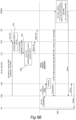
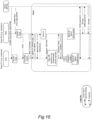
- Figures 3A-3B disclose a sophisticated embodiment of a communication system and a method for handling digital payments according to the present disclosure.
- the communication system comprises a first communication device in the form of a payer communication device PD1, a second communication device in the form of a payee communication device PD2 and a digital payment settlement service DPSS (or alternatively another form of cloud-based payment functionality).
- the system and method can be used for handling a digital payment between a payer P1, such as a customer or a first peer, and a payee P2, such as a merchant or a second peer, as previously explained.
- the payer communication device PD1 comprises an application 300 and a secure element 302.
- a secure element 302. As regards the notion "secure element”, the skilled reader will know that this notion refers to a tamper-resistant hardware or virtual (software-based) computing platform, capable of securely hosting applications and storing confidential and cryptographic data.
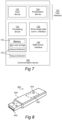
- the secure element 302 may, for instance, be implemented by element 754 in Figure 7 .
- the secure element 302 stores a private cryptographic key SK1 for the payer communication device PD1 (or payer P1), a digital certificate PC1 for the payer communication device PD1 (or payer P1) and a digital certificate cert_pub _ cloud for the digital payment settlement service DPSS.
- the digital certificates may, for instance, be DER-encoded X.509-based certificates.
- the digital certificate PC1 comprises a public cryptographic key for the payer communication device PD1 (or payer P1).
- the digital certificate cert_pub _ cloud comprises a public cryptographic key for the digital payment settlement service DPSS.
- the payee communication device PD2 comprises an application 310 that has access 314 to a digital certificate PC2 for the payee communication device PD2 (or payee P2) and the digital certificate cert_pub_cloud for the digital payment settlement service DPSS.
- the digital payment settlement service DPSS is referred to as "Payment Cloud” 320 in Fig 3A and has access to the digital certificate cert_pub_cloud as well as a private cryptographic key priv_key_cloud for the digital payment settlement service DPSS, the private cryptographic key being associated with the public cryptographic key for the digital payment settlement service DPSS, as is well-known per se.
- the digital payment settlement service DPSS further has access to information list_users of the users in the system, including the payer P1 and the payee P2. This is seen at 322.
- the payer P1 wishes to make an offline digital payment to the payee P2 in the embodiment of Figures 3A-3B , the following activity takes place. It is recalled from the description of the previous embodiments that the payer communication device PD1 and the payee communication device PD2 use short-range data communication when the devices are in proximity of each other to agree upon the offline digital payment without requiring long-range data communication with the remote digital payment settlement service DPSS at that stage. In the embodiment of Figures 3A-3B , the short-range data communication takes place by exchange of optical code data, such as presentation and scanning/reading of QR codes (or barcodes), in both directions between the devices PD1, PD2. This is considered as beneficial for ease of implementation.
- optical code data such as presentation and scanning/reading of QR codes (or barcodes
- short-range wireless RF communication such as Bluetooth, BLE, RFID, WLAN, WiFi, mesh communication, or another form of proximity-based device-to-device radio communication signal such as LTE Direct
- NFC NFC
- audio communication ultrasound communication
- the payee communication device PD2 establishes an amount to be paid, see 330. As seen at 332, it also generates an ID for the upcoming payment transaction and a QR code that comprises certain QR data. As seen at 334, the QR data comprises the digital certificate PC2, the digital certificate cert_pub_cloud, optionally the amount to be paid, and the generated ID.
- the payer P1 user the payer communication device PD1 to scan the QR code. This allows the application 300 to retrieve the QR data, as seen at 336.
- the payer P1 may authorize the amount to the paid by an affirmative action, such as the entry of a PIN, biometric data, etc., at 338. If the amount was included in the QR data, the application 300 may present it on a display screen of the payer communication device PD1 to the payer P1. If the amount to be paid was not included in the QR data, then the payer P1 may be informed of it in another suitable manner, such as by the payee P2 telling him, or the amount being presented on a display screen comprised in or operatively associated with the payee communication device PD2.
- the application 300 In response to the authorization at 338 by the payer P1, the application 300 sends a payment request to the secure element 302 at 340.
- the secure element 302 proceeds to verify the authorization (e.g. checking that the PIN is correct).
- the secure element 302 also checks that the current balance of the local digital wallet in the payer communication device PD1 is sufficient to cover the amount to be paid.
- the secure element 302 updates the balance of the local digital wallet by deducting the amount (i.e. the updated balance is obtained by subtracting the amount to be paid from the current balance).
- the secure element 302 moreover generates a transaction ID referred to as TID.
- the secure element 302 then generates a dataset S by signing the following data with the private cryptographic key SK1: the amount to be paid, the digital certificate PC2 received from the payee communication device PD2 (or, in some embodiments, merely the public cryptographic key in the digital certificate PC2), a timestamp, the ID received from the payee communication device PD2, and the digital certificate PC1 for the payer communication device PD1 (or payer P1).
- the timestamp may originate from the payee device PD2 and thus be included in the QR data received by PD1 at 334.
- the dataset S constitutes a payment token.
- the secure element 302 also logs the payment transaction (cf. the buffering of digital payment information DPI in a local buffer B1 as described previously in this document). This may involve storing the following digital payment information in a list in the secure element 302: S, amount, PC2, timestamp, ID, TID, PC1. The same data is then also returned by the secure element 302 to the application 300, as seen at 344. In some embodiments, the list could alternatively be maintained by the application 300 rather than the secure element 302.
- the application 300 uses the received data (the digital payment information) as QR data to generate a QR code.
- the application 300 communicates the QR data at 348 to the payee communication device PD2, for instance by presenting the QR code that represents the QR data on a display screen of the payer communication device PD1.
- the application 310 in the payee communication device PD2 scans the QR code at 350 in order to retrieve the QR data, i.e. the digital payment information.
- the application 310 first verifies the certificate PC1 in the retrieved QR data by using the digital certificate cert_pub_cloud. If this verification is successful, the application 310 verifies S by using PC1.
- the application 310 also compares the ID in the retrieved QR data with the ID generated in step 332 to verify that they are the same.
- the payee communication device PD2 checks that it is the correct payment receiver by verifying that the received payment token S comprises the digital certificate PC2 (or the public cryptographic key) of the payee communication device PD2.
- the payee communication device PD2 can accept the digital payment DP. Accordingly, the application 310 logs the payment transaction (cf. the buffering of digital payment information DPI in a local buffer B2 as described previously in this document). This may involve storing the following digital payment information in a list in the application 310 or another local storage in the payee communication device PD2: S, amount, PC2, timestamp, ID, TID, and PC1. The reader will notice that the same data (digital payment information) is stored (logged) in the payee communication device PD2 by the application 310 as was stored (logged) in the payer communication device PD1 by the secure element 302.
- the application 310 may then provide an OK status at 354 to the payee P2, for instance by providing a positive feedback in a user interface of the payee communication device PD2. Having received the OK status, the payee P2 may proceed with the action that is the subject of the payment, e.g. handing over a purchased product or performing a purchased service.
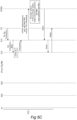
- Either of the payer communication device PD1 and payee communication device PD2 may then, independently of the other device, subsequently communicate the logged (buffered) digital payment information to the remote digital payment settlement service DPSS by long-range data communication (c.f. LRDC1, LRDC2 in the previous drawings).
- LRDC1, LRDC2 long-range data communication
- the online payment settlement procedure 360 involves the following. Triggered by the payer P1 or the application 300, and possibly subject to an authentication (e.g. PIN) by the payer P1, the secure element 302 retrieves the buffered payment transaction (or list of payment transactions, as the case may be) and communicates the retrieved data to the application 300.
- the application 300 communicates the retrieved data to the remote digital payment settlement service DPSS by long-range data communication, such as HTTPS.
- the digital payment settlement service DPSS proceeds to process the payment transaction (or each transaction in the list, as the case may be) in the received data by checking the TID to verify that the particular transaction has not already been settled (e.g. by the payee communication device PD2, or by the payer communication device PD1 in a prior execution of the online payment settlement procedure 360). If the check passes, the digital payment settlement service DPSS causes settlement of the payment to cause an effective transfer of funds corresponding to the payment amount from the payer P1 to the payee P2, thereby involving a suitable payment service, credit card service, bank service, etc. To this end, the digital payment settlement service DPSS may identify the payer P1 from the digital certificate PC1 in the received data, and the payee P2 from the received digital certificate PC2. The digital payment settlement service DPSS may conclude by providing an affirmative status to the application 300, that may forward it to the secure element 302 and the payer P1.
- the online payment settlement procedure 370 which is performable between the payee communication device PD2 and the digital payment settlement service DPSS may involve the corresponding functionality.
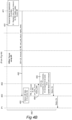
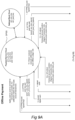
- Figures 4A and 4B discloses procedures 480, 490 for adding local digital cash in the payer communication device PD1 (i.e., increasing the balance of the local digital wallet therein). This may occur either as an online cash replenishing procedure 480 using long-range data communication with a cloud-based digital cash service 421 (which may typically be the aforementioned DPSS and/or DPS1), or as an offline cash receiving procedure 490 that involves scanning a QR code generated by the cloud-based digital payment service 421.
- a cloud-based digital cash service 421 which may typically be the aforementioned DPSS and/or DPS1
- an offline cash receiving procedure 490 that involves scanning a QR code generated by the cloud-based digital payment service 421.
- a typical use of the online procedure 480 is when the individual P1 makes a request for a local digital cash top-up to the cloud-based digital cash service 421, asking for a withdrawal of cash from a bank account, payment service account or credit card held by the individual P1 and a transfer of those cash in digital form to the secure element 402 in the payer communication device PD1.
- the cash thus transferred is added to the local digital wallet by accordingly increasing the balance kept by the secure element 402.
- the payer communication device PD1 comprises an application 400 and a secure element 402.
- the secure element 402 stores a private cryptographic key SK for the payer communication device PD1 (or payer P1), a digital certificate PC for the payer communication device PD1 (or payer P1) and a digital certificate cert_pub_cloud for the cloud-based digital cash service 421.
- the digital certificate PC comprises a public cryptographic key for the payer communication device PD1 (or payer P1).
- the digital certificate cert_pub_cloud comprises a public cryptographic key for the digital cash service 421.
- the top-up activity in Figure 4A involves the following steps.
- the secure element 402 receives a request through the application 400 from the payer P1 (or automatically generated by the application 400) to top-up the balance of the local digital wallet, generates a top-up transaction identifier TID, signs it as STID using the private cryptographic key SK, and returns the data to the application 400.
- the application 400 sends a digital cash retrieval request 482 by long-range (WAN) communication to the cloud-based digital cash service 421.
- the request 482 contains the digital certificate PC, the requested top-up amount, TID and STID. Including PC in the digital cash retrieval request 482 will allow the requested top-up to be addressed specifically to the payer P1.
- the digital cash service 421 first verifies STID by using PC, and then verifies that the requested amount can be admitted (e.g. that a current online balance or credit level of the payer's P1 account at least meets the requested amount). If these verifications are successful, the digital cash service 421 generates a signed data set S as a top-up token using a private cryptographic key for the digital cash service 421.
- the top-up token S contains the admitted top-up amount (which may be equal to or less than the requested amount), TID and PC, and is sent at 484 together with the admitted top-up amount, TID, PC and cert_pub_cloud as clear-text to the application 400 by long-range (WAN) communication.
- the application 400 verifies S at 485 using the digital certificate cert_pub_cloud. Once verified, the application 400 sends a top-up instruction at 486 to the secure element 402.
- the top-up instruction 486 includes a PIN (previously entered by the payer P1) as well as the data received at 484.
- the secure element 402 verifies the PIN, S, PC and TID, and then updates the balance of the local digital wallet by adding the admitted top-up amount.
- a typical use of the offline procedure 490 is when the individual P1 receives an amount of digital cash without having made a request for it and without having to pay for it by debiting an account or credit card.
- Exemplifying situations include a social security payment (e.g. child support) from the government to the individual P1, governmental support to citizens in times of crisis, or a refund, reward or compensation from another party to the individual P1.
- the top-up cash amount is transferred by way of an offline representation QR, which may be a scannable QR code or be readable by another form of short-range data communication, whereupon the top-up cash amount will be added to the local digital wallet by accordingly increasing the balance kept by the secure element 402.
- the offline representation QR may be made available in any suitable way to the individual P1 and his or her communication device PD1, for instance by sending it as an e-mail attachment, or printing it on paper for delivery by postal mail. It is not offline in the sense that it would exclude delivery by long-range data communication from the cloud-based digital payment service; it is rather offline only in the sense that it is not dependent on the individual P1 having to make an online request for cash retrieval (like in Figure 4A ).
- a further way of delivery of offline top-up cash is for the digital cash service 421 to send the offline representation QR of the signed top-up token S to a network resource, such as an ATM machine.
- the payer P1 may then use the payer communication device PD1 to read the offline representation QR (for instance by scanning it), extract and verify the signed top-up token S, retrieve the top-up cash amount and add it to the local digital wallet.
- the top-up token S is similar to the one used in Figure 4A , except that in Figure 4B it is the digital cash service 421 that generates a top-up transaction identifier ID. Moreover, expiry information is also included in the top-up token S. Also, the digital cash service 421 includes the digital certificate PC for the payer communication device PD1 (or payer P1) when generating the signed top-up token S. This will in effect address the top-up token S specifically to the payer P1. Conveniently, the digital cash service 421 has been given access to the digital certificate PC at a previous occasion, typically when the payer P1 onboards the service and installs the application 400 in the payer communication device PD1. This can be seen at 491 and 492.
- the secure element 402 in the payer communication device PD1 checks that the ID of the top-up token S is not one that has been used before.
- a second requisite for adding the top-up amount to the balance of the local digital wallet is that according to the expiry information the top-up token S is still valid. This can be seen at 495.
- a generalized online digital cash top-up method involves the following (with Figure 4A as an exemplifying embodiment):
- the payer communication device PD1 generates 481 a signed STID top-up transaction identifier TID using the private cryptographic key SK of the payer communication device PD1 or payer P1.
- the payer communication device PD1 sends a digital cash retrieval request (482) by long-range communication to a cloud-based digital cash service 421, wherein the request 482 comprises a requested top-up amount and the signed top-up transaction identifier STID.
- the digital cash service 421 verifies the signed top-up transaction identifier STID using a public cryptographic key PC associated with the private cryptographic key SK of the payer communication device PD1 or payer P1.
- the digital cash service 421 verifies admissibility of the requested top-up amount with respect to the payer P1.
- the digital cash service 421 generates a signed top-up token S using a private cryptographic key of the digital cash service 421, wherein the top-up token S contains an admitted top-up amount.
- the digital cash service 421 sends the signed top-up token S to the payer communication device PD1 by long-range communication.
- the payer communication device PD1 verifies the signed top-up token S using a public cryptographic key associated with the private cryptographic key of the digital cash service 421.
- the payer communication device PD1 updates the balance of the local digital wallet by adding the admitted top-up amount.
- a generalized offline digital cash top-up method involves the following (with Figure 4B as an exemplifying embodiment):
- a digital cash service 421 generates 491 a signed top-up token S using a private cryptographic key of the digital cash service 421, wherein the top-up token S contains a top-up amount.
- the digital cash service 421 generates 492 an offline representation QR of the signed top-up token S and makes the generated offline representation QR available for reading by the payer communication device PD1.
- the payer communication device PD1 reads 493 the offline representation QR, extracts and verifies the signed top-up token S using a public cryptographic key associated with the private cryptographic key of the digital cash service 421.
- the payer communication device PD1 updates the balance of the local digital wallet by adding the top-up amount.
- the top-up may be addressed specifically to the payer P1 thanks to the following provisions.
- the digital cash service 421 includes a public cryptographic key or digital certificate PC of the payer communication device PD1.
- the payer communication device PD1 may then check that it is the correct recipient of the top-up by verifying that the received top-up token S comprises the public cryptographic key or digital certificate PC of the payer communication device PD1, and use this as a requisite for updating the balance of the local digital wallet by adding the top-up amount. Since this functionality occurs in the secure element 402, manipulations are prevented.
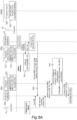
- Figures 5A-5C disclose an alternative embodiment, which is generally similar to the embodiment described above for in Figures 3A-3B , but with some differences and refinements.
- the payee communication device PD2 too, has an application 510 and a secure element 512.
- the secure element 512 hence stores a private cryptographic key SK2 for the payee communication device PD2 (or payee P2), a digital certificate PC2 for the payee communication device PD2 (or payer P2) and the digital certificate cert_pub_cloud for the digital payment settlement service DPSS. See 516.
- the transaction ID, TID is generated at the payee side by the secure element 512, see 531.
- the secure element 512 also signs the generated TID using its private cryptographic key SK2, resulting in a signed dataset STID which is included in the QR data which is communicated at 534 as a QR code for scanning by the payer communication device PD1.
- the provision of STID allows for the secure element 502 of the payer communication device PD1 to verify it at 542 by using the digital certificate PC2 (or more specifically the public cryptographic key corresponding to the private cryptographic key SK2), as received in the QR data. Since the TID is generated at the payee communication device PD2, there is no need to generate an ID (cf. Figs 3A-3B ) at the payer communication device PD1, and the application 510 in the payee communication device PD2 only needs to verify the signed dataset S as received in the QR data from the payer communication device PD1. See 552.
- the received QR data is communicated at 553 by the application 510 to the secure element 512 upon successful verification of S (using PC1).
- the secure element 512 may make its own independent verification of S, and then update the balance of the local digital wallet in the payee communication device PD2 by adding the payment amount to the current balance of the local digital wallet.
- the balance of the respective local digital wallet is updated not only on the payer side but also on the payee side. The update on the payee side occurs momentarily as the offline payment transaction has been successfully processed locally in the payee communication device PD2 by the secure element 512.
- the increased balance resulting from the payment by the payer P1 is directly available for use by the payee P2 in another payment transaction, this time acting as a payer, rather having to wait for an online settlement by the digital payment settlement service DPSS.
- the online payment settlement procedures 560 for the payer communication device PD1 and 570 for the payee communication device PD2 may in all relevant aspects be identical to the procedures 360 and 370 described above for the embodiment of Figures 3A-3B .
- the payer communication device PD1 may comprise a secure element 302, the secure element 302 storing a private cryptographic key SK1 associated with the payer P1 (or the payer communication device (PD1)).
- the payer communication device PD1 may use the secure element 302 to digitally sign 342 the digital payment DP by the private cryptographic key SK1 and generate the payment token S.
- the secure element 302 further stores a current balance of the local digital wallet as referred to in this document.
- the payee communication device PD2 may use a public cryptographic key PC1 associated with the private cryptographic key SK1 to verify 352 the received payment token S as a requisite for accepting the digital payment DP.
- the payee P2 is given a way to assess whether the digital payment from the payer P1, still only performing in the offline stage, can be considered as a guaranteed payment.
- the payer communication device PD1 may buffer the generated payment token S in or as the digital payment information DPI locally in the payer communication device PD1 (e.g. in the aforementioned buffer B1).
- the public cryptographic key - which is associated with the private cryptographic key SK1 of the payer communication device PD1 or payer P1 - may be comprised in a digital certificate PC1 of the payer communication device PD1 or payer P1.
- the digital certificate PC1 has been signed in advance by the digital payment settlement service DPSS or by another trusted central entity, such as a central bank. This may for instance occur when the payer P1 does onboarding of the digital payment services offered in the present document, e.g. by installing the application 300 in the payer communication device PD1 and signing up for the services at the digital payment settlement service DPSS.
- the payee communication device PD2 may use a public cryptographic key of the digital payment settlement service DPSS (or other trusted central entity) to verify (cf. steps 352; 552) the digital certificate PC1 of the payer communication device PD1 or payer P1 as a further requisite for accepting the digital payment DP. This will allow the payer P1 to put full trust in the digital payment DP at the offline settlement stage.
- the two requisites referred to above are sufficient for the payee communication device PD2 to accept the digital payment DP, without any information that reveals a true identity of the payer P1 being communicated from the payer communication device PD1 to the payee communication device PD2. Accordingly, the personal integrity of the payer P1 is preserved.
- the remote digital payment settlement service DPSS may use the public cryptographic key PC1 associated with the private cryptographic key SK1 of the payer communication device PD1 or payer P1 to verify 360, 370 the payment token S in the digital payment information DPI communicated from the payer communication device PD1 or the payee communication device PD2 as a requisite for settling the digital payment DP (online settlement).
- the digital payment settlement service DPSS is able to assess whether the digital payment from the payer P1 can be considered as a guaranteed payment.
- the online settlement of the digital payment DP may involve the digital payment settlement service DPSS causing transfer of funds from an account held by the payer P1 at a first digital payment service DPS1 to an account held by the payee P2 at a second digital payment service DPS2 associated with the payee P2.
- first and second digital payment services DPS1, DPS2 may be banks or other financial institutes.
- the second digital payment service DPS2 may use the public cryptographic key of the digital payment settlement service DPSS (or other trusted central entity) to verify the digital certificate PC1 of the payer communication device PD1 or payer P1, and it may furthermore use the public cryptographic key comprised in the digital certificate PC1 of the payer communication device PD1 or payer P1 to verify the payment token S, as requisites for accepting the transfer of funds.
- DPSS digital payment settlement service
- the second digital payment service DPS2 may use the public cryptographic key of the digital payment settlement service DPSS (or other trusted central entity) to verify the digital certificate PC1 of the payer communication device PD1 or payer P1, and it may furthermore use the public cryptographic key comprised in the digital certificate PC1 of the payer communication device PD1 or payer P1 to verify the payment token S, as requisites for accepting the transfer of funds.
- these requisites are sufficient for the second digital payment service DPS2 to accept the transfer of funds, without access to any information that reveals a true identity of the payer P1. Again, personal integrity will be preserved.
- the digital payment settlement service DPSS may split the transfer of funds into a first transaction and a second transaction.
- the first digital payment service DPS1 is the sender and the digital payment settlement service DPSS is the receiver of the funds.
- the digital payment settlement service DPSS is the sender of the funds received by the first transaction and the second digital payment service DPS2 is the receiver of these funds.
- the transfer of funds from the account held by the payer P1 to the account held by the payee P2 is thus made without revealing the true identity of the payer P1 to the second digital payment service DPS2 and without revealing the true identity of the payee P2 to the first digital payment service DPS1.
- This functionality may, for instance, be invoked when the payer P1 and/or payer P2 has marked the digital payment DP as an anonymous payment in the application 300 and 310, respectively.
- the digital payment DP may be addressed specifically to the payee P2 thanks to the following provisions.
- the payment details transmitted (e.g. 334 in Figure 3A ) by the payee communication device PD2 to the payer communication device PD1 comprises a public cryptographic key or a digital certificate PC2 of the payee communication device PD2.
- the payer communication device PD1 includes the public cryptographic key or digital certificate PC2 of the payee communication device PD2 when digitally signing (e.g. 342 in Figure 3A ) the digital payment DP by the private cryptographic key SK1 and generating the payment token S.
- the payee communication device PD2 may then check that it is the correct payment receiver by verifying (e.g. 352 in Figure 3A ) that the received payment token S comprises the public cryptographic key or digital certificate PC2 of the payee communication device PD2, and use successful verification as a requisite for accepting the digital payment DP.
- the payee communication device PD2 may comprise a secure element 512 for storing a current balance of a local digital wallet maintained by the payee communication device PD2, and the payee communication device PD1 may use the secure element 512 to update 555 the balance of the local digital wallet after having verified 552 the received payment token S.
- the payee communication device PD2 may generate 332 an optically readable code, such as a QR code or barcode, that contains the payment details for the digital payment DP.
- the payee communication device PD2 may transmit 334 the payment details for the digital payment DP to the payer communication device PD1 by short-range data communication SRDC by presenting 334 the generated optically readable code.
- the payer communication device PD1 may read the payment details by scanning 336 the presented optically readable code.
- the payer communication device PD1 may generate 346 an optically readable code, such as a QR code or barcode, that contains the payment token S.
- the payer communication device PD1 may transmit the payment token S for the digital payment DP to the payee communication device PD2 by short-range data communication SRDC by presenting 334 the generated optically readable code.
- the payee communication device PD2 may read the payment token S by scanning 350 the presented optically readable code.
- the payer communication device PD1 and the payee communication device PD2 agree 610 upon the digital payment DP by the following activities:
- the payee communication device PD2 transmits payment details for the digital payment DP to the payer communication device PD2 by short-range wireless RF communication.
- the payer communication device PD1 uses the payment details and a digital signature of the payer P1 to digitally sign the digital payment DP and generate a payment token.
- the payer communication device PD1 transmits the payment token to the payee communication device PD2 by short-range wireless RF communication.
- the payee communication device PD2 buffers the payment token in or as the digital payment information DPI locally in the payee communication device PD2, e.g. in the buffer B2 in Figures 2A-2C .
- the payer communication device PD1 and the payee communication device PD2 may agree 610 upon the digital payment DP by the payee communication device PD2 presenting an optically readable code, such as a QR code or barcode, to the payer communication device PD1, wherein the optically readable code contains payment details for the digital payment DP.
- the payer communication device PD1 may read the payment details from the optically readable code and use the payment details and a digital signature of the payer P1 to digitally sign the digital payment DP and generate a payment token.
- the payer communication device PD1 may transmit the payment token to the payee communication device PD2 by short-range wireless RF communication.
- the payee communication device PD2 may buffer the payment token in or as the digital payment information DPI locally in the payee communication device PD2.
- the payment details may comprise an amount to be paid, and at least one of the following: information about an identity of the payee P2; information about a payment account of the payee P2; and a transaction identifier ID of the digital payment DP.
- the payer communication device PD1 and the payee communication device PD2 may agree 610 upon the digital payment DP by the payer communication device PD1 presenting an optically readable code, such as a QR code or barcode, to the payee communication device PD2, wherein the optically readable code contains payment details for the digital payment DP.
- the payee communication device PD2 reads the payment details from the optically readable code and uses the payment details for the digital payment DP.
- the payee communication device PD2 transmits confirmatory information to the payer communication device PD1 by short-range wireless RF communication.
- the payment details may comprise an amount to be paid; and at least one of the following: information about an identity of the payer P1; information about a payment account of the payer P1; information about a credit card of the payer P1; and a transaction identifier of the digital payment DP.
- the payer communication device PD1 and the payee communication device PD2 may agree 610 upon the digital payment DP by short-range data communication SRDC to exchange payment details for the digital payment DP, wherein the short-range data communication SRDC involves any of the following communication techniques in one or both directions between the payer communication device PD1 and the payee communication device PD2:
- the payer communication device PD1 and/or the payee communication device PD2 may advantageously use short-range wireless RF communication also as a preparatory means for detecting the proximity 202 between the devices PD1, PD2. This may, for instance, involve detecting and evaluating a received signal strength of a communication signal from the other device.
- the long-range communication LRDC1, LRDC2 as referred to in this document may take place over any available wide area network (WAN), such as the internet or a part thereof.
- WAN wide area network
- Broadband data communication and wide area network (WAN) communication are to be considered as a synonym of long-range data communication.
- the wide area network (WAN) may, for instance, be compliant with one or more of W-CDMA, GSM, UTRAN, HSPA, LTE, LTE Advanced or 5G, and the long-range (broadband) data communication may be TCP/IP traffic.
- FIG. 7 is a schematic block diagram of a communication device 700 in embodiments of the present invention.
- the payee communication device PD1 may be implemented by such a communication device 700 in embodiments of the invention.
- the payer communication device PD2 may be implemented by such a communication device 700 in embodiments of the invention.
- the communication device 700 comprises a processing device 710, a user interface 720, a short-range data communication interface 730, a WAN communication interface 740 and a local storage 750 which includes a memory 752.
- the user interface 720 comprises an input device 722 and a presentation device 724, as is generally known per se.
- the input device 722 and the presentation device 724 are constituted by one common physical device, such as for instance a touch screen (touch-sensitive display screen), implemented in for instance resistive touch technology, surface capacitive technology, projected capacitive technology, surface acoustic wave technology or infrared technology.
- the short-range data communication interface 730 is configured for Bluetooth communication, or any other radio-based short-range wireless data communication such as, for instance, Bluetooth Low Energy, RFID, WLAN, WiFi, mesh communication or LTE Direct, without limitation, or any non-radio-based short-range wireless data communication such as, for instance, magnetic communication (such as NFC), (ultra)sound communication, or optical communication (such as IrDA) without limitation.
- the short-range data communication interface 730 comprises equipment and functionality for presenting a QR code (when acting as a payee communication device PD2) or for scanning a QR code (when acting as a payer communication device PD1).
- the WAN communication interface 740 is configured for wide area network communication compliant with, for instance, one or more of W-CDMA, GSM, UTRAN, HSPA, LTE, LTE Advanced or 5G, and TCP/IP, and/or WLAN (WiFi), without limitation.
- the processing device 710 may be implemented in any known controller technology, including but not limited to microcontroller, processor (e.g. PLC, CPU, DSP), FPGA, ASIC or any other suitable digital and/or analog circuitry capable of performing the intended functionality.
- processor e.g. PLC, CPU, DSP
- FPGA field-programmable gate array
- ASIC application-specific integrated circuit
- the memory 752 may be implemented in any known memory technology, including but not limited to ROM, RAM, SRAM, DRAM, CMOS, FLASH, DDR, SDRAM or some other memory technology. In some embodiments, the memory or parts thereof may be integrated with or internal to the processing device 710. The memory may store program instruction for execution by the processing device 710 (also see the description of Figure 8 below), as well as temporary and permanent data for use by the processing device 710.
- the communication device 700 may further comprise a Secure Element 754, i.e. a tamper-resistant hardware or virtual platform.
- the Secure Element 754 is implemented in software and may reside in the local storage 750 or even the memory 752 thereof.
- the Secure Element 754 is capable of securely hosting applications and storing confidential and cryptographic data and therefore provides a trusted execution environment, a.k.a. secure runtime.
- some of the data and functionality in embodiments of the invention may be stored in and performed by the Secure Element 754 (cf. 302 in Figures 3A-B , 402 in Figures 4A-B , and 502 and 512 in Figures 5A-B ).
- the communication device 700 may therefore be configured to perform the functionality of the payer communication device PD1 as defined in and described above for the method 600 and any or all of its embodiments.
- the payer communication device PD1 may thus be implemented by the communication device 700 in the form of, for instance, a mobile communication device a mobile phone a smart phone, a tablet computer, a personal digital assistant, a portable computer, smart glasses, a smart wearable (e.g. smart watch or smart bracelet), or a smart card,.
- the communication device 700 may be configured to perform the functionality of the payee communication device PD2 as defined in and described above for the method 600 and any or all of its embodiments.
- the payee communication device PD2 may thus be implemented by the communication device 700 in the form of, for instance, a mobile communication device a mobile phone a smart phone, a tablet computer, a personal digital assistant, a portable computer, smart glasses, a smart card, a smart wearable (e.g. smart watch or smart bracelet), a payment terminal, a service terminal, a point-of-sales terminal, a checkout counter, a delivery pickup point, a vending machine, a ticket machine, a dispensing machine, or an access control system.
- a mobile communication device a mobile phone a smart phone, a tablet computer, a personal digital assistant, a portable computer, smart glasses, a smart card, a smart wearable (e.g. smart watch or smart bracelet), a payment terminal, a service terminal, a point-of-sales terminal,
- FIG 8 is a schematic illustration of a computer-readable medium 800 in one exemplary embodiment, capable of storing a computer program product 810.
- the computer-readable medium 800 in the disclosed embodiment is a memory stick, such as a Universal Serial Bus (USB) stick; the computer-readable medium 800 may however be embodied in various other ways instead, as is well-known per se to the skilled person.
- the USB stick 800 comprises a housing 830 having an interface, such as a connector 840, and a memory chip 820.
- the memory chip 820 is a flash memory, i.e. a non-volatile data storage that can be electrically erased and re-programmed.
- the memory chip 820 stores the computer program product 810 which is programmed with computer program code (instructions) that when loaded into a processing device, such as a CPU, will perform a method for handling a digital payment according to any or all of the embodiments disclosed above.
- the processing device may, for instance, be the aforementioned processing device 710.
- the USB stick 800 is arranged to be connected to and read by a reading device for loading the instructions into the processing device.
- a computer-readable medium can also be other mediums such as compact discs, digital video discs, hard drives or other memory technologies commonly used.
- the computer program code (instructions) can also be downloaded from the computer-readable medium via a wireless interface to be loaded into the processing device.
- the computer program product 810 comprises computer code for performing the functionality of the payer communication device PD1 in the method as described herein when the computer program code is executed by the processing device.
- the computer program product 810 comprises computer code for performing the functionality of the payee communication device PD2 in the method as described herein when the computer program code is executed by the processing device.
- the computer program product 810 comprises computer code for performing the functionality of the digital payment settlement service DPSS) in the method as described herein when the computer program code is executed by the processing device.
- DPSS digital payment settlement service
- Figures 9A and 9B illustrate a schematic diagram of a communication system for handling digital proximity payments according to an embodiment of the present invention.
- the communication system comprises a first communication device in the form of a payer communication device PD1, a second communication device in the form of a payee communication device PD2, and a digital payment settlement service DPSS.
- the system can be used for performing a method for handling a digital payment between a payer P1 and a payee P2, as previously explained. In the embodiment of Figures 9A and 9B , this will involve the following activity.
- each of the payer communication device PD1 and payee communication device PD2 requests and receives a respective cryptographic key pair from the cloud, which may include the digital payment settlement service DPSS and a national bank cloud.
- the respective cryptographic key pair comprises a public key and a private (secure) key, as is generally known for asymmetric data encryption and decryption.
- the private (secure) key is advantageously accommodated in secure memory SM in the respective device.
- the payer communication device PD1 requests and receives digital cash, to be accommodated in the secure memory SM as a local digital wallet, as previously described.
- the payee communication device PD2 may have its own local digital wallet to accommodate digital cash in its secure memory SM, as is seen in Figures 9A and 9B .
- a digital payment between the payer P1 and payee P2 is executed as follows.
- the payer communication device PD1 and payee communication device PD2 establish a connection for short-range data communication SRDC such as Bluetooth or BLE, or any other kind of suitable short-range data communication SRDC as previously explained.
- short-range data communication SRDC such as Bluetooth or BLE
- One suitable technology is disclosed in applicant's Swedish patent application 2050806-5 .
- the payee communication device PD2 initiates a payment transaction and sends a payment request to the payer communication device PD1 in step 6.
- the payer communication device PD1 checks the current balance or credit of the local digital wallet to that it is enough to cover the payment amount. If the check passes, the payer communication device PD1 updates the current balance or credit of the local digital wallet by deducting the payment amount of the digital payment to be performed.
- the payer communication device PD1 moreover signs the transaction information of the payment transaction with its private (secure) key, and stores the signed transaction information (cf. digital payment information DPI as previously described) in the local buffer B1 ("Offline Transaction Ledger") in step 8.
- the payer communication device PD1 then sends the signed transaction information, together with its public key, to the payee communication device PD2 in step 9.
- the payee communication device PD2 checks the received signed transaction information in step 10 using the received public key. If the check is passed, the payee communication device PD2 proceeds to update its digital cash, accommodated in the local digital wallet in the secure memory SM, with the amount of the payment transaction. It moreover stores the signed transaction information (cf. digital payment information DPI as previously described) in the local buffer B2 ("Offline Transaction Ledger”) in step 11.
- any of the payer communication device PD1 or payee communication device PD2 When any of the payer communication device PD1 or payee communication device PD2 is online, it may communicate the contents of the buffer B1 and B2, respectively, by long-range data communication LRDC1 and LRDC2, respectively (as previously described) with the digital payment settlement service DPSS in step 12.
- step 13 the digital payment settlement service DPSS checks the received transaction information (e.g. signature verification) and executes the settlement of the digital payment represented by the payment transaction, as previously described.
- the received transaction information e.g. signature verification
- the local digital wallet of the payee communication device PD2 has been updated with the payment amount of the present payment transaction (i.e., its local balance or credit has been increased by the payment amount of the present payment transaction)
- this added payment amount will be immediately available for use at will by the payee communication device PD2 (i.e. payee P2) to perform a new digital payment with a third user/communication device, this time acting as a payer.
- the payee communication device PD2 will not have to wait for online access to the digital payment settlement service DPSS to settle the present payment transaction with the payer communication device PD1 before making the new digital payment with said third user/communication device and spending all or some of the credit thus being made available from the present payment transaction with the payer communication device PD1.
- Both the present payment transaction and the new payment transaction will be ultimately settled in due time when any of the involved devices gains online access to the digital payment settlement service DPSS, and the respective actors (P1, P2, the third user) will ultimately be debited or credited the respective amounts called for by the present payment transaction and the new payment transaction.
- the current balance or credit of the local digital wallet in the payer communication device PD1 may consist partly or wholly of digital cash previously received as one or more digital payments from one or more other devices and not yet settled with the digital payment settlement service DPSS. Accordingly, the payer communication device PD1 may use such "unsettled" digital cash for the purpose of the present payment transaction with the payee communication device PD2.
- Figure 10 illustrates a schematic diagram of a communication system for handling digital proximity payments according to another alternative embodiment of the communication system 200 according to the present invention.
- the communication system 200 is for handling a digital payment between a payer P1 and a payee P2.
- the communication system 200 comprises a payee communication device PD1 for use by the payer P1, a payer communication device PD2 for use by the payee (P2), and digital payment settlement service (DPSS) being accessible by wide-area network (WAN) communication.
- WAN wide-area network
- the payer communication device PD1 and the payee communication device PD2 are configured for using short-range data communication SRDC when the devices PD1, PD2 are in proximity of each other to agree upon a digital payment DP without requiring long-range data communication with the remote digital payment settlement service DPSS at that stage.
- the payer communication device PD1 and the payee communication device PD2 are configured for buffering digital payment information DPI pertaining to the digital payment DP locally in the respective device PD1, PD2.
- the remote digital payment settlement service DPSS is configured for causing settlement of the digital payment DP as indicated by the digital payment information DPI received by long-range data communication LRDC1, LRDC2 from one of the payer communication device and the payee communication device PD1, PD2 without having to wait for the digital payment information to be received from the other one of the payer communication device and the payee communication device PD1, PD2.
- the first communication device PD1 may be configured for:
- the second communication device PD2 in the communication system 200 may correspondingly configured for:
- the digital payment settlement service DPSS in the communication system 200 may be configured for:
Landscapes
- Engineering & Computer Science (AREA)
- Business, Economics & Management (AREA)
- Accounting & Taxation (AREA)
- Computer Security & Cryptography (AREA)
- Finance (AREA)
- Computer Networks & Wireless Communication (AREA)
- General Physics & Mathematics (AREA)
- Physics & Mathematics (AREA)
- General Business, Economics & Management (AREA)
- Strategic Management (AREA)
- Theoretical Computer Science (AREA)
- Signal Processing (AREA)
- Development Economics (AREA)
- Economics (AREA)
- Financial Or Insurance-Related Operations Such As Payment And Settlement (AREA)
Claims (21)
- Verfahren (600) zur Abwicklung einer digitalen Zahlung (DP) zwischen einem Zahler (P1) und einem Zahlungsempfänger (P2), umfassend:(610) Verwenden einer Zahler-Kommunikationsvorrichtung (PD1), verwendet durch den Zahler (P1), und einer Zahlungsempfänger-Kommunikationsvorrichtung (PD2), verwendet durch den Zahlungsempfänger (P2), wobei Nahbereichsdatenkommunikation (SRDC) verwendet wird, wenn sich die Vorrichtungen in unmittelbarer Nähe zueinander befinden, um sich über eine digitale Zahlung (DP) zu verständigen, ohne dass zu diesem Zeitpunkt Fernbereichsdatenkommunikation mit einem entfernten digitalen Zahlungsabwicklungsdienst (DPSS) erforderlich ist;(620) Puffern digitaler Zahlungsinformationen (DPI), die die digitale Zahlung (DP) betreffen, durch die Zahler-Kommunikationsvorrichtung (PD1) und die Zahlungsempfänger-Kommunikationsvorrichtung (PD2) jeweils lokal in der jeweiligen Vorrichtung (PD1, PD2);(630) anschließende Kommunikation der gepufferten digitalen Zahlungsinformationen (DPI) unabhängig voneinander entweder durch die Zahler-Kommunikationsvorrichtung (PD1) oder die Zahlungsempfänger-Kommunikationsvorrichtung (PD2) mit dem entfernten digitalen Zahlungsabwicklungsdienst (DPSS) mittels Fernbereichsdatenkommunikation (LRDC1, LRDC2); und(640) Veranlassen der Abwicklung der digitalen Zahlung (DP) durch den entfernten digitalen Zahlungsabwicklungsdienst (DPSS) entsprechend den digitalen Zahlungsinformationen (DPI), die mittels Fernbereichsdatenkommunikation (LRDC1, LRDC2) von der Zahler-Kommunikationsvorrichtung oder der Zahlungsempfänger-Kommunikationsvorrichtung (PD1, PD2) empfangen wurden, ohne auf den Empfang der digitalen Zahlungsinformationen von der jeweils anderen Kommunikationsvorrichtung (PD1, PD2) warten zu müssen,wobei sich die Zahler-Kommunikationsvorrichtung (PD1) und die Zahlungsempfänger-Kommunikationsvorrichtung (PD2) über die digitale Zahlung (DP) verständigen (610) durch:Übertragen (334) von Zahlungsdetails für die digitale Zahlung (DP) von der Zahlungsempfänger-Kommunikationsvorrichtung (PD2) an die Zahler-Kommunikationsvorrichtung (PD1) mittels Nahbereichsdatenkommunikation (SRDC),Verwenden der Zahlungsdetails und einer digitalen Signatur des Zahlers (P1) durch die Zahler-Kommunikationsvorrichtung (PD1), um die digitale Zahlung (DP) digital zu signieren (342) und ein Zahlungstoken (S) zu erzeugen,Übertragen (348) des Zahlungstokens (S) von der Zahler-Kommunikationsvorrichtung (PD1) an die Zahlungsempfänger-Kommunikationsvorrichtung (PD2) mittels Nahbereichsdatenkommunikation (SRDC), undPuffern (352) des empfangenen Zahlungstokens (S) in oder als besagte digitale Zahlungsinformationen (DPI) lokal in der Zahlungsempfänger-Kommunikationsvorrichtung (PD2),wobei die Zahler-Kommunikationsvorrichtung (PD1) ein sicheres Element (302) umfasst, wobei das sichere Element (302) einen privaten kryptographischen Schlüssel (SK1) der Zahler-Kommunikationsvorrichtung (PD1) oder des Zahlers (P1) speichert, wobei die Zahler-Kommunikationsvorrichtung (PD1) das sichere Element (302) verwendet, um die digitale Zahlung (DP) mit dem privaten kryptographischen Schlüssel (SK1) digital zu signieren (342) und das Zahlungstoken (S) zu erzeugen,wobei die Zahlungsempfänger-Kommunikationsvorrichtung (PD2) einen öffentlichen kryptographischen Schlüssel, der dem privaten kryptographischen Schlüssel (SK1) der Zahler-Kommunikationsvorrichtung (PD1) oder des Zahlers (P1) zugeordnet ist, verwendet, um das empfangene Zahlungstoken (S) als Voraussetzung zur Annahme der digitalen Zahlung (DP) zu verifizieren (352; 552), undwobei das Verfahren ferner umfasst:Abrufen eines Guthabenbetrags durch die Zahler-Kommunikationsvorrichtung (PD1) von einem digitalen Zahlungsdienst (DPS1) mittels Fernbereichsdatenkommunikation;Eintragen des Guthabenbetrags in eine lokale digitale Brieftasche, die durch die Zahler-Kommunikationsvorrichtung (PD1) verwaltet wird, durch Aktualisieren eines im sicheren Element (302; 402) gespeicherten Saldos;vor dem Verständigen (610) über die digitale Zahlung (DP) mit der Zahlungsempfänger-Kommunikationsvorrichtung (PD2) Überprüfen durch das sichere Element (302), ob die lokale digitale Brieftasche ausreichende Mittel für die digitale Zahlung (DP) aufweist, indem überprüft wird, ob der aktuelle Saldo der lokalen digitalen Brieftasche ausreicht, um einen zu zahlenden Betrag zu decken; undnur wenn die lokale digitale Brieftasche ausreichende Mittel für die digitale Zahlung (DP) aufweist, Abziehen eines Betrags der digitalen Zahlung (DP) durch das sichere Element von der lokalen digitalen Brieftasche, indem der zu zahlende Betrag vom aktuellen Saldo der lokalen digitalen Brieftasche subtrahiert wird, wodurch das Verständigen (610) über die digitale Zahlung (DP) erfolgt.
- Verfahren nach Anspruch 1, ferner umfassend, dass die Zahler-Kommunikationsvorrichtung (PD1) automatisch einen Auffüll-Guthabenbetrag von einem digitalen Zahlungsdienst (DPS1) mittels Fernbereichsdatenkommunikation anfordert, wobei der Auffüll-Gutenhabenbetrag einer Differenz zwischen einem gewünschten Guthabenstand und einem aktuellen Saldo der lokalen digitalen Brieftasche entspricht, sodass der Saldo der lokalen digitalen Brieftasche auf den gewünschten Guthabenstand aufgefüllt wird.
- Verfahren nach einem der vorhergehenden Ansprüche, ferner umfassend:Verwenden der gepufferten digitalen Zahlungsinformationen (DPI) durch die Zahlungsempfänger-Kommunikationsvorrichtung (PD2), um dem Zahlungsempfänger (P2) der Zahlungsempfänger-Kommunikationsvorrichtung (PD2) zu ermöglichen, als Zahlungsabsender einer weiteren Zahlung an einen weiteren Zahlungsempfänger zu fungieren, indem die gepufferten digitalen Zahlungsinformationen (DPI) an eine weitere Kommunikationsvorrichtung übertragen werden, die von dem weiteren Zahlungsempfänger verwendet wird,wobei, wenn sich der weitere Zahlungsempfänger in unmittelbarer Nähe zum Zahlungsempfänger (P2) befindet, die weitere Zahlung gemäß dem Verfahren (600) nach Anspruch 1 abgewickelt wird, undwobei, wenn sich der weitere Zahlungsempfänger nicht in unmittelbarer Nähe zum Zahlungsempfänger (P2) befindet, die weitere Zahlung durch die Zahlungsempfänger-Kommunikationsvorrichtung (PD2) durch eine Cloud-basierte Zahlungstransaktion mittels Fernbereichsdatenkommunikation mit dem entfernten digitalen Zahlungsabwicklungsdienst (DPSS) oder einem digitalen Zahlungsdienst (DPS1, DPS2) erfolgt.
- Verfahren nach einem der vorhergehenden Ansprüche, wobei der öffentliche kryptographische Schlüssel in einem digitalen Zertifikat (PC1) der Zahler-Kommunikationsvorrichtung (PD1) oder des Zahlers (P1) enthalten ist, wobei das digitale Zertifikat (PC1) vom digitalen Zahlungsabwicklungsdienst (DPSS) oder einer anderen vertrauenswürdigen zentralen Instanz signiert wurde, und wobei das Verfahren ferner umfasst:
Verwenden eines öffentlichen kryptographischen Schlüssels des digitalen Zahlungsabwicklungsdienstes (DPSS) oder einer anderen vertrauenswürdigen zentralen Instanz durch die Zahlungsempfänger-Kommunikationsvorrichtung (PD2), um das digitale Zertifikat (PC1) der Zahler-Kommunikationsvorrichtung (PD1) oder des Zahlers (P1) zu verifizieren (352; 552) als weitere Voraussetzung zur Annahme der digitalen Zahlung (DP). - Verfahren nach Anspruch 4, wobei die genannte Voraussetzung und die genannte weitere Voraussetzung ausreichend sind, damit die Zahlungsempfänger-Kommunikationsvorrichtung (PD2) die digitale Zahlung (DP) akzeptiert, ohne dass Informationen, die die wahre Identität des Zahlers (P1) offenbaren, von der Zahler-Kommunikationsvorrichtung (PD1) an die Zahlungsempfänger-Kommunikationsvorrichtung (PD2) übermittelt werden.
- Verfahren nach einem der vorhergehenden Ansprüche, wobei das Verfahren ferner umfasst:
Puffern des erzeugten Zahlungstokens (S) durch die Zahler-Kommunikationsvorrichtung (PD1) in oder als besagte digitale Zahlungsinformationen (DPI) lokal in der Zahler-Kommunikationsvorrichtung (PD1). - Verfahren nach Anspruch 6, wobei das Verfahren ferner umfasst:
Verwenden des öffentlichen kryptographischen Schlüssels, der dem privaten kryptographischen Schlüssel (SK1) der Zahler-Kommunikationsvorrichtung (PD1) oder des Zahlers (P1) zugeordnet ist, durch den entfernten digitalen Zahlungsabwicklungsdienst (DPSS), um das Zahlungstoken (S) in den von der Zahler-Kommunikationsvorrichtung (PD1) oder der Zahlungsempfänger-Kommunikationsvorrichtung (PD2) mittels Fernbereichsdatenkommunikation (630) übermittelten digitalen Zahlungsinformationen (DPI) als Voraussetzung zur Abwicklung der digitalen Zahlung (DP) zu verifizieren (360, 370; 560). - Verfahren nach Anspruch 7, wobei die Abwicklung der digitalen Zahlung (DP) umfasst:
Veranlassen einer Überweisung von Geldmitteln durch den digitalen Zahlungsabwicklungsdienst (DPSS) von einem Konto des Zahlers (P1) bei einem ersten digitalen Zahlungsdienst (DPS1) zu einem Konto des Zahlungsempfängers (P2) bei einem zweiten digitalen Zahlungsdienst (DPS2), der dem Zahlungsempfänger (P2) zugeordnet ist, wobei das Verfahren ferner umfasst:Verifizieren des digitalen Zertifikats (PC1) der Zahler-Kommunikationsvorrichtung (PD1) oder des Zahlers (P1) durch den zweiten digitalen Zahlungsdienst (DPS2) mittels eines öffentlichen kryptographischen Schlüssels des digitalen Zahlungsabwicklungsdienstes (DPSS) oder einer anderen vertrauenswürdigen zentralen Instanz; undVerwenden des im digitalen Zertifikat (PC1) der Zahler-Kommunikationsvorrichtung (PD1) oder des Zahlers (P1) enthaltenen öffentlichen kryptographischen Schlüssels durch den zweiten digitalen Zahlungsdienst (DPS2), um das Zahlungstoken (S) zu verifizieren, als Voraussetzungen zur Annahme der Überweisung. - Verfahren nach Anspruch 8, wobei die genannten Voraussetzungen ausreichend sind, damit der zweite digitale Zahlungsdienst (DPS2) die Überweisung akzeptiert, ohne dass Zugriff auf Informationen erforderlich ist, die die wahre Identität des Zahlers (P1) offenbaren.
- Verfahren nach Anspruch 8 oder 9, wobei das Verfahren ferner umfasst:
Aufteilen der Überweisung durch den digitalen Zahlungsabwicklungsdienst (DPSS) in eine erste Transaktion und eine zweite Transaktion, wobei der erste digitale Zahlungsdienst (DPS1) Absender und der digitale Zahlungsabwicklungsdienst (DPSS) Empfänger der Geldmittel in der ersten Transaktion ist, und wobei der digitale Zahlungsabwicklungsdienst (DPSS) Absender der durch die erste Transaktion empfangenen Geldmittel und der zweite digitale Zahlungsdienst (DPS2) Empfänger dieser Geldmittel ist, wobei die Überweisung von dem Konto des Zahlers (P1) zu dem Konto des Zahlungsempfängers (P2) erfolgt, ohne dass die wahre Identität des Zahlers (P1) dem zweiten digitalen Zahlungsdienst (DPS2) und ohne dass die wahre Identität des Zahlungsempfängers (P2) dem ersten digitalen Zahlungsdienst (DPS1) offenbart wird. - Verfahren nach einem der vorhergehenden Ansprüche, wobei:die von der Zahlungsempfänger-Kommunikationsvorrichtung (PD2) an die Zahler-Kommunikationsvorrichtung (PD1) übertragenen Zahlungsdetails (334) einen öffentlichen kryptographischen Schlüssel oder ein digitales Zertifikat (PC2) der Zahlungsempfänger-Kommunikationsvorrichtung (PD2) umfassen;die Zahler-Kommunikationsvorrichtung (PD1) den öffentlichen kryptographischen Schlüssel oder das digitale Zertifikat (PC2) der Zahlungsempfänger-Kommunikationsvorrichtung (PD2) beim digitalen Signieren (342) der digitalen Zahlung (DP) mit dem privaten kryptographischen Schlüssel (SK1) einfügt und das Zahlungstoken (S) erzeugt; unddie Zahlungsempfänger-Kommunikationsvorrichtung (PD2) verifiziert (352), dass das empfangene Zahlungstoken (S) den öffentlichen kryptographischen Schlüssel oder das digitale Zertifikat (PC2) der Zahlungsempfänger-Kommunikationsvorrichtung (PD2) enthält, als Voraussetzung zur Annahme der digitalen Zahlung (DP).
- Verfahren nach einem der vorhergehenden Ansprüche, wobei das sichere Element (402) ferner einen aktuellen Saldo einer lokalen digitalen Brieftasche in der Zahler-Kommunikationsvorrichtung (PD1) speichert, wobei das Verfahren ferner umfasst:Erzeugen (481) einer signierten Auffüll- Transaktionskennung (STID) durch die Zahler-Kommunikationsvorrichtung (PD1) unter Verwendung des privaten kryptographischen Schlüssels (SK) der Zahler-Kommunikationsvorrichtung (PD1) oder des Zahlers (P1);Senden einer digitalen Bargeld-Abrufanfrage (482) durch die Zahler-Kommunikationsvorrichtung (PD1) mittels Fernkommunikation an einen cloudbasierten digitalen Bargelddienst (421), wobei die Anfrage (482) einen angeforderten Auffüllbetrag und die signierte Auffüll-Transaktionskennung (STID) umfasst;Verifizieren (483) der signierten Auffüll-Transaktionskennung (STID) durch den digitalen Bargelddienst (421) unter Verwendung eines öffentlichen kryptographischen Schlüssels (PC), der dem privaten kryptographischen Schlüssel (SK) der Zahler-Kommunikationsvorrichtung (PD1) oder des Zahlers (P1) zugeordnet ist;Verifizieren (483) der Zulässigkeit des angeforderten Auffüllbetrags durch den digitalen Bargelddienst (421) in Bezug auf den Zahler (P1);Erzeugen (483) eines signierten Auffüll-Tokens (S) durch den digitalen Bargelddienst (421) unter Verwendung eines privaten kryptographischen Schlüssels des digitalen Bargelddienstes (421), wobei der Auffüll-Token (S) einen zugelassenen Auffüllbetrag enthält;Senden (484) des signierten Auffüll-Tokens (S) an die Zahler-Kommunikationsvorrichtung (PD1) durch den digitalen Bargelddienst (421) mittels Fernkommunikation;Verifizieren (485) des signierten Auffüll-Tokens (S) durch die Zahler-Kommunikationsvorrichtung (PD1) unter Verwendung eines öffentlichen kryptographischen Schlüssels, der dem privaten kryptographischen Schlüssel des digitalen Bargelddienstes (421) zugeordnet ist; undAktualisieren (487) des Saldos der lokalen digitalen Brieftasche durch die Zahler-Kommunikationsvorrichtung (PD1), indem der zugelassene Auffüllbetrag hinzugefügt wird.
- Verfahren nach einem der vorhergehenden Ansprüche, wobei das sichere Element (402) ferner einen aktuellen Saldo einer lokalen digitalen Brieftasche in der Zahler-Kommunikationsvorrichtung (PD1) speichert, wobei das Verfahren ferner umfasst:Erzeugen (491) eines signierten Auffüll-Tokens (S) durch den digitalen Bargelddienst (421) unter Verwendung eines privaten kryptographischen Schlüssels des digitalen Bargelddienstes (421), wobei der Auffüll-Token (S) einen Auffüllbetrag enthält;Erzeugen (492) einer Offline-Darstellung (QR) des signierten Auffüll-Tokens (S) durch den digitalen Bargelddienst (421) und Bereitstellen der Offline-Darstellung (QR) zum Auslesen durch die Zahler-Kommunikationsvorrichtung (PD1);Auslesen (493) der Offline-Darstellung (QR) durch die Zahler-Kommunikationsvorrichtung (PD1), Extrahieren und Verifizieren (495) des signierten Auffüll-Tokens (S) unter Verwendung eines öffentlichen kryptographischen Schlüssels, der dem privaten kryptographischen Schlüssel des digitalen Bargelddienstes (421) zugeordnet ist; undAktualisieren (495) des Saldos der lokalen digitalen Brieftasche durch die Zahler-Kommunikationsvorrichtung (PD1), indem der Auffüllbetrag hinzugefügt wird.
- Verfahren nach Anspruch 12 oder 13, wobei:der digitale Bargelddienst (421) einen öffentlichen kryptographischen Schlüssel oder ein digitales Zertifikat (PC) der Zahler-Kommunikationsvorrichtung (PD1) beim Erzeugen (483; 491) des signierten Auffüll-Tokens (S) einfügt; unddie Zahler-Kommunikationsvorrichtung (PD1) verifiziert (487; 495), dass der empfangene Auffüll-Token (S) den öffentlichen kryptographischen Schlüssel oder das digitale Zertifikat (PC) der Zahler-Kommunikationsvorrichtung (PD1) enthält, als Voraussetzung für das Aktualisieren (487; 495) des Saldos der lokalen digitalen Brieftasche durch Hinzufügen des Auffüllbetrags.
- Verfahren nach einem der vorhergehenden Ansprüche, wobei die Zahlungsdetails einen zu zahlenden Betrag umfassen sowie mindestens eines der folgenden:Informationen über eine Identität des Zahlungsempfängers (P2);Informationen über ein Zahlungskonto des Zahlungsempfängers (P2); undeine Transaktionskennung (ID) der digitalen Zahlung (DP).
- Verfahren nach einem der vorhergehenden Ansprüche, wobei sich die Zahler-Kommunikationsvorrichtung (PD1) und die Zahlungsempfänger-Kommunikationsvorrichtung (PD2) über die digitale Zahlung (DP) verständigen (610), indem sie Zahlungsdetails mittels Nahbereichsdatenkommunikation (SRDC) austauschen, wobei die Nahbereichsdatenkommunikation (SRDC) eine oder mehrere der folgenden Kommunikationstechniken in einer oder beiden Richtungen zwischen der Zahler-Kommunikationsvorrichtung (PD1) und der Zahlungsempfänger-Kommunikationsvorrichtung (PD2) umfasst:drahtlose Funkkommunikation im Nahbereich, wie Bluetooth, BLE, RFID, WLAN, WiFi, Mesh-Kommunikation oder eine andere Form von gerätebasierter Funkkommunikation im Nahbereich, wie LTE Direct;NFC;Audiokommunikation;Ultraschallkommunikation;optische Kommunikation, wie IrDA, QR oder Barcode.
- Verfahren nach Anspruch 16, wobei die Zahler-Kommunikationsvorrichtung (PD1) und/oder die Zahlungsempfänger-Kommunikationsvorrichtung (PD2) die drahtlose Funkkommunikation im Nahbereich als vorbereitende Maßnahme zur Erkennung der Nähe (202) zwischen den Vorrichtungen (PD1, PD2) verwenden.
- Verfahren nach einem der vorhergehenden Ansprüche, wobei:jede der Zahler-Kommunikationsvorrichtung (PD1) und die Zahlungsempfänger-Kommunikationsvorrichtung (PD2) auch digitale Zahlungsinformationen (DPI) für andere digitale Zahlungen puffert, über die sie sich auf entsprechende Weise gemäß dem Verfahren nach einem der vorhergehenden Ansprüche mit jeweils anderen Zahlungsempfängern bzw. Zahlern verständigt haben;jede der Zahler-Kommunikationsvorrichtung (PD1) und die Zahlungsempfänger-Kommunikationsvorrichtung (PD2) ein Paket solcher gepufferter digitaler Zahlungsinformationen (DPI) mittels Fernbereichsdatenkommunikation (LRDC1, LRDC2) an den entfernten digitalen Zahlungsabwicklungsdienst (DPSS) überträgt (212, 222; 360, 370; 560, 570), wobei das Paket die genannte digitale Zahlung (DP) umfasst; undder digitale Zahlungsabwicklungsdienst (DPSS) das Paket gepufferter digitaler Zahlungsinformationen (DPI) von derjenigen Kommunikationsvorrichtung (PD1 oder PD2) empfängt, die zuerst sendet, und jede im Paket enthaltene digitale Zahlung verarbeitet, um deren Abwicklung zu veranlassen, sofern sie nicht bereits abgewickelt wurde.
- Kommunikationsvorrichtung (700), konfiguriert zur Durchführung der Funktionalität der Zahler-Kommunikationsvorrichtung (PD1) gemäß dem Verfahren nach einem der Ansprüche 1 bis 18.
- Kommunikationssystem (200) zur Abwicklung einer digitalen Zahlung (DP) zwischen einem Zahler (P1) und einem Zahlungsempfänger (P2), umfassend:eine Zahler-Kommunikationsvorrichtung (PD1) zur Verwendung durch den Zahler (P1);eine Zahlungsempfänger-Kommunikationsvorrichtung (PD2) zur Verwendung durch den Zahlungsempfänger (P2); undeinen digitalen Zahlungsabwicklungsdienst (DPSS), der über ein Weitverkehrsnetz (WAN) zugänglich ist,wobei die Zahler-Kommunikationsvorrichtung (PD1) und die Zahlungsempfänger-Kommunikationsvorrichtung (PD2) konfiguriert sind, Nahbereichsdatenkommunikation (SRDC) zu verwenden, wenn sich die Vorrichtungen (PD1, PD2) in unmittelbarer Nähe (202) zueinander befinden, um sich über eine digitale Zahlung (DP) zu verständigen, ohne dass zu diesem Zeitpunkt eine Fernbereichsdatenkommunikation mit dem digitalen Zahlungsabwicklungsdienst (DPSS) erforderlich ist,wobei die Zahler-Kommunikationsvorrichtung (PD1) und die Zahlungsempfänger-Kommunikationsvorrichtung (PD2) ferner konfiguriert sind, digitale Zahlungsinformationen (DPI), die sich auf die digitale Zahlung (DP) beziehen, jeweils lokal in der jeweiligen Vorrichtung (PD1, PD2) zu puffern,wobei der digitale Zahlungsabwicklungsdienst (DPSS) konfiguriert ist, die Abwicklung der digitalen Zahlung (DP) gemäß den digitalen Zahlungsinformationen (DPI) zu veranlassen, die mittels Fernbereichsdatenkommunikation (LRDC1, LRDC2) von der Zahler-Kommunikationsvorrichtung oder der Zahlungsempfänger-Kommunikationsvorrichtung (PD1, PD2) empfangen werden, ohne auf den Empfang der digitalen Zahlungsinformationen von der jeweils anderen Vorrichtung warten zu müssen,wobei sich die Zahler-Kommunikationsvorrichtung (PD1) und die Zahlungsempfänger-Kommunikationsvorrichtung (PD2) über die digitale Zahlung (DP) verständigen (610), durch:Übertragen (334) von Zahlungsdetails für die digitale Zahlung (DP) von der Zahlungsempfänger-Kommunikationsvorrichtung (PD2) an die Zahler-Kommunikationsvorrichtung (PD1) mittels Nahbereichsdatenkommunikation (SRDC),Verwenden der Zahlungsdetails und einer digitalen Signatur des Zahlers (P1) durch die Zahler-Kommunikationsvorrichtung (PD1), um die digitale Zahlung (DP) digital zu signieren (342) und ein Zahlungstoken (S) zu erzeugen,Übertragen (348) des Zahlungstokens (S) von der Zahler-Kommunikationsvorrichtung (PD1) an die Zahlungsempfänger-Kommunikationsvorrichtung (PD2) mittels Nahbereichsdatenkommunikation (SRDC), undPuffern (352) des empfangenen Zahlungstokens (S) in oder als besagte digitale Zahlungsinformationen (DPI) lokal in der Zahlungsempfänger-Kommunikationsvorrichtung (PD2),wobei die Zahler-Kommunikationsvorrichtung (PD1) ein sicheres Element (302) umfasst, wobei das sichere Element (302) einen privaten kryptographischen Schlüssel (SK1) der Zahler-Kommunikationsvorrichtung (PD1) oder des Zahlers (P1) speichert, wobei die Zahler-Kommunikationsvorrichtung (PD1) konfiguriert ist, das sichere Element (302) zu verwenden, um die digitale Zahlung (DP) mit dem privaten kryptographischen Schlüssel (SK1) digital zu signieren (342) und das Zahlungstoken (S) zu erzeugen,wobei die Zahlungsempfänger-Kommunikationsvorrichtung (PD2) konfiguriert ist, einen öffentlichen kryptographischen Schlüssel, der dem privaten kryptographischen Schlüssel (SK1) der Zahler-Kommunikationsvorrichtung (PD1) oder des Zahlers (P1) zugeordnet ist, zu verwenden, um das empfangene Zahlungstoken (S) als Voraussetzung zur Annahme der digitalen Zahlung (DP) zu verifizieren (352; 552), undwobei die Zahler-Kommunikationsvorrichtung (PD1) konfiguriert ist für:Abrufen eines Guthabenbetrags von einem digitalen Zahlungsdienst (DPS1) mittels Fernbereichsdatenkommunikation,Eintragen des Guthabenbetrags in eine lokale digitale Brieftasche, die durch die Zahler-Kommunikationsvorrichtung (PD1) verwaltet wird, durch Aktualisieren eines im sicheren Element (302; 402) gespeicherten Saldos,Überprüfen vor dem Verständigen über die digitale Zahlung (DP) mit der Zahlungsempfänger-Kommunikationsvorrichtung (PD2), ob die lokale digitale Brieftasche ausreichende Mittel für die digitale Zahlung (DP) enthält, indem durch das sichere Element (302) überprüft wird, ob der aktuelle Saldo der digitalen Brieftasche ausreichend ist, um einen zu zahlenden Betrag zu decken, undnur wenn ausreichende Mittel vorhanden sind, Abziehen eines Betrags der digitalen Zahlung (DP) durch das sichere Element von der lokalen digitalen Brieftasche, indem der zu zahlende Betrag vom aktuellen Saldo der digitalen Brieftasche abgezogen wird.
- Computerprogrammprodukt, umfassend Computercode zur Durchführung der Funktionalität der Zahler-Kommunikationsvorrichtung (PD1) gemäß dem Verfahren nach einem der Ansprüche 1 bis 18, wenn der Computercode von einer Verarbeitungsvorrichtung in Form einer zentralen Verarbeitungseinheit (CPU) ausgeführt wird.
Applications Claiming Priority (5)
| Application Number | Priority Date | Filing Date | Title |
|---|---|---|---|
| SE2050086 | 2020-01-29 | ||
| SE2050145 | 2020-02-11 | ||
| SE2050844 | 2020-07-03 | ||
| SE2051201 | 2020-10-15 | ||
| PCT/SE2020/051251 WO2021154136A1 (en) | 2020-01-29 | 2020-12-22 | Method, system, devices and computer program products for handling digital payments between payers and payees being in physical proximity to each other |
Publications (4)
| Publication Number | Publication Date |
|---|---|
| EP4097667A1 EP4097667A1 (de) | 2022-12-07 |
| EP4097667A4 EP4097667A4 (de) | 2024-02-28 |
| EP4097667C0 EP4097667C0 (de) | 2025-06-18 |
| EP4097667B1 true EP4097667B1 (de) | 2025-06-18 |
Family
ID=77079305
Family Applications (1)
| Application Number | Title | Priority Date | Filing Date |
|---|---|---|---|
| EP20916267.6A Active EP4097667B1 (de) | 2020-01-29 | 2020-12-22 | Verfahren, system, vorrichtungen und computerprogrammprodukte zur handhabung von digitalen zahlungen zwischen zahlern und zahlungsempfängern in physischer nähe zueinander |
Country Status (7)
| Country | Link |
|---|---|
| US (2) | US12067555B2 (de) |
| EP (1) | EP4097667B1 (de) |
| CN (1) | CN115151933A (de) |
| ES (1) | ES3035237T3 (de) |
| PL (1) | PL4097667T3 (de) |
| TW (1) | TWI888477B (de) |
| WO (1) | WO2021154136A1 (de) |
Families Citing this family (14)
| Publication number | Priority date | Publication date | Assignee | Title |
|---|---|---|---|---|
| CN111915311B (zh) * | 2020-08-03 | 2022-07-01 | 支付宝(杭州)信息技术有限公司 | 一种支付校验方法及系统 |
| US20220366418A1 (en) * | 2021-05-17 | 2022-11-17 | The Harvest Collective Llc (Dba Shinepay) | Access control using stand-alone parameters for wireless devices |
| CA3220726A1 (en) * | 2021-06-30 | 2023-01-05 | Max GUISE | Systems and methods for managing cryptocurrency |
| CN116029717B (zh) * | 2021-10-27 | 2025-07-15 | 中国人民银行数字货币研究所 | 一种数字货币交易方法、系统和相关交易终端 |
| SE547795C2 (en) * | 2021-11-17 | 2025-11-25 | Crunchfish Digital Cash Ab | Computerized method and system for digital payments |
| EP4433974A4 (de) * | 2021-11-17 | 2025-08-13 | Crunchfish Digital Cash Ab | Computerisiertes verfahren und system für digitale zahlungen |
| SE546821C2 (en) * | 2021-11-17 | 2025-02-25 | Crunchfish Digital Cash Ab | Computerized method and system for digital payments |
| JP7223899B1 (ja) | 2022-02-14 | 2023-02-16 | PayPay株式会社 | 情報処理プログラム |
| JP7090217B1 (ja) | 2022-02-14 | 2022-06-23 | PayPay株式会社 | 情報処理装置、情報処理方法及び情報処理プログラム |
| SE546770C2 (en) * | 2022-03-31 | 2025-02-18 | Crunchfish Digital Cash Ab | Quantum-resistant security provisions for offline digital payments |
| WO2023214928A1 (en) * | 2022-05-05 | 2023-11-09 | Crunchfish Digital Cash Ab | Traceable multi-hop offline digital payments |
| WO2024205483A1 (en) * | 2023-03-29 | 2024-10-03 | Crunchfish Digital Cash Ab | Privacy enabled access to a digital action |
| FR3148658B1 (fr) * | 2023-05-12 | 2025-06-06 | Worldline | Procédé de mise en œuvre d’une transaction relative au transfert de monnaie numérique d’un premier portefeuille électronique à un deuxième portefeuille électronique. |
| WO2025048687A1 (en) * | 2023-08-29 | 2025-03-06 | Telefonaktiebolaget Lm Ericsson (Publ) | Secure offline transactions using trusted payer |
Family Cites Families (16)
| Publication number | Priority date | Publication date | Assignee | Title |
|---|---|---|---|---|
| US10521776B2 (en) | 2002-10-01 | 2019-12-31 | Andrew H B Zhou | UN currency (virtual payment cards) issued by central bank or other issuer for mobile and wearable devices |
| US7124937B2 (en) * | 2005-01-21 | 2006-10-24 | Visa U.S.A. Inc. | Wireless payment methods and systems |
| US8045956B2 (en) * | 2007-01-05 | 2011-10-25 | Macronix International Co., Ltd. | System and method of managing contactless payment transactions using a mobile communication device as a stored value device |
| US20130317835A1 (en) * | 2012-05-28 | 2013-11-28 | Apple Inc. | Effecting payments using optical coupling |
| US9542673B2 (en) | 2012-10-10 | 2017-01-10 | Mastercard International Incorporated | Methods and systems for prepaid mobile payment staging accounts |
| US20140372300A1 (en) * | 2013-06-14 | 2014-12-18 | Simon Blythe | Smart card electronic wallet system |
| CN106133769A (zh) * | 2014-03-26 | 2016-11-16 | 谷歌公司 | 安全离线支付系统 |
| CN104123643A (zh) * | 2014-08-05 | 2014-10-29 | 乐视致新电子科技(天津)有限公司 | 基于nfc的支付方法和系统 |
| US10692085B2 (en) * | 2015-02-13 | 2020-06-23 | Yoti Holding Limited | Secure electronic payment |
| US11687885B2 (en) * | 2015-02-27 | 2023-06-27 | Visa International Service Association | Transaction signing utilizing asymmetric cryptography |
| US10366378B1 (en) * | 2016-06-30 | 2019-07-30 | Square, Inc. | Processing transactions in offline mode |
| EP3293686A1 (de) * | 2016-09-07 | 2018-03-14 | Mastercard International, Inc. | Verfahren und system zur ermöglichung von offline-peer-2-peer-transaktionen mit austauschbaren bereitgestellten token |
| WO2018151953A1 (en) * | 2017-02-15 | 2018-08-23 | Mastercard International Incorporated | Offline transaction system and method |
| US10810581B2 (en) * | 2017-09-26 | 2020-10-20 | Paypal, Inc. | Secure offline transaction system using digital tokens and a secure ledger database |
| CN108122111B (zh) * | 2017-11-22 | 2020-10-30 | 高智兴业科技(深圳)有限公司 | 安全支付方法、装置、存储介质和计算机设备 |
| CN208384628U (zh) * | 2018-03-20 | 2019-01-15 | 阿里巴巴集团控股有限公司 | 一种支付辅助终端 |
-
2020
- 2020-12-22 EP EP20916267.6A patent/EP4097667B1/de active Active
- 2020-12-22 US US17/796,050 patent/US12067555B2/en active Active
- 2020-12-22 CN CN202080095214.5A patent/CN115151933A/zh active Pending
- 2020-12-22 PL PL20916267.6T patent/PL4097667T3/pl unknown
- 2020-12-22 ES ES20916267T patent/ES3035237T3/es active Active
- 2020-12-22 WO PCT/SE2020/051251 patent/WO2021154136A1/en not_active Ceased
-
2021
- 2021-01-27 TW TW110102969A patent/TWI888477B/zh active
-
2024
- 2024-08-16 US US18/807,513 patent/US20250053957A1/en active Pending
Also Published As
| Publication number | Publication date |
|---|---|
| CN115151933A (zh) | 2022-10-04 |
| EP4097667A4 (de) | 2024-02-28 |
| EP4097667A1 (de) | 2022-12-07 |
| WO2021154136A1 (en) | 2021-08-05 |
| ES3035237T3 (en) | 2025-09-01 |
| EP4097667C0 (de) | 2025-06-18 |
| US20230065383A1 (en) | 2023-03-02 |
| US12067555B2 (en) | 2024-08-20 |
| TW202244810A (zh) | 2022-11-16 |
| US20250053957A1 (en) | 2025-02-13 |
| TWI888477B (zh) | 2025-07-01 |
| PL4097667T3 (pl) | 2025-08-04 |
Similar Documents
| Publication | Publication Date | Title |
|---|---|---|
| EP4097667B1 (de) | Verfahren, system, vorrichtungen und computerprogrammprodukte zur handhabung von digitalen zahlungen zwischen zahlern und zahlungsempfängern in physischer nähe zueinander | |
| US12260406B2 (en) | Secure processing of electronic payments | |
| US10510064B2 (en) | Wireless payment method and systems | |
| US11080701B2 (en) | Secure processing of electronic payments | |
| US11580524B2 (en) | Automated digital method and system of providing or sharing access | |
| CA2914042C (en) | Methods and apparatus for performing local transactions | |
| US20140164228A1 (en) | Methods and systems for value transfers using a reader device | |
| US20240320654A1 (en) | Computerized method and system for digital payments | |
| US20240127205A1 (en) | Transfer of digital cash between mobile communication device and smart card | |
| CA3083662A1 (en) | Systems and methods for device-present electronic commerce transaction checkout |
Legal Events
| Date | Code | Title | Description |
|---|---|---|---|
| STAA | Information on the status of an ep patent application or granted ep patent |
Free format text: STATUS: THE INTERNATIONAL PUBLICATION HAS BEEN MADE |
|
| PUAI | Public reference made under article 153(3) epc to a published international application that has entered the european phase |
Free format text: ORIGINAL CODE: 0009012 |
|
| STAA | Information on the status of an ep patent application or granted ep patent |
Free format text: STATUS: REQUEST FOR EXAMINATION WAS MADE |
|
| 17P | Request for examination filed |
Effective date: 20220826 |
|
| AK | Designated contracting states |
Kind code of ref document: A1 Designated state(s): AL AT BE BG CH CY CZ DE DK EE ES FI FR GB GR HR HU IE IS IT LI LT LU LV MC MK MT NL NO PL PT RO RS SE SI SK SM TR |
|
| DAV | Request for validation of the european patent (deleted) | ||
| DAX | Request for extension of the european patent (deleted) | ||
| A4 | Supplementary search report drawn up and despatched |
Effective date: 20240129 |
|
| RIC1 | Information provided on ipc code assigned before grant |
Ipc: H04L 9/32 20060101ALI20240123BHEP Ipc: G06Q 20/38 20120101ALI20240123BHEP Ipc: G06Q 20/36 20120101ALI20240123BHEP Ipc: G06Q 20/22 20120101ALI20240123BHEP Ipc: G06Q 20/32 20120101AFI20240123BHEP |
|
| GRAP | Despatch of communication of intention to grant a patent |
Free format text: ORIGINAL CODE: EPIDOSNIGR1 |
|
| STAA | Information on the status of an ep patent application or granted ep patent |
Free format text: STATUS: GRANT OF PATENT IS INTENDED |
|
| INTG | Intention to grant announced |
Effective date: 20241212 |
|
| GRAJ | Information related to disapproval of communication of intention to grant by the applicant or resumption of examination proceedings by the epo deleted |
Free format text: ORIGINAL CODE: EPIDOSDIGR1 |
|
| STAA | Information on the status of an ep patent application or granted ep patent |
Free format text: STATUS: REQUEST FOR EXAMINATION WAS MADE |
|
| STAA | Information on the status of an ep patent application or granted ep patent |
Free format text: STATUS: EXAMINATION IS IN PROGRESS |
|
| INTC | Intention to grant announced (deleted) | ||
| 17Q | First examination report despatched |
Effective date: 20250311 |
|
| GRAP | Despatch of communication of intention to grant a patent |
Free format text: ORIGINAL CODE: EPIDOSNIGR1 |
|
| STAA | Information on the status of an ep patent application or granted ep patent |
Free format text: STATUS: GRANT OF PATENT IS INTENDED |
|
| GRAS | Grant fee paid |
Free format text: ORIGINAL CODE: EPIDOSNIGR3 |
|
| GRAA | (expected) grant |
Free format text: ORIGINAL CODE: 0009210 |
|
| STAA | Information on the status of an ep patent application or granted ep patent |
Free format text: STATUS: THE PATENT HAS BEEN GRANTED |
|
| INTG | Intention to grant announced |
Effective date: 20250424 |
|
| AK | Designated contracting states |
Kind code of ref document: B1 Designated state(s): AL AT BE BG CH CY CZ DE DK EE ES FI FR GB GR HR HU IE IS IT LI LT LU LV MC MK MT NL NO PL PT RO RS SE SI SK SM TR |
|
| REG | Reference to a national code |
Ref country code: GB Ref legal event code: FG4D |
|
| REG | Reference to a national code |
Ref country code: CH Ref legal event code: EP |
|
| REG | Reference to a national code |
Ref country code: DE Ref legal event code: R096 Ref document number: 602020053108 Country of ref document: DE |
|
| REG | Reference to a national code |
Ref country code: CH Ref legal event code: EP |
|
| REG | Reference to a national code |
Ref country code: IE Ref legal event code: FG4D |
|
| U01 | Request for unitary effect filed |
Effective date: 20250711 |
|
| U07 | Unitary effect registered |
Designated state(s): AT BE BG DE DK EE FI FR IT LT LU LV MT NL PT RO SE SI Effective date: 20250718 |
|
| REG | Reference to a national code |
Ref country code: ES Ref legal event code: FG2A Ref document number: 3035237 Country of ref document: ES Kind code of ref document: T3 Effective date: 20250901 |
|
| PG25 | Lapsed in a contracting state [announced via postgrant information from national office to epo] |
Ref country code: GR Free format text: LAPSE BECAUSE OF FAILURE TO SUBMIT A TRANSLATION OF THE DESCRIPTION OR TO PAY THE FEE WITHIN THE PRESCRIBED TIME-LIMIT Effective date: 20250919 |
|
| PG25 | Lapsed in a contracting state [announced via postgrant information from national office to epo] |
Ref country code: HR Free format text: LAPSE BECAUSE OF FAILURE TO SUBMIT A TRANSLATION OF THE DESCRIPTION OR TO PAY THE FEE WITHIN THE PRESCRIBED TIME-LIMIT Effective date: 20250618 |
|
| PG25 | Lapsed in a contracting state [announced via postgrant information from national office to epo] |
Ref country code: RS Free format text: LAPSE BECAUSE OF FAILURE TO SUBMIT A TRANSLATION OF THE DESCRIPTION OR TO PAY THE FEE WITHIN THE PRESCRIBED TIME-LIMIT Effective date: 20250918 |