EP4095539B1 - Aufgabenspezifisches training eines neuralen netzwerk-algorithmus zur magnetresonanzbildrekonstruktion und objektdetektion - Google Patents
Aufgabenspezifisches training eines neuralen netzwerk-algorithmus zur magnetresonanzbildrekonstruktion und objektdetektion Download PDFInfo
- Publication number
- EP4095539B1 EP4095539B1 EP21176482.4A EP21176482A EP4095539B1 EP 4095539 B1 EP4095539 B1 EP 4095539B1 EP 21176482 A EP21176482 A EP 21176482A EP 4095539 B1 EP4095539 B1 EP 4095539B1
- Authority
- EP
- European Patent Office
- Prior art keywords
- training
- mri
- prediction
- computer
- neural network
- Prior art date
- Legal status (The legal status is an assumption and is not a legal conclusion. Google has not performed a legal analysis and makes no representation as to the accuracy of the status listed.)
- Active
Links
Images

Classifications
-
- G—PHYSICS
- G01—MEASURING; TESTING
- G01R—MEASURING ELECTRIC VARIABLES; MEASURING MAGNETIC VARIABLES
- G01R33/00—Arrangements or instruments for measuring magnetic variables
- G01R33/20—Arrangements or instruments for measuring magnetic variables involving magnetic resonance
- G01R33/44—Arrangements or instruments for measuring magnetic variables involving magnetic resonance using nuclear magnetic resonance [NMR]
- G01R33/48—NMR imaging systems
- G01R33/54—Signal processing systems, e.g. using pulse sequences ; Generation or control of pulse sequences; Operator console
- G01R33/56—Image enhancement or correction, e.g. subtraction or averaging techniques, e.g. improvement of signal-to-noise ratio and resolution
- G01R33/5608—Data processing and visualization specially adapted for MR, e.g. for feature analysis and pattern recognition on the basis of measured MR data, segmentation of measured MR data, edge contour detection on the basis of measured MR data, for enhancing measured MR data in terms of signal-to-noise ratio by means of noise filtering or apodization, for enhancing measured MR data in terms of resolution by means for deblurring, windowing, zero filling, or generation of gray-scaled images, colour-coded images or images displaying vectors instead of pixels
-
- G—PHYSICS
- G06—COMPUTING OR CALCULATING; COUNTING
- G06T—IMAGE DATA PROCESSING OR GENERATION, IN GENERAL
- G06T12/00—Tomographic reconstruction from projections
- G06T12/10—Image preprocessing, e.g. calibration, positioning of sources or scatter correction
-
- G—PHYSICS
- G06—COMPUTING OR CALCULATING; COUNTING
- G06N—COMPUTING ARRANGEMENTS BASED ON SPECIFIC COMPUTATIONAL MODELS
- G06N3/00—Computing arrangements based on biological models
- G06N3/02—Neural networks
- G06N3/04—Architecture, e.g. interconnection topology
- G06N3/045—Combinations of networks
-
- G—PHYSICS
- G06—COMPUTING OR CALCULATING; COUNTING
- G06N—COMPUTING ARRANGEMENTS BASED ON SPECIFIC COMPUTATIONAL MODELS
- G06N3/00—Computing arrangements based on biological models
- G06N3/02—Neural networks
- G06N3/04—Architecture, e.g. interconnection topology
- G06N3/0464—Convolutional networks [CNN, ConvNet]
-
- G—PHYSICS
- G06—COMPUTING OR CALCULATING; COUNTING
- G06N—COMPUTING ARRANGEMENTS BASED ON SPECIFIC COMPUTATIONAL MODELS
- G06N3/00—Computing arrangements based on biological models
- G06N3/02—Neural networks
- G06N3/04—Architecture, e.g. interconnection topology
- G06N3/0495—Quantised networks; Sparse networks; Compressed networks
-
- G—PHYSICS
- G06—COMPUTING OR CALCULATING; COUNTING
- G06N—COMPUTING ARRANGEMENTS BASED ON SPECIFIC COMPUTATIONAL MODELS
- G06N3/00—Computing arrangements based on biological models
- G06N3/02—Neural networks
- G06N3/08—Learning methods
-
- G—PHYSICS
- G06—COMPUTING OR CALCULATING; COUNTING
- G06N—COMPUTING ARRANGEMENTS BASED ON SPECIFIC COMPUTATIONAL MODELS
- G06N3/00—Computing arrangements based on biological models
- G06N3/02—Neural networks
- G06N3/08—Learning methods
- G06N3/082—Learning methods modifying the architecture, e.g. adding, deleting or silencing nodes or connections
-
- G—PHYSICS
- G06—COMPUTING OR CALCULATING; COUNTING
- G06N—COMPUTING ARRANGEMENTS BASED ON SPECIFIC COMPUTATIONAL MODELS
- G06N3/00—Computing arrangements based on biological models
- G06N3/02—Neural networks
- G06N3/08—Learning methods
- G06N3/09—Supervised learning
-
- G—PHYSICS
- G06—COMPUTING OR CALCULATING; COUNTING
- G06N—COMPUTING ARRANGEMENTS BASED ON SPECIFIC COMPUTATIONAL MODELS
- G06N3/00—Computing arrangements based on biological models
- G06N3/02—Neural networks
- G06N3/08—Learning methods
- G06N3/0985—Hyperparameter optimisation; Meta-learning; Learning-to-learn
-
- G—PHYSICS
- G06—COMPUTING OR CALCULATING; COUNTING
- G06V—IMAGE OR VIDEO RECOGNITION OR UNDERSTANDING
- G06V10/00—Arrangements for image or video recognition or understanding
- G06V10/70—Arrangements for image or video recognition or understanding using pattern recognition or machine learning
- G06V10/82—Arrangements for image or video recognition or understanding using pattern recognition or machine learning using neural networks
-
- G—PHYSICS
- G06—COMPUTING OR CALCULATING; COUNTING
- G06V—IMAGE OR VIDEO RECOGNITION OR UNDERSTANDING
- G06V20/00—Scenes; Scene-specific elements
- G06V20/50—Context or environment of the image
-
- G—PHYSICS
- G01—MEASURING; TESTING
- G01R—MEASURING ELECTRIC VARIABLES; MEASURING MAGNETIC VARIABLES
- G01R33/00—Arrangements or instruments for measuring magnetic variables
- G01R33/20—Arrangements or instruments for measuring magnetic variables involving magnetic resonance
- G01R33/44—Arrangements or instruments for measuring magnetic variables involving magnetic resonance using nuclear magnetic resonance [NMR]
- G01R33/48—NMR imaging systems
- G01R33/4818—MR characterised by data acquisition along a specific k-space trajectory or by the temporal order of k-space coverage, e.g. centric or segmented coverage of k-space
-
- G—PHYSICS
- G06—COMPUTING OR CALCULATING; COUNTING
- G06T—IMAGE DATA PROCESSING OR GENERATION, IN GENERAL
- G06T2210/00—Indexing scheme for image generation or computer graphics
- G06T2210/41—Medical
Definitions
- Various examples of the disclosure broadly relate to magnetic resonance imaging reconstruction of undersampled k-space raw data.
- Various examples of the disclosure specifically relate to training of a respective reconstruction neural network algorithm.
- Magnetic resonance imaging allows reconstruction of internal anatomic structures of a patient.
- MRI images depict soft tissue with significant contrast.
- the atomic nuclei are excited using radio-frequency (RF) pulses.
- the excitation can be encoded to a specific slice using a gradient DC magnetic field.
- the RF response of the relaxing atomic nuclei is measured using RF antennas.
- DC gradients can be used to obtain spatial resolution.
- the raw MRI data is available in K-space.
- the acquisition of MRI raw data requires significant time; typical acquisition times are in the order of minutes or tens of minutes.
- the K-space needs to be sampled with sufficient K-space samples to allow for reconstruction without ambiguities given a certain field of view.
- the k-space can be undersampled using a respective k-space trajectory.
- MRI reconstruction can be used to reconstruct the MRI image without aliasing artifacts.
- a classic formulation of the regularization operation is based on sparsity of the MRI image in a transform domain such as a wavelet domain in combination with pseudo-random sampling that can introduce aliasing artifacts that are incoherent in the respective transform domain.
- a transform domain such as a wavelet domain
- pseudo-random sampling that can introduce aliasing artifacts that are incoherent in the respective transform domain.
- Another example would be a Fourier domain, in particular for acquisitions of a dynamically moving target.
- Another example would be total variation (TV) used in connection with non-Cartesian k-space trajectories such as radial and spiral trajectories.
- an iterative optimization can be implemented.
- the iterative optimization can include multiple iterations, each iteration including the calculation of the data-consistency operation and the regularization operation in an alternating fashion.
- Such techniques are based on the finding that wavelet compositions can be expressed as a subset of trainable convolutions of a deep NN such as a convolutional NN and that soft-thresholding can be used as an activation function in the deep NN.
- An end-to-end DNN for abnormality detection in computed tomography (CT) images is described by Dufan Wu et al. in "End-to-End Abnormality Detection in Medical lmaging” (ARXIV.ORG, CORNELL UNIVERSITY LIBRARY, 201 OLIN LIBRARY CORNELL UNIVERSITY ITHACA, NY 14853, 6 November 2017 (2017-11-06 )).
- CT computed tomography
- the accuracy of MRI image reconstruction based on a NN depends on accurate training of the NN.
- a computer-implemented method of training a reconstruction neural network algorithm is provided.
- the reconstruction neural network algorithm is used to reconstruct am MRI image based on MRI raw data.
- the computer-implemented method includes obtaining training MRI raw data that is acquired using a K-space trajectory.
- the K-space trajectory is undersampling the K-space.
- the computer-implemented method further includes obtaining a ground truth of a training MRI image that is associated with the MRI raw data.
- the computer-implemented method includes obtaining a ground truth of an object presence or absence of an object in the training MRI image.
- the computer-implemented method includes, based on the training MRI raw data and using the reconstruction neural network algorithm, determining a prediction of the training MRI image.
- the computer-implemented method further includes determining a prediction of a presence or absence of the object in the training MRI image based on the prediction of the training MRI image and using an object-detection algorithm.
- the computer-implemented method also includes determining a loss value based on a first difference between the ground truth of the training MRI image and the prediction of the training MRI image, as well as further based on a second difference between the ground truth of the presence or absence of the object and the prediction of the presence or absence of the object.
- the computer-implemented method includes adjusting weights of the reconstruction neural network based on the loss value and using a training process.
- a computer-implemented method includes obtaining MRI raw data that is acquired using a K-space trajectory that is undersampling the K-space.
- the computer-implemented method also includes determining a prediction of an MRI image using a reconstruction neural network algorithm.
- the computer-implemented method further includes determining a prediction of a presence or absence of an object in the MRI image using an object-detection algorithm.
- the reconstruction neural network algorithm has been trained using the computer-implemented method of training described above.
- the computer-implemented method includes obtaining a ground truth of an object presence or absence of an object in the training MRI image.
- the computer-implemented method includes, based on the training MRI raw data and using the reconstruction neural network algorithm, determining a prediction of the training MRI image.
- the computer-implemented method further includes determining a prediction of a presence or absence of the object in the training MRI image based on the prediction of the training MRI image and using an object-detection algorithm.
- the computer-implemented method also includes determining a loss value based on a first difference between the ground truth of the training MRI image and the prediction of the training MRI image, as well as further based on a second difference between the ground truth of the presence or absence of the object and the prediction of the presence or absence of the object. Additionally, the computer-implemented method includes adjusting weights of the reconstruction neural network based on the loss value and using a training process.
- a device for training a reconstruction neural network algorithm is provided.
- the reconstruction neural network algorithm is used to reconstruct an MRI image based on MRI raw data.
- the device includes a processor that is configured to obtain training MRI raw data.
- the training MRI raw data is acquired using a K-space trajectory that is undersampling the K-space.
- the processor is further configured to obtain a ground truth of a training MRI image that is associated with the MRI raw data.
- the processor is further configured to obtain a ground truth of an object presence or absence of an object in the training MRI image.
- the processor is further configured to determine a prediction of the training MRI image based on the training MRI raw data and using the reconstruction neural network algorithm.
- the processor is further configured to determine a prediction of a presence or absence of the object in the training MRI image based on the prediction of the training MRI image and using an object-detection algorithm.
- the processor is further configured to determine a loss value based on a first difference between the ground truth of the training MRI image and the prediction of the training MRI image, as well as further based on a second difference between the ground truth of the presence or absence of the object in the prediction of the presence or absence of the object.
- the processor is further configured to adjust weights of the reconstruction neural network algorithm based on the loss value and using a training process.
- a further device includes a processor that is configured to obtain MRI raw data acquired using a k-space trajectory (151) that is undersampling the k-space.
- the processor is further configured to determine a prediction of an MRI image using a reconstruction neural network algorithm, and to determine a prediction of a presence or absence of an object in the MIR image using an object-detection algorithm.
- the reconstruction neural network algorithm has been trained using the provided computer-implemented method of training a reconstruction neural network algorithm.
- circuits and other electrical devices generally provide for a plurality of circuits or other electrical devices. All references to the circuits and other electrical devices and the functionality provided by each are not intended to be limited to encompassing only what is illustrated and described herein. While particular labels may be assigned to the various circuits or other electrical devices disclosed, such labels are not intended to limit the scope of operation for the circuits and the other electrical devices. Such circuits and other electrical devices may be combined with each other and/or separated in any manner based on the particular type of electrical implementation that is desired.
- MRI raw data is acquired in k-space by sampling k-space.
- Parallel imaging can be applied.
- MRI data is acquired using an array of receiver coils having a predefined spatial sensitivity.
- the MRI raw data is sparsely sampled in k-space, i.e., MRI data is acquired below the Nyquist threshold for a given field of view. This is sometimes referred to as undersampling k-space.
- the MRI measurement datasets may be obtained using an undersampling trajectory.
- a so-called acceleration factor R is indicative of the fraction of those k-space locations along the undersampling trajectory for which no raw data samples are acquired. Larger (smaller) acceleration factors may result in a shorter (longer) scan times.
- Various techniques disclosed herein rely on MRI reconstruction using NNs. Oftentimes, a trained NN can outperform conventional reconstructions (including iterative approaches such as Compressed Sensing) when applied to a known/trained acquisition. This also goes by the name of deep learning (DL) reconstruction.
- DL deep learning
- the NN employed in the various examples can be a convolution NN.
- each convolutional layer has a certain kernel which is convoluted against the input values.
- a specific example that is often employed is the U-net, see Ronneberger, Olaf, Philipp Fischer, and Thomas Brox. "U-net: Convolutional networks for biomedical image segmentation.” International Conference on Medical image computing and computer-assisted intervention. Springer, Cham, 2015 .
- the U-net employs skip-connections between hidden layers and downsampling and up-sampling of feature maps.
- TAB. 1 Various options for using one or more reconstruction NNs for reconstructing MRI images from undersampled k-space data. These options can be combined with each other.
- TAB. 1 Various options for using one or more reconstruction NNs for reconstructing MRI images from undersampled k-space data. These options can be combined with each other.
- Example details I Single feedforward aliasing removal In one example, it would be possible to use the NN to remove aliasing artefacts from a spatial-domain representation of the raw MRI data. Here, a single forwardpass of the NN may be used to remove the aliasing artefacts.
- the spatial-domain representation of the raw MRI data can be obtained through a Fourier transform of the raw MRI data.
- a Fourier transformation is a linear transform, and as such may be expressed by a special form of a fully connected layer of the NN.
- the weights are the initialized such that the fully connected layer performs a Fourier transformation of the input. By making the weights trainable, the Fourier transformation can then be adapted to the task at hand.
- an iterative optimization can include (i) a regularization operator - that is implemented by a trained NN such as a Convolutional NN (CNN) - for filtering of the input MRI dataset using convolutions and non-linear activations; and (ii) a data-consistency operator (sometimes referred to as forward-sampling operator or data-fidelity operator) for computation of an MRI forward model to assure agreement of the reconstructed MRI image with the MRI raw data.
- a regularization operator - that is implemented by a trained NN such as a Convolutional NN (CNN) - for filtering of the input MRI dataset using convolutions and non-linear activations
- CNN Convolutional NN
- a data-consistency operator sometimes referred to as forward-sampling operator or data-fidelity operator
- VNN variational NN
- the complete network is also called an unrolled image reconstruction network, or simply unrolled network.
- Multiple iterations of (i) and (ii) iteratively refine the reconstructed MRI image wherein an appropriate optimization technique, for example a gradient descent optimization technique or Landweber iterations, or prima-dual method, or alternating direction method of multipliers as known in the art, may be used to optimize parameters from iteration to iteration, i.e., to minimize a goal function including the regularization operator and the data-consistency operator.
- optimization technique may define parts of the data-consistency operation.
- the data-consistency operation can be based on the squared l 2 -norm of the difference between measured data and synthesized data using a signal model.
- a gradient can be considered, in accordance with the optimization technique. In particular for decorrelated data with Gaussian noise this can be a good choice.
- the signal model can be SENSE-type and, in particular, may rely on predefined CSMs. The CSMs can be calculated separately. Examples of such techniques are disclosed in See Hammernik, Kerstin, et al. "Learning a variational network for reconstruction of accelerated MRI data.” Magnetic resonance in medicine 79.6 (2018): 3055-3071 , as well as Knoll, Florian, et al. "Deep learning methods for parallel magnetic resonance image reconstruction.” arXiv preprint arXiv:1904.01112 (2019 ).
- NN in the context of the MRI reconstruction, an increased image quality of the respective reconstructed MRI dataset may be provided.
- a reduced noise amplification and reduced image artifacts can be obtained, in comparison with the conventional MRI reconstruction techniques.
- the natural image appearance may be better preserved using NN, e.g., without causing significant blurring in comparison to techniques with handcrafted regularization operators.
- Conventional compressed sensing techniques may be slow and may result in less natural looking images.
- faster image reconstruction may be achieved using a predefined number of iterations of the NN. The reconstruction time is usually several orders of magnitude faster than in other iterative methods.
- the MRI imaging is applied in the context of a specific task, e.g., a certain diagnostic purpose.
- MRI imaging may be applied to detect a stroke region in the brain.
- MRI imaging may be applied to detect a teninopathy.
- MRI imaging may be applied to detect tumors or torn ligaments. Spinal cord defects can be detected.
- different regions or body parts are imaged.
- different objects are to be detected.
- Various examples are based on the finding that task-specific MRI reconstruction can be facilitated by considering, at the training of the reconstruction NN - cf. TAB. 1 -, a task-specific loss value. According to various examples, a task-specific loss value is considered when adjusting weights of the reconstruction NN.
- the loss value is determined based on a difference between a ground truth of the presence or absence of an object and a prediction of the presence or absence of the object as obtained from an object-detection algorithm.
- FIG. 1 depicts aspects with respect to an MRI device 100.
- the MRI device 100 includes a magnet 110, which defines a bore 111.
- the magnet 110 may provide a DC magnetic field of, e.g., one to eight Tesla along its longitudinal axis.
- the DC magnetic field may align the magnetization of the patient 101 along the longitudinal axis.
- the patient 101 may be moved into the bore by means of a movable table 102.
- the MRI device 100 also includes a gradient system 140 for creating spatially-varying magnetic gradient fields (gradients) used for spatially encoding MRI data.
- the gradient system 140 includes at least three gradient coils 141 that are arranged orthogonal to each other and may be controlled individually. By applying gradient pulses to the gradient coils 141, it is possible to apply gradients along certain directions.
- the gradients may be used for slice selection (slice-selection gradients), frequency encoding (readout gradients), and phase encoding along one or more phase-encoding directions (phase-encoding gradients).
- the slice-selection direction will be defined as being aligned along the Z-axis; the readout direction will be defined as being aligned with the X-axis; and a first phase-encoding direction as being aligned with the Y-axis.
- a second phase-encoding direction may be aligned with the Z-axis.
- the directions along which the various gradients are applied are not necessarily in parallel with the axes defined by the coils 141. Rather, it is possible that these directions are defined by a certain k-space trajectory, which, in turn, may be defined by certain requirements of the respective MRI sequence and/or based on anatomic properties of the patient 101.
- the k-space trajectory may also be adjusted during a training of the MRI reconstructions, to match the k-space trajectory with the reconstruction data processing.
- Such techniques will be explained in connection with FIG. 3 : box 3030.
- RF pulses may be applied.
- an RF coil assembly 121 is provided which is capable of applying an RF pulse such as an inversion pulse or an excitation pulse or a refocusing pulse. While the inversion pulse generally inverts the direction of the longitudinal magnetization, excitation pulses may create transversal magnetization.
- an RF transmitter 131 is connected via a RF switch 130 with the coil assembly 121.
- a RF receiver 132 it is possible to detect signals of the magnetization relaxing back into the relaxation position aligned with the DC magnetic field.
- echoes may be formed by applying one or more RF pulses (spin echo) and/or by applying one or more gradients (gradient echo).
- the magnetization may inductively coupled with the coil assembly 121 for this purpose.
- Such post-processing may include a Fourier Transform from k-space to image space. Such post-processing may also include MRI reconstruction configured to avoid motion artifacts.
- MRI reconstruction configured to avoid motion artifacts.
- a comparably large body coil 121 may be used; while for acquiring MRI data a surface coil assembly including an array of comparably small coils could be used.
- the surface coil assembly could include 32 individual RF coils arranged as receiver coil array 139 and thereby facilitate spatially-offset coil sensitivities.
- Respective CSMs can be defined.
- the MRI device 100 further includes a human machine interface 150, e.g., a screen, a keyboard, a mouse, etc.
- a human machine interface 150 e.g., a screen, a keyboard, a mouse, etc.
- a user input may be detected and output to the user may be implemented.
- the human machine interface 150 it is possible to set certain configuration parameters for the MRI sequences to be applied.
- the MRI device 100 further includes a processing unit (simply processor) 161.
- the processor 161 may include a GPU and/or a CPU.
- the processor 161 may implement various control functionality with respect to the operation of the MRI device 100, e.g., based on program code loaded from a memory 162. For example, the processor 161 could implement a sequence control for time-synchronized operation of the gradient system 140, the RF transmitter 131, and the RF receiver 132.
- the processor 161 may also be configured to implement an MRI reconstruction, i.e., implement post-processing for MRI reconstruction of MRI images based on MRI measurement datasets.
- processor 161 implements post-processing for reconstruction of the MRI images.
- respective functionalities implemented by a separate device, such as the one as illustrated in FIG. 2 .
- FIG. 2 schematically illustrates a device 90 according to various examples.
- the device 90 includes a processing unit / processor 91 and a memory 92.
- the processor 91 can obtain MRI Raw data via an interface 93, e.g., from a hospital database, a computer-readable storage medium, or directly from an MRI device 100 as discussed in connection with FIG. 1 .
- the processor 91 can post-process the MRI raw data, to reconstruct an MRI image.
- the processor 91 can employ a reconstruction NN - cf. NN - to determine a prediction of the MRI image.
- the processor 91 can train the reconstruction NN.
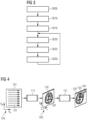
- FIG. 3 is a flowchart of a method according to various examples.
- a NN is trained to accurately reconstruct MRI images based on MRI raw data that has been acquired using K-space trajectories that are undersampling the K-space.
- the NN can be employed in the context according to one of the examples of TAB. 1.
- the method of FIG. 1 could be executed by on ondevice processor such as the processor 161 of the MRI device 100 in the example of FIG. 1 . It would also be possible that the method of FIG. 1 is executed by a separate device such as the device 90. For instance, the method of FIG. 3 could be executed by the processor 92 of the device 90 upon loading program code from the memory 93.
- the method commences at box 3005.
- training MRI raw data is obtained.
- the training MRI raw data may be obtained from an MRI device such as the MRI device 100.
- the training MRI data may be obtained from a database, e.g., a picture archiving system of a hospital or a central database on the Internet.
- Obtaining the data may generally include loading the respective data via an interface or from a memory, or even controlling another device to acquire the data.
- the method proceeds at box 3010; here, a ground truth of a training MRI image that is associated with the training MRI data is obtained.
- the training MRI image can thus resemble the artifact-free image-domain representation of the MRI raw data.
- various options are available for obtaining the training MRI image. For instance, it would be possible to fully sample the K-space, i.e., using a K-space trajectory that is not undersampling the K-space. Based on such full sampling of the K-space, it would be possible to determine the training MRI image. Then, it would be possible to discard certain K-space samples such that the undersampling of the K-space according to the K-space trajectory is obtained for the respective training MRI data. In such an approach it is also possible to synthesize different raw MRI data for different K-space trajectories. This can be helpful for scenarios in which the K-space trajectory itself is adjusted during the training, as will be later-on explained in connection with box 3030.
- a ground truth of object presence or object absence is obtained at box 3015.
- a respective label indicated for of whether a certain anatomical structure or condition is visible in the training MRI image may be obtained. It would be possible to use supervised learning. I.e., respective labels may be annotated by an expert, e.g., a clinician.
- the object can be defined in a task-specific manner. I.e., depending on the specific radiology task, a different object may be defined.
- object presence or object absence may be determined for multiple different object classes. I.e., for certain image body region, there may be multiple candidate objects that could be potentially visible in the training MRI image. For each of these candidate objects, would be possible to determine object presence or object absence as ground truth.
- Example objects include: tendon rupture; vertebral fracture; stroke region; thrombosis; etc..
- a center of the object could be specified. It would be possible to use bounding boxes, e.g., rectangular or square structures or even 3D structures of minimum size that enclose the entire object.
- a prediction of the training MRI image is determined using the NN.
- the NN in its current training states i.e., using the currently set weights, is used.
- a prediction of the presence or absence of the object in the training MRI image is determined, using an object-detection algorithm that operates based on the prediction of the training MRI image also determined at box 3020.
- object-detection algorithm As a general rule, various options are available for implementing the object-detection algorithm. Classical featurebased detection algorithms could be used. It would also be possible to use an object-detection NN. Here, various kinds and types of object-detection NNs can be used as generally known to the skilled person. An example would be described in: Lin, Tsung-Yi, et al. "Focal loss for dense object detection.” Proceedings of the IEEE international conference on computer vision. 2017 . The object-detection NN is used in its current training state, i.e., using the currently set weights.
- the method commences at box 3025.
- a loss value is determined.
- the loss value is sometimes also referred to as cost value.
- the predictions of box 3020 are compared with the respective ground truth. This would include, e.g., determining the loss value based on a first difference between the ground truth of the training MRI image and the prediction of the training MRI image, and further based on a second difference between the ground truth of the presence or absence of the object in the prediction of the presence or absence of the object.
- the first difference could be a pixel wise difference squared and then a sum across all pixels could be formed.
- a third difference can be taken into account when determining the loss value, the third difference being between the ground truth of the object location of the object and the prediction of the object location of the object.
- x refers to the raw MRI data in k-space
- ⁇ refers to the learnable parameters (i.e., weights of the respective networks as well as parameters for sampling pattern determination)
- R(x, theta) is the reconstructed MRI image.
- Detection is based on the difference between the prediction of the absence or presence of the object and optionally the prediction of the object location, as well as the respective ground truth. More generally, this contribution can be task-specific.
- Reconstruction is the image-based contribution, i.e., the difference between the prediction of the MRI image and the ground truth of the MRI image. For instance, a comparison between corresponding pixels could be implemented.
- Undersampling is a contribution to the loss value that can be optionally considered. It is associated with the k-space trajectory. For instance, this contribution could penalize longer acquisition times. I.e., it would be possible that the loss value is further based on an acquisition time associated with the K-space trajectory. Thereby, during the training, specifically an iterative training process, the amount of K-space samples can be reduced. The time required to acquire the image can be reduced.
- the undersampling contribution is generally optional. In some examples, it would be possible that the undersampling contribution is only considered in connection with adjusting the trajectory used to sample the K-space, while the detection loss and the reconstruction loss are used to adjust the parameters of the NN. in such a scenario, it is not required to combine the undersampling contribution with the detection and reconstruction contribution into a single loss value. Rather, two separate loss values can be used, one adjusting the K-space trajectory, and one for adjusting the weights of the NN.
- a NN For a scenario in which a NN is used to implement the object-detection algorithm, it would be possible to not only adjust the weights of the NN, but also of the object-detection NN, based on the loss value, at box 3030. Specifically, it would be possible to employ end-to-end the training of the NN and the object-detection NN.
- a gradient of the loss function can be determined for the object detection NN can be further propagated into the reconstruction NN.
- the weights of the reconstruction NN and the object-detection NN are coherently adjusted, i.e., in a combined fashion and coupled to each other. This increases the accuracy of the training.
- the training process adjusts the K-space trajectory during the training process and based on the loss value.
- sampling point density could be adjusted.
- orientation and/or shape of the K-space trajectory could be adjusted. For instance, different shapes of K-space trajectories may be chosen, e.g., radial, spiral, cartesian, random. Data points may be added or removed.
- constraints can be based on hardware limitations, e.g., with respect to switching speeds, or strength of DC magnetic field gradients. Thereby, a physically feasible K-space trajectory can be obtained.
- the reconstruction NN can be used to make predictions during inference, i.e., where no ground truth is available.
- FIG. 4 illustrates the data processing for MRI reconstruction.
- a reconstruction NN 111 is employed that can be trained using the method of FIG. 3 .
- the MRI raw data e.g., training MRI raw data 131, corresponds to data samples that have been acquired using a K-space trajectory 151 undersampling the K-space 150.
- K-space trajectory 151 While in FIG. 4 a Cartesian K-space trajectory as illustrated, as a general rule, various other types and forms of K-space trajectories 151 may be used, e.g., radial sampling, circular sampling, or random sampling.
- the K-space trajectory 151 can also be adjusted using the training process.
- the (training) MRI raw data 131 is then passed to a reconstruction NN 111.
- the reconstruction NN 111 - e.g., a CNN - can include a first sub-reconstruction NN implementing a Fourier transform of the training MRI raw data 131 to the image domain, and a second sub-reconstruction NN implementing removal of aliasing artefacts.
- the object-detection algorithm 121 can determine the prediction of presence or absence 134 and optionally of location 133 of the object 139.
- the location 133 is illustrated with the bounding box and the presence or absence 134 with the respective label.
Landscapes
- Engineering & Computer Science (AREA)
- Physics & Mathematics (AREA)
- Theoretical Computer Science (AREA)
- General Physics & Mathematics (AREA)
- Evolutionary Computation (AREA)
- Health & Medical Sciences (AREA)
- Artificial Intelligence (AREA)
- General Health & Medical Sciences (AREA)
- Software Systems (AREA)
- Computing Systems (AREA)
- Biomedical Technology (AREA)
- Data Mining & Analysis (AREA)
- Computational Linguistics (AREA)
- Molecular Biology (AREA)
- Biophysics (AREA)
- General Engineering & Computer Science (AREA)
- Mathematical Physics (AREA)
- Life Sciences & Earth Sciences (AREA)
- Multimedia (AREA)
- Computer Vision & Pattern Recognition (AREA)
- Databases & Information Systems (AREA)
- Medical Informatics (AREA)
- Nuclear Medicine, Radiotherapy & Molecular Imaging (AREA)
- Radiology & Medical Imaging (AREA)
- Signal Processing (AREA)
- High Energy & Nuclear Physics (AREA)
- Condensed Matter Physics & Semiconductors (AREA)
- Magnetic Resonance Imaging Apparatus (AREA)
Claims (13)
- Computerimplementiertes Verfahren zum Trainieren eines Rekonstruktionsalgorithmus eines neuronalen Netzes (111), der verwendet wird, um ein Magnetresonanzbildgebungsbild, MRI-Bild, (132) basierend auf MRI-Rohdaten (131) zu rekonstruieren, wobei das Verfahren umfasst:- Erhalten (3005) von MRI-Trainingsrohdaten (131), die unter Verwendung einer k-Raum-Trajektorie (151), das heißt Unterabtastung des k-Raums (150), erfasst werden,- Erhalten (3010) einer Grundwahrheit eines MRI-Trainingsbildes (132), das mit den MRI-Rohdaten (131) verknüpft ist,- Erhalten (3015) einer Grundwahrheit eines Vorhandenseins oder Nichtvorhandenseins (134) eines Objekts (139) in dem MRI-Trainingsbild (132),- basierend auf den MRI-Trainingsrohdaten (131) und unter Verwendung des Rekonstruktionsalgorithmus des neuronales Netzes (111), Bestimmen (3020) einer Vorhersage des MRI-Trainingsbildes (132),- basierend auf der Vorhersage des MRI-Trainingsbildes (132) und unter Verwendung eines Objektdetektionsalgorithmus (121), Bestimmen (3020) einer Vorhersage zum Vorhandensein oder Nichtvorhandensein des Objekts (139) in dem MRI-Trainingsbild (132),- Bestimmen (3025) eines Verlustwertes basierend auf einer ersten Differenz zwischen der Grundwahrheit des MRI-Trainingsbildes (132) und der Vorhersage des MRI-Trainingsbildes (132) und ferner basierend auf einer zweiten Differenz zwischen der Grundwahrheit des Vorhandenseins oder Nichtvorhandenseins des Objekts (139) und der Vorhersage des Vorhandenseins oder Nichtvorhandenseins des Objekts (139) und- basierend auf dem Verlustwert und unter Verwendung eines Trainingsprozesses, Anpassen (3030) von Gewichtungen des Rekonstruktionsalgorithmus des neuronalen Netzes (111).
- Computerimplementiertes Verfahren nach Anspruch 1, ferner umfassend:- Erhalten einer Grundwahrheit eines Objektortes (133) des Objekts (139) in dem MRI-Trainingsbild (132) und- basierend auf dem MRI-Trainingsbild (132) und unter Verwendung des Objektdetektionsalgorithmus (121), Bestimmen einer Vorhersage des Objektortes (133) des Objekts (139) in dem MRI-Trainingsbild (132),wobei der Verlustwert ferner basierend auf einer dritten Differenz zwischen der Grundwahrheit des Objektortes (133) des Objekts (139) und der Vorhersage des Objektortes (133) des Objekts (139) bestimmt wird.
- Computerimplementiertes Verfahren nach Anspruch 1 oder 2, wobei der Objektdetektionsalgorithmus ein Objektdetektionsalgorithmus eines neuronalen Netzes ist,
wobei das Verfahren ferner umfasst:- basierend auf dem Verlustwert und unter Verwendung des Trainingsprozesses, Anpassen von Gewichtungen des Objektdetektionsalgorithmus des neuronalen Netzes (121). - Computerimplementiertes Verfahren nach Anspruch 3,
wobei der Trainingsprozess ein Ende-zu-Ende-Trainingsprozess ist, der die Gewichtungen des Rekonstruktionsalgorithmus des neuronalen Netzes (111) und die Gewichtungen des Objektdetektionsalgorithmus des neuronalen Netzes (121) kohärent anpasst. - Computerimplementiertes Verfahren nach einem der vorhergehenden Ansprüche, ferner umfassend:- Verschlanken von wenigstens einem von dem Rekonstruktionsalgorithmus eines neuronalen Netzes (111) oder der k-Raum-Trajektorie (151) unter Verwendung des Trainingsprozesses.
- Computerimplementiertes Verfahren nach einem der vorhergehenden Ansprüche, ferner umfassend:- basierend auf dem Verlustwert und unter Verwendung des Trainingsprozesses, Anpassen der k-Raum-Trajektorie (151).
- Computerimplementiertes Verfahren nach einem der vorhergehenden Ansprüche,
wobei der Verlustwert ferner auf einer Erfassungszeit basiert, die mit der k-Raum-Trajektorie (151) verknüpft ist. - Computerimplementiertes Verfahren, wobei das Verfahren umfasst:- Erhalten von MRI-Rohdaten (131), die unter Verwendung einer k-Raum-Trajektorie (151), das heißt Unterabtastung des k-Raums (150), erfasst werden,- unter Verwendung eines Rekonstruktionsalgorithmus eines neuronalen Netzes (111), Bestimmen einer Vorhersage eines MRI-Bildes (132) und- unter Verwendung eines Objektdetektionsalgorithmus (121), Bestimmen einer Vorhersage eines Vorhandenseins oder Nichtvorhandenseins eines Objekts (139) in dem MRI-Bild (132), wobei der Rekonstruktionsalgorithmus des neuronalen Netzes (111) unter Verwendung des computerimplementierten Verfahrens nach einem der vorstehenden Ansprüche trainiert worden ist.
- Vorrichtung (100, 90) zum Trainieren eines Rekonstruktionsalgorithmus eines neuronalen Netzes (111), der verwendet wird, um ein Magnetresonanzbildgebungsbild, MRI-Bild, basierend auf MRI-Rohdaten (131) zu rekonstruieren, wobei die Vorrichtung einen Prozessor (161, 91) umfasst, der hierzu konfiguriert ist:- Erhalten von MRI-Trainingsrohdaten (131), die unter Verwendung einer k-Raum-Trajektorie (151), das heißt Unterabtastung des k-Raums (150), erfasst werden,- Erhalten einer Grundwahrheit eines MRI-Trainingsbildes (132), das mit den MRI-Rohdaten (131) verknüpft ist,- Erhalten einer Grundwahrheit eines Vorhandenseins oder Nichtvorhandenseins (134) eines Objekts (139) in dem MRI-Trainingsbild (132),- basierend auf den MRI-Trainingsrohdaten (131) und unter Verwendung des Rekonstruktionsalgorithmus des neuronales Netzes (111), Bestimmen einer Vorhersage des MRI-Trainingsbildes (132),- basierend auf der Vorhersage des MRI-Trainingsbildes (132) und unter Verwendung eines Objektdetektionsalgorithmus (121), Bestimmen einer Vorhersage zum Vorhandensein oder Nichtvorhandensein des Objekts (139) in dem MRI-Trainingsbild (132),- Bestimmen eines Verlustwertes basierend auf einer ersten Differenz zwischen der Grundwahrheit des MRI-Trainingsbildes (132) und der Vorhersage des MRI-Trainingsbildes (132) und ferner basierend auf einer zweiten Differenz zwischen der Grundwahrheit des Vorhandenseins oder Nichtvorhandenseins des Objekts (139) und der Vorhersage des Vorhandenseins oder Nichtvorhandenseins des Objekts (139) und- basierend auf dem Verlustwert und unter Verwendung eines Trainingsprozesses, Anpassen von Gewichtungen des Rekonstruktionsalgorithmus des neuronalen Netzes (111).
- Vorrichtung nach Anspruch 9, wobei der Prozessor dazu ausgelegt ist, das computerimplementierte Verfahren nach einem der Ansprüche 1 bis 8 durchzuführen.
- Vorrichtung, wobei die Vorrichtung einen Prozessor umfasst, der hierzu ausgelegt ist:- Erhalten von MRI-Rohdaten (131), die unter Verwendung einer k-Raum-Trajektorie (151), das heißt Unterabtastung des k-Raums (150), erfasst werden,- unter Verwendung eines Rekonstruktionsalgorithmus eines neuronalen Netzes (111), Bestimmen einer Vorhersage eines MRI-Bildes (132) und- unter Verwendung eines Objektdetektionsalgorithmus (121), Bestimmen einer Vorhersage zum Vorhandensein oder Nichtvorhandensein eines Objekts (139) in dem MRI-Bild (132), wobei der Rekonstruktionsalgorithmus des neuronalen Netzes (111) unter Verwendung des computerimplementierten Verfahrens nach einem der Ansprüche 1 bis 8 trainiert worden ist.
- Computerprogrammprodukt, umfassend Anweisungen, die bei Ausführung des Programms durch einen Computer den Computer zum Ausführen des Verfahrens nach einem der Ansprüche 1 bis 9 veranlassen.
- Computerlesbares Datenspeichermedium, umfassend Anweisungen, die bei Ausführung durch einen Computer den Computer veranlassen, die Schritte des Verfahrens nach einem der Ansprüche 1 bis 9 auszuführen.
Priority Applications (2)
| Application Number | Priority Date | Filing Date | Title |
|---|---|---|---|
| EP21176482.4A EP4095539B1 (de) | 2021-05-28 | 2021-05-28 | Aufgabenspezifisches training eines neuralen netzwerk-algorithmus zur magnetresonanzbildrekonstruktion und objektdetektion |
| US17/824,268 US12315045B2 (en) | 2021-05-28 | 2022-05-25 | Task-specific training of reconstruction neural network algorithm for magnetic resonance imaging reconstruction |
Applications Claiming Priority (1)
| Application Number | Priority Date | Filing Date | Title |
|---|---|---|---|
| EP21176482.4A EP4095539B1 (de) | 2021-05-28 | 2021-05-28 | Aufgabenspezifisches training eines neuralen netzwerk-algorithmus zur magnetresonanzbildrekonstruktion und objektdetektion |
Publications (3)
| Publication Number | Publication Date |
|---|---|
| EP4095539A1 EP4095539A1 (de) | 2022-11-30 |
| EP4095539C0 EP4095539C0 (de) | 2025-06-25 |
| EP4095539B1 true EP4095539B1 (de) | 2025-06-25 |
Family
ID=76180925
Family Applications (1)
| Application Number | Title | Priority Date | Filing Date |
|---|---|---|---|
| EP21176482.4A Active EP4095539B1 (de) | 2021-05-28 | 2021-05-28 | Aufgabenspezifisches training eines neuralen netzwerk-algorithmus zur magnetresonanzbildrekonstruktion und objektdetektion |
Country Status (2)
| Country | Link |
|---|---|
| US (1) | US12315045B2 (de) |
| EP (1) | EP4095539B1 (de) |
Families Citing this family (3)
| Publication number | Priority date | Publication date | Assignee | Title |
|---|---|---|---|---|
| US12437187B2 (en) * | 2022-08-19 | 2025-10-07 | Shanghai United Imaging Intelligence Co., Ltd. | MRI reconstruction based on generative models |
| EP4339895A1 (de) * | 2022-09-16 | 2024-03-20 | Tata Consultancy Services Limited | Systeme und verfahren zur rekonstruktion von bildern unter verwendung von unsicherheitsverlust |
| US12482149B2 (en) * | 2023-04-03 | 2025-11-25 | Shanghai United Imaging Intelligence Co., Ltd. | Under-sampled magnetic resonance image reconstruction of an anatomical structure based on a machine-learned image reconstruction model |
Family Cites Families (2)
| Publication number | Priority date | Publication date | Assignee | Title |
|---|---|---|---|---|
| US11783451B2 (en) * | 2020-03-02 | 2023-10-10 | GE Precision Healthcare LLC | Systems and methods for reducing colored noise in medical images using deep neural network |
| US11341616B2 (en) * | 2020-03-23 | 2022-05-24 | Ge Precision Healthcare | Methods and system for selective removal of streak artifacts and noise from images using deep neural networks |
-
2021
- 2021-05-28 EP EP21176482.4A patent/EP4095539B1/de active Active
-
2022
- 2022-05-25 US US17/824,268 patent/US12315045B2/en active Active
Also Published As
| Publication number | Publication date |
|---|---|
| EP4095539C0 (de) | 2025-06-25 |
| US12315045B2 (en) | 2025-05-27 |
| US20220392122A1 (en) | 2022-12-08 |
| EP4095539A1 (de) | 2022-11-30 |
Similar Documents
| Publication | Publication Date | Title |
|---|---|---|
| US12125175B2 (en) | Methods and system for selective removal of streak artifacts and noise from images using deep neural networks | |
| US12039638B2 (en) | Magnetic resonance imaging reconstruction using machine learning | |
| CN111656392B (zh) | 用于合成磁共振图像的系统和方法 | |
| US10996306B2 (en) | MRI system and method using neural network for detection of patient motion | |
| US20200341094A1 (en) | Multi-contrast mri image reconstruction using machine learning | |
| JP7383403B2 (ja) | 磁気共鳴イメージング装置、方法及びプログラム | |
| US20190086496A1 (en) | System and method for controlling noise in magnetic resonance imaging using a local low rank technique | |
| US20240290011A1 (en) | Dual-domain self-supervised learning for accelerated non-cartesian magnetic resonance imaging reconstruction | |
| US10379188B2 (en) | MRI using spatially adaptive regularization for image reconstruction | |
| US12436217B2 (en) | Magnetic resonance imaging reconstruction using machine learning and motion compensation | |
| US12315045B2 (en) | Task-specific training of reconstruction neural network algorithm for magnetic resonance imaging reconstruction | |
| Liu et al. | High-performance rapid MR parameter mapping using model-based deep adversarial learning | |
| JP7466141B2 (ja) | 磁気共鳴画像高速再構成法及び磁気共鳴イメージング装置 | |
| CN110346741A (zh) | 使用多个脉冲序列类型的磁共振指纹的系统和方法 | |
| US12555293B2 (en) | System and method for scan time reduction for propeller magnetic resonance imaging acquisition using deep learning reconstruction | |
| Falvo et al. | A multimodal dense u-net for accelerating multiple sclerosis mri | |
| US12475614B2 (en) | Simultaneous multi-slice protocol and deep-learning magnetic resonance imaging reconstruction | |
| US20220067987A1 (en) | Magnetic resonance imaging reconstruction using machine learning for multi-contrast acquisitions | |
| Yiasemis et al. | Deep cardiac MRI reconstruction with ADMM | |
| US12298373B2 (en) | Propeller magnetic resonance acquisition and blade-specific reconstruction | |
| Li et al. | Radial undersampled MRI reconstruction using deep learning with mutual constraints between real and imaginary components of K-space | |
| CN119104968A (zh) | 用于减少磁共振成像中的运动伪影的系统和方法 | |
| CN116953582A (zh) | 磁共振成像设备的多个线圈灵敏度图和sense重建 | |
| US12625213B2 (en) | System and method for detecting motion-ridden shots in multi-shot acquisitions and utilizing deep learning based reconstruction for motion correction | |
| US20260065557A1 (en) | System and method for subspace parallel imaging in k-space |
Legal Events
| Date | Code | Title | Description |
|---|---|---|---|
| PUAI | Public reference made under article 153(3) epc to a published international application that has entered the european phase |
Free format text: ORIGINAL CODE: 0009012 |
|
| STAA | Information on the status of an ep patent application or granted ep patent |
Free format text: STATUS: THE APPLICATION HAS BEEN PUBLISHED |
|
| AK | Designated contracting states |
Kind code of ref document: A1 Designated state(s): AL AT BE BG CH CY CZ DE DK EE ES FI FR GB GR HR HU IE IS IT LI LT LU LV MC MK MT NL NO PL PT RO RS SE SI SK SM TR |
|
| STAA | Information on the status of an ep patent application or granted ep patent |
Free format text: STATUS: REQUEST FOR EXAMINATION WAS MADE |
|
| 17P | Request for examination filed |
Effective date: 20230419 |
|
| RBV | Designated contracting states (corrected) |
Designated state(s): AL AT BE BG CH CY CZ DE DK EE ES FI FR GB GR HR HU IE IS IT LI LT LU LV MC MK MT NL NO PL PT RO RS SE SI SK SM TR |
|
| RAP1 | Party data changed (applicant data changed or rights of an application transferred) |
Owner name: SIEMENS HEALTHINEERS AG |
|
| GRAP | Despatch of communication of intention to grant a patent |
Free format text: ORIGINAL CODE: EPIDOSNIGR1 |
|
| STAA | Information on the status of an ep patent application or granted ep patent |
Free format text: STATUS: GRANT OF PATENT IS INTENDED |
|
| RIC1 | Information provided on ipc code assigned before grant |
Ipc: G06N 3/08 20060101ALN20250122BHEP Ipc: G01R 33/48 20060101ALN20250122BHEP Ipc: G06T 7/00 20170101ALI20250122BHEP Ipc: G06N 3/04 20060101ALI20250122BHEP Ipc: A61B 5/055 20060101ALI20250122BHEP Ipc: G01R 33/56 20060101AFI20250122BHEP |
|
| INTG | Intention to grant announced |
Effective date: 20250203 |
|
| GRAS | Grant fee paid |
Free format text: ORIGINAL CODE: EPIDOSNIGR3 |
|
| GRAA | (expected) grant |
Free format text: ORIGINAL CODE: 0009210 |
|
| STAA | Information on the status of an ep patent application or granted ep patent |
Free format text: STATUS: THE PATENT HAS BEEN GRANTED |
|
| AK | Designated contracting states |
Kind code of ref document: B1 Designated state(s): AL AT BE BG CH CY CZ DE DK EE ES FI FR GB GR HR HU IE IS IT LI LT LU LV MC MK MT NL NO PL PT RO RS SE SI SK SM TR |
|
| REG | Reference to a national code |
Ref country code: GB Ref legal event code: FG4D |
|
| REG | Reference to a national code |
Ref country code: CH Ref legal event code: EP |
|
| REG | Reference to a national code |
Ref country code: DE Ref legal event code: R096 Ref document number: 602021032706 Country of ref document: DE |
|
| REG | Reference to a national code |
Ref country code: CH Ref legal event code: EP |
|
| REG | Reference to a national code |
Ref country code: IE Ref legal event code: FG4D |
|
| U01 | Request for unitary effect filed |
Effective date: 20250703 |
|
| U07 | Unitary effect registered |
Designated state(s): AT BE BG DE DK EE FI FR IT LT LU LV MT NL PT RO SE SI Effective date: 20250710 |
|
| PG25 | Lapsed in a contracting state [announced via postgrant information from national office to epo] |
Ref country code: NO Free format text: LAPSE BECAUSE OF FAILURE TO SUBMIT A TRANSLATION OF THE DESCRIPTION OR TO PAY THE FEE WITHIN THE PRESCRIBED TIME-LIMIT Effective date: 20250925 Ref country code: GR Free format text: LAPSE BECAUSE OF FAILURE TO SUBMIT A TRANSLATION OF THE DESCRIPTION OR TO PAY THE FEE WITHIN THE PRESCRIBED TIME-LIMIT Effective date: 20250926 |
|
| PG25 | Lapsed in a contracting state [announced via postgrant information from national office to epo] |
Ref country code: HR Free format text: LAPSE BECAUSE OF FAILURE TO SUBMIT A TRANSLATION OF THE DESCRIPTION OR TO PAY THE FEE WITHIN THE PRESCRIBED TIME-LIMIT Effective date: 20250625 |
|
| PG25 | Lapsed in a contracting state [announced via postgrant information from national office to epo] |
Ref country code: RS Free format text: LAPSE BECAUSE OF FAILURE TO SUBMIT A TRANSLATION OF THE DESCRIPTION OR TO PAY THE FEE WITHIN THE PRESCRIBED TIME-LIMIT Effective date: 20250925 |
|
| PG25 | Lapsed in a contracting state [announced via postgrant information from national office to epo] |
Ref country code: IS Free format text: LAPSE BECAUSE OF FAILURE TO SUBMIT A TRANSLATION OF THE DESCRIPTION OR TO PAY THE FEE WITHIN THE PRESCRIBED TIME-LIMIT Effective date: 20251025 |
|
| PG25 | Lapsed in a contracting state [announced via postgrant information from national office to epo] |
Ref country code: SM Free format text: LAPSE BECAUSE OF FAILURE TO SUBMIT A TRANSLATION OF THE DESCRIPTION OR TO PAY THE FEE WITHIN THE PRESCRIBED TIME-LIMIT Effective date: 20250625 |
|
| PG25 | Lapsed in a contracting state [announced via postgrant information from national office to epo] |
Ref country code: CZ Free format text: LAPSE BECAUSE OF FAILURE TO SUBMIT A TRANSLATION OF THE DESCRIPTION OR TO PAY THE FEE WITHIN THE PRESCRIBED TIME-LIMIT Effective date: 20250625 |
|
| PG25 | Lapsed in a contracting state [announced via postgrant information from national office to epo] |
Ref country code: PL Free format text: LAPSE BECAUSE OF FAILURE TO SUBMIT A TRANSLATION OF THE DESCRIPTION OR TO PAY THE FEE WITHIN THE PRESCRIBED TIME-LIMIT Effective date: 20250625 |
|
| PG25 | Lapsed in a contracting state [announced via postgrant information from national office to epo] |
Ref country code: SK Free format text: LAPSE BECAUSE OF FAILURE TO SUBMIT A TRANSLATION OF THE DESCRIPTION OR TO PAY THE FEE WITHIN THE PRESCRIBED TIME-LIMIT Effective date: 20250625 |
|
| PG25 | Lapsed in a contracting state [announced via postgrant information from national office to epo] |
Ref country code: ES Free format text: LAPSE BECAUSE OF FAILURE TO SUBMIT A TRANSLATION OF THE DESCRIPTION OR TO PAY THE FEE WITHIN THE PRESCRIBED TIME-LIMIT Effective date: 20250625 |
|
| PLBE | No opposition filed within time limit |
Free format text: ORIGINAL CODE: 0009261 |
|
| STAA | Information on the status of an ep patent application or granted ep patent |
Free format text: STATUS: NO OPPOSITION FILED WITHIN TIME LIMIT |
|
| REG | Reference to a national code |
Ref country code: CH Ref legal event code: L10 Free format text: ST27 STATUS EVENT CODE: U-0-0-L10-L00 (AS PROVIDED BY THE NATIONAL OFFICE) Effective date: 20260507 |