EP4095537A2 - Neuronales netzwerk zur einschätzung des batteriezustands - Google Patents
Neuronales netzwerk zur einschätzung des batteriezustands Download PDFInfo
- Publication number
- EP4095537A2 EP4095537A2 EP22173334.8A EP22173334A EP4095537A2 EP 4095537 A2 EP4095537 A2 EP 4095537A2 EP 22173334 A EP22173334 A EP 22173334A EP 4095537 A2 EP4095537 A2 EP 4095537A2
- Authority
- EP
- European Patent Office
- Prior art keywords
- battery
- battery data
- vector
- neural network
- data
- Prior art date
- Legal status (The legal status is an assumption and is not a legal conclusion. Google has not performed a legal analysis and makes no representation as to the accuracy of the status listed.)
- Granted
Links
Images





Classifications
-
- G—PHYSICS
- G01—MEASURING; TESTING
- G01R—MEASURING ELECTRIC VARIABLES; MEASURING MAGNETIC VARIABLES
- G01R31/00—Arrangements for testing electric properties; Arrangements for locating electric faults; Arrangements for electrical testing characterised by what is being tested not provided for elsewhere
- G01R31/36—Arrangements for testing, measuring or monitoring the electrical condition of accumulators or electric batteries, e.g. capacity or state of charge [SoC]
- G01R31/392—Determining battery ageing or deterioration, e.g. state of health
-
- G—PHYSICS
- G01—MEASURING; TESTING
- G01R—MEASURING ELECTRIC VARIABLES; MEASURING MAGNETIC VARIABLES
- G01R31/00—Arrangements for testing electric properties; Arrangements for locating electric faults; Arrangements for electrical testing characterised by what is being tested not provided for elsewhere
- G01R31/36—Arrangements for testing, measuring or monitoring the electrical condition of accumulators or electric batteries, e.g. capacity or state of charge [SoC]
- G01R31/367—Software therefor, e.g. for battery testing using modelling or look-up tables
-
- G—PHYSICS
- G01—MEASURING; TESTING
- G01R—MEASURING ELECTRIC VARIABLES; MEASURING MAGNETIC VARIABLES
- G01R31/00—Arrangements for testing electric properties; Arrangements for locating electric faults; Arrangements for electrical testing characterised by what is being tested not provided for elsewhere
- G01R31/36—Arrangements for testing, measuring or monitoring the electrical condition of accumulators or electric batteries, e.g. capacity or state of charge [SoC]
- G01R31/382—Arrangements for monitoring battery or accumulator variables, e.g. SoC
- G01R31/3835—Arrangements for monitoring battery or accumulator variables, e.g. SoC involving only voltage measurements
-
- G—PHYSICS
- G01—MEASURING; TESTING
- G01R—MEASURING ELECTRIC VARIABLES; MEASURING MAGNETIC VARIABLES
- G01R31/00—Arrangements for testing electric properties; Arrangements for locating electric faults; Arrangements for electrical testing characterised by what is being tested not provided for elsewhere
- G01R31/36—Arrangements for testing, measuring or monitoring the electrical condition of accumulators or electric batteries, e.g. capacity or state of charge [SoC]
- G01R31/389—Measuring internal impedance, internal conductance or related variables
-
- G—PHYSICS
- G06—COMPUTING OR CALCULATING; COUNTING
- G06N—COMPUTING ARRANGEMENTS BASED ON SPECIFIC COMPUTATIONAL MODELS
- G06N3/00—Computing arrangements based on biological models
- G06N3/02—Neural networks
- G06N3/04—Architecture, e.g. interconnection topology
- G06N3/044—Recurrent networks, e.g. Hopfield networks
- G06N3/0442—Recurrent networks, e.g. Hopfield networks characterised by memory or gating, e.g. long short-term memory [LSTM] or gated recurrent units [GRU]
-
- G—PHYSICS
- G06—COMPUTING OR CALCULATING; COUNTING
- G06N—COMPUTING ARRANGEMENTS BASED ON SPECIFIC COMPUTATIONAL MODELS
- G06N3/00—Computing arrangements based on biological models
- G06N3/02—Neural networks
- G06N3/08—Learning methods
-
- G—PHYSICS
- G06—COMPUTING OR CALCULATING; COUNTING
- G06N—COMPUTING ARRANGEMENTS BASED ON SPECIFIC COMPUTATIONAL MODELS
- G06N3/00—Computing arrangements based on biological models
- G06N3/02—Neural networks
- G06N3/08—Learning methods
- G06N3/09—Supervised learning
-
- H—ELECTRICITY
- H01—ELECTRIC ELEMENTS
- H01M—PROCESSES OR MEANS, e.g. BATTERIES, FOR THE DIRECT CONVERSION OF CHEMICAL ENERGY INTO ELECTRICAL ENERGY
- H01M10/00—Secondary cells; Manufacture thereof
- H01M10/42—Methods or arrangements for servicing or maintenance of secondary cells or secondary half-cells
- H01M10/425—Structural combination with electronic components, e.g. electronic circuits integrated to the outside of the casing
- H01M10/4257—Smart batteries, e.g. electronic circuits inside the housing of the cells or batteries
-
- H—ELECTRICITY
- H01—ELECTRIC ELEMENTS
- H01M—PROCESSES OR MEANS, e.g. BATTERIES, FOR THE DIRECT CONVERSION OF CHEMICAL ENERGY INTO ELECTRICAL ENERGY
- H01M10/00—Secondary cells; Manufacture thereof
- H01M10/42—Methods or arrangements for servicing or maintenance of secondary cells or secondary half-cells
- H01M10/48—Accumulators combined with arrangements for measuring, testing or indicating the condition of cells, e.g. the level or density of the electrolyte
- H01M10/486—Accumulators combined with arrangements for measuring, testing or indicating the condition of cells, e.g. the level or density of the electrolyte for measuring temperature
-
- H—ELECTRICITY
- H01—ELECTRIC ELEMENTS
- H01M—PROCESSES OR MEANS, e.g. BATTERIES, FOR THE DIRECT CONVERSION OF CHEMICAL ENERGY INTO ELECTRICAL ENERGY
- H01M10/00—Secondary cells; Manufacture thereof
- H01M10/42—Methods or arrangements for servicing or maintenance of secondary cells or secondary half-cells
- H01M10/425—Structural combination with electronic components, e.g. electronic circuits integrated to the outside of the casing
- H01M2010/4278—Systems for data transfer from batteries, e.g. transfer of battery parameters to a controller, data transferred between battery controller and main controller
Definitions
- the present disclosure pertains generally to battery monitors, and more specifically to predicting health or life span of a single battery or string of connected batteries.
- UPS Uninterruptible power supply
- a single faulty battery in a string of batteries connected in series causes the entire string of batteries to be faulty.
- the decision a buyer of UPS systems confronts is whether to replace an entire system of batteries all at once, (e.g., for a lead acid battery system, replacement generally occurs within three to six years from the start of service), or to replace individual batteries in order to prolong the useful life of the entire string of batteries. It is desirable to minimize the cost of battery replacement over time.
- Embodiments disclosed herein are directed to a neural network for estimating battery health and predicting when a battery may reach the end of its useful life. Embodiments are disclosed which may be used to evaluate either individual batteries, systems of one or more interconnected batteries (e.g., a string of batteries), or both.
- the capability to accurately predict when a battery will reach its useful life enables forward looking management decisions regarding when to replace a battery or a system of batteries; forward looking budgeting decisions regarding the cost of battery replacement; minimization of costs over time associated with battery replacement; maximization of battery system life span; and providing an informed estimate to supply missing measurement data or replace anomalous measurement data in a battery monitoring system.
- a measured value e.g., a measured impedance
- measured impedance may be 30% - 50% greater than an initial impedance measurement.
- Embodiments of the disclosure are able to optimize the cost function for a battery management schedule where individual batteries of a system are replaced prior to replacing the entire system, or a string within a system.
- the problem may be addressed by predicting the end of life of each battery in a string. With a model of time, battery replacement costs may be calculated over the expected length of time a string of batteries will last.
- the system includes:
- the system includes:
- the steps performed by the digital processor further include generating, based upon the first battery data vector and the second battery data vector, a third battery data vector; and wherein, the health indicator of the battery is further based upon the third battery data vector.
- the steps performed by the digital processor further include inputting the second output vector into the first neural network.
- the steps performed by the digital processor further include inputting the first output vector into the second neural network.
- each of the elements of the second battery data vector includes at least one of an impedance rise and a voltage rise.
- each of the elements of the second battery data vector further includes time.
- the second neural network is trained to estimate the state of health of a plurality of interconnected batteries; and the battery data is obtained from monitoring at least one of the plurality of interconnected batteries.
- the battery data is obtained from monitoring all of the plurality of interconnected batteries.
- the difference between the measurement time associated with a battery data point and the measurement time associated with an immediately subsequent battery data point defines a measurement interval; and the measurement interval is variable over the N elements of the first battery data vector.
- the first neural network is trained to estimate future battery data for a plurality of interconnected batteries; and the battery data is obtained from monitoring at least one of the plurality of interconnected batteries.
- the battery data is obtained from monitoring all of the plurality of interconnected batteries.
- each of the battery data points includes values of at least one of a voltage of the battery, a impedance of the battery, an internal temperature of the battery, an ambient temperature of the battery, and a time.
- the system includes the battery monitor.
- the method comprises:
- the method includes:
- the method includes:
- the method includes: inputting the second output vector into the first neural network.
- the method includes: inputting the first output vector into the second neural network.
- the method includes:
- the method includes: obtaining the battery data from monitoring all of the plurality of interconnected batteries.
- the method includes:
- the method includes: obtaining the battery data from monitoring all of the plurality of interconnected batteries.
- Non-limiting and non-exhaustive embodiments of the neural network for estimating battery health are described with reference to the following figures, wherein like reference numerals refer to like parts throughout the various views unless otherwise specified.
- a "computer-based system” comprises an input device for receiving data, an output device for outputting data in tangible form (e.g. printing or displaying on a computer screen), a permanent memory for storing data as well as computer code, and a microprocessor for executing computer code wherein said computer code resident in said permanent memory will physically cause said microprocessor to read-in data via said input device, process said data within said microprocessor and output said processed data via said output device.
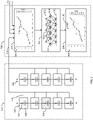
- FIG. 1 is schematic illustration of a system 100 for estimating a state of health of a battery.
- FIG. 2 illustrates a method 200 of estimating a state of health of a battery.
- a system 100 for estimating a state of health of a battery may comprise:
- the battery many be any type of battery located in any type of facility 160.
- a non-limiting example would be a 12V valve regulated lead acid (VRLA) battery located in the battery backup of an uninterruptable power supply for a server farm or a data center.
- Another example would be a lithium battery located in the power supply of an electric car.
- Another example would be a battery located in a portable electronic device.
- the battery may be one of a string 162 of batteries connected in series.
- the data monitored from the battery may be one or more of the battery voltage 116, complex or real impedance 114, battery internal temperature, battery ambient temperature or any other physical property of the battery that might be indicative of the battery health.
- the system 100 may multiplex between different batteries in a string, different strings in a facility and different facilities 170 in a set of customers.
- the input device 102 in FIG. 1 is shown displaying a graph 103 of exemplary battery impedance data 134 versus time (e.g., weeks). Data may be read at a time interval of about once per week. Data may be read in at any suitable data period such as once per day, once per month or longer or shorter data periods.
- the neural net 105 illustrated in figure 1 is a generic representation of a neural net and not necessarily a representation of the actual neural net used in the system.
- Neural nets generally comprise an input layer 172 for receiving an input vector of data, one or more hidden layers 174 for processing said input vector and an output layer 176 for providing an output vector.
- the number of nodes 171 in each layer may be any suitable value. The number of input nodes, therefore, does not necessarily have to be the same as the number of output nodes. Thus, whereas the examples provided herein indicate that the number N of input nodes and output nodes N are the same, they could alternatively be different. For example, if the neural net is forecasting future values, then there may be more nodes in the output layer than in the input layer.
- a neural network structure 300 used for at least some of the examples provided herein, includes an input layer 302, a long short-term memory (LSTM) layer 304, and a time distributed dense layer 306.
- the structure is suitable for time series input data and a digital output data with binary values.
- Other structures may be used, such as additional time distributed hidden layers. Other types of output may be provided.
- the system 100 may be a component of an overall remote battery monitoring system.
- the one or more battery monitors 112 in the overall remote battery monitoring system may be considered part of the system 100.
- the one or more batteries 118 being monitored may be considered part of the system 100.
- Communication between any elements of the system may be by any know means, such as wired or wireless communication.
- the computational tasks of the system may be performed by any suitable computation means, such as a CPU, vCPU, distributed, local, onsite or cloud based computational system.
- Neural networks may overcome some of the problems of polynomial curve fitting when applied to battery monitoring data. Often an input data set may include large, or anomalous, spikes in the impedance measurement, or missing data altogether. Such spikes may happen somewhere in the first half of a battery's life. A model that accounts for variance in the data over time would flag every instance of a data spike, and attempts to ignore or limit the impact of these outliers may involve undesirable manipulation of, or limitations on, the input data. Such manipulation may dull the model's ability to detect significant changes. On the other hand, when there is adequate history for the neural net to see, the neural net learns to ignore data spikes that occur too early in a battery's lifetime. Neural networks can do this without any special instruction. Neural networks can work with multivariate inputs better than polynomial fitting. In the case of battery monitoring, voltage is difficult to model with a polynomial. Neural networks can improve accuracy in some tasks when voltage is included as a feature.
- the neural network programming code used in the below examples is called Keras. It is a high-level software prototyping interface for the TensorFlow library for machine learning. The code used to design the neural network architecture was adapted from the website machinelearningmastery.com.
- the periodic measurement of battery data may introduce the problem of data being collected at irregular intervals.
- the output of the neural network cannot be represented on a fixed time axis if data is not collected regularly. In real time, for a real use case, it cannot be assumed that data has been collected at fixed intervals. The way data is collected creates formatting issues that make fixed interval models more difficult to implement.
- a neural network that does not rely on inputs that have fixed intervals is preferred.
- Embodiments of the neural networks presented herein address the problem of data being collected at irregular intervals. It is not necessary to assume that data is collected at regular intervals for the neural network to work. In this way, the neural network has more robust applications than an alternative model that relies on data being measured at regular intervals.
- the present system includes the measurement's time (e.g., in seconds) in both the input and output to the neural network. The neural network learns the time axis in addition to the other variables, and predicts both impedance, or other properties of interest, and the expected time the measurement will take place.
- Measured values can be manipulated to create derivative representations of the measurements, for instance, impedance rise and voltage rise. These derivative values can also be used as input to the neural network, however, the neural network may perform using either one or both of the measured or derivative values; for example, either one or both of the impedance value or impedance rise value may be used.
- Neural net algorithms require all inputs have the same dimension. This necessitates the input format be large enough to represent the largest possible data point in the data set.
- the life span of a 12 volt battery used in industry can exceed 6 years. Having measurements taken at weekly intervals, the number of measurements taken over the lifetime of a battery may exceed 300. This introduces the problem of having to represent data with a dimension in excess of 300 to capture the entire lifespan of any and all batteries.
- LSTM neural networks perform best on shorter sequences due to the vanishing gradient problem. While a sequence of length 300 is tolerable for LSTMs, it is not preferred. Additionally, new data may exceed the finite limits imposed by a fixed data representation.
- the number N of measurements used to represent a battery is significantly less than the number of total measurements taken over the average battery lifetime.
- N may be about 30 while the total number of measurements over a battery life may be about 300.
- the impedance rise variable is the proportion of the most recent impedance measurement for a battery to the measurement of impedance taken at the beginning of its life (i.e., the initial impedance value).
- the impedance rise variable is an historical indicator of a battery that dispenses with the need to explicitly represent the entire life span of a battery. As a result the inputs are not sparse.
- impedance rise is a valuable tool when determining when a battery will fail. Since the proportional rise in impedance is used to determine battery failure, not the hard value of impedance itself, impedance rise is the preferred metric that can be applied across all impedance values and readily lends itself to interpretation.
- the first neural network predicts all N points between time 1 and time N. This gives the model flexibility to produce actionable results over a desired time frame.
- data may be collected weekly, for example 26 data points may represent 26 weeks, or six months.
- the output produces a predicted value for all 26 weeks which enables shorter term analysis as well.
- this model may provide a prediction at 3 months to coincide with when you would make budgetary decisions.
- the impedance rise variable also improves the performance of the model, allowing an input which does not include the raw impedance measurement, and attaining state of the art results.
- the training sample of batteries will therefore include a range of initial values.
- the range of different initial values may or may not be representative of the complete population of batteries.
- the training sample may include a random sample of batteries, or it may include only a curated sample of batteries, as may be more beneficial to model performance.
- the selected representation of the range of initial impedance measurements may have a beneficial or deleterious effect on model performance.
- a voltage rise variable may also be used as input in a manner similar to that described for impedance rise.
- Example 1 Predicting Future Data Values of a Battery
- a long short-term memory (LSTM) neural net was applied to a past periodic data history of a set of single batteries.
- the input to the neural net was a vector, V, that contains a sequence of N past data measurements.
- a single measurement includes impedance, voltage, temperature, and ambient temperature.
- the time in seconds from time N_0 to time N_t is calculated for each of the N measurements in V.
- the rise in impedance from time N_0 to time N_t was calculated to represent the percentage rise in impedance for a single battery since installation.
- This input vector of N measurements contains the measurements for a single battery from left to right.
- the output M should be greater than N; in other words, the output values occur at times later than the input values.
- FIG. 3 illustrates a first embodiment of the architecture for the N-period model of this example.
- the input and output shapes for each layer are given in Table 1.
- LSTM layer 304 and time distributed layer 306 may be stacked to produce deeper models.
- Table 1 illustrates the input and output shapes for the LSTM model.
- the input and output shapes are tuples read as (batch size, timesteps, features).
- a single instance of an input sequence for the N-period model has the shape (1, N, F), where 1 is the number of sequences (batch size), N is the number of timesteps, and F is the number of features: impedance, voltage, unit temperature, ambient temperature, time, or percent rise in impedance.
- the parameter D is the dimension of the LSTM, and Y is the dimension of the output that corresponds to the number of values predicted at each timestep.
- Table 1. Laver (type) N periods
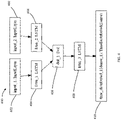
- FIG. 4 illustrates a second embodiment of the architecture 400 for the N-period model of this example.
- Multiple input layers 402 may be combined to provide input to hidden layers of the model.
- input_1 and input_2 are each processed by an LSTM layer 404 and combined by calculating their dot product 406.
- Input layers 1 and 2 may be different (e.g., spanning different time periods) or may have identical values.
- An additional LSTM layer 408 and a time distributed layer 410 are included in this example architecture.
- Input ( x_i ) is a series of N battery data points, including a battery data point 502 at time N, and N-1 prior sequential training battery data points 506.
- Each battery data point includes values of six features at time s , where i is impedance, v is voltage, m is temperature, a is ambient temperature, r is percentage rise in impedance compared to the initial value for i (the initial value of i is the first measurement of impedance at the time this unit was installed, or alternatively a calculated average of the first several impedance measurements for a unit), and s is the time in seconds.
- Output vector 522 ( y_i ) has a length N including the predictions for impedance, i , and time, s , for the next N periods subsequent to the input time period (i.e., from N+1 to M).
- FIG. 6 is a graphical representation of the output of the neural network embodiment of this example, compared with measured values.
- the measured impedance values 602 over time (represented by triangles) and the predicted values 604 (represented as dots) for the N period model of this example. Time is scaled between 0 and 1.
- Input ( x_i ) is a series of N battery data points, including a battery data point 702 at time N, and N-1 prior sequential training battery data points 706.
- Each battery data point includes values of six features at time s , where i is impedance, v is voltage, m is temperature, a is ambient temperature, r is percentage rise in impedance compared to the initial value for i (the initial value of i is the first measurement of impedance at the time this unit was installed, or alternatively a calculated average of impedance for more than one initial period), and s is the time in seconds.
- Output vector 722 ( y_i ) has a length N including the predictions for rise in impedance, r , and time, s , for the next N periods (from N+1 to M).
- FIG. 8 is a representation of an embodiment of an output of the neural net compared with values calculated from measured data. The calculated values of rise in impedance 802 over time (represented by triangles) and the predicted values 804 (represented by dots) for the N period model of this example. Time is scaled between 0 and 1.
- a voltage rise may be calculated relative to an initial voltage, or any earlier voltage (similarly to the impedance rise value discussed above).
- Other historical data for the battery may be included, such as a historical high temperature, or a time since battery changeout.
- time may be included as an input, an output, or both, as may be desired to improve model performance.
- batteries are placed in serial and parallel configurations to produce the voltage and current necessary to power backup systems such as industrial sized generators.
- UPS uninterrupted power supply
- strings are then put in parallel to provide a power reservoir. The more power required the more strings are used.
- the data model described above takes input from a single battery and produces predicted values of impedance and time for that battery.
- the single battery model does not account for behavior that occurs at the string level.
- a single battery in a string of batteries fails, the entire string fails to produce power on demand resulting in an interruption of power.
- Batteries in serial affect each other as their chemistry deteriorates over time. For instance, when impedance increases due to battery failure in one battery, simultaneously a healthy battery may exhibit aberrant behavior that reverts to normal only after the failed battery is replaced.
- the dimension of the string wise data point is the number of variables, excluding the time variable, for each individual battery in x_i (see Figure 6 ) multiplied by the number of batteries in the string. Since the time variable is the same across all batteries in a string, it only needs to be represented once.
- the length of x_i is N, which is the number of time intervals represented in the sequence.
- FIG. 9 illustrates a data structure format for input battery data vector 900 ( x_i ) for an N period model for a string of batteries.
- Input x_i is a vector of length N.
- the input is a series of N data points consisting of the five features for each battery at time s , where i is impedance, v is voltage, m is temperature, a is ambient temperature, r is percentage rise in impedance compared to the initial value for i , and s is the time in seconds.
- Each unit X has a measurement at time s so that the dimension of a measurement at the string level is the number of variables per unit ( i, v, m, a, r ) times the number of units X plus the time variable s .
- FIG. 10 illustrates a data structure format for output battery data vector 1000 ( y_i ).
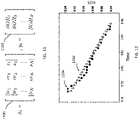
- FIG. 11 illustrates embodiments of an input vector 1100 ( x_i ) and output vector 1110 ( y_i ) for the second neural network, also referred to as the State of Health (SOH) model.
- the input is a series of N data points consisting of the features at time s , where, ir is impedance rise, vr is voltage rise, and s is the time in seconds.
- the output is a vector of length N consisting of the values for SOH at time s for the last N periods.
- FIG. 12 is a graphical representation of the output of the SOH model compared with the true values.
- the actual values 1202 (triangles) and the predicted values y_i 1204 (dots) for the N period model discussed above. Time is scaled between 0 and 1.
- SOH is the expected time until the battery should be replaced at time s for each of the last N periods.
- time variable Since the time variable is scaled it is not readily interpreted without an inverse function. For purposes of discussion, assume the maximum number of weeks is 300 or approximately 6 years. A distance of 0.01 is about 3 weeks and the SOH model is counting down to when a battery reaches 1.3 impedance rise, used here as an end of life indicator.
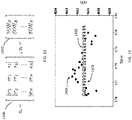
- FIG. 13 illustrates embodiments of an input vector 1300 ( x_i ) and output vector 1310 ( y_i ) for the State of Health (SOH) model.
- the input is a series of N data points consisting of the features at time s. ir is impedance rise, vr is voltage rise, and s is the time in seconds.
- the output is a vector of length N consisting of N values for SOH at time s_N.
- FIG. 14 is a graphical representation of the output of the SOH model compared with the true values.
- the actual values 1402 are shown as triangles and the predicted values y_i 1404 are shown as solid dots.
- the time is scaled between 0 and 1.
- the estimate for SOH 1406 at time s_N is the average of all N predictions (hollow dots).
- An input lifetime estimate may be a manufacturer estimate, a modeled estimate, or an experiential estimate.
- An input lifetime estimate may improve the ability of the model to adapt to rapidly changing conditions. For example, if the system experiences early failure of a single battery, the model may reduce the expected lifetime of other batteries in the system. However if, when the failed battery is replaced, an upwardly trending lifetime estimate is provided for connected batteries, the model may respond more rapidly to the change.
- Providing lifetime estimate as output can inform battery replacement decisions and allows the operator to optimize the cost of system maintenance. For example, an operator may be able to model the effects of replacing single failing batteries on the overall system lifetime, as compared to replacing all the batteries of a system at once.
- the input includes an indicator of battery changeout and the output includes a lifetime estimate. By varying the battery changeout input to this model, one may study the effects on lifetime estimate. Such a model may directly inform budgeting and maintenance decisions.
- the cost of a system is a function of initial costs, replacement costs, and time.
- a maximum of 10 units can be replaced before it is more cost effective to replace the entire string.
- the N-period prediction model may be used to supplement the SOH model. For example, in the case of premature battery failure and the effects across a string, a failed battery can cause other batteries in the string to produce abnormally low or abnormally high impedance. These batteries are still functional, however, and do not need to be replaced. Because the data is anomalous from otherwise healthy batteries, the input to the SOH model is anomalous as well and may cause the model to provide inaccurate output.
- the N-period prediction model solves this problem by replacing irregular data with smooth data that is closer to the expected measurement. It is then possible to apply the SOH model to the predicted data rather than to data that is known to be corrupted.
- the N-period prediction model is applicable to replacing missing data or other types of corrupted data and measurement errors common with battery systems.
- FIG. 15 is a graphical representation of the output of the N period model versus the true values.
- the predicted values 1504 may replace the actual values 1502 (triangles) for certain applications.
- the actual values are influenced by some system factor causing the impedance measurement to temporarily dip (between time 0.64-0.66) and then return to the previous trajectory when the influencing factor is removed.
- a method 200 of estimating a state of health of a battery includes the steps of (refer to FIGS. 1 & 2 ):
- the method further includes:
- the method further includes:
- the method further includes inputting the second output vector into the first neural network.
- the method further includes inputting the first output vector into the second neural network.
- the method further includes:
- the method further includes obtaining the battery data from monitoring all of the plurality of interconnected batteries.
- the method further includes obtaining the battery data from monitoring at least one of a plurality of interconnected batteries; and training the first neural network to estimate future battery data for the plurality of interconnected batteries based on the battery data.
- the method further includes obtaining the battery data from monitoring all of the plurality of interconnected batteries.
- the method further includes each of the elements of the second battery data vector including at least one of an impedance rise and a voltage rise.
- the method further includes each of the elements of the second battery data vector including time.
- the method further includes:
- the method further includes each of the battery data points including values of at least one of a voltage of the battery, a impedance of the battery, an internal temperature of the battery, an ambient temperature of the battery, and a time.
- the method further includes providing the battery monitor 112.
Landscapes
- Physics & Mathematics (AREA)
- Engineering & Computer Science (AREA)
- General Physics & Mathematics (AREA)
- Theoretical Computer Science (AREA)
- Computing Systems (AREA)
- Mathematical Physics (AREA)
- Biophysics (AREA)
- Computational Linguistics (AREA)
- Data Mining & Analysis (AREA)
- Evolutionary Computation (AREA)
- General Health & Medical Sciences (AREA)
- Molecular Biology (AREA)
- Artificial Intelligence (AREA)
- General Engineering & Computer Science (AREA)
- Life Sciences & Earth Sciences (AREA)
- Biomedical Technology (AREA)
- Software Systems (AREA)
- Health & Medical Sciences (AREA)
- Manufacturing & Machinery (AREA)
- Chemical & Material Sciences (AREA)
- Chemical Kinetics & Catalysis (AREA)
- Electrochemistry (AREA)
- General Chemical & Material Sciences (AREA)
- Microelectronics & Electronic Packaging (AREA)
- Secondary Cells (AREA)
Applications Claiming Priority (2)
| Application Number | Priority Date | Filing Date | Title |
|---|---|---|---|
| US202163192352P | 2021-05-24 | 2021-05-24 | |
| US17/558,820 US20220373600A1 (en) | 2021-05-24 | 2021-12-22 | Neural network for estimating battery health |
Publications (4)
| Publication Number | Publication Date |
|---|---|
| EP4095537A2 true EP4095537A2 (de) | 2022-11-30 |
| EP4095537A3 EP4095537A3 (de) | 2022-12-07 |
| EP4095537B1 EP4095537B1 (de) | 2023-09-06 |
| EP4095537C0 EP4095537C0 (de) | 2023-09-06 |
Family
ID=81653496
Family Applications (1)
| Application Number | Title | Priority Date | Filing Date |
|---|---|---|---|
| EP22173334.8A Active EP4095537B1 (de) | 2021-05-24 | 2022-05-13 | Neuronales netzwerk zur einschätzung des batteriezustands |
Country Status (3)
| Country | Link |
|---|---|
| US (2) | US20220373600A1 (de) |
| EP (1) | EP4095537B1 (de) |
| CA (1) | CA3157617C (de) |
Families Citing this family (6)
| Publication number | Priority date | Publication date | Assignee | Title |
|---|---|---|---|---|
| US11921163B2 (en) * | 2021-12-16 | 2024-03-05 | Volkswagen Aktiengesellschaft | Modular machine learning structure for electric vehicle battery state of health estimation |
| US12613284B2 (en) * | 2022-09-08 | 2026-04-28 | Volkswagen Aktiengesellschaft | Battery management system for determining a health of a power source based on an impedance indicator |
| JP2024136892A (ja) * | 2023-03-24 | 2024-10-04 | 株式会社村田製作所 | 蓄電装置、診断装置、および診断方法 |
| CN116388353B (zh) * | 2023-06-06 | 2023-09-08 | 宁波齐云新材料技术有限公司 | 一种锂电池pack用供电系统及控制方法 |
| KR102810545B1 (ko) * | 2023-10-13 | 2025-05-26 | 박경현 | 감시 제어 기능과 ups의 잔존 유효 수명 예측이 가능한 시스템 |
| CN120314798A (zh) * | 2025-06-19 | 2025-07-15 | 国家市场监督管理总局缺陷产品召回技术中心 | 电化学储能电池运行安全状态的自适应评估方法、装置、设备及介质 |
Family Cites Families (12)
| Publication number | Priority date | Publication date | Assignee | Title |
|---|---|---|---|---|
| US7148808B1 (en) * | 2004-03-22 | 2006-12-12 | Us Power, Inc. | System for battery alarm notification and a method for implementing same |
| KR100936892B1 (ko) * | 2007-09-13 | 2010-01-14 | 주식회사 엘지화학 | 배터리의 장기 특성 예측 시스템 및 방법 |
| JP6313730B2 (ja) * | 2015-04-10 | 2018-04-18 | タタ コンサルタンシー サービシズ リミテッドTATA Consultancy Services Limited | 異常検出システムおよび方法 |
| KR102726191B1 (ko) * | 2016-10-05 | 2024-11-06 | 삼성전자주식회사 | 배터리 상태 추정 장치 및 방법 |
| US11637331B2 (en) * | 2017-11-20 | 2023-04-25 | The Trustees Of Columbia University In The City Of New York | Neural-network state-of-charge and state of health estimation |
| US11089035B2 (en) * | 2017-12-11 | 2021-08-10 | Radware Ltd. | Techniques for predicting subsequent attacks in attack campaigns |
| KR102373458B1 (ko) * | 2018-02-07 | 2022-03-10 | 주식회사 엘지에너지솔루션 | 배터리를 위한 등가 회로 모델의 파라미터 추정 방법 및 배터리 관리 시스템 |
| US11243262B2 (en) * | 2018-03-20 | 2022-02-08 | Gs Yuasa International Ltd. | Degradation estimation apparatus, computer program, and degradation estimation method |
| KR102695521B1 (ko) * | 2018-09-20 | 2024-08-14 | 삼성전자주식회사 | 배터리 상태 추정 장치 및 방법 |
| CA3117022A1 (en) * | 2018-10-22 | 2020-04-30 | Btech Inc. | Detecting battery changeout |
| DE102018220494A1 (de) * | 2018-11-28 | 2020-05-28 | Robert Bosch Gmbh | Verfahren zum Überwachen eines Energiespeichers in einem Bordnetz |
| US11850968B2 (en) * | 2021-03-23 | 2023-12-26 | Ford Global Technologies, Llc | Electrified vehicle control based on validated battery cell voltages compressed and encrypted using artificial intelligence |
-
2021
- 2021-12-22 US US17/558,820 patent/US20220373600A1/en not_active Abandoned
-
2022
- 2022-04-27 CA CA3157617A patent/CA3157617C/en active Active
- 2022-05-13 EP EP22173334.8A patent/EP4095537B1/de active Active
-
2025
- 2025-09-10 US US19/325,085 patent/US20260009856A1/en active Pending
Also Published As
| Publication number | Publication date |
|---|---|
| CA3157617C (en) | 2024-01-16 |
| EP4095537B1 (de) | 2023-09-06 |
| EP4095537A3 (de) | 2022-12-07 |
| CA3157617A1 (en) | 2022-11-24 |
| US20220373600A1 (en) | 2022-11-24 |
| EP4095537C0 (de) | 2023-09-06 |
| US20260009856A1 (en) | 2026-01-08 |
Similar Documents
| Publication | Publication Date | Title |
|---|---|---|
| EP4095537B1 (de) | Neuronales netzwerk zur einschätzung des batteriezustands | |
| JP6865189B2 (ja) | 故障確率評価システム及び方法 | |
| JP7145821B2 (ja) | 故障確率評価システムおよびその方法 | |
| EP3923101B1 (de) | Verfahren und rechensystem zur durchführung einer prognostischen gesundheitsanalyse für einen asset | |
| Wang et al. | A multi-objective optimization of imperfect preventive maintenance policy for dependent competing risk systems with hidden failure | |
| US10521490B2 (en) | Equipment maintenance management system and equipment maintenance management method | |
| US20170185970A1 (en) | Preventive maintenance management system and method for generating maintenance schedule of machine, and cell controller | |
| US11874328B2 (en) | Detecting battery changeout | |
| CN118501748A (zh) | 电池内阻预测方法、soh计算方法和智能电池管理系统 | |
| Chen et al. | Harnessing digital twin and IoT for real-time monitoring, diagnostics, and error correction in domestic solar energy storage | |
| JP7422272B2 (ja) | 産業オートメーション制御システムまたは電力システムからのデータの保存を促進するための方法および装置 | |
| Sun et al. | Reliability modeling and analysis of serial-parallel hybrid multi-operational manufacturing system considering dimensional quality, tool degradation and system configuration | |
| CN118176467A (zh) | 用于监视技术安装中的资产的状况的系统、装置和方法 | |
| HK40083021A (en) | Neural network for estimating battery health | |
| CN108205300B (zh) | 维护部件管理装置、维护部件管理方法及计算机可读介质 | |
| Shi et al. | Real-time evaluation of the credibility of remaining useful life prediction result | |
| CN116384876A (zh) | 基于维纳过程的备件动态库存-生产控制方法、系统及介质 | |
| CN114487848A (zh) | 一种蓄电池的状态计算方法和装置 | |
| CN116223969A (zh) | 配用电监测方法、设备及装置和计算机设备 | |
| CN114008549A (zh) | 用于确定剩余使用周期的方法、剩余使用周期确定电路、剩余使用周期确定设备 | |
| Freitag et al. | A concept for the dynamic adjustment of maintenance intervals by analysing heterogeneous data | |
| Rawat et al. | Condition based optimal maintenance strategy for multi-component system | |
| US20250085704A1 (en) | Failure probability evaluation apparatus | |
| CN118501703A (zh) | 电池故障预测方法、电池管理系统、设备、芯片和介质 | |
| CN117853265A (zh) | 一种基于智能化数字孪生的保供电设备状态分析系统 |
Legal Events
| Date | Code | Title | Description |
|---|---|---|---|
| PUAI | Public reference made under article 153(3) epc to a published international application that has entered the european phase |
Free format text: ORIGINAL CODE: 0009012 |
|
| STAA | Information on the status of an ep patent application or granted ep patent |
Free format text: STATUS: THE APPLICATION HAS BEEN PUBLISHED |
|
| PUAL | Search report despatched |
Free format text: ORIGINAL CODE: 0009013 |
|
| AK | Designated contracting states |
Kind code of ref document: A2 Designated state(s): AL AT BE BG CH CY CZ DE DK EE ES FI FR GB GR HR HU IE IS IT LI LT LU LV MC MK MT NL NO PL PT RO RS SE SI SK SM TR |
|
| AK | Designated contracting states |
Kind code of ref document: A3 Designated state(s): AL AT BE BG CH CY CZ DE DK EE ES FI FR GB GR HR HU IE IS IT LI LT LU LV MC MK MT NL NO PL PT RO RS SE SI SK SM TR |
|
| RIC1 | Information provided on ipc code assigned before grant |
Ipc: G01R 31/367 20190101ALI20221031BHEP Ipc: G01R 31/392 20190101AFI20221031BHEP |
|
| STAA | Information on the status of an ep patent application or granted ep patent |
Free format text: STATUS: REQUEST FOR EXAMINATION WAS MADE |
|
| 17P | Request for examination filed |
Effective date: 20221219 |
|
| RBV | Designated contracting states (corrected) |
Designated state(s): AL AT BE BG CH CY CZ DE DK EE ES FI FR GB GR HR HU IE IS IT LI LT LU LV MC MK MT NL NO PL PT RO RS SE SI SK SM TR |
|
| GRAP | Despatch of communication of intention to grant a patent |
Free format text: ORIGINAL CODE: EPIDOSNIGR1 |
|
| STAA | Information on the status of an ep patent application or granted ep patent |
Free format text: STATUS: GRANT OF PATENT IS INTENDED |
|
| INTG | Intention to grant announced |
Effective date: 20230316 |
|
| REG | Reference to a national code |
Ref country code: HK Ref legal event code: DE Ref document number: 40083021 Country of ref document: HK |
|
| GRAS | Grant fee paid |
Free format text: ORIGINAL CODE: EPIDOSNIGR3 |
|
| GRAA | (expected) grant |
Free format text: ORIGINAL CODE: 0009210 |
|
| STAA | Information on the status of an ep patent application or granted ep patent |
Free format text: STATUS: THE PATENT HAS BEEN GRANTED |
|
| AK | Designated contracting states |
Kind code of ref document: B1 Designated state(s): AL AT BE BG CH CY CZ DE DK EE ES FI FR GB GR HR HU IE IS IT LI LT LU LV MC MK MT NL NO PL PT RO RS SE SI SK SM TR |
|
| REG | Reference to a national code |
Ref country code: GB Ref legal event code: FG4D |
|
| REG | Reference to a national code |
Ref country code: CH Ref legal event code: EP |
|
| REG | Reference to a national code |
Ref country code: IE Ref legal event code: FG4D |
|
| REG | Reference to a national code |
Ref country code: DE Ref legal event code: R096 Ref document number: 602022000447 Country of ref document: DE |
|
| U01 | Request for unitary effect filed |
Effective date: 20231002 |
|
| U07 | Unitary effect registered |
Designated state(s): AT BE BG DE DK EE FI FR IT LT LU LV MT NL PT SE SI Effective date: 20231012 |
|
| PG25 | Lapsed in a contracting state [announced via postgrant information from national office to epo] |
Ref country code: GR Free format text: LAPSE BECAUSE OF FAILURE TO SUBMIT A TRANSLATION OF THE DESCRIPTION OR TO PAY THE FEE WITHIN THE PRESCRIBED TIME-LIMIT Effective date: 20231207 |
|
| PG25 | Lapsed in a contracting state [announced via postgrant information from national office to epo] |
Ref country code: RS Free format text: LAPSE BECAUSE OF FAILURE TO SUBMIT A TRANSLATION OF THE DESCRIPTION OR TO PAY THE FEE WITHIN THE PRESCRIBED TIME-LIMIT Effective date: 20230906 Ref country code: NO Free format text: LAPSE BECAUSE OF FAILURE TO SUBMIT A TRANSLATION OF THE DESCRIPTION OR TO PAY THE FEE WITHIN THE PRESCRIBED TIME-LIMIT Effective date: 20231206 Ref country code: HR Free format text: LAPSE BECAUSE OF FAILURE TO SUBMIT A TRANSLATION OF THE DESCRIPTION OR TO PAY THE FEE WITHIN THE PRESCRIBED TIME-LIMIT Effective date: 20230906 Ref country code: GR Free format text: LAPSE BECAUSE OF FAILURE TO SUBMIT A TRANSLATION OF THE DESCRIPTION OR TO PAY THE FEE WITHIN THE PRESCRIBED TIME-LIMIT Effective date: 20231207 |
|
| PG25 | Lapsed in a contracting state [announced via postgrant information from national office to epo] |
Ref country code: IS Free format text: LAPSE BECAUSE OF FAILURE TO SUBMIT A TRANSLATION OF THE DESCRIPTION OR TO PAY THE FEE WITHIN THE PRESCRIBED TIME-LIMIT Effective date: 20240106 |
|
| PG25 | Lapsed in a contracting state [announced via postgrant information from national office to epo] |
Ref country code: ES Free format text: LAPSE BECAUSE OF FAILURE TO SUBMIT A TRANSLATION OF THE DESCRIPTION OR TO PAY THE FEE WITHIN THE PRESCRIBED TIME-LIMIT Effective date: 20230906 |
|
| PG25 | Lapsed in a contracting state [announced via postgrant information from national office to epo] |
Ref country code: SM Free format text: LAPSE BECAUSE OF FAILURE TO SUBMIT A TRANSLATION OF THE DESCRIPTION OR TO PAY THE FEE WITHIN THE PRESCRIBED TIME-LIMIT Effective date: 20230906 Ref country code: RO Free format text: LAPSE BECAUSE OF FAILURE TO SUBMIT A TRANSLATION OF THE DESCRIPTION OR TO PAY THE FEE WITHIN THE PRESCRIBED TIME-LIMIT Effective date: 20230906 Ref country code: IS Free format text: LAPSE BECAUSE OF FAILURE TO SUBMIT A TRANSLATION OF THE DESCRIPTION OR TO PAY THE FEE WITHIN THE PRESCRIBED TIME-LIMIT Effective date: 20240106 Ref country code: ES Free format text: LAPSE BECAUSE OF FAILURE TO SUBMIT A TRANSLATION OF THE DESCRIPTION OR TO PAY THE FEE WITHIN THE PRESCRIBED TIME-LIMIT Effective date: 20230906 Ref country code: CZ Free format text: LAPSE BECAUSE OF FAILURE TO SUBMIT A TRANSLATION OF THE DESCRIPTION OR TO PAY THE FEE WITHIN THE PRESCRIBED TIME-LIMIT Effective date: 20230906 Ref country code: SK Free format text: LAPSE BECAUSE OF FAILURE TO SUBMIT A TRANSLATION OF THE DESCRIPTION OR TO PAY THE FEE WITHIN THE PRESCRIBED TIME-LIMIT Effective date: 20230906 |
|
| U20 | Renewal fee for the european patent with unitary effect paid |
Year of fee payment: 3 Effective date: 20240326 |
|
| PG25 | Lapsed in a contracting state [announced via postgrant information from national office to epo] |
Ref country code: PL Free format text: LAPSE BECAUSE OF FAILURE TO SUBMIT A TRANSLATION OF THE DESCRIPTION OR TO PAY THE FEE WITHIN THE PRESCRIBED TIME-LIMIT Effective date: 20230906 |
|
| REG | Reference to a national code |
Ref country code: DE Ref legal event code: R097 Ref document number: 602022000447 Country of ref document: DE |
|
| PLBE | No opposition filed within time limit |
Free format text: ORIGINAL CODE: 0009261 |
|
| STAA | Information on the status of an ep patent application or granted ep patent |
Free format text: STATUS: NO OPPOSITION FILED WITHIN TIME LIMIT |
|
| 26N | No opposition filed |
Effective date: 20240607 |
|
| PG25 | Lapsed in a contracting state [announced via postgrant information from national office to epo] |
Ref country code: MC Free format text: LAPSE BECAUSE OF FAILURE TO SUBMIT A TRANSLATION OF THE DESCRIPTION OR TO PAY THE FEE WITHIN THE PRESCRIBED TIME-LIMIT Effective date: 20230906 |
|
| PG25 | Lapsed in a contracting state [announced via postgrant information from national office to epo] |
Ref country code: MC Free format text: LAPSE BECAUSE OF FAILURE TO SUBMIT A TRANSLATION OF THE DESCRIPTION OR TO PAY THE FEE WITHIN THE PRESCRIBED TIME-LIMIT Effective date: 20230906 |
|
| U20 | Renewal fee for the european patent with unitary effect paid |
Year of fee payment: 4 Effective date: 20250506 |
|
| PGFP | Annual fee paid to national office [announced via postgrant information from national office to epo] |
Ref country code: IE Payment date: 20250522 Year of fee payment: 4 |
|
| PG25 | Lapsed in a contracting state [announced via postgrant information from national office to epo] |
Ref country code: CY Free format text: LAPSE BECAUSE OF FAILURE TO SUBMIT A TRANSLATION OF THE DESCRIPTION OR TO PAY THE FEE WITHIN THE PRESCRIBED TIME-LIMIT; INVALID AB INITIO Effective date: 20220513 |
|
| PG25 | Lapsed in a contracting state [announced via postgrant information from national office to epo] |
Ref country code: HU Free format text: LAPSE BECAUSE OF FAILURE TO SUBMIT A TRANSLATION OF THE DESCRIPTION OR TO PAY THE FEE WITHIN THE PRESCRIBED TIME-LIMIT; INVALID AB INITIO Effective date: 20220513 |
|
| REG | Reference to a national code |
Ref country code: CH Ref legal event code: H13 Free format text: ST27 STATUS EVENT CODE: U-0-0-H10-H13 (AS PROVIDED BY THE NATIONAL OFFICE) Effective date: 20251223 |
|
| PG25 | Lapsed in a contracting state [announced via postgrant information from national office to epo] |
Ref country code: CH Free format text: LAPSE BECAUSE OF NON-PAYMENT OF DUE FEES Effective date: 20250531 |
|
| PGFP | Annual fee paid to national office [announced via postgrant information from national office to epo] |
Ref country code: GB Payment date: 20260330 Year of fee payment: 5 |