EP4094735A1 - Method for making an absorbing device and absorbing device made with said method. - Google Patents
Method for making an absorbing device and absorbing device made with said method. Download PDFInfo
- Publication number
- EP4094735A1 EP4094735A1 EP22175031.8A EP22175031A EP4094735A1 EP 4094735 A1 EP4094735 A1 EP 4094735A1 EP 22175031 A EP22175031 A EP 22175031A EP 4094735 A1 EP4094735 A1 EP 4094735A1
- Authority
- EP
- European Patent Office
- Prior art keywords
- layer
- absorbing device
- woven
- ultraviolet rays
- tnt
- Prior art date
- Legal status (The legal status is an assumption and is not a legal conclusion. Google has not performed a legal analysis and makes no representation as to the accuracy of the status listed.)
- Granted
Links
Images
Classifications
-
- A—HUMAN NECESSITIES
- A61—MEDICAL OR VETERINARY SCIENCE; HYGIENE
- A61F—FILTERS IMPLANTABLE INTO BLOOD VESSELS; PROSTHESES; DEVICES PROVIDING PATENCY TO, OR PREVENTING COLLAPSING OF, TUBULAR STRUCTURES OF THE BODY, e.g. STENTS; ORTHOPAEDIC, NURSING OR CONTRACEPTIVE DEVICES; FOMENTATION; TREATMENT OR PROTECTION OF EYES OR EARS; BANDAGES, DRESSINGS OR ABSORBENT PADS; FIRST-AID KITS
- A61F13/00—Bandages or dressings; Absorbent pads
- A61F13/15—Absorbent pads, e.g. sanitary towels, swabs or tampons for external or internal application to the body; Supporting or fastening means therefor; Tampon applicators
- A61F13/15577—Apparatus or processes for manufacturing
- A61F13/15707—Mechanical treatment, e.g. notching, twisting, compressing, shaping
- A61F13/15731—Treating webs, e.g. for giving them a fibrelike appearance, e.g. by embossing
-
- A—HUMAN NECESSITIES
- A61—MEDICAL OR VETERINARY SCIENCE; HYGIENE
- A61F—FILTERS IMPLANTABLE INTO BLOOD VESSELS; PROSTHESES; DEVICES PROVIDING PATENCY TO, OR PREVENTING COLLAPSING OF, TUBULAR STRUCTURES OF THE BODY, e.g. STENTS; ORTHOPAEDIC, NURSING OR CONTRACEPTIVE DEVICES; FOMENTATION; TREATMENT OR PROTECTION OF EYES OR EARS; BANDAGES, DRESSINGS OR ABSORBENT PADS; FIRST-AID KITS
- A61F13/00—Bandages or dressings; Absorbent pads
- A61F13/15—Absorbent pads, e.g. sanitary towels, swabs or tampons for external or internal application to the body; Supporting or fastening means therefor; Tampon applicators
- A61F13/53—Absorbent pads, e.g. sanitary towels, swabs or tampons for external or internal application to the body; Supporting or fastening means therefor; Tampon applicators characterised by the absorbing medium
- A61F13/538—Absorbent pads, e.g. sanitary towels, swabs or tampons for external or internal application to the body; Supporting or fastening means therefor; Tampon applicators characterised by the absorbing medium characterised by specific fibre orientation or weave
-
- A—HUMAN NECESSITIES
- A61—MEDICAL OR VETERINARY SCIENCE; HYGIENE
- A61F—FILTERS IMPLANTABLE INTO BLOOD VESSELS; PROSTHESES; DEVICES PROVIDING PATENCY TO, OR PREVENTING COLLAPSING OF, TUBULAR STRUCTURES OF THE BODY, e.g. STENTS; ORTHOPAEDIC, NURSING OR CONTRACEPTIVE DEVICES; FOMENTATION; TREATMENT OR PROTECTION OF EYES OR EARS; BANDAGES, DRESSINGS OR ABSORBENT PADS; FIRST-AID KITS
- A61F13/00—Bandages or dressings; Absorbent pads
- A61F13/15—Absorbent pads, e.g. sanitary towels, swabs or tampons for external or internal application to the body; Supporting or fastening means therefor; Tampon applicators
- A61F13/53—Absorbent pads, e.g. sanitary towels, swabs or tampons for external or internal application to the body; Supporting or fastening means therefor; Tampon applicators characterised by the absorbing medium
- A61F13/538—Absorbent pads, e.g. sanitary towels, swabs or tampons for external or internal application to the body; Supporting or fastening means therefor; Tampon applicators characterised by the absorbing medium characterised by specific fibre orientation or weave
- A61F2013/5386—Absorbent pads, e.g. sanitary towels, swabs or tampons for external or internal application to the body; Supporting or fastening means therefor; Tampon applicators characterised by the absorbing medium characterised by specific fibre orientation or weave by the fibre orientation in the z plane or vertical direction
Definitions
- the invention concerns a method for making an absorbing device suitable for both children and adults with characteristics of high liquid absorption and low liquid return to the surface in contact with the wearer's skin.
- absorbing devices both for children and for women's and adults' hygiene in general, are particularly suitable for receiving biological liquids (urine and menstruation) that are released by the person and that pass through a specific absorption zone that is not in contact with the person's skin, so that discomfort due to liquid contact with the skin can be minimised.
- biological liquids urine and menstruation
- the prior art has developed different types of absorbing devices capable of retaining moisture mainly thanks to the use of polymers that are capable of absorbing a quantity of liquid even equal to 40/50 times the weight of the polymer itself.
- the absorbing pad of which the above-mentioned device is made up is composed of a mixture of a super absorbent polymer and cellulose fibres.
- the super-absorbent polymer consists of granules and fine particles, generally derived from acrylic acid, selected from sodium acrylate, potassium acrylate and alkyl acrylate.
- These polymer particles act like tiny sponges and are capable of retaining considerable amounts of liquid up to 40/50 times their weight.
- the polymer granules when they come into contact with aqueous liquids, they form a gel network that is not soluble in water.
- the gels formed in this way do not have the ability to transport or disperse liquids, whereas this function is optimally performed by cellulose fibres.
- This absorbing part is positioned in the centre of the absorbing device and is inserted between two layers of woven/non-woven fabric TNT in order to give the same pad stability and mechanical strength.
- the absorbing pad is then covered with an additional layer of woven/nonwoven fabric TNT, which performs the function of acquiring liquids and comes into contact with the person's skin.
- the method relating to the invention concerns precisely the maximisation of the liquid acquisition function, in the sense of achieving a transfer of the liquid from this layer to the absorbing pad with maximum speed, so as to minimise the wet feeling that the person may perceive.
- the method of implementing the absorbency of such a layer is achieved by using ultraviolet rays UV that geometrically transform the fibres of the layer concerned by imbibition.
- the absorbent device can be observed, indicated overall by 1, in section and already fully formed.
- this absorbing device 1 there is a first layer of woven/non-woven fabric TNT and polyethylene film, indicated with 2, where this layer comes into contact with the person using the absorbing device 1, whether child or adult.
- the layer 2 is made adherent to the subsequent second layer 3 by means of a film of glue indicated with 4 that allows precisely the adhesion of the layer 2 in contact with the skin with the second lower layer 3 that is the layer of material that acquires and distributes the liquids to the third layer 5 that is the absorbing pad indicated with 5.
- the second layer 3 is a type of woven/non-woven fabric TNT: in the case under examination, and by way of illustration but not limitation, use is made of the specific absorption/distribution fabric called ADL (Acquisition Distribution Layer) and which has precisely the function of acquiring the liquids that are lost by the person in order to distribute them and then to transfer them to the third layer 5 functioning as an absorbing pad.
- ADL Absorption Distribution Layer
- This absorbing pad or third layer 5 generally consists of a SAP (Super Absorbent Polymer), generally hydrogel polymer, and cellulose fibres.
- SAP Super Absorbent Polymer
- the absorbing pad 5 is also contained within a woven/non-woven fabric TNT that wraps it so as to make it stable during absorption of the liquid and to prevent it from falling apart during use.
- the absorbing pad or third layer 5 is also fixed through the film of glue 4 to the closing element 6, which in turn adheres to the liquid acquisition and distribution layer 3.
- FIG. 1 Again in Fig. 1 , and in schematic form, four lamps indicated with 10 for the irradiation of the ultraviolet rays UV are indicated in section.
- the sterilising power that ultraviolet rays UV exert on microorganisms and bacteria, which are pathogenic to human health, is well known and is used by various manufacturers.
- the second layer 3 of liquid acquisition and distribution is formed by woven/non-woven fabric TNT (usually ADL) of polyester fibre.
- the polyester fibres of which the ADL layer is composed arrange themselves in a vertical direction and thus achieve the effect of sucking up liquids more quickly and transferring them just as quickly into the absorbing pad 5.
- lamps 10 for the irradiation of ultraviolet rays UV were arranged along the direction of the conveyor belt 11, as can be seen in Fig. 2 , at a certain point in the packaging and before the absorbing device 1 is enclosed and thus in the process of being fully spread out.
- lamps 10 there are four lamps 10, in the case of the example, with a length of about 90 cm and a power of about 41W.
- the distance between the lamps 10 and the conveyor belt 11 is about 20-25 mm.
- FIGs. 5 and 6 depict photographs taken by the inventors before and after irradiation with ultraviolet rays UV, respectively.
- the fibres of the acquisition layer after irradiation with ultraviolet rays UV, were arranged in an orderly and aligned manner.
- the absorbing device 1 described above has inside it microcapsules 12 of known type and containing essential oils within them which are intended to produce a soothing effect on the wearer of said device.
- microcapsules 12 in the example are shown in Fig. 1 .
- the capsules contain in their inside one or more essential oils such as Calendula Oil, Avocado Oil, Jojoba Oil, Olive Oil and Talcum Scent.
- microcapsules after being deposited on one or more layers of woven/non-woven fabric (TNT) by means of a simple powder dispenser, are permanently fixed to the TNT support by the action of the ultraviolet rays UV acting on the absorbing device 1.
- TNT woven/non-woven fabric
- microcapsules 12 may be distributed only on the layer 3 or on the layer 5.
- the main purpose of the invention was thus achieved by creating an absorbing device 1 that increases the comfort of the wearer while minimising the wet feeling.
Landscapes
- Health & Medical Sciences (AREA)
- Engineering & Computer Science (AREA)
- Heart & Thoracic Surgery (AREA)
- Epidemiology (AREA)
- Biomedical Technology (AREA)
- Vascular Medicine (AREA)
- Life Sciences & Earth Sciences (AREA)
- Animal Behavior & Ethology (AREA)
- General Health & Medical Sciences (AREA)
- Public Health (AREA)
- Veterinary Medicine (AREA)
- Manufacturing & Machinery (AREA)
- Mechanical Engineering (AREA)
- Absorbent Articles And Supports Therefor (AREA)
- Solid-Sorbent Or Filter-Aiding Compositions (AREA)
Abstract
Description
- The invention concerns a method for making an absorbing device suitable for both children and adults with characteristics of high liquid absorption and low liquid return to the surface in contact with the wearer's skin.
- As is well known, absorbing devices, both for children and for women's and adults' hygiene in general, are particularly suitable for receiving biological liquids (urine and menstruation) that are released by the person and that pass through a specific absorption zone that is not in contact with the person's skin, so that discomfort due to liquid contact with the skin can be minimised.
- The prior art has developed different types of absorbing devices capable of retaining moisture mainly thanks to the use of polymers that are capable of absorbing a quantity of liquid even equal to 40/50 times the weight of the polymer itself.
- For this purpose, according to the prior art, the absorbing pad of which the above-mentioned device is made up is composed of a mixture of a super absorbent polymer and cellulose fibres.
- The super-absorbent polymer consists of granules and fine particles, generally derived from acrylic acid, selected from sodium acrylate, potassium acrylate and alkyl acrylate.
- These polymer particles act like tiny sponges and are capable of retaining considerable amounts of liquid up to 40/50 times their weight.
- Furthermore, when the polymer granules come into contact with aqueous liquids, they form a gel network that is not soluble in water.
- The gels formed in this way do not have the ability to transport or disperse liquids, whereas this function is optimally performed by cellulose fibres.
- These in fact transport the liquid and disperse it within the actually absorbing part of the absorbing device.
- This absorbing part, more commonly referred to as the "absorbing pad", is positioned in the centre of the absorbing device and is inserted between two layers of woven/non-woven fabric TNT in order to give the same pad stability and mechanical strength.
- The absorbing pad is then covered with an additional layer of woven/nonwoven fabric TNT, which performs the function of acquiring liquids and comes into contact with the person's skin.
- Between the outer layer of woven/non-woven fabric TNT and the absorbing pad, positioned in the centre of the absorbing device, there is an additional layer of woven/non-woven fabric TNT which performs the specific function of acquiring the liquids and transferring them to the absorbing pad.
- The method relating to the invention concerns precisely the maximisation of the liquid acquisition function, in the sense of achieving a transfer of the liquid from this layer to the absorbing pad with maximum speed, so as to minimise the wet feeling that the person may perceive.
- More particularly, as will be seen below, the method of implementing the absorbency of such a layer is achieved by using ultraviolet rays UV that geometrically transform the fibres of the layer concerned by imbibition.
- Further features and specificities of the invention will be better illustrated in the following description, provided by way of non-limiting example, with the help of the attached figures where:
-
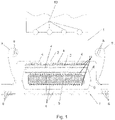
Fig. 1 shows the absorbing device in section; -
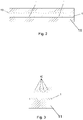
Fig. 2 shows in schematic form the tunnel where the absorbing devices pass under a conveyor belt and are subjected to the treatment with ultraviolet rays UV; -
Fig. 3 shows a section ofFig. 2 ; -
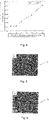
Fig. 4 shows in a diagram the relationship between the power for the surface unit irradiated by ultraviolet rays UV versus the thickness of the liquid acquisition and distribution layer; -
Fig. 5 shows in section the fibres of the liquid acquisition and distribution layer after irradiation with ultraviolet rays UV; -
Fig. 6 shows in section the fibres of the layer ofFig. 5 that are ordered by the action of ultraviolet rays UV. - Referring now to
Fig. 1 , the absorbent device can be observed, indicated overall by 1, in section and already fully formed. - In this absorbing
device 1 there is a first layer of woven/non-woven fabric TNT and polyethylene film, indicated with 2, where this layer comes into contact with the person using the absorbingdevice 1, whether child or adult. - The
layer 2 is made adherent to the subsequentsecond layer 3 by means of a film of glue indicated with 4 that allows precisely the adhesion of thelayer 2 in contact with the skin with the secondlower layer 3 that is the layer of material that acquires and distributes the liquids to thethird layer 5 that is the absorbing pad indicated with 5. - The
second layer 3 is a type of woven/non-woven fabric TNT: in the case under examination, and by way of illustration but not limitation, use is made of the specific absorption/distribution fabric called ADL (Acquisition Distribution Layer) and which has precisely the function of acquiring the liquids that are lost by the person in order to distribute them and then to transfer them to thethird layer 5 functioning as an absorbing pad. - This absorbing pad or
third layer 5 generally consists of a SAP (Super Absorbent Polymer), generally hydrogel polymer, and cellulose fibres. - The absorbing
pad 5 is also contained within a woven/non-woven fabric TNT that wraps it so as to make it stable during absorption of the liquid and to prevent it from falling apart during use. - The absorbing pad or
third layer 5 is also fixed through the film ofglue 4 to theclosing element 6, which in turn adheres to the liquid acquisition anddistribution layer 3. - Then, there is a
base layer 7, also made of polyethylene, which serves as a support and containment of the absorbingdevice 1 when it is wrapped around the person. - There are also elastic elements, indicated with 8, which are arranged in the
barriers 9 of the absorbingdevice 1 that serve precisely to the same absorbingdevice 1 to remain in the position of use when worn by a person. - Again in
Fig. 1 , and in schematic form, four lamps indicated with 10 for the irradiation of the ultraviolet rays UV are indicated in section. - The sterilising power that ultraviolet rays UV exert on microorganisms and bacteria, which are pathogenic to human health, is well known and is used by various manufacturers.
- What is not known, however, is a specific effect identified and obtained by the inventors, which allows ultraviolet rays UV, if arranged at a certain distance and if using a specific power striking the absorbing
device 1, to act in an effective and surprising manner on thesecond layer 3 of liquid acquisition and distribution by changing the nature of the distribution of the fibres, particularly by arranging them in a vertical direction, i.e. towards the source of irradiation, and consequently increasing the thickness of thesecond layer 3. - As mentioned, the
second layer 3 of liquid acquisition and distribution is formed by woven/non-woven fabric TNT (usually ADL) of polyester fibre. - Now, under the action of a certain power irradiated by the ultraviolet rays UV, the polyester fibres of which the ADL layer is composed arrange themselves in a vertical direction and thus achieve the effect of sucking up liquids more quickly and transferring them just as quickly into the absorbing
pad 5. - To achieve this specific effect, experiments were carried out that took into account the fact that the absorbing devices, due to production necessity during their formation and their packaging, are arranged on a
conveyor belt 11 moving at a relatively high speed. - In this context,
lamps 10 for the irradiation of ultraviolet rays UV were arranged along the direction of theconveyor belt 11, as can be seen inFig. 2 , at a certain point in the packaging and before the absorbingdevice 1 is enclosed and thus in the process of being fully spread out. - As can be seen from
Fig. 2 and Fig. 3 , there are fourlamps 10, in the case of the example, with a length of about 90 cm and a power of about 41W. The distance between thelamps 10 and theconveyor belt 11 is about 20-25 mm. - In total, therefore, a supply power of 165W is developed with a total UVC power of 65W UVC.
- Experiments carried out by the inventors have shown that the variation in the thickness of the
layer 3 exposed to ultraviolet rays UV is a function of the power, as is shown in the graph inFig. 4 , where increasing UV power increases the thickness of thesecond layer 3. - Considering the speed of the line on which the absorbing
device 1 rests, it results that 161 cm2/sec of fabric layer are subjected to irradiation in the unit of time. - Thus, the engaged and irradiated power per unit area in the unit time will be: 65W: 161 cm2/sec = 403,7 mWcm2/sec.
- If we now look at
Fig. 4 , we see that this power per unit area causes an increase in thickness from 1 to 2.2/2.3 mm. - Now,
Figs. 5 and 6 depict photographs taken by the inventors before and after irradiation with ultraviolet rays UV, respectively. - As can be seen, the fibres of the acquisition layer, after irradiation with ultraviolet rays UV, were arranged in an orderly and aligned manner.
- In this way, the maximum distribution of liquids and their fastest transfer to the absorbing pad or
third layer 5 is achieved. - According to a variant of the invention, given by way of non-limiting example, the absorbing
device 1 described above has inside itmicrocapsules 12 of known type and containing essential oils within them which are intended to produce a soothing effect on the wearer of said device. - The
microcapsules 12 in the example are shown inFig. 1 . - The capsules contain in their inside one or more essential oils such as Calendula Oil, Avocado Oil, Jojoba Oil, Olive Oil and Talcum Scent.
- A greater soothing effect has been noted if the essential oils are present in the following percentages:
- Calendula Oil 59.8%
- Avocado Oil 20%
- Jojoba Oil 10%
- Olive Oil 10%
- Talcum Scent 0.2%.
- These microcapsules, after being deposited on one or more layers of woven/non-woven fabric (TNT) by means of a simple powder dispenser, are permanently fixed to the TNT support by the action of the ultraviolet rays UV acting on the absorbing
device 1. - Of course, in another embodiment example, the
microcapsules 12 may be distributed only on thelayer 3 or on thelayer 5. - The main purpose of the invention was thus achieved by creating an
absorbing device 1 that increases the comfort of the wearer while minimising the wet feeling. - All this without modifying the formation of the device, but significantly increasing its absorption capacity and pleasantness.
Claims (7)
- Method for implementing the absorbency and the distribution of liquids in an absorbing device (1), said absorbing device (1) comprising at least:- a first upper layer (2) of fibre consisting of woven/non-woven fabric (TNT) in contact with the user's skin;- a second layer (3) of fibre consisting of woven/non-woven fabric (TNT), in contact with said first layer (2), adapted to acquire the liquids received from said first layer (2) and to distribute said liquids to a third layer below;- a third layer (5) below adapted to capture and absorb the liquids received from said second layer (3),characterised by subjecting said absorbing device (1) to an irradiation by ultraviolet rays (UV), such as to modify the distribution of the fibres of said second layer (3) by ordering them along a direction essentially perpendicular to the surface of the absorbing device (1) spread out and increasing the thickness of said second layer (3),- said ultraviolet rays (UV) transmitting to said absorbing device (1) a power of not less than 14.8 mWsec/cm2;- lamps (10) of said ultraviolet rays UV being arranged according to the length of the conveyor belt (11) of said absorbing devices (1) at a distance not exceeding 20-25 mm.
- Method according to claim 1, characterised in that said ultraviolet rays (UV) have an intensity of around 403 mWsec/cm2.
- Absorbing device (1) subjected to the irradiation of ultraviolet rays (UV) according to the method of any one of claims 1 to 2, characterised in that said second layer (3) of fibre of woven/non-woven fabric (TNT) is of the ADL type (Acquisition Distribution Layer).
- Absorbing device (1) subjected to the irradiation of the ultraviolet rays (UV) according to claim 1, characterised in that said third layer (5) comprises a mixture of polyacrylic sodium and cellulose fibres.
- Absorbing device (1) according to any one of claims 3) or 4), characterised in that in one or more layers of the woven/non-woven fabric (TNT) there are microcapsules (12) containing essential oils with a soothing effect, said microcapsules (12) being fixed to the woven/non-woven fabric (TNT) by the action of ultraviolet rays (UV).
- Absorbing device (1) according to claim 5), characterised in that the essential oils present in these microcapsules (12) are Calendula Oil, Avocado Oil, Jojoba Oil, Olive Oil and Talcum Scent.
- Absorbing device (1) according to claim 6), characterised in that said essential oils are contained in the following percentages:- Calendula Oil 59.8%;- Avocado Oil 20%;- Jojoba Oil 10%;- Olive Oil 10%;- Talcum Scent 0.2%.
Applications Claiming Priority (1)
| Application Number | Priority Date | Filing Date | Title |
|---|---|---|---|
| IT102021000013340A IT202100013340A1 (en) | 2021-05-24 | 2021-05-24 | METHOD FOR MAKING AN ABSORBENT DEVICE AND ABSORBENT DEVICE MADE WITH THIS METHOD |
Publications (3)
| Publication Number | Publication Date |
|---|---|
| EP4094735A1 true EP4094735A1 (en) | 2022-11-30 |
| EP4094735B1 EP4094735B1 (en) | 2025-08-20 |
| EP4094735C0 EP4094735C0 (en) | 2025-08-20 |
Family
ID=77519540
Family Applications (1)
| Application Number | Title | Priority Date | Filing Date |
|---|---|---|---|
| EP22175031.8A Active EP4094735B1 (en) | 2021-05-24 | 2022-05-24 | Method for making an absorbing device and absorbing device made with said method. |
Country Status (2)
| Country | Link |
|---|---|
| EP (1) | EP4094735B1 (en) |
| IT (1) | IT202100013340A1 (en) |
Citations (5)
| Publication number | Priority date | Publication date | Assignee | Title |
|---|---|---|---|---|
| US6528439B1 (en) * | 1998-09-30 | 2003-03-04 | Kimberly-Clark Worldwide, Inc. | Crimped polymeric fibers and nonwoven webs made therefrom with improved resiliency |
| KR20040040044A (en) * | 2002-11-06 | 2004-05-12 | 임대우 | Microcapsule containing Vitamin E and/or natural oil for medical use, nonwoven fabric and absorbing core coated by the microcapsule, and absorbing product manufactured thereby |
| US20070116926A1 (en) * | 2002-12-20 | 2007-05-24 | Hoying Jody L | Tufted laminate web |
| EP2768456B1 (en) * | 2011-10-18 | 2018-06-20 | Basf Se | Fluid-absorbent article |
| US20200397630A1 (en) * | 2019-06-19 | 2020-12-24 | The Procter & Gamble Company | Absorbent article with function-formed topsheet, and method for manufacturing |
-
2021
- 2021-05-24 IT IT102021000013340A patent/IT202100013340A1/en unknown
-
2022
- 2022-05-24 EP EP22175031.8A patent/EP4094735B1/en active Active
Patent Citations (5)
| Publication number | Priority date | Publication date | Assignee | Title |
|---|---|---|---|---|
| US6528439B1 (en) * | 1998-09-30 | 2003-03-04 | Kimberly-Clark Worldwide, Inc. | Crimped polymeric fibers and nonwoven webs made therefrom with improved resiliency |
| KR20040040044A (en) * | 2002-11-06 | 2004-05-12 | 임대우 | Microcapsule containing Vitamin E and/or natural oil for medical use, nonwoven fabric and absorbing core coated by the microcapsule, and absorbing product manufactured thereby |
| US20070116926A1 (en) * | 2002-12-20 | 2007-05-24 | Hoying Jody L | Tufted laminate web |
| EP2768456B1 (en) * | 2011-10-18 | 2018-06-20 | Basf Se | Fluid-absorbent article |
| US20200397630A1 (en) * | 2019-06-19 | 2020-12-24 | The Procter & Gamble Company | Absorbent article with function-formed topsheet, and method for manufacturing |
Also Published As
| Publication number | Publication date |
|---|---|
| EP4094735B1 (en) | 2025-08-20 |
| EP4094735C0 (en) | 2025-08-20 |
| IT202100013340A1 (en) | 2022-11-24 |
Similar Documents
| Publication | Publication Date | Title |
|---|---|---|
| CA2441038C (en) | Absorbent article having hydrophobic leak protection zones | |
| EP0138427B1 (en) | Compressed absorbent aggregate | |
| US5855571A (en) | Absorbent articles containing superabsorbent material which has a delayed activation time | |
| RU2244535C2 (en) | Combined covering and transmitting layer of nonwoven material for absorbing product (variants) and an absorbing product (variants) | |
| US20030129915A1 (en) | Process for making a super absorbent polymer-impregnated non-woven absorbent core for personal hygiene products | |
| US20030093045A1 (en) | Absorbing article having zoned areas of hydrophilicity | |
| CN102535016A (en) | Superabsorbents and nanofibre webs finished therewith | |
| EP0948952B1 (en) | Disposable body fluids absorbent article | |
| JPH0241155A (en) | Absorbable article | |
| EP4094735B1 (en) | Method for making an absorbing device and absorbing device made with said method. | |
| EP3041520B1 (en) | Device | |
| CN105873551A (en) | Odor control in personal care products | |
| RU2445056C1 (en) | Absorbing product with aerated upper layer | |
| US11298278B2 (en) | Hygiene product for personal use | |
| JP4208433B2 (en) | Absorbent articles | |
| KR20000009463U (en) | Feminine Sanitary Napkin with Far Infrared Radiation Ceramic | |
| CN101018528A (en) | Absorbing sheet and absorbing article | |
| WO2000027443A1 (en) | Products for thickening processing bodily fluids or bodily wastes | |
| KR101740003B1 (en) | Menses pad with pocket | |
| RU2197272C1 (en) | Absorbing medicinal material and articles based on such material | |
| JP2002113039A (en) | Absorbent articles | |
| JP3995388B2 (en) | Absorbent articles | |
| RU128104U1 (en) | WATERPROOF DIPSERVER (OPTIONS) | |
| JP2004516098A (en) | Absorbing structure | |
| KR100786164B1 (en) | Personal sanitary napkin containing illite composition and its manufacturing method |
Legal Events
| Date | Code | Title | Description |
|---|---|---|---|
| PUAI | Public reference made under article 153(3) epc to a published international application that has entered the european phase |
Free format text: ORIGINAL CODE: 0009012 |
|
| STAA | Information on the status of an ep patent application or granted ep patent |
Free format text: STATUS: THE APPLICATION HAS BEEN PUBLISHED |
|
| AK | Designated contracting states |
Kind code of ref document: A1 Designated state(s): AL AT BE BG CH CY CZ DE DK EE ES FI FR GB GR HR HU IE IS IT LI LT LU LV MC MK MT NL NO PL PT RO RS SE SI SK SM TR |
|
| STAA | Information on the status of an ep patent application or granted ep patent |
Free format text: STATUS: REQUEST FOR EXAMINATION WAS MADE |
|
| 17P | Request for examination filed |
Effective date: 20230530 |
|
| RBV | Designated contracting states (corrected) |
Designated state(s): AL AT BE BG CH CY CZ DE DK EE ES FI FR GB GR HR HU IE IS IT LI LT LU LV MC MK MT NL NO PL PT RO RS SE SI SK SM TR |
|
| STAA | Information on the status of an ep patent application or granted ep patent |
Free format text: STATUS: EXAMINATION IS IN PROGRESS |
|
| 17Q | First examination report despatched |
Effective date: 20230905 |
|
| GRAP | Despatch of communication of intention to grant a patent |
Free format text: ORIGINAL CODE: EPIDOSNIGR1 |
|
| STAA | Information on the status of an ep patent application or granted ep patent |
Free format text: STATUS: GRANT OF PATENT IS INTENDED |
|
| INTG | Intention to grant announced |
Effective date: 20250312 |
|
| GRAS | Grant fee paid |
Free format text: ORIGINAL CODE: EPIDOSNIGR3 |
|
| GRAA | (expected) grant |
Free format text: ORIGINAL CODE: 0009210 |
|
| STAA | Information on the status of an ep patent application or granted ep patent |
Free format text: STATUS: THE PATENT HAS BEEN GRANTED |
|
| AK | Designated contracting states |
Kind code of ref document: B1 Designated state(s): AL AT BE BG CH CY CZ DE DK EE ES FI FR GB GR HR HU IE IS IT LI LT LU LV MC MK MT NL NO PL PT RO RS SE SI SK SM TR |
|
| REG | Reference to a national code |
Ref country code: GB Ref legal event code: FG4D |
|
| REG | Reference to a national code |
Ref country code: CH Ref legal event code: EP |
|
| REG | Reference to a national code |
Ref country code: IE Ref legal event code: FG4D |
|
| REG | Reference to a national code |
Ref country code: DE Ref legal event code: R096 Ref document number: 602022019667 Country of ref document: DE |
|
| U01 | Request for unitary effect filed |
Effective date: 20250828 |
|
| U07 | Unitary effect registered |
Designated state(s): AT BE BG DE DK EE FI FR IT LT LU LV MT NL PT RO SE SI Effective date: 20250904 |
|
| PG25 | Lapsed in a contracting state [announced via postgrant information from national office to epo] |
Ref country code: IS Free format text: LAPSE BECAUSE OF FAILURE TO SUBMIT A TRANSLATION OF THE DESCRIPTION OR TO PAY THE FEE WITHIN THE PRESCRIBED TIME-LIMIT Effective date: 20251220 |
|
| PG25 | Lapsed in a contracting state [announced via postgrant information from national office to epo] |
Ref country code: NO Free format text: LAPSE BECAUSE OF FAILURE TO SUBMIT A TRANSLATION OF THE DESCRIPTION OR TO PAY THE FEE WITHIN THE PRESCRIBED TIME-LIMIT Effective date: 20251120 |
|
| PG25 | Lapsed in a contracting state [announced via postgrant information from national office to epo] |
Ref country code: HR Free format text: LAPSE BECAUSE OF FAILURE TO SUBMIT A TRANSLATION OF THE DESCRIPTION OR TO PAY THE FEE WITHIN THE PRESCRIBED TIME-LIMIT Effective date: 20250820 |
|
| PG25 | Lapsed in a contracting state [announced via postgrant information from national office to epo] |
Ref country code: GR Free format text: LAPSE BECAUSE OF FAILURE TO SUBMIT A TRANSLATION OF THE DESCRIPTION OR TO PAY THE FEE WITHIN THE PRESCRIBED TIME-LIMIT Effective date: 20251121 |
|
| PG25 | Lapsed in a contracting state [announced via postgrant information from national office to epo] |
Ref country code: PL Free format text: LAPSE BECAUSE OF FAILURE TO SUBMIT A TRANSLATION OF THE DESCRIPTION OR TO PAY THE FEE WITHIN THE PRESCRIBED TIME-LIMIT Effective date: 20250820 |
|
| PG25 | Lapsed in a contracting state [announced via postgrant information from national office to epo] |
Ref country code: RS Free format text: LAPSE BECAUSE OF FAILURE TO SUBMIT A TRANSLATION OF THE DESCRIPTION OR TO PAY THE FEE WITHIN THE PRESCRIBED TIME-LIMIT Effective date: 20251120 |
|
| PG25 | Lapsed in a contracting state [announced via postgrant information from national office to epo] |
Ref country code: ES Free format text: LAPSE BECAUSE OF FAILURE TO SUBMIT A TRANSLATION OF THE DESCRIPTION OR TO PAY THE FEE WITHIN THE PRESCRIBED TIME-LIMIT Effective date: 20250820 |
|
| PG25 | Lapsed in a contracting state [announced via postgrant information from national office to epo] |
Ref country code: SM Free format text: LAPSE BECAUSE OF FAILURE TO SUBMIT A TRANSLATION OF THE DESCRIPTION OR TO PAY THE FEE WITHIN THE PRESCRIBED TIME-LIMIT Effective date: 20250820 |
|
| PG25 | Lapsed in a contracting state [announced via postgrant information from national office to epo] |
Ref country code: CZ Free format text: LAPSE BECAUSE OF FAILURE TO SUBMIT A TRANSLATION OF THE DESCRIPTION OR TO PAY THE FEE WITHIN THE PRESCRIBED TIME-LIMIT Effective date: 20250820 |
|
| PG25 | Lapsed in a contracting state [announced via postgrant information from national office to epo] |
Ref country code: SK Free format text: LAPSE BECAUSE OF FAILURE TO SUBMIT A TRANSLATION OF THE DESCRIPTION OR TO PAY THE FEE WITHIN THE PRESCRIBED TIME-LIMIT Effective date: 20250820 |
|
| PLBE | No opposition filed within time limit |
Free format text: ORIGINAL CODE: 0009261 |
|
| STAA | Information on the status of an ep patent application or granted ep patent |
Free format text: STATUS: NO OPPOSITION FILED WITHIN TIME LIMIT |
|
| REG | Reference to a national code |
Ref country code: CH Ref legal event code: L10 Free format text: ST27 STATUS EVENT CODE: U-0-0-L10-L00 (AS PROVIDED BY THE NATIONAL OFFICE) Effective date: 20260701 |
|
| U20 | Renewal fee for the european patent with unitary effect paid |
Year of fee payment: 5 Effective date: 20260527 |
|
| 26N | No opposition filed |
Effective date: 20260521 |