EP4094497B1 - Verwaltung von kohäsiven ressourcen für drahtlose netzwerke - Google Patents
Verwaltung von kohäsiven ressourcen für drahtlose netzwerke Download PDFInfo
- Publication number
- EP4094497B1 EP4094497B1 EP21705854.4A EP21705854A EP4094497B1 EP 4094497 B1 EP4094497 B1 EP 4094497B1 EP 21705854 A EP21705854 A EP 21705854A EP 4094497 B1 EP4094497 B1 EP 4094497B1
- Authority
- EP
- European Patent Office
- Prior art keywords
- channel
- parameters corresponding
- transmission power
- network
- wireless network
- Prior art date
- Legal status (The legal status is an assumption and is not a legal conclusion. Google has not performed a legal analysis and makes no representation as to the accuracy of the status listed.)
- Active
Links
Images

Classifications
-
- H—ELECTRICITY
- H04—ELECTRIC COMMUNICATION TECHNIQUE
- H04W—WIRELESS COMMUNICATION NETWORKS
- H04W52/00—Power management, e.g. Transmission Power Control [TPC] or power classes
- H04W52/04—Transmission power control [TPC]
- H04W52/06—TPC algorithms
- H04W52/14—Separate analysis of uplink or downlink
- H04W52/143—Downlink power control
-
- H—ELECTRICITY
- H04—ELECTRIC COMMUNICATION TECHNIQUE
- H04W—WIRELESS COMMUNICATION NETWORKS
- H04W72/00—Local resource management
- H04W72/50—Allocation or scheduling criteria for wireless resources
- H04W72/54—Allocation or scheduling criteria for wireless resources based on quality criteria
- H04W72/541—Allocation or scheduling criteria for wireless resources based on quality criteria using the level of interference
-
- H—ELECTRICITY
- H04—ELECTRIC COMMUNICATION TECHNIQUE
- H04W—WIRELESS COMMUNICATION NETWORKS
- H04W48/00—Access restriction; Network selection; Access point selection
- H04W48/16—Discovering, processing access restriction or access information
-
- H—ELECTRICITY
- H04—ELECTRIC COMMUNICATION TECHNIQUE
- H04W—WIRELESS COMMUNICATION NETWORKS
- H04W52/00—Power management, e.g. Transmission Power Control [TPC] or power classes
- H04W52/04—Transmission power control [TPC]
- H04W52/18—TPC being performed according to specific parameters
- H04W52/24—TPC being performed according to specific parameters using SIR [Signal to Interference Ratio] or other wireless path parameters
- H04W52/243—TPC being performed according to specific parameters using SIR [Signal to Interference Ratio] or other wireless path parameters taking into account interferences
-
- H—ELECTRICITY
- H04—ELECTRIC COMMUNICATION TECHNIQUE
- H04W—WIRELESS COMMUNICATION NETWORKS
- H04W52/00—Power management, e.g. Transmission Power Control [TPC] or power classes
- H04W52/04—Transmission power control [TPC]
- H04W52/38—TPC being performed in particular situations
- H04W52/50—TPC being performed in particular situations at the moment of starting communication in a multiple access environment
-
- H—ELECTRICITY
- H04—ELECTRIC COMMUNICATION TECHNIQUE
- H04W—WIRELESS COMMUNICATION NETWORKS
- H04W84/00—Network topologies
- H04W84/02—Hierarchically pre-organised networks, e.g. paging networks, cellular networks, WLAN [Wireless Local Area Network] or WLL [Wireless Local Loop]
- H04W84/10—Small scale networks; Flat hierarchical networks
- H04W84/12—WLAN [Wireless Local Area Networks]
Definitions
- Embodiments presented in this disclosure generally relate to controlling the parameters of the access points (APs) in communication networks. More specifically, though not exclusively, embodiments disclosed herein relate to mitigating co-channel interference between APs of different wireless network systems.
- access points (APs) within a wireless network are managed to provide the greatest amount of coverage for a corresponding wireless network.
- APs access points
- Many wireless networks either randomly assign channels to respective connected APs or employ various techniques to optimize channel allocation among the respective connected APs. Such methods optimize the APs within each wireless network, however, interference may still exist between neighboring APs of different wireless networks. Accordingly, the quality of service experienced by a client device is poor which may cause dropped connections between client devices and the wireless networks and difficulty when transitioning between wireless networks.
- US 2013/229930 describes, according to its abstract, a first network device which can implement functionality to establish a proximity-based wireless connection with a second network device. It can be determined whether the second network device is within a threshold detection distance from the first network device based on a signal strength associated with RF signals received from the second network device or based on detecting RF saturation at the first network device. Device credentials associated with the first network device can be transmitted to the second network device at a reduced transmit power level in response to determining that the second network device is within the threshold detection distance from the first network device. A communication link can be established between the first network device and the second network device based, at least in part, on the device credentials associated with the first network device and device credentials received from the second network device.
- the first and second WLANs support client credential sharing allowing seamlessly transitioning of a client device between the first and second WLANs using common credentials.
- the method further comprises detecting co-channel interference between the first AP and the second AP based on the parameters corresponding to the second AP and parameters of the first AP, and changing at least one of a channel and transmission power of one or more of the first AP and the second AP in response to the detection of the interference.
- a wireless network system comprises a first access point (AP), a second AP, and a controller.
- the first AP is configured to receive parameters corresponding to a second AP.
- the controller is coupled to at least of the first AP and the second AP.
- the controller is configured to determine that the first AP and the second AP are part a first and a second wireless local area network (WLAN), respectively.
- the first and second WLANs support client credential sharing allowing seamlessly transitioning of a client device between the first and second WLANs using common credentials.
- the controller is further configured to detect co-channel interference between the first AP and the second AP based on the parameters corresponding to the second AP and parameters corresponding to the first AP. Additionally, the controller is configured to change at least one of a channel and transmission power of one or more of the first AP and the second AP in response to the detection of the co-channel interference.
- a network comprises a first wireless network system forming a first local area network (WLAN), a second wireless network system forming a second WLAN, and a cloud computing system.
- the first wireless network system comprises a first access point (AP) and a first network controller coupled to the first AP.
- the second wireless network system comprises a second AP configured to receive parameters corresponding to the first AP and a second network controller coupled to the second AP.
- the cloud computing system is coupled to the first network controller and the second network controller.
- the cloud computing system is configured to determine that the first AP is assigned to the first WLAN and the second AP is assigned to the WLAN based on the parameters corresponding to the first AP and parameters corresponding to the second AP.
- the cloud computing system is further configured to determine, based on the parameters corresponding to the first AP, that the first WLAN supports client credential sharing allowing seamlessly transitioning of a client device between the first and second WLANs using common credentials. Additionally, the cloud computing system is configured to detect co-channel interference between the first AP and the second AP based on the parameters corresponding to the first AP, and change at least one of a channel and transmission power of one or more of the first AP and the second AP in response to the detection of the co-channel interference.
- APs access points
- WLAN wireless local area network
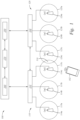
- Fig. 1 illustrates a network 100, according to one embodiment.
- the network 100 includes a first wireless network system 110 and a second wireless network system 120.
- the wireless network system 110 includes a network controller 112 and APs 114a-114c.
- the APs 114a-114c are in communication with each other and are also in communication with the network controller 112 to provide a corresponding WLAN.
- the APs 114a-114c have corresponding coverage areas 115a-115c.
- the wireless network system 110 includes more than three APs or less than three APs.
- the network controller 112 may include one or more processors and a memory.
- One or more applications may be stored within the memory and executable by the one or more processors.
- the applications may be executed by the processors to configure the operating parameters of the APs 114a-114c.
- Configuring the operating parameters of the APs 114a-114c includes setting at least one of a channel and transmission power of the APs 114a-114c.
- the network controller 112 may set the channel and/or transmission power of the APs 114a-114c to minimize interference between the APs 114a-114c while maximizing the corresponding WLAN coverage area.
- Minimizing the interference between the APs 114a-114c reduces interference between basic service sets (BSSs) within a wireless network.
- the interference between BSSs may be referred to as overlapping BSS (OBSS) interference.
- optimizing the APs 114a-114c to mitigate interference comprises mitigating interference in regions of overlap between corresponding coverage areas 115a-115c of the APs 114a-114c.
- the wireless network system 120 includes a network controller 122 and APs 124a-124c.
- the APs 124a-124c are in communication with each other and are also in communication with the network controller 122 to provide a corresponding WLAN.
- the APs 124a-124c have corresponding coverage areas 125a-125c.
- the wireless network system 110 includes more than three APs or less than three APs.
- the wireless network system 120 has more APs than that of the wireless network system 110.
- the wireless network system 110 has more APs than that of the wireless network system 120.
- the network controller 122 may include one or more processors and memory. Further, one or more applications may be stored within the memory and executable by the one or more processors. For example, the applications may be executed by the processors to configure the operating parameters of the APs 124a-124c. Configuring the operating parameters of the APs 124a-124c includes setting at least one of a channel and transmission power of the APs 124a-124c. The network controller 122 may set the channel and/or transmission power of the APs 124a-124c to minimize interference between the APs 124a-124c while maximizing the corresponding WLAN coverage area. For example, the channels and/or transmission power of the APs 124a-124c are optimized to mitigate interference that exists between coverage areas 125a-125c of the APs 124a-124c.
- the wireless network systems 110 and 120 share credentials such that mobile devices (e.g., the mobile device 102 which can be a mobile phone, tablet, laptop, and the like) can seamlessly associate and seamlessly transition between the WLANs of the wireless network systems 110 and 120.
- the wireless network systems 110 and 120 are not the same extended service set (ESS) and sharing of the credentials allows for mobile devices to seamlessly associate and seamless transition between the wireless networks systems.
- sharing of credentials to allow mobile devices to seamlessly transitioning between the corresponding WLANs may be achieved through a central user management federation 170 (referred herein as the federation).
- the federation 170 transparently connects a mobile device (e.g., the mobile device 102) attempting to connect to a WLAN to an identity provider (e.g., one or more of the identity provides 160) that validates the credentials (e.g., user credentials) corresponding to the mobile device.
- the federation 170 returns a validation of the credentials to a wireless network system (e.g., the wireless network systems 110 or 120) and/or an access provider 150.
- the federation 170 is further configured to communicate contextual information (e.g., policies associated with a user) to a wireless network system (e.g., the wireless network systems 110 or 120).
- access to the wireless network system 110 and 120 may be controlled via corresponding access providers 150.
- the access providers 150 may be public venues, retailers, airports, and large enterprises, among others.
- Each wireless network system 110 and 120 is associated to one of the access providers 150.
- a first one of the access providers 150 is associated to the wireless network system 110 and a second one of the access providers 150 is associated to the wireless network system 120.
- the wireless network systems 110 and 120 are also in communication with one or more identity providers 160 via the federation 170.
- the identity providers 160 may identify a user of a mobile device, authenticates the user and determines associated rights for a user.
- the identity providers 160 include service providers and cloud providers, among others.
- the identity providers 160 communicate with the mobile device 102 and/or the wireless network system 110 and 120 to authenticate the mobile device 102.
- the network controller 112 communicates with one or more of the identity providers 160 via the federation 170 to determine rights associated with a user of the mobile device 102.
- the wireless network system 110 communicates data to and from the federation 170 which communicates data with the identity providers 160.
- the identity providers 160 identify the user and transmit an indication as to whether or not user authentication was successful to the network controller 112 via the federation 170. In embodiments where authentication was successful, the identity providers 160 may additionally communicate authorizations, or policies, associated with a user of the mobile device 102. The network controller 112 may then grant the mobile device 102 access to the corresponding WLAN. If the identity providers 160 are unable to authenticate the mobile device 102, the network controller 112 rejects access of the mobile device 102 to the corresponding WLAN. In one embodiment, once a mobile device associated with a user (e.g., the mobile device 102) is authenticated by one or more of the identity providers 160, the mobile device is authenticated to each wireless system that supports seamless transitioning of mobile devices.
- a mobile device associated with a user e.g., the mobile device 102
- the mobile device is authenticated to each wireless system that supports seamless transitioning of mobile devices.
- the wireless network systems 110 and 120 support seamless transitioning of mobile devices between the WLANs of the wireless network systems. Accordingly, once the mobile device 102 is authenticated by one or more of the identity providers 160, the mobile device 102 is granted access to both wireless network systems 110 and 120. Thus, the mobile device 102 may seamlessly transition between the wireless network systems 110 and 120 without having to enter authentication credentials to each wireless network system 110 and 120 individually. Stated another way, a user may be able to seamlessly transition between the wireless network systems 110 and 120 without having to be reauthenticated to either WLAN of the wireless network systems 110 and 120. However, in one or more embodiments, co-channel interference may occur within an overlapping coverage area between APs of the different wireless network systems 110 and 120.
- co-channel interference that may occur within a region of overlap 116 between coverage areas 115c and 125c of the APs 114c and 124c, respectively.
- the co-channel interference may prevent a mobile device from seamlessly transitioning between APs of the different wireless network systems.
- optimizing the operating parameters of the APs of different wireless network systems having the overlapping regions may mitigate the co-channel interference and improve the ability for mobile devices to connect to and seamlessly transition between the APs.
- FIG. 2 illustrates a network system 200, according to one or more embodiments.
- the network system 200 includes the wireless network system 110 and the wireless network system 120 as described with regard to Figure 1 .
- the network system 200 includes a cloud computing system 130.
- the cloud computing system 130 communicates with the wireless network systems 110 and 120. Further, the cloud computing system 130 communicates with the access providers 150, the identity providers 160, and the federation 170.
- the cloud computing system 130 communicates with the access providers 150, the identity providers 160, and the federation 170 to authenticate the mobile device 102 and allow the mobile device 102 to seamlessly transition between the WLANs of the wireless network systems 110 and 120.
- the cloud computing system 130 may include one or more controllers 132 and a radio resource management (RRM) component 134.
- the RRM component 134 provides a system level management of co-channel interference, radio resources, and other radio transmission characteristics in the network 100.
- the RRM component 134 includes core algorithms for controlling parameters such as transmission power, user allocation, beamforming, data rates, handover criteria, modulation scheme, error coding scheme, etc.
- the RRM component 134 receives inter-radio measurement data reported from the wireless network controllers 112 and 122.
- the inter-radio measurement data may include but is not limited to the channel frequency between two radios of different APs, transmission power, antenna information and the received signal strength indicator (RSSI) or path loss between two radios of different APs.
- RSSI received signal strength indicator
- the RRM component 134 performs the inter-radio measurement based on a discovery message.
- the radio in each AP 114 and 124 broadcasts a discovery message to all other radios in all other APs on all channels so that all other radios operating on different channels can receive the discovery message.
- the discovery message may have a predefined packet format.
- the network controller 112 and the network controller 122 communicate directly with each other.
- the network controllers 112 and 122 communicate information directly between each other without the information first being communicated to the cloud computing system 130.
- the network controllers 112 and 122 first communicate information to the cloud computing system 130 and the cloud computing system 130 then communicates the information to the network controllers 112 and 122.
- the operating parameters of the APs 114a-114c are often optimized separately from the operating parameters of the APs 124a-124c.
- the network controllers 112 and 122 allocate the operating parameters for the APs 114a-114c and 124a-124c, respectively.
- the RRM component 134 instructs each of the network controllers 112 and 122 how to allocate the operating parameters for the APs 114a-114c and 124a-124c, respectively.
- one or more of the APs 114a-114c and APs 124a-124c that are in range of each other may be assigned to the same channel. Accordingly, one or more of the APs 114a-114c may interfere with one or more of the APs 124a-124c.
- the AP 114c and the 124c may be assigned the same channel.
- the APs 114c and 124c may interfere with each other in the region of overlap 116 of the corresponding coverage areas 115c and 125c, inducing co-channel interference.
- the region of overlap 116 in coverage areas may be referred to as a co-channel interference zone.
- the mobile device 102 may experience difficulties in connecting with either the AP 114c or the AP 124c. Further, the interference due to the co-channel interference negatively affects the ability for the mobile device 102 to seamlessly transition between the AP 114c and the AP 124c. However, by optimizing the operating parameters for the APs (e.g., the APs 114a-114c and 124a-124c) having overlapping coverage areas and that are part of different wireless network systems, the interference due to the co-channel interference may be mitigated. As such, mobile devices may more easily seamlessly transition between the wireless network systems 110 and 120 without experiencing a drop in connection.
- the APs e.g., the APs 114a-114c and 124a-124c
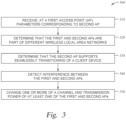
- Figure 3 illustrates a method 300 for optimizing APs of different wireless network systems, according to one or more embodiments.
- the AP 114c receives parameters corresponding to the AP 124c.
- the AP 124c transmits a discovery message (e.g., a beacon) which is received by the AP 114c.
- the AP 114c enters a discovery mode during which the AP 114c scans through a plurality of channels to detect discovery messages transmitted by other APs.
- the AP 114c may enter the discovery mode according to an interval.
- the AP 124c may switch from a first channel to a second channel to transmit the corresponding discovery message.
- the AP 124c may switch channels and transmit a discovery message according to an interval.
- the discovery message is a radio frequency (RF) message that includes information corresponding to the transmitting AP.
- the discovery message includes one or more of an identifier, listing of capabilities, support of seamless transitioning of mobile devices, channel allocation, and a vender identifier, among others.
- the discovery message includes a media access control (MAC) address assigned to the AP 124c.
- MAC media access control
- one or more of the network controller 112 and the cloud computing system 130 determines that the APs 114c and 124c are part of different wireless network systems.
- the AP 114c provides the discovery message transmitted by the AP 124c to the network controller 112 and the network controller 122 determines whether or not the AP 124c is part of the wireless network system 110.
- the network controller 112 compares the MAC address of the AP 124c to the list of MAC address assigned to the wireless network system 110. If the MAC address of the AP 124c matches one of the MAC addresses assigned to the wireless network system 110, the AP 124c is determined to be part of (e.g., assigned to) the wireless network system 110.
- the AP 124c is determined to be part of a wireless network system other than the wireless network system 110.
- the AP 114c provides the discovery message transmitted by the AP 124c to the network controller 112 and the network controller 112 provides the discovery message or information from the discovery message to the cloud computing system 130.
- the network controller 112 may process the discovery message to identify one or more parameters corresponding the AP 124c and transmit the one or more parameters to the cloud computing system 130.
- the network controller 112 identifies the MAC address of the AP 124c and transmits the MAC address to the cloud computing system 130.
- the cloud computing system 130 determines whether or not the AP 114c and the AP 124c are associated with the same wireless network system based on the discovery message or the one or more parameters transmitted from the network controller 112. For example, the RRM component 134 compares the MAC address of the AP 124c to the MAC addresses of the devices assigned to the wireless network system 110 to determine whether or not the AP 124c is part of the same wireless network system as the AP 114c. The RRM component 134 may transmit an indication to the network controller 112 with the determination as to whether or not the AP 124c is part of the wireless network system 110.
- one of the network controllers 112 and the cloud computing system 130 determines whether or not the AP 124c supports client credential sharing for seamless transitioning of mobile devices between WLANs of different wireless network systems. For example, in one embodiment, the network controller 112 receives the discovery message transmitted by the AP 124c and identifies, based on value within the discovery message, that the AP 124c supports client credential sharing between different wireless network systems. The value within the discovery message is a flag or a binary value. Further, the discovery message indicates the name of the system associated with the AP and vender information, among others. The vender information corresponds to an access provider (e.g., an owner or the vender of the wireless network system).
- an access provider e.g., an owner or the vender of the wireless network system.
- the network controller 112 transmits the discovery message or one or more parameters determined from the discovery message to the cloud computing system 130.
- the cloud computing system 130 determines whether or not the AP 124c supports client credential sharing for seamless transitioning of mobile devices between WLANs of different wireless network systems. For example, the cloud computing system 130 identifies the access provider of a corresponding wireless network system, and compares the vendor a database to determine whether or not the wireless network system and corresponding AP supports client credential sharing for seamless transitioning of mobile devices between WLANs of different wireless network systems.
- the AP 124c is found to support seamless transitioning of mobile devices, the mobile device 102 is able to seamlessly transition between the WLANs of the wireless network systems 110 and 120 without having to provide authentication credentials to each wireless network system.
- the mobile device 102 is able to be authenticated to the wireless network system 120 without explicitly providing authentication credentials to the wireless network system 120 based on the previous successive authentcation by the federation 170.
- one or more of the network controllers 112 and the cloud computing system 130 detect interference between the AP 114c and the AP 124c.
- the network controller 112 detects interference between the AP 114c and the AP 124c.
- the network controller 112 determines the channel of the AP 124c based on the discovery message and compares the channel of the AP 124c to the channel assigned to the AP 114c to determine whether co-channel interference exists between the APs 114c and 124c. In one embodiment, when the AP 114c and 124c are assigned to a common channel, co-channel interference exits between the APs.
- the cloud computing system 130 detects interference between the AP 114c and the AP 124c. For example, the cloud computing system 130 receives the channel allocation of the AP 114c and the AP 124c from the network controller 112 and/or the network controller 122. The cloud computing system 130 compares channels allocated to the APs 114c and 124c to determine if co-channel interference exits between the APs. In one embodiment, the RRM component 134 compares the channels allocated to the APs 114c and 124c to determine if co-channel interference exists.
- one or more of the one or more of the network controller 112, the network controller 122, and the cloud computing system 130 changes at least one of a channel and a transmission power of the AP 114c and/or the AP 124c.
- the network controller 112 changes at least one of a channel and a transmission power of the AP 114c. For example, based on a determination that co-channel interference exists between the AP 114c and the AP 124c, the network controller 112 changes the channel of the AP 114c. Alternatively, or additionally, based on the determination that co-channel interference exits between the AP 114c and the AP 124c, the network controller 112 changes the transmission power of the AP 114c.
- the network controller 112 based on the determination that co-channel interference exits between the AP 114c and the AP 124c, the network controller 112 provides an indication to the network controller 122 to change the channel of the AP 124c. Alternatively, or additionally, based on the determination that co-channel interference exits between the AP 114c and the AP 124c, the network controller 112 provides an indication to the network controller 122 to decrease the transmission power of the AP 124c.
- the cloud computing system 130 provides an indication to the network controller 112 and/or the network controller 122 to change a channel and/or transmission power of the AP 114c and/or the AP 124c, respectively. For example, in one embodiment, the cloud computing system 130 determines that interference is present between the APs 114c and 124c and transmits an indication to alter one or more of the channel and the transmission power of the AP 114c to the network controller 112 and/or an indication to alter one or more of the channel and the transmission power of the AP 124c to the network controller 122.
- the network controller 112 alters one or more of the channel and transmission power of the AP 114c based on the indication transmitted by the cloud computing system 130. Additionally, or alternatively, the network controller 122 alters one or more of the channel and transmission power of the AP 124c based on the indication transmitted by the cloud computing system 130.
- the cloud computing system 130 receives an indication that co-channel interference exists between the APs 114c and 124c from the network controller 112 and instructs the network controller 122 to change the channel allocated to the AP 124c. For example, the cloud computing system 130 provides an indication including the channel to allocate to the AP 124c to the network controller 122.
- a determination of insufficient coverage overlap between the APs 114c and 124c may be made.
- the cloud computing system 130 may detect that the mobile device 102 was disconnected from both of the APs 114c and 124c when the mobile device 102 was attempting to seamlessly transition between the corresponding WLANs.
- APs having insufficient coverage overlap have no overlap between corresponding coverage area.
- APs having insufficient coverage overlap may have overlapping coverage areas, however, the amount of overlap between coverage areas does not allow a mobile device to transition between corresponding WLANs without experiencing a drop in connection to either AP.
- one of the network controllers 112 and 122 detect a disconnection of the mobile device 102 when the mobile device was attempting to seamlessly transition between the APs 114 and 124c. Dropping the connection of the mobile device 102 when attempting to seamlessly transition between the APs 114c and 124c provides an indication of insufficient overlap in coverage between APs 114c and 124c.
- the cloud computing system 130 may communicate an indication of insufficient coverage overlap between the APs 114c and 124c to the network controller 112 or the network controller 122.
- the network controller 112 or 122 increases the transmission power of the AP 114c and 124c, respectfully, to increase the corresponding coverage areas based on the indication.
- network controller 112 or 122 increases the transmission power of the AP 114c and 124c, respectfully, to increase the corresponding coverage areas based on the indication based on a determination of insufficient coverage overlap.
- the channel and/or transmission power of the interfering APs is changed by exchanging tokens between the APs (e.g., the AP 114c and 124c) and the AP with the smaller token changes a corresponding channel and/or transmission power.
- the tokens are randomly generated by each of the APs.
- the AP 114c generates a token with a value of 128 and the AP 124c generates a token with a value of 256. Accordingly, the AP 114c alters one or more of a corresponding channel and/or transmission power.
- the RRM component 134 generates a list of APs of different network systems, having overlapping coverage areas and that support seamless transitioning of mobile devices between corresponding wireless network systems.
- the RRM component 134 regulates the channels and transmission power of the identified APs to mitigate co-channel interference between APs.
- the AP 114c additionally transmits a discovery message.
- the discovery message transmitted by the AP 114c is received by the AP 124c and utilized by the network controller 122 and/or the cloud computing system 130 to determine whether or not to change the channel allocation of the AP 114c and/or the AP 124c.
- the network controller 122 and/or the cloud computing system 130 to determine whether or not to change the channel allocation of the AP 114c and/or the AP 124c.
- the network controller 122 and/or the cloud computing system 130 to determine whether or not to change the channel allocation of the AP 114c and/or the AP 124c.
- the channels of the APs 114a-114b is changed before the channel of the AP 114c is changed.
- the channels of the APs 124a-124b is changed before the channel of the AP 124c is changed.
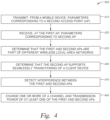
- Figure 4 illustrates a method 400 for optimizing APs of different wireless network systems, according to one or more embodiments.
- the mobile device 102 transmits parameters corresponding to the AP 124c.
- the mobile device 102 transmits parameters corresponding to the AP 124c in response to connecting with the AP 114c.
- the mobile device 102 may transmit the channel allocated to the AP 124c, the transmission power of the AP 124c, the wireless network that the AP 124c is connected to, and support of seamless transitioning of mobile devices, among others.
- the mobile device 102 transmits the signal strength of previously connected APs, and bandwidth of previously connected APs.
- the mobile device 102 transmits parameters corresponding to two or more previous APs to which the mobile device 102 was connected.
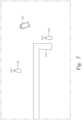
- the mobile device 102 transmits the parameters corresponding to the AP 124c as the transmission path between the APs 114c and 124c is interfered with by one or more barriers.
- the wall 510 interferes with the transmission path between the APs 114c and 124c.
- the AP 114c and 124c are not able to directly communicate with each other and a discovery message transmitted by one of the APs is not received by the other AP.
- the mobile device 102 transmits an identifier associated with previously connected wireless network systems.
- the identifier may include an indication as to whether or not a corresponding wireless network system supports seamless transitioning of mobile devices.
- the AP 114c receives parameters corresponding to the AP 124c from the mobile device 102.
- the AP 114c receives the parameters corresponding the AP 124c in response to the mobile device 102 connecting the AP 114c.
- the method 400 includes operations 430-460 which are configured similar to that of operations 320-350 of Figure 3 , respectively.
- the operations 320-350 are described with regard to processing a discovery message
- the parameters received from the mobile device 102 are processed to determine if co-channel interference exists between the APs 114c and 124c.
- embodiments disclosed herein may be embodied as a system, method or computer program product. Accordingly, embodiments may take the form of an entirely hardware embodiment, an entirely software embodiment (including firmware, resident software, micro-code, etc.) or an embodiment combining software and hardware aspects that may all generally be referred to herein as a "circuit,” “module” or “system.” Furthermore, embodiments may take the form of a computer program product embodied in one or more computer readable medium(s) having computer readable program code embodied thereon.
- Program code embodied on a computer readable medium may be transmitted using any appropriate medium, including but not limited to wireless, wireline, optical fiber cable, RF, etc., or any suitable combination of the foregoing.
- Computer program code for carrying out operations for embodiments of the present disclosure may be written in any combination of one or more programming languages, including an object oriented programming language such as Java, Smalltalk, C++ or the like and conventional procedural programming languages, such as the "C" programming language or similar programming languages.
- the program code may execute entirely on the user's computer, partly on the user's computer, as a stand-alone software package, partly on the user's computer and partly on a remote computer or entirely on the remote computer or server.
- the remote computer may be connected to the user's computer through any type of network, including a local area network (LAN) or a wide area network (WAN), or the connection may be made to an external computer (for example, through the Internet using an Internet Service Provider).
- LAN local area network
- WAN wide area network
- Internet Service Provider for example, AT&T, MCI, Sprint, EarthLink, MSN, GTE, etc.
- These computer program instructions may also be stored in a computer readable medium that can direct a computer, other programmable data processing apparatus, or other device to function in a particular manner, such that the instructions stored in the computer readable medium produce an article of manufacture including instructions which implement the function/act specified in the block(s) of the flowchart illustrations and/or block diagrams.
- the computer program instructions may also be loaded onto a computer, other programmable data processing apparatus, or other device to cause a series of operational steps to be performed on the computer, other programmable apparatus or other device to produce a computer implemented process such that the instructions which execute on the computer, other programmable data processing apparatus, or other device provide processes for implementing the functions/acts specified in the block(s) of the flowchart illustrations and/or block diagrams.
- each block in the flowchart illustrations or block diagrams may represent a module, segment, or portion of code, which comprises one or more executable instructions for implementing the specified logical function(s).
- the functions noted in the block may occur out of the order noted in the Figures. For example, two blocks shown in succession may, in fact, be executed substantially concurrently, or the blocks may sometimes be executed in the reverse order, depending upon the functionality involved.
Landscapes
- Engineering & Computer Science (AREA)
- Computer Networks & Wireless Communication (AREA)
- Signal Processing (AREA)
- Computer Security & Cryptography (AREA)
- Quality & Reliability (AREA)
- Mobile Radio Communication Systems (AREA)
Claims (14)
- Ein Verfahren (300) zur Optimierung von Zugangspunkten, Aps, innerhalb eines Netzwerks, wobei das Verfahren Folgendes aufweist:Empfangen (310) von Parametern an einem ersten AP (114c), die einem zweiten AP (124c) entsprechen;Bestimmen (320), dass der erste AP und der zweite AP jeweils Teil eines ersten (110) und eines zweiten (120) drahtlosen lokalen Netzwerks, WLAN, sind, wobei das erste und zweite WLAN die gemeinsame Nutzung von Client-Zugangsdaten unterstützen, die einen nahtlosen Übergang (330) eines Client-Geräts zwischen dem ersten und dem zweiten WLAN ermöglichen;Erkennen (340) von Ko-Kanal-Interferenzen zwischen dem ersten AP und dem zweiten AP basierend auf den Parametern, die dem zweiten AP und den Parametern, die dem ersten AP entsprechen, zugeordnet sind; undÄndern (350) von mindestens einem der Kanäle und der Sendeleistung von einem oder mehreren des ersten AP und des zweiten AP als Reaktion auf die Erkennung der Ko-Kanal-Interferenz.
- Das Verfahren nach Anspruch 1, wobei der zweite AP so konfiguriert ist, dass er eine Entdeckungsnachricht überträgt (410), die die dem zweiten AP entsprechenden Parameter aufweist, und wobei das Empfangen der Parameter, die dem zweiten AP entsprechen, an dem ersten AP das Empfangen (420) der Entdeckungsnachricht aufweist.
- Das Verfahren nach Anspruch 2, ferner aufweisend das Bestimmen, dass der zweite AP die gemeinsame Nutzung von Client-Zugangsdaten unterstützt, basierend auf einem Wert der Entdeckungsnachricht.
- Das Verfahren nach Anspruch 1, 2 oder 3, wobei die dem zweiten AP entsprechenden Parameter von einem Mobilgerät empfangen werden, als Reaktion darauf, dass das Mobilgerät sich mit dem ersten AP verbindet.
- Das Verfahren nach einem der vorhergehenden Ansprüche, wobei das Ändern von mindestens einem der Kanäle und der Sendeleistung von einem oder mehreren der ersten AP und dem zweiten AP das Übermitteln einer Anzeige von einem Cloud-Computing-System aufweist, um mindestens einen der Kanäle und die Sendeleistung von einem oder mehreren des ersten AP und des zweiten AP zu ändern.
- Das Verfahren nach einem der vorhergehenden Ansprüche, wobei das Ändern von mindestens einem der Kanäle und der Sendeleistung von einem oder mehreren des ersten AP und des zweiten AP das Kommunizieren einer Anzeige von einem ersten Netzwerkkontroller zu einem zweiten Netzwerkkontroller aufweist, um mindestens einen der Kanäle und die Sendeleistung des zweiten AP zu ändern.
- Das Verfahren nach einem der vorhergehenden Ansprüche, wobei das Ändern von mindestens einem der Kanäle und der Sendeleistung von einem oder mehreren des ersten AP und des zweiten AP das Kommunizieren einer Anzeige von einem Netzwerkkontroller des ersten WLAN an den ersten AP umfasst, um mindestens einen der Kanäle und die Sendeleistung des ersten AP zu ändern.
- Ein drahtloses Netzwerksystem (110), aufweisend:einen ersten Zugangspunkt (114c), AP, konfiguriert zum Empfangen von Parametern, die einem zweiten AP entsprechen; undeinen Controller (112), der mit mindestens einem der ersten AP und dem zweiten AP gekoppelt ist und konfiguriert ist:zu bestimmen, dass der erste AP und der zweite AP jeweils Teil eines ersten und eines zweiten drahtlosen lokalen Netzwerks (WLAN) sind, wobei das erste und zweite WLAN die gemeinsame Nutzung von Client-Zugangsdaten unterstützen, die einen nahtlosen Übergang eines Client-Geräts zwischen dem ersten und dem zweiten WLAN ermöglichen;Erkennen von Ko-Kanal-Interferenzen zwischen dem ersten AP und dem zweiten AP, basierend auf den Parametern, die dem zweiten AP und den Parametern, die dem ersten AP entsprechen, zugeordnet sind; undÄndern von mindestens einen der Kanäle und die Sendeleistung von einem oder mehreren des ersten AP und des zweiten AP als Reaktion auf die Erkennung der Ko-Kanal-Interferenz.
- Das drahtlose Netzwerksystem nach Anspruch 8, wobei der zweite AP so konfiguriert ist, dass er eine Entdeckungsnachricht überträgt, die die dem zweiten AP entsprechenden Parameter aufweist, und wobei das Empfangen der Parameter, die dem zweiten AP entsprechen, das Empfangen der Entdeckungsnachricht aufweist, wobei der Controller optional ferner konfiguriert ist, zu bestimmen, dass der zweite AP die gemeinsame Nutzung von Client-Zugangsdaten basierend auf einem Wert der Entdeckungsnachricht unterstützt.
- Das drahtlose Netzwerksystem nach einem der Ansprüche 8 bis 9, wobei eines oder mehrere der folgenden zutrifft:A) die dem zweiten AP entsprechenden Parameter werden von einem Mobilgerät empfangen, als Reaktion darauf, dass das Mobilgerät sich mit dem ersten AP verbindet;B) der Controller ist ein Controller eines Cloud-Computing-Systems und das Ändern von mindestens einem der Kanäle und der Sendeleistung von einem oder mehreren des ersten AP und des zweiten AP weist auf das Übermitteln einer Anzeige von dem Cloud-Computing-System, um mindestens einen der Kanäle und die Sendeleistung von einem oder mehreren des ersten AP und des zweiten AP zu ändern;C) der Controller ist ein erster Netzwerkkontroller und das Ändern von mindestens einem der Kanäle und der Sendeleistung von einem oder mehreren des ersten AP und des zweiten AP weist auf das Kommunizieren einer Anzeige vom Controller zu einem zweiten Netzwerkkontroller, um mindestens einen der Kanäle und die Sendeleistung des zweiten AP zu ändern;D) das Ändern von mindestens einem der Kanäle und der Sendeleistung von einem oder mehreren des ersten AP und des zweiten AP weist auf das Kommunizieren einer Anzeige an dem ersten AP, um mindestens einen der Kanäle und die Sendeleistung des ersten AP zu ändern.
- Ein Netzwerk (100), aufweisend:
ein erstes drahtloses Netzwerksystem (110), das ein erstes lokales Netzwerk (WLAN) bildet, wobei das erste drahtlose Netzwerksystem (110) Folgendes aufweist:einen ersten Zugangspunkt (114c), AP; undeinen ersten Netzwerkkontroller (112), der mit dem ersten AP (114c) gekoppelt ist; und ein zweites drahtloses Netzwerksystem (120), das ein zweites WLAN bildet, wobei das zweite drahtlose Netzwerksystem Folgendes aufweist:einen zweiten AP (124c), der so konfiguriert ist, Parameter zu empfangen, die dem ersten AP entsprechen; undeinen zweiten Netzwerkkontroller (122), der mit dem zweiten AP gekoppelt ist; undein Cloud-Computing-System (130), das mit dem ersten Netzwerkkontroller und dem zweiten Netzwerkkontroller gekoppelt ist, wobei das Cloud-Computing-System konfiguriert ist:zu bestimmen, dass der erste AP dem ersten WLAN und der zweite AP dem zweiten WLAN zugewiesen ist, basierend auf den Parametern, die dem ersten AP entsprechen;zu bestimmen, basierend auf den Parametern, die dem ersten AP entsprechen, dass das erste WLAN die gemeinsame Nutzung von Client-Zugangsdaten unterstützt, die einen nahtlosen Übergang eines Client-Geräts zwischen dem ersten und dem zweiten WLAN ermöglichen;Erkennen von Ko-Kanal-Interferenzen zwischen dem ersten AP und dem zweiten AP, basierend auf den Parametern, die dem ersten AP und den Parametern, die dem zweiten AP entsprechen, zugeordnet sind; undÄndern von mindestens einen der Kanäle und die Sendeleistung von einem oder mehreren des ersten AP und des zweiten AP als Reaktion auf die Erkennung der Ko-Kanal-Interferenz. - Das Netzwerk nach Anspruch 11, wobei der erste AP so konfiguriert ist, dass er eine Entdeckungsnachricht überträgt, die die dem ersten AP entsprechenden Parametern aufweist, und wobei das Empfangen der Parameter, die dem ersten AP entsprechen, das Empfangen der Entdeckungsnachricht aufweist, wobei das Cloud-Computing-System optional ferner konfiguriert ist, zu bestimmen, dass der erste AP die gemeinsame Nutzung von Client-Zugangsdaten basierend auf einem Wert der Entdeckungsnachricht unterstützt.
- Das Netzwerk nach einem der Ansprüche 11 bis 12, wobei eines oder mehrere der folgenden zutrifft:A) die dem ersten AP entsprechenden Parameter werden von einem Mobilgerät empfangen, als Reaktion darauf, dass das Mobilgerät sich mit dem zweiten AP verbindet;B) das Cloud-Computing-System ist ferner konfiguriert, eine Anzeige zum Ändern von mindestens einem der Kanäle und der Sendeleistung des ersten AP an den ersten Netzwerkkontroller zu übermitteln;C) das Cloud-Computing-System ist ferner konfiguriert, eine Anzeige zum Ändern von mindestens einem der Kanäle und der Sendeleistung des zweiten AP an den zweiten Netzwerkkontroller zu übermitteln.
- Ein computerlesbares Speichermedium, das ein Computerprogramm von Anweisungen kodiert, das zur Ausführung durch einen oder mehrere Prozessoren bestimmt ist, um das Verfahren eines der Ansprüche 1 bis 7 auszuführen.
Applications Claiming Priority (2)
| Application Number | Priority Date | Filing Date | Title |
|---|---|---|---|
| US16/752,435 US11330600B2 (en) | 2020-01-24 | 2020-01-24 | Cohesive resource management for wireless networks |
| PCT/US2021/070075 WO2021151121A1 (en) | 2020-01-24 | 2021-01-25 | Cohesive resource management for wireless networks |
Publications (2)
| Publication Number | Publication Date |
|---|---|
| EP4094497A1 EP4094497A1 (de) | 2022-11-30 |
| EP4094497B1 true EP4094497B1 (de) | 2024-11-20 |
Family
ID=74626275
Family Applications (1)
| Application Number | Title | Priority Date | Filing Date |
|---|---|---|---|
| EP21705854.4A Active EP4094497B1 (de) | 2020-01-24 | 2021-01-25 | Verwaltung von kohäsiven ressourcen für drahtlose netzwerke |
Country Status (4)
| Country | Link |
|---|---|
| US (1) | US11330600B2 (de) |
| EP (1) | EP4094497B1 (de) |
| CN (1) | CN114902752B (de) |
| WO (1) | WO2021151121A1 (de) |
Families Citing this family (3)
| Publication number | Priority date | Publication date | Assignee | Title |
|---|---|---|---|---|
| US11252584B2 (en) * | 2020-03-17 | 2022-02-15 | Ambeent Wireless | Method and system for controlling a plurality of Wi-Fi access points in a wireless network using a cloud platform |
| CN113993201B (zh) * | 2021-10-18 | 2023-11-10 | 珠海格力电器股份有限公司 | 数据传输方法、装置、设备及存储介质 |
| CN116939793A (zh) * | 2022-03-29 | 2023-10-24 | 华为技术有限公司 | 接入点的功率设置方法、通信装置及系统 |
Family Cites Families (20)
| Publication number | Priority date | Publication date | Assignee | Title |
|---|---|---|---|---|
| US7215661B2 (en) | 2003-02-24 | 2007-05-08 | Autocell Laboratories, Inc. | Method for associating access points with stations in a wireless network |
| US7519385B2 (en) * | 2004-10-29 | 2009-04-14 | Hien Nguyen | Wireless access point (AP) automatic channel selection and automatic power adjustment |
| WO2008140325A2 (en) * | 2007-05-11 | 2008-11-20 | Telenor Asa | Methods and devices for initiating handover, discovering candidates access points and initiating authentication of a wireless terminal in a wireless network |
| US7907562B2 (en) | 2007-06-20 | 2011-03-15 | Microsoft Corporation | Managing dense wireless access point infrastructures in wireless local area networks |
| CN101079741A (zh) * | 2007-06-29 | 2007-11-28 | 杭州华三通信技术有限公司 | 接入点,接入控制器以及监控非法接入的方法 |
| US8170488B2 (en) | 2008-03-11 | 2012-05-01 | Intel Corporation | Mitigation of internetwork interference |
| EP2991442B1 (de) * | 2010-08-19 | 2019-06-05 | BlackBerry Limited | Einschränkung der benutzung eines mobilen drahtlosen zugangspunkts in der nähe eines drahtlosen lokalen netzwerks |
| AR090130A1 (es) * | 2012-02-28 | 2014-10-22 | Telefonica Sa | Metodo y sistema de control dinamico de potencia |
| US8774041B2 (en) | 2012-03-02 | 2014-07-08 | Qualcomm Incorporated | Proximity-based wireless handshaking for connection establishment |
| US9204299B2 (en) * | 2012-05-11 | 2015-12-01 | Blackberry Limited | Extended service set transitions in wireless networks |
| US9042361B2 (en) | 2012-10-18 | 2015-05-26 | Motorola Solutions, Inc. | Method and apparatus for mitigating interference between devices of different wireless wide area networks |
| CN103813336B (zh) * | 2012-11-07 | 2017-08-18 | 华为技术有限公司 | 无线局域网络传输控制方法、设备及系统 |
| US9699755B2 (en) * | 2013-01-27 | 2017-07-04 | Lg Electronics Inc. | Method and apparatus for registering access point in wireless communication system |
| US9661515B2 (en) | 2013-04-25 | 2017-05-23 | Plume Design, Inc. | Cloud-based management platform for heterogeneous wireless devices |
| US9629169B2 (en) * | 2013-09-16 | 2017-04-18 | Marvell World Trade Ltd. | Access point coordination for traffic control in wireless networks |
| WO2015054900A1 (zh) | 2013-10-18 | 2015-04-23 | 华为技术有限公司 | 一种wlan的功率和信道联合配置的方法及装置 |
| US10945260B2 (en) | 2014-01-31 | 2021-03-09 | Telefonaktiebolaget Lm Ericsson (Publ) | Methods and network nodes for enhanced radio resource deployment |
| CN105338603B (zh) * | 2015-10-23 | 2019-04-19 | 湖南恒茂高科股份有限公司 | 一种自适应调节无线路由器发射功率的方法及无线路由器 |
| EP4436071B1 (de) | 2016-01-14 | 2025-11-12 | InterDigital Patent Holdings, Inc. | Steuerung und betrieb in einem drahtlosen lokalen netzwerk |
| US10645588B2 (en) * | 2016-03-22 | 2020-05-05 | Cable Laboratories, Inc | Systems and methods for coordinated access point channel assignment |
-
2020
- 2020-01-24 US US16/752,435 patent/US11330600B2/en active Active
-
2021
- 2021-01-25 WO PCT/US2021/070075 patent/WO2021151121A1/en not_active Ceased
- 2021-01-25 CN CN202180007693.5A patent/CN114902752B/zh active Active
- 2021-01-25 EP EP21705854.4A patent/EP4094497B1/de active Active
Also Published As
| Publication number | Publication date |
|---|---|
| CN114902752A (zh) | 2022-08-12 |
| EP4094497A1 (de) | 2022-11-30 |
| WO2021151121A1 (en) | 2021-07-29 |
| CN114902752B (zh) | 2024-12-10 |
| US11330600B2 (en) | 2022-05-10 |
| US20210235459A1 (en) | 2021-07-29 |
Similar Documents
| Publication | Publication Date | Title |
|---|---|---|
| US12408229B2 (en) | Establishing radio bearers on millimeter wave frequencies for device-to-device communications | |
| US20230122993A1 (en) | Beam sweeping on millimeter wave frequencies for device-to-device communications | |
| CN114175707B (zh) | 在单一虚拟基站环境中的共享频谱接入系统中用于安全地承载多个网络运营商的系统及方法 | |
| JP6333897B2 (ja) | ワイヤレスネットワークにおける動的周波数チャネル選択バンドにおいて同時に複数チャネルを使用する方法および装置 | |
| EP3817437B1 (de) | Einrichtung von kommunikationsverbindungen zwischen einer basisstation, die eine funktion zur konfigurierung eines netzes hat, und einer weiteren basisstation sowie benachrichtigung eines steuerungsgeräts | |
| US9622269B2 (en) | Optimizing the use of shared radio frequency medium using intelligent suppression of probe request frames | |
| TWI593303B (zh) | 用於執行行動通訊的方法及行動無線電通訊終端裝置 | |
| US10764349B2 (en) | Self-organizing network communication | |
| US12376077B2 (en) | Distributed sidelink resource allocation | |
| EP3619970B1 (de) | System und verfahren zur verbindungs- und weiterreichungsverwaltung über netzwerke und ssid | |
| KR102719931B1 (ko) | 네트워크 연결 방법 및 장치 | |
| CN114902752B (zh) | 用于无线网络的内聚资源管理 | |
| US20160044700A1 (en) | Methods and arrangements in a cellular communication network | |
| US7539169B1 (en) | Directed association mechanism in wireless network environments | |
| EP3545709B1 (de) | Bandsteuernde wifi direkt-client-verbindungen zu autonomem dualband-wifi-direkt-gruppenbesitzer | |
| WO2018208536A1 (en) | Autonomous mesh topology | |
| US12568373B2 (en) | Federated multi-access edge computing availability notifications | |
| US20240040647A1 (en) | Device to device communications in hybrid networks | |
| US10700956B2 (en) | AP tracking sniffer aware Wi-Fi network | |
| US20210219141A1 (en) | Systems and methods for radio resource control management in a shared network | |
| EP3043621B1 (de) | Drahtloser anschlusspunkt, sowie kontrollverfahren und -system dafür und drahtloser kontrollpunkt |
Legal Events
| Date | Code | Title | Description |
|---|---|---|---|
| STAA | Information on the status of an ep patent application or granted ep patent |
Free format text: STATUS: UNKNOWN |
|
| STAA | Information on the status of an ep patent application or granted ep patent |
Free format text: STATUS: THE INTERNATIONAL PUBLICATION HAS BEEN MADE |
|
| PUAI | Public reference made under article 153(3) epc to a published international application that has entered the european phase |
Free format text: ORIGINAL CODE: 0009012 |
|
| STAA | Information on the status of an ep patent application or granted ep patent |
Free format text: STATUS: REQUEST FOR EXAMINATION WAS MADE |
|
| 17P | Request for examination filed |
Effective date: 20220817 |
|
| AK | Designated contracting states |
Kind code of ref document: A1 Designated state(s): AL AT BE BG CH CY CZ DE DK EE ES FI FR GB GR HR HU IE IS IT LI LT LU LV MC MK MT NL NO PL PT RO RS SE SI SK SM TR |
|
| DAV | Request for validation of the european patent (deleted) | ||
| DAX | Request for extension of the european patent (deleted) | ||
| P01 | Opt-out of the competence of the unified patent court (upc) registered |
Effective date: 20230525 |
|
| GRAP | Despatch of communication of intention to grant a patent |
Free format text: ORIGINAL CODE: EPIDOSNIGR1 |
|
| STAA | Information on the status of an ep patent application or granted ep patent |
Free format text: STATUS: GRANT OF PATENT IS INTENDED |
|
| INTG | Intention to grant announced |
Effective date: 20240703 |
|
| GRAS | Grant fee paid |
Free format text: ORIGINAL CODE: EPIDOSNIGR3 |
|
| GRAA | (expected) grant |
Free format text: ORIGINAL CODE: 0009210 |
|
| STAA | Information on the status of an ep patent application or granted ep patent |
Free format text: STATUS: THE PATENT HAS BEEN GRANTED |
|
| AK | Designated contracting states |
Kind code of ref document: B1 Designated state(s): AL AT BE BG CH CY CZ DE DK EE ES FI FR GB GR HR HU IE IS IT LI LT LU LV MC MK MT NL NO PL PT RO RS SE SI SK SM TR |
|
| REG | Reference to a national code |
Ref country code: GB Ref legal event code: FG4D |
|
| REG | Reference to a national code |
Ref country code: CH Ref legal event code: EP |
|
| REG | Reference to a national code |
Ref country code: DE Ref legal event code: R096 Ref document number: 602021022058 Country of ref document: DE |
|
| REG | Reference to a national code |
Ref country code: IE Ref legal event code: FG4D |
|
| REG | Reference to a national code |
Ref country code: LT Ref legal event code: MG9D |
|
| REG | Reference to a national code |
Ref country code: NL Ref legal event code: MP Effective date: 20241120 |
|
| PG25 | Lapsed in a contracting state [announced via postgrant information from national office to epo] |
Ref country code: PT Free format text: LAPSE BECAUSE OF FAILURE TO SUBMIT A TRANSLATION OF THE DESCRIPTION OR TO PAY THE FEE WITHIN THE PRESCRIBED TIME-LIMIT Effective date: 20250320 Ref country code: HR Free format text: LAPSE BECAUSE OF FAILURE TO SUBMIT A TRANSLATION OF THE DESCRIPTION OR TO PAY THE FEE WITHIN THE PRESCRIBED TIME-LIMIT Effective date: 20241120 Ref country code: IS Free format text: LAPSE BECAUSE OF FAILURE TO SUBMIT A TRANSLATION OF THE DESCRIPTION OR TO PAY THE FEE WITHIN THE PRESCRIBED TIME-LIMIT Effective date: 20250320 |
|
| PG25 | Lapsed in a contracting state [announced via postgrant information from national office to epo] |
Ref country code: FI Free format text: LAPSE BECAUSE OF FAILURE TO SUBMIT A TRANSLATION OF THE DESCRIPTION OR TO PAY THE FEE WITHIN THE PRESCRIBED TIME-LIMIT Effective date: 20241120 Ref country code: NL Free format text: LAPSE BECAUSE OF FAILURE TO SUBMIT A TRANSLATION OF THE DESCRIPTION OR TO PAY THE FEE WITHIN THE PRESCRIBED TIME-LIMIT Effective date: 20241120 |
|
| REG | Reference to a national code |
Ref country code: AT Ref legal event code: MK05 Ref document number: 1744683 Country of ref document: AT Kind code of ref document: T Effective date: 20241120 |
|
| PG25 | Lapsed in a contracting state [announced via postgrant information from national office to epo] |
Ref country code: BG Free format text: LAPSE BECAUSE OF FAILURE TO SUBMIT A TRANSLATION OF THE DESCRIPTION OR TO PAY THE FEE WITHIN THE PRESCRIBED TIME-LIMIT Effective date: 20241120 |
|
| PG25 | Lapsed in a contracting state [announced via postgrant information from national office to epo] |
Ref country code: ES Free format text: LAPSE BECAUSE OF FAILURE TO SUBMIT A TRANSLATION OF THE DESCRIPTION OR TO PAY THE FEE WITHIN THE PRESCRIBED TIME-LIMIT Effective date: 20241120 |
|
| PG25 | Lapsed in a contracting state [announced via postgrant information from national office to epo] |
Ref country code: NO Free format text: LAPSE BECAUSE OF FAILURE TO SUBMIT A TRANSLATION OF THE DESCRIPTION OR TO PAY THE FEE WITHIN THE PRESCRIBED TIME-LIMIT Effective date: 20250220 |
|
| PG25 | Lapsed in a contracting state [announced via postgrant information from national office to epo] |
Ref country code: AT Free format text: LAPSE BECAUSE OF FAILURE TO SUBMIT A TRANSLATION OF THE DESCRIPTION OR TO PAY THE FEE WITHIN THE PRESCRIBED TIME-LIMIT Effective date: 20241120 Ref country code: LV Free format text: LAPSE BECAUSE OF FAILURE TO SUBMIT A TRANSLATION OF THE DESCRIPTION OR TO PAY THE FEE WITHIN THE PRESCRIBED TIME-LIMIT Effective date: 20241120 Ref country code: GR Free format text: LAPSE BECAUSE OF FAILURE TO SUBMIT A TRANSLATION OF THE DESCRIPTION OR TO PAY THE FEE WITHIN THE PRESCRIBED TIME-LIMIT Effective date: 20250221 |
|
| PG25 | Lapsed in a contracting state [announced via postgrant information from national office to epo] |
Ref country code: PL Free format text: LAPSE BECAUSE OF FAILURE TO SUBMIT A TRANSLATION OF THE DESCRIPTION OR TO PAY THE FEE WITHIN THE PRESCRIBED TIME-LIMIT Effective date: 20241120 |
|
| PG25 | Lapsed in a contracting state [announced via postgrant information from national office to epo] |
Ref country code: RS Free format text: LAPSE BECAUSE OF FAILURE TO SUBMIT A TRANSLATION OF THE DESCRIPTION OR TO PAY THE FEE WITHIN THE PRESCRIBED TIME-LIMIT Effective date: 20250220 |
|
| PG25 | Lapsed in a contracting state [announced via postgrant information from national office to epo] |
Ref country code: SM Free format text: LAPSE BECAUSE OF FAILURE TO SUBMIT A TRANSLATION OF THE DESCRIPTION OR TO PAY THE FEE WITHIN THE PRESCRIBED TIME-LIMIT Effective date: 20241120 |
|
| PG25 | Lapsed in a contracting state [announced via postgrant information from national office to epo] |
Ref country code: DK Free format text: LAPSE BECAUSE OF FAILURE TO SUBMIT A TRANSLATION OF THE DESCRIPTION OR TO PAY THE FEE WITHIN THE PRESCRIBED TIME-LIMIT Effective date: 20241120 |
|
| PG25 | Lapsed in a contracting state [announced via postgrant information from national office to epo] |
Ref country code: EE Free format text: LAPSE BECAUSE OF FAILURE TO SUBMIT A TRANSLATION OF THE DESCRIPTION OR TO PAY THE FEE WITHIN THE PRESCRIBED TIME-LIMIT Effective date: 20241120 |
|
| PG25 | Lapsed in a contracting state [announced via postgrant information from national office to epo] |
Ref country code: RO Free format text: LAPSE BECAUSE OF FAILURE TO SUBMIT A TRANSLATION OF THE DESCRIPTION OR TO PAY THE FEE WITHIN THE PRESCRIBED TIME-LIMIT Effective date: 20241120 |
|
| PG25 | Lapsed in a contracting state [announced via postgrant information from national office to epo] |
Ref country code: SK Free format text: LAPSE BECAUSE OF FAILURE TO SUBMIT A TRANSLATION OF THE DESCRIPTION OR TO PAY THE FEE WITHIN THE PRESCRIBED TIME-LIMIT Effective date: 20241120 |
|
| PG25 | Lapsed in a contracting state [announced via postgrant information from national office to epo] |
Ref country code: CZ Free format text: LAPSE BECAUSE OF FAILURE TO SUBMIT A TRANSLATION OF THE DESCRIPTION OR TO PAY THE FEE WITHIN THE PRESCRIBED TIME-LIMIT Effective date: 20241120 |
|
| PG25 | Lapsed in a contracting state [announced via postgrant information from national office to epo] |
Ref country code: IT Free format text: LAPSE BECAUSE OF FAILURE TO SUBMIT A TRANSLATION OF THE DESCRIPTION OR TO PAY THE FEE WITHIN THE PRESCRIBED TIME-LIMIT Effective date: 20241120 |
|
| REG | Reference to a national code |
Ref country code: DE Ref legal event code: R097 Ref document number: 602021022058 Country of ref document: DE |
|
| REG | Reference to a national code |
Ref country code: CH Ref legal event code: PL |
|
| PG25 | Lapsed in a contracting state [announced via postgrant information from national office to epo] |
Ref country code: SE Free format text: LAPSE BECAUSE OF FAILURE TO SUBMIT A TRANSLATION OF THE DESCRIPTION OR TO PAY THE FEE WITHIN THE PRESCRIBED TIME-LIMIT Effective date: 20241120 |
|
| PG25 | Lapsed in a contracting state [announced via postgrant information from national office to epo] |
Ref country code: MC Free format text: LAPSE BECAUSE OF FAILURE TO SUBMIT A TRANSLATION OF THE DESCRIPTION OR TO PAY THE FEE WITHIN THE PRESCRIBED TIME-LIMIT Effective date: 20241120 Ref country code: LU Free format text: LAPSE BECAUSE OF NON-PAYMENT OF DUE FEES Effective date: 20250125 |
|
| PLBE | No opposition filed within time limit |
Free format text: ORIGINAL CODE: 0009261 |
|
| STAA | Information on the status of an ep patent application or granted ep patent |
Free format text: STATUS: NO OPPOSITION FILED WITHIN TIME LIMIT |
|
| PG25 | Lapsed in a contracting state [announced via postgrant information from national office to epo] |
Ref country code: BE Free format text: LAPSE BECAUSE OF NON-PAYMENT OF DUE FEES Effective date: 20250131 |
|
| PG25 | Lapsed in a contracting state [announced via postgrant information from national office to epo] |
Ref country code: CH Free format text: LAPSE BECAUSE OF NON-PAYMENT OF DUE FEES Effective date: 20250131 |
|
| 26N | No opposition filed |
Effective date: 20250821 |
|
| REG | Reference to a national code |
Ref country code: BE Ref legal event code: MM Effective date: 20250131 |
|
| PG25 | Lapsed in a contracting state [announced via postgrant information from national office to epo] |
Ref country code: IE Free format text: LAPSE BECAUSE OF NON-PAYMENT OF DUE FEES Effective date: 20250125 |
|
| PGFP | Annual fee paid to national office [announced via postgrant information from national office to epo] |
Ref country code: GB Payment date: 20260107 Year of fee payment: 6 |
|
| PGFP | Annual fee paid to national office [announced via postgrant information from national office to epo] |
Ref country code: DE Payment date: 20251211 Year of fee payment: 6 |
|
| PGFP | Annual fee paid to national office [announced via postgrant information from national office to epo] |
Ref country code: FR Payment date: 20260105 Year of fee payment: 6 |