EP4094280B1 - Winding apparatus and method for the production of power storage devices - Google Patents
Winding apparatus and method for the production of power storage devices Download PDFInfo
- Publication number
- EP4094280B1 EP4094280B1 EP21706392.4A EP21706392A EP4094280B1 EP 4094280 B1 EP4094280 B1 EP 4094280B1 EP 21706392 A EP21706392 A EP 21706392A EP 4094280 B1 EP4094280 B1 EP 4094280B1
- Authority
- EP
- European Patent Office
- Prior art keywords
- actuator device
- drive element
- core
- motion
- motion law
- Prior art date
- Legal status (The legal status is an assumption and is not a legal conclusion. Google has not performed a legal analysis and makes no representation as to the accuracy of the status listed.)
- Active
Links
Images




Classifications
-
- H—ELECTRICITY
- H01—ELECTRIC ELEMENTS
- H01G—CAPACITORS; CAPACITORS, RECTIFIERS, DETECTORS, SWITCHING DEVICES, LIGHT-SENSITIVE OR TEMPERATURE-SENSITIVE DEVICES OF THE ELECTROLYTIC TYPE
- H01G13/00—Apparatus specially adapted for manufacturing capacitors; Processes specially adapted for manufacturing capacitors not provided for in groups H01G4/00 - H01G11/00
- H01G13/02—Machines for winding capacitors
-
- B—PERFORMING OPERATIONS; TRANSPORTING
- B29—WORKING OF PLASTICS; WORKING OF SUBSTANCES IN A PLASTIC STATE IN GENERAL
- B29C—SHAPING OR JOINING OF PLASTICS; SHAPING OF MATERIAL IN A PLASTIC STATE, NOT OTHERWISE PROVIDED FOR; AFTER-TREATMENT OF THE SHAPED PRODUCTS, e.g. REPAIRING
- B29C53/00—Shaping by bending, folding, twisting, straightening or flattening; Apparatus therefor
- B29C53/56—Winding and joining, e.g. winding spirally
- B29C53/562—Winding and joining, e.g. winding spirally spirally
-
- B—PERFORMING OPERATIONS; TRANSPORTING
- B29—WORKING OF PLASTICS; WORKING OF SUBSTANCES IN A PLASTIC STATE IN GENERAL
- B29C—SHAPING OR JOINING OF PLASTICS; SHAPING OF MATERIAL IN A PLASTIC STATE, NOT OTHERWISE PROVIDED FOR; AFTER-TREATMENT OF THE SHAPED PRODUCTS, e.g. REPAIRING
- B29C53/00—Shaping by bending, folding, twisting, straightening or flattening; Apparatus therefor
- B29C53/80—Component parts, details or accessories; Auxiliary operations
- B29C53/8008—Component parts, details or accessories; Auxiliary operations specially adapted for winding and joining
-
- B—PERFORMING OPERATIONS; TRANSPORTING
- B29—WORKING OF PLASTICS; WORKING OF SUBSTANCES IN A PLASTIC STATE IN GENERAL
- B29C—SHAPING OR JOINING OF PLASTICS; SHAPING OF MATERIAL IN A PLASTIC STATE, NOT OTHERWISE PROVIDED FOR; AFTER-TREATMENT OF THE SHAPED PRODUCTS, e.g. REPAIRING
- B29C53/00—Shaping by bending, folding, twisting, straightening or flattening; Apparatus therefor
- B29C53/80—Component parts, details or accessories; Auxiliary operations
- B29C53/8008—Component parts, details or accessories; Auxiliary operations specially adapted for winding and joining
- B29C53/8016—Storing, feeding or applying winding materials, e.g. reels, thread guides, tensioners
-
- B—PERFORMING OPERATIONS; TRANSPORTING
- B29—WORKING OF PLASTICS; WORKING OF SUBSTANCES IN A PLASTIC STATE IN GENERAL
- B29C—SHAPING OR JOINING OF PLASTICS; SHAPING OF MATERIAL IN A PLASTIC STATE, NOT OTHERWISE PROVIDED FOR; AFTER-TREATMENT OF THE SHAPED PRODUCTS, e.g. REPAIRING
- B29C53/00—Shaping by bending, folding, twisting, straightening or flattening; Apparatus therefor
- B29C53/80—Component parts, details or accessories; Auxiliary operations
- B29C53/82—Cores or mandrels
-
- B—PERFORMING OPERATIONS; TRANSPORTING
- B65—CONVEYING; PACKING; STORING; HANDLING THIN OR FILAMENTARY MATERIAL
- B65H—HANDLING THIN OR FILAMENTARY MATERIAL, e.g. SHEETS, WEBS, CABLES
- B65H18/00—Winding webs
- B65H18/08—Web-winding mechanisms
- B65H18/10—Mechanisms in which power is applied to web-roll spindle
-
- H—ELECTRICITY
- H01—ELECTRIC ELEMENTS
- H01G—CAPACITORS; CAPACITORS, RECTIFIERS, DETECTORS, SWITCHING DEVICES, LIGHT-SENSITIVE OR TEMPERATURE-SENSITIVE DEVICES OF THE ELECTROLYTIC TYPE
- H01G11/00—Hybrid capacitors, i.e. capacitors having different positive and negative electrodes; Electric double-layer [EDL] capacitors; Processes for the manufacture thereof or of parts thereof
- H01G11/84—Processes for the manufacture of hybrid or EDL capacitors, or components thereof
-
- H—ELECTRICITY
- H01—ELECTRIC ELEMENTS
- H01M—PROCESSES OR MEANS, e.g. BATTERIES, FOR THE DIRECT CONVERSION OF CHEMICAL ENERGY INTO ELECTRICAL ENERGY
- H01M10/00—Secondary cells; Manufacture thereof
- H01M10/04—Construction or manufacture in general
- H01M10/0404—Machines for assembling batteries
- H01M10/0409—Machines for assembling batteries for cells with wound electrodes
-
- B—PERFORMING OPERATIONS; TRANSPORTING
- B65—CONVEYING; PACKING; STORING; HANDLING THIN OR FILAMENTARY MATERIAL
- B65H—HANDLING THIN OR FILAMENTARY MATERIAL, e.g. SHEETS, WEBS, CABLES
- B65H2301/00—Handling processes for sheets or webs
- B65H2301/40—Type of handling process
- B65H2301/41—Winding, unwinding
- B65H2301/414—Winding
- B65H2301/4143—Performing winding process
- B65H2301/41432—Performing winding process special features of winding process
- B65H2301/414326—Performing winding process special features of winding process winding on core with non-circular cross-sectional profile, e.g. polygonal, oval, flat or slightly curved
-
- B—PERFORMING OPERATIONS; TRANSPORTING
- B65—CONVEYING; PACKING; STORING; HANDLING THIN OR FILAMENTARY MATERIAL
- B65H—HANDLING THIN OR FILAMENTARY MATERIAL, e.g. SHEETS, WEBS, CABLES
- B65H2402/00—Constructional details of the handling apparatus
- B65H2402/30—Supports; Subassemblies; Mountings thereof
-
- H—ELECTRICITY
- H01—ELECTRIC ELEMENTS
- H01G—CAPACITORS; CAPACITORS, RECTIFIERS, DETECTORS, SWITCHING DEVICES, LIGHT-SENSITIVE OR TEMPERATURE-SENSITIVE DEVICES OF THE ELECTROLYTIC TYPE
- H01G9/00—Electrolytic capacitors, rectifiers, detectors, switching devices, light-sensitive or temperature-sensitive devices; Processes of their manufacture
- H01G9/15—Solid electrolytic capacitors
- H01G9/151—Solid electrolytic capacitors with wound foil electrodes
-
- Y—GENERAL TAGGING OF NEW TECHNOLOGICAL DEVELOPMENTS; GENERAL TAGGING OF CROSS-SECTIONAL TECHNOLOGIES SPANNING OVER SEVERAL SECTIONS OF THE IPC; TECHNICAL SUBJECTS COVERED BY FORMER USPC CROSS-REFERENCE ART COLLECTIONS [XRACs] AND DIGESTS
- Y02—TECHNOLOGIES OR APPLICATIONS FOR MITIGATION OR ADAPTATION AGAINST CLIMATE CHANGE
- Y02E—REDUCTION OF GREENHOUSE GAS [GHG] EMISSIONS, RELATED TO ENERGY GENERATION, TRANSMISSION OR DISTRIBUTION
- Y02E60/00—Enabling technologies; Technologies with a potential or indirect contribution to GHG emissions mitigation
- Y02E60/10—Energy storage using batteries
-
- Y—GENERAL TAGGING OF NEW TECHNOLOGICAL DEVELOPMENTS; GENERAL TAGGING OF CROSS-SECTIONAL TECHNOLOGIES SPANNING OVER SEVERAL SECTIONS OF THE IPC; TECHNICAL SUBJECTS COVERED BY FORMER USPC CROSS-REFERENCE ART COLLECTIONS [XRACs] AND DIGESTS
- Y02—TECHNOLOGIES OR APPLICATIONS FOR MITIGATION OR ADAPTATION AGAINST CLIMATE CHANGE
- Y02P—CLIMATE CHANGE MITIGATION TECHNOLOGIES IN THE PRODUCTION OR PROCESSING OF GOODS
- Y02P70/00—Climate change mitigation technologies in the production process for final industrial or consumer products
- Y02P70/50—Manufacturing or production processes characterised by the final manufactured product
Definitions
- the present invention relates to a winding apparatus and a related method for the production of power storage devices.
- the present invention finds advantageous, but not exclusive, application in the production of rechargeable batteries, to which the following description will make explicit reference without thereby losing generality.
- the production of rechargeable batteries generally comprises superimposing several layers of electrodes (with positive and negative polarity - cathode and anode) separated by a separator layer, which is designed to avoid any short circuits and to become impregnated with an electrolyte.
- the electrodes and the separator are usually wound around an oblong, non-circular core, so that the motion of the input material is usually inconsistent and inhomogeneous due to the non-circularity of the core.
- Document EP 2595233 A2 discloses an apparatus having a winding core, a compensation unit along the Y axis to compensate for the vertical movements of the input tape and a compensation unit along the X axis to compensate for tape speed changes due to the winding, so as to maintain a uniform tension on the tape.
- Document KR 20140015994 A discloses a winding apparatus having an oblong-shaped rotating core and a tension regulating system which compensates for changes in tension generated by the shape of the winding core through a linear reciprocating motion, with an auxiliary regulating unit equipped with a swinging arm to which a tensioning roller is attached.
- Document US 2006/0123622 A1 discloses a device for making power storage elements, with rolling cylinders for rolling sheets, wherein the rolled sections are wound by winding means comprising a mandrel having a shaped profile and a pressure roller which keeps it in contact.
- Document EP 3205614 discloses a winding apparatus whose motors are independently controlled by means of electric cams so as to eliminate changes in position and speed of the input material.
- the devices for gripping the material to be wound are substantially electrical, consequently more expensive and complex in terms of programming and installation than pneumatic devices, which however, in the prior art solutions, could not easily receive power.
- the transmission of an orbital motion to the winding head is generally complex and involves a plurality of eccentric actuations.
- the present invention provides an apparatus according to claim 1 and a method for the production of power storage devices according to claim 13.
- Number 1 in Figure 1 indicates, as a whole, a winding apparatus for the production of power storage devices.
- the winding apparatus 1 is configured to wind at least one planar-shaped material 2 such as, for example, a tape, a strip, a sheet, a film, etc.
- the material 2 comprises at least one electrode and/or at least one electrode separator (known per se and therefore not further described). More precisely, the material 2 comprises at least two electrode layers and two separator layers, respectively spaced apart from each other.
- the material 2 comprises one or more continuous separator strips on which (and/or between which) a plurality of electrode blanks (both positive and negative) are arranged.
- the material 2 comprises two continuous separator strips between which a plurality of electrode blanks with a same first polarity (positive or negative) are arranged. More precisely, a plurality of electrode blanks with a same second polarity opposite to the first (negative or positive) are arranged in one of the outer portions (upper or lower) of the two separator layers.
- the apparatus 1 comprises feeding means (not shown, for example of a known type) for feeding the material 2 along a feeding plane FP (more precisely, along a conveying path CP - Figures 1-3 ).
- said feeding means comprise an unwinding reel for each continuous layer of material 2 (for example, two unwinding reels in the case of two separators separated by electrode blanks, or four unwinding reels in the case of two separator layers separated by two continuous electrode layers with opposite polarities).
- the winding apparatus 1 comprises a frame 3 and an actuator device 4, which is supported by the frame 3 and in turn comprises at least a rotor 5 and a drive element 6.
- the drive element 6 is a drive shaft.
- the actuator device 4 comprises a stator 7, which is mechanically connected to the frame 3 and magnetically connected to the rotor 5.
- the rotor is any rotating part or wheel of a mechanism (for example, of a reducer).
- the actuator device 4 comprises an electric motor, in particular a torque motor (in other words, a motor with a high number of poles, which does not require a reducer for the transmission of motion). More precisely, the actuator device 4 is a torque motor with a through rotor 5 (i.e., perforated from side to side).
- the drive element 6 is mechanically connected to the rotor 5 of the actuator device 4, in particular through a flange 8.
- the apparatus 1 further comprises a support 9, which is (configured to be) driven in rotation by the actuator device 4 through the drive element 6.
- the support 9 is mechanically connected to the drive element 6.
- the actuator device 4 moves the rotor 5, which is integral with the drive element (shaft) 6, which in turn transmits the motion of the rotor 5 to the support 9.
- the actuator device 4 moves the support 9 around an axis A1. More particularly, the axis A1 is also the longitudinal axis of the drive element (shaft) 6.
- the apparatus 1 comprises an actuator device 10, in turn comprising a drive element 11.
- the actuator device 10 comprises an electric motor 12. More precisely, the actuator device 10 also comprises a reducer 13.
- the drive element 11 is a drive shaft.
- the apparatus 1 comprises a non-circular core 14 on which to wind the material 2.
- the core 14 is arranged on the support 9 in a rotary manner and is (configured to be) driven in rotation by the actuator device 10 through the drive element 11.
- the core 14 consists of a flat rigid (metal) pin.
- this rigid pin has a flat profile, in particular with rounded edges, so as to accompany the winding of the material 2 without damaging it due to a sharp profile.
- the core 14 consists of the first cell (i.e., the unit comprising the first electrode blank along the conveying path CP) of a strip, i.e., the amount of material 2 required to form a complete winding for the production, for example, of a battery.
- the subsequent cells are wound around the first cell to form the complete winding. In this way, during the production process, it is not necessary to remove the metal pin; this operation generally involves the risk of damaging the final product.
- the core 14 can have any shape (polyhedral, elliptical, oval, rhomboidal, laminar, etc.) that allows winding.
- the drive element 11 passes at least partially through the rotor 5.
- the actuator device 10 is mounted on the opposite side of the device 4 with respect to the support 9.
- the drive element 11 passes through the rotor 5 of the actuator device 4 from side to side. In this way, it is possible to transmit the motion of the actuator device 10 (i.e., of the motor 12) inside the support 9, in particular to the core 14.
- the drive element (shaft) 6 and the drive element (shaft) 11 are coaxial.
- their longitudinal axis is the axis A1.
- the drive element 6 and the drive element 11 are concentric.
- the drive element 11 is housed inside the drive element 6 and is configured to rotate (independently) inside said drive element 6.
- the drive element (shaft) 6 is a hollow shaft.
- the drive element 6 has a cavity CV which crosses it longitudinally from side to side.
- the drive element (shaft) 11 crosses at least partially, in particular totally, the cavity CV.
- the drive element 11 and the drive element 6 are connected to each other through a rotary coupling, in particular through bearings 15 (more precisely, rolling bearings - for example ball bearings). In this way, the drive element 6 and the drive element 11 can rotate independently of each other.
- the actuator device 4 and the actuator device 10 are configured to be moved independently of one another.
- the apparatus 1 comprises at least one control unit configured to control the actuator devices 4 and 10 independently of each other. More precisely, the control unit controls the actuator devices 4 and 10 through electronic cams, for example on the basis of the position of a virtual master axis.
- the support 9 is configured to rotate around the axis A1 and the core 14 is configured to rotate around an axis A2 ( Figures 2 , 3 and 4 ).
- the axis A1 and the axis A2 are not coaxial with each other. More particularly, the axis A1 and the axis A2 are parallel to each other. In detail, the axis A1 and the axis A2 are perpendicular to the conveying path CP and parallel to the feeding plane FP.
- the support 9 is asymmetrical. More precisely, it has a larger volume where it supports the core 14, i.e., at the rotation axis A2. In this way, the total mass of the support 9 can be reduced.
- the support 9 comprises a counter-mass CM arranged in the opposite position, with respect to the axis A1, of the axis A2.
- the counter-mass has the function of balancing the inertia of the support 9 and preventing the vibrations that would be generated by the asymmetric distribution of the mass (by preventing vibrations, obviously wear is also reduced).
- the core 14 is mechanically coupled to (mounted on, supported or gripped by) the support 9 so as to perform an orbital winding motion.
- orbital motion means that the core 14 is configured to perform a rotational motion and a revolution motion.
- the actuator device 4 moves (the support 9, and therefore) the core 14 around the axis A1, thus causing the revolution motion of the core 14 around said axis.
- the actuator device 10 moves the core 14 around the axis A2, thus causing the rotational motion of the core 14 around said axis.
- the orbital motion with which the core 14 is moved comprises a rotation around the axis A2 and a revolution around the axis A1, which in use are (always) parallel to each other.
- Figure 3 shows the apparatus 1 in a configuration in which the winding around the core 14 has already begun and the material 2 is pulled along the conveying path CP.
- Figure 3 shows the angle ⁇ , swept by the core 14, and the angle ⁇ , swept by the support 9.
- Figure 6 shows an upper diagram and a lower diagram relating to the change in time T of the positions ⁇ and ⁇ of the core 14 and the support 9 and to the change in time T of the velocities (for example in mm/s and not necessarily on the same scale) ⁇ ' and ⁇ ' of the core 14 and the support 9, respectively.
- a full cycle FC of the rotational motion corresponds to two half cycles HC of the revolution motion (i.e., a full rotation of the support 9 around the axis A1).
- the entry point EP of the material 2 around the core 14 can be maintained at a constant height, i.e., in the feeding plane FP.
- the apparatus 1 (in particular the support 4) also comprises a motion transmission system 16 configured to transmit, in particular from the rotation axis A1 to the rotation axis A2, at least part of the motion of the actuator device 10 to the core 14.
- the support 9 is shaped so as to define a containing volume which contains at least part of the motion transmission system 16.
- the motion transmission system 16 comprises gears 17, which are configured to transfer the motion of the actuator device 10 to the core 14.
- the motion transmission system 16 comprises (in particular two) intermediate gears 17'.
- the intermediate gears 17' allow the core to be moved in the same direction as the motor 12. Obviously, if the intermediate gears 17' were not present or there was a configuration with an even number of transmissions, the motor 12 would rotate in the opposite direction with respect to the core 14.
- the apparatus 1 comprises a pneumatic utility 18, in particular mounted on board the support 9.
- the supply pipes of the utility 18 also pass through the rotor 5, more precisely through the drive element (shaft) 6.
- the apparatus comprises a gripping device 19 configured to grab the core 14 during the winding and to release it once the winding is completed.
- the gripping device 19 comprises gripping elements 20 having one end 21 of reduced, preferably, but not necessarily, decreasing dimensions (more precisely less than five millimetres, in particular less than one millimetre). In this way, the gripping elements 20 can be easily extracted from a complete winding.
- the pneumatic utility 18 comprises the gripping device 19.
- the gripping elements 20 are moved vertically (i.e., perpendicular to the feeding plane FP), so as to open and close according to the step of the winding process. More precisely, the elements 20 will be spaced apart, i.e., open, during the product feeding step, i.e., when the winding is completed, in order to free the complete winding and receive a new core 14 (for example, the first cell of a strip), whereas they will be closed from the beginning to the end of the actual winding step (during which the core 14 rotates).
- a new core 14 for example, the first cell of a strip
- the pneumatic utility 18 comprises a vacuum chamber VC on board the support 9.
- the vacuum chamber VC has connections (flexible and not shown) which pass at least partially through the rotor 5 and are connected to a pump (not shown) on one side and to the vacuum chamber 20 on the other. In this way, it is possible to generate a pressure or a decompression to open and/or close the gripping elements, thus to grab and/or release the core 14 (either a pin or the first cell of the strip to be wound).
- the pneumatic utility 18 comprises a pneumatic joint, in particular a rotary joint.
- the rotary joint connects the vacuum chamber 20 with a connection (flexible and not shown) which passes at least partially through the rotor 5 and is (instead) statically connected to the pump.
- the rotary joint connects the pump with a connection (flexible and not shown) which passes at least partially through the rotor 5 and is (instead) statically connected to the vacuum chamber 20.
- control unit (of a known type and not shown) is configured to control the actuator device 4 and the actuator device 10 with a motion law MLa and a motion law MLb, respectively (shown in the non-limiting embodiment of Figure 6 ).
- the motion law MLa is different from the motion law MLb.
- the term "motion law” refers to all formulas that determine the position, velocity, acceleration, jerk, etc. of a body.
- the apparatus 1 comprises an actuator device 22 configured to move the frame 3 along at least a transverse direction T, which is transverse, in particular perpendicular, to the feeding plane FP.
- the actuator device 22 compensates for this increase by maintaining the input material 2 in the feeding plane FP (in particular, by maintaining an entry point EP in the feeding plane FP).
- a winding method for the production of power storage devices using an apparatus 1 as described above relates to the winding of at least one electrode and/or at least one separator. More precisely, the method relates to the winding of two electrode layers (or series of cells) with different polarities (anode and cathode) separated by two separator layers.
- the method comprises a step of controlling the actuator device 4 and the actuator device 10 with a motion law MLa and a motion law MLb, respectively (shown in the non-limiting embodiment of Figure 5 ).
- the motion law MLa is different from the motion law MLb.
- the motion law MLa and the motion law MLb have a variable rotation speed (as shown in the lower graph in Figure 5 ).
- the motion law MLa and the motion law MLb are calculated by the control unit based on at least one position of a portion of the core 14 or of a portion of the material 4 and at least one speed of a portion of the core or of a portion of the material.
- the motion laws MLa and MLb are calculated so as to ensure that an entry point EP of the material 2 ( Figure 4 ) remains constantly in the conveying plane CP.
- the motion laws MLa and MLb are calculated so as to maintain the tension of the material 2 entering the apparatus 1 always constant.
- the material 2 is wound by two apparatuses 1 arranged symmetrically to each other, so as to guide (in particular, to grab with the gripping elements) the core 14 on both sides, especially if it is the first cell of a strip.
- the material 2 is fed to the apparatus 1 in the form of a tape, which is divided into strips of desired length and configured to be wound around the core 14.
- the core 14 rotates both around the axis A1 and around the axis A2, performing the above mentioned orbital motion.
- the material 2 is preferably pulled at constant speed and tension at the entry point EP.
- each half-turn of the core around the axis A2 corresponds to a full turn of the support 9 around the axis A1.
- the actuator device 22 moves the frame 3 along the direction T, in particular by a distance equal to the thickness of the material 2 each half-turn of the core 14.
- the actuator devices 4 and 10 stop, the material 2 is cut, the winding is closed, preferably by means of adhesive tape or glue, and conveyed to an unloading device, which is known per se and not shown (in particular, after opening the gripping elements and releasing the winding).
- the presence of the hollow rotor 5 allows passage and transmission with a simplified and inexpensive installation, for the generation of an orbital motion of the core 14.
- the presence of a cavity inside the rotor 5 allows utilities to be pneumatically and/or electrically connected on board the support 9, so as to prevent entanglement of the signal and power cables, therefore allowing an increase in the level of automation of the gripping device and of the apparatus in general, without the need for auxiliary devices.
Landscapes
- Engineering & Computer Science (AREA)
- Power Engineering (AREA)
- Manufacturing & Machinery (AREA)
- Mechanical Engineering (AREA)
- Microelectronics & Electronic Packaging (AREA)
- Chemical & Material Sciences (AREA)
- Chemical Kinetics & Catalysis (AREA)
- Electrochemistry (AREA)
- General Chemical & Material Sciences (AREA)
- Winding Of Webs (AREA)
Description
- The present invention relates to a winding apparatus and a related method for the production of power storage devices. In particular, the present invention finds advantageous, but not exclusive, application in the production of rechargeable batteries, to which the following description will make explicit reference without thereby losing generality.
- The production of rechargeable batteries generally comprises superimposing several layers of electrodes (with positive and negative polarity - cathode and anode) separated by a separator layer, which is designed to avoid any short circuits and to become impregnated with an electrolyte.
- In recent years, various winding apparatuses have been developed for the production of power storage devices. In these apparatuses, the electrodes and the separator are usually wound around an oblong, non-circular core, so that the motion of the input material is usually inconsistent and inhomogeneous due to the non-circularity of the core.
- Several compensation systems have been proposed in order to make the motion of the material fed to the winding apparatuses more consistent and homogeneous.
- Document
EP 2595233 A2 discloses an apparatus having a winding core, a compensation unit along the Y axis to compensate for the vertical movements of the input tape and a compensation unit along the X axis to compensate for tape speed changes due to the winding, so as to maintain a uniform tension on the tape. - Document
KR 20140015994 A - Document
US 2006/0123622 A1 discloses a device for making power storage elements, with rolling cylinders for rolling sheets, wherein the rolled sections are wound by winding means comprising a mandrel having a shaped profile and a pressure roller which keeps it in contact. - Document
WO 2018146638 discloses an apparatus provided with crank means and adapted to regulate the feeding of the material in a uniform manner. - Document
EP 3205614 discloses a winding apparatus whose motors are independently controlled by means of electric cams so as to eliminate changes in position and speed of the input material. - Typically, in winding apparatuses (as for any body that rotates mainly in one direction), it is particularly complex to place electrical or pneumatic utilities (such as, for example, sensors, motors, pistons, etc.) on board the winding head (i.e., on the rotating part of the winding apparatus), since the said utilities are difficult to connect without causing entanglement of the supply (or signal transmission) cables or pipes, which inevitably leads to occlusion and subsequently to the breakage of the connections. Therefore, in the solutions of the prior art, the use of utilities on board a winding apparatus with compensation is particularly complex.
- In recent years, it has been attempted to solve this problem by using sliding electrical contacts, which, however, make the structure extremely more complex, heavy, expensive and subject to wear.
- Therefore, machine manufacturers prefer to use different apparatuses without utilities on board the winding head. However, this complicates the construction and assembly of the winding stations, which must comprise, in addition to the winding apparatus, auxiliary structures which compensate for the absence of utilities on board the head (such as, for example, sensors, gripping devices, opening devices, support devices, etc.).
- Moreover, when sliding electrical contacts are used, the devices for gripping the material to be wound are substantially electrical, consequently more expensive and complex in terms of programming and installation than pneumatic devices, which however, in the prior art solutions, could not easily receive power.
- In addition, the transmission of simple signals, such as those detected by photocells or electromagnetic sensors, is particularly complex and expensive to implement with sliding contacts. Therefore, this solution is usually discarded.
- Furthermore, the transmission of an orbital motion to the winding head is generally complex and involves a plurality of eccentric actuations.
- It is an object of the present invention to provide a winding apparatus and method, which allow the drawbacks of the prior art to be at least partially overcome, and at the same time, are easy and inexpensive to manufacture.
- The present invention provides an apparatus according to
claim 1 and a method for the production of power storage devices according toclaim 13. - Embodiments of the invention are set forth with the appended dependent claims.
- The claims describe preferred embodiments of the present invention forming an integral part of the present specification.
- The present invention will now be described with reference to the accompanying drawings, which illustrate some non-limiting embodiments thereof, in which:
-
Figure 1 is a perspective view of an apparatus in accordance with the present invention; -
Figure 2 is a schematic front view of the apparatus ofFigure 1 in a first configuration; -
Figure 3 is a schematic front view of the apparatus ofFigure 1 in a second configuration; -
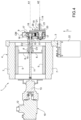
Figure 4 is a sectional side view of the apparatus ofFigures 1 to 3 ; -
Figure 5 is a perspective and schematic view of a detail of the apparatus inFigure 1 ; and -
Figure 6 is a graph showing diagrams as a function of time, position and angular velocity of a support and a core shown inFigures 2 and3 . -
Number 1 inFigure 1 indicates, as a whole, a winding apparatus for the production of power storage devices. In particular, thewinding apparatus 1 is configured to wind at least one planar-shaped material 2 such as, for example, a tape, a strip, a sheet, a film, etc. - Advantageously, but not necessarily, the
material 2 comprises at least one electrode and/or at least one electrode separator (known per se and therefore not further described). More precisely, thematerial 2 comprises at least two electrode layers and two separator layers, respectively spaced apart from each other. - In some non-limiting embodiments, the
material 2 comprises one or more continuous separator strips on which (and/or between which) a plurality of electrode blanks (both positive and negative) are arranged. In particular, thematerial 2 comprises two continuous separator strips between which a plurality of electrode blanks with a same first polarity (positive or negative) are arranged. More precisely, a plurality of electrode blanks with a same second polarity opposite to the first (negative or positive) are arranged in one of the outer portions (upper or lower) of the two separator layers. - Advantageously, but not necessarily, the
apparatus 1 comprises feeding means (not shown, for example of a known type) for feeding thematerial 2 along a feeding plane FP (more precisely, along a conveying path CP -Figures 1-3 ). In particular, said feeding means comprise an unwinding reel for each continuous layer of material 2 (for example, two unwinding reels in the case of two separators separated by electrode blanks, or four unwinding reels in the case of two separator layers separated by two continuous electrode layers with opposite polarities). - The
winding apparatus 1 comprises aframe 3 and anactuator device 4, which is supported by theframe 3 and in turn comprises at least arotor 5 and adrive element 6. - Advantageously, but not necessarily, the
drive element 6 is a drive shaft. - In the non-limiting embodiment of
Figures 1 to 4 , theactuator device 4 comprises astator 7, which is mechanically connected to theframe 3 and magnetically connected to therotor 5. - In other non-limiting embodiments, not shown, the rotor is any rotating part or wheel of a mechanism (for example, of a reducer).
- Advantageously, but not necessarily, the
actuator device 4 comprises an electric motor, in particular a torque motor (in other words, a motor with a high number of poles, which does not require a reducer for the transmission of motion). More precisely, theactuator device 4 is a torque motor with a through rotor 5 (i.e., perforated from side to side). - As shown in the non-limiting embodiment of
Figure 4 , thedrive element 6 is mechanically connected to therotor 5 of theactuator device 4, in particular through aflange 8. - The
apparatus 1 further comprises asupport 9, which is (configured to be) driven in rotation by theactuator device 4 through thedrive element 6. In particular, thesupport 9 is mechanically connected to thedrive element 6. - In the non-limiting embodiment of
Figures 1 to 4 , theactuator device 4 moves therotor 5, which is integral with the drive element (shaft) 6, which in turn transmits the motion of therotor 5 to thesupport 9. In particular, as shown inFigure 2 , theactuator device 4 moves thesupport 9 around an axis A1. More particularly, the axis A1 is also the longitudinal axis of the drive element (shaft) 6. - Moreover, the
apparatus 1 comprises anactuator device 10, in turn comprising adrive element 11. In particular, theactuator device 10 comprises anelectric motor 12. More precisely, theactuator device 10 also comprises areducer 13. - Advantageously, but not necessarily, the
drive element 11 is a drive shaft. - In addition, the
apparatus 1 comprises anon-circular core 14 on which to wind thematerial 2. Thecore 14 is arranged on thesupport 9 in a rotary manner and is (configured to be) driven in rotation by theactuator device 10 through thedrive element 11. - In some non-limiting cases, the
core 14 consists of a flat rigid (metal) pin. In particular, this rigid pin has a flat profile, in particular with rounded edges, so as to accompany the winding of thematerial 2 without damaging it due to a sharp profile. - In other non-limiting cases, the
core 14 consists of the first cell (i.e., the unit comprising the first electrode blank along the conveying path CP) of a strip, i.e., the amount ofmaterial 2 required to form a complete winding for the production, for example, of a battery. The subsequent cells are wound around the first cell to form the complete winding. In this way, during the production process, it is not necessary to remove the metal pin; this operation generally involves the risk of damaging the final product. - Obviously, the core 14 can have any shape (polyhedral, elliptical, oval, rhomboidal, laminar, etc.) that allows winding.
- Advantageously, the
drive element 11 passes at least partially through therotor 5. - In the non-limiting embodiment of
Figure 2 , theactuator device 10 is mounted on the opposite side of thedevice 4 with respect to thesupport 9. In particular, thedrive element 11 passes through therotor 5 of theactuator device 4 from side to side. In this way, it is possible to transmit the motion of the actuator device 10 (i.e., of the motor 12) inside thesupport 9, in particular to thecore 14. - Advantageously, but not necessarily, and as shown in the non-limiting embodiment of
Figures 4 and5 , the drive element (shaft) 6 and the drive element (shaft) 11 are coaxial. In particular, their longitudinal axis is the axis A1. - Advantageously, but not necessarily, the
drive element 6 and thedrive element 11 are concentric. In particular, thedrive element 11 is housed inside thedrive element 6 and is configured to rotate (independently) inside saiddrive element 6. - In the non-limiting embodiment of
Figures 2 to 5 , the drive element (shaft) 6 is a hollow shaft. In other words, thedrive element 6 has a cavity CV which crosses it longitudinally from side to side. - In particular, the drive element (shaft) 11 crosses at least partially, in particular totally, the cavity CV.
- In the non-limiting embodiment of
Figure 4 , thedrive element 11 and thedrive element 6 are connected to each other through a rotary coupling, in particular through bearings 15 (more precisely, rolling bearings - for example ball bearings). In this way, thedrive element 6 and thedrive element 11 can rotate independently of each other. - Advantageously, but not necessarily, the
actuator device 4 and theactuator device 10 are configured to be moved independently of one another. In particular, theapparatus 1 comprises at least one control unit configured to control theactuator devices actuator devices - In the non-limiting embodiment of
Figures 1 to 3 , thesupport 9 is configured to rotate around the axis A1 and thecore 14 is configured to rotate around an axis A2 (Figures 2 ,3 and4 ). In particular, the axis A1 and the axis A2 are not coaxial with each other. More particularly, the axis A1 and the axis A2 are parallel to each other. In detail, the axis A1 and the axis A2 are perpendicular to the conveying path CP and parallel to the feeding plane FP. - Advantageously, but not necessarily, and as shown in the non-limiting embodiments of
Figures 1 to 5 , thesupport 9 is asymmetrical. More precisely, it has a larger volume where it supports the core 14, i.e., at the rotation axis A2. In this way, the total mass of thesupport 9 can be reduced. In particular, thesupport 9 comprises a counter-mass CM arranged in the opposite position, with respect to the axis A1, of the axis A2. The counter-mass has the function of balancing the inertia of thesupport 9 and preventing the vibrations that would be generated by the asymmetric distribution of the mass (by preventing vibrations, obviously wear is also reduced). - Advantageously, but not necessarily, the
core 14 is mechanically coupled to (mounted on, supported or gripped by) thesupport 9 so as to perform an orbital winding motion. In particular, "orbital motion" means that thecore 14 is configured to perform a rotational motion and a revolution motion. - In the non-limiting embodiment of
Figures 1 to 4 , theactuator device 4 moves (thesupport 9, and therefore) thecore 14 around the axis A1, thus causing the revolution motion of thecore 14 around said axis. - In the non-limiting embodiment of
Figures 1 to 4 , theactuator device 10 moves thecore 14 around the axis A2, thus causing the rotational motion of thecore 14 around said axis. - Therefore, the orbital motion with which the
core 14 is moved comprises a rotation around the axis A2 and a revolution around the axis A1, which in use are (always) parallel to each other. - In the non-limiting embodiment of
Figure 3 , theapparatus 1 is shown in a configuration in which the winding around thecore 14 has already begun and thematerial 2 is pulled along the conveying path CP. In particular,Figure 3 shows the angle θ, swept by thecore 14, and the angle β, swept by thesupport 9. -
Figure 6 shows an upper diagram and a lower diagram relating to the change in time T of the positions θ and β of thecore 14 and thesupport 9 and to the change in time T of the velocities (for example in mm/s and not necessarily on the same scale) θ' and β' of thecore 14 and thesupport 9, respectively. - Advantageously, but not necessarily, and as shown in the non-limiting embodiment of
Figure 6 , a full cycle FC of the rotational motion (i.e., a full rotation of thecore 14 around the axis A2) corresponds to two half cycles HC of the revolution motion (i.e., a full rotation of thesupport 9 around the axis A1). In this way, the entry point EP of thematerial 2 around thecore 14 can be maintained at a constant height, i.e., in the feeding plane FP. - Advantageously, but not necessarily, and as shown in detail in
Figure 5 , the apparatus 1 (in particular the support 4) also comprises amotion transmission system 16 configured to transmit, in particular from the rotation axis A1 to the rotation axis A2, at least part of the motion of theactuator device 10 to thecore 14. In particular, thesupport 9 is shaped so as to define a containing volume which contains at least part of themotion transmission system 16. - In the non-limiting embodiment of
Figure 5 , themotion transmission system 16 comprisesgears 17, which are configured to transfer the motion of theactuator device 10 to thecore 14. - Advantageously, but not necessarily, the
motion transmission system 16 comprises (in particular two) intermediate gears 17'. In this way, it is possible to compensate for any clearance and to divide the torque transmitted by thegear 17 connected to the drive element (shaft) 11, so as to reduce wear. Moreover, the intermediate gears 17' allow the core to be moved in the same direction as themotor 12. Obviously, if the intermediate gears 17' were not present or there was a configuration with an even number of transmissions, themotor 12 would rotate in the opposite direction with respect to thecore 14. - Advantageously, but not necessarily, the
apparatus 1 comprises apneumatic utility 18, in particular mounted on board thesupport 9. In particular, the supply pipes of theutility 18 also pass through therotor 5, more precisely through the drive element (shaft) 6. - In the non-limiting embodiment of
Figures 1 to 5 , the apparatus comprises agripping device 19 configured to grab the core 14 during the winding and to release it once the winding is completed. In particular, the grippingdevice 19 comprisesgripping elements 20 having oneend 21 of reduced, preferably, but not necessarily, decreasing dimensions (more precisely less than five millimetres, in particular less than one millimetre). In this way, thegripping elements 20 can be easily extracted from a complete winding. - Advantageously, but not necessarily, the
pneumatic utility 18 comprises thegripping device 19. In particular, thegripping elements 20 are moved vertically (i.e., perpendicular to the feeding plane FP), so as to open and close according to the step of the winding process. More precisely, theelements 20 will be spaced apart, i.e., open, during the product feeding step, i.e., when the winding is completed, in order to free the complete winding and receive a new core 14 (for example, the first cell of a strip), whereas they will be closed from the beginning to the end of the actual winding step (during which thecore 14 rotates). - Advantageously, but not necessarily, the
pneumatic utility 18 comprises a vacuum chamber VC on board thesupport 9. In particular, the vacuum chamber VC has connections (flexible and not shown) which pass at least partially through therotor 5 and are connected to a pump (not shown) on one side and to thevacuum chamber 20 on the other. In this way, it is possible to generate a pressure or a decompression to open and/or close the gripping elements, thus to grab and/or release the core 14 (either a pin or the first cell of the strip to be wound). - Advantageously, but not necessarily, the
pneumatic utility 18 comprises a pneumatic joint, in particular a rotary joint. - In some non-limiting cases, not shown, the rotary joint connects the
vacuum chamber 20 with a connection (flexible and not shown) which passes at least partially through therotor 5 and is (instead) statically connected to the pump. - In other non-limiting cases, not shown, the rotary joint connects the pump with a connection (flexible and not shown) which passes at least partially through the
rotor 5 and is (instead) statically connected to thevacuum chamber 20. - Advantageously, but not necessarily, the control unit (of a known type and not shown) is configured to control the
actuator device 4 and theactuator device 10 with a motion law MLa and a motion law MLb, respectively (shown in the non-limiting embodiment ofFigure 6 ). In particular, the motion law MLa is different from the motion law MLb. The term "motion law" refers to all formulas that determine the position, velocity, acceleration, jerk, etc. of a body. - Advantageously, but not necessarily, the
apparatus 1 comprises anactuator device 22 configured to move theframe 3 along at least a transverse direction T, which is transverse, in particular perpendicular, to the feeding plane FP. In this way, it is possible to compensate, during the winding, for the build-up ofmaterial 2 wound around thecore 14. In other words, during the winding, the thickness of the winding increases constantly every half cycle HC of the core 14 (in particular, it increases by the same amount as the thickness of the material 2) and therefore theactuator device 22 compensates for this increase by maintaining theinput material 2 in the feeding plane FP (in particular, by maintaining an entry point EP in the feeding plane FP). - In accordance with a second aspect of the present invention, there is provided a winding method for the production of power storage devices using an
apparatus 1 as described above. In particular, the method relates to the winding of at least one electrode and/or at least one separator. More precisely, the method relates to the winding of two electrode layers (or series of cells) with different polarities (anode and cathode) separated by two separator layers. - The method comprises a step of controlling the
actuator device 4 and theactuator device 10 with a motion law MLa and a motion law MLb, respectively (shown in the non-limiting embodiment ofFigure 5 ). In particular, the motion law MLa is different from the motion law MLb. - Advantageously, but not necessarily, the motion law MLa and the motion law MLb have a variable rotation speed (as shown in the lower graph in
Figure 5 ). - In particular, the motion law MLa and the motion law MLb are calculated by the control unit based on at least one position of a portion of the core 14 or of a portion of the
material 4 and at least one speed of a portion of the core or of a portion of the material. - Advantageously, but not necessarily, the motion laws MLa and MLb (and a possible third law of motion of the actuator device 22) are calculated so as to ensure that an entry point EP of the material 2 (
Figure 4 ) remains constantly in the conveying plane CP. Moreover, the motion laws MLa and MLb (and a possible third law of motion of the actuator device 22) are calculated so as to maintain the tension of thematerial 2 entering theapparatus 1 always constant. - Advantageously, but not necessarily, the
material 2 is wound by twoapparatuses 1 arranged symmetrically to each other, so as to guide (in particular, to grab with the gripping elements) thecore 14 on both sides, especially if it is the first cell of a strip. - In use, the
material 2 is fed to theapparatus 1 in the form of a tape, which is divided into strips of desired length and configured to be wound around thecore 14. In particular, thecore 14 rotates both around the axis A1 and around the axis A2, performing the above mentioned orbital motion. During this orbital motion generated by theactuator devices material 2 is preferably pulled at constant speed and tension at the entry point EP. In particular, to ensure that the point EP remains in the feeding plane FP, each half-turn of the core around the axis A2 corresponds to a full turn of thesupport 9 around the axis A1. - During these rotations, the
actuator device 22 moves theframe 3 along the direction T, in particular by a distance equal to the thickness of thematerial 2 each half-turn of thecore 14. Once the winding is completed, i.e., after a certain number of half turns of the core 14, theactuator devices material 2 is cut, the winding is closed, preferably by means of adhesive tape or glue, and conveyed to an unloading device, which is known per se and not shown (in particular, after opening the gripping elements and releasing the winding). - Although the invention described above makes particular reference to a very precise embodiment, it is not to be construed as limited to this embodiment, since all the variants, modifications or simplifications covered by the attached claims, such as, for example, a different geometry or composition of the core 14, a different type of
actuator devices drive elements - The apparatus and the method described above have many advantages.
- First of all, they allow a regular and uniform feeding of the material to be wound (whether single- or multilayer) despite the fact that the winding core has a non-circular shape, thereby reducing the typical oscillations of apparatuses with flat cores. In addition, they allow a constant and uniform tension of the
material 2. In this way, it is possible to reduce the turbulence suffered by the material and to guarantee the production of high-quality, high-efficiency power storage devices. - Moreover, the presence of the
hollow rotor 5 allows passage and transmission with a simplified and inexpensive installation, for the generation of an orbital motion of thecore 14. - Lastly, the presence of a cavity inside the
rotor 5 allows utilities to be pneumatically and/or electrically connected on board thesupport 9, so as to prevent entanglement of the signal and power cables, therefore allowing an increase in the level of automation of the gripping device and of the apparatus in general, without the need for auxiliary devices.
Claims (15)
- A winding apparatus (1) for the production of power storage devices; the apparatus (1) comprises:- a frame (3);- a first actuator device (4), which is supported by said frame (3) and comprises, in turn, at least a rotor (5) and a first drive element (6);- a support (9), which is driven in rotation by the first actuator device (4) through the first drive element (6) ;- a second actuator device (10) comprising a second drive element (11);- a core (14) with a non-circular shape, on which to wind a material (2); said core (14) being arranged on said support (9) in a rotary manner and being driven in rotation by the second actuator device (10) through the second drive element (11);the apparatus (1) being characterized in that the second drive element (11) at least partially passes through the rotor (5).
- The apparatus (1) according to claim 1, wherein the first actuator device (4) and the second actuator device (10) are configured to be moved independently of one another.
- The apparatus (1) according to claim 1 or 2, wherein the support (9) is configured to rotate around a first rotation axis (A1) and wherein the core (14) is configured to rotate around a second rotation axis (A2); the first rotation axis (A1) and the second rotation axis (A2) not being coaxial to one another; in particular, the first rotation axis (A1) and the second rotation axis (A2) being parallel to one another.
- The apparatus (1) according to claim 3 and comprising a motion transmission system (16), which is configured to transmit, in particular from the first rotation axis (A1) to the second rotation axis (A2), at least part of the motion of the second actuator device (10) to the core (14); in particular, said support (9) being shaped so as to define a containing volume containing at least part of said motion transmission system (16).
- The apparatus (1) according to any one of the preceding claims, wherein the first actuator device (4) is a torque motor.
- The apparatus (1) according to any one of the preceding claims, wherein the second drive element (11) passes through the rotor (5) of the first actuator device (4) from side to side.
- The apparatus (1) according to any one of the preceding claims, wherein the first drive element (6) and the second drive element (11) are coaxial.
- The apparatus (1) according to any one of the preceding claims, wherein the first drive element (6) and the second drive element (11) are concentric; in particular, the second drive element (11) is housed inside the first drive element (6) and is configured to rotate inside said first drive element (6).
- The apparatus (1) according to any one of the preceding claims and comprising a pneumatic utility (18), in particular mounted on board the support (9) and comprising a rotary pneumatic joint.
- The apparatus (1) according to claim 9, wherein the pneumatic utility (18) comprises a gripping device (19) configured to grab the core (14).
- The apparatus (1) according to any one of the preceding claims and comprising a control unit, which is configured to control said first actuator device (4) and said second actuator device (10) with a first motion law and a second motion law, respectively; in particular, the first motion law being different from the second motion law.
- The apparatus (1) according to any one of the preceding claims and comprising a material feeding system (2) to feed the material along a feeding plane (FP) and a third actuator device (22) configured to move the frame (3) along at least a transverse direction (T), which is transverse, in particular perpendicular, to said feeding plane (FP), so as to compensate, during the winding, for the build-up of material (2) wound around the core (14).
- A winding method for the production of power storage devices using an apparatus (1) according to any one of the preceding claims; in particular, to wind at least one electrode and/or at least one separator.
- The method according to claim 13 and comprising a step of controlling the first actuator device (4) and the second actuator device (10) with a first motion law and a second motion law, respectively; in particular, the first motion law being different from the second motion law.
- The method according to claim 14, wherein the first motion law and/or the second motion law have a variable rotation speed; in particular, the first motion law and the second motion law are calculated by a control unit based on at least one position of a portion of the core (14) or of a portion of the material (2) and at least one speed of a portion of the core (14) or of a portion of the material (2).
Applications Claiming Priority (2)
| Application Number | Priority Date | Filing Date | Title |
|---|---|---|---|
| IT102020000001033A IT202000001033A1 (en) | 2020-01-21 | 2020-01-21 | WINDING APPARATUS AND METHOD FOR THE PRODUCTION OF ELECTRICITY STORAGE DEVICES |
| PCT/IB2021/050462 WO2021148982A1 (en) | 2020-01-21 | 2021-01-21 | Winding apparatus and method for the production of power storage devices |
Publications (2)
| Publication Number | Publication Date |
|---|---|
| EP4094280A1 EP4094280A1 (en) | 2022-11-30 |
| EP4094280B1 true EP4094280B1 (en) | 2023-06-28 |
Family
ID=70295834
Family Applications (1)
| Application Number | Title | Priority Date | Filing Date |
|---|---|---|---|
| EP21706392.4A Active EP4094280B1 (en) | 2020-01-21 | 2021-01-21 | Winding apparatus and method for the production of power storage devices |
Country Status (7)
| Country | Link |
|---|---|
| US (1) | US20230065488A1 (en) |
| EP (1) | EP4094280B1 (en) |
| KR (1) | KR20220158224A (en) |
| CN (1) | CN115552559A (en) |
| CA (1) | CA3165661A1 (en) |
| IT (1) | IT202000001033A1 (en) |
| WO (1) | WO2021148982A1 (en) |
Family Cites Families (9)
| Publication number | Priority date | Publication date | Assignee | Title |
|---|---|---|---|---|
| FR2137564B1 (en) * | 1971-05-07 | 1974-12-20 | Yoshida Kogyo Kk | |
| JP3924221B2 (en) * | 2002-08-12 | 2007-06-06 | 株式会社東海理化電機製作所 | Webbing take-up device |
| FR2849283B1 (en) | 2002-12-23 | 2005-10-28 | Batscap Sa | ARCHITECTURE OF WINDING DEVICE OF ELECTRIC ENERGY STORAGE ASSEMBLY |
| FR2849284B1 (en) * | 2002-12-23 | 2007-01-05 | Batscap Sa | DEVICE FOR PRODUCING ENERGY STORAGE ASSEMBLIES COMPRISING IMPROVED WINDING COLLAGE MEANS |
| EP2595233B1 (en) | 2010-07-14 | 2018-02-28 | LG Chem, Ltd. | Folding apparatus for an electrode assembly |
| KR101914566B1 (en) | 2012-07-27 | 2018-11-02 | 삼성에스디아이 주식회사 | Winding apparatus for manufacturing electrode assembly and control method thereof |
| KR102540142B1 (en) * | 2015-11-10 | 2023-06-05 | 삼성에스디아이 주식회사 | Apparatus for Winding Electrode Assembly |
| ITUB20160742A1 (en) * | 2016-02-15 | 2017-08-15 | Manz Italy Srl | APPARATUS AND WINDING METHOD |
| IT201700015423A1 (en) * | 2017-02-13 | 2018-08-13 | Manz Italy Srl | APPARATUS AND WINDING METHOD |
-
2020
- 2020-01-21 IT IT102020000001033A patent/IT202000001033A1/en unknown
-
2021
- 2021-01-21 EP EP21706392.4A patent/EP4094280B1/en active Active
- 2021-01-21 KR KR1020227028618A patent/KR20220158224A/en not_active Withdrawn
- 2021-01-21 CN CN202180022801.6A patent/CN115552559A/en active Pending
- 2021-01-21 CA CA3165661A patent/CA3165661A1/en active Pending
- 2021-01-21 WO PCT/IB2021/050462 patent/WO2021148982A1/en not_active Ceased
- 2021-01-21 US US17/793,797 patent/US20230065488A1/en not_active Abandoned
Also Published As
| Publication number | Publication date |
|---|---|
| WO2021148982A1 (en) | 2021-07-29 |
| CA3165661A1 (en) | 2021-07-29 |
| EP4094280A1 (en) | 2022-11-30 |
| CN115552559A (en) | 2022-12-30 |
| US20230065488A1 (en) | 2023-03-02 |
| KR20220158224A (en) | 2022-11-30 |
| IT202000001033A1 (en) | 2021-07-21 |
Similar Documents
| Publication | Publication Date | Title |
|---|---|---|
| EP4136695B1 (en) | Support apparatus and method for the production of electric energy storage devices | |
| CN202423449U (en) | Rolling processing equipment for pole piece of lithium battery | |
| KR100996123B1 (en) | Device Architecture for Winding Power Storage Assemblies | |
| CN115064755B (en) | Winding method and winding system | |
| JP6879769B2 (en) | Winding device and method | |
| CN217376656U (en) | Tension cuts off self-interacting mechanism | |
| CN108428946B (en) | Diaphragm compensation method of winding machine | |
| EP4094280B1 (en) | Winding apparatus and method for the production of power storage devices | |
| CN110382384B (en) | Winding device and method | |
| EP4323162B1 (en) | Apparatus for cutting and conveying a strip of material and relative method for producing electrical energy storage devices | |
| US20250219124A1 (en) | Apparatus and relative method of winding a strip of material, in particular for the production of electrical energy storage devices | |
| KR101294242B1 (en) | Coating slurry supplying system | |
| CN117139038A (en) | A gap coating method and equipment | |
| KR101062139B1 (en) | Device for controlling sheet drive in multilayer assembly manufacturing equipment | |
| KR20240132409A (en) | Winder for electrode assembly of rechargeable battery and electrode assembly manufacturing method using the same | |
| JPH07240207A (en) | Winding device for battery element | |
| KR20230022803A (en) | Method for conveying an electrode strip for the production of electrical energy storage devices and related machine | |
| KR100965761B1 (en) | Mechanism for making electrical energy storage devices by winding on flat mandrel | |
| JP2024545968A (en) | Cylindrical electrochemical cell manufacturing apparatus and manufacturing method thereof | |
| KR20050084490A (en) | An unwinder and aligner for a sheet-winding machine | |
| JP2006511911A6 (en) | Apparatus for controlling sheet drive in a multilayer assembly manufacturing apparatus | |
| IT202000007840A1 (en) | WINDING APPARATUS AND METHOD FOR THE PRODUCTION OF ELECTRICITY STORAGE DEVICES | |
| IT202000007849A1 (en) | SUPPORT APPARATUS AND METHOD FOR THE PRODUCTION OF ELECTRICITY STORAGE DEVICES | |
| HK1235374A1 (en) | Winding apparatus and method |
Legal Events
| Date | Code | Title | Description |
|---|---|---|---|
| STAA | Information on the status of an ep patent application or granted ep patent |
Free format text: STATUS: UNKNOWN |
|
| STAA | Information on the status of an ep patent application or granted ep patent |
Free format text: STATUS: THE INTERNATIONAL PUBLICATION HAS BEEN MADE |
|
| PUAI | Public reference made under article 153(3) epc to a published international application that has entered the european phase |
Free format text: ORIGINAL CODE: 0009012 |
|
| STAA | Information on the status of an ep patent application or granted ep patent |
Free format text: STATUS: REQUEST FOR EXAMINATION WAS MADE |
|
| 17P | Request for examination filed |
Effective date: 20220725 |
|
| AK | Designated contracting states |
Kind code of ref document: A1 Designated state(s): AL AT BE BG CH CY CZ DE DK EE ES FI FR GB GR HR HU IE IS IT LI LT LU LV MC MK MT NL NO PL PT RO RS SE SI SK SM TR |
|
| GRAP | Despatch of communication of intention to grant a patent |
Free format text: ORIGINAL CODE: EPIDOSNIGR1 |
|
| RIC1 | Information provided on ipc code assigned before grant |
Ipc: H01G 9/15 20060101ALI20221221BHEP Ipc: B65H 18/10 20060101ALI20221221BHEP Ipc: B29C 53/80 20060101ALI20221221BHEP Ipc: B29C 53/56 20060101ALI20221221BHEP Ipc: B65H 23/198 20060101ALI20221221BHEP Ipc: B65H 23/195 20060101ALI20221221BHEP Ipc: H01M 50/403 20210101ALI20221221BHEP Ipc: H01M 10/04 20060101ALI20221221BHEP Ipc: H01G 11/84 20130101ALI20221221BHEP Ipc: H01G 13/02 20060101AFI20221221BHEP |
|
| STAA | Information on the status of an ep patent application or granted ep patent |
Free format text: STATUS: GRANT OF PATENT IS INTENDED |
|
| DAV | Request for validation of the european patent (deleted) | ||
| DAX | Request for extension of the european patent (deleted) | ||
| INTG | Intention to grant announced |
Effective date: 20230126 |
|
| GRAS | Grant fee paid |
Free format text: ORIGINAL CODE: EPIDOSNIGR3 |
|
| GRAA | (expected) grant |
Free format text: ORIGINAL CODE: 0009210 |
|
| STAA | Information on the status of an ep patent application or granted ep patent |
Free format text: STATUS: THE PATENT HAS BEEN GRANTED |
|
| AK | Designated contracting states |
Kind code of ref document: B1 Designated state(s): AL AT BE BG CH CY CZ DE DK EE ES FI FR GB GR HR HU IE IS IT LI LT LU LV MC MK MT NL NO PL PT RO RS SE SI SK SM TR |
|
| REG | Reference to a national code |
Ref country code: CH Ref legal event code: EP |
|
| REG | Reference to a national code |
Ref country code: AT Ref legal event code: REF Ref document number: 1583468 Country of ref document: AT Kind code of ref document: T Effective date: 20230715 |
|
| REG | Reference to a national code |
Ref country code: IE Ref legal event code: FG4D |
|
| REG | Reference to a national code |
Ref country code: DE Ref legal event code: R096 Ref document number: 602021003160 Country of ref document: DE |
|
| REG | Reference to a national code |
Ref country code: LT Ref legal event code: MG9D |
|
| PG25 | Lapsed in a contracting state [announced via postgrant information from national office to epo] |
Ref country code: SE Free format text: LAPSE BECAUSE OF FAILURE TO SUBMIT A TRANSLATION OF THE DESCRIPTION OR TO PAY THE FEE WITHIN THE PRESCRIBED TIME-LIMIT Effective date: 20230628 Ref country code: NO Free format text: LAPSE BECAUSE OF FAILURE TO SUBMIT A TRANSLATION OF THE DESCRIPTION OR TO PAY THE FEE WITHIN THE PRESCRIBED TIME-LIMIT Effective date: 20230928 |
|
| REG | Reference to a national code |
Ref country code: NL Ref legal event code: MP Effective date: 20230628 |
|
| REG | Reference to a national code |
Ref country code: AT Ref legal event code: MK05 Ref document number: 1583468 Country of ref document: AT Kind code of ref document: T Effective date: 20230628 |
|
| PG25 | Lapsed in a contracting state [announced via postgrant information from national office to epo] |
Ref country code: RS Free format text: LAPSE BECAUSE OF FAILURE TO SUBMIT A TRANSLATION OF THE DESCRIPTION OR TO PAY THE FEE WITHIN THE PRESCRIBED TIME-LIMIT Effective date: 20230628 Ref country code: NL Free format text: LAPSE BECAUSE OF FAILURE TO SUBMIT A TRANSLATION OF THE DESCRIPTION OR TO PAY THE FEE WITHIN THE PRESCRIBED TIME-LIMIT Effective date: 20230628 Ref country code: LV Free format text: LAPSE BECAUSE OF FAILURE TO SUBMIT A TRANSLATION OF THE DESCRIPTION OR TO PAY THE FEE WITHIN THE PRESCRIBED TIME-LIMIT Effective date: 20230628 Ref country code: LT Free format text: LAPSE BECAUSE OF FAILURE TO SUBMIT A TRANSLATION OF THE DESCRIPTION OR TO PAY THE FEE WITHIN THE PRESCRIBED TIME-LIMIT Effective date: 20230628 Ref country code: HR Free format text: LAPSE BECAUSE OF FAILURE TO SUBMIT A TRANSLATION OF THE DESCRIPTION OR TO PAY THE FEE WITHIN THE PRESCRIBED TIME-LIMIT Effective date: 20230628 Ref country code: GR Free format text: LAPSE BECAUSE OF FAILURE TO SUBMIT A TRANSLATION OF THE DESCRIPTION OR TO PAY THE FEE WITHIN THE PRESCRIBED TIME-LIMIT Effective date: 20230929 |
|
| PG25 | Lapsed in a contracting state [announced via postgrant information from national office to epo] |
Ref country code: FI Free format text: LAPSE BECAUSE OF FAILURE TO SUBMIT A TRANSLATION OF THE DESCRIPTION OR TO PAY THE FEE WITHIN THE PRESCRIBED TIME-LIMIT Effective date: 20230628 |
|
| PG25 | Lapsed in a contracting state [announced via postgrant information from national office to epo] |
Ref country code: SK Free format text: LAPSE BECAUSE OF FAILURE TO SUBMIT A TRANSLATION OF THE DESCRIPTION OR TO PAY THE FEE WITHIN THE PRESCRIBED TIME-LIMIT Effective date: 20230628 |
|
| PG25 | Lapsed in a contracting state [announced via postgrant information from national office to epo] |
Ref country code: ES Free format text: LAPSE BECAUSE OF FAILURE TO SUBMIT A TRANSLATION OF THE DESCRIPTION OR TO PAY THE FEE WITHIN THE PRESCRIBED TIME-LIMIT Effective date: 20230628 |
|
| PG25 | Lapsed in a contracting state [announced via postgrant information from national office to epo] |
Ref country code: IS Free format text: LAPSE BECAUSE OF FAILURE TO SUBMIT A TRANSLATION OF THE DESCRIPTION OR TO PAY THE FEE WITHIN THE PRESCRIBED TIME-LIMIT Effective date: 20231028 |
|
| PG25 | Lapsed in a contracting state [announced via postgrant information from national office to epo] |
Ref country code: SM Free format text: LAPSE BECAUSE OF FAILURE TO SUBMIT A TRANSLATION OF THE DESCRIPTION OR TO PAY THE FEE WITHIN THE PRESCRIBED TIME-LIMIT Effective date: 20230628 Ref country code: SK Free format text: LAPSE BECAUSE OF FAILURE TO SUBMIT A TRANSLATION OF THE DESCRIPTION OR TO PAY THE FEE WITHIN THE PRESCRIBED TIME-LIMIT Effective date: 20230628 Ref country code: RO Free format text: LAPSE BECAUSE OF FAILURE TO SUBMIT A TRANSLATION OF THE DESCRIPTION OR TO PAY THE FEE WITHIN THE PRESCRIBED TIME-LIMIT Effective date: 20230628 Ref country code: PT Free format text: LAPSE BECAUSE OF FAILURE TO SUBMIT A TRANSLATION OF THE DESCRIPTION OR TO PAY THE FEE WITHIN THE PRESCRIBED TIME-LIMIT Effective date: 20231030 Ref country code: IS Free format text: LAPSE BECAUSE OF FAILURE TO SUBMIT A TRANSLATION OF THE DESCRIPTION OR TO PAY THE FEE WITHIN THE PRESCRIBED TIME-LIMIT Effective date: 20231028 Ref country code: ES Free format text: LAPSE BECAUSE OF FAILURE TO SUBMIT A TRANSLATION OF THE DESCRIPTION OR TO PAY THE FEE WITHIN THE PRESCRIBED TIME-LIMIT Effective date: 20230628 Ref country code: EE Free format text: LAPSE BECAUSE OF FAILURE TO SUBMIT A TRANSLATION OF THE DESCRIPTION OR TO PAY THE FEE WITHIN THE PRESCRIBED TIME-LIMIT Effective date: 20230628 Ref country code: CZ Free format text: LAPSE BECAUSE OF FAILURE TO SUBMIT A TRANSLATION OF THE DESCRIPTION OR TO PAY THE FEE WITHIN THE PRESCRIBED TIME-LIMIT Effective date: 20230628 Ref country code: AT Free format text: LAPSE BECAUSE OF FAILURE TO SUBMIT A TRANSLATION OF THE DESCRIPTION OR TO PAY THE FEE WITHIN THE PRESCRIBED TIME-LIMIT Effective date: 20230628 |
|
| PG25 | Lapsed in a contracting state [announced via postgrant information from national office to epo] |
Ref country code: PL Free format text: LAPSE BECAUSE OF FAILURE TO SUBMIT A TRANSLATION OF THE DESCRIPTION OR TO PAY THE FEE WITHIN THE PRESCRIBED TIME-LIMIT Effective date: 20230628 |
|
| REG | Reference to a national code |
Ref country code: DE Ref legal event code: R097 Ref document number: 602021003160 Country of ref document: DE |
|
| PG25 | Lapsed in a contracting state [announced via postgrant information from national office to epo] |
Ref country code: DK Free format text: LAPSE BECAUSE OF FAILURE TO SUBMIT A TRANSLATION OF THE DESCRIPTION OR TO PAY THE FEE WITHIN THE PRESCRIBED TIME-LIMIT Effective date: 20230628 |
|
| PGFP | Annual fee paid to national office [announced via postgrant information from national office to epo] |
Ref country code: DE Payment date: 20240129 Year of fee payment: 4 |
|
| PLBE | No opposition filed within time limit |
Free format text: ORIGINAL CODE: 0009261 |
|
| STAA | Information on the status of an ep patent application or granted ep patent |
Free format text: STATUS: NO OPPOSITION FILED WITHIN TIME LIMIT |
|
| PGFP | Annual fee paid to national office [announced via postgrant information from national office to epo] |
Ref country code: IT Payment date: 20240131 Year of fee payment: 4 Ref country code: FR Payment date: 20240125 Year of fee payment: 4 |
|
| 26N | No opposition filed |
Effective date: 20240402 |
|
| PG25 | Lapsed in a contracting state [announced via postgrant information from national office to epo] |
Ref country code: SI Free format text: LAPSE BECAUSE OF FAILURE TO SUBMIT A TRANSLATION OF THE DESCRIPTION OR TO PAY THE FEE WITHIN THE PRESCRIBED TIME-LIMIT Effective date: 20230628 |
|
| PG25 | Lapsed in a contracting state [announced via postgrant information from national office to epo] |
Ref country code: MC Free format text: LAPSE BECAUSE OF FAILURE TO SUBMIT A TRANSLATION OF THE DESCRIPTION OR TO PAY THE FEE WITHIN THE PRESCRIBED TIME-LIMIT Effective date: 20230628 |
|
| PG25 | Lapsed in a contracting state [announced via postgrant information from national office to epo] |
Ref country code: MC Free format text: LAPSE BECAUSE OF FAILURE TO SUBMIT A TRANSLATION OF THE DESCRIPTION OR TO PAY THE FEE WITHIN THE PRESCRIBED TIME-LIMIT Effective date: 20230628 |
|
| REG | Reference to a national code |
Ref country code: CH Ref legal event code: PL |
|
| PG25 | Lapsed in a contracting state [announced via postgrant information from national office to epo] |
Ref country code: LU Free format text: LAPSE BECAUSE OF NON-PAYMENT OF DUE FEES Effective date: 20240121 |
|
| PG25 | Lapsed in a contracting state [announced via postgrant information from national office to epo] |
Ref country code: LU Free format text: LAPSE BECAUSE OF NON-PAYMENT OF DUE FEES Effective date: 20240121 |
|
| PG25 | Lapsed in a contracting state [announced via postgrant information from national office to epo] |
Ref country code: BE Free format text: LAPSE BECAUSE OF NON-PAYMENT OF DUE FEES Effective date: 20240131 |
|
| PG25 | Lapsed in a contracting state [announced via postgrant information from national office to epo] |
Ref country code: CH Free format text: LAPSE BECAUSE OF NON-PAYMENT OF DUE FEES Effective date: 20240131 |
|
| PG25 | Lapsed in a contracting state [announced via postgrant information from national office to epo] |
Ref country code: CH Free format text: LAPSE BECAUSE OF NON-PAYMENT OF DUE FEES Effective date: 20240131 Ref country code: BE Free format text: LAPSE BECAUSE OF NON-PAYMENT OF DUE FEES Effective date: 20240131 |
|
| REG | Reference to a national code |
Ref country code: BE Ref legal event code: MM Effective date: 20240131 |
|
| PG25 | Lapsed in a contracting state [announced via postgrant information from national office to epo] |
Ref country code: BG Free format text: LAPSE BECAUSE OF FAILURE TO SUBMIT A TRANSLATION OF THE DESCRIPTION OR TO PAY THE FEE WITHIN THE PRESCRIBED TIME-LIMIT Effective date: 20230628 |
|
| PG25 | Lapsed in a contracting state [announced via postgrant information from national office to epo] |
Ref country code: BG Free format text: LAPSE BECAUSE OF FAILURE TO SUBMIT A TRANSLATION OF THE DESCRIPTION OR TO PAY THE FEE WITHIN THE PRESCRIBED TIME-LIMIT Effective date: 20230628 |
|
| PG25 | Lapsed in a contracting state [announced via postgrant information from national office to epo] |
Ref country code: IE Free format text: LAPSE BECAUSE OF NON-PAYMENT OF DUE FEES Effective date: 20240121 |
|
| PG25 | Lapsed in a contracting state [announced via postgrant information from national office to epo] |
Ref country code: IE Free format text: LAPSE BECAUSE OF NON-PAYMENT OF DUE FEES Effective date: 20240121 |
|
| REG | Reference to a national code |
Ref country code: DE Ref legal event code: R119 Ref document number: 602021003160 Country of ref document: DE |
|
| PG25 | Lapsed in a contracting state [announced via postgrant information from national office to epo] |
Ref country code: CY Free format text: LAPSE BECAUSE OF FAILURE TO SUBMIT A TRANSLATION OF THE DESCRIPTION OR TO PAY THE FEE WITHIN THE PRESCRIBED TIME-LIMIT; INVALID AB INITIO Effective date: 20210121 |
|
| PG25 | Lapsed in a contracting state [announced via postgrant information from national office to epo] |
Ref country code: HU Free format text: LAPSE BECAUSE OF FAILURE TO SUBMIT A TRANSLATION OF THE DESCRIPTION OR TO PAY THE FEE WITHIN THE PRESCRIBED TIME-LIMIT; INVALID AB INITIO Effective date: 20210121 |
|
| GBPC | Gb: european patent ceased through non-payment of renewal fee |
Effective date: 20250121 |
|
| PG25 | Lapsed in a contracting state [announced via postgrant information from national office to epo] |
Ref country code: DE Free format text: LAPSE BECAUSE OF NON-PAYMENT OF DUE FEES Effective date: 20250801 |
|
| PG25 | Lapsed in a contracting state [announced via postgrant information from national office to epo] |
Ref country code: GB Free format text: LAPSE BECAUSE OF NON-PAYMENT OF DUE FEES Effective date: 20250121 |
|
| PG25 | Lapsed in a contracting state [announced via postgrant information from national office to epo] |
Ref country code: FR Free format text: LAPSE BECAUSE OF NON-PAYMENT OF DUE FEES Effective date: 20250131 |
|
| PG25 | Lapsed in a contracting state [announced via postgrant information from national office to epo] |
Ref country code: TR Free format text: LAPSE BECAUSE OF FAILURE TO SUBMIT A TRANSLATION OF THE DESCRIPTION OR TO PAY THE FEE WITHIN THE PRESCRIBED TIME-LIMIT Effective date: 20230628 |
|
| PG25 | Lapsed in a contracting state [announced via postgrant information from national office to epo] |
Ref country code: IT Free format text: LAPSE BECAUSE OF NON-PAYMENT OF DUE FEES Effective date: 20250121 |