EP3205614A1 - Winding apparatus and method - Google Patents
Winding apparatus and method Download PDFInfo
- Publication number
- EP3205614A1 EP3205614A1 EP17155990.9A EP17155990A EP3205614A1 EP 3205614 A1 EP3205614 A1 EP 3205614A1 EP 17155990 A EP17155990 A EP 17155990A EP 3205614 A1 EP3205614 A1 EP 3205614A1
- Authority
- EP
- European Patent Office
- Prior art keywords
- core
- motion
- winding
- axis
- rotation axis
- Prior art date
- Legal status (The legal status is an assumption and is not a legal conclusion. Google has not performed a legal analysis and makes no representation as to the accuracy of the status listed.)
- Granted
Links
Images


Classifications
-
- B—PERFORMING OPERATIONS; TRANSPORTING
- B65—CONVEYING; PACKING; STORING; HANDLING THIN OR FILAMENTARY MATERIAL
- B65H—HANDLING THIN OR FILAMENTARY MATERIAL, e.g. SHEETS, WEBS, CABLES
- B65H18/00—Winding webs
- B65H18/08—Web-winding mechanisms
- B65H18/10—Mechanisms in which power is applied to web-roll spindle
-
- B—PERFORMING OPERATIONS; TRANSPORTING
- B65—CONVEYING; PACKING; STORING; HANDLING THIN OR FILAMENTARY MATERIAL
- B65H—HANDLING THIN OR FILAMENTARY MATERIAL, e.g. SHEETS, WEBS, CABLES
- B65H23/00—Registering, tensioning, smoothing or guiding webs
- B65H23/04—Registering, tensioning, smoothing or guiding webs longitudinally
- B65H23/18—Registering, tensioning, smoothing or guiding webs longitudinally by controlling or regulating the web-advancing mechanism, e.g. mechanism acting on the running web
- B65H23/195—Registering, tensioning, smoothing or guiding webs longitudinally by controlling or regulating the web-advancing mechanism, e.g. mechanism acting on the running web in winding mechanisms or in connection with winding operations
- B65H23/1955—Registering, tensioning, smoothing or guiding webs longitudinally by controlling or regulating the web-advancing mechanism, e.g. mechanism acting on the running web in winding mechanisms or in connection with winding operations and controlling web tension
-
- B—PERFORMING OPERATIONS; TRANSPORTING
- B65—CONVEYING; PACKING; STORING; HANDLING THIN OR FILAMENTARY MATERIAL
- B65H—HANDLING THIN OR FILAMENTARY MATERIAL, e.g. SHEETS, WEBS, CABLES
- B65H23/00—Registering, tensioning, smoothing or guiding webs
- B65H23/04—Registering, tensioning, smoothing or guiding webs longitudinally
- B65H23/18—Registering, tensioning, smoothing or guiding webs longitudinally by controlling or regulating the web-advancing mechanism, e.g. mechanism acting on the running web
- B65H23/195—Registering, tensioning, smoothing or guiding webs longitudinally by controlling or regulating the web-advancing mechanism, e.g. mechanism acting on the running web in winding mechanisms or in connection with winding operations
- B65H23/198—Registering, tensioning, smoothing or guiding webs longitudinally by controlling or regulating the web-advancing mechanism, e.g. mechanism acting on the running web in winding mechanisms or in connection with winding operations motor-controlled (Controlling electrical drive motors therefor)
-
- B—PERFORMING OPERATIONS; TRANSPORTING
- B65—CONVEYING; PACKING; STORING; HANDLING THIN OR FILAMENTARY MATERIAL
- B65H—HANDLING THIN OR FILAMENTARY MATERIAL, e.g. SHEETS, WEBS, CABLES
- B65H75/00—Storing webs, tapes, or filamentary material, e.g. on reels
- B65H75/02—Cores, formers, supports, or holders for coiled, wound, or folded material, e.g. reels, spindles, bobbins, cop tubes, cans, mandrels or chucks
- B65H75/04—Kinds or types
- B65H75/06—Flat cores, e.g. cards
-
- H—ELECTRICITY
- H01—ELECTRIC ELEMENTS
- H01G—CAPACITORS; CAPACITORS, RECTIFIERS, DETECTORS, SWITCHING DEVICES, LIGHT-SENSITIVE OR TEMPERATURE-SENSITIVE DEVICES OF THE ELECTROLYTIC TYPE
- H01G13/00—Apparatus specially adapted for manufacturing capacitors; Processes specially adapted for manufacturing capacitors not provided for in groups H01G4/00 - H01G11/00
- H01G13/02—Machines for winding capacitors
-
- H—ELECTRICITY
- H01—ELECTRIC ELEMENTS
- H01M—PROCESSES OR MEANS, e.g. BATTERIES, FOR THE DIRECT CONVERSION OF CHEMICAL ENERGY INTO ELECTRICAL ENERGY
- H01M10/00—Secondary cells; Manufacture thereof
- H01M10/04—Construction or manufacture in general
- H01M10/0404—Machines for assembling batteries
-
- H—ELECTRICITY
- H01—ELECTRIC ELEMENTS
- H01M—PROCESSES OR MEANS, e.g. BATTERIES, FOR THE DIRECT CONVERSION OF CHEMICAL ENERGY INTO ELECTRICAL ENERGY
- H01M10/00—Secondary cells; Manufacture thereof
- H01M10/04—Construction or manufacture in general
- H01M10/0404—Machines for assembling batteries
- H01M10/0409—Machines for assembling batteries for cells with wound electrodes
-
- H—ELECTRICITY
- H01—ELECTRIC ELEMENTS
- H01M—PROCESSES OR MEANS, e.g. BATTERIES, FOR THE DIRECT CONVERSION OF CHEMICAL ENERGY INTO ELECTRICAL ENERGY
- H01M10/00—Secondary cells; Manufacture thereof
- H01M10/04—Construction or manufacture in general
- H01M10/0431—Cells with wound or folded electrodes
-
- H—ELECTRICITY
- H01—ELECTRIC ELEMENTS
- H01M—PROCESSES OR MEANS, e.g. BATTERIES, FOR THE DIRECT CONVERSION OF CHEMICAL ENERGY INTO ELECTRICAL ENERGY
- H01M50/00—Constructional details or processes of manufacture of the non-active parts of electrochemical cells other than fuel cells, e.g. hybrid cells
- H01M50/40—Separators; Membranes; Diaphragms; Spacing elements inside cells
- H01M50/403—Manufacturing processes of separators, membranes or diaphragms
-
- B—PERFORMING OPERATIONS; TRANSPORTING
- B65—CONVEYING; PACKING; STORING; HANDLING THIN OR FILAMENTARY MATERIAL
- B65H—HANDLING THIN OR FILAMENTARY MATERIAL, e.g. SHEETS, WEBS, CABLES
- B65H2301/00—Handling processes for sheets or webs
- B65H2301/40—Type of handling process
- B65H2301/41—Winding, unwinding
- B65H2301/414—Winding
- B65H2301/4143—Performing winding process
- B65H2301/41432—Performing winding process special features of winding process
- B65H2301/414326—Performing winding process special features of winding process winding on core with non-circular cross-sectional profile, e.g. polygonal, oval, flat or slightly curved
-
- B—PERFORMING OPERATIONS; TRANSPORTING
- B65—CONVEYING; PACKING; STORING; HANDLING THIN OR FILAMENTARY MATERIAL
- B65H—HANDLING THIN OR FILAMENTARY MATERIAL, e.g. SHEETS, WEBS, CABLES
- B65H2301/00—Handling processes for sheets or webs
- B65H2301/40—Type of handling process
- B65H2301/41—Winding, unwinding
- B65H2301/414—Winding
- B65H2301/4146—Winding involving particular drive arrangement
- B65H2301/41461—Winding involving particular drive arrangement centre drive
-
- B—PERFORMING OPERATIONS; TRANSPORTING
- B65—CONVEYING; PACKING; STORING; HANDLING THIN OR FILAMENTARY MATERIAL
- B65H—HANDLING THIN OR FILAMENTARY MATERIAL, e.g. SHEETS, WEBS, CABLES
- B65H2402/00—Constructional details of the handling apparatus
- B65H2402/30—Supports; Subassemblies; Mountings thereof
-
- B—PERFORMING OPERATIONS; TRANSPORTING
- B65—CONVEYING; PACKING; STORING; HANDLING THIN OR FILAMENTARY MATERIAL
- B65H—HANDLING THIN OR FILAMENTARY MATERIAL, e.g. SHEETS, WEBS, CABLES
- B65H2403/00—Power transmission; Driving means
- B65H2403/40—Toothed gearings
-
- B—PERFORMING OPERATIONS; TRANSPORTING
- B65—CONVEYING; PACKING; STORING; HANDLING THIN OR FILAMENTARY MATERIAL
- B65H—HANDLING THIN OR FILAMENTARY MATERIAL, e.g. SHEETS, WEBS, CABLES
- B65H2555/00—Actuating means
- B65H2555/20—Actuating means angular
-
- B—PERFORMING OPERATIONS; TRANSPORTING
- B65—CONVEYING; PACKING; STORING; HANDLING THIN OR FILAMENTARY MATERIAL
- B65H—HANDLING THIN OR FILAMENTARY MATERIAL, e.g. SHEETS, WEBS, CABLES
- B65H2557/00—Means for control not provided for in groups B65H2551/00 - B65H2555/00
- B65H2557/30—Control systems architecture or components, e.g. electronic or pneumatic modules; Details thereof
-
- B—PERFORMING OPERATIONS; TRANSPORTING
- B65—CONVEYING; PACKING; STORING; HANDLING THIN OR FILAMENTARY MATERIAL
- B65H—HANDLING THIN OR FILAMENTARY MATERIAL, e.g. SHEETS, WEBS, CABLES
- B65H2701/00—Handled material; Storage means
- B65H2701/10—Handled articles or webs
- B65H2701/18—Form of handled article or web
- B65H2701/184—Wound packages
- B65H2701/1844—Parts concerned
- B65H2701/18442—Core
-
- B—PERFORMING OPERATIONS; TRANSPORTING
- B65—CONVEYING; PACKING; STORING; HANDLING THIN OR FILAMENTARY MATERIAL
- B65H—HANDLING THIN OR FILAMENTARY MATERIAL, e.g. SHEETS, WEBS, CABLES
- B65H2801/00—Application field
- B65H2801/72—Fuel cell manufacture
-
- Y—GENERAL TAGGING OF NEW TECHNOLOGICAL DEVELOPMENTS; GENERAL TAGGING OF CROSS-SECTIONAL TECHNOLOGIES SPANNING OVER SEVERAL SECTIONS OF THE IPC; TECHNICAL SUBJECTS COVERED BY FORMER USPC CROSS-REFERENCE ART COLLECTIONS [XRACs] AND DIGESTS
- Y02—TECHNOLOGIES OR APPLICATIONS FOR MITIGATION OR ADAPTATION AGAINST CLIMATE CHANGE
- Y02E—REDUCTION OF GREENHOUSE GAS [GHG] EMISSIONS, RELATED TO ENERGY GENERATION, TRANSMISSION OR DISTRIBUTION
- Y02E60/00—Enabling technologies; Technologies with a potential or indirect contribution to GHG emissions mitigation
- Y02E60/10—Energy storage using batteries
-
- Y—GENERAL TAGGING OF NEW TECHNOLOGICAL DEVELOPMENTS; GENERAL TAGGING OF CROSS-SECTIONAL TECHNOLOGIES SPANNING OVER SEVERAL SECTIONS OF THE IPC; TECHNICAL SUBJECTS COVERED BY FORMER USPC CROSS-REFERENCE ART COLLECTIONS [XRACs] AND DIGESTS
- Y02—TECHNOLOGIES OR APPLICATIONS FOR MITIGATION OR ADAPTATION AGAINST CLIMATE CHANGE
- Y02P—CLIMATE CHANGE MITIGATION TECHNOLOGIES IN THE PRODUCTION OR PROCESSING OF GOODS
- Y02P70/00—Climate change mitigation technologies in the production process for final industrial or consumer products
- Y02P70/50—Manufacturing or production processes characterised by the final manufactured product
Definitions
- the invention refers to a winding apparatus and method, in particular for winding material as tape, or stripe, or sheet.
- the invention can be applied for producing electric energy accumulating devices.
- the prior art comprises various winding apparatuses used for producing electric energy accumulating devices.
- the winding core generally has oblong shape, non-circular, so that the movement of the material to be wound can be irregular and non-homogeneous.
- Several compensation systems have been proposed in order to make more regular and homogeneous the movement of the material being supplied to the winding core.
- Patent publication EP 2595233 A2 describes an apparatus having a winding core, a compensation unit along axis Y to compensate the vertical movements of the entering tape and a compensation unit along axis X to compensate the variations of the tape speed due to the winding in order to maintain a uniform tension on the tape itself.
- Patent publication KR 20140015994 A describes a winding apparatus having a rotating core with oblong shape and a tension regulation system that compensates the tension variations caused by the shape of the winding core through an alternate linear motion, with an auxiliary regulation unit provided with a swinging arm on which a tensioning roll is fixed.
- Patent publication JP 6168736 A describes a winding apparatus and method for producing an electrodes means by moving the rotation centre of a plate along a circular trajectory.
- Patent publication US 2006/0123622 A1 describes a device for manufacturing electric energy storing elements, with lamination rolls that laminate sheets, wherein laminated products are wrapped by winding means comprising a mandrel having a shaped profile and a pressing roll that touches it.
- Patent publication JP 2001243971 A describes a winding device that avoids the oscillations of the winding speed of the sheet material, with a winding core having a non-circular section, a roll that rotates around a rotation axis and means for moving the position of the roll centre as a function of the rotation of the winding core.
- Patent publication JP 2001233511 A describes a winding machine provided with a winding member rotating around a winding axis Z, with rolling means arranged for moving the winding axis Z, with a mechanism for adjusting the angular speed of the winding component and a mechanism for adjusting the angular speed of the rolling means, to move the winding member according to a uniform linear motion keeping a uniform tension and avoiding winding speed oscillations.
- Patent publication JP 2003146538 A describes a method and a winding device wherein a winding flat core is supported by a movable plate on a flat surface being perpendicular to the rotation axis of the winding core according to a horizontal direction and a vertical direction.
- Patent publication JP 2012051725 A describes a winding device with a non-circular core for wrapping material, a motor driving in rotation the core and a mechanism for the transmission of motion from the motor to the core including toothed wheels configured in such a way that the speed of the rotating motion transmitted by the toothed wheels varies depending on the core angle.
- Patent publication US 5312064 A discloses a winding apparatus according to the preamble of claim 1.
- a scope of the invention is providing a winding apparatus that permits a regular and uniform advancement of the material/s to be wound.
- An advantage is realizing a winding apparatus with a compensation system that winds the material in a homogeneous way even though the rotatable core, around which the material is wound, has a non-circular shape.
- An advantage is implementing a winding apparatus able to reduce oscillations and/or accelerations of the processed material/s.
- An advantage is guaranteeing a constant and uniform tension of the material/s supplied to the winding apparatus.
- An advantage is making available a winding apparatus adapted for producing electric energy accumulation devices.
- An advantage is supplying a method for producing devices for accumulating electric energy of high quality with a high performance.
- An advantage is providing a winding apparatus being simple and economic to be constructed and easily adaptable to changes of format, in particular change of size and/or shape of the winding core.
- An advantage is wrapping with precision and reliability material/s on a winding core having a non-circular section.
- An advantage is permitting the wrapping of the material/s on a non-circular core, as well as, if required, on a circular core.
- an apparatus for winding material/s comprises a core having a non-circular shaped section that performs a winding motion around an axis being, in its turn, provided with a compensation motion with orbital trajectory, wherein the winding motion and the compensation motion are driven independently through two different electric cams, one controlling the winding motion and the other one controlling the compensation motion.
- the two electric cams are programmed by two laws of motion, one for the winding motion and the other one for the compensation motion, configured to cancel (or in any case highly reduce) the variation of the position of the material/s at the core entrance and to cancel (or in any case highly reduce) the variation of the speed of the material/s at the core entrance.
- the winding apparatus 1 may be used, in particular, for producing an electric energy accumulating device, for example for wrapping a material 2 comprising at least one electrode (for example at least one electrode membrane) and/or at least one separator element for electrodes.
- a material 2 comprising at least one electrode (for example at least one electrode membrane) and/or at least one separator element for electrodes.
- the winding apparatus 1 may comprise, in particular, supplying means (non-illustrated, for example of the prior art type) for supplying the material 2 along a supplying plane.
- supplying means may comprise, for example, at least one reel for the material unwinding.
- the winding apparatus 1 may comprise, in particular, a frame 3.
- the winding apparatus 1 may comprise, in particular, a support 4 rotatably mounted on the frame 3 with the possibility of performing an orbital compensation motion (as will be better described hereinafter), in particular around a first rotation axis.
- the support 4 may be, in particular, rotatably coupled to the frame 3 interposing first rolling support means 5.
- the winding apparatus 1 may comprise, in particular, a first motor axis 6 for driving the rotation of the support 4.
- the first motor axis 6 may be, in particular, rotatably supported by the frame 3, for example interposing second rolling support means 7.
- the first motor axis 6 may be, in particular, connected to the support 4 through motion transmission means, that may for example comprise gear means 8.
- the first motor axis 6 might not be coaxial with the said first rotation axis, as in this example.
- the winding apparatus 1 may comprise, in particular, a core 9 with a non-circular shaped section on which the material 2 is wound.
- the shape of the product wrapped around the core 9 will be non-circular (because of the core shape).
- the core 9 may have, for example, a flat shape.
- the core 9 may have, for example, a rectangular shape section.
- the core 9 may have, for example, a foil shape.
- the core 9 may have, for example, an elliptic, oval, diamond shape, etcetera.
- the core 9 may be rotatably mounted on the support 4 with the possibility of performing an orbital winding motion, in particular around a second rotation axis.
- the second rotation axis in particular, might not be coaxial with the said first rotation axis.
- the core 9 may be rotatably coupled to the support 4 by means of the interposition of third rolling support means 10.
- the winding apparatus 1 may comprise, in particular, a second motor axis 11 for driving the rotation of the core 9 around the second rotation axis.
- the second motor axis 11, in particular, may be coaxial with the said first rotation axis (rotation axis of support 4 with regard to frame 3).
- the second motor axis 11, as in this example, may have a portion rotatably coupled to the frame 3 interposing fourth rolling support means 12.
- the second motor axis 11, as in this example, may have a portion rotatably coupled to the support 4 interposing fifth rolling support means 13.
- the winding apparatus 1 may comprise, in particular, a mechanism 14 for transmitting the motion from the second motor axis 11 to the core 9.
- the mechanism 14 may comprise, as in this example, gear means.
- the mechanism 14 may comprise, as in this example, at least one toothed wheel 15 rotatably mounted on the support 4 with the possibility of rotating around a third rotation axis.
- the third rotation axis might not be coaxial with the said first rotation axis, as in this example.
- the third rotation axis might not be coaxial with the said second rotation axis, as in this example.
- the toothed wheel 15 may be coupled, as in this case, to a toothed wheel 16 connected to the second motor axis 11 (for example coaxial with the first rotation axis).
- the toothed wheel 15 may be coupled, as in this case, to a toothed wheel 17 connected to the core 9 (for example coaxial with the second rotation axis).
- the support 4 may be adapted, in particular, so as to provide a containing volume containing at least a part of mechanism 14.
- the support 4 may have, for example, a box shape.
- the support 4 may contain, in particular, toothed wheels 15, 16 and 17.
- the frame 3 may have at least one portion adapted, in particular, so as to define a containment volume containing at least a part of the gear means 8.
- Such portion of the frame 3 may have, for example, a box shape.
- the motion transmitting means may be distinct from the mechanism 14.
- the kinematic chain formed by the motion transmitting means might not have, as in this example, parts in common with the kinematic chain formed by the mechanism 14.
- the first motor axis 6 and the second motor axis 11 may be driven independently from each other.
- the first motor axis 6 and the second motor axis 11 may be rotated by, respectively, a first motor and a second motor different from the first one.
- the first motor and the second motor (not illustrated) may comprise motors of the known type (for example electric motors).
- the winding apparatus 1 may comprise, in particular, programmable electronic control means (not illustrated) that may be provided, as in this example, with computer program instructions for controlling the first motor axis 6 with a first law of motion.
- the control means may be provided, as in this example, with computer program instructions for controlling the second motor axis 11 with a second law of motion.
- the second law of motion may be different from the first law of motion.
- the first law of motion may have a non-constant rotation speed of the first motor axis 6.
- the second law of motion may have a non-constant rotation speed of the second motor axis 11.
- the first law of motion and the second law of motion may be generated, as in this example, having as constraints at least two parameters comprising a position and a speed of a movable element involved in the winding process, for example a portion of the core 9 or a portion of the material 2.
- a first parameter may comprise, for example, the position of the material 2 at an extremity 9a of the core 9, in particular the extremity 9a of the material entrance, that is the extremity 9a that receives, during the winding rotation, the material 2 being advancing (along the supplying plane) to be wrapped.
- the constraint may provide, for example, for the extremity 9a to remain always arranged on the supplying plane of the material 2 or near such plane during the winding process.
- a second parameter may comprise, for example, the speed of the material 2 at the extremity 9a (or the speed along the supplying plane of the material 2 to be wrapped).
- the constraint may provide, for example, for the speed of extremity 9a (or of the material 2 arranged on the extremity 9a of the core 9) to have always, during the winding process, a constant value (in direction and/or in absolute value) or, in any case, a value comprised within a defined variability range.
- the winding apparatus may comprise, in particular, movement means making the frame 3 perform a recovery motion (and consequently the support 4 and the winding core 9) in at least one direction that is transverse to the said supplying plane (in particular a vertical direction) in order to follow the progressive increase of volume of the product (material) being gradually wrapped around the core 9, so as to make the compliance with the above mentioned constraints easier.
- the winding apparatus 1 may be used, in particular, for implementing a method for the production of electric energy accumulating devices.
- the apparatus 1 might in fact be used for winding material comprising at least a separator means for electrodes and/or at least an electrode.
- the winding core 9 rotates with a rotation speed that is controlled by an electric cam (that controls the second motor driving the second motor axis 11) around a rotation axis performing a trajectory T (circular, with radius R) with a speed controlled by another electric cam (that controls the first motor driving the first motor axis 6).
- the electric cams are configured in such a way that the entrance position of the material 2 (the position at the entrance of the core 9, at the core extremity 9a) is constant and in such a way that the advancement speed of the material 2 is constant.
- the first motor axis 6 generates the compensation motion, that is an angular movement of the angle ⁇ (beta), with orbital trajectory T (being in particular circular, with radius R, see figure 2 ) of the support 4 (and of the rotation axis of the core 9 mounted on the support 4), while the second motor axis 11 generates the winding motion, that is an angular movement of the angle ⁇ (theta), or rotation of the core 9 around itself around the second rotation axis.
- the angle ⁇ (theta) and angle ⁇ (beta) are illustrated, for example, in figure 4 .
- the second motor axis 11 (coaxial with the rotation axis of the support 4) controls the winding core 9 through a wheel 15 (idle), being in its turn connected with the rotating support 4.
- This allows to decouple the compensation motion (that is the rotation axis motion of the core 4 with circular trajectory T) and the winding motion (that is the rotation of core 9 around its own rotation axis), so that the driving of the first motor axis 6 can control only the compensation motion and the driving of the second motor axis 11 can control only the winding motion.
- the first motor axis 6 can control only the angle ⁇ (beta) variation and the second motor axis 11 can control only the angle ⁇ (theta) variation.
- the variations of position and speed of advancement of the material 2 at the entrance of the core 9 are cancelled through the electric cams that control the driving of the first and of the second motor axis 6 and 11.
- the laws of motion of the electric cams may be generated iteratively by taking as process constraints the entrance position and the speed of advancement of the material 2, calculating at any given time the angular position ⁇ (theta) of the winding core 9 and the angular position ⁇ (beta) of the rotating support 4 in order to comply with the imposed constraints.
- the diagrams reported on top of figure 5 show the trends of the angle positions of the rotating winding core 9 (angle ⁇ (theta)) and of the compensation rotating support 4 (angle ⁇ (beta)) for a single winding revolution (rotation of 360° of the core 9) in an example of winding process, as a function of time (in seconds).
- the diagrams reported at the bottom of figure 5 show the trends of the rotation speeds of the winding core 9 (speed ⁇ ' (theta')) and of the compensation rotating support 4 (speed ⁇ ' (beta')) for the same winding rotation (in seconds). It is noticed that for each rotation of the winding core 9 (rotation of 360° of the core 9 around itself) two rotations of the rotation axis of the core on the compensation trajectory T are foreseen (rotation of 720° of the support 4).
- the control of the motor axis 6 and 11 through the electric cams will take into account the presence of the transmission mechanisms and of possible transmission ratios between motor axis 6 and 11 and rotation axis of the core 9 and of support 4.
- the above described compensation mechanism may be connected to a movement system (for example linear translation, in particular in a direction that is perpendicular to a supplying plane of the entering material 2) to compensate time by time, during the revolutions that follow the first one, the gradual increase of size of the core 9 due to the accumulation of the wrapped material.
- the supplying plane may be horizontal and the translation may be vertical.
Landscapes
- Engineering & Computer Science (AREA)
- Manufacturing & Machinery (AREA)
- Chemical & Material Sciences (AREA)
- Chemical Kinetics & Catalysis (AREA)
- Electrochemistry (AREA)
- General Chemical & Material Sciences (AREA)
- Power Engineering (AREA)
- Microelectronics & Electronic Packaging (AREA)
- Winding Of Webs (AREA)
- Secondary Cells (AREA)
- Storage Of Web-Like Or Filamentary Materials (AREA)
- Battery Electrode And Active Subsutance (AREA)
- Cell Separators (AREA)
- Manufacture Of Motors, Generators (AREA)
- Windings For Motors And Generators (AREA)
Abstract
Description
- The invention refers to a winding apparatus and method, in particular for winding material as tape, or stripe, or sheet.
- Specifically, but not exclusively, the invention can be applied for producing electric energy accumulating devices.
- The prior art comprises various winding apparatuses used for producing electric energy accumulating devices. In these apparatuses the winding core generally has oblong shape, non-circular, so that the movement of the material to be wound can be irregular and non-homogeneous. Several compensation systems have been proposed in order to make more regular and homogeneous the movement of the material being supplied to the winding core.
-
Patent publication EP 2595233 A2 describes an apparatus having a winding core, a compensation unit along axis Y to compensate the vertical movements of the entering tape and a compensation unit along axis X to compensate the variations of the tape speed due to the winding in order to maintain a uniform tension on the tape itself. - Patent publication
KR 20140015994 A -
Patent publication JP 6168736 A - Patent publication
US 2006/0123622 A1 describes a device for manufacturing electric energy storing elements, with lamination rolls that laminate sheets, wherein laminated products are wrapped by winding means comprising a mandrel having a shaped profile and a pressing roll that touches it. -
Patent publication JP 2001243971 A -
Patent publication JP 2001233511 A -
Patent publication JP 2003146538 A -
Patent publication JP 2012051725 A -
Patent publication US 5312064 A discloses a winding apparatus according to the preamble ofclaim 1. - A scope of the invention is providing a winding apparatus that permits a regular and uniform advancement of the material/s to be wound.
- An advantage is realizing a winding apparatus with a compensation system that winds the material in a homogeneous way even though the rotatable core, around which the material is wound, has a non-circular shape.
- An advantage is implementing a winding apparatus able to reduce oscillations and/or accelerations of the processed material/s.
- An advantage is guaranteeing a constant and uniform tension of the material/s supplied to the winding apparatus.
- An advantage is making available a winding apparatus adapted for producing electric energy accumulation devices.
- An advantage is supplying a method for producing devices for accumulating electric energy of high quality with a high performance.
- An advantage is providing a winding apparatus being simple and economic to be constructed and easily adaptable to changes of format, in particular change of size and/or shape of the winding core.
- An advantage is wrapping with precision and reliability material/s on a winding core having a non-circular section.
- An advantage is permitting the wrapping of the material/s on a non-circular core, as well as, if required, on a circular core.
- Such scopes and advantages and some more are achieved by an apparatus and/or a method according to one or more of the hereinafter related claims.
- In one example, an apparatus for winding material/s comprises a core having a non-circular shaped section that performs a winding motion around an axis being, in its turn, provided with a compensation motion with orbital trajectory, wherein the winding motion and the compensation motion are driven independently through two different electric cams, one controlling the winding motion and the other one controlling the compensation motion.
- The two electric cams are programmed by two laws of motion, one for the winding motion and the other one for the compensation motion, configured to cancel (or in any case highly reduce) the variation of the position of the material/s at the core entrance and to cancel (or in any case highly reduce) the variation of the speed of the material/s at the core entrance.
- The invention shall be better understood and implemented referring to the enclosed drawings illustrating one example, without limitation, of implementation.
-
Figure 1 is a perspective schematic view of a winding apparatus implemented according to the present invention. -
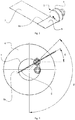
Figure 2 is a front view of the apparatus offigure 1 . -
Figure 3 is section III-III offigure 2 . -
Figure 4 is a view offigure 2 with the apparatus in a different configuration. -
Figure 5 shows the diagrams, as a function of time, of the angular movement and of the angular velocity of angles θ (theta) and β (beta) offigure 4 . - By 1 it is indicated as a whole a winding apparatus, in particular for wrapping material/
s 2 in form of tape, stripe, sheet, etcetera. - The
winding apparatus 1 may be used, in particular, for producing an electric energy accumulating device, for example for wrapping amaterial 2 comprising at least one electrode (for example at least one electrode membrane) and/or at least one separator element for electrodes. - The
winding apparatus 1 may comprise, in particular, supplying means (non-illustrated, for example of the prior art type) for supplying thematerial 2 along a supplying plane. Such supplying means may comprise, for example, at least one reel for the material unwinding. - The
winding apparatus 1 may comprise, in particular, aframe 3. - The
winding apparatus 1 may comprise, in particular, asupport 4 rotatably mounted on theframe 3 with the possibility of performing an orbital compensation motion (as will be better described hereinafter), in particular around a first rotation axis. Thesupport 4 may be, in particular, rotatably coupled to theframe 3 interposing first rolling support means 5. - The
winding apparatus 1 may comprise, in particular, afirst motor axis 6 for driving the rotation of thesupport 4. Thefirst motor axis 6 may be, in particular, rotatably supported by theframe 3, for example interposing second rolling support means 7. Thefirst motor axis 6 may be, in particular, connected to thesupport 4 through motion transmission means, that may for example comprise gear means 8. Thefirst motor axis 6 might not be coaxial with the said first rotation axis, as in this example. - The
winding apparatus 1 may comprise, in particular, acore 9 with a non-circular shaped section on which thematerial 2 is wound. The shape of the product wrapped around thecore 9 will be non-circular (because of the core shape). Thecore 9 may have, for example, a flat shape. Thecore 9 may have, for example, a rectangular shape section. Thecore 9 may have, for example, a foil shape. Thecore 9 may have, for example, an elliptic, oval, diamond shape, etcetera. - The
core 9 may be rotatably mounted on thesupport 4 with the possibility of performing an orbital winding motion, in particular around a second rotation axis. The second rotation axis, in particular, might not be coaxial with the said first rotation axis. Thecore 9 may be rotatably coupled to thesupport 4 by means of the interposition of third rolling support means 10. - The
winding apparatus 1 may comprise, in particular, asecond motor axis 11 for driving the rotation of thecore 9 around the second rotation axis. Thesecond motor axis 11, in particular, may be coaxial with the said first rotation axis (rotation axis ofsupport 4 with regard to frame 3). - The
second motor axis 11, as in this example, may have a portion rotatably coupled to theframe 3 interposing fourth rolling support means 12. Thesecond motor axis 11, as in this example, may have a portion rotatably coupled to thesupport 4 interposing fifth rolling support means 13. - The
winding apparatus 1 may comprise, in particular, amechanism 14 for transmitting the motion from thesecond motor axis 11 to thecore 9. Themechanism 14 may comprise, as in this example, gear means. Themechanism 14 may comprise, as in this example, at least onetoothed wheel 15 rotatably mounted on thesupport 4 with the possibility of rotating around a third rotation axis. The third rotation axis might not be coaxial with the said first rotation axis, as in this example. The third rotation axis might not be coaxial with the said second rotation axis, as in this example. - The
toothed wheel 15 may be coupled, as in this case, to atoothed wheel 16 connected to the second motor axis 11 (for example coaxial with the first rotation axis). Thetoothed wheel 15 may be coupled, as in this case, to atoothed wheel 17 connected to the core 9 (for example coaxial with the second rotation axis). - The
support 4 may be adapted, in particular, so as to provide a containing volume containing at least a part ofmechanism 14. Thesupport 4 may have, for example, a box shape. Thesupport 4 may contain, in particular,toothed wheels - The
frame 3 may have at least one portion adapted, in particular, so as to define a containment volume containing at least a part of the gear means 8. Such portion of theframe 3 may have, for example, a box shape. - The motion transmitting means (gear means 8) may be distinct from the
mechanism 14. In particular, the kinematic chain formed by the motion transmitting means might not have, as in this example, parts in common with the kinematic chain formed by themechanism 14. - The
first motor axis 6 and thesecond motor axis 11 may be driven independently from each other. In particular, thefirst motor axis 6 and thesecond motor axis 11 may be rotated by, respectively, a first motor and a second motor different from the first one. The first motor and the second motor (not illustrated) may comprise motors of the known type (for example electric motors). - The winding
apparatus 1 may comprise, in particular, programmable electronic control means (not illustrated) that may be provided, as in this example, with computer program instructions for controlling thefirst motor axis 6 with a first law of motion. The control means may be provided, as in this example, with computer program instructions for controlling thesecond motor axis 11 with a second law of motion. The second law of motion may be different from the first law of motion. The first law of motion may have a non-constant rotation speed of thefirst motor axis 6. The second law of motion may have a non-constant rotation speed of thesecond motor axis 11. - The first law of motion and the second law of motion may be generated, as in this example, having as constraints at least two parameters comprising a position and a speed of a movable element involved in the winding process, for example a portion of the
core 9 or a portion of thematerial 2. - A first parameter may comprise, for example, the position of the
material 2 at anextremity 9a of thecore 9, in particular theextremity 9a of the material entrance, that is theextremity 9a that receives, during the winding rotation, thematerial 2 being advancing (along the supplying plane) to be wrapped. The constraint may provide, for example, for theextremity 9a to remain always arranged on the supplying plane of thematerial 2 or near such plane during the winding process. A second parameter may comprise, for example, the speed of thematerial 2 at theextremity 9a (or the speed along the supplying plane of thematerial 2 to be wrapped). The constraint may provide, for example, for the speed ofextremity 9a (or of thematerial 2 arranged on theextremity 9a of the core 9) to have always, during the winding process, a constant value (in direction and/or in absolute value) or, in any case, a value comprised within a defined variability range. - The winding apparatus may comprise, in particular, movement means making the
frame 3 perform a recovery motion (and consequently thesupport 4 and the winding core 9) in at least one direction that is transverse to the said supplying plane (in particular a vertical direction) in order to follow the progressive increase of volume of the product (material) being gradually wrapped around thecore 9, so as to make the compliance with the above mentioned constraints easier. - The winding
apparatus 1 may be used, in particular, for implementing a method for the production of electric energy accumulating devices. Theapparatus 1 might in fact be used for winding material comprising at least a separator means for electrodes and/or at least an electrode. - During the winding of the
material 2 on the non-circular core 9 (flat), the windingcore 9 rotates with a rotation speed that is controlled by an electric cam (that controls the second motor driving the second motor axis 11) around a rotation axis performing a trajectory T (circular, with radius R) with a speed controlled by another electric cam (that controls the first motor driving the first motor axis 6). The electric cams are configured in such a way that the entrance position of the material 2 (the position at the entrance of thecore 9, at thecore extremity 9a) is constant and in such a way that the advancement speed of thematerial 2 is constant. - The above described system, wherein the rotation of the
core 9 around its rotation axis and the rotation of the rotation axis of thecore 9 are driven independently from one another with two different motors, combined to the rotation controls through electric cams, permits to achieve the constancy of the entering position and speed of thematerial 2. - The
first motor axis 6 generates the compensation motion, that is an angular movement of the angle β (beta), with orbital trajectory T (being in particular circular, with radius R, seefigure 2 ) of the support 4 (and of the rotation axis of thecore 9 mounted on the support 4), while thesecond motor axis 11 generates the winding motion, that is an angular movement of the angle θ (theta), or rotation of thecore 9 around itself around the second rotation axis. The angle θ (theta) and angle β (beta) are illustrated, for example, infigure 4 . - As said, the second motor axis 11 (coaxial with the rotation axis of the support 4) controls the winding
core 9 through a wheel 15 (idle), being in its turn connected with therotating support 4. This allows to decouple the compensation motion (that is the rotation axis motion of thecore 4 with circular trajectory T) and the winding motion (that is the rotation ofcore 9 around its own rotation axis), so that the driving of thefirst motor axis 6 can control only the compensation motion and the driving of thesecond motor axis 11 can control only the winding motion. Thefirst motor axis 6 can control only the angle β (beta) variation and thesecond motor axis 11 can control only the angle θ (theta) variation. - The variations of position and speed of advancement of the
material 2 at the entrance of thecore 9 are cancelled through the electric cams that control the driving of the first and of thesecond motor axis material 2, calculating at any given time the angular position θ (theta) of the windingcore 9 and the angular position β (beta) of therotating support 4 in order to comply with the imposed constraints. - The diagrams reported on top of
figure 5 show the trends of the angle positions of the rotating winding core 9 (angle θ (theta)) and of the compensation rotating support 4 (angle β (beta)) for a single winding revolution (rotation of 360° of the core 9) in an example of winding process, as a function of time (in seconds). The diagrams reported at the bottom offigure 5 show the trends of the rotation speeds of the winding core 9 (speed θ' (theta')) and of the compensation rotating support 4 (speed β' (beta')) for the same winding rotation (in seconds). It is noticed that for each rotation of the winding core 9 (rotation of 360° of thecore 9 around itself) two rotations of the rotation axis of the core on the compensation trajectory T are foreseen (rotation of 720° of the support 4). - The control of the
motor axis motor axis core 9 and ofsupport 4. - As said, the above described compensation mechanism may be connected to a movement system (for example linear translation, in particular in a direction that is perpendicular to a supplying plane of the entering material 2) to compensate time by time, during the revolutions that follow the first one, the gradual increase of size of the
core 9 due to the accumulation of the wrapped material. The supplying plane may be horizontal and the translation may be vertical.
Claims (15)
- Winding apparatus (1) comprising:- a frame (3);- a support (4) rotatably mounted on said frame (3) with the possibility of performing a motion around a first rotation axis;- a first motor axis (6) for rotating said support (4);- a core (9) on which to wrap material (2);characterized in that said core (9) is rotatably mounted on said support (4) with the possibility of performing a motion around a second rotation axis that is not coaxial with said first rotation axis and in that said apparatus comprises a second motor axis (11) for rotating said core (9).
- Apparatus according to claim 1, wherein said second motor axis (11) is coaxial with said first rotation axis.
- Apparatus according to claim 1 or 2, comprising material supplying means (2) in a supplying plane and movement means for giving said frame (3) a motion in at least one direction that is transverse to said supplying plane to take account, during winding, of the accumulation of material wrapped around the core (9).
- Apparatus according to any preceding claim, wherein said core (9) is of non-circular shape.
- Apparatus according to any preceding claim, wherein said first motor axis (6) and said second motor axis (11) are driven independently of one another.
- Apparatus according to claim 5, comprising programmable electronic control means provided with computer program instructions for controlling said first and said second motor axis (6; 11) with a first and, respectively, a second, law of motion that are different from one another.
- Apparatus according to claim 6, wherein said first law of motion has a non-constant rotation speed and/or wherein said second law of motion has a non-constant rotation speed.
- Apparatus according to claim 6 or 7, wherein said first law of motion and said second law of motion are generated having as constraints at least two parameters comprising at least one position of a portion of the core (9) or of a portion of the material (2) and at least one speed of a portion of the core (9) or of a portion of the material (2).
- Apparatus according to any preceding claim, wherein said first motor axis (6) is not coaxial with said first rotation axis.
- Apparatus according to any preceding claim, wherein said second motor axis (11) has a portion that is rotatably coupled with said frame (3) and a portion that is rotatably coupled with said support (4).
- Apparatus according to any preceding claim, comprising at least one mechanism (14) for transmitting the motion from said second motor axis (11) to said core (9).
- Apparatus according to claim 11, wherein said support (4) is shaped so as to define a containing volume that contains at least one part of said mechanism (14).
- Apparatus according to claim 11 or 12, comprising transmitting means (8) for transmitting the motion from said first motor axis (6) to said support (4), said transmitting means (8) being distinct from said mechanism (14).
- Apparatus according to any one of claims 11 to 13, wherein said mechanism (14) comprises at least one toothed wheel (15) that is rotatably mounted on said support (4) with the possibility of rotating around a third rotation axis that is not coaxial with said first rotation axis and is not coaxial with said second rotation axis.
- Method for producing electric energy accumulating devices using a winding apparatus (1) according to any preceding claim to wind at least one electrode and/or at least one separator.
Priority Applications (2)
| Application Number | Priority Date | Filing Date | Title |
|---|---|---|---|
| PL17155990T PL3205614T3 (en) | 2016-02-15 | 2017-02-14 | Winding apparatus and method |
| EP19150881.1A EP3486202B1 (en) | 2016-02-15 | 2017-02-14 | Winding apparatus and method |
Applications Claiming Priority (1)
| Application Number | Priority Date | Filing Date | Title |
|---|---|---|---|
| ITUB2016A000742A ITUB20160742A1 (en) | 2016-02-15 | 2016-02-15 | APPARATUS AND WINDING METHOD |
Related Child Applications (2)
| Application Number | Title | Priority Date | Filing Date |
|---|---|---|---|
| EP19150881.1A Division EP3486202B1 (en) | 2016-02-15 | 2017-02-14 | Winding apparatus and method |
| EP19150881.1A Division-Into EP3486202B1 (en) | 2016-02-15 | 2017-02-14 | Winding apparatus and method |
Publications (2)
| Publication Number | Publication Date |
|---|---|
| EP3205614A1 true EP3205614A1 (en) | 2017-08-16 |
| EP3205614B1 EP3205614B1 (en) | 2019-04-10 |
Family
ID=56027003
Family Applications (2)
| Application Number | Title | Priority Date | Filing Date |
|---|---|---|---|
| EP17155990.9A Active EP3205614B1 (en) | 2016-02-15 | 2017-02-14 | Winding apparatus and method |
| EP19150881.1A Active EP3486202B1 (en) | 2016-02-15 | 2017-02-14 | Winding apparatus and method |
Family Applications After (1)
| Application Number | Title | Priority Date | Filing Date |
|---|---|---|---|
| EP19150881.1A Active EP3486202B1 (en) | 2016-02-15 | 2017-02-14 | Winding apparatus and method |
Country Status (8)
| Country | Link |
|---|---|
| US (1) | US10399806B2 (en) |
| EP (2) | EP3205614B1 (en) |
| JP (1) | JP6879769B2 (en) |
| KR (1) | KR102662902B1 (en) |
| CN (1) | CN107082307B (en) |
| HU (2) | HUE044817T2 (en) |
| IT (1) | ITUB20160742A1 (en) |
| PL (2) | PL3205614T3 (en) |
Cited By (4)
| Publication number | Priority date | Publication date | Assignee | Title |
|---|---|---|---|---|
| CN106876771A (en) * | 2015-11-10 | 2017-06-20 | 三星Sdi株式会社 | For the equipment of rolled electrode component |
| WO2021115981A1 (en) * | 2019-12-12 | 2021-06-17 | Bhs Corrugated Maschinen- Und Anlagenbau Gmbh | Installation for a material web |
| IT202000001033A1 (en) * | 2020-01-21 | 2021-07-21 | Manz Italy Srl | WINDING APPARATUS AND METHOD FOR THE PRODUCTION OF ELECTRICITY STORAGE DEVICES |
| IT202000007840A1 (en) * | 2020-04-14 | 2021-10-14 | Manz Italy Srl | WINDING APPARATUS AND METHOD FOR THE PRODUCTION OF ELECTRICITY STORAGE DEVICES |
Families Citing this family (6)
| Publication number | Priority date | Publication date | Assignee | Title |
|---|---|---|---|---|
| ITUB20160742A1 (en) * | 2016-02-15 | 2017-08-15 | Manz Italy Srl | APPARATUS AND WINDING METHOD |
| CN107237873A (en) * | 2017-05-10 | 2017-10-10 | 大族激光科技产业集团股份有限公司 | Up- coiler and its gearbox |
| CN110844661B (en) * | 2019-11-19 | 2021-08-17 | 广州潮越机械设备有限公司 | Label rewinding machine running at uniform speed |
| CN110902450B (en) * | 2019-12-17 | 2024-11-05 | 包钢钢业(合肥)有限公司 | Metal coil surface embossing device with adjustable delivery roller |
| CN111792418B (en) * | 2020-07-20 | 2022-04-29 | 泉州盛协科技有限公司 | A winding machine for flexible flat glass and its winding method |
| KR20230125666A (en) * | 2022-02-21 | 2023-08-29 | 삼성에스디아이 주식회사 | Winding device capable of real-time precision tension measurement in the winding process |
Citations (11)
| Publication number | Priority date | Publication date | Assignee | Title |
|---|---|---|---|---|
| US5312064A (en) | 1991-04-30 | 1994-05-17 | Matsushita Electric Industrial Co., Ltd. | Method and apparatus for plate winding of long sheet |
| JPH06168736A (en) | 1992-11-30 | 1994-06-14 | Sanyo Electric Co Ltd | Manufacture of spiral electrode body |
| JP2001233511A (en) | 2000-02-24 | 2001-08-28 | Nippei Toyama Corp | Two-point support winding device and method for manufacturing winding body |
| JP2001243971A (en) | 2000-02-29 | 2001-09-07 | Mitsubishi Electric Corp | Winding device and winding method |
| JP2003146538A (en) | 2001-11-15 | 2003-05-21 | Sony Corp | Winding method and winding device |
| US20060123622A1 (en) | 2002-12-23 | 2006-06-15 | Guy Le G | Architecture of a winding device for an electric energy storage unit |
| WO2011141852A1 (en) * | 2010-05-14 | 2011-11-17 | Kemet Electronics Italia S.R.L. | Apparatus and method for the production of electric energy storage devices |
| JP2012051725A (en) | 2010-09-03 | 2012-03-15 | Otari Kk | Winding device |
| EP2595233A2 (en) | 2010-07-14 | 2013-05-22 | LG Chem, Ltd. | Folding apparatus for an electrode assembly |
| KR20140015994A (en) | 2012-07-27 | 2014-02-07 | 삼성에스디아이 주식회사 | Winding apparatus for manufacturing electrode assembly and control method thereof |
| US20160036085A1 (en) * | 2014-08-01 | 2016-02-04 | Samsung Sdi Co., Ltd. | Device for winding electrode plate |
Family Cites Families (11)
| Publication number | Priority date | Publication date | Assignee | Title |
|---|---|---|---|---|
| JP2599607B2 (en) * | 1987-12-05 | 1997-04-09 | ニチバン株式会社 | Method for producing core body having wound layer of adhesive tape |
| JP3530624B2 (en) * | 1995-04-17 | 2004-05-24 | 住友重機械モダン株式会社 | Multi-axis turret type winding device |
| JPH10310297A (en) * | 1997-05-08 | 1998-11-24 | Sony Corp | Apparatus and method for winding a band |
| JP2003118896A (en) * | 2001-10-12 | 2003-04-23 | Ckd Corp | Winding device and winding method |
| JP2004327154A (en) * | 2003-04-23 | 2004-11-18 | Toyota Motor Corp | Secondary battery winding device |
| JP4905400B2 (en) * | 2008-03-28 | 2012-03-28 | Tdk株式会社 | Electrode winding device |
| JP5930530B2 (en) * | 2012-05-11 | 2016-06-08 | 日特エンジニアリング株式会社 | Film winding apparatus and film winding method |
| CN102931442B (en) * | 2012-11-05 | 2019-01-04 | 上海乾得智能科技有限公司 | A kind of method of abnormity volume needle winding battery |
| JP2014201399A (en) * | 2013-04-04 | 2014-10-27 | キヤノンマシナリー株式会社 | Take-up device and take-up method |
| CN104466228B (en) * | 2014-12-31 | 2017-02-22 | 深圳市赢合科技股份有限公司 | Pole piece winding method |
| ITUB20160742A1 (en) * | 2016-02-15 | 2017-08-15 | Manz Italy Srl | APPARATUS AND WINDING METHOD |
-
2016
- 2016-02-15 IT ITUB2016A000742A patent/ITUB20160742A1/en unknown
-
2017
- 2017-01-30 US US15/418,829 patent/US10399806B2/en active Active
- 2017-02-14 PL PL17155990T patent/PL3205614T3/en unknown
- 2017-02-14 JP JP2017024951A patent/JP6879769B2/en not_active Expired - Fee Related
- 2017-02-14 KR KR1020170020169A patent/KR102662902B1/en active Active
- 2017-02-14 PL PL19150881.1T patent/PL3486202T3/en unknown
- 2017-02-14 HU HUE17155990 patent/HUE044817T2/en unknown
- 2017-02-14 HU HUE19150881A patent/HUE061104T2/en unknown
- 2017-02-14 EP EP17155990.9A patent/EP3205614B1/en active Active
- 2017-02-14 EP EP19150881.1A patent/EP3486202B1/en active Active
- 2017-02-14 CN CN201710077768.2A patent/CN107082307B/en not_active Expired - Fee Related
Patent Citations (11)
| Publication number | Priority date | Publication date | Assignee | Title |
|---|---|---|---|---|
| US5312064A (en) | 1991-04-30 | 1994-05-17 | Matsushita Electric Industrial Co., Ltd. | Method and apparatus for plate winding of long sheet |
| JPH06168736A (en) | 1992-11-30 | 1994-06-14 | Sanyo Electric Co Ltd | Manufacture of spiral electrode body |
| JP2001233511A (en) | 2000-02-24 | 2001-08-28 | Nippei Toyama Corp | Two-point support winding device and method for manufacturing winding body |
| JP2001243971A (en) | 2000-02-29 | 2001-09-07 | Mitsubishi Electric Corp | Winding device and winding method |
| JP2003146538A (en) | 2001-11-15 | 2003-05-21 | Sony Corp | Winding method and winding device |
| US20060123622A1 (en) | 2002-12-23 | 2006-06-15 | Guy Le G | Architecture of a winding device for an electric energy storage unit |
| WO2011141852A1 (en) * | 2010-05-14 | 2011-11-17 | Kemet Electronics Italia S.R.L. | Apparatus and method for the production of electric energy storage devices |
| EP2595233A2 (en) | 2010-07-14 | 2013-05-22 | LG Chem, Ltd. | Folding apparatus for an electrode assembly |
| JP2012051725A (en) | 2010-09-03 | 2012-03-15 | Otari Kk | Winding device |
| KR20140015994A (en) | 2012-07-27 | 2014-02-07 | 삼성에스디아이 주식회사 | Winding apparatus for manufacturing electrode assembly and control method thereof |
| US20160036085A1 (en) * | 2014-08-01 | 2016-02-04 | Samsung Sdi Co., Ltd. | Device for winding electrode plate |
Cited By (6)
| Publication number | Priority date | Publication date | Assignee | Title |
|---|---|---|---|---|
| CN106876771A (en) * | 2015-11-10 | 2017-06-20 | 三星Sdi株式会社 | For the equipment of rolled electrode component |
| WO2021115981A1 (en) * | 2019-12-12 | 2021-06-17 | Bhs Corrugated Maschinen- Und Anlagenbau Gmbh | Installation for a material web |
| IT202000001033A1 (en) * | 2020-01-21 | 2021-07-21 | Manz Italy Srl | WINDING APPARATUS AND METHOD FOR THE PRODUCTION OF ELECTRICITY STORAGE DEVICES |
| WO2021148982A1 (en) * | 2020-01-21 | 2021-07-29 | Manz Italy S.R.L. | Winding apparatus and method for the production of power storage devices |
| CN115552559A (en) * | 2020-01-21 | 2022-12-30 | 曼兹意大利有限责任公司 | Winding apparatus and method for manufacturing power storage device |
| IT202000007840A1 (en) * | 2020-04-14 | 2021-10-14 | Manz Italy Srl | WINDING APPARATUS AND METHOD FOR THE PRODUCTION OF ELECTRICITY STORAGE DEVICES |
Also Published As
| Publication number | Publication date |
|---|---|
| JP2017154892A (en) | 2017-09-07 |
| EP3486202A1 (en) | 2019-05-22 |
| CN107082307B (en) | 2019-11-22 |
| HUE061104T2 (en) | 2023-05-28 |
| EP3205614B1 (en) | 2019-04-10 |
| CN107082307A (en) | 2017-08-22 |
| ITUB20160742A1 (en) | 2017-08-15 |
| EP3486202B1 (en) | 2022-11-23 |
| JP6879769B2 (en) | 2021-06-02 |
| US20170233205A1 (en) | 2017-08-17 |
| US10399806B2 (en) | 2019-09-03 |
| PL3205614T3 (en) | 2019-10-31 |
| HUE044817T2 (en) | 2019-11-28 |
| KR20170095751A (en) | 2017-08-23 |
| KR102662902B1 (en) | 2024-05-03 |
| PL3486202T3 (en) | 2023-04-17 |
Similar Documents
| Publication | Publication Date | Title |
|---|---|---|
| EP3205614B1 (en) | Winding apparatus and method | |
| EP3580160B1 (en) | Winding apparatus and method | |
| EP4136695B1 (en) | Support apparatus and method for the production of electric energy storage devices | |
| JP5798162B2 (en) | Wire forming equipment | |
| CN118591913A (en) | Manufacturing machine and method for manufacturing cylindrical electrochemical cells | |
| EP3446353B1 (en) | Winding apparatus | |
| HK1235374A1 (en) | Winding apparatus and method | |
| JP2014201399A (en) | Take-up device and take-up method | |
| JP2024545968A (en) | Cylindrical electrochemical cell manufacturing apparatus and manufacturing method thereof | |
| CN213729113U (en) | High-precision wire mesh reeling mechanism and weaving equipment | |
| EP4094280B1 (en) | Winding apparatus and method for the production of power storage devices | |
| IT202100009248A1 (en) | EQUIPMENT FOR CUTTING AND CONVEYING A BELT OF MATERIAL AND RELATED METHOD FOR THE PRODUCTION OF ELECTRIC ENERGY STORAGE DEVICES | |
| JP2024545969A (en) | Cylindrical electrochemical cell manufacturing apparatus and manufacturing method thereof | |
| JP2024546174A (en) | Cylindrical electrochemical cell manufacturing apparatus and manufacturing method thereof |
Legal Events
| Date | Code | Title | Description |
|---|---|---|---|
| PUAI | Public reference made under article 153(3) epc to a published international application that has entered the european phase |
Free format text: ORIGINAL CODE: 0009012 |
|
| STAA | Information on the status of an ep patent application or granted ep patent |
Free format text: STATUS: THE APPLICATION HAS BEEN PUBLISHED |
|
| AK | Designated contracting states |
Kind code of ref document: A1 Designated state(s): AL AT BE BG CH CY CZ DE DK EE ES FI FR GB GR HR HU IE IS IT LI LT LU LV MC MK MT NL NO PL PT RO RS SE SI SK SM TR |
|
| AX | Request for extension of the european patent |
Extension state: BA ME |
|
| STAA | Information on the status of an ep patent application or granted ep patent |
Free format text: STATUS: REQUEST FOR EXAMINATION WAS MADE |
|
| REG | Reference to a national code |
Ref country code: HK Ref legal event code: DE Ref document number: 1235374 Country of ref document: HK |
|
| 17P | Request for examination filed |
Effective date: 20180216 |
|
| RBV | Designated contracting states (corrected) |
Designated state(s): AL AT BE BG CH CY CZ DE DK EE ES FI FR GB GR HR HU IE IS IT LI LT LU LV MC MK MT NL NO PL PT RO RS SE SI SK SM TR |
|
| RIC1 | Information provided on ipc code assigned before grant |
Ipc: B65H 23/195 20060101ALI20180517BHEP Ipc: H01G 13/02 20060101ALI20180517BHEP Ipc: H01M 2/14 20060101ALI20180517BHEP Ipc: B65H 23/198 20060101ALI20180517BHEP Ipc: B65H 75/06 20060101AFI20180517BHEP Ipc: H01M 10/04 20060101ALI20180517BHEP Ipc: B65H 18/10 20060101ALI20180517BHEP |
|
| GRAP | Despatch of communication of intention to grant a patent |
Free format text: ORIGINAL CODE: EPIDOSNIGR1 |
|
| STAA | Information on the status of an ep patent application or granted ep patent |
Free format text: STATUS: GRANT OF PATENT IS INTENDED |
|
| INTG | Intention to grant announced |
Effective date: 20180726 |
|
| GRAJ | Information related to disapproval of communication of intention to grant by the applicant or resumption of examination proceedings by the epo deleted |
Free format text: ORIGINAL CODE: EPIDOSDIGR1 |
|
| STAA | Information on the status of an ep patent application or granted ep patent |
Free format text: STATUS: REQUEST FOR EXAMINATION WAS MADE |
|
| GRAS | Grant fee paid |
Free format text: ORIGINAL CODE: EPIDOSNIGR3 |
|
| STAA | Information on the status of an ep patent application or granted ep patent |
Free format text: STATUS: GRANT OF PATENT IS INTENDED |
|
| GRAP | Despatch of communication of intention to grant a patent |
Free format text: ORIGINAL CODE: EPIDOSNIGR1 |
|
| INTC | Intention to grant announced (deleted) | ||
| INTG | Intention to grant announced |
Effective date: 20181213 |
|
| GRAA | (expected) grant |
Free format text: ORIGINAL CODE: 0009210 |
|
| STAA | Information on the status of an ep patent application or granted ep patent |
Free format text: STATUS: THE PATENT HAS BEEN GRANTED |
|
| AK | Designated contracting states |
Kind code of ref document: B1 Designated state(s): AL AT BE BG CH CY CZ DE DK EE ES FI FR GB GR HR HU IE IS IT LI LT LU LV MC MK MT NL NO PL PT RO RS SE SI SK SM TR |
|
| REG | Reference to a national code |
Ref country code: GB Ref legal event code: FG4D |
|
| REG | Reference to a national code |
Ref country code: CH Ref legal event code: EP Ref country code: AT Ref legal event code: REF Ref document number: 1118366 Country of ref document: AT Kind code of ref document: T Effective date: 20190415 |
|
| REG | Reference to a national code |
Ref country code: IE Ref legal event code: FG4D |
|
| REG | Reference to a national code |
Ref country code: DE Ref legal event code: R096 Ref document number: 602017003129 Country of ref document: DE |
|
| REG | Reference to a national code |
Ref country code: NL Ref legal event code: MP Effective date: 20190410 |
|
| REG | Reference to a national code |
Ref country code: LT Ref legal event code: MG4D |
|
| REG | Reference to a national code |
Ref country code: AT Ref legal event code: MK05 Ref document number: 1118366 Country of ref document: AT Kind code of ref document: T Effective date: 20190410 |
|
| PG25 | Lapsed in a contracting state [announced via postgrant information from national office to epo] |
Ref country code: NL Free format text: LAPSE BECAUSE OF FAILURE TO SUBMIT A TRANSLATION OF THE DESCRIPTION OR TO PAY THE FEE WITHIN THE PRESCRIBED TIME-LIMIT Effective date: 20190410 |
|
| PG25 | Lapsed in a contracting state [announced via postgrant information from national office to epo] |
Ref country code: AL Free format text: LAPSE BECAUSE OF FAILURE TO SUBMIT A TRANSLATION OF THE DESCRIPTION OR TO PAY THE FEE WITHIN THE PRESCRIBED TIME-LIMIT Effective date: 20190410 Ref country code: ES Free format text: LAPSE BECAUSE OF FAILURE TO SUBMIT A TRANSLATION OF THE DESCRIPTION OR TO PAY THE FEE WITHIN THE PRESCRIBED TIME-LIMIT Effective date: 20190410 Ref country code: HR Free format text: LAPSE BECAUSE OF FAILURE TO SUBMIT A TRANSLATION OF THE DESCRIPTION OR TO PAY THE FEE WITHIN THE PRESCRIBED TIME-LIMIT Effective date: 20190410 Ref country code: LT Free format text: LAPSE BECAUSE OF FAILURE TO SUBMIT A TRANSLATION OF THE DESCRIPTION OR TO PAY THE FEE WITHIN THE PRESCRIBED TIME-LIMIT Effective date: 20190410 Ref country code: PT Free format text: LAPSE BECAUSE OF FAILURE TO SUBMIT A TRANSLATION OF THE DESCRIPTION OR TO PAY THE FEE WITHIN THE PRESCRIBED TIME-LIMIT Effective date: 20190910 Ref country code: NO Free format text: LAPSE BECAUSE OF FAILURE TO SUBMIT A TRANSLATION OF THE DESCRIPTION OR TO PAY THE FEE WITHIN THE PRESCRIBED TIME-LIMIT Effective date: 20190710 Ref country code: SE Free format text: LAPSE BECAUSE OF FAILURE TO SUBMIT A TRANSLATION OF THE DESCRIPTION OR TO PAY THE FEE WITHIN THE PRESCRIBED TIME-LIMIT Effective date: 20190410 Ref country code: FI Free format text: LAPSE BECAUSE OF FAILURE TO SUBMIT A TRANSLATION OF THE DESCRIPTION OR TO PAY THE FEE WITHIN THE PRESCRIBED TIME-LIMIT Effective date: 20190410 |
|
| REG | Reference to a national code |
Ref country code: HU Ref legal event code: AG4A Ref document number: E044817 Country of ref document: HU |
|
| PG25 | Lapsed in a contracting state [announced via postgrant information from national office to epo] |
Ref country code: LV Free format text: LAPSE BECAUSE OF FAILURE TO SUBMIT A TRANSLATION OF THE DESCRIPTION OR TO PAY THE FEE WITHIN THE PRESCRIBED TIME-LIMIT Effective date: 20190410 Ref country code: RS Free format text: LAPSE BECAUSE OF FAILURE TO SUBMIT A TRANSLATION OF THE DESCRIPTION OR TO PAY THE FEE WITHIN THE PRESCRIBED TIME-LIMIT Effective date: 20190410 Ref country code: BG Free format text: LAPSE BECAUSE OF FAILURE TO SUBMIT A TRANSLATION OF THE DESCRIPTION OR TO PAY THE FEE WITHIN THE PRESCRIBED TIME-LIMIT Effective date: 20190710 Ref country code: GR Free format text: LAPSE BECAUSE OF FAILURE TO SUBMIT A TRANSLATION OF THE DESCRIPTION OR TO PAY THE FEE WITHIN THE PRESCRIBED TIME-LIMIT Effective date: 20190711 |
|
| PG25 | Lapsed in a contracting state [announced via postgrant information from national office to epo] |
Ref country code: IS Free format text: LAPSE BECAUSE OF FAILURE TO SUBMIT A TRANSLATION OF THE DESCRIPTION OR TO PAY THE FEE WITHIN THE PRESCRIBED TIME-LIMIT Effective date: 20190810 Ref country code: AT Free format text: LAPSE BECAUSE OF FAILURE TO SUBMIT A TRANSLATION OF THE DESCRIPTION OR TO PAY THE FEE WITHIN THE PRESCRIBED TIME-LIMIT Effective date: 20190410 |
|
| REG | Reference to a national code |
Ref country code: DE Ref legal event code: R097 Ref document number: 602017003129 Country of ref document: DE |
|
| PG25 | Lapsed in a contracting state [announced via postgrant information from national office to epo] |
Ref country code: SK Free format text: LAPSE BECAUSE OF FAILURE TO SUBMIT A TRANSLATION OF THE DESCRIPTION OR TO PAY THE FEE WITHIN THE PRESCRIBED TIME-LIMIT Effective date: 20190410 Ref country code: EE Free format text: LAPSE BECAUSE OF FAILURE TO SUBMIT A TRANSLATION OF THE DESCRIPTION OR TO PAY THE FEE WITHIN THE PRESCRIBED TIME-LIMIT Effective date: 20190410 Ref country code: DK Free format text: LAPSE BECAUSE OF FAILURE TO SUBMIT A TRANSLATION OF THE DESCRIPTION OR TO PAY THE FEE WITHIN THE PRESCRIBED TIME-LIMIT Effective date: 20190410 Ref country code: RO Free format text: LAPSE BECAUSE OF FAILURE TO SUBMIT A TRANSLATION OF THE DESCRIPTION OR TO PAY THE FEE WITHIN THE PRESCRIBED TIME-LIMIT Effective date: 20190410 Ref country code: CZ Free format text: LAPSE BECAUSE OF FAILURE TO SUBMIT A TRANSLATION OF THE DESCRIPTION OR TO PAY THE FEE WITHIN THE PRESCRIBED TIME-LIMIT Effective date: 20190410 |
|
| PLBE | No opposition filed within time limit |
Free format text: ORIGINAL CODE: 0009261 |
|
| STAA | Information on the status of an ep patent application or granted ep patent |
Free format text: STATUS: NO OPPOSITION FILED WITHIN TIME LIMIT |
|
| PG25 | Lapsed in a contracting state [announced via postgrant information from national office to epo] |
Ref country code: SM Free format text: LAPSE BECAUSE OF FAILURE TO SUBMIT A TRANSLATION OF THE DESCRIPTION OR TO PAY THE FEE WITHIN THE PRESCRIBED TIME-LIMIT Effective date: 20190410 |
|
| 26N | No opposition filed |
Effective date: 20200113 |
|
| PG25 | Lapsed in a contracting state [announced via postgrant information from national office to epo] |
Ref country code: TR Free format text: LAPSE BECAUSE OF FAILURE TO SUBMIT A TRANSLATION OF THE DESCRIPTION OR TO PAY THE FEE WITHIN THE PRESCRIBED TIME-LIMIT Effective date: 20190410 |
|
| PG25 | Lapsed in a contracting state [announced via postgrant information from national office to epo] |
Ref country code: SI Free format text: LAPSE BECAUSE OF FAILURE TO SUBMIT A TRANSLATION OF THE DESCRIPTION OR TO PAY THE FEE WITHIN THE PRESCRIBED TIME-LIMIT Effective date: 20190410 |
|
| REG | Reference to a national code |
Ref country code: CH Ref legal event code: PL |
|
| REG | Reference to a national code |
Ref country code: BE Ref legal event code: MM Effective date: 20200229 |
|
| PG25 | Lapsed in a contracting state [announced via postgrant information from national office to epo] |
Ref country code: LU Free format text: LAPSE BECAUSE OF NON-PAYMENT OF DUE FEES Effective date: 20200214 Ref country code: MC Free format text: LAPSE BECAUSE OF FAILURE TO SUBMIT A TRANSLATION OF THE DESCRIPTION OR TO PAY THE FEE WITHIN THE PRESCRIBED TIME-LIMIT Effective date: 20190410 |
|
| PG25 | Lapsed in a contracting state [announced via postgrant information from national office to epo] |
Ref country code: LI Free format text: LAPSE BECAUSE OF NON-PAYMENT OF DUE FEES Effective date: 20200229 Ref country code: CH Free format text: LAPSE BECAUSE OF NON-PAYMENT OF DUE FEES Effective date: 20200229 |
|
| PG25 | Lapsed in a contracting state [announced via postgrant information from national office to epo] |
Ref country code: IE Free format text: LAPSE BECAUSE OF NON-PAYMENT OF DUE FEES Effective date: 20200214 |
|
| PG25 | Lapsed in a contracting state [announced via postgrant information from national office to epo] |
Ref country code: BE Free format text: LAPSE BECAUSE OF NON-PAYMENT OF DUE FEES Effective date: 20200229 |
|
| GBPC | Gb: european patent ceased through non-payment of renewal fee |
Effective date: 20210214 |
|
| PG25 | Lapsed in a contracting state [announced via postgrant information from national office to epo] |
Ref country code: GB Free format text: LAPSE BECAUSE OF NON-PAYMENT OF DUE FEES Effective date: 20210214 |
|
| PG25 | Lapsed in a contracting state [announced via postgrant information from national office to epo] |
Ref country code: MT Free format text: LAPSE BECAUSE OF FAILURE TO SUBMIT A TRANSLATION OF THE DESCRIPTION OR TO PAY THE FEE WITHIN THE PRESCRIBED TIME-LIMIT Effective date: 20190410 Ref country code: CY Free format text: LAPSE BECAUSE OF FAILURE TO SUBMIT A TRANSLATION OF THE DESCRIPTION OR TO PAY THE FEE WITHIN THE PRESCRIBED TIME-LIMIT Effective date: 20190410 |
|
| PG25 | Lapsed in a contracting state [announced via postgrant information from national office to epo] |
Ref country code: MK Free format text: LAPSE BECAUSE OF FAILURE TO SUBMIT A TRANSLATION OF THE DESCRIPTION OR TO PAY THE FEE WITHIN THE PRESCRIBED TIME-LIMIT Effective date: 20190410 |
|
| P01 | Opt-out of the competence of the unified patent court (upc) registered |
Effective date: 20230530 |
|
| PGFP | Annual fee paid to national office [announced via postgrant information from national office to epo] |
Ref country code: HU Payment date: 20240130 Year of fee payment: 8 |
|
| REG | Reference to a national code |
Ref country code: HK Ref legal event code: WD Ref document number: 1235374 Country of ref document: HK |
|
| PG25 | Lapsed in a contracting state [announced via postgrant information from national office to epo] |
Ref country code: HU Free format text: LAPSE BECAUSE OF NON-PAYMENT OF DUE FEES Effective date: 20250215 |
|
| PGFP | Annual fee paid to national office [announced via postgrant information from national office to epo] |
Ref country code: DE Payment date: 20260226 Year of fee payment: 10 |
|
| PGFP | Annual fee paid to national office [announced via postgrant information from national office to epo] |
Ref country code: IT Payment date: 20260224 Year of fee payment: 10 |
|
| PGFP | Annual fee paid to national office [announced via postgrant information from national office to epo] |
Ref country code: FR Payment date: 20260225 Year of fee payment: 10 |
|
| PGFP | Annual fee paid to national office [announced via postgrant information from national office to epo] |
Ref country code: PL Payment date: 20260226 Year of fee payment: 10 |