EP4094149B1 - Updating code in distributed version control system - Google Patents
Updating code in distributed version control system Download PDFInfo
- Publication number
- EP4094149B1 EP4094149B1 EP21702548.5A EP21702548A EP4094149B1 EP 4094149 B1 EP4094149 B1 EP 4094149B1 EP 21702548 A EP21702548 A EP 21702548A EP 4094149 B1 EP4094149 B1 EP 4094149B1
- Authority
- EP
- European Patent Office
- Prior art keywords
- service
- modification
- cios
- infrastructure
- services
- Prior art date
- Legal status (The legal status is an assumption and is not a legal conclusion. Google has not performed a legal analysis and makes no representation as to the accuracy of the status listed.)
- Active
Links
Images




Classifications
-
- G—PHYSICS
- G06—COMPUTING OR CALCULATING; COUNTING
- G06F—ELECTRIC DIGITAL DATA PROCESSING
- G06F8/00—Arrangements for software engineering
- G06F8/70—Software maintenance or management
- G06F8/71—Version control; Configuration management
-
- G—PHYSICS
- G06—COMPUTING OR CALCULATING; COUNTING
- G06F—ELECTRIC DIGITAL DATA PROCESSING
- G06F8/00—Arrangements for software engineering
- G06F8/60—Software deployment
- G06F8/65—Updates
Definitions
- cloud infrastructure services utilize many individual services to provision and deploy code and configuration (respectively) across the cloud infrastructure service's many regions. These tools require significant manual effort to use, especially given that provisioning is generally declarative and deploying code is imperative. Additionally, as the number of service teams and regions grows, the cloud infrastructure service will need to continue to grow. Some cloud infrastructure service's strategies of deploying to a larger number of smaller regions include per-region expenditures, which may not scale well.
- a computer-implemented method can include various operations.
- the operations include, managing, by a computing system, a declarative infrastructure provisioner to deploy a plurality of infrastructure resources and a plurality of artifacts based at least in part on declarative instructions (e.g., a configuration file that describes each of a number of infrastructure components and how they interact, a configuration file that declares a desired state of a deployment without describing a control flow for obtaining the desired state, etc.).
- the computing system detects a first modification to a first service.
- the first service comprises at least one infrastructure resource of the plurality of infrastructure resources, and the first service utilizes a first distributed version-control repository for performing modifications to the first service.
- the computing system identifies that configuration data of a second service references the first service.
- the computing system detects a second modification to a second service.
- the second service utilizes a second distributed version-control repository for performing modifications to the second service.
- the computing system presents, via a graphical interface, changes comprising the first modification to the first service.
- the computing system receives user input indicating acceptance or rejection of the changes comprising the first modification to the first service.
- the computing system implements the changes to the first service according to the user input.
- a system for resolving application updates in a deployment environment.
- the system comprises one or more processors and one or more memories storing computer-executable instructions that, when executed by the one or more processors, configure the one or more processors to perform various operations.
- the operations include, managing, by the system, a declarative infrastructure provisioner to deploy a plurality of infrastructure resources and a plurality of artifacts based at least in part on declarative instructions.
- the system detects a first modification to a first service.
- the first service comprises at least one infrastructure resource of the plurality of infrastructure resources, and the first service utilizes a first distributed version-control repository for performing modifications to the first service.
- the system identifies that configuration data of a second service references the first service.
- the system detects a second modification to a second service.
- the second service utilizes a second distributed version-control repository for performing modifications to the second service.
- the system presents, via a graphical interface, changes comprising the first modification to the first service.
- the system receives user input indicating acceptance or rejection of the changes comprising the first modification to the first service.
- the system implements the changes to the first service according to the user input.
- a computer-readable storage medium that stores computer-executable instructions that, when executed by one or more processors, cause the one or more processors to perform various operations.
- the operations include, managing a declarative infrastructure provisioner to deploy a plurality of infrastructure resources and a plurality of artifacts based at least in part on declarative instructions.
- the operations further include detecting a first modification to a first service.
- the first service comprises at least one infrastructure resource of the plurality of infrastructure resources, and the first service utilizes a first distributed version-control repository for performing modifications to the first service.
- the operations further include identifying that configuration data of a second service references the first service.
- the system detects a second modification to a second service.
- the second service utilizes a second distributed version-control repository for performing modifications to the second service.
- the operations further comprise, in response to identifying the second modification to the second service and identifying that the second service references the first service, presenting, via a graphical interface, changes comprising the first modification to the first service.
- the operations further comprise receiving user input indicating acceptance or rejection of the changes comprising the first modification to the first service.
- the operations further comprise implementing the changes to the first service according to the user input.
- an apparatus comprising means for performing steps of any of the methods disclosed herein.
- a computer program product comprises computer instructions that, when executed by a processor, implement the steps of any of the methods disclosed herein.
- infrastructure as a service is one particular type of cloud computing.
- IaaS can be configured to provide virtualized computing resources over a public network (e.g., the Internet).
- IaaS is one of the three main categories (or subcategories) of cloud computing services. Most consider the other main categories to be software as a service (SaaS) and platform as a service (PaaS), and sometimes SaaS may be considered a broader category, encompassing both PaaS and IaaS, with even some considering IaaS to be a sub-category of PaaS as well.
- a cloud computing provider can host the infrastructure components (e.g., servers, storage devices, network nodes (e.g., hardware), deployment software, platform virtualization (e.g., a hypervisor layer), or the like).
- infrastructure components e.g., servers, storage devices, network nodes (e.g., hardware), deployment software, platform virtualization (e.g., a hypervisor layer), or the like.
- an IaaS provider may also supply a variety of services to accompany those infrastructure components (e.g., billing, monitoring, logging, security, load balancing and clustering, etc.).
- services e.g., billing, monitoring, logging, security, load balancing and clustering, etc.
- IaaS users may be able to implement policies to drive load balancing to maintain application availability and performance.
- IaaS customers may access resources and services through a wide area network (WAN), such as the Internet, and can use the cloud provider's services to install the remaining elements of an application stack.
- WAN wide area network
- the user can log in to the IaaS platform to create virtual machines (VMs), install operating systems (OSs) in each VM, deploy middleware, such as databases, create storage buckets for workloads and backups, and install even install enterprise software into that VM.
- VMs virtual machines
- OSs install operating systems
- middleware such as databases
- storage buckets for workloads and backups
- enterprise software such as enterprise software into that VM.
- Customers can then use the provider's services to perform various functions, including balancing network traffic, troubleshooting application issues, monitoring performance, managing disaster recovery, etc.
- IaaS deployment is the process of putting a new application, or a new version, onto a prepared application server or the like. It may also include the process of preparing the server (e.g., installing libraries, daemons, etc.). This is often managed by the cloud provider, below the hypervisor layer (e.g., the servers, storage, network hardware, and virtualization). Thus, the customer may be responsible for handling (OS), middleware, and/or application deployment (e.g., on self-service virtual machines (e.g., that can be spun up on demand) or the like.
- OS OS
- middleware middleware
- application deployment e.g., on self-service virtual machines (e.g., that can be spun up on demand) or the like.
- IaaS provisioning may refer to acquiring computers or virtual hosts for use, and even installing needed libraries or services on them. In most cases, deployment does not include provisioning, and the provisioning may need to be performed first.
- the workflow of the provisioning tool may be configured to perform various commands.
- One function that can be performed is view reconciliation, where the provisioning tool can compare the view of the current infrastructure (e.g., the expected state of the infrastructure) with how the infrastructure is actually running.
- performing the view reconciliation function may include querying various resource providers or infrastructure resources to identify what resources are actually running.
- plan generation Another function that the provisioning tool can perform is plan generation, where the provisioning tool can compare the actually running infrastructure components with what the provisioning tool wants the state to look like (e.g., the desired configuration).
- the plan generation function can determine what changes need to be made to bring the resources up to the most current expectations.
- a third function is the execution (e.g., apply) function, where the provisioning tool can execute the plan generated by the plan generation function.
- provisioning tools may be configured to take the configuration file, parse the declarative information included therein, and programmatically/automatically determine the order in which the resources need to be provisioned in order to execute the plan. For example, if the VPC needs to be booted before the security group rules and VMs are booted, then the provisioning tool will be able to make that determination and implement the booting in that order without user intervention and/or without that information necessarily being included in the configuration file.
- continuous deployment techniques may be employed to enable deployment of infrastructure code across various virtual computing environments. Additionally, the described techniques can enable infrastructure management within these environments.
- service teams can write code that is desired to be deployed to one or more, but often many, different production environments (e.g., across various different geographic locations, sometimes spanning the entire world).
- the infrastructure on which the code will be deployed must first be set up.
- the provisioning can be done manually, a provisioning tool may be utilized to provision the resources, and/or deployment tools may be utilized to deploy the code once the infrastructure is provisioned.
- issues can arise when a user manually makes changes to the code between the provisioning phase and the deployment phase.
- a technique that uses a single tool for both provisioning and deploying can alleviate that by automating the process, such that there is not an opportunity for manual code changes. It may be the case, that a slight change to the way in which one user codes something, can create major issues in the deployment phase.
- the first time an operator performs an action in a new region e.g., a typo in the code
- the object that was coded with the typo may be that way forever.
- the techniques provided herein can remove the gap between provisioning and deployment that can often lead to problems.
- modeling deployments is declarative such that a configuration file can be used to declare the infrastructure resources.
- create, read, update, delete (CRUD) instructions are generally used to generate deployment files using general Representational State Transfer (REST) concepts (e.g., REST Application Programming Interfaces (APIs)).
- REST general Representational State Transfer
- APIs Application Programming Interfaces
- deployment itself does not generally follow the same concept.
- the infrastructure provisioning tools tend to be really powerful and/or expressive, the tools for deployment tend to be much more restrictive regarding the operations they can perform (e.g., they are imperative as opposed to declarative).
- CIOS can be described as an orchestration layer that applies configuration to downstream systems (e.g., worldwide). It is designed to allow worldwide infrastructure provisioning and code deployment with no manual effort from service teams (e.g., beyond an initial approval in some instances).
- the high-level responsibilities of CIOS include, but are not limited to:
- customers (e.g., engineers) 108 can call CIOS Central 102 to CRUD flocks and/or releases, and to view the status of ongoing CIOS activity.
- Flock management service 110 can include one or more API's to manipulate flocks
- view/plan/approve service 112 can include CRUD API's to create and approve plans, and to view a central copy of the state of all CIOS-managed resources
- change monitoring service 114 can watch SCVMS 104 for changes to flock config, and can receive notifications about changes to other artifacts from ANS 106
- state ingester service 116 can create copies of regional state in CIOS Central database (DB) 118 so that view/plan/approve 112 can expose them.
- DB CIOS Central database
- engineer 108 can perform an API call for the flock management service 110 (e.g., through the ingress proxy fleet 122) to create a list of flocks.
- the protocol for making such an API call can be hypertext transport protocol secure (HTTPS) or the like.
- Relevant access control lists (ACLs) for this operation can include a local area network (LAN) 124 or other private connection.
- CIOS may manage/control a network-connectivity alternative to using the public Internet for connecting a customer's on-premises data center or network with CIOS (e.g., a dedicated, leased, and/or private connection).
- the engineer 108 can use the view/plan/approve service 112 to do one or more of the following operations.
- the engineer 108 can plan and/or approve by calling CIOS Central 102 to generate and approve plans.
- the engineer 108 can view by calling CIOS Central 102 to view the status of ongoing CIOS activity worldwide. Additionally, the engineer 108 can CIOS Central 102 to view a replica of the state of CIOS-managed resources worldwide.
- These API calls (or the like) can be performed via the HTTPS protocol or similar protocols.
- relevant ACLs can be controlled by LAN 124, and both authentication and authorization can be handled by the reservation service.
- the view/plan/approve service 112 can request planning and push plan approval to all regions of CIOS Regional 120 (e.g., using HTTPS or the like).
- Relevant ACLs can be controlled using a security list managed by the wide area network (WAN) gateway 126.
- Authentication can be handled by mutual transport layer security and authorization can be handled by various identity policies.
- the state ingester service 116 can watch CIOS Regional 120 for job status or state changes, so that CIOS can provide a central view of them upon request (e.g., also using HTTPS or the like). ACLSs for this can also be handled by the WAN gateway 126, and both authentication and authorization can be handled by mutual transport layer security services.
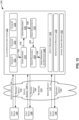
- FIG. 2 depicts an architecture 200 for illustrating techniques for implementing at least CIOS Regional 202.
- CIOS Regional 202 is where much of the work of declarative provisioning and planning, as well as approved release application can occur.
- each instance of CIOS Regional 202 may have a regional fronted that can handle operations at the level of "Execution Targets.” It can be configured to perform the following:
- the CIOS Executor can depend on CIOS Workers, which can assign tasks for execution to Workers, and provide a facility for Workers to update job progress.
- the worker service operates at the granularity of "Task.” Each worker is an agent executing Tasks assigned to that worker and reporting Task status and output. Each worker can:
- CIOS Regional 202 can be a regional service for managing regional instances/deployments of CIOS.
- CIOS Regional 202 covers responsibility for authoritatively storing and managing plans and stat that pertains to a particular region.
- a Regional DB 204 may be a CIOS DB for the state and plans in the particular region. This is the authoritative copy of the region's subset of the Central DB 118 of FIG. 1 .
- Scheduler 206 can be responsible for managing worker fleet capacity, assigning tasks to workers, and keeping track of task state.
- Task DB 208 is another CIOS DB for task state. Data in this DB is mostly for operational purposes.
- Worker 210 can be a fleet of java virtual machines (JVMs) that manage declarative provisioning images. These receive instructions from the Scheduler 206 and communicate results to both the Scheduler 206 and CIOS Regional 202.
- JVMs java virtual machines
- a CIOS container 212 can run declarative provisioning actions in its own private docker 214 container. This container does not need to contain secrets.
- a signing proxy 216 can be configured to prevent secret exfiltration via a declarative provisioning tool, in order to avoid putting secrets in the declarative provisioning image. Instead, CIOS can perform request signing or initiate a mutual transport layer security (mTLS) service in a proxy. This also makes it easier to use FIPS-compliant crypto libraries.
- mTLS mutual transport layer security
- CIOS Central 102 can call CIOS Regional 202 to create plans, push approvals, watch job status (service principal), and extract declarative provisioner state (service principal).
- An ingress proxy 218 can be configured as the ACL and various identity policies may be used for both authentication and authorization. Alternatively, in some examples, the ingress proxy 218 may be replaced with a load balancer configured to balance the load incoming requests, plans, etc.
- CIOS Regional 202 may run a declarative provisioner by asking the scheduler 206 to do so. Worker 210 can ask Scheduler 206 what it should be running, and can report status to Scheduler 206 when done.
- mTLS may handle both authentication and authorization for CIOS Regional 202 and Worker 210.
- CIOS Regional 202 may be configured to provide any suitable portion and/or number of user interfaces (e.g., user interfaces 500-800) for presenting any suitable data related to a flock, a release, an infrastructure component, an artifact, or the like.
- CIOS Regional 202 may present via any suitable interface data related to one or more releases.
- a release may include any suitable combination of tasks related to one or more infrastructure components and/or one or more code changes to one or more applications (e.g., artifacts).
- egress proxy 222 For services with no internal endpoint, it must use the egress proxy 222 to reach the external endpoint. This use of the signing proxy 216 may not be for cross-region communication; for example, an egress proxy whitelist in each region may only be for that region's public IP ranges. In some examples, Worker 210 may then persist state and logs from a declarative provisioner in CIOS Regional 202 so that they can be exfiltrated to CIOS Central 102.
- CIOS For the worldwide release phase, the below is an example of how a team executes tomorrow's version of today's "normal CM.”
- CIOS pushes each approved regional plan to the respective region.
- CIOS acts independently within each region to apply approved plans.
- CIOS will only perform the set of actions explicitly described in that region's plan. Instead of "thinking independently," it will fail.
- the CIOS UI shows teams the progress of the execution.
- the CIOS UI prompts teams when manual approvals are required. If execution fails because of an outage in CIOS or in a downstream service, CIOS can notify the team and can prompt them for next steps (e.g., abort, retry).
- CIOS does perform retries, but some downstream system outages will exceed its willingness to retry. If execution fails because of service health degradation or a test failure, CIOS will assist teams with rolling the flock back to its starting state. CIOS will notify (e.g., page) teams when it initiates automatic rollback. Teams must approve the rollback plan, then CIOS will execute it.
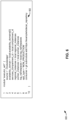
- a reference e.g., statement 602 is placed in code associated with an application (e.g., application 502) that references another repository (e.g., repository 510 of FIG. 5 ).
- code changes e.g., code changes 514, deployment code changes 516, and/or testing code changes 518 of FIG. 5
- code changes 514 may be utilized when deploying application 502 and sidecar application 508 such that a current version of code of the sidecar application 508 may be utilized.
- user device 702 may be utilized to check out code from repository 504 associated with application 502 of FIG. 5 .
- the code checked out may include one or more configuration files associated with application 502.
- the user device 702 is utilized to insert a reference to a data repository associated with a sidecar application.
- statement 602 may be added to one or more configuration files of the application 502.
- a data repository e.g., a git repository
- Repository 502 may be maintained by the SCVMS 104.
- the change monitoring service 114 may obtain the statement 602 from the SCVMS 104 and dereference the statement 602 to identify one or more files associated with a sidecar application (e.g., the sidecar application 508).
- a sidecar application e.g., the sidecar application 508
- the change monitoring service 114 may poll the SCVMS 104 for changes made to the sidecar application (e.g., the sidecar application 508).
- the change monitoring service 114 may determine that no changes have been made to the sidecar application since the last check-in of the file containing the reference within repository 504. In accordance with this determination, the change monitoring service 114 may end processing.
- user device 704 may be utilized to check out code from repository 510 associated with sidecar application 508 of FIG. 5 .
- the code checked out may include one or more configuration files associated with sidecar application 508.
- the checked out code may include configuration code segments, code segments describing the manner by which the sidecar application 508 is to be deployed, and/or code segments identifying the manner by which the sidecar application 508 is to be tested.
- the user device 704 may be utilized to modify any suitable number of code segments corresponding to configuration, deployment, and/or testing of the sidecar application 508.
- the code references may be stored upon check-in within repository 210, a data repository (e.g., a git repository) associated with the sidecar application 508 of FIG. 5 .
- Repository 510 may be maintained by the SCVMS 104.
- the change monitoring service 114 may poll the SCVMS 104 for changes, or alternatively, the SCVMS 104 may report the changes made at 722 to the change monitoring service 114.
- the change monitoring service 114 identifies that changes have been made to the code for which a reference exists in repository 504. Once identified, the change monitoring service 114 may execute any suitable operations for causing an update such that the modified version of the sidecar application is deployed alongside the application 502 for any subsequent deployments provided by CIOS. Additionally, or alternatively, the method 700 may proceed to 726.
- user device 702 may be utilized to check out code from repository 504 associated with application 502 of FIG. 5 .
- the code checked out may include one or more configuration files associated with application 502.
- the checked out code may include one or more files that include the statement 602.
- the user device 702 may be utilized to make one or more changes to the checked out code.
- the checked out code (and corresponding changes made at 728) may be stored upon check-in within repository 504, a data repository (e.g., a git repository) associated with the application 502 of FIG. 5 .
- a data repository e.g., a git repository
- the change monitoring service 114 may poll the SCVMS 104 for changes, or alternatively, the SCVMS 104 may report the changes made at 730 to the change monitoring service 114.
- the change monitoring service 114 may obtain a reference (e.g., statement 602) from the SCVMS 104 and dereference the statement 602 to identify one or more files associated with a sidecar application (e.g., the sidecar application 508).
- a reference e.g., statement 602
- sidecar application e.g., the sidecar application 508
- the change monitoring service 114 may determine that the change made at 722 occurred after the previous check-in of application 502 (e.g., the check-in conducted at 710, a check-in of one or more files including statement 602). In accordance with this determination, the change monitoring service 114 may execute any suitable operations for causing an update such that the modified version of the sidecar application (e.g., including the changes made at 722) is deployed alongside the application 502 for any subsequent deployments provided by CIOS. The method 700 may then end.
- the modified version of the sidecar application e.g., including the changes made at 722
- FIG. 8 is a schematic diagram illustrating an example user interface (e.g., UI 800) that shows changes made to a sidecar application (e.g., sidecar application 508 of FIG. 5 ), according to at least one embodiment.
- the user interface 800 may be provided to a user of the user device 704 of FIG. 7 as part of the operations performed by the change monitoring service 114 at 738.
- the log 812 can be presented at any suitable location on the UI 800.
- the log 812 can present information about a change made to the application code corresponding to module 810 (e.g., corresponding to the sidecar application 508 of FIG. 5 ).
- line 814 may depict an added line of code while line 816 may depict a deleted line of code that is being replaced with line 814.
- the line 814 (and/or any portion of code to be added) can be displayed with a green background or any other color background suitable for identifying one or more lines of code to be added.
- the line 816 (e.g., or any portion of code to be deleted) can be displayed with a red background of any other color background suitable for identifying one or more lines of code to be deleted.
- CIOS Central 102 detects (e.g., by the change monitoring service 114 of FIG. 1 ) a first modification to a first service (e.g., a change to sidecar application 508 of FIG. 5 ).
- the first service comprises at least one infrastructure resource of the plurality of infrastructure resources.
- the first service utilizes a first distributed version-control repository (e.g., repository 510 of FIG. 5 ) for performing modifications to the first service.
- CIOS Central 102 detects a second modification to a second service (a check-in of a configuration file associated with application 502).
- the second service utilizes a second distributed version-control repository (repository 504 of FIG. 5 ) for performing modifications to the second service.
- the server 1012 may be composed of one or more general purpose computers, specialized server computers (including, by way of example, PC (personal computer) servers, UNIX ® servers, mid-range servers, mainframe computers, rack-mounted servers, etc.), server farms, server clusters, or any other appropriate arrangement and/or combination.
- the server 1012 can include one or more virtual machines running virtual operating systems, or other computing architectures involving virtualization.
- One or more flexible pools of logical storage devices can be virtualized to maintain virtual storage devices for the server.
- Virtual networks can be controlled by the server 1012 using software defined networking.
- the server 1012 may be adapted to run one or more services or software applications described in the foregoing disclosure.
- the server 1012 may correspond to a server for performing processing as described above according to an embodiment of the present disclosure.
- Processing subsystem 1104 controls the operation of computer system 1100 and may comprise one or more processing units 1132, 1134, etc.
- a processing unit may include one or more processors, including single core or multicore processors, one or more cores of processors, or combinations thereof.
- processing subsystem 1104 can include one or more special purpose co-processors such as graphics processors, digital signal processors (DSPs), or the like.
- DSPs digital signal processors
- some or all of the processing units of processing subsystem 1104 can be implemented using customized circuits, such as application specific integrated circuits (ASICs), or field programmable gate arrays (FPGAs).
- ASICs application specific integrated circuits
- FPGAs field programmable gate arrays
- processing units in processing subsystem 1104 can execute instructions stored in system memory 1110 or on computer readable storage media 1122.
- the processing units can execute a variety of programs or code instructions and can maintain multiple concurrently executing programs or processes.
- some or all of the program code to be executed can be resident in system memory 1110 and/or on computer-readable storage media 1110 including potentially on one or more storage devices.
- processing subsystem 1104 can provide various functionalities described above for dynamically modifying documents (e.g., webpages) responsive to usage patterns.
- I/O subsystem 1108 may include devices and mechanisms for inputting information to computer system 1100 and/or for outputting information from or via computer system 1100.
- input device is intended to include all possible types of devices and mechanisms for inputting information to computer system 1100.
- User interface input devices may include, for example, a keyboard, pointing devices such as a mouse or trackball, a touchpad or touch screen incorporated into a display, a scroll wheel, a click wheel, a dial, a button, a switch, a keypad, audio input devices with voice command recognition systems, microphones, and other types of input devices.
- User interface input devices may also include motion sensing and/or gesture recognition devices such as the Microsoft Kinect ® motion sensor that enables users to control and interact with an input device, the Microsoft Xbox ® 360 game controller, devices that provide an interface for receiving input using gestures and spoken commands.
- User interface input devices may also include eye gesture recognition devices such as the Google Glass ® blink detector that detects eye activity (e.g., "blinking" while taking pictures and/or making a menu selection) from users and transforms the eye gestures as input into an input device (e.g., Google Glass ® ).
- user interface input devices may include voice recognition sensing devices that enable users to interact with voice recognition systems (e.g., Siri ® navigator), through voice commands.
- Computer-readable storage media 1122 may store programming and data constructs that provide the functionality of some embodiments.
- Software that when executed by processing subsystem 1104 a processor provide the functionality described above may be stored in storage subsystem 1118.
- computer-readable storage media 1122 may include non-volatile memory such as a hard disk drive, a magnetic disk drive, an optical disk drive such as a CD ROM, DVD, a Blu-Ray ® disk, or other optical media.
- Computer-readable storage media 1122 may include, but is not limited to, Zip ® drives, flash memory cards, universal serial bus (USB) flash drives, secure digital (SD) cards, DVD disks, digital video tape, and the like.
- storage subsystem 1100 may also include a computer-readable storage media reader 1120 that can further be connected to computer-readable storage media 1122.
- computer-readable storage media 1122 may comprehensively represent remote, local, fixed, and/or removable storage devices plus storage media for storing computer-readable information.
- a cloud infrastructure system is a collection of one or more server computing devices, network devices, and/or storage devices. These resources may be divided by cloud services providers and allotted to its customers in some manner.
- a cloud services provider such as Oracle Corporation of Redwood Shores, California, may offer various types of cloud services including but not limited to one or more services provided under Software as a Service (SaaS) category, services provided under Platform as a Service (PaaS) category, services provided under Infrastructure as a Service (IaaS) category, or other categories of services including hybrid services.
- SaaS services include, without limitation, capabilities to build and deliver a suite of on-demand applications such as Oracle Fusion applications.
- SaaS services enable customers to utilize applications executing on the cloud infrastructure system without the need for customers to purchase software for the applications.
- PaaS services include, without limitation, services that enable organizations (such as Oracle) to consolidate existing applications on a shared, common architecture, as well as the ability to build new applications that leverage the shared services provided by the platform such as Oracle Java Cloud Service (JCS), Oracle Database Cloud Service (DBCS), and others.
- IaaS services may facilitate the management and control of the underlying computing resources, such as storage, networks, and other fundamental computing resources for customers utilizing services provided by the SaaS platform and the PaaS platform.
- FIG. 12 is a simplified block diagram of one or more components of a system environment 1200 by which services provided by one or more components of an embodiment system may be offered as cloud services, in accordance with an embodiment of the present disclosure.
- system environment 1200 includes one or more client computing devices 1204, 1206, and 1208 that may be used by users to interact with a cloud infrastructure system 1202 that provides cloud services.
- the client computing devices may be configured to operate a client application such as a web browser, a proprietary client application (e.g., Oracle Forms), or some other application, which may be used by a user of the client computing device to interact with cloud infrastructure system 1202 to use services provided by cloud infrastructure system 1202.
- client application such as a web browser, a proprietary client application (e.g., Oracle Forms), or some other application, which may be used by a user of the client computing device to interact with cloud infrastructure system 1202 to use services provided by cloud infrastructure system 1202.
- cloud infrastructure system 1202 depicted in the figure may have other components than those depicted. Further, the embodiment shown in the figure is only one example of a cloud infrastructure system that may incorporate an embodiment of the disclosure. In some other embodiments, cloud infrastructure system 1202 may have more or fewer components than shown in the figure, may combine two or more components, or may have a different configuration or arrangement of components.
- Network(s) 1210 may facilitate communications and exchange of data between client computing devices 1204, 1206, and 1208 and cloud infrastructure system 1202.
- Each network may be any type of network familiar to those skilled in the art that can support data communications using any of a variety of commercially-available protocols, including those described above for network(s) 1210.
- Cloud infrastructure system 1202 may comprise one or more computers and/or servers that may include those described above for server 1212.
- services provided by the cloud infrastructure system may include a host of services that are made available to users of the cloud infrastructure system on demand, such as online data storage and backup solutions, Web-based e-mail services, hosted office suites and document collaboration services, database processing, managed technical support services, and the like. Services provided by the cloud infrastructure system can dynamically scale to meet the needs of its users.
- a specific instantiation of a service provided by cloud infrastructure system is referred to herein as a "service instance.”
- any service made available to a user via a communication network, such as the Internet, from a cloud service provider's system is referred to as a "cloud service.”
- a cloud service provider's system may host an application, and a user may, via a communication network such as the Internet, on demand, order and use the application.
- cloud infrastructure system 1202 may include a suite of applications, middleware, and database service offerings that are delivered to a customer in a self-service, subscription-based, elastically scalable, reliable, highly available, and secure manner.
- An example of such a cloud infrastructure system is the Oracle Public Cloud provided by the present assignee.
- cloud infrastructure system 1202 may be adapted to automatically provision, manage and track a customer's subscription to services offered by cloud infrastructure system 1202.
- Cloud infrastructure system 1202 may provide the cloud services via different deployment models.
- services may be provided under a public cloud model in which cloud infrastructure system 1202 is owned by an organization selling cloud services (e.g., owned by Oracle) and the services are made available to the general public or different industry enterprises.
- services may be provided under a private cloud model in which cloud infrastructure system 1202 is operated solely for a single organization and may provide services for one or more entities within the organization.
- the cloud services may also be provided under a community cloud model in which cloud infrastructure system 1202 and the services provided by cloud infrastructure system 1202 are shared by several organizations in a related community.
- the cloud services may also be provided under a hybrid cloud model, which is a combination of two or more different models.
- the services provided by cloud infrastructure system 1202 may include one or more services provided under Software as a Service (SaaS) category, Platform as a Service (PaaS) category, Infrastructure as a Service (IaaS) category, or other categories of services including hybrid services.
- SaaS Software as a Service
- PaaS Platform as a Service
- IaaS Infrastructure as a Service
- a customer via a subscription order, may order one or more services provided by cloud infrastructure system 1202.
- Cloud infrastructure system 1202 then performs processing to provide the services in the customer's subscription order.
- platform services may be provided by the cloud infrastructure system via a PaaS platform.
- the PaaS platform may be configured to provide cloud services that fall under the PaaS category.
- Examples of platform services may include, without limitation, services that enable organizations (such as Oracle) to consolidate existing applications on a shared, common architecture, as well as the ability to build new applications that leverage the shared services provided by the platform.
- the PaaS platform may manage and control the underlying software and infrastructure for providing the PaaS services. Customers can acquire the PaaS services provided by the cloud infrastructure system without the need for customers to purchase separate licenses and support.
- Examples of platform services include, without limitation, Oracle Java Cloud Service (JCS), Oracle Database Cloud Service (DBCS), and others.
- infrastructure services may be provided by an IaaS platform in the cloud infrastructure system.
- the infrastructure services facilitate the management and control of the underlying computing resources, such as storage, networks, and other fundamental computing resources for customers utilizing services provided by the SaaS platform and the PaaS platform.
- cloud management functionality may be provided by one or more modules, such as an order management module 1220, an order orchestration module 1222, an order provisioning module 1224, an order management and monitoring module 1226, and an identity management module 1228.
- modules may include or be provided using one or more computers and/or servers, which may be general purpose computers, specialized server computers, server farms, server clusters, or any other appropriate arrangement and/or combination.
- cloud infrastructure system 1202 may include an identity management module 1228.
- Identity management module 1228 may be configured to provide identity services, such as access management and authorization services in cloud infrastructure system 1202.
- identity management module 1228 may control information about customers who wish to utilize the services provided by cloud infrastructure system 1202. Such information can include information that authenticates the identities of such customers and information that describes which actions those customers are authorized to perform relative to various system resources (e.g., files, directories, applications, communication ports, memory segments, etc.).
- Identity management module 1228 may also include the management of descriptive information about each customer and about how and by whom that descriptive information can be accessed and modified.
Landscapes
- Engineering & Computer Science (AREA)
- Software Systems (AREA)
- General Engineering & Computer Science (AREA)
- Theoretical Computer Science (AREA)
- Computer Security & Cryptography (AREA)
- Physics & Mathematics (AREA)
- General Physics & Mathematics (AREA)
- Stored Programmes (AREA)
- Management, Administration, Business Operations System, And Electronic Commerce (AREA)
- Information Retrieval, Db Structures And Fs Structures Therefor (AREA)
Applications Claiming Priority (3)
| Application Number | Priority Date | Filing Date | Title |
|---|---|---|---|
| US202062963478P | 2020-01-20 | 2020-01-20 | |
| US17/103,733 US11520635B2 (en) | 2020-01-20 | 2020-11-24 | Techniques for resolving application updates |
| PCT/US2021/012222 WO2021150366A1 (en) | 2020-01-20 | 2021-01-05 | Updating code in distributed version control system |
Publications (2)
| Publication Number | Publication Date |
|---|---|
| EP4094149A1 EP4094149A1 (en) | 2022-11-30 |
| EP4094149B1 true EP4094149B1 (en) | 2024-07-17 |
Family
ID=76993261
Family Applications (1)
| Application Number | Title | Priority Date | Filing Date |
|---|---|---|---|
| EP21702548.5A Active EP4094149B1 (en) | 2020-01-20 | 2021-01-05 | Updating code in distributed version control system |
Country Status (4)
| Country | Link |
|---|---|
| EP (1) | EP4094149B1 (https=) |
| JP (1) | JP7684977B2 (https=) |
| CN (1) | CN114787771A (https=) |
| WO (1) | WO2021150366A1 (https=) |
Families Citing this family (12)
| Publication number | Priority date | Publication date | Assignee | Title |
|---|---|---|---|---|
| WO2023014940A1 (en) * | 2021-08-06 | 2023-02-09 | Nvidia Corporation | Application management platform for hyper-converged cloud infrastructures |
| US12014162B2 (en) * | 2021-08-31 | 2024-06-18 | Salesforce, Inc. | Controlled updates of containers in a distributed application deployment environment |
| US11601303B1 (en) * | 2021-09-02 | 2023-03-07 | Rivian Ip Holdings, Llc | System and method for enabling persistent vehicle software interfaces |
| CN114064113A (zh) * | 2021-11-26 | 2022-02-18 | 中国工商银行股份有限公司 | 主机版本控制方法及装置 |
| WO2023154226A1 (en) * | 2022-02-08 | 2023-08-17 | Oracle International Corporation | Data management techniques for cloud regions |
| US12386635B2 (en) | 2022-02-08 | 2025-08-12 | Oracle International Corporation | Data management techniques for cloud regions |
| US12393721B2 (en) * | 2022-10-28 | 2025-08-19 | Red Hat, Inc. | Sidecar data services for enforcing data policies |
| US12381778B2 (en) * | 2022-12-29 | 2025-08-05 | Microsoft Technology Licensing, Llc | Multi-tiered reconciliation of network functions |
| EP4414908A1 (en) * | 2023-02-07 | 2024-08-14 | Siemens Mobility Austria GmbH | Data monitoring framework for engineering processes |
| CN121195240A (zh) * | 2023-05-18 | 2025-12-23 | 甲骨文国际公司 | 区域构建测试技术 |
| US12572365B2 (en) | 2023-05-18 | 2026-03-10 | Oracle International Corporation | Region build testing techniques |
| US20240385817A1 (en) | 2023-05-18 | 2024-11-21 | Oracle International Corporation | Techniques for building a data center using a skills service |
Family Cites Families (9)
| Publication number | Priority date | Publication date | Assignee | Title |
|---|---|---|---|---|
| JP4792744B2 (ja) | 2004-12-24 | 2011-10-12 | 富士ゼロックス株式会社 | 画像処理装置 |
| US7950007B2 (en) * | 2006-06-15 | 2011-05-24 | International Business Machines Corporation | Method and apparatus for policy-based change management in a service delivery environment |
| JP2009223822A (ja) | 2008-03-18 | 2009-10-01 | Nec Corp | ソースコード更新通知装置およびソースコード更新通知方法 |
| US20150143355A1 (en) * | 2010-11-01 | 2015-05-21 | Architecture Technology Corporation | Service oriented architecture version and dependency control |
| JP5790222B2 (ja) | 2011-07-12 | 2015-10-07 | 株式会社リコー | 通信装置、アップデート方法およびアップデートプログラム |
| US9535689B2 (en) * | 2014-12-31 | 2017-01-03 | Paypal, Inc. | Source control management system with contingent dependency handling |
| US10142371B2 (en) * | 2015-04-24 | 2018-11-27 | Oracle International Corporation | Authorization policy customization and authorization policy lockdown |
| JP6871943B2 (ja) * | 2016-03-28 | 2021-05-19 | オラクル・インターナショナル・コーポレイション | モバイルクラウドサービスのための予め形成された命令 |
| JP6981124B2 (ja) | 2017-09-14 | 2021-12-15 | 日本電気株式会社 | システム構築支援装置、システム構築支援方法、及びプログラム |
-
2021
- 2021-01-05 EP EP21702548.5A patent/EP4094149B1/en active Active
- 2021-01-05 JP JP2022543778A patent/JP7684977B2/ja active Active
- 2021-01-05 CN CN202180006862.3A patent/CN114787771A/zh active Pending
- 2021-01-05 WO PCT/US2021/012222 patent/WO2021150366A1/en not_active Ceased
Also Published As
| Publication number | Publication date |
|---|---|
| WO2021150366A1 (en) | 2021-07-29 |
| JP2023511117A (ja) | 2023-03-16 |
| EP4094149A1 (en) | 2022-11-30 |
| CN114787771A (zh) | 2022-07-22 |
| JP7684977B2 (ja) | 2025-05-28 |
Similar Documents
| Publication | Publication Date | Title |
|---|---|---|
| US11520635B2 (en) | Techniques for resolving application updates | |
| US12153934B2 (en) | Techniques for managing dependencies of an orchestration service | |
| US20240419508A1 (en) | User interface techniques for an infrastructure orchestration service | |
| EP4094149B1 (en) | Updating code in distributed version control system | |
| WO2021150435A1 (en) | Techniques for utilizing directed acyclic graphs for deployment instructions | |
| EP4094148B1 (en) | User interface techniques for an infrastructure orchestration service |
Legal Events
| Date | Code | Title | Description |
|---|---|---|---|
| STAA | Information on the status of an ep patent application or granted ep patent |
Free format text: STATUS: UNKNOWN |
|
| STAA | Information on the status of an ep patent application or granted ep patent |
Free format text: STATUS: THE INTERNATIONAL PUBLICATION HAS BEEN MADE |
|
| PUAI | Public reference made under article 153(3) epc to a published international application that has entered the european phase |
Free format text: ORIGINAL CODE: 0009012 |
|
| STAA | Information on the status of an ep patent application or granted ep patent |
Free format text: STATUS: REQUEST FOR EXAMINATION WAS MADE |
|
| 17P | Request for examination filed |
Effective date: 20220421 |
|
| AK | Designated contracting states |
Kind code of ref document: A1 Designated state(s): AL AT BE BG CH CY CZ DE DK EE ES FI FR GB GR HR HU IE IS IT LI LT LU LV MC MK MT NL NO PL PT RO RS SE SI SK SM TR |
|
| DAV | Request for validation of the european patent (deleted) | ||
| DAX | Request for extension of the european patent (deleted) | ||
| P01 | Opt-out of the competence of the unified patent court (upc) registered |
Effective date: 20230523 |
|
| REG | Reference to a national code |
Ref country code: DE Ref legal event code: R079 Free format text: PREVIOUS MAIN CLASS: G06F0008710000 Ipc: G06F0008650000 Ref country code: DE Ref legal event code: R079 Ref document number: 602021015796 Country of ref document: DE Free format text: PREVIOUS MAIN CLASS: G06F0008710000 Ipc: G06F0008650000 |
|
| GRAP | Despatch of communication of intention to grant a patent |
Free format text: ORIGINAL CODE: EPIDOSNIGR1 |
|
| STAA | Information on the status of an ep patent application or granted ep patent |
Free format text: STATUS: GRANT OF PATENT IS INTENDED |
|
| RIC1 | Information provided on ipc code assigned before grant |
Ipc: G06F 8/71 20180101ALI20240118BHEP Ipc: G06F 8/65 20180101AFI20240118BHEP |
|
| INTG | Intention to grant announced |
Effective date: 20240207 |
|
| GRAS | Grant fee paid |
Free format text: ORIGINAL CODE: EPIDOSNIGR3 |
|
| GRAA | (expected) grant |
Free format text: ORIGINAL CODE: 0009210 |
|
| STAA | Information on the status of an ep patent application or granted ep patent |
Free format text: STATUS: THE PATENT HAS BEEN GRANTED |
|
| AK | Designated contracting states |
Kind code of ref document: B1 Designated state(s): AL AT BE BG CH CY CZ DE DK EE ES FI FR GB GR HR HU IE IS IT LI LT LU LV MC MK MT NL NO PL PT RO RS SE SI SK SM TR |
|
| REG | Reference to a national code |
Ref country code: CH Ref legal event code: EP |
|
| REG | Reference to a national code |
Ref country code: DE Ref legal event code: R096 Ref document number: 602021015796 Country of ref document: DE |
|
| REG | Reference to a national code |
Ref country code: IE Ref legal event code: FG4D |
|
| REG | Reference to a national code |
Ref country code: LT Ref legal event code: MG9D |
|
| REG | Reference to a national code |
Ref country code: NL Ref legal event code: MP Effective date: 20240717 |
|
| PG25 | Lapsed in a contracting state [announced via postgrant information from national office to epo] |
Ref country code: PT Free format text: LAPSE BECAUSE OF FAILURE TO SUBMIT A TRANSLATION OF THE DESCRIPTION OR TO PAY THE FEE WITHIN THE PRESCRIBED TIME-LIMIT Effective date: 20241118 |
|
| REG | Reference to a national code |
Ref country code: AT Ref legal event code: MK05 Ref document number: 1704774 Country of ref document: AT Kind code of ref document: T Effective date: 20240717 |
|
| PG25 | Lapsed in a contracting state [announced via postgrant information from national office to epo] |
Ref country code: NL Free format text: LAPSE BECAUSE OF FAILURE TO SUBMIT A TRANSLATION OF THE DESCRIPTION OR TO PAY THE FEE WITHIN THE PRESCRIBED TIME-LIMIT Effective date: 20240717 |
|
| PG25 | Lapsed in a contracting state [announced via postgrant information from national office to epo] |
Ref country code: PT Free format text: LAPSE BECAUSE OF FAILURE TO SUBMIT A TRANSLATION OF THE DESCRIPTION OR TO PAY THE FEE WITHIN THE PRESCRIBED TIME-LIMIT Effective date: 20241118 Ref country code: NL Free format text: LAPSE BECAUSE OF FAILURE TO SUBMIT A TRANSLATION OF THE DESCRIPTION OR TO PAY THE FEE WITHIN THE PRESCRIBED TIME-LIMIT Effective date: 20240717 |
|
| PG25 | Lapsed in a contracting state [announced via postgrant information from national office to epo] |
Ref country code: NO Free format text: LAPSE BECAUSE OF FAILURE TO SUBMIT A TRANSLATION OF THE DESCRIPTION OR TO PAY THE FEE WITHIN THE PRESCRIBED TIME-LIMIT Effective date: 20241017 |
|
| PG25 | Lapsed in a contracting state [announced via postgrant information from national office to epo] |
Ref country code: FI Free format text: LAPSE BECAUSE OF FAILURE TO SUBMIT A TRANSLATION OF THE DESCRIPTION OR TO PAY THE FEE WITHIN THE PRESCRIBED TIME-LIMIT Effective date: 20240717 Ref country code: PL Free format text: LAPSE BECAUSE OF FAILURE TO SUBMIT A TRANSLATION OF THE DESCRIPTION OR TO PAY THE FEE WITHIN THE PRESCRIBED TIME-LIMIT Effective date: 20240717 Ref country code: GR Free format text: LAPSE BECAUSE OF FAILURE TO SUBMIT A TRANSLATION OF THE DESCRIPTION OR TO PAY THE FEE WITHIN THE PRESCRIBED TIME-LIMIT Effective date: 20241018 |
|
| PG25 | Lapsed in a contracting state [announced via postgrant information from national office to epo] |
Ref country code: BG Free format text: LAPSE BECAUSE OF FAILURE TO SUBMIT A TRANSLATION OF THE DESCRIPTION OR TO PAY THE FEE WITHIN THE PRESCRIBED TIME-LIMIT Effective date: 20240717 |
|
| PG25 | Lapsed in a contracting state [announced via postgrant information from national office to epo] |
Ref country code: LV Free format text: LAPSE BECAUSE OF FAILURE TO SUBMIT A TRANSLATION OF THE DESCRIPTION OR TO PAY THE FEE WITHIN THE PRESCRIBED TIME-LIMIT Effective date: 20240717 |
|
| PG25 | Lapsed in a contracting state [announced via postgrant information from national office to epo] |
Ref country code: IS Free format text: LAPSE BECAUSE OF FAILURE TO SUBMIT A TRANSLATION OF THE DESCRIPTION OR TO PAY THE FEE WITHIN THE PRESCRIBED TIME-LIMIT Effective date: 20241117 Ref country code: AT Free format text: LAPSE BECAUSE OF FAILURE TO SUBMIT A TRANSLATION OF THE DESCRIPTION OR TO PAY THE FEE WITHIN THE PRESCRIBED TIME-LIMIT Effective date: 20240717 |
|
| PG25 | Lapsed in a contracting state [announced via postgrant information from national office to epo] |
Ref country code: HR Free format text: LAPSE BECAUSE OF FAILURE TO SUBMIT A TRANSLATION OF THE DESCRIPTION OR TO PAY THE FEE WITHIN THE PRESCRIBED TIME-LIMIT Effective date: 20240717 |
|
| PG25 | Lapsed in a contracting state [announced via postgrant information from national office to epo] |
Ref country code: RS Free format text: LAPSE BECAUSE OF FAILURE TO SUBMIT A TRANSLATION OF THE DESCRIPTION OR TO PAY THE FEE WITHIN THE PRESCRIBED TIME-LIMIT Effective date: 20241017 Ref country code: ES Free format text: LAPSE BECAUSE OF FAILURE TO SUBMIT A TRANSLATION OF THE DESCRIPTION OR TO PAY THE FEE WITHIN THE PRESCRIBED TIME-LIMIT Effective date: 20240717 |
|
| PG25 | Lapsed in a contracting state [announced via postgrant information from national office to epo] |
Ref country code: RS Free format text: LAPSE BECAUSE OF FAILURE TO SUBMIT A TRANSLATION OF THE DESCRIPTION OR TO PAY THE FEE WITHIN THE PRESCRIBED TIME-LIMIT Effective date: 20241017 Ref country code: PL Free format text: LAPSE BECAUSE OF FAILURE TO SUBMIT A TRANSLATION OF THE DESCRIPTION OR TO PAY THE FEE WITHIN THE PRESCRIBED TIME-LIMIT Effective date: 20240717 Ref country code: NO Free format text: LAPSE BECAUSE OF FAILURE TO SUBMIT A TRANSLATION OF THE DESCRIPTION OR TO PAY THE FEE WITHIN THE PRESCRIBED TIME-LIMIT Effective date: 20241017 Ref country code: LV Free format text: LAPSE BECAUSE OF FAILURE TO SUBMIT A TRANSLATION OF THE DESCRIPTION OR TO PAY THE FEE WITHIN THE PRESCRIBED TIME-LIMIT Effective date: 20240717 Ref country code: IS Free format text: LAPSE BECAUSE OF FAILURE TO SUBMIT A TRANSLATION OF THE DESCRIPTION OR TO PAY THE FEE WITHIN THE PRESCRIBED TIME-LIMIT Effective date: 20241117 Ref country code: HR Free format text: LAPSE BECAUSE OF FAILURE TO SUBMIT A TRANSLATION OF THE DESCRIPTION OR TO PAY THE FEE WITHIN THE PRESCRIBED TIME-LIMIT Effective date: 20240717 Ref country code: GR Free format text: LAPSE BECAUSE OF FAILURE TO SUBMIT A TRANSLATION OF THE DESCRIPTION OR TO PAY THE FEE WITHIN THE PRESCRIBED TIME-LIMIT Effective date: 20241018 Ref country code: FI Free format text: LAPSE BECAUSE OF FAILURE TO SUBMIT A TRANSLATION OF THE DESCRIPTION OR TO PAY THE FEE WITHIN THE PRESCRIBED TIME-LIMIT Effective date: 20240717 Ref country code: ES Free format text: LAPSE BECAUSE OF FAILURE TO SUBMIT A TRANSLATION OF THE DESCRIPTION OR TO PAY THE FEE WITHIN THE PRESCRIBED TIME-LIMIT Effective date: 20240717 Ref country code: BG Free format text: LAPSE BECAUSE OF FAILURE TO SUBMIT A TRANSLATION OF THE DESCRIPTION OR TO PAY THE FEE WITHIN THE PRESCRIBED TIME-LIMIT Effective date: 20240717 Ref country code: AT Free format text: LAPSE BECAUSE OF FAILURE TO SUBMIT A TRANSLATION OF THE DESCRIPTION OR TO PAY THE FEE WITHIN THE PRESCRIBED TIME-LIMIT Effective date: 20240717 |
|
| PG25 | Lapsed in a contracting state [announced via postgrant information from national office to epo] |
Ref country code: RO Free format text: LAPSE BECAUSE OF FAILURE TO SUBMIT A TRANSLATION OF THE DESCRIPTION OR TO PAY THE FEE WITHIN THE PRESCRIBED TIME-LIMIT Effective date: 20240717 Ref country code: SM Free format text: LAPSE BECAUSE OF FAILURE TO SUBMIT A TRANSLATION OF THE DESCRIPTION OR TO PAY THE FEE WITHIN THE PRESCRIBED TIME-LIMIT Effective date: 20240717 Ref country code: DK Free format text: LAPSE BECAUSE OF FAILURE TO SUBMIT A TRANSLATION OF THE DESCRIPTION OR TO PAY THE FEE WITHIN THE PRESCRIBED TIME-LIMIT Effective date: 20240717 |
|
| REG | Reference to a national code |
Ref country code: DE Ref legal event code: R097 Ref document number: 602021015796 Country of ref document: DE |
|
| PG25 | Lapsed in a contracting state [announced via postgrant information from national office to epo] |
Ref country code: EE Free format text: LAPSE BECAUSE OF FAILURE TO SUBMIT A TRANSLATION OF THE DESCRIPTION OR TO PAY THE FEE WITHIN THE PRESCRIBED TIME-LIMIT Effective date: 20240717 |
|
| PG25 | Lapsed in a contracting state [announced via postgrant information from national office to epo] |
Ref country code: CZ Free format text: LAPSE BECAUSE OF FAILURE TO SUBMIT A TRANSLATION OF THE DESCRIPTION OR TO PAY THE FEE WITHIN THE PRESCRIBED TIME-LIMIT Effective date: 20240717 |
|
| PG25 | Lapsed in a contracting state [announced via postgrant information from national office to epo] |
Ref country code: SK Free format text: LAPSE BECAUSE OF FAILURE TO SUBMIT A TRANSLATION OF THE DESCRIPTION OR TO PAY THE FEE WITHIN THE PRESCRIBED TIME-LIMIT Effective date: 20240717 |
|
| PLBE | No opposition filed within time limit |
Free format text: ORIGINAL CODE: 0009261 |
|
| STAA | Information on the status of an ep patent application or granted ep patent |
Free format text: STATUS: NO OPPOSITION FILED WITHIN TIME LIMIT |
|
| 26N | No opposition filed |
Effective date: 20250422 |
|
| REG | Reference to a national code |
Ref country code: CH Ref legal event code: PL |
|
| PG25 | Lapsed in a contracting state [announced via postgrant information from national office to epo] |
Ref country code: SE Free format text: LAPSE BECAUSE OF FAILURE TO SUBMIT A TRANSLATION OF THE DESCRIPTION OR TO PAY THE FEE WITHIN THE PRESCRIBED TIME-LIMIT Effective date: 20240717 |
|
| PG25 | Lapsed in a contracting state [announced via postgrant information from national office to epo] |
Ref country code: MC Free format text: LAPSE BECAUSE OF FAILURE TO SUBMIT A TRANSLATION OF THE DESCRIPTION OR TO PAY THE FEE WITHIN THE PRESCRIBED TIME-LIMIT Effective date: 20240717 Ref country code: LU Free format text: LAPSE BECAUSE OF NON-PAYMENT OF DUE FEES Effective date: 20250105 |
|
| PG25 | Lapsed in a contracting state [announced via postgrant information from national office to epo] |
Ref country code: BE Free format text: LAPSE BECAUSE OF NON-PAYMENT OF DUE FEES Effective date: 20250131 |
|
| PG25 | Lapsed in a contracting state [announced via postgrant information from national office to epo] |
Ref country code: FR Free format text: LAPSE BECAUSE OF NON-PAYMENT OF DUE FEES Effective date: 20250131 |
|
| PG25 | Lapsed in a contracting state [announced via postgrant information from national office to epo] |
Ref country code: CH Free format text: LAPSE BECAUSE OF NON-PAYMENT OF DUE FEES Effective date: 20250131 |
|
| REG | Reference to a national code |
Ref country code: BE Ref legal event code: MM Effective date: 20250131 |
|
| PGFP | Annual fee paid to national office [announced via postgrant information from national office to epo] |
Ref country code: GB Payment date: 20251204 Year of fee payment: 6 |
|
| PG25 | Lapsed in a contracting state [announced via postgrant information from national office to epo] |
Ref country code: IE Free format text: LAPSE BECAUSE OF NON-PAYMENT OF DUE FEES Effective date: 20250105 |
|
| PG25 | Lapsed in a contracting state [announced via postgrant information from national office to epo] |
Ref country code: IT Free format text: LAPSE BECAUSE OF FAILURE TO SUBMIT A TRANSLATION OF THE DESCRIPTION OR TO PAY THE FEE WITHIN THE PRESCRIBED TIME-LIMIT Effective date: 20240717 |
|
| PGFP | Annual fee paid to national office [announced via postgrant information from national office to epo] |
Ref country code: DE Payment date: 20251203 Year of fee payment: 6 |